
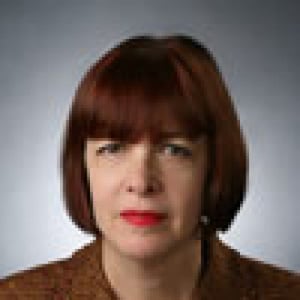
Of Counsel, Wimberly, Lawson, Steckel, Schneider & Stine P.C.
Elizabeth K. (Betsy) Dorminey is of counsel with the firm. She received a B.A. magna cum laude from the University of Georgia in 1976, a license ès lettres from the Sorbonne in 1978, a J.D. from UGA’s Law School in 1981, and an LL.M. from Columbia in 1984. She clerked for the Hon. Ed Carnes on the U.S. Court of Appeals for the Eleventh Circuit and worked for the U.S. Departments of Justice and Commerce prior to joining the firm. Ms. Dorminey is a member of the State Bars of Georgia, Connecticut, and New York, and is admitted to practice in Federal District and Appellate Courts throughout the Southeast. With Larry Stine and Mark Waschak, she is co-author of “Occupational Safety & Health Law: Compliance and Practice” (Thomson/West 2008). Her practice concentrates in all aspects of employer defense, including but not limited to litigation the Fair Labor Standards Act, Title VII employment discrimination, and occupational safety and health. She is a member of the Executive Committee of the Labor & Employment Practice Group of the Federalist Society, and serves on the Board of the Friends of the Georgia Museum of Art.
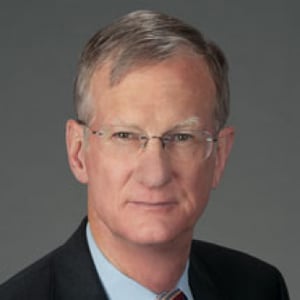
Legal Scholar and Solo Practitioner
Jack received his B.A. in History from the University of Virginia in 1977, graduating with Highest Distinction. After graduating Yale Law School in 1980, he served active duty in the U.S. Army's JAG Corps, rising to the rank of Major, where he represented the United States in more than 250 cases.
He practiced for a decade as an Associate for Bradley Arant in Birmingham, Alabama. He proudly served the State of Alabama in the Office of the Attorney General, both as Deputy and Assistant Attorney General, handling complex civil and criminal litigation cases for the people of Alabama. In 2000, he won the "Best Brief Award" from the National Association of Attorneys General for his brief in a case decided by the U.S. Supreme Court, James Alexander v. Martha Sandoval – a case he won. He was Special Assistant to the Inspector General for the Corporation for National and Community Service, Visiting Legal Fellow for the Center for Judicial and Legal Studies for the Heritage Foundation, Of Counsel at Strickland Brockington Lewis, a solo practitioner, and General Counsel for Indigo Energy.
Most recently, he "re-upped" for military service, volunteering his legal services to the Georgia State Defense Force where twice each month he provided legal services for National Guardsmen who were being deployed. He wore his military uniform for the last time in October 2024.
Jack Park passed away on March 16, 2026.
Partner, Stone Pigman Walther Wittmann LLC
Mr. Thomson concentrates his practice in white collar criminal defense, government investigations, and corporate compliance. He has tried over 50 criminal trials to verdict in federal and state courts, and has experience in appellate litigation. His practice also includes civil litigation and information security. Prior to joining Stone Pigman, Mr. Thomson had a 23 year career as a federal prosecutor with the U.S. Department of Justice. He served on special assignment with the National Security Agency, where he worked on matters involving information assurance and intelligence collection.
Prior to private practice, Mr. Thomson was recognized numerous times by government agencies, including a Special Commendation Award given by the U.S. Attorney General for completing the Justice Department's Leadership Excellence and Achievement Program; Special Commendation by FBI Director for outstanding performance for successful corruption prosecution after Hurricane Katrina; Special Award from the U.S. Postal Service for prosecution of corrupt employee; Special Award by New Orleans Police Department, ATF and U.S. Department of Justice for his contributions to Project Exile; and Special Awards for Outstanding Contributions to Drug Law Enforcement from the Drug Enforcement Administration.
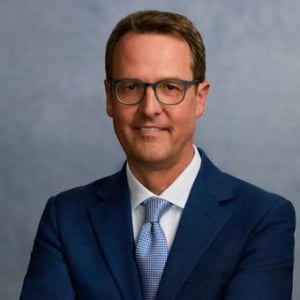
Partner, Orrick, Herrington & Sutcliffe LLP
Andy excels at solving complex problems for his clients using a variety of effective strategies. As former Chief Deputy Attorney General for the State of Wisconsin, Andy Cook has extensive experience representing businesses before state Attorneys General involving investigations and lawsuits. His strong relationships with Attorneys General and their senior staff frequently facilitate the successful resolution of client issues through diplomacy and negotiations. When litigation becomes necessary, Andy effectively advocates for clients throughout the litigation process.
Andy combines his legal expertise in numerous areas of law covered by state Attorneys General, an understanding of how state AG offices operate, and vast knowledge of legal and regulatory issues facing his clients. This substantive and comprehensive legal approach is crucial to effectively representing clients before state Attorneys General. Andy also has substantial experience drafting and enacting complex civil liability reforms before state legislatures to successfully address client goals.
Andy’s main practice focuses on advising Fortune 500 companies before state Attorneys General in the areas of antitrust, consumer protection, False Claims Act, environmental law, and cybersecurity and data privacy. Andy, in collaboration with a team of attorneys, successfully navigated a client through antitrust regulatory review by state Attorneys General in one of the nation’s largest mergers of two major telecommunication companies. Andy also worked with a team of lawyers representing a large corporation involving the multistate opioids litigation brought by state Attorneys General.
Andy gained valuable experience serving as Deputy Attorney General for the State of Wisconsin where he was the second in command of the 700-plus state agency. In his role as Chief Deputy Attorney General, Andy oversaw the day-to-day operations at the Wisconsin Department of Justice (DOJ); directed the State’s litigation strategy; negotiated, reviewed, and approved all settlements; drafted and reviewed attorney general opinions; managed the agency’s budget; oversaw civil and criminal investigations handled by DOJ; and managed DOJ’s legislative agenda.
Andy played college hockey and remains active by running, cross country skiing, and playing golf. On the weekends, Andy and his wife enjoy watching their kids’ sporting events, including soccer, baseball, gymnastics, and track. In his rare spare time, Andy reads history books.
Attorney, Lobbyist & Communications Professional, Kelchen Consulting
Partner, Orrick, Herrington & Sutcliffe LLP
Andy excels at solving complex problems for his clients using a variety of effective strategies. As former Chief Deputy Attorney General for the State of Wisconsin, Andy Cook has extensive experience representing businesses before state Attorneys General involving investigations and lawsuits. His strong relationships with Attorneys General and their senior staff frequently facilitate the successful resolution of client issues through diplomacy and negotiations. When litigation becomes necessary, Andy effectively advocates for clients throughout the litigation process.
Andy combines his legal expertise in numerous areas of law covered by state Attorneys General, an understanding of how state AG offices operate, and vast knowledge of legal and regulatory issues facing his clients. This substantive and comprehensive legal approach is crucial to effectively representing clients before state Attorneys General. Andy also has substantial experience drafting and enacting complex civil liability reforms before state legislatures to successfully address client goals.
Andy’s main practice focuses on advising Fortune 500 companies before state Attorneys General in the areas of antitrust, consumer protection, False Claims Act, environmental law, and cybersecurity and data privacy. Andy, in collaboration with a team of attorneys, successfully navigated a client through antitrust regulatory review by state Attorneys General in one of the nation’s largest mergers of two major telecommunication companies. Andy also worked with a team of lawyers representing a large corporation involving the multistate opioids litigation brought by state Attorneys General.
Andy gained valuable experience serving as Deputy Attorney General for the State of Wisconsin where he was the second in command of the 700-plus state agency. In his role as Chief Deputy Attorney General, Andy oversaw the day-to-day operations at the Wisconsin Department of Justice (DOJ); directed the State’s litigation strategy; negotiated, reviewed, and approved all settlements; drafted and reviewed attorney general opinions; managed the agency’s budget; oversaw civil and criminal investigations handled by DOJ; and managed DOJ’s legislative agenda.
Andy played college hockey and remains active by running, cross country skiing, and playing golf. On the weekends, Andy and his wife enjoy watching their kids’ sporting events, including soccer, baseball, gymnastics, and track. In his rare spare time, Andy reads history books.
Attorney, Lobbyist & Communications Professional, Kelchen Consulting
President and CEO, Liberty Strategies LLC
Bob Barr represented the 7th District of Georgia in the U. S. House of Representatives from 1995 to 2003, and now practices law in Atlanta, Georgia, where he serves as chairman of the state’s Judicial Qualifications Commission. Bob also chairs Liberty Guard, Inc. a non-profit and non-partisan organization dedicated to protecting individual liberty. He also heads a consulting firm, Liberty Strategies, Inc., and is a registered Mediator and Arbitrator. Bob has taught constitutional law at Atlanta’s John Marshall Law School and government at Kennesaw State University.
Bob is a member of the Board of Directors for the National Rifle Association, and serves on the Board of the Interactive College of Technology. He is a member of Tau Kappa Epsilon Fraternity.
From 2003 to 2008, Bob occupied the 21st Century Liberties Chair for Freedom and Privacy at the American Conservative Union. He served as a member of The Constitution Project’s Initiative on Liberty and Security, and from 2003 to 2005 was a member of a project at Harvard University’s Kennedy School of Government addressing matters of privacy and security. Barr has served as an advisory board member for Privacy International, headquartered in London, and was labeled “Mr. Privacy” by former New York Times columnist William Safire. He was the Libertarian Party nominee for President in 2008.
Bob has appeared on virtually every major cable and network television program dealing with public policy matters. He writes regularly for Townhall.com, The Daily Caller, and The Marietta Daily Journal, and has been a columnist and blogger for the Atlanta Journal-Constitution. He writes occasional pieces for other publications and hosts a regular podcast, “Bob Barr’s Laws of the Universe.” He is the author of three books: “The Meaning of Is: The Squandered Impeachment and Wasted Legacy of William Jefferson Clinton,” “Patriot Nation: Bob Barr’s Laws of the Universe Volume One,” and “Lessons in Liberty.”
Bob was appointed by President Reagan as the United States Attorney for the Northern District of Georgia (1986-90), served as President of Southeastern Legal Foundation from 1990-91, and was an official with the CIA from 1971-78. Additionally, he has served as a member of U.S. delegations at several United Nations conferences on firearms.
Bob Barr was awarded his law degree from Georgetown University, his master’s degree from The George Washington University, and his bachelor’s degree from the University of Southern California. He and his wife Jeri live in Smyrna, Georgia just outside Atlanta.
Doy & Dee Henley Chair and Distinguished Professor of Jurisprude, Chapman University Dale E. Fowler School of Law
Ronald D. Rotunda was the Doy & Dee Henley Chair and Distinguished Professor of Jurisprudence, at Chapman University, the Dale E. Fowler School of Law. He joined the faculty in 2008. Before that, he was University Professor and Professor of Law at George Mason University School of Law. From 2002 to 2006, he was the George Mason University Foundation Professor of Law. Before that, he was the Albert E. Jenner, Jr. Professor of Law, at the University of Illinois. He was a magna cum laude graduate of both Harvard College and Harvard Law School, where he was a member of Harvard Law Review. He joined the University of Illinois faculty in 1974 after clerking for Judge Walter R. Mansfield of the United States Court of Appeals for the Second Circuit, practicing law in Washington, D.C., and serving as assistant majority counsel for the Senate Watergate Committee. He has co-authored the most widely used course book on legal ethics, Problems and Materials on Professional Responsibility(Foundation Press, 12th ed. 2014) and was the author of a leading course book on constitutional law, Modern Constitutional Law (West Academic Co., 11th ed. 2015)(Abridged & Unabridged editions). He was the coauthor of, Legal Ethics: The Lawyer's Deskbook on Professional Responsibility (ABA- West/Thompson Reuters Publishing, St. Paul, Minnesota, 2016-2017 ed.) (Jointly published by the ABA and West/Thompson Reuters Publishing) (with John Dzienkowski). Rotunda also co-authored (with John Nowak) the six-volume Treatise on Constitutional Law (West/Thompson Reuters Publishing, 5th ed. 2012)(with annual updates), and a one volume Treatise on Constitutional Law (West Academic, 8th ed. 2010). He was also the author of several other books and more than 500 articles in various law reviews, journals, newspapers, and books in this country and abroad. His works have been translated into French, Portuguese German, Romanian, Czech, Russian, Japanese, and Korean. These books and articles have been cited more than 2000 times by law reviews, by state and federal courts at every level, from trial courts to the U.S. Supreme Court, and by foreign courts in Europe, Africa, Asia, and South America. He has been interviewed on radio and television on legal issues, both in this country and abroad. In 1993 he was the Constitutional Law Adviser to the Supreme National Council of Cambodia and assisted that country in writing its first democratic constitution. He has consulted with various new democracies in Eastern Europe and the former Soviet Union, including Moldova, Romania, and Ukraine, on their proposed constitutions and judicial codes. He chaired the subcommittee that drafted the American Bar Association's Model Rules for Lawyer Disciplinary Enforcement; was a member of the Publications Board of the A.B.A. Center for Professional Responsibility from 1994 to 2016; was a member of the A.B.A. Standing Committee on Professional Discipline (1991-1997); and was Liaison to the A.B.A. Standing Committee on Ethics and Professional Responsibility (1994-1997). He was a Fulbright Professor in Venezuela in 1986 and a Fulbright Research Scholar in Italy in 1981. In 1996 he assisted the Czech Republic in drafting the first Rules of Ethics for lawyers in that country. During the Spring, 1999 semester, he was Visiting Professor at the University of Alabama School of Law, holding the John S. Stone Endowed Chair of Law. During the summer and fall of 2000, he was the Visiting Senior Fellow in Constitutional Studies at the Cato Institute, in Washington, DC. In the fall of 2001, he was visiting professor at George Mason University School of Law. During November-December, 2002, he was Visiting Scholar, Katholieke Universiteit Leuven, Faculty of Law, Leuven, Belgium. In May, 2004, and December, 2005, he was visiting lecturer at the Institute of Law and Economics, Institut für Recht und Ökonomik, at the University of Hamburg. From early June 2004 to May 2005, he was the Special Counsel to the Department of Defense. He was on the Panel of Contributing Editors that produced, Black's Law Dictionary (West/Thompson Reuters Publishing, 8th ed. 2004; Thomson-Reuters, 10th ed. 2014). From 2005-2006, he was a member of the Task Force on Judicial Functions of the Commission on Virginia Courts in the 21st Century: To Benefit All, to Exclude None.
In May, 2000, American Law Media, publisher of The American Lawyer, the National Law Journal, and the Legal Times picked Professor Rotunda as one of the ten most influential Illinois Lawyers. Also in 2000, a lengthy study that the University of Chicago Press published, which sought to determine the influence, productivity, and reputations of law professors over the last several decades, listed Professor Rotunda as the 17th highest in the nation. The 2002-2003 New Educational Quality Ranking of U.S. Law Schools (EQR) [the last year for which such records are available] ranks Professor Rotunda as the eleventh most cited of all law faculty in the United States. Seehttp://www.leiterrankings.com/faculty/2002faculty_impact_cites.shtml.
In July, 2007, he was one of the main speakers at the International Judicial Conference hosted by the United States Embassy, the Supreme Court of Latvia, and the Latvian Ministry of Justice. The other main speakers were Justice Samuel Alito, the President of Latvia, the Prime Minister of Latvia, the Chief Justice of Latvia, and the Minister of Justice of Latvia. On February 27, 2008, President George W. Bush nominated Ronald D. Rotunda to become a member of the Privacy and Civil Liberties Oversight Board (PCLOB) for an initial four-year term and sent his nomination to the Senate Committee on Homeland Security and Governmental Affairs for confirmation hearings on the nominees. He was selected the Best Lawyer in Washington, DC, in 2009 in Ethics and Professional Responsibility Law, as published in November 2008 in the Washington Post in association with the Legal Times. When he moved to California, he was also selected as one of the Best Lawyers in Southern California, in 2009, 2010, 2011, 2012, 2013, 2014, 2015, 2016, 2017, also in Ethics and Professional Responsibility Law as published in the Los Angeles Times, U.S. News, and American Law Media. On June 17, 2009, he became a Commissioner of the Fair Political Practices Commission, a state regulatory agency (analogous to the Federal Election Commission) that is California's independent political watchdog. He served until January 31, 2013, when his term expired. In 2012, he became a Distinguished International Research Fellow at the World Engagement Institute, a non-profit, multidisciplinary and academically-based non-governmental organization with the mission to facilitate professional global engagement for international development and poverty reduction http://www.weinstitute.org/fellows.html. In 2012, Chapman University honored him with The Chapman University Excellence In Scholarly/Creative Work Award, 2011-2012. Since 2014, he has been a member of the Editorial Board of, The International Journal of Sustainable Human Security (IJSHS), a peer-reviewed publication of the World Engagement Institute (WEI). Rotunda was a Member of the Editorial Board of ABA's Journal of Legal Education (2014 to 2016).
President and CEO, Liberty Strategies LLC
Bob Barr represented the 7th District of Georgia in the U. S. House of Representatives from 1995 to 2003, and now practices law in Atlanta, Georgia, where he serves as chairman of the state’s Judicial Qualifications Commission. Bob also chairs Liberty Guard, Inc. a non-profit and non-partisan organization dedicated to protecting individual liberty. He also heads a consulting firm, Liberty Strategies, Inc., and is a registered Mediator and Arbitrator. Bob has taught constitutional law at Atlanta’s John Marshall Law School and government at Kennesaw State University.
Bob is a member of the Board of Directors for the National Rifle Association, and serves on the Board of the Interactive College of Technology. He is a member of Tau Kappa Epsilon Fraternity.
From 2003 to 2008, Bob occupied the 21st Century Liberties Chair for Freedom and Privacy at the American Conservative Union. He served as a member of The Constitution Project’s Initiative on Liberty and Security, and from 2003 to 2005 was a member of a project at Harvard University’s Kennedy School of Government addressing matters of privacy and security. Barr has served as an advisory board member for Privacy International, headquartered in London, and was labeled “Mr. Privacy” by former New York Times columnist William Safire. He was the Libertarian Party nominee for President in 2008.
Bob has appeared on virtually every major cable and network television program dealing with public policy matters. He writes regularly for Townhall.com, The Daily Caller, and The Marietta Daily Journal, and has been a columnist and blogger for the Atlanta Journal-Constitution. He writes occasional pieces for other publications and hosts a regular podcast, “Bob Barr’s Laws of the Universe.” He is the author of three books: “The Meaning of Is: The Squandered Impeachment and Wasted Legacy of William Jefferson Clinton,” “Patriot Nation: Bob Barr’s Laws of the Universe Volume One,” and “Lessons in Liberty.”
Bob was appointed by President Reagan as the United States Attorney for the Northern District of Georgia (1986-90), served as President of Southeastern Legal Foundation from 1990-91, and was an official with the CIA from 1971-78. Additionally, he has served as a member of U.S. delegations at several United Nations conferences on firearms.
Bob Barr was awarded his law degree from Georgetown University, his master’s degree from The George Washington University, and his bachelor’s degree from the University of Southern California. He and his wife Jeri live in Smyrna, Georgia just outside Atlanta.
James Wilson Endowed Professor, Pepperdine University
In law school, Robert Pushaw served as Notes Editor of the Yale Law Journal and received an Olin Foundation Fellowship. After graduation, he clerked for Judge James Buckley of the US Court of Appeals for the DC Circuit, then worked as an employment lawyer for Davis Wright Tremaine in Seattle.
Joining the University of Missouri School of Law faculty in 1992, Professor Pushaw taught Constitutional Law, Federal Courts and Contracts. In 1998, he won the Blackwell Sanders Distinguished Faculty Achievement Award as the law school's top teacher. In 2000, Pushaw received the William Kemper Fellowship for Teaching Excellence, the University of Missouri's highest teaching honor. He came to Pepperdine in 2001, and won the School of Law's Annual Teaching Award in 2007.
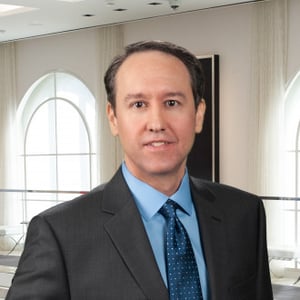
Senior Counsel, Alston & Bird, LLP
A former Justice of the Supreme Court of Georgia, Keith Blackwell is senior counsel with Alston & Bird LLP in Atlanta. His practice is focused principally on the representation of clients in federal and state courts in appeals and litigation involving issues of first impression, the application of settled law to emerging industries and technologies, novel constitutional questions, conflicting precedents, and other complex legal issues. He also represents law firms and lawyers in professional liability matters, and he represents clients in connection with criminal and regulatory investigations and proceedings.
Justice Blackwell served for more than eight years on the Supreme Court, and he previously served as a Judge of the Court of Appeals of Georgia. In the course of his judicial service, he authored more than 400 published opinions and participated in the disposition of approximately 4,500 appeals, as well as 8,000 petitions for writs of certiorari and other applications for leave to appeal. In addition, Justice Blackwell served as the liaison between the Supreme Court and the State Bar of Georgia, the Office of Bar Admissions, the Board of Bar Examiners, and the Board to Determine the Fitness of Bar Applicants. Justice Blackwell retired from judicial service in November 2020 to return to the private practice of law.
Prior to his judicial service, Justice Blackwell practiced law with Parker, Hudson, Rainer & Dobbs LLP in Atlanta, where his practice was focused on complex business litigation. He also served for several years as an assistant district attorney in Cobb County, Georgia, where he was responsible for hundreds of felony prosecutions and appeared regularly as lead trial counsel. In addition, he served as a law clerk for Judge J.L. Edmondson at the U.S. Court of Appeals for the Eleventh Circuit. Justice Blackwell graduated summa cum laude from the University of Georgia School of Law as first honor graduate in 1999. He also received a degree in political science from the University of Georgia in 1996.
Justice Blackwell is a member of the Board of Advisors and a former president of the Atlanta Lawyers’ Chapter of the Federalist Society.
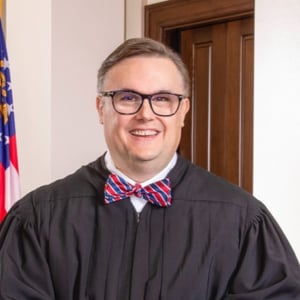
Presiding Judge, Georgia Court of Appeals
Presiding Judge Stephen Louis A. Dillard was appointed as the 73rd judge of the Court of Appeals of the State of Georgia on November 1, 2010 by Governor Sonny Perdue. Prior to his appointment, Judge Dillard was in private practice with James, Bates, Pope & Spivey in Macon, serving as chairman of the firm’s appellate practice group. Judge Dillard was elected and then reelected by his fellow Georgians in 2012, 2018, and 2024. On July 1, 2017, Judge Dillard was sworn in as the 30th Chief Judge of the Court of Appeals of Georgia for a two-year term that ended on June 30, 2019. He currently serves as the presiding judge of the Court’s Fourth Division, and will begin serving as the presiding judge of the Court’s Third Division in 2026.
Judge Dillard was born in Nashville, Tennessee on November 13, 1969. He attended and graduated from Hillwood High School in Nashville, Tennessee; Samford University (B.A. 1992); Mississippi College School of Law (J.D., cum laude, 1996); and Duke University School of Law (LL.M., Judicial Studies, 2025). In college, Judge Dillard was a member of The Sigma Chi Fraternity and Omicron Delta Kappa. He was also given the Evelyn Meadows Historical Essay Award, as well as the William McMillian Rogers Colonial Dames Overall Essay Award, for “The Tempting of America to be America: Alexander Hamilton and the Federalist Papers.” During law school, Judge Dillard was a member of the Moot Court Board and received the Judge Robert G. Gillespie Outstanding Achievement in Appellate Advocacy Award, as well as the American Jurisprudence Award in Appellate Advocacy. He also served as president of the Mississippi College Chapter of the Federalist Society for Law and Public Policy Studies.
After graduating from law school, Judge Dillard joined the Macon law firm of Stone and Baxter, where he practiced from 1996 until 2001. In September 2001, he left private practice for a two-year period to serve as a law clerk at the U.S. Court of Appeals for the Seventh Circuit for Judge Daniel A. Manion (who was appointed by President Ronald W. Reagan in 1986 and served until 2022). In September 2003, Judge Dillard joined James Bates as of counsel, specialized in appellate practice and complex litigation, and served as chairperson of the firm’s appellate practice group. While in practice, he received an AV® Preeminent™ Peer-Review Rating from Martindale-Hubbell and was named by Super Lawyers as one of Georgia’s “rising stars.”
Additionally, Judge Dillard was appointed by Governor Sonny Perdue to the Judicial Nominating Commission and the Public Defender Selection Panel for the Macon Judicial Circuit. He has published scholarly essays in the Encyclopedia of Civil Liberties, the Encyclopedia of Great American Judges, the Encyclopedia of Great American Lawyers, Judicature, the Green Bag Almanac & Reader, the Journal of Appellate Practice & Process, as well as two articles in the Mercer Law Review regarding the inner workings and culture of the Court of Appeals of the State of Georgia. He was also a participating lawyer with the Criminal Justice Act Appellate Panel for the U.S. Court of Appeals for the Eleventh Circuit, handling pro bono publico appeals for indigent individuals. Judge Dillard is a member of the State Bar of Georgia’s Appellate Practice and Judicial Sections, the Macon Bar Association, the Atlanta Bar Association, the Lawyers Club of Atlanta, the Saint Thomas More Society, the Judge Clarence Cooper American Inn of Court, the Logan E. Bleckley American Inn of Court, the William Augustus Bootle American Inn of Court, the Federalist Society for Law and Public Policy Studies, the Palaver Club of Macon, and the Samford Bulldog Club. He also has served as a mentor for The Appellate Project, which is “focused on empowering law students of color to pursue appellate work.”
Since joining the Court of Appeals, Judge Dillard has spoken to numerous organizations, participated in countless state and national seminars, held a wide variety of leadership positions, and received many awards. In 2025, one of Judge Dillard’s opinions—his concurrence in Board of Commissioners of Brantley County v. Brantley County Development Partners LLC et al.—was selected by The Green Bag Almanac and Reader as one of its works of “exemplary writing.” Judge Dillard was also named as the Milvain Chair in Advocacy by the University of Calgary Law Faculty that year, and he is the first American jurist and 43rd person to ever receive this honor. In 2024, Judge Dillard was appointed by Chief Justice Michael P. Boggs as co-chair of the Supreme Court of Georgia’s Study Committee on Legal Regulatory Reform, joined The Legal Accountability Project’s Advisory Board, and also gave the “Last Senior Lecture” to the Samford University Class of 2024. In 2023, Judge Dillard began serving his second term on Samford University’s Board of Overseers, and started the L.L.M. program for Judicial Studies at the Duke University School of Law. In 2022, he began serving on the Communications Committee of the Council of Chief Judges of the State Courts of Appeal. In 2021, Judge Dillard was given the “Significant Sig” award by The Sigma Chi Fraternity (one of its highest honors), which “recognizes those alumni members whose exemplary achievements in their fields of endeavor have brought great honor and prestige to the name of Sigma Chi.” He also began serving that year on the Dean Search Committee for Samford University’s Cumberland School of Law, and completed his work on that committee in April 2022. In 2020, Judge Dillard began serving his second two-year term as the president of the Samford University Alumni Association, a three-year term on Samford University’s Board of Overseers, as an advisor to the Pi Chapter of The Sigma Chi Fraternity at Samford University, and as a member of the Samford University Presidential Search Committee and the Samford University Task Force on Racial Justice. He was also given the Distinguished Judicial Service Award that year by the Young Lawyers Division of the State Bar of Georgia for the second time in his career. In 2019, Judge Dillard began teaching Appellate Practice and Procedure at Mercer University Law School and joined the National Advisory Board for The Constitutional Sources Project (“ConSource”), an organization dedicated to increasing access to and understanding of the United States Constitution and its history and creation. He was also named that year as the “Tweeter Laureate” of Georgia by the Georgia House of Representatives, as one of Atlanta’s 500 most powerful leaders by Atlanta Magazine, and as “Best Social Mediator” by the Fulton County Daily Report. In 2018, Judge Dillard began serving his first two-year term as president of the Samford University Alumni Association, as well as a member of the Samford University Athletic Director’s Cabinet. He also began his service that year as a member of the Supreme Court of Georgia’s Justice for Children Committee. In 2017, Judge Dillard was named Samford University’s “Alumnus of the Year,” which is the highest honor the university bestows on its graduates. In 2016, Judge Dillard began serving a two-year term as president of Samford University’s Atlanta Alumni chapter. He was also appointed that year as the co-chairperson of the Georgia Judicial Council’s Strategic Plan Standing Committee, and as a member of the Council’s Standing Committee on Technology. Finally, he was also named Samford University’s 2016 “Featured Alumnus” for the Howard College of Arts and Sciences. In 2015, Judge Dillard was appointed by Governor Nathan Deal to the Georgia Appellate Jurisdiction Review Commission. He was also appointed that year to serve on the Georgia Judicial Council, and as the chairperson of the Court Reporting Matters Committee. In 2014, Judge Dillard was named the “State Judge of the Year” by his alma mater, the Mississippi College School of Law, for his outstanding judicial service; and he also received the “Fastcase 50” award, which honors leaders in the world of law, scholarship, and legal technology. In 2013, Judge Dillard was awarded the Distinguished Judicial Service Award by the Young Lawyers Division of the State Bar of Georgia, recognizing his outstanding service on the bench and commitment to improving the practice of law. In 2012, Judge Dillard was appointed to the Code of Judicial Conduct Review Committee by Chief Judge John J. Ellington, and he also began serving as the special consultant to the Georgia High School Mock Trial Committee.
Among his many accomplishments in leadership at the Court of Appeals, Judge Dillard restructured the Court’s Central Staff Attorney Office, advocated for and implemented livestreaming and archiving of the Court’s oral arguments, helped design and shepherd a complete overhaul of the Court’s operational structure, had the primary responsibility for overseeing the Court’s move to the Nathan Deal Judicial Center (during his time as chief judge), drafted numerous Court rules (including the rule abolishing “physical precedent”) and IOM revisions, and lead the implementation of the Court’s transition to its first typography change in twenty years (i.e., the “Equity” font). Finally, he created, designed, and continues to oversee the Judge Herbert E. Phipps Fellowship program in partnership with Morehouse College.
Judge Dillard is married to the former Krista McDaniel, and they have three children. He is a parishioner of Saint Joseph Catholic Church and the former president of the School Board for Saint Joseph’s Catholic School.

State Government in Georgia: Friend or Foe of Business
Atlanta, GeorgiaVeiled Meaning: Tolerance and Prohibition of the Hijab in the U.S. and France
Elizabeth K. Dorminey
Introduction France and the U.S. have much in common. Both nations share a commitment to...
Georgia Supreme Court Strikes Down Ban on Assisted Suicide Advertisements
John J. Park
In Final Exit Network, Inc. v. Georgia,1 the Georgia Supreme Court unanimously2 concluded that Georgia’s...
Reflections of the First Year and What to Expect in 2012
Atlanta, GeorgiaA Comprehensive Strategy Targeting Recidivist Criminals with Continuous Real-Time GPS Monitoring: Is Reverse Engineering Crime Control Possible?
Peter M. Thomson
One of the most pressing criminal justice challenges facing the nation is reducing the incidence...
Confronting Terror: Is Fear Wagging the Post 9-11 Policy Dog?
Irvine, CaliforniaConfronting Terror: Is Fear Wagging the Post-9/11 Policy Dog?
Los Angeles, CaliforniaState Court Challenges to Legislatively Enacted Tort Reforms
Andrew Cook, Emily Kelchen
Introduction Over the past three decades, proponents of civil liability reform have made significant gains.1 Propelled...
State Court Challenges to Legislatively Enacted Tort Reforms
Andrew Cook, Emily Kelchen
Introduction Over the past three decades, proponents of civil liability reform have made significant gains.1...
A Conversation with Georgia Court of Appeals Judges Blackwell and Dillard
Atlanta, Georgia