
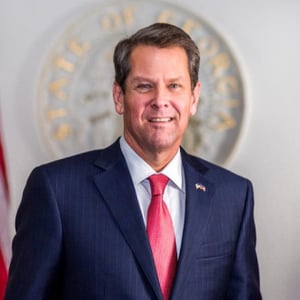
Brian Kemp is a husband, father, businessman, and public servant. On November 6, 2018, he was elected as Georgia's 83rd Governor, earning more votes than any gubernatorial candidate in state history.
Governor Kemp built his first business – Kemp Development and Construction Company – with a pick-up truck and a shovel. Over thirty years later, he is a successful entrepreneur with businesses and investments in banking, farming, timber, manufacturing, and real estate.
Kemp served on the Board of Suncrest Stone in Tifton as a Founding Director of First Madison Bank and St. Mary’s Hospital Board in Athens. From the backhoe to the board room, Governor Kemp understands how to successfully create jobs, grow companies, recruit start-ups, and make deals on the international stage while also providing opportunities for hundreds of hardworking Georgians.
Out of frustration with government, Brian Kemp ran for public office in the early 2000s.
In the State Senate, Kemp was instrumental in fighting to cut fees, taxes, and mandates on job creators and Georgia families. As Secretary of State, Kemp utilized technology and innovation to cut bureaucratic red tape, slash spending, and streamline government.
As Governor, Brian Kemp is fighting to make Georgia #1 for small business through regulatory reform. He will ensure that all parts of our state - including rural Georgia - have opportunities to grow and thrive. Kemp is fundamentally reforming state government, keeping our families safe, and always putting hardworking Georgians first.
Kemp, 56, is married to the former Marty Argo of Athens. They are the proud parents of three daughters – Jarrett, Lucy, and Amy Porter – and active members of Emmanuel Episcopal Church.
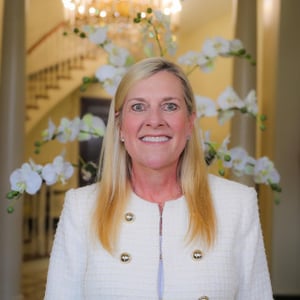
First Lady of Georgia
First Lady of Georgia Marty Kemp is a devoted wife and mother, small business owner, and graduate of the University of Georgia. She began her career with her family’s travel agency and later joined Governor Kemp at Kemp Development and Construction, which heads multiple projects statewide. Throughout Governor Kemp's time in office, the First Lady has led the charge to end human trafficking in the state through the formation of the Georgians for Refuge, Action, Compassion, and Education (GRACE) Commission and by spearheading passage of eight pieces of legislation with overwhelming support from the General Assembly. Her other top priorities as First Lady include pet adoption, supporting Georgia agriculture and the Georgia Grown program at the Governor's Mansion, promoting literacy and mental health, and promoting foster care and adoption reform initiatives. First Lady and Governor Kemp are proud parents to three daughters: Jarrett, Lucy, and Amy Porter.
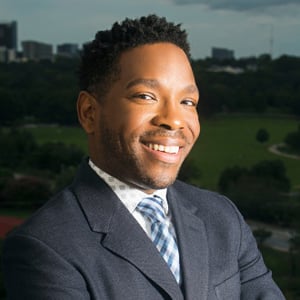
Professor of Law, Stanford University
Fred Smith Jr., JD ’07, is a Professor of Law at Stanford Law School and a leading scholar of the federal courts. His work on abstention, governmental immunities, and the allocation of power between state and federal courts has shaped contemporary debates over federal jurisdiction. This work has recovered histories that field had forgotten, and centered people the field’s doctrines had rendered invisible. He co-authors Federal Courts in Context (with Erwin Chemerinsky, Seth Davis, and Norman Spaulding) and Constitutional Torts, now in its sixth edition (with Sheldon Nahmod, Tom Eaton, Noah Smith-Drelich, and Michael Wells). He is also an important voice in the growing field of posthumous legal interests, where he created the first law school course of its kind.
His scholarship has appeared in the Harvard Law Review, Yale Law Journal, Stanford Law Review, Columbia Law Review, California Law Review, Michigan Law Review, New York University Law Review, and University of Chicago Law Review, among others. He lectures on these subjects across the United States and internationally, including in Istanbul, Shanghai, and Warsaw, and is regularly consulted as an expert by major media outlets, including CNN, CBS News, MSNBC, NPR, Time, The New York Times, and The Washington Post.
Smith clerked for Judge Myron Thompson (M.D. Ala.), Judge Barrington D. Parker Jr. (2d Cir.), and Justice Sonia Sotomayor (U.S. Supreme Court). He has held faculty positions at Berkeley Law and Emory Law and has been a visiting professor at the University of Chicago, Columbia, and Yale. At Emory, he was named Outstanding Professor of the Year in 2019, 2022, and 2023.
Smith serves as Board Chair of Lambda Legal, the nation’s oldest and largest legal organization dedicated to the civil rights of LGBTQ people. He also serves as an Associate Reporter for the American Law Institute’s Restatement of Constitutional Torts.

Solicitor General, Office of the Attorney General
Solicitor General, Office of the Attorney General
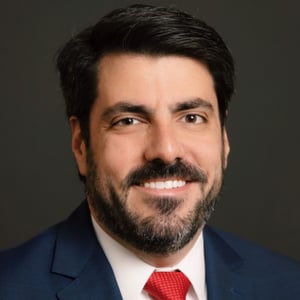
House Majority Leader, Georgia House of Representatives
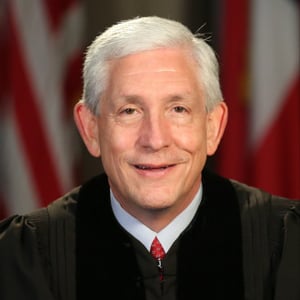
Chief Justice, Supreme Court of Georgia
Chief Justice David E. Nahmias (pronounced “NAH-mee-iss”) has served on the Georgia Supreme Court since his appointment by Governor Sonny Perdue in August 2009, winning election to six-year terms in 2010 and 2016. He became the Court’s Presiding Justice in September 2018 and its Chief Justice in July 2021. As Chief Justice, he leads the State’s judicial branch and chairs the Judicial Council of Georgia, the policy-making body for the judicial branch. Chief Justice Nahmias also chairs the Court’s Justice for Children Committee and the Chief Justice’s Commission on Professionalism. Before taking the bench, he was a federal prosecutor for almost 15 years, including service as a line prosecutor and as the United States Attorney in Atlanta, where he prosecuted and supervised many high-profile cases, and service as a senior Justice Department official in Washington, where he oversaw terrorism cases and other matters for three years after the 9/11 attacks.
Chief Justice Nahmias is a graduate of Briarcliff High School in DeKalb County, where he was the state’s STAR Student in 1982; Duke University, where he finished second in his class; and Harvard Law School, where he served on the Law Review with former President Barack Obama. He was a law clerk to U.S. Supreme Court Justice Antonin Scalia. Chief Justice Nahmias has received numerous local, state, and national awards and honors for his public service, and he has served on several committees and boards that work to improve the legal system and the community. Chief Justice Nahmias has two teenage sons. His wife, Catherine O’Neil, was a partner at King & Spalding before she passed away in 2017.
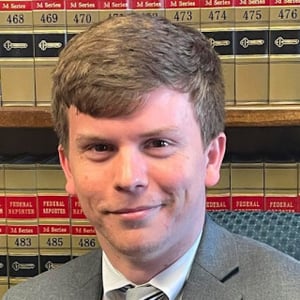
Miles Skedsvold is a litigator with Robbins Alloy Belinfante Littlefield in Atlanta, where he focuses on government and regulatory litigation. Building on his time with the Georgia Solicitor General's Office and as a law clerk for the Georgia Supreme Court, Miles studies Georgia Constitutional history and interpretation, representing clients and writing articles for law reviews and blogs. Miles also serves on the Board of the Atlanta Lawyers Chapter of the Federalist Society and helps lead the Association of Corporate Counsel (Georgia Chapter)'s Government Solutions member interest group.
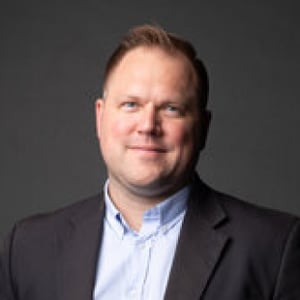
Partner, Ashby Thelen Lowry LLP
Max began his legal career working on the other side of the federal bench, clerking for the Hon. Henry Coke Morgan, Jr., of the United States District Court for the Eastern District of Virginia and then for the Hon. Daniel A. Manion of the United States Court of Appeals for the Seventh Circuit.
After two years working for federal courts, Max landed a position at a large law firm in Atlanta, where he devoted his practice 100% to litigation of liability matters in defense. Max took responsibility for dozens of high-value cases, handling every aspect of fact and expert discovery, depositions, mediations, motions practice, and argument across the state of Georgia in state and federal courts. His clients ranged from small businesses to Fortune 100 corporations.
After a few years working in defense, Max joined the plaintiff’s side at an elite appellate litigation boutique. There, he honed the craft of protecting and defending victories from appellate risk, preparing arguments to overturn unjust results, and crafting creative solutions to improve results and avoid pitfalls in exceptionally high-stakes cases. Within his first year, he was embedded appellate counsel for a trial team which obtained a $9.6M jury verdict in a wrongful death case that many thought was unwinnable. His work ran the gamut from critical dispositive and Daubert motions, post-trial practice, to appeals with seven and eight figure awards on the line.
Now, at Ashby Thelen Lowry, Max brings the strategic benefit of his background in judicial service, defense experience, and appellate practice to bear in all of his catastrophic injury cases with the goal of obtaining excellent results for his clients by staying several moves ahead of the opposition. In his first trial with ATL, Max served as embedded appellate counsel in a boat defect case against Malibu Boats that resulted in a verdict that has already changed the industry forever.
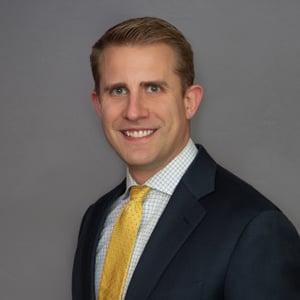
Chief Counsel to Senate Republican Majority Leader
Ryan Giles serves as a Chief Counsel to the United States Senate Majority Leader.
Ryan previously served as Chief Counsel on the Senate Judiciary Committee, where he supervised the Nominations & Constitution unit and the Crime & National Security unit. He also served as General Counsel to the Senate Republican Policy Committee and the Homeland Security & Governmental Affairs Committee. In the Senate, Ryan has advised on nominations and the federal judiciary, constitutional law, criminal law, congressional oversight, national security, foreign relations law, regulatory policy, technology and artificial intelligence, and Senate procedure and legislative strategy.
Before his Senate tenure, Ryan litigated at both trial and appellate levels at Williams & Connolly in Washington, D.C. He clerked for Judge David B. Sentelle on the U.S. Court of Appeals for the D.C. Circuit and Judge Britt C. Grant on the U.S. Court of Appeals for the Eleventh Circuit.
Ryan is a summa cum laude graduate of the University of Georgia School of Law, where he served as Editor-in-Chief of the Georgia Law Review.
Earlier in his career, Ryan served as a police officer in Georgia, working as a midnight-shift patrol officer, field training officer, and SWAT team member. He also served as an infantry officer in the Georgia Army National Guard.
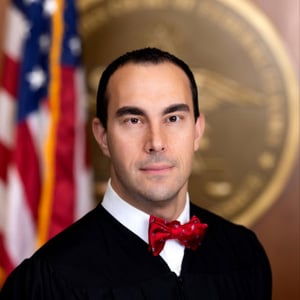
U.S. Court of Federal Claims and Jurist-In-Residence Professor of Law, The University of Akron School of Law
Judge Ryan T. Holte was sworn in as a judge on the United States Court of Federal Claims in July 2019. Prior to confirmation he served as the David L. Brennan Professor of Law and Director of the Center for Intellectual Property Law and Technology at The University of Akron School of Law (2017-2019) and an assistant professor of law at Southern Illinois University School of Law (2013-2017). Judge Holte has written and presented widely on patent law subjects and empirical legal studies of Federal Circuit and district court patent law cases. His most recent articles were published in the Iowa Law Review (2019), George Mason Law Review (2018), and Washington Law Review (2017).
In practice, Judge Holte served for six years as general counsel and partner of an electrical engineering technology company and is co-inventor of multiple patents related to Systems and Methods for Countering Satellite-Navigated Munitions. Prior to entering academia, Judge Holte practiced as a litigation attorney at the Federal Trade Commission and an associate in the Intellectual Property Practice Group at Jones Day. Prior to practice, he served as a law clerk to Judge Stanley F. Birch, Jr. on the United States Court of Appeals for the Eleventh Circuit and as a law clerk to Judge Loren A. Smith on the United States Court of Federal Claims.
Judge Holte received his JD from the University of California Davis School of Law and his BS, magna cum laude, in engineering from the California Maritime Academy where he was a First Class graduate of the Corps of Cadets Third Engineering Division and sailed as a U.S. Merchant Marine oiler.

General Counsel, NRB
Dr. Michael P. Farris is a litigator, educator, public advocate, and communicator, and is widely recognized for his successful work on both the national and international stage.
He is the founding president of both the Home School Legal Defense Association (1983) and Patrick Henry College (2000) and continues to serve as Chairman of the Board of HSLDA and Chancellor Emeritus of PHC. Dr. Farris served as the President and CEO of Alliance Defending Freedom and continues to serve in a part-time capacity as Counselor to the President. He currently serves as General Counsel for National Religious Broadcasters.
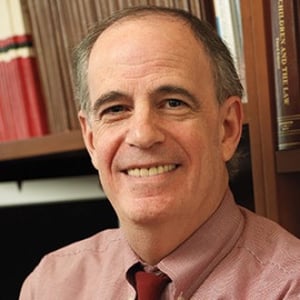
Fiorello LaGuardia Professor of Clinical Law Emeritus, New York University School of Law
Prof. Martin Guggenheim ’71 has taught at NYU School of Law, where he now co-directs the Family Defense Clinic, since 1973. From 1998 to 2002, he was director of Clinical and Advocacy Programs. Guggenheim has been an active litigator in the area of children and the law and has argued leading cases on juvenile delinquency and termination of parental rights in the US Supreme Court. He is also a well-known scholar, having published more than 50 articles and book chapters, plus six books, including What’s Wrong with Children’s Rights (2005). His research has focused on adolescent abortion, First Amendment rights in schools, the role of counsel for children in court proceedings, and empirical research on child welfare practice, juvenile justice, and family law.
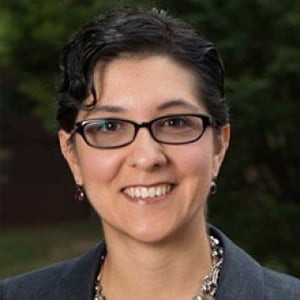
Professor of the Practice, Philosophy, McGrath Institute for Church Life, University of Notre Dame
Melissa Moschella is Professor of the Practice in Philosophy at the University of Notre Dame’s McGrath Institute for Church Life. Her work spans the fields of ethics, political philosophy, and law, and her areas of special expertise include natural law theory, biomedical ethics, and the family (especially parental rights). She is the author of To Whom Do Children Belong? Parental Rights, Civic Education and Children’s Autonomy (Cambridge University Press, 2016), and Ethics, Politics, and Natural Law: Principles for Human Flourishing (University of Notre Dame Press, forthcoming Spring 2025). Professor Moschella has also published numerous articles in scholarly journals as well as popular media outlets, including Notre Dame Law Review, The American Journal of Jurisprudence, The Journal of Law and Religion, Bioethics, The Journal of Medical Ethics, The New York Times, USA Today, The Washington Post, The Federalist, and First Things. She was recently awarded the Heritage Foundation’s Freedom and Opportunity Prize. She graduated magna cum laude from Harvard College, earned a Licentiate in Philosophy summa cum laude from the Pontifical University of the Holy Cross, and received her Ph.D. in Political Philosophy from Princeton University.
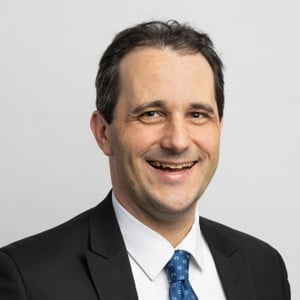
Director, Center for Judicial Engagement, Institute for Justice
Anthony Sanders is the Director of the Center for Judicial Engagement (CJE) at the Institute for Justice and a senior attorney. He joined IJ in 2010. As CJE’s director, he educates the public about the proper role of judges in enforcing constitutional limits on the size and scope of government. As a senior attorney he litigates cutting-edge constitutional cases protecting economic liberty, private property, freedom of speech and other individual liberties in both federal and state courts across the country.
One area of Anthony’s expertise is on using state constitutions to protect individual rights. He is the author of the book, published by University of Michigan Press, Baby Ninth Amendments: How Americans Embraced Unenumerated Rights and Why It Matters. He has also written several law review articles on state constitutional law, unenumerated rights, judicial review, economic liberty, property rights, international law, and other subjects. His work has appeared in publications such as the Iowa Law Review, Minnesota Law Review, American University Law Review, and Rutgers Law Review, and he has published opinion pieces in leading media outlets across the country. Further, he frequently speaks to various audiences on these matters and others, including judicial engagement, free speech, civil forfeiture, and the continuing importance of Magna Carta. Additionally, he hosts the weekly Short Circuit podcast, which often records live in front of law student audiences.
Anthony has litigated several cases in various state courts on state constitutional protections, as well as in federal courts on matters such as economic liberty, free speech, administrative law, and fines and fees abuse. Prior to joining IJ, Anthony served as a law clerk to Justice W. William Leaphart on the Montana Supreme Court. Anthony also worked for several years in private practice in Chicago where he was an active member of the Chicago Bar Association and chaired its Civil Rights Committee.
Anthony received his law degree cum laude from the University of Minnesota Law School in 2004, where he served as an articles submission editor for the Minnesota Law Review. He received his undergraduate degree from Hamline University in St. Paul, Minnesota, and his master’s degree from the University of Wisconsin-Madison. A dual U.S. and U.K. citizen, Anthony grew up on the islands of Vashon in Washington State, and Alderney in the British Channel Islands.
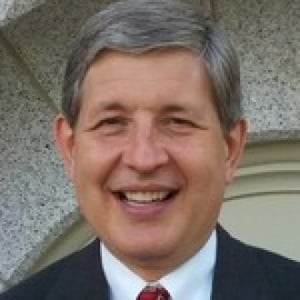
Partner, Schaerr Jaffe LLP
Gene Schaerr specializes in handling—and usually winning—civil appeals, writ proceedings and similar matters, both in appellate courts and in the law-focused proceedings at the trial-court or agency level that often determine success or failure on appeal. He has argued and won dozens of cases in a variety of forums—including the U.S. Supreme Court (where he has argued six cases), every federal circuit, and numerous federal district courts and state appellate courts. His win rate in the dozens of federal appeals he has argued in the past six years is over 75 percent.
He was a coordinator of Sidley Austin's appellate practice from 1993 until 2005, and from 2005 until 2014 was the chair of the nationwide appellate practice at Winston & Strawn—a practice he led to numerous recognitions in such publications as the Appellate Hot List. His personal practice successes have won him repeated recognition in such publications as Best Lawyers in Washington, D.C., Legal 500, D.C. Superlawyers, and Best Lawyers in America. In January 2014, Mr. Schaerr formed his own boutique litigation firm so that he could serve his clients without the conflicts and inefficiencies inherent in big-firm law practice.
Substantively, Mr. Schaerr's experience includes not only virtually every area of federal law, defamation, higher education law, immigration, insurance coverage, labor and employment, patent and trademark, privacy, product liability and warranty, statutory interpretation and tax.He has represented clients in virtually every sector, including automotive, communications, energy, financial services, health care, higher education, insurance, maritime, pharmaceuticals, technology and state and local government. He also teaches courses in Supreme Court litigation, religious freedom litigation and advanced litigation skills as an adjunct professor of law at the Brigham Young University law school.
Mr. Schaerr began law practice in 1987 following clerkships on the U.S. Supreme Court (for Chief Justice Warren Burger and Justice Antonin Scalia) and on the U.S. Court of Appeals for the D.C. Circuit (for then- Judge Kenneth Starr). He graduated in 1985 from the Yale Law School, where he was Editor-in-Chief of the Yale Journal on Regulation and Senior Editor of the Yale Law Journal. From 1991 to 1993, he served in the White House as Associate Counsel to the President, where he had responsibility for a wide range of constitutional and administrative-law issues, including those involving economic regulation, higher education, separation of powers, federalism and religious freedom. He serves as Chairman of the Constitutional Sources Project, a digital resource providing free public access to historical materials relevant to the U.S. Constitution.
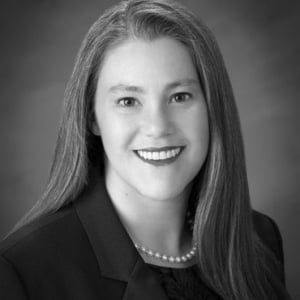
Judge, Arizona Court of Appeals, Division One
The Honorable Jennifer M. Perkins began service on the Arizona Court of Appeals, Division One, on October 30, 2017. At the time of her appointment by Governor Douglas Ducey, Judge Perkins was Assistant Solicitor General for the State of Arizona.
Judge Perkins was born in Portales, New Mexico, and primarily raised in Albuquerque. She attended the prestigious Albuquerque Academy from 1988-1995, before moving to Washington D.C. to attend the Elliott School of International Affairs at the George Washington University as a National Merit Scholar. Therafter, she relocated again to Dallas, Texas, and earned her juris doctor from the SMU Dedman School of Law, graduating cum laude in 2002.
Judge Perkins started her career at the law firm of Browning & Peifer (now Peifer, Hanson, Mullins, and Baker) in Albuquerque, New Mexico. While there, she litigated complex commercial matters including class action plaintiff and defense work, and assisted with employment and contract litigation. In 2003, the judge accompanied the Honorable James O. Browning in transitioning to the federal district court bench, serving as his first law clerk.
After her clerkship, Judge Perkins moved to Arizona to work for the Institute for Justice, Arizona Chapter, a public interest law firm. She spent five years with IJ-AZ litigating civil rights cases in Arizona and across the country. In 2009, the judge became Disciplinary Counsel for the Arizona Commission on Judicial Conduct, where she reviewed and prosecuted ethics complaints against state court judges throughout Arizona. After five years serving the state in this capacity, Judge Perkins entered private practice by joining an appellate law firm in Phoenix. While there, she worked on state and federal appeals involving a wide range of legal subjects, including complex business disputes, property rights, judicial ethics, and personal injury matters.
In January 2015, Judge Perkins joined the Office of the Arizona Attorney General to serve as the first Assistant Solicitor General; in that capacity, she was responsible for oversight of Attorney General Opinions and served as ethics counsel to the entire office. In addition to these two primary roles, the judge assisted on a variety of matters including trial and appellate litigation of election-related matters; federal appellate litigation with the Federalism Unit; state criminal appeals; and drafting amicus briefs on behalf of Arizona in state and federal courts.
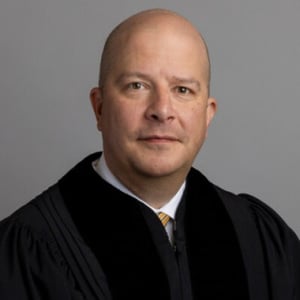
Chief Justice, Supreme Court of Georgia
Chief Justice Nels Peterson was appointed to the Georgia Supreme Court in 2016, and was elected to full six-year terms in 2018 and 2024. He previously served in a variety of other roles in Georgia state government, including as judge on the Georgia Court of Appeals, general counsel for the University System of Georgia, Georgia’s first solicitor general in the Attorney General’s Office, and executive counsel to the Governor.
Before entering state government, Nels practiced at King & Spalding LLP in Atlanta and clerked for Chief Judge William H. Pryor Jr. of the United States Court of Appeals for the Eleventh Circuit. He is a graduate of Kennesaw State University and Harvard Law School. Nels and his wife Jennifer have two children and live in Cobb County, where they teach adult Sunday school at Johnson Ferry Baptist Church.
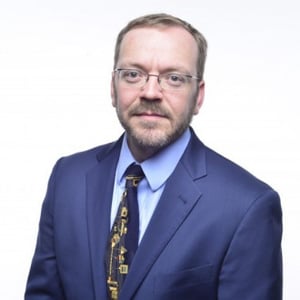
Vice President for Legal Affairs, Goldwater Institute

Chief Judge, United States Court of Appeals, Sixth Circuit
JEFFREY S. SUTTON is the Chief Judge of the United States Court of Appeals for the Sixth Circuit. He has served as Chair of the Federal Judicial Conference Committee on Rules of Practice and Procedure, Chair of the Advisory Committee on Appellate Rules, and Chair of the Supreme Court Fellows Commission. He currently serves as Chair of the Executive Committee of the Judicial Conference of the United States. Since 1993, Chief Judge Sutton has been an adjunct professor at The Ohio State University College of Law, where he teaches seminars on State Constitutional Law, the United States Supreme Court, and Appellate Advocacy. He also teaches a class on State Constitutional Law at Harvard Law School. Among other publications, he is the author of Who Decides? States as Laboratories of Constitutional Experimentation and 51 Imperfect Solutions: States and the Making of American Constitutional Law. He is the co-author of a casebook, State Constitutional Law: The Modern Experience, as well as The Law of Judicial Precedent. He is also the co-editor of The Essential Scalia: On the Constitution, the Courts, and the Rule of Law. In 2006, Chief Judge Sutton was elected to the American Law Institute, and in 2017 he was elected to its Council.

A Discussion with Governor Kemp and First Lady Marty Kemp
Atlanta Lawyer Chapter
Atlanta, GASupreme Court Review/Preview
Atlanta Lawyer Chapter
Atlanta, GAParental Rights from the Founding to Present Day
Michael P. Farris, Martin Guggenheim, Melissa Moschella, Anthony Sanders, Gene C. Schaerr
CLE credit for this event is available at On-Demand CLE. Parental rights have long occupied...
How Did State Constitutions Shape the American Founding?
Jennifer Perkins, Nels S.D. Peterson, Timothy Sandefur, Jeffrey S. Sutton
In this Federalist Society America 250 series, experts analyze modern legal and policy debates through...
Strategic Litigation in Georgia: Featuring Solicitor General John Henry Thompson
Atlanta Young Lawyer Chapter
Atlanta, GAPlenary Session 2: Legislation, Confirmations, and Oversight– Working and Succeeding in a Legislative Legal Role
Featuring: Ms. Ashley Callen, Partner, Jenner & Block LLP Mr. Michael Fragoso, Partner, Torridon Group...
Panel 2 - Tort Reform
2025 Georgia Conference
Atlanta, GA2025 Georgia Chapters Conference
Atlanta, GA[Sandbox] 2025 Georgia Chapters Conference
Federal Claims & Federal Careers: Fifth Amendment Takings, the Court of Federal Claims, Federal Nominations, and Launching a D.C. Legal Career from Georgia
Georgia Student Chapter
Athens, GA