
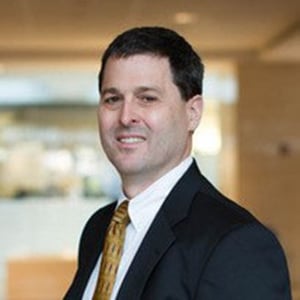
Scott K. Ginsburg Professor of Health Law & Policy, Georgetown University
David A. Hyman, M.D., J.D., is the Scott K. Ginsburg Professor of Health Law & Policy at Georgetown University. Professor Hyman focuses his research and writing on the regulation and financing of health care. He teaches or has taught health care regulation, civil procedure, insurance, medical malpractice, law & economics, professional responsibility, and tax policy.
While serving as Special Counsel to the Federal Trade Commission, Professor Hyman was principal author and project leader for the first joint report ever issued by the Federal Trade Commission and Department of Justice, “Improving Health Care: A Dose of Competition” (2004). He is also the author of Medicare Meets Mephistopheles, which was selected by the U.S. Chamber of Commerce/National Chamber Foundation as one of the top ten books of 2007, and the co-author (with Charles Silver) of Overcharged: Why Americans Pay Too Much for Health Care (2018). He has published widely in student-edited law reviews and peer-reviewed medical, health policy, law, and economics journals.
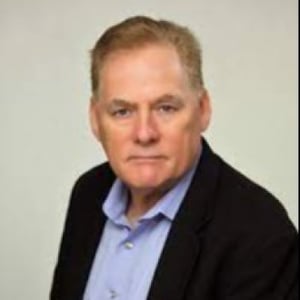
Former Associate Director for Social Sciences, FDA
Dr. Richard A. Williams was at the FDA’s Center for Food Safety and Nutrition for twenty-seven years. He ended up as the Director of Social Science and received the agency’s highest honor: the Award of Merit. Since leaving the agency, he has continued to study and write about food safety issues and has written professional articles in the Risk Analysis, the Journal of Food Science and Technology, Regulation magazine, and the Dickinson Law Review. He has written op-eds for the New York Times, USA Today, the Wall Street Journal, and the Chicago Tribune. He has appeared on television (CNN, C-SPAN) and radio (The Diane Rehm Show, NPR). Dr. Williams has given presentations throughout the U.S., Europe, South Korea, Australia, and China on food safety and nutrition issues. He regularly gives talks at the Society for Risk Analysis and Arizona State Universities Governance of Emerging Technologies and Science conference, in addition to the food industry and various academic settings.

Patrick Hotung Professor of Constitutional Law, Georgetown University Law Center
Randy Barnett is the Patrick Hotung Professor of Constitutional Law at Georgetown University Law Center. He has argued before the United States Supreme Court, tried murder cases to juries as a prosecutor in Chicago, and appeared as a prosecutor in the feature film Inalienable. He is the author of numerous books, including Restoring the Lost Constitution, The Structure of Liberty, Our Republican Constitution, and The Original Meaning of the Fourteenth Amendment. He has published two memoirs, A Life for Liberty: The Making of an American Originalist, and Felony Review: Tales of True Crime and Corruption in Chicago. He is currently working on a new book, Freedom and Flourishing: Libertarianism for the Real World.
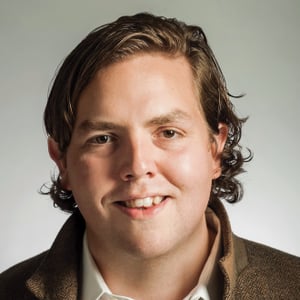
Harry Kalven, Jr. Professor of Law & Faculty Director, Constitutional Law Institute, University of Chicago Law School
William Baude is a Professor of Law and the Faculty Director of the Constitutional Law Institute at the University of Chicago Law School, where he teaches federal courts, constitutional law, and conflict of laws. His current research interests include different aspects of the Fourteenth Amendment (particularly both Section One and Section Three) and the nature of judicial discretion.
Among his other activities Baude is: the co-editor of two textbooks, The Constitution of the United States and Hart & Wechsler's Federal Courts in the Federal System; an Affiliated Scholar at the Center for the Study of Constitutional Originalism; a founding member of the Academic Freedom Alliance; a member of the American Law Institute; an occasional blogger at The Volokh Conspiracy; and a podcaster on Divided Argument. He also recently served on the Presidential Commission on the Supreme Court of the United States.
Professor Baude received his BS in Mathematics from the University of Chicago and his JD from Yale Law School. He then clerked for then-Judge Michael McConnell on the United States Court of Appeals, and Chief Justice John Roberts on the United States Supreme Court. Before joining the Chicago faculty, he was a fellow at the Stanford Constitutional Law Center, and a lawyer in Washington, DC.
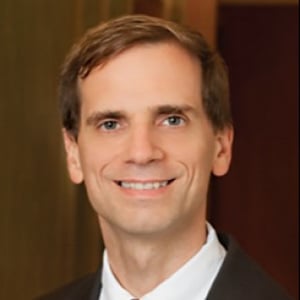
Judge, United States Court of Appeals, District of Columbia Circuit
Judge Katsas was appointed to the D.C. Circuit in December 2017. He graduated from Princeton University and Harvard Law School, where he was an executive editor on the Harvard Law Review. Between 1989 and 1992, he served as a law clerk to Judge Edward Becker on the Third Circuit, to then-Judge Clarence Thomas on the D.C. Circuit, and to Justice Thomas on the Supreme Court. Between 1992 and 2001, he was an associate and then partner in the Washington office of Jones Day, where he specialized in appellate and complex civil litigation. Between 2001 and 2009, he served in many senior positions in the Department of Justice, including as Assistant Attorney General for the Civil Division and as Acting Associate Attorney General. In 2009, he returned to Jones Day. From January to December 2017, he served as Deputy Assistant to the President and Deputy Counsel to the President.
Before joining the bench, Judge Katsas argued more than 75 appeals, including three cases in the Supreme Court, 13 cases in the D.C. Circuit, and cases in every other federal court of appeals. By appointment of the Chief Justice, he served on the Advisory Committee on Appellate Rules from 2013 to 2017. In 2016, he was elected to membership in the American Academy of Appellate Lawyers.
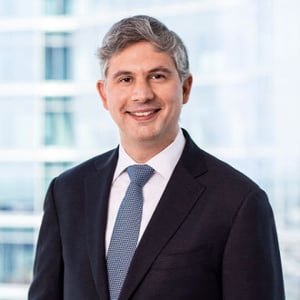
Partner, Keller Postman
Ashley Keller is one of the founding Partners of Keller Postman LLC. An experienced trial and appellate lawyer, Ashley helps set strategic direction across virtually all of the firm’s cases. He represents clients in a wide variety of practice areas and types of claims, including product-liability, antitrust, class action, and arbitration matters.
Ashley is one of the leaders of Keller Postman’s national product-liability practice. He leverages his ability to detangle complex concepts and develop novel legal theories to support individual client matters and as counsel on numerous product-liability multidistrict litigation matters. He chairs the plaintiffs’ Law & Briefing Committee in the Zantac (Ranitidine) Product Liability MDL in the U.S. District Court for the Southern District of Florida.
Ashley also litigates complex antitrust and class action matters. Among his notable cases, Ashley represents numerous States in antitrust litigation against Google for monopolizing products and services used by advertisers and publishers in online-display advertising.
Ashley also has played a central role in developing the firm’s pioneering arbitration practice, which includes pursuing individual arbitrations for clients whose claims are subject to arbitration clauses with class-action waivers. In part through managing the complexity of pursuing these individual claims simultaneously, the firm has secured millions in settlements for more than 500,000 employees and consumers.
Before launching Keller Postman, Ashley co-founded the litigation finance firm Gerchen Keller Capital, which grew to more than $1.3 billion in assets under management and was the world’s largest private investment manager focused on legal and regulatory risk prior to being acquired by Burford Capital in 2016.
Previously, Ashley was a partner at Bartlit Beck Herman Palenchar & Scott LLP, The American Lawyer’s litigation boutique of the year. While there, he handled various trial and appellate matters involving multi-billion-dollar securities and patent cases, contract disputes, mass torts, and class actions.
Ashley also worked as an analyst at Alyeska Investment Group, a Chicago-based market-neutral hedge fund, where he focused on investments in companies facing litigation and other complicated regulatory matters.
Ashley was named a 2021 Plaintiffs’ Lawyers Trailblazer by the National Law Journal. He is also listed on Lawdragon’s 500 Leading Lawyers in America, Lawdragon’s 500 Leading Plaintiff Consumer Lawyers, Lawdragon’s Leading Plaintiff Financial Lawyers, National Trial Lawyers’ Top 100, and Illinois Super Lawyers.
Ashley was a law clerk for Justice Anthony M. Kennedy at the Supreme Court of the United States and Judge Richard Posner at the U.S. Court of Appeals for the Seventh Circuit. He graduated magna cum laude from Harvard College, received his M.B.A. from the University of Chicago Booth School of Business and received his J.D. from the University of Chicago Law School, where he graduated first in his class.
Professor of Law, Herbert and Marjorie Fried Teaching Scholar, University of Chicago Law School
Genevieve Lakier’s research explores the connections between culture and law. She is currently engaged in a long-term project exploring the cultural history of the First Amendment, and another project exploring the changing role of the state in the regulation of sex.
Genevieve has an AB from Princeton University, a JD from New York University School of Law, and an MA and PhD in anthropology from the University of Chicago. Between 2006 and 2008, she was an Academy Scholar at the Weatherhead Center for International and Area Studies at Harvard University. After law school, she clerked for Judge Leonard B. Sand of the Southern District of New York and Judge Martha C. Daughtrey of the Sixth Circuit Court of Appeals. Before joining the faculty, Genevieve taught at the Law School as a Bigelow Fellow and Lecturer in Law.
Patrick Hotung Professor of Constitutional Law, Georgetown University Law Center
Randy Barnett is the Patrick Hotung Professor of Constitutional Law at Georgetown University Law Center. He has argued before the United States Supreme Court, tried murder cases to juries as a prosecutor in Chicago, and appeared as a prosecutor in the feature film Inalienable. He is the author of numerous books, including Restoring the Lost Constitution, The Structure of Liberty, Our Republican Constitution, and The Original Meaning of the Fourteenth Amendment. He has published two memoirs, A Life for Liberty: The Making of an American Originalist, and Felony Review: Tales of True Crime and Corruption in Chicago. He is currently working on a new book, Freedom and Flourishing: Libertarianism for the Real World.
Harry Kalven, Jr. Professor of Law & Faculty Director, Constitutional Law Institute, University of Chicago Law School
William Baude is a Professor of Law and the Faculty Director of the Constitutional Law Institute at the University of Chicago Law School, where he teaches federal courts, constitutional law, and conflict of laws. His current research interests include different aspects of the Fourteenth Amendment (particularly both Section One and Section Three) and the nature of judicial discretion.
Among his other activities Baude is: the co-editor of two textbooks, The Constitution of the United States and Hart & Wechsler's Federal Courts in the Federal System; an Affiliated Scholar at the Center for the Study of Constitutional Originalism; a founding member of the Academic Freedom Alliance; a member of the American Law Institute; an occasional blogger at The Volokh Conspiracy; and a podcaster on Divided Argument. He also recently served on the Presidential Commission on the Supreme Court of the United States.
Professor Baude received his BS in Mathematics from the University of Chicago and his JD from Yale Law School. He then clerked for then-Judge Michael McConnell on the United States Court of Appeals, and Chief Justice John Roberts on the United States Supreme Court. Before joining the Chicago faculty, he was a fellow at the Stanford Constitutional Law Center, and a lawyer in Washington, DC.
Judge, United States Court of Appeals, District of Columbia Circuit
Judge Katsas was appointed to the D.C. Circuit in December 2017. He graduated from Princeton University and Harvard Law School, where he was an executive editor on the Harvard Law Review. Between 1989 and 1992, he served as a law clerk to Judge Edward Becker on the Third Circuit, to then-Judge Clarence Thomas on the D.C. Circuit, and to Justice Thomas on the Supreme Court. Between 1992 and 2001, he was an associate and then partner in the Washington office of Jones Day, where he specialized in appellate and complex civil litigation. Between 2001 and 2009, he served in many senior positions in the Department of Justice, including as Assistant Attorney General for the Civil Division and as Acting Associate Attorney General. In 2009, he returned to Jones Day. From January to December 2017, he served as Deputy Assistant to the President and Deputy Counsel to the President.
Before joining the bench, Judge Katsas argued more than 75 appeals, including three cases in the Supreme Court, 13 cases in the D.C. Circuit, and cases in every other federal court of appeals. By appointment of the Chief Justice, he served on the Advisory Committee on Appellate Rules from 2013 to 2017. In 2016, he was elected to membership in the American Academy of Appellate Lawyers.
Partner, Keller Postman
Ashley Keller is one of the founding Partners of Keller Postman LLC. An experienced trial and appellate lawyer, Ashley helps set strategic direction across virtually all of the firm’s cases. He represents clients in a wide variety of practice areas and types of claims, including product-liability, antitrust, class action, and arbitration matters.
Ashley is one of the leaders of Keller Postman’s national product-liability practice. He leverages his ability to detangle complex concepts and develop novel legal theories to support individual client matters and as counsel on numerous product-liability multidistrict litigation matters. He chairs the plaintiffs’ Law & Briefing Committee in the Zantac (Ranitidine) Product Liability MDL in the U.S. District Court for the Southern District of Florida.
Ashley also litigates complex antitrust and class action matters. Among his notable cases, Ashley represents numerous States in antitrust litigation against Google for monopolizing products and services used by advertisers and publishers in online-display advertising.
Ashley also has played a central role in developing the firm’s pioneering arbitration practice, which includes pursuing individual arbitrations for clients whose claims are subject to arbitration clauses with class-action waivers. In part through managing the complexity of pursuing these individual claims simultaneously, the firm has secured millions in settlements for more than 500,000 employees and consumers.
Before launching Keller Postman, Ashley co-founded the litigation finance firm Gerchen Keller Capital, which grew to more than $1.3 billion in assets under management and was the world’s largest private investment manager focused on legal and regulatory risk prior to being acquired by Burford Capital in 2016.
Previously, Ashley was a partner at Bartlit Beck Herman Palenchar & Scott LLP, The American Lawyer’s litigation boutique of the year. While there, he handled various trial and appellate matters involving multi-billion-dollar securities and patent cases, contract disputes, mass torts, and class actions.
Ashley also worked as an analyst at Alyeska Investment Group, a Chicago-based market-neutral hedge fund, where he focused on investments in companies facing litigation and other complicated regulatory matters.
Ashley was named a 2021 Plaintiffs’ Lawyers Trailblazer by the National Law Journal. He is also listed on Lawdragon’s 500 Leading Lawyers in America, Lawdragon’s 500 Leading Plaintiff Consumer Lawyers, Lawdragon’s Leading Plaintiff Financial Lawyers, National Trial Lawyers’ Top 100, and Illinois Super Lawyers.
Ashley was a law clerk for Justice Anthony M. Kennedy at the Supreme Court of the United States and Judge Richard Posner at the U.S. Court of Appeals for the Seventh Circuit. He graduated magna cum laude from Harvard College, received his M.B.A. from the University of Chicago Booth School of Business and received his J.D. from the University of Chicago Law School, where he graduated first in his class.
Professor of Law, Herbert and Marjorie Fried Teaching Scholar, University of Chicago Law School
Genevieve Lakier’s research explores the connections between culture and law. She is currently engaged in a long-term project exploring the cultural history of the First Amendment, and another project exploring the changing role of the state in the regulation of sex.
Genevieve has an AB from Princeton University, a JD from New York University School of Law, and an MA and PhD in anthropology from the University of Chicago. Between 2006 and 2008, she was an Academy Scholar at the Weatherhead Center for International and Area Studies at Harvard University. After law school, she clerked for Judge Leonard B. Sand of the Southern District of New York and Judge Martha C. Daughtrey of the Sixth Circuit Court of Appeals. Before joining the faculty, Genevieve taught at the Law School as a Bigelow Fellow and Lecturer in Law.
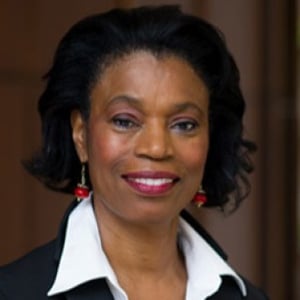
Henry R. Silverman Professor of Law and Professor of Philosophy, University of Pennsylvania Carey Law School
Anita L. Allen is the Henry R. Silverman Professor of Law and Professor of Philosophy. A graduate of Harvard Law School with a PhD from the University of Michigan in Philosophy, Allen is internationally renown as an expert on philosophical dimensions of privacy and data protection law, ethics, bioethics, legal philosophy, women’s rights, and diversity in higher education. She was Penn’s Vice Provost for Faculty from 2013-2020, and chaired the Provost's Arts Advisory Council. Allen is an elected member of the National Academy of Medicine, the American Law Institute and a fellow of the American Academy of Arts and Sciences. In 2018-19 she served as President of the Eastern Division of the American Philosiphical Association.
From 2010 to 2017, Allen served on President Obama’s Presidential Commission for the Study of Bioethical Issues. She was presented the Lifetime Achievement Award of the Electronic Privacy Information Center in 2015, and chaired its Board, 2019-2022. Allen has served on the faculty of the School of Criticism and Theory at Cornell, for which she is an advisor. A two-year term as an Associate of the Johns Hopkins Humanities Center concluded in 2018. She has been a visiting Professor at Tel Aviv University, Waseda University, Villanova, the University of Arizona, Harvard and Yale, and a Law and Public Affairs Fellow at Princeton. She was awarded an honorary Doctorate from Tilburg University (Netherlands) in 2019. She has written over a hundred articles and chapters, and her books include Unpopular Privacy: What Must We Hide (Oxford, 2011); Privacy Law and Society (Thomson/West, 2017); The New Ethics: A Guided Tour of the 21st Century Moral Landscape (Miramax/Hyperion, 2004); Why Privacy Isn’t Everything: Feminist Reflections on Personal Accountability (Rowman and Littlefield, 2003), and Uneasy Access: Privacy of Women in a Free Society (1988). Allen has given hundreds of talks all over the world and appeared on television, radio and written for major media. She currently serves on the Board of the National Constitution Center, and has served on numerous other boards and professional advisory boards, including the Pennsylvania Board of Continuing Judicial Education, the Association for Practical and Professional Ethics, the Bazelon Center for Mental Health Law, the AALS Executive Committee, the Maternity Care Coalition and the West Philadelphia Alliance for Children. She is a member of the Pennsylvania and New York bars, and formerly taught at Georgetown University Law Center for ten years and the University of Pittsburgh, after practicing briefly at Carvath, Swaine & Moore.
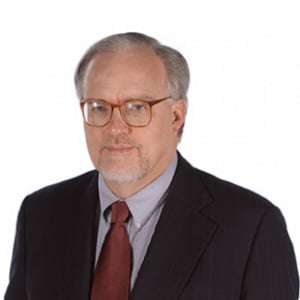
Chauncey Stillman Professor of Law, University of Michigan Law School
Carl E. Schneider, '79, the Chauncey Stillman Professor of Law and Professor of Internal Medicine, teaches courses on law and medicine, regulating research, property, law and morals, the sociology and ethics of the legal profession, and writing briefs. He holds a joint appointment in U-M’s Medical School.
A central theme in his scholarship criticizes some dominant regulatory ideas, particularly those in the law of medicine. For example, his book The Censor's Hand: The Misregulation of Human Subject Research (MIT Press, 2015), examines a regulatory system whose usefulness is widely assumed but quite unproved and argues that that system is so perversely constructed that it cannot help doing more harm than good. Another example is More Than You Wanted to Know: The Failure of Mandated Disclosure (Princeton University Press, 2014), coauthored with Omri Ben-Shahar. It explains why government-mandated disclosure may be the most adored, most used, and least successful regulatory method in our time. His The Practice of Autonomy: Patients, Doctors, and Medical Decisions (Oxford University Press, 1998), which analyzes the malign effects of making patient autonomy the regulatory summum bonum, is another example of the project.
Professor Schneider is also the coauthor of two innovative casebooks: With Marsha Garrison, he wrote The Law of Bioethics: Individual Autonomy and Social Regulation (West, 2015, 3rd edition), a pioneering casebook in what was then a new field. With Margaret F. Brinig, he wrote An Invitation to Family Law (West, 2007, 3rd edition). This casebook approaches family law conceptually: Each chapter discusses an area of family law, and each chapter introduces students to a systematic discussion of a recurring jurisprudential issue (like the problem of rules and discretion, or the legal principle of autonomy).
Professor Schneider served two terms on the President's Bioethics Council. He has been a visiting professor at Cambridge University, the University of Tokyo, Kyoto University, and the United States Air Force Academy (twice).
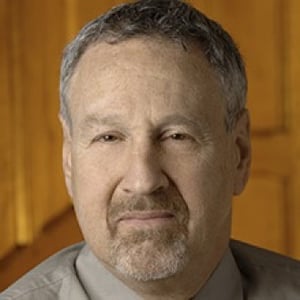
Simeon E. Baldwin Professor Emeritus of Law, Yale Law School
Peter H. Schuck is the Simeon E. Baldwin Professor Emeritus of Law and Professor (Adjunct) of Law at Yale Law School where he has held the chair since 1984. He has also served as Deputy Dean. His major fields of teaching and research are tort law; immigration, citizenship, and refugee law; groups, diversity, and law; and administrative law. His most recent books include Targeting in Social Programs: Avoiding Bad Bets, Removing Bad Apples; Meditations of a Militant Moderate: Cool Views on Hot Topics; Immigration Stories; Foundations of Administrative Law; Diversity in America: Keeping Government at a Safe Distance; and The Limits of Law: Essays on Democratic Governance. He is also co-editor, with James Q. Wilson, of Understanding America. He is a member of the American Law Institute's advisory committee for the Restatement of Torts (Third), Basic Principles, and a contributing editor to The American Lawyer. Prior to joining Yale, he was Principal Deputy Assistant Secretary for Planning and Evaluation in the U.S. Department of Health, Education, and Welfare. Professor Schuck holds a B.A. from Cornell, a J.D. from Harvard Law School, an LL.M. in International Law from N.Y.U., and an M.A. in Government from Harvard.
Senior Litigation Counsel, American Center for Law and Justice
Walter M. Weber is Senior Counsel for the ACLJ in the Washington, D.C. office. A highly regarded legal writer, Weber received his bachelor’s degree from Princeton University and his law degree from Yale Law School.
Weber emphasizes First Amendment law and has written briefs in many landmark cases at the Supreme Court including NOW v. Scheidler, Lamb’s Chapel v. Center Moriches School District and Bray v. Alexandria Women’s Health Clinic.
Weber has argued more than a dozen times in appeals before federal and state courts. Prior to joining the ACLJ, Weber served as a staff attorney with the Catholic League for Religious and Civil Rights.
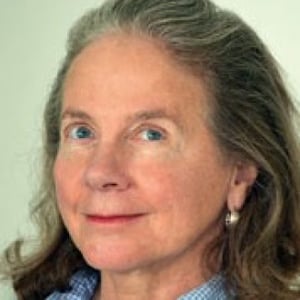
Professor of Law, Dean Emerita, and Co-Director, Sports Law Track - Graduate Program in Entertainment, Arts and Sports Law LL.M., University of Miami School of Law
Patricia D. White is a Professor of Law and was the University of Miami School of Law's eleventh dean from 2009-2019. Her legal career spans over four decades as an attorney and educator. She was the first woman law school dean in Arizona and the longest serving one in the history of Arizona State University’s Sandra Day O’Connor College of Law. Her prominence in the field of legal education has led to her being recognized as one of the most influential and innovative people in legal education by National Jurist magazine in 2016, 2015, 2014, 2013 and in the 2012 ranking she was named the top woman on the list.
White chairs the ABA's Commission on the Future of Legal Education, which aims to influence dramatic changes in the legal profession over the next decade. Under White’s leadership, Miami Law has also been recognized by Pre-Law Magazine as one the “20 Most Innovative Law Schools” in 2017. Similarly, Innovation 800, published in 2017 by Cambridge University, included Miami Law as a "Leader in Learning" and one of the most innovative law schools. The London-based Financial Times, considered one of the premiere international daily newspapers with a special emphasis on business and economic news, has also tipped its hat to Miami Law’s innovation. In its “FT Special Report on Innovative Law Schools”, it ranked Miami Law as one of the most innovative law schools in the world in 2015 and 2016. Innovation accolades also came for Miami Law's specialty areas, such as the Billboard Magazine 2017 ranking of Miami Law as a top school for music law in the U.S. The Legal Services Innovation Index ranked the University of Miami Law in the top four for law schools delivering innovation and technology programs in 2017.
After becoming the dean of Miami Law in 2009, White continued her longstanding commitment to students, the transformation of legal education and public service. She transformed Miami Law’s student services program, including adding the unique Student Development Program, the AskUs Fellows initiative, Academic Achievement Program and the Office of Professionalism to name a few. She established the LawWithoutWalls program, linking students and faculty from over 30 academic institutions around the world to examine issues and develop new solutions in legal education and practice; and Legal Corps a novel fellowship program that placed new law school graduates in not for profit and public sector organizations across the nations and the globe.
Under White's leadership, the number of clinics at Miami Law more than doubled, bringing the total to 10. In 2011 Miami Law was honored by the American Bar Association Law Student Division with the Judy M. Weightman Memorial Public Interest Award, in recognition of the law school's strong commitment to public interest through the HOPE Public Interest Resource Center. She has won many awards, including the 2012 Equal Justice Leadership Award, given by Legal Services of Greater Miami for her commitment to public service, and the Judge Learned Hand Award for distinguished public service, from the Arizona chapter of the American Jewish Committee.
White received degrees in philosophy and law (B.A. 1971, J.D. 1974, M.A. 1974) from the University of Michigan. While attending law school, she was also a graduate student in philosophy and an associate editor of the law review. She began her legal practice in Washington, D.C., at Steptoe & Johnson and then moved to Caplin & Drysdale. Georgetown University Law hired White onto the faculty in 1979, and in 1988 she joined her alma mater, the University of Michigan. While at Michigan, she was of counsel to the Detroit firm Bodman, Longley & Dahling, and served for a year as tax advisor to the Economic Study Committee of Major League Baseball. In 1994, she joined the law faculty at the University of Utah, and was of counsel to Parsons, Behle & Latimer. She is a member of the bars of the District of Columbia, Michigan, and Utah, and is an elected Fellow of the American College of Tax Counsel.
During her career, White has worked in the areas of tax law, torts, bioethics, philosophy of law, and trusts and estates, and has published in prominent law and bioethics journals.
Henry R. Silverman Professor of Law and Professor of Philosophy, University of Pennsylvania Carey Law School
Anita L. Allen is the Henry R. Silverman Professor of Law and Professor of Philosophy. A graduate of Harvard Law School with a PhD from the University of Michigan in Philosophy, Allen is internationally renown as an expert on philosophical dimensions of privacy and data protection law, ethics, bioethics, legal philosophy, women’s rights, and diversity in higher education. She was Penn’s Vice Provost for Faculty from 2013-2020, and chaired the Provost's Arts Advisory Council. Allen is an elected member of the National Academy of Medicine, the American Law Institute and a fellow of the American Academy of Arts and Sciences. In 2018-19 she served as President of the Eastern Division of the American Philosiphical Association.
From 2010 to 2017, Allen served on President Obama’s Presidential Commission for the Study of Bioethical Issues. She was presented the Lifetime Achievement Award of the Electronic Privacy Information Center in 2015, and chaired its Board, 2019-2022. Allen has served on the faculty of the School of Criticism and Theory at Cornell, for which she is an advisor. A two-year term as an Associate of the Johns Hopkins Humanities Center concluded in 2018. She has been a visiting Professor at Tel Aviv University, Waseda University, Villanova, the University of Arizona, Harvard and Yale, and a Law and Public Affairs Fellow at Princeton. She was awarded an honorary Doctorate from Tilburg University (Netherlands) in 2019. She has written over a hundred articles and chapters, and her books include Unpopular Privacy: What Must We Hide (Oxford, 2011); Privacy Law and Society (Thomson/West, 2017); The New Ethics: A Guided Tour of the 21st Century Moral Landscape (Miramax/Hyperion, 2004); Why Privacy Isn’t Everything: Feminist Reflections on Personal Accountability (Rowman and Littlefield, 2003), and Uneasy Access: Privacy of Women in a Free Society (1988). Allen has given hundreds of talks all over the world and appeared on television, radio and written for major media. She currently serves on the Board of the National Constitution Center, and has served on numerous other boards and professional advisory boards, including the Pennsylvania Board of Continuing Judicial Education, the Association for Practical and Professional Ethics, the Bazelon Center for Mental Health Law, the AALS Executive Committee, the Maternity Care Coalition and the West Philadelphia Alliance for Children. She is a member of the Pennsylvania and New York bars, and formerly taught at Georgetown University Law Center for ten years and the University of Pittsburgh, after practicing briefly at Carvath, Swaine & Moore.
Chauncey Stillman Professor of Law, University of Michigan Law School
Carl E. Schneider, '79, the Chauncey Stillman Professor of Law and Professor of Internal Medicine, teaches courses on law and medicine, regulating research, property, law and morals, the sociology and ethics of the legal profession, and writing briefs. He holds a joint appointment in U-M’s Medical School.
A central theme in his scholarship criticizes some dominant regulatory ideas, particularly those in the law of medicine. For example, his book The Censor's Hand: The Misregulation of Human Subject Research (MIT Press, 2015), examines a regulatory system whose usefulness is widely assumed but quite unproved and argues that that system is so perversely constructed that it cannot help doing more harm than good. Another example is More Than You Wanted to Know: The Failure of Mandated Disclosure (Princeton University Press, 2014), coauthored with Omri Ben-Shahar. It explains why government-mandated disclosure may be the most adored, most used, and least successful regulatory method in our time. His The Practice of Autonomy: Patients, Doctors, and Medical Decisions (Oxford University Press, 1998), which analyzes the malign effects of making patient autonomy the regulatory summum bonum, is another example of the project.
Professor Schneider is also the coauthor of two innovative casebooks: With Marsha Garrison, he wrote The Law of Bioethics: Individual Autonomy and Social Regulation (West, 2015, 3rd edition), a pioneering casebook in what was then a new field. With Margaret F. Brinig, he wrote An Invitation to Family Law (West, 2007, 3rd edition). This casebook approaches family law conceptually: Each chapter discusses an area of family law, and each chapter introduces students to a systematic discussion of a recurring jurisprudential issue (like the problem of rules and discretion, or the legal principle of autonomy).
Professor Schneider served two terms on the President's Bioethics Council. He has been a visiting professor at Cambridge University, the University of Tokyo, Kyoto University, and the United States Air Force Academy (twice).
Simeon E. Baldwin Professor Emeritus of Law, Yale Law School
Peter H. Schuck is the Simeon E. Baldwin Professor Emeritus of Law and Professor (Adjunct) of Law at Yale Law School where he has held the chair since 1984. He has also served as Deputy Dean. His major fields of teaching and research are tort law; immigration, citizenship, and refugee law; groups, diversity, and law; and administrative law. His most recent books include Targeting in Social Programs: Avoiding Bad Bets, Removing Bad Apples; Meditations of a Militant Moderate: Cool Views on Hot Topics; Immigration Stories; Foundations of Administrative Law; Diversity in America: Keeping Government at a Safe Distance; and The Limits of Law: Essays on Democratic Governance. He is also co-editor, with James Q. Wilson, of Understanding America. He is a member of the American Law Institute's advisory committee for the Restatement of Torts (Third), Basic Principles, and a contributing editor to The American Lawyer. Prior to joining Yale, he was Principal Deputy Assistant Secretary for Planning and Evaluation in the U.S. Department of Health, Education, and Welfare. Professor Schuck holds a B.A. from Cornell, a J.D. from Harvard Law School, an LL.M. in International Law from N.Y.U., and an M.A. in Government from Harvard.
Senior Litigation Counsel, American Center for Law and Justice
Walter M. Weber is Senior Counsel for the ACLJ in the Washington, D.C. office. A highly regarded legal writer, Weber received his bachelor’s degree from Princeton University and his law degree from Yale Law School.
Weber emphasizes First Amendment law and has written briefs in many landmark cases at the Supreme Court including NOW v. Scheidler, Lamb’s Chapel v. Center Moriches School District and Bray v. Alexandria Women’s Health Clinic.
Weber has argued more than a dozen times in appeals before federal and state courts. Prior to joining the ACLJ, Weber served as a staff attorney with the Catholic League for Religious and Civil Rights.
Professor of Law, Dean Emerita, and Co-Director, Sports Law Track - Graduate Program in Entertainment, Arts and Sports Law LL.M., University of Miami School of Law
Patricia D. White is a Professor of Law and was the University of Miami School of Law's eleventh dean from 2009-2019. Her legal career spans over four decades as an attorney and educator. She was the first woman law school dean in Arizona and the longest serving one in the history of Arizona State University’s Sandra Day O’Connor College of Law. Her prominence in the field of legal education has led to her being recognized as one of the most influential and innovative people in legal education by National Jurist magazine in 2016, 2015, 2014, 2013 and in the 2012 ranking she was named the top woman on the list.
White chairs the ABA's Commission on the Future of Legal Education, which aims to influence dramatic changes in the legal profession over the next decade. Under White’s leadership, Miami Law has also been recognized by Pre-Law Magazine as one the “20 Most Innovative Law Schools” in 2017. Similarly, Innovation 800, published in 2017 by Cambridge University, included Miami Law as a "Leader in Learning" and one of the most innovative law schools. The London-based Financial Times, considered one of the premiere international daily newspapers with a special emphasis on business and economic news, has also tipped its hat to Miami Law’s innovation. In its “FT Special Report on Innovative Law Schools”, it ranked Miami Law as one of the most innovative law schools in the world in 2015 and 2016. Innovation accolades also came for Miami Law's specialty areas, such as the Billboard Magazine 2017 ranking of Miami Law as a top school for music law in the U.S. The Legal Services Innovation Index ranked the University of Miami Law in the top four for law schools delivering innovation and technology programs in 2017.
After becoming the dean of Miami Law in 2009, White continued her longstanding commitment to students, the transformation of legal education and public service. She transformed Miami Law’s student services program, including adding the unique Student Development Program, the AskUs Fellows initiative, Academic Achievement Program and the Office of Professionalism to name a few. She established the LawWithoutWalls program, linking students and faculty from over 30 academic institutions around the world to examine issues and develop new solutions in legal education and practice; and Legal Corps a novel fellowship program that placed new law school graduates in not for profit and public sector organizations across the nations and the globe.
Under White's leadership, the number of clinics at Miami Law more than doubled, bringing the total to 10. In 2011 Miami Law was honored by the American Bar Association Law Student Division with the Judy M. Weightman Memorial Public Interest Award, in recognition of the law school's strong commitment to public interest through the HOPE Public Interest Resource Center. She has won many awards, including the 2012 Equal Justice Leadership Award, given by Legal Services of Greater Miami for her commitment to public service, and the Judge Learned Hand Award for distinguished public service, from the Arizona chapter of the American Jewish Committee.
White received degrees in philosophy and law (B.A. 1971, J.D. 1974, M.A. 1974) from the University of Michigan. While attending law school, she was also a graduate student in philosophy and an associate editor of the law review. She began her legal practice in Washington, D.C., at Steptoe & Johnson and then moved to Caplin & Drysdale. Georgetown University Law hired White onto the faculty in 1979, and in 1988 she joined her alma mater, the University of Michigan. While at Michigan, she was of counsel to the Detroit firm Bodman, Longley & Dahling, and served for a year as tax advisor to the Economic Study Committee of Major League Baseball. In 1994, she joined the law faculty at the University of Utah, and was of counsel to Parsons, Behle & Latimer. She is a member of the bars of the District of Columbia, Michigan, and Utah, and is an elected Fellow of the American College of Tax Counsel.
During her career, White has worked in the areas of tax law, torts, bioethics, philosophy of law, and trusts and estates, and has published in prominent law and bioethics journals.
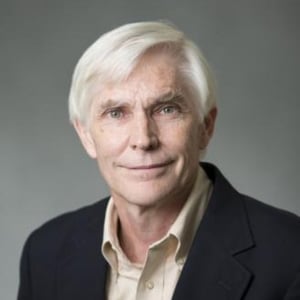
Senior Fellow, Manhattan Institute
Peter Huber, who died in 2021, was a senior fellow at the Manhattan Institute, where he wrote on drug development, energy, technology, and the law. He was the author of The Cure in the Code: How 20th Century Law Is Undermining 21st Century Medicine (2013); The Bottomless Well: The Twilight of Fuel, the Virtue of Waste, and Why We Will Never Run Out of Energy (2005), coauthored with Mark P. Mills, which Bill Gates said “is the only book I’ve ever seen that really explains energy, its history and what it will be like going forward”; and Hard Green: Saving the Environment from the Environmentalists (2000), which William F. Buckley, Jr., called “the richest contribution ever made to the greening of the political mind” and which set out a new conservative manifesto on the environment that advocates a return to conservation and environmental policy based on sound science and market economics.
Huber’s other books included Judging Science: Scientific Knowledge and the Federal Courts (1999), Law and Disorder in Cyberspace: Abolish the FCC and Let Common Law Rule the Telecosm (1997), Orwell’s Revenge: The 1984 Palimpsest (1994), Galileo’s Revenge: Junk Science in the Courtroom (1991), and Liability: The Legal Revolution and Its Consequences (1988). He published articles in scholarly journals, such as the Harvard Law Review and Yale Law Journal, and in such publications as Science, Wall Street Journal, Reason, Regulation, and National Review. He appeared on numerous TV and radio programs, including Face the Nation and The NewsHour with Jim Lehrer.
Before joining MI, Huber was an associate professor at MIT. He clerked on the D.C. Circuit Court of Appeals for Ruth Bader Ginsburg and on the U.S. Supreme Court for Sandra Day O’Connor. Huber was a partner at the Washington, D.C., law firm Kellogg, Huber, Hansen and Todd. He held a J.D. from Harvard University and a Ph.D. in mechanical engineering from MIT.
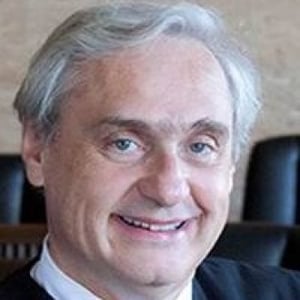
Former Judge, United States Court of Appeals, Ninth Circuit
Judge Kozinski served as a United States Circuit Judge for the Ninth Circuit from November 1985 until December 2017. He served as Chief Judge from 2007 to 2014. He graduated from UCLA, receiving an A.B. degree in 1972, and from UCLA Law School, receiving a J.D. degree in 1975.
Prior to his appointment to the appellate bench, Judge Kozinski served as Chief Judge of the United States Claims Court, 1982-85; Special Counsel, Merit Systems Protection Board, 1981-82; Assistant Counsel, Office of Counsel to the President, 1981; Deputy Legal Counsel, Office of President-Elect Reagan, 1980-81; Attorney, Covington & Burling, 1979-81; Attorney, Forry Golbert Singer & Gelles, 1977-79; Law Clerk to Chief Justice Warren E. Burger, 1976-77; and Law Clerk to Circuit Judge Anthony M. Kennedy, 1975-76.
Judge Kozinski is married to Marcy Jane Tiffany and has three children: Yale, Wyatt and Clayton, and three grandchildren: Quinn, Owen and Anna.
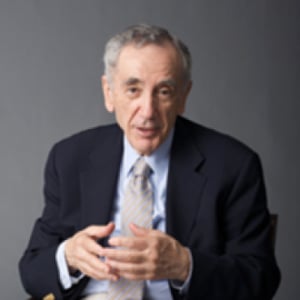
Professor Emeritus, Georgetown University Law Center
Professor Page’s academic work lies in the fields of torts, products liability, and food, drug and cosmetics regulation. His most recent scholarship includes a book entitled Torts: Proximate Cause (2003); articles entitled “Roscoe Pound, Melvin Belli and the Personal-Injury Bar: The Tale of an Odd Coupling,’ in 26 Thomas M. Cooley Law Review 639 (2009), and “The Voice of Reason: The Products Liability Scholarship of Gary T. Schwartz,” in 53 South Carolina Law Review 797 (2002); and chapters entitled “American Tort Law and the Right to Privacy,” in Personality Rights in European Tort Law (G. Bruggemeier et al. Eds., 2010), and “Reflections on Pain-and-Suffering Damages in the United States,” in Liability in the Third Millennium (A. Ciacchi et al. Eds., 2009).
Professor Page has engaged in advocacy promoting consumer product safety and workplace health and safety before committees of Congress and in the national media, has served on the Board of Directors of Public Citizen, Inc., and is currently the faculty advisor to the Stabile Graduate Law Fellow, dealing with issues relating to the safety of personal-care products.
In addition, he writes about Latin America. His latest volume on the subject, The Brazilians,explains what makes Brazilians Brazilian. His other Latin America-related publications include The Revolution That Never Was: Northeast Brazil, 1955-1964 (1972); Perón: A Biography (1983); a lengthy introduction to Eva Perón, In My Own Words (1996); the prologue to Argentina y la Europa del nazismo: Sus secuelas (I. Klich & C. Buchrucker Eds., 2009); and numerous articles and reviews in newspapers and magazines in the U.S., Argentina and Brazil. From 2003 to 2017 he served as the Director of the Center for the Advancement of the Rule of Law in the Americas at the Law Center. He continues to be a member of the Associated Faculty of the Latin American Studies Program at Georgetown University.
Scott K. Ginsburg Professor of Health Law & Policy, Georgetown University
David A. Hyman, M.D., J.D., is the Scott K. Ginsburg Professor of Health Law & Policy at Georgetown University. Professor Hyman focuses his research and writing on the regulation and financing of health care. He teaches or has taught health care regulation, civil procedure, insurance, medical malpractice, law & economics, professional responsibility, and tax policy.
While serving as Special Counsel to the Federal Trade Commission, Professor Hyman was principal author and project leader for the first joint report ever issued by the Federal Trade Commission and Department of Justice, “Improving Health Care: A Dose of Competition” (2004). He is also the author of Medicare Meets Mephistopheles, which was selected by the U.S. Chamber of Commerce/National Chamber Foundation as one of the top ten books of 2007, and the co-author (with Charles Silver) of Overcharged: Why Americans Pay Too Much for Health Care (2018). He has published widely in student-edited law reviews and peer-reviewed medical, health policy, law, and economics journals.
Former Associate Director for Social Sciences, FDA
Dr. Richard A. Williams was at the FDA’s Center for Food Safety and Nutrition for twenty-seven years. He ended up as the Director of Social Science and received the agency’s highest honor: the Award of Merit. Since leaving the agency, he has continued to study and write about food safety issues and has written professional articles in the Risk Analysis, the Journal of Food Science and Technology, Regulation magazine, and the Dickinson Law Review. He has written op-eds for the New York Times, USA Today, the Wall Street Journal, and the Chicago Tribune. He has appeared on television (CNN, C-SPAN) and radio (The Diane Rehm Show, NPR). Dr. Williams has given presentations throughout the U.S., Europe, South Korea, Australia, and China on food safety and nutrition issues. He regularly gives talks at the Society for Risk Analysis and Arizona State Universities Governance of Emerging Technologies and Science conference, in addition to the food industry and various academic settings.
Patrick Hotung Professor of Constitutional Law, Georgetown University Law Center
Randy Barnett is the Patrick Hotung Professor of Constitutional Law at Georgetown University Law Center. He has argued before the United States Supreme Court, tried murder cases to juries as a prosecutor in Chicago, and appeared as a prosecutor in the feature film Inalienable. He is the author of numerous books, including Restoring the Lost Constitution, The Structure of Liberty, Our Republican Constitution, and The Original Meaning of the Fourteenth Amendment. He has published two memoirs, A Life for Liberty: The Making of an American Originalist, and Felony Review: Tales of True Crime and Corruption in Chicago. He is currently working on a new book, Freedom and Flourishing: Libertarianism for the Real World.
Patrick Hotung Professor of Constitutional Law, Georgetown University Law Center
Randy Barnett is the Patrick Hotung Professor of Constitutional Law at Georgetown University Law Center. He has argued before the United States Supreme Court, tried murder cases to juries as a prosecutor in Chicago, and appeared as a prosecutor in the feature film Inalienable. He is the author of numerous books, including Restoring the Lost Constitution, The Structure of Liberty, Our Republican Constitution, and The Original Meaning of the Fourteenth Amendment. He has published two memoirs, A Life for Liberty: The Making of an American Originalist, and Felony Review: Tales of True Crime and Corruption in Chicago. He is currently working on a new book, Freedom and Flourishing: Libertarianism for the Real World.
Harry Kalven, Jr. Professor of Law & Faculty Director, Constitutional Law Institute, University of Chicago Law School
William Baude is a Professor of Law and the Faculty Director of the Constitutional Law Institute at the University of Chicago Law School, where he teaches federal courts, constitutional law, and conflict of laws. His current research interests include different aspects of the Fourteenth Amendment (particularly both Section One and Section Three) and the nature of judicial discretion.
Among his other activities Baude is: the co-editor of two textbooks, The Constitution of the United States and Hart & Wechsler's Federal Courts in the Federal System; an Affiliated Scholar at the Center for the Study of Constitutional Originalism; a founding member of the Academic Freedom Alliance; a member of the American Law Institute; an occasional blogger at The Volokh Conspiracy; and a podcaster on Divided Argument. He also recently served on the Presidential Commission on the Supreme Court of the United States.
Professor Baude received his BS in Mathematics from the University of Chicago and his JD from Yale Law School. He then clerked for then-Judge Michael McConnell on the United States Court of Appeals, and Chief Justice John Roberts on the United States Supreme Court. Before joining the Chicago faculty, he was a fellow at the Stanford Constitutional Law Center, and a lawyer in Washington, DC.
Judge, United States Court of Appeals, District of Columbia Circuit
Judge Katsas was appointed to the D.C. Circuit in December 2017. He graduated from Princeton University and Harvard Law School, where he was an executive editor on the Harvard Law Review. Between 1989 and 1992, he served as a law clerk to Judge Edward Becker on the Third Circuit, to then-Judge Clarence Thomas on the D.C. Circuit, and to Justice Thomas on the Supreme Court. Between 1992 and 2001, he was an associate and then partner in the Washington office of Jones Day, where he specialized in appellate and complex civil litigation. Between 2001 and 2009, he served in many senior positions in the Department of Justice, including as Assistant Attorney General for the Civil Division and as Acting Associate Attorney General. In 2009, he returned to Jones Day. From January to December 2017, he served as Deputy Assistant to the President and Deputy Counsel to the President.
Before joining the bench, Judge Katsas argued more than 75 appeals, including three cases in the Supreme Court, 13 cases in the D.C. Circuit, and cases in every other federal court of appeals. By appointment of the Chief Justice, he served on the Advisory Committee on Appellate Rules from 2013 to 2017. In 2016, he was elected to membership in the American Academy of Appellate Lawyers.
Partner, Keller Postman
Ashley Keller is one of the founding Partners of Keller Postman LLC. An experienced trial and appellate lawyer, Ashley helps set strategic direction across virtually all of the firm’s cases. He represents clients in a wide variety of practice areas and types of claims, including product-liability, antitrust, class action, and arbitration matters.
Ashley is one of the leaders of Keller Postman’s national product-liability practice. He leverages his ability to detangle complex concepts and develop novel legal theories to support individual client matters and as counsel on numerous product-liability multidistrict litigation matters. He chairs the plaintiffs’ Law & Briefing Committee in the Zantac (Ranitidine) Product Liability MDL in the U.S. District Court for the Southern District of Florida.
Ashley also litigates complex antitrust and class action matters. Among his notable cases, Ashley represents numerous States in antitrust litigation against Google for monopolizing products and services used by advertisers and publishers in online-display advertising.
Ashley also has played a central role in developing the firm’s pioneering arbitration practice, which includes pursuing individual arbitrations for clients whose claims are subject to arbitration clauses with class-action waivers. In part through managing the complexity of pursuing these individual claims simultaneously, the firm has secured millions in settlements for more than 500,000 employees and consumers.
Before launching Keller Postman, Ashley co-founded the litigation finance firm Gerchen Keller Capital, which grew to more than $1.3 billion in assets under management and was the world’s largest private investment manager focused on legal and regulatory risk prior to being acquired by Burford Capital in 2016.
Previously, Ashley was a partner at Bartlit Beck Herman Palenchar & Scott LLP, The American Lawyer’s litigation boutique of the year. While there, he handled various trial and appellate matters involving multi-billion-dollar securities and patent cases, contract disputes, mass torts, and class actions.
Ashley also worked as an analyst at Alyeska Investment Group, a Chicago-based market-neutral hedge fund, where he focused on investments in companies facing litigation and other complicated regulatory matters.
Ashley was named a 2021 Plaintiffs’ Lawyers Trailblazer by the National Law Journal. He is also listed on Lawdragon’s 500 Leading Lawyers in America, Lawdragon’s 500 Leading Plaintiff Consumer Lawyers, Lawdragon’s Leading Plaintiff Financial Lawyers, National Trial Lawyers’ Top 100, and Illinois Super Lawyers.
Ashley was a law clerk for Justice Anthony M. Kennedy at the Supreme Court of the United States and Judge Richard Posner at the U.S. Court of Appeals for the Seventh Circuit. He graduated magna cum laude from Harvard College, received his M.B.A. from the University of Chicago Booth School of Business and received his J.D. from the University of Chicago Law School, where he graduated first in his class.
Professor of Law, Herbert and Marjorie Fried Teaching Scholar, University of Chicago Law School
Genevieve Lakier’s research explores the connections between culture and law. She is currently engaged in a long-term project exploring the cultural history of the First Amendment, and another project exploring the changing role of the state in the regulation of sex.
Genevieve has an AB from Princeton University, a JD from New York University School of Law, and an MA and PhD in anthropology from the University of Chicago. Between 2006 and 2008, she was an Academy Scholar at the Weatherhead Center for International and Area Studies at Harvard University. After law school, she clerked for Judge Leonard B. Sand of the Southern District of New York and Judge Martha C. Daughtrey of the Sixth Circuit Court of Appeals. Before joining the faculty, Genevieve taught at the Law School as a Bigelow Fellow and Lecturer in Law.

Deep Dive Episode 201 – Fixing Food: An FDA Insider Unravels the Myths and the Solutions
David Hyman, Richard A. Williams
In this episode, Professor David Hyman interviews Dr. Richard Williams about Dr. Williams' new book,...
Deep Dive Episode 201 – Fixing Food: An FDA Insider Unravels the Myths and the Solutions
Regulatory Transparency Project's Fourth Branch Podcast
TeleforumMobile Lawyers Chapter: Countering Social Justice and Wokeness
Mobile Lawyers Chapter
Mobile, ALPrivate Entities and Public Concern
Randy E. Barnett, William Baude, Gregory G. Katsas, Ashley Keller, Genevieve Lakier
Aside from the purely legal questions already addressed in this programming series, how should we...
Private Entities and Public Concern
Randy E. Barnett, William Baude, Gregory G. Katsas, Ashley Keller, Genevieve Lakier
Aside from the purely legal questions already addressed in this programming series, how should we...
Private Entities and Public Concern
Freedom of Thought Six-Part Series: Part 6
TeleforumPanel V: Ownership of Life
Anita L. Allen, Carl E. Schneider, Peter H. Schuck, Walter M. Weber, Patricia D. White
On March 10-11, 1989, the Federalist Society's University of Michigan student chapter hosted the eighth...
Panel V: Ownership of Life
Anita L. Allen, Carl E. Schneider, Peter H. Schuck, Walter M. Weber, Patricia D. White
On March 10-11, 1989, the Federalist Society's University of Michigan student chapter hosted the eighth...
Topics
The Equal Rights Amendment, Then and Now – Part II
Recap In 1920, the U.S. Constitution was amended to extend to women the right to...
Debate: Liability: The New "New Property" [Archive Collection]
Peter Huber, Alex Kozinski, Joseph A. Page
On March 10-11, 1989, the Federalist Society's University of Michigan student chapter hosted the eighth...