
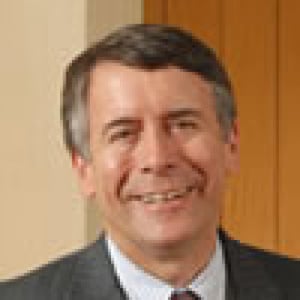
Partner, Davis Polk & Wardwell LLP
Mr. Douglas is a partner in Davis Polk’s Financial Institutions Group, heading the firm’s bank regulatory practice and focusing on bank restructuring and resolutions and other issues arising from the current banking and financial crisis. He has been involved in some of the most difficult and sensitive matters during the crisis, including advising the boards of directors of Indymac and Bank United, counseling Citigroup with respect to FDIC matters, advising various parties on the fallout from the failure of Washington Mutual and advising various private equity firms on proposed investments in troubled or failed banks.
Mr. Douglas was appointed General Counsel of the Federal Deposit Insurance Corporation in 1987 and continued in that capacity through 1989. This was a period of unprecedented stress on the financial system, and he was involved in the major bank failures and restructurings of the late 1980s, participated in the landmark Financial Institutions Regulatory Reform and Restructuring Act of 1989 and assisted in the organization of the Resolution Trust Corporation.
Mr. Douglas is regarded as one of the leading bank insolvency lawyers in the nation.
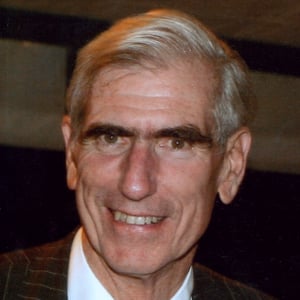
Founding Partner, Boyden Gray & Associates
Ambassador C. Boyden Gray is the founding partner of Boyden Gray & Associates, a law and strategy firm in Washington, D.C., focused on constitutional and regulatory issues.
Mr. Gray worked in the White House for twelve years, first as counsel to the Vice President during the Reagan administration and then as White House Counsel to President George H.W. Bush. In the Reagan administration, he was Counsel to the Presidential Task Force on Regulatory Relief, for which he wrote the original Executive Order 12291 requiring cost-benefit analysis and White House review of regulations (later renumbered as current EO 12866). In the George H.W. Bush Administration, Mr. Gray was in charge of judicial selection and was also instrumental in the enactment of the Clean Air Act Amendments of 1990, the Energy Policy Act of 1992, and a cap-and-trade system for acid rain emissions. In 1993, he received the Presidential Citizens Medal. Under President George W. Bush, Mr. Gray was U.S. Ambassador to the European Union and U.S. Special Envoy to Europe for Eurasian Energy.
Mr. Gray practiced law for 25 years at the law firm of Wilmer, Cutler & Pickering and was chairman of the Administrative Law and Regulatory Practice Section of the American Bar Association from 2000 to 2002. Early in his career, Mr. Gray helped to develop the Business Roundtable and served as its first counsel. He is an adjunct professor at Antonin Scalia Law School and a former adjunct professor at NYU Law School (teaching energy and environmental law). Mr. Gray is on the Board of Directors of the Atlantic Council, the Federalist Society, Reason Foundation, and the Trust for the National Mall.
Mr. Gray earned his A.B. magna cum laude from Harvard, where he was an editor of the Crimson, and his J.D. with high honors from the University of North Carolina at Chapel Hill, where he was editor-in-chief of the Law Review. Mr. Gray served in the United States Marine Corps, and after law school, he clerked for Earl Warren, Chief Justice of the United States Supreme Court.
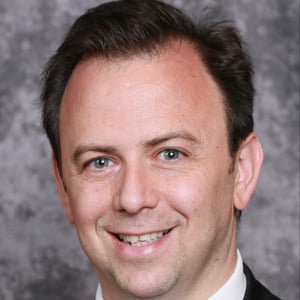
Stevenson Bernard Professor, George Washington University Law School
The Honorable F. Scott Kieff is the Stevenson Bernard Professor at George Washington University Law School and a Visiting Fellow at Stanford University’s Hoover Institution.
He served as Commissioner of the U.S. International Trade Commission from 2013-2017. He also served during the Bush, Obama, and Trump Administrations in the part-time leadership of the national security defense-intelligence community.
He was previously a professor of law and medicine at Washington University in Saint Louis and a Senior Fellow at Hoover. A former law clerk to U.S. Circuit Judge Giles S. Rich, he is a graduate of Penn Law School and MIT, where he studied molecular biology and microeconomics. He was elected to the European Academy of Sciences and Arts in 2012 and the Academia Europaea in 2024.
His private sector work through Kieff Strategies LLC (www.kieffstrategies.com) provides neutral services including mediation and compliance, and expert services including crisis management, advising, and testimony.
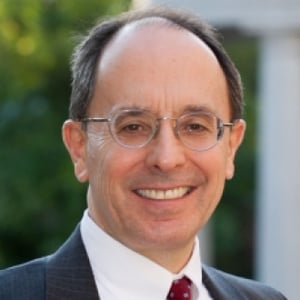
Professor Emeritus, The George Washington University Law School
Art Wilmarth is a Professor Emeritus of Law at George Washington University Law School (GW Law). He was a member of GW Law’s full-time faculty from 1986 to 2020. Prior to joining the faculty, he was a partner in Jones Day’s Washington, DC office. He served as Executive Director of GW Law’s Center for Law, Economics & Finance from 2011 to 2014.
Professor Wilmarth is the author of Taming the Megabanks: Why We Need a New Glass-Steagall Act (Oxford University Press, 2020), and co-editor of The Panic of 2008: Causes, Consequences, and Implications for Reform (Edward Elgar, 2010). He has published more than 50 law review articles and book chapters in the fields of financial regulation and American constitutional history.
In 2005, the American College of Consumer Financial Services Lawyers (ACCFSL) awarded Professor Wilmarth its annual prize for the best law review article published in the field of consumer financial services law. He has testified before committees of the U.S. Congress, the California legislature, and the U.K. House of Lords on financial regulatory issues. In 2010, he served as a consultant to the Financial Crisis Inquiry Commission, the body established by Congress to investigate the causes of the global financial crisis of 2007-09. He is a Fellow of ACCFSL and a member of the international advisory board of the Journal of Banking Regulation (Springer). He received his B.A. degree from Yale University and his J.D. degree from Harvard University.
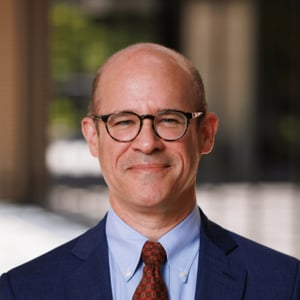
Professor of Law, Stanford Law School
Orin S. Kerr is a Professor of Law at Stanford Law School, where he teaches and writes in the areas of criminal procedure and computer crime law. Kerr earned mechanical engineering degrees from Princeton University and Stanford University before graduating with a J.D. from Harvard Law School. He is a former law clerk to Justice Anthony M. Kennedy at the United States Supreme Court and Judge Leonard I. Garth of the U.S. Court of Appeals for the Third Circuit.

President and Executive Director, Electronic Privacy Information Center
Marc Rotenberg is President and Executive Director of the Electronic Privacy Information Center (EPIC) in Washington, DC. He teaches information privacy law at Georgetown University Law Center and frequently testifies before Congress on emerging privacy and civil liberties issues. He testified before the 9-11 Commission on "Security and Liberty: Protecting Privacy, Preventing Terrorism." He has served on several national and international advisory panels, including the expert panels on Cryptography Policy and Computer Security for the OECD, the Legal Experts on Cyberspace Law for UNESCO, and the Countering Spam program of the ITU. He chairs the ABA Committee on Privacy and Information Protection. He is a founding board member and former Chair of the Public Interest Registry, which manages the .ORG domain. He is editor of "The Privacy Law Sourcebook," and co-editor of "Information Privacy Law" (Aspen Publishing 2006) and "Litigation Under the Federal Open Government Laws" (EPIC 2010). He is a graduate of Harvard College and Stanford Law School. He served as Counsel to Senator Patrick J. Leahy on the Senate Judiciary Committee after graduation from law school. He is the recipient of several awards, including the World Technology Award in Law, the American Lawyer Award for Top Lawyers Under 45, the Norbert Weiner Award for Social and Professional Responsibility, and the Vicennial medal from Georgetown University.
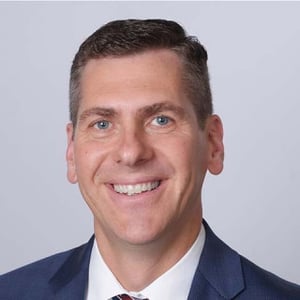
Senior Vice President, Chief Legal Officer and General Counsel, Ryan LLC
John Smith is the Senior Vice President, Chief Legal Officer and General Counsel at Ryan, LLC. Based at Ryan’s global headquarters in Dallas, Texas, John Smith brings more than 20 years of experience as a proven leader in the legal, business, and national security communities, including all three branches of the United States Government.
Prior to joining Ryan, Mr. Smith spent 12 years in Texas and Virginia at Raytheon Technologies, an American multinational aerospace and defense corporation. He pioneered roles as the company’s first cybersecurity lawyer and first privacy lawyer. During the last seven years, as a divisional Vice President and General Counsel, Mr. Smith led the legal departments of the two Raytheon divisions focused primarily on services.
Before Raytheon, Mr. Smith served as Associate Counsel to U.S. President George W. Bush. He was the lead lawyer for the White House Homeland Security Council staff. He began his legal career by clerking for Judge Samuel Alito, a few years before Alito’s elevation to the U.S. Supreme Court, and then by practicing at the international law firm of Covington & Burling.
Mr. Smith served a decade as a U.S. Army reservist and two years as a missionary in Ukraine and Russia, a few years after the collapse of the Soviet Union. He graduated with high honors from both Princeton University and Brigham Young University Law School.
Partner, Steptoe & Johnson LLP
Michael A. Vatis is a partner in the New York office of Steptoe & Johnson LLP. His practice focuses on Internet, e-commerce, and technology matters, providing legal advice and strategic counsel on matters involving privacy, security, encryption, intelligence, law enforcement, Internet gambling, and international regulation of Internet content. He also is an experienced appellate litigator, representing clients before the US Supreme Court and federal courts of appeals.
Mr. Vatis has spent most of his career addressing cutting edge issues at the intersection of law, policy, and technology. He was the founding director of the National Infrastructure Protection Center at the FBI, the first government organization responsible for detecting, warning of, and responding to cyber attacks, including computer crimes, cyber terrorism, cyber espionage, and information warfare. Before that, Mr. Vatis served as Associate Deputy Attorney General and Deputy Director of the Executive Office for National Security in the Department of Justice, where he advised the Attorney General and Deputy Attorney General and coordinated the Department’s activities involving counterterrorism, intelligence, encryption, and cyber crime. In that capacity, he also helped lead the development of the nation’s first policies regarding critical infrastructure protection. Mr. Vatis served as Special Counsel at the Department of Defense, where he handled sensitive legal and policy issues for the Secretary and Deputy Secretary of Defense and the General Counsel, receiving the Secretary of Defense Award for Excellence.
After leaving the government in 2001, Mr. Vatis served as the first Director of the Institute for Security Technology Studies at Dartmouth, a federally funded counterterrorism and cyber security research institute. He was simultaneously the founding Chairman of the Institute for Information Infrastructure Protection (I3P). I3P, a consortium of leading cyber security research organizations, worked with industry, government, and academia to develop a comprehensive research and development agenda to improve the security of the nation’s computer and communications networks. Mr. Vatis also served as the Executive Director of the Markle Task Force on National Security in the Information Age, a highly influential group of technology company executives, former government officials, and civil libertarians that recommended ways the government could more effectively use information and technology to combat terrorism while preserving civil liberties. Mr. Vatis was the principal author of the group’s second report, whose recommendations were adopted by the 9/11 Commission and included in the 2004 Intelligence Reform Act.
Mr. Vatis has been a Senior Fellow at New York University Law School’s Center on Law and Security and a member of numerous expert working groups on counterterrorism, intelligence, and technology issues. He is currently a member of the National Academy of Science/National Research Council Committee on the Policy Consequences and Legal/Ethical Implications of Offensive Information Warfare and served on the Commission on Cyber Security for the 44th Presidency, an independent group of cyber security experts who examined existing and potential cyber security threats and developed recommendations for the US government and private businesses. Mr. Vatis has also regularly testified before congressional committees on counterterrorism, intelligence, and cyber security issues. He is also interviewed frequently on television, radio, and in print media, and has been a guest lecturer at many prestigious law schools and universities and a speaker at industry conferences worldwide.
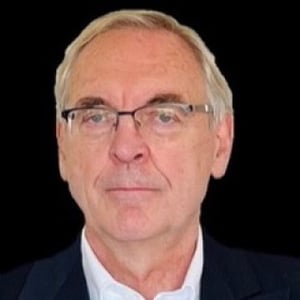
Fellow, National Security Institute, Antonin Scalia Law School, George Mason University
Vince Vitkowsky chaired the Executive Committee of the Federalist Society’s International and National Security Law and Policy Practice Group for over a decade. He is also a Fellow at the National Security Institute of George Mason University Law School. Vince spent 45 years in private practice, primarily in AmLaw 100/200 firms and their spin-offs. His practice included domestic and international commercial arbitration and litigation, as well as cyber risks and liabilities. Vince's current focus is on national security policy, artificial intelligence, cybersecurity, and counterterrorism. He has often written and spoken on national security and other public policy issues. Among other affiliations, Vince has been an Adjunct Fellow at the Center for Law and Counterterrorism of the Foundation for the Defense of Democracies, a member of the Executive Committee of the American Branch of the International Law Association, and Co-Chair of the Committee on Interventions and Trial Observations of the International Bar Association’s Human Rights Institute. He received his B.A. from Northwestern University and his J.D. from Cornell Law School.
Partner, McCarter & English, LLP
Erik concentrates his practice in the area of Intellectual Property/Information Technology. He is a trial attorney specializing in patent, trademark, and licensing disputes in federal and state courts, arbitrations, and the U.S. Patent and Trademark Office. He has handled a wide range of technology cases involving, for example, x-ray inspection systems, speech recognition software, Internet security software, diagnostic and medical devices, immunoassays, telecommunications electronics, and water purification systems.
Erik has extensive experience representing national and international clients in patent litigation in federal courts throughout the country. He has successfully enforced patent rights and has also defended companies accused of infringement. Erik has also designed and implemented trademark and copyright protection and enforcement strategies for clients in virtually every industry, including business consulting, financial services, life sciences, electronics, communications equipment, computer products, and consumer goods.
Erik's recent litigation victories include, for example, a case involving infringement of x-ray technology patents in which he obtained sanctions against an alleged infringer for making material misrepresentations to the court and for other misconduct. Sanctions included an award of attorneys' fees and striking of the validity defenses. He also successfully moved to exclude the alleged infringer's expert witness. This case settled on the first day of trial, after Erik and his team defeated the accused infringer's motion for summary judgment of non-infringement and won a number of motionsin limine.
In a precedent-setting case, Erik represented a vendor of Internet security software that had been sued by an adware company for blocking pop-up ads and adware. A federal court dismissed the claims, holding that his client was immune from civil liability under the Communications Decency Act. 47 USC § 230(c)(2)(B). The United States Court of Appeals for the Ninth Circuit affirmed the district court's ruling. SeeZango, Inc. v. Kaspersky Lab., Inc.(9th Cir. Case No. 07-35800). The case set precedent as the first application of the Act to immunize a vendor of Internet security software used to screen adware and spyware.
Erik represented a Sonoma winery that that owned a well-known trademark. In a summary judgment decision, a federal court ruled that the winery's licensee, an importer of luxury vodka, breached the license, that the winery properly terminated the license, and that the importer's continued sale of the vodka infringed the winery's trademark rights. The case settled soon afterwards.
Erik represented an R&D lab that had invented the key component of a medical diagnostic device. When the R&D lab discovered that its licensee, the manufacturer of the device, was using questionable accounting methods to reduce royalties, the lab sued to recover the unpaid royalties. Erik's client was awarded approximately $11 million in unpaid royalties, attorneys' fees, and interest. The First Circuit Court of Appeals upheld this award. SeeCytyc Corp. v. DEKA Products Limited Partnership, 439 F.2d 27 (1st Cir. 2006).
Erik writes and speaks on intellectual property and litigation issues. He has been honored for the past four years as aMassachusetts Super Lawyerin the field of intellectual property litigation in Massachusetts by Law & Politics and Boston Magazine.
Partner, Burns & Levinson LLP
Prior to joining Burns & Levinson LLP in January 2006, Mr. Cohen was a partner with the firm Perkins Smith & Cohen LLP.
He has more than 40 years experience as a lawyer dealing with patent, copyright, trademark, unfair competition, licensing/franchising, visual arts, software, databases and publication law, formation and operation of business enterprises and not-for-profit organizations, international trade, litigation/ADR, and legal ethics. He handles acquisition, licensing and litigation of intellectual property rights. He has also served as an expert witness, arbitrator and mediator in intellectual property matters.
Partner, McCarter & English LLP
Mr. Cote represents both small and large businesses and occasionally individuals in both federal and state courts throughout the country. His practice concentrates primarily on hospitality, employment, civil rights, contracts, unfair and deceptive conduct, class action, private property rights and appellate litigation.
During his time with McCarter, Mr. Cote has played an integral role in obtaining several significant victories for the firm's clients, including the dismissal of a challenge under the public trust doctrine to the private ownership of lawfully filled, tidelands that were developed pursuant to a legislative grant issued in 1832 and the successful defense of a large food service company in a case of first impression concerning the application and interpretation of the Massachusetts Tips Act. Mr. Cote was also instrumental in obtaining a sanctions award of $100,000 in connection with a construction accident case brought in bad faith against one of the firm's clients.
Prior to his admission to the bar, Mr. Cote served for over ten years as a paralegal and law clerk in Arizona, Massachusetts, Vermont and Washington, D.C. During this time, he served as the principal legal assistant to the Arizona Legislature's Ombudsman for Private Property Rights. He also clerked for the Honorable Roger J. Marzulla and Nancie G. Marzulla at Defenders of Property Rights, which, at the time, was the nation's only non-profit legal foundation dedicated exclusively to the protection of private property rights. He is a contributing author of that organization's 1999 publication "State Property Rights Legislation Report: Federalism in Action."
Mr. Cote presently serves as the vice-chair of the Boston Lawyers Division of the Federalist Society for Law and Public Policy Studies. He is also a member of the executive committee for the Federalist Society's Litigation Practice Group and the primary author of the Environmental Practice Group's 2001 terrorism briefing paper entitled: "National Security vs. Public Disclosure: The War on Terrorism's Implications Upon Federal Emergency Planning and Right to Know Laws."
Stevenson Bernard Professor, George Washington University Law School
The Honorable F. Scott Kieff is the Stevenson Bernard Professor at George Washington University Law School and a Visiting Fellow at Stanford University’s Hoover Institution.
He served as Commissioner of the U.S. International Trade Commission from 2013-2017. He also served during the Bush, Obama, and Trump Administrations in the part-time leadership of the national security defense-intelligence community.
He was previously a professor of law and medicine at Washington University in Saint Louis and a Senior Fellow at Hoover. A former law clerk to U.S. Circuit Judge Giles S. Rich, he is a graduate of Penn Law School and MIT, where he studied molecular biology and microeconomics. He was elected to the European Academy of Sciences and Arts in 2012 and the Academia Europaea in 2024.
His private sector work through Kieff Strategies LLC (www.kieffstrategies.com) provides neutral services including mediation and compliance, and expert services including crisis management, advising, and testimony.

Professor of Law, Boston University School of Law
The son of an economics professor, Michael Meurer knew by the time he was 13 that he, too, wanted to teach at the university level. An S.B., J.D. and Ph.D. later, he became an economics professor at Duke University and later a law professor at the University of Buffalo. He came to Boston University School of Law in 1999, where he has taught courses in patents, intellectual property and public policy toward the high-tech industry. "It's a special privilege to be able to speak three times a week to an attentive and thoughtful audience," he says.
Professor Meurer has received several grants and fellowships, including two grants from the Pew Charitable Trust, a Ford Foundation grant, an Olin Faculty Fellowship at Yale Law School and a postdoctoral fellowship at AT&T Bell Labs. He has served as an expert witness for the Federal Trade Commission on a merger case presenting issues related to patent licensing. He also has consulted with government officials from developing countries about antitrust law, and taught short courses in American intellectual property law at the law faculties of the University of Victoria and the National University of Singapore. "I'm excited by the prospect of having a positive influence on American technology law and policy," Professor Meurer says. Outside of work, he enjoys playing and watching basketball.
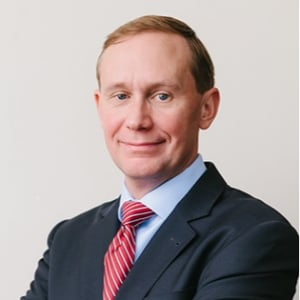
Associate Professor, Boston College Law School
David Olson is an associate professor and the Faculty Director of the Program on Innovation and Entrepreneurship. He teaches patent law, intellectual property law, antitrust law, and various seminars. His research and writing primarily focus on patents, copyrights, antitrust, and incentives for innovation and competition. Since joining BC Law in 2007, he has been recognized for his teaching excellence and contributions. In 2011, he received the Business & Law Society Faculty Award for Achievement in Business & Law. In 2012, he received the Professor Emil Slizewski Award for Faculty Excellence. For one semester in 2015, Olson served as a visiting professor at Pontifical Catholic University, Rio de Janeiro, Brazil, where he conducted research and taught a course on intellectual property.
Olson has published scholarly articles on patent law, copyright law, antitrust, music licensing, and first amendment copyright issues. His writing has been cited in Supreme Court and other legal opinions. He has testified before the U.S. Congress on matters of drug patents, FDA regulation, and antitrust.
The media frequently seeks Olson’s insights and opinions. He has been quoted in the Wall Street Journal, Associated Press, and Reuters, among others. He has appeared as a guest panelist on WBUR’s Radio Boston, WAMU's Kojo Namdi Show, and Public Radio Canada. His op-eds have appeared in the Chicago Tribune, Washington Times, and The Hill.
Olson came to Boston College from Stanford Law School's Center for Internet and Society, where he conducted research on patent law and litigated copyright fair use impact cases. Before entering academia, Olson practiced law as a patent litigator. He clerked for Judge Jerry Smith of the U.S. Court of Appeals for the Fifth Circuit.

Senior Fellow and Director of Constitutional Studies, Manhattan Institute
Ilya Shapiro is a senior fellow and director of constitutional studies at the Manhattan Institute and a contributing editor of City Journal. Previously he was executive director and senior lecturer at the Georgetown Center for the Constitution, and before that a vice president of the Cato Institute.
Shapiro is the author of Lawless: The Miseducation of America’s Elites (2025) and Supreme Disorder: Judicial Nominations and the Politics of America’s Highest Court (2020), coauthor of Religious Liberties for Corporations? (2014), and editor of 11 volumes of the Cato Supreme Court Review (2008-18). He has contributed to a variety of academic, popular, and professional publications, including the Wall Street Journal, Harvard Journal of Law & Public Policy, Washington Post, Los Angeles Times, USA Today, National Review, and Newsweek. He also regularly provides commentary for various media outlets, writes the Shapiro’s Gavel newsletter on Substack, and once appeared on the Colbert Report.
Shapiro has testified many times before Congress and state legislatures and has filed more than 500 amicus curiae “friend of the court” briefs in the Supreme Court. He lectures regularly on behalf of the Federalist Society, is a member of the board of fellows of the Jewish Policy Center, was an inaugural Washington Fellow at the National Review Institute, and has been an adjunct law professor at the George Washington University and University of Mississippi. He is also the chairman of the board of advisers of the Mississippi Justice Institute, a barrister in the Edward Coke Appellate Inn of Court, and a former member of the Virginia Advisory Committee to the U.S. Commission on Civil Rights.
Earlier in his career, Shapiro was a special assistant/adviser to the Multi-National Force in Iraq on rule-of-law issues and practiced at Patton Boggs and Cleary Gottlieb. Before entering private practice, he clerked for Judge E. Grady Jolly of the U.S. Court of Appeals for the Fifth Circuit. He holds an AB from Princeton University, an MSc from the London School of Economics, and a JD from the University of Chicago Law School.
Professor of Law, Stanford Law School
Orin S. Kerr is a Professor of Law at Stanford Law School, where he teaches and writes in the areas of criminal procedure and computer crime law. Kerr earned mechanical engineering degrees from Princeton University and Stanford University before graduating with a J.D. from Harvard Law School. He is a former law clerk to Justice Anthony M. Kennedy at the United States Supreme Court and Judge Leonard I. Garth of the U.S. Court of Appeals for the Third Circuit.
President and Executive Director, Electronic Privacy Information Center
Marc Rotenberg is President and Executive Director of the Electronic Privacy Information Center (EPIC) in Washington, DC. He teaches information privacy law at Georgetown University Law Center and frequently testifies before Congress on emerging privacy and civil liberties issues. He testified before the 9-11 Commission on "Security and Liberty: Protecting Privacy, Preventing Terrorism." He has served on several national and international advisory panels, including the expert panels on Cryptography Policy and Computer Security for the OECD, the Legal Experts on Cyberspace Law for UNESCO, and the Countering Spam program of the ITU. He chairs the ABA Committee on Privacy and Information Protection. He is a founding board member and former Chair of the Public Interest Registry, which manages the .ORG domain. He is editor of "The Privacy Law Sourcebook," and co-editor of "Information Privacy Law" (Aspen Publishing 2006) and "Litigation Under the Federal Open Government Laws" (EPIC 2010). He is a graduate of Harvard College and Stanford Law School. He served as Counsel to Senator Patrick J. Leahy on the Senate Judiciary Committee after graduation from law school. He is the recipient of several awards, including the World Technology Award in Law, the American Lawyer Award for Top Lawyers Under 45, the Norbert Weiner Award for Social and Professional Responsibility, and the Vicennial medal from Georgetown University.
Senior Vice President, Chief Legal Officer and General Counsel, Ryan LLC
John Smith is the Senior Vice President, Chief Legal Officer and General Counsel at Ryan, LLC. Based at Ryan’s global headquarters in Dallas, Texas, John Smith brings more than 20 years of experience as a proven leader in the legal, business, and national security communities, including all three branches of the United States Government.
Prior to joining Ryan, Mr. Smith spent 12 years in Texas and Virginia at Raytheon Technologies, an American multinational aerospace and defense corporation. He pioneered roles as the company’s first cybersecurity lawyer and first privacy lawyer. During the last seven years, as a divisional Vice President and General Counsel, Mr. Smith led the legal departments of the two Raytheon divisions focused primarily on services.
Before Raytheon, Mr. Smith served as Associate Counsel to U.S. President George W. Bush. He was the lead lawyer for the White House Homeland Security Council staff. He began his legal career by clerking for Judge Samuel Alito, a few years before Alito’s elevation to the U.S. Supreme Court, and then by practicing at the international law firm of Covington & Burling.
Mr. Smith served a decade as a U.S. Army reservist and two years as a missionary in Ukraine and Russia, a few years after the collapse of the Soviet Union. He graduated with high honors from both Princeton University and Brigham Young University Law School.
Partner, Steptoe & Johnson LLP
Michael A. Vatis is a partner in the New York office of Steptoe & Johnson LLP. His practice focuses on Internet, e-commerce, and technology matters, providing legal advice and strategic counsel on matters involving privacy, security, encryption, intelligence, law enforcement, Internet gambling, and international regulation of Internet content. He also is an experienced appellate litigator, representing clients before the US Supreme Court and federal courts of appeals.
Mr. Vatis has spent most of his career addressing cutting edge issues at the intersection of law, policy, and technology. He was the founding director of the National Infrastructure Protection Center at the FBI, the first government organization responsible for detecting, warning of, and responding to cyber attacks, including computer crimes, cyber terrorism, cyber espionage, and information warfare. Before that, Mr. Vatis served as Associate Deputy Attorney General and Deputy Director of the Executive Office for National Security in the Department of Justice, where he advised the Attorney General and Deputy Attorney General and coordinated the Department’s activities involving counterterrorism, intelligence, encryption, and cyber crime. In that capacity, he also helped lead the development of the nation’s first policies regarding critical infrastructure protection. Mr. Vatis served as Special Counsel at the Department of Defense, where he handled sensitive legal and policy issues for the Secretary and Deputy Secretary of Defense and the General Counsel, receiving the Secretary of Defense Award for Excellence.
After leaving the government in 2001, Mr. Vatis served as the first Director of the Institute for Security Technology Studies at Dartmouth, a federally funded counterterrorism and cyber security research institute. He was simultaneously the founding Chairman of the Institute for Information Infrastructure Protection (I3P). I3P, a consortium of leading cyber security research organizations, worked with industry, government, and academia to develop a comprehensive research and development agenda to improve the security of the nation’s computer and communications networks. Mr. Vatis also served as the Executive Director of the Markle Task Force on National Security in the Information Age, a highly influential group of technology company executives, former government officials, and civil libertarians that recommended ways the government could more effectively use information and technology to combat terrorism while preserving civil liberties. Mr. Vatis was the principal author of the group’s second report, whose recommendations were adopted by the 9/11 Commission and included in the 2004 Intelligence Reform Act.
Mr. Vatis has been a Senior Fellow at New York University Law School’s Center on Law and Security and a member of numerous expert working groups on counterterrorism, intelligence, and technology issues. He is currently a member of the National Academy of Science/National Research Council Committee on the Policy Consequences and Legal/Ethical Implications of Offensive Information Warfare and served on the Commission on Cyber Security for the 44th Presidency, an independent group of cyber security experts who examined existing and potential cyber security threats and developed recommendations for the US government and private businesses. Mr. Vatis has also regularly testified before congressional committees on counterterrorism, intelligence, and cyber security issues. He is also interviewed frequently on television, radio, and in print media, and has been a guest lecturer at many prestigious law schools and universities and a speaker at industry conferences worldwide.
Fellow, National Security Institute, Antonin Scalia Law School, George Mason University
Vince Vitkowsky chaired the Executive Committee of the Federalist Society’s International and National Security Law and Policy Practice Group for over a decade. He is also a Fellow at the National Security Institute of George Mason University Law School. Vince spent 45 years in private practice, primarily in AmLaw 100/200 firms and their spin-offs. His practice included domestic and international commercial arbitration and litigation, as well as cyber risks and liabilities. Vince's current focus is on national security policy, artificial intelligence, cybersecurity, and counterterrorism. He has often written and spoken on national security and other public policy issues. Among other affiliations, Vince has been an Adjunct Fellow at the Center for Law and Counterterrorism of the Foundation for the Defense of Democracies, a member of the Executive Committee of the American Branch of the International Law Association, and Co-Chair of the Committee on Interventions and Trial Observations of the International Bar Association’s Human Rights Institute. He received his B.A. from Northwestern University and his J.D. from Cornell Law School.
Professor of Law, Stanford Law School
Orin S. Kerr is a Professor of Law at Stanford Law School, where he teaches and writes in the areas of criminal procedure and computer crime law. Kerr earned mechanical engineering degrees from Princeton University and Stanford University before graduating with a J.D. from Harvard Law School. He is a former law clerk to Justice Anthony M. Kennedy at the United States Supreme Court and Judge Leonard I. Garth of the U.S. Court of Appeals for the Third Circuit.
President and Executive Director, Electronic Privacy Information Center
Marc Rotenberg is President and Executive Director of the Electronic Privacy Information Center (EPIC) in Washington, DC. He teaches information privacy law at Georgetown University Law Center and frequently testifies before Congress on emerging privacy and civil liberties issues. He testified before the 9-11 Commission on "Security and Liberty: Protecting Privacy, Preventing Terrorism." He has served on several national and international advisory panels, including the expert panels on Cryptography Policy and Computer Security for the OECD, the Legal Experts on Cyberspace Law for UNESCO, and the Countering Spam program of the ITU. He chairs the ABA Committee on Privacy and Information Protection. He is a founding board member and former Chair of the Public Interest Registry, which manages the .ORG domain. He is editor of "The Privacy Law Sourcebook," and co-editor of "Information Privacy Law" (Aspen Publishing 2006) and "Litigation Under the Federal Open Government Laws" (EPIC 2010). He is a graduate of Harvard College and Stanford Law School. He served as Counsel to Senator Patrick J. Leahy on the Senate Judiciary Committee after graduation from law school. He is the recipient of several awards, including the World Technology Award in Law, the American Lawyer Award for Top Lawyers Under 45, the Norbert Weiner Award for Social and Professional Responsibility, and the Vicennial medal from Georgetown University.
Senior Vice President, Chief Legal Officer and General Counsel, Ryan LLC
John Smith is the Senior Vice President, Chief Legal Officer and General Counsel at Ryan, LLC. Based at Ryan’s global headquarters in Dallas, Texas, John Smith brings more than 20 years of experience as a proven leader in the legal, business, and national security communities, including all three branches of the United States Government.
Prior to joining Ryan, Mr. Smith spent 12 years in Texas and Virginia at Raytheon Technologies, an American multinational aerospace and defense corporation. He pioneered roles as the company’s first cybersecurity lawyer and first privacy lawyer. During the last seven years, as a divisional Vice President and General Counsel, Mr. Smith led the legal departments of the two Raytheon divisions focused primarily on services.
Before Raytheon, Mr. Smith served as Associate Counsel to U.S. President George W. Bush. He was the lead lawyer for the White House Homeland Security Council staff. He began his legal career by clerking for Judge Samuel Alito, a few years before Alito’s elevation to the U.S. Supreme Court, and then by practicing at the international law firm of Covington & Burling.
Mr. Smith served a decade as a U.S. Army reservist and two years as a missionary in Ukraine and Russia, a few years after the collapse of the Soviet Union. He graduated with high honors from both Princeton University and Brigham Young University Law School.
Partner, Steptoe & Johnson LLP
Michael A. Vatis is a partner in the New York office of Steptoe & Johnson LLP. His practice focuses on Internet, e-commerce, and technology matters, providing legal advice and strategic counsel on matters involving privacy, security, encryption, intelligence, law enforcement, Internet gambling, and international regulation of Internet content. He also is an experienced appellate litigator, representing clients before the US Supreme Court and federal courts of appeals.
Mr. Vatis has spent most of his career addressing cutting edge issues at the intersection of law, policy, and technology. He was the founding director of the National Infrastructure Protection Center at the FBI, the first government organization responsible for detecting, warning of, and responding to cyber attacks, including computer crimes, cyber terrorism, cyber espionage, and information warfare. Before that, Mr. Vatis served as Associate Deputy Attorney General and Deputy Director of the Executive Office for National Security in the Department of Justice, where he advised the Attorney General and Deputy Attorney General and coordinated the Department’s activities involving counterterrorism, intelligence, encryption, and cyber crime. In that capacity, he also helped lead the development of the nation’s first policies regarding critical infrastructure protection. Mr. Vatis served as Special Counsel at the Department of Defense, where he handled sensitive legal and policy issues for the Secretary and Deputy Secretary of Defense and the General Counsel, receiving the Secretary of Defense Award for Excellence.
After leaving the government in 2001, Mr. Vatis served as the first Director of the Institute for Security Technology Studies at Dartmouth, a federally funded counterterrorism and cyber security research institute. He was simultaneously the founding Chairman of the Institute for Information Infrastructure Protection (I3P). I3P, a consortium of leading cyber security research organizations, worked with industry, government, and academia to develop a comprehensive research and development agenda to improve the security of the nation’s computer and communications networks. Mr. Vatis also served as the Executive Director of the Markle Task Force on National Security in the Information Age, a highly influential group of technology company executives, former government officials, and civil libertarians that recommended ways the government could more effectively use information and technology to combat terrorism while preserving civil liberties. Mr. Vatis was the principal author of the group’s second report, whose recommendations were adopted by the 9/11 Commission and included in the 2004 Intelligence Reform Act.
Mr. Vatis has been a Senior Fellow at New York University Law School’s Center on Law and Security and a member of numerous expert working groups on counterterrorism, intelligence, and technology issues. He is currently a member of the National Academy of Science/National Research Council Committee on the Policy Consequences and Legal/Ethical Implications of Offensive Information Warfare and served on the Commission on Cyber Security for the 44th Presidency, an independent group of cyber security experts who examined existing and potential cyber security threats and developed recommendations for the US government and private businesses. Mr. Vatis has also regularly testified before congressional committees on counterterrorism, intelligence, and cyber security issues. He is also interviewed frequently on television, radio, and in print media, and has been a guest lecturer at many prestigious law schools and universities and a speaker at industry conferences worldwide.
Fellow, National Security Institute, Antonin Scalia Law School, George Mason University
Vince Vitkowsky chaired the Executive Committee of the Federalist Society’s International and National Security Law and Policy Practice Group for over a decade. He is also a Fellow at the National Security Institute of George Mason University Law School. Vince spent 45 years in private practice, primarily in AmLaw 100/200 firms and their spin-offs. His practice included domestic and international commercial arbitration and litigation, as well as cyber risks and liabilities. Vince's current focus is on national security policy, artificial intelligence, cybersecurity, and counterterrorism. He has often written and spoken on national security and other public policy issues. Among other affiliations, Vince has been an Adjunct Fellow at the Center for Law and Counterterrorism of the Foundation for the Defense of Democracies, a member of the Executive Committee of the American Branch of the International Law Association, and Co-Chair of the Committee on Interventions and Trial Observations of the International Bar Association’s Human Rights Institute. He received his B.A. from Northwestern University and his J.D. from Cornell Law School.
Professor of Law, Emory University School of Law
Professor Timothy Holbrook graduatedsumma cum laudefrom North Carolina State University, earning a BS in chemical engineering with a life sciences concentration. He received his JD from Yale Law School, where he served as a lead editor and publications director of theYale Journal on Regulation. After law school, he clerked for the Honorable Glenn L. Archer Jr. of the U.S. Court of Appeals for the Federal Circuit. Following his clerkship, Professor Holbrook worked in Budapest, Hungary, with the Hungarian patent law firm Danubia. Upon his return to the United States, he associated with the Washington, D.C., law firm of Wiley, Rein & Fielding (now Wiley Rein), where his practice focused on patent and appellate litigation.
Professor Holbrook has published widely on issues of patent law, international patent law and the patenting of human genes. His work appears in a variety of journals, including theHarvard Journal of Law and Technology,William and Mary Law Review,Washington University Law Review,SMU Law Reviewand twice inSciencemagazine. He is the co-author ofPatent Litigation and Strategy(3d ed.) with Judge Kimberly A. Moore and Chief Judge Paul R. Michel, both of the U.S. Court of Appeals for the Federal Circuit.
Before joining the Emory faculty, Professor Holbrook was a tenured professor at the Chicago-Kent College of Law. He served as the Edwin A. Heafey Jr. Visiting Professor of Law at Stanford Law School and also has taught as a visiting professor at the University of Denver Sturm College of Law and Washington University School of Law in St. Louis. He was a scholar-in-residence at the Center for Media and Communication Studies at the Central European University (Budapest, Hungary). While in Chicago, Professor Holbrook was a founder and the program chair for the Richard Linn Inn of Court. Since arriving in Atlanta, he helped establish the Atlanta Intellectual Property Inn of Court. He also has served as an expert or consultant in a variety of patent litigation cases, both in the United States and abroad.
Professor Holbrook teaches classes in Patent Law, International Patent Law, Patent Litigation, Trademark Law and Policy and Property Law.
Stevenson Bernard Professor, George Washington University Law School
The Honorable F. Scott Kieff is the Stevenson Bernard Professor at George Washington University Law School and a Visiting Fellow at Stanford University’s Hoover Institution.
He served as Commissioner of the U.S. International Trade Commission from 2013-2017. He also served during the Bush, Obama, and Trump Administrations in the part-time leadership of the national security defense-intelligence community.
He was previously a professor of law and medicine at Washington University in Saint Louis and a Senior Fellow at Hoover. A former law clerk to U.S. Circuit Judge Giles S. Rich, he is a graduate of Penn Law School and MIT, where he studied molecular biology and microeconomics. He was elected to the European Academy of Sciences and Arts in 2012 and the Academia Europaea in 2024.
His private sector work through Kieff Strategies LLC (www.kieffstrategies.com) provides neutral services including mediation and compliance, and expert services including crisis management, advising, and testimony.
Professor of Law, Antonin Scalia Law School, George Mason University
Adam Mossoff is Professor of Law at Antonin Scalia Law School, George Mason University. He has published extensively on why patents, copyrights, and other intellectual property rights have been—and should be—legally secured to innovators and creators as property rights. His scholarship has been relied on by the United States Supreme Court, by lower federal courts, and by U.S. federal agencies. He has been invited to testify numerous times before the U.S. Senate and the House of Representatives on intellectual property legislation. His writings on intellectual property policy have also appeared in the Wall Street Journal, New York Times, Forbes, Investors Business Daily, and in other media outlets. His journal articles can be downloaded here.
Professor Mossoff is a longstanding member of the Executive Committee of the Intellectual Property Practice Group of the Federalist Society, on which he served as Chairperson from 2016-2018, and he is Chair of the Intellectual Property Working Group of the Regulatory Transparency Project of the Federalist Society. He is a Senior Fellow and Chair of the Forum for Intellectual Property at the Hudson Institute, a Visiting Intellectual Property Fellow at the Heritage Foundation, and a member of the Board of Directors of the Center for Intellectual Property Understanding. He is a member of the Intellectual Property Rights Policy Committee of ANSI and he has served as Chair and Vice-Chair of the Intellectual Property Committee of the IEEE-USA, on which he remains a member in good standing.
Partner, Williams & John LTD
David L. Applegate is a partner of Williams & John Ltd., where he chairs the firm's intellectual property practice group and is a member of the commercial litigation practice group. He focuses his practice on patent, trademark, copyright, trade secret, unfair competition, and business litigation and arbitration, and on U. S. Supreme Court and related amicus brief practice.
Mr. Applegate is a Fellow of Litigation Counsel of America, the Intellectual Property Institute, and the Diversity Law Institute; a Senior Master Member of the Richard Linn American Inn of Court; a Past President of the Chicago Lincoln American Inn of Court; and a Legal Policy Advisor to The Heartland Institute. He is "AV Preeminent" peer review rated by Martindale-Hubbell, reflecting the highest peer recognition for both ethical standards and legal ability, and has been named by his peers for inclusion in Illinois Leading Lawyers and IllinoisSuper Lawyers in both commercial and intellectual property litigation for decades.
Throughout his career, Mr. Applegate has represented corporations and individuals as both plaintiffs and defendants in state and federal litigation at the trial and appellate levels. He has tried multiple cases to verdict in both jury and bench trials nationwide and has argued appeals in the Illinois appellate courts and the U.S. Court of Appeals for the Seventh and Federal Circuits; his amicus brief was cited twice in the U. S. Supreme Court’s 5-4 majority opinion in the Janus case. Mr. Applegate also has extensive commercial arbitration and private mediation experience in both national and international dispute resolution forums, and is a former member of the Chicago International Dispute Resolution Association. In 2001, the U. S. District Court for the Northern District of Illinois and the Chicago Chapter of the Federal Bar Association recognized him for his outstanding individual commitment to pro bono service to indigent clients throughout the Northern District of Illinois.
In addition to his legal practice, Mr. Applegate has written and spoken frequently on matters of law and public policy, including on both local and national television and radio. He is an avid collector and amateur historian of original comic strip and editorial cartoon art, and has written extensively in that field as well for over three decades.
Associate Professor, Boston College Law School
David Olson is an associate professor and the Faculty Director of the Program on Innovation and Entrepreneurship. He teaches patent law, intellectual property law, antitrust law, and various seminars. His research and writing primarily focus on patents, copyrights, antitrust, and incentives for innovation and competition. Since joining BC Law in 2007, he has been recognized for his teaching excellence and contributions. In 2011, he received the Business & Law Society Faculty Award for Achievement in Business & Law. In 2012, he received the Professor Emil Slizewski Award for Faculty Excellence. For one semester in 2015, Olson served as a visiting professor at Pontifical Catholic University, Rio de Janeiro, Brazil, where he conducted research and taught a course on intellectual property.
Olson has published scholarly articles on patent law, copyright law, antitrust, music licensing, and first amendment copyright issues. His writing has been cited in Supreme Court and other legal opinions. He has testified before the U.S. Congress on matters of drug patents, FDA regulation, and antitrust.
The media frequently seeks Olson’s insights and opinions. He has been quoted in the Wall Street Journal, Associated Press, and Reuters, among others. He has appeared as a guest panelist on WBUR’s Radio Boston, WAMU's Kojo Namdi Show, and Public Radio Canada. His op-eds have appeared in the Chicago Tribune, Washington Times, and The Hill.
Olson came to Boston College from Stanford Law School's Center for Internet and Society, where he conducted research on patent law and litigated copyright fair use impact cases. Before entering academia, Olson practiced law as a patent litigator. He clerked for Judge Jerry Smith of the U.S. Court of Appeals for the Fifth Circuit.
Partner, McCarter & English, LLP
Erik concentrates his practice in the area of Intellectual Property/Information Technology. He is a trial attorney specializing in patent, trademark, and licensing disputes in federal and state courts, arbitrations, and the U.S. Patent and Trademark Office. He has handled a wide range of technology cases involving, for example, x-ray inspection systems, speech recognition software, Internet security software, diagnostic and medical devices, immunoassays, telecommunications electronics, and water purification systems.
Erik has extensive experience representing national and international clients in patent litigation in federal courts throughout the country. He has successfully enforced patent rights and has also defended companies accused of infringement. Erik has also designed and implemented trademark and copyright protection and enforcement strategies for clients in virtually every industry, including business consulting, financial services, life sciences, electronics, communications equipment, computer products, and consumer goods.
Erik's recent litigation victories include, for example, a case involving infringement of x-ray technology patents in which he obtained sanctions against an alleged infringer for making material misrepresentations to the court and for other misconduct. Sanctions included an award of attorneys' fees and striking of the validity defenses. He also successfully moved to exclude the alleged infringer's expert witness. This case settled on the first day of trial, after Erik and his team defeated the accused infringer's motion for summary judgment of non-infringement and won a number of motionsin limine.
In a precedent-setting case, Erik represented a vendor of Internet security software that had been sued by an adware company for blocking pop-up ads and adware. A federal court dismissed the claims, holding that his client was immune from civil liability under the Communications Decency Act. 47 USC § 230(c)(2)(B). The United States Court of Appeals for the Ninth Circuit affirmed the district court's ruling. SeeZango, Inc. v. Kaspersky Lab., Inc.(9th Cir. Case No. 07-35800). The case set precedent as the first application of the Act to immunize a vendor of Internet security software used to screen adware and spyware.
Erik represented a Sonoma winery that that owned a well-known trademark. In a summary judgment decision, a federal court ruled that the winery's licensee, an importer of luxury vodka, breached the license, that the winery properly terminated the license, and that the importer's continued sale of the vodka infringed the winery's trademark rights. The case settled soon afterwards.
Erik represented an R&D lab that had invented the key component of a medical diagnostic device. When the R&D lab discovered that its licensee, the manufacturer of the device, was using questionable accounting methods to reduce royalties, the lab sued to recover the unpaid royalties. Erik's client was awarded approximately $11 million in unpaid royalties, attorneys' fees, and interest. The First Circuit Court of Appeals upheld this award. SeeCytyc Corp. v. DEKA Products Limited Partnership, 439 F.2d 27 (1st Cir. 2006).
Erik writes and speaks on intellectual property and litigation issues. He has been honored for the past four years as aMassachusetts Super Lawyerin the field of intellectual property litigation in Massachusetts by Law & Politics and Boston Magazine.
Partner, Burns & Levinson LLP
Prior to joining Burns & Levinson LLP in January 2006, Mr. Cohen was a partner with the firm Perkins Smith & Cohen LLP.
He has more than 40 years experience as a lawyer dealing with patent, copyright, trademark, unfair competition, licensing/franchising, visual arts, software, databases and publication law, formation and operation of business enterprises and not-for-profit organizations, international trade, litigation/ADR, and legal ethics. He handles acquisition, licensing and litigation of intellectual property rights. He has also served as an expert witness, arbitrator and mediator in intellectual property matters.
Partner, McCarter & English LLP
Mr. Cote represents both small and large businesses and occasionally individuals in both federal and state courts throughout the country. His practice concentrates primarily on hospitality, employment, civil rights, contracts, unfair and deceptive conduct, class action, private property rights and appellate litigation.
During his time with McCarter, Mr. Cote has played an integral role in obtaining several significant victories for the firm's clients, including the dismissal of a challenge under the public trust doctrine to the private ownership of lawfully filled, tidelands that were developed pursuant to a legislative grant issued in 1832 and the successful defense of a large food service company in a case of first impression concerning the application and interpretation of the Massachusetts Tips Act. Mr. Cote was also instrumental in obtaining a sanctions award of $100,000 in connection with a construction accident case brought in bad faith against one of the firm's clients.
Prior to his admission to the bar, Mr. Cote served for over ten years as a paralegal and law clerk in Arizona, Massachusetts, Vermont and Washington, D.C. During this time, he served as the principal legal assistant to the Arizona Legislature's Ombudsman for Private Property Rights. He also clerked for the Honorable Roger J. Marzulla and Nancie G. Marzulla at Defenders of Property Rights, which, at the time, was the nation's only non-profit legal foundation dedicated exclusively to the protection of private property rights. He is a contributing author of that organization's 1999 publication "State Property Rights Legislation Report: Federalism in Action."
Mr. Cote presently serves as the vice-chair of the Boston Lawyers Division of the Federalist Society for Law and Public Policy Studies. He is also a member of the executive committee for the Federalist Society's Litigation Practice Group and the primary author of the Environmental Practice Group's 2001 terrorism briefing paper entitled: "National Security vs. Public Disclosure: The War on Terrorism's Implications Upon Federal Emergency Planning and Right to Know Laws."
Stevenson Bernard Professor, George Washington University Law School
The Honorable F. Scott Kieff is the Stevenson Bernard Professor at George Washington University Law School and a Visiting Fellow at Stanford University’s Hoover Institution.
He served as Commissioner of the U.S. International Trade Commission from 2013-2017. He also served during the Bush, Obama, and Trump Administrations in the part-time leadership of the national security defense-intelligence community.
He was previously a professor of law and medicine at Washington University in Saint Louis and a Senior Fellow at Hoover. A former law clerk to U.S. Circuit Judge Giles S. Rich, he is a graduate of Penn Law School and MIT, where he studied molecular biology and microeconomics. He was elected to the European Academy of Sciences and Arts in 2012 and the Academia Europaea in 2024.
His private sector work through Kieff Strategies LLC (www.kieffstrategies.com) provides neutral services including mediation and compliance, and expert services including crisis management, advising, and testimony.
Professor of Law, Boston University School of Law
The son of an economics professor, Michael Meurer knew by the time he was 13 that he, too, wanted to teach at the university level. An S.B., J.D. and Ph.D. later, he became an economics professor at Duke University and later a law professor at the University of Buffalo. He came to Boston University School of Law in 1999, where he has taught courses in patents, intellectual property and public policy toward the high-tech industry. "It's a special privilege to be able to speak three times a week to an attentive and thoughtful audience," he says.
Professor Meurer has received several grants and fellowships, including two grants from the Pew Charitable Trust, a Ford Foundation grant, an Olin Faculty Fellowship at Yale Law School and a postdoctoral fellowship at AT&T Bell Labs. He has served as an expert witness for the Federal Trade Commission on a merger case presenting issues related to patent licensing. He also has consulted with government officials from developing countries about antitrust law, and taught short courses in American intellectual property law at the law faculties of the University of Victoria and the National University of Singapore. "I'm excited by the prospect of having a positive influence on American technology law and policy," Professor Meurer says. Outside of work, he enjoys playing and watching basketball.
Associate Professor, Boston College Law School
David Olson is an associate professor and the Faculty Director of the Program on Innovation and Entrepreneurship. He teaches patent law, intellectual property law, antitrust law, and various seminars. His research and writing primarily focus on patents, copyrights, antitrust, and incentives for innovation and competition. Since joining BC Law in 2007, he has been recognized for his teaching excellence and contributions. In 2011, he received the Business & Law Society Faculty Award for Achievement in Business & Law. In 2012, he received the Professor Emil Slizewski Award for Faculty Excellence. For one semester in 2015, Olson served as a visiting professor at Pontifical Catholic University, Rio de Janeiro, Brazil, where he conducted research and taught a course on intellectual property.
Olson has published scholarly articles on patent law, copyright law, antitrust, music licensing, and first amendment copyright issues. His writing has been cited in Supreme Court and other legal opinions. He has testified before the U.S. Congress on matters of drug patents, FDA regulation, and antitrust.
The media frequently seeks Olson’s insights and opinions. He has been quoted in the Wall Street Journal, Associated Press, and Reuters, among others. He has appeared as a guest panelist on WBUR’s Radio Boston, WAMU's Kojo Namdi Show, and Public Radio Canada. His op-eds have appeared in the Chicago Tribune, Washington Times, and The Hill.
Olson came to Boston College from Stanford Law School's Center for Internet and Society, where he conducted research on patent law and litigated copyright fair use impact cases. Before entering academia, Olson practiced law as a patent litigator. He clerked for Judge Jerry Smith of the U.S. Court of Appeals for the Fifth Circuit.
Milton R. Underwood Professor of Law Emeritus and Professor of History Emeritus, Vanderbilt University
James Ely is a renowned legal historian and property rights expert whose career accomplishments were recognized with both the Brigham-Kanner Property Rights Prize and the Owner's Counsel of American Crystal Eagle Award in 2006. He is the author of several books that have received widespread critical acclaim from legal scholars and historians, including The Guardian of Every Other Right: A Constitutional History of Property Rights, The Fuller Court: Justices, Rulings and Legacy in which he examines the work of the Supreme Court between 1888 and 1910, Railroads and American Law in which he systematically explores the way that the rise of the railroad shaped American legal culture, and The Contract Clause: A Constitutional History. He also is the author of numerous articles dealing with the rights of property owners. He served as an editor of both the Oxford Companion to the Supreme Court, and the second edition of the Oxford Guide to Supreme Court Decisions. Professor Ely received the Tennessee History Book Award in 2002 for A History of the Tennessee Supreme Court. Between 1987 and 1999, he served as an associate editor of the American Journal of Legal History. Since Professor Ely joined Vanderbilt faculty in 1972, he has been frequently recognized by students as one of the law school's outstanding teachers.
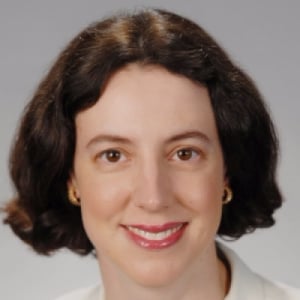
Donald Phillip Rothschild Research Professor, George Washington University Law School
Renée Lettow Lerner is Donald Phillip Rothschild Research Professor of Law at George Washington University Law School.
Professor Lerner works in the fields of U.S. and English legal history, civil and criminal procedure, and comparative law. She advises judges, lawyers, and government officials from the United States and countries in Europe, Latin America, and Asia about the differences between adversarial and nonadversarial legal systems.
She writes extensively about the history of American juries. Her work includes not only scholarly articles, but also online publications intended for a broader audience of legal professionals and the public. In many different settings, she has debated the role of juries with other academics and with lawyers. She has a book forthcoming with Oxford University Press in the Very Short Introduction Series entitled “The Jury.” She is also working on a book about the American civil jury, from the colonial period to the present.
She is the author, with John Langbein and Bruce Smith, of the book History of the Common Law: The Development of Anglo-American Legal Institutions (2009).
Her recent writings include a book review of Amalia D. Kessler’s Inventing American Exceptionalism: The Origins of American Adversarial Legal Culture, 1800-1877, 67 J. Legal Ed. 888 (2018); “How the Creation of Appellate Courts in England and the United States Limited Judicial Comment on Evidence to the Jury,” 40 Journal of the Legal Profession 215 (2016); “The Troublesome Inheritance of Americans in Magna Carta and Trial by Jury,” in Magna Carta and its Modern Legacy 77-98 (Robert Hazell and James Melton eds., Cambridge University Press 2015); and “The Failure of Originalism in Preserving Constitutional Rights to Civil Jury Trial,” 22 William & Mary Bill of Rights Journal 811 (2014).
Professor Lerner received an A.B. summa cum laude in history from Princeton University. She was a Rhodes Scholar at Oxford University, where she studied English legal history. At Yale Law School, she was Articles Editor of the Yale Law Journal. She served as a law clerk to Justice Anthony M. Kennedy of the U.S. Supreme Court and to Judge Stephen F. Williams of the U.S. Court of Appeals for the District of Columbia Circuit. From 2003 to 2005, she served as Deputy Assistant Attorney General in the Office of Legal Counsel at the U.S. Department of Justice.
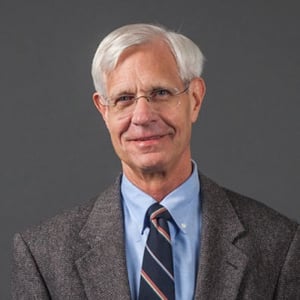
Distinguished University Professor, Antonin Scalia Law School, George Mason University
University Professor Nelson Lund is the author of Rousseau’s Rejuvenation of Political Philosophy: A New Introduction. He has also written widely in the field of constitutional law, including articles on constitutional interpretation, federalism, separation of powers, the Second Amendment, the Commerce Clause, the Speech or Debate Clause, the Equal Protection Clause, and the Uniformity Clause. In addition, he has published articles in the fields of employment discrimination and civil rights, the legal regulation of medical ethics, and the application of economic analysis to legal institutions and legal ethics.
Professor Lund graduated from St. John's College in Annapolis, Maryland, after which he received an MA in philosophy from the Catholic University of America and a PhD in political science from Harvard University. He left the faculty of the University of Chicago to attend its law school, where he served as executive editor of the University of Chicago Law Review and chapter chairman of the Federalist Society for Law and Public Policy Studies. After law school, he held positions at the United States Department of Justice in the Office of the Solicitor General and the Office of Legal Counsel. He also served as a law clerk to the Honorable Patrick E. Higginbotham of the United States Court of Appeals for the Fifth Circuit and to the Honorable Sandra Day O'Connor of the United States Supreme Court. Following his clerkship with Justice O'Connor, Professor Lund served in the White House as associate counsel to the president from 1989 to 1992.
Since joining the faculty at George Mason University's Antonin Scalia Law School, Professor Lund has taught Constitutional Law, Legislation, Federal Election Law, Employment Discrimination, State and Local Government, and seminars on the Second Amendment and on a variety of topics in Jurisprudence.
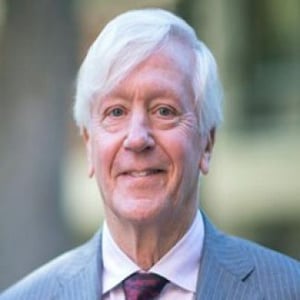
David and Mary Harrison Distinguished Professor of Law, University of Virginia School of Law
G. Edward White joined the Virginia law faculty in 1972 after a clerkship with Chief Justice Earl Warren of the Supreme Court of the United States and a year as visiting scholar at the American Bar Foundation. He was appointed John B. Minor Professor of Law and History in 1987, and held that chair until 2003, when he became David and Mary Harrison Distinguished Professor of Law. In 1992, he was appointed to a University Professorship, which he held until 2003. From 1990 until 1992 and from 2001-03, he was the Sullivan & Cromwell Research Professor; from 1994-97 the E. James Kelly Research Professor; and from 1999-2001 the Class of 1963 Research Professor. He has held visiting appointments at New York Law School, William & Mary School of Law, Brooklyn Law School, Arizona College of Law, the London School of Economics and Political Science, and Harvard Law School. He has been a Guggenheim Fellow, and twice a senior fellow of the National Endowment for the Humanities. He is a fellow of the American Academy of Arts & Sciences, a fellow of the Society of American Historians, and a member of the American Law Institute.He received the Roger and Madeleine Traynor Faculty Achievement Award in 2008.
White's 14 published books have won numerous honors and awards. These include final listing for the Pulitzer Prize in history, the Silver Gavel Award from the American Bar Association, the James Willard Hurst Prize from the Law & Society Association, the Littleton-Griswold Prize from the American Historical Association, the Scribes Award and the Association of American Law Schools' Triennial Coif Award. White's books have garnered 15 such honors and awards since 1976.
White was editor of the Studies in Legal History series for the North Carolina Press from 1980-85, and advisor on law manuscripts for Oxford University Press from 1986-96. He was on the editorial board of the Virginia Quarterly Review from 1980-2002. He has served on the Commission for Undergraduate Education in Law and the Humanities, and has taught summer humanities seminars for lawyers and judges under the auspices of the National Endowment for the Humanities.
White has delivered several endowed lectures, including the inaugural John Marshall Lecture, sponsored by the Boston Bar Association; the inaugural Jerome Hall Lecture at Hastings College of Law; the Swinford Lecture, sponsored by the University of Kentucky School of Law and the Kentucky Bar Association; the Keck Lecture at Amherst College, the Rosenthal Lectures at Northwestern University School of Law; the Neesima Lectures at Doshisha University, Japan; the Fulton Lecture at the University of Chicago School of Law and the Knowlton Distinguished Lecture at the University of South Carolina School of Law. His most recent lecture was the 2010 Hendricks Law and History Lecture at Washington & Lee Law School.
White's 1996 book, Creating the National Pastime: Baseball Transforms Itself, 1903-1953, reflects his life-long participation and interest in athletics. He lettered in four sports in college, formerly coached the Charlottesville High School girls soccer team, and has won a number of state- and citywide tournaments in doubles squash.
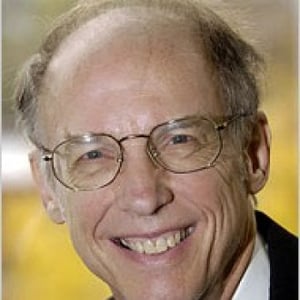
United States Court of Appeals, Fourth Circuit
James Harvie Wilkinson III is an Article III federal judge on the United States Court of Appeals for the Fourth Circuit. He joined the Court in 1984 after being nominated by President Ronald Reagan.
Born in New York City, New York, Wilkinson graduated from Yale University with his Bachelor's degree in 1967. Wilkinson served in the United States Army from 1968 to 1969 and received his Juris Doctor degree from the University of Virginia School of Law in 1972.
On the recommendation of Virginia U.S. Senator John Warner, Wilkinson was nominated to the United States Court of Appeals for the Fourth Circuit by President Ronald Reagan on January 30, 1984 to a seat vacated by John Butzner, Jr.,. Wilkinson was confirmed by the Senate on August 9, 1984 on a Senate vote and received commission on August 13, 1984. Wilkinson served as the Chief Judge of the Court from 1996 to 2003.
Milton R. Underwood Professor of Law Emeritus and Professor of History Emeritus, Vanderbilt University
James Ely is a renowned legal historian and property rights expert whose career accomplishments were recognized with both the Brigham-Kanner Property Rights Prize and the Owner's Counsel of American Crystal Eagle Award in 2006. He is the author of several books that have received widespread critical acclaim from legal scholars and historians, including The Guardian of Every Other Right: A Constitutional History of Property Rights, The Fuller Court: Justices, Rulings and Legacy in which he examines the work of the Supreme Court between 1888 and 1910, Railroads and American Law in which he systematically explores the way that the rise of the railroad shaped American legal culture, and The Contract Clause: A Constitutional History. He also is the author of numerous articles dealing with the rights of property owners. He served as an editor of both the Oxford Companion to the Supreme Court, and the second edition of the Oxford Guide to Supreme Court Decisions. Professor Ely received the Tennessee History Book Award in 2002 for A History of the Tennessee Supreme Court. Between 1987 and 1999, he served as an associate editor of the American Journal of Legal History. Since Professor Ely joined Vanderbilt faculty in 1972, he has been frequently recognized by students as one of the law school's outstanding teachers.
Donald Phillip Rothschild Research Professor, George Washington University Law School
Renée Lettow Lerner is Donald Phillip Rothschild Research Professor of Law at George Washington University Law School.
Professor Lerner works in the fields of U.S. and English legal history, civil and criminal procedure, and comparative law. She advises judges, lawyers, and government officials from the United States and countries in Europe, Latin America, and Asia about the differences between adversarial and nonadversarial legal systems.
She writes extensively about the history of American juries. Her work includes not only scholarly articles, but also online publications intended for a broader audience of legal professionals and the public. In many different settings, she has debated the role of juries with other academics and with lawyers. She has a book forthcoming with Oxford University Press in the Very Short Introduction Series entitled “The Jury.” She is also working on a book about the American civil jury, from the colonial period to the present.
She is the author, with John Langbein and Bruce Smith, of the book History of the Common Law: The Development of Anglo-American Legal Institutions (2009).
Her recent writings include a book review of Amalia D. Kessler’s Inventing American Exceptionalism: The Origins of American Adversarial Legal Culture, 1800-1877, 67 J. Legal Ed. 888 (2018); “How the Creation of Appellate Courts in England and the United States Limited Judicial Comment on Evidence to the Jury,” 40 Journal of the Legal Profession 215 (2016); “The Troublesome Inheritance of Americans in Magna Carta and Trial by Jury,” in Magna Carta and its Modern Legacy 77-98 (Robert Hazell and James Melton eds., Cambridge University Press 2015); and “The Failure of Originalism in Preserving Constitutional Rights to Civil Jury Trial,” 22 William & Mary Bill of Rights Journal 811 (2014).
Professor Lerner received an A.B. summa cum laude in history from Princeton University. She was a Rhodes Scholar at Oxford University, where she studied English legal history. At Yale Law School, she was Articles Editor of the Yale Law Journal. She served as a law clerk to Justice Anthony M. Kennedy of the U.S. Supreme Court and to Judge Stephen F. Williams of the U.S. Court of Appeals for the District of Columbia Circuit. From 2003 to 2005, she served as Deputy Assistant Attorney General in the Office of Legal Counsel at the U.S. Department of Justice.
Distinguished University Professor, Antonin Scalia Law School, George Mason University
University Professor Nelson Lund is the author of Rousseau’s Rejuvenation of Political Philosophy: A New Introduction. He has also written widely in the field of constitutional law, including articles on constitutional interpretation, federalism, separation of powers, the Second Amendment, the Commerce Clause, the Speech or Debate Clause, the Equal Protection Clause, and the Uniformity Clause. In addition, he has published articles in the fields of employment discrimination and civil rights, the legal regulation of medical ethics, and the application of economic analysis to legal institutions and legal ethics.
Professor Lund graduated from St. John's College in Annapolis, Maryland, after which he received an MA in philosophy from the Catholic University of America and a PhD in political science from Harvard University. He left the faculty of the University of Chicago to attend its law school, where he served as executive editor of the University of Chicago Law Review and chapter chairman of the Federalist Society for Law and Public Policy Studies. After law school, he held positions at the United States Department of Justice in the Office of the Solicitor General and the Office of Legal Counsel. He also served as a law clerk to the Honorable Patrick E. Higginbotham of the United States Court of Appeals for the Fifth Circuit and to the Honorable Sandra Day O'Connor of the United States Supreme Court. Following his clerkship with Justice O'Connor, Professor Lund served in the White House as associate counsel to the president from 1989 to 1992.
Since joining the faculty at George Mason University's Antonin Scalia Law School, Professor Lund has taught Constitutional Law, Legislation, Federal Election Law, Employment Discrimination, State and Local Government, and seminars on the Second Amendment and on a variety of topics in Jurisprudence.
David and Mary Harrison Distinguished Professor of Law, University of Virginia School of Law
G. Edward White joined the Virginia law faculty in 1972 after a clerkship with Chief Justice Earl Warren of the Supreme Court of the United States and a year as visiting scholar at the American Bar Foundation. He was appointed John B. Minor Professor of Law and History in 1987, and held that chair until 2003, when he became David and Mary Harrison Distinguished Professor of Law. In 1992, he was appointed to a University Professorship, which he held until 2003. From 1990 until 1992 and from 2001-03, he was the Sullivan & Cromwell Research Professor; from 1994-97 the E. James Kelly Research Professor; and from 1999-2001 the Class of 1963 Research Professor. He has held visiting appointments at New York Law School, William & Mary School of Law, Brooklyn Law School, Arizona College of Law, the London School of Economics and Political Science, and Harvard Law School. He has been a Guggenheim Fellow, and twice a senior fellow of the National Endowment for the Humanities. He is a fellow of the American Academy of Arts & Sciences, a fellow of the Society of American Historians, and a member of the American Law Institute.He received the Roger and Madeleine Traynor Faculty Achievement Award in 2008.
White's 14 published books have won numerous honors and awards. These include final listing for the Pulitzer Prize in history, the Silver Gavel Award from the American Bar Association, the James Willard Hurst Prize from the Law & Society Association, the Littleton-Griswold Prize from the American Historical Association, the Scribes Award and the Association of American Law Schools' Triennial Coif Award. White's books have garnered 15 such honors and awards since 1976.
White was editor of the Studies in Legal History series for the North Carolina Press from 1980-85, and advisor on law manuscripts for Oxford University Press from 1986-96. He was on the editorial board of the Virginia Quarterly Review from 1980-2002. He has served on the Commission for Undergraduate Education in Law and the Humanities, and has taught summer humanities seminars for lawyers and judges under the auspices of the National Endowment for the Humanities.
White has delivered several endowed lectures, including the inaugural John Marshall Lecture, sponsored by the Boston Bar Association; the inaugural Jerome Hall Lecture at Hastings College of Law; the Swinford Lecture, sponsored by the University of Kentucky School of Law and the Kentucky Bar Association; the Keck Lecture at Amherst College, the Rosenthal Lectures at Northwestern University School of Law; the Neesima Lectures at Doshisha University, Japan; the Fulton Lecture at the University of Chicago School of Law and the Knowlton Distinguished Lecture at the University of South Carolina School of Law. His most recent lecture was the 2010 Hendricks Law and History Lecture at Washington & Lee Law School.
White's 1996 book, Creating the National Pastime: Baseball Transforms Itself, 1903-1953, reflects his life-long participation and interest in athletics. He lettered in four sports in college, formerly coached the Charlottesville High School girls soccer team, and has won a number of state- and citywide tournaments in doubles squash.
United States Court of Appeals, Fourth Circuit
James Harvie Wilkinson III is an Article III federal judge on the United States Court of Appeals for the Fourth Circuit. He joined the Court in 1984 after being nominated by President Ronald Reagan.
Born in New York City, New York, Wilkinson graduated from Yale University with his Bachelor's degree in 1967. Wilkinson served in the United States Army from 1968 to 1969 and received his Juris Doctor degree from the University of Virginia School of Law in 1972.
On the recommendation of Virginia U.S. Senator John Warner, Wilkinson was nominated to the United States Court of Appeals for the Fourth Circuit by President Ronald Reagan on January 30, 1984 to a seat vacated by John Butzner, Jr.,. Wilkinson was confirmed by the Senate on August 9, 1984 on a Senate vote and received commission on August 13, 1984. Wilkinson served as the Chief Judge of the Court from 1996 to 2003.

A Discussion on Dodd-Frank
Panel Two: Economic Security
Orin S. Kerr, Marc Rotenberg, John Smith, Michael Vatis, Vincent Vitkowsky
Both President Bush and President Obama directed comprehensive reviews of America's cyber security strategy. The...
Panel Two: Economic Security
Orin S. Kerr, Marc Rotenberg, John Smith, Michael Vatis, Vincent Vitkowsky
Both President Bush and President Obama directed comprehensive reviews of America's cyber security strategy. The...
Panel Two: Economic Security
Cyber Security, National Security and Economic Security
Washington, DCThe America Invents Act: First to File versus First to Invent?
Timothy Holbrook, F. Scott Kieff, Adam Mossoff, David L. Applegate, David S. Olson
Since the first U. S. patent statute in 1790, United States patent law has authorized...
Patent Enforcement in the 21st Century
Erik P. Belt, Jerry Cohen, Gregory D. Cote, F. Scott Kieff, Michael J. Meurer, David S. Olson
This panel will explore the long-standing debate over remedies for patent infringement and whether and...
Patent Enforcement in the 21st Century
Boston Lawyers Chapter, Intellectual Property Practice Group, and Litigation Practice Group
Boston, MAThe Health Care Reform Law (Affordable Care Act): What Are its Constitutional Implications?
Lexington, KentuckyPanel I: Economic Theory, Civic Virtue and the Meaning of the Constitution
James W. Ely, Renée Lettow Lerner, G. Brinton Lucas, Nelson Lund, G. Edward White, J. Harvie Wilkinson
Justice Holmes' dissent in Lochner v. New York is well-known for the statement, "[A] constitution is not...
Panel I: Economic Theory, Civic Virtue and the Meaning of the Constitution
James W. Ely, Renée Lettow Lerner, G. Brinton Lucas, Nelson Lund, G. Edward White, J. Harvie Wilkinson
Justice Holmes' dissent in Lochner v. New York is well-known for the statement, "[A] constitution is not...