

Professor Emeritus, Paul M. Hebert Law Center, Louisiana State University
In memoriam
Dr. John Baker is Professor Emeritus of Law, and previously the Dale E. Bennett Professor of Law, at Louisiana State University Law School. He is currently Visiting Professor at Peking University School of Transnational Law (via Zoom) and has been Visiting Professor at The Center for the Constitution, Georgetown Law School (2013-2020). He has also been a Visiting Fellow at Oriel College, the University of Oxford (2012-2014) and taught at Blackfriars Hall, Oxford in 2014. Dr. Baker has also been an adjunct Fellow at the Heritage Foundation (Spring, 2008) and a Distinguished Scholar at the Catholic University of America Law School (2011-12). He has taught at Tulane Law School, George Mason Law School, Pepperdine Law School, New York Law School, Hong Kong University, and the University of Dallas, School of Management and also taught and/or lectured in 17 foreign countries. Notable among his foreign visits are the
following: Visiting Professor at the University of Lyon III (France) (1999-2011); Visiting Professor at the Universidad de los Andes, Chile (2012), as a Fulbright Specialist (2006); and a Fulbright Scholar at various universities in the Philippines. Dr. Baker received his J.D., with honors, from the University of Michigan Law School and his B.A., magna cum laude, from the University of Dallas. He also earned a Ph.D. in Political Thought from the University of London. Baker has taught over a dozen different subjects, mostly courses in public law. His main areas of interest are Constitutional Law (particularly federalism and separation of powers), Criminal Law, Anti-Terrorism Law, International Law, Health Care Law, Mediation, and Comparative Law.
In addition to law review articles and book chapters, Dr. Baker’s academic publications include Hall's Criminal Law: Cases and Materials (with Benson, Force and George; 5th ed. Michie, 1993); An Introduction to the Law of the United States (ed. with Levasseur; University Press of America, 1992). He has also published on Forbes.com, FoxNews.com, in The Washington Times, and a number of times in The Wall Street Journal. He argues in federal court, including two oral arguments in the U.S. Supreme Court. For many years, he co-taught courses for the Federalist Society on separation of powers with the late Supreme Court Justice Antonin Scalia. In September 2016, he co-taught a Supreme Court seminar in China with Justice Samuel Alito. Following law school, he served as a law clerk in federal district court and as an assistant district attorney in New Orleans before joining LSU in 1975. While a professor, he has been as a consultant to USAID, USIA (since rolled into the State Department), the Justice Department, the U.S. Senate Judiciary Subcommittee on Separation of Powers, and the Office of Planning in the White House. He served on an ABA Task Force which issued the report, The Federalization of Crime (1998) and later as a consultant to the “Bi-Partisan Task Force on the Over- federalization of Crime” (2012-2014) created by the U.S. House Judiciary Subcommittee on Crime. Dr. Baker was a co-founder of the first iteration (1995) of Stratfor Inc., a global intelligence agency. He co-authored its first book: The Intelligence Edge (with Friedman, Friedman and Chapman; Crown Books/Random House 1997). In 2022, he began a short, weekly video podcast available on YouTube and Rumble, The Baker Brief.
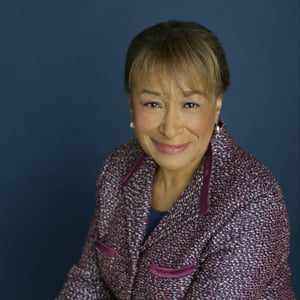
Judge, United States Court of Appeals, District of Columbia Circuit (ret.)
The Honorable Janice Rogers Brown was confirmed to the United States Court of Appeals for the District of Columbia Circuit on June 8, 2005. She retired from the court in 2017. From 1996 to 2005, she was an associate justice of the California Supreme Court. Prior to this, she served as associate justice of the Third District Court of Appeals in Sacramento and as legal affairs secretary to California Governor Pete Wilson. Earlier in her career, she served as Deputy Secretary and General Counsel for California’s Business, Transportation and Housing Agency after having worked in the criminal appellate and civil trial divisions of the California Attorney General’s Office. She currently chairs the Advisory Board of the New Civil Liberties Alliance, and serves on the Board of the Coolidge Foundation and the Association of College Trustees and Alumni. She is the Darling Foundation Jurist-in-Residence and visiting professor of Law at the University of California Boalt School of Law. Brown has been honored with the Jurisprudence Award of Claremont Institute’s Center for Constitutional Jurisprudence, the Baroness Thatcher Award of the Pacific Research Institute, the Edwin Meese III, Originalism and Religious Liberty Award from the Alliance Defending Freedom, the James Wilson Institute Leadership and the Law Award, and the 2019 Bradley Award. She earned her law degree from the University of California – Los Angeles School of Law, and a Master of Laws in judicial process from the University of Virginia School of Law.
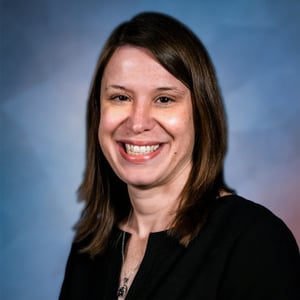
Senior Director of Strategic Partnerships, First Liberty Institute
Lisa Budzynski Ezell is the former Vice President and Director of the Federalist Society’s Lawyers Chapters. In this role, she managed a growing network of over 90 lawyers chapters nationwide, including oversight of leadership recruitment, chapter programming, state conferences, civics education outreach, and young lawyers activities. She holds a Bachelor of Arts degree from Saint Mary’s College in Political Science and History and a Master of Public Policy from George Mason University.
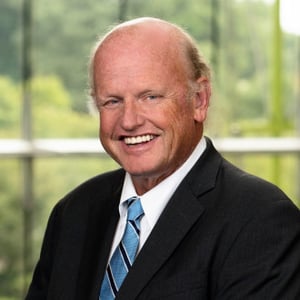
In his 35 years at the Justice Department and in private practice, Mike Carvin was one of the leading appellate and trial lawyers challenging state and federal regulations on constitutional and statutory grounds, with 10 Supreme Court arguments and numerous high-profile victories. In addition to his numerous cases in the United States Supreme Court, he argued in virtually every federal appeals court. His major cases include the recent constitutional challenge to the Affordable Care Act and the decisions invalidating Sarbanes-Oxley's accounting board, preventing the Justice Department from obtaining monetary relief against the tobacco industry under RICO, overturning the federal government's plan to statistically adjust the census, limiting the Justice Department's ability to create "majority-minority" districts, and upholding Proposition 209's ban on racial preferences in California.
Mike was one of the lead lawyers, and argued before the Florida Supreme Court, on behalf of George W. Bush in the 2000 presidential election Florida recount controversy. He also has represented state governments, financial institutions, telecommunications, and energy companies in "takings," First Amendment, civil rights, and statutory challenges to federal government actions.

Ronald Reagan Distinguished Fellow Emeritus, The Heritage Foundation
Edwin Meese III, the prominent conservative leader, thinker and elder statesman, continues a quarter-century formal association with The Heritage Foundation as the leading think tank’s Ronald Reagan Distinguished Fellow Emeritus.
In that capacity, Meese oversees special projects and acts as an ambassador for Heritage within the conservative movement.
Meese was chairman of Heritage’s Center for Legal and Judicial Studies from its founding in 2001 until what he calls his “semi-retirement” on Feb. 1, 2013.
He joined Heritage in 1988 as the think tank's first Ronald Reagan Distinguished Fellow -- the only policy chair in the country to be officially named for the 40th president. His work focused on keeping President Reagan’s legacy of conservative principles alive in public debate and discourse.
The legal center now bears his name, in recognition of Meese’s contributions to the rule of law and the nation’s understanding of constitutional law. Its mission is to educate government officials, the media and the public about the Constitution and legal principles -- and how they affect public policy.
Perhaps best known as U.S. attorney general during Reagan’s second term, Meese’s service to the conservative icon stretched from the California governor’s mansion in 1966 to the White House in 1981 before he went to the Department of Justice four years later.
His Heritage “hats” kept Meese among the major conservative voices in national policy debates at an age when most men and women enjoyed quiet retirements.
In 2006, for example, Meese was named to the Iraq Study Group, a special presidential commission dedicated to examining the best resolutions for America's involvement in Iraq. In the past few years he wrote and spoke about constitutional topics ranging from religious liberty to the responsibility of Supreme Court justices.
Immediately after Reagan's death in 2004, and in the years since, Meese often agreed to major media appearances to discuss the lasting impact of his old friend, mentor and boss. He has summarized the Reagan legacy in three accomplishments: Reagan cut taxes and kept them low. He worked to defeat and end the Soviet Union and its worldwide push for communism. And he restored America's faith in itself after years of failure and "malaise."
"I admired him as a leader and cherish his friendship," Meese wrote in a 2004 essay for Heritage members and supporters. "Ronald Reagan had strong convictions. He was committed to the principles that had led to the founding of our nation. And he had the courage to follow his convictions against all odds." <[>Edwin Meese III was born Dec. 2, 1931, to Edwin Jr. and Leone Meese in Oakland, Calif. He graduated from Yale University in 1953 and holds a law degree from the University of California-Berkeley.
Meese spent much of his adult life working for Reagan, first after the former actor, sports announcer and athlete was elected as California’s governor in 1966 and then when he sought and won the presidency in 1980.
Reagan never forgot Meese's loyalty and hard work. During a press conference at which reporters questioned Meese's actions at the Justice Department, Reagan replied: "If Ed Meese is not a good man, there are no good men."
During the Reagan governorship, Meese served as executive assistant and chief of staff from 1969 through 1974 and as legal affairs secretary from 1967 through 1968. He previously was deputy district attorney in Alameda County, Calif.
From January 1981 to February 1985, Meese held the position of counsellor to the president -- the senior job on the White House staff -- and functioned as Reagan's chief policy adviser. In 1985, he received Government Executive magazine's annual award for excellence in management.
Meese served as the 75th attorney general of the United States from February 1985 to August 1988. As the nation's chief law enforcement officer, he directed the Justice Department and led international efforts to combat terrorism, drug trafficking and organized crime.
Meese’s relationship with Heritage began when he met with senior management to discuss the think tank's landmark policy guide, Mandate for Leadership, prepared for the incoming administration. Meese later recalled that Reagan personally handed out copies of the 1,093-page book to members of his Cabinet and asked them to read it. Nearly two-thirds of Mandate's 2,000 recommendations would be adopted or attempted by the Reagan administration.
More than a decade after joining Heritage, Meese assumed the chairmanship of its Center for Legal and Judicial Studies. Under his guidance, the center counseled White House staffers, Justice Department officials and Senate Judiciary Committee members on the importance of filling judicial vacancies with qualified men and women who are committed to interpreting the Constitution according to the founding document's original meaning.
The center became known for hosting "moot court" practice sessions to sharpen the arguments of attorneys slated to bring important cases before the Supreme Court. Those cases addressed constitutional issues ranging from property rights to racial preferences in primary and secondary schools to restrictions on free speech in campaign finance law.
Meese headed the legal center's Advisory Board for the writing and editing of the best-selling book, The Heritage Guide to the Constitution (Regnery, 2005). In it, 109 experts walked readers through a clause-by-clause analysis of the Constitution. Sen. Tom Coburn (R-Okla.) was among those keeping the reference work handy during Judiciary Committee hearings on Supreme Court nominees.
Meese's other books include “Leadership, Ethics and Policing” (Prentice Hall, 2004); “Making America Safer” (Heritage, 1997); and “With Reagan: The Inside Story” (Regnery Gateway, 1992).He wrote the Introduction to a well-received 2010 book on the “overcriminalization” trend, “One Nation Under Arrest,” by Heritage veterans Paul Rosenzweig and Brian W. Walsh.
He also is a distinguished visiting fellow at the Hoover Institution at Stanford University in California and lectures, writes and consults throughout the United States on a variety of subjects.
As both attorney general and counsellor to Reagan, Meese was a member of the Cabinet and the National Security Council. He served as chairman of the Domestic Policy Council and the National Drug Policy Board. After Reagan won the White House in the 1980 election, Meese headed the transition team. During the campaign, he was the Reagan-Bush Committee's senior official.
Meese had a career outside government and politics. From 1977 to 1981, he was a law professor at the University of San Diego, where he also directed the Center for Criminal Justice Policy and Management.
He was an executive in the aerospace and transportation industry as vice president for administration of Rohr Industries Inc. in Chula Vista, Calif. He left Rohr to return to the practice of law, doing corporate and general work in San Diego County.
A retired colonel in the Army Reserve, Meese remains active in numerous civic and educational organizations.
He and his wife, Ursula, have two grown children and reside in McLean, Va.
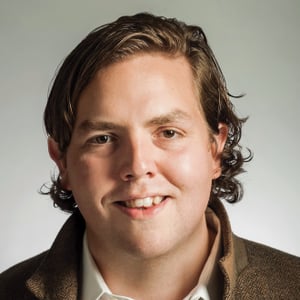
Harry Kalven, Jr. Professor of Law & Faculty Director, Constitutional Law Institute, University of Chicago Law School
William Baude is a Professor of Law and the Faculty Director of the Constitutional Law Institute at the University of Chicago Law School, where he teaches federal courts, constitutional law, and conflict of laws. His current research interests include different aspects of the Fourteenth Amendment (particularly both Section One and Section Three) and the nature of judicial discretion.
Among his other activities Baude is: the co-editor of two textbooks, The Constitution of the United States and Hart & Wechsler's Federal Courts in the Federal System; an Affiliated Scholar at the Center for the Study of Constitutional Originalism; a founding member of the Academic Freedom Alliance; a member of the American Law Institute; an occasional blogger at The Volokh Conspiracy; and a podcaster on Divided Argument. He also recently served on the Presidential Commission on the Supreme Court of the United States.
Professor Baude received his BS in Mathematics from the University of Chicago and his JD from Yale Law School. He then clerked for then-Judge Michael McConnell on the United States Court of Appeals, and Chief Justice John Roberts on the United States Supreme Court. Before joining the Chicago faculty, he was a fellow at the Stanford Constitutional Law Center, and a lawyer in Washington, DC.
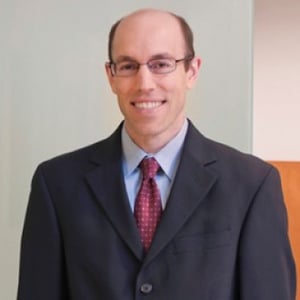
University Professor for Teaching Excellence and Robert and Elizabeth Scott Research Professor of Law, William & Mary Law School
Jeffrey Bellin received his undergraduate degree from Columbia University (summa cum laude) and his law degree from Stanford Law School (order of the coif). After graduating from law school, Professor Bellin clerked for the Honorable Merrick Garland of the U.S. Court of Appeals for the District of Columbia Circuit. Following his clerkship, Professor Bellin served as a prosecutor with the United States Attorney’s Office in Washington, D.C.; and practiced with the San Diego office of Latham & Watkins.
Professor Bellin received a 2019 SCHEV Outstanding Faculty award, the Commonwealth's highest honor for faculty at Virginia's public and private colleges and universities. In 2018, he received the law school’s McGlothlin Award for Exceptional Teaching; in 2017, Professor Bellin was named a University Professor for Teaching Excellence (three-year term) upon the recommendation of a College-wide faculty search committee; and he received the Walter Williams Memorial Teaching Award from the 2014 graduating class. Professor Bellin was also awarded a Plumeri Award for Faculty Excellence in 2015, and Cabell Research Professorships in 2015-16 and 2016-17.
In recent years, Professor Bellin has been called upon by the federal courts to investigate allegations of misconduct against federal judges. His report on one investigation formed the basis for a published opinion in a particularly high-profile case. See In re Charges of Judicial Misconduct, 769 F.3d 762 (D.C. Cir. 2014). He also serves on the National Center for State Courts’ Research Advisory Council.
Professor Bellin’s legal writing is regularly cited in federal and state judicial opinions and scholarly commentary. He also contributes to the media, appearing frequently on Bloomberg Law Radio and Hearsay with Cathy Lewis (NPR). His commentary has been featured in numerous other media outlets, including CNN, ABC, USA Today, NPR, and the Washington Post.
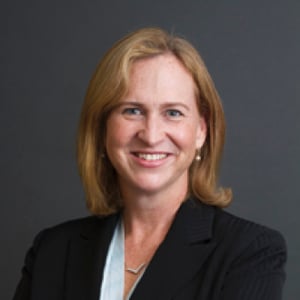
Anne Fleming Research Professor; Professor of Law, Georgetown Law
Laura K. Donohue is a Professor of Law at Georgetown Law, Director of Georgetown's Center on National Security and the Law, and Director of the Center on Privacy and Technology. She writes on constitutional law, legal history, emerging technologies, and national security law. Her most recent book, The Future of Foreign Intelligence: Privacy and Surveillance in a Digital Age (Oxford University Press, 2016), was awarded the 2016 IIT Chicago-Kent College of Law/Roy C. Palmer Civil Liberties Prize. She also has written The Cost of Counterterrorism: Power, Politics, and Liberty (Cambridge University Press, 2008); and Counterterrorist Law and Emergency Law in the United Kingdom 1922-2000 (Irish Academic Press, 2007).
Professor Donohue's articles have been published by California Law Review, University of Chicago Law Review, Stanford Law Review, University of Pennsylvania Law Review, Harvard Journal of Law and Public Policy, and other scholarly journals.
In November 2015, the U.S. Foreign Intelligence Surveillance Court appointed her as one of five amici curiae under the 2015 USA FREEDOM Act.
Professor Donohue is a Life Member of the Council on Foreign Relations; an Advisory Board Member of the Electronic Privacy Information Center; and a Member of the American Bar Association's Standing Committee on Law and National Security. She is a Senior Scholar at Georgetown Law's Center for the Constitution.
Donohue obtained her AB in Philosophy (with Honors) from Dartmouth College; her MA in Peace Studies (with Distinction) from the University of Ulster, Northern Ireland; her JD (with Distinction) from Stanford Law School; and her PhD in History from the University of Cambridge, England.

Professor of Law, Stanford Law School
Orin S. Kerr is a Professor of Law at Stanford Law School, where he teaches and writes in the areas of criminal procedure and computer crime law. Kerr earned mechanical engineering degrees from Princeton University and Stanford University before graduating with a J.D. from Harvard Law School. He is a former law clerk to Justice Anthony M. Kennedy at the United States Supreme Court and Judge Leonard I. Garth of the U.S. Court of Appeals for the Third Circuit.
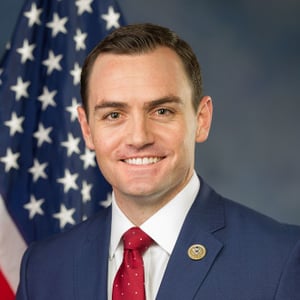
Congressman, U.S. House of Representatives
First elected in 2016, Congressman Mike Gallagher represents Wisconsin’s 8th District in the U.S. House of Representatives. Mike is a 7th generation Wisconsin native, born and raised in Green Bay.
Mike joined the United States Marine Corps the day he graduated from college and served for seven years on active duty as a Counterintelligence/Human Intelligence Officer and Regional Affairs Officer for the Middle East/North Africa, eventually earning the rank of Captain. He deployed twice to Al Anbar Province, Iraq as a commander of intelligence teams, served on General Petraeus’s Central Command Assessment Team in the Middle East, and worked for three years in the intelligence community, including tours at the National Counterterrorism Center and the Drug Enforcement Agency. Mike also served as the lead Republican staffer for Middle East, North Africa and Counterterrorism on the Senate Foreign Relations Committee. Prior to taking office, Mike worked in the private sector at a global energy and supply chain management company in Green Bay.
After earning his bachelor’s degree from Princeton University, Mike went on to earn a master’s degree in Security Studies from Georgetown University, a second in Strategic Intelligence from National Intelligence University, and his PhD in International Relations from Georgetown.
Mike currently serves on the House Armed Services Committee, where he is a member of the Seapower and Projection Forces, as well as the Readiness Subcommittees. He also serves on the Homeland Security Committee, where he is a member of the Counterterrorism and Intelligence (CTI) and Cybersecurity and Infrastructure Protection (CIP) Subcommittees.

Vice President, Networks, The Federalist Society for Law and Public Policy Studies
Nathan Kaczmarek is Vice President for Networks at the Federalist Society. He began his legal career in Detroit representing nationwide clients in all phases of healthcare litigation and complex medical malpractice claims. He has since served as a Senior Legal and Policy Advisor in the U.S. House of Representatives and as Counsel for the Subcommittee on Regulatory Affairs and Federal Management in the U.S. Senate. Prior to overseeing the Networks, he was Director of the Practice Groups, the Regulatory Transparency Project, and the Article I Initiative for the Federalist Society.
Nathan holds degrees from Hillsdale College and Thomas M. Cooley Law School. He is a Liaison Representative for The Administrative Conference of the United States. He also serves as Vice President of the Associates of St. John Bosco, a Virginia based non-profit dedicated to Catholic high school and college students.
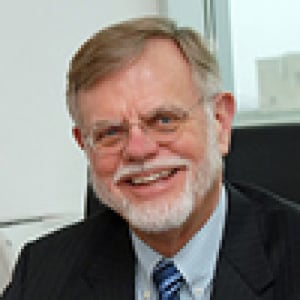
Professor of Political Science and International Affairs, Elliot School of International Affairs, The George Washington University
Henry R. Nau is Professor of Political Science and International Affairs at the Elliott School of International Affairs, The George Washington University. From 1989-2016, he directed the US-Japan- South Korea Legislative Exchange Program, semiannual meetings among Members of the US Congress, Japanese Diet, and South Korean National Assembly. During the academic year 2011-12 he was the W. Glenn Campbell and Rita Ricardo-Campbell National Fellow and the Susan Louise Dyer Peace National Fellow at the Hoover Institution, Stanford University.
Professor Nau holds a B.S. degree in Economics, Politics and Science from the Massachusetts Institute of Technology, and M.A. and Ph.D. degrees from The Johns Hopkins University School of Advanced International Studies. Previously, he taught at Williams College and as Visiting Professor at Johns Hopkins SAIS, Stanford, and Columbia Universities. He is the recipient of grants from, among others, the Council on Foreign Relations, National Science Foundation, Woodrow Wilson International Center for Scholars, Smith- Richardson Foundation, Century Foundation, Japan US Friendship Commission, Rumsfeld Foundation, the Lynde and Harry Bradley Foundation, and the Hoover Institution. From August 1975 to January 1977 he served as a special assistant to the Under Secretary of State for Economic Affairs and from January 1981 to July 1983 as senior staff member and White House sherpa on President Reagan’s National Security Council responsible for G-7 Summits and international economic affairs.
Among numerous publications, he is the author of five single-authored University press books, including Conservative Internationalism: Armed Diplomacy Under Jefferson, Polk, Truman and Reagan (Princeton University Press, 2013; paperback with new preface 2015); Perspectives on International Relations: Power, Institutions, and Ideas (Sage/CQ Press, 5th Edition, 2016); At Home Abroad: Identity and Power in American Foreign Policy (Cornell University Press, 2002); The Myth of America's Decline: Leading the World Economy into the 1990s (Oxford University Press, 1990) and National Politics and International Technology: Nuclear Reactor Development in Western Europe (Johns Hopkins University Press, 1974). His most recent articles and book chapters include “How Restraint Leads to War,” Commentary Magazine, (September 2015; Lead Article on Front Cover); “The ‘Great Expansion:’ The Economic Legacy of Ronald Reagan,” in Reagan’s Legacy in a World Transformed, edited by Jeffrey L. Chidester and Paul Kengor, (Harvard University Press, 2015); and “Ideas have consequences: The Cold War and today,” International Politics, (July 2011).
He is the recipient of the State Department's Superior Honor Award (1977), the Elliott School Harry Harding Teaching Prize (2007), and the Japanese Government's Order of the Rising Sun, Gold Rays with Neck Ribbon (2016). From 1963-65 he served as a Lieutenant in the 82nd Airborne Division at Fort Bragg, N.C.

Professor Emeritus of Law, Antonin Scalia Law School, George Mason University
Jeremy A. Rabkin is a Professor Emeritus of Law at the Antonin Scalia Law School, George Mason University. Before joining the faculty in June 2007, he was for over two decades a professor in the Department of Government at Cornell University. Professor Rabkin serves on the board of directors of the Center for Individual Rights, a public interest law firm based in Washington, D.C. Previously he was a board member of the U.S. Institute of Peace and the board of academic advisors of the American Enterprise Institute.
Professor Rabkin’s books include Law Without Nations? (Princeton University Press, 2005). He authored “If You Need a Friend, Don’t Call a Cosmopolitan,” a chapter in Varieties of Sovereignty and Citizenship (Sigal R. Ben-Porath & Rogers M. Smith eds., University of Pennsylvania Press, 2012). His articles have appeared in major law reviews and political science journals and his journalistic contributions in a range of magazines and newspapers, including the Washington Post and the Wall Street Journal.

Senior Fellow and Director of Constitutional Studies, Manhattan Institute
Ilya Shapiro is a senior fellow and director of constitutional studies at the Manhattan Institute and a contributing editor of City Journal. Previously he was executive director and senior lecturer at the Georgetown Center for the Constitution, and before that a vice president of the Cato Institute.
Shapiro is the author of Lawless: The Miseducation of America’s Elites (2025) and Supreme Disorder: Judicial Nominations and the Politics of America’s Highest Court (2020), coauthor of Religious Liberties for Corporations? (2014), and editor of 11 volumes of the Cato Supreme Court Review (2008-18). He has contributed to a variety of academic, popular, and professional publications, including the Wall Street Journal, Harvard Journal of Law & Public Policy, Washington Post, Los Angeles Times, USA Today, National Review, and Newsweek. He also regularly provides commentary for various media outlets, writes the Shapiro’s Gavel newsletter on Substack, and once appeared on the Colbert Report.
Shapiro has testified many times before Congress and state legislatures and has filed more than 500 amicus curiae “friend of the court” briefs in the Supreme Court. He lectures regularly on behalf of the Federalist Society, is a member of the board of fellows of the Jewish Policy Center, was an inaugural Washington Fellow at the National Review Institute, and has been an adjunct law professor at the George Washington University and University of Mississippi. He is also the chairman of the board of advisers of the Mississippi Justice Institute, a barrister in the Edward Coke Appellate Inn of Court, and a former member of the Virginia Advisory Committee to the U.S. Commission on Civil Rights.
Earlier in his career, Shapiro was a special assistant/adviser to the Multi-National Force in Iraq on rule-of-law issues and practiced at Patton Boggs and Cleary Gottlieb. Before entering private practice, he clerked for Judge E. Grady Jolly of the U.S. Court of Appeals for the Fifth Circuit. He holds an AB from Princeton University, an MSc from the London School of Economics, and a JD from the University of Chicago Law School.
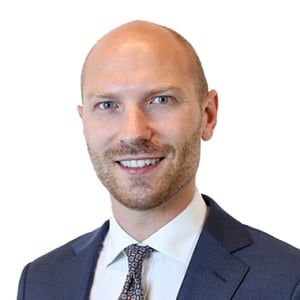
Executive Director, ADF International
Paul Coleman serves as executive director of ADF International from its headquarters in Vienna, overseeing the advocacy and operations of the global, alliance-building human rights organization.
Specializing in international human rights and European law, Mr. Coleman has been involved in more than 20 cases before the European Court of Human Rights and has authored complaints and submissions to the Inter-American Court of Human Rights, International Criminal Court, Court of Justice of the European Union, UN Human Rights Committee, and numerous national courts.
Mr. Coleman was part of the legal team in the historic Eweida and others v. United Kingdom case, where the court handed down a landmark ruling on religious freedom. Mr. Coleman has also authored legal submissions in numerous precedent-setting cases before the European Court, including three Grand Chamber victories. In Gross v. Switzerland, he submitted that no right to assisted suicide or euthanasia exists under the European Convention on Human Rights. In F.G. v. Sweden, Mr. Coleman argued that European countries have a duty to protect Christian converts escaping persecution in their native countries. In Nagy v. Hungary, he argued that churches must have the freedom to manage their internal affairs without interference from the government or other state bodies.
Coleman earned his LL.M. and postgraduate diploma in legal practice, with distinction, from the Northumbria Law School. He obtained a Bachelor of Laws, with first-class honours, from Newcastle University. Coleman is a solicitor of the Senior Courts of England and Wales and is the author of two books and numerous articles.
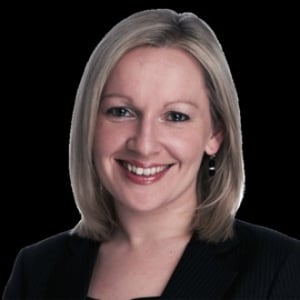
CEO, Vulcan Consulting Ltd
Lucinda Creighton is a former Irish Minister for European Affairs and CEO of Vulcan Consulting Ltd. As a member of the Irish Parliament for nine years, she ran Ireland’s Presidency of the Council of the European Union in 2013, and represented the EU in trade talks with the United States, leading to the formal start of TTIP negotiations in 2013. From 2012 to 2014 she also served as Vice President of the European People’s Party – the largest political party in Europe. Ms. Creighton is an advisory board member of the International Republican Institute and the European Council on Foreign Relations. By training, she is a Barrister and qualified as a New York attorney.
In addition to leading Vulcan Consulting, she is retained as a special advisor on Brexit by Fipra, the international public affairs company. Through this connection, she also collaborates with the London School of Economics providing advisory services on the fallout from Brexit. Vulcan Consulting advises a range of corporate clients on EU policy, regulatory and political issues. They specialise in assisting CEOs and other members of leadership teams in understanding the political and decision making environment in Europe.
Distinguished Senior Fellow, Gatestone Institute
Soeren Kern is a Distinguished Senior Fellow of the Gatestone Institute, and the Senior Analyst for Transatlantic Relations at the Madrid-based Grupo de Estudios Estratégicos / Strategic Studies Group. One of the oldest and most influential foreign policy think tanks in Spain, the Strategic Studies Group is closely tied to Spain's center-right Partido Popular/Popular Party and former Spanish Prime Minister José Maria Aznar.
A political scientist by training, Soeren specializes in European politics as well as US and European defense- and security-related issues. He is also an essayist on European anti-Americanism and the roles of America and Europe in the world.
Mr. Kern is a contributing analyst for Jane's Information Group on Basque and Islamist terrorism in Spain. He writes for Jane's Intelligence Review, Jane's Intelligence Weeklyand Jane's Terrorism and Security Monitor.
Mr. Kern is a regular commentator about European politics and transatlantic relations for newspapers and radio programs in Spain, Europe and the United States. He teaches international relations at the Universidad Antonio de Nebrija, a private university in Madrid.
Previously, Mr. Kern was Senior Analyst for Transatlantic Relations at the Madrid-based Elcano Royal Institute for Strategic and International Affairs. He served in the US Air Force(stationed in Germany) during the last decade of the Cold War, and worked as a defense analyst at Science Applications International Corporation (SAIC), one of the leading corporate think tanks advising the Pentagon on nuclear non-proliferation. He was also the Washington-based managing editor of Arms Control Today, the strategic affairs monthly magazine.
Mr. Kern graduated from the School of Foreign Service at Georgetown University in Washington, DC, and has also studied at the Hebrew University of Jerusalem. He has visited more than one hundred countries, including most of those in the Middle East.
Mr. Kern is a dual citizen of the United States and Germany, and is fluent in English, German and Spanish. He lives in Spain with his wife Mónica.
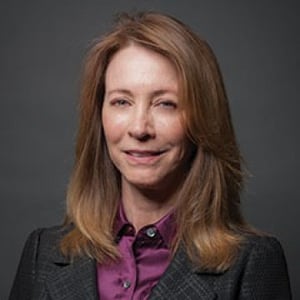
Founder, Libertas-West Project
Karen Lugo is a constitutional law consultant and national security analyst. She was Director of the Center for Tenth Amendment at Texas Public Policy Foundation from 2013 to 2015. When living in California, she was Co-Director of the Center for Constitutional Jurisprudence Center. From 2005 – 2012, she was a clinical visiting and adjunct professor at Chapman University School of Law where she co-taught the advanced Constitutional Law Clinic. Karen has co-authored and written circuit-level and Supreme Court amicus briefs on such issues as FISA Surveillance, Healthcare Reform, Arizona’s Border Security, Gay Marriage, The Ten Commandments, Eminent Domain, Christian Clubs on University Campuses, and Material Support for Terrorists.
Karen is the founder of the Libertas-West Project, a center for study Islamic integration and radicalization issues. In this capacity, she consulted with the Center for Security Policy to write a book on local over-watch of mosque construction and community engagement called: Mosques in America: A Guide to Accountable Permit Hearings and Continuing Citizen Oversight.
Karen writes and speaks for European and American groups on the importance of basing assimilation efforts on principles of Western exceptionalism. She presented a policy brief to the French Conseil d’Etat analyzing the legal implications of banning the burqa. Ms. Lugo has written one of the most comprehensive overviews of sharia law in American courts, American Family Law and Sharia-Compliant Marriages, for the Federalist Society law journal, Engage. She has written several white papers on the American Law for American Courts legislation and sharia tribunals in America.
Ms. Lugo was an appointee to the California Advisory Committee to the U.S. Commission on Civil Rights. She also taught a Human Rights law course on the contrast between French and English Enlightenment theories in Strasbourg, France.
Until moving from California, Ms. Lugo was a member of the David Horowitz Freedom Center Board of Directors. She was also a regular guest on the Orange County PBS local issues debate program, Inside OC, and she is a contributor to Pajamas Media, National Review Online, City Journal, American Spectator, American Greatness, Townhall.com, American Thinker, Daily Caller, and Family Security Matters. She has been interviewed by dozens of radio hosts and has spoken for civic groups on constitutional and cultural concerns.

Patrick Hotung Professor of Constitutional Law, Georgetown University Law Center; Faculty Director, Georgetown Center for the Constitution
Randy E. Barnett is the Patrick Hotung Professor of Constitutional Law at the Georgetown University Law Center and is the Faculty Director of the Georgetown Center for the Constitution. After graduating from Northwestern University and Harvard Law School, he tried many felony cases as a prosecutor in the Cook County States’ Attorney’s Office in Chicago. A recipient of a Guggenheim Fellowship in Constitutional Studies and the Bradley Prize, Professor Barnett has been a visiting professor at Penn, Northwestern and Harvard Law School.
Professor Barnett’s publications includes thirteen books, more than one hundred articles and reviews, as well as numerous op-eds. His most recent book is Felony Review: Tales of True Crime and Corruption in Chicago (2026). His other books on the Constitution include: A Life for Liberty: The Making of an American Originalist (2024); The Original Meaning of the Fourteenth Amendment: Its Letter and Spirit (2021) (with Evan Bernick); An Introduction to Constitutional Law: 100 Supreme Court Cases Everyone Should Know (2019) (with Josh Blackman); Restoring the Lost Constitution: The Presumption of Liberty (2nd ed. 2013); Our Republican Constitution: Securing the Liberty and Sovereignty of We the People (2016); and Constitutional Law: Cases in Context (5th ed. forthcoming 2027) (with Josh Blackman). His books on contracts are The Oxford Introductions to U.S. Law: Contracts (2010) and Contracts: Cases and Doctrine (7th ed. 2021) (with Nate Oman). And he is the author of The Structure of Liberty: Justice and the Rule of Law (2nd ed. 2014).
In 2004, he argued the medical marijuana case of Gonzalez v. Raich before the U.S. Supreme Court. In 2012, he was one of the lawyers representing the National Federation of Independent Business in its constitutional challenge to the Affordable Care Act in NFIB v. Sebelius. He’s appeared in numerous documentaries and portrayed a prosecutor in the 2010 science-fiction feature film, InAlienable: The Movie. On X he is @RandyEBarnett

Judge, United States Court of Appeals, Third Circuit
Judge Hardiman was appointed to the United States Court of Appeals for the Third Circuit on January 9, 2007 and was confirmed by the Senate (95-0) on March 15, 2007. Prior to becoming an appellate judge, Judge Hardiman served as a trial judge on the United States District Court for the Western District of Pennsylvania as of November 1, 2003. In 2008, Chief Justice John Roberts appointed Judge Hardiman to the Information Technology Committee of the Judicial Conference of the United States. Judge Hardiman was appointed Chairman of the IT Committee in 2013 and served in that capacity until September 2021. In 2021 he was appointed by the Director of the Administrative Office of the United States Courts to serve as Chair of the Judiciary IT Security Task Force, which completed its work in fall 2023. Chief Justice Roberts appointed Judge Hardiman to the Board of the Federal Judicial Center to serve from March 2020 until March 2024. As part of his work with the Center, Judge Hardiman now serves as Editor in Chief for the Manual for Complex Civil Litigation, Fifth.
Before entering judicial service, Judge Hardiman handled a wide variety of litigation matters in state and federal trial and appellate courts as a partner at Reed Smith LLP (1999-2003), a partner at Titus & McConomy LLP (1996-1999), and as an associate with its predecessor firm, Cindrich & Titus (1992-1996). Judge Hardiman began his legal career as an associate in the Washington, D.C. office of Skadden, Arps, Slate, Meagher & Flom (1990-1992).
A 1987 honors graduate of the University of Notre Dame, Judge Hardiman received his law degree in 1990 from the Georgetown University Law Center, where he served as a Notes and Comments Editor on the Georgetown Law Journal. In 2012, Judge Hardiman was elected as a member of the American Law Institute and was elected to its Council in 2019 and its Executive Committee in 2025. Judge Hardiman regularly teaches a seminar on Advanced Constitutional Law at Duquesne University School of Law and a one-week course entitled “Constitutional Law: the First and Second Amendments” at Georgetown University Law Center.
A native of Waltham, Massachusetts, Judge Hardiman has chambers in Pittsburgh, Pennsylvania. He and his wife Lori married in 1992 and have three children.
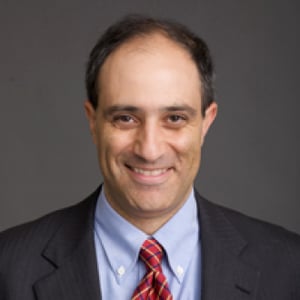
Carroll Professor of Jurisprudence, Georgetown Law
John Mikhail is the Carroll Professor of Jurisprudence at Georgetown University Law Center, where he has taught since 2004. He teaches and writes on a variety of topics, including constitutional law, moral psychology, moral and legal theory, and legal history. His recent scholarship has focused mainly on American constitutional history, including the original understanding of the Preamble, Tenth Amendment, and Emoluments, Ex Post Facto, and Necessary and Proper Clauses. Professor Mikhail received his B.A. from Amherst College, a Ph.D. in Philosophy from Cornell University, and his J.D. from Stanford Law School, where he was Senior Article Editor of the Stanford Law Review and Senior Submissions Editor of the Stanford Journal of International Law. Before coming to Georgetown, he was a Lecturer and Research Affiliate at MIT, an associate at Simpson, Thacher & Bartlett, and a judicial clerk to Judge Rosemary Barkett on the U.S. Court of Appeals for the Eleventh Circuit. Professor Mikhail served as the Law Center's Associate Dean for Research and Academic Programs from 2017 to 2020 and its Associate Dean for International and Transnational Programs from 2011 to 2013.

Executive Director, Salmon P. Chase Center for Civics, Culture, and Society, The Ohio State University
Professor Lee J. Strang serves as the inaugural executive director of the Salmon P. Chase Center for Civics, Culture, and Society at The Ohio State University.
Initiated in 2023 by the state of Ohio, the Chase Center will be an academic home at Ohio State for teaching, research, and programing on the foundations of the American constitutional order and its impact on society. As executive director, Professor Strang is responsible for organizing the center, overseeing the hiring and appointment of the center’s faculty, developing curriculum, and delivering student and academic programming. He also holds a faculty appointment in the Moritz College of Law at Ohio State.
Professor Strang is a nationally recognized legal scholar who has published dozens of articles in leading journals in the fields of constitutional law and interpretation, property law, and religion and the First Amendment. He co-edits the textbook Federal Constitutional Law, and his most recent book, Originalism’s Promise: A Natural Law Account of the American Constitution is the first book-length, natural law justification for originalism. He currently is writing on civic thought and leadership, and he is finalizing a book on the history of American Catholic legal education (with John M. Breen).
Before joining Ohio State, Professor Strang served as the inaugural director of the University of Toledo’s Institute of American Constitutional Thought & Leadership. He joined the Toledo College of Law faculty in 2008, was granted tenure in 2010, and was named John W. Stoepler Professor of Law & Values in 2015. The University of Toledo awarded Professor Strang its Outstanding Faculty Research and Scholarship Award in 2017. Before that, he was a visiting professor at Michigan State University College of Law. A graduate of the University of Iowa, where he was articles editor of the Iowa Law Review and Order of the Coif, Professor Strang holds an LL.M. degree from Harvard Law School.
Professor Strang has been a visiting scholar at the Georgetown Center for the Constitution and a visiting fellow at the James Madison Program at Princeton University. In 2016, he was appointed to the Ohio Advisory Committee of the U.S. Commission on Civil Rights and reappointed as chair in 2023.
Prior to teaching, Professor Strang served as a judicial clerk for Judge Alice M. Batchelder of the U.S. Court of Appeals for the Sixth Circuit. He was also an associate for Jenner & Block LLP in Chicago, where he practiced in general and appellate litigation.
Professor Strang is a frequent presenter at scholarly conferences. He is the president of the Board of Trustees of Northwest Ohio Classical Academy, Ohio’s first classical charter school. He is also a regular participant in debates at law schools across the country, a contributor to the media, and a speaker to political, civic, and religious groups.
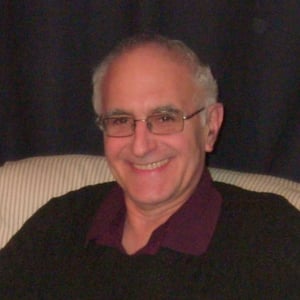
Nancy Reeves Dreux Professor of Political Science, The University of Notre Dame
Michael Zuckert (B.A., Cornell University; PhD, University of Chicago, 1974) is Nancy Reeves Dreux Professor, and Department Chair of Political Science at University of Notre Dame. Professor Zuckert teaches graduate and undergraduate courses in Political Philosophy and Theory, American Political Thought, American Constitutional Law, American Constitutional History, Constitutional Theory, and Philosophy of Law. His advising specialties are graduate programs in political science.
Professor Zuckert has published extensively on a variety of topics, including George Orwell, Plato, Shakespeare, and contemporary liberal theory. He is currently finishing a book called Completing the Constitution: The Post-Civil War Amendments and is co-authoring another book on Machiavelli and Shakespeare. He has been commissioned to write the volume on John Rawls for a series on Twentieth Century Political Philosophy. He co-authored and co-produced public radio series Mr. Adams and Mr. Jefferson: A Nine Part Drama for the Radio. He also was senior scholar for Liberty! (1997), a six hour public television series on the American Revolution, and served as senior advisor on the PBS series on Benjamin Franklin (2002) and Alexander Hamilton (2007). He is currently head of the new Tocqueville Center for the Study of Religion in American Public Life.
Zuckert has received grants from NEH, the Woodrow Wilson Center, Earhart Foundation and NSF, and has taught at Carleton College, Cornell University, Claremont Men’s College, Fordham University, the University of Minnesota, the University of Michigan at Ann Arbor, and the University of Chicago.
Founder, Americans in Support of Law Enforcement
Scott G. Erickson is a conservative writer, policy analyst, and law enforcement professional with over 18 years of experience in police work. He holds a Master of Science degree in Criminal Justice Studies from the University of Cincinnati.
In 2015, Scott founded Americans in Support of Law Enforcement, a pro-law enforcement nonprofit organization dedicated to addressing the issues most relevant to the broader law enforcement community. He currently serves as the organization's President and Executive Director.
In addition to his law enforcement duties, Scott has collaborated extensively with the nation’s foremost conservative think tank, The Heritage Foundation. Frequently contributing to Heritage’s blog, The Daily Signal, Scott has focused on myriad issues of national security including foreign terrorist organizations, law enforcement, and missile defense.
He has co-authored several reports at Heritage: A Comprehensive Suspicious Activity Reporting (SAR) System Requires Action; Changing Today’s Law Enforcement Culture to Face 21st-Century Threats; and Lessons from Benghazi: Investigation Leaves Important Questions Unanswered.
Additionally, Scott’s writing has been featured in The Washington Times, FoxNews.com, The Orange County Register, and other publications. He has also been quoted in major media outlets, including theNew York Times, on national security and law enforcement issues.
A frequent guest on various television and radio programs, Scott has appeared on Fox News, One America News Network, the Dana Loesch Show, and others.
In 2013, Scott was named as one of the Republican National Committee'sRising Stars and his profile was recently featured in USA Today.
Scott continues to work toward advancing conservative solutions to the issues facing our nation while maintaining fidelity to America’s founding documents.
Investigator at San Francisco District Attorney's Office
Daryl Jackson is an Investigator with the San Francisco District Attorney's Office assigned to their special prosecutions unit. He is tasked with investigating allegations of public corruption, law enforcement misconduct, and also serves as an integral part of the Officer Involved Shooting Investigative Team. He was previously a Lieutenant of Inspectors with the Contra Costa County District Attorney's Office, which was a second-in-command position within that organization.
Jackson graduated from Saint Mary’s College graduate with a Master of Arts degree in Leadership and a Bachelors of Science degree in Criminal Justice Management. He has his Peace Officer Standards and Training (POST); Basic, Intermediate, Advanced, Supervisory and Management certificates.
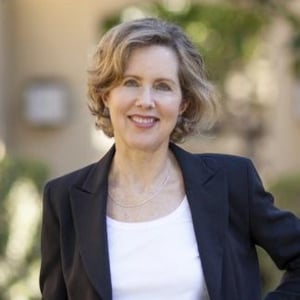
Thomas W. Smith Fellow; Contributing Editor, City Journal, Manhattan Institute
Heather Mac Donald is the Thomas W. Smith Fellow at the Manhattan Institute, a contributing editor of City Journal, and a New York Times bestselling author. She is a recipient of the 2005 Bradley Prize. Mac Donald’s work at City Journal has covered a range of topics, including higher education, immigration, policing, homelessness and homeless advocacy, criminal-justice reform, and race relations. Her writing has appeared in the Wall Street Journal, Washington Post, New York Times, Los Angeles Times, The New Republic, and The New Criterion. Mac Donald's newest book, The Diversity Delusion: How Race and Gender Pandering Corrupt the University and Undermine Our Culture (2018), argues that toxic ideas first spread by higher education have undermined humanistic values, fueled intolerance, and widened divisions in our larger culture.
Mac Donald’s The War on Cops (2016), a New York Times bestseller, warns that raced-based attacks on the criminal-justice system, from the White House on down, are eroding the authority of law and putting lives at risk. Other previous works include The Burden of Bad Ideas (2001), a collection of Mac Donald’s City Journal essays, details the effects of the 1960s counterculture’s destructive march through America’s institutions. In The Immigration Solution: A Better Plan than Today’s (2007), coauthored with Victor Davis Hanson and Steven Malanga, she chronicles the effects of broken immigration laws and proposes a practical solution to securing the country’s porous borders. In Are Cops Racist? (2010), another City Journal anthology, Mac Donald investigates the workings of the police, the controversy over so-called racial profiling, and the anti-profiling lobby’s harmful effects on black Americans.
A nonpracticing lawyer, Mac Donald clerked for the Honorable Stephen Reinhardt, U.S. Court of Appeals for the Ninth Circuit, and was an attorney-advisor in the Office of the General Counsel of the U.S. Environmental Protection Agency and a volunteer with the Natural Resources Defense Council. She has frequently testified before U.S. House and Senate Committees. In 1998, Mac Donald was appointed to Mayor Rudolph Giuliani’s task force on the City University of New York. She has received numerous awards for her writing:
A frequent guest on Fox News and other TV and radio programs, Mac Donald holds a B.A. in English from Yale University, graduating with a Mellon Fellowship to Cambridge University, where she earned an M.A. in English and studied in Italy through a Clare College study grant. She holds a J.D. from Stanford University Law School.
At the Criminal Justice Legal Foundation's 2018 annual meeting in downtown Los Angeles, U.S. Attorney General Jeff Sessions called Mac Donald, “the greatest thinker on criminal justice in America today.”
BART Chief of Police
Kenton W. Rainey is BART's fifth Chief of Police. He began his career in law enforcement in 1979 as a Deputy at the Ventura County Sheriff's Department. He comes to BART with a background that combines his 32 years of law enforcement experience with a deep commitment to community policing, advocacy for the mentally ill and domestic violence victims, and achieving police reform through higher education and training. He has been recognized on numerous occasions for implementing community policing initiatives and working with children who are in “at risk” situations.
Chief Rainey earned his BA in Criminal Justice from California State University Long Beach in 1993 and his MA in Organizational Leadership from the University of Phoenix in 2001. He also earned various leadership certificates from UCLA, National Organization of Black Law Enforcement Executives, International Association of Chiefs of Police, and Police Executive Research Forum.
Principal, Rains Lucia Stern PC
Harry S. Stern is the firm’s managing principal. His practice is focused on civil litigation and criminal defense.
Harry has successfully defended peace officers in a number of high-profile trials. Harry has also represented college and professional athletes, candidates for elected office and other prominent people in civil and criminal actions in both federal and state court. He regularly represents peace officers in internal investigations, administrative hearings, coroner’s inquests, grand jury proceedings and related court actions.
J.D. Candidate at UC Berkeley School of Law
Kevin Walker is a J.D. candidate at UC Berkeley School of Law.

Senior Scholar, Manhattan Institute; Professor of Law Emerita, University of San Diego
Gail Heriot is a Senior Scholar at the Manhattan Institute, a Professor of Law Emerita at the University of San Diego and the Chairman of the Board of the American Civil Rights Project. She served on the U.S. Commission on Civil Rights for 18 years. Her new book is entitled “Why We Walk on Eggshells: How Our Civil Rights Laws Stifle Our Public Discourse.”
Partner, Loevy & Loevy
Arthur Loevy graduated from the University of Michigan Law School in 1963, and has been a member of the Illinois bar continuously for more than forty years. He began his legal career practicing labor law until 1970 when he became an elected officer of a trade union, the Amalgamated Clothing and Textile Workers Union (“ACTWU”). Arthur proceeded to serve in various elected capacities for trade unions, including International Executive Vice President of ACTWU, International Secretary-Treasurer of ACTWU, and, most recently International Secretary-Treasurer of the Union of Needle-Trades Industrial and Textile Employees (U.N.I.T.E.).
Arthur Loevy has also served as a Director and Vice Chairman of the Executive Committee of the Amalgamated Bank of New York (1990-98), the President, Chief Executive Officer, and Trustee of various Taft-Hartley insurance and trust funds for almost twenty years, the President of the Amalgamated Housing Foundation (1974-98), and the President of the Sidney Hillman Health Center in Chicago (1980-98).
Since January 1, 1997, Arthur Loevy has resumed the practice of law on a full-time basis. In 1998, he joined the law firm started by his son, Jon Loevy, and has practiced here ever since.
Adjunct Scholar and Former Director, Project On Criminal Justice, Cato Institute
Tim Lynch is an attorney specializing in criminal law, constitutional law, and civil liberties. He is an adjunct scholar at the Cato Institute and the former director of Cato’s Project on Criminal Justice. His research interests include all aspects of constitutional criminal procedure, overcriminalization, the drug war, and police and prosecutorial misconduct. In 2000, he served on the National Committee to Prevent Wrongful Executions. Lynch also prepares amicus briefs before appellate courts and the U.S. Supreme Court in cases involving constitutional rights. He is the editor of In the Name of Justice: Leading Experts Reexamine the Classic Article “The Aims of the Criminal Law” and After Prohibition: An Adult Approach to Drug Policies in the 21st Century.
Lynch has published a variety of articles in both the law journals and in opinion pieces for the New York Times, the Washington Post, the Wall Street Journal, the Los Angeles Times, and other newspapers. He has appeared on The PBS NewsHour, NBC Nightly News, ABC World News Tonight, and C-SPAN’s Washington Journal. Lynch is a member of the Virginia, District of Columbia, and Supreme Court bars. He earned both a BS and a JD from Marquette University.
Mr. Lynch can be reached via his personal website.
Research Fellow in Empirical Policy Analysis, Center for Data A, The Heritage Foundation
David B. Muhlhausen is a leading expert on the need for evaluating the effectiveness of federal social programs in The Heritage Foundation’s Center for Data Analysis. A Research Fellow in Empirical Policy Analysis at the think tank, Muhlhausen has testified frequently before Congress on the efficiency and effectiveness of federal programs, including testimonies before the U.S. Senate Committee on the Budget and the House Committee on Ways and Means.
In 2013, Praeger published his book, Do Federal Social Programs Work? The book presents an extensive review of scientifically rigorous national studies that almost unanimously find that the federal government fails to solve social problems.
Muhlhausen rose to national prominence in 2001 with publication of his analysis showing the highly touted Community Oriented Policing Services (COPS) program to be a waste of taxpayer dollars. His research illustrated that COPS neither had put 100,000 new police officers on the street nor reduced violent crime.
His work prompted Vice President Joseph Biden, at the time a U.S. senator from Delaware and chairman of the Senate Subcommittee on Crime and Drugs, to call a hearing specifically to investigate Muhlhausen’s findings. “I want to have a hearing on what has been, from The Heritage Foundation and other places, criticism that the COPS program does not work,” Biden said in opening the hearing.
Muhlhausen joined Heritage in 1999 after serving on the staff for the Senate Judiciary Committee, where he specialized in crime and juvenile justice policies. Prior to that, he was a manager at a juvenile correctional facility in Baltimore.
He holds a doctorate in public policy from the University of Maryland-Baltimore County and a bachelor’s degree in political science and justice studies from Frostburg State University.
In addition to his work at Heritage, Muhlhausen is an adjunct professor at George Mason University, teaching program evaluation and statistical methods to graduate students.
A native of Colorado, Muhlhausen grew up in Maryland. He currently resides in Falls Church, Va.

Judge, United States Court of Appeals, Eighth Circuit
David Stras became a judge on the United States Court of Appeals for the Eighth Circuit on January 31, 2018. Before serving on the Eighth Circuit, Judge Stras was an Associate Justice of the Minnesota Supreme Court, a position he occupied from July 1, 2010 until his appointment to the Eighth Circuit.
Prior to becoming a judge, Stras was a member of the faculty of the University of Minnesota Law School from 2004 through 2010. He taught and wrote in the areas of federal courts and jurisdiction, constitutional law, criminal law, and law and politics.
Judge Stras received his Bachelor of Arts degree, with highest distinction, in 1995 and his Master of Business Administration in 1999, both from the University of Kansas. He also received his law degree from the University of Kansas School of Law in 1999, where he served as Editor-in-Chief of the Criminal Procedure Edition of the Kansas Law Review.
Following law school, Stras clerked for The Honorable Melvin Brunetti of the United States Court of Appeals for the Ninth Circuit and then for The Honorable J. Michael Luttig of the United States Court of Appeals for the Fourth Circuit.
From 2001 to 2002, he practiced white-collar criminal and appellate litigation with the Washington, D.C., office of Sidley Austin Brown & Wood. Following his year in practice, he clerked for The Honorable Clarence Thomas of the Supreme Court of the United States.
Former Philadelphia Police Officer
Michael P. Tremoglie is a former Philadelphia police officer, corporate executive, and now a journalist and writer. He was an editor and an investigative journalist for the Philadelphia Bulletin. He has also written for the Philadelphia Daily News, Philadelphia Inquirer, Pittsburgh Tribune-Review, Insight magazine, and the Washington Times.
He has appeared on nationally syndicated radio shows such as Bill Bennett’s Morning in America and the Larry Elder show. His work has been featured on Rush Limbaugh and other radio programs.
Many of his articles were reprinted in law reviews and referenced in congressional testimony. He is the author of a critically acclaimed novel, A Sense of Duty, derived from his experiences on the police force.
Active in the community, he started, in 2008, a wrestling club to help Philadelphia’s minority and inner city youth be competitive with suburban athletes. He also helped coach a high school wrestling team.
That same year he joined the Philadelphia chapter of the Federalist Society. Two years later his cousin, a judge in Sicily, also joined. Together, in 2011, they co-founded the Italian affiliate of the Federalist Society, Academia Res Publica.
They have done much comparative study of the two criminal justice systems.
Mike holds a Bachelor of Science degree in Accounting and a Master of Science degree in Criminal Justice from St. Joseph’s University in Philadelphia.
Founder and President, Center for Neighborhood Enterprise
Robert (Bob) Woodson is Founder and President of the Center for Neighborhood Enterprise and one of America’s most influential leaders on issues of poverty and upward mobility. He chose the word “enterprise” in naming the organization because he believes strongly that market-based principles should also operate in the social economy.
Woodson was instrumental in paving the way for resident management and ownership of public housing, brought together task forces of grassroots groups to advise the 104th Congress, the Pennsylvania Legislature, and the Wisconsin Assembly on welfare reform, and helped create Violence-Free Zones that operate in many of the nation’s most troubled schools and communities.
More recently, he has taken Wisconsin Congressman Paul Ryan on a “listening and learning” tour of some of America’s most impoverished neighborhoods in an effort to move beyond the traditional conservative and liberal understanding of how to address the needs of the poor.
Woodson is frequently featured as a social commentator in print and on-air media, including The News Hour with Jim Lehrer, The O’Reilly Factor, the Garrison Show and other national and local broadcasts. He is the only person ever to receive both the liberal and conservative world’s most prestigious awards – the John D. and Catherine T. MacArthur “Genius” Fellowship and the Lynde and Harry Bradley Foundation Prize, as well as the Presidential Citizens Medal.
He has written several books, including The Triumphs of Joseph: How Today’s Community Healers are Reviving Our Streets and Neighborhood.

Reasoned Argument Book Club: Reasoned Argument versus Thought and Speech Suppression [Session 13]
John S. Baker
REASONED ARGUMENT: THE COUNTER TO CANCEL CULTURE American Argument Prior to, During, and Following theFederalist-Antifederalist...
Reasoned Argument Book Club: The Declaration of Independence [Session 2]
John S. Baker
REASONED ARGUMENT: THE COUNTER TO CANCEL CULTURE American Argument Prior to, During, and Following theFederalist-Antifederalist...
Address by Judge Janice Rogers Brown
Janice Rogers Brown, Lisa Ezell
On November 12, 2020, The Federalist Society hosted a virtual address by Judge Janice Rodgers...
Closing Address by Hon. Edwin Meese III
Michael A. Carvin, Edwin Meese
On November 6-7, 1987, The Federalist Society held a symposium at the Grand Hyatt Hotel...
Panel: Originalism and the Fourth Amendment
William Baude, Jeffrey Bellin, Laura Donohue, Orin S. Kerr
On January 3-4, 2020, the Federalist Society hosted its 22nd annual Faculty Conference at the...
Founding Principles as Pillars of Our Foreign Policy
Mike Gallagher, Nathan Kaczmarek, Henry Nau, Jeremy A. Rabkin, Ilya Shapiro
What would history have to say about the way in which American foreign policy is...
EU ‘Incitement to Hate’ Policies: Targets, Cases, and Consequences
Paul Coleman, Lucinda Creighton, Soeren Kern, Karen J. Lugo
As member states of the European Union have adopted laws and programs to curtail inflammatory...
The Relationship Between the Declaration of Independence and the Constitution
Randy E. Barnett, Thomas M. Hardiman, John Mikhail, Lee J. Strang, Michael P. Zuckert
In 1776, the Continental Congress declared the birth of a new nation. Six of the...
Officer Safety and Community Policing
Scott Erickson, Daryl Jackson, Heather Mac Donald, Kenton Rainey, Harry S. Stern, Kevin Walker
On September 12, 2016, the Federalist Society at Berkeley Law hosted Heather Mac Donald and...
Civil Rights: Ferguson, Baltimore, and Criminal Justice Reform
Gail L. Heriot, Arthur Loevy, Tim Lynch, David B. Muhlhausen, David R. Stras, Michael P. Tremoglie, Robert L. Woodson
Criminal justice and policing reform are much in the news lately, sparked by events that...