

National Affairs Columnist, National Review
John Fund is National Affairs Columnist for National Review magazine and a on-air analyst on the Fox News Channel. He is considered a notable expert on American politics and the nexus between politics and economics.
He previously served as a columnist and editorial board member for The Wall Street Journal. He is the author of several books, including Who's Counting: Bow Fraudsters and Bureaucrats Put Your Vote At Risk (Encounter Books, 2012); Stealing Elections: How Voter Fraud Threatens Our Democracy (Encounter Books, 2008) and The Dangers of Regulation Through Litigation (ATRA Press, 2008). He worked as a research analyst for the California Legislature in Sacramento before beginning his journalism career as a reporter for the syndicated columnists Rowland Evans and Robert Novak.
Roll Call, the newspaper of Capitol Hill, called him "the Tom Paine of the modern Congressional reform movement." He has won awards from the Institute for Justice, The School Choice Aliance and the Warren Brooks award for journalistic excellence from the American Legislative Exchange Council.

Senior Legal Fellow, Edwin Meese III Institute for the Rule of Law, Advancing American Freedom
President and CEO, Foundation for Individual Rights in Education (FIRE)
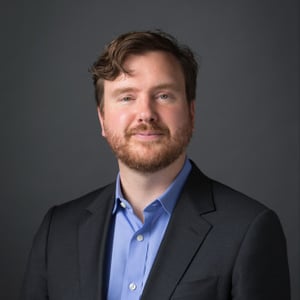
Greg Lukianoff is an attorney, New York Times best-selling author, and the President and CEO of the Foundation for Individual Rights in Education (FIRE). He is the author of Unlearning Liberty: Campus Censorship and the End of American Debate, Freedom From Speech, and FIRE’s Guide to Free Speech on Campus. Most recently, he co-authored The Coddling of the American Mind: How Good Intentions and Bad Ideas Are Setting Up a Generation for Failure with Jonathan Haidt. This New York Times best-seller expands on their September 2015 Atlantic cover story of the same name. Greg is also an Executive Producer of Can We Take a Joke? (2015), a feature-length documentary that explores the collision between comedy, censorship, and outrage culture, both on and off campus, and of Mighty Ira: A Civil Liberties Story (2020), a feature-length film about the life and career of former ACLU Executive Director Ira Glasser.
Greg has been published in The New York Times, The Wall Street Journal, The Washington Post, Los Angeles Times, The Boston Globe, and numerous other publications. He frequently appears on TV shows and radio programs, including the CBS Evening News, The Today Show, and NPR’s Morning Edition. In 2008, he became the first-ever recipient of the Playboy Foundation’s Freedom of Expression Award, and he has testified before both the U.S. Senate and the House of Representatives about free speech issues on America’s college campuses.
Partner, Faegre Drinker Biddle & Reath LLP
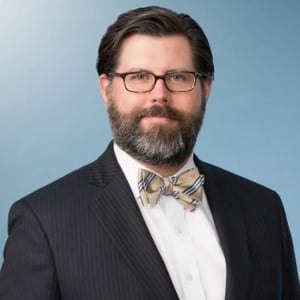
Brian J. Paul is an appellate lawyer and leads law teams in high-stakes commercial litigation. He has briefed and argued everything from weighty abstract constitutional issues to dollars-and-cents business issues and everything in-between, both on appeal and in trial courts around the country. A member of the American Law Institute, recent past-president of the Seventh Circuit Bar Association and top-tier ranked Chambers appellate lawyer, Brian had one client say about him: “Brian is one of the most respected and skilled appellate lawyers, not only in Indianapolis but across the country. He is trusted to deliver timely guidance on complex issues.” Another said: “He is excellent. I enjoyed working with him. He is able to put things into layman’s terms and explains things really well. His written and oral advocacy are short, crisp and to the point.”
Clients hire Brian to digest the complex, and make the complex simple and compelling for busy, generalist judges. In his writing, he strives to cut through jargon and legalese, and distill things down to what’s important. In his oral advocacy, by intense preparation, he strives to be the advocate whom judges trust for the right answers. In the dozens of cases he has argued, Brian has helped clients win on both sides of the “v.” His recent representations include:

Partner, Steptoe & Johnson LLP
Stewart Baker is a partner in the law firm of Steptoe & Johnson in Washington, D.C. From 2005 to 2009, he was the first Assistant Secretary for Policy at the Department of Homeland Security. His law practice covers cybersecurity, data protection, homeland security, and travel and foreign investment regulation; he has been awarded one patent.
Mr. Baker has been General Counsel of the National Security Agency and General Counsel of the commission that investigated WMD intelligence failures prior to the Iraq war. He is the author of Skating on Stilts, a book on terrorism, cybersecurity, and other technology issues; he also hosts the weekly Cyberlaw Podcast.

Professor of Law, Stanford Law School
Orin S. Kerr is a Professor of Law at Stanford Law School, where he teaches and writes in the areas of criminal procedure and computer crime law. Kerr earned mechanical engineering degrees from Princeton University and Stanford University before graduating with a J.D. from Harvard Law School. He is a former law clerk to Justice Anthony M. Kennedy at the United States Supreme Court and Judge Leonard I. Garth of the U.S. Court of Appeals for the Third Circuit.

Executive Vice President, The Federalist Society
Dean Reuter is Executive Vice President at the Federalist Society for Law and Public Policy Studies. He has served in two federal government agency Offices of the Inspector General, as Counsel to the Inspector General and Deputy Inspector General, responsible for policing the use of federal funds granted and contracted through those agencies. As such, he helped conduct and oversee criminal investigations across the country. He is the principal author of the non-fiction book, The Hidden Nazi: The Untold Story of America's Deal with the Devil, and editor of Liberty’s Nemesis: The Unchecked Expansion of the State and Confronting Terror: 9/11 and the Future of American National Security. He was appointed by the President and served as Vice-Chairman of the Board of Directors of the Corporation for National and Community Service, and recently served as an appointee on the U.S. Commission on Presidential Scholars. He is a graduate of Hood College (BA with Honors) and the University of Maryland School of Law.
Garwood Visiting Professor and Visiting Fellow, James Madison Pr, Cleveland-Marshall College of Law
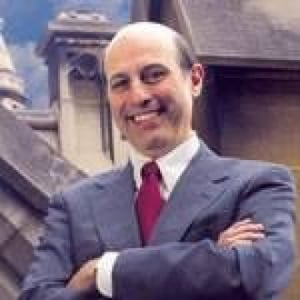
David F. Forte is Professor of Law at Cleveland State University, where he was the inaugural holder of the Charles R. Emrick, Jr.- Calfee Halter & Griswold Endowed Chair. This fall, Professor Forte will be the Garwood Visiting Professor at Princeton University in the Department of Politics, and Visiting Fellow at the James Madison Program in American Ideals and Institutions. He holds degrees from Harvard College, Manchester University, England, the University of Toronto and Columbia University.
During the Reagan administration, Professor Forte served as chief counsel to the United States delegation to the United Nations and alternate delegate to the Security Council. He has authored a number of briefs before the United States Supreme Court, and has frequently testified before the United States Congress and consulted with the Department of State on human rights and international affairs issues. His advice was specifically sought on the approval of the Genocide Convention, on world-wide religious persecution, and Islamic extremism. He has appeared and spoken frequently on radio and television, both nationally and internationally. In 2002, the Department of State sponsored a speaking tour for Professor Forte in Amman, Jordan, and he was also a featured speaker to the Meeting of Peoples in Rimini, Italy, a meeting which gathers over 500,000 people from all over Europe. He has also been called to testify before the state legislatures of Ohio, Kansas, and Idaho as well as the New York City Council. He has assisted in drafting a number of pieces of legislation for the Ohio General Assembly dealing with abortion, international trade, and federalism. He has sat as acting judge on the municipal court of Lakewood Ohio and was chairman of Professional Ethics Committee of the Cleveland Bar Association. He has received a number of awards for his public service, including the Cleveland Bar Association’s President’s Award, the Cleveland State University Award for Distinguished Service, the Cleveland State University Distinguished Teaching Award, and the Cleveland-Marshall College of Law Alumni Award for Faculty Excellence. He served as Consultor to the Pontifical Council for the Family under Pope St. John Paul II and Pope Benedict XVI. In 2003, Dr. Forte was a Distinguished Fulbright Chair at the University of Trento and returned there in 2004 as a Visiting Professor. For the academic year, 2008-2009, Professor Forte was Senior Visiting Scholar at the Center for the Study of Religion and the Constitution in at the Witherspoon Institute in Princeton, New Jersey. He was the Robert E. Henderson Constitution Day Lecturer at the Ashbrook Center at Ashland University, and he has given over 300 invited addresses and papers at more than 100 academic institutions. His work has been cited by the U.S. Supreme Court.
Professor Forte was a Bradley Scholar at the Heritage Foundation, and Visiting Scholar at the Liberty Fund. He has been President of the Ohio Association of Scholars, was on the Board of Directors of the Philadelphia Society, and is also adjunct Scholar at the Ashbrook Center. He has been appointed to the Ohio State Advisory Committee to the U.S. Commission on Civil Rights. He has also been a Civil War re-enactor and a Merit Badge Counselor for the Boy Scouts.
He writes and speaks nationally on topics such as constitutional law, religious liberty, Islamic law, the rights of families, and international affairs. He served as book review editor for the American Journal of Jurisprudence and has edited a volume entitled, Natural Law and Contemporary Public Policy, published by Georgetown University Press. His book, Islamic Law Studies: Classical and Contemporary Applications, has been published by Austin & Winfield. He is Senior Editor of The Heritage Guide to the Constitution (2006), 2d edition (2014), published by Regnery & Co, a clause by clause analysis of the Constitution of the United States.
His teaching competencies include Constitutional Law, the First Amendment, Islamic Law, Jurisprudence, Natural Law, International Law, International Human Rights, the Presidency, and Constitutional History.
Former Director (consultant), International Affairs, The Federalist Society
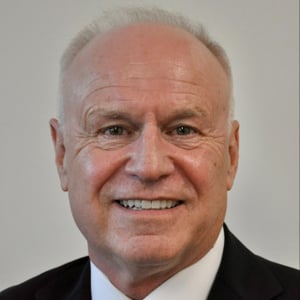
From 2005 to 2025, Jim Kelly served on a consulting basis as the Federalist Society’s Director of International Affairs, responsible for outreach to law students, lawyers, and judges in Canada, Europe, and Israel. From 2005 to 2008, he served on the U.S. National Commission to UNESCO, and as Chairman of its Social and Human Sciences Committee. From 2001 to 2008, he served as an official U.S. delegate to five international human rights conferences. In 2019, the U.S. State Department appointed Jim to serve as one of the two U.S. members on the European Commission for Democracy through Law (the “Venice Commission”). In 2020, the State Department named him as an expert to the OSCE Moscow Mechanism. In March 2022, he initiated Ukraine’s consideration and use of the Moscow Mechanism to conduct the first official international investigation of the Russia-Ukraine conflict, which resulted in the Report on Violations of International Humanitarian and Human Rights Law, War Crimes and Crimes Against Humanity Committed in Ukraine (1 April – 25 June 2022). Jim is the Founder of, and Director of Research for, Global Governance Watch, a web-based project that monitors the global governance activities of the UN’s sustainable development and ESG agenda. In 2022, in connection with his position as a Lecturer at the Busch School of Business at Catholic University of America, he authored Evolution of Business, Human Rights, & ESG, consisting of 28 one-hour presentations about the technocratic, anti-democratic, anti-capitalist, and religious nature and practices of the ESG movement. Jim is Founder and President of Solidarity Center for Law and Justice, P.C., which, since 2001, has filed amicus curiae briefs in five landmark U.S. Supreme Court educational and religious liberty cases. He is the Founder and General Counsel of the Georgia GOAL Scholarship Program, Georgia’s largest K-12 tuition tax credit scholarship program, which, since 2008, has awarded scholarships worth $224.3 million to 21,744 students for use at the accredited private K-12 schools of their choice. He has served on the Georgia Judicial Nominating Commission and Georgia Board of Juvenile Justice. In 2005, he authored Christianity, Democracy, and the American Ideal, a collection of the writings of the French-Catholic philosopher, Jacques Maritain. Jim earned his BBA and Law degrees from the University of Georgia. He also earned a Master of Taxation degree from Georgia State University, a Master of Non-Profit Management degree from Regis University, and a Master of International Relations degree from Salve Regina University. Jim and his wife, Lisa, reside in the Atlanta area.
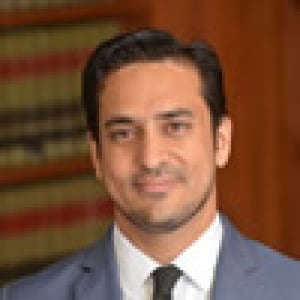
Lecturer in Law, UCLA Law
Amjad Mahmood Khan teaches Fundamentals of U.S. Contract Law for Foreign Lawyers. A partner at Brown, Neri, Smith & Khan LLP (bnsklaw.com), he represents both plaintiffs and defendants in a wide range of high-stakes business litigation, including disputes related to commercial contracts, civil fraud, business torts, intellectual property, energy, insurance, antitrust and unfair competition and the False Claims Act. Amjad's clients have included a range of high-profile corporations, executives and organizations, including mortgage lenders, energy companies, technology firms, major airlines, municipalities and religious establishments. Amjad has extensive stand-up trial experience, having won multiple significant jury verdicts, including an award of approximately $12.5 million in compensatory and punitive damages. Amjad has significant appellate experience briefing and arguing appeals in both state and federal courts across the nation. Amjad has been recognized as a “Rising Star” by Southern California Super Lawyers every year since 2012.
Amjad previously served as litigation counsel at Akin Gump Strauss Hauer & Feld LLP, associate at Latham & Watkins LLP and judicial clerk to the Honorable Warren J. Ferguson at the Ninth Circuit U.S. Court of Appeals.
Amjad received his J.D. in 2004 from Harvard Law School. While in law school, Amjad served as editor-in-chief of the Harvard Human Rights Law Journal and as a teaching assistant to Professor Scott Brewer (Contracts, Jurisprudence). Amjad graduated summa cum laude from Claremont McKenna College in 2001, with a B.A. in Government and English (Literature).
In addition to his litigation practice, Amjad devotes a considerable portion of his time to pro bono matters. Amjad has special expertise in asylum and refugee law, deportation defense and providing legal aid to disaster victims. Amjad was co-chair of Latham & Watkins’ global human rights and refugee practice group. Amjad has first chaired over two dozen successful immigration and asylum matters. Amjad has received numerous awards and accolades for his pro bono work, which includes sharing the 2012 Muslim Advocates Thurgood Marshall Award. Amjad has also served as an expert witness in asylum cases and has testified five times before the U.S. House of Representatives on the human rights abuses of religious minorities in the Near East and South Asia. Amjad is also a term member of the Council on Foreign Relations.
Amjad has published articles on qui tam and derivative suit litigation in Financial Fraud Law Report and Securities Regulation and Law Report. Amjad’s academic work focuses on transnational legal studies, comparative constitutional law and national security. He is a recognized expert on religious freedom in the Islamic world, and his scholarship has appeared in Harvard International Law Journal,Harvard National Security Law Journal, Harvard Human Rights Journaland Richmond Journal of Global Law and Business.
Director of Legal Affairs, Center for Political Studies
Jacob Mchangama is director of legal affairs at the Center for Political Studies, a think tank based in Copenhagen, where he focuses on advocacy and academic research in the fields of human rights with a specific focus on freedom of expression. He is also an external lecturer in international human rights law at the University of Copenhagen. He has published numerous articles in academic journals as well as in international newspapers such as Wall Street Journal Europe, Globe and Mail, National Review, Reason, The Australian, South China Morning Post, Jerusalem Post, Hürriet Daily News, Voice of Russia, China Post, and Daily News (Egypt). His work has been mentioned in international media including the Economist, Courrier International and CBS.com. He is a frequent commentator for Danish TV and radio. In 2010 he was voted the most influential Danish public intellectual under the age of 40 by Danish newspaper Politiken.
Research Fellow, Hudson Institute
Before joining Hudson in 2011, Tadros was a Senior Partner at the Egyptian Union of Liberal Youth, an organization that aims to spread the ideas of classical liberalism in Egypt. He has received his MA in Democracy and Governance from Georgetown University and his BA in Political Science from the American University in Cairo. Mr. Tadros has previously interned at the American Enterprise Institute, where he worked on the Muslim Brotherhood and worked as a consultant for the Hudson Institute on Moderate Islamic Thinkers, and most recently the Heritage Foundation on Religious Freedom in Egypt. In 2007 he was chosen by the State Department in its first Leaders for Democracy Fellowship Program in collaboration with Syracuse University's Maxwell School. His articles have previously been published by the Wall Street Journal, the American Thinker, the American Interest and the Weekly Standard. Mr. Tadros is a Professional Lecturer at Johns Hopkins University's School of Advanced International Studies.

Patrick Hotung Professor of Constitutional Law, Georgetown University Law Center; Faculty Director, Georgetown Center for the Constitution
Randy E. Barnett is the Patrick Hotung Professor of Constitutional Law at the Georgetown University Law Center and is the Faculty Director of the Georgetown Center for the Constitution. After graduating from Northwestern University and Harvard Law School, he tried many felony cases as a prosecutor in the Cook County States’ Attorney’s Office in Chicago. A recipient of a Guggenheim Fellowship in Constitutional Studies and the Bradley Prize, Professor Barnett has been a visiting professor at Penn, Northwestern and Harvard Law School.
Professor Barnett’s publications includes thirteen books, more than one hundred articles and reviews, as well as numerous op-eds. His most recent book is Felony Review: Tales of True Crime and Corruption in Chicago (2026). His other books on the Constitution include: A Life for Liberty: The Making of an American Originalist (2024); The Original Meaning of the Fourteenth Amendment: Its Letter and Spirit (2021) (with Evan Bernick); An Introduction to Constitutional Law: 100 Supreme Court Cases Everyone Should Know (2019) (with Josh Blackman); Restoring the Lost Constitution: The Presumption of Liberty (2nd ed. 2013); Our Republican Constitution: Securing the Liberty and Sovereignty of We the People (2016); and Constitutional Law: Cases in Context (5th ed. forthcoming 2027) (with Josh Blackman). His books on contracts are The Oxford Introductions to U.S. Law: Contracts (2010) and Contracts: Cases and Doctrine (7th ed. 2021) (with Nate Oman). And he is the author of The Structure of Liberty: Justice and the Rule of Law (2nd ed. 2014).
In 2004, he argued the medical marijuana case of Gonzalez v. Raich before the U.S. Supreme Court. In 2012, he was one of the lawyers representing the National Federation of Independent Business in its constitutional challenge to the Affordable Care Act in NFIB v. Sebelius. He’s appeared in numerous documentaries and portrayed a prosecutor in the 2010 science-fiction feature film, InAlienable: The Movie. On X he is @RandyEBarnett
A. W. Walker Centennial Chair in Law, University of Texas at Austin School of Law
Professor Graglia has written widely in constitutional law--especially on judicial review, constitutional interpretation, race discrimination, and affirmative action--and also teaches and writes in the area of antitrust. He is the author of Disaster by Decree: The Supreme Court Decisions on Race and the Schools (Cornell, 1976) and many articles, including recently "Church of the Lukumi Babalu Aye: Of Animal Sacrifice and Religious Persecution" (Georgetown Law Journal, 1996). He has been a Visiting Professor at the University of Virginia School of Law.
University of Virginia School of Law

Judge, United States Court of Appeals, D.C. Circuit
Judge Randolph was confirmed by the Senate and appointed to the United States Court of Appeals for the District of Columbia Circuit by President George H. W. Bush in July 1990.
Judge Randolph received his B.S. degree in 1966 from Drexel University, majoring in economics and basic engineering. At Drexel, he was president of the debate society, vice president of the Student Senate, and a member of the varsity wrestling squad. In 1969, he received his J.D. from the University of Pennsylvania, summa cum laude. Judge Randolph ranked first in his law school class all three years and was managing editor of the Law Review.
After graduation, Judge Randolph served as a law clerk to Judge Henry J. Friendly of the United States Court of Appeals for the Second Circuit in New York.
Admitted to the California Bar in 1970 (and to the District of Columbia bar in 1973), Judge Randolph worked as Assistant to the Solicitor General, U.S. Department of Justice, in Washington, D.C., 1970-1973.
After two years in private practice, Judge Randolph was named Deputy Solicitor General of the United States, a position he held from 1975-1977.
In 1979, Judge Randolph was appointed Special Counsel to the Committee on Standards of Official Conduct (the Ethics Committee) of the United States House of Representatives, remaining in this position until 1980.
In the 1980s, Judge Randolph held a number of positions while in private practice, including Special Assistant Attorney General for the states of New Mexico (1985 90), Utah (1986-1990) and Montana (1983-1990). He also served as a Member of the Advisory Panel of the Federal Courts Study Committee.
From 1971-1990, Judge Randolph argued 23 times in the United States Supreme Court, winning 20 of his cases.
As an Adjunct Professor of Law at Georgetown University Law Center from 1974-1978 he taught courses in civil procedure and injunctions. In 1992 he taught a course in constitutional law. He is a Distinguished Adjunct Professor of Law at George Mason School of Law and for the past ten years has been teaching First Amendment law. He also serves on the Judicial Advisory Board of the George Mason University Law and Economics Center.
From 1993 through 1995 Judge Randolph was a member of the Committee on Codes of Conduct of the Judicial Conference of the United States, and from 1995 to 1998 served as the Committee's chairman. He also served as the judicial liaison to the American Bar Association’s Administrative Law Section.
Judge Randolph is a member of the Board of Visitors at Drexel University Law School and was named to the “Drexel One Hundred” as a leading alumnus. In 2002 he was presented the James Wilson Award by the University of Pennsylvania Law School. In November 2005 he delivered the Fifth Annual Barbara K. Olson Memorial Lecture at the Annual Lawyers Convention of the Federalist Society. He has published numerous articles, the most recent of which is in the June 2006 issue of the Harvard Journal of Law and Public Policy.
Judge Randolph is married to the Honorable Eileen J. O’Connor, formerly Assistant Attorney General, Tax Division, U.S. Department of Justice. His son John Trevor Randolph is an investment banker in New York. His daughter Cynthia Lee Randolph is an artist living in San Francisco.

David Berger Professor for the Administration of Justice, University of Pennsylvania Carey Law School
Kermit Roosevelt works in a diverse range of fields, focusing on constitutional law and conflict of laws. He has published scholarly books in both fields.
Conflict of Laws (Foundation Press, 2010) offers an accessible analytical overview of conflicts. The Myth of Judicial Activism: Making Sense of Supreme Court Decisions (Yale, 2006) sets out standards by which citizens can determine whether the Supreme Court is abusing its authority to interpret the Constitution.
He has published articles in the Virginia Law Review, Michigan Law Review, and Columbia Law Review, among others.
He is also the author of two novels, In the Shadow of the Law (Farrar, Straus & Giroux, 2005) and Allegiance (Regan Arts, 2015).
In 2014, he was selected by the American Law Institute as the Reporter for the Third Restatement of Conflict of Laws.

Judge, United States Court of Appeals, Seventh Circuit
Judge Sykes was nominated to the Seventh Circuit by President George W. Bush and confirmed by the Senate in 2004. Prior to her appointment to the federal bench, Judge Sykes served as a justice on the Wisconsin Supreme Court. Governor Tommy G. Thompson appointed her in September 1999 to fill a mid-term vacancy on the state supreme court, and she was elected to a full ten-year term in April 2000. From 1992-1999, Judge Sykes served on the state trial bench in Milwaukee County (elected in 1992 and re-elected in 1998). From 1985-1992, Judge Sykes practiced law with the Milwaukee firm of Whyte & Hirschboeck, S.C., and from 1984-1985, was a law clerk to Federal Judge Terence T. Evans.
Born and raised in the Milwaukee area, Judge Sykes earned a bachelor’s degree in journalism from Northwestern University in 1980 and a law degree from Marquette University Law School in 1984. Between college and law school, Judge Sykes worked as a reporter for The Milwaukee Journal.
Judge Sykes has two sons.

Judge, United States Court of Appeals, Fifth Circuit
Edith Jones graduated from Alamo Heights High School, where she was a National Merit Scholar. In 1971, she received her B.A. in Economics from Cornell University, graduating with honors. In 1974, she was awarded her J.D. at the University of Texas Law School, where she was a law review editor and received the Order of the Coif.
Judge Jones was the first female partner at Andrews, Kurth, Campbell & Jones (now Hunton Andrews Kurth) where she practiced various types of litigation and bankruptcy cases. Judge Jones went on the federal bench on June 1, 1985.
Judge Jones served as a former member of the National Bankruptcy Review Commission, and as a member of the Judicial Conference Commission on Bankruptcy Rules. Judge Jones served on the White House Fellows Commission. Judge Jones served on the board of the Sam Houston Area Council of the Boy Scouts of America. She has been a member of the Garland Walker Inn of Court in Houston for more than 20 years and its President for at least ten years. Judge Jones is also on the Board of the Calvin Coolidge Presidential Foundation.

Former President & CEO, The Federalist Society for Law and Public Policy Studies
Eugene B. Meyer, former President and CEO of the Federalist Society, has served as Executive Director, CEO, and/or President of the organization for more than 40 years. He is responsible for shepherding the organization from a small group of law students to a community of 90,000 lawyers, law students, academics, judges, and others interested in the rule of law. The Society now includes a Student Chapter at nearly every ABA-accredited law school in the country and Lawyers Chapters in 220 major cities across the nation. Gene earned his B.A. in history at Yale in 1975 and his M.A. in political science from the London School of Economics in 1976. Gene currently serves on the boards of the U.S. Chess Center, the Holman Foundation, the Sarah Scaife Foundation, and the advisory board of the Adam Smith Society. He holds the title of International Chess Master.
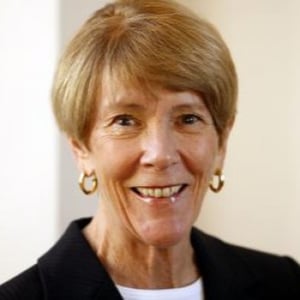
David and Mary Harrison Distinguished Professor of Law Emeritus, University of Virginia School of Law
Lillian BeVier taught constitutional law (with special emphasis on First Amendment issues), intellectual property (trademark, copyright), real property and torts from 1973-2010 at the Law School, and now teaches a January Term course on judicial philosophy.
At Stanford Law School, BeVier was revising editor for the Stanford Law Review and a member of the Order of the Coif. Before coming to Virginia, she was associate professor of law at the University of Santa Clara Law School; practiced law with Spaeth Blase Valentine & Klein in Palo Alto, Calif.; served as research associate to Professor William F. Baxter at Stanford University Law School, working on the FAA-ABA study of the legal aspects of airport noise and the sonic boom; and was assistant to the general secretary and assistant staff legal counsel for Stanford University.
BeVier received the University of Virginia Alumni Association Distinguished Professor Award in 2006. The Raven Society elected her to membership in 1993 and honored her with the faculty award in 2010. She delivered the Henry Miller Memorial Lecture at Georgia State Law School in 2005, the Coen Memorial Lecture at the University of Colorado Law School in 2000, and the David C. Baum Lecture on Civil Rights and Civil Liberties at the University of Illinois Law School in 1996. In 1999, at the invitation of the Supreme Court Historical Society, she spoke to the Society on Free Expression in the Warren and Burger Courts. Suffolk University awarded her an honorary S.J.D. degree in 1998. In the fall of 2003, she was a visiting scholar at the National Constitution Center in Philadelphia.
Having been nominated by President Bush and confirmed by the Senate in 2003, she served as vice-chair of the Board of Directors of the Legal Services Corporation until 2009. She serves on the national Board of Visitors of the Federalist Society. Within the Charlottesville community, BeVier has served as chair of the Board of Trustees of St. Anne’s-Belfield School and of the Martha Jefferson Hospital. She is currently chair of the board of the Martha Jefferson Health Services Corporation and of Piedmont CASA (Court-Appointed Special Advocates).

Clayton J. and Henry R. Barber Professor of Law, Northwestern University Pritzker School of Law and Co-Chairman, Board of Directors, The Federalist Society
STEVEN GOW CALABRESI is the Clayton J. & Henry R. Barber Professor at Northwestern Pritzker School of Law. He has also co-taught in the Fall semester at Yale Law School from 2013 to the present. Calabresi clerked for Justice Antonin Scalia and Judges Robert H. Bork and Ralph K. Winter. He was a Special Assistant to Attorney General Meese from 1985 to 1987 and worked with Ken Cribb as his deputy in 1987 on the second floor of the West Wing of the Reagan White House. Calabresi has written books on presidential power and comparative constitutional law and the origins of judicial review. He and Gary Lawson are the co-editors of a casebook on U.S. Constitutional Law, and Calabresi is also the co-editor of a casebook on comparative constitutional law. He has written over seventy law review articles since 1990.
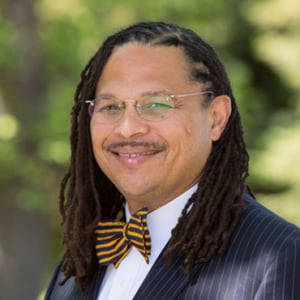
William F. Baxter-Visa International Professor of Law, Stanford Law School
Marcus Cole is a leading scholar of the empirical law and economics of commerce and finance, and teaches courses in the areas of Bankruptcy, Banking, Contracts, and Venture Capital. Professor Cole’s writings have explored questions such as why corporate bankruptcies are increasingly filed in Delaware, and what drives the financial structure of firms backed by venture capital. His current research interests involve the ways in which the world’s poor are using technology to solve their own problems, often in the face of government restrictions hindering such solutions. Professor Cole has served as a National Fellow at the Hoover Institution, and is a Fellow at the University of Amsterdam Center for Law and Economics. He has been a Visiting Professor at a number of institutions around the world, including the University of Amsterdam, the University of Vienna, the University of Leiden, Bucerius University in Hamburg, Germany, Northwestern University, Korea University, and Peking University School of Transnational Law in Shenzhen. Professor Cole has also served on the boards of several civic and charitable organizations, including that of the Central Pacific Region of the Anti-Defamation League of B’nai B’rith, and Businesses United in Lending and Development (“BUILD”). He currently serves on the Editorial Board of the Cato Supreme Court Review, the Academic Advisory Board of Bar-Bri, the Advisory Board of the Independent Institute’s Center on Culture and Civil Society, and is President of the Board of Directors of Rocketship Education, a national, non-profit charter school network, operating California’s most successful charter schools for low-income children. Before joining the Stanford Law faculty in 1997, Professor Cole was an associate with the Chicago law firm of Mayer Brown, and he clerked for Judge Morris Sheppard Arnold of the United States Court of Appeals for the Eighth Circuit.
A. W. Walker Centennial Chair in Law, University of Texas at Austin School of Law
Professor Graglia has written widely in constitutional law--especially on judicial review, constitutional interpretation, race discrimination, and affirmative action--and also teaches and writes in the area of antitrust. He is the author of Disaster by Decree: The Supreme Court Decisions on Race and the Schools (Cornell, 1976) and many articles, including recently "Church of the Lukumi Babalu Aye: Of Animal Sacrifice and Religious Persecution" (Georgetown Law Journal, 1996). He has been a Visiting Professor at the University of Virginia School of Law.

Partner and Co-Chair, Constitutional and Appellate Law Practice Group, Gibson, Dunn & Crutcher LLP
Allyson N. Ho is a partner in the Dallas office of Gibson, Dunn & Crutcher LLP and co‐chair of the Firm’s nationwide Appellate and Constitutional Law practice group.
Mrs. Ho is “undoubtedly one of the premier appellate lawyers in the United States” (Chambers). She has presented over 100 oral arguments in federal and state courts nationwide, including multiple high‐stakes cases on behalf of business before the U.S. Supreme Court.
Her most significant winning arguments include a U.S. Supreme Court reversal worth billions of dollars for unionized employers in the Sixth Circuit; a U.S. Supreme Court reversal limiting the power of federal regulators; a multi‐billion dollar environmental win in the Fifth Circuit; a multi‐billion dollar commercial victory for the founder of a technology company in the Appellate Division of the New York Supreme Court; a billion dollar environmental win in the Houston Court of Appeals; a nine‐figure commercial victory in the Corpus Christi Court of Appeals; and a nine‐figure arbitration win in the Fifth Circuit.
Among her numerous accolades, Mrs. Ho is one of only a small group of appellate lawyers nationwide, and the only one in Texas, to be nationally ranked by Chambers every year for the past ten years (2012‐21). She is also one of the few appellate lawyers nationwide to be named to the BTI Client Service All‐Stars List, an honor bestowed by the corporate counsel community for lawyers “who stand above all the others in delivering the absolute best in client service.” She is also routinely named as a leading appellate lawyer by Benchmark, The Best Lawyers in America®, The Legal 500, Texas Super Lawyers, and D Magazine.
Mrs. Ho has received the Gregory S. Coleman Outstanding Appellate Lawyer Award (Texas Bar Foundation, June 22, 2018), been named a “Distinguished Leader” (Texas Lawyer, Sep. 1, 2017) and “Appellate MVP” (Law360, Nov. 23, 2015), and been recognized on the “Appellate Hot List” (National Law Journal, Nov. 16, 2015). In addition, she has been profiled in “Texas Powerhouse” (Law360, Aug. 2, 2021), “Texas Appellate Power Couple” (Texas Lawbook, January 7, 2021), “Litigators of the Week” (The American Lawyer, May 8, 2020), “Litigation Powerhouse” (Law360, Aug. 10, 2016), “Supreme Court Insider” (National Law Journal, July 21, 2016), “Supreme Court Specialists, Mostly Male, Dominated Arguments This Term” (National Law Journal, May 11, 2016), “Attorney of the Year Finalist” (Texas Lawyer, Nov. 2, 2015), “Litigation Department of the Year” (Texas Lawyer, June 1, 2015), “Employment Group of the Year” (Law360, Jan. 13, 2015), “A Supreme Month: Lawyer Credits Preparedness in Ability to Argue Two U.S. High Court Cases in Three Weeks” (Texas Lawyer, Dec. 8, 2014), “High Court Debuts for Two Lawyers” (National Law Journal, Nov. 3, 2014), “Women in Business Awards” (Dallas Business Journal, Aug 29, 2014), “Litigation Departments of the Year” (Texas Lawyer, June 2, 2014), “Winning Women” (Texas Lawyer, Aug. 22, 2011), and “High court practitioners: increasingly diverse” (National Law Journal, June 6, 2011).
Federal and State Appellate Practice
Mrs. Ho has argued a series of high stakes, landmark cases on behalf of the business community before the U.S. Supreme Court. National Law Journal called her a “Veteran SCOTUS Advocate” in the “upper echelons of Supreme Court practice.” Law360 named her a “Supreme Court Star” and “one of the nation’s preeminent appellate lawyers.” And EmpiricalSCOTUS.com ranked her among “the most successful attorneys that currently practice before the Court.” Mrs. Ho once argued two significant business cases before the Court within the span of 21 days—including a “significant ruling for employers” that “paved a new path for companies paying millions of dollars in retiree health care benefits” (Law360), as well as a landmark administrative law dispute in which “several justices agreed with Ho’s contention that SCOTUS should revisit and overrule its own precedent” (Law360). She also prevailed against the EEOC in a case that the employment defense bar called “good news for employers across the country.” And in “the most important patent case in modern history” according to patent law experts, her argument before the Court was credited for “pick[ing] up two votes that pundits thought unreachable.”
She has appeared before every federal court of appeals in the country, including en banc arguments before the Fourth and Sixth Circuits. She has successfully represented business clients in every circuit, including the First (Pruco Life Insurance Company), Second (Swiss Federation; Rite Aid), Third (Johnson & Johnson), Fourth (Genex Services), Fifth (United Space Alliance LLC; Elliott Co.; MERSCORP; 24 Hour Fitness USA, Inc.; Stream Energy; Health Management Systems), Sixth (Deutsche Bank; American Airlines; M&G Polymers), Seventh (Expedia), Eighth (Cotter), Ninth (Boeing; JP Morgan Chase Bank), Tenth (Mitchell International), Eleventh (AstraZeneca), D.C. (FedEx), and Federal (Repros Therapeutics) Circuits.
In addition, Mrs. Ho regularly appears in state appellate courts across the country. She has argued numerous cases in the Texas Supreme Court, Texas appellate courts in Dallas, Houston, San Antonio, Corpus Christi, and Eastland, and state appellate courts in Arizona, Michigan, New York, Ohio, Oklahoma, and West Virginia, prevailing on behalf of Ford Motor Company, PepsiCo, International Paper, Tenet, GameStop, Deutsche Bank, and Unit.
Government and Public Service Experience
Mrs. Ho has a distinguished record of experience at the highest levels of the federal government. She served as Special Assistant to President George W. Bush, Counselor to Attorney General John Ashcroft, and law clerk to Justice Sandra Day O’Connor of the U.S. Supreme Court and Judge Jacques L. Wiener Jr. of the U.S. Court of Appeals for the Fifth Circuit.
Her record of public service also includes appointments to various boards and commissions. Among the most notable are her election as a member of the Administrative Conference of the United States, a trustee of the United States Supreme Court Historical Society, and a trustee of the Texas Supreme Court Historical Society. She is also vice chair of the Federal Judicial Evaluation Committee, appointed by U.S. Senators John Cornyn and Ted Cruz to evaluate potential appointments of all federal judges and U.S. Attorneys in Texas, and has previously served on the U.S. Magistrate Judge Merit Selection Panel for the Northern District of Texas.
Other Background Information
An active pro bono litigator, Mrs. Ho works most frequently with the First Liberty Institute and as amicus counsel for the State and Local Legal Center, the National Organization for Victim Assistance, and the National Crime Victim Law Institute. She is a frequent public speaker and active member of the Federalist Society, the American Law Institute, and the Washington Legal Foundation’s Legal Policy Advisory Board.
Mrs. Ho graduated from Duke University magna cum laude with a B.A. in English, Rice University with an M.A. and Ph.D. in English Literature, and the University of Chicago Law School with high honors. She was a member of the Law Review and Order of the Coif. She and her husband Jim, a federal judge, have a twin daughter and son.
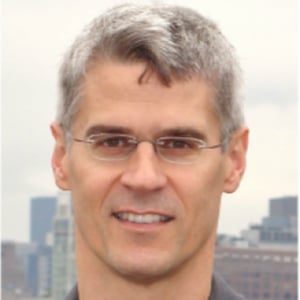
Author, Journalist, Researcher, and Consultant
Karl Zinsmeister is an experienced executive, original researcher, and productive author with deep analytical, communications, public-policy, creative, and marketing skills—including high-level experience managing a range of publications, businesses, nonprofits, and government agencies. He is currently a consultant to major business figures and wealth creators as a designer of large-scale philanthropy projects, historian of American civil society, and expert on social reform and culture change.
He has written a dozen books—embedded war reporting, histories, political analysis, reference works, a novel, literary collections, academic volumes, a storytelling cookbook, even a book-length Marvel comic book. Two of his works have recently been optioned for development into a television series and a documentary film. He has edited or co-produced many other books.
Zinsmeister's magazine and newspaper journalism totals several hundred articles. These have been published in a wide range of national publications, from cover stories for The Atlantic to essays in the Wall Street Journal, where he is a frequent contributor. Karl also has more than two decades of experience as an Editor in Chief, managing writing, artistic, and business teams producing nationally circulated magazines of thought and culture.
He created The Almanac of American Philanthropy—the authoritative 1,342-page reference on private giving that is often referred to as “the bible” documenting America's distinctive tradition of solving major problems through civil society and voluntary action. Between cash contributions and volunteer labor, philanthropy is approaching the trillion-dollar level as an annual undertaking in the U.S., and it is one of our country's most potent sources of social innovation and improvement.
Zinsmeister established the nation's first independent advisory on philanthropy for veterans and servicemembers. He raised $15 million and designed an unprecedented randomized-control experiment to prove out better ways of assisting men and women injured during military service.
He created the “Sweet Charity” podcast, presenting 5-10 minute stories on important achievements in philanthropic creativity. He wrote and edited a series of “Wise Giver's Guides” offering donors practical help in specific fields. The volumes he authored himself include one analyzing charter schools, and another on the relationship between philanthropy and public policy.
In response to national concern over polarization and government stalemate, Zinsmeister researched and released a political/historical work What Comes Next?, describing how America can be dramatically improved by private actors even amidst political gridlock, documented by encouraging examples from our past.
From 2006 to 2009 Zinsmeister served in the West Wing as President George W. Bush’s chief domestic policy adviser. His responsibilities stretched across many issues: the formulation of new immigration policies, the mortgage and student-loan credit crises, stem-cell and biotechnology innovation, improving care for military veterans, school reform, issues in health, transportation, environmental quality, and national competitiveness.
Earlier in his career Karl was a U.S. Senate aide to Senator Daniel Patrick Moynihan. He has been an adviser to many public policy groups, and has testified before Congressional committees and Presidential commissions on topics including family issues, economic policy, and the Iraq war.
For more than a decade, Zinsmeister occupied the J. B. Fuqua Chair at the American Enterprise Institute, a premier Washington, D.C. think tank, where he researched economic, demographic, and cultural topics. While there he created an acclaimed national monthly magazine of politics, business, and culture, The American Enterprise. Author and former Cabinet Secretary William Bennett called it “one of America’s finest magazines.... intellectually interesting, well-written, lively, wide-ranging, and above all useful.” Zinsmeister wrote nearly 300 articles for the magazine, and conducted interviews with public figures extending from Rudy Giuliani to Pat Moynihan, Andres Duany to Rupert Murdoch.
In concert with his wife, Zinsmeister conceived and produced a feature documentary film entitled Warriors that aired nationally on PBS in 2007. The film won $450,000 of funding from the Corporation for Public Broadcasting in a major international competition. It presented personal profiles of America’s fighting forces via on-the-scene footage that Zinsmeister and two combat cameramen shot in Iraq. The New York Times described Warriors as “entirely compelling.” Footage from the film was used as a plot item in the final week of the HBO television series The Sopranos.
In the private sector, Zinsmeister was an executive in his native region of upstate New York at the Stickley company—an historic firm that designs, manufactures, and markets iconic American Arts & Crafts furniture designs worldwide. His responsibilities included marketing and sales, advertising, catalogs, photography, websites, communications, the Stickley Museum, some product design, and the modernization of many business and data systems. Zinsmeister has also operated his own businesses over a period of years, including designing, financing, renovating, and building eight properties with historic appeal, in Washington and New York.
A graduate of Yale University, Zinsmeister did further studies at Trinity College Dublin in Ireland. During college he won national rowing championships in both the U.S. and Ireland. He has given hundreds of public lectures, originated a weekly radio commentary syndicated to 100 stations, and appeared often on a wide variety of national television and radio programs. He has lived, worked, or traveled in 40 countries, and nearly every U.S. state. He holds the highest U.S. security clearance.
Zinsmeister is married and has three grown children. He is an active outdoorsman, enjoys extended wilderness backpacking trips, and swims, bicycles, sculls, skis, and hikes often. He has been an avid photographer, woodworker, gardener and keeper of hens, taught Sunday school, and sung in church choirs. He currently lives in Washington, D.C. on a houseboat he designed and built himself.

Obama’s Enforcer: Eric Holder’s Justice Department
John Fund, Hans A. Von Spakovsky
From “Fast and Furious” to the unprecedented surveillance of journalists, Eric Holder’s Justice Department has...
Unlearning Liberty: Campus Censorship and the End of American Debate
Greg Lukianoff, Brian J. Paul
On April 11, 2013, the Indianapolis Lawyers Chapter of the Federalist Society hosted an event...
Cybersecurity and "Hacking Back" - Podcast
Stewart A. Baker, Orin S. Kerr, Dean Reuter
Computer hacking is a large and growing problem, with no signs of abating as the...
Panel I: The Muslim World
David F. Forte, James P. Kelly, Amjad M. Khan, Jacob Mchangama, Samuel Tadros
The 1989 fatwa against Salman Rushdie and the deadly 2006 Danish cartoon riots brought worldwide...
Panel 2 - Originalism and Construction: Does Originalism always provide the Answer?
Randy E. Barnett, Lino A. Graglia, Caleb E. Nelson, A. Raymond Randolph, Kermit Roosevelt, Diane S. Sykes
Recently, the so-called “new originalists” have embraced a concept called constitutional construction. Constructionist originalism responds...
8th Annual Barbara K. Olson Memorial Lecture
Edith H. Jones, Eugene B. Meyer
On September 11, 2001, at the age of 45 and at the height of her...
Panel III: Government Promotion of Moral Issues
Lillian R. BeVier, Steven G. Calabresi, Gilbert Marcus Cole, Lino A. Graglia, Steven Lubet
The Federalist Society's Student Division presented this panel at the 2007 Annual Student Symposium on...
Address by Karl Zinsmeister
Allyson Newton Ho, Karl Zinsmeister
Domestic Policy Advisor to the President, Karl Zinsmeister of the Domestic Policy Council, delivered an...
Turning Bad Into Good?
Jendi B. Reiter
In The Wife of Bath's Tale, Chaucer observes, "Forbede us thyng, and that desiren we."...