
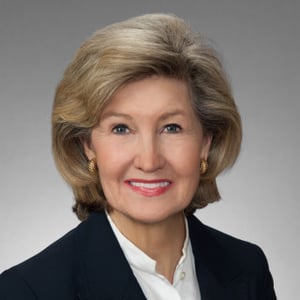
Former United States Ambassador to NATO, Former United States Senator, Texas
Kay Bailey Hutchison is a public servant and businesswoman who has served in roles from bank executive to U.S. Senator to most recently, U.S. Ambassador to NATO. She served as U.S. Senator from Texas from 1993 to 2013. In January 2021, she stepped down from a more than 3-year term as U.S. Ambassador to The North Atlantic Treaty Organization (NATO) in Brussels, Belgium where she worked to maintain U.S. leadership in the 30 Ally Alliance.
Kay Bailey Hutchison is a public servant and businesswoman who has served in roles from bank executive to U.S. Senator to most recently, U.S. Ambassador to NATO. She served as U.S. Senator from Texas from 1993 to 2013. In January 2021, she stepped down from a more than 3-year term as U.S. Ambassador to The North Atlantic Treaty Organization (NATO) in Brussels, Belgium where she worked to maintain U.S. leadership in the 30 Ally Alliance.
Kay has authored three books, including the bestselling American Heroines: The Spirited Women Who Shaped Our Country (2004), Leading Ladies: American Trailblazers (2007) and Unflinching Courage: Pioneering Women Who Shaped Texas (2013).
In 2013, the Dallas City Council honored her by naming the city’s convention center the Kay Bailey Hutchison Convention Center. Also in 2013, The Kay Bailey Hutchison Center for Energy, Law and Business (KBH Energy Center) was created by the University of Texas to provide unique opportunities for business and law school students to learn the energy industry. The Center sponsors an annual symposium for leaders in the energy field to discuss current issues in the industry.
Kay serves on the Dallas Mayor’s International Advisory Council, UT Southwestern Medical Foundation Board of Trustees, and the Board of Directors of the Atlantic Council. She is a Senior Adviser at CSIS (Center for Strategic and International Studies) and the NASA Advisory Council, in Washington DC. She also serves on the Bank of America Global Advisory Board.
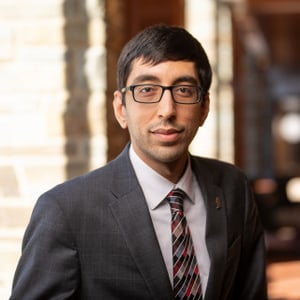
Judicial Law Clerk, U.S. District Court for the Southern District of Florida
Nitin is a recent graduate of Cornell Law School. Before his time in Ithaca, he majored in International Studies and Political Science at Johns Hopkins University and focused on power competition in South Asia during his graduate studies at the University of Oxford.

Judge, United States Court of Appeals, Eleventh Circuit
On March 20, 2018, Judge Elizabeth L. Branch (Lisa) was sworn in as a United States Circuit Judge for the Eleventh Circuit.
Judge Branch attended and graduated from Davidson College in North Carolina (B.A., cum laude, 1990), and Emory University School of Law (J.D., with distinction, 1994).
After graduating from law school, Judge Branch served as a federal law clerk to The Honorable J. Owen Forrester of the U.S. District Court for the Northern District of Georgia from 1994 to 1996. Following her clerkship, Judge Branch joined the litigation department of Smith, Gambrell & Russell, LLP in Atlanta as an associate and then a partner.
From 2004 to 2008, Judge Branch was a senior official in the Administration of President George W. Bush in Washington, D.C. She served first as the Associate General Counsel for Rules and Legislation at the U.S. Department of Homeland Security and then as the Counselor to the Administrator of the Office of Information and Regulatory Affairs at the U. S. Office of Management and Budget.
She returned to Smith Gambrell in 2008 as a litigation partner. Judge Branch then was appointed to the Court of Appeals of Georgia by Governor Nathan Deal, taking office on September 4, 2012, where she served until March 19, 2018.
Judge Branch is a member of the Board of Advisors of the Atlanta Lawyers Chapter for the Federalist Society for Law and Public Policy Studies.
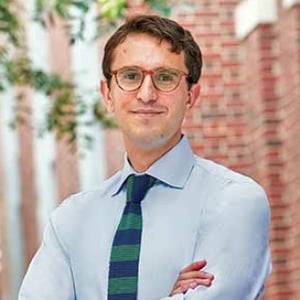
Professor, New York University School of Law

Laurence H. Silberman Chair in Constitutional Governance, American Enterprise Institute; Executive Director, Antonin Scalia Law School’s C. Boyden Gray Center for the Study of the Administrative State
Adam J. White is the Laurence H. Silberman Chair in Constitutional Governance and senior fellow at the American Enterprise Institute, where he focuses on the Supreme Court and the administrative state. He also directs the Antonin Scalia Law School’s C. Boyden Gray Center for the Study of the Administrative State.
He writes on regulation and constitutional government for a variety of publications. He practiced law in Washington, D.C., after clerking for the D.C. Circuit's Judge David Sentelle. He also has been chairman of the ABA's Administrative Law Section.
In 2021, he served on the Presidential Commission on the Supreme Court of the United States, where he criticized “Court packing” and other efforts to restructure the Supreme Court.
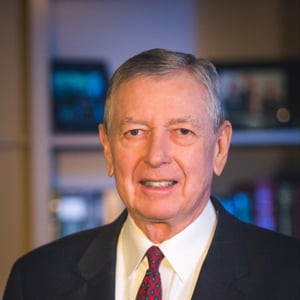
Chairman, The Ashcroft Law Firm LLC, and former United States Attorney General
Former U.S. Attorney General, Governor and U.S. Senator John Ashcroft serves as the firm’s founder and chairman. As Attorney General, and the U.S. Justice Department’s CEO, Mr. Ashcroft led the world’s largest and foremost international law firm and law enforcement agency—an organization larger than most Fortune 500 companies, with over 122,000 employees. Mr. Ashcroft integrated strategic planning, budgeting, and performance measures, which resulted in the DOJ earning a clean audit for the first time in its history.
Mr. Ashcroft boldly led the Department of Justice through the transformational period after the September 11, 2001, terrorist attacks. He subsequently reorganized the Department to focus on its number one priority: preventing terrorism. The tough antiterrorism campaign he directed helped keep America safe throughout his tenure and resulted in the dismantling of terrorist cells across America and the disruption of over 150 terrorist plots worldwide.
Within two months of the attacks, and with financial markets still reeling, the unprecedented corporate scandals at ENRON, WorldCom and dozens more unfolded, further destabilizing the weakened economy. John Ashcroft was called upon to restore America’s faith in the integrity of our marketplace. He marshaled the resources of the federal government to bring to justice those guilty of massive corporate fraud. At all times, he demanded that cases be brought swiftly, with appropriate serious penalties—always taking into account the best interests of the employees and shareholders whose lives were most directly affected.
From 1985 to 1993, as Governor of Missouri, Ashcroft balanced eight consecutive budgets, built a $120 million budget surplus and established a $190 million operating reserve. His management and fiscal integrity helped generate 338,000 new jobs state-wide, a triple-A bond rating from the three major Wall Street rating agencies, a per capita state and local tax burden ranked 49th in the United States and a 12 percent increase in personal income. His new education performance standards led Fortune magazine to name him as one of the nation’s top ten Education Governors. In 1991, the non-partisan National Governors Association voted him Chairman.
Elected to the U.S. Senate in 1994, he brought his management skills to Washington where he authored budget rules protecting Social Security and Medicare and helped balance the federal budget for the first time in decades. As a member of the Senate Judiciary, Foreign Relations and Commerce Committees, he worked to reform laws regulating the banking, telecommunications, aviation, transportation and information technology industries.
In 1973, Mr. Ashcroft served as Missouri Auditor, followed by two terms as Missouri Attorney General. He was raised in Springfield, Missouri, received his undergraduate degree from Yale University and his Juris Doctor from the University of Chicago.
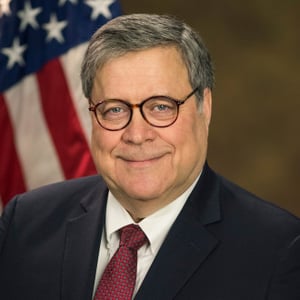
Former United States Attorney General
William P. Barr was born on May 23, 1950 in New York City. Mr. Barr received his A.B. in government from Columbia University in 1971 and his M.A. in government and Chinese studies in 1973. From 1973 to 1977, he served in the Central Intelligence Agency before receiving his J.D. with highest honors from George Washington University Law School in 1977.
In 1978, Mr. Barr served as a law clerk under Judge Malcolm Wilkey of the U.S. Court of Appeals for the District of Columbia Circuit. Following his clerkship, Mr. Barr joined the Washington, D.C. office of the law firm of Shaw, Pittman, Potts & Trowbridge as an associate. He left the firm to work in the White House under President Ronald Reagan from 1982 to 1983 on the domestic policy staff, then returned to the law firm and became a partner in 1985.
Under President George H.W. Bush, Mr. Barr served as the Deputy Attorney General from 1990 to 1991; the Assistant Attorney General of the Office of Legal Counsel from 1989 to 1990; and the 77th Attorney General of the United States from 1991 to 1993. While serving at the Department, Mr. Barr helped create programs and strategies to reduce violent crime and was responsible for establishing new enforcement policies in a number of areas including financial institutions, civil rights, and antitrust merger guidelines. Mr. Barr also led the Department’s response to the Savings & Loan crisis; oversaw the investigation of the Pan Am 103 bombing; directed the successful response to the Talladega prison uprising and hostage taking; and coordinated counter-terrorism activities during the First Gulf War.
From 1994 to 2000, Mr. Barr served as Executive Vice President and General Counsel for GTE Corporation. Mr. Barr then served as Executive Vice President and General Counsel of Verizon from 2000 to 2008. At both GTE and Verizon, Mr. Barr led the legal, regulatory, and government affairs activities of the companies.
After retiring from Verizon in 2008, Mr. Barr advised major corporations on government enforcement matters, as well as regulatory litigation. Mr. Barr served as Of Counsel at Kirkland & Ellis LLP in 2009 and rejoined the firm in 2017.
President Donald Trump announced his intention to nominate Mr. Barr on December 7, 2018, and he was confirmed as the 85th Attorney General of the United States by the U.S. Senate on February 14, 2019. U.S. Supreme Court Chief Justice John Roberts administered the oath of office. Mr. Barr joins John Crittenden (1841 and 1850-1853) as one of only two people in U.S. history to serve twice as Attorney General.
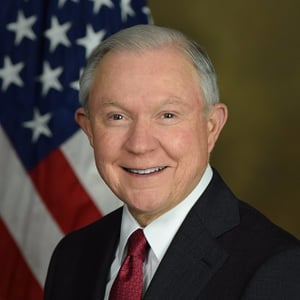
Former United States Attorney General
Jeff Sessions served as the 84th Attorney General of the United States from February 9, 2017 until November 7, 2018.
Prior to becoming Attorney General, Mr. Sessions served as a United States Senator for Alabama since 1996. As a United States Senator, he focused his energies on maintaining a strong military, upholding the rule of law, limiting the role of government, and providing tax relief to stimulate economic growth and to empower Americans to keep more of their hard-earned money.
Mr. Sessions was born in Selma, Alabama on December 24, 1946, and grew up in Hybart, the son of a country store owner. Growing up in the country, Sessions was instilled with certain core values – honesty, hard work, belief in God and parental respect – that define him today. In 1964, he became an Eagle Scout and thereafter received the Distinguished Eagle Scout Award. After attending school in nearby Camden, Sessions attended Huntingdon College in Montgomery, graduating with a Bachelor of Arts degree in 1969. He received a Juris Doctorate degree from the University of Alabama in 1973. Sessions served in the United States Army Reserve from 1973 to 1986, ultimately attaining the rank of Captain. He still considers that period to be one of the most rewarding chapters of his life.
Sessions’ interest in the law led to a distinguished legal career, first as a practicing attorney in Russellville, Alabama, and then in Mobile. Following a two-year stint as Assistant United States Attorney for the Southern District of Alabama (1975-1977), Sessions was nominated by President Reagan in 1981 and confirmed by the Senate to serve as the United States Attorney for the Southern District of Alabama, a position he held for 12 years. Sessions was elected Alabama Attorney General in 1995, serving as the State’s chief legal officer until 1996, when he entered the United States Senate.
Sessions and his wife, Mary Blackshear Sessions, originally of Gadsden, Alabama, have three children, Mary Abigail Reinhardt, Ruth Sessions Walk, and Sam. They have seven granddaughters, Jane Ritchie, Alexa, Gracie, Sophia, Hannah, Joanna, and Phoebe, and three grandsons, Jim Beau, Lewis, and Nicholas.
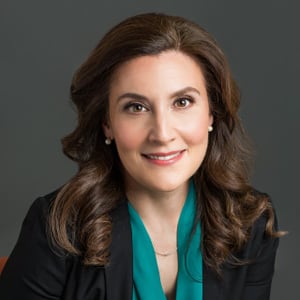
Board Member, U.S. Privacy and Civil Liberties Oversight Board
Beth A. Williams is a Board Member of the United States Privacy and Civil Liberties Oversight Board, an agency whose mission is to ensure that the federal government's efforts to prevent terrorism are balanced with the need to protect privacy and civil liberties.
Prior to her Board service, Ms. Williams was the Assistant Attorney General for the Office of Legal Policy at the United States Department of Justice from August 2017 to December 2020. In that role, she served as the primary policy advisor to the Attorney General and the Deputy Attorney General, and as the Chief Regulatory Officer for the Department. Ms. Williams also led the judicial nomination process for the Department, assisting in the selection and confirmation of more than 230 Article III judges to the bench.
Prior to becoming Assistant Attorney General, Ms. Williams was a litigation and appellate partner at a national law firm, where her practice focused on complex commercial, securities, appellate, and First Amendment litigation. From 2005-2006, Ms. Williams served as Special Counsel to the United States Senate Committee on the Judiciary, where she assisted with the confirmation of Chief Justice John G. Roberts, Jr. and Associate Justice Samuel A. Alito, Jr. to the United States Supreme Court.
Ms. Williams clerked for the Hon. Richard C. Wesley on the United State Court of Appeals for the Second Circuit. She graduated from Harvard College magna cum laude, with a degree in History and Literature, and she earned her law degree from Harvard Law School, where she served as Executive Editor of the Harvard Journal of Law and Public Policy.
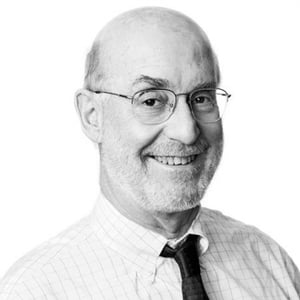
Director, Climate & Clean Air Program, Natural Resources Defense Council
David Doniger has been at the forefront of the battle against air pollution and global climate change since he joined NRDC in 1978. He helped formulate the Montreal Protocol, an international agreement designed to stop the depletion of the earth's ozone layer, as well as several essential amendments to the Clean Air Act. In 1993, he left NRDC to serve on the White House Council on Environmental Quality, followed by key posts at the U.S. Environmental Protection Agency. He rejoined NRDC in 2001 and has since been working to defend the Clean Air Act from assaults in Congress. He is based in Washington, D.C.
Chief of Staff and Associate Chief Counsel, U.S. Chamber Litigation Center
Stephanie Maloney is chief of staff and associate chief counsel at the U.S. Chamber Litigation Center, the litigation arm of the U.S. Chamber of Commerce. In this capacity, Maloney handles a variety of matters for the Chamber, including environment and energy litigation.
Most recently, Maloney served as Chief of Staff and Counsel in the Environment and Natural Resources Division of the U.S. Department of Justice. In that capacity, she directed litigation strategy, oversaw case briefing, and managed coordination and communication with agency clients in priority cases. And she served as government counsel in cases arising under various environmental and natural resources laws.
Before that, Maloney practiced as an associate in the Appellate and Critical Motions Practice Group at Winston & Strawn LLP. Her work focused on briefing and strategy in complex commercial and appellate litigation at the federal and state level, including merits and amicus curiae briefs to the Supreme Court of the United States.
Maloney served as a law clerk to both the Honorable Edith Brown Clement, of the U.S. Court of Appeals for the Fifth Circuit, and the Honorable Stephen J. Murphy, III, of the U.S. District Court for the Eastern District of Michigan. She graduated cum laude from Notre Dame Law School, where she served as Symposium Editor of the Notre Dame Law Review, and summa cum laude from Loyola University Maryland, where she received a B.A. in Political Science. Maloney also holds a master’s degree in theology from Emory University.
United States District Judge, United States District Court for the Middle District of Florida
In November 2020, the Senate confirmed Kathryn Kimball Mizelle as a United States District Judge for the Middle District of Florida. At age 33, she became the youngest Article III judge in the country. Prior to her confirmation, Judge Mizelle was in private practice at Jones Day, where she focused on complex civil and criminal litigation and appeals. Judge Mizelle previously served at the United States Department of Justice in the Office of the Associate Attorney General, in the Southern Criminal Enforcement Section of the Tax Division, and in the United States Attorney’s Office for the Eastern District of Virginia. Judge Mizelle has also taught as an adjunct professor of law at the University of Florida Levin College of Law and at George Mason University’s Antonin Scalia Law School.
Judge Mizelle earned her B.A., summa cum laude, from Covenant College, and her J.D., summa cum laude, from the University of Florida Levin College of Law. After graduation, Judge Mizelle served as a law clerk at every level of the federal judiciary: at the Supreme Court for Justice Clarence Thomas, at the D.C. Circuit for Judge Gregory G. Katsas, at the Eleventh Circuit for Chief Judge William H. Pryor Jr., and at the Middle District of Florida for Judge James S. Moody Jr.

Robert F. Stanton Professor of Law, University of Maryland Carey School of Law
Robert V. Percival is the Robert F. Stanton Professor of Law and the Director of the Environmental Law Program at the University of Maryland School of Law. He received a B.A. summa cum laude from Macalester College, a J.D. from Stanford Law School and an M.A. in economics from Stanford University. At Stanford Percival was named the Nathan Abbott Scholar for graduating first in his law school class. Following graduation, he served as a law clerk for Judge Shirley M. Hufstedler of the U.S. Court of Appeals for the Ninth Circuit and for U.S. Supreme Court Justice Byron R. White. He joined the Maryland faculty in 1987 after serving as a senior attorney for the Environmental Defense Fund. Percival has served as a visiting professor of law at Harvard Law School, Georgetown University Law Center, the China University of Political Science and Law (Beijing), and Comenius University (Bratislava). He is the principal author of a leading environmental law casebook, now in its 9th edition, and the author of several articles about the Supreme Court and presidential authority over executive agencies. Percival wrote one of the first articles on the propriety of consent decrees to effectuate and enforce federal law “The Bounds of Consent: Consent Decrees, Settlements and Federal Environmental Policymaking,” 1987 Univ. Chic. Leg. F. 327 (1987). He also is the author of the first comprehensive analyses of what the papers of the late Justices Thurgood Marshall and Harry Blackmun reveal about the Supreme Court’s handling of environmental cases (“Environmental Law in the Supreme Court: Highlights from the Blackmun Papers,” 35 ELR 10637 (2005), and “Environmental Law in the Supreme Court: Highlights from the Marshall Papers,” 13 ELR 10606 (Oct. 1993)).
Senior Attorney, Pacific Legal Foundation
Damien Schiff is a senior attorney at Pacific Legal Foundation. He leads its environmental practice group, a unique initiative that draws broadly from PLF’s expertise and success in property rights and separation of powers litigation. Over the years, Damien has represented hundreds of landowners and property rights advocates to defend their liberties against heavy-handed and unwarranted environmental and land-use regulation. His litigation experience includes Sackett v. U.S. Environmental Protection Agency, a groundbreaking decision in which the U.S. Supreme Court upheld the right of landowners to challenge Clean Water Act compliance orders issued by EPA, and Contoski v. Norton, PLF’s successful effort to force the federal government to make good on its promise to delist the bald eagle from the Endangered Species Act.
Besides litigation, Damien has written academic articles on a variety of subjects, including the Endangered Species Act, the Clean Water Act, greenhouse gas torts, the duty to rescue, and international water law. He has appeared on a variety of television and radio programs and has been quoted in The New York Times, The Wall Street Journal, Harper’s Magazine, and The Economist, among other publications.
He obtained his law degree magna cum laude from the University of San Diego School of Law, and his undergraduate degree magna cum laude from Georgetown University. While at USD, he was a research assistant for Professor Bernard Siegan, a leading constitutional theorist and advocate for property rights and economic liberty. Immediately prior to joining PLF, Damien clerked for Judge (and former PLF attorney) Victor Wolski of the United States Court of Federal Claims. Damien credits the mentoring and examples of Professor Siegan and Judge Wolski for his decision to pursue a career in liberty-based public interest litigation.
Damien lives in Sacramento with his wife, two young sons, four chickens, and a cat named Princess. In his off hours he enjoys stamp collecting, Gregorian chant, and martinis—preferably at the same time.
Mr. Fortney is a co-founder of Fortney & Scott, LLC, a Washington, D.C.-based law firm counseling and advising clients on the full spectrum of work-place related matters, including employment discrimination and labor matters, compliance programs, government contracting, international dispute resolution and counseling matters, and developing strategies for avoiding or responding to workplace-related crises.
Mr. Fortney has a broad-based practice representing and counseling employers and executives in employment and labor matters, including equal employment opportunity requirements, wage and hour matters, federal contractor's affirmative action and non-discrimination obligations, collective bargaining, and workplace health and safety. He brings experience from the public and private sectors in advising clients on these issues, and he frequently represents clients before federal and state agencies, including the U.S. Department of Labor's agencies, the Equal Employment Opportunity Commission, and the National Labor Relations Board.
Mr. Fortney has been widely recognized for his professional accomplishments, including being named one of the leading employment lawyers in Washington, D.C. by the CHAMBERS USAsurvey of America’s Leading Lawyers for Business in all years from 2005 through 2015. He was selected for inclusion in the 2008 through present editions of The Best Lawyers in America, Washington D.C.’s, Washington D.C.’s Best Lawyers, and Super Lawyers. Mr. Fortney was also awarded an AV rating (the highest level) by Martindale-Hubbell.
Before co-founding the firm, Mr. Fortney previously served as the chief legal officer of the U.S. Department of Labor in Washington, D.C. during the term of President George H.W. Bush. As Acting Solicitor of Labor, he was responsible for enforcing over 140 laws regulating the nation's workplaces and managing an agency with 800 attorneys and support staff. He advised Secretaries of Labor Elizabeth Dole and Lynn Martin and the Department of Labor agencies on a broad range of legal, policy, legislative, regulatory and enforcement issues.
Mr. Fortney has testified before the U.S. Congress on several occasions and a state legislative committee on wage and hour matters.
Mr. Fortney is a frequent lecturer and writer on employment-related topics, including appearances on CNN, CBS and Fox News. Mr. Fortney is the co-editor of the Federal Employment Law Insider monthly newsletter, Chapter Editor of The Family and Medical Leave Act (2006) published by BNA Books, co-author of the Military Leave Compliance Kit (2001), published by M. Lee Smith Publishers, and lead author of the Guide to Employee Leave(1997), published by Warren, Gorham & Lamont.
Associate Dean for Academic Affairs, The George Washington University Law School
Aram A. Gavoor is the Associate Dean for Academic Affairs and an internationally recognized scholar in American administrative law, national security, and federal courts. His co-authored work was cited by the U.S. Supreme Court in Department of Commerce v. New York (2019). His scholarship has earned placement in the Florida Law Review, Indiana Law Journal, Ohio State Law Journal, and other law journals. He has briefed and argued over a dozen high-profile public law cases before a majority of the U.S. Courts of Appeals and numerous cases before almost a third of the 94 U.S. District Courts. Associate Dean Gavoor frequently shares his national security, artificial intelligence policy, and federal courts expertise with international news media, including CNN, BBC World News, Wall Street Journal, NBC News, and ABC (Australia) World News. In 2021, the National Law Journal named Associate Dean Gavoor a Rising Star (top 40 under 40) honoree.
Earlier in his career, Associate Dean Gavoor served as Senior Counsel for National Security in the Civil Division of the U.S. Department of Justice, as third-in-rank Counselor to the Administrator of the Office of Information and Regulatory Affairs in the White House Office of Management and Budget, and in private practice. He received the Attorney General's Award for Distinguished Service in 2019, the Civil Division Special Commendation Award in 2020, 2019, and 2018, and a Commendation from the Human Rights and Special Prosecutions Section of the Criminal Division in 2018.
Associate Dean Gavoor previously served on the law school’s part-time faculty from 2008-2017 before accepting a term-limited position as Visiting Associate Professor from 2017-2019. He received GW Law’s Distinguished Adjunct Faculty Teaching Award from the 2020 and 2017 graduating classes. He currently teaches Constitutional Law II, Administrative Law, National Security Law, and Federal Courts.
Partner, Morgan, Lewis & Bockius LLP
Philip A. Miscimarra is the former Chairman of the National Labor Relations Board (NLRB). Phil leads the firm’s NLRB special appeals practice and is co-leader of Morgan Lewis Workforce Change, which manages all employment, labor, benefits, and related issues arising from mergers, acquisitions, startups, workforce reductions, and other types of business restructuring. He represents clients on a wide range of labor and employment issues, with a focus on labor-management relations, business acquisitions and restructuring, and employment litigation. Phil is also a Senior Fellow at the University of Pennsylvania's Wharton School and the Wharton Center for Human Resources. He is admitted in Illinois only, and his practice is supervised by DC Bar members.
Phil was named Chairman of the NLRB by President Donald J. Trump on April 24, 2017, after previously serving as Acting Chairman and a Board Member. He was appointed to the NLRB by President Barack Obama on April 9, 2013, and was approved unanimously by the Senate Committee on Health, Education, Labor, and Pensions on May 22, 2013. He was confirmed by voice vote in the US Senate on July 30, 2013, and served from August 7, 2013, to December 16, 2017. Upon the completion of his term, Phil served on the NLRB longer than 26 other board members over the past 30 years.
Phil is the author or co-author of several books involving labor law issues, including The NLRB and Managerial Discretion: Subcontracting, Relocations, Closings, Sales, Layoffs, and Technological Change (2d ed. 2010) (by Miscimarra, Turner, Friedman, Callahan, Conrad, Lignowski and Scroggins); The NLRB and Secondary Boycotts (3d ed. 2002) (by Miscimarra, Berkowitz, Wiener and Ditelberg); and Government Protection of Employees Involved in Mergers and Acquisitions (1989 and 1997 supp.) (by Northrup and Miscimarra); and other publications. He has also testified on labor and employment law issues in the United States Congress.
Chambers USA named Phil one of the leading lawyers for employment law in the United States from 2004 to 2012, based on the views of clients, peers, and other industry professionals. He has been described as a "fantastic lawyer" and "prolific writer," with clients admiring his "multilayered abilities and business savvy" and his "high level of integrity."
Deputy Secretary of Labor, U.S. Department of Labor
Keith E. Sonderling was confirmed by the U.S. Senate on March 12, 2025 to be the 38th United States Deputy Secretary of Labor.
As the United States Deputy Secretary of Labor, Sonderling is the second-highest-ranking official and serves as the Department's Chief Operating Officer, overseeing the agency’s $14 billion dollar budget and 16,000 employees. The Deputy Secretary oversees key operational functions such as: strategic planning; budget formulation; financial management; information technology; and human resource management. Additionally, the Deputy Secretary provides the leadership and management of DOL’s agencies necessary to support the Secretary and the Department’s mission.
Prior to becoming Deputy Secretary, he was previously confirmed by the United States Senate to serve as the Commissioner of the U.S. Equal Employment Opportunity Commission (EEOC) from September 2020 until August 2024. He also served as the Commission’s Vice-Chair from 2020-2021.
During his tenure at the EEOC, one of Sonderling’s highest priorities was ensuring that artificial intelligence and workplace technologies are designed and deployed consistent with long-standing laws. He published numerous articles on the benefits and potential harms of using artificial intelligence-based technology in the workplace and spoke globally on artificial intelligence’s impact on the workplace.
Sonderling previously served at the US Department of Labor as the Acting and Deputy Administrator of the U.S. Department of Labor’s Wage and Hour Division from 2017-2020. During his tenure, the Division accomplished back-to-back record-breaking enforcement collections and educational outreach events. Sonderling also oversaw the development and publication of large-scale deregulatory rules and authored numerous Opinion Letters, Field Assistance Bulletins, and All Agency Memorandums. Additionally, he was instrumental in developing the Division’s first comprehensive self-audit program, which collected more than $7 million for nearly eleven thousand workers.
Before his government service, Sonderling was a partner at one of Florida’s oldest and largest law firms, Gunster. At Gunster, he counseled employers and litigated labor and employment disputes. In 2012, then-Governor Rick Scott appointed Sonderling to serve as the Chair of the Judicial Nominating Committee for appellate courts in South Florida. Sonderling was also active in the community, serving on the Board of Directors for Morse Life Health System, the Boca Raton Chamber of Commerce, and Leadership Florida.
Sonderling also serves as a Professional Lecturer in the Law (Adjunct Professor) at George Washington University Law School, teaching employment discrimination.
Sonderling received his B.S., magna cum laude, from the University of Florida and his J.D., magna cum laude, from Nova Southeastern University.
President, Macrostrategy LLC
David P. Goldman is the president of Macrostrategy LLC, a Senior Writer at Law & Liberty, and a Washington Fellow at the Claremont Institute's Center for the American Way of Life.
He writes the "Spengler" column for the Asia Times Online and the "Spengler" blog at PJ media. He is also the author of You Will Be Assimilated: China's Plan to Sino-Form the World (Bombardier Books) and How Civilizations Die (and Why Islam is Dying Too) (Regenery).
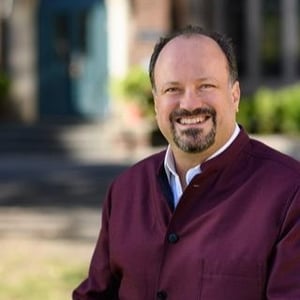
Professor of Near Eastern Studies & Director of the Institute for Transregional Study of the Contemporary Middle East, Princeton University
Prof. Bernard Haykel's research focuses on the political and social tensions that arise from questions about religious identity and authority. He obtained his doctorate in Oriental Studies with a specialization in Islam and history from the University of Oxford in 1998. His teaching and research primarily center around the intersection of intellectual, political, and social history of the Middle East, with a particular emphasis on the Arabian Peninsula. He also has a side interest in the impact of energy resources and rents on politics and society.
Prof. Haykel's work involves analyzing the reception of reformist ideas in contemporary debates among Sunnis and the Zaydi heritage among Shi`is. He is also interested in the history and politics of the countries of the Arabian Peninsula, especially Saudi Arabia. Although he focuses on the modern period, Prof. Haykel is well-versed in pre-modern Islamic literary sources and concepts and considers them crucial foundations for the study of the modern Arab and Muslim worlds.
Prof. Haykel draws inspiration from anthropology, politics, history, and philology in his work. He teaches courses on the history of the Middle East and Islamist politics at the undergraduate level. At the graduate level, he enjoys teaching courses on Arabian history and Islamism, but he is also open to accommodating the needs of NES students who want to read primary texts in areas he is less familiar with. Prof. Haykel has supervised or co-supervised nine completed Ph.D. dissertations so far.
In addition to teaching, Prof. Haykel directs the Institute for the Transregional Study of the Contemporary Middle East, North Africa, and Central Asia. In this role, he organizes lectures and conferences on topics related to the politics and culture of the contemporary Middle East.
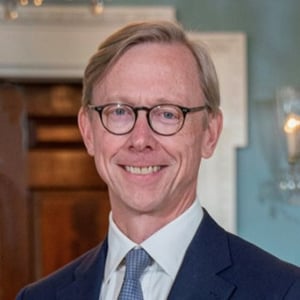
Founder, Latitude, LLC
Brian Hook is the founder of Latitude, LLC, an international strategic consulting firm based in Washington, DC.
Mr. Hook worked on the Romney campaign as senior advisor on foreign policy. He chaired the foreign policy and national security task forces of the Romney Readiness Project. From 2010-2011, he was the foreign policy director of Governor Tim Pawlenty’s presidential campaign.
Mr. Hook served in a number of positions during the Bush Administration, including Assistant Secretary of State for International Organizations; Senior Advisor to the U.S. Ambassador to the United Nations; Special Assistant to the President for Policy, Office of the Chief of Staff; and Counsel, Office of Legal Policy, at the Justice Department.
From 1999-2003, he practiced corporate law at Hogan & Hartson in Washington, D.C.
Before practicing law, he served as a policy advisor to Iowa Governor Terry Branstad and to U.S. Congressman James Leach.

Founder and Executive Director, National Security Institute; Assistant Professor of Law, Antonin Scalia Law School, George Mason University
Jamil N. Jaffer is the Founder and Executive Director of the National Security Institute at the Antonin Scalia Law School at George Mason University where he also serves as an Assistant Professor of Law, Director of the National Security Law and Policy Program, and Director of the Cyber, Intelligence, and National Security LLM Program. Jamil also teaches classes on counterterrorism, intelligence, surveillance, cybersecurity, and other national security matters, as well as a summer course held abroad with U.S. Supreme Court Justice Neil M. Gorsuch. Jamil is also affiliated with Stanford University’s Center for International Security and Cooperation and previously served as a Visiting Fellow at the Hoover Institution from 2016 to 2019.
Jamil is also a Venture Partner with Paladin Capital Group, where he assists the firm with investments across the full range of its themes and theses, including a focus on dual-use national security technologies. Jamil also serves on the board of directors of RangeForce, a cybersecurity training and readiness platform startup and Tozny, a digital identity startup, and on the advisory boards of U.S. Strategic Metals, North America’s largest primary producer of cobalt, a critical mineral used in EV batteries, aerospace, and other national security applications; and Constella Intelligence, a deep and dark web intelligence startup. Jamil also serves as an advisor to Beacon Global Strategies, a strategic advisory firm and Duco, a technology platform startup that connects corporations with geopolitical and international business experts. Jamil is also the managing director of Trigraph Caveat Capital, a private investment vehicle.
Among other things, Jamil currently serves on the Board of Directors for the Greater Washington Board of Trade, the Board of Advisors for the Global Cyber Alliance, and the Advisory Board of the Foundation for the Defense of Democracies’ Center on Cyber and Tech Innovation, the Executive Committee of the Reagan Institute Strategy Group. Jamil is also a Fellow at the Academy for Judaic, Christian, and Islamic Studies, an advisor to the Concordia Summit, and is a member of the Board of Directors for the Center for Intelligence Policy, the Board of Directors of Speech First, and the Executive Committee of the International Law and National Security Practice Group of the Federalist Society.
Immediately prior to his current positions, from 2015-2021, Jamil served as a senior business leader at IronNet Cybersecurity, helping take the company from a bootstrapped first-year technology products startup through two rounds of venture capital fundraising, growing from 40 employees to over 300, and through its listing on New York Stock Exchange. In his role as IronNet's Senior Vice President for Strategy, Partnerships & Corporate Development, Jamil worked directly for the co-CEOs of the company, Gen (ret.) Keith B. Alexander, the former Director of the National Security Agency and Founding Commander of U.S. Cyber Command, and Bill Welch, the former COO of Zscaler and Duo; in that role, Jamil led all of the company’s strategic and technology partnership efforts, including developing go-to-market and technology integration plans with some of the largest cloud platforms and cybersecurity companies in the market, evaluating potential acquisition targets, and developing overall corporate strategy and thought leadership around collective security and collaborative defense in the cyber arena.
Prior to his time at IronNet, Jamil served on the leadership team of the Senate Foreign Relations Committee as Chief Counsel and Senior Advisor under Chairman Bob Corker (R-TN), where he worked on key national security and foreign policy issues, including leading the drafting of the proposed Authorization for the Use of Military Force against ISIS in 2014 and 2015, the AUMF against Syria in 2013, and revisions to the 9/11 AUMF against al Qaeda. Jamil was also the lead architect of the Iran Nuclear Agreement Review Act and two sanctions laws against Russia for its first intervention in Ukraine.
Prior to joining SFRC, Jamil served as Senior Counsel to the House Permanent Select Committee on Intelligence under Chairman Mike Rogers (R-MI) where he led the committee’s oversight of NSA surveillance, NRO intelligence issues, and NGA analytic and collection matters, as well as intelligence community-wide counterterrorism issues. Jamil was also the lead architect of the Cyber Intelligence Sharing and Protection Act, the nation’s first cyber threat intelligence sharing legislation that was signed into law in 2015.
In the Bush Administration, Jamil served in the White House as an Associate Counsel to the President, handling Defense Department, State Department, and intelligence community matters, and serving as one of the White House Counsel’s primary representatives to the National Security Council Deputies Committee.
Prior to the White House, Jamil served on the leadership team of the Justice Department’s National Security Division as Counsel to the Assistant Attorney General for National Security, where he focused on counterterrorism and intelligence matters. At NSD, Jamil helped lead the division’s work on In re: Directives, the first ever two-party litigated matter in the FISA Court and the second case before the FISA Court of Review in its 30-year history. Jamil also led NSD’s efforts on the President’s Comprehensive National Cybersecurity Initiative (CNCI), including the drafting of NSPD-54/HSPD-23, and related classified matters, and advised the National Security Agency (NSA) and U.S. Cyber Command’s predecessor organization, the Joint Function Component Command for Network Warfare (JFCC-NW), on matters related to cyber intelligence collection and offensive cyber activities. For his work on these matters, Jamil was awarded the Assistant Attorney General’s Award for Special Initiative and was among the group of lawyers awarded the Director of National Intelligence’s 2008 Legal Award (Team of the Year – Cyber Legal).
Jamil also served in other positions in the Justice Department, including in the Office of Legal Policy, where he worked on the confirmations of Chief Justice John G. Roberts, Jr. and Justice Samuel A. Alito, Jr. to the United States Supreme Court.
Jamil also served as a lawyer in private practice at Kellogg Huber, a Washington, DC-based litigation boutique, as a policy advisor to Congressman Bob Goodlatte (R-VA), and as a staff member or senior advisor on a number of political campaigns, including two presidential campaigns and a presidential transition team. While in law school, Jamil was a member of the University of Chicago Law Review, managing editor of the Chicago Journal of International Law, and National Symposium Editor of the Harvard Journal of Law & Public Policy. Following law school, Jamil served as a law clerk to Judge Edith H. Jones of the United States Court of Appeals for the Fifth Circuit and, later in his career, as a law clerk to then-Judge Neil M. Gorsuch when he first joined the United States Court of Appeals for the Tenth Circuit as well as a law clerk to Justice Neil Gorsuch when he joined the U.S. Supreme Court.
Jamil has published multiple op-eds and academic articles on national security, foreign policy, cybersecurity, counterterrorism, encryption, and intelligence matters, and is the co-author of a book chapter with former NSA Director Gen. (Ret.) Keith B. Alexander on national security and the press in National Security, Leaks, and the Freedom of the Press: The Pentagon Papers Fifty Years On (2021) and a book chapter with former CIA Director Gen. (ret.) Mike Hayden on ISIS, al Qaeda, and other international terrorist groups in Choosing to Lead: American Foreign Policy for a Disordered World (2015). Jamil has also written book chapters on cybersecurity and surveillance, as well as op-eds and policy papers with former Attorney General Michael B. Mukasey, former National Counterterrorism Center Director Matt Olsen, and Congressman Mike Waltz (R-FL), among others.
Jamil has previously taught graduate-level courses in intelligence law and policy at George Washington University’s Elliott School of International Affairs and the National Intelligence University, served an outside advisor to the Cyberspace Solarium Commission, and has recently testified before committees of the U.S. Senate and House of Representatives on China, cybersecurity, counterterrorism, and other national security matters. Jamil has also recently appeared on a range of national television and radio outlets including CNN, Fox News, Fox Business, MSNBC, Bloomberg, PBS, Voice of America, and National Public Radio, and in various print and online publications, including the Wall Street Journal, New York Times, and the Washington Post on a range of national security matters including cybersecurity, counterterrorism, surveillance, encryption, privacy, and foreign policy issues.
Jamil holds degrees from UCLA (BA, cum laude), the University of Chicago Law School (JD, with honors), and the United States Naval War College (MA, with distinction).
Former United States Attorney General
William P. Barr was born on May 23, 1950 in New York City. Mr. Barr received his A.B. in government from Columbia University in 1971 and his M.A. in government and Chinese studies in 1973. From 1973 to 1977, he served in the Central Intelligence Agency before receiving his J.D. with highest honors from George Washington University Law School in 1977.
In 1978, Mr. Barr served as a law clerk under Judge Malcolm Wilkey of the U.S. Court of Appeals for the District of Columbia Circuit. Following his clerkship, Mr. Barr joined the Washington, D.C. office of the law firm of Shaw, Pittman, Potts & Trowbridge as an associate. He left the firm to work in the White House under President Ronald Reagan from 1982 to 1983 on the domestic policy staff, then returned to the law firm and became a partner in 1985.
Under President George H.W. Bush, Mr. Barr served as the Deputy Attorney General from 1990 to 1991; the Assistant Attorney General of the Office of Legal Counsel from 1989 to 1990; and the 77th Attorney General of the United States from 1991 to 1993. While serving at the Department, Mr. Barr helped create programs and strategies to reduce violent crime and was responsible for establishing new enforcement policies in a number of areas including financial institutions, civil rights, and antitrust merger guidelines. Mr. Barr also led the Department’s response to the Savings & Loan crisis; oversaw the investigation of the Pan Am 103 bombing; directed the successful response to the Talladega prison uprising and hostage taking; and coordinated counter-terrorism activities during the First Gulf War.
From 1994 to 2000, Mr. Barr served as Executive Vice President and General Counsel for GTE Corporation. Mr. Barr then served as Executive Vice President and General Counsel of Verizon from 2000 to 2008. At both GTE and Verizon, Mr. Barr led the legal, regulatory, and government affairs activities of the companies.
After retiring from Verizon in 2008, Mr. Barr advised major corporations on government enforcement matters, as well as regulatory litigation. Mr. Barr served as Of Counsel at Kirkland & Ellis LLP in 2009 and rejoined the firm in 2017.
President Donald Trump announced his intention to nominate Mr. Barr on December 7, 2018, and he was confirmed as the 85th Attorney General of the United States by the U.S. Senate on February 14, 2019. U.S. Supreme Court Chief Justice John Roberts administered the oath of office. Mr. Barr joins John Crittenden (1841 and 1850-1853) as one of only two people in U.S. history to serve twice as Attorney General.
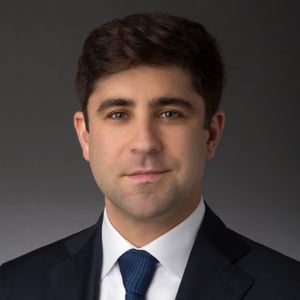
Partner, Sidley Austin LLP
Will Levi is a partner at Sidley Austin. He draws on his experience serving in senior roles at the U.S. Department of Justice and U.S. Senate to represent clients in high-stakes government enforcement actions, congressional investigations, litigation, and crisis situations. He focuses his practice on commercial disputes and government-facing litigation, including in matters defending against government enforcement actions and challenging federal regulatory action, and he represents clients before federal administrative agencies as well as in federal and state courts.
Prior to joining Sidley, Will served in senior roles at the U.S. Department of Justice, including as Chief of Staff of the Department of Justice and Senior Counselor to the Attorney General. In those roles, Will had broad responsibilities, including supervision of a wide range of high-profile civil litigation, criminal investigations and prosecutions, and national security matters. In recognition of outstanding service to the Department of Justice, Will was awarded the Department’s highest honor, the Edmund J. Randolph Award.
He also served as Chief Counsel to U.S. Senator Mike Lee and Staff Director of the U.S. Senate Judiciary Committee’s Subcommittee on Antitrust, Competition Policy, and Consumer Rights, which oversees the federal antitrust enforcement agencies and reviews major proposed mergers affecting the national economy.
Will regularly advises leading company executives and boards of directors on strategic legal issues arising from high-stakes litigation, congressional investigations and hearings, and government investigations and regulation. In recognition of his success, Will has been named a “Future Star” in the District of Columbia by Benchmark Litigation (2025), and he was ranked among an elite group of lawyers as a 2023 “D.C. Rising Star” by The National Law Journal.
Will clerked for U.S. Supreme Court Justice Samuel A. Alito, Jr. and U.S. Court of Appeals for the Third Circuit Judge Anthony J. Scirica. By appointment of the U.S. Court of Appeals for the D.C. Circuit, Will serves as a member of the Court’s Advisory Committee on Procedures. He is also an elected member of the American Law Institute and a member of the nominating committee for the William H. Webster Profiles in Leadership Award for Prosecution.
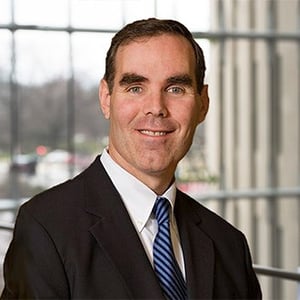
Partner, Jones Day
Eric Dreiband represents clients in investigations, litigation, and counseling in civil rights, employment discrimination, whistleblower, wage and hour, and other matters. Prior to rejoining Jones Day in 2021, Eric served as the 18th Assistant Attorney General for the Civil Rights Division at the U.S. Department of Justice (DOJ), and he also served as the 12th General Counsel of the U.S. Equal Employment Opportunity Commission (EEOC).
Under Eric's leadership, DOJ's Civil Rights Division set enforcement records for prosecutions of law enforcement officers and sexual harassment, religious liberty, and servicemember cases; charged the highest number of hate crimes cases in decades; significantly expanded resources for human trafficking prosecutions; prosecuted race and other forms of illegal discrimination in education, employment, housing, lending, and voting; reached historic disability rights settlements with several states; opposed unlawful COVID-19-related civil liberty restrictions; and successfully litigated to protect the Constitutional and civil rights of all people in the United States.
As EEOC general counsel, Eric led the Commission's litigation of the federal employment antidiscrimination laws, and he issued the Regional Attorneys' Manual, which established the policies of EEOC's litigation program. Eric also served at the Department of Labor (DOL) as deputy wage and hour administrator and directed DOL's enforcement of the Fair Labor Standards Act (FLSA), the Family and Medical Leave Act (FMLA), and other laws.
From 1997 to 2000, Eric served as a prosecutor in the Office of Independent Counsel Kenneth W. Starr.
Eric has spoken and written extensively about civil rights and other employment laws, and he has testified about these subjects before committees of the U.S. House of Representatives and the U.S. Senate.
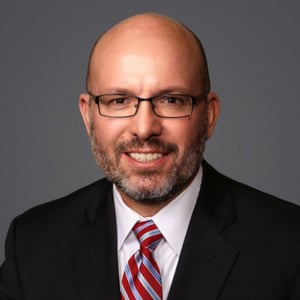
Shareholder, Ogletree, Deakins, Nash, Smoak & Stewart
Chris Murray is Co-Chair of the firm’s Arbitration and Alternative Dispute Resolution Practice Group. In this role, he assists attorneys throughout the firm and clients nationwide to create, roll out, and enforce effective employment arbitration agreements and other ADR programs. Mr. Murray has extensive experience with class/collective action waivers in employment arbitration. Mr. Murray was part of the Ogletree team that successfully defended the use of such waivers in the Fifth Circuit’s landmark decision in D.R. Horton, Inc. v. N.L.R.B. Since then, he has successfully defended the enforceability of class action waivers in numerous subsequent cases and submitted an amicus brief on the subject on behalf of several major employers’ associations in the Supreme Court’s Murphy Oil case. Mr. Murray assists clients and the Firm’s attorneys to draft or revise arbitration programs focused on a client’s specific needs and goals and in light of changing law and evolving best practices.
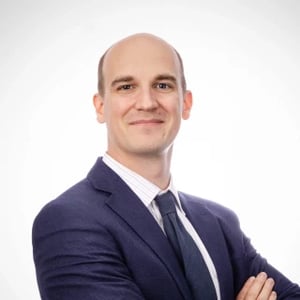
Managing Partner, Boyden Gray PLLC
Michael Buschbacher is the managing partner of Boyden Gray PLLC. He represents public and private companies, trade associations, non-profits, and individuals in high-stakes litigation and administrative proceedings, with a particular focus on environmental and energy matters.
In addition to trial-level work, Mr. Buschbacher maintains an active appellate practice, both as merits counsel and as counsel for amici curiae. He has written amicus briefs quoted by the Seventh and Ninth Circuits. And his Supreme Court advocacy has been cited by The New Yorker, The New York Times, and E&E News. Mr. Buschbacher’s commentary on legal issues has been published in The Wall Street Journal, Newsweek, and The American Conservative.
Before joining the firm, Mr. Buschbacher served at the U.S. Department of Justice as counsel to the Assistant Attorney General for the Environment and Natural Resources Division. There, he advised senior Department leadership, served as the lead attorney on several lawsuits, and helped draft policy memoranda for the Department on the proper scope and procedure for environmental enforcement. Prior to serving in the government, Mr. Buschbacher was an associate in the D.C. office of Sidley Austin.
Mr. Buschbacher is a former clerk to Judge Alice M. Batchelder of the U.S. Court of Appeals for the Sixth Circuit and to Magistrate Judge Paul R. Cherry of the U.S. District Court for the Northern District of Indiana.
Mr. Buschbacher holds a B.A. in Music and Germanic Studies from Indiana University and a J.D., magna cum laude, from Notre Dame Law School.
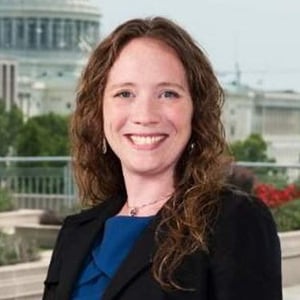
Partner, Luther Strange & Associates
Annie Donaldson Talley is Partner at Luther Strange and Associates. She recently departed the White House after serving as Deputy Assistant to the President and Deputy Counsel to the President. Over the past four years, she provided outside counsel to the Donald J. Trump for President campaign; helped stand up and manage the White House Counsel’s Office; interfaced with agencies across the federal government; and advised the President of the United States, White House Counsel, Chief of Staff and other senior staff across the Executive Office of the President on a broad range of issues from regulatory reform to executive nominations to the day-to-day issues facing the Administration.
Prior to her White House service, Annie Donaldson Talley counseled clients in the non-profit, for-profit, political, and government sectors, as well as high-profile individuals in private practice at Jones Day and Patton Boggs. She provided strategic counseling to clients structuring their affairs to ensure compliance with a web of state and federal laws and represented clients in complex, multi-faceted investigations, leading teams navigating issues of intense public scrutiny.
Annie Donaldson Talley is also a veteran of three presidential campaigns and served in state government. She holds a B.A., summa cum laude, from the University of Alabama and a J.D. from Harvard Law School, where she served on the Harvard Law Review. She lives in Montgomery, Alabama with her husband, Brett.
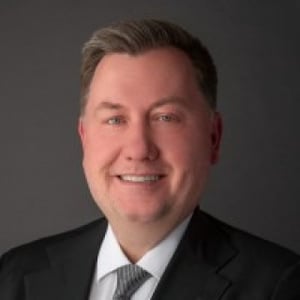
Partner, Sidley Austin LLP
JUSTIN SAVAGE is a global co-leader of the firm’s Environmental, Health, and Safety practice and co-leads the Automotive and Mobility sector team, where he is a leading strategist for companies navigating the intersection of complex regulation, high-stakes litigation, and transformative industry change. For nearly three decades, he has led clients through their most consequential environmental, health, and safety (EH&S) disputes and mobility-sector challenges, earning a reputation as both a trusted counselor and a forceful advocate in the courtroom and the boardroom. A core part of Justin’s practice also focuses on regulatory strategy and market entry, advising emerging technology companies, new market entrants, and established industry leaders on launching new products, technologies, and business models. He regularly counsel clients in emerging fields such as robotics and AI on engaging with regulators, anticipating enforcement and compliance risk, and building defensible regulatory strategies that support growth rather than slow it.
Clients praise Justin as “an excellent litigator… strategically clever and creative… attentive, thoughtful and willing to go above and beyond” (Chambers USA 2025). Chambers USA has ranked him for Band 1 for Environment in District of Columbia (2017–2025) and Band 3 for Transportation: Road (Automotive) in USA—Nationwide (2023–2025).
Justin has won some of the most closely watched EH&S and transportation disputes of the past two decades and guided companies through crises where business continuity, brand reputation, and regulatory survival were on the line. His leadership has been repeatedly recognized: he is a three-time Law360 Environmental “MVP” (2018, 2024, 2025) and a Lawdragon “500 Global Leaders in Crisis Management” (2025-2026). He is the first call for companies facing bet-the-company challenges.
Justin’s clients concentrate in heavily regulated industries, including auto and mobility, aviation, chemicals, data centers, energy, mining, and refining. Justin litigates and counsels across the spectrum of U.S. environmental, transportation, and administrative laws, including the Clean Air Act (Title I, mobile sources, and fuels), incident response, RMP, NHTSA, Clean Water Act, TSCA, CSB investigations, APA claims, FOIA litigation, NEPA, and the Safe Drinking Water Act.
Prior to joining Sidley, Justin served for nearly a decade at the Environmental Enforcement Section of the U.S. Department of Justice, where he led teams in several multi-billion dollar enforcement cases. In his career, Justin has regularly taught on a range of environmental and litigation topics. For several years, Justin served as an instructor at the Justice Department’s National Advocacy Center where he taught hundreds of Assistant U.S. Attorneys and other agency lawyers on topics that included trial advocacy and evidence. Since rejoining private practice, Justin has served eight times as a faculty member for the American Law Institute’s Environmental Litigation program. He also lectured on a range of litigation and trial topics for bar associations and organizations, including serving as an instructor for the FAA on trial advocacy.
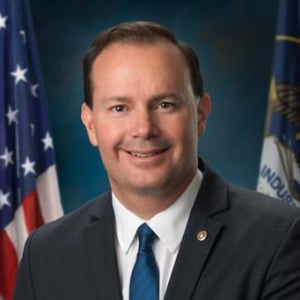
United States Senator, Utah
Elected in 2010 as Utah's 16th Senator, Mike Lee has spent his career defending the basic liberties of Americans and Utahns as a tireless advocate for our founding constitutional principles.
Senator Lee acquired a deep respect for the Constitution early on. His father, Rex Lee, who served as the Solicitor General under President Ronald Reagan, would often discuss varied aspects of judicial and constitutional doctrine around the kitchen table, from Due Process to the uses of Executive Plenary Power. He attended most of his father's arguments before the U.S. Supreme Court, giving him a unique, hands-on experience and understanding of government up close.
Lee graduated from Brigham Young University with a Bachelor of Science in Political Science, and served as BYU's Student Body President in his senior year. He graduated from BYU's Law School in 1997 and went on to serve as law clerk to Judge Dee Benson of the U.S. District Court for the District of Utah, and then with future Supreme Court Justice Judge Samuel A. Alito, Jr. on the U.S. Court of Appeals for the Third Circuit.
Lee spent several years as an attorney with the law firm Sidley & Austin specializing in appellate and Supreme Court litigation, and then served as an Assistant U.S. Attorney in Salt Lake City arguing cases before the U.S. Court of Appeals for the Tenth Circuit.
Lee served the state of Utah as Governor Jon Huntsman's General Counsel and was later honored to reunite with Justice Alito, now on the Supreme Court, for a one-year clerkship. He returned to private practice in 2007.
Throughout his career, Lee earned a reputation as an outstanding practitioner of the law based on his sound judgment, abilities in the courtroom, and thorough understanding of the Constitution.
Today, Lee fights to preserve America's proud founding document in the United States Senate. He advocates efforts to support constitutionally limited government, fiscal responsibility, individual liberty, and economic prosperity.
Lee is a member of the Judiciary Committee, and serves as Chairman of the Antitrust, Competition Policy and Consumer Rights Subcommittee protecting business competition and personal freedom.
He also oversees issues critical to Utah as the Chairman of the Water and Power Subcommittee of the Energy and Natural Resources Committee. He serves on the Commerce Committee and the Joint Economic Committee, as well.
In the 114th Congress, Lee also began his tenure as Chairman of the Senate Steering Committee, where he works with his Republican colleagues in the Senate to introduce bold and innovative solutions to issues facing the American people.
Lee and his wife Sharon live in Alpine, Utah, with their three children. He is a member of The Church of Jesus Christ of Latter-day Saints and served a two-year mission for the Church in the Texas Rio Grande Valley.

Fireside Chat with Ambassador Kay Bailey Hutchison
Kay Bailey Hutchison, Nitin R. Nainani
Ambassador Kay Bailey Hutchison served as the U.S. Ambassador to NATO from 2017-2021. From 1993-2013,...
DC-Wide FedSoc Rupe Debate: Are Independent Agencies Constitutional?
Lisa Branch, Noah Rosenblum, Adam White
Registration is now closed. Join The Federalist Society’s local DC Young Lawyers Chapter and the Georgetown...
Banquet Dinner
John Ashcroft, William P. Barr, Jefferson B. Sessions, Beth A. Williams
Perspectives on the Role of the Nation’s Chief Legal Officer A Conversation with Three U.S. Attorneys...
Defend the Constitution, Save the Planet: The Role of Public Interest Groups in Shaping Environmental Law
David D. Doniger, Stephanie Ann Maloney, Kathryn Kimball Mizelle, Robert V. Percival, Damien Michael Schiff
The United States adopted its modern environmental statutes in the 1970s. Among other innovations, Congress...
Deep Dive Episode 259 - AI & Antidiscrimination: AI Entering the Arena of Labor & Employment Law [Panel Discussion]
David Fortney, Aram A. Gavoor, Philip A. Miscimarra, Keith E. Sonderling
Artificial Intelligence (AI), once the stuff of science fiction, is now more than ever a...
Abraham Accords: Promise-Potential; Risk-Reality
David P. Goldman, Bernard Haykel, Brian H. Hook, Jamil N. Jaffer
As Indonesia, Somalia, Niger, and Mauritania may be next to join the Abraham Accords, what...
Gregory S. Coleman Memorial Lecture & Luncheon
William P. Barr, Will Ranney Levi
Hon. William Barr, Former United States Attorney General and Author, One Damn Thing After Another:...
Is the EEOC misusing the Freedom of Information Act to penalize employers that adopt mandatory employment arbitration programs?
Eric Dreiband, Christopher C. Murray
The EEOC is denying employers’ FOIA requests for the EEOC’s charge investigation files when resulting...
The Return of Supplemental Environmental Projects
Michael Buschbacher, Annie Donaldson Talley, Justin Savage
On May 5, the United States Department of Justice (DOJ) announced a new "Comprehensive Environmental...
The Constitution Line By Line w/ Sen. Mike Lee: Article I, Section 8: The Military Powers Clauses
Mike S. Lee
In this episode of the Constitution Line By Line, Senator Mike Lee covers Article I,...