

Partner and Co-Chair of Securities & Regulatory Enforcement, Stradley Ronon
As a former supervisory assistant chief litigation counsel in the Enforcement Division of the U.S. Securities and Exchange Commission (SEC), Jan Folena has led and successfully litigated many of the financial service industry’s most complex and high-profile cases. She has appeared in federal courts across the United States as lead trial counsel, handling issues at the forefront of the securities industry, including in one of only a few financial fraud jury trials, a highly publicized insider trading trial, and an enforcement action against the Big Four accounting firms.
As co-chair of Stradley Ronon’s securities and regulatory enforcement practice, Jan focuses her practice on assisting firms and individuals in navigating internal investigations, regulatory enforcement matters, commercial disputes and, when necessary, arbitration, mediation and trial. She regularly advises asset managers, broker-dealers, registered and private funds, public companies, officers, directors, principals and auditors on complex matters involving enforcement of federal and state securities laws, including regulatory examinations, internal investigations and litigation. Jan also represents clients in congressional inquiries, before state regulators, and in third-party litigation.
In her previous supervisory role at the SEC, Jan managed a team of trial lawyers and investigative staff while providing legal guidance and litigation risk assessment to the commission and SEC division heads. Jan was selected to serve as the first assistant chief litigation counsel to the SEC’s Asset Management Unit providing legal advice and serving as litigation counsel for cases brought under the Investment Company Act of 1940 and the Investment Advisers Act of 1940. Prior to joining the SEC, Jan served as chief trial counsel at the Commodity Futures Trading Commission and as trial counsel at the U.S. Department of Justice, Commercial Litigation Branch.
Jan’s expansive government career serves as the foundation for her substantial insights and firsthand knowledge into industry best practices and solutions for clients. She is frequently sought after for her sophisticated knowledge and understanding of federal securities laws, administrative procedure, federal and state court litigation, and enforcement actions at the SEC and other regulatory agencies.
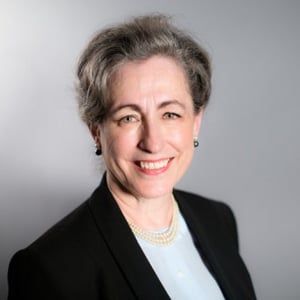
Senior Litigation Counsel, New Civil Liberties Alliance
Peggy Little, Senior Counsel at New Civil Liberties Alliance, a new public interest law firm challenging the administrative state founded in 2017 by Professor Philip Hamburger, has over three decades of experience as a trial and appellate litigator in complex, high-stakes regulatory, mass-tort, class-action, products liability, securities, commercial and civil rights litigation representing individuals and high-profile litigants including Fortune 50 companies, financial institutions, public companies, and universities in state and federal courts, including the United States Supreme Court.
Peggy is a graduate of Yale College and Yale Law School, where she was awarded the Potter Stewart Prize. She was a law clerk to the Hon. Ralph K. Winter on the U.S. Court of Appeals for the Second Circuit. Prior to starting her own trial and appellate law firm in 1997, where she was appellate consulting counsel to the New Haven firefighters in Ricci v.DeStefano, a landmark 2009 United States Supreme Court decision, Peggy was a partner at Tyler, Cooper & Alcorn in New Haven, Connecticut. From 2004 to early 2018, Peggy directed, part-time, the Federalist Society Pro Bono Center.
Peggy has participated in many national conferences and symposia addressing issues of current importance in constitutional law – specifically state and federal constitutional questions regarding the separation of powers and the first amendment – and regularly speaks, blogs and publishes on the topic of the unconstitutional exercise of governmental power. In May of 2017, she presented her paper, Pirates at the Parchment Gates, to a conference of state and federal judges at the Law and Economics Center at the Antonin Scalia Law School. Her work has been published by law reviews, legal publications, the Federalist Society, the Wall Street Journal, Law and Liberty and the Manhattan Institute.
Recent publications include: How the SEC silences its critics, The SEC should listen to Sen. Cotton, Lucia v. SEC, Opening Salvos in the Opioid Litigation Wars, Straight Dope on the Opioid Crisis
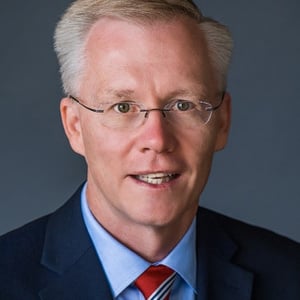
Executive Director, Milken Institute Center for Financial Markets
Michael S. Piwowar is the executive director of the Milken Institute Center for Financial Markets. Dr. Piwowar served as a Commissioner at the U.S. Securities and Exchange Commission from August 15, 2013 to July 6, 2018. He was first appointed to the SEC by President Barack Obama and was designated Acting Chairman of the Commission by President Donald Trump from January 23, 2017 to May 4, 2017. He was previously the Republican chief economist for the U.S. Senate Committee on Banking, Housing, and Urban Affairs under Senators Mike Crapo (R-ID) and Richard Shelby (R-AL) and served as the lead Republican economist on the four SEC-related titles of the Dodd-Frank Act and the JOBS Act. During the financial crisis and its immediate aftermath, Dr. Piwowar served in a one-year fixed-term position at the White House as a senior economist at the President’s Council of Economic Advisers (CEA) in both the George W. Bush and Barack Obama Administrations. Before joining the White House, Dr. Piwowar worked as a Principal at the Securities Litigation and Consulting Group (SLCG). He received a B.A. in Foreign Service and International Politics from the Pennsylvania State University, an M.B.A. from Georgetown University, and a Ph.D. in Finance from the Pennsylvania State University.
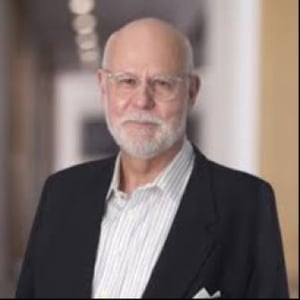
Partner, Foley & Lardner LLP
Patrick Daugherty is a senior corporate and securities law partner of Foley & Lardner LLP, based in Chicago. He also is an adjunct professor of Cornell Law School, where he teaches in residence each Fall Term.
Mr. Daugherty is a member of the Bar in New York, the District of Columbia, North Carolina, Michigan and Illinois. Credentialing organizations have named him “Lawyer of the Year” in both Michigan (2007) and Illinois (2022). A graduate of Northwestern University and of Cornell Law School (Class of 1981), he clerked for SDNY Chief Judge Lloyd F. MacMahon for a year before entering private practice. Mr. Daugherty also served as Counsel to SEC Commissioner Edward H. Fleischman in Washington, D.C., from 1986 to 1989. An Emeritus Member of the American Law Institute, he is the author, co-author or editor of several books and many articles on securities regulation and new financial products.
Mr. Daugherty believes that he was the first lawyer inside the SEC to join the Federalist Society when he became a member in the late 1980s. A mainstay of the Chicago Lawyers Chapter, at the national level of the Society he serves on the Executive Committee for the Financial Services & E-Commerce Practice Group.
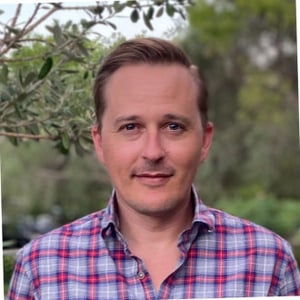
Head of Policy & General Counsel, Crypto, Andreessen Horowitz (a16z)
Miles Jennings joined the a16z Crypto team as General Counsel in August 2021.
Miles was most recently a partner at Latham & Watkins, where he focused on working with startups and investors in heavily regulated sectors including life sciences and, most importantly, crypto. He has been the go-to, trusted advisor for countless startups and crypto projects, guiding them from incorporation through financings, acquisitions, token offerings, and governance matters.
Miles’ experience within the sector stretches back to 2017, when he first began working with ConsenSys, a firm client, and he quickly became one of the most sought-after legal minds working in crypto. During his time at Latham, he co-chaired its global blockchain and cryptocurrency task force, which was composed of over 80 lawyers around the globe. In addition, he worked regularly with almost every venture firm operating in crypto, designing several of the investment structures they use today, and he was counsel to dozens of startups in the sector, including Aave, Bitwise, Avalanche, Element, Idle, Connext, 3Box, and Aztec. Miles was also an editor of Latham’s Global Fintech & Payments blog and has published several articles relating to legal matters relevant to crypto startups.

Partner, Norton Rose Fulbright
Steven Lofchie advises financial institutions on regulatory issues and financial instruments.
In his regulatory practice, Steven counsels clients on securities laws, the CEA, and related bankruptcy issues. His transactional practice focuses on securities credit and derivative transactions.
Steven is the founder and manager of an acclaimed legal website (now renamed Fried Frank Regulatory Intelligence) that has been endorsed by former chairpersons of both the SEC and CFTC. Subscribers to the website include government regulators and major buy- and sell-side firms.
Chambers USA has ranked Steven in Band 1 for eight years running, for both financial services regulation and derivatives. He is the only lawyer in the country to be top-ranked in both of those categories. Steven was also part of the team that was named 2020 Regulatory Team of the Year by IFLR Americas. The Best Lawyers in America recognized Steven as “Lawyer of the Year” for Administrative/Regulatory Law in New York in 2017, and U.S. News and World Report ranked him as the best regulatory lawyer in New York for 2014. In 2012, a derivatives transaction developed by Steven was cited as the best international structured product of the year by International Financial Law Review.

General Counsel, Ava Labs
Lee Schneider serves as General Counsel for Ava Labs, a leading blockchain software company. Mr. Schneider is responsible for all aspects of the legal function as well as the company’s government affairs initiatives.
As an early lawyer in the financial services and technology space (FinTech) and a leading voice in blockchain law and policy, Mr. Schneider has been involved in many significant projects in FinTech and blockchain, including some of the largest and most popular token sales. He also co-hosts a FinTech podcast with former SEC Commissioner Troy Paredes, available on iTunes and other podcast services.
Prior to Ava Labs, Mr. Schneider served as General Counsel of block.one and as a practice leader at two major US law firms. Mr. Schneider has a B.A. from the University of Michigan and a J.D. from the American University Washington College of Law (’91).

Head of Legal for the Americas, Crypto.com
Justin is Head of Legal for the Americas at Crypto.com where he leads the company's North and South American legal and regulatory strategy. Prior to joining Crypto.com, he was a partner with the international law firm of K&L Gates where his practice focused on the rapidly evolving legal and regulatory issues impacting decentralized technologies including cryptocurrencies, decentralized financial (DeFi) platforms, smart contracts, non-fungible tokens (NFTs) and other related concepts.
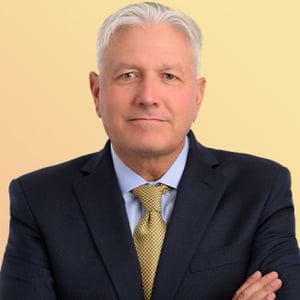
Partner, King & Spalding
A partner in the firm’s Government Advocacy and Public Policy group, J.C. helps companies and trade associations navigate legal, political and regulatory issues commonly associated with doing business in Europe and the United States. He is recognized by clients for his strong, bipartisan relationships with Members of Congress, State Attorneys General, congressional staff and senior government officials across key regulatory and executive branch agencies. He is trusted for his ability to rapidly synthesize complex information and communicate its strategic implications to policymakers and senior institutional stakeholders as well as his candid evaluation of options and potential for success.
As former counsel to the Senate Banking Committee, J.C has developed a deep expertise in financial services, fintech, and emerging technology policy. He has a proven track record of influencing federal legislation, regulatory frameworks, and agency rulemaking impacting digital assets, banking, payments, and technology platforms. J.C. regularly interfaces with financial regulators on a wide array of policy and institution-specific issues, and as co-chair of the firm’s State Attorneys General practice, delivers results on high-impact legal work at the intersection of law, policy and regulation.
J.C. is skilled in developing and executing comprehensive advocacy strategies, shaping legislative language, and positioning clients to successfully navigate complex and evolving policy environments at the federal, state and international levels. As President of the Parliamentary Intelligence-Security Forum, he has briefed policymakers throughout Europe, Africa, Latin America, and the Indo-Pacific. JC also advises international clients seeking to invest, expand, or operate in the United States.
President George W. Bush appointed J.C. to a six-year term as U.S. representative to the World Bank’s International Centre for Settlement of Investment Disputes (ICSID). Mayor Muriel Bowser also appointed J.C. to the District of Columbia; Board of Elections, in which capacity he also served on the U.S. Election Assistance Commission Standards Board. He is currently chairman of the Board of Visitors of The Catholic University Columbus School of Law and President of the Parliamentary Intelligence-Security Forum, where he is a regular speaker on cryptocurrency, artificial intelligence and critical minerals.
Earlier in his career, J.C. established the Boggs Scholarship for Public Service at the University of Delaware in honor of his grandfather and namesake, former U.S. Congressman, Senator and Governor of Delaware, J. Caleb Boggs. He has also served on numerous corporate and non-profit boards, including Jobs for Delaware Graduates (Chairman); The Reserve Trust Company (Vice Chairman), Global Center for Social Entrepreneurship Network (Secretary), Republican National Lawyers Association (President), Kimball Union Academy (Chairman of the Committee on Trustees), and AAA Mid-Atlantic.
J.C. enjoys open-water swimming and is member of U.S. Masters Swimming and the historic Serpentine Swimming Club situated in London's Hyde Park. He has competed in swimming events across all 50 states, ten Canadian provinces and around the world.
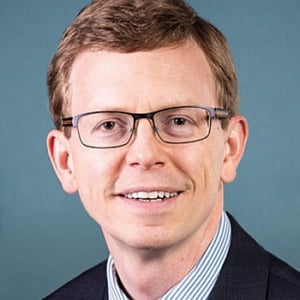
U.S. House of Representatives, At-Large, South Dakota
Dustin Michael Johnson is an American politician serving as the U.S. representative for South Dakota's at-large congressional district since 2019. A member of the Republican Party, he served as South Dakota Public Utilities Commissioner from 2005 to 2011, when he was appointed chief of staff to Governor Dennis Daugaard, a position he held until 2014. Between his state political career and congressional service, Johnson was the vice president of Vantage Point Solutions in Mitchell, South Dakota.
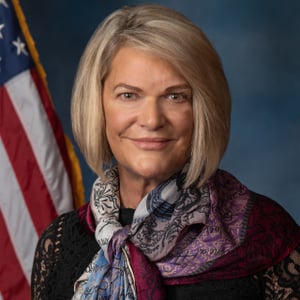
U.S. Senate, Wyoming
Cynthia Lummis was sworn into the United States Senate on January 3, 2021, becoming the first woman to serve as United States Senator from the great State of Wyoming.
Born on a cattle ranch in Laramie County, Senator Lummis has spent her entire career fighting for Wyoming families, communities, businesses and values. From the halls of the Wyoming House to the halls of the U.S. House, her time in public service has always been focused on advocating for Wyoming’s future.
First elected to the U.S. House in 2008, Senator Lummis quickly earned her reputation as a no-nonsense conservative and principled policymaker. She was a founding member of the House Freedom Caucus, a group consisting of the most unflinching conservative Members of the House of Representatives. She fought throughout her tenure in Congress to rein in spending and reduce the federal deficit, working with the bipartisan Committee for a Responsible Federal Budget and ultimately co-sponsoring several bipartisan budget proposals.
In the House of Representatives, Senator Lummis effectively elevated western issues, pushing through the first Interior and Environment (EPA) Appropriations bill to pass the House in seven years under her chairmanship. This marked a significant milestone for the Western Caucus and the rural communities across the West they represent. She also worked to keep public lands open to the public and available for multiple use. She successfully passed the National Forest System Trails Stewardship Act in 2016, a bipartisan effort led by Cynthia to maintain over 157,000 miles of trails within our national forests.
Senator Lummis is a dedicated champion of Wyoming’s mineral and energy resources. In Washington, she fought off attacks from the environmental left while advocating for market opportunities both at home and abroad. She is the proud godmother of the ANSAC Wyoming, a commercial shipping vessel transporting trona from the U.S. to Southeast Asia and is the recipient of the lifetime achievement award from the Washington Coal Club.
Prior to serving in the House of Representatives, Senator Lummis spent eight years as Wyoming State Treasurer and 14 years as a member of the Wyoming State House and Senate. She also worked as general counsel to Wyoming Governor Jim Geringer and Director of the Office of State Lands and Investments, as well as a law clerk at the Wyoming Supreme Court.
After departing U.S. House of Representatives in 2016, Senator Lummis operated her family’s cattle ranches, and the Sweetgrass development in Laramie County, with her brother and sister. She is a three-time graduate of the University of Wyoming in animal science, biology and law. She and her late-husband, Al Wiederspahn, have one daughter, Annaliese, son-in-law Will Cole and grandsons Gus and Al.

Chief Executive Officer, Blockchain Association
Summer Mersinger is CEO of Blockchain Association, where she leads advocacy efforts to advance digital asset innovation and policy in Washington. She previously served as a Commissioner of the Commodity Futures Trading Commission, nominated by President Biden and unanimously confirmed by the Senate. With over 20 years of experience in public policy and government affairs, Summer has held senior roles at the CFTC, on Capitol Hill as Chief of Staff to Senator John Thune, and in the private sector.
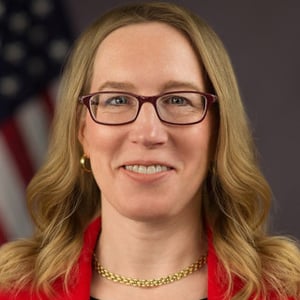
Commissioner, United States Securities and Exchange Commission
Hester M. Peirce was appointed by President Donald J. Trump to the U.S. Securities and Exchange Commission and was sworn in on January 11, 2018.
Prior to joining the SEC, Commissioner Peirce conducted research on the regulation of financial markets at the Mercatus Center at George Mason University. She was a Senior Counsel on the U.S. Senate Committee on Banking, Housing, and Urban Affairs, where she advised Ranking Member Richard Shelby and other members of the Committee on securities issues. Commissioner Peirce served as counsel to SEC Commissioner Paul S. Atkins. She also worked as a Staff Attorney in the SEC’s Division of Investment Management. Commissioner Peirce was an associate at Wilmer, Cutler & Pickering (now WilmerHale) and clerked for Judge Roger Andewelt on the Court of Federal Claims.
Commissioner Peirce earned her bachelor’s degree in Economics from Case Western Reserve University and her JD from Yale Law School.

Professor of Law, University of Michigan Law School
Professor Nicholas Bagley teaches and writes in the areas of administrative law, regulatory theory, and health law. Prior to joining the Law School faculty, he was an attorney with the appellate staff in the Civil Division at the U.S. Department of Justice, where he argued a dozen cases before the U.S. Courts of Appeals and acted as lead counsel in many more. Professor Bagley also served as a law clerk to Justice John Paul Stevens of the U.S. Supreme Court and to the Hon. David S. Tatel of the U.S. Court of Appeals, District of Columbia Circuit. Professor Bagley holds a BA in English from Yale University and received his JD, summa cum laude, from New York University School of Law. Before entering law school, he joined Teach For America and taught eighth-grade English at a public school in South Bronx. Professor Bagley's work has appeared in the Harvard Law Review, the Columbia Law Review, the Georgetown Law Journal, the New England Journal of Medicine, and the Journal of Health Politics, Policy, and Law. In 2012, he was the recipient of the Law School's L. Hart Wright Award for Excellence in Teaching. He is a frequent contributor to The Incidental Economist, a prominent health policy blog.

Director, GW Regulatory Studies Center & Distinguished Professor of Practice, Trachtenberg School of Public Policy & Public Administration, The George Washington University
Susan Dudley is the Founder and Director of the George Washington University Regulatory Studies Center, established in 2009 to raise awareness of regulations’ effects and improve regulatory policy through research, education, and outreach. She is also a distinguished professor of practice in the Trachtenberg School of Public Policy and Public Administration. She is past-president of the Society for Benefit Cost Analysis, a senior fellow of the Administrative Conference of the United States, and on the Regulatory Transparency Project Regulatory Practice Working Group. Her book, Regulation: A Primer, with Jerry Brito, is available on Amazon.com.
From April 2007 through January 2009, Professor Dudley served as the Presidentially-appointed Administrator of the Office of Information and Regulatory Affairs in the U.S. Office of Management and Budget and was responsible for the review of draft executive branch regulations under Executive Order 12866, the collection of federal-government-wide information under the Paperwork Reduction Act, the development and implementation of government-wide policies in the areas of information policy, privacy, and statistical policy, and international regulatory cooperation efforts.
Prior to OIRA, she directed the Regulatory Studies Program at the Mercatus Center at George Mason University, and taught courses on regulation at the George Mason University School of Law. Earlier in her career, Professor Dudley served as an economist at OIRA, as well as the Environmental Protection Agency and the Commodity Futures Trading Commission. She was also a consultant to government and private clients at Economists Incorporated. She holds a Master of Science degree from the Sloan School of Management at MIT and a Bachelor of Science degree (summa cum laude) in Resource Economics from the University of Massachusetts, Amherst.

Professor of Law, University of Michigan Law School
Christopher J. Walker is a Professor of Law at the University of Michigan. Prior to joining Michigan law faculty in 2022, he spent a decade teaching at The Ohio State University Moritz College of Law. He previously clerked for Justice Anthony Kennedy of the U.S. Supreme Court, worked on the Civil Appellate Staff at the U.S. Department of Justice, and served on the Senate Judiciary Committee staff for the Gorsuch Supreme Court confirmation. Professor Walker’s research focuses on administrative law, regulation, and law and policy at the agency level. Outside the law school, he chaired the American Bar Association’s Section of Administrative Law and Regulatory Practice in 2020-21 and served as one of forty Public Members of the Administrative Conference of the United States from 2016-2022, and he continues to serve in both organizations in various capacities. He also works of counsel at the U.S. Chamber Litigation Center. In 2022, he received the Federalist Society’s Joseph Story Award.

Former Acting Assistant Attorney General, United States Department of Justice; Partner, Winston & Strawn LLP
Jonathan “Jon” Brightbill is a trial and appellate lawyer in Winston’s Washington, D.C. office, and a partner in the firm’s Litigation and White Collar, Regulatory Defense, and Investigations Practices. He represents public and private companies, corporate officers, and other individuals across white collar, regulatory defense, and government and internal investigation matters and rulemaking challenges, as well as complex commercial disputes, citizen suits, and class actions. His commercial litigation experience encompasses business disputes, false advertising, consumer protection and fraud, FCA, and extensive class action defense work; antitrust and unfair competition matters; and intellectual property litigation, such as trademarks, patents, and trade secrets.
Jon served as the Nation’s lead environmental civil and criminal enforcement official and litigator, as Acting Assistant Attorney General for the Environment & Natural Resources Division (“ENRD”) of the U.S. Department of Justice (DOJ). Jon led ENRD’s 425 lawyers, overseeing 6,500 active matters and managing an annual budget of more than $150 million. Jon brings highly experienced executive leadership from among the most senior level of DOJ on white collar and regulatory enforcement, as well as on federal policymaking and rulemaking development and challenges. He speaks with authority on government decision-making processes, and the arguments and perspectives that move regulators and enforcers, best advising and positioning clients to deal with challenges.
Jon argued many of the government’s most significant cases during his time with the DOJ. This included the Navigable Waters Protection Rule and Clean Water Rule Repeal (10th Cir., district courts), the Affordable Clean Energy Rule and Clean Power Plan Repeal (D.C. Cir), defense of EPA actions on pesticide tolerances under FIFRA and the FDCA (9th Cir. en banc), among numerous others. Jon represented the United States in trial courts in both enforcement and defensive cases, including federal enforcement action against Jeffrey Lowe and the Tiger King Park, of Netflix fame, securing a first-of-its-kind injunction for violations of the Endangered Species Act and Animal Welfare Act. Jon directed the litigation and briefing of scores of additional federal cases nationwide, covering all of the major environmental and natural resources statutes, such as the Clean Air Act, the Clean Water Act, FIFRA (pesticides), FDCA (food safety), TSCA (toxics), CERCLA (land remediation), RCRA (waste), National Environmental Policy Act, Federal Land Policy and Management Act, and numerous other land- and resource-management statutes.
Jon has unmatched experience litigating legal and technical issues relating to climate change. He argued in the courts of appeals, including the D.C. Circuit, regarding the most significant climate change regulations by EPA, as well as the preemptive scope of the Clean Air Act. Jon also litigated climate change-related credit and trading schemes and international agreements in district court. During Jon’s time in leadership at ENRD, it successfully defeated one of the most wide-ranging lawsuits regarding climate change to date—obtaining a stay pending interlocutory appeal and dismissal just weeks before a scheduled three-month trial on federal government liability for climate change.
An accomplished trial lawyer, prior to working at DOJ, Jon was a partner in the Washington, D.C. office of another global law firm. He not only represents clients in court, but creatively counsels corporations on balancing business needs and realities with a broad range of litigation risks and compliance obligations. Jon is also an Adjunct Professor at Georgetown University Law Center. He served on the American Bar Association’s E-Discovery Working Group for Bankruptcy Practice, and was a frequent lecturer for District of Columbia Bar Association Continuing Legal Education Programs.
Jon served as an appellate clerk for the Honorable D. Brooks Smith, U.S. Court of Appeals for the Third Circuit, after graduating magna cum laude from the Georgetown University Law Center. He worked in state government as an Executive Policy Specialist for air, waste, land remediation, and radiation matters at the Pennsylvania Department of Environmental Protection.

Laurence A. Tisch Professor of Law and Director, Classical Liberal Institute, New York University School of Law; Senior Fellow, The Civitas Institute, University of Texas at Austin
Richard A. Epstein is the inaugural Laurence A. Tisch Professor of Law at NYU School of Law. Prior to his joining the faculty, he was a visiting law professor at NYU from 2007 through 2009. He served as the Peter and Kirstin Bedford Senior Fellow at the Hoover Institution from 2000 to 2024. Since 2024 to the present he is a senior lecturer at the Civitas Institute at the University of Texas—Austin. Epstein is also the James Parker Hall Distinguished Service Professor of Law Emeritus and a senior lecturer at the University of Chicago. His initial law school appointment was at the University of Southern California from 1968 to 1972. Epstein received an LL.D., h.c. from the University of Ghent, 2003. He has been a member of the American Academy of Arts and Sciences since 1985 and was a Senior Fellow of the Center for Clinical Medical Ethics at the University of Chicago Division of Biological Sciences, also from 1983. to 2022 He served as editor of the Journal of Legal Studies from 1981 to 1991, and of the Journal of Law and Economics from 1991-2001. From 2001 to 2010 he was a director of the John M. Olin Program in Law and Economics at the University of Chicago.
His newest book, The Myth of Birthright Citizenship: What the Fourteenth Amendment Really Says was published in 2026 (Encounter Books). Prior to that he has published many books including, The Dubious Morality of the Modern Administrative State (Roman & Littlefield 2020).Earlier he published th Classical Liberal Constitution: The Uncertain Quest for Limited Government (Harvard 2014) iHis previous books include Design for Liberty: Private Property, Public Administration and the Rule of Law (Harvard 2011); The Case Against the Employee Free Choice Act (Hoover 2009); Supreme Neglect: How to Revive the Constitutional Protection of Property Rights (Oxford 2008); Antitrust Decrees in Theory and Practice: Why Less is More (AEI 2007); Overdose: How Excessive Government Regulation Stifles Pharmaceutical Innovation (Yale University Press. 2006); How Progressives Rewrote the Constitution (Cato 2006); Cases and Materials on Torts (Aspen Law & Business; 8th ed. 2004); Skepticism and Freedom: A Modern Case for Classical Liberalism (University of Chicago, 2003); Torts (Aspen Law & Business 1999); Principles for a Free Society: Reconciling Individual Liberty with the Common Good (Perseus Books, 1998): Mortal Peril: Our Inalienable Rights to Health Care (Addison-Wesley, 1997); Simple Rules for a Complex World (Harvard, 1995); Bargaining With the State (Princeton, 1993); Forbidden Grounds: The Case Against Employment Discrimination Laws (Harvard , 1992); Takings: Private Property and the Power of Eminent Domain (Harvard, 1985); and Modern Products Liability Law (Greenwood Press, 1980). He has also edited(with Catherine M. Sharkey) Cases and Materials on the Law of Torts (10th edition 2012).
Professor Epstein has written numerous articles on a wide range of legal and interdisciplinary subjects. He has taught courses in administrative law, antitrust law, civil procedure, communications, constitutional law, contracts, corporations, criminal law, employment discrimination law, environmental law, food and drug law health law and policy, legal history, labor law, property, real estate development and finance, jurisprudence, labor law; land use planning, patents, individual, estate and corporate taxation, Roman Law; torts, and workers' compensation.
Professor Epstein also writes a regular column for Civitas Institute, which also sponsors his podcast, The Libertarian with Charles C.W. Cooke, and Law Talk, with Cooke and John Yoo. He also does a podcast with John Batchelor. And appears regularly on the Freedom File with Judge Andrew Napolitano.

Emmett Visiting Assistant Clinical Professor of Law in Environmental Law, Harvard Law School
Andrew Mergen is a Visiting Assistant Clinical Professor of Law and Faculty Director of the Emmett Environmental Law & Policy Clinic. Prior to joining the Harvard Law School faculty, Andrew Mergen served in the Appellate Section of the Environment & Natural Resources Division (ENRD) at the United States Department of Justice. Professor Mergen began his career at the Justice Department in the Honors Program and concluded his career as Chief of ENRD’s Appellate Section. He has presented oral arguments in all 13 federal courts of appeals, including two en banc courts, and before several state intermediate and supreme courts. He has also worked on over a dozen merits cases in the Supreme Court of the United States. In addition, in 2009, Professor Mergen assisted the Office of White House Counsel on the confirmation of the Honorable Sonia Sotomayor as Associate Justice of the Supreme Court. During his career at the Justice Department, Professor Mergen received the Attorney General’s Award for Distinguished Service three times. He also received ENRD’s Muskee-Chafee Award, honoring his work’s significant contribution to protecting the environment.
Before entering clinical teaching, Professor Mergen taught at several law schools including, Harvard Law School (Advanced Environmental Law), the University of Michigan Law School (Natural Resources Law) and the William S. Richardson School of Law, University of Hawaii-Manoa (Administrative Law). Professor Mergen has written about federal water rights in “A Misplaced Sensitivity: The Draft Opinions in Wyoming v. United States” (68 Colo. L. Rev. 683 (1997), with Sylvia F. Liu); energy development on public lands in “Surface Tension: The Problem of Federal Private Split Estates” (33 Land & Water L. Rev. 419 (1998)); climate change and the Endangered Species Act in “The Role of Climate Change in ESA Listing Decisions” (53 Rocky Mt. Min. L. Fdn. 67 (2016), with Murray Feldman) and the accommodation of Native American sacred sites on federal land in “Finding the Path Forward for Indigenous Sacred and Cultural Spaces on Federal Public Land,” 68 Nat. Resources & Energy L. Inst. 32-1 (2022). Professor Mergen is a graduate of the University of Wisconsin—Madison and the George Washington University Law School.

Robert F. Stanton Professor of Law, University of Maryland Carey School of Law
Robert V. Percival is the Robert F. Stanton Professor of Law and the Director of the Environmental Law Program at the University of Maryland School of Law. He received a B.A. summa cum laude from Macalester College, a J.D. from Stanford Law School and an M.A. in economics from Stanford University. At Stanford Percival was named the Nathan Abbott Scholar for graduating first in his law school class. Following graduation, he served as a law clerk for Judge Shirley M. Hufstedler of the U.S. Court of Appeals for the Ninth Circuit and for U.S. Supreme Court Justice Byron R. White. He joined the Maryland faculty in 1987 after serving as a senior attorney for the Environmental Defense Fund. Percival has served as a visiting professor of law at Harvard Law School, Georgetown University Law Center, the China University of Political Science and Law (Beijing), and Comenius University (Bratislava). He is the principal author of a leading environmental law casebook, now in its 9th edition, and the author of several articles about the Supreme Court and presidential authority over executive agencies. Percival wrote one of the first articles on the propriety of consent decrees to effectuate and enforce federal law “The Bounds of Consent: Consent Decrees, Settlements and Federal Environmental Policymaking,” 1987 Univ. Chic. Leg. F. 327 (1987). He also is the author of the first comprehensive analyses of what the papers of the late Justices Thurgood Marshall and Harry Blackmun reveal about the Supreme Court’s handling of environmental cases (“Environmental Law in the Supreme Court: Highlights from the Blackmun Papers,” 35 ELR 10637 (2005), and “Environmental Law in the Supreme Court: Highlights from the Marshall Papers,” 13 ELR 10606 (Oct. 1993)).

Partner, Simpson Thacher
Based in Washington, D.C. office, David Blass is a Partner in the Firm’s Investment Funds Practice. David is a leading regulatory lawyer in the funds industry and has advised on matters involving innovative registered funds products, Investment Advisers Act compliance, SEC examination and enforcement matters, and broker-dealer regulatory compliance. He is uniquely qualified to provide strategic and regulatory advice on matters involving asset management firms and broker-dealers.
David has extensive knowledge of the regulatory requirements of the asset management industry having served as General Counsel of the Investment Company Institute, the trade association for registered investment funds. He also held senior roles for over a decade at the U.S. Securities and Exchange Commission, most recently as Chief Counsel and Associate Director in the Division of Trading and Markets, where he oversaw broker-dealer regulation and large aspects of FINRA’s regulatory program. David was the Associate General Counsel for the SEC where he was responsible for Dodd-Frank Act implementation, among many other programmatic areas. He also held a senior role in the SEC’s Division of Investment Management, leading the office regulating registered investment advisers, including advisers to private funds.
Chambers Global reports that clients say he is an “excellent regulatory lawyer” who is both “very knowledgeable and easy to work with.” David was notably named “Independent Counsel of the Year” by Fund Intelligence’s Mutual Fund Industry & ETF Awards in 2021.

CEO, Institutional Limited Partners Association
As Acting CEO for the Institutional Limited Partners Association (ILPA), Jennifer Choi directs the association's engagement with external industry stakeholders to inform and enhance ILPA's education, research, membership and advocacy platforms. Ms. Choi also leads the implementation of ILPA's responses to emerging issues impacting the asset class, including efforts to establish and promote industry best practices.
Prior to joining the ILPA, Ms. Choi served as Vice President of Industry and External Affairs for the Emerging Markets Private Equity Association (EMPEA), where she led the association's member and industry engagement activities, including efforts to encourage policy frameworks that support the growth of the asset class. As EMPEA's Research Director, she built the industry's first global database of private equity activity in the emerging markets. A frequent speaker and commentator on the industry, Ms. Choi also oversaw the association's media communications and global institutional partnerships. Previously, Ms. Choi was a consultant with Boston-based Stax Inc., leading due diligence engagements and providing advisory services for the U.S. private equity and venture capital industry.
Jennifer holds a Masters in Law and Diplomacy from the Fletcher School at Tufts University and a B.A. summa cum laude in Economics and Political Science from Augustana College.

Managing Director and Associate General Counsel, Head of Asset Management Group, Securities Industry and Financial Markets Association (SIFMA)
Ms. Keljo is Managing Director, Associate General Counsel and Head of Asset Management Group for SIFMA, where she serves as counsel and staff for many of AMG’s workstreams. In particular, Ms. Keljo focuses on systemic risk & prudential regulation for asset managers, fixed income market structure, and ETF regulation. She also focuses on the U.S. impact of many European regulations, including the cross-border implications of Brexit, MiFID II, PRIIPs, and sustainable finance/ESG initiatives.
Ms. Keljo joined SIFMA AMG in October 2014 from Squire Patton Boggs, where she advised financial institutions, corporations, and asset managers on a wide range of financial services legislative and regulatory developments.
Ms. Keljo has extensive experience representing asset managers before Congress, the Commodity Futures Trading Commission (CFTC), the Securities and Exchange Commission (SEC), the U.S. Treasury Department, and other regulatory agencies that promulgate and implement financial regulation. Ms. Keljo began her career working for a major political party as a campaign manager based primarily in northwest Pennsylvania.
Ms. Keljo is a graduate of the University of Michigan Law School and Mercyhurst College.
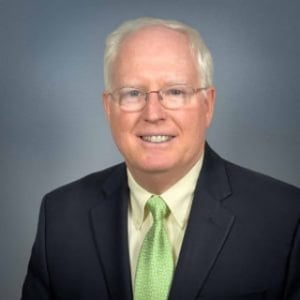
Senior Litigation Counsel, New Civil Liberties Alliance (NCLA)
Russ Ryan is a nationally recognized attorney and thought leader with particular interest in the regulatory and enforcement apparatus of the Securities and Exchange Commission (SEC) and other quasi-governmental regulators overseen by the SEC, including the Public Company Accounting Oversight Board (PCAOB), the Financial Industry Regulatory Authority (FINRA), and the various securities industry self-regulatory organizations (SROs). He has decades of experience defending private citizens and businesses caught in the crosshairs of these and other financial regulators.
Russ joined NCLA from the law firm King & Spalding, where he was a partner for 15 years. He left the firm from 2015 to 2018 to serve as Senior Vice President and Deputy Chief of Enforcement at FINRA. Earlier in his career he served for two years as law clerk to a federal judge in the Eastern District of New York and for 10 years as a staff attorney and Assistant Director in the SEC’s Division of Enforcement. He also taught for several semesters as an adjunct professor at the Antonin Scalia Law School at George Mason University.
Russ is a prolific speaker and writer on financial regulation and enforcement. He has spoken at dozens of professional conferences and published scores of commentaries and academic articles, including numerous op-eds in The Wall Street Journal, The Washington Post, Bloomberg, Law360, and elsewhere. His regular column on LinkedIn is called “On SECond Thought: Unconventional Perspectives on Securities Enforcement.”
Russ earned his undergraduate degree from Boston College and his law degree from St. John’s University School of Law, where he was an executive editor of the law review.
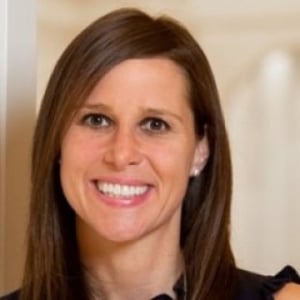
Chief Legal Officer, IEX Group, Inc.
Rachel Barnett oversees all legal and compliance matters for IEX Group, Inc. She is an experienced lawyer who has held a wide variety of roles as in-house General Counsel and within private practice.
Rachel joined IEX from Brooks Brothers where she served as General Counsel and Secretary overseeing its global legal affairs. She played a critical role selling America's oldest retail brand after it had filed for bankruptcy during the COVID pandemic. Before Brooks Brothers in 2019, Rachel was a member of the Board of Directors and General Counsel of Travelzoo, a publicly traded global media company and online marketplace for travel deals and experiences.
Prior to going in-house, Rachel worked as an attorney at Skadden, Arps, Slate, Meagher and Flom, LLP where she specialized in litigation matters, including merger and acquisition litigation, shareholder derivative lawsuits and securities fraud class actions at both the trial court and appellate levels.
Rachel is a current Lecturer in Law at Columbia Law School where she also earned her Juris Doctor degree. She is member of the bar in both New York and Delaware and received a Bachelor of Science degree from Cornell University.
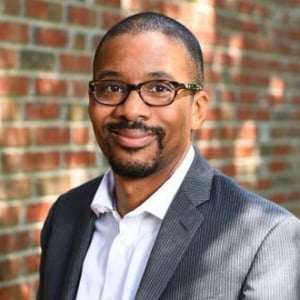
Agnes Williams Sesquicentennial Professor of Financial Technology, Georgetown Law
Chris Brummer is the Agnes Williams Sesquicentennial Professor of Financial Technology at Georgetown University Law Center and the Faculty Director of Georgetown’s Institute of International Economic Law. As a professor, advisor, board member and advocate, Chris has lent his expertise to policymakers, founders, startups, and nonprofits around the world grappling with some of the most challenging puzzles facing innovation, regulation, and inclusion. His work has been featured in The New York Times, CNN, Marketwatch, Fast Company, The Wall Street Journal, Bloomberg, Yahoo Money, Roll Call, Cointelegraph, and Coin Desk, among others.
Chris’s public service and volunteer work extend across government. In addition to serving as a member of the Commodity Futures Trading Commission’s Subcommittee on Virtual Currencies and the Consultative Working Group for the European Securities and Markets Authority’s Financial Innovation Standing Committee, Chris has served as a member of the National Adjudicatory Council of FINRA. Most recently, he served as a member of the Biden-Harris Transition team, assisting in leading work streams relating to financial technology, racial equity and systemic risk for the Treasury ART. He is currently the Co-Chair of CNAS Task Force on FinTech, Crypto, and National Security.
A frequent speaker and lecturer, Chris was asked to deliver the keynote speech for the SEC’s Black History celebration in 2021, FinCEN’s Black History celebration in 2022, and the Office of the Comptroller of the Currency’s celebration in 2023.
Chris graduated summa cum laude from Washington University in St. Louis, holds a J.D. with honors from Columbia Law School and a Ph.D. from the University of Chicago. He is the author or editor of several books, including Cryptoassets: Legal, Regulatory and Monetary Perspectives and Fintech Law in a Nutshell.
Chris is the host of CQ Roll Call’s Fintech Beat podcast, and founder of Washington DC’s Fintech Week, an annual free event for the public.
Partner, Foley & Lardner LLP
Patrick Daugherty is a senior corporate and securities law partner of Foley & Lardner LLP, based in Chicago. He also is an adjunct professor of Cornell Law School, where he teaches in residence each Fall Term.
Mr. Daugherty is a member of the Bar in New York, the District of Columbia, North Carolina, Michigan and Illinois. Credentialing organizations have named him “Lawyer of the Year” in both Michigan (2007) and Illinois (2022). A graduate of Northwestern University and of Cornell Law School (Class of 1981), he clerked for SDNY Chief Judge Lloyd F. MacMahon for a year before entering private practice. Mr. Daugherty also served as Counsel to SEC Commissioner Edward H. Fleischman in Washington, D.C., from 1986 to 1989. An Emeritus Member of the American Law Institute, he is the author, co-author or editor of several books and many articles on securities regulation and new financial products.
Mr. Daugherty believes that he was the first lawyer inside the SEC to join the Federalist Society when he became a member in the late 1980s. A mainstay of the Chicago Lawyers Chapter, at the national level of the Society he serves on the Executive Committee for the Financial Services & E-Commerce Practice Group.
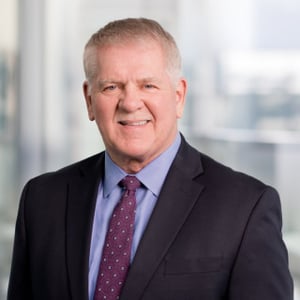
Partner, WilmerHale
William McLucas joined the firm after serving for more than eight years as Director of Enforcement for the Securities and Exchange Commission—longer than any other Enforcement Division Director in Commission history. He represents public companies, investment banks, accounting firms and advisors to mutual funds facing a variety of corporate and market crises, as well as Securities and Exchange Commission investigations.
In 1977, Mr. McLucas joined the Securities and Exchange Commission's Division of Enforcement. He led the Division's Staff in numerous high-profile investigations and landmark enforcement actions, including hundreds of insider trading cases and numerous inquiries and proceedings involving public companies, accounting firms, investment banks, and participants in the municipal securities markets.
In addition, Mr. McLucas has overseen numerous audit committee and special committee inquiries, and has also represented numerous corporate executives and directors in connection with Securities and Exchange Commission investigations.
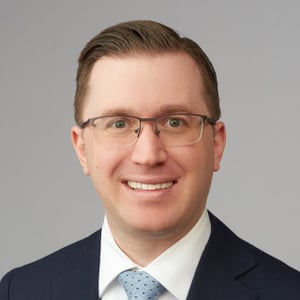
Associate, Gibson, Dunn & Crutcher
Brian A. Richman is an associate in the Washington, D.C. office of Gibson, Dunn & Crutcher. He practices in the firm’s Litigation Department, and is a member of the Appellate and Constitutional Law and Administrative Law and Regulatory practice groups.
Mr. Richman represents clients in high-stakes appellate, administrative law, and litigation matters. His practice includes litigating cutting-edge constitutional and administrative law issues, challenging agency rulemakings, and defending against government enforcement actions, along with other complex litigation matters. He has extensive experience in the financial services sector.
Before joining the firm, Mr. Richman clerked for Judge Stephen F. Williams of the U.S. Court of Appeals for the District of Columbia Circuit. He also practiced at a New York law firm, where he focused on commercial litigation and white collar defense and investigations. Mr. Richman is a former securities compliance officer at Goldman Sachs, and has handled numerous regulatory matters involving the SEC, CFTC, FERC, FINRA, and the Federal Reserve.
Mr. Richman received his JD from Yale Law School, where he was a lead editor on the Yale Journal on Regulation, and a semi-finalist in both the Morris Tyler Moot Court of Appeals and Thomas Swan Barristers’ Union Mock Trial Competition. In 2011, Mr. Richman graduated from Cornell University with a B.S., with honors, in Policy Analysis and Management.
Mr. Richman is admitted to practice in New York and the District of Columbia. He is also admitted to the United States Courts of Appeals for the Second and D.C. Circuits, and the U.S. District Courts for the Southern and Eastern Districts of New York.
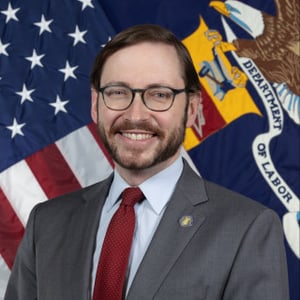
Solicitor, U.S. Department of Labor
Jonathan Berry is Solicitor at the U.S. Department of Labor, in service to President Trump’s agenda to put American workers first. He leads the Department’s lawyers in advising the Secretary and agency leadership on all aspects of law and in representing the Department in court. He was previously managing partner at Boyden Gray PLLC, where he provided strategic counsel and litigated on issues at the intersection of law, politics, and public policy. Earlier, he headed the regulatory office at Labor, and also served at the Department of Justice, in the first Trump Administration. Mr. Berry served as a law clerk to Judge Jerry E. Smith of the United States Court of Appeals for the Fifth Circuit, and to Associate Justice Samuel A. Alito, Jr., of the Supreme Court of the United States.

Founder & CEO, Edelson PC
Jay Edelson is the founder of Edelson PC. He is considered one of the nation’s leading plaintiff’s lawyers, with his firm having helped secure over $45 billion in settlements and verdicts on behalf of classes, individuals, and governmental entities. Law360 described Jay as a “Titan of the Plaintiff’s Bar.” Jay has been recognized as one of “America’s top trial lawyers” in the mass action arena. LawDragon named him one of the top Plaintiff Financial Lawyers in the country. He has been called “probably the best known, and most innovative, consumer privacy lawyer on the planet,” with he and his firm holding records for the largest trial verdict in a consumer privacy case ($925m), the largest consumer privacy settlement ($650m) and the largest TCPA settlement ($76m).
Jay has been appointed to represent state and local regulators on some of the largest issues of the day, ranging from opioids suits against pharmaceutical companies, to environmental actions against polluters, to breaches of trust against energy companies and for-profit hospitals, to privacy suits against Google, Facebook, and others.
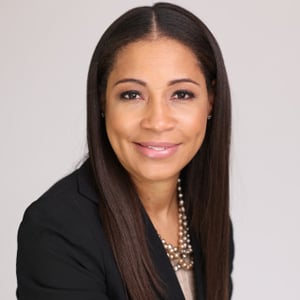
Professor of Law, Rutgers Law School
Stacy Hawkins is a frequent writer and sought-after speaker on the issue of employment law and diversity. She’s served on the Philadelphia Diversity Law Group and the Pennsylvania Bar Association Commission on Women in the Profession Diversity Task Force. She worked as a senior labor and employment attorney and as the director of diversity for major law firms.

Judge, United States Court of Appeals, District of Columbia Circuit
Judge Katsas was appointed to the D.C. Circuit in December 2017. He graduated from Princeton University and Harvard Law School, where he was an executive editor on the Harvard Law Review. Between 1989 and 1992, he served as a law clerk to Judge Edward Becker on the Third Circuit, to then-Judge Clarence Thomas on the D.C. Circuit, and to Justice Thomas on the Supreme Court. Between 1992 and 2001, he was an associate and then partner in the Washington office of Jones Day, where he specialized in appellate and complex civil litigation. Between 2001 and 2009, he served in many senior positions in the Department of Justice, including as Assistant Attorney General for the Civil Division and as Acting Associate Attorney General. In 2009, he returned to Jones Day. From January to December 2017, he served as Deputy Assistant to the President and Deputy Counsel to the President.
Before joining the bench, Judge Katsas argued more than 75 appeals, including three cases in the Supreme Court, 13 cases in the D.C. Circuit, and cases in every other federal court of appeals. By appointment of the Chief Justice, he served on the Advisory Committee on Appellate Rules from 2013 to 2017. In 2016, he was elected to membership in the American Academy of Appellate Lawyers.

Partner, Gibson Dunn & Crutcher
Jason C. Schwartz is a litigation partner in the Washington, D.C. office of Gibson Dunn, co-chair of the Labor & Employment Practice Group, General Counsel of the law firm and a member of the firm’s Executive Committee. Jason was recognized as an MVP in employment law five times, awarded by Law360 to “attorneys whose achievements in major litigation or transactions have set a new standard for accomplishment in corporate law.” Law360 referred to Jason as “an expert dismantler of worker class actions.”
Jason is ranked in Band 1 in Labor & Employment by Chambers USA, which stated, “He is a whip-smart, results-oriented and zealous advocate who is really committed to the client. His judgment is impeccable.” According to Chambers USA, “[c]lients note: He’s an excellent litigator with a good sense of the client’s needs in a business environment. He’s just a pleasure to work with. He’s disciplined, a great writer and gets great results.” Jason has been recognized as a Top 20 Labor & Employment Litigator in the U.S. by Benchmark Litigation; on the Top 100 list of the Nation’s Most Powerful Employment Attorneys by Human Resource Executive magazine; as a Top Lawyer in Employment Defense by Washingtonian Magazine; as a Leading Lawyer in Labor & Employment Disputes by The Legal 500 US; by Lawdragon 500 Leading Corporate Employment Lawyers for Labor & Employment (Litigation); in The Best Lawyers in America in the Employment Law-Management category; as a Super Lawyer by Washington, D.C. Super Lawyers; and as an Am Law Litigation Daily “Litigator of the Week” for his win in an independent contractor misclassification/wage-and-hour class action. He is a Fellow of the College of Labor & Employment Lawyers.
The practice group Jason co-leads was named by The American Lawyer as the Labor & Employment Litigation Department of the Year in its most recent competition. The American Lawyer noted, “with novel labor and employment issues swirling, Gibson Dunn’s litigators set standards and settle the law,” and that a case “typical for Gibson Dunn’s labor and employment team” is “high-profile,” “cutting-edge,” and “a victory.” The group was also recognized ten times as a Law360 Employment Practice Group of the Year and won The National Law Journal’s D.C. Labor & Employment Litigation Department of the Year competition for the last seven years in a row.
Jason’s practice includes sensitive workplace investigations, high-profile trade secret and non-compete matters, wage-hour and discrimination class actions, Sarbanes-Oxley and other whistleblower protection claims, executive and other significant employment disputes, labor union controversies, and workplace safety litigation.
Recent representative matters include:
Jason has also successfully tried several sensitive whistleblower matters for major national employers, and he prevailed in a precedent-setting Labor Department appeal of one of the first Sarbanes-Oxley whistleblower cases to proceed to trial. He prevailed for Enterprise Rent-A-Car in a case of first impression in which the U.S. Court of Appeals for the Third Circuit created a new joint employer test (the Enterprise test) and affirmed summary judgment for a parent corporation in a series of wage-hour class actions, defeating the plaintiffs’ effort to form a nationwide class (In re Enterprise Rent-A-Car Wage & Hour Employment Practices Litig. (3rd Cir. 2012)). In another case of first impression, he successfully argued in the Utah Supreme Court against the recognition of a tort for spoliation of evidence. In addition, he served as lead trial counsel for a retailer in a highly-publicized OSHA enforcement action relating to crowd control at a day-after-Thanksgiving sale.
Jason also has significant experience in administrative law and rulemakings. He served as counsel to the Fair Labor Standards Reform Coalition, and he played a leading role in preparing comments on behalf of the business community relating to the U.S. Department of Labor’s overtime exemption regulations.
Jason served for many years as the Secretary of the Retail Litigation Center, and he testified before Congress regarding OSHA enforcement programs on behalf of the U.S. Chamber. He frequently speaks and writes on employment law and trade secret related topics. He is the co-author of the treatise Whistleblower Law: A Practitioner’s Guide, published by American Lawyer Media/Law Journal Press, and he previously authored the annual “Trade Secrets Litigation Round-Up” published by Bloomberg BNA.
Jason earned his law degree magna cum laude from Georgetown University Law Center, where he was elected to the Order of the Coif and received the George Brent Mickum III Prize and the Charles A. Keigwin Award for the best academic record in first year courses. From 1995 to 1996, he worked as a Legislative Assistant to Congressman Jon D. Fox. Jason received a B.A. degree in international affairs cum laude in 1994 from The George Washington University.
Jason is admitted to practice in the District of Columbia, Virginia and Maryland, as well as in numerous federal courts. He served for many years as an officer and board member of the Charles E. Smith Jewish Day School, currently serves as a member of the Washington Lawyers Committee of the U.S. Holocaust Memorial Museum, and provides pro bono employment counsel to numerous community organizations.
Partner, King & Spalding
A partner in the firm’s Government Advocacy and Public Policy group, J.C. helps companies and trade associations navigate legal, political and regulatory issues commonly associated with doing business in Europe and the United States. He is recognized by clients for his strong, bipartisan relationships with Members of Congress, State Attorneys General, congressional staff and senior government officials across key regulatory and executive branch agencies. He is trusted for his ability to rapidly synthesize complex information and communicate its strategic implications to policymakers and senior institutional stakeholders as well as his candid evaluation of options and potential for success.
As former counsel to the Senate Banking Committee, J.C has developed a deep expertise in financial services, fintech, and emerging technology policy. He has a proven track record of influencing federal legislation, regulatory frameworks, and agency rulemaking impacting digital assets, banking, payments, and technology platforms. J.C. regularly interfaces with financial regulators on a wide array of policy and institution-specific issues, and as co-chair of the firm’s State Attorneys General practice, delivers results on high-impact legal work at the intersection of law, policy and regulation.
J.C. is skilled in developing and executing comprehensive advocacy strategies, shaping legislative language, and positioning clients to successfully navigate complex and evolving policy environments at the federal, state and international levels. As President of the Parliamentary Intelligence-Security Forum, he has briefed policymakers throughout Europe, Africa, Latin America, and the Indo-Pacific. JC also advises international clients seeking to invest, expand, or operate in the United States.
President George W. Bush appointed J.C. to a six-year term as U.S. representative to the World Bank’s International Centre for Settlement of Investment Disputes (ICSID). Mayor Muriel Bowser also appointed J.C. to the District of Columbia; Board of Elections, in which capacity he also served on the U.S. Election Assistance Commission Standards Board. He is currently chairman of the Board of Visitors of The Catholic University Columbus School of Law and President of the Parliamentary Intelligence-Security Forum, where he is a regular speaker on cryptocurrency, artificial intelligence and critical minerals.
Earlier in his career, J.C. established the Boggs Scholarship for Public Service at the University of Delaware in honor of his grandfather and namesake, former U.S. Congressman, Senator and Governor of Delaware, J. Caleb Boggs. He has also served on numerous corporate and non-profit boards, including Jobs for Delaware Graduates (Chairman); The Reserve Trust Company (Vice Chairman), Global Center for Social Entrepreneurship Network (Secretary), Republican National Lawyers Association (President), Kimball Union Academy (Chairman of the Committee on Trustees), and AAA Mid-Atlantic.
J.C. enjoys open-water swimming and is member of U.S. Masters Swimming and the historic Serpentine Swimming Club situated in London's Hyde Park. He has competed in swimming events across all 50 states, ten Canadian provinces and around the world.

Partner, O’Melveny & Myers
Brian P. Brooks is the Managing Partner of Valor Capital Group. He has served as CEO of the Bitfury Group and CEO of digital asset exchange and marketplace Binance.US.
Mr. Brooks became Acting Comptroller of the Currency upon the resignation of the 31st Comptroller of the Currency Joseph M. Otting as a result of his designation as First Deputy Comptroller by Treasury Secretary Steven T. Mnuchin pursuant to his authority under 12 USC § 4.
As Acting Comptroller of the Currency, Mr. Brooks was the administrator of the federal banking system and chief officer of the Office of the Comptroller of the Currency (OCC). The OCC supervises nearly 1,200 national banks, federal savings associations, and federal branches and agencies of foreign banks that conduct approximately 70% of all banking business in the United States. The mission of the OCC is to ensure that national banks and federal savings associations operate in a safe and sound manner, provide fair access to financial services, treat customers fairly, and comply with applicable laws and regulations.
The Comptroller also serves as a director of the Federal Deposit Insurance Corporation and a member of the Financial Stability Oversight Council and the Federal Financial Institutions Examination Council.
Prior to becoming Acting Comptroller, Mr. Brooks served as Senior Deputy Comptroller and Chief Operating Officer. In this role, he oversaw OCC bank supervision, bank supervision policy, economics, supervisory system and analytical support, systemic risk identification support and specialty supervision, and innovation. He also served as a member of the OCC's Executive Committee and was the Chair of the Technology and Systems Subcommittee, since joining the agency in April 2020.
Prior to joining the OCC, Mr. Brooks served as Chief Legal Officer of Coinbase Global, Inc., where he headed the legal, compliance, audit, investigations, and government relations functions for the company, which served 20 million customers. He held this position since September 2018.
From 2014-2018, Mr. Brooks served as Executive Vice President, General Counsel, and Corporate Secretary of the $3.2 trillion Fannie Mae. Prior to joining Fannie Mae, he served as a Vice Chairman of OneWest Bank, N.A., from 2011 to 2014. Prior to joining OneWest, he served managing partner of the Washington, D.C. office of the global law firm O'Melveny & Myers LLP, where he also served as chair of the firm's financial services practice group. Prior to joining the OCC, Mr. Brooks also served on the Boards of Directors of Avant, Inc. and Fannie Mae, and also served as an advisor to a number of technology startups.
Mr. Brooks holds a bachelor’s degree from Harvard University in government and a law degree from the University of Chicago.
Partner, Foley & Lardner LLP
Patrick Daugherty is a senior corporate and securities law partner of Foley & Lardner LLP, based in Chicago. He also is an adjunct professor of Cornell Law School, where he teaches in residence each Fall Term.
Mr. Daugherty is a member of the Bar in New York, the District of Columbia, North Carolina, Michigan and Illinois. Credentialing organizations have named him “Lawyer of the Year” in both Michigan (2007) and Illinois (2022). A graduate of Northwestern University and of Cornell Law School (Class of 1981), he clerked for SDNY Chief Judge Lloyd F. MacMahon for a year before entering private practice. Mr. Daugherty also served as Counsel to SEC Commissioner Edward H. Fleischman in Washington, D.C., from 1986 to 1989. An Emeritus Member of the American Law Institute, he is the author, co-author or editor of several books and many articles on securities regulation and new financial products.
Mr. Daugherty believes that he was the first lawyer inside the SEC to join the Federalist Society when he became a member in the late 1980s. A mainstay of the Chicago Lawyers Chapter, at the national level of the Society he serves on the Executive Committee for the Financial Services & E-Commerce Practice Group.
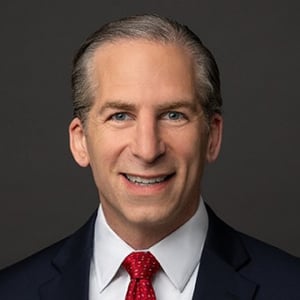
Partner, Cahill Gordon & Reindel LLP; Special Professor of Law, Maurice A. Dean School of Law, Hofstra University
Gary E. Kalbaugh is a nationally recognized leader in commodities, futures, and derivatives law.
Gary is a partner in the New York office of Cahill Gordon & Reindel LLP as well as a Special Professor of Law at the Maurice A. Deane School of Law at Hofstra University, where he teaches derivatives law and banking law.
A preeminent authority in the derivatives field, Gary is the author of the principal treatise Derivatives Law and Regulation (3rd ed. 2021) and serves as Editor-in-Chief of the Futures and Derivatives Law Report, the foremost industry publication. He is a past chair of the New York City Bar Association’s Committee on the Regulation of Futures and Derivatives and has over 15 years of experience as a professor teaching derivatives and banking law.
Gary is the leading derivatives lawyer in the digital assets space, and one of few to truly understand the technical side of emerging financial technology. He serves on the CFTC’s Future of Finance Subcommittee, reflecting his recognized leadership at the intersection of financial regulation and emerging technologies. A frequent speaker, writer, and commentator on derivatives, banking law, artificial intelligence, and digital assets regulation, he has served as conference co-chair for the American Bar Association’s “Artificial Intelligence and Derivatives Market” conference and regularly speaks at major industry conferences on cutting-edge issues in financial regulation and technology. Gary is sought after as a thought leader on the evolving landscape of digital asset regulation and the regulatory implications of AI in financial markets.
At ING, Gary served as Deputy General Counsel and Director, where he chaired swap dealer and security-based swap dealer regulatory committees and provided strategic leadership on U.S., European, and other regulations impacting the organization. He had global responsibility for U.S. derivatives regulatory issues and maintained strong relationships with regulators. Gary also co-developed ING legal’s global artificial intelligence training program and was responsible for U.S. regulatory issues relating to ING’s blockchain-based pilot programs and crypto initiatives.
Previously, Gary served as a lecturer-in-law at Columbia Law School and held senior roles at WestLB, where he was executive director, counsel, and chief U.S. data protection officer and chaired the global Dodd-Frank and underwriting committees. He began his career as an associate at a notable international firm.
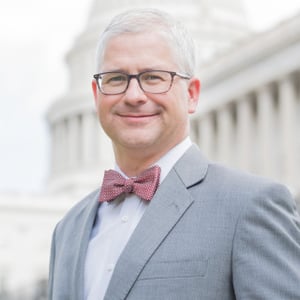
United States Representative, North Carolina's 10th District
Congressman Patrick McHenry is serving his tenth term as the representative for North Carolina's 10th Congressional District which comprises all or parts of nine counties in North Carolina, from the suburbs of Charlotte on Lake Norman to Pisgah National Forest in Burke County.
In the 118th Congress, Congressman McHenry was elected as the Chairman of the House Financial Services Committee, a committee he has served on since he was elected to Congress. As Chairman, he will continue advocating for innovative solutions that increase access to banking services and credit for American families and small businesses.
Prior to serving as the Chairman, Congressman McHenry was elected as the Republican Leader at the beginning of the 116th Congress. He also served as Vice Chairman of the House Financial Services Committee, a position he was appointed to at the beginning of the 114th Congress by then Chairman Jeb Hensarling (TX-05).
In 2015, Congressman McHenry was selected by then House Majority Whip Steve Scalise (LA-01) to be the Chief Deputy Whip. As Chief Deputy Whip, Congressman McHenry directly assisted Majority Whip Scalise by building consensus for the conservative policy agenda of the House Republican Conference. One of his proudest accomplishments as Chief Deputy Whip was the passage of the Tax Cuts and Jobs Act, which helped to fix our nation’s broken tax code and provided much-needed tax relief to American families and businesses.
During the 113th Congress, Congressman McHenry served as Chairman of the House Financial Services Committee’s Oversight and Investigations Subcommittee. In this role, he provided oversight of the Federal Reserve, the Treasury Department, the Securities and Exchange Commission, and other federal financial regulators. Congressman McHenry was previously a member of the House Committee on Oversight and Government Reform.
In addition to his leadership roles on the Financial Services Committee, Congressman McHenry has successfully passed important legislation into law that helps entrepreneurs and startup investing. In the 114thCongress, Congressman McHenry authored the “RAISE Act” (Reforming Access for Investments in Startup Enterprises), which was signed into law by President Obama, providing the means for startup employees to sell their stock options to private investors.
Additionally, Congressman McHenry authored the primary legislation to legalize equity-based crowdfunding in the United States. The crowdfunding language he first authored in 2011 was eventually included in the JOBS Act which President Obama signed into law in April 2012. In recognition of his work supporting crowdfunding, Congressman McHenry was presented with the 2013 “Crowdfunding Visionary Award” by the Global Crowdfunding Convention. Congressman McHenry was also awarded the Crowdfunding Leadership Award by the University of California at Berkeley Fung Institute’s Program for Innovation in Entrepreneurial Finance in 2013.
Congressman McHenry’s interest in crowdfunding and capital formation more broadly developed as a child, when his father attempted to grow a small business but struggled for financing. It was this experience—and the lack of small business financing in rural western North Carolina—that drove Congressman McHenry to become a leader on crowdfunding, capital formation, and other forms of disruptive finance. Recently this has expanded to encompass fintech as he works with industry leaders to discover innovative ways to combine finance and technology with the goal of expanding access to capital for America’s entrepreneurs and small businesses.
Throughout his career, Congressman McHenry has been a vocal and effective advocate for the men and women who wear the uniform of our country. He received awards from the North Carolina Chapters of the American Legion and Marine Corps League for his extensive work in bringing a veterans’ health care clinic to his district after nearly two decades of delay. The National Guard presented Patrick McHenry with the Charles Dick Medal of Merit for his exceptional service to the North Carolina National Guard.
Congressman McHenry has been recognized as a leader of the conservative movement in America. Having never voted for a tax increase in his career, Congressman McHenry is continually recognized as a “Hero of the Taxpayer” by Americans for Tax Reform.
Congressman McHenry is the recipient of several additional awards including: the National Association of Manufacturing’s “Manufacturing Legislative Excellence” Award, the Small Business and Entrepreneurship Council’s “Small Business Champion” Award, the U.S. Chamber of Commerce’s “Spirit of Enterprise” Award, the 60 Plus Association’s “Guardian of Seniors’ Rights” Award, the Family Research Council’s “True Blue” Award, and Citizens Against Government Waste’s “Taxpayer Hero” Award. In 2009 he was recognized by Time Magazine as one of the “40 Under 40,” a list of rising stars in American politics.
Most importantly, Congressman McHenry continues to listen to the voters of the 10th District and act as their voice in Washington. His main focus is to provide the highest level of constituent services at home in western North Carolina.
Prior to being elected to Congress in 2004 at the age of 29, Congressman McHenry represented the 109thDistrict in the North Carolina House of Representatives. He also served as Special Assistant to the Secretary of the U.S. Department of Labor, a post he was appointed to by President George W. Bush.
Congressman McHenry is a graduate of Ashbrook High School in Gastonia, N.C. and Belmont Abbey College, where he earned a Bachelor of Arts in History. Congressman McHenry and his wife Giulia live in Denver, N.C. and worship at Holy Spirit Church. They are the parents of two daughters, Cecelia Rose and Therese Anne (who goes by Rese), and one son, Peregrine Callan (who goes by Perry).
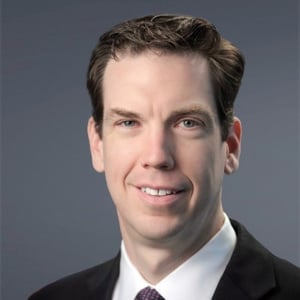
Partner, Fusion Law, PLLC
Paul is the founding partner of Fusion Law, PLLC. He has extensive experience with state, federal, and global regulators building coalitions and implementing policies to promote innovation in financial services. He is responsible for designing and implementing the first state (Arizona) and federal (CFPB) FinTech sandboxes in the United States. He also designed the CFPB no-action letter and trial disclosure policies. He helped found the first global regulatory innovation coalition (Global Financial Innovation Network) and led the founding of the first U.S. regulatory innovation coalition (American Consumer Financial Innovation Network). He served on the Financial Stability Oversight Council subcommittee on digital assets. He also has drafted state-level laws on blockchain and utility tokens.
Paul also has significant enforcement and litigation experience. He led many multi-state consumer protection enforcement matters as Civil Litigation Division Chief at the Arizona Attorney General’s Office.
Prior to his government service, Paul practiced law in the areas of securities litigation and transactional work for approximately six years at two well-known law firms. He also clerked on the U.S. Court of Appeals for the Fourth Circuit.

Chief Legal Officer, Coinbase
Paul Grewal is the Chief Legal Officer of Coinbase Global, Inc., where he is responsible for Coinbase’s legal, compliance, global intelligence and government relations groups. Before joining Coinbase, Paul was Vice President and Deputy General Counsel at Facebook and served as United States Magistrate Judge for the United States District Court for the Northern District of California. Paul was previously a partner at Howrey LLP . He received his JD from the University of Chicago Law School and his SB from MIT.
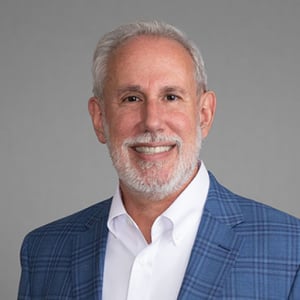
Partner, Brown Rudnick LLP
Stephen Palley is a litigation partner and co-chair of Brown Rudnick’s Digital Commerce group. Stephen is a seasoned litigator with over 20 years of extensive courtroom experience litigating and trying complex commercial matters. He has deep technical and U.S. regulatory knowledge, particularly in the digital asset space, and assists clients working on the frontiers of technology, including on deal work for blockchain and other technology enterprises. He is also a fellow of the American College of Coverage Lawyers, and uses his insurance knowledge and experience to advise clients on insurance coverage matters related to technology and other risks. Stephen has written extensively and been quoted widely on legal issues arising from the use of Blockchain technology, with appearances in both print and television media. He is an editor of the International Journal of Blockchain Law (IJBL), a law journal launched in November 2021 to help non-legal communities better understand Blockchain applications and digital assets. Before joining Brown Rudnick, Stephen founded his prior law firm’s Technology, Media and Distributed Systems Practice Group in 2017, which he also chaired. He serves as an outside general counsel to technology and media startups and as a trusted advisor to established businesses across a range of industries, with a focus on securities and financial regulatory law.
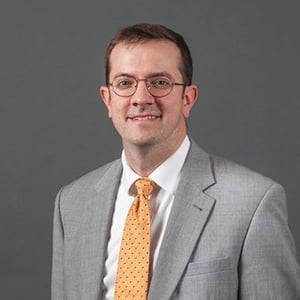
Associate Professor of Law, Antonin Scalia Law School, George Mason University
Associate Professor of Law J.W. Verret joined the Antonin Scalia Law School, George Mason University faculty in 2008. In 2013, he took leave for two years to serve as the Chief Economist and Senior Counsel for the U.S. House Committee on Financial Services. He received his JD and MA in Public Policy from Harvard Law School and the Harvard Kennedy School of Government, respectively, in 2006. While in law school, Professor Verret served an Olin Fellowship in Law and Economics at the Harvard Program on Corporate Governance under the guidance of Prof. Lucian Bebchuk.
Professor Verret then served as a law clerk for Vice-Chancellor John W. Noble of the Delaware Court of Chancery. Prior to joining the faculty at Scalia Law, Professor Verret was an associate in the SEC Enforcement Defense Practice Group at Skadden, Arps in Washington, D.C. He has written extensively on corporate law topics, including Delaware's Guidance, co-written with Chief Justice Myron T. Steele of the Delaware Supreme Court. His academic work has been featured in the Yale Journal on Regulation, The Business Lawyer, the Delaware Journal of Corporate Law, the Stanford Law Review, the University of Pennsylvania Journal of Business Law, and the Virginia Law and Business Review. Professor Verret was selected by the Northwestern Law School Searle Center on Law, Regulation, and Economic Growth for a 2009-2010 Searle-Kaufmann Research Fellowship.
Professor Verret is also a Senior Scholar at the Mercatus Center Working Group on Financial Markets, where he regularly briefs Congressional staff, members of Congress, SEC Commissioners and other financial regulatory agencies on financial regulation topics. He also directs the Corporate Federalism Initiative, where he obtains research grants for a network of students and faculty scholars who study the division between states and the federal government as sources of corporate law. Professor Verret has been invited to testify before various House and Senate Committees four times during the financial crisis of 2009 regarding all of the central provisions of the Obama Administration's 2009 financial regulatory reform proposals. For a full list of Professor Verret's C-Span appearances, including testimony before the U.S. House of Representatives and the U.S. Senate, see http://www.c-spanvideo.org/jwverret.
Professor Verret has been an invited panelist for various television appearances, including an interview on The NewsHour with Jim Lehrer. Professor Verret has been quoted in various media on financial regulation and corporate law topics, including the New York Times, CNN Money, the CNN Political Ticker, CNBC, ABC News, Investor's Business Daily, ESPN.com, The American Banker, The American Lawyer, The Huffington Post, CBS.com, and AP News. Professor Verret's op-eds have been featured in Forbes, The Chicago Tribune, The Orange County Register, and The Wall Street Journal. Professor Verret is also a regular guest contributor to three of the most noted corporate law and financial regulation law blogs: the Harvard Law School Corporate Governance and Financial Regulation Forum, Deallawyers.com, and The Conglomerate.

Loper Bright Fallout for SEC Rulemaking?
Jan Folena, Margaret A. Little, Michael Piwowar
In an unprecedented action, the SEC in July dismissed with prejudice a pending enforcement case...
Digital Assets Market Structure Reform
Patrick Daugherty, Miles Jennings, Steven Lofchie, Lee Schneider, Justin Wales
Reforming the regulation of digital assets is a pressing issue across Congress, the Administration, the...
Cryptocurrency After the Election
J.C. Boggs, Dusty Johnson, Cynthia Lummis, Summer Mersinger, Hester M. Peirce
Will the 2024 election mark a decisive shift in how U.S. financial regulators approach cryptocurrency...
Department of Government Efficiency: Opportunities and Challenges (Part I)
Nicholas Bagley, Susan E. Dudley, Christopher J. Walker
President-elect Trump has announced that entrepreneurs Elon Musk and Vivek Ramaswamy will lead a new...
What Does "New" Mean? Agency Action Post-Chevron
Jonathan Brightbill, Richard A. Epstein, Andrew Mergen, Robert V. Percival
Last term, the Supreme Court handed down its ruling in Loper Bright Enterprises v. Raimondo. ...
Understanding the Regulatory Landscape for Private Fund Advisers
David W. Blass, Jennifer Choi, Lindsey Keljo, Russ Ryan
The regulatory landscape for Private Funds has changed dramatically over the past decade, culminating in...
The SEC and Cryptocurrency
Rachel Barnett, Chris Brummer, Patrick Daugherty, William McLucas, Brian Richman
This event will survey the SEC's current involvement in the cryptocurrency field. The conversation will...
Race at Work: Can Businesses Treat People Differently on the Basis of Race?
Jonathan Berry, Jay Edelson, Stacy Hawkins, Gregory G. Katsas, Jason C. Schwartz
In June of last year, the Supreme Court held that consideration of applicants’ race in...
Will Congress Create a Statutory Framework for Digital Asset Regulation?
J.C. Boggs, Brian P. Brooks, Patrick Daugherty, Gary Kalbaugh, Patrick McHenry, Paul N. Watkins
Will the 118th Congress succeed in creating a statutory framework for effective regulation of cryptocurrencies? ...
Examining the SEC's Approach Towards Crypto
Paul Grewal, Stephen Palley, J.W. Verret
Join us for an in-depth exploration into the SEC's recent lawsuit against Coinbase – a...