

Chairman and Founder, Institute for Free Speech; Josiah H. Blackmore II/Shirley M. Nault Designated Professor of Law, Capital University Law School

Thomas M. Siebel Senior Fellow, The Hoover Institution, Stanford University; Gary T. Schwartz Distinguished Professor of Law Emeritus, UCLA School of Law
Eugene Volokh is the Thomas M. Siebel Senior Fellow at the Hoover Institution (Stanford), as well as the Gary T. Schwartz Distinguished Professor of Law Emeritus and Distinguished Research Professor at UCLA School of Law. He recently retired from teaching at UCLA, after 30 years there, and is now focusing on research.
Volokh is the author of the textbooks The First Amendment and Related Statutes (8th ed. 2023), and Academic Legal Writing (5th ed. 2016), as well as over 100 academic law journal articles, mostly on First Amendment law. He is a member of The American Law Institute; the editor-in-chief of the Journal of Free Speech Law; and the creator and coauthor of The Volokh Conspiracy, a leading legal blog founded in 2002 (hosted at the Washington Post from 2014 to 2017 and now at Reason Magazine).
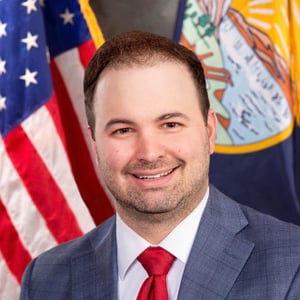
Solicitor General, Montana Attorney General's Office
Christian is currently Solicitor General of Montana, where he serves as the chief litigator and principal legal advisor to Montana Attorney General Austin Knudsen. In that capacity, he manages litigation before the federal district courts, courts of appeal, and the United States Supreme Court, as well as the Montana Supreme Court. He previously served in the Trump Administration as Senior Counsel to the Assistant Secretary for Civil Rights at the U.S. Department of Education. Prior to government service, he was a public interest constitutional litigator at Mountain States Legal Foundation and a fellow at the Institute for Justice. He clerked for Justice Caleb Stegall on the Kansas Supreme Court. He also served as Director of Publications for the Federalist Society's national headquarters.
Christian earned his B.A. in Political Science in 2009 from the University of Pennsylvania before attending the University of Kansas School of Law. Christian is admitted to practice law in Kansas and Montana. A Kansas native, he is a die-hard fan of the Kansas Jayhawks, Kansas City Chiefs, and Kansas City Royals.
Christian is a member of the Federalism & Separation of Powers Practice Group's Executive Committee.

Professor of Law, University of Baltimore School of Law (on leave); Senior Counsel, U.S. Department of Justice
Professor Dolin’s scholarship centers on patent law with a specific focus on how the patent regime affects innovation, especially in bio-pharmaceutical areas. His work in these areas includes a number of scholarly articles, presentations, amicus briefs, and congressional testimony.
Dr. Dolin is currently on leave from his academic duties while he serves as Senior Counsel in the Civil Rights Division of the United States Department of Justice.
From January 2020 to January 2022, Professor Dolin served as a resident Associate Justice of the Supreme Court of the Republic of Palau. In this role, he (together with other members of the Court) heard appeals in civil, criminal, administrative, and constitutional law matters.
Prior to joining the University of Baltimore School of Law, Professor Dolin held visiting appointments in other law schools. He also served as a law clerk to the Hon. Pauline Newman, of the U.S. Court of Appeals for the Federal Circuit and the late Hon. H. Emory Widener Jr., of the U.S. Court of Appeals for the Fourth Circuit.
Rumors that he has a real Russian bear in his office are entirely true.
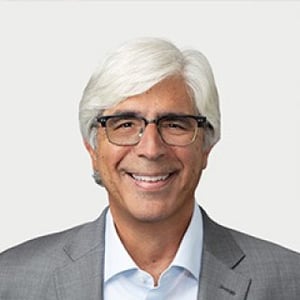
Partner, Gibson Dunn & Crutcher LLP
Theodore J. Boutrous, Jr. is a partner in the Los Angeles office of Gibson Dunn and one of the nation’s leading litigators. He is a member of the American Law Institute and a Fellow of the American Academy of Appellate Lawyers.
As The New York Times has noted, Mr. Boutrous has “a long history of pushing the courts and the public to see the bigger picture on heated issues.” The American Lawyer named Mr. Boutrous the 2019 “Litigator of the Year, Grand Prize Winner” and the Los Angeles and San Francisco Daily Journals in 2021 named him a “Top Lawyer of the Decade.” According to The National Law Journal, which in 2013 named him one of the “100 Most Influential Lawyers in America,” he “is known for his wise, strategic advice to clients in crisis and is a media law star.”
Mr. Boutrous has represented clients in federal and state appellate courts throughout the nation in a wide spectrum of cases, and he is currently serving as Co-Chair of the firm's First Amendment and Free Expression Practice Group. He has argued hundreds of appeals, including before the Supreme Court of the United States, 12 different federal circuit courts of appeals, and 12 different state supreme courts (including 14 arguments in the California Supreme Court), and he has led a multitude of other complex civil, constitutional and criminal matters. Mr. Boutrous has successfully persuaded courts to overturn some of the largest jury verdicts and class actions in history, and prevailed in many cutting-edge cases. In 2011, he successfully represented Walmart before the Supreme Court of the United States in the Dukes case, which unanimously reversed what had been the largest employment class action in history and established important standards governing class actions (Wal-Mart Stores, Inc. v. Dukes). In 2013, he successfully represented the prevailing party in obtaining a unanimous Supreme Court decision enforcing the Class Action Fairness Act (Standard Fire Insurance Co. v. Knowles). Also in 2013, Mr. Boutrous successfully represented plaintiffs in the Supreme Court in a case invalidating California’s prohibition on same-sex marriage, Proposition 8 (Hollingsworth v. Perry), in which he also served as one of the lead trial lawyers and architects of the legal strategy that led to this landmark victory. In 2018, Mr. Boutrous successfully represented CNN and its reporter Jim Acosta in bringing First Amendment and due process claims against then-President Donald Trump and other White House officials, forcing the White House to restore Mr. Acosta’s press credentials. “Litigators of the Week: Gibson Dunn’s Two Teds Score for the Free Press,” The AmLaw Litigation Daily (November 30, 2018). And in 2021, he secured a major victory for Hewlett-Packard Company when the California Court of Appeal affirmed a more than $3 billion verdict in HP’s long-running contract dispute with Oracle Corporation. “Litigators of the Week: Gibson Dunn Protects Its $3B Trial Win for HP Against Oracle on Appeal,” The AmLaw Litigation Daily (June 18, 2021).
As both a crisis management strategist and a seasoned appellate and media lawyer, Mr. Boutrous has extensive experience handling high-profile litigation, media relations and media legal issues. He routinely advises clients in planning how to respond, and in responding, to crises and other especially significant legal problems that attract the media spotlight.
Mr. Boutrous has also received the 2021 Freedom of the Press Award from the Reporters Committee for Freedom of the Press and the Distinguished Leadership Award from PEN America in 2019 for his leadership in advancing First Amendment rights and protecting freedom of expression. As The Hollywood Reporter noted in naming him to its 2022 “Power Lawyers” list, “When issues of free speech are in play, Boutrous is the attorney on speed dial.” Hollywood’s Top 100 Attorneys (March 2022). Mr. Boutrous was also named a “First Amendment Rights Trailblazer” by The National Law Journal in 2020.
Numerous profiles of Mr. Boutrous and his practice have appeared in the media. Prominent mentions include: “Mr. Boutrous, You Have 4 Minutes’: On Rebuttal With Ted Boutrous of Gibson Dunn,” The AmLaw Litigation Daily (August 25, 2022); “Litigator of the Week: How Gibson Dunn Helped Hit Print on Mary Trump’s Best-Seller,” The AmLaw Litigation Daily (July 17, 2020); “Litigation Department of the Year,” The American Lawyer (January 2020); “Litigator of the Week: Gibson Dunn’s Theodore Boutrous Jr. Scores Another Win for the Fourth Estate,”The AmLaw Litigation Daily (September 6, 2019); “Lawyer of the week: Theodore Boutrous Jr, attorney in White House press pass victory,” The Times of London (November 29, 2018); Ted Boutrous, CNN’s Champion, Is Fired Up,” Law.com (November 30, 2018); “Litigator of the Week: From Zero to Hero in Seven Days” The AmLaw Litigation Daily (April 27, 2017); “Litigator of the Week” The AmLaw Litigation Daily (September 8, 2016); “Practice Group Performs In Spotlight and Under Pressure,” Los Angeles and San Francisco Daily Journal (March 14, 2012); “Litigator of the Week,” The AmLaw Litigation Daily (June 23, 2011); “Lawyer of the Week,” The Times of London (June 30, 2011); “Appellate Lawyer of the Week,” National Law Journal (March 23, 2011); “Litigation Department of the Year,” The American Lawyer (January 2016); “Litigation Department of the Year,” The American Lawyer (January 2012); “Litigation Department of the Year,” The American Lawyer (January 2010); and “He’s a Hired Gun of the Highest Caliber,” The Los Angeles Times (June 24, 2007).
In 2025, The Daily Journal recognized Mr. Boutrous with its inaugural Distinguished Counsel award, which honors lawyers “whose consistent excellence and enduring influence in California’s legal community have earned them a place among the Top 100 lawyers for 15 years or more,” and has repeatedly named him to its list of “Top 100 Lawyers” and “Leading Commercial Litigators” in California for over two decades. The Hollywood Reporter, featuring him in Power Lawyers 2021: Hollywood’s Top 100 Attorneys, declared that “Boutrous is there when an industry’s future rides on a big argument.” He has been named a California “Litigation Star” in Benchmark Litigation, as well as a “National Practice Area Star.” Chambers USA ranks him as a leading lawyer in five different categories, describing him as “an absolute star,” with clients praising his skills as “an amazing orator” and his “incredible knack of picking the winning argument and his oral advocacy skills are peerless. He picks the right point in response to every question without even blinking.” The Legal 500 named Mr. Boutrous a “Leading Lawyer” for Supreme Court and Appellate litigation, calling him a “renowned advocate” and “the preeminent authority on punitive damages defenses in the U.S.” Lawdragon recognizes Mr. Boutrous as one of its distinguished "Lawdragon Legends," an honor reserved for those who have appeared in Lawdragon's guide at least ten times since its inception in 2005. Over the years, he has been named to the following Lawdragon lists: 500 Leading Litigators in America, Leading Global Litigators, 500 Leading Lawyers in America, 500 Leading Global Entertainment, Sports & Media Lawyers, 500 Global Leaders in Crisis Management, and 100 Leading AI & Tech Legal Advisors.
Mr. Boutrous is a frequent commentator on legal issues. His articles include: Spare the ‘Dreamers’ a Nightmare by According Them Due Process,” The Wall Street Journal (May 2, 2017); “Poor Children Need a New Brown v. Board of Education,” The Wall Street Journal (August 28, 2016); “A First Amendment Blind Spot,” The Wall Street Journal (May 27, 2014); “California Kids Go to Court to Demand a Good Education,” The Wall Street Journal (January 28, 2014); “A Radical Departure on Press Freedom,” The Wall Street Journal (May 23, 2013); “A Killer’s Notebook, a Reporter’s Rights,” The New York Times (April 9, 2013); and “Broadcast ‘Indecency’ on Trial,” The Wall Street Journal (January 17, 2012).
Mr. Boutrous is a member of the Steering Committee of the Reporters Committee for Freedom of the Press and was a recipient of its 2021 Freedom of the Press Awards. He also sits on the Advisory Board of the International Women’s Media Foundation, which named him its 2015 Leadership Honoree. In addition, he is a member of the Advisory Board of the United States Court of Appeals for the Ninth Circuit, which advises the Chief Judge on matters related to the effective administration of the courts in the Ninth Circuit.
Mr. Boutrous received his law degree, summa cum laude, from the University of San Diego School of Law in 1987, where he was Valedictorian and Editor-in-Chief of the San Diego Law Review.
Mr. Boutrous is admitted to practice in California, New York, and the District of Columbia.

Dr. John Eastman is the former Henry Salvatori Professor of Law & Community Service and former Dean at Chapman University's Dale E. Fowler School of Law, where he had been a member of the faculty since 1999, specializing in Constitutional Law, Legal History, and Property. He is a founding director of the Center for Constitutional Jurisprudence, a public interest law firm affiliated with the Claremont Institute that he founded in 1999. He has a Ph.D. in Government from the Claremont Graduate School and a J.D. from the University of Chicago Law School, and a B.A. in Politics and Economics from the University of Dallas. He serves as the Chairman of the Board of the National Organization for Marriage.
Prior to joining the Chapman law faculty, Dr. Eastman served as a law clerk to the Honorable Clarence Thomas, Associate Justice, Supreme Court of the United States, and to the Honorable J. Michael Luttig, Judge, United States Court of Appeals for the Fourth Circuit and practiced law with the national law firm of Kirkland & Ellis. Dr. Eastman has also represented numerous clients in important constitutional law matters and has argued before the Supreme Court. On behalf of the Claremont Institute Center for Constitutional Jurisprudence, he has participated as amicus curiae before the Supreme Court of the United States, U.S. Courts of Appeals, and State Supreme Courts in more than one hundred cases of constitutional significance, including Boy Scouts of America v. Dale, Zelman v. Simmons-Harris (the school vouchers case), Kelo v. New London, Ct. (eminent domain), and Van Orden v. Perry (the 10 Commandments case). He has also appeared as an expert legal commentator on numerous television and radio programs, including C-SPAN, Fox News, PBS, NewsHour, and The O'Reilly Factor.

Former President & CEO, The Federalist Society for Law and Public Policy Studies
Eugene B. Meyer, former President and CEO of the Federalist Society, has served as Executive Director, CEO, and/or President of the organization for more than 40 years. He is responsible for shepherding the organization from a small group of law students to a community of 90,000 lawyers, law students, academics, judges, and others interested in the rule of law. The Society now includes a Student Chapter at nearly every ABA-accredited law school in the country and Lawyers Chapters in 220 major cities across the nation. Gene earned his B.A. in history at Yale in 1975 and his M.A. in political science from the London School of Economics in 1976. Gene currently serves on the boards of the U.S. Chess Center, the Holman Foundation, the Sarah Scaife Foundation, and the advisory board of the Adam Smith Society. He holds the title of International Chess Master.

Laurence A. Tisch Professor of Law and Director, Classical Liberal Institute, New York University School of Law; Senior Fellow, The Civitas Institute, University of Texas at Austin
Richard A. Epstein is the inaugural Laurence A. Tisch Professor of Law at NYU School of Law. Prior to his joining the faculty, he was a visiting law professor at NYU from 2007 through 2009. He served as the Peter and Kirstin Bedford Senior Fellow at the Hoover Institution from 2000 to 2024. Since 2024 to the present he is a senior lecturer at the Civitas Institute at the University of Texas—Austin. Epstein is also the James Parker Hall Distinguished Service Professor of Law Emeritus and a senior lecturer at the University of Chicago. His initial law school appointment was at the University of Southern California from 1968 to 1972. Epstein received an LL.D., h.c. from the University of Ghent, 2003. He has been a member of the American Academy of Arts and Sciences since 1985 and was a Senior Fellow of the Center for Clinical Medical Ethics at the University of Chicago Division of Biological Sciences, also from 1983. to 2022 He served as editor of the Journal of Legal Studies from 1981 to 1991, and of the Journal of Law and Economics from 1991-2001. From 2001 to 2010 he was a director of the John M. Olin Program in Law and Economics at the University of Chicago.
His newest book, The Myth of Birthright Citizenship: What the Fourteenth Amendment Really Says was published in 2026 (Encounter Books). Prior to that he has published many books including, The Dubious Morality of the Modern Administrative State (Roman & Littlefield 2020).Earlier he published th Classical Liberal Constitution: The Uncertain Quest for Limited Government (Harvard 2014) iHis previous books include Design for Liberty: Private Property, Public Administration and the Rule of Law (Harvard 2011); The Case Against the Employee Free Choice Act (Hoover 2009); Supreme Neglect: How to Revive the Constitutional Protection of Property Rights (Oxford 2008); Antitrust Decrees in Theory and Practice: Why Less is More (AEI 2007); Overdose: How Excessive Government Regulation Stifles Pharmaceutical Innovation (Yale University Press. 2006); How Progressives Rewrote the Constitution (Cato 2006); Cases and Materials on Torts (Aspen Law & Business; 8th ed. 2004); Skepticism and Freedom: A Modern Case for Classical Liberalism (University of Chicago, 2003); Torts (Aspen Law & Business 1999); Principles for a Free Society: Reconciling Individual Liberty with the Common Good (Perseus Books, 1998): Mortal Peril: Our Inalienable Rights to Health Care (Addison-Wesley, 1997); Simple Rules for a Complex World (Harvard, 1995); Bargaining With the State (Princeton, 1993); Forbidden Grounds: The Case Against Employment Discrimination Laws (Harvard , 1992); Takings: Private Property and the Power of Eminent Domain (Harvard, 1985); and Modern Products Liability Law (Greenwood Press, 1980). He has also edited(with Catherine M. Sharkey) Cases and Materials on the Law of Torts (10th edition 2012).
Professor Epstein has written numerous articles on a wide range of legal and interdisciplinary subjects. He has taught courses in administrative law, antitrust law, civil procedure, communications, constitutional law, contracts, corporations, criminal law, employment discrimination law, environmental law, food and drug law health law and policy, legal history, labor law, property, real estate development and finance, jurisprudence, labor law; land use planning, patents, individual, estate and corporate taxation, Roman Law; torts, and workers' compensation.
Professor Epstein also writes a regular column for Civitas Institute, which also sponsors his podcast, The Libertarian with Charles C.W. Cooke, and Law Talk, with Cooke and John Yoo. He also does a podcast with John Batchelor. And appears regularly on the Freedom File with Judge Andrew Napolitano.
George Maverick Bunker Professor of Management, Sloan School of, MIT
Thomas A. Kochan is the George Maverick Bunker Professor of Management at MIT's Sloan School of Management and Co-Director of both the MIT Workplace Center and of the Institute for Work and Employment Research. He came to MIT in 1980 as a Professor of Industrial Relations. From 1988 to 1991 he served as Head of the Behavioral and Policy Sciences Area in the Sloan School. Prof. Kochan came to MIT from Cornell University where he was on the faculty of the School of Industrial and Labor Relations from 1973 to 1980.
In 1973, he received his Ph.D. in Industrial Relations from the University of Wisconsin. Since then he has served as a third-party mediator, fact finder, and arbitrator and as a consultant to a variety of government and private sector organizations and labor-management groups. He was a consultant for one year to the Secretary of Labor in the Department of Labor’s Office of Policy Evaluation and Research.
He has done research on a variety of topics related to industrial relations and human resource management in the public and private sector. Some of his recent books include: Restoring the American Dream: A Working Families’ Agenda for America; Management: Inventing and Delivering its Future; Working in America: A Blueprint for the Labor Market, Learning from Saturn; Managing for the Future: Organizational Behavior and Processes, 3rd edition, 2004; An Introduction to Collective Bargaining and Industrial Relations, 3rd ed. 2003; In 1988 his book, The Transformation of American Industrial Relations received the annual award from the Academy of Management for the best scholarly book on management.
Professor Kochan is a Past President of both the International Industrial Relations Association and the Industrial Relations Research Association (IRRA). In 2001 he was listed in Who’s Who in America and in 2000 he was listed in Blackwell’s Dictionary of Management Scholars. In 1999 he was awarded Doctor Honoris Cause from the University de San Martin de Porres de Lima. He received the Heneman Career Achievement Award from the Human Resources Division of the Academy of Management in 1996. He was elected to the National Academy of Human Resources in 1997. He was named the Centennial Visiting Professor from The London School of Economics in 1995. From 1993 to 1995 he served as a member of the Clinton Administration's Commission on the Future of Worker/Management Relations.

Partner, Gibson, Dunn & Crutcher, and Former United States Secretary of Labor
Eugene Scalia is a partner in the Washington, D.C. office of Gibson, Dunn & Crutcher, co-chair of the firm’s Administrative Law and Regulatory Practice Group, and a senior member of the firm’s Labor and Employment Practice Group and Financial Institutions Practice Group. He returned to the firm after serving as U.S. Secretary of Labor from September 2019 to January 2021.
Mr. Scalia has a nationally-prominent practice in two areas: Labor and employment law, and advice and litigation regarding the regulatory obligations of federal administrative agencies. He also has extensive appellate experience. Federal regulatory actions he has challenged include the SEC’s “proxy access” rule; the CFTC’s “position limits’” rule; MetLife’s designation as “too big to fail” by the Financial Services Oversight Council; the Labor Department’s “fiduciary” rule; and OSHA’s “cooperative compliance program.”
As Labor Secretary, Mr. Scalia engaged at the highest level with national employment policy and matters affecting the financial services industry and international trade, overseeing the enforcement and administration of more than 180 federal employment laws covering more than 150 million workers and 10 million workplaces. He also served as Chair of the Board of Directors of the Pension Benefit Guaranty Corporation and as a member of the White House Coronavirus Task Force. He was closely involved in the drafting and implementation of the CARES Act and other coronavirus-related legislation. Laws administered by the Labor Department also include the workplace safety requirements of OSHA and the Mine Safety and Health Administration, federal minimum wage and overtime protections, the anti-discrimination requirements applicable to federal contractors, and ERISA’s protection of the more than $11 trillion held in employee retirement plans and health plans.
Mr. Scalia served from 2002 to 2003 as Solicitor of the U.S. Department of Labor, with responsibility for all Labor Department litigation and legal advice on rulemakings and administrative law. He is the only person to have served as both Solicitor and Secretary of Labor.
He also served at the U.S. Department of Justice as a Special Assistant to the Attorney General, receiving the Department’s Edmund J. Randolph Award in 1993.
In private practice, Mr. Scalia has represented employers in high-profile matters under the National Labor Relations Act and in class actions and collective actions under Title VII, the Americans with Disabilities Act, the Age Discrimination in Employment Act, ERISA, and federal and state wage hour laws. He has extensive experience in federal district court, the courts of appeals, and in the arbitration of employment disputes. He has been a leading authority on “whistleblower” investigations and litigation since the 2002 enactment of the Sarbanes-Oxley Act. Mr. Scalia also counsels employers on reductions-in-force and the proper conduct of harassment and discrimination investigations. He has provided pro bono representation to workers in discrimination matters, wrongful separation disputes, and other matters.
Mr. Scalia is a Senior Fellow of the Administrative Conference of the United States, a federal agency that makes recommendations to Congress and the Executive Branch on ways to improve the administrative process. He is the author of more than 30 articles and papers on labor and employment law, administrative law, and other subjects. Among other accolades, he has been named an “Employment MVP,” a “Securities MVP,” and an “Appellate MVP” by Law360. The National Law Journal recognized Mr. Scalia as a “Visionary” for his litigation against financial regulatory agencies, and the Nation magazine has called him a “fearsome litigator.” He has been a Lecturer in labor and employment law at the University of Chicago Law School.
Mr. Scalia graduated cum laude from the University of Chicago Law School, where he was editor-in-chief of the Law Review. He graduated With Distinction from the University of Virginia in 1985 and was a speechwriter for Education Secretary William J. Bennett before attending law school. Mr. Scalia and his wife Trish have seven children.

General Counsel, Change to Win
Patrick J. Szymanski is General Counsel for Change to Win, an alliance of seven Unions representing 6 million members in the United States, Canada and Puerto Rico. The seven unions are the International Brotherhood of Teamsters, the Laborers’ International Union of North America, the Service Employees International Union, the United Brotherhood of Carpenters and Joiners of America, the United Farm Workers, the United Food and Commercial Workers International Union, and UNITE HERE.
Pat was raised in Detroit, Michigan, where his father was a professional football player, an elected state official and later a state court judge. His father is a member of the Polish Sports Hall of Fame and in 2007 was selected as a member of the Wall Street Journal Law Blog Football Hall Fame. His mother was a Detroit public school teacher and editor of The Polish World, a bilingual newspaper published in Hamtramck, Michigan. Pat attended the Massachusetts Institute of Technology, dropped out in the late 60’s and later received his undergraduate degree from Wayne State University where he majored in mathematics. He received his law degree from Wayne State University Law School in 1976.
He was a lawyer in the Enforcement Division of the National Labor Relations Board in Washington, D.C., from 1976 through 1978 and again from 1983 through 1988 where he briefed and argued cases before the United States District Courts and Courts of Appeal and briefed cases before the United States Supreme Court.
From 1978 through 1983 he was attorney with the San Francisco office of Beeson, Tayer & Bodine where he advised and represented Teamsters Local Unions and Joint Councils in Northern California, other labor organizations and related benefit funds in negotiations, internal affairs, arbitration cases and proceedings before various state and federal agencies and courts. From 1988 through 2002 he was an attorney and partner at the Washington, D.C., law firm of Baptiste & Wilder where he continued the practice of labor law representing primarily Teamster affiliates, related benefit funds and individual officers and members.
Pat became counsel to the Campaign of James P. Hoffa for presidency of the International Brotherhood of Teamsters in late 1995 and represented the Campaign throughout the 1996 Election, at the 1996 Teamsters International Convention, and in litigation that led to the 1998 Teamsters Rerun Election. He was named Teamsters General Counsel by General President Hoffa in March 1999 and served in that position until late 2005 when he became General Counsel to Change to Win.
He is a member of the bar in Michigan, California and the District of Columbia, the bar of the United States Supreme Court, and the bars of several federal district and appellate courts.
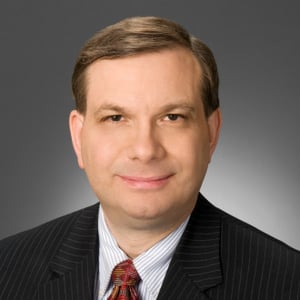
National Affairs Columnist, National Review
John Fund is National Affairs Columnist for National Review magazine and a on-air analyst on the Fox News Channel. He is considered a notable expert on American politics and the nexus between politics and economics.
He previously served as a columnist and editorial board member for The Wall Street Journal. He is the author of several books, including Who's Counting: Bow Fraudsters and Bureaucrats Put Your Vote At Risk (Encounter Books, 2012); Stealing Elections: How Voter Fraud Threatens Our Democracy (Encounter Books, 2008) and The Dangers of Regulation Through Litigation (ATRA Press, 2008). He worked as a research analyst for the California Legislature in Sacramento before beginning his journalism career as a reporter for the syndicated columnists Rowland Evans and Robert Novak.
Roll Call, the newspaper of Capitol Hill, called him "the Tom Paine of the modern Congressional reform movement." He has won awards from the Institute for Justice, The School Choice Aliance and the Warren Brooks award for journalistic excellence from the American Legislative Exchange Council.
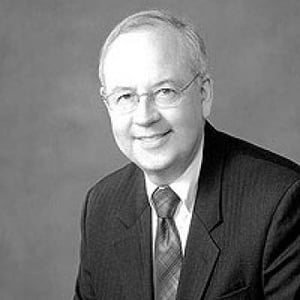
U.S. Court of Appeals, District of Columbia Circuit (1983-1989); U.S. Solicitor General (1989-1993)
Kenneth Starr is a former United States Federal Court of Appeals Judge, U.S. Solicitor General, and Independent Counsel. He is the former President and Chancellor of Baylor University where he held the Louise L. Morrison Chair of Constitutional Law at Baylor University Law School.

Richard and Frances Mallery Professor of Law and Faculty Director, Constitutional Law Center, Stanford Law School
Michael W. McConnell is the Richard and Frances Mallery Professor and Faculty Director of the Constitutional Law Center at Stanford Law School, and a Senior Fellow at the Hoover Institution. From 2002 to 2009, he served as a Circuit Judge on the United States Court of Appeals for the Tenth Circuit. He was nominated by President George W. Bush, a Republican, and confirmed by a Democratic Senate by unanimous consent. McConnell has previously held chaired professorships at the University of Chicago and the University of Utah, and visiting professorships at Harvard and NYU. He teaches courses on constitutional law, constitutional history, First Amendment, and interpretive theory. He has published widely in the fields of constitutional law and theory, especially church and state, equal protection, and separation of powers. His book, “The President Who Would Not Be King: Executive Power Under the Constitution,” was published by Princeton University Press in 2020, based on the Tanner Lectures in Human Values, which he delivered at Princeton in 2019. His latest book, co-authored with Nathan Chapman, “Agreeing to Disagree: How the Establishment Clause Protects Religious Diversity and Freedom of Conscience,” was published by Oxford University Press in mid-2023. McConnell has argued sixteen cases in the United States Supreme Court, most recently Carney v. Adams (2020). defending a provision of the Delaware Constitution requiring political balance on that state’s courts. More recently, he was co-counsel in Gonzalez v. Google. He earned his B.A. from Michigan State University and his J.D. from the University of Chicago, and has received honorary degrees from Notre Dame University and Michigan State. He served as law clerk to Supreme Court Justice William J. Brennan, Jr. and D.C. Circuit Chief Judge J. Skelly Wright. He has been Assistant General Counsel of the Office of Management & Budget, Assistant to the Solicitor General of the Department of Justice, and a member of the President’s Intelligence Oversight Board. He is Senior of Counsel to the law firm Wilson, Sonsini, Goodrich & Rosati, and is co-chair of Meta’s Oversight Review Board.
Former President & CEO, The Federalist Society for Law and Public Policy Studies
Eugene B. Meyer, former President and CEO of the Federalist Society, has served as Executive Director, CEO, and/or President of the organization for more than 40 years. He is responsible for shepherding the organization from a small group of law students to a community of 90,000 lawyers, law students, academics, judges, and others interested in the rule of law. The Society now includes a Student Chapter at nearly every ABA-accredited law school in the country and Lawyers Chapters in 220 major cities across the nation. Gene earned his B.A. in history at Yale in 1975 and his M.A. in political science from the London School of Economics in 1976. Gene currently serves on the boards of the U.S. Chess Center, the Holman Foundation, the Sarah Scaife Foundation, and the advisory board of the Adam Smith Society. He holds the title of International Chess Master.
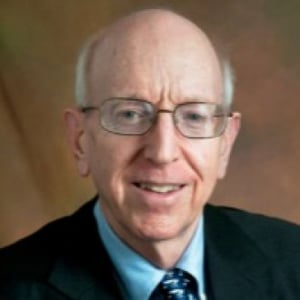
Senior Lecturer in Law, University of Chicago Law School
Following his graduation from Harvard Law School, Judge Posner clerked for Justice William J. Brennan, Jr. From 1963 to 1965, he was assistant to Commissioner Philip Elman of the Federal Trade Commission. For the next two years, he was assistant to the solicitor general of the United States. Prior to going to Stanford Law School in 1968 as Associate Professor, Judge Posner served as general counsel of the President's Task Force on Communications Policy. He first came to the University of Chicago Law School in 1969, and was Lee and Brena Freeman Professor of Law prior to his appointment in 1981 as a judge of the US Court of Appeals for the Seventh Circuit. He was the chief judge of the court from 1993 to 2000.
Judge Posner has written a number of books, including Economic Analysis of Law (9th ed., 2014); The Economics of Justice (1981); Law and Literature (3rd ed. 2009); The Problems of Jurisprudence (1990); Cardozo: A Study in Reputation (1990); The Essential Holmes (1992); Sex and Reason (1992); Overcoming Law (1995); The Federal Courts: Challenge and Reform (1996); Law and Legal Theory in England and America (1996); The Problematics of Moral and Legal Theory (1999); Antitrust Law (2d ed. 2001); Law, Pragmatism, and Democracy (2003); Catastrophe: Risk and Response (2004); Preventing Surprise Attacks: Intelligence Reform in the Wake of 9/11 (2005); How Judges Think (2008); A Failure of Capitalism: The Crisis of '08 and the Descent into Depression (2009); The Crisis of Capitalist Democracy (2010); The Behavior of Federal Judges: A Theoretical and Empirical Study of Rational Choice (coauthored with Lee Epstein and William M. Landes) (2013); and Reflections on Judging (2013). He also wrote books on the Clinton impeachment and Bush v. Gore, many articles in legal and economic journals, and book reviews in the popular press.
He has taught administrative law, antitrust, economic analysis of law, history of legal thought, conflict of laws, regulated industries, law and literature, the legislative process, family law, primitive law, torts, civil procedure, evidence, health law and economics, law and science, and jurisprudence. He was the founding editor of the Journal of Legal Studies and (with Orley Ashenfelter) the American Law and Economics Review. He is an Honorary Bencher of the Inner Temple and a corresponding fellow of the British Academy, and he was the President of the American Law and Economics Association from 1995 to 1996 and the honorary President of the Bentham Club of University College, London, for 1998. He has received honorary degrees from leading American and foreign universities, along with a number of awards, including the Thomas Jefferson Memorial Foundation Award in Law from the University of Virginia in 1994, the Marshall-Wythe Medallion from the College of William and Mary in 1998, the 2003 Research Award from the Fellows of the American Bar Foundation, the 2003 John Sherman Award from the US Department of Justice, the Learned Hand Medal for Excellence in Federal Jurisprudence from the Federal bar Council in 2005, the Thomas C. Schelling Award from the John F. Kennedy School of Government at Harvard University in 2005, and the Ronald H. Coase Medal from the American Law and Economics Association in 2010.

Professor of Law, Georgetown University Law Center
Nicholas Quinn Rosenkranz teaches constitutional law and federal jurisdiction, and he writes articles for the Harvard Law Review and the Stanford Law Review.
He is currently developing a new theory of constitutional interpretation and judicial review. The first installment, entitledThe Subjects of the Constitution, was published in the Stanford Law Review in May of 2010, and it is among the most downloaded articles about constitutional interpretation, judicial review, and/or federal courts in the history of SSRN. The second installment, The Objects of the Constitution, was published in May of 2011, also in the Stanford Law Review. And the comprehensive version is forthcoming as a book by Oxford University Press.
Rosenkranz has served and advised the federal government in a variety of capacities. He clerked for Judge Frank H. Easterbrook on the U.S. Court of Appeals for the Seventh Circuit (1999-2000) and for Justice Anthony M. Kennedy at the U.S. Supreme Court (October Term 2001). He served as an Attorney-Advisor at the Office of Legal Counsel in the U.S. Department of Justice (November 2002 - July 2004). He often testifies before Congress as a constitutional expert—most recently before the House Financial Services Oversight Subcommittee, regarding the Obama Administration's use of bank settlement agreements to circumvent the Appropriations Clause. He has also filed briefs and presented oral argument before the U.S. Supreme Court. His most recent Supreme Court brief, in Los Angeles v. Patel, was cited by Justice Alito in dissent.
Rosenkranz is a member of the New York Bar and the U.S. Supreme Court Bar. He is a Senior Fellow at the Cato Institute. He serves on the Board of Directors of the Foundation for Individual Rights in Education (FIRE). He is a founding member of Heterodox Academy and a member of its Executive Committee. He also serves on the Board of Directors of the Federalist Society and as the faculty advisor to the Georgetown chapter.
Former President & CEO, The Federalist Society for Law and Public Policy Studies
Eugene B. Meyer, former President and CEO of the Federalist Society, has served as Executive Director, CEO, and/or President of the organization for more than 40 years. He is responsible for shepherding the organization from a small group of law students to a community of 90,000 lawyers, law students, academics, judges, and others interested in the rule of law. The Society now includes a Student Chapter at nearly every ABA-accredited law school in the country and Lawyers Chapters in 220 major cities across the nation. Gene earned his B.A. in history at Yale in 1975 and his M.A. in political science from the London School of Economics in 1976. Gene currently serves on the boards of the U.S. Chess Center, the Holman Foundation, the Sarah Scaife Foundation, and the advisory board of the Adam Smith Society. He holds the title of International Chess Master.
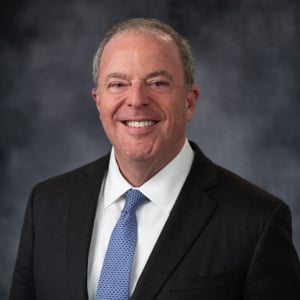
Vice President of Washington Operations and Dean of the Van Andel Graduate School of Government, Hillsdale College
Matthew Spalding is the Kirby Professor in Constitutional Government at Hillsdale College and the Dean of the Van Andel Graduate School of Government at Hillsdale College’s Washington, D.C., campus. As Vice President for Washington Operations, he also oversees the Allan P. Kirby, Jr. Center for Constitutional Studies and Citizenship and the academic and educational programs of Hillsdale in the nation’s capital.
He is the best-selling author of We Still Hold These Truths: Rediscovering Our Principles, Reclaiming Our Future, which details America’s core principles, shows how they have come under assault by modern progressive-liberalism, and lays out a strategy to recover them. Spalding is also executive editor of The Heritage Guide to the Constitution, a line-by-line analysis of each clause of the U.S. Constitution. His other books include A Sacred Union of Citizens: Washington’s Farewell Address and the American Character; Patriot Sage: George Washington and the American Political Tradition; and The Founders’ Almanac: A Practical Guide to the Notable Events, Greatest Leaders & Most Eloquent Words of the American Founding.
Prior to joining Hillsdale, Dr. Spalding was vice president of American Studies at The Heritage Foundation and founding director of its B. Kenneth Simon Center for Principles and Politics. He is a Fellow at the Claremont Institute for the Study of Statesmanship and Political Philosophy, and serves on the boards of the Steamboat Institute and the Philadelphia Society.
He received his B.A. from Claremont McKenna College and his M.A. and Ph.D. in government from the Claremont Graduate School. In addition to teaching at Hillsdale, he has taught at George Mason University, the Catholic University of America, and Claremont McKenna College. He and his wife Elizabeth, a Hillsdale alumna, reside with their two children in Arlington, Virginia.

Amending the Bill of Rights - Podcast
Bradley A. Smith, Eugene Volokh
There is a recent, concerted effort to ratify an amendment to the U.S. Constitution to...
DNA and Patents: Association for Molecular Pathology v. Myriad Genetics, Inc. - Podcast
Christian Corrigan, Gregory Dolin
On Monday, April 15, the Supreme Court heard oral argument in a patents case, Association for...
Same-Sex Marriage Debate
Theodore J. Boutrous, John C. Eastman, Eugene B. Meyer
The closing event at the 2013 Annual Western Conference was a debate on same-sex marriage...
The Employee Free Choice Act
Richard A. Epstein, Thomas Kochan, Eugene Scalia, Patrick Szymanski
On March 10, 2009, the Employee Free Choice Act (EFCA) was re-introduced to Congress by...
Luncheon Address with Kenneth Starr
John Fund, Kenneth W. Starr
Hon. Kenneth W. Starr, Dean, Pepperdine University Law School Introduction: John Fund, The Wall Street...
1st Annual Rosenkranz Discussion
Michael W. McConnell, Eugene B. Meyer, Richard Posner, Nicholas Quinn Rosenkranz
The Federalist Society's 1st Annual Rosenkranz Discussion was held on November 22, 2008. The topic...
A Discussion on How Immigration Affects Crime, Demographics, Security, Economics, and Culture
Tamar Jacoby, Eugene B. Meyer, Matthew Spalding
The Federalist Society's Faculty Division presented this panel discussion at the Ninth Annual Faculty Conference...