
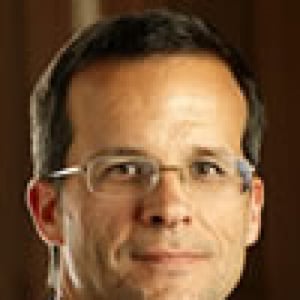
S. Samuel Arsht Professor of Corporate Law, University of Pennsylvania Law School
David Skeel is the Caryl Louise Boies Visiting Professor of Law at New York University, and the S. Samuel Arsht Professor of Corporate Law at the University of Pennsylvania. He is the author of The New Financial Deal: Understanding the Dodd-Frank Act and its (Unintended) Consequences (Wiley, 2011); Icarus in the Boardroom: The Fundamental Flaws in Corporate America and Where They Came From (Oxford University Press, 2005); Debt’s Dominion: A History of Bankruptcy Law in America (Princeton University Press, 2001); and numerous articles on bankruptcy, corporate law, financial regulation, Christianity and law, and other topics. Professor Skeel has also written commentaries for the New York Times, Wall Street Journal, Books & Culture, The Weekly Standard, and other publications.
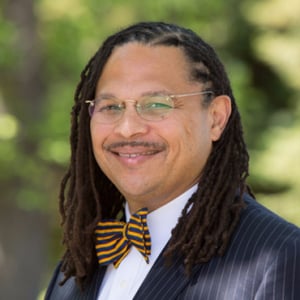
William F. Baxter-Visa International Professor of Law, Stanford Law School
Marcus Cole is a leading scholar of the empirical law and economics of commerce and finance, and teaches courses in the areas of Bankruptcy, Banking, Contracts, and Venture Capital. Professor Cole’s writings have explored questions such as why corporate bankruptcies are increasingly filed in Delaware, and what drives the financial structure of firms backed by venture capital. His current research interests involve the ways in which the world’s poor are using technology to solve their own problems, often in the face of government restrictions hindering such solutions. Professor Cole has served as a National Fellow at the Hoover Institution, and is a Fellow at the University of Amsterdam Center for Law and Economics. He has been a Visiting Professor at a number of institutions around the world, including the University of Amsterdam, the University of Vienna, the University of Leiden, Bucerius University in Hamburg, Germany, Northwestern University, Korea University, and Peking University School of Transnational Law in Shenzhen. Professor Cole has also served on the boards of several civic and charitable organizations, including that of the Central Pacific Region of the Anti-Defamation League of B’nai B’rith, and Businesses United in Lending and Development (“BUILD”). He currently serves on the Editorial Board of the Cato Supreme Court Review, the Academic Advisory Board of Bar-Bri, the Advisory Board of the Independent Institute’s Center on Culture and Civil Society, and is President of the Board of Directors of Rocketship Education, a national, non-profit charter school network, operating California’s most successful charter schools for low-income children. Before joining the Stanford Law faculty in 1997, Professor Cole was an associate with the Chicago law firm of Mayer Brown, and he clerked for Judge Morris Sheppard Arnold of the United States Court of Appeals for the Eighth Circuit.
William F. Baxter-Visa International Professor of Law, Stanford Law School
Marcus Cole is a leading scholar of the empirical law and economics of commerce and finance, and teaches courses in the areas of Bankruptcy, Banking, Contracts, and Venture Capital. Professor Cole’s writings have explored questions such as why corporate bankruptcies are increasingly filed in Delaware, and what drives the financial structure of firms backed by venture capital. His current research interests involve the ways in which the world’s poor are using technology to solve their own problems, often in the face of government restrictions hindering such solutions. Professor Cole has served as a National Fellow at the Hoover Institution, and is a Fellow at the University of Amsterdam Center for Law and Economics. He has been a Visiting Professor at a number of institutions around the world, including the University of Amsterdam, the University of Vienna, the University of Leiden, Bucerius University in Hamburg, Germany, Northwestern University, Korea University, and Peking University School of Transnational Law in Shenzhen. Professor Cole has also served on the boards of several civic and charitable organizations, including that of the Central Pacific Region of the Anti-Defamation League of B’nai B’rith, and Businesses United in Lending and Development (“BUILD”). He currently serves on the Editorial Board of the Cato Supreme Court Review, the Academic Advisory Board of Bar-Bri, the Advisory Board of the Independent Institute’s Center on Culture and Civil Society, and is President of the Board of Directors of Rocketship Education, a national, non-profit charter school network, operating California’s most successful charter schools for low-income children. Before joining the Stanford Law faculty in 1997, Professor Cole was an associate with the Chicago law firm of Mayer Brown, and he clerked for Judge Morris Sheppard Arnold of the United States Court of Appeals for the Eighth Circuit.
Professor of Law, Northwestern University School of Law
James Lindgren is a law professor at Northwestern University, with a BA from Yale and a JD and a PhD in (quantitative) sociology from the University of Chicago. He is a cofounder of the Section on Scholarship of the Association of American Law Schools and a former chair of its Section on Social Science and the Law. He has published in the Yale Law Journal and the Harvard, Stanford, Columbia, University of Chicago, University of Pennsylvania, California, Northwestern, Georgetown, and UCLA Law Reviews, among others. His work includes "Fall from Grace: Arming America and the Bellesiles Scandal " (Yale Law Journal, 2002) and "Term Limits for the Supreme Court: Life Tenure Reconsidered " (Harvard Journal of Law & Public Policy, 2006). In Evans v. US (1992), the US Supreme Court adopted Lindgren's view of the overlap of bribery and federal extortion. He blogs at the Washington Post.
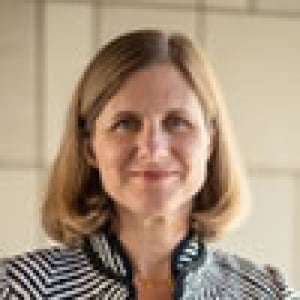
Richard E. Lang Professor of Law and Dean, Stanford Law School
Mary Elizabeth Magill was appointed the Richard E. Lang Professor of Law and Dean of Stanford Law School on September 1, 2012. She is the law school’s 13th dean. Before coming to Stanford she was on the faculty at the University of Virginia School of Law for 15 years, serving most recently as vice dean, the Joseph Weintraub–Bank of America Distinguished Professor of Law, and the Elizabeth D. and Richard A. Merrill Professor.
An expert in administrative law and constitutional structure, Dean Magill teaches administrative law, constitutional law, and food and drug law. Her scholarly articles have been published in leading law reviews, and she has won several awards for her scholarly contributions. She is a member of the American Law Institute, and served as a fellow in the Program in Law and Public Affairs at Princeton University, a visiting professor at Harvard Law School, and the Thomas Jefferson Visiting Fellow at Downing College, Cambridge University.
After completing her BA in history at Yale University in 1988, Dean Magill served as a senior legislative assistant for energy and natural resources for U.S. Senator Kent Conrad, a position she held for four years. She left the Hill to attend the University of Virginia School of Law, where she was articles development editor of the Virginia Law Reviewand received several awards for academic and scholarly achievement. After graduating in 1995, Dean Magill clerked for Judge J. Harvie Wilkinson III of the U.S. Court of Appeals for the Fourth Circuit and then for U.S. Supreme Court Justice Ruth Bader Ginsburg.

Former President & CEO, The Federalist Society for Law and Public Policy Studies
Eugene B. Meyer, former President and CEO of the Federalist Society, has served as Executive Director, CEO, and/or President of the organization for more than 40 years. He is responsible for shepherding the organization from a small group of law students to a community of 90,000 lawyers, law students, academics, judges, and others interested in the rule of law. The Society now includes a Student Chapter at nearly every ABA-accredited law school in the country and Lawyers Chapters in 220 major cities across the nation. Gene earned his B.A. in history at Yale in 1975 and his M.A. in political science from the London School of Economics in 1976. Gene currently serves on the boards of the U.S. Chess Center, the Holman Foundation, the Sarah Scaife Foundation, and the advisory board of the Adam Smith Society. He holds the title of International Chess Master.
Co-President, Stanford Student Chapter
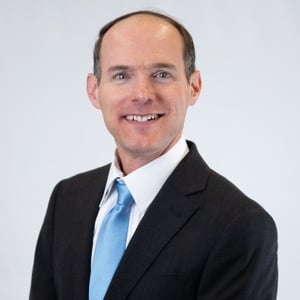
Associate Professor & Director, Constitutional Government Initiative, Wheatley Institute, Brigham Young University
James C. Phillips is the Constitutional Government Initiative Director and an associate professor at BYU’s Wheatley Institute. He is also a fellow with the UC-Berkeley School of Law’s Public Law and Policy Program and an academic affiliate with the D.C.-based law firm Schaerr|Jaffe. His scholarship has been cited by judges around the country, including at the U.S. Supreme Court, and has been covered in various media outlets, including the New York Times Magazine, USA Today, Reuters, CNN, and Fox News. He is a member of the Executive Committee of the Federalist Society's Religious Liberty Practice Group and the J. Reuben Clark Law Society Religious Liberty Committee.
Prior to joining Wheatley, Phillips was associate professor of law at Chapman University’s Fowler School of Law, where he taught Constitutional Law, Religion and the Constitution, Civil Procedure, Family Law, and Professional Responsibility and was named 1L Professor of the Year. Dr. Phillips has taught Administrative Law at BYU’s J. Reuben Clark Law School, where he also helped conceive and design the Corpus of Founding-Era American English. He was also a Non-resident Fellow with Stanford Law School’s Constitutional Law Center.
Dr. Phillips has published dozens of academic articles, primarily in law journals, but also communications, business, and history journals. His longer pieces have been published in, for example, the University of Pennsylvania Law Review, the Southern California Law Review, and the Harvard Journal of Law and Public Policy, and his shorter articles have been published in journals such as the Yale Law Journal Forum and the Duke Law Journal Online. Dr. Phillips has also written op-eds on constitutional issues for Newsweek, The Atlantic, the Los Angeles Times, the Orange County Register, Deseret News, and National Review.
Prior to his university posts, Dr. Phillips practiced law as a Constitutional Law Fellow for the Becket Fund for Religious Liberty and an associate for Kirton | McConkie. He has worked on dozens of cases at the U.S. Supreme Court, as well as cases in federal and state courts throughout the country. He is a member of the bar in Utah and D.C. He clerked for Judge Thomas B. Griffith on the U.S. Court of Appeal for the D.C. Circuit and for Justice Thomas R. Lee on the Utah Supreme Court. Dr. Phillips earned his JD, Order of the Coif, from UC-Berkeley’s School of Law, where he was a member of the California Law Review. He also has a PhD in Jurisprudence & Social Policy from UC-Berkeley, an M.A. in Mass Communication from BYU, and a B.A. in History from Arizona State University.
Co-President, Stanford Student Chapter

Associate Professor, Claremont McKenna College
Jon A. Shields is associate professor of government at Claremont McKenna College and coauthor with Joshua Dunn of Passing on the Right: Conservative Professors in the Progressive University.
William F. Baxter-Visa International Professor of Law, Stanford Law School
Marcus Cole is a leading scholar of the empirical law and economics of commerce and finance, and teaches courses in the areas of Bankruptcy, Banking, Contracts, and Venture Capital. Professor Cole’s writings have explored questions such as why corporate bankruptcies are increasingly filed in Delaware, and what drives the financial structure of firms backed by venture capital. His current research interests involve the ways in which the world’s poor are using technology to solve their own problems, often in the face of government restrictions hindering such solutions. Professor Cole has served as a National Fellow at the Hoover Institution, and is a Fellow at the University of Amsterdam Center for Law and Economics. He has been a Visiting Professor at a number of institutions around the world, including the University of Amsterdam, the University of Vienna, the University of Leiden, Bucerius University in Hamburg, Germany, Northwestern University, Korea University, and Peking University School of Transnational Law in Shenzhen. Professor Cole has also served on the boards of several civic and charitable organizations, including that of the Central Pacific Region of the Anti-Defamation League of B’nai B’rith, and Businesses United in Lending and Development (“BUILD”). He currently serves on the Editorial Board of the Cato Supreme Court Review, the Academic Advisory Board of Bar-Bri, the Advisory Board of the Independent Institute’s Center on Culture and Civil Society, and is President of the Board of Directors of Rocketship Education, a national, non-profit charter school network, operating California’s most successful charter schools for low-income children. Before joining the Stanford Law faculty in 1997, Professor Cole was an associate with the Chicago law firm of Mayer Brown, and he clerked for Judge Morris Sheppard Arnold of the United States Court of Appeals for the Eighth Circuit.
Professor of Law, Northwestern University School of Law
James Lindgren is a law professor at Northwestern University, with a BA from Yale and a JD and a PhD in (quantitative) sociology from the University of Chicago. He is a cofounder of the Section on Scholarship of the Association of American Law Schools and a former chair of its Section on Social Science and the Law. He has published in the Yale Law Journal and the Harvard, Stanford, Columbia, University of Chicago, University of Pennsylvania, California, Northwestern, Georgetown, and UCLA Law Reviews, among others. His work includes "Fall from Grace: Arming America and the Bellesiles Scandal " (Yale Law Journal, 2002) and "Term Limits for the Supreme Court: Life Tenure Reconsidered " (Harvard Journal of Law & Public Policy, 2006). In Evans v. US (1992), the US Supreme Court adopted Lindgren's view of the overlap of bribery and federal extortion. He blogs at the Washington Post.
Richard E. Lang Professor of Law and Dean, Stanford Law School
Mary Elizabeth Magill was appointed the Richard E. Lang Professor of Law and Dean of Stanford Law School on September 1, 2012. She is the law school’s 13th dean. Before coming to Stanford she was on the faculty at the University of Virginia School of Law for 15 years, serving most recently as vice dean, the Joseph Weintraub–Bank of America Distinguished Professor of Law, and the Elizabeth D. and Richard A. Merrill Professor.
An expert in administrative law and constitutional structure, Dean Magill teaches administrative law, constitutional law, and food and drug law. Her scholarly articles have been published in leading law reviews, and she has won several awards for her scholarly contributions. She is a member of the American Law Institute, and served as a fellow in the Program in Law and Public Affairs at Princeton University, a visiting professor at Harvard Law School, and the Thomas Jefferson Visiting Fellow at Downing College, Cambridge University.
After completing her BA in history at Yale University in 1988, Dean Magill served as a senior legislative assistant for energy and natural resources for U.S. Senator Kent Conrad, a position she held for four years. She left the Hill to attend the University of Virginia School of Law, where she was articles development editor of the Virginia Law Reviewand received several awards for academic and scholarly achievement. After graduating in 1995, Dean Magill clerked for Judge J. Harvie Wilkinson III of the U.S. Court of Appeals for the Fourth Circuit and then for U.S. Supreme Court Justice Ruth Bader Ginsburg.
Former President & CEO, The Federalist Society for Law and Public Policy Studies
Eugene B. Meyer, former President and CEO of the Federalist Society, has served as Executive Director, CEO, and/or President of the organization for more than 40 years. He is responsible for shepherding the organization from a small group of law students to a community of 90,000 lawyers, law students, academics, judges, and others interested in the rule of law. The Society now includes a Student Chapter at nearly every ABA-accredited law school in the country and Lawyers Chapters in 220 major cities across the nation. Gene earned his B.A. in history at Yale in 1975 and his M.A. in political science from the London School of Economics in 1976. Gene currently serves on the boards of the U.S. Chess Center, the Holman Foundation, the Sarah Scaife Foundation, and the advisory board of the Adam Smith Society. He holds the title of International Chess Master.
Co-President, Stanford Student Chapter
Associate Professor & Director, Constitutional Government Initiative, Wheatley Institute, Brigham Young University
James C. Phillips is the Constitutional Government Initiative Director and an associate professor at BYU’s Wheatley Institute. He is also a fellow with the UC-Berkeley School of Law’s Public Law and Policy Program and an academic affiliate with the D.C.-based law firm Schaerr|Jaffe. His scholarship has been cited by judges around the country, including at the U.S. Supreme Court, and has been covered in various media outlets, including the New York Times Magazine, USA Today, Reuters, CNN, and Fox News. He is a member of the Executive Committee of the Federalist Society's Religious Liberty Practice Group and the J. Reuben Clark Law Society Religious Liberty Committee.
Prior to joining Wheatley, Phillips was associate professor of law at Chapman University’s Fowler School of Law, where he taught Constitutional Law, Religion and the Constitution, Civil Procedure, Family Law, and Professional Responsibility and was named 1L Professor of the Year. Dr. Phillips has taught Administrative Law at BYU’s J. Reuben Clark Law School, where he also helped conceive and design the Corpus of Founding-Era American English. He was also a Non-resident Fellow with Stanford Law School’s Constitutional Law Center.
Dr. Phillips has published dozens of academic articles, primarily in law journals, but also communications, business, and history journals. His longer pieces have been published in, for example, the University of Pennsylvania Law Review, the Southern California Law Review, and the Harvard Journal of Law and Public Policy, and his shorter articles have been published in journals such as the Yale Law Journal Forum and the Duke Law Journal Online. Dr. Phillips has also written op-eds on constitutional issues for Newsweek, The Atlantic, the Los Angeles Times, the Orange County Register, Deseret News, and National Review.
Prior to his university posts, Dr. Phillips practiced law as a Constitutional Law Fellow for the Becket Fund for Religious Liberty and an associate for Kirton | McConkie. He has worked on dozens of cases at the U.S. Supreme Court, as well as cases in federal and state courts throughout the country. He is a member of the bar in Utah and D.C. He clerked for Judge Thomas B. Griffith on the U.S. Court of Appeal for the D.C. Circuit and for Justice Thomas R. Lee on the Utah Supreme Court. Dr. Phillips earned his JD, Order of the Coif, from UC-Berkeley’s School of Law, where he was a member of the California Law Review. He also has a PhD in Jurisprudence & Social Policy from UC-Berkeley, an M.A. in Mass Communication from BYU, and a B.A. in History from Arizona State University.
Co-President, Stanford Student Chapter
Associate Professor, Claremont McKenna College
Jon A. Shields is associate professor of government at Claremont McKenna College and coauthor with Joshua Dunn of Passing on the Right: Conservative Professors in the Progressive University.
William F. Baxter-Visa International Professor of Law, Stanford Law School
Marcus Cole is a leading scholar of the empirical law and economics of commerce and finance, and teaches courses in the areas of Bankruptcy, Banking, Contracts, and Venture Capital. Professor Cole’s writings have explored questions such as why corporate bankruptcies are increasingly filed in Delaware, and what drives the financial structure of firms backed by venture capital. His current research interests involve the ways in which the world’s poor are using technology to solve their own problems, often in the face of government restrictions hindering such solutions. Professor Cole has served as a National Fellow at the Hoover Institution, and is a Fellow at the University of Amsterdam Center for Law and Economics. He has been a Visiting Professor at a number of institutions around the world, including the University of Amsterdam, the University of Vienna, the University of Leiden, Bucerius University in Hamburg, Germany, Northwestern University, Korea University, and Peking University School of Transnational Law in Shenzhen. Professor Cole has also served on the boards of several civic and charitable organizations, including that of the Central Pacific Region of the Anti-Defamation League of B’nai B’rith, and Businesses United in Lending and Development (“BUILD”). He currently serves on the Editorial Board of the Cato Supreme Court Review, the Academic Advisory Board of Bar-Bri, the Advisory Board of the Independent Institute’s Center on Culture and Civil Society, and is President of the Board of Directors of Rocketship Education, a national, non-profit charter school network, operating California’s most successful charter schools for low-income children. Before joining the Stanford Law faculty in 1997, Professor Cole was an associate with the Chicago law firm of Mayer Brown, and he clerked for Judge Morris Sheppard Arnold of the United States Court of Appeals for the Eighth Circuit.
William F. Baxter-Visa International Professor of Law, Stanford Law School
Marcus Cole is a leading scholar of the empirical law and economics of commerce and finance, and teaches courses in the areas of Bankruptcy, Banking, Contracts, and Venture Capital. Professor Cole’s writings have explored questions such as why corporate bankruptcies are increasingly filed in Delaware, and what drives the financial structure of firms backed by venture capital. His current research interests involve the ways in which the world’s poor are using technology to solve their own problems, often in the face of government restrictions hindering such solutions. Professor Cole has served as a National Fellow at the Hoover Institution, and is a Fellow at the University of Amsterdam Center for Law and Economics. He has been a Visiting Professor at a number of institutions around the world, including the University of Amsterdam, the University of Vienna, the University of Leiden, Bucerius University in Hamburg, Germany, Northwestern University, Korea University, and Peking University School of Transnational Law in Shenzhen. Professor Cole has also served on the boards of several civic and charitable organizations, including that of the Central Pacific Region of the Anti-Defamation League of B’nai B’rith, and Businesses United in Lending and Development (“BUILD”). He currently serves on the Editorial Board of the Cato Supreme Court Review, the Academic Advisory Board of Bar-Bri, the Advisory Board of the Independent Institute’s Center on Culture and Civil Society, and is President of the Board of Directors of Rocketship Education, a national, non-profit charter school network, operating California’s most successful charter schools for low-income children. Before joining the Stanford Law faculty in 1997, Professor Cole was an associate with the Chicago law firm of Mayer Brown, and he clerked for Judge Morris Sheppard Arnold of the United States Court of Appeals for the Eighth Circuit.
Professor of Law, Northwestern University School of Law
James Lindgren is a law professor at Northwestern University, with a BA from Yale and a JD and a PhD in (quantitative) sociology from the University of Chicago. He is a cofounder of the Section on Scholarship of the Association of American Law Schools and a former chair of its Section on Social Science and the Law. He has published in the Yale Law Journal and the Harvard, Stanford, Columbia, University of Chicago, University of Pennsylvania, California, Northwestern, Georgetown, and UCLA Law Reviews, among others. His work includes "Fall from Grace: Arming America and the Bellesiles Scandal " (Yale Law Journal, 2002) and "Term Limits for the Supreme Court: Life Tenure Reconsidered " (Harvard Journal of Law & Public Policy, 2006). In Evans v. US (1992), the US Supreme Court adopted Lindgren's view of the overlap of bribery and federal extortion. He blogs at the Washington Post.
Richard E. Lang Professor of Law and Dean, Stanford Law School
Mary Elizabeth Magill was appointed the Richard E. Lang Professor of Law and Dean of Stanford Law School on September 1, 2012. She is the law school’s 13th dean. Before coming to Stanford she was on the faculty at the University of Virginia School of Law for 15 years, serving most recently as vice dean, the Joseph Weintraub–Bank of America Distinguished Professor of Law, and the Elizabeth D. and Richard A. Merrill Professor.
An expert in administrative law and constitutional structure, Dean Magill teaches administrative law, constitutional law, and food and drug law. Her scholarly articles have been published in leading law reviews, and she has won several awards for her scholarly contributions. She is a member of the American Law Institute, and served as a fellow in the Program in Law and Public Affairs at Princeton University, a visiting professor at Harvard Law School, and the Thomas Jefferson Visiting Fellow at Downing College, Cambridge University.
After completing her BA in history at Yale University in 1988, Dean Magill served as a senior legislative assistant for energy and natural resources for U.S. Senator Kent Conrad, a position she held for four years. She left the Hill to attend the University of Virginia School of Law, where she was articles development editor of the Virginia Law Reviewand received several awards for academic and scholarly achievement. After graduating in 1995, Dean Magill clerked for Judge J. Harvie Wilkinson III of the U.S. Court of Appeals for the Fourth Circuit and then for U.S. Supreme Court Justice Ruth Bader Ginsburg.
Former President & CEO, The Federalist Society for Law and Public Policy Studies
Eugene B. Meyer, former President and CEO of the Federalist Society, has served as Executive Director, CEO, and/or President of the organization for more than 40 years. He is responsible for shepherding the organization from a small group of law students to a community of 90,000 lawyers, law students, academics, judges, and others interested in the rule of law. The Society now includes a Student Chapter at nearly every ABA-accredited law school in the country and Lawyers Chapters in 220 major cities across the nation. Gene earned his B.A. in history at Yale in 1975 and his M.A. in political science from the London School of Economics in 1976. Gene currently serves on the boards of the U.S. Chess Center, the Holman Foundation, the Sarah Scaife Foundation, and the advisory board of the Adam Smith Society. He holds the title of International Chess Master.
Co-President, Stanford Student Chapter
Associate Professor & Director, Constitutional Government Initiative, Wheatley Institute, Brigham Young University
James C. Phillips is the Constitutional Government Initiative Director and an associate professor at BYU’s Wheatley Institute. He is also a fellow with the UC-Berkeley School of Law’s Public Law and Policy Program and an academic affiliate with the D.C.-based law firm Schaerr|Jaffe. His scholarship has been cited by judges around the country, including at the U.S. Supreme Court, and has been covered in various media outlets, including the New York Times Magazine, USA Today, Reuters, CNN, and Fox News. He is a member of the Executive Committee of the Federalist Society's Religious Liberty Practice Group and the J. Reuben Clark Law Society Religious Liberty Committee.
Prior to joining Wheatley, Phillips was associate professor of law at Chapman University’s Fowler School of Law, where he taught Constitutional Law, Religion and the Constitution, Civil Procedure, Family Law, and Professional Responsibility and was named 1L Professor of the Year. Dr. Phillips has taught Administrative Law at BYU’s J. Reuben Clark Law School, where he also helped conceive and design the Corpus of Founding-Era American English. He was also a Non-resident Fellow with Stanford Law School’s Constitutional Law Center.
Dr. Phillips has published dozens of academic articles, primarily in law journals, but also communications, business, and history journals. His longer pieces have been published in, for example, the University of Pennsylvania Law Review, the Southern California Law Review, and the Harvard Journal of Law and Public Policy, and his shorter articles have been published in journals such as the Yale Law Journal Forum and the Duke Law Journal Online. Dr. Phillips has also written op-eds on constitutional issues for Newsweek, The Atlantic, the Los Angeles Times, the Orange County Register, Deseret News, and National Review.
Prior to his university posts, Dr. Phillips practiced law as a Constitutional Law Fellow for the Becket Fund for Religious Liberty and an associate for Kirton | McConkie. He has worked on dozens of cases at the U.S. Supreme Court, as well as cases in federal and state courts throughout the country. He is a member of the bar in Utah and D.C. He clerked for Judge Thomas B. Griffith on the U.S. Court of Appeal for the D.C. Circuit and for Justice Thomas R. Lee on the Utah Supreme Court. Dr. Phillips earned his JD, Order of the Coif, from UC-Berkeley’s School of Law, where he was a member of the California Law Review. He also has a PhD in Jurisprudence & Social Policy from UC-Berkeley, an M.A. in Mass Communication from BYU, and a B.A. in History from Arizona State University.
Co-President, Stanford Student Chapter
Associate Professor, Claremont McKenna College
Jon A. Shields is associate professor of government at Claremont McKenna College and coauthor with Joshua Dunn of Passing on the Right: Conservative Professors in the Progressive University.
William F. Baxter-Visa International Professor of Law, Stanford Law School
Marcus Cole is a leading scholar of the empirical law and economics of commerce and finance, and teaches courses in the areas of Bankruptcy, Banking, Contracts, and Venture Capital. Professor Cole’s writings have explored questions such as why corporate bankruptcies are increasingly filed in Delaware, and what drives the financial structure of firms backed by venture capital. His current research interests involve the ways in which the world’s poor are using technology to solve their own problems, often in the face of government restrictions hindering such solutions. Professor Cole has served as a National Fellow at the Hoover Institution, and is a Fellow at the University of Amsterdam Center for Law and Economics. He has been a Visiting Professor at a number of institutions around the world, including the University of Amsterdam, the University of Vienna, the University of Leiden, Bucerius University in Hamburg, Germany, Northwestern University, Korea University, and Peking University School of Transnational Law in Shenzhen. Professor Cole has also served on the boards of several civic and charitable organizations, including that of the Central Pacific Region of the Anti-Defamation League of B’nai B’rith, and Businesses United in Lending and Development (“BUILD”). He currently serves on the Editorial Board of the Cato Supreme Court Review, the Academic Advisory Board of Bar-Bri, the Advisory Board of the Independent Institute’s Center on Culture and Civil Society, and is President of the Board of Directors of Rocketship Education, a national, non-profit charter school network, operating California’s most successful charter schools for low-income children. Before joining the Stanford Law faculty in 1997, Professor Cole was an associate with the Chicago law firm of Mayer Brown, and he clerked for Judge Morris Sheppard Arnold of the United States Court of Appeals for the Eighth Circuit.

George Mason University Foundation Professor of Law, Antonin Scalia Law School, George Mason University
TODD J. ZYWICKI is George Mason University Foundation Professor of Law at Antonin Scalia Law School at George Mason University and Research Fellow of the George Mason Law and Economics Center. During the Fall 2023 semester he served as the Visiting Scholar in Conservative Thought and Policy for the Bruce Benson Center for the Study of Western Civilization at the University of Colorado-Boulder. From 2020-2021 he was Chair of the Consumer Financial Protection Bureau Taskforce on Federal Consumer Financial Law. In 2021 he was inducted to the American College of Consumer Financial Services Lawyers. He is also a Senior Fellow of the F.A. Hayek Program for the Advanced Study of Politics, Philosophy, and Economics at George Mason University and a former Senior Fellow of the Cato Institute. From 2015-2017 he was Executive Director of the George Mason Law and Economics Center. He served as Co-Editor of the Supreme Court Economic Review from 2006-2017. From 2003-2004, Professor Zywicki served as the Director of the Office of Policy Planning at the Federal Trade Commission. He has also taught at Vanderbilt University Law School, Georgetown University Law Center, Boston College Law School, Mississippi College School of Law, and China University of Political Science and Law.
Professor Zywicki clerked for Judge Jerry E. Smith of the U.S. Court of Appeals for the Fifth Circuit and worked as an associate at Alston & Bird in Atlanta, Georgia, where he practiced bankruptcy and commercial law. He received his J.D. from the University of Virginia, where he was executive editor of the Virginia Tax Review and John M. Olin Scholar in Law and Economics. Professor Zywicki also received an M.A. in Economics from Clemson University and an A.B. cum Laude with high honors in his major from Dartmouth College.
Professor Zywicki is also a Lone Mountain Fellow of the Property and Environment Research Center, a Fellow of the International Centre for Economic Research in Turin, Italy, and a former Senior Fellow of the Goldwater Institute. During the Fall 2008 Semester Professor Zywicki was the Searle Fellow of the George Mason University School of Law and was a 2008-09 W. Glenn Campbell and Rita Ricardo-Campbell National Fellow and the Arch W. Shaw National Fellow at the Hoover Institution on War, Revolution and Peace. He has lectured and consulted with government officials around the world, including Iceland, Italy, Japan, and Guatemala. In 2006 Professor Zywicki served as a Member of the United States Department of Justice Study Group on “Identifying Fraud, Abuse and Errors in the United States Bankruptcy System.”
Professor Zywicki is the author of more than 130 articles in leading law reviews and peer-reviewed economics journals. He is one of the Top 10 most-cited law professors in the field of Commercial Law and one of the Top 25 law professors on Twitter as measured by engagement levels. He is one of the Top 50 Most Downloaded Law Authors at the Social Science Research Network. He has testified multiple times before Congress on issues of consumer bankruptcy law and consumer credit and is a frequent commentator on legal issues in the print and broadcast media, including the Wall Street Journal, New York Times, The Washington Post, The Washington Times, Nightline, The Newshour with Jim Lehrer, Neil Cavuto Show, Fox & Friends, Smerconish, Fox News @ Night with Shannon Bream, Fox Business, CNN, CNBC, Bloomberg News, BBC, The Diane Rehm Show, Lou Dobbs Show, Jerry Doyle Show, and The Laura Ingraham Show.
Professor Zywicki is former Chairman and a current member of the Board of Directors of the Competitive Enterprise Institute, and is a member of the Board of Directors of the Institute for Humane Studies, Bill of Rights Institute, the Executive Committee for the Federalist Society's Financial Institutions and E-Commerce Practice Group, the Board of Trustees of the Foundation for Research on Economics and the Environment. He formerly served on the Governing Board and the Advisory Council for the Financial Services Research Program at George Washington University School of Business. He is currently the Chair of the Academic Advisory Council for the following organizations: The Bill of Rights Institute, the film “We the People in IMAX,” and the McCormick-Tribune Foundation “Freedom Museum” in Chicago, Illinois. He is a member of the Board of Visitors of Ralston College and was a member of the Board of Trustees of Yorktown University. From 2005-2009 he served as an elected Alumni Trustee of the Dartmouth College Board of Trustees.
William F. Baxter-Visa International Professor of Law, Stanford Law School
Marcus Cole is a leading scholar of the empirical law and economics of commerce and finance, and teaches courses in the areas of Bankruptcy, Banking, Contracts, and Venture Capital. Professor Cole’s writings have explored questions such as why corporate bankruptcies are increasingly filed in Delaware, and what drives the financial structure of firms backed by venture capital. His current research interests involve the ways in which the world’s poor are using technology to solve their own problems, often in the face of government restrictions hindering such solutions. Professor Cole has served as a National Fellow at the Hoover Institution, and is a Fellow at the University of Amsterdam Center for Law and Economics. He has been a Visiting Professor at a number of institutions around the world, including the University of Amsterdam, the University of Vienna, the University of Leiden, Bucerius University in Hamburg, Germany, Northwestern University, Korea University, and Peking University School of Transnational Law in Shenzhen. Professor Cole has also served on the boards of several civic and charitable organizations, including that of the Central Pacific Region of the Anti-Defamation League of B’nai B’rith, and Businesses United in Lending and Development (“BUILD”). He currently serves on the Editorial Board of the Cato Supreme Court Review, the Academic Advisory Board of Bar-Bri, the Advisory Board of the Independent Institute’s Center on Culture and Civil Society, and is President of the Board of Directors of Rocketship Education, a national, non-profit charter school network, operating California’s most successful charter schools for low-income children. Before joining the Stanford Law faculty in 1997, Professor Cole was an associate with the Chicago law firm of Mayer Brown, and he clerked for Judge Morris Sheppard Arnold of the United States Court of Appeals for the Eighth Circuit.

Laurence A. Tisch Professor of Law and Director, Classical Liberal Institute, New York University School of Law; Director, Classical Liberal Institute, Civitas Institute University of Texas at Austin
Richard A. Epstein is the inaugural Laurence A. Tisch Professor of Law at NYU School of Law. Prior to his joining the faculty, he was a visiting law professor at NYU from 2007 through 2009. He served as the Peter and Kirstin Bedford Senior Fellow at the Hoover Institution from 2000 to 2024. Since 2024 to the present he is a senior lecturer at the Civitas Institute at the University of Texas—Austin. Epstein is also the James Parker Hall Distinguished Service Professor of Law Emeritus and a senior lecturer at the University of Chicago. His initial law school appointment was at the University of Southern California from 1968 to 1972. Epstein received an LL.D., h.c. from the University of Ghent, 2003. He has been a member of the American Academy of Arts and Sciences since 1985 and was a Senior Fellow of the Center for Clinical Medical Ethics at the University of Chicago Division of Biological Sciences, also from 1983. to 2022 He served as editor of the Journal of Legal Studies from 1981 to 1991, and of the Journal of Law and Economics from 1991-2001. From 2001 to 2010 he was a director of the John M. Olin Program in Law and Economics at the University of Chicago.
His newest book, The Myth of Birthright Citizenship: What the Fourteenth Amendment Really Says was published in 2026 (Encounter Books). Prior to that he has published many books including, The Dubious Morality of the Modern Administrative State (Roman & Littlefield 2020).Earlier he published th Classical Liberal Constitution: The Uncertain Quest for Limited Government (Harvard 2014) iHis previous books include Design for Liberty: Private Property, Public Administration and the Rule of Law (Harvard 2011); The Case Against the Employee Free Choice Act (Hoover 2009); Supreme Neglect: How to Revive the Constitutional Protection of Property Rights (Oxford 2008); Antitrust Decrees in Theory and Practice: Why Less is More (AEI 2007); Overdose: How Excessive Government Regulation Stifles Pharmaceutical Innovation (Yale University Press. 2006); How Progressives Rewrote the Constitution (Cato 2006); Cases and Materials on Torts (Aspen Law & Business; 8th ed. 2004); Skepticism and Freedom: A Modern Case for Classical Liberalism (University of Chicago, 2003); Torts (Aspen Law & Business 1999); Principles for a Free Society: Reconciling Individual Liberty with the Common Good (Perseus Books, 1998): Mortal Peril: Our Inalienable Rights to Health Care (Addison-Wesley, 1997); Simple Rules for a Complex World (Harvard, 1995); Bargaining With the State (Princeton, 1993); Forbidden Grounds: The Case Against Employment Discrimination Laws (Harvard , 1992); Takings: Private Property and the Power of Eminent Domain (Harvard, 1985); and Modern Products Liability Law (Greenwood Press, 1980). He has also edited(with Catherine M. Sharkey) Cases and Materials on the Law of Torts (10th edition 2012).
Professor Epstein has written numerous articles on a wide range of legal and interdisciplinary subjects. He has taught courses in administrative law, antitrust law, civil procedure, communications, constitutional law, contracts, corporations, criminal law, employment discrimination law, environmental law, food and drug law health law and policy, legal history, labor law, property, real estate development and finance, jurisprudence, labor law; land use planning, patents, individual, estate and corporate taxation, Roman Law; torts, and workers' compensation.
Professor Epstein also writes a regular column for Civitas Institute, which also sponsors his podcast, The Libertarian with Charles C.W. Cooke, and Law Talk, with Cooke and John Yoo. He also does a podcast with John Batchelor. And appears regularly on the Freedom File with Judge Andrew Napolitano.

2017 James Kent Summer Academy
2017 James Kent Summer Academy
The Federalist Society’s James Kent Summer Academy is a program for students and recent graduates...
I Declare Bankruptcy?: Puerto Rico v. Franklin California Tax-Free Trust Decided - Podcast
David Skeel, Gilbert Marcus Cole
On June 13 the United States Supreme Court issued its opinion in Puerto Rico v....
Recent Research in Intellectual Diversity
Gilbert Marcus Cole, James T. Lindgren, Elizabeth Magill, Eugene B. Meyer, Jonathan Mondel, James C. Phillips, Michael Rubin, Jon A. Shields
To foster meaningful discourse on intellectual diversity in academia, it is important to begin with the...
Recent Research in Intellectual Diversity
Gilbert Marcus Cole, James T. Lindgren, Elizabeth Magill, Eugene B. Meyer, Jonathan Mondel, James C. Phillips, Michael Rubin, Jon A. Shields
To foster meaningful discourse on intellectual diversity in academia, it is important to begin with the...
Recent Research in Intellectual Diversity
Stanford Intellectual Diversity Conference
Stanford, CAThe Financial Crisis
Stanford, CAEmployment Discrimination
Stanford, CAEngage Volume 11, Issue 1, March 2010
*Online-Only Issue* ADMINISTRATIVE LAW & REGULATION The Regulation of Prescription Drug and Restricted Medical Device...
United Student Aid Funds, Inc. v. Espinosa – Post-Argument SCOTUScast
Gilbert Marcus Cole
On December 1, 2009, the Supreme Court heard oral argument in United Student Aid Funds,...