
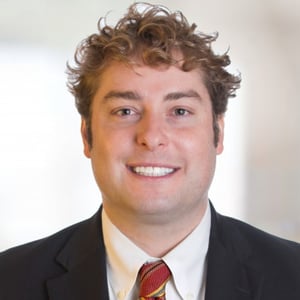
Shareholder, Haynsworth Sinkler Boyd, P.A.
A versatile litigation and appellate attorney with deep ties to his native Charleston, South Carolina, Mac McQuillin blends an established government and business litigation practice with an emerging practice as a certified South Carolina Mediator. In addition to his law practice, Mac was elected in 2014 to serve on the Berkeley County School District Board (the fourth largest school district in South Carolina) and currently serves as the school board’s Vice Chairman and Chairman of the Facilities and Capital Planning Committee.
Prior to Haynsworth Sinkler Boyd, Mac served as a law clerk to then South Carolina Governor Mark Sanford, where he researched existing and proposed legislation and its impact on South Carolina. He also advised the Governor’s Chief Legal Counsel on various legal matters involving the Executive Office. Mac also clerked for South Carolina Senator George E. (Chip) Campsen III. While working for Senator Campsen, he was responsible for constituent research and provided assistance during Senate debates on tort reform.
Mac is listed in The Best Lawyers in America© Commercial Litigation (2020-2021) and South Carolina Super Lawyers® “Rising Stars” Business Litigation (2014-2020). In 2017, Mac was awarded the South Carolina Lawyers Weekly Leadership in Law Award and recognized by Charleston Business Magazine as one of the “Legal Elite of the Lowcountry” for Government Affairs.
Mac is a frequent speaker on government and litigation topics, including “Local Government Litigation Update – Impact Fee Litigation, Opioid Litigation (State and Federal) and FOIA,” “Legal Issues Affecting Local Government and Municipalities,” and “Recent Developments Under the South Carolina Freedom of Information Act (FOIA).”
Mac received his law degree, with honors, from the University of South Carolina School of Law (Order of Coif) and undergraduate degree from the University of South Carolina.

United States District Judge, Southern District of Ohio
Douglas R. Cole was nominated for the position in May 2019 by President Donald J. Trump and confirmed by the Senate in December 2019. Immediately before joining the bench, Judge Cole was a founding partner at Organ Cole, a litigation boutique in Columbus, Ohio.
Judge Cole received his J.D. from the University of Chicago Law School, where he graduated with High Honors and Order of the Coif, was an Olin Fellow in Law & Economics, and was a member of the editorial board of the University of Chicago Law Review. He clerked for Judge Frank H. Easterbrook on the United States Court of Appeals for the Seventh Circuit before joining Kirkland & Ellis in its Chicago office. He has served as a professor at the University of Oklahoma College of Law and at the Michael E. Moritz College of Law at The Ohio State University, where he taught in the fields of business law, law & economics, and intellectual property. From 2003-2006, he was the State Solicitor for the State of Ohio. In that capacity, he argued five cases at the United States Supreme Court, and multiple cases in the United States Court of Appeals for the Sixth Circuit and the Ohio Supreme Court. Before joining Organ Cole, Judge Cole was a litigation partner at the Columbus office of Jones Day, where he practiced in the Issues & Appeals group and the Intellectual Property group.
Judge Cole has undergraduate degrees in electrical engineering, mathematics, and physics, and worked as an electrical engineer before attending law school.
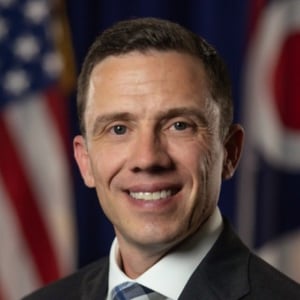
Ohio Deputy Attorney General for Major Litigation, Office of the Ohio Attorney General
Erik Clark oversees major litigation in the Office of Ohio Attorney General Dave Yost, the State's chief law-enforcement officer. He also oversees the Office's antitrust, charitable-law, constitutional-offices, and consumer-protection sections.
As part of his role, Erik personally appears in court on behalf of the State of Ohio in select cases. He also advises the Attorney General on critical matters.
Previously, Erik was a partner for over ten years at Organ Law LLP, a Columbus litigation boutique. There, he frequently served as special counsel to the Ohio Attorney General, representing state-government clients. His cases included a challenge (by ECOT) to Ohio's school-funding system for virtual charter schools, a challenge to The Ohio State University's rules governing students' possession of firearms, a First-Amendment challenge to a law prohibiting targeted picketing at public officials' homes, and a challenge to congressional and Statehouse redistricting following the 2020 census.
Erik also represented large and small businesses and individuals in litigation, arbitration, and mediation. Among other matters, he represented Uber in cases brought by authorities seeking city-wide injunctions that would have blocked Uber from operating its then-nascent ride-sharing service in several major cities, including Columbus, St. Louis, and Tampa.
Erik has argued several appeals in federal and state appellate courts, including three cases in the Ohio Supreme Court. He has served as lead counsel in dozens of trial-court cases (including bench and jury trials), administrative hearings, and arbitrations.
Erik graduated summa cum laude from The Ohio State University Moritz College of Law, where he was Editor-in-Chief of the Ohio State Law Journal.
After law school, he clerked for Chief Judge Jeffrey S. Sutton on the U.S. Court of Appeals for the Sixth Circuit.
Erik then served as the Simon Karas Fellow in the Ohio Attorney General’s Office, where he worked with the Ohio State Solicitor on high-profile appeals before the Ohio Supreme Court, the Sixth Circuit, and the United States Supreme Court.
Before joining Organ Cole LLP in 2012, Erik was a business litigator at Jones Day, one of the largest law firms in the world.
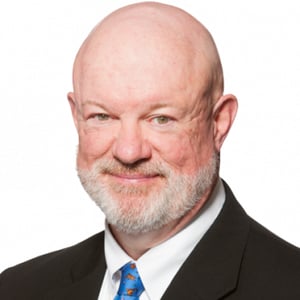
Senior Legal Fellow, the Meese Institute for the Rule of Law, Advancing American Freedom
Paul J. Larkin is a Senior Legal Fellow in the Meese Institute for the Rule of Law at Advancing American Freedom. Paul has held various positions in the federal and state governments throughout his career, such as being an attorney in the Organized Crime and Racketeering Section of the Criminal Division at the U.S. Department of Justice, an Assistant to the Solicitor General in the Office of the Solicitor General at the U.S. Department of Justice, Special Agent-in-Charge and Acting Director of the Criminal Investigation Division at the Environmental Protection Agency, and a member of the Parole Abolition and Sentencing Reform Commission and of the Juvenile Justice Reform Commission in the Office of Virginia Governor George Allen.
He has also worked at Verizon Communications and two law firms in Washington, D.C. His current research is principally in the fields of drug policy, criminal justice policy, and administrative law and policy. He has published numerous articles in law and public policy journals, both in print and online.
Senior Fellow, Hoover Institution of Stanford University
Counsel, Sutherland Asbill & Brennan LLP
Senior Fellow, Hoover Institution of Stanford University
Counsel, Sutherland Asbill & Brennan LLP

State Court Docket Watch: Adams v. McMaster
Stafford (Mac) J. McQuillin
Background In early March, South Carolina’s Governor, Henry McMaster, issued a State of Emergency following...
Electronic Classroom of Tomorrow v. Ohio Department of Education
Douglas R. Cole, Erik J. Clark
In Electronic Classroom of Tomorrow v. Ohio Department of Education, the Ohio Supreme Court held that...
The Justice Department’s Third-Party Payment Practice, the Antideficiency Act, and Legal Ethics
Paul James Larkin
Note from the Editor: This article argues that the Justice Department’s practice of distributing settlement...
Topics
State Court Docket Watch News Clips: 2/24/2016
The Texas Court of Criminal Appeals has dismissed charges of attempted coercion of a public...
Judicial Funding Mandates Related to Education Sharply Decline
Eric A. Hanushek, Alfred A. Lindseth
Twenty years ago a new kind of educational lawsuit designed to ensure “adequacy of funding”...
Judicial Funding Mandates Related to Education Sharply Decline
Eric A. Hanushek, Alfred A. Lindseth
Twenty years ago a new kind of educational lawsuit designed to ensure “adequacy of funding”...