
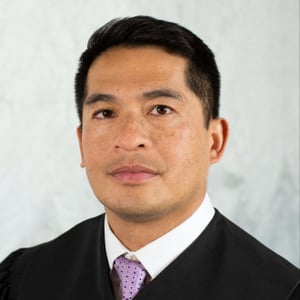
Judge, United States Court of Appeals, Ninth Circuit
Patrick J. Bumatay was confirmed as a U.S. Circuit Judge for the U.S. Court of Appeals for the Ninth Circuit in December 2019. He is based in San Diego, California.
Prior to his appointment, Judge Bumatay served as an Assistant United States Attorney in the U.S. Attorney’s Office for the Southern District of California, where he was a member of the Appellate and Narcotics Sections. He also served as a Counselor to the Attorney General on criminal law issues, including on national opioid strategy and combating transnational organized crime.
Judge Bumatay has also worked in the Office of the Deputy Attorney General, the Office of the Associate Attorney General, and the Office of Legal Policy at the U.S. Department of Justice. Judge Bumatay has twice received the Attorney General’s Distinguished Service Award.
Judge Bumatay previously worked as an associate at Morvillo, Abramowitz, Grand, Iason, and Bohrer in New York, New York. Judge Bumatay clerked for the Honorable Timothy M. Tymkovich of the U.S. Court of Appeals for the Tenth Circuit and the Honorable Sandra L. Townes of the U.S. District Court for the Eastern District of New York. Judge Bumatay earned his B.A., cum laude, from Yale University and his J.D. from Harvard Law School.
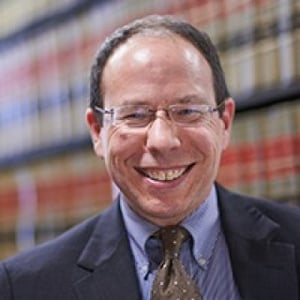
Professor of Law, Michigan State University (currently serving as FCC General Counsel)
Professor Candeub joined the MSU Law faculty in fall 2004. He is also a Fellow with MSU's Institute of Public Utilities. Prior to joining MSU, he served as an advisor at the Federal Communications Commission (FCC). From 1998 to 2000, Professor Candeub was a litigation associate for the Washington D.C. firm of Jones, Day, Reavis & Pogue and also has served as a corporate associate with Cleary, Gottlieb, Steen & Hamilton, also in Washington, D.C. Immediately following law school, he clerked for Chief Judge J. Clifford Wallace, U.S. Court of Appeals for the Ninth Circuit. While in law school, Professor Candeub was an articles editor for the University of Pennsylvania Law Review.
Professor Candeub's scholarly interests focus on the law and regulation of communications, internet, technology. His numerous law review articles and scholarly papers have placed him at the center of legal and policy controversies, and he often writes for popular outlets such as the Wall Street Journal and US News. Federal courts, including the U.S. Supreme Court, have cited and relied upon his work.
He joined the Trump administration in 2019 as Deputy Assistant Secretary of Commerce for Telecommunications and Information and assumed the role of Acting Assistant Secretary. He later joined the Department of Justice as Deputy Associate Attorney General.
Professor Candeub is a senior fellow at the D.C.-based Center of Renewing America.
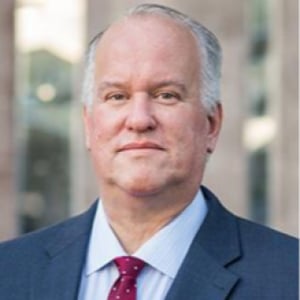
Executive Director, First Amendment Clinic, Sandra Day O’Connor College of Law at Arizona State University
Gregg Leslie is the executive director of the First Amendment Clinic. He was previously a staff attorney with the Reporters Committee for Freedom of the Press, a Washington, D.C. nonprofit association that provides legal assistance to journalists, and served as the organization’s legal defense director for 17 years.
Leslie serves on the governing committee of the Communications Law Forum of the American Bar Association, and was a member of the ABA's Fair Trial and Free Press Task Force in 2011. He also served as chairman of the D.C. Bar’s Media Law Committee and Arts, Entertainment, Media & Sports Law Section, and taught media law in Georgetown University’s Master of Professional Studies in Journalism program.
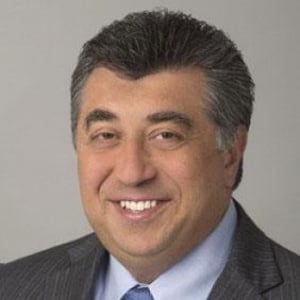
Counsel, Cadwalader, Wickersham & Taft LLP; Senior Competition Counsel, TechFreedom
Bilal Sayyed represents clients before the Federal Trade Commission (FTC) and Department of Justice (DOJ) in significant merger, civil and criminal antitrust matters. A significant portion of his practice involves representing investment funds on antitrust and Hart-Scott-Rodino (HSR) Act compliance matters; he has also provided expert witness services related to HSR compliance. Bilal also counsels clients before the FTC in consumer protection and privacy investigations. He maintains an active amicus and appellate brief writing practice in antitrust litigation and antitrust merger matters.
Prior to joining Cadwalader, Bilal was the Director of the FTC’s Office of Policy Planning (OPP) (2018-2021). In that role, he provided legal and policy advice to the Chairman and Commissioners on antitrust and consumer protection matters and worked closely with the senior and career leadership of the FTC’s Bureaus of Competition, Consumer Protection, and Economics. Bilal previously served as an Attorney Advisor to FTC Chairman Timothy J. Muris from 2001 to 2004. In that role, Bilal advised the Chairman on matters involving a wide spectrum of industries, including chemical and mining, petroleum and natural gas, health care and pharmaceutical, defense and transportation, gaming, various consumer products and retail operations, and professional associations and standard-setting organizations.
Bilal has taught antitrust and competition law at the George Mason University School of Law since 2011.
Bilal received his B.A. from Case Western Reserve University, and a J.D. from George Mason University School of Law. He is admitted to practice in the District of Columbia and the State of New York, as well as before the U.S. District Courts for the District of Colorado and the District of Columbia, the U.S. Court of Appeals for the District of Columbia Circuit, the Fifth Circuit, the Ninth Circuit, and the U.S. Supreme Court.
Bilal is the host of Rethinking Antitrust, a podcast published by TechFreedom that examines the economics, institutions, law, legislation, and policy goals of antitrust enforcement.
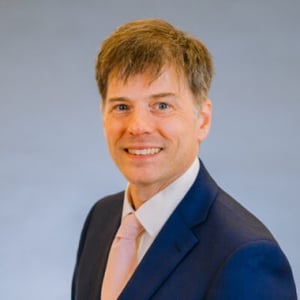
Senior Counsel, Vice President of Litigation Strategy, Alliance Defending Freedom
Jonathan Scruggs serves as senior counsel and vice president of litigation strategy with Alliance Defending Freedom. In this role, he identifies new litigation opportunities, develops new legal strategies, and improves processes across multiple litigation teams in collaboration with the chief legal counsel.
Since joining ADF in 2006, Scruggs has worked on and prevailed in a variety of cases related to Title IX, gender ideology, and people’s right to freely express their faith, including Masterpiece Cakeshop v. Colorado Civil Rights Commission, 303 Creative v. Elenis, and Brush & Nib Studio v. Phoenix, which Scruggs argued at the Arizona Supreme Court. Scruggs has argued before numerous federal appellate courts and trial courts across the country and has extensive experience litigating free-speech, religious-liberty, establishment, Title IX, and equal-protection issues on behalf of students, female athletes, businesses, professionals, and non-profit entities.
Scruggs earned his B.A., summa cum laude, from Vanderbilt University in 2003 and his J.D. at Harvard Law School in 2006. He is also a 2004 Blackstone Fellow.
A member of the bars of Arizona and Tennessee, Scruggs is admitted to the U.S. Supreme Court and multiple federal district and appellate courts.
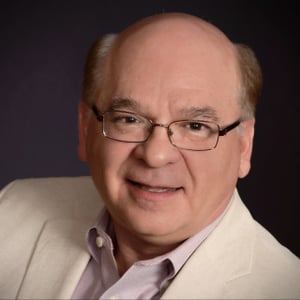
E.I. White Chair and Distinguished Professor of Law and Kauffman Professor of Entrepreneurship and Innovation, Syracuse University College of Law
Professor Robin Paul Malloy is the E.I. White Chair and Distinguished Professor of Law, and the Kauffman Professor of Entrepreneurship and Innovation. He is a leading expert on property, real estate transactions, land use law and zoning, and on law, markets, and marketization. He has pioneered work on land use and disability law. He is also recognized as a leading legal scholar on the jurisprudence of Adam Smith. Several of his works on market theory and law are translated into Chinese, Spanish, and Japanese. Professor Malloy has published twenty books (four with Cambridge University Press) and over 30 scholarly articles, in addition to numerous book chapters and essays. His latest book is titled Law and the Invisible Hand; A Theory of Adam Smith’s Jurisprudence (Cambridge 2021). He is a series editor on collections for Cambridge University Press, Routledge, and Edward Elgar. Malloy’s casebook on Real Estate Transactions (with Smith, now in its 6th edition) is the leading book on the subject and is used at law schools across the country. His casebook on Land Use Law and Zoning is now in its second edition (with Malagrino). Malloy has been the Sun Life Research Fellow at Oxford University, U.K.; the Dickenson Dees Fellow at University of Durham, U.K.; and for three consecutive summers served as a teaching fellow in China (Beijing and Shanghai) with the Committee on Legal Education Exchange with China. He currently serves on the International Advisory Board for the Law and Economics Program at St. Gallens University, Switzerland, and is a member of the Turin School of Local Regulation, Turin, Italy.
Malloy is the founding president of the Association for Law, Property, and Society. He currently serves on the Board of the Veterans Health Research Institute of CNY. He served on the Board of the National Italian American Bar Association for 20 years and was Vice Chair of the Zoning Board of Appeal for the Town of DeWitt, NY for 10 years. He has also served on numerous committees of the Association of American Law Schools.
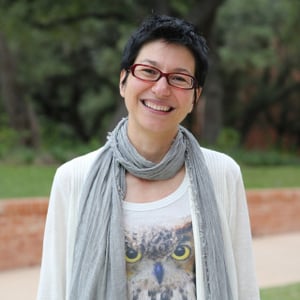
Professor of Economics, Trinity University
I am an enthusiastic teacher, and I bring my passion for learning in the classroom. In my research, I work in the history of economic thought, specializing in the 18th century. My focus is on Adam Smith, David Hume, monetary theories, and the Scottish Enlightenment.
I analyze how self-interest interacts with other motivational drives, with systematic biases, and with the surrounding institutional environment. I also explore the links between the Scottish Enlightenment and the results from behavioral economics, evolutionary biology, and neuroeconomics.
I regularly publish in History of Political Economy (HOPE), The Journal of the History of Economic Thought (JHET), and History of Economic Ideas (HEI). I wrote the Routledge Guidebook of Smith's Wealth of Nations (2020).
The European Society for the History of Economic Thought awarded my HOPE 2008 "The Adam Smith Problem in Reverse: Self-Interest in Adam Smith's Wealth of Nations, and Theory of Moral Sentiments" the prize of Best Article of Year (2009). I was the book review editor for the Journal of the History of Economic Thought, the vice-president of the History of Economics Society, and i am the current president of the International Adam Smith Society and the current president of the History of Economics Society.

Executive Vice President, The Federalist Society
Dean Reuter is Executive Vice President at the Federalist Society for Law and Public Policy Studies. He has served in two federal government agency Offices of the Inspector General, as Counsel to the Inspector General and Deputy Inspector General, responsible for policing the use of federal funds granted and contracted through those agencies. As such, he helped conduct and oversee criminal investigations across the country. He is the principal author of the non-fiction book, The Hidden Nazi: The Untold Story of America's Deal with the Devil, and editor of Liberty’s Nemesis: The Unchecked Expansion of the State and Confronting Terror: 9/11 and the Future of American National Security. He was appointed by the President and served as Vice-Chairman of the Board of Directors of the Corporation for National and Community Service, and recently served as an appointee on the U.S. Commission on Presidential Scholars. He is a graduate of Hood College (BA with Honors) and the University of Maryland School of Law.
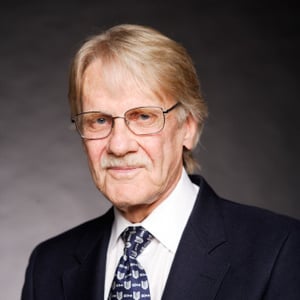
Professor Emeritus, George Mason University
Vernon L. Smith, often called the "father of experimental economics", is a leading scholar celebrated for transforming economics into an experimental science. He was awarded the Nobel Prize in Economic Sciences in 2002 for his pioneering work in using laboratory experiments to test economic theories, particularly regarding market mechanisms and price formation.
Smith served as Professor of Economics and Law from 2001 to 2008 at George Mason University. He founded the Interdisciplinary Center for Economic Science (ICES) at Mason, and served as a fellow of the Mercatus Center. He remains a Professor Emeritus at Mason, where a building on the Arlington campus is named in his honor.
Currently, Smith is a professor at Chapman University within the Argyros School of Business and Economics and the Fowler School of Law. At Chapman, he established the Economic Science Institute, a research center dedicated to the continued study of experimental methods in economics and across other disciplines.
An alum of Caltech (B.S.), the University of Kansas (M.A.), and Harvard University (Ph.D.), Smith has held previous appointments at universities including Purdue, Brown, and the University of Arizona.
Professor of History, Georgia Southern University
Johnathan O'Neill is Professor of History at Georgia Southern University. Professor O’Neill is the author of Originalism in American Law and Politics: A Constitutional History (2005) and Conservative Thought and American Constitutionalism Since the New Deal (2023).
Howard Adler, Nome
Howard B. Adler is a retired partner at the international law firm Gibson, Dunn and Crutcher LLP. From 2019-21, he served as Deputy Assistant Secretary of the Treasury for the Financial Stability Oversight Council. He is the co-author of Surprised Again! The COVID Crisis and the New Market Bubble (2023).
Associate Professor of Government, Van Andel Graduate School of Government, Hillsdale College in Washington, DC
Bradley C.S. Watson is Associate Professor of Government at the Van Andel Graduate School of Government of Hillsdale College in Washington, DC. Professor Watson’s books include Progressivism: The Strange History of a Radical Idea (Notre Dame, 2022/2020), Progressive Challenges to the American Constitution: A New Republic (Cambridge, 2020/2017), and Living Constitution, Dying Faith: Progressivism and the New Science of Jurisprudence (ISI, 2020/2009).
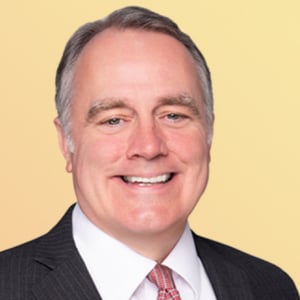
Partner, King & Spalding PLLC
Will Barnette is a partner in the Atlanta office of King & Spalding, where he is a member of the firm’s business litigation practice and class action defense group. During his 30-year career, Will has consistently led clients to successful outcomes in their most sensitive and high exposure class action, MDL, and related regulatory matters. From litigating high-stakes tobacco class actions at the turn of the century, to defending massive data breach litigation in the last decade, and winning several lucrative antitrust opt-out settlements more recently, Will has played a key role in much of the leading complex litigation of the era and led clients to tremendous success on both sides of the “v.” In particular, he has deep experience in litigating consumer, products, and antitrust class actions, commercial disputes, and managing internal investigations.
Prior to rejoining King & Spalding, where he worked earlier in his career, Will served as Associate General Counsel for The Home Depot and was a member of the company’s Legal Senior Leadership Team. As leader of The Home Depot’s commercial litigation team for more than ten years, he was responsible for the company’s most significant commercial and business litigation, which frequently challenged core aspects of the company’s business. During his 21-year tenure with The Home Depot, Will led the successful defense of several hundred class actions, created and led the company’s recovery litigation program, and successfully managed multiple high-profile investigations and favorably resolved significant related regulatory matters, including with the United States Department of Justice, the United States Environmental Protection Agency, and multi-state Attorney General groups.
A recognized thought leader in complex litigation, Will argued before the U.S. Supreme Court in the 2019 term—one of the few in-house counsel to do so. He received the Atlanta Business Chronicle’s Corporate Counsel Award for Advocacy in 2016 and has authored seven law review articles. His recent works, Misunderstanding Original Jurisdiction and There Is No Conservative Case for Class Actions, ranked among the top SSRN downloads in Federal Courts and Jurisdiction. He frequently lectures on class actions, MDL litigation, and internal investigations, and teaches Complex Litigation at the University of Tennessee Winston College of Law, where he earned the Harold C. Warner Outstanding Adjunct Professor Award in 2025.
Will chairs the Board of Georgians for Lawsuit Reform, which was instrumental in passing Georgia’s 2025 tort reform legislation. He also serves as Chair of the Class Actions Section for the State Bar of Georgia and is a former President of the Atlanta Legal Aid Society. Will played varsity college basketball at Sewanee.

Panel III: When Free Speech and Free Markets Intersect
Patrick J. Bumatay, Adam Candeub, Gregg P. Leslie, Bilal Sayyed, Jonathan Scruggs
Featuring: Prof. Adam Candeub, Professor of Law, Michigan State University (currently serving as FCC General Counsel)...
Why Adam Smith Still Matters: 250 Years of The Wealth of Nations
Robin P. Malloy, Maria P. Paganelli, Dean Reuter, Vernon L. Smith
Published in the same pivotal year as the Declaration of Independence, An Inquiry into the...
Topics
From Whom Is the Fed Independent? To Whom Is It Accountable?
The Federal Reserve and its supporters constantly declare that the Fed is and should be...
Topics
The Road to Campus Serfdom
This post originally appeared at Law & Liberty. It seems remarkable that seemingly antisemitic protests...
Topics
The Fed’s Remarkable ‘Independence’ Claim
This post originally appeared in The Daily Economy. In the course of human events, the...
A Response to the Constitution's Critics
Johnathan O'Neill
A review of Dennis Hale and Marc Landy, Keeping the Republic: A Defense of American...
What Kind of Money is Best?: An Interesting New Investigation
Howard B. Adler
A review of Lawrence H. White, Better Money: Gold, Fiat, or Bitcoin? (Cambridge University Press...
What Is Conservative Constitutionalism? A Fractured History Reveals an Uncertain Path Forward
Bradley C. S. Watson
A review of Johnathan O’Neill, Conservative Thought and American Constitutionalism Since the New Deal (Johns Hopkins...
Topics
The Conservative Case Against the Big Business Case Against Class Actions
I am grateful to William Barnette for his review of my book The Conservative Case...
There Is No Conservative Case for Class Actions
William P. Barnette
A review of The Conservative Case for Class Actions, by Brian T. Fitzpatrick (Chicago), https://press.uchicago.edu/ucp/books/book/chicago/C/bo43233299.html (Read...