
Professor, University of California Hastings College of the Law
 Professor Calvin R. Massey joined the Hastings faculty in 1987. Prior to teaching at Hastings, he practiced law in San Francisco.
Professor, University of California Hastings College of the Law
Professor Calvin R. Massey joined the Hastings faculty in 1987. Prior to teaching at Hastings, he practiced law in San Francisco.
Chancellor's Professor of Law and Political Science, University of California, Irvine School of Law
Professor Richard L. Hasen is Chancellor’s Professor of Law and Political Science at the University of California, Irvine. Hasen is a nationally recognized expert in election law and campaign finance regulation, and is co-author of a leading casebook on election law.
From 2001-2010, he served (with Dan Lowenstein) as founding co-editor of the quarterly peer-reviewed publication, Election Law Journal. He is the author of over 100 articles on election law issues, published in numerous journals including the Harvard Law Review, Stanford Law Review and Supreme Court Review. He was elected to The American Law Institute in 2009 and served as an Adviser on ALI’s law reform project, Principles of Election Law: Resolution of Election Disputes.
Professor Hasen was named one of the 100 most influential lawyers in America by The National Law Journal in 2013, and one of the Top 100 Lawyers in California in 2005 and 2016 by the Los Angeles and San Francisco Daily Journal.
His op-eds and commentaries have appeared in many publications, including The New York Times, The Washington Post, Politico, and Slate. Hasen also writes the often-quoted Election Law Blog, which the ABA Journal named to its “Blawg 100 Hall of Fame” in 2015. His newest book, The Justice of Contradictions: Antonin Scalia and the Politics of Disruption, will be published in 2018 by Yale University Press.
Professor Hasen holds a B.A. degree (with highest honors) from UC Berkeley, and a J.D., M.A., and Ph.D. (Political Science) from UCLA. After law school, Hasen clerked for the Honorable David R. Thompson of the United States Court of Appeals for the Ninth Circuit, and then worked as a civil appellate lawyer at the Encino firm Horvitz and Levy.
From 1994-1997, Hasen taught at the Chicago-Kent College of Law and from 1998-2011 he taught at Loyola Law School, Los Angeles, where he was named the William H. Hannon Distinguished Professor of Law in 2005. He joined the UC Irvine School of Law faculty in July 2011, and is a faculty member of the UC Irvine Jack W. Peltason Center for the Study of Democracy.
Senior Attorney, DC, Pacific Legal Foundation
Steve Simpson joined PLF in 2019 to head up its Separation of Powers practice group.
Steve’s career in public interest law started at the Institute for Justice in 2001, where he litigated free speech, campaign finance, and economic liberty cases. Among other high-profile cases in which Steve was involved, he was co-counsel in Arizona Free Enterprise Club’s Freedom Club PAC v. Bennett, IJ’s successful Supreme Court challenge to Arizona’s public financing law for political campaigns. He was the lead litigator in SpeechNow.org v. FEC, a joint effort between IJ and the Institute for Free Speech that led to the creation of super PACs. And he was co-counsel in Swedenburg v. Kelly, IJ’s successful Supreme Court challenge to New York’s ban on the interstate shipping of wine.
In 2013, Steve moved into the policy arena as the Ayn Rand Institute’s director of Legal Studies, where he spent five years writing and speaking on a wide variety of legal and cultural issues. From there, he moved back into law as senior litigation counsel at the New Civil Liberties Alliance in Washington, D.C.
Steve has spoken and written on a wide variety of legal and policy issues. He has testified in Congress and briefed congressional staffers. He has been interviewed on scores of television and radio programs, including PBS News Hour, Stossel, and The Rubin Report. His writings have appeared in many publications, including The Wall Street Journal and The Washington Post. In 2014, Steve was a Lincoln Fellow at the Claremont Institute. He is the editor of Defending Free Speech (ARI Press, 2016).
Steve earned his law degree magna cum laude from New York Law School in 1994. Following law school, he clerked for a federal district judge in the Southern District of Florida and spent several years as a litigator at Shearman & Sterling.
When he’s not at work or spending time with his wife and three daughters, Steve can usually be found mucking around in the woods at his cabin on Shenandoah Mountain.

Thomas M. Siebel Senior Fellow, The Hoover Institution, Stanford University; Gary T. Schwartz Distinguished Professor of Law Emeritus, UCLA School of Law
Eugene Volokh is the Thomas M. Siebel Senior Fellow at the Hoover Institution (Stanford), as well as the Gary T. Schwartz Distinguished Professor of Law Emeritus and Distinguished Research Professor at UCLA School of Law. He recently retired from teaching at UCLA, after 30 years there, and is now focusing on research.
Volokh is the author of the textbooks The First Amendment and Related Statutes (8th ed. 2023), and Academic Legal Writing (5th ed. 2016), as well as over 100 academic law journal articles, mostly on First Amendment law. He is a member of The American Law Institute; the editor-in-chief of the Journal of Free Speech Law; and the creator and coauthor of The Volokh Conspiracy, a leading legal blog founded in 2002 (hosted at the Washington Post from 2014 to 2017 and now at Reason Magazine).
Litigation Associate, Winston & Strawn LLP
Jacob R. Loshin is a litigation associate in Winston & Strawn's Washington, D.C. office and a member of the firm’s nationwide appellate and critical motions practice.
Before joining Winston & Strawn, Mr. Loshin served as a law clerk to the Hon. Jerry E. Smith of the U.S. Court of Appeals for the Fifth Circuit. He has also worked in business strategy and development for an education technology company.
While at Yale Law School, Mr. Loshin was senior editor of the Yale Law Journal and editor-in-chief of the Yale Journal on Regulation.
B.A., magna cum laude, in Philosophy, Politics, and Economics, Claremont McKenna College
J.D., Yale Law School

Chairman and Founder, Institute for Free Speech; Josiah H. Blackmore II/Shirley M. Nault Designated Professor of Law, Capital University Law School
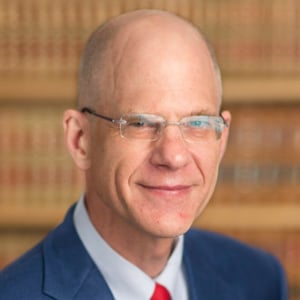
Charles W. Ebersold and Florence Whitcomb Ebersold Chair in Constitutional Law; Director, Election Law @ Moritz, Ohio State University Moritz College of Law
Professor Foley (known as “Ned”) directs Election Law @ Moritz at Ohio State’s law school, where he also holds the Ebersold Chair in Constitutional Law.
His book Ballot Battles: The History of Disputed Elections in the United States (Oxford University Press, 2016) was named Finalist for the David J. Langum, Sr. Prize in American Legal History and listed as one of 100 “must-read books about law and social justice”.
He has completed a new book manuscript, Presidential Elections and Majority Rule (to be published by Oxford University Press), which employs historical analysis to offer a feasible reform of state laws that would enable the Electoral College to operate as intended and thereby avoid the election of presidents who lack majority support among the voters in the states responsible for their Electoral College victories.
As Reporter for the American Law Institute’s Project on Election Administration (with his Mortiz colleague Steven Huefner, who served as Associate Reporter), Professor Foley drafted Principles of Law: Non-Precinct Voting and Resolution of Ballot-Counting Disputes, which provides nonpartisan guidance for the resolution of election disputes.
During his fellowship at Stanford University’s Center on Democracy, Development, and the Rule of Law, Foley wrote Due Process, Fair Play and Excessive Partisanship: A New Principle of Judicial Review of Election Law, 84 U. Chicago Law Review 655-758 (2017), which was cited in briefs in Gill v. Whitford and Benisek v. Lamone (the Supreme Court gerrymandering cases). His extensive online commentary about gerrymandering includes: Wechsler, History, and Gerrymandering, Scotusblog, and Constitutional Preservation, the Marbury Duty & Congressional Gerrymanders, Election Law Blog.
While Professor Foley has special expertise on recounts and other procedures for fairly and accurately identifying which candidate is the winner in close elections, he has written widely on all aspects of election law, including the need for nonpartisan institutions in election administration. He has also co-authored Election Law and Litigation: The Judicial Regulation of Politics (Wolters Kluwer 2014).
Professor Foley has taught at Ohio State since 1991. Previously, he clerked for Chief Judge Patricia M. Wald of the U.S. Court of Appeals and Justice Harry Blackmun of the United States Supreme Court. In 1999, he took a leave from the faculty to serve as the state solicitor in the office of Ohio’s Attorney General. In that capacity, he was responsible for the state’s appellate and constitutional cases.
Professor Foley is a graduate of Columbia University School of Law and Yale College.

Partner, Schaerr | Jaffe LLP
Erik Jaffe has been involved in appeals on a broad range of legal issues, including First Amendment challenges to campaign finance reform, Commerce Clause challenges to Health Care Reform and other federal legislation, Equal Protection Clause challenges to affirmative action in education, First Amendment challenges to school vouchers, Fifth Amendment challenges to takings of property, Second Amendment challenges to restrictions on gun ownership, and a wide variety of cases involving patents, copyrights, ERISA, securities fraud, federal preemption, environmental regulation, and other state and federal constitutional and statutory matters. He has represented businesses and non-profit groups, Judges, Senators, former government officials, Nobel Prize winners, and a broad cross-section of private individuals. Mr. Jaffe has been involved in over 120 Supreme Court matters, including filing over 30 cert. petitions, representing half-a-dozen parties on the merits, and filing over 70 amicus briefs at both the cert. and merits stages.
A 1990 graduate of the Columbia University School of Law, Mr. Jaffe was a law clerk to Judge Douglas H. Ginsburg of the United States Court of Appeals for the District of Columbia Circuit from 1990 to 1991. Following that clerkship he spent five years in litigation practice with the Washington, D.C. law firm of Williams & Connolly. In the summer of 1996 he left Williams & Connolly to clerk for Supreme Court Justice Clarence Thomas. At the end of that clerkship he started his own practice, and he was a sole practitioner from 1997 to 2018. He joined the firm of Schaerr | Jaffe LLP in 2018.
Boochever and Bird Chair for the Study and Teaching of Freedom a, UC-Davis School of Law
Alan Brownstein, a nationally recognized Constitutional Law scholar, teaches Constitutional Law, Law and Religion, and Torts at UC Davis School of Law. While the primary focus of his scholarship relates to church-state issues and free exercise and establishment clause doctrine, he has also written extensively on freedom of speech, privacy and autonomy rights, and other constitutional law subjects. His articles have been published in numerous academic journals including the Stanford Law Review, Cornell Law Review, UCLA Law Review and Constitutional Commentary. Brownstein received the UC Davis School of Law's Distinguished Teaching Award in 1995 and the UC Davis Distinguished Scholarly Public Service Award in 2008. He is a member of the American Law Institute.
Professor Brownstein has testified on several occasions before various California Senate Committees on legislation promoting religious liberty and bills that raise Establishment Clause concerns. His assistance is often sought by advocacy groups on issues relating to religious liberty and equality. He is a frequent invited lecturer at academic conferences and regularly participates as a speaker or panelist in law related programs before civic, legal, religious, and educational groups. He is the co-author of dozens of Findlaw columns discussing a range of legal issues.
A graduate of Antioch College and Harvard Law School (where he served as a Case Editor of the Harvard Law Review), Brownstein was an attorney in general litigation and corporate practice with the law firm of Tuttle & Taylor in Los Angeles before joining the UC Davis law faculty. From 1977-78, he clerked for the Honorable Frank M. Coffin, Chief Judge of the U.S. District Court of Appeals for the 1st Circuit in Portland, Maine.
"Most lawyers do not practice constitutional law," Brownstein notes, "but members of the Bar bear a special responsibility for understanding constitutional doctrine and communicating its meaning to non-lawyers. The role that constitutional law plays in our society depends in part on the interplay between courts and the political culture. If judicial decisions are unintelligible to the polity and no group accepts responsibility for explaining the Constitution's evolving meaning to the polity, we undermine part of the foundation of the constitutional scheme of things."

Associate Justice, Supreme Court of the United States
Associate Justice Brett Kavanaugh was born in Washington, D.C., on February 12, 1965. He married Ashley Estes in 2004, and they have two daughters - Margaret and Liza. He received a B.A. from Yale College in 1987 and a J.D. from Yale Law School in 1990. He served as a law clerk for Judge Walter Stapleton of the U.S. Court of Appeals for the Third Circuit from 1990-1991, for Judge Alex Kozinski of the U.S. Court of Appeals for the Ninth Circuit from 1991-1992, and for Justice Anthony M. Kennedy of the U.S. Supreme Court during the 1993 Term. In 1992-1993, he was an attorney in the Office of the Solicitor General of the United States. From 1994 to 1997 and for a period in 1998, he was Associate Counsel in the Office of Independent Counsel. He was a partner at a Washington, D.C., law firm from 1997 to 1998 and again from 1999 to 2001. From 2001 to 2003, he was Associate Counsel and then Senior Associate Counsel to President George W. Bush. From 2003 to 2006, he was Assistant to the President and Staff Secretary for President Bush. He was appointed a Judge of the United States Court of Appeals for the District of Columbia Circuit in 2006. President Donald J. Trump nominated him as an Associate Justice of the Supreme Court, and he took his seat on October 6, 2018.

Richard and Frances Mallery Professor of Law and Faculty Director, Constitutional Law Center, Stanford Law School
Michael W. McConnell is the Richard and Frances Mallery Professor and Faculty Director of the Constitutional Law Center at Stanford Law School, and a Senior Fellow at the Hoover Institution. From 2002 to 2009, he served as a Circuit Judge on the United States Court of Appeals for the Tenth Circuit. He was nominated by President George W. Bush, a Republican, and confirmed by a Democratic Senate by unanimous consent. McConnell has previously held chaired professorships at the University of Chicago and the University of Utah, and visiting professorships at Harvard and NYU. He teaches courses on constitutional law, constitutional history, First Amendment, and interpretive theory. He has published widely in the fields of constitutional law and theory, especially church and state, equal protection, and separation of powers. His book, “The President Who Would Not Be King: Executive Power Under the Constitution,” was published by Princeton University Press in 2020, based on the Tanner Lectures in Human Values, which he delivered at Princeton in 2019. His latest book, co-authored with Nathan Chapman, “Agreeing to Disagree: How the Establishment Clause Protects Religious Diversity and Freedom of Conscience,” was published by Oxford University Press in mid-2023. McConnell has argued sixteen cases in the United States Supreme Court, most recently Carney v. Adams (2020). defending a provision of the Delaware Constitution requiring political balance on that state’s courts. More recently, he was co-counsel in Gonzalez v. Google. He earned his B.A. from Michigan State University and his J.D. from the University of Chicago, and has received honorary degrees from Notre Dame University and Michigan State. He served as law clerk to Supreme Court Justice William J. Brennan, Jr. and D.C. Circuit Chief Judge J. Skelly Wright. He has been Assistant General Counsel of the Office of Management & Budget, Assistant to the Solicitor General of the Department of Justice, and a member of the President’s Intelligence Oversight Board. He is Senior of Counsel to the law firm Wilson, Sonsini, Goodrich & Rosati, and is co-chair of Meta’s Oversight Review Board.
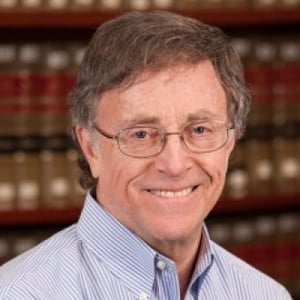
F. Elwood and Eleanor Davis Professor Emeritus of Law, The George Washington University Law School
Professor Lupu joined the law school in 1990. After graduating from law school, where he was case editor of the Harvard Law Review, he practiced law with the Boston firm of Hill & Barlow and then joined the law faculty at Boston University, where he taught from 1973 to 1989. During that time, he also served as a visiting professor at Northeastern University and at the University of California, Berkeley. In 1989–90, he was the professor-in-residence on the Appellate Staff of the Civil Division of the U.S. Department of Justice.
Professor Lupu is a nationally recognized scholar in constitutional law, with an emphasis in his writings on the religion clauses of the First Amendment. Together with his colleague Professor Robert Tuttle, Professor Lupu is the co-author of Secular Government, Religious People (Eerdmans Pub. Co., 2014) and many law journal articles.
Litigation Associate, Winston & Strawn LLP
Jacob R. Loshin is a litigation associate in Winston & Strawn's Washington, D.C. office and a member of the firm’s nationwide appellate and critical motions practice.
Before joining Winston & Strawn, Mr. Loshin served as a law clerk to the Hon. Jerry E. Smith of the U.S. Court of Appeals for the Fifth Circuit. He has also worked in business strategy and development for an education technology company.
While at Yale Law School, Mr. Loshin was senior editor of the Yale Law Journal and editor-in-chief of the Yale Journal on Regulation.
B.A., magna cum laude, in Philosophy, Politics, and Economics, Claremont McKenna College
J.D., Yale Law School

Laurence A. Tisch Professor of Law and Director, Classical Liberal Institute, New York University School of Law; Senior Fellow, The Civitas Institute, University of Texas at Austin
Richard A. Epstein is the inaugural Laurence A. Tisch Professor of Law at NYU School of Law. Prior to his joining the faculty, he was a visiting law professor at NYU from 2007 through 2009. He served as the Peter and Kirstin Bedford Senior Fellow at the Hoover Institution from 2000 to 2024. Since 2024 to the present he is a senior lecturer at the Civitas Institute at the University of Texas—Austin. Epstein is also the James Parker Hall Distinguished Service Professor of Law Emeritus and a senior lecturer at the University of Chicago. His initial law school appointment was at the University of Southern California from 1968 to 1972. Epstein received an LL.D., h.c. from the University of Ghent, 2003. He has been a member of the American Academy of Arts and Sciences since 1985 and was a Senior Fellow of the Center for Clinical Medical Ethics at the University of Chicago Division of Biological Sciences, also from 1983. to 2022 He served as editor of the Journal of Legal Studies from 1981 to 1991, and of the Journal of Law and Economics from 1991-2001. From 2001 to 2010 he was a director of the John M. Olin Program in Law and Economics at the University of Chicago.
His newest book, The Myth of Birthright Citizenship: What the Fourteenth Amendment Really Says was published in 2026 (Encounter Books). Prior to that he has published many books including, The Dubious Morality of the Modern Administrative State (Roman & Littlefield 2020).Earlier he published th Classical Liberal Constitution: The Uncertain Quest for Limited Government (Harvard 2014) iHis previous books include Design for Liberty: Private Property, Public Administration and the Rule of Law (Harvard 2011); The Case Against the Employee Free Choice Act (Hoover 2009); Supreme Neglect: How to Revive the Constitutional Protection of Property Rights (Oxford 2008); Antitrust Decrees in Theory and Practice: Why Less is More (AEI 2007); Overdose: How Excessive Government Regulation Stifles Pharmaceutical Innovation (Yale University Press. 2006); How Progressives Rewrote the Constitution (Cato 2006); Cases and Materials on Torts (Aspen Law & Business; 8th ed. 2004); Skepticism and Freedom: A Modern Case for Classical Liberalism (University of Chicago, 2003); Torts (Aspen Law & Business 1999); Principles for a Free Society: Reconciling Individual Liberty with the Common Good (Perseus Books, 1998): Mortal Peril: Our Inalienable Rights to Health Care (Addison-Wesley, 1997); Simple Rules for a Complex World (Harvard, 1995); Bargaining With the State (Princeton, 1993); Forbidden Grounds: The Case Against Employment Discrimination Laws (Harvard , 1992); Takings: Private Property and the Power of Eminent Domain (Harvard, 1985); and Modern Products Liability Law (Greenwood Press, 1980). He has also edited(with Catherine M. Sharkey) Cases and Materials on the Law of Torts (10th edition 2012).
Professor Epstein has written numerous articles on a wide range of legal and interdisciplinary subjects. He has taught courses in administrative law, antitrust law, civil procedure, communications, constitutional law, contracts, corporations, criminal law, employment discrimination law, environmental law, food and drug law health law and policy, legal history, labor law, property, real estate development and finance, jurisprudence, labor law; land use planning, patents, individual, estate and corporate taxation, Roman Law; torts, and workers' compensation.
Professor Epstein also writes a regular column for Civitas Institute, which also sponsors his podcast, The Libertarian with Charles C.W. Cooke, and Law Talk, with Cooke and John Yoo. He also does a podcast with John Batchelor. And appears regularly on the Freedom File with Judge Andrew Napolitano.
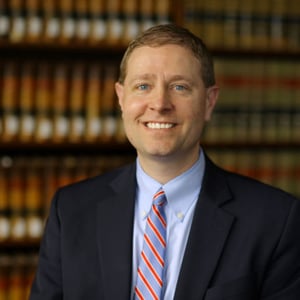
Executive Director, Salmon P. Chase Center for Civics, Culture, and Society, The Ohio State University
Professor Lee J. Strang serves as the inaugural executive director of the Salmon P. Chase Center for Civics, Culture, and Society at The Ohio State University.
Initiated in 2023 by the state of Ohio, the Chase Center will be an academic home at Ohio State for teaching, research, and programing on the foundations of the American constitutional order and its impact on society. As executive director, Professor Strang is responsible for organizing the center, overseeing the hiring and appointment of the center’s faculty, developing curriculum, and delivering student and academic programming. He also holds a faculty appointment in the Moritz College of Law at Ohio State.
Professor Strang is a nationally recognized legal scholar who has published dozens of articles in leading journals in the fields of constitutional law and interpretation, property law, and religion and the First Amendment. He co-edits the textbook Federal Constitutional Law, and his most recent book, Originalism’s Promise: A Natural Law Account of the American Constitution is the first book-length, natural law justification for originalism. He currently is writing on civic thought and leadership, and he is finalizing a book on the history of American Catholic legal education (with John M. Breen).
Before joining Ohio State, Professor Strang served as the inaugural director of the University of Toledo’s Institute of American Constitutional Thought & Leadership. He joined the Toledo College of Law faculty in 2008, was granted tenure in 2010, and was named John W. Stoepler Professor of Law & Values in 2015. The University of Toledo awarded Professor Strang its Outstanding Faculty Research and Scholarship Award in 2017. Before that, he was a visiting professor at Michigan State University College of Law. A graduate of the University of Iowa, where he was articles editor of the Iowa Law Review and Order of the Coif, Professor Strang holds an LL.M. degree from Harvard Law School.
Professor Strang has been a visiting scholar at the Georgetown Center for the Constitution and a visiting fellow at the James Madison Program at Princeton University. In 2016, he was appointed to the Ohio Advisory Committee of the U.S. Commission on Civil Rights and reappointed as chair in 2023.
Prior to teaching, Professor Strang served as a judicial clerk for Judge Alice M. Batchelder of the U.S. Court of Appeals for the Sixth Circuit. He was also an associate for Jenner & Block LLP in Chicago, where he practiced in general and appellate litigation.
Professor Strang is a frequent presenter at scholarly conferences. He is the president of the Board of Trustees of Northwest Ohio Classical Academy, Ohio’s first classical charter school. He is also a regular participant in debates at law schools across the country, a contributor to the media, and a speaker to political, civic, and religious groups.

Snyder v. Phelps - Post-Decision SCOTUScast
Calvin R. Massey
On March 2, 2011, the Supreme Court announced its decision in Snyder v. Phelps. The...
Snyder v. Phelps - Post-Argument SCOTUScast
Calvin R. Massey
On October 6, 2010 the Supreme Court heard oral argument in Snyder v. Phelps. The...
Holder v. Humanitarian Law Project - Post-Decision SCOTUScast
D Broyles
On June 21, 2010, the Supreme Court announced its decision in Holder v. Humanitarian Law...
Citizens United v. Federal Election Commission
Richard Hasen, Steve Simpson, Eugene Volokh
On January 21, 2010, the Supreme Court announced its decision in Citizens United v. FEC. ...
United States v. Stevens – Post-Decision SCOTUScast
Jacob R. Loshin
On April 20, 2010, the Supreme Court announced its decision in United States v. Stevens....
Citizens United v. Federal Election Commission – Post-Decision Debate SCOTUScast
Bradley A. Smith, Edward B. Foley, Erik S. Jaffe
On January 21, 2009, the Supreme Court announced its decision in Citizens United v. FEC. ...
Religious Liberties: Religious Liberty and the Limits of Government Power
Alan E. Brownstein, Brett M. Kavanaugh, Michael W. McConnell, Ira C. “Chip” Lupu
Religious freedom is often referred to as our "first freedom." But while many recognize that...
United States v. Stevens - Post-Argument SCOTUScast
Jacob R. Loshin
On October 6, 2009, the Supreme Court heard oral argument in United States v. Stevens....
Locke v. Karass - Post-Decision SCOTUScast
Richard A. Epstein
On January 21st, 2009, the Supreme Court announced its decision in Locke v. Karass. In...
SCOTUScast 7-20-09 featuring Lee Strang
Lee J. Strang
On Wednesday, February 25, the Supreme Court announced its decision in Pleasant Grove City v....