
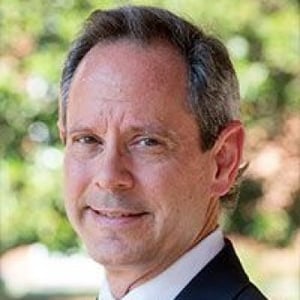
Professor, Christopher Newport University
Dr. Jeffry Morrison is Professor of American Studies at Christopher Newport University in Newport News, Virginia, and Director of Academics at the federal government’s James Madison Foundation in Alexandria, Virginia. He graduated with distinction from Boston College and from Georgetown University, where he earned the M.A. and Ph.D. in Government. Dr. Morrison has also held faculty positions at Princeton University, the U.S. Air Force Academy, Georgetown University, and Regent University. He has published as author or editor five books on American political culture, including The Political Philosophy of George Washington (Johns Hopkins University Press, 2009), and chapters, articles, and reviews in numerous scholarly publications in fields including history, political science, and religion. He has lectured at colleges and historic sites throughout the United States and in England (Hertford College, Oxford), and made media appearances on radio, in journalism, and on television (C-SPAN and the BBC).
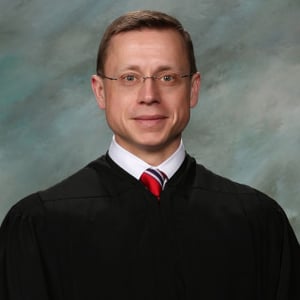
Judge, United States Court of Appeals, Fifth Circuit
Andrew Oldham is a Circuit Judge on the United States Court of Appeals for the Fifth Circuit. Before ascending to the bench, Judge Oldham served as General Counsel to Texas Governor Greg Abbott, where he advised the Governor on a range of issues under federal and state law and managed litigation in which the Governor was an interested party. Before that he served as Deputy Solicitor General for the State of Texas, where he represented Texas in federal courts across the country, including twice before the United States Supreme Court. Before moving to Texas, Judge Oldham was an attorney at Kellogg Hansen Todd Figel & Frederick in Washington, D.C. His practice focused on appellate litigation in federal courts of appeals throughout the country. Before entering private practice, Judge Oldham served as a law clerk to Justice Samuel A. Alito, Jr., at the Supreme Court of the United States and to Judge David B. Sentelle of the U.S. Court of Appeals for the District of Columbia Circuit. He also worked as an attorney-adviser in the Office of Legal Counsel at the U.S. Department of Justice from 2006 to 2008. Judge Oldham earned a B.A. from the University of Virginia with highest honors, a Truman Scholarship for graduate school, an M. Phil., first class (with distinction), from Cambridge University, and a J.D., magna cum laude, from Harvard Law School.
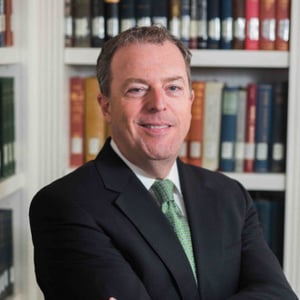
Vice President of Washington Operations and Dean of the Van Andel Graduate School of Government, Hillsdale College
Matthew Spalding is the Kirby Professor in Constitutional Government at Hillsdale College and the Dean of the Van Andel Graduate School of Government at Hillsdale College’s Washington, D.C., campus. As Vice President for Washington Operations, he also oversees the Allan P. Kirby, Jr. Center for Constitutional Studies and Citizenship and the academic and educational programs of Hillsdale in the nation’s capital.
He is the best-selling author of We Still Hold These Truths: Rediscovering Our Principles, Reclaiming Our Future, which details America’s core principles, shows how they have come under assault by modern progressive-liberalism, and lays out a strategy to recover them. Spalding is also executive editor of The Heritage Guide to the Constitution, a line-by-line analysis of each clause of the U.S. Constitution. His other books include A Sacred Union of Citizens: Washington’s Farewell Address and the American Character; Patriot Sage: George Washington and the American Political Tradition; and The Founders’ Almanac: A Practical Guide to the Notable Events, Greatest Leaders & Most Eloquent Words of the American Founding.
Prior to joining Hillsdale, Dr. Spalding was vice president of American Studies at The Heritage Foundation and founding director of its B. Kenneth Simon Center for Principles and Politics. He is a Fellow at the Claremont Institute for the Study of Statesmanship and Political Philosophy, and serves on the boards of the Steamboat Institute and the Philadelphia Society.
He received his B.A. from Claremont McKenna College and his M.A. and Ph.D. in government from the Claremont Graduate School. In addition to teaching at Hillsdale, he has taught at George Mason University, the Catholic University of America, and Claremont McKenna College. He and his wife Elizabeth, a Hillsdale alumna, reside with their two children in Arlington, Virginia.
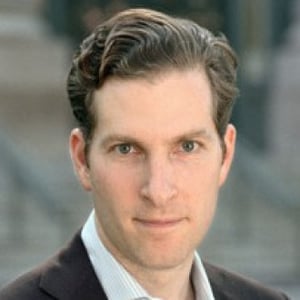
Felix Frankfurter Professor of Law and Director, Julis-Rabinowitz Program on Jewish and Israeli Law, Harvard Law School
Noah Feldman specializes in constitutional studies, with a particular emphasis on the relationship between law and religion, free speech, constitutional design, and the history of legal theory. Felix Frankfurter Professor of Law at Harvard Law School, he is also a Senior Fellow of the Society of Fellows at Harvard. In 2003 he served as senior constitutional advisor to the Coalition Provisional Authority in Iraq, and subsequently advised members of the Iraqi Governing Council on the drafting of the Transitional Administrative Law or interim constitution. He received his A.B. summa cum laude in Near Eastern Languages and Civilizations from Harvard University in 1992. Selected as a Rhodes Scholar, he earned a D.Phil. in Oriental Studies from Oxford University in 1994. From 1999 to 2002, he was a Junior Fellow of the Society of Fellows at Harvard. Before that he served as a law clerk to Justice David H. Souter of the U.S. Supreme Court (1998 to 1999) and to Chief Judge Harry T. Edwards of the U.S. Court of Appeals for the D.C. Circuit (1997 to 1998). He received his J.D. from Yale Law School in 1997, serving as Book Reviews Editor of the Yale Law Journal. He’s the author of eight books: The Three Lives of James Madison: Genius, Partisan, President (Random House, 2017); Cool War: The Future of Global Competition (Random House, 2013); Scorpions: The Battles and Triumphs of FDR’s Great Supreme Court Justices (Twelve Publishing, 2010); The Fall and Rise of the Islamic State (Princeton University Press, 2008); Divided By God: America's Church-State Problem and What We Should Do About It (Farrar, Straus & Giroux 2005); What We Owe Iraq: War and the Ethics of Nation building (Princeton University Press 2004); and After Jihad: America and the Struggle for Islamic Democracy (Farrar, Straus & Giroux 2003. He also co-authored two textbooks with Kathleen Sullivan: Constitutional Law, Twentieth Edition (Foundation Press, Fall 2019) and First Amendment (Foundation Press, 2016).
Professor of Law, Northwestern University School of Law
James Lindgren is a law professor at Northwestern University, with a BA from Yale and a JD and a PhD in (quantitative) sociology from the University of Chicago. He is a cofounder of the Section on Scholarship of the Association of American Law Schools and a former chair of its Section on Social Science and the Law. He has published in the Yale Law Journal and the Harvard, Stanford, Columbia, University of Chicago, University of Pennsylvania, California, Northwestern, Georgetown, and UCLA Law Reviews, among others. His work includes "Fall from Grace: Arming America and the Bellesiles Scandal " (Yale Law Journal, 2002) and "Term Limits for the Supreme Court: Life Tenure Reconsidered " (Harvard Journal of Law & Public Policy, 2006). In Evans v. US (1992), the US Supreme Court adopted Lindgren's view of the overlap of bribery and federal extortion. He blogs at the Washington Post.
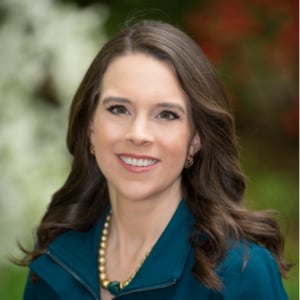
President, JCN
Carrie Campbell Severino is the president of the JCN, and co-author with Mollie Hemingway of the bestselling book Justice on Trial: The Kavanaugh Confirmation and the Future of the Court. As a go-to expert on the confirmation process, Mrs. Severino has been extensively quoted in the media. She regularly appears on television, including FOX, CNN, MSNBC, C-SPAN, and ABC’s This Week.
Severino writes and speaks on a wide range of judicial issues, including the constitutional limits on government, the federal nomination process, and state judicial selection. She has testified before Congress on constitutional questions and briefed Senators on judicial nominations, and regularly files briefs in high-profile Supreme Court cases. She was a law clerk to Supreme Court Justice Clarence Thomas and to Judge David B. Sentelle of the U.S. Court of Appeals for the D.C. Circuit, and is a graduate of Harvard Law School (J.D.), Duke University (B.A., Biology), and Michigan State University (M.A., Linguistics).

Senior Fellow and Director of Constitutional Studies, Manhattan Institute
Ilya Shapiro is a senior fellow and director of constitutional studies at the Manhattan Institute and a contributing editor of City Journal. Previously he was executive director and senior lecturer at the Georgetown Center for the Constitution, and before that a vice president of the Cato Institute.
Shapiro is the author of Lawless: The Miseducation of America’s Elites (2025) and Supreme Disorder: Judicial Nominations and the Politics of America’s Highest Court (2020), coauthor of Religious Liberties for Corporations? (2014), and editor of 11 volumes of the Cato Supreme Court Review (2008-18). He has contributed to a variety of academic, popular, and professional publications, including the Wall Street Journal, Harvard Journal of Law & Public Policy, Washington Post, Los Angeles Times, USA Today, National Review, and Newsweek. He also regularly provides commentary for various media outlets, writes the Shapiro’s Gavel newsletter on Substack, and once appeared on the Colbert Report.
Shapiro has testified many times before Congress and state legislatures and has filed more than 500 amicus curiae “friend of the court” briefs in the Supreme Court. He lectures regularly on behalf of the Federalist Society, is a member of the board of fellows of the Jewish Policy Center, was an inaugural Washington Fellow at the National Review Institute, and has been an adjunct law professor at the George Washington University and University of Mississippi. He is also the chairman of the board of advisers of the Mississippi Justice Institute, a barrister in the Edward Coke Appellate Inn of Court, and a former member of the Virginia Advisory Committee to the U.S. Commission on Civil Rights.
Earlier in his career, Shapiro was a special assistant/adviser to the Multi-National Force in Iraq on rule-of-law issues and practiced at Patton Boggs and Cleary Gottlieb. Before entering private practice, he clerked for Judge E. Grady Jolly of the U.S. Court of Appeals for the Fifth Circuit. He holds an AB from Princeton University, an MSc from the London School of Economics, and a JD from the University of Chicago Law School.
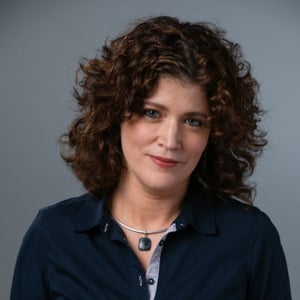
Professor of Law, Harry Radzyner Law School, Interdisciplinary Center
Rivka Weill is a Professor of Law (tenured) at the Radzyner Law School, Interdisciplinary Center (IDC). In recent years, she was a Visiting Law Professor at Cardozo Law School (2016-2017), David R. Greenbaum and Laureine Knight Greenbaum Distinguished Visiting Professor of Law at University of Chicago Law School (Fall 2017) and Visiting Law Professor at Yale Law School (Spring 2018). She earned her LLM and JSD from Yale Law School and holds an additional degree in Accounting from Tel-Aviv University. She was a clerk and legal adviser for the President of the Supreme Court of Israel, Aharon Barak. In recent years, she received three times the IDC’s “Best Researcher in Law School” award (2012, 2015, 2017) as well as the IDC’s “Best Lecturer in Law School” award (2010). Her work focuses on constitutional law as well as administrative law with a focus on theoretical and comparative dimensions. She has published in leading law journals in the United States, the United Kingdom and Israel. Professor Weill gave invited talks at prestigious universities across the United States, Europe, New Zealand and Australia.
Among her articles are Court Packing as an Antidote (Cardozo Law Review, 2020), The Strategic Common Law Court of Aharon Barak and its Aftermath: On Judicially-led Constitutional Revolutions and Democratic Backsliding (Law & Ethics of Human Rights, 2020), Secession and the Prevalence of Both Militant Democracy and Eternity Clauses Worldwide (Cardozo Law Review, 2018), On the Nexus of Eternity Clauses, Proportional Representation, and Banned Political Parties (Election Law Journal, 2017), Resurrecting Legislation (I*CON, 2016), Exodus: Structuring Redemption of Captives (Cardozo Law Review, 2014), The New Commonwealth Model of Constitutionalism Notwithstanding: On Judicial Review and Constitution-Making (American Journal of Comparative Law, 2014), Hybrid Constitutionalism: the Israeli Case for Judicial Review and Why We Should Care (Berkeley Journal of International Law, 2012), Reconciling Parliamentary Sovereignty and Judicial Review: On the Theoretical and Historical Origins of the Legislative Override Power (Hastings Constitutional Law Quarterly, 2012), Centennial to the Parliament Act 1911: the Manner and Form Fallacy (Public Law, 2012), Evolution vs. Revolution: Dueling Models of Dualism (American Journal of Comparative Law, 2006), We the British People (Public Law, 2004), Dicey was not Diceyan (Cambridge Law Journal, 2003).
Felix Frankfurter Professor of Law and Director, Julis-Rabinowitz Program on Jewish and Israeli Law, Harvard Law School
Noah Feldman specializes in constitutional studies, with a particular emphasis on the relationship between law and religion, free speech, constitutional design, and the history of legal theory. Felix Frankfurter Professor of Law at Harvard Law School, he is also a Senior Fellow of the Society of Fellows at Harvard. In 2003 he served as senior constitutional advisor to the Coalition Provisional Authority in Iraq, and subsequently advised members of the Iraqi Governing Council on the drafting of the Transitional Administrative Law or interim constitution. He received his A.B. summa cum laude in Near Eastern Languages and Civilizations from Harvard University in 1992. Selected as a Rhodes Scholar, he earned a D.Phil. in Oriental Studies from Oxford University in 1994. From 1999 to 2002, he was a Junior Fellow of the Society of Fellows at Harvard. Before that he served as a law clerk to Justice David H. Souter of the U.S. Supreme Court (1998 to 1999) and to Chief Judge Harry T. Edwards of the U.S. Court of Appeals for the D.C. Circuit (1997 to 1998). He received his J.D. from Yale Law School in 1997, serving as Book Reviews Editor of the Yale Law Journal. He’s the author of eight books: The Three Lives of James Madison: Genius, Partisan, President (Random House, 2017); Cool War: The Future of Global Competition (Random House, 2013); Scorpions: The Battles and Triumphs of FDR’s Great Supreme Court Justices (Twelve Publishing, 2010); The Fall and Rise of the Islamic State (Princeton University Press, 2008); Divided By God: America's Church-State Problem and What We Should Do About It (Farrar, Straus & Giroux 2005); What We Owe Iraq: War and the Ethics of Nation building (Princeton University Press 2004); and After Jihad: America and the Struggle for Islamic Democracy (Farrar, Straus & Giroux 2003. He also co-authored two textbooks with Kathleen Sullivan: Constitutional Law, Twentieth Edition (Foundation Press, Fall 2019) and First Amendment (Foundation Press, 2016).
Professor of Law, Northwestern University School of Law
James Lindgren is a law professor at Northwestern University, with a BA from Yale and a JD and a PhD in (quantitative) sociology from the University of Chicago. He is a cofounder of the Section on Scholarship of the Association of American Law Schools and a former chair of its Section on Social Science and the Law. He has published in the Yale Law Journal and the Harvard, Stanford, Columbia, University of Chicago, University of Pennsylvania, California, Northwestern, Georgetown, and UCLA Law Reviews, among others. His work includes "Fall from Grace: Arming America and the Bellesiles Scandal " (Yale Law Journal, 2002) and "Term Limits for the Supreme Court: Life Tenure Reconsidered " (Harvard Journal of Law & Public Policy, 2006). In Evans v. US (1992), the US Supreme Court adopted Lindgren's view of the overlap of bribery and federal extortion. He blogs at the Washington Post.
President, JCN
Carrie Campbell Severino is the president of the JCN, and co-author with Mollie Hemingway of the bestselling book Justice on Trial: The Kavanaugh Confirmation and the Future of the Court. As a go-to expert on the confirmation process, Mrs. Severino has been extensively quoted in the media. She regularly appears on television, including FOX, CNN, MSNBC, C-SPAN, and ABC’s This Week.
Severino writes and speaks on a wide range of judicial issues, including the constitutional limits on government, the federal nomination process, and state judicial selection. She has testified before Congress on constitutional questions and briefed Senators on judicial nominations, and regularly files briefs in high-profile Supreme Court cases. She was a law clerk to Supreme Court Justice Clarence Thomas and to Judge David B. Sentelle of the U.S. Court of Appeals for the D.C. Circuit, and is a graduate of Harvard Law School (J.D.), Duke University (B.A., Biology), and Michigan State University (M.A., Linguistics).
Senior Fellow and Director of Constitutional Studies, Manhattan Institute
Ilya Shapiro is a senior fellow and director of constitutional studies at the Manhattan Institute and a contributing editor of City Journal. Previously he was executive director and senior lecturer at the Georgetown Center for the Constitution, and before that a vice president of the Cato Institute.
Shapiro is the author of Lawless: The Miseducation of America’s Elites (2025) and Supreme Disorder: Judicial Nominations and the Politics of America’s Highest Court (2020), coauthor of Religious Liberties for Corporations? (2014), and editor of 11 volumes of the Cato Supreme Court Review (2008-18). He has contributed to a variety of academic, popular, and professional publications, including the Wall Street Journal, Harvard Journal of Law & Public Policy, Washington Post, Los Angeles Times, USA Today, National Review, and Newsweek. He also regularly provides commentary for various media outlets, writes the Shapiro’s Gavel newsletter on Substack, and once appeared on the Colbert Report.
Shapiro has testified many times before Congress and state legislatures and has filed more than 500 amicus curiae “friend of the court” briefs in the Supreme Court. He lectures regularly on behalf of the Federalist Society, is a member of the board of fellows of the Jewish Policy Center, was an inaugural Washington Fellow at the National Review Institute, and has been an adjunct law professor at the George Washington University and University of Mississippi. He is also the chairman of the board of advisers of the Mississippi Justice Institute, a barrister in the Edward Coke Appellate Inn of Court, and a former member of the Virginia Advisory Committee to the U.S. Commission on Civil Rights.
Earlier in his career, Shapiro was a special assistant/adviser to the Multi-National Force in Iraq on rule-of-law issues and practiced at Patton Boggs and Cleary Gottlieb. Before entering private practice, he clerked for Judge E. Grady Jolly of the U.S. Court of Appeals for the Fifth Circuit. He holds an AB from Princeton University, an MSc from the London School of Economics, and a JD from the University of Chicago Law School.
Professor of Law, Harry Radzyner Law School, Interdisciplinary Center
Rivka Weill is a Professor of Law (tenured) at the Radzyner Law School, Interdisciplinary Center (IDC). In recent years, she was a Visiting Law Professor at Cardozo Law School (2016-2017), David R. Greenbaum and Laureine Knight Greenbaum Distinguished Visiting Professor of Law at University of Chicago Law School (Fall 2017) and Visiting Law Professor at Yale Law School (Spring 2018). She earned her LLM and JSD from Yale Law School and holds an additional degree in Accounting from Tel-Aviv University. She was a clerk and legal adviser for the President of the Supreme Court of Israel, Aharon Barak. In recent years, she received three times the IDC’s “Best Researcher in Law School” award (2012, 2015, 2017) as well as the IDC’s “Best Lecturer in Law School” award (2010). Her work focuses on constitutional law as well as administrative law with a focus on theoretical and comparative dimensions. She has published in leading law journals in the United States, the United Kingdom and Israel. Professor Weill gave invited talks at prestigious universities across the United States, Europe, New Zealand and Australia.
Among her articles are Court Packing as an Antidote (Cardozo Law Review, 2020), The Strategic Common Law Court of Aharon Barak and its Aftermath: On Judicially-led Constitutional Revolutions and Democratic Backsliding (Law & Ethics of Human Rights, 2020), Secession and the Prevalence of Both Militant Democracy and Eternity Clauses Worldwide (Cardozo Law Review, 2018), On the Nexus of Eternity Clauses, Proportional Representation, and Banned Political Parties (Election Law Journal, 2017), Resurrecting Legislation (I*CON, 2016), Exodus: Structuring Redemption of Captives (Cardozo Law Review, 2014), The New Commonwealth Model of Constitutionalism Notwithstanding: On Judicial Review and Constitution-Making (American Journal of Comparative Law, 2014), Hybrid Constitutionalism: the Israeli Case for Judicial Review and Why We Should Care (Berkeley Journal of International Law, 2012), Reconciling Parliamentary Sovereignty and Judicial Review: On the Theoretical and Historical Origins of the Legislative Override Power (Hastings Constitutional Law Quarterly, 2012), Centennial to the Parliament Act 1911: the Manner and Form Fallacy (Public Law, 2012), Evolution vs. Revolution: Dueling Models of Dualism (American Journal of Comparative Law, 2006), We the British People (Public Law, 2004), Dicey was not Diceyan (Cambridge Law Journal, 2003).
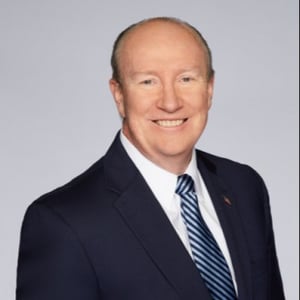
Senior Fellow, National Review
Bestselling author Andrew C. McCarthy is a contributing editor at National Review, a senior fellow at National Review Institute, and a Fox News contributor. He is a former Chief Assistant United States Attorney in the Southern District of New York and led the terrorism prosecution against the “Blind Sheikh” (Omar Abdel Rahman) and eleven other jihadists for conducting a war of urban terrorism against the United States that included the 1993 World Trade Center bombing and a plot to bomb New York City landmarks. During is 20-year career as a prosecutor, he received numerous honors, including the Justice Department’s highest awards. Andy speaks and writes widely on law and national security, radical Islam, politics, and culture. He has testified before Congress as an expert on issues of constitutional law, counterterrorism, and law-enforcement. He is a columnist for The Hill, and his essays and book reviews appear frequently at The New Criterion. His most recent New York Times bestselling book is Ball of Collusion (Encounter Books, 2019), about the Russiagate controversy (an updated version was published in 2020). His other books include Willful Blindness (2008), The Grand Jihad (2010), Spring Fever: The Illusion of Islamic Democracy (2012), and Faithless Execution (2014). He has also written several pamphlets in the Broadside series published by Encounter Books, most recently Islam and Free Speech (2015).

Laurence A. Tisch Professor of Law and Director, Classical Liberal Institute, New York University School of Law; Director, Classical Liberal Institute, Civitas Institute University of Texas at Austin
Richard A. Epstein is the Laurence A. Tisch Professor of Law, at New York University, a senior research fellow at the Civitas Institute at the University of Texas Austin, and a senior Lecturer, the University of Chicago. He received an LL.D., h.c . from the University of Ghent, 2003 , and an LLD h.c . from the University of Siegen in 2018 and the Bradley Prize in 2011. He has been a member of the American Academy of Arts and Sciences since 1985. He has edited both the Journal of Legal Studies (1981-1991) and the Journal of Law and Economics (1991-2001). He is also a founder and director of the Classical Liberal Institute at NYU Law School. His most recent book is The Classical Liberal Constitution: The Uncertain Quest for Limited Government (2014). His other books include Takings: Private Property and the Power of Eminent Domain ( 1985); Bargaining with the State (1993); Simple Rules for a Complex World (1995); Principles for a Free Society: Reconciling Individual Liberty and the Common Good (1998); Skepticism and Freedom: A Modern Theory of Classical Liberalism (2003); Design for Liberty: Private Property, Public Administration and the Rule of Law (2011), and most recently, The Myth of Birthright citizenship—and Beyond (2026). He has taught courses in , administrative law, antitrust, constitutional, contracts, environmental law, land use planning; real property, torts and water law. He has written and spoken extensively on a wide range of topics, and is writes a regular column for Defining Ideas.
Laurence H. Silberman Chair in Constitutional Governance, American Enterprise Institute; Executive Director, Antonin Scalia Law School’s C. Boyden Gray Center for the Study of the Administrative State
Adam J. White is the Laurence H. Silberman Chair in Constitutional Governance and senior fellow at the American Enterprise Institute, where he focuses on the Supreme Court and the administrative state. He also directs the Antonin Scalia Law School’s C. Boyden Gray Center for the Study of the Administrative State.
He writes on regulation and constitutional government for a variety of publications. He practiced law in Washington, D.C., after clerking for the D.C. Circuit's Judge David Sentelle. He also has been chairman of the ABA's Administrative Law Section.
In 2021, he served on the Presidential Commission on the Supreme Court of the United States, where he criticized “Court packing” and other efforts to restructure the Supreme Court.
Laurence A. Tisch Professor of Law and Director, Classical Liberal Institute, New York University School of Law; Director, Classical Liberal Institute, Civitas Institute University of Texas at Austin
Richard A. Epstein is the Laurence A. Tisch Professor of Law, at New York University, a senior research fellow at the Civitas Institute at the University of Texas Austin, and a senior Lecturer, the University of Chicago. He received an LL.D., h.c . from the University of Ghent, 2003 , and an LLD h.c . from the University of Siegen in 2018 and the Bradley Prize in 2011. He has been a member of the American Academy of Arts and Sciences since 1985. He has edited both the Journal of Legal Studies (1981-1991) and the Journal of Law and Economics (1991-2001). He is also a founder and director of the Classical Liberal Institute at NYU Law School. His most recent book is The Classical Liberal Constitution: The Uncertain Quest for Limited Government (2014). His other books include Takings: Private Property and the Power of Eminent Domain ( 1985); Bargaining with the State (1993); Simple Rules for a Complex World (1995); Principles for a Free Society: Reconciling Individual Liberty and the Common Good (1998); Skepticism and Freedom: A Modern Theory of Classical Liberalism (2003); Design for Liberty: Private Property, Public Administration and the Rule of Law (2011), and most recently, The Myth of Birthright citizenship—and Beyond (2026). He has taught courses in , administrative law, antitrust, constitutional, contracts, environmental law, land use planning; real property, torts and water law. He has written and spoken extensively on a wide range of topics, and is writes a regular column for Defining Ideas.
Laurence H. Silberman Chair in Constitutional Governance, American Enterprise Institute; Executive Director, Antonin Scalia Law School’s C. Boyden Gray Center for the Study of the Administrative State
Adam J. White is the Laurence H. Silberman Chair in Constitutional Governance and senior fellow at the American Enterprise Institute, where he focuses on the Supreme Court and the administrative state. He also directs the Antonin Scalia Law School’s C. Boyden Gray Center for the Study of the Administrative State.
He writes on regulation and constitutional government for a variety of publications. He practiced law in Washington, D.C., after clerking for the D.C. Circuit's Judge David Sentelle. He also has been chairman of the ABA's Administrative Law Section.
In 2021, he served on the Presidential Commission on the Supreme Court of the United States, where he criticized “Court packing” and other efforts to restructure the Supreme Court.
Felix Frankfurter Professor of Law and Director, Julis-Rabinowitz Program on Jewish and Israeli Law, Harvard Law School
Noah Feldman specializes in constitutional studies, with a particular emphasis on the relationship between law and religion, free speech, constitutional design, and the history of legal theory. Felix Frankfurter Professor of Law at Harvard Law School, he is also a Senior Fellow of the Society of Fellows at Harvard. In 2003 he served as senior constitutional advisor to the Coalition Provisional Authority in Iraq, and subsequently advised members of the Iraqi Governing Council on the drafting of the Transitional Administrative Law or interim constitution. He received his A.B. summa cum laude in Near Eastern Languages and Civilizations from Harvard University in 1992. Selected as a Rhodes Scholar, he earned a D.Phil. in Oriental Studies from Oxford University in 1994. From 1999 to 2002, he was a Junior Fellow of the Society of Fellows at Harvard. Before that he served as a law clerk to Justice David H. Souter of the U.S. Supreme Court (1998 to 1999) and to Chief Judge Harry T. Edwards of the U.S. Court of Appeals for the D.C. Circuit (1997 to 1998). He received his J.D. from Yale Law School in 1997, serving as Book Reviews Editor of the Yale Law Journal. He’s the author of eight books: The Three Lives of James Madison: Genius, Partisan, President (Random House, 2017); Cool War: The Future of Global Competition (Random House, 2013); Scorpions: The Battles and Triumphs of FDR’s Great Supreme Court Justices (Twelve Publishing, 2010); The Fall and Rise of the Islamic State (Princeton University Press, 2008); Divided By God: America's Church-State Problem and What We Should Do About It (Farrar, Straus & Giroux 2005); What We Owe Iraq: War and the Ethics of Nation building (Princeton University Press 2004); and After Jihad: America and the Struggle for Islamic Democracy (Farrar, Straus & Giroux 2003. He also co-authored two textbooks with Kathleen Sullivan: Constitutional Law, Twentieth Edition (Foundation Press, Fall 2019) and First Amendment (Foundation Press, 2016).
Professor of Law, Northwestern University School of Law
James Lindgren is a law professor at Northwestern University, with a BA from Yale and a JD and a PhD in (quantitative) sociology from the University of Chicago. He is a cofounder of the Section on Scholarship of the Association of American Law Schools and a former chair of its Section on Social Science and the Law. He has published in the Yale Law Journal and the Harvard, Stanford, Columbia, University of Chicago, University of Pennsylvania, California, Northwestern, Georgetown, and UCLA Law Reviews, among others. His work includes "Fall from Grace: Arming America and the Bellesiles Scandal " (Yale Law Journal, 2002) and "Term Limits for the Supreme Court: Life Tenure Reconsidered " (Harvard Journal of Law & Public Policy, 2006). In Evans v. US (1992), the US Supreme Court adopted Lindgren's view of the overlap of bribery and federal extortion. He blogs at the Washington Post.
President, JCN
Carrie Campbell Severino is the president of the JCN, and co-author with Mollie Hemingway of the bestselling book Justice on Trial: The Kavanaugh Confirmation and the Future of the Court. As a go-to expert on the confirmation process, Mrs. Severino has been extensively quoted in the media. She regularly appears on television, including FOX, CNN, MSNBC, C-SPAN, and ABC’s This Week.
Severino writes and speaks on a wide range of judicial issues, including the constitutional limits on government, the federal nomination process, and state judicial selection. She has testified before Congress on constitutional questions and briefed Senators on judicial nominations, and regularly files briefs in high-profile Supreme Court cases. She was a law clerk to Supreme Court Justice Clarence Thomas and to Judge David B. Sentelle of the U.S. Court of Appeals for the D.C. Circuit, and is a graduate of Harvard Law School (J.D.), Duke University (B.A., Biology), and Michigan State University (M.A., Linguistics).
Senior Fellow and Director of Constitutional Studies, Manhattan Institute
Ilya Shapiro is a senior fellow and director of constitutional studies at the Manhattan Institute and a contributing editor of City Journal. Previously he was executive director and senior lecturer at the Georgetown Center for the Constitution, and before that a vice president of the Cato Institute.
Shapiro is the author of Lawless: The Miseducation of America’s Elites (2025) and Supreme Disorder: Judicial Nominations and the Politics of America’s Highest Court (2020), coauthor of Religious Liberties for Corporations? (2014), and editor of 11 volumes of the Cato Supreme Court Review (2008-18). He has contributed to a variety of academic, popular, and professional publications, including the Wall Street Journal, Harvard Journal of Law & Public Policy, Washington Post, Los Angeles Times, USA Today, National Review, and Newsweek. He also regularly provides commentary for various media outlets, writes the Shapiro’s Gavel newsletter on Substack, and once appeared on the Colbert Report.
Shapiro has testified many times before Congress and state legislatures and has filed more than 500 amicus curiae “friend of the court” briefs in the Supreme Court. He lectures regularly on behalf of the Federalist Society, is a member of the board of fellows of the Jewish Policy Center, was an inaugural Washington Fellow at the National Review Institute, and has been an adjunct law professor at the George Washington University and University of Mississippi. He is also the chairman of the board of advisers of the Mississippi Justice Institute, a barrister in the Edward Coke Appellate Inn of Court, and a former member of the Virginia Advisory Committee to the U.S. Commission on Civil Rights.
Earlier in his career, Shapiro was a special assistant/adviser to the Multi-National Force in Iraq on rule-of-law issues and practiced at Patton Boggs and Cleary Gottlieb. Before entering private practice, he clerked for Judge E. Grady Jolly of the U.S. Court of Appeals for the Fifth Circuit. He holds an AB from Princeton University, an MSc from the London School of Economics, and a JD from the University of Chicago Law School.
Professor of Law, Harry Radzyner Law School, Interdisciplinary Center
Rivka Weill is a Professor of Law (tenured) at the Radzyner Law School, Interdisciplinary Center (IDC). In recent years, she was a Visiting Law Professor at Cardozo Law School (2016-2017), David R. Greenbaum and Laureine Knight Greenbaum Distinguished Visiting Professor of Law at University of Chicago Law School (Fall 2017) and Visiting Law Professor at Yale Law School (Spring 2018). She earned her LLM and JSD from Yale Law School and holds an additional degree in Accounting from Tel-Aviv University. She was a clerk and legal adviser for the President of the Supreme Court of Israel, Aharon Barak. In recent years, she received three times the IDC’s “Best Researcher in Law School” award (2012, 2015, 2017) as well as the IDC’s “Best Lecturer in Law School” award (2010). Her work focuses on constitutional law as well as administrative law with a focus on theoretical and comparative dimensions. She has published in leading law journals in the United States, the United Kingdom and Israel. Professor Weill gave invited talks at prestigious universities across the United States, Europe, New Zealand and Australia.
Among her articles are Court Packing as an Antidote (Cardozo Law Review, 2020), The Strategic Common Law Court of Aharon Barak and its Aftermath: On Judicially-led Constitutional Revolutions and Democratic Backsliding (Law & Ethics of Human Rights, 2020), Secession and the Prevalence of Both Militant Democracy and Eternity Clauses Worldwide (Cardozo Law Review, 2018), On the Nexus of Eternity Clauses, Proportional Representation, and Banned Political Parties (Election Law Journal, 2017), Resurrecting Legislation (I*CON, 2016), Exodus: Structuring Redemption of Captives (Cardozo Law Review, 2014), The New Commonwealth Model of Constitutionalism Notwithstanding: On Judicial Review and Constitution-Making (American Journal of Comparative Law, 2014), Hybrid Constitutionalism: the Israeli Case for Judicial Review and Why We Should Care (Berkeley Journal of International Law, 2012), Reconciling Parliamentary Sovereignty and Judicial Review: On the Theoretical and Historical Origins of the Legislative Override Power (Hastings Constitutional Law Quarterly, 2012), Centennial to the Parliament Act 1911: the Manner and Form Fallacy (Public Law, 2012), Evolution vs. Revolution: Dueling Models of Dualism (American Journal of Comparative Law, 2006), We the British People (Public Law, 2004), Dicey was not Diceyan (Cambridge Law Journal, 2003).
Laurence A. Tisch Professor of Law and Director, Classical Liberal Institute, New York University School of Law; Director, Classical Liberal Institute, Civitas Institute University of Texas at Austin
Richard A. Epstein is the Laurence A. Tisch Professor of Law, at New York University, a senior research fellow at the Civitas Institute at the University of Texas Austin, and a senior Lecturer, the University of Chicago. He received an LL.D., h.c . from the University of Ghent, 2003 , and an LLD h.c . from the University of Siegen in 2018 and the Bradley Prize in 2011. He has been a member of the American Academy of Arts and Sciences since 1985. He has edited both the Journal of Legal Studies (1981-1991) and the Journal of Law and Economics (1991-2001). He is also a founder and director of the Classical Liberal Institute at NYU Law School. His most recent book is The Classical Liberal Constitution: The Uncertain Quest for Limited Government (2014). His other books include Takings: Private Property and the Power of Eminent Domain ( 1985); Bargaining with the State (1993); Simple Rules for a Complex World (1995); Principles for a Free Society: Reconciling Individual Liberty and the Common Good (1998); Skepticism and Freedom: A Modern Theory of Classical Liberalism (2003); Design for Liberty: Private Property, Public Administration and the Rule of Law (2011), and most recently, The Myth of Birthright citizenship—and Beyond (2026). He has taught courses in , administrative law, antitrust, constitutional, contracts, environmental law, land use planning; real property, torts and water law. He has written and spoken extensively on a wide range of topics, and is writes a regular column for Defining Ideas.
Laurence H. Silberman Chair in Constitutional Governance, American Enterprise Institute; Executive Director, Antonin Scalia Law School’s C. Boyden Gray Center for the Study of the Administrative State
Adam J. White is the Laurence H. Silberman Chair in Constitutional Governance and senior fellow at the American Enterprise Institute, where he focuses on the Supreme Court and the administrative state. He also directs the Antonin Scalia Law School’s C. Boyden Gray Center for the Study of the Administrative State.
He writes on regulation and constitutional government for a variety of publications. He practiced law in Washington, D.C., after clerking for the D.C. Circuit's Judge David Sentelle. He also has been chairman of the ABA's Administrative Law Section.
In 2021, he served on the Presidential Commission on the Supreme Court of the United States, where he criticized “Court packing” and other efforts to restructure the Supreme Court.

American Cincinnatus: George Washington Lays Down His Sword
Jeffry Morrison, Andrew Oldham, Matthew Spalding
Can you imagine Julius Caesar willingly turning back power? History is littered with examples of...
Court-Packing, Term Limits, and More: The Debate Over Reforming the Judiciary
Noah Feldman, James T. Lindgren, Carrie Campbell Severino, Ilya Shapiro, Rivka Weill, Nicholas Marr
On December 16, 2020, The Federalist Society's Federalism and Separation of Powers Practice Group hosted...
Court-Packing, Term Limits, and More: The Debate Over Reforming the Judiciary
Noah Feldman, James T. Lindgren, Carrie Campbell Severino, Ilya Shapiro, Rivka Weill, Nicholas Marr
On December 16, 2020, The Federalist Society's Federalism and Separation of Powers Practice Group hosted...
Court-Packing, Term Limits, and More: The Debate Over Reforming the Judiciary
Federalism and Separation of Powers Practice Group Teleforum
TeleforumTopics
Do Term Limits Make a Difference?
The Federalist Society is pleased to announce its Student Blog Initiative, a project of the...
The Accidental Defender of the Constitution
Andrew McCarthy
A Review of Defender in Chief: Donald Trump’s Fight for Presidential Power, by John Yoo,...
Deep Dive Episode 121 – Book Review: The Dubious Morality of Modern Administrative Law
Richard A. Epstein, Adam White
Prof. Richard Epstein’s The Dubious Morality of Modern Administrative Law examines how the growth of the administrative...
Book Review: The Dubious Morality of Modern Administrative Law by Richard Epstein
Richard A. Epstein, Adam White
Richard Epstein’s The Dubious Morality of Modern Administrative Law examines how the growth of the...
Book Review: The Dubious Morality of Modern Administrative Law by Richard Epstein
TeleforumTopics
The Founding Isn't The Problem — It's The Solution
Traditionally, the Fourth of July has been a day for thankful celebration of the precious...