

President and Managing Director, The Arctic Institute
Dr. Romain Chuffart is the President and Managing Director of The Arctic Institute.
He is one of the co-hosts of The Arctic Institute’s Bookshelf Podcast. Before his appointment as Managing Director in September 2022, Romain served as Internal Communication Manager on The Arctic Institute’s Leadership board. Romain was also a contributing writer to the Institute’s weekly publication, The Arctic This Week App. He also serves as the TAI project manager for the “Challenges to Ocean Governance: Regional Disputes, Global Consequences? (OceanGov)” and Arctic Geopolitics in a New Era (GEOARC) in partnership with the Fridtjof Nansen Institute.
His research interests include human rights and the rights of Indigenous Peoples, international environmental law, Arctic cooperation and ocean governance. Romain also conducts more theoretical research on public international law combining insights from political theory, international relations, political geography, and other social sciences.
Romain is the current Nansen Professor in Arctic Studies (2024/2025) at the University of Akureyri, Iceland. He holds a PhD in law from Durham University in the United Kingdom. Between 2019 and 2023, Romain was part of the Durham Arctic Research Centre for Training and Interdisciplinary Collaboration (DurhamARCTIC). At Durham, his research focused on Indigenous rights and Arctic environmental governance. Romain also holds a MA in Polar Law from the University of Akureyri, Iceland.
He has published several articles in Arctic-specific journals on Arctic governance and Indigenous rights, such as The Yearbook of Polar Law, the Arctic Yearbook, and the Polar Journa
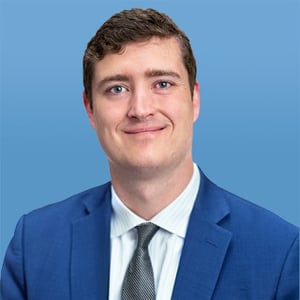
Senior Fellow in National Security Affairs, American Foreign Policy Council
Alexander Gray joined AFPC as a Senior Fellow in National Security Affairs in February 2021. His work focuses on U.S. security and defense strategy in the Indo-Pacific; U.S.-China competition globally, particularly in the Pacific Islands and the Polar Regions; U.S. defense strategy and modernization for an era of Great Power competition; and the intersection of U.S. national and economic security.
Mr. Gray most recently served as Deputy Assistant to the President and Chief of Staff of the National Security Council (NSC) at the White House, where he was responsible for the management of the National Security Advisor’s Front Office and the budget, security, and personnel functions of the NSC. Previously, Mr. Gray served as Special Assistant to the President for the Defense Industrial Base at the White House National Economic Council (NEC). He was the principal Executive Office of the President official focused on the health and resiliency of the defense and manufacturing industrial base and U.S. maritime industry. Mr. Gray played a key role in Executive Order 13806, the first-ever whole-of-government assessment of the U.S. defense industrial base.
Additionally, Mr. Gray was the Director for Oceania & Indo-Pacific Security at the NSC, the first NSC Director ever focused primarily on Australia, New Zealand, and the Pacific Islands. Mr. Gray represented the U.S. at the 2019 Presidential Inauguration in the Federated States of Micronesia; the 2019 Pacific Islands Forum in Tuvalu; and at numerous U.S.-Australia-New Zealand strategic dialogues and intelligence exchanges.
Earlier in his career, Mr. Gray was a Member of the 2016 Presidential Transition Team at the U.S. Department of State and served as Senior Advisor to former U.S. Rep. J. Randy Forbes, a senior Member of the House Armed Services Committee. Mr. Gray is currently a Member of the Board of Visitors of the U.S. Coast Guard Academy for a three-year term. He is a recipient of the Secretary of Defense Medal for Outstanding Public Service and the National Security Council’s Outstanding Service Award.
Mr. Gray’s writings have appeared in Foreign Policy, The National Interest, National Review Online, The Weekly Standard, Naval War College Review, Strategic Studies Quarterly, and the Proceedings of the U.S. Naval Institute. He is a graduate of the Elliott School of International Affairs at George Washington University.
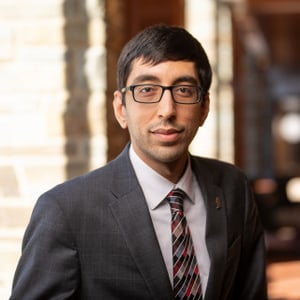
Judicial Law Clerk, U.S. District Court for the Southern District of Florida
Nitin is a recent graduate of Cornell Law School. Before his time in Ithaca, he majored in International Studies and Political Science at Johns Hopkins University and focused on power competition in South Asia during his graduate studies at the University of Oxford.
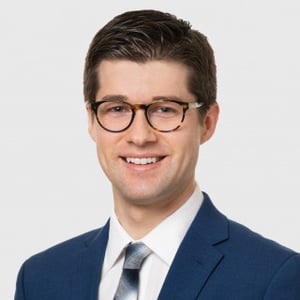
Director, Americas Program, Center for Strategic and International Studies
Ryan C. Berg is director of the Americas Program and head of the Future of Venezuela Initiative at the Center for Strategic and International Studies. He is also an adjunct professor at the Catholic University of America and a course coordinator at the United States Foreign Service Institute. His research focuses on U.S.-Latin America relations, strategic competition and defense policy, authoritarian regimes, armed conflict and transnational organized crime, and trade and development issues. Previously, Dr. Berg was a research fellow at the American Enterprise Institute, where he helped lead its Latin America Studies Program, as well as visiting research fellow at the University of Oxford’s Changing Character of War Programme. Dr. Berg was a Fulbright scholar in Brazil and is a Council on Foreign Relations Term Member. He has been published in a variety of peer-reviewed academic and policy-oriented journals, including The Lancet, Migration and Development, the SAIS Review of International Affairs, and the Georgetown Security Studies Review. His articles have appeared in Foreign Affairs, Foreign Policy, CNN.com, Los Angeles Times, and World Politics Review, among other outlets. He routinely testifies before the Senate Foreign Relations Committee and the House Foreign Affairs Committee. Dr. Berg obtained a PhD and an MPhil in political science and an MSc in global governance and diplomacy from the University of Oxford, where he was a Senior Hulme Fellow. Earlier, he obtained a BA in government and theology from Georgetown University. He is fluent in Spanish and Portuguese and is conversational in Slovenian.
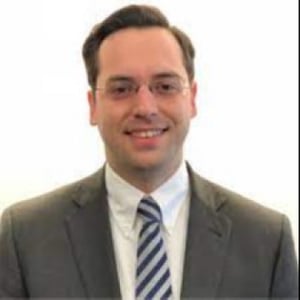
CEO & Chairman of the Board, NeWay Capital and Próspera
Erick started his career in investment banking at Brown Brothers Harriman & Co, before working as an M&A advisor for AG Edwards & Sons (now Wells Fargo). He then joined Ernst & Young’s London advisory practice. After that, he led the creation of multiple business units as CFO of LATAM at the Borealis Group, and as an entrepreneur in the financial services industry. Erick is a member of the Society for International Development, in Washington DC.
Executive Director, Center for a Secure Free Society
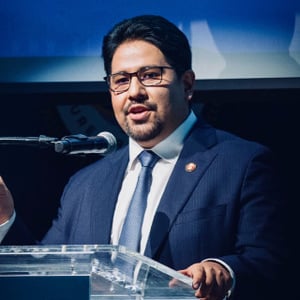
Joseph M. Humire is a national security expert, specialized in analyzing Transregional Threat Networks in the Western Hemisphere. Mr. Humire provides regular briefings on countering China, Russia, and Iran’s authoritarian influence in Latin America and the Caribbean, as well as combating the convergence of international terrorism and transnational organized crime. Mr. Humire has testified numerous times before the U.S. Congress as well as the European and Canadian Parliament and in 2023 was awarded an Order of Defense Merit Medial from the Colombian Armed Forces.
Mr. Humire is a regular national security commentator and contributor for a variety of English and Spanish language media and has a regular weekly radio segment called the #NewWorldReport on the nationally syndicated show and podcast CBS Eye on the World with John Batchelor and is the host of the Border Wars Podcast available on all digital platforms. Mr. Humire has published in both languages for various newspapers and academic journals across the Americas and released his first book in 2014 titled Iran’s Strategic Penetration of Latin America, published by Lexington Books. More recently, in 2019, he wrote the foreword for the latest book by Dr. Max G. Manwaring, titled Confronting the Evolving Global Security Landscape published by Praeger Security International.
Mr. Humire currently serves as the executive director of the national security think tank—Center for a Secure Free Society (SFS)—based in the Washington D.C. metropolitan area. Prior to SFS, he served in the U.S. Marine Corps with a combat tour in Iraq and a multinational training exercise UNITAS in Latin America and the Caribbean. After leaving the military, he graduated from George Mason University with a degree in Economics and Global Affairs. Mr. Humire began building SFS’s global network of more than 100 security scholars in almost 30 countries worldwide as the Director of Institute Relations at the Atlas Economic Research Foundation. He is currently a visiting fellow at The Heritage Foundation’s Allison Center for National Security and a visiting professor-of-practice at Florida International University’s Adam Smith Center for Economic Freedom.

Director, Asia & Latin American Program, Inter-American Dialogue
Margaret Myers is director of the Asia & Latin America Program at the Inter-American Dialogue, adjunct researcher with the Núcleo Milenio sobre los Impactos de China en América Latina (ICLAC), and a senior advisor to the United States Institute of Peace. She established the Dialogue’s China and Latin America Working Group in 2011 to examine China’s growing presence in Latin America and the Caribbean. Myers also developed the China-Latin America Finance Database, the first publicly available source of empirical data on Chinese state lending in Latin America, in cooperation with Global China Initiative at Boston University’s Global Development Policy Center.
In addition to maintaining the Dialogue’s China and Latin America and 美洲对话 blogs, Myers has published numerous articles on Chinese leadership dynamics, international capital flows, Chinese agricultural policy, and Asia-Latin America relations, among other topics. The Political Economy of China-Latin America Relations and The Changing Currents of Trans-Pacific Integration: China, the TPP, and Beyond, her co-edited volumes with Dr. Carol Wise and Dr. Adrian Hearn, respectively, were published in 2016. Myers has testified before the House Committee on Foreign Affairs, the Senate Finance and Foreign Relations Committees, and the US-China Security and Economic Commission on the China-Latin America relationship. She is also regularly featured in major domestic and international media, including the Economist, Financial Times, New York Times, The Wall Street Journal, El Comercio, El País, Folha de São Paulo, CNN en Español, and BBC. In 2018, she was identified by Global Americans as part of the “new generation of public intellectuals.”
Before arriving at the Dialogue, Myers worked as a Latin America analyst and China analyst for the US Department of Defense, during which time she was deployed with the US Navy in support of Partnership of the Americas. Myers has also worked as a senior China analyst for Science Applications International Corporation; a consultant for the Inter-American Development Bank; a faculty member at Georgetown University, the George Washington University, and Johns Hopkins SAIS; a mentor for the Indian Foreign Policy Research Institute’s School of Foreign Policy; and for Fauquier County Schools, where she developed the county’s first Mandarin language program. Myers received her bachelor’s degree from the University of Virginia and conducted her graduate work at The George Washington University, Zhejiang University of Technology, and the Johns Hopkins University/Nanjing University Center for Chinese-American Studies. Myers was a Council on Foreign Relations term member. She was also the recipient of a Freeman fellowship for China studies, a Fulbright Specialist grant to research China-Colombia relations in Bogotá, and a Woodrow Wilson Center fellowship to write a forthcoming book on China-Latin America relations.
Judicial Law Clerk, U.S. District Court for the Southern District of Florida
Nitin is a recent graduate of Cornell Law School. Before his time in Ithaca, he majored in International Studies and Political Science at Johns Hopkins University and focused on power competition in South Asia during his graduate studies at the University of Oxford.

Senior Fellow, Fletcher School of Law and Diplomacy, Tufts University
Mihaela Papa is a Senior Fellow at the Fletcher School, where she has co-founded and led the Rising Power Alliances project and served as faculty in sustainable development and global governance.
Papa is an expert in negotiation strategy and coalition building, with a focus on BRICS and the transition to sustainability. She started her BRICS research as postdoctoral fellow at Harvard Law School and a visiting scholar at Fudan University's Center for BRICS Studies. Her recent publications analyze BRICS convergence and BRICS-US relations (EJIR, 2023), whether BRICS can de-dollarize global finance (CUP 2022 and ISA-West award), and BRICS resilience (Global Policy 2021). Her publications on environmental foreign policy, climate diplomacy, and global governance appeared in Global Environmental Politics, Global Environmental Change, Climate Policy, and other journals. Her commentary was featured in Foreign Affairs and The Conversation, as well as on CNN, Bloomberg, BBC, AP, News24, the South China Morning Post, and other media outlets.
Papa is also an active practitioner with a proven track record advising institutions on global strategies and leading international collaborations and programs, including at MIT and the Croatian Ministry of Foreign Affairs. She served as a consultant for the U.S. government, the European Commission, and the International Institute for Sustainable Development. Originally a trade economist with a BA from Croatia, she completed her MA in Law and Diplomacy and PhD in International Relations at The Fletcher School, Tufts University.
United States Senator, Tennessee
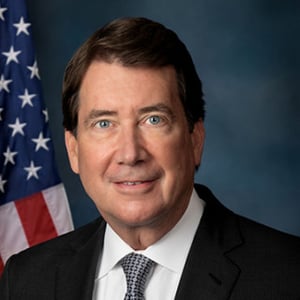
United States Senator Bill Hagerty was elected to the U.S. Senate in 2020 and is currently serving his first term representing the state of Tennessee. His committee assignments include: U.S. Senate Committee on Banking, Housing, & Urban Affairs; U.S. Senate Committee on Foreign Relations; U.S. Senate Committee on Appropriations; and the U.S. Senate Committee on Rules & Administration. Prior to his election to the U.S. Senate, Hagerty served as the U.S. Ambassador to Japan.
Hagerty is a life-long businessman. He started his business career with the Boston Consulting Group, where his work took him to five continents, including three years based in Tokyo, Japan. He later became a venture capital and private equity investor where he invested in and served as an executive and board member of a wide range of companies, including ones listed on the New York Stock Exchange and NASDAQ. From 2011 to 2014, Hagerty took leave from his business career to serve as a member of the Governor’s Cabinet and Commissioner of the Tennessee Department of Economic and Community Development.
Hagerty, an Eagle Scout, is originally from Sumner County, Tennessee. Today, he and his wife Chrissy are both active volunteers in several community and civic organizations, and live in Davidson County, Tennessee. They are the parents of four children.

Senior Legal Fellow, Courts and the Constitution, Legal Policy Center, The Heritage Foundation
Zack is a Senior Legal Fellow of Courts and the Constitution at The Heritage Foundation.
He previously served for several years as an Assistant United States Attorney in the Northern District of Florida. Prior to that, he spent two years as an associate in the Washington, D.C. office of Cleary Gottlieb Steen & Hamilton, which he joined after clerking for the Hon. Emmett R. Cox on the United States Court of Appeals for the Eleventh Circuit.
Smith received his undergraduate, master’s, and law degrees from the University of Florida. During law school, Smith served as the Editor in Chief of the Florida Law Review and served on the executive boards of several student organizations, including the UF Chapter of the Federalist Society.
United States Senator, Tennessee
United States Senator Bill Hagerty was elected to the U.S. Senate in 2020 and is currently serving his first term representing the state of Tennessee. His committee assignments include: U.S. Senate Committee on Banking, Housing, & Urban Affairs; U.S. Senate Committee on Foreign Relations; U.S. Senate Committee on Appropriations; and the U.S. Senate Committee on Rules & Administration. Prior to his election to the U.S. Senate, Hagerty served as the U.S. Ambassador to Japan.
Hagerty is a life-long businessman. He started his business career with the Boston Consulting Group, where his work took him to five continents, including three years based in Tokyo, Japan. He later became a venture capital and private equity investor where he invested in and served as an executive and board member of a wide range of companies, including ones listed on the New York Stock Exchange and NASDAQ. From 2011 to 2014, Hagerty took leave from his business career to serve as a member of the Governor’s Cabinet and Commissioner of the Tennessee Department of Economic and Community Development.
Hagerty, an Eagle Scout, is originally from Sumner County, Tennessee. Today, he and his wife Chrissy are both active volunteers in several community and civic organizations, and live in Davidson County, Tennessee. They are the parents of four children.
Senior Legal Fellow, Courts and the Constitution, Legal Policy Center, The Heritage Foundation
Zack is a Senior Legal Fellow of Courts and the Constitution at The Heritage Foundation.
He previously served for several years as an Assistant United States Attorney in the Northern District of Florida. Prior to that, he spent two years as an associate in the Washington, D.C. office of Cleary Gottlieb Steen & Hamilton, which he joined after clerking for the Hon. Emmett R. Cox on the United States Court of Appeals for the Eleventh Circuit.
Smith received his undergraduate, master’s, and law degrees from the University of Florida. During law school, Smith served as the Editor in Chief of the Florida Law Review and served on the executive boards of several student organizations, including the UF Chapter of the Federalist Society.
Senior Litigation Attorney, EarthRights International
Rick Herz is a 1993 Order of the Coif graduate of the University of Virginia School of Law, where he served on the Virginia Law Review. In 1994, he clerked for the Hon. Raymond A. Jackson, U.S. District Judge for the Eastern District of Virginia. Rick was the 1997-1998 Natural Resources Law Institute Fellow at Northwestern School of Law of Lewis and Clark College, where he wrote”Litigating Environmental Abuses Under the Alien Tort Claims Act: A Practical Assessment” , an article about suing multinational corporations for environmental abuses under the Alien Tort Claims Act. He is a member of the New York State Bar. At ERI, Rick directs our work on cases against multinational corporations for international human rights and environmental abuses. As such he is co-counsel for the plaintiffs ERI’s past and ongoing litigation, including Doe v. Unocal, Bowoto v. Chevron, Sahu v. Union Carbide, Wiwa v. Royal Dutch Petroleum, Maynas v. Occidental Petroleum, Doe v. Chiquita, and API v. SEC. He has also filed amicus briefs in the United States Supreme Court and various U.S. Circuit and District courts on behalf of NGOs and law professors in important human rights cases, and he advises human rights and environmental activists and lawyers on international law.
Partner, Jones Day
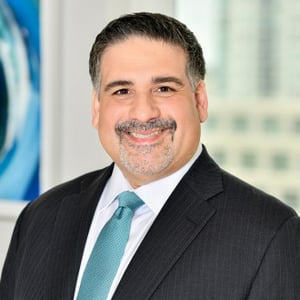
Eliot Pedrosa is a first chair litigator and trial lawyer with 20 years of experience representing businesses in complex and challenging litigation involving international disputes, financial institutions, securities, and products liability.
Eliot has served as first chair in more than a dozen jury trials and arbitrations and defended clients under investigation by federal and state regulators. Eliot, who is a native Spanish speaker, has in-depth knowledge of Latin American law and recently completed a term as the Senate-confirmed Executive Director of the Inter-American Development Bank (IDB), the largest source of development finance for Latin America and the Caribbean.
Prior to joining Jones Day, Eliot successfully represented clients from around the world, including a German medical device manufacturer, an Israeli software company, the largest sugar producer in Nicaragua, a Spanish language radio station and media company regarding broadcast rights for Mexican soccer matches in the United States, a music company in litigation regarding the sale of a salsa music catalog, a financial services firm in an action alleging improper handling of credit card transactions, and a tobacco company in individual Florida Engle cases.
Eliot has been committed to providing pro bono legal services throughout his career, including representing human trafficking victims, an unaccompanied minor seeking asylum, and a First Amendment challenge to the Florida High School Athletic Association's decision to prohibit use of a stadium loudspeaker for a prayer at a high school football championship game between two private, Christian schools.
Of Counsel, DLA Piper LLP (US)
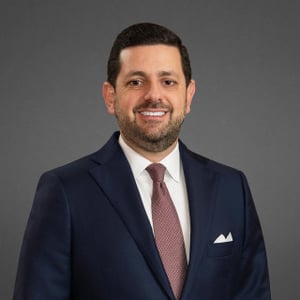
Harout J. Samra – a Board Certified Specialist in International Law – focuses his practice on international dispute resolution and arbitration matters, including international civil litigation in US courts.
Harout has represented clients from both the public and private sectors, including foreign governments, public officials and clients from a variety of industries. He has experience in international arbitrations administered under the International Chamber of Commerce (ICC), International Centre for Dispute Resolution (ICDR), United Nations Commission on International Trade Law (UNCITRAL), China International Economic and Trade Arbitration Commission (CIETAC), Bogota Chamber of Commerce, Madrid Court of Arbitration and International Centre for Settlement of Investment Disputes (ICSID) arbitration rules.
Harout currently serves as a member of the Florida Supreme Court Judicial Nominating Commission, by appointment of Governor Ron DeSantis. He previously served, by appointment of Governor Rick Scott, as a member of the Florida Third District Court of Appeal Judicial Nominating Commission, and was elected as Chair of the Commission from 2018-2019.
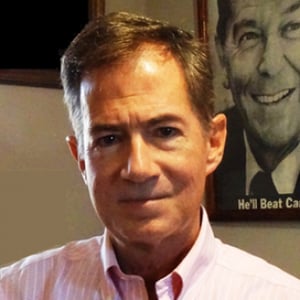
Former General Counsel of the U.S. Immigration and Naturalization, Former United States Ambassador to East Timor
Grover Joseph Rees is a Louisiana native whose family has lived in the Breaux Bridge/Lafayette area since the 1700s.
His first job after college was as an assistant to Congressman Dave Treen (R-LA3), who had just been elected as the first Republican Congressman from Louisiana since Reconstruction.
Rees graduated with honors from LSU Law School, where he served as Editor-in-Chief of the Louisiana Law Review. While in law school he worked on Ronald Reagan’s 1976 presidential campaign and was a Reagan delegate from Louisiana to the Republican National Convention. He also served as a member of the Lafayette Parish Republican Executive Committee and as a board member of Acadiana Right to Life.
In 1979, when Congressman Treen ran successfully for Governor, he asked Rees to write his authorized biography. The book, Dave Treen of Louisiana, was read and discussed widely during the campaign and after Treen’s election.
In 1985-86 Rees served as Special Counsel for Judicial Selection in President Reagan’s Justice Department, working closely with Attorney General Ed Meese to reorganize the judicial selection process to make it more philosophically oriented. These efforts resulted in the appointment of over 100 federal judges and were widely credited with transforming the federal judiciary.
From 1986 through 1991 Rees served as Chief Justice of the High Court of American Samoa, an Article I federal judicial position.
From 1991 through 1993 he was General Counsel of the U.S. Immigration and Naturalization Service.
In 1995 Rees went to work for the new Republican Congress as staff director and chief counsel of the Subcommittee on International Operations and Human Rights. He worked with subcommittee chairman Chris Smith (R.-N.J.) to cut U.S. funding for the International Planned Parenthood Federation and other organizations that perform and promote abortions overseas. Rees also worked on the drafting and enactment of the International Religious Freedom Act, the Trafficking Victims Protection Act, and other legislation that has helped to bring U.S. foreign policy into closer alignment not only with our national interests but also with our values.
In 2001-2002 Rees worked for Congressman Henry Hyde (R.-Ill.), who was then serving as Chairman of the House International Relations Committee.
From 2002 until 2006 Rees served as the first United States Ambassador to newly independent East Timor.
From 2006 until 2009 Ambassador Rees was the United States Special Representative for Social Issues, responsible for representing the United States on issues relating to vulnerable persons and the family within the United Nations system.
Ambassador Rees retired from government service in January 2009 and returned to Lafayette. He is married to Lan Dai Nguyen Rees and is a member of St. Genevieve’s Catholic parish in Lafayette. He was recently elected to serve as a member of the Louisiana Republican State Central Committee.

Executive Vice President, Chief Legal Officer, Gates Corporation
Matthew R. A. Heiman joined the Company in May 2026 and has served as the Company’s Chief Legal Officer and Corporate Secretary since June 2026. As Chief Legal Officer, Mr. Heiman is responsible for all legal functions for Gates, including securities and corporate governance, M&A, litigation, commercial, regulatory, compliance, patents and trademarks, real estate, employment and labor, sustainability and environmental matters. Prior to joining Gates, Mr. Heiman held senior legal leadership roles at Waystar, where he served as Chief Legal & Administrative Officer from 2023 to 2025 and as General Counsel and Corporate Secretary from 2020 to 2023. Prior to that, he was with Johnson Controls, where he served as Vice President, Corporate Secretary, and Associate General Counsel. Mr. Heiman has been a Senior Fellow for the National Security Institute at George Mason University’s Antonin Scalia School of Law since 2018.

Founder and Executive Director, National Security Institute; Assistant Professor of Law, Antonin Scalia Law School, George Mason University
Jamil N. Jaffer is the Founder and Executive Director of the National Security Institute at the Antonin Scalia Law School at George Mason University where he also serves as an Assistant Professor of Law, Director of the National Security Law and Policy Program, and Director of the Cyber, Intelligence, and National Security LLM Program. Jamil also teaches classes on counterterrorism, intelligence, surveillance, cybersecurity, and other national security matters, as well as a summer course held abroad with U.S. Supreme Court Justice Neil M. Gorsuch. Jamil is also affiliated with Stanford University’s Center for International Security and Cooperation and previously served as a Visiting Fellow at the Hoover Institution from 2016 to 2019.
Jamil is also a Venture Partner with Paladin Capital Group, where he assists the firm with investments across the full range of its themes and theses, including a focus on dual-use national security technologies. Jamil also serves on the board of directors of RangeForce, a cybersecurity training and readiness platform startup and Tozny, a digital identity startup, and on the advisory boards of U.S. Strategic Metals, North America’s largest primary producer of cobalt, a critical mineral used in EV batteries, aerospace, and other national security applications; and Constella Intelligence, a deep and dark web intelligence startup. Jamil also serves as an advisor to Beacon Global Strategies, a strategic advisory firm and Duco, a technology platform startup that connects corporations with geopolitical and international business experts. Jamil is also the managing director of Trigraph Caveat Capital, a private investment vehicle.
Among other things, Jamil currently serves on the Board of Directors for the Greater Washington Board of Trade, the Board of Advisors for the Global Cyber Alliance, and the Advisory Board of the Foundation for the Defense of Democracies’ Center on Cyber and Tech Innovation, the Executive Committee of the Reagan Institute Strategy Group. Jamil is also a Fellow at the Academy for Judaic, Christian, and Islamic Studies, an advisor to the Concordia Summit, and is a member of the Board of Directors for the Center for Intelligence Policy, the Board of Directors of Speech First, and the Executive Committee of the International Law and National Security Practice Group of the Federalist Society.
Immediately prior to his current positions, from 2015-2021, Jamil served as a senior business leader at IronNet Cybersecurity, helping take the company from a bootstrapped first-year technology products startup through two rounds of venture capital fundraising, growing from 40 employees to over 300, and through its listing on New York Stock Exchange. In his role as IronNet's Senior Vice President for Strategy, Partnerships & Corporate Development, Jamil worked directly for the co-CEOs of the company, Gen (ret.) Keith B. Alexander, the former Director of the National Security Agency and Founding Commander of U.S. Cyber Command, and Bill Welch, the former COO of Zscaler and Duo; in that role, Jamil led all of the company’s strategic and technology partnership efforts, including developing go-to-market and technology integration plans with some of the largest cloud platforms and cybersecurity companies in the market, evaluating potential acquisition targets, and developing overall corporate strategy and thought leadership around collective security and collaborative defense in the cyber arena.
Prior to his time at IronNet, Jamil served on the leadership team of the Senate Foreign Relations Committee as Chief Counsel and Senior Advisor under Chairman Bob Corker (R-TN), where he worked on key national security and foreign policy issues, including leading the drafting of the proposed Authorization for the Use of Military Force against ISIS in 2014 and 2015, the AUMF against Syria in 2013, and revisions to the 9/11 AUMF against al Qaeda. Jamil was also the lead architect of the Iran Nuclear Agreement Review Act and two sanctions laws against Russia for its first intervention in Ukraine.
Prior to joining SFRC, Jamil served as Senior Counsel to the House Permanent Select Committee on Intelligence under Chairman Mike Rogers (R-MI) where he led the committee’s oversight of NSA surveillance, NRO intelligence issues, and NGA analytic and collection matters, as well as intelligence community-wide counterterrorism issues. Jamil was also the lead architect of the Cyber Intelligence Sharing and Protection Act, the nation’s first cyber threat intelligence sharing legislation that was signed into law in 2015.
In the Bush Administration, Jamil served in the White House as an Associate Counsel to the President, handling Defense Department, State Department, and intelligence community matters, and serving as one of the White House Counsel’s primary representatives to the National Security Council Deputies Committee.
Prior to the White House, Jamil served on the leadership team of the Justice Department’s National Security Division as Counsel to the Assistant Attorney General for National Security, where he focused on counterterrorism and intelligence matters. At NSD, Jamil helped lead the division’s work on In re: Directives, the first ever two-party litigated matter in the FISA Court and the second case before the FISA Court of Review in its 30-year history. Jamil also led NSD’s efforts on the President’s Comprehensive National Cybersecurity Initiative (CNCI), including the drafting of NSPD-54/HSPD-23, and related classified matters, and advised the National Security Agency (NSA) and U.S. Cyber Command’s predecessor organization, the Joint Function Component Command for Network Warfare (JFCC-NW), on matters related to cyber intelligence collection and offensive cyber activities. For his work on these matters, Jamil was awarded the Assistant Attorney General’s Award for Special Initiative and was among the group of lawyers awarded the Director of National Intelligence’s 2008 Legal Award (Team of the Year – Cyber Legal).
Jamil also served in other positions in the Justice Department, including in the Office of Legal Policy, where he worked on the confirmations of Chief Justice John G. Roberts, Jr. and Justice Samuel A. Alito, Jr. to the United States Supreme Court.
Jamil also served as a lawyer in private practice at Kellogg Huber, a Washington, DC-based litigation boutique, as a policy advisor to Congressman Bob Goodlatte (R-VA), and as a staff member or senior advisor on a number of political campaigns, including two presidential campaigns and a presidential transition team. While in law school, Jamil was a member of the University of Chicago Law Review, managing editor of the Chicago Journal of International Law, and National Symposium Editor of the Harvard Journal of Law & Public Policy. Following law school, Jamil served as a law clerk to Judge Edith H. Jones of the United States Court of Appeals for the Fifth Circuit and, later in his career, as a law clerk to then-Judge Neil M. Gorsuch when he first joined the United States Court of Appeals for the Tenth Circuit as well as a law clerk to Justice Neil Gorsuch when he joined the U.S. Supreme Court.
Jamil has published multiple op-eds and academic articles on national security, foreign policy, cybersecurity, counterterrorism, encryption, and intelligence matters, and is the co-author of a book chapter with former NSA Director Gen. (Ret.) Keith B. Alexander on national security and the press in National Security, Leaks, and the Freedom of the Press: The Pentagon Papers Fifty Years On (2021) and a book chapter with former CIA Director Gen. (ret.) Mike Hayden on ISIS, al Qaeda, and other international terrorist groups in Choosing to Lead: American Foreign Policy for a Disordered World (2015). Jamil has also written book chapters on cybersecurity and surveillance, as well as op-eds and policy papers with former Attorney General Michael B. Mukasey, former National Counterterrorism Center Director Matt Olsen, and Congressman Mike Waltz (R-FL), among others.
Jamil has previously taught graduate-level courses in intelligence law and policy at George Washington University’s Elliott School of International Affairs and the National Intelligence University, served an outside advisor to the Cyberspace Solarium Commission, and has recently testified before committees of the U.S. Senate and House of Representatives on China, cybersecurity, counterterrorism, and other national security matters. Jamil has also recently appeared on a range of national television and radio outlets including CNN, Fox News, Fox Business, MSNBC, Bloomberg, PBS, Voice of America, and National Public Radio, and in various print and online publications, including the Wall Street Journal, New York Times, and the Washington Post on a range of national security matters including cybersecurity, counterterrorism, surveillance, encryption, privacy, and foreign policy issues.
Jamil holds degrees from UCLA (BA, cum laude), the University of Chicago Law School (JD, with honors), and the United States Naval War College (MA, with distinction).
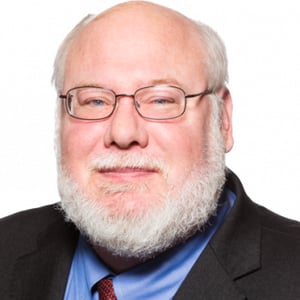
Senior Fellow in Economic Policy, Roe Institute for Economic Policy Studies, Institute for Economic Freedom and Opportunity, The Heritage Foundation
David R. Burton focuses on tax matters, securities law, entrepreneurship, financial privacy and regulatory and administrative law issues as The Heritage Foundation’s senior fellow in economic policy.
Mr. Burton was general counsel at the National Small Business Association for two years before joining Heritage’s Roe Institute for Economic Policy Studies in 2013. He previously was chief financial officer and general counsel of the start-up Alliance for Retirement Prosperity, a conservative alternative to AARP.
For 15 years, Mr. Burton was a partner in the Argus Group, a Virginia-based law, public policy and government relations firm. His career in financial and tax matters also includes the posts of vice president for finance and general counsel of New England Machinery, a multinational manufacturer of packaging equipment and testing instruments, and manager of the U.S. Chamber of Commerce’s Tax Policy Center.
Mr. Burton received a juris doctor degree from the University Of Maryland School Of Law. He also holds a Bachelor of Arts degree in Economics from the University of Chicago.
Born at the Patuxent River Naval Air Station in St. Mary’s County, Md., Mr. Burton grew up in Baltimore. He and his wife, Nancy, currently reside in Mason Neck, Va.
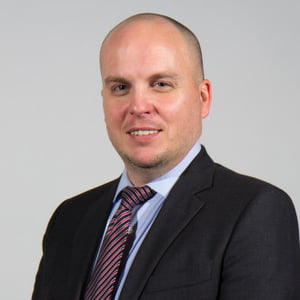
AEI Jeane Kirkpatrick Fellow, American Enterprise Institute
Clay R. Fuller is a Jeane Kirkpatrick fellow at the American Enterprise Institute, where he focuses on authoritarian survival, corruption, and the means through which dictators, terrorists, and criminals use free markets to restrict freedom, sow discord, and legitimize their actions. He also collects data on the use of special economic zones and sovereign wealth funds in nondemocratic countries.
Previously, Dr. Fuller taught international relations, American government, and modern dictatorships, among other courses, at the University of South Carolina, Western Carolina University, Midlands Technical College, and Texas State University.
Dr. Fuller has been published in peer-review journals. He is currently working on a book titled “The Economic Foundations of Authoritarian Rule.” His forthcoming studies include “The Who and the How of Authoritarian Rule” and “The Rise of Authoritarian Liberalism.”
Dr. Fuller has four degrees in political science: a Ph.D. and an M.A. from the University of South Carolina, another M.A. from Texas State University, and a B.A. from West Virginia State University.

Ice to Meet You, Greenland? U.S. Acquisition Attempts
Romain Chuffart, Alexander Gray, Nitin R. Nainani
Discussions about the United States acquiring Greenland have re-emerged in public discourse, particularly during the...
A Hemisphere at Stake: China, Cartels, and the Path Forward for U.S. Policy
Ryan C. Berg, Erick A. Brimen, Joseph M. Humire
As China deepens its presence in Latin America by owning nearly 40 ports—including a...
BRICS Expansion and Corresponding Implications
Margaret Myers, Nitin R. Nainani, Mihaela Papa
Before the 2010s, Brazil, Russia, India, China, and South Africa were flagged as future growth...
Necessary & Proper Episode 82: The D.C. Crime Bill: What Happens Next?
Bill Hagerty, Zack Smith
In November 2022, the District of Columbia City Council passed the Revised Criminal Code Act...
The D.C. Crime Bill: What Happens Next?
Bill Hagerty, Zack Smith
In November 2022, the District of Columbia City Council passed the Revised Criminal Code Act...
Foreign Sovereign and International Organization Immunity in U.S. Courts: Recent Developments and the Way Forward
Richard Herz, Eliot Pedrosa, Harout J. Samra
The Foreign Sovereign Immunities Act and its lesser-known sibling, the International Organizations Immunities Act, enacted...
Courthouse Steps Oral Argument Teleforum: Sanchez v. Mayorkas
Grover Joseph Rees
On April 19, 2021, the Supreme Court will hear oral argument in the case of Sanchez...
U.S. and the Middle East: Trump to Biden
Matthew R. A. Heiman, Jamil N. Jaffer
While China is the paramount strategic priority for the United States, the Middle East remains...
Topics
Mead: COVID and Foreign Policy
Since the end of World War II, the foreign policy establishment has argued for American...
Beneficial Ownership
David R. Burton, Clay R. Fuller
Hearings have been held recently in both the House of Representatives and the U.S. Senate...