

Distinguished Fellow, Foundation for Applied Molecular Evolution
Steven Benner heads the Foundation for Applied Molecular Evolution, which he founded after serving on the faculty at Harvard, ETH Zurich, and University of Florida. His research combines two traditions in science, one from natural history, the other from the physical sciences. In His laboratory has been a leader in the field of synthetic biology, where it has redesigned DNA to better understand how these molecules work, generate new classes of diagnostics tools, and to open new avenues to disease therapy. Separately, he also created the field of paleogenetics, where genes and proteins from now-extinct organisms are sesurrected to better understand how those proteins functioned in those organisms in changing environments. He has founded or contributed technology to a dozen different biotechnology companies, whose products include those that personalize the care of HIV, hepatitis B and hepatitis C patients, detect insect-borne pathogens, and monitor COVID. The work also guides NASA missions to see alien life and how life originated. His most recent book is: "Life, the Universe, and the Scientific Method."
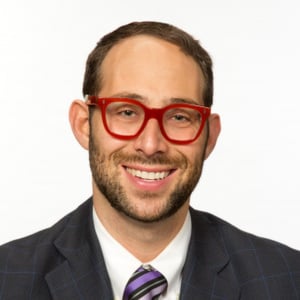
James A. Attwood and Leslie Williams Professor of Law, Deputy Dean, and Faculty Director, Petrie-Flom Center for Health Law Policy, Biotechnology & Bioethics, Harvard Law School
Prof. Cohen is one of the world's leading experts on the intersection of bioethics (sometimes also called "medical ethics") and the law, as well as health law. He also teaches civil procedure. From Seoul to Krakow to Vancouver, Professor Cohen has spoken at legal, medical, and industry conferences around the world and his work has appeared in or been covered on PBS, NPR, ABC, CNN, MSNBC, Mother Jones, the New York Times, the New Republic, the Boston Globe, and several other media venues.
He was the youngest professor on the faculty at Harvard Law School (tenured or untenured) both when he joined the faculty in 2008 (at age 29) and when he was tenured as a full professor in 2013 (at age 34), though not the youngest in history.
Prof. Cohen's current projects relate to big data, medical AI, health information technologies, mobile health, reproduction/reproductive technology, research ethics, organ transplantation, rationing in law and medicine, health policy, FDA law, COVID-19, translational medicine, and to medical tourism – the travel of patients who are residents of one country, the "home country," to another country, the "destination country," for medical treatment.
He is the author of more than 200 articles and chapters and his award-winning work has appeared in leading legal (including the Stanford, Cornell, and Southern California Law Reviews), medical (including the New England Journal of Medicine, JAMA), bioethics (including the American Journal of Bioethics, the Hastings Center Report), scientific (Science, Cell, Nature Reviews Genetics) and public health (the American Journal of Public Health) journals, as well as Op-Eds in the New York Times, Washington Post, New Republic, Time Magazine, and other venues.
Cohen is the author, co-author, editor, or co-editor of more than 18 books. They include: Consumer Genetic Technologies: Ethical and Legal Considerations (Cambridge University Press, 2021); Reproductive Technologies and the Law (Caroline Academic Press, 2021); Readings in Comparative Health Law and Bioethics (Carolina Academic Press, 2020); Disability, Health, Law, and Bioethics (Cambridge University Press, 2020); Transparency in Health and Health Care in the United States (Cambridge University Press, 2019); Health Care Law and Ethics (Aspen, 2018); Big Data, Health Law, and Bioethics (Cambridge University Press, 2018); Law, Religion, and Health in the United States (Cambridge University Press, 2017); Specimen Science (MIT Press, 2017); Nudging Health: Health Law and Behavioral Economics (John Hopkins University Press, 2016) The Oxford Handbook of U.S. Health Care Law (Oxford University Press, 2016); FDA in the Twenty-First Century: The Challenges of Regulating Drugs and New Technologies (Columbia University Press, 2015); Identified Versus Statistical Lives: An Interdisciplinary Perspective (Oxford University Press, 2015); Patients with Passports: Medical Tourism, Law, and Ethics (Oxford University Press, 2014); Human Subjects Research Regulation: Perspectives on the Future (MIT Press, 2014); The Globalization of Health Care: Legal and Ethical Issues (Oxford University Press, 2013).
For his law school teaching he was awarded the HLS Student Government Teaching and Advising Award in 2017. He also sometimes teaches courses at Harvard College and Harvard Medical School. For the public he created the free online Harvard X class Bioethics: The Law, Medicine, and Ethics of Reproductive Technologies and Genetics, which was nominated by Harvard for the Japan Prize. More than 97,000 students have taken the course so far. You can also watch his Tedx talk, Are There Non-Human Persons? Are There Non-Person Humans? He is also the faculty lead on Zero-L, an online course to help law students transition to law school that is now being used by more than half of all U.S. law schools.
Prior to becoming a professor he served as a law clerk to Judge Michael Boudin of the U.S. Court of Appeals for the First Circuit and as a lawyer for U.S. Department of Justice, Civil Division, Appellate Staff, where he handled litigation in the Courts of Appeals and (in conjunction with the Solicitor General’s Office) in the U.S. Supreme Court. In his spare time (where he can find any!) he still litigates, having authored an amicus brief in the U.S. Supreme Court for leading gene scientist Eric Lander in Association of Molecular Pathology v. Myriad, concerning whether human genes are patent eligible subject matter, a brief that was extensively discussed by the Justices at oral argument. Most recently he submitted an amicus brief to the U.S. Supreme Court in Whole Women's Health v. Hellerstedt (the Texas abortion case, on behalf of himself, Melissa Murray, and B. Jessie Hill).
Cohen was selected as a Radcliffe Institute Fellow for the 2012-2013 year and by the Greenwall Foundation to receive a Faculty Scholar Award in Bioethics. He is also a Fellow at the Hastings Center, the leading bioethics think tank in the United States as well as being a fellow of the Pierre Elliot Trudeau Foundation. He leads the Project on Precision Medicine, Artificial Intelligence, and the Law (PMAIL), which is part of the larger Centre for Advanced Studies in Biomedical Innovation Law (CeBIL). He co-leads the Regulatory Foundations, Ethics, and Law Program of Harvard Catalyst | The Harvard Clinical and Translational Science Center program. He is also the lead on the Project on Psychedelics Law and Regulation (POPLAR). He previously served as one of the key co-investigators on the multi-million dollar Football Players Health Study at Harvard which is committed to improving the health of NFL players (for more on this work click here). He is also one of three editors-in-chief of the Journal of Law and the Biosciences, a peer-reviewed journal published by Oxford University Press and serves on the editorial board for the American Journal of Bioethics. He served on the Steering Committee for Ethics for the Canadian Institutes of Health Research (CIHR), the Canadian counterpart to the NIH, and the Ethics Committee for the American College of Obstetricians and Gynecologists (ACOG). He currently serves on the Ethics Committee of the U.S. Organ Procurement and Transplantation Network (OPTN).
You can freely download his work here, and follow him on twitter @CohenProf.
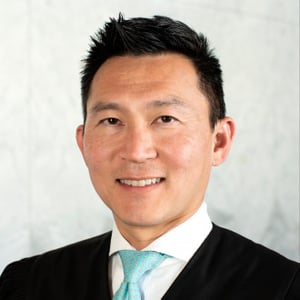
Judge, United States Court of Appeals, Ninth Circuit
Kenneth Kiyul Lee is a judge on the U.S. Court of Appeals for the Ninth Circuit. He was appointed in June 2019 and is based in San Diego, California.
Prior to his appointment, he was a partner at the law firm of Jenner & Block in Los Angeles. Judge Lee previously served as an Associate Counsel to President George W. Bush and as Special Counsel to Senator Arlen Specter, then-chair of the Senate Judiciary Committee. He started his legal career at Wachtell, Lipton, Rosen & Katz in New York.
Judge Lee received his J.D. from Harvard Law School, magna cum laude, and his A.B. from Cornell University, summa cum laude. He clerked for Judge Emilio M. Garza of the U.S. Court of Appeals for the Fifth Circuit.

Executive Vice President, Goldwater Institute
Christina Sandefur is the Executive Vice President at the Goldwater Institute. She develops policies and litigates cases advancing healthcare freedom, free enterprise, private property rights, free speech, and taxpayer rights.
Christina is a co-drafter of the Right to Try initiative, now federal law, which protects terminally ill patients' right to try safe investigational treatments that have been prescribed by their physician but are not yet FDA-approved. She has won important victories for property rights in Arizona and works nationally to promote the Institute's Private Property Rights Protection Act, a state-level reform that requires government to pay owners when regulations destroy property rights and reduce property values.
Christina is the co-author of the book Cornerstone of Liberty: Private Property Rights in 21st Century America (2016). She is a frequent guest on national television and radio programs, has provided expert legal testimony to various legislative committees, and is a frequent speaker at conferences. She is the recipient of the 2018 Buckley Award in recognition of her leadership in the freedom movement, and she is an Advisory Board Member of the Network of enlightened Women. Christina serves on the board of the Phoenix Lawyers Chapter of the Federalist Society and is a member of the executive committee for the Federalist Society's Regulatory Transparency Project: FDA & Health.
Christina is a graduate of Michigan State University College of Law and Hillsdale College.
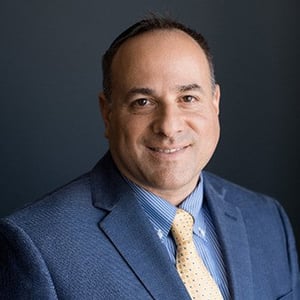
Policy Advisor, Heartland Institute
Jeff Stier is a policy advisor to the Heartland Institute.
He is widely quoted in the media and has written health policy op-eds for The Wall Street Journal, the Los Angeles Times, USA Today, The New York Post, The Washington Examiner, and Foxnews.com. The New York Times, the Associated Press, Reuters, CNN, Fox News, CNBC, MSNBC, NPR and other major outlets have interviewed and quoted Stier on a wide range of topics.
Stier has testified at state and local legislatures throughout the U.S., at FDA scientific hearings and at the Office of Management and Budget. He has also been a voice for freedom at hearings at the United Nations and in Israel’s Knesset. During more than two decades of advancing public health and defending liberty, Stier has been a speaker at CPAC, policy retreats for elected officials and medical and legal conferences.
Stier advises leading investment firms on regulatory and legal risk.
Earlier, Mr. Stier crafted health and environmental policy in the Office of the Mayor during the Giuliani administration in New York City.
Mr. Stier serves on the boards of the non-profit Jewish International Connections and Park City Jewish Collective. While earning his law degree at the Benjamin N. Cardozo School of Law, Mr. Stier served two terms as Editor-In-Chief of the Cardozo Law Forum. Jeff and his canine, BB, served as a Certified Crisis Response Strike Team with NATIONAL Crisis Response Canines, supporting survivors and first-responders.
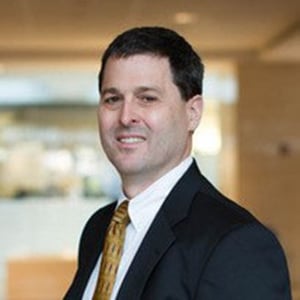
Scott K. Ginsburg Professor of Health Law & Policy, Georgetown University
David A. Hyman, M.D., J.D., is the Scott K. Ginsburg Professor of Health Law & Policy at Georgetown University. Professor Hyman focuses his research and writing on the regulation and financing of health care. He teaches or has taught health care regulation, civil procedure, insurance, medical malpractice, law & economics, professional responsibility, and tax policy.
While serving as Special Counsel to the Federal Trade Commission, Professor Hyman was principal author and project leader for the first joint report ever issued by the Federal Trade Commission and Department of Justice, “Improving Health Care: A Dose of Competition” (2004). He is also the author of Medicare Meets Mephistopheles, which was selected by the U.S. Chamber of Commerce/National Chamber Foundation as one of the top ten books of 2007, and the co-author (with Charles Silver) of Overcharged: Why Americans Pay Too Much for Health Care (2018). He has published widely in student-edited law reviews and peer-reviewed medical, health policy, law, and economics journals.
Former Associate Director for Social Sciences, FDA
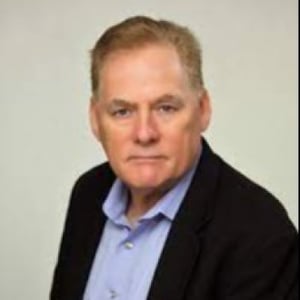
Dr. Richard A. Williams was at the FDA’s Center for Food Safety and Nutrition for twenty-seven years. He ended up as the Director of Social Science and received the agency’s highest honor: the Award of Merit. Since leaving the agency, he has continued to study and write about food safety issues and has written professional articles in the Risk Analysis, the Journal of Food Science and Technology, Regulation magazine, and the Dickinson Law Review. He has written op-eds for the New York Times, USA Today, the Wall Street Journal, and the Chicago Tribune. He has appeared on television (CNN, C-SPAN) and radio (The Diane Rehm Show, NPR). Dr. Williams has given presentations throughout the U.S., Europe, South Korea, Australia, and China on food safety and nutrition issues. He regularly gives talks at the Society for Risk Analysis and Arizona State Universities Governance of Emerging Technologies and Science conference, in addition to the food industry and various academic settings.
Senior Fellow, Pacific Research Institute
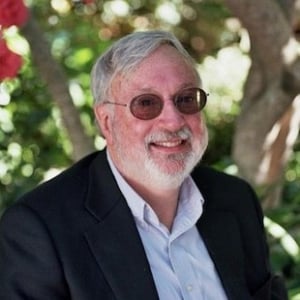
Henry I. Miller, MS, MD, is a Senior Fellow at the Pacific Research Institute in San Francisco. His research focuses on public policy toward science, technology, and medicine, encompassing a number of areas, including pharmaceutical development, genetic engineering, models for regulatory reform, precision medicine, and the emergence of new viral diseases.
Dr. Miller served for fifteen years at the US Food and Drug Administration (FDA) in a number of posts. He was the medical reviewer for the first genetically engineered drugs to be evaluated by the FDA and thus instrumental in the rapid licensing of human insulin and human growth hormone. Thereafter, he was a special assistant to the FDA commissioner and the founding director of the FDA's Office of Biotechnology. As a government official, Dr. Miller received numerous awards and citations.
During more than two decades as the Robert Wesson Fellow in Scientific Philosophy & Public Policy at Stanford University's Hoover Institution, Dr. Miller became well known for both his contributions to scholarly journals and for articles and books that make science, medicine, and technology accessible. His work has been widely published in many languages. Monographs include Policy Controversy in Biotechnology: An Insider's View; To America's Health: A Model for Reform of the Food and Drug Administration; and The Frankenfood Myth: How Protest and Politics Threaten the Biotech Revolution. Barron's selected The Frankenfood Myth as one of the 25 Best Books of 2004. In addition, Dr. Miller has published extensively in a wide spectrum of scholarly journals and popular publications worldwide, including The Lancet, Journal of the American Medical Association, Science, the Nature family of journals, Chronicle of Higher Education, Forbes, National Review, Wall Street Journal, New York Times, the Guardian, and the Financial Times. He appears regularly on the nationally syndicated radio programs of John Batchelor and Lars Larson.
Dr. Miller was the first recipient of an award named after him from the American Council on Science and Health and was selected by the editors of Nature Biotechnology as one of the people who had made the "most significant contributions" to biotechnology during the previous decade. He serves on several editorial boards.
Senior Fellow, Pacific Research Institute
Henry I. Miller, MS, MD, is a Senior Fellow at the Pacific Research Institute in San Francisco. His research focuses on public policy toward science, technology, and medicine, encompassing a number of areas, including pharmaceutical development, genetic engineering, models for regulatory reform, precision medicine, and the emergence of new viral diseases.
Dr. Miller served for fifteen years at the US Food and Drug Administration (FDA) in a number of posts. He was the medical reviewer for the first genetically engineered drugs to be evaluated by the FDA and thus instrumental in the rapid licensing of human insulin and human growth hormone. Thereafter, he was a special assistant to the FDA commissioner and the founding director of the FDA's Office of Biotechnology. As a government official, Dr. Miller received numerous awards and citations.
During more than two decades as the Robert Wesson Fellow in Scientific Philosophy & Public Policy at Stanford University's Hoover Institution, Dr. Miller became well known for both his contributions to scholarly journals and for articles and books that make science, medicine, and technology accessible. His work has been widely published in many languages. Monographs include Policy Controversy in Biotechnology: An Insider's View; To America's Health: A Model for Reform of the Food and Drug Administration; and The Frankenfood Myth: How Protest and Politics Threaten the Biotech Revolution. Barron's selected The Frankenfood Myth as one of the 25 Best Books of 2004. In addition, Dr. Miller has published extensively in a wide spectrum of scholarly journals and popular publications worldwide, including The Lancet, Journal of the American Medical Association, Science, the Nature family of journals, Chronicle of Higher Education, Forbes, National Review, Wall Street Journal, New York Times, the Guardian, and the Financial Times. He appears regularly on the nationally syndicated radio programs of John Batchelor and Lars Larson.
Dr. Miller was the first recipient of an award named after him from the American Council on Science and Health and was selected by the editors of Nature Biotechnology as one of the people who had made the "most significant contributions" to biotechnology during the previous decade. He serves on several editorial boards.
Distinguished Fellow, Foundation for Applied Molecular Evolution
Steven Benner heads the Foundation for Applied Molecular Evolution, which he founded after serving on the faculty at Harvard, ETH Zurich, and University of Florida. His research combines two traditions in science, one from natural history, the other from the physical sciences. In His laboratory has been a leader in the field of synthetic biology, where it has redesigned DNA to better understand how these molecules work, generate new classes of diagnostics tools, and to open new avenues to disease therapy. Separately, he also created the field of paleogenetics, where genes and proteins from now-extinct organisms are sesurrected to better understand how those proteins functioned in those organisms in changing environments. He has founded or contributed technology to a dozen different biotechnology companies, whose products include those that personalize the care of HIV, hepatitis B and hepatitis C patients, detect insect-borne pathogens, and monitor COVID. The work also guides NASA missions to see alien life and how life originated. His most recent book is: "Life, the Universe, and the Scientific Method."
James A. Attwood and Leslie Williams Professor of Law, Deputy Dean, and Faculty Director, Petrie-Flom Center for Health Law Policy, Biotechnology & Bioethics, Harvard Law School
Prof. Cohen is one of the world's leading experts on the intersection of bioethics (sometimes also called "medical ethics") and the law, as well as health law. He also teaches civil procedure. From Seoul to Krakow to Vancouver, Professor Cohen has spoken at legal, medical, and industry conferences around the world and his work has appeared in or been covered on PBS, NPR, ABC, CNN, MSNBC, Mother Jones, the New York Times, the New Republic, the Boston Globe, and several other media venues.
He was the youngest professor on the faculty at Harvard Law School (tenured or untenured) both when he joined the faculty in 2008 (at age 29) and when he was tenured as a full professor in 2013 (at age 34), though not the youngest in history.
Prof. Cohen's current projects relate to big data, medical AI, health information technologies, mobile health, reproduction/reproductive technology, research ethics, organ transplantation, rationing in law and medicine, health policy, FDA law, COVID-19, translational medicine, and to medical tourism – the travel of patients who are residents of one country, the "home country," to another country, the "destination country," for medical treatment.
He is the author of more than 200 articles and chapters and his award-winning work has appeared in leading legal (including the Stanford, Cornell, and Southern California Law Reviews), medical (including the New England Journal of Medicine, JAMA), bioethics (including the American Journal of Bioethics, the Hastings Center Report), scientific (Science, Cell, Nature Reviews Genetics) and public health (the American Journal of Public Health) journals, as well as Op-Eds in the New York Times, Washington Post, New Republic, Time Magazine, and other venues.
Cohen is the author, co-author, editor, or co-editor of more than 18 books. They include: Consumer Genetic Technologies: Ethical and Legal Considerations (Cambridge University Press, 2021); Reproductive Technologies and the Law (Caroline Academic Press, 2021); Readings in Comparative Health Law and Bioethics (Carolina Academic Press, 2020); Disability, Health, Law, and Bioethics (Cambridge University Press, 2020); Transparency in Health and Health Care in the United States (Cambridge University Press, 2019); Health Care Law and Ethics (Aspen, 2018); Big Data, Health Law, and Bioethics (Cambridge University Press, 2018); Law, Religion, and Health in the United States (Cambridge University Press, 2017); Specimen Science (MIT Press, 2017); Nudging Health: Health Law and Behavioral Economics (John Hopkins University Press, 2016) The Oxford Handbook of U.S. Health Care Law (Oxford University Press, 2016); FDA in the Twenty-First Century: The Challenges of Regulating Drugs and New Technologies (Columbia University Press, 2015); Identified Versus Statistical Lives: An Interdisciplinary Perspective (Oxford University Press, 2015); Patients with Passports: Medical Tourism, Law, and Ethics (Oxford University Press, 2014); Human Subjects Research Regulation: Perspectives on the Future (MIT Press, 2014); The Globalization of Health Care: Legal and Ethical Issues (Oxford University Press, 2013).
For his law school teaching he was awarded the HLS Student Government Teaching and Advising Award in 2017. He also sometimes teaches courses at Harvard College and Harvard Medical School. For the public he created the free online Harvard X class Bioethics: The Law, Medicine, and Ethics of Reproductive Technologies and Genetics, which was nominated by Harvard for the Japan Prize. More than 97,000 students have taken the course so far. You can also watch his Tedx talk, Are There Non-Human Persons? Are There Non-Person Humans? He is also the faculty lead on Zero-L, an online course to help law students transition to law school that is now being used by more than half of all U.S. law schools.
Prior to becoming a professor he served as a law clerk to Judge Michael Boudin of the U.S. Court of Appeals for the First Circuit and as a lawyer for U.S. Department of Justice, Civil Division, Appellate Staff, where he handled litigation in the Courts of Appeals and (in conjunction with the Solicitor General’s Office) in the U.S. Supreme Court. In his spare time (where he can find any!) he still litigates, having authored an amicus brief in the U.S. Supreme Court for leading gene scientist Eric Lander in Association of Molecular Pathology v. Myriad, concerning whether human genes are patent eligible subject matter, a brief that was extensively discussed by the Justices at oral argument. Most recently he submitted an amicus brief to the U.S. Supreme Court in Whole Women's Health v. Hellerstedt (the Texas abortion case, on behalf of himself, Melissa Murray, and B. Jessie Hill).
Cohen was selected as a Radcliffe Institute Fellow for the 2012-2013 year and by the Greenwall Foundation to receive a Faculty Scholar Award in Bioethics. He is also a Fellow at the Hastings Center, the leading bioethics think tank in the United States as well as being a fellow of the Pierre Elliot Trudeau Foundation. He leads the Project on Precision Medicine, Artificial Intelligence, and the Law (PMAIL), which is part of the larger Centre for Advanced Studies in Biomedical Innovation Law (CeBIL). He co-leads the Regulatory Foundations, Ethics, and Law Program of Harvard Catalyst | The Harvard Clinical and Translational Science Center program. He is also the lead on the Project on Psychedelics Law and Regulation (POPLAR). He previously served as one of the key co-investigators on the multi-million dollar Football Players Health Study at Harvard which is committed to improving the health of NFL players (for more on this work click here). He is also one of three editors-in-chief of the Journal of Law and the Biosciences, a peer-reviewed journal published by Oxford University Press and serves on the editorial board for the American Journal of Bioethics. He served on the Steering Committee for Ethics for the Canadian Institutes of Health Research (CIHR), the Canadian counterpart to the NIH, and the Ethics Committee for the American College of Obstetricians and Gynecologists (ACOG). He currently serves on the Ethics Committee of the U.S. Organ Procurement and Transplantation Network (OPTN).
You can freely download his work here, and follow him on twitter @CohenProf.
Judge, United States Court of Appeals, Ninth Circuit
Kenneth Kiyul Lee is a judge on the U.S. Court of Appeals for the Ninth Circuit. He was appointed in June 2019 and is based in San Diego, California.
Prior to his appointment, he was a partner at the law firm of Jenner & Block in Los Angeles. Judge Lee previously served as an Associate Counsel to President George W. Bush and as Special Counsel to Senator Arlen Specter, then-chair of the Senate Judiciary Committee. He started his legal career at Wachtell, Lipton, Rosen & Katz in New York.
Judge Lee received his J.D. from Harvard Law School, magna cum laude, and his A.B. from Cornell University, summa cum laude. He clerked for Judge Emilio M. Garza of the U.S. Court of Appeals for the Fifth Circuit.
Executive Vice President, Goldwater Institute
Christina Sandefur is the Executive Vice President at the Goldwater Institute. She develops policies and litigates cases advancing healthcare freedom, free enterprise, private property rights, free speech, and taxpayer rights.
Christina is a co-drafter of the Right to Try initiative, now federal law, which protects terminally ill patients' right to try safe investigational treatments that have been prescribed by their physician but are not yet FDA-approved. She has won important victories for property rights in Arizona and works nationally to promote the Institute's Private Property Rights Protection Act, a state-level reform that requires government to pay owners when regulations destroy property rights and reduce property values.
Christina is the co-author of the book Cornerstone of Liberty: Private Property Rights in 21st Century America (2016). She is a frequent guest on national television and radio programs, has provided expert legal testimony to various legislative committees, and is a frequent speaker at conferences. She is the recipient of the 2018 Buckley Award in recognition of her leadership in the freedom movement, and she is an Advisory Board Member of the Network of enlightened Women. Christina serves on the board of the Phoenix Lawyers Chapter of the Federalist Society and is a member of the executive committee for the Federalist Society's Regulatory Transparency Project: FDA & Health.
Christina is a graduate of Michigan State University College of Law and Hillsdale College.
Scott K. Ginsburg Professor of Health Law & Policy, Georgetown University
David A. Hyman, M.D., J.D., is the Scott K. Ginsburg Professor of Health Law & Policy at Georgetown University. Professor Hyman focuses his research and writing on the regulation and financing of health care. He teaches or has taught health care regulation, civil procedure, insurance, medical malpractice, law & economics, professional responsibility, and tax policy.
While serving as Special Counsel to the Federal Trade Commission, Professor Hyman was principal author and project leader for the first joint report ever issued by the Federal Trade Commission and Department of Justice, “Improving Health Care: A Dose of Competition” (2004). He is also the author of Medicare Meets Mephistopheles, which was selected by the U.S. Chamber of Commerce/National Chamber Foundation as one of the top ten books of 2007, and the co-author (with Charles Silver) of Overcharged: Why Americans Pay Too Much for Health Care (2018). He has published widely in student-edited law reviews and peer-reviewed medical, health policy, law, and economics journals.
Former Associate Director for Social Sciences, FDA
Dr. Richard A. Williams was at the FDA’s Center for Food Safety and Nutrition for twenty-seven years. He ended up as the Director of Social Science and received the agency’s highest honor: the Award of Merit. Since leaving the agency, he has continued to study and write about food safety issues and has written professional articles in the Risk Analysis, the Journal of Food Science and Technology, Regulation magazine, and the Dickinson Law Review. He has written op-eds for the New York Times, USA Today, the Wall Street Journal, and the Chicago Tribune. He has appeared on television (CNN, C-SPAN) and radio (The Diane Rehm Show, NPR). Dr. Williams has given presentations throughout the U.S., Europe, South Korea, Australia, and China on food safety and nutrition issues. He regularly gives talks at the Society for Risk Analysis and Arizona State Universities Governance of Emerging Technologies and Science conference, in addition to the food industry and various academic settings.
Robina Chair of Law, Science and Technology, University of Minnesota Law School
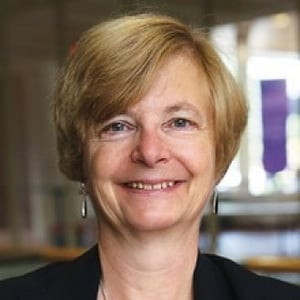
Professor June Carbone joined the University of Minnesota Law School faculty in June 2013 as the inaugural holder of the Robina Chair in Law, Science and Technology from her position as the Edward A. Smith/Missouri Chair of Law, the Constitution and Society at the University of Missouri at Kansas City (UMKC). She is an expert in family law, assisted reproduction, property, and law, medicine and bioethics, and also has taught contracts, remedies, financial institutions, civil procedure, and feminist jurisprudence.
Before joining UMKC in 2007, Professor Carbone was an associate professor and a professor at Santa Clara University (SCU) School of Law, beginning in 1987. From 2000-06 she served as associate dean for faculty development and from 2001-03 as the Presidential Professor of Ethics and the Common Good, an appointment that supports ethics research at the SCU’s Markkula Center for Applied Ethics. She was a visiting scholar at Stanford University’s Institute for Research on Women and Gender in 1995-96.
While at SCU, she also was co-director of the National University of Singapore summer program focused on intellectual property and international trade (2006), director of the Sydney summer study program focused on law and biotechnology (2004 and 2005), and director of the Hong Kong summer study program focused on comparative legal systems and international trade (1994).
Previously she was an assistant professor at George Mason University School of Law (1983-87) and a trial attorney in the Civil Division, Federal Programs Branch of the U.S. Department of Justice (1978-83).
Professor Carbone writes prolifically on law and the family, marriage, divorce, and domestic obligations, including changes brought about by the biotechnology revolution. Her most recent books are Red Families v. Blue Families: Legal Polarization and the Creation of Culture (Oxford U. Press, 2010), which explores the effects of diverging values and norms in America, and Marriage Markets: How Inequality is Remaking the American Family (Oxford U. Press, 2014), which examines the widening class divide in the American family. Both are co-authored with Naomi Cahn.
Among the honors Professor Carbone has received are the 2009-10 Daniel L. Brenner Faculty Publishing Award from UMKC School of Law, the 2002 SCU Award for Recent Achievement in Scholarship over the previous five years, and the 2002 SCU Law School Award for Distinguished Scholarship. At the Association of American Law Schools, she is a founding member of the Biolaw Section, a former chair of the Family and Juvenile Law Section, and a former Liaison to the Joint Editorial Board of the National Conference of Commissioners on Uniform State Laws. She also has been a member of the Yale Cultural Cognition Project since 2010.
Professor Carbone received her J.D. from the Yale Law School in 1978 and her A.B., magna cum laude, from the Woodrow Wilson School for Public and International Affairs at Princeton University in 1975.

Clinical Ethicist, St. Boniface Hospital and the Reseau Compassion Network
Senior Counsel, Center for Life, Alliance Defending Freedom
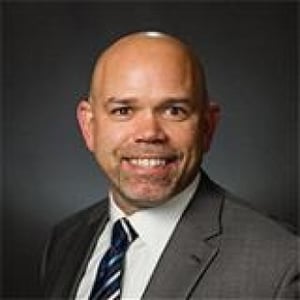
Kevin Theriot serves as senior counsel with Alliance Defending Freedom, where he is a key member of the Center for Life Team working to defend pro-life speech and protect medical rights of conscience.
Since joining Alliance Defending Freedom in 2003, Theriot has been successful as lead counsel or co-counsel in numerous cases protecting the unborn and preserving the freedoms of speech and religion. In NIFLA v. Becerra he was part of the Supreme Court team that protected California pregnancy centers from being forced to refer for abortion. In Women’s Health Link v. City of Ft. Wayne, Ind., Theriot defended the freedom of a pro-life pregnancy center to access an advertising forum in city buses. In Kelvin Cochran v. City of Atlanta, he defended Chief Cochran’s free speech rights from government censorship, receiving a settlement of $1.2 million dollars. Theriot also co-authored the 2017 law review article, Free to Do No Harm: Conscience Protections for Healthcare Professionals.
Theriot earned his J.D. in 1991 from Vanderbilt University Law School. He is admitted to the bar in the states of Tennessee, Texas, Florida, Virginia, Georgia, Missouri, Kansas, and Arizona. He is also a member of the U.S. Supreme Court and numerous federal district and appellate courts.
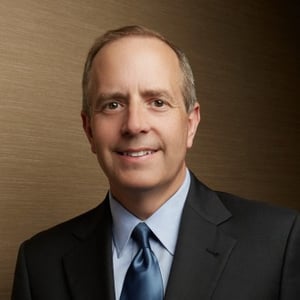
Former CEO, Vascular Solutions
Howard Root is the recently-retired Chief Executive Officer of Vascular Solutions, Inc., a company he founded in 1997, took public in 2000, and grew into a worldwide medical device company that he sold to Teleflex for $1 billion in February 2017. Over the company’s 20 years, Howard led Vascular Solutions in inventing, developing and launching over 100 new medical devices that are used daily to improve the lives of patients suffering from cardiovascular disease. In 2014, Vascular Solutions and Howard were indicted on felony charges alleging the company’s salespeople had promoted off-label an FDA-cleared medical device that made up only 0.1% of the company’s sales and never harmed a single patient. After surviving an arduous legal process, with 121 attorneys charging $25 million in legal fees, in February 2016 the jury returned a verdict of not guilty on all charges, even though the defense didn’t call a single witness to testify in the four-week trial.
Executive Vice President, Goldwater Institute
Christina Sandefur is the Executive Vice President at the Goldwater Institute. She develops policies and litigates cases advancing healthcare freedom, free enterprise, private property rights, free speech, and taxpayer rights.
Christina is a co-drafter of the Right to Try initiative, now federal law, which protects terminally ill patients' right to try safe investigational treatments that have been prescribed by their physician but are not yet FDA-approved. She has won important victories for property rights in Arizona and works nationally to promote the Institute's Private Property Rights Protection Act, a state-level reform that requires government to pay owners when regulations destroy property rights and reduce property values.
Christina is the co-author of the book Cornerstone of Liberty: Private Property Rights in 21st Century America (2016). She is a frequent guest on national television and radio programs, has provided expert legal testimony to various legislative committees, and is a frequent speaker at conferences. She is the recipient of the 2018 Buckley Award in recognition of her leadership in the freedom movement, and she is an Advisory Board Member of the Network of enlightened Women. Christina serves on the board of the Phoenix Lawyers Chapter of the Federalist Society and is a member of the executive committee for the Federalist Society's Regulatory Transparency Project: FDA & Health.
Christina is a graduate of Michigan State University College of Law and Hillsdale College.

Showcase Panel IV: Law, Science, and Public Policy
Steven A. Benner, I. Glenn Cohen, Kenneth Kiyul Lee, Christina Sandefur
The 2021 National Lawyers Convention took place November 11-13, 2021 at the Mayflower Hotel in...
Explainer Episode 31 – The Regulation of E-Cigarettes and Vapes
Jeff Stier
Health policy expert Jeff Stier joins the podcast to discuss all things concerning the regulation...
Showcase Panel IV: Law, Science, and Public Policy
2021 National Lawyers Convention
Washington, DCDeep Dive Episode 201 – Fixing Food: An FDA Insider Unravels the Myths and the Solutions
David Hyman, Richard A. Williams
In this episode, Professor David Hyman interviews Dr. Richard Williams about Dr. Williams' new book,...
Deep Dive Episode 201 – Fixing Food: An FDA Insider Unravels the Myths and the Solutions
Regulatory Transparency Project's Fourth Branch Podcast
TeleforumGovernment Funding of Medical Innovations: High Tech or Low Tech?
Henry I. Miller
What drives the costs of healthcare in the United States? Every year sees new and...
Will (or Can) the Court Provide Clarity in the Ever-Evolving Landscape of Abortion Jurisprudence?
Houston and Austin Lawyers Chapter - Virtual Event
Will (or Can) the Court Provide Clarity in the Ever-Evolving Landscape of Abortion Jurisprudence?
Houston and Austin Lawyers Chapter - Virtual Event
Right to Try: Giving Patients a Fighting Chance
Minnesota Lawyers Chapter
How Does the FDA Evaluate Vaccines?
Henry I. Miller
The world returning to “normal” after COVID-19 will depend, in large part, on mass vaccinations....