
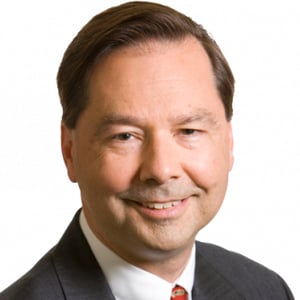
Senior Legal Fellow, Edwin Meese III Institute for the Rule of Law, Advancing American Freedom
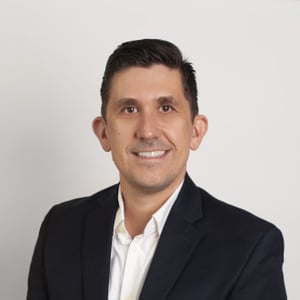
Partner, FisherBroyles LLP
Paul Beard II is an environmental and land-use partner with FisherBroyles LLP.

Executive Vice President, The Federalist Society
Dean Reuter is Executive Vice President at the Federalist Society for Law and Public Policy Studies. He has served in two federal government agency Offices of the Inspector General, as Counsel to the Inspector General and Deputy Inspector General, responsible for policing the use of federal funds granted and contracted through those agencies. As such, he helped conduct and oversee criminal investigations across the country. He is the principal author of the non-fiction book, The Hidden Nazi: The Untold Story of America's Deal with the Devil, and editor of Liberty’s Nemesis: The Unchecked Expansion of the State and Confronting Terror: 9/11 and the Future of American National Security. He was appointed by the President and served as Vice-Chairman of the Board of Directors of the Corporation for National and Community Service, and recently served as an appointee on the U.S. Commission on Presidential Scholars. He is a graduate of Hood College (BA with Honors) and the University of Maryland School of Law.
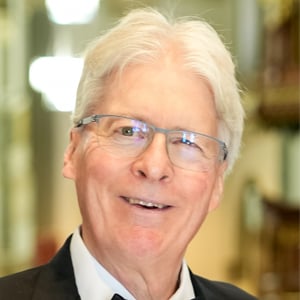
General Counsel, James Madison Center for Free Speech
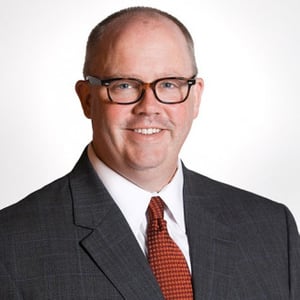
Professor of Law and Assistant Director, Criminal Justice Center, University of Florida Levin College of Law
Professor Stinneford teaches and writes about legal ethics, criminal law, criminal procedure, and constitutional law. His work has been cited by the United States Supreme Court, several state supreme courts and federal courts of appeal, and numerous scholars. It has published in numerous scholarly journals including the Georgetown Law Journal, the Northwestern University Law Review, the Virginia Law Review, the Notre Dame Law Review, and the William & Mary Law Review. The Stanford-Yale Junior faculty forum selected one of his articles as the best paper in the category of Constitutional History, and the AALS Criminal Justice Section named another article as the best paper in its Junior Scholars Paper Competition. In the fall of 2015, he was a Visiting Scholar at the Georgetown Law Center, Center for the Constitution.
Before joining the Florida faculty in 2009, Stinneford clerked for the Hon. James Moran of the United States District Court for the Northern District of Illinois, served as an Assistant United States Attorney, and practiced law with Winston & Strawn in Chicago. Stinneford teaches first-year courses in Criminal Law and Constitutional Law, and upper-level courses in Professional Responsibility, Criminal Procedure, Federal Criminal Law, Law & Literature, and White Collar Crime.
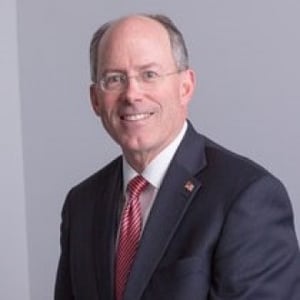
Chief Legal Officer, Pacem Solutions International
Prior to his current position as the Chief Legal Officer for PACEM Solutions, Mr. Schmitz served as a foreign policy/national security advisor to Donald J. Trump from March 2016 through the November 2016 election. His government service includes service as the 5th Senate-confirmed Inspector General of the Department of Defense from April 2002 to September 2005. For his service as Inspector General, Mr. Schmitz was awarded the Department of Defense Medal for Distinguished Public Service, the highest honorary award presented by the Secretary of Defense to non-career federal employees.
In 2013, Mr. Schmitz published “The Inspector General Handbook: Fraud, Waste, Abuse, and Other Constitutional ‘Enemies, Foreign and Domestic’,” the first-ever handbook for the inspector general profession – written also for those who work with inspectors general. Mr. Schmitz has extensive anti-corruption experience in overseeing compliance with various international and security-related laws, including but not limited to the Inspector General Act, Intelligence Oversight laws, the Posse Comitatus Act, the Foreign Corrupt Practices Act (FCPA), the International Traffic in Arms Regulations (ITAR), and laws administered by the Office of Foreign Assets Control (OFAC) and the Office to Monitor and Combat Trafficking in Persons.
Prior to his service as Inspector General of the Department of Defense, Mr. Schmitz was a Partner in the international law firm of Patton Boggs LLP, serving as head of the Aviation Practice Group, and at the same time a Captain in the United States Naval Reserves, serving as Inspector General of the Naval Reserve Intelligence Command. After his Inspector General service, Mr. Schmitz served as Chief Operating Officer and General Counsel of the Prince Group in McLean, Virginia, after which he served as Managing Director in the Washington D.C. Office of Freeh Group International. His pre-Inspector General public service included: twenty-seven years of naval service, first on active duty and then as a reserve officer; law clerk to the Honorable James L. Buckley, Circuit Judge, U.S. Court of Appeals for the D.C. Circuit; and Special Assistant to the Attorney General of the United States, the Honorable Edwin Meese III.
Mr. Schmitz has published numerous articles and has testified as a constitutional expert before U.S. Senate committees, and before various state legislature committees. From 1995 until 2002, he was an Adjunct Professor of Law at Georgetown University Law Center, where he developed and taught a seminar on advanced Constitutional Law.
Mr. Schmitz graduated with distinction from the U.S. Naval Academy in 1978, and received his Doctor of Jurisprudence from Stanford University in 1986. He is a Senior Fellow for the Center for Security Policy, and a regular Newsmax “Insider” on constitutional issues under the banner, “Support and Defend.” In 2013, Mr. Schmitz was inducted into the National Wrestling Hall of Fame (Virginia Chapter) as an “Outstanding American.” Joe and his wife of 40 years, Mollie, have raised six sons and two daughters.
Partner, FisherBroyles LLP
Paul Beard II is an environmental and land-use partner with FisherBroyles LLP.

Founding Partner, Cooper & Kirk PLLC
Charles J. Cooper is a founding member and the chairman of Cooper & Kirk, PLLC, “one of the Nation’s leading litigation boutiques” (Above The Law 2017). The National Law Journal recently wrote that Mr. Cooper’s “brilliant legal career has so far spanned five decades and thrust Cooper into the spotlight in some of the most historic moments of the country’s modern history.” He has argued nine cases before the United States Supreme Court and scores of appeals before each of the 13 federal courts of appeals and several state supreme courts. He has been lead trial counsel in numerous complex, weeks-long trials in federal courts throughout the country. Named by the National Law Journal as one of the 10 best litigators in Washington D.C., Mr. Cooper’s work has been reported in numerous press accounts, and he has been called a “powerhouse attorney” (Fortune 2015), “a hard-nosed litigator” (Washington Post 2017), and “one of the country’s most in-demand civil litigators and a Washington legal institution unto himself” (The American Spectator 2014).
After graduating from the University of Alabama School of Law in 1977, where he ranked first in his class and served as Editor-in-Chief of the Alabama Law Review, Mr. Cooper began his career as a law clerk to Judge Paul Roney on the Fifth Circuit Court of Appeals and to Justice William H. Rehnquist in 1978–79. He then practiced law in Atlanta for two years before joining the Civil Rights Division of the U.S. Department of Justice, where he served as the Deputy Assistant Attorney General in charge of, among other things, appellate matters. In 1985 President Reagan appointed him to the position of Assistant Attorney General for the Office of Legal Counsel, which is the office responsible for providing legal opinions and advice to the White House, the Attorney General, and Executive Branch departments and agencies on issues covering the full spectrum of federal constitutional, statutory, and regulatory law.
In 1988 he returned to private practice as a litigation partner in the Washington, D.C. office of McGuireWoods. From 1990 until the founding of Cooper & Kirk in 1996, he was a partner at Shaw Pittman (now Pillsbury Winthrop Shaw Pittman), where he headed the firm’s Constitutional and Government Litigation Group.
Mr. Cooper has represented a wide range of public and private clients in highly complex constitutional, civil rights, antitrust, healthcare, banking, intellectual property, elections, campaign finance, administrative, commercial, and government contract cases. He has led trial teams in cases that have won judgments and settlements valued in the billions of dollars and that have established ground-breaking constitutional precedents.
Much of Mr. Cooper’s practice has involved representing high-profile clients in nationally prominent matters, including: the State of Florida in a First Amendment suit brought by the Disney Company concerning its autonomous regulatory authority over its Disney World property; the Commonwealth of Virginia in a suit seeking to enjoin the removal of noncitizens from its voter rolls; 38 members of the Duke Lacrosse team falsely accused of rape by officials of Duke University and the City of Durham; Harper Lee in a copyright dispute with the heirs of Gregory Peck; high-ranking former government officials such as former Attorneys General John Ashcroft, Jeff Sessions, and William Barr, and Ambassador John Bolton; several Governors and United States Senators; over 100 Members of Congress; and many state, territorial, and local government bodies and officials. He has also represented and advised government officials and public figures in connection with sensitive private issues that needed to be, and were, resolved discreetly without becoming matters of public record.
In 1998 Chief Justice Rehnquist appointed Mr. Cooper to the Standing Committee on Rules of Practice and Procedure of the Judicial Conference of the United States, where he served for three terms. He also served as a Public Member, appointed by President George H.W. Bush, of the National Commission on Judicial Discipline and Removal. He is a member of numerous professional associations, including the American Law Institute (since 1993) and the American Academy of Appellate Lawyers (since 1996). He is also an active member of the Federalist Society and the Republican National Lawyers Association, which in 2010 named him Republican Lawyer of the Year and in 2016 honored him with its Edwin Meese III Award.
Mr. Cooper has published scores of articles and spoken extensively on constitutional and legal policy topics. He has appeared before congressional committees on 26 occasions, testifying as an expert on a wide variety of legal issues, including the Chevron doctrine of judicial deference to administrative agencies, the diversity of citizenship jurisdiction of federal courts, statehood bills for Puerto Rico and the District of Columbia, and the impeachment of President Clinton.

Testimony on “The Voting Rights Act after the Supreme Court’s Decision in Shelby County”
Hans A. Von Spakovsky
Note from the Editor: This article is based on testimony given by the author before...
The Legislative Session: and a Day in the Life of the General Counsel
Tampa, FloridaSCOTUS Moot Court of McCutcheon v. FEC
Benghazi: An Insider’s Perspective on What Really Happened
Tampa, FloridaFlorida Supreme Court Requires Fourth Amendment Protections for Emerging Technology
Caroline Levine
In Smallwood v. State of Florida, the Florida Supreme Court 2013 FL 1130 (Fla. 2013),...
The Court Decides: Property Rights and Koontz v. St. Johns River Water Management District - Podcast
Paul J. Beard, Dean Reuter
In an opinion by Justice Alito on June 25, the U.S. Supreme Court ruled in...
The Court Decides: Property Rights and Koontz v. St. Johns River Water Management District
TeleforumInside Bush v. Gore
Orlando, FloridaSeparation of Powers in Florida: Recent Developments
Tampa, FloridaThe Constitution, President Obama, and the Limits of Executive Power
Coral Gables, Florida