
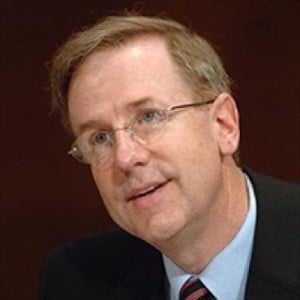
Board Member, Center for Equal Opportunity
Roger Clegg is a Board Member at and former President and General Counsel of the Center for Equal Opportunity. He focuses on legal issues arising from civil rights laws--including the regulatory impact on business and the problems in higher education created by affirmative action. A former Deputy Assistant Attorney General in the Reagan and Bush administrations, Clegg held the second highest positions in both the Civil Rights Division (1987-91) and in the Environment and Natural Resources Division (1991-93). He has held several other positions at the U.S. Justice Department, including Assistant to the Solicitor General (1985-87), Associate Deputy Attorney General (1984-85), and Acting Assistant Attorney General in the Office of Legal Policy (1984). Clegg is a graduate of Yale University Law School (1981).
Professor of Law, UCLA School of Law
Sander has been working on questions of social and economic inequality for nearly all of his career. He was born in Washington, D.C., but spent most of his childhood in small towns in northwest Indiana. After earning a B.A. in Social Studies at Harvard, Sander in 1978 joined the federal Vista program and worked for a small neighborhood housing group on Chicago's south side. While organizing tenant unions and building receiverships, he was deeply impressed with the work of the South Shore Bank, an experimental, community-development bank owned by churches and foundations. Sander secured funding from three federal agencies and, with the Woodstock Institute, completed the first detailed study of the bank. South Shore Bank was widely imitated as an instrument for community revitalization in other urban areas over the next two decades.
Sander attended graduate school at Northwestern University from 1983 to 1988, earning degrees in law (J.D., 1988) and economics (M.A. 1985, Ph.D., 1990). In his law review comment and his dissertation, Sander sought to understand why fair housing laws had seemingly produced widespread integration in some American metropolitan areas, but very little integration in most. During much of this period, Sander served on the board of the Rogers Park Tenants Committee, and worked on the election effort and subsequent transition team of Harold Washington, Chicago’s first black mayor.
In 1989, Sander joined the faculty of the UCLA School of Law. During this period, he continued his work on housing segregation, but also pursued two new interests: the reasons behind the American legal profession’s explosive growth since the mid-1960s, and the structure and effects of law school admissions policies. With Kris Knaplund, he published in 1995 the first comparative evaluation of academic support programs used in legal education. After California voters approved Propostion 209 in 1996 – banning the use of race in various government programs, including admissions at the University of California – Sander successfully argued for the adoption of class-based preferences in the law school’s admissions, and published a study on the results of this experiment in 1997.
During the 1990s, Sander was involved in several Los Angeles civic initiatives. He served as President of the Fair Housing Congress of Southern California from 1984 to 1996; founded the Fair Housing Institute in 1996, and helped the City of Los Angeles design and implement in 1997 what was, at the time, the nation's most ambitious living wage law. Sander also persuaded regional authorities to develop outreach programs that sharply increased local usage of the Earned Income Tax Credit, generating tens of millions of dollars annually for LA's poorest working families.
Sander was one of seven UCLA faculty members and staff who launched the Program in Public Interest Law and Policy, which created a distinct curriculum aimed at public interest students. From 1998 to 2004, Sander helped to steer the "After the JD" study, the first national panel study of law school graduates. In 1998-99, Sander and others at the School of Law launched the Empirical Research Group (ERG), an entity designed to help faculty members undertake ambitious empirical projects and introduce more quantitative and methodological sophistication into their policy-related work.
In 2004, Sander published a comprehensive study of affirmative action in American law schools, focusing particularly on the ways in which large preferences imposed unexpected but substantial costs on their intended beneficiaries.
Sander teaches courses in Property, Quantitative Methods, Urban Housing, and Policy Analysis. He is married to astrophysicist Fiona Harrison, and has a son, Robert. He lives in the Los Feliz neighborhood of Los Angeles.

Executive Vice President, The Federalist Society
Dean Reuter is Executive Vice President at the Federalist Society for Law and Public Policy Studies. He has served in two federal government agency Offices of the Inspector General, as Counsel to the Inspector General and Deputy Inspector General, responsible for policing the use of federal funds granted and contracted through those agencies. As such, he helped conduct and oversee criminal investigations across the country. He is the principal author of the non-fiction book, The Hidden Nazi: The Untold Story of America's Deal with the Devil, and editor of Liberty’s Nemesis: The Unchecked Expansion of the State and Confronting Terror: 9/11 and the Future of American National Security. He was appointed by the President and served as Vice-Chairman of the Board of Directors of the Corporation for National and Community Service, and recently served as an appointee on the U.S. Commission on Presidential Scholars. He is a graduate of Hood College (BA with Honors) and the University of Maryland School of Law.
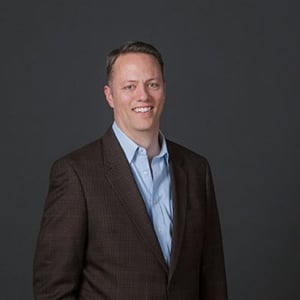
Partner, Consovoy McCarthy PLLC
Thomas R. McCarthy is a partner at Consovoy McCarthy Park PLLC. Mr. McCarthy assists clients with a wide array of issues in federal district and appellate courts across the country. He frequently represents clients in complex litigation involving diverse legal issues arising under the First Amendment, the Equal Protection Clause, the Commerce Clause, and other provisions of the U.S. Constitution. Mr. McCarthy also represents clients in litigation matters involving numerous federal statutes such as the Administrative Procedure Act, the Federal Arbitration Act, the Sherman Act, the Communications Act, the Voting Rights Act, and the Patent Act. He also represents clients with regulatory matters before the Federal Communications Commission, the Federal Trade Commission, and various other federal agencies.
Mr. McCarthy is a former law clerk to Judge David B. Sentelle of the United States Court of Appeals for the D.C. Circuit, and Judge Frank W. Bullock, Jr. of the United States District Court for the Middle District of North Carolina. Since 2011, McCarthy has been the co-director of the George Mason University School of Law Supreme Court Clinic. He previously taught an advanced constitutional law seminar at Mason Law.
Mr. McCarthy earned his BS from the University of Notre Dame, where he was a Notre Dame Scholar, and his JD magna cum laude from George Mason University School of Law. Mr. McCarthy is a member of the Virginia and District of Columbia bars.
Professor of Law, UCLA School of Law
Sander has been working on questions of social and economic inequality for nearly all of his career. He was born in Washington, D.C., but spent most of his childhood in small towns in northwest Indiana. After earning a B.A. in Social Studies at Harvard, Sander in 1978 joined the federal Vista program and worked for a small neighborhood housing group on Chicago's south side. While organizing tenant unions and building receiverships, he was deeply impressed with the work of the South Shore Bank, an experimental, community-development bank owned by churches and foundations. Sander secured funding from three federal agencies and, with the Woodstock Institute, completed the first detailed study of the bank. South Shore Bank was widely imitated as an instrument for community revitalization in other urban areas over the next two decades.
Sander attended graduate school at Northwestern University from 1983 to 1988, earning degrees in law (J.D., 1988) and economics (M.A. 1985, Ph.D., 1990). In his law review comment and his dissertation, Sander sought to understand why fair housing laws had seemingly produced widespread integration in some American metropolitan areas, but very little integration in most. During much of this period, Sander served on the board of the Rogers Park Tenants Committee, and worked on the election effort and subsequent transition team of Harold Washington, Chicago’s first black mayor.
In 1989, Sander joined the faculty of the UCLA School of Law. During this period, he continued his work on housing segregation, but also pursued two new interests: the reasons behind the American legal profession’s explosive growth since the mid-1960s, and the structure and effects of law school admissions policies. With Kris Knaplund, he published in 1995 the first comparative evaluation of academic support programs used in legal education. After California voters approved Propostion 209 in 1996 – banning the use of race in various government programs, including admissions at the University of California – Sander successfully argued for the adoption of class-based preferences in the law school’s admissions, and published a study on the results of this experiment in 1997.
During the 1990s, Sander was involved in several Los Angeles civic initiatives. He served as President of the Fair Housing Congress of Southern California from 1984 to 1996; founded the Fair Housing Institute in 1996, and helped the City of Los Angeles design and implement in 1997 what was, at the time, the nation's most ambitious living wage law. Sander also persuaded regional authorities to develop outreach programs that sharply increased local usage of the Earned Income Tax Credit, generating tens of millions of dollars annually for LA's poorest working families.
Sander was one of seven UCLA faculty members and staff who launched the Program in Public Interest Law and Policy, which created a distinct curriculum aimed at public interest students. From 1998 to 2004, Sander helped to steer the "After the JD" study, the first national panel study of law school graduates. In 1998-99, Sander and others at the School of Law launched the Empirical Research Group (ERG), an entity designed to help faculty members undertake ambitious empirical projects and introduce more quantitative and methodological sophistication into their policy-related work.
In 2004, Sander published a comprehensive study of affirmative action in American law schools, focusing particularly on the ways in which large preferences imposed unexpected but substantial costs on their intended beneficiaries.
Sander teaches courses in Property, Quantitative Methods, Urban Housing, and Policy Analysis. He is married to astrophysicist Fiona Harrison, and has a son, Robert. He lives in the Los Feliz neighborhood of Los Angeles.

Book Reviews: Mismatch and Wounds That Will Not Heal
Roger B. Clegg
Note from the Editor: This feature reviews two new books on affirmative action in anticipation...
An Overview of Fisher v. University of Texas
HoustonThe Fisher Case: Mismatch & the Future of Affirmative Action - Podcast
Richard H. Sander, Dean Reuter
To listen, please right click on the audio file you wish to hear and then...
The Fisher Case: Mismatch & the Future of Affirmative Action