
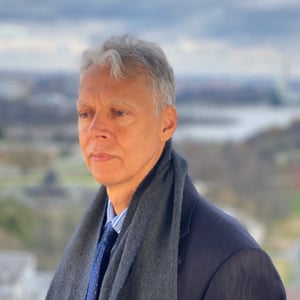
Emeritus Professor and Editor, Emory University and First Things magazine
Mark Bauerlein is an editor at First Things and Professor of English Emeritus at Emory University, where he taught since earning his PhD in English at UCLA in 1989. From 2003 to 2005 he served as Director of the Office of Research and Analysis at the National Endowment for the Arts. He has written or edited 12 books, including Literary Criticism: An Autopsy (1997), The Pragmatic Mind: Explorations in the Psychology of Belief (1997), Negrophobia: A Race Riot in Atlanta, 1906 (2001), The Dumbest Generation: How the Digital Age Stupefies Young Americans and Jeopardizes Our Future (2008), and The Dumbest Generation Grows Up: From Stupefied Youth to Dangerous Adults (2022). His essays have appeared in PMLA, Philosophy and Literature, Partisan Review, Wilson Quarterly, Commentary, and New Criterion, and his commentaries and reviews in the Wall Street Journal, New York Times, Washington Post, Boston Globe, Weekly Standard, Politico, Vox, Slate, The Guardian, Chronicle of Higher Education, and other national periodicals. He has done more than 500 media interviews, including Fox & Friends, CNN, BBC World Today, NPR All Things Considered, ABC Nightline, 20/20, PBS NOVA, and The New Yorker podcast. He hosts a podcast at First Things, which focusses on recent books and runs twice a week. In January 2023, he was appointed a Trustee of New College Florida by Governor DeSantis.
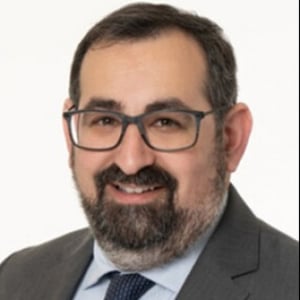
Research Scholar in Law and Executive Director, Center for Academic Freedom and Free Speech, Yale Law School
Joe Cohn is a research scholar in law at Yale Law school and the executive director of the Center for Academic Freedom and Free Speech (CAFFS).
Cohn has served as a staff attorney at the AIDS Law Project of Pennsylvania, a staff attorney for the Court of Appeals for the 3rd Circuit, an adjunct professor of law at the University of Pennsylvania Law School, where he supervised law students representing clients in litigation in state and federal courts, and as the interim legal director for ACLU affiliates in Nevada and Utah.
A majority of Cohn’s career has been dedicated to defending civil liberties on college campuses and free expression in society at large. As the Foundation for Individual Rights and Expression’s (FIRE’s) founding legislative and policy director, from 2012 to 2023, he testified on numerous occasions in legislatures across America and in Congress, drafted legislation on campus free speech, campus due process, and academic freedom that has been enacted in states across the country. Immediately before joining CAFFS, Cohn advocated for open inquiry, viewpoint diversity, and constructive disagreement in higher education as Heterodox Academy’s director of policy.
Cohn writes extensively on civil liberties, with articles published in a wide array of media outlets, including the Wall Street Journal, the Washington Post, Newsweek, the Hill, the New York Daily News, the Chicago Tribune, the Las Vegas Review Journal, the Minnesota Star Tribune, the Chronicle of Higher Education, Inside Higher Ed, and the Volokh Conspiracy.
He earned his bachelor of arts from the University of Nevada at Las Vegas in 2000. He is a 2004 graduate of the University of Pennsylvania Carey School of Law and the Fels Institute of Government Administration, where he earned his J.D. and M.A. in Government Administration.
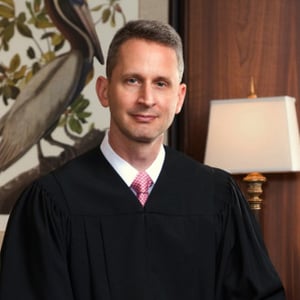
Judge, United States Court of Appeals, Fifth Circuit
Judge Duncan received his B.A. from Louisiana State University in 1994, his J.D. from the Paul M. Hebert Law Center at Louisiana State University in 1997, and his LL.M. from Columbia Law School in 2004.
After graduating from law school, he clerked for Louisiana-based Circuit Judge John Malcolm Duhé Jr. of the United States Court of Appeals for the Fifth Circuit.
From 2008–2012, Duncan served as Appellate Chief for Louisiana's Attorney General's office. From 2012–2014, he served as general counsel of the Becket Fund for Religious Liberty. From 2004-2008, he was an assistant professor of law at the University of Mississippi School of Law.
Before becoming a judge, Duncan practiced at the Washington, D.C. firm of Schaerr Duncan LLP, where he was a founding partner. He was appointed by President Trump to the United States Court of Appeals for the Fifth Circuit on May 1, 2018.
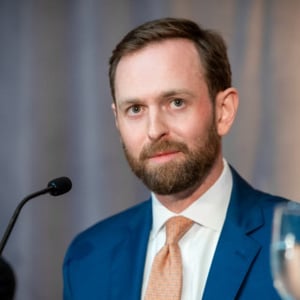
Commissioner, Federal Trade Commission
Andrew N. Ferguson was sworn in April 2, 2024 as a Commissioner of the Federal Trade Commission. President Joe Biden named Ferguson to a term that expires on September 25, 2030.
Ferguson most recently served as solicitor general of the Commonwealth of Virginia. Prior to that position, he served as chief counsel to U.S. Sen. Mitch McConnell of Kentucky, the Republican leader, and as a Republican counsel on the U.S. Senate Judiciary Committee. He also practiced law at several Washington, D.C. law firms. He earned his undergraduate degree and law degree from the University of Virginia. After law school, Ferguson clerked for Judge Karen L. Henderson on the U.S. Court of Appeals for the D.C. Circuit and U.S. Supreme Court Justice Clarence Thomas.
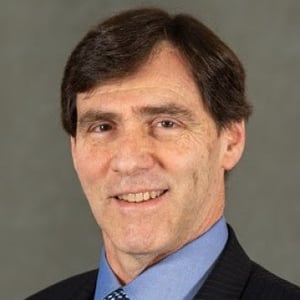
Professor of Business and Professor of Law (by courtesy) | Executive Director, Georgetown Institute for the Study of Markets and Ethics McDonough School of Business, Georgetown University
John Hasnas is a professor of business at Georgetown's McDonough School of Business and a professor of law (by courtesy) at Georgetown University Law Center in Washington, DC, where he teaches courses in ethics and law.
Professor Hasnas is also the executive director of the Georgetown Institute for the Study of Markets and Ethics, whose tripartite mission is to produce high-quality research on matters related to the ethics of market activity, improve ethics pedagogy, and educate the broader, non-academic community about ethical issues related to the functioning of markets.
Professor Hasnas has held previous appointments as associate professor of law at George Mason University School of Law, visiting associate professor of law at Duke University School of Law and the Washington College of Law at American University, and Law and Humanities Fellow at Temple University School of Law. Professor Hasnas has also been a visiting scholar at the Kennedy Institute of Ethics in Washington, DC and the Social Philosophy and Policy Center in Bowling Green, Ohio.
He received his B.A. in Philosophy from Lafayette College, his J.D. and Ph.D. in Legal Philosophy from Duke University, and his LL.M. in Legal Education from Temple Law School. His scholarship concerns ethics and white collar crime, jurisprudence, and legal history.
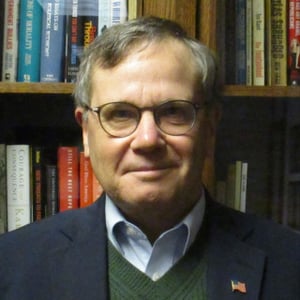
Senior Fellow in Constitutional Jurisprudence, Independence Institute
Professor Robert G. Natelson is a constitutional scholar and author.
Rob’s constitutional scholarship has been cited repeatedly by justices and parties at the U.S. Supreme Court—as well as by federal appeals courts, and at least 18 state supreme courts.
Rob’s research into the Constitution’s original meaning has carried him to libraries throughout the United States and in Britain, including four months at Oxford University. His books and articles span many different parts of the Constitution, including groundbreaking studies of the Necessary and Proper Clause, the Indian Commerce Clause, federalism, Founding-Era interpretation, regulation of elections, and the amendment process of Article V. He created the first-ever online bibliography for 18th century materials used in constitutional research. He is a contributing author to the Encyclopedia of the Supreme Court of the United States (on Magna Carta). He contributed eight essays to the third edition of the Heritage Guide to the Constitution: five on the amendment procedure and one each on the Guarantee Clause, the Postal Clause, and the Recess Appointments Clause.
U.S. Supreme Court justices have relied explicitly on Rob’s research in 41 citations in 13 separate cases.
Emeritus Professor and Editor, Emory University and First Things magazine
Mark Bauerlein is an editor at First Things and Professor of English Emeritus at Emory University, where he taught since earning his PhD in English at UCLA in 1989. From 2003 to 2005 he served as Director of the Office of Research and Analysis at the National Endowment for the Arts. He has written or edited 12 books, including Literary Criticism: An Autopsy (1997), The Pragmatic Mind: Explorations in the Psychology of Belief (1997), Negrophobia: A Race Riot in Atlanta, 1906 (2001), The Dumbest Generation: How the Digital Age Stupefies Young Americans and Jeopardizes Our Future (2008), and The Dumbest Generation Grows Up: From Stupefied Youth to Dangerous Adults (2022). His essays have appeared in PMLA, Philosophy and Literature, Partisan Review, Wilson Quarterly, Commentary, and New Criterion, and his commentaries and reviews in the Wall Street Journal, New York Times, Washington Post, Boston Globe, Weekly Standard, Politico, Vox, Slate, The Guardian, Chronicle of Higher Education, and other national periodicals. He has done more than 500 media interviews, including Fox & Friends, CNN, BBC World Today, NPR All Things Considered, ABC Nightline, 20/20, PBS NOVA, and The New Yorker podcast. He hosts a podcast at First Things, which focusses on recent books and runs twice a week. In January 2023, he was appointed a Trustee of New College Florida by Governor DeSantis.
Research Scholar in Law and Executive Director, Center for Academic Freedom and Free Speech, Yale Law School
Joe Cohn is a research scholar in law at Yale Law school and the executive director of the Center for Academic Freedom and Free Speech (CAFFS).
Cohn has served as a staff attorney at the AIDS Law Project of Pennsylvania, a staff attorney for the Court of Appeals for the 3rd Circuit, an adjunct professor of law at the University of Pennsylvania Law School, where he supervised law students representing clients in litigation in state and federal courts, and as the interim legal director for ACLU affiliates in Nevada and Utah.
A majority of Cohn’s career has been dedicated to defending civil liberties on college campuses and free expression in society at large. As the Foundation for Individual Rights and Expression’s (FIRE’s) founding legislative and policy director, from 2012 to 2023, he testified on numerous occasions in legislatures across America and in Congress, drafted legislation on campus free speech, campus due process, and academic freedom that has been enacted in states across the country. Immediately before joining CAFFS, Cohn advocated for open inquiry, viewpoint diversity, and constructive disagreement in higher education as Heterodox Academy’s director of policy.
Cohn writes extensively on civil liberties, with articles published in a wide array of media outlets, including the Wall Street Journal, the Washington Post, Newsweek, the Hill, the New York Daily News, the Chicago Tribune, the Las Vegas Review Journal, the Minnesota Star Tribune, the Chronicle of Higher Education, Inside Higher Ed, and the Volokh Conspiracy.
He earned his bachelor of arts from the University of Nevada at Las Vegas in 2000. He is a 2004 graduate of the University of Pennsylvania Carey School of Law and the Fels Institute of Government Administration, where he earned his J.D. and M.A. in Government Administration.
Judge, United States Court of Appeals, Fifth Circuit
Judge Duncan received his B.A. from Louisiana State University in 1994, his J.D. from the Paul M. Hebert Law Center at Louisiana State University in 1997, and his LL.M. from Columbia Law School in 2004.
After graduating from law school, he clerked for Louisiana-based Circuit Judge John Malcolm Duhé Jr. of the United States Court of Appeals for the Fifth Circuit.
From 2008–2012, Duncan served as Appellate Chief for Louisiana's Attorney General's office. From 2012–2014, he served as general counsel of the Becket Fund for Religious Liberty. From 2004-2008, he was an assistant professor of law at the University of Mississippi School of Law.
Before becoming a judge, Duncan practiced at the Washington, D.C. firm of Schaerr Duncan LLP, where he was a founding partner. He was appointed by President Trump to the United States Court of Appeals for the Fifth Circuit on May 1, 2018.
Commissioner, Federal Trade Commission
Andrew N. Ferguson was sworn in April 2, 2024 as a Commissioner of the Federal Trade Commission. President Joe Biden named Ferguson to a term that expires on September 25, 2030.
Ferguson most recently served as solicitor general of the Commonwealth of Virginia. Prior to that position, he served as chief counsel to U.S. Sen. Mitch McConnell of Kentucky, the Republican leader, and as a Republican counsel on the U.S. Senate Judiciary Committee. He also practiced law at several Washington, D.C. law firms. He earned his undergraduate degree and law degree from the University of Virginia. After law school, Ferguson clerked for Judge Karen L. Henderson on the U.S. Court of Appeals for the D.C. Circuit and U.S. Supreme Court Justice Clarence Thomas.
Professor of Business and Professor of Law (by courtesy) | Executive Director, Georgetown Institute for the Study of Markets and Ethics McDonough School of Business, Georgetown University
John Hasnas is a professor of business at Georgetown's McDonough School of Business and a professor of law (by courtesy) at Georgetown University Law Center in Washington, DC, where he teaches courses in ethics and law.
Professor Hasnas is also the executive director of the Georgetown Institute for the Study of Markets and Ethics, whose tripartite mission is to produce high-quality research on matters related to the ethics of market activity, improve ethics pedagogy, and educate the broader, non-academic community about ethical issues related to the functioning of markets.
Professor Hasnas has held previous appointments as associate professor of law at George Mason University School of Law, visiting associate professor of law at Duke University School of Law and the Washington College of Law at American University, and Law and Humanities Fellow at Temple University School of Law. Professor Hasnas has also been a visiting scholar at the Kennedy Institute of Ethics in Washington, DC and the Social Philosophy and Policy Center in Bowling Green, Ohio.
He received his B.A. in Philosophy from Lafayette College, his J.D. and Ph.D. in Legal Philosophy from Duke University, and his LL.M. in Legal Education from Temple Law School. His scholarship concerns ethics and white collar crime, jurisprudence, and legal history.
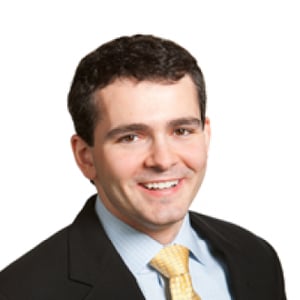
President, The Ethics and Public Policy Center
Ryan T. Anderson, Ph.D., is the President of the Ethics and Public Policy Center. In May 2025, Anderson was appointed by President Trump to the Religious Liberty Commission.
He is the author or co-author of five books, including the just-released Tearing Us Apart: How Abortion Harms Everything and Solves Nothing. Previous books include When Harry Became Sally: Responding to the Transgender Moment, Truth Overruled: The Future of Marriage and Religious Freedom, What Is Marriage? Man and Woman: A Defense, and Debating Religious Liberty and Discrimination. He is the co-editor of A Liberalism Safe for Catholicism? Perspectives from “The Review of Politics.”
Anderson’s research has been cited by two U.S. Supreme Court justices, Justice Samuel Alito and Justice Clarence Thomas, in two Supreme Court cases.
He received his bachelor of arts degree from Princeton University, graduating Phi Beta Kappa and magna cum laude, and he received his doctoral degree in political philosophy from the University of Notre Dame. His dissertation was titled: “Neither Liberal Nor Libertarian: A Natural Law Approach to Social Justice and Economic Rights.”
Anderson has made appearances on ABC, CNN, CNBC, MSNBC, and Fox News. His work has been published by the New York Times, the Washington Post, the Wall Street Journal, Oxford University Press, Cambridge University Press, the Harvard Journal of Law and Public Policy, the Harvard Health Policy Review, the Georgetown Journal of Law and Public Policy, First Things, the Claremont Review of Books, and National Review.
He is the John Paul II Teaching Fellow in Social Thought at the University of Dallas, a member of the James Madison Society at Princeton University, and a Fellow of the Institute for Human Ecology at the Catholic University of America, as well as the Founding Editor of Public Discourse, the online journal of the Witherspoon Institute of Princeton, New Jersey.
For 9 years he was the William E. Simon senior research fellow at The Heritage Foundation, and has served as an adjunct professor of philosophy and political science at Christendom College, and a Visiting Fellow at the Veritas Center at Franciscan University. He has also served as an assistant editor of First Things.
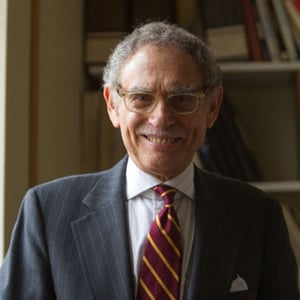
Founder and Director, James Wilson Institute on Natural Rights & the American Founding
Hadley Arkes joined the faculty of Amherst College in 1966. He became the Edward Ney Professor of Jurisprudence in 1987, and held that chair until he retired officially in July 2015. But he has not retired from writing and speaking. He has carried that teaching into a new phase; he has become the Founder and Director of the James Wilson Institute on Natural Rights and the American Founding in Washington, D.C. He has written eight books, mostly with Princeton and Cambridge University Presss. Among the books at Princeton have been: The Philosopher in the City (1981), First Things (1986), Beyond the Constitution (1990), and The Return of George Sutherland (1994). With Cambridge Press he has done Natural Rights and the Right to Choose (2002), and Constitutional Illusions & Anchoring Truths: The Touchstone of the Natural Law (2010). His most recent book, with Regnery Press is Mere Natural Law (2023) His articles have appeared in professional journals, but apart from his writing in more scholarly formats, he has become known to a wider audience through his writings in the Wall Street Journal, National Review, Civitas and First Things, a journal that took its name from his book of that title.
He was the main advocate, and architect, of the bill that became known as the Born-Alive Infants’ Protection Act. The account of his experience, in moving the bill through Congress, is contained as an epilogue or memoir in his book, Natural Rights & the Right to Choose. Arkes first prepared his proposal as part of the debating kit assembled for the first George Bush in 1988. The purpose of that proposal was to offer the “most modest first step” of all in legislating on abortion, and opening a conversation even with people who called themselves “pro-choice.” Professor Arkes proposed to begin simply by preserving the life of a child who survived an abortion–contrary to the holding of one federal judge, that such a child was not protected by the laws. Professor Arkes led the testimony on the bill before the Judiciary Committee of the U.S. House in July 2000, then again in July 2001. The legislative calendar was upended in the aftermath of September 11th, but in March 2002, the bill was brought to the floor of the House, where it passed unanimously. To the surprise of Professor Arkes, the bill was brought to the floor of the Senate on July 18 by the Deputy Majority Leader, Harry Reid, and passed in the same way. On August 5, President Bush signed the bill into law with Professor Arkes in attendance.
Professor Arkes was the founder, at Amherst, of the Committee for the American Founding, a group of alumni and students seeking to preserve, at Amherst, the doctrines of “natural rights” taught by the American Founders and Lincoln. That interest has been carried over now to the founding of a new center for the jurisprudence of natural law, in Washington, D.C.: the James Wilson Institute on Natural Rights and the American Founding, named for one of the premier minds among the American Founders. Professor Arkes has drawn to this project a cluster of accomplished federal judges who have wanted to get a firmer hold on the natural law, and brought them together with some gifted teachers of philosophy and law. The new institute will be sponsoring lectures and seminars in Washington and other parts of the country. The purpose of this new James Wilson Institute is to teach anew, to lawyers, judges, and students those principles of law that furnished the guide to the American Founders as they set about framing a Constitution. And the hope is to restore, to a new generation, the furnishings of mind of the men who formed this regime.
President, The Ethics and Public Policy Center
Ryan T. Anderson, Ph.D., is the President of the Ethics and Public Policy Center. In May 2025, Anderson was appointed by President Trump to the Religious Liberty Commission.
He is the author or co-author of five books, including the just-released Tearing Us Apart: How Abortion Harms Everything and Solves Nothing. Previous books include When Harry Became Sally: Responding to the Transgender Moment, Truth Overruled: The Future of Marriage and Religious Freedom, What Is Marriage? Man and Woman: A Defense, and Debating Religious Liberty and Discrimination. He is the co-editor of A Liberalism Safe for Catholicism? Perspectives from “The Review of Politics.”
Anderson’s research has been cited by two U.S. Supreme Court justices, Justice Samuel Alito and Justice Clarence Thomas, in two Supreme Court cases.
He received his bachelor of arts degree from Princeton University, graduating Phi Beta Kappa and magna cum laude, and he received his doctoral degree in political philosophy from the University of Notre Dame. His dissertation was titled: “Neither Liberal Nor Libertarian: A Natural Law Approach to Social Justice and Economic Rights.”
Anderson has made appearances on ABC, CNN, CNBC, MSNBC, and Fox News. His work has been published by the New York Times, the Washington Post, the Wall Street Journal, Oxford University Press, Cambridge University Press, the Harvard Journal of Law and Public Policy, the Harvard Health Policy Review, the Georgetown Journal of Law and Public Policy, First Things, the Claremont Review of Books, and National Review.
He is the John Paul II Teaching Fellow in Social Thought at the University of Dallas, a member of the James Madison Society at Princeton University, and a Fellow of the Institute for Human Ecology at the Catholic University of America, as well as the Founding Editor of Public Discourse, the online journal of the Witherspoon Institute of Princeton, New Jersey.
For 9 years he was the William E. Simon senior research fellow at The Heritage Foundation, and has served as an adjunct professor of philosophy and political science at Christendom College, and a Visiting Fellow at the Veritas Center at Franciscan University. He has also served as an assistant editor of First Things.
Founder and Director, James Wilson Institute on Natural Rights & the American Founding
Hadley Arkes joined the faculty of Amherst College in 1966. He became the Edward Ney Professor of Jurisprudence in 1987, and held that chair until he retired officially in July 2015. But he has not retired from writing and speaking. He has carried that teaching into a new phase; he has become the Founder and Director of the James Wilson Institute on Natural Rights and the American Founding in Washington, D.C. He has written eight books, mostly with Princeton and Cambridge University Presss. Among the books at Princeton have been: The Philosopher in the City (1981), First Things (1986), Beyond the Constitution (1990), and The Return of George Sutherland (1994). With Cambridge Press he has done Natural Rights and the Right to Choose (2002), and Constitutional Illusions & Anchoring Truths: The Touchstone of the Natural Law (2010). His most recent book, with Regnery Press is Mere Natural Law (2023) His articles have appeared in professional journals, but apart from his writing in more scholarly formats, he has become known to a wider audience through his writings in the Wall Street Journal, National Review, Civitas and First Things, a journal that took its name from his book of that title.
He was the main advocate, and architect, of the bill that became known as the Born-Alive Infants’ Protection Act. The account of his experience, in moving the bill through Congress, is contained as an epilogue or memoir in his book, Natural Rights & the Right to Choose. Arkes first prepared his proposal as part of the debating kit assembled for the first George Bush in 1988. The purpose of that proposal was to offer the “most modest first step” of all in legislating on abortion, and opening a conversation even with people who called themselves “pro-choice.” Professor Arkes proposed to begin simply by preserving the life of a child who survived an abortion–contrary to the holding of one federal judge, that such a child was not protected by the laws. Professor Arkes led the testimony on the bill before the Judiciary Committee of the U.S. House in July 2000, then again in July 2001. The legislative calendar was upended in the aftermath of September 11th, but in March 2002, the bill was brought to the floor of the House, where it passed unanimously. To the surprise of Professor Arkes, the bill was brought to the floor of the Senate on July 18 by the Deputy Majority Leader, Harry Reid, and passed in the same way. On August 5, President Bush signed the bill into law with Professor Arkes in attendance.
Professor Arkes was the founder, at Amherst, of the Committee for the American Founding, a group of alumni and students seeking to preserve, at Amherst, the doctrines of “natural rights” taught by the American Founders and Lincoln. That interest has been carried over now to the founding of a new center for the jurisprudence of natural law, in Washington, D.C.: the James Wilson Institute on Natural Rights and the American Founding, named for one of the premier minds among the American Founders. Professor Arkes has drawn to this project a cluster of accomplished federal judges who have wanted to get a firmer hold on the natural law, and brought them together with some gifted teachers of philosophy and law. The new institute will be sponsoring lectures and seminars in Washington and other parts of the country. The purpose of this new James Wilson Institute is to teach anew, to lawyers, judges, and students those principles of law that furnished the guide to the American Founders as they set about framing a Constitution. And the hope is to restore, to a new generation, the furnishings of mind of the men who formed this regime.

Panel 4: Academic Freedom in Higher Education: The Role of States Defending Freedom of Thought
Mark Bauerlein, Joe Cohn, Stuart Kyle Duncan, Andrew N. Ferguson, John Hasnas
What policies and practices can states adopt to encourage freedom of thought within higher education?...
Panel 4: Academic Freedom in Higher Education: The Role of States Defending Freedom of Thought
State Power Review Conference
Washington, DCState Power Review: Considering the Role of States in Preserving Freedom
2023 Freedom of Thought Conference
Washington, DCWhy Nineteenth Century Bans on “Sectarian” Aid Are Facially Unconstitutional: New Evidence on Plain Meaning
Robert G. Natelson
Note from the Editor: This article presents original research on the nineteenth century meaning of...
Breakfast with Ryan Anderson
Washington, District of ColumbiaContaining the Federal Power: A Remedy Old… and Surprisingly New
Charlotte, North CarolinaObergefell v. Hodges: Same-Sex Marriage and the 14th Amendment
Fort Worth, TexasAbortion, Public Policy, and the Law
Fort Worth, TexasReception with Entrepreneur Mark Gerson
New York, New York