
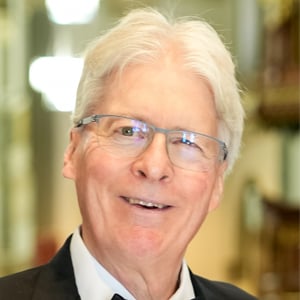
General Counsel, James Madison Center for Free Speech
Professor, University of California Hastings College of the Law
 Professor Calvin R. Massey joined the Hastings faculty in 1987. Prior to teaching at Hastings, he practiced law in San Francisco.
Professor of Law, Western New England College School of Law
Professor Gouvin has been a member of the Western New England College School of Law faculty since 1991. He was tenured and promoted to full professor in 1996. He served as Associate Dean for External Affairs during the 2003-2004 academic year and as Associate Dean for Academic Affairs from 2004-2009. He is currently the Director of the Law and Business Center for Advancing Entrepreneurship.
During his time on the faculty he has taught contracts, business organizations, banking regulation, secured transactions, and other business-related courses. In 2002 he founded the Small Business Clinicat Western New England College School of Law and was the moving force behind the creation of the Law and Business Center for Advancing Entrepreneurship, a collaborative effort with the Western New England College School of Business.
Prior to 1991, Professor Gouvin practiced corporate, banking, and commercial law with the firm of Bernstein, Shur, Sawyer and Nelson in Portland, Maine. At the firm Professor Gouvin helped to represent a diverse array of clients, from Fortune 500 companies to closely held businesses.
Professor Gouvin holds a bachelor’s degree from Cornell University, a master’s degree from Harvard’s Kennedy School of Government, and J.D. and LL.M. degrees from the Boston University School of Law. His scholarly writings focus on the intersection of corporate law and banking law. He is a co-author of the treatiseBlumberg on Corporate Groupswith Phillip Blumberg and Kurt Strasser at the University of Connecticut School of Law and Nicholas Georgakopoulos at the Indiana University (Indianapolis) School of Law. His contributions dealt primarily with corporate groups in the financial services sector. He has written numerous law review articles on a range of topics affecting financial services.
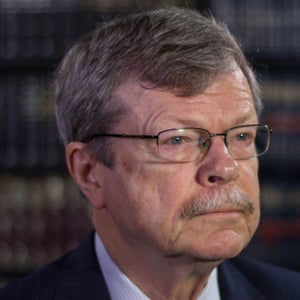
Vice President & Legal Director, National Right To Work Legal Defense Foundation
Raymond J. LaJeunesse, Jr., is Vice President and Legal Director of the National Right to Work Legal Defense Foundation, a non-profit legal aid organization. He was the first Staff Attorney employed by the Foundation and has more than forty-five years of experience helping workers in litigation in federal and state courts and administrative agencies over the abuses of compulsory unionism.
Mr. LaJeunesse has argued four cases in the United States Supreme Court. Those cases include Lehnert v. Ferris Faculty Ass’n, 500 U.S. 507 (1991), which limited the purposes for which compulsory union fees collected from public employees may lawfully be spent; Air Line Pilots Ass’n v. Miller, 523 U.S. 866 (1998), which established that unions cannot compel nonmembers to exhaust union-established remedies before going to court to challenge compulsory union fees; and Marquez v. Screen Actors Guild, 525 U.S. 33 (1998), in which the Court recognized that unions must notify employees that they can satisfy the “membership” requirement of “union shop” agreements by just paying fees for union bargaining activities and need not join and pay full dues to keep their jobs. He also was lead attorney in Hohe v. Casey, 956 F.2d 399 (3d Cir. 1992), in which more than $8.3 million in compulsory agency fees was recovered from the American Federation of State, County and Municipal Employees for a class of 57,000 nonmembers.
Mr. LaJeunesse is the author of several published articles about labor law, has testified before Congressional committees several times, and was an Advisor on the Transition Team for Labor- Related Agencies, Office of the President-Elect, in 1980-81 and a legislative aide to a member of the Virginia state legislature. He is a Vice Chairman of the Federalist Society’s Labor and Employment Law Practice Group and has spoken or debated at the Society’s National Lawyers Convention and at many Lawyers and Student Chapters on such topics as Right to Work laws, compulsory unionism arrangements, the misuse of union dues for politics, union organizing tactics (“card check” vs. secret-ballot elections), and the future of the union movement.
President, UAW 2322
Ron moved to Springfield 35 years ago after graduating high school and has lived in western Massachusetts ever since. Starting a pottery and stained glass business in 1986 at his home in the Maple High-Six Corners neighborhood and working in the hospitality industry he still made time to be involved in city politics. Ron was a member of his Neighbor Council and the Neighborhood Watch.
In 1993 Ron went to work in the healthcare field working at an area hospital as an alcohol and substance abuse counselor and mental health counselor, spending the next 12 years helping people learn to help themselves.
When their employer tried to cut their wages, increase their health insurance costs and make other changes to their wages, benefits and working conditions, Ron joined his coworkers and helped lead and win a campaign to join UAW 2322. He spent the next 6 years fighting for and winning better wages and benefits for his coworkers as chief steward of the union.
In 2004 Ron ran for and won the position of President of UAW Local 2322 and has worked tirelessly with the 3,200 workers they represent to fight for and win better wages, benefits and working conditions, so they and their families can enjoy a better life.
In 2006 Ron won the Pioneer Valley Labor Leader of the Year award for his efforts on behalf of working people and the community. Later that year Ron and the UAW worked on the campaign to elect Deval Patrick, Governor of the Commonwealth. The UAW was the second major union to endorse Deval due in no small part to Ron’s efforts. In recognition of Ron’s efforts for workers, Governor Patrick appointed him to the Commonwealth Corporation Board of Directors which oversees over $34 million annually in funding for job training in the Commonwealth.
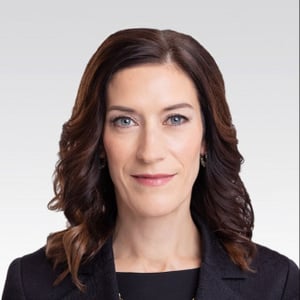
Executive Vice President of Global Governance, Chief Legal Officer and Corporate Secretary, Walmart Inc.
Rachel Brand is Walmart’s executive vice president of global governance, chief legal officer, and corporate secretary. She oversees the company’s global legal, compliance, ethics, corporate governance, digital citizenship, aviation, investigative, and corporate security functions, including Walmart’s Emergency Operations Center.
Immediately before joining Walmart, Rachel served as the United States Associate Attorney General and holds the distinction of being the first woman to serve in this role. She had previously served in the U.S. Department of Justice as the Assistant Attorney General for the Office of Legal Policy during President George W. Bush’s administration. Her other government service includes an appointment by President Obama to serve as a Member of the U.S. Privacy and Civil Liberties Oversight Board, service as an Associate Counsel to the President at the White House, and judicial clerkships with Justice Charles Fried of the Supreme Judicial Court of Massachusetts and Justice Anthony Kennedy at the Supreme Court of the United States. In the private sector, Rachel was a lawyer in private practice at two law firms in Washington, D.C. and served as the Vice President and Chief Counsel for Regulatory Litigation at the U.S. Chamber of Commerce Litigation Center.
Rachel serves on the board of directors for the Walmart Foundation and is the executive sponsor for Walmart’s Tribal Voices Associate Resource Group. Outside of Walmart, she serves on the board of directors for the International Justice Mission and is a member of The American Law Institute.
Rachel earned her Bachelor of Arts degree from the University of Minnesota-Morris and her J.D. from Harvard Law School.
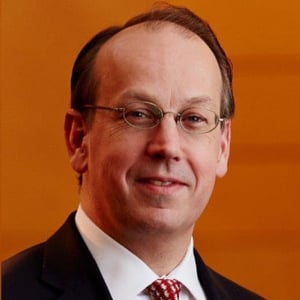
Partner, Clement & Murphy, PLLC
Paul served as the 43rd Solicitor General of the United States from June 2005 until June 2008. Before his confirmation as Solicitor General, he served as Acting Solicitor General for nearly a year and as Principal Deputy Solicitor General for over three years.
Paul has argued over 100 cases before the United States Supreme Court, including McConnell v. FEC, Tennessee v. Lane, United States v. Booker, MGM v. Grokster, Hobby Lobby v. Burwell, Epic Systems Corp. v. Lewis, Rucho v. Common Cause, Facebook v. Duguid, and TransUnion v. Ramirez. Paul has argued more Supreme Court cases since 2000 than any lawyer in or out of government. He has also argued many important cases in the lower courts, including Walker v. Cheney, United States v. Moussaoui and NFL v. Brady.
Paul’s practice focuses on appellate matters, constitutional litigation and strategic counseling. He represents a broad array of clients in the Supreme Court and in federal and state appellate courts. Last year, for example, he successfully argued Supreme Court cases involving significant issues of energy regulation, statutory interpretation, state sovereign immunity and Article III standing, and successfully argued a trademark appeal in the Fourth Circuit, and a constitutional appeal before the en banc Eleventh Circuit.
Paul focuses on high-stakes appeals. In recent years, he successfully defended a $1.2 billion jury verdict for clients in a Tenth Circuit case, while securing the reversal of an over $2 billion jury verdict for another client in the Seventh Circuit and the approval of a nearly $1 billion dollar class action settlement in the Third Circuit. He has initiated major administrative law challenges and constitutional litigation against the federal government, such as the successful challenge to the HHS drug-pricing rule and threatened challenges that led to the withdrawal of the Treasury Department’s proposed cryptocurrency regulations. He also counsels clients on a variety of strategic legal questions, whether arising from pending legislation, government inquiries or ongoing litigation.
Paul has undertaken substantial pro bono engagements in the Supreme Court, such as twice successfully representing the defendant in Bond v. United States and successfully representing the Omaha Tribe in Nebraska v. Parker, the guardian ad litem in Adoptive Couple v. Baby Girl, the defendant in Sekhar v. United States, a high school football coach in Kennedy v. Bremerton, and the Little Sisters of the Poor. Paul’s pro bono representation also precipitated the federal government’s confession of error in United States v. Rojas.
Following law school, Paul clerked for Judge Laurence H. Silberman of the U.S. Court of Appeals for the D.C. Circuit and for Associate Justice Antonin Scalia of the U.S. Supreme Court. After his clerkships, he went on to serve as Chief Counsel of the U.S. Senate Subcommittee on the Constitution, Federalism and Property Rights.
Paul is a Distinguished Lecturer in Law at the Georgetown University Law Center, where he has taught in various capacities since 1998. He also serves as a Senior Fellow of the Law Center’s Supreme Court Institute. He is the Justice Joseph Story Distinguished Practitioner in Residence at the Gray Center at Scalia Law School.
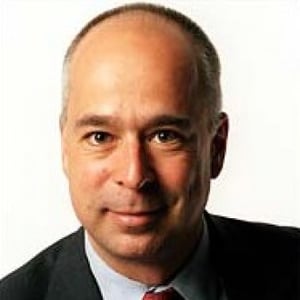
Supreme Court Correspondent, The New York Times
Adam Liptak covers the Supreme Court for The New York Times. Liptak’s column on legal affairs, “Sidebar,” appears every other Tuesday.
A graduate of Yale College and Yale Law School, Liptak practiced law at a large New York City law firm and in the legal department of The New York Times Company before joining the paper’s news staff in 2002.
Liptak was a finalist for the Pulitzer Prize in explanatory reporting in 2009 for “American Exception,” a series of articles examining ways in which the American legal system differs from those of other developed nations. He received the 2010 Scripps Howard Award for Washington reporting for a five-part series on the Roberts Court.
He is the author of “To Have and Uphold: The Supreme Court and the Battle for Same-Sex Marriage.”
His journalism has appeared in The New Yorker, Vanity Fair, Business Week and Rolling Stone, and he has published articles in The Arizona Law Review, The Michigan Law Review and The New York University Annual Survey of American Law.
Liptak has taught courses at Yale, Columbia, the University of Chicago, Washington University in St. Louis, the University of Southern California and U.C.L.A. He is a member of the American Academy of Arts and Sciences.
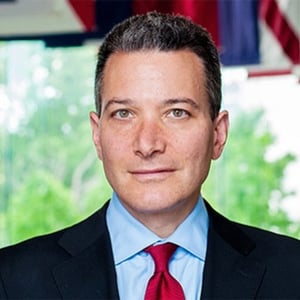
Senior Fellow, FIRE and CEO Emeritus, National Constitution Center
Jeffrey Rosen is a senior FIRE fellow as well as the host of “The Blessings of Liberty” podcast, presented by FIRE. He is also the CEO emeritus of the National Constitution Center, a professor of law at the George Washington University Law School, and a contributing editor of The Atlantic. He was previously the legal affairs editor of The New Republic and a staff writer for The New Yorker.
Rosen is the author of the New York Times bestsellers The Pursuit of Happiness and Conversations with RBG. His new book is The Pursuit of Liberty: How Hamilton vs. Jefferson Ignited the Lasting Battle Over Power in America.
Rosen is a graduate of Harvard College; Oxford University, where he was a Marshall Scholar; and Yale Law School. He is an elected member of the American Philosophical Society and the American Law Institute. In 2024, the French government recognized him as a Chevalier in the Ordre des Arts et des Lettres.
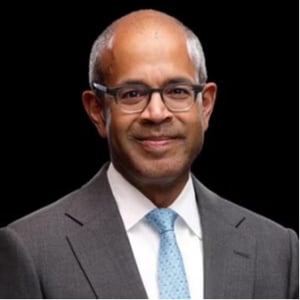
Partner, Davis Polk & Wardwell LLP
Kannon is the head of our Supreme Court & Appellate practice. He has argued 39 cases before the U.S. Supreme Court and has argued more than 150 appeals in courts across the country, including every federal court of appeals and numerous state courts.
Kannon is ranked as a “Star Individual” in appellate law by Chambers USA, where a client notes, “It’s hard to think of enough superlatives to describe his talent, his judgment, his ability, his experience – he is as good as it gets.” Legal 500 U.S. recognizes Kannon in its Hall of Fame for appellate work. A client shares, “His work is the best in the business, and he is a wonderful human being in addition to being a world-class appellate litigator.”
In 2024 and 2022, Kannon was a finalist for the American Lawyer’s “Litigator of the Year” award. He was named “Appellate Litigator of the Year” by Benchmark Litigation in 2021 and was a 2026 finalist for that recognition.
Before entering private practice, Kannon served as an Assistant to the Solicitor General at the U.S. Department of Justice.
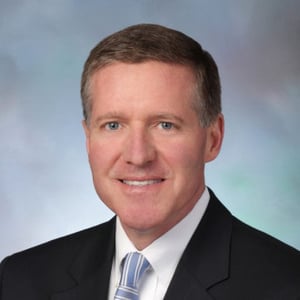
Partner, Davis Polk & Wardwell LLP
Kenneth Wainstein is a partner at Davis Polk & Wardwell, where he focuses his practice on corporate internal investigations and civil and criminal enforcement proceedings. Ken spent over 20 years in a variety of law enforcement and national security positions in the government. Between 1989 and 2001, Ken served as an Assistant U.S. Attorney in both the Southern District of New York and the District of Columbia, where he handled criminal prosecutions ranging from public corruption to gang prosecution cases and held a variety of supervisory positions, including Acting United States Attorney. In 2001, he was appointed Director of the Executive Office for U.S. Attorneys, where he provided oversight and support to the 94 U.S. Attorneys’ Offices. Between 2002 and 2004, Ken served as General Counsel of the Federal Bureau of Investigation and then as Chief of Staff to Director Robert S. Mueller III. In 2004, Ken was appointed and then confirmed as United States Attorney for the District of Columbia, where he had the privilege to lead the largest United States Attorney’s Office in the country. In 2006, the U.S. Senate confirmed Ken as the first Assistant Attorney General for National Security. In that position, Ken established and led the new National Security Division, which consolidated DOJ’s law enforcement and intelligence activities on counterterrorism and counterintelligence matters. In 2008, after 19 years at the Justice Department, Ken was named Homeland Security Advisor by President George W. Bush. In this capacity, he coordinated the nation’s counterterrorism, homeland security, infrastructure protection, and disaster response and recovery efforts. He advised the President, convened and chaired meetings of the Cabinet Officers on the Homeland Security Council, and oversaw the inter-agency coordination process for homeland security and counterterrorism programs.
Executive Vice President of Global Governance, Chief Legal Officer and Corporate Secretary, Walmart Inc.
Rachel Brand is Walmart’s executive vice president of global governance, chief legal officer, and corporate secretary. She oversees the company’s global legal, compliance, ethics, corporate governance, digital citizenship, aviation, investigative, and corporate security functions, including Walmart’s Emergency Operations Center.
Immediately before joining Walmart, Rachel served as the United States Associate Attorney General and holds the distinction of being the first woman to serve in this role. She had previously served in the U.S. Department of Justice as the Assistant Attorney General for the Office of Legal Policy during President George W. Bush’s administration. Her other government service includes an appointment by President Obama to serve as a Member of the U.S. Privacy and Civil Liberties Oversight Board, service as an Associate Counsel to the President at the White House, and judicial clerkships with Justice Charles Fried of the Supreme Judicial Court of Massachusetts and Justice Anthony Kennedy at the Supreme Court of the United States. In the private sector, Rachel was a lawyer in private practice at two law firms in Washington, D.C. and served as the Vice President and Chief Counsel for Regulatory Litigation at the U.S. Chamber of Commerce Litigation Center.
Rachel serves on the board of directors for the Walmart Foundation and is the executive sponsor for Walmart’s Tribal Voices Associate Resource Group. Outside of Walmart, she serves on the board of directors for the International Justice Mission and is a member of The American Law Institute.
Rachel earned her Bachelor of Arts degree from the University of Minnesota-Morris and her J.D. from Harvard Law School.
Partner, Clement & Murphy, PLLC
Paul served as the 43rd Solicitor General of the United States from June 2005 until June 2008. Before his confirmation as Solicitor General, he served as Acting Solicitor General for nearly a year and as Principal Deputy Solicitor General for over three years.
Paul has argued over 100 cases before the United States Supreme Court, including McConnell v. FEC, Tennessee v. Lane, United States v. Booker, MGM v. Grokster, Hobby Lobby v. Burwell, Epic Systems Corp. v. Lewis, Rucho v. Common Cause, Facebook v. Duguid, and TransUnion v. Ramirez. Paul has argued more Supreme Court cases since 2000 than any lawyer in or out of government. He has also argued many important cases in the lower courts, including Walker v. Cheney, United States v. Moussaoui and NFL v. Brady.
Paul’s practice focuses on appellate matters, constitutional litigation and strategic counseling. He represents a broad array of clients in the Supreme Court and in federal and state appellate courts. Last year, for example, he successfully argued Supreme Court cases involving significant issues of energy regulation, statutory interpretation, state sovereign immunity and Article III standing, and successfully argued a trademark appeal in the Fourth Circuit, and a constitutional appeal before the en banc Eleventh Circuit.
Paul focuses on high-stakes appeals. In recent years, he successfully defended a $1.2 billion jury verdict for clients in a Tenth Circuit case, while securing the reversal of an over $2 billion jury verdict for another client in the Seventh Circuit and the approval of a nearly $1 billion dollar class action settlement in the Third Circuit. He has initiated major administrative law challenges and constitutional litigation against the federal government, such as the successful challenge to the HHS drug-pricing rule and threatened challenges that led to the withdrawal of the Treasury Department’s proposed cryptocurrency regulations. He also counsels clients on a variety of strategic legal questions, whether arising from pending legislation, government inquiries or ongoing litigation.
Paul has undertaken substantial pro bono engagements in the Supreme Court, such as twice successfully representing the defendant in Bond v. United States and successfully representing the Omaha Tribe in Nebraska v. Parker, the guardian ad litem in Adoptive Couple v. Baby Girl, the defendant in Sekhar v. United States, a high school football coach in Kennedy v. Bremerton, and the Little Sisters of the Poor. Paul’s pro bono representation also precipitated the federal government’s confession of error in United States v. Rojas.
Following law school, Paul clerked for Judge Laurence H. Silberman of the U.S. Court of Appeals for the D.C. Circuit and for Associate Justice Antonin Scalia of the U.S. Supreme Court. After his clerkships, he went on to serve as Chief Counsel of the U.S. Senate Subcommittee on the Constitution, Federalism and Property Rights.
Paul is a Distinguished Lecturer in Law at the Georgetown University Law Center, where he has taught in various capacities since 1998. He also serves as a Senior Fellow of the Law Center’s Supreme Court Institute. He is the Justice Joseph Story Distinguished Practitioner in Residence at the Gray Center at Scalia Law School.
Supreme Court Correspondent, The New York Times
Adam Liptak covers the Supreme Court for The New York Times. Liptak’s column on legal affairs, “Sidebar,” appears every other Tuesday.
A graduate of Yale College and Yale Law School, Liptak practiced law at a large New York City law firm and in the legal department of The New York Times Company before joining the paper’s news staff in 2002.
Liptak was a finalist for the Pulitzer Prize in explanatory reporting in 2009 for “American Exception,” a series of articles examining ways in which the American legal system differs from those of other developed nations. He received the 2010 Scripps Howard Award for Washington reporting for a five-part series on the Roberts Court.
He is the author of “To Have and Uphold: The Supreme Court and the Battle for Same-Sex Marriage.”
His journalism has appeared in The New Yorker, Vanity Fair, Business Week and Rolling Stone, and he has published articles in The Arizona Law Review, The Michigan Law Review and The New York University Annual Survey of American Law.
Liptak has taught courses at Yale, Columbia, the University of Chicago, Washington University in St. Louis, the University of Southern California and U.C.L.A. He is a member of the American Academy of Arts and Sciences.
Senior Fellow, FIRE and CEO Emeritus, National Constitution Center
Jeffrey Rosen is a senior FIRE fellow as well as the host of “The Blessings of Liberty” podcast, presented by FIRE. He is also the CEO emeritus of the National Constitution Center, a professor of law at the George Washington University Law School, and a contributing editor of The Atlantic. He was previously the legal affairs editor of The New Republic and a staff writer for The New Yorker.
Rosen is the author of the New York Times bestsellers The Pursuit of Happiness and Conversations with RBG. His new book is The Pursuit of Liberty: How Hamilton vs. Jefferson Ignited the Lasting Battle Over Power in America.
Rosen is a graduate of Harvard College; Oxford University, where he was a Marshall Scholar; and Yale Law School. He is an elected member of the American Philosophical Society and the American Law Institute. In 2024, the French government recognized him as a Chevalier in the Ordre des Arts et des Lettres.
Partner, Davis Polk & Wardwell LLP
Kannon is the head of our Supreme Court & Appellate practice. He has argued 39 cases before the U.S. Supreme Court and has argued more than 150 appeals in courts across the country, including every federal court of appeals and numerous state courts.
Kannon is ranked as a “Star Individual” in appellate law by Chambers USA, where a client notes, “It’s hard to think of enough superlatives to describe his talent, his judgment, his ability, his experience – he is as good as it gets.” Legal 500 U.S. recognizes Kannon in its Hall of Fame for appellate work. A client shares, “His work is the best in the business, and he is a wonderful human being in addition to being a world-class appellate litigator.”
In 2024 and 2022, Kannon was a finalist for the American Lawyer’s “Litigator of the Year” award. He was named “Appellate Litigator of the Year” by Benchmark Litigation in 2021 and was a 2026 finalist for that recognition.
Before entering private practice, Kannon served as an Assistant to the Solicitor General at the U.S. Department of Justice.
Partner, Davis Polk & Wardwell LLP
Kenneth Wainstein is a partner at Davis Polk & Wardwell, where he focuses his practice on corporate internal investigations and civil and criminal enforcement proceedings. Ken spent over 20 years in a variety of law enforcement and national security positions in the government. Between 1989 and 2001, Ken served as an Assistant U.S. Attorney in both the Southern District of New York and the District of Columbia, where he handled criminal prosecutions ranging from public corruption to gang prosecution cases and held a variety of supervisory positions, including Acting United States Attorney. In 2001, he was appointed Director of the Executive Office for U.S. Attorneys, where he provided oversight and support to the 94 U.S. Attorneys’ Offices. Between 2002 and 2004, Ken served as General Counsel of the Federal Bureau of Investigation and then as Chief of Staff to Director Robert S. Mueller III. In 2004, Ken was appointed and then confirmed as United States Attorney for the District of Columbia, where he had the privilege to lead the largest United States Attorney’s Office in the country. In 2006, the U.S. Senate confirmed Ken as the first Assistant Attorney General for National Security. In that position, Ken established and led the new National Security Division, which consolidated DOJ’s law enforcement and intelligence activities on counterterrorism and counterintelligence matters. In 2008, after 19 years at the Justice Department, Ken was named Homeland Security Advisor by President George W. Bush. In this capacity, he coordinated the nation’s counterterrorism, homeland security, infrastructure protection, and disaster response and recovery efforts. He advised the President, convened and chaired meetings of the Cabinet Officers on the Homeland Security Council, and oversaw the inter-agency coordination process for homeland security and counterterrorism programs.

Senior Vice President for Legal Studies, Cato Institute
Clark Neily is senior vice president for legal studies at the Cato Institute. His areas of interest include constitutional law, overcriminalization, civil forfeiture, police accountability, and gun rights. Neily is the author of Terms of Engagement: How Our Courts Should Enforce the Constitution’s Promise of Limited Government. His writing has appeared in the Wall Street Journal, Forbes, and National Review Online, as well as various law reviews, including the Harvard Journal of Law and Public Policy, George Mason Law Review, Georgetown Journal of Law and Public Policy, NYU Journal of Law and Liberty, and Texas Review of Law and Politics. Neily is a frequent guest speaker and lecturer for the Federalist Society, Institute for Humane Studies, and American Constitution Society.
Before joining Cato in 2017, Neily was a senior attorney and constitutional litigator at the Institute for Justice and director of the Institute’s Center for Judicial Engagement. He is also an adjunct professor at the University of Texas School of Law, where he teaches constitutional litigation and public-interest law.
Neily served as co-counsel in District of Columbia v. Heller, the historic case in which the Supreme Court held for the first time that the Second Amendment protects an individual right to own a gun for self-defense.
Neily began his legal career as a law clerk to Judge Royce Lamberth on the U.S. District Court for the District of Columbia. After that he spent four years in the trial department of the Dallas-based firm Thompson & Knight. Neily received his undergraduate and law degrees from the University of Texas, where he was Chief Articles Editor of the Texas Law Review.
Professor of Law, Western New England College School of Law
Professor Gouvin has been a member of the Western New England College School of Law faculty since 1991. He was tenured and promoted to full professor in 1996. He served as Associate Dean for External Affairs during the 2003-2004 academic year and as Associate Dean for Academic Affairs from 2004-2009. He is currently the Director of the Law and Business Center for Advancing Entrepreneurship.
During his time on the faculty he has taught contracts, business organizations, banking regulation, secured transactions, and other business-related courses. In 2002 he founded the Small Business Clinicat Western New England College School of Law and was the moving force behind the creation of the Law and Business Center for Advancing Entrepreneurship, a collaborative effort with the Western New England College School of Business.
Prior to 1991, Professor Gouvin practiced corporate, banking, and commercial law with the firm of Bernstein, Shur, Sawyer and Nelson in Portland, Maine. At the firm Professor Gouvin helped to represent a diverse array of clients, from Fortune 500 companies to closely held businesses.
Professor Gouvin holds a bachelor’s degree from Cornell University, a master’s degree from Harvard’s Kennedy School of Government, and J.D. and LL.M. degrees from the Boston University School of Law. His scholarly writings focus on the intersection of corporate law and banking law. He is a co-author of the treatiseBlumberg on Corporate Groupswith Phillip Blumberg and Kurt Strasser at the University of Connecticut School of Law and Nicholas Georgakopoulos at the Indiana University (Indianapolis) School of Law. His contributions dealt primarily with corporate groups in the financial services sector. He has written numerous law review articles on a range of topics affecting financial services.
Vice President & Legal Director, National Right To Work Legal Defense Foundation
Raymond J. LaJeunesse, Jr., is Vice President and Legal Director of the National Right to Work Legal Defense Foundation, a non-profit legal aid organization. He was the first Staff Attorney employed by the Foundation and has more than forty-five years of experience helping workers in litigation in federal and state courts and administrative agencies over the abuses of compulsory unionism.
Mr. LaJeunesse has argued four cases in the United States Supreme Court. Those cases include Lehnert v. Ferris Faculty Ass’n, 500 U.S. 507 (1991), which limited the purposes for which compulsory union fees collected from public employees may lawfully be spent; Air Line Pilots Ass’n v. Miller, 523 U.S. 866 (1998), which established that unions cannot compel nonmembers to exhaust union-established remedies before going to court to challenge compulsory union fees; and Marquez v. Screen Actors Guild, 525 U.S. 33 (1998), in which the Court recognized that unions must notify employees that they can satisfy the “membership” requirement of “union shop” agreements by just paying fees for union bargaining activities and need not join and pay full dues to keep their jobs. He also was lead attorney in Hohe v. Casey, 956 F.2d 399 (3d Cir. 1992), in which more than $8.3 million in compulsory agency fees was recovered from the American Federation of State, County and Municipal Employees for a class of 57,000 nonmembers.
Mr. LaJeunesse is the author of several published articles about labor law, has testified before Congressional committees several times, and was an Advisor on the Transition Team for Labor- Related Agencies, Office of the President-Elect, in 1980-81 and a legislative aide to a member of the Virginia state legislature. He is a Vice Chairman of the Federalist Society’s Labor and Employment Law Practice Group and has spoken or debated at the Society’s National Lawyers Convention and at many Lawyers and Student Chapters on such topics as Right to Work laws, compulsory unionism arrangements, the misuse of union dues for politics, union organizing tactics (“card check” vs. secret-ballot elections), and the future of the union movement.
President, UAW 2322
Ron moved to Springfield 35 years ago after graduating high school and has lived in western Massachusetts ever since. Starting a pottery and stained glass business in 1986 at his home in the Maple High-Six Corners neighborhood and working in the hospitality industry he still made time to be involved in city politics. Ron was a member of his Neighbor Council and the Neighborhood Watch.
In 1993 Ron went to work in the healthcare field working at an area hospital as an alcohol and substance abuse counselor and mental health counselor, spending the next 12 years helping people learn to help themselves.
When their employer tried to cut their wages, increase their health insurance costs and make other changes to their wages, benefits and working conditions, Ron joined his coworkers and helped lead and win a campaign to join UAW 2322. He spent the next 6 years fighting for and winning better wages and benefits for his coworkers as chief steward of the union.
In 2004 Ron ran for and won the position of President of UAW Local 2322 and has worked tirelessly with the 3,200 workers they represent to fight for and win better wages, benefits and working conditions, so they and their families can enjoy a better life.
In 2006 Ron won the Pioneer Valley Labor Leader of the Year award for his efforts on behalf of working people and the community. Later that year Ron and the UAW worked on the campaign to elect Deval Patrick, Governor of the Commonwealth. The UAW was the second major union to endorse Deval due in no small part to Ron’s efforts. In recognition of Ron’s efforts for workers, Governor Patrick appointed him to the Commonwealth Corporation Board of Directors which oversees over $34 million annually in funding for job training in the Commonwealth.

Chair, Political Science Department, University of Wisconsin-Madison
Prof. John Coleman is the Chair of the Department of Political Science at the University of Wisconsin-Madison. Professor Coleman has been at the university since 1992 and has received the Chancellor's Distinguished Teaching Award. He is the author and editor of several books and numerous articles on topics such as political parties, public knowledge in elections, the politics of economic policy, and campaign finance.
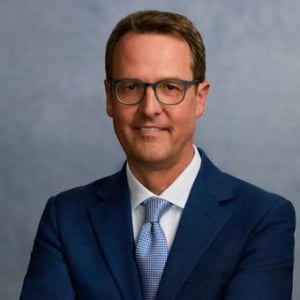
Partner, Orrick, Herrington & Sutcliffe LLP
Andy excels at solving complex problems for his clients using a variety of effective strategies. As former Chief Deputy Attorney General for the State of Wisconsin, Andy Cook has extensive experience representing businesses before state Attorneys General involving investigations and lawsuits. His strong relationships with Attorneys General and their senior staff frequently facilitate the successful resolution of client issues through diplomacy and negotiations. When litigation becomes necessary, Andy effectively advocates for clients throughout the litigation process.
Andy combines his legal expertise in numerous areas of law covered by state Attorneys General, an understanding of how state AG offices operate, and vast knowledge of legal and regulatory issues facing his clients. This substantive and comprehensive legal approach is crucial to effectively representing clients before state Attorneys General. Andy also has substantial experience drafting and enacting complex civil liability reforms before state legislatures to successfully address client goals.
Andy’s main practice focuses on advising Fortune 500 companies before state Attorneys General in the areas of antitrust, consumer protection, False Claims Act, environmental law, and cybersecurity and data privacy. Andy, in collaboration with a team of attorneys, successfully navigated a client through antitrust regulatory review by state Attorneys General in one of the nation’s largest mergers of two major telecommunication companies. Andy also worked with a team of lawyers representing a large corporation involving the multistate opioids litigation brought by state Attorneys General.
Andy gained valuable experience serving as Deputy Attorney General for the State of Wisconsin where he was the second in command of the 700-plus state agency. In his role as Chief Deputy Attorney General, Andy oversaw the day-to-day operations at the Wisconsin Department of Justice (DOJ); directed the State’s litigation strategy; negotiated, reviewed, and approved all settlements; drafted and reviewed attorney general opinions; managed the agency’s budget; oversaw civil and criminal investigations handled by DOJ; and managed DOJ’s legislative agenda.
Andy played college hockey and remains active by running, cross country skiing, and playing golf. On the weekends, Andy and his wife enjoy watching their kids’ sporting events, including soccer, baseball, gymnastics, and track. In his rare spare time, Andy reads history books.
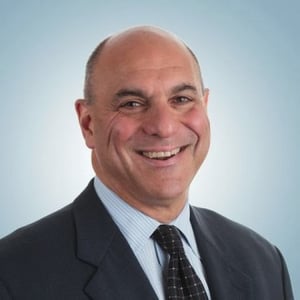
Senior Partner, Pines Bach LLP
Lester Pines is a Senior Partner in the firm.
A Fellow of the American College of Trial Lawyers, he is a respected civil and criminal litigator and appellate advocate. In his over 40 years of practice, he has appeared in trial and appellate courts throughout Wisconsin, in numerous federal district courts, and before the federal 7th Circuit Court of Appeals. After a recent trial, one of Lester’s clients wrote:
"Seeing you in action was like watching an artist create a classic painting from a blank canvas but instead of paint you used facts, figures and, most importantly, words to achieve a masterpiece in the courtroom."
His wide-ranging civil trial practice encompasses commercial claims, employment disputes, constitutional and civil rights matters, personal injury and intellectual property cases. His criminal defense work has involved many high profile cases, especially involving teachers, police officers and other public employees. He is counsel to Madison Teachers Inc., which represents the employees of the Madison Metropolitan School District.
Recently, Lester was featured in a cover story in Isthmus, a Madison weekly newspaper, " Activist Attorney – Lester Pines draws on faith and family in his practice and beyond."
Recent challenges to the constitutionality of newly enacted laws that Lester brought on behalf of his clients include:
Previously, in cases in which he was appointed by former Wisconsin Governor Jim Doyle, Lester defended Wisconsin’s law creating domestic partnerships for same sex couples and stopped an attempt by then Attorney General J.B. Van Hollen to suppress voting in the 2008 Presidential election.
Among the many cases Lester has argued before the Wisconsin Supreme Court, two in particular have shaped Wisconsin law. In 2010 he represented the Zurich American Insurance Company inMiller v. Hanover Insurance, securing the reversal of a $2,000,000 default judgment against his client and achieving a significant change in Wisconsin law regarding relief from such judgments. In an original action in 1996, he successfully argued the case of Thompson v. Craney, which delineated the constitutionally vested powers of the State Superintendent of Public Instruction and protected them from being altered by the Legislature, which the Wisconsin Supreme Court reaffirmed in 2016 in Coyne v. Walker.
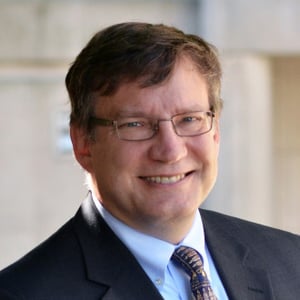
Chairman and Founder, Institute for Free Speech; Josiah H. Blackmore II/Shirley M. Nault Designated Professor of Law, Capital University Law School
Executive Vice President of Global Governance, Chief Legal Officer and Corporate Secretary, Walmart Inc.
Rachel Brand is Walmart’s executive vice president of global governance, chief legal officer, and corporate secretary. She oversees the company’s global legal, compliance, ethics, corporate governance, digital citizenship, aviation, investigative, and corporate security functions, including Walmart’s Emergency Operations Center.
Immediately before joining Walmart, Rachel served as the United States Associate Attorney General and holds the distinction of being the first woman to serve in this role. She had previously served in the U.S. Department of Justice as the Assistant Attorney General for the Office of Legal Policy during President George W. Bush’s administration. Her other government service includes an appointment by President Obama to serve as a Member of the U.S. Privacy and Civil Liberties Oversight Board, service as an Associate Counsel to the President at the White House, and judicial clerkships with Justice Charles Fried of the Supreme Judicial Court of Massachusetts and Justice Anthony Kennedy at the Supreme Court of the United States. In the private sector, Rachel was a lawyer in private practice at two law firms in Washington, D.C. and served as the Vice President and Chief Counsel for Regulatory Litigation at the U.S. Chamber of Commerce Litigation Center.
Rachel serves on the board of directors for the Walmart Foundation and is the executive sponsor for Walmart’s Tribal Voices Associate Resource Group. Outside of Walmart, she serves on the board of directors for the International Justice Mission and is a member of The American Law Institute.
Rachel earned her Bachelor of Arts degree from the University of Minnesota-Morris and her J.D. from Harvard Law School.
Partner, Clement & Murphy, PLLC
Paul served as the 43rd Solicitor General of the United States from June 2005 until June 2008. Before his confirmation as Solicitor General, he served as Acting Solicitor General for nearly a year and as Principal Deputy Solicitor General for over three years.
Paul has argued over 100 cases before the United States Supreme Court, including McConnell v. FEC, Tennessee v. Lane, United States v. Booker, MGM v. Grokster, Hobby Lobby v. Burwell, Epic Systems Corp. v. Lewis, Rucho v. Common Cause, Facebook v. Duguid, and TransUnion v. Ramirez. Paul has argued more Supreme Court cases since 2000 than any lawyer in or out of government. He has also argued many important cases in the lower courts, including Walker v. Cheney, United States v. Moussaoui and NFL v. Brady.
Paul’s practice focuses on appellate matters, constitutional litigation and strategic counseling. He represents a broad array of clients in the Supreme Court and in federal and state appellate courts. Last year, for example, he successfully argued Supreme Court cases involving significant issues of energy regulation, statutory interpretation, state sovereign immunity and Article III standing, and successfully argued a trademark appeal in the Fourth Circuit, and a constitutional appeal before the en banc Eleventh Circuit.
Paul focuses on high-stakes appeals. In recent years, he successfully defended a $1.2 billion jury verdict for clients in a Tenth Circuit case, while securing the reversal of an over $2 billion jury verdict for another client in the Seventh Circuit and the approval of a nearly $1 billion dollar class action settlement in the Third Circuit. He has initiated major administrative law challenges and constitutional litigation against the federal government, such as the successful challenge to the HHS drug-pricing rule and threatened challenges that led to the withdrawal of the Treasury Department’s proposed cryptocurrency regulations. He also counsels clients on a variety of strategic legal questions, whether arising from pending legislation, government inquiries or ongoing litigation.
Paul has undertaken substantial pro bono engagements in the Supreme Court, such as twice successfully representing the defendant in Bond v. United States and successfully representing the Omaha Tribe in Nebraska v. Parker, the guardian ad litem in Adoptive Couple v. Baby Girl, the defendant in Sekhar v. United States, a high school football coach in Kennedy v. Bremerton, and the Little Sisters of the Poor. Paul’s pro bono representation also precipitated the federal government’s confession of error in United States v. Rojas.
Following law school, Paul clerked for Judge Laurence H. Silberman of the U.S. Court of Appeals for the D.C. Circuit and for Associate Justice Antonin Scalia of the U.S. Supreme Court. After his clerkships, he went on to serve as Chief Counsel of the U.S. Senate Subcommittee on the Constitution, Federalism and Property Rights.
Paul is a Distinguished Lecturer in Law at the Georgetown University Law Center, where he has taught in various capacities since 1998. He also serves as a Senior Fellow of the Law Center’s Supreme Court Institute. He is the Justice Joseph Story Distinguished Practitioner in Residence at the Gray Center at Scalia Law School.
Supreme Court Correspondent, The New York Times
Adam Liptak covers the Supreme Court for The New York Times. Liptak’s column on legal affairs, “Sidebar,” appears every other Tuesday.
A graduate of Yale College and Yale Law School, Liptak practiced law at a large New York City law firm and in the legal department of The New York Times Company before joining the paper’s news staff in 2002.
Liptak was a finalist for the Pulitzer Prize in explanatory reporting in 2009 for “American Exception,” a series of articles examining ways in which the American legal system differs from those of other developed nations. He received the 2010 Scripps Howard Award for Washington reporting for a five-part series on the Roberts Court.
He is the author of “To Have and Uphold: The Supreme Court and the Battle for Same-Sex Marriage.”
His journalism has appeared in The New Yorker, Vanity Fair, Business Week and Rolling Stone, and he has published articles in The Arizona Law Review, The Michigan Law Review and The New York University Annual Survey of American Law.
Liptak has taught courses at Yale, Columbia, the University of Chicago, Washington University in St. Louis, the University of Southern California and U.C.L.A. He is a member of the American Academy of Arts and Sciences.
Senior Fellow, FIRE and CEO Emeritus, National Constitution Center
Jeffrey Rosen is a senior FIRE fellow as well as the host of “The Blessings of Liberty” podcast, presented by FIRE. He is also the CEO emeritus of the National Constitution Center, a professor of law at the George Washington University Law School, and a contributing editor of The Atlantic. He was previously the legal affairs editor of The New Republic and a staff writer for The New Yorker.
Rosen is the author of the New York Times bestsellers The Pursuit of Happiness and Conversations with RBG. His new book is The Pursuit of Liberty: How Hamilton vs. Jefferson Ignited the Lasting Battle Over Power in America.
Rosen is a graduate of Harvard College; Oxford University, where he was a Marshall Scholar; and Yale Law School. He is an elected member of the American Philosophical Society and the American Law Institute. In 2024, the French government recognized him as a Chevalier in the Ordre des Arts et des Lettres.
Partner, Davis Polk & Wardwell LLP
Kannon is the head of our Supreme Court & Appellate practice. He has argued 39 cases before the U.S. Supreme Court and has argued more than 150 appeals in courts across the country, including every federal court of appeals and numerous state courts.
Kannon is ranked as a “Star Individual” in appellate law by Chambers USA, where a client notes, “It’s hard to think of enough superlatives to describe his talent, his judgment, his ability, his experience – he is as good as it gets.” Legal 500 U.S. recognizes Kannon in its Hall of Fame for appellate work. A client shares, “His work is the best in the business, and he is a wonderful human being in addition to being a world-class appellate litigator.”
In 2024 and 2022, Kannon was a finalist for the American Lawyer’s “Litigator of the Year” award. He was named “Appellate Litigator of the Year” by Benchmark Litigation in 2021 and was a 2026 finalist for that recognition.
Before entering private practice, Kannon served as an Assistant to the Solicitor General at the U.S. Department of Justice.
Partner, Davis Polk & Wardwell LLP
Kenneth Wainstein is a partner at Davis Polk & Wardwell, where he focuses his practice on corporate internal investigations and civil and criminal enforcement proceedings. Ken spent over 20 years in a variety of law enforcement and national security positions in the government. Between 1989 and 2001, Ken served as an Assistant U.S. Attorney in both the Southern District of New York and the District of Columbia, where he handled criminal prosecutions ranging from public corruption to gang prosecution cases and held a variety of supervisory positions, including Acting United States Attorney. In 2001, he was appointed Director of the Executive Office for U.S. Attorneys, where he provided oversight and support to the 94 U.S. Attorneys’ Offices. Between 2002 and 2004, Ken served as General Counsel of the Federal Bureau of Investigation and then as Chief of Staff to Director Robert S. Mueller III. In 2004, Ken was appointed and then confirmed as United States Attorney for the District of Columbia, where he had the privilege to lead the largest United States Attorney’s Office in the country. In 2006, the U.S. Senate confirmed Ken as the first Assistant Attorney General for National Security. In that position, Ken established and led the new National Security Division, which consolidated DOJ’s law enforcement and intelligence activities on counterterrorism and counterintelligence matters. In 2008, after 19 years at the Justice Department, Ken was named Homeland Security Advisor by President George W. Bush. In this capacity, he coordinated the nation’s counterterrorism, homeland security, infrastructure protection, and disaster response and recovery efforts. He advised the President, convened and chaired meetings of the Cabinet Officers on the Homeland Security Council, and oversaw the inter-agency coordination process for homeland security and counterterrorism programs.

Engage Volume 11, Issue 3, December 2010
*Online-Only Issue* Special Edition: Templeton Debates Eminent Domain after Kelo Ilya Somin & Saul Levmore...
Holding the Service's Feet to the Fire: Applying Citizens United and the First Amendment to the IRC § 501(c)(3) Political Prohibition
Zachary S. Kester, James Bopp
The Supreme Court’s recent decision in Citizens United v. FEC will have a lasting and profound...
Snyder v. Phelps - Post-Argument SCOTUScast
Calvin R. Massey
On October 6, 2010 the Supreme Court heard oral argument in Snyder v. Phelps. The...
Right Result, Wrong Reasoning? McDonald vs. City of Chicago and The Future of Gun Rights
Forced Unionism and the 1st Amendment
Eric J. Gouvin, Raymond J. LaJeunesse, Isaac Mass, Ron Patenaude
On October 13, 2010, the Western New England Student Chapter of the Federalist Society hosted...
Forced Unionism and the 1st Amendment
Western New England Student Chapter
Springfield, MACitizens United: The Future of Campaign Finance and Political Speech
Madison Lawyers Chapter
Madison, WISupreme Court Preview: What Is in Store for October Term 2010?
Rachel L. Brand, Paul D. Clement, Adam Liptak, Jeffrey Rosen, Kannon K. Shanmugam, Kenneth L. Wainstein
October 4th marks the first day of the 2010 Supreme Court term. This term the...
Supreme Court Preview: What Is in Store for October Term 2010?
Rachel L. Brand, Paul D. Clement, Adam Liptak, Jeffrey Rosen, Kannon K. Shanmugam, Kenneth L. Wainstein
October 4th marks the first day of the 2010 Supreme Court term. This term the...
Supreme Court Preview: What Is in Store for October Term 2010?
Washington, DC