
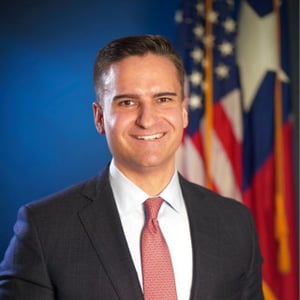
Deputy Attorney General, Civil Litigation, Texas Attorney General
James Lloyd is the Deputy Attorney General for Civil Litigation for the Texas Attorney General. He serves alongside over 600 lawyers and staff across eleven practice groups handling more than 35,000 cases involving the State of Texas. James also serves as Chief of the Antitrust Division, leading the enforcement of state and federal antitrust laws and representing the interests of Texas in national antitrust matters alongside federal enforcers.
James previously practiced at global law firms Sidley Austin LLP and Mayer Brown LLP, managing a range of high-profile matters for public and private companies. He began his legal career as a law clerk to Justice David Medina on the Texas Supreme Court.
James has served in a variety of roles in public service. He is currently an Intelligence Officer in the U.S. Navy Reserve, assigned to the Commander of the U.S. Pacific Fleet. James served on the Presidential Transition Team for President Donald Trump, where he advised on financial regulatory policy and led the transition of the U.S. Securities and Exchange Commission. James previously served at the White House as Senior Writer to President George W. Bush. He was also a member of the national security staff, coordinating policymaking and oversight with senior officials among the Cabinet departments and agencies.
James received his J.D. from The University of Texas School of Law, where he was Articles Editor for the Texas Law Review and a teaching assistant to Admiral Bobby Inman. He earned his bachelor’s degree from Rice University, where he was student body president and received the Joseph Cooper Prize in Public Policy.
A seventh-generation Texan, James comes from a family of litigators, including his mother, his sister, and his father who has served over 18 years on the Texas judiciary. James is Chair of the State Bar of Texas Antitrust and Business Litigation Section and serves on the Executive Committee of The Federalist Society’s Corporations, Securities, and Antitrust Practice Group.
James has spent over a decade as a volunteer attorney for veterans legal clinics in Houston and Austin. He is also a member of the Legal Affairs Roundtable for the Intelligence and National Security Alliance (INSA) and is also a longtime supporter of the Houston Livestock Show and Rodeo, serving on the Mutton Bustin' Committee.
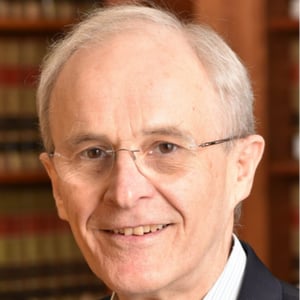
Levin, Mabie & Levin Professor of Law, University of Florida Levin College of Law
Professor Lynn M. LoPucki comes to UF in August 2022 from the UCLA School of Law where he taught Secured Transactions and Business Associations for twenty-two years. His Stakeholder Takeover Project is an effort to provide corporate stakeholders with the information they need to control corporations through markets. For example, the Project website ranks the S&P 500 companies by their greenhouse gas emissions. The UC Davis Law Review published the first Project article, Repurposing the Corporation Through Stakeholder Markets, in February 2022 and will publish the second, Corporate Greenhouse Gas Disclosures, in November.
Professor LoPucki has published more than seventy-five articles in highly regarded law reviews, including the Yale Law Journal, Stanford Law Review, University of Chicago Law Review, University of Michigan Law Review, University of Pennsylvania Law Review, Virginia Law Review, Cornell Law Review, Duke Law Journal, and Northwestern University Law Review. He co-authors three Aspen Casebooks: Business Associations: A Systems Approach (2020) (with Andrew Verstein); Secured Transactions: A Systems Approach (9th edition with Elizabeth Warren and Robert M. Lawless), and Commercial Transactions: A Systems Approach (7th edition with Elizabeth Warren, Daniel L. Keating, Ronald Mann, and Robert M. Lawless).
Since 1994, the Florida-UCLA-LoPucki Bankruptcy Research Database has collected large, public company bankruptcy data and disseminated it to the public and to bankruptcy researchers throughout the world. Those data provided the foundation for Professor LoPucki’s books, Courting Failure: How Competition for Big Cases is Corrupting the Bankruptcy Courts (University of Michigan Press 2005) and Professional Fees in Corporate Bankruptcies: Data, Analysis, and Evaluation (Oxford University Press, 2011) (with Joseph Doherty).
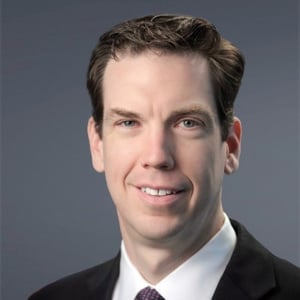
Partner, Fusion Law, PLLC
Paul is the founding partner of Fusion Law, PLLC. He has extensive experience with state, federal, and global regulators building coalitions and implementing policies to promote innovation in financial services. He is responsible for designing and implementing the first state (Arizona) and federal (CFPB) FinTech sandboxes in the United States. He also designed the CFPB no-action letter and trial disclosure policies. He helped found the first global regulatory innovation coalition (Global Financial Innovation Network) and led the founding of the first U.S. regulatory innovation coalition (American Consumer Financial Innovation Network). He served on the Financial Stability Oversight Council subcommittee on digital assets. He also has drafted state-level laws on blockchain and utility tokens.
Paul also has significant enforcement and litigation experience. He led many multi-state consumer protection enforcement matters as Civil Litigation Division Chief at the Arizona Attorney General’s Office.
Prior to his government service, Paul practiced law in the areas of securities litigation and transactional work for approximately six years at two well-known law firms. He also clerked on the U.S. Court of Appeals for the Fourth Circuit.
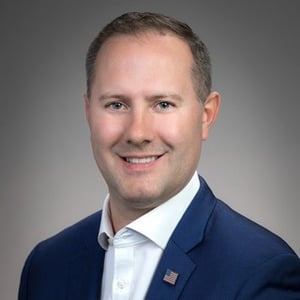
Head of Corporate Governance, Strive Asset Management
Justin Danhof is the Head of Corporate Governance at Strive Asset Management. Previously, he served as General Counsel for the National Center for Public Policy Research, as well as Director of the Center’s Free Enterprise Project. He also worked in the Miami-Dade State’s Attorney’s Office in the Economic Crimes and Cybercrimes Division, for the Massachusetts Alliance for Economic Development and at the U.S. Securities and Exchange Commission.
Mr. Danhof’s work has been widely published and quoted in major newspapers, including the Wall Street Journal, the New York Times, Politico, USA Today, the Los Angeles Times, the San Francisco Chronicle, the Boston Globe, the Christian Science Monitor, and the Washington Post. He has also appeared on the Fox News Channel, One America News Network, and the Fox Business Channel, among others.
Mr. Danhof is a member of the Federalist Society and Christian Legal Society.
Mr. Danhof is a graduate of Bentley University (Waltham, MA), where he received a Bachelor of Science in economics and finance and pitched for three seasons on the school’s NCAA Division II baseball team. Mr. Danhof completed his graduate studies at the University of Miami School of Law where he received his Juris Doctor and Master of Laws in Taxation.
Mr. Danhof is licensed to practice law in New York and Washington, D.C.
Chairman, Secura/Isaac Group
William “Bill” Isaac served as Chairman of the FDIC during one of the most important and tumultuous periods in US banking history. Some 3,000 banks and thrifts failed during the 1980s, including Continental Illinois and nine of the ten largest banks in Texas. In addition to the failures of many of the largest regional banks throughout the US, most of the money center banks in the US were on the watch list due in large part to the enormous amount of loans on their books to less developed countries.
President Carter appointed Bill Isaac to the board of the FDIC in 1978. He was confirmed by the Senate at the age of 34. President Reagan named him Chairman of the FDIC two years later, making him the youngest FDIC board member and Chairman in history. Bill Isaac also served as Chairman of the Federal Financial Institutions Examination Council (1983-85), as a member of the Depository Institutions Deregulation Committee (1981–85), and on the Vice President’s Task Group on Regulation of Financial Services (1984).
Bill Isaac is currently Chairman and principal owner of three premier consulting firms, Secura/Isaac Consulting, Blue SaaS Solutions, and Secura/Isaac Talent Advisors. He is a member of the boards of directors of Emigrant Bank and New York Private Bank & Trust and serves as Chairman of Sarasota Private Trust and Cleveland Private Trust, all of which are owned by Howard Milstein and his family.
After completing his service as Chairman of the FDIC at the end of 1985, Bill Isaac founded The Secura Group, a leading consulting firm, which he sold in 2008. He served as Chairman of the Board of Fifth Third Bancorp, one of the nation’s leading banks, and worked as Senior Managing Director at FTI Consulting from 2011 to 2019. He then joined Howard Milstein in the financial services business. Bill Isaac is a former board member at TSYS, a leading payment processing company that today is part of Global Payments. He has served on the boards of Amex Bank, The Associates (a finance company formerly owned by Ford Motor Company), credit reporting company TransUnion, and staffing firm MPS Group.
Bill Isaac is involved extensively in thought leadership relating to the financial industry. He is the author of ‘Senseless Panic: How Washington Failed America’ with a foreword by legendary former Federal Reserve Chairman Paul Volcker. ‘Senseless Panic’ provides an inside account of the banking and savings and loans crises of the 1980s and compares that period to the financial crisis of 2008/2009. Bill Isaac’s articles appear in the Wall Street Journal, the Washington Post, the New York Times, The Hill, American Banker, Forbes, the Financial Times, the Washington Times, and other leading publications. He appears regularly on television and radio, testifies before Congress, and is a speaker before audiences throughout the world (www.WilliamIsaac.com).
Bill Isaac was formerly a senior partner at Arnold & Porter, which was a founding partner of The Secura Group. He left the law firm in 1993 when Secura purchased Arnold & Porter’s interest in Secura. Before his appointment to the FDIC, Bill Isaac served as vice president, general counsel and secretary of First Kentucky National Corporation and its subsidiaries, including First National Bank of Louisville and First Kentucky Trust Company. He began his career with Foley & Lardner in Milwaukee where he practiced general corporate law specializing in banking law.
Bill Isaac received a Distinguished Achievement Medal in 1995 from Miami University and a Distinguished Alumnus Award in 2013 from The Ohio State University. He is a Life member of both the Board of Directors of the Miami University Foundation and the Board of Directors of The Ohio State University Foundation. Bill co- founded in 2016, with his former classmate, the William Isaac & Michael Oxley Center for Business Leadership at Miami University.

Partner, Simpson Thacher
Mr. Noreika leads projects related to the U.S. banking industry, as well as clients that span beyond traditional banking including financial technology and cryptocurrency companies. He is the company’s focal point for C-suite advice on compliance and regulatory requirements at all levels, domestic and international.
Prior to joining Patomak, Mr. Noreika was a partner at Simpson Thacher & Bartlett LLP and was a lead lawyer in the firm’s financial institutions regulatory practice, focusing on banking regulation and related litigation. In that role, he advised domestic and international financial institutions on regulatory issues relating to mergers and acquisitions, minority investments, capital issuances, structuring and compliance activities, and litigation matters.
Mr. Noreika’s extensive experience includes advising regional and multinational banks on the structuring of their U.S. operations, compliance with the Volcker Rule, Consumer Financial Protection Bureau and other federal agency regulations, Bank Secrecy Act and anti-money laundering rules, as well as transactional matters and related regulatory applications. He has counseled numerous private equity funds with respect to investments in banking organizations.
In 2017, Mr. Noreika served as acting Comptroller of the Currency where he led the 4,000-person independent agency responsible for chartering, regulating, and supervising all national banks and federal savings associations as well as federal branches and agencies of foreign banks in the U.S. There, he worked to make regulation more accountable, improved the efficiency of chartering and licensing decisions, and sought the enhance the value of the national bank and federal thrift charters and their ability to meet the credit and banking needs of their communities. In this role, he also served as director of the Federal Deposit Insurance Corporation and member of the Financial Stability Oversight Council.
Mr. Noreika has been recognized as a leader in his field by Chambers USA in “Financial Services Regulation: Banking Compliance” since 2014. He received his law degree from Harvard Law School, where he was editor of the Harvard Law Review. He earned his B.S. in economics with a concentration in finance from The Wharton School of the University of Pennsylvania.

Senior Fellow, Mises Institute
Alex J. Pollock is a Senior Fellow with the Mises Institute, providing thought and policy leadership on financial issues and the study of financial systems. His work includes cycles of booms and busts, financial crises with their political responses, housing finance, government-sponsored enterprises, risk and uncertainty, central banking, banking and financial regulation, corporate governance, retirement finance, student loans, and the politics of finance.
He previously served as the Principal Deputy Director of the Office of Financial Research in the U.S. Treasury Department 2019-2021. He was a Distinguished Senior Fellow with the R Street Institute 2015-2019 and 2021, and a resident fellow at the American Enterprise Institute, 2004-2015. Among the many aspects of his AEI work, he developed the One Page Mortgage Form to give borrowers in clear form the key information they need in order to know what they are committing themselves to. He was President and CEO of the Federal Home Loan Bank of Chicago from 1991 to 2004. There he invented the Mortgage Partnership Finance program, which successfully created front-end mortgage credit risk sharing beginning in 1997. His decades of banking experience include being a Visiting Scholar at the Federal Reserve Bank of St. Louis, 1991.
Pollock was a director of the CME Group 2004-2019 and of Ascendium Education Group 1989-2019. He is a director and past-chairman of the Great Books Foundation and a past president of the International Union for Housing Finance.
He is the co-author of Surprised Again! - The COVID Crisis and the New Market Bubble (2022), and the author of Finance and Philosophy—Why We’re Always Surprised (2018) and Boom and Bust: Financial Cycles and Human Prosperity (2011), as well as numerous articles and Congressional testimony.
Pollock is a graduate of Williams College, the University of Chicago, and Princeton University.
His work is available on alexjpollock.com.
Robert Kavesh Professorship in Economics, Leonard N. Stern School of Business, New York University
Lawrence J. White has been with New York University Leonard N. Stern School of Business for more than 35 years. His primary research areas of interest include financial regulation, antitrust, network industries, international banking and applied microeconomics.
Professor White has published numerous articles in the Journal of Business, Journal of Economic Perspectives, Journal of Economic Literature, Journal of Political Economy, American Economic Review, Review of Economics and Statistics, Quarterly Journal of Economics, and other leading journals in economics, finance, and law. He is the author of The S&L Debacle: Public Policy Lessons for Bank and Thrift Regulation, among other books, and he is the co-editor (with John Kwoka) of the 6th of edition of The Antitrust Revolution. He contributed chapters to both of the NYU Stern books on the financial crisis - Restoring Financial Stability and Regulating Wall Street. He is the co-author (with Stern's Viral Acharya, Matthew Richardson, and Stijn Van Nieuwerburgh) of Guaranteed to Fail: Fannie Mae, Freddie Mac, and the Debacle of Mortgage Finance.

General Counsel, Strive
Before joining Strive, Alexandra served as the Director of Regulatory Affairs at River Financial, where she handled all regulatory and government matters and served as product counsel. Prior to her time at River, Alexandra worked at the U.S. Department of Treasury, first in the General Counsel’s office and then as the youngest-ever Executive Secretary, where she worked directly with Secretary Mnuchin. Alexandra previously worked as an associate in the Washington, D.C. office of Akin Gump. She clerked for then-Justice Allison Eid on the Colorado Supreme Court and Judge Jennifer Elrod on the U.S. Court of Appeals for the Fifth Circuit. She holds a J.D. from the University of Texas and a B.A. from The King’s College.
Senior Fellow, Mises Institute
Alex J. Pollock is a Senior Fellow with the Mises Institute, providing thought and policy leadership on financial issues and the study of financial systems. His work includes cycles of booms and busts, financial crises with their political responses, housing finance, government-sponsored enterprises, risk and uncertainty, central banking, banking and financial regulation, corporate governance, retirement finance, student loans, and the politics of finance.
He previously served as the Principal Deputy Director of the Office of Financial Research in the U.S. Treasury Department 2019-2021. He was a Distinguished Senior Fellow with the R Street Institute 2015-2019 and 2021, and a resident fellow at the American Enterprise Institute, 2004-2015. Among the many aspects of his AEI work, he developed the One Page Mortgage Form to give borrowers in clear form the key information they need in order to know what they are committing themselves to. He was President and CEO of the Federal Home Loan Bank of Chicago from 1991 to 2004. There he invented the Mortgage Partnership Finance program, which successfully created front-end mortgage credit risk sharing beginning in 1997. His decades of banking experience include being a Visiting Scholar at the Federal Reserve Bank of St. Louis, 1991.
Pollock was a director of the CME Group 2004-2019 and of Ascendium Education Group 1989-2019. He is a director and past-chairman of the Great Books Foundation and a past president of the International Union for Housing Finance.
He is the co-author of Surprised Again! - The COVID Crisis and the New Market Bubble (2022), and the author of Finance and Philosophy—Why We’re Always Surprised (2018) and Boom and Bust: Financial Cycles and Human Prosperity (2011), as well as numerous articles and Congressional testimony.
Pollock is a graduate of Williams College, the University of Chicago, and Princeton University.
His work is available on alexjpollock.com.
Partner, King & Spalding
A partner in the firm’s Government Advocacy and Public Policy group, J.C. helps companies and trade associations navigate legal, political and regulatory issues commonly associated with doing business in Europe and the United States. He is recognized by clients for his strong, bipartisan relationships with Members of Congress, State Attorneys General, congressional staff and senior government officials across key regulatory and executive branch agencies. He is trusted for his ability to rapidly synthesize complex information and communicate its strategic implications to policymakers and senior institutional stakeholders as well as his candid evaluation of options and potential for success.
As former counsel to the Senate Banking Committee, J.C has developed a deep expertise in financial services, fintech, and emerging technology policy. He has a proven track record of influencing federal legislation, regulatory frameworks, and agency rulemaking impacting digital assets, banking, payments, and technology platforms. J.C. regularly interfaces with financial regulators on a wide array of policy and institution-specific issues, and as co-chair of the firm’s State Attorneys General practice, delivers results on high-impact legal work at the intersection of law, policy and regulation.
J.C. is skilled in developing and executing comprehensive advocacy strategies, shaping legislative language, and positioning clients to successfully navigate complex and evolving policy environments at the federal, state and international levels. As President of the Parliamentary Intelligence-Security Forum, he has briefed policymakers throughout Europe, Africa, Latin America, and the Indo-Pacific. JC also advises international clients seeking to invest, expand, or operate in the United States.
President George W. Bush appointed J.C. to a six-year term as U.S. representative to the World Bank’s International Centre for Settlement of Investment Disputes (ICSID). Mayor Muriel Bowser also appointed J.C. to the District of Columbia; Board of Elections, in which capacity he also served on the U.S. Election Assistance Commission Standards Board. He is currently chairman of the Board of Visitors of The Catholic University Columbus School of Law and President of the Parliamentary Intelligence-Security Forum, where he is a regular speaker on cryptocurrency, artificial intelligence and critical minerals.
Earlier in his career, J.C. established the Boggs Scholarship for Public Service at the University of Delaware in honor of his grandfather and namesake, former U.S. Congressman, Senator and Governor of Delaware, J. Caleb Boggs. He has also served on numerous corporate and non-profit boards, including Jobs for Delaware Graduates (Chairman); The Reserve Trust Company (Vice Chairman), Global Center for Social Entrepreneurship Network (Secretary), Republican National Lawyers Association (President), Kimball Union Academy (Chairman of the Committee on Trustees), and AAA Mid-Atlantic.
J.C. enjoys open-water swimming and is member of U.S. Masters Swimming and the historic Serpentine Swimming Club situated in London's Hyde Park. He has competed in swimming events across all 50 states, ten Canadian provinces and around the world.
Partner, Foley & Lardner LLP
Patrick Daugherty is a senior corporate and securities law partner of Foley & Lardner LLP, based in Chicago. He also is an adjunct professor of Cornell Law School, where he teaches in residence each Fall Term.
Mr. Daugherty is a member of the Bar in New York, the District of Columbia, North Carolina, Michigan and Illinois. Credentialing organizations have named him “Lawyer of the Year” in both Michigan (2007) and Illinois (2022). A graduate of Northwestern University and of Cornell Law School (Class of 1981), he clerked for SDNY Chief Judge Lloyd F. MacMahon for a year before entering private practice. Mr. Daugherty also served as Counsel to SEC Commissioner Edward H. Fleischman in Washington, D.C., from 1986 to 1989. An Emeritus Member of the American Law Institute, he is the author, co-author or editor of several books and many articles on securities regulation and new financial products.
Mr. Daugherty believes that he was the first lawyer inside the SEC to join the Federalist Society when he became a member in the late 1980s. A mainstay of the Chicago Lawyers Chapter, at the national level of the Society he serves on the Executive Committee for the Financial Services & E-Commerce Practice Group.
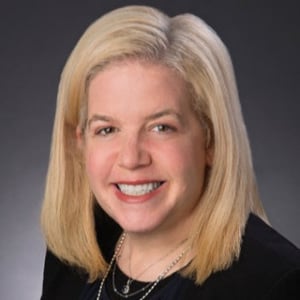
Counsel, Government Affairs and Strategy, Paul Hastings
Dina Ellis Rochkind is Of Counsel in the Paul Hastings Government Affairs practice and is based in the firm’s Washington, D.C. office. Her practice focuses on representing clients before Members of Congress on Capitol Hill and the Executive Branch. Ms. Rochkind represents clients in matters involving regulatory initiatives, policymaking and legislation, and enforcement actions. Ms. Rochkind's legislative experience allows her to advise her clients on the latest client initiatives, from starting a business to crowdsourcing; bitcoin ($bitcoin) and ICOs; and blockchain technologies.
Ms. Rochkind has over 20 years of experience on Capitol Hill, lobbying, and working for the Executive Branch. Prior to joining Paul Hastings, she served as Washington Director in the office of Rep. Mike Coffman (R-CO). Other Capitol Hill experience includes serving as senior staff for various Congressional Committees and for Senator Pat Toomey (R-PA). Ms. Rochkind also served in the George W. Bush Administration as Deputy Assistant Secretary at the Treasury Department. She has been involved in drafting major pieces of legislation over the last two decades, including: the 2005 bankruptcy reform legislation, the FACT Act, E-Sign, Check 21, Federal Deposit Insurance Reform Act, Gramm-Leach-Bliley Act, and, most recently, the comprehensive and bipartisan JOBS Act, for which she was the lead staffer in the Senate.
Ms. Rochkind has worked across party lines on both sides of the aisle to achieve key legislative successes and has a reputation for "getting things done" in Washington. She is also experienced in crisis management. During the auto industry crisis, Ms. Rochkind led the lobby to rescue Chrysler and handled the consequences and fallout from its bankruptcy. She has led legislative advocacy on behalf of major corporate entities and advised congressional leaders on issues such as banking, bankruptcy, insurance, other financial services, and economic development.
Prior to leading Rep. Coffman’s office, Ms. Rochkind served as Vice President of Federal Government Affairs for a leading mortgage lending company.
Ms. Rochkind is admitted to practice law in the District of Columbia and Pennsylvania.
General Counsel, Strive
Before joining Strive, Alexandra served as the Director of Regulatory Affairs at River Financial, where she handled all regulatory and government matters and served as product counsel. Prior to her time at River, Alexandra worked at the U.S. Department of Treasury, first in the General Counsel’s office and then as the youngest-ever Executive Secretary, where she worked directly with Secretary Mnuchin. Alexandra previously worked as an associate in the Washington, D.C. office of Akin Gump. She clerked for then-Justice Allison Eid on the Colorado Supreme Court and Judge Jennifer Elrod on the U.S. Court of Appeals for the Fifth Circuit. She holds a J.D. from the University of Texas and a B.A. from The King’s College.
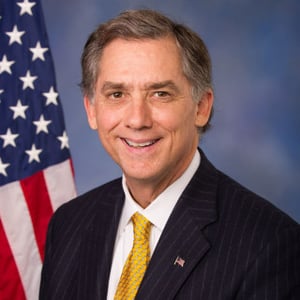
United States Representative, AR-02
A ninth-generation Arkansan, Congressman French Hill has represented Arkansas’s Second Congressional District since January 2015. He serves as the Vice Chairman of the House Financial Services Committee and as Chairman of the new subcommittee tasked with overseeing all areas related to digital assets and financial technology. Additionally, he is a member of the House Permanent Select Committee on Intelligence and the House Foreign Affairs Committee. He was also elected to the Republican Steering Committee for the 118th Congress, which determines committee assignments for Republican members of Congress.
Prior to his congressional service, Congressman Hill was founder, Chairman, and Chief Executive Officer of Delta Trust & Banking Corporation. From 1989 to 1991, he also served as Deputy Assistant Secretary of the Treasury for Corporate Finance, where one of his key assignments was representing the U.S. as a negotiator in the historic bilateral talks with Japan known as the Structural Impediments Initiative (SII).
After the fall of the Berlin Wall, Rep. Hill led the design of U.S. technical assistance to the emerging economies of eastern and central Europe in the areas of banking and securities. In 1991, at the age of 34, President Bush appointed Rep. Hill to be Executive Secretary to the President’s Economic Policy Council (EPC), where he coordinated all White House economic policy. For his leadership and service at the Treasury and the White House, Rep. Hill was awarded the Distinguished Service Award by U.S. Secretary of the Treasury Nicholas Brady in January 1993. Prior to his Executive Branch Service, from 1982 until 1984, Rep. Hill served on the staff of then-U.S. Senator John Tower (R-TX), as well as on the staff of the U.S. Senate Committee on Banking, Housing, & Urban Affairs.
Throughout his career, Rep. Hill has been active in civic affairs. He is a past president of the Rotary Club of Little Rock and served as the 2013 chairman of the Little Rock Regional Chamber of Commerce. He has received numerous awards and recognition for his long-time support of the Boy Scouts of America, the arts and humanities, tourism, and historic preservation in Arkansas. He is an avid outdoorsman.
Rep. Hill is a magna cum laude graduate in Economics from Vanderbilt University. He and his wife, Martha, have a daughter and a son. The Hill family resides in Little Rock.
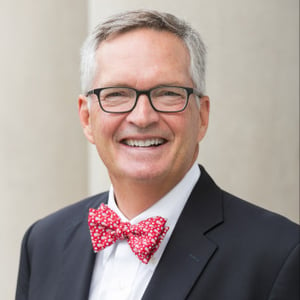
Founder/President, McCarty Financial
Mr. McCarty is an experienced lawyer with deep policy, legislative, and regulatory experience. Mr. McCarty is Of Counsel to the RuddyGregory PLLC in Washington, DC where he focuses on legislative and regulatory issues involving complex financial products such as swaps and digital assets. In addition, Mr. McCarty is the Founder of McCarty Financial, LLC, a boutique financial services consulting firm which provides bespoke legislative services focused on futures, swaps and digital asset issues. Mr. McCarty has held multiple senior financial services executive positions including: Managing Director, US Government Relations for ICAP North America (2011-2016); Senior Professional Staff, Senate Agriculture, Nutrition and Forestry Committee - primary draftsman of the Title VII Swaps provisions Dodd Frank Act (2010-11); Counsel - Chairman’s Office at the U.S. Securities and Exchange Commission (2009); General Counsel for the Commodity Futures Trading Commission (2002 to 2005); General Counsel of the Managed Funds Association (2000-2002); Professional Staff - House Banking Committee during passage of the Gramm-Leach-Bliley Act (1997- 2000); US Banking Regulator - Senior Counsel – FDIC, RTC, OTS and FHLBB (1988 – 2000).
Mr. McCarty teaches at both Georgetown University Law Center (Cryptocurrencies and ICO Seminar since 2018) and Catholic University of America Columbus School of Law (Derivatives Seminar since 2011 and Digital Assets Seminar since 2022). He holds a law degree from Catholic University of America Columbus School of Law (1986) and received a B.A. in economics from University of Virginia (1980).

Senior Adviser, Crito Capital
Dr. Oonagh McDonald, CBE is currently a senior adviser to Crito Capital, a private placement company based in New York.
A former British Member of Parliament, she became an international expert in financial regulation, after losing her seat in the General Election, 1987. She worked with the Asian Development Bank, advising regulatory authorities in a number of countries, including Sri Lanka and Indonesia. More recently, she has worked with USAID in Ukraine and Moldova. She has served as a non-executive director on the board of both financial services companies and regulatory authorities. In 1998, she was awarded the CBE (Commander of the British Empire), a national honor by the Queen for her work in financial regulation.
She is the author of numerous articles and seven books, of which the most recent are: “Holding bankers to account: A decade of market manipulation, regulatory failures and regulatory reforms” (Manchester University Press, 2019) and “Cryptocurrencies: Money, Trust and Regulation” (Agenda Publishing, 2021).

Managing Principal, Broadmoor Consulting, LLC
Todd H. Baker is a former banking executive and law firm partner whose career trajectory led him from corporate law to C-suite strategic leadership roles at several of the largest domestic and international banks and roles as an academic, consultant, writer, speaker and commentator on banking, financial technology, consumer financial access and regulation issues. His deep knowledge of strategy, corporate governance, regulatory & public policy and competitive dynamics is combined with an extensive network of industry and government contacts built over long and varied career.
Mr. Baker is a Senior Fellow at the Richard Paul Richman Center for Business, Law and Public Policy at Columbia Business School and Columbia Law School, where he works on innovation and the digital transformation of financial services, with a special interest in emerging business models for both traditional banks and non-bank "FinTech" financial services providers. He also teaches an advanced financial technology seminar for law and business students at Columbia and Stanford Law Schools. During 2016-2018, Mr. Baker was a Senior Fellow at the Mossavar-Rahmani Center for Business & Government at the Harvard Kennedy School. His research interests and published papers at Harvard include work on the role of FinTech and employers in providing alternatives to payday loans and other types of short-term, small-dollar credit for low-income working Americans in the digital age.
Mr. Baker is a member of the board of directors and chair of the board credit committee at Accion Opportunity Fund, the nation's leading nonprofit small business lender, a member of the Academic Research Council at the Urban Institute and a Limited Partner Advisor at Nyca Partners, a leading fintech-focused venture capital firm. Mr. Baker has written for publications including the Harvard Business Review, Financial Times, The Wall Street Journal and the American Banker, speaks frequently at industry conferences and is widely quoted in the financial and technology press as an industry expert.
Mr. Baker is best known in business circles for driving strategic change in large financial services organizations and a long history of leading high-profile M&A and capital markets transactions. He has also built and managed effective and diverse teams in the areas of strategic planning, competitive intelligence, performance management, investor relations and venture capital. Mr. Baker served as the Managing Director and Head of Americas Corporate Development for MUFG Americas Holdings, the Americas banking operations of Mitsubishi UFJ Financial Group (MUFG). In this role, Mr. Baker managed MUFG Americas’ acquisition and divestiture activities in the U.S., Canada and Latin America. Before taking that position, Mr. Baker was Executive Vice President of Corporate Strategy & Development for Union Bank NA, the U.S. commercial and retail banking operation of MUFG, where he led the company’s strategic planning, corporate development and performance management activities. Prior to joining Union Bank, Mr. Baker served as Executive Director of Corporate Development for TD Bank, N.A., where he was a member of the Managing Committee and had responsibility for leading Toronto-based TD Bank Financial Group’s acquisition activities in the U.S. market, and Executive Vice President of Corporate Strategy & Development at Washington Mutual, Inc. where, at various times, he served on the Executive Committee and had responsibility for acquisitions & divestitures, strategic planning, investor relations, venture capital investing and competitive intelligence.
Prior to his executive roles, Baker was a partner with the international law firms Gibson, Dunn & Crutcher LLP and Morrison & Foerster LLP, where he represented financial services, technology, corporate and investment banking clients in corporate and board governance matters, mergers and acquisitions, public and private securities offerings, securitizations and compliance issues and was recognized as the leading financial services M&A and securities attorney on the West Coast. His law clients included, among others, BankAmerica Corp., Transamerica Corp., Intel, Montgomery Securities, Hewlett-Packard, First Nationwide Financial, Washington Mutual Inc., Global Center, Nomura Securities, Lehman Brothers, Visa International, CIBC and Security Pacific Corp.
Partner, King & Spalding
A partner in the firm’s Government Advocacy and Public Policy group, J.C. helps companies and trade associations navigate legal, political and regulatory issues commonly associated with doing business in Europe and the United States. He is recognized by clients for his strong, bipartisan relationships with Members of Congress, State Attorneys General, congressional staff and senior government officials across key regulatory and executive branch agencies. He is trusted for his ability to rapidly synthesize complex information and communicate its strategic implications to policymakers and senior institutional stakeholders as well as his candid evaluation of options and potential for success.
As former counsel to the Senate Banking Committee, J.C has developed a deep expertise in financial services, fintech, and emerging technology policy. He has a proven track record of influencing federal legislation, regulatory frameworks, and agency rulemaking impacting digital assets, banking, payments, and technology platforms. J.C. regularly interfaces with financial regulators on a wide array of policy and institution-specific issues, and as co-chair of the firm’s State Attorneys General practice, delivers results on high-impact legal work at the intersection of law, policy and regulation.
J.C. is skilled in developing and executing comprehensive advocacy strategies, shaping legislative language, and positioning clients to successfully navigate complex and evolving policy environments at the federal, state and international levels. As President of the Parliamentary Intelligence-Security Forum, he has briefed policymakers throughout Europe, Africa, Latin America, and the Indo-Pacific. JC also advises international clients seeking to invest, expand, or operate in the United States.
President George W. Bush appointed J.C. to a six-year term as U.S. representative to the World Bank’s International Centre for Settlement of Investment Disputes (ICSID). Mayor Muriel Bowser also appointed J.C. to the District of Columbia; Board of Elections, in which capacity he also served on the U.S. Election Assistance Commission Standards Board. He is currently chairman of the Board of Visitors of The Catholic University Columbus School of Law and President of the Parliamentary Intelligence-Security Forum, where he is a regular speaker on cryptocurrency, artificial intelligence and critical minerals.
Earlier in his career, J.C. established the Boggs Scholarship for Public Service at the University of Delaware in honor of his grandfather and namesake, former U.S. Congressman, Senator and Governor of Delaware, J. Caleb Boggs. He has also served on numerous corporate and non-profit boards, including Jobs for Delaware Graduates (Chairman); The Reserve Trust Company (Vice Chairman), Global Center for Social Entrepreneurship Network (Secretary), Republican National Lawyers Association (President), Kimball Union Academy (Chairman of the Committee on Trustees), and AAA Mid-Atlantic.
J.C. enjoys open-water swimming and is member of U.S. Masters Swimming and the historic Serpentine Swimming Club situated in London's Hyde Park. He has competed in swimming events across all 50 states, ten Canadian provinces and around the world.

Retired, Winston & Strawn LLP
Jerry Loeser is of counsel in the Chicago office of Winston & Strawn, and his practice focuses on banking regulation. He has extensive experience in counseling financial services clients on, among other things, bank acquisitions, privacy, financial modernization, the USA PATRIOT Act, Basel II and III, lending limits, capital, trust, affiliate transactions, and Federal Reserve, OCC, FDIC, and CFPB regulations.
Prior to working at large corporate law firms, Jerry was chief regulatory and compliance counsel for Comerica Bank, where he also served as senior vice president and deputy general counsel and as general counsel of its retail bank division. Before that, he served as chief regulatory in-house counsel at Wells Fargo & Co. Jerry began his legal career advising the Board of Governors of the Federal Reserve System in Washington, D.C.

Partner, Norton Rose Fulbright
Steven Lofchie advises financial institutions on regulatory issues and financial instruments.
In his regulatory practice, Steven counsels clients on securities laws, the CEA, and related bankruptcy issues. His transactional practice focuses on securities credit and derivative transactions.
Steven is the founder and manager of an acclaimed legal website (now renamed Fried Frank Regulatory Intelligence) that has been endorsed by former chairpersons of both the SEC and CFTC. Subscribers to the website include government regulators and major buy- and sell-side firms.
Chambers USA has ranked Steven in Band 1 for eight years running, for both financial services regulation and derivatives. He is the only lawyer in the country to be top-ranked in both of those categories. Steven was also part of the team that was named 2020 Regulatory Team of the Year by IFLR Americas. The Best Lawyers in America recognized Steven as “Lawyer of the Year” for Administrative/Regulatory Law in New York in 2017, and U.S. News and World Report ranked him as the best regulatory lawyer in New York for 2014. In 2012, a derivatives transaction developed by Steven was cited as the best international structured product of the year by International Financial Law Review.
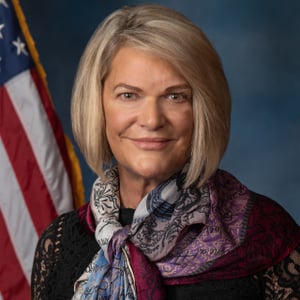
U.S. Senate, Wyoming
Cynthia Lummis was sworn into the United States Senate on January 3, 2021, becoming the first woman to serve as United States Senator from the great State of Wyoming.
Born on a cattle ranch in Laramie County, Senator Lummis has spent her entire career fighting for Wyoming families, communities, businesses and values. From the halls of the Wyoming House to the halls of the U.S. House, her time in public service has always been focused on advocating for Wyoming’s future.
First elected to the U.S. House in 2008, Senator Lummis quickly earned her reputation as a no-nonsense conservative and principled policymaker. She was a founding member of the House Freedom Caucus, a group consisting of the most unflinching conservative Members of the House of Representatives. She fought throughout her tenure in Congress to rein in spending and reduce the federal deficit, working with the bipartisan Committee for a Responsible Federal Budget and ultimately co-sponsoring several bipartisan budget proposals.
In the House of Representatives, Senator Lummis effectively elevated western issues, pushing through the first Interior and Environment (EPA) Appropriations bill to pass the House in seven years under her chairmanship. This marked a significant milestone for the Western Caucus and the rural communities across the West they represent. She also worked to keep public lands open to the public and available for multiple use. She successfully passed the National Forest System Trails Stewardship Act in 2016, a bipartisan effort led by Cynthia to maintain over 157,000 miles of trails within our national forests.
Senator Lummis is a dedicated champion of Wyoming’s mineral and energy resources. In Washington, she fought off attacks from the environmental left while advocating for market opportunities both at home and abroad. She is the proud godmother of the ANSAC Wyoming, a commercial shipping vessel transporting trona from the U.S. to Southeast Asia and is the recipient of the lifetime achievement award from the Washington Coal Club.
Prior to serving in the House of Representatives, Senator Lummis spent eight years as Wyoming State Treasurer and 14 years as a member of the Wyoming State House and Senate. She also worked as general counsel to Wyoming Governor Jim Geringer and Director of the Office of State Lands and Investments, as well as a law clerk at the Wyoming Supreme Court.
After departing U.S. House of Representatives in 2016, Senator Lummis operated her family’s cattle ranches, and the Sweetgrass development in Laramie County, with her brother and sister. She is a three-time graduate of the University of Wyoming in animal science, biology and law. She and her late-husband, Al Wiederspahn, have one daughter, Annaliese, son-in-law Will Cole and grandsons Gus and Al.
Senior Fellow, Mises Institute
Alex J. Pollock is a Senior Fellow with the Mises Institute, providing thought and policy leadership on financial issues and the study of financial systems. His work includes cycles of booms and busts, financial crises with their political responses, housing finance, government-sponsored enterprises, risk and uncertainty, central banking, banking and financial regulation, corporate governance, retirement finance, student loans, and the politics of finance.
He previously served as the Principal Deputy Director of the Office of Financial Research in the U.S. Treasury Department 2019-2021. He was a Distinguished Senior Fellow with the R Street Institute 2015-2019 and 2021, and a resident fellow at the American Enterprise Institute, 2004-2015. Among the many aspects of his AEI work, he developed the One Page Mortgage Form to give borrowers in clear form the key information they need in order to know what they are committing themselves to. He was President and CEO of the Federal Home Loan Bank of Chicago from 1991 to 2004. There he invented the Mortgage Partnership Finance program, which successfully created front-end mortgage credit risk sharing beginning in 1997. His decades of banking experience include being a Visiting Scholar at the Federal Reserve Bank of St. Louis, 1991.
Pollock was a director of the CME Group 2004-2019 and of Ascendium Education Group 1989-2019. He is a director and past-chairman of the Great Books Foundation and a past president of the International Union for Housing Finance.
He is the co-author of Surprised Again! - The COVID Crisis and the New Market Bubble (2022), and the author of Finance and Philosophy—Why We’re Always Surprised (2018) and Boom and Bust: Financial Cycles and Human Prosperity (2011), as well as numerous articles and Congressional testimony.
Pollock is a graduate of Williams College, the University of Chicago, and Princeton University.
His work is available on alexjpollock.com.
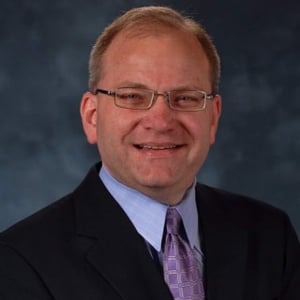
Partner, Manatt, Phelps & Phillips, LLP
Bryan Schneider is partner in Manatt’s Chicago office and a member of the firm’s industry-leading consumer financial services practice, where he focuses on advising clients through the gamut of consumer financial services regulatory and enforcement matters, particularly as it relates to supervision, enforcement and fair lending.
Prior to joining the firm, Bryan served as Associate Director for the Division of Supervision, Enforcement and Fair Lending at the Consumer Financial Protection Bureau (CFPB). In this role, he was tasked with overseeing issues related to student loan origination and servicing, mortgage origination/services, auto finance, credit card account management, debt collection, and payday and other small dollar lending. He was also a member of key interagency governing organizations including the Task Force of Supervision of the Federal Financial Institutions Examination Council.
Bryan’s experience also includes serving as Secretary of the Illinois Department of Financial and Professional Regulation, a cabinet-level agency, under Governor Bruce Rauner. During this time, Bryan led numerous initiatives to place the state at the forefront of innovation in the financial services industry, including leading the conversion to the first-ever online, paperless process for professional licensure and achieving the first credit union section accreditation by the National Association of State Credit Union Supervisors. He also led the creation of the Illinois Blockchain Initiative, where he advised organizations on how they can leverage blockchain technology to create more efficient, integrated and trusted services.
Before his tenure in government, Bryan held health care-related leadership positions at the largest retail, infusion and specialty pharmacy provider in the United States. While in this role, he helped develop policies concerning health care services and reimbursement, and provided regulatory and transactional support for joint ventures with hospitals, health systems and 340B programs. Bryan also served on Corporate Compliance and Disclosure Committees responsible for ensuring compliance with applicable health care and SEC securities requirements.
Bryan has served on the Executive Committee of the Conference of State Bank Supervisors (CSBS) and chaired its Non-Depository Supervisory Committee. He also served on the committee that was responsible for the administration of the Nationwide Multistate Licensing System & Registry (NMLS). Additionally, Bryan served on the Executive Committee of the National Association of State Credit Union Supervisors (NASCUS).

George Mason University Foundation Professor of Law, Antonin Scalia Law School, George Mason University
TODD J. ZYWICKI is George Mason University Foundation Professor of Law at Antonin Scalia Law School at George Mason University and Research Fellow of the George Mason Law and Economics Center. During the Fall 2023 semester he served as the Visiting Scholar in Conservative Thought and Policy for the Bruce Benson Center for the Study of Western Civilization at the University of Colorado-Boulder. From 2020-2021 he was Chair of the Consumer Financial Protection Bureau Taskforce on Federal Consumer Financial Law. In 2021 he was inducted to the American College of Consumer Financial Services Lawyers. He is also a Senior Fellow of the F.A. Hayek Program for the Advanced Study of Politics, Philosophy, and Economics at George Mason University and a former Senior Fellow of the Cato Institute. From 2015-2017 he was Executive Director of the George Mason Law and Economics Center. He served as Co-Editor of the Supreme Court Economic Review from 2006-2017. From 2003-2004, Professor Zywicki served as the Director of the Office of Policy Planning at the Federal Trade Commission. He has also taught at Vanderbilt University Law School, Georgetown University Law Center, Boston College Law School, Mississippi College School of Law, and China University of Political Science and Law.
Professor Zywicki clerked for Judge Jerry E. Smith of the U.S. Court of Appeals for the Fifth Circuit and worked as an associate at Alston & Bird in Atlanta, Georgia, where he practiced bankruptcy and commercial law. He received his J.D. from the University of Virginia, where he was executive editor of the Virginia Tax Review and John M. Olin Scholar in Law and Economics. Professor Zywicki also received an M.A. in Economics from Clemson University and an A.B. cum Laude with high honors in his major from Dartmouth College.
Professor Zywicki is also a Lone Mountain Fellow of the Property and Environment Research Center, a Fellow of the International Centre for Economic Research in Turin, Italy, and a former Senior Fellow of the Goldwater Institute. During the Fall 2008 Semester Professor Zywicki was the Searle Fellow of the George Mason University School of Law and was a 2008-09 W. Glenn Campbell and Rita Ricardo-Campbell National Fellow and the Arch W. Shaw National Fellow at the Hoover Institution on War, Revolution and Peace. He has lectured and consulted with government officials around the world, including Iceland, Italy, Japan, and Guatemala. In 2006 Professor Zywicki served as a Member of the United States Department of Justice Study Group on “Identifying Fraud, Abuse and Errors in the United States Bankruptcy System.”
Professor Zywicki is the author of more than 130 articles in leading law reviews and peer-reviewed economics journals. He is one of the Top 10 most-cited law professors in the field of Commercial Law and one of the Top 25 law professors on Twitter as measured by engagement levels. He is one of the Top 50 Most Downloaded Law Authors at the Social Science Research Network. He has testified multiple times before Congress on issues of consumer bankruptcy law and consumer credit and is a frequent commentator on legal issues in the print and broadcast media, including the Wall Street Journal, New York Times, The Washington Post, The Washington Times, Nightline, The Newshour with Jim Lehrer, Neil Cavuto Show, Fox & Friends, Smerconish, Fox News @ Night with Shannon Bream, Fox Business, CNN, CNBC, Bloomberg News, BBC, The Diane Rehm Show, Lou Dobbs Show, Jerry Doyle Show, and The Laura Ingraham Show.
Professor Zywicki is former Chairman and a current member of the Board of Directors of the Competitive Enterprise Institute, and is a member of the Board of Directors of the Institute for Humane Studies, Bill of Rights Institute, the Executive Committee for the Federalist Society's Financial Institutions and E-Commerce Practice Group, the Board of Trustees of the Foundation for Research on Economics and the Environment. He formerly served on the Governing Board and the Advisory Council for the Financial Services Research Program at George Washington University School of Business. He is currently the Chair of the Academic Advisory Council for the following organizations: The Bill of Rights Institute, the film “We the People in IMAX,” and the McCormick-Tribune Foundation “Freedom Museum” in Chicago, Illinois. He is a member of the Board of Visitors of Ralston College and was a member of the Board of Trustees of Yorktown University. From 2005-2009 he served as an elected Alumni Trustee of the Dartmouth College Board of Trustees.
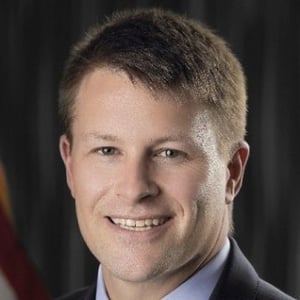
Managing Director, Banking Supervision and Regulation Group, Patomak Global Partners
Brian Johnson is Managing Director in the Banking Supervision and Regulation Group at Patomak Global Partners.
In this role, Mr. Johnson spearheads projects related to the regulation of consumer financial products under Keith Noreika, Executive Vice President and Chairman of the Banking Supervision and Regulation Group and former acting Comptroller of the Currency.
Prior to joining Patomak, Mr. Johnson was a partner in Alston & Bird LLP’s financial services and products group. There, he advised financial institutions on consumer finance regulatory issues relating to product compliance, examination, enforcement investigations, and compliance management systems, and on strategic engagement with independent federal regulatory agencies and with Congress.
Mr. Johnson previously served as Deputy Director of the Consumer Financial Protection Bureau (CFPB), where he oversaw the agency’s rulemaking, supervision, and enforcement activities. He conceived and led the creation of high-profile agency initiatives, including the Office of Innovation, Taskforce on Federal Consumer Financial Law, policy symposia series, and Start Small, Save Up emergency savings program. He also served as the CFPB representative to the Financial Stability Oversight Council Deputies’ Committee and advised on interagency matters involving the Federal Deposit Insurance Corporation and the Federal Financial Institutions Examination Council.
Mr. Johnson held various positions on Capitol Hill, including policy director and chief financial institutions counsel on the House Committee on Financial Services, where his portfolio covered consumer protection and credit, mortgage origination, credit reporting, banking, and data security. His efforts on the committee involved drafting legislation to provide regulatory relief to bank, credit union, and nondepository financial institutions, as well as conducting oversight of the activities of the CFPB, Financial Stability Oversight Council, Federal Deposit Insurance Corporation, Office of Financial Research, Office of the Comptroller of the Currency, Federal Reserve System, and National Credit Union Administration.
Mr. Johnson received his juris doctorate from the University of Virginia School of Law and his bachelor’s in economics from the University of Virginia.
Partner, Manatt, Phelps & Phillips, LLP
Bryan Schneider is partner in Manatt’s Chicago office and a member of the firm’s industry-leading consumer financial services practice, where he focuses on advising clients through the gamut of consumer financial services regulatory and enforcement matters, particularly as it relates to supervision, enforcement and fair lending.
Prior to joining the firm, Bryan served as Associate Director for the Division of Supervision, Enforcement and Fair Lending at the Consumer Financial Protection Bureau (CFPB). In this role, he was tasked with overseeing issues related to student loan origination and servicing, mortgage origination/services, auto finance, credit card account management, debt collection, and payday and other small dollar lending. He was also a member of key interagency governing organizations including the Task Force of Supervision of the Federal Financial Institutions Examination Council.
Bryan’s experience also includes serving as Secretary of the Illinois Department of Financial and Professional Regulation, a cabinet-level agency, under Governor Bruce Rauner. During this time, Bryan led numerous initiatives to place the state at the forefront of innovation in the financial services industry, including leading the conversion to the first-ever online, paperless process for professional licensure and achieving the first credit union section accreditation by the National Association of State Credit Union Supervisors. He also led the creation of the Illinois Blockchain Initiative, where he advised organizations on how they can leverage blockchain technology to create more efficient, integrated and trusted services.
Before his tenure in government, Bryan held health care-related leadership positions at the largest retail, infusion and specialty pharmacy provider in the United States. While in this role, he helped develop policies concerning health care services and reimbursement, and provided regulatory and transactional support for joint ventures with hospitals, health systems and 340B programs. Bryan also served on Corporate Compliance and Disclosure Committees responsible for ensuring compliance with applicable health care and SEC securities requirements.
Bryan has served on the Executive Committee of the Conference of State Bank Supervisors (CSBS) and chaired its Non-Depository Supervisory Committee. He also served on the committee that was responsible for the administration of the Nationwide Multistate Licensing System & Registry (NMLS). Additionally, Bryan served on the Executive Committee of the National Association of State Credit Union Supervisors (NASCUS).
George Mason University Foundation Professor of Law, Antonin Scalia Law School, George Mason University
TODD J. ZYWICKI is George Mason University Foundation Professor of Law at Antonin Scalia Law School at George Mason University and Research Fellow of the George Mason Law and Economics Center. During the Fall 2023 semester he served as the Visiting Scholar in Conservative Thought and Policy for the Bruce Benson Center for the Study of Western Civilization at the University of Colorado-Boulder. From 2020-2021 he was Chair of the Consumer Financial Protection Bureau Taskforce on Federal Consumer Financial Law. In 2021 he was inducted to the American College of Consumer Financial Services Lawyers. He is also a Senior Fellow of the F.A. Hayek Program for the Advanced Study of Politics, Philosophy, and Economics at George Mason University and a former Senior Fellow of the Cato Institute. From 2015-2017 he was Executive Director of the George Mason Law and Economics Center. He served as Co-Editor of the Supreme Court Economic Review from 2006-2017. From 2003-2004, Professor Zywicki served as the Director of the Office of Policy Planning at the Federal Trade Commission. He has also taught at Vanderbilt University Law School, Georgetown University Law Center, Boston College Law School, Mississippi College School of Law, and China University of Political Science and Law.
Professor Zywicki clerked for Judge Jerry E. Smith of the U.S. Court of Appeals for the Fifth Circuit and worked as an associate at Alston & Bird in Atlanta, Georgia, where he practiced bankruptcy and commercial law. He received his J.D. from the University of Virginia, where he was executive editor of the Virginia Tax Review and John M. Olin Scholar in Law and Economics. Professor Zywicki also received an M.A. in Economics from Clemson University and an A.B. cum Laude with high honors in his major from Dartmouth College.
Professor Zywicki is also a Lone Mountain Fellow of the Property and Environment Research Center, a Fellow of the International Centre for Economic Research in Turin, Italy, and a former Senior Fellow of the Goldwater Institute. During the Fall 2008 Semester Professor Zywicki was the Searle Fellow of the George Mason University School of Law and was a 2008-09 W. Glenn Campbell and Rita Ricardo-Campbell National Fellow and the Arch W. Shaw National Fellow at the Hoover Institution on War, Revolution and Peace. He has lectured and consulted with government officials around the world, including Iceland, Italy, Japan, and Guatemala. In 2006 Professor Zywicki served as a Member of the United States Department of Justice Study Group on “Identifying Fraud, Abuse and Errors in the United States Bankruptcy System.”
Professor Zywicki is the author of more than 130 articles in leading law reviews and peer-reviewed economics journals. He is one of the Top 10 most-cited law professors in the field of Commercial Law and one of the Top 25 law professors on Twitter as measured by engagement levels. He is one of the Top 50 Most Downloaded Law Authors at the Social Science Research Network. He has testified multiple times before Congress on issues of consumer bankruptcy law and consumer credit and is a frequent commentator on legal issues in the print and broadcast media, including the Wall Street Journal, New York Times, The Washington Post, The Washington Times, Nightline, The Newshour with Jim Lehrer, Neil Cavuto Show, Fox & Friends, Smerconish, Fox News @ Night with Shannon Bream, Fox Business, CNN, CNBC, Bloomberg News, BBC, The Diane Rehm Show, Lou Dobbs Show, Jerry Doyle Show, and The Laura Ingraham Show.
Professor Zywicki is former Chairman and a current member of the Board of Directors of the Competitive Enterprise Institute, and is a member of the Board of Directors of the Institute for Humane Studies, Bill of Rights Institute, the Executive Committee for the Federalist Society's Financial Institutions and E-Commerce Practice Group, the Board of Trustees of the Foundation for Research on Economics and the Environment. He formerly served on the Governing Board and the Advisory Council for the Financial Services Research Program at George Washington University School of Business. He is currently the Chair of the Academic Advisory Council for the following organizations: The Bill of Rights Institute, the film “We the People in IMAX,” and the McCormick-Tribune Foundation “Freedom Museum” in Chicago, Illinois. He is a member of the Board of Visitors of Ralston College and was a member of the Board of Trustees of Yorktown University. From 2005-2009 he served as an elected Alumni Trustee of the Dartmouth College Board of Trustees.
Managing Director, Banking Supervision and Regulation Group, Patomak Global Partners
Brian Johnson is Managing Director in the Banking Supervision and Regulation Group at Patomak Global Partners.
In this role, Mr. Johnson spearheads projects related to the regulation of consumer financial products under Keith Noreika, Executive Vice President and Chairman of the Banking Supervision and Regulation Group and former acting Comptroller of the Currency.
Prior to joining Patomak, Mr. Johnson was a partner in Alston & Bird LLP’s financial services and products group. There, he advised financial institutions on consumer finance regulatory issues relating to product compliance, examination, enforcement investigations, and compliance management systems, and on strategic engagement with independent federal regulatory agencies and with Congress.
Mr. Johnson previously served as Deputy Director of the Consumer Financial Protection Bureau (CFPB), where he oversaw the agency’s rulemaking, supervision, and enforcement activities. He conceived and led the creation of high-profile agency initiatives, including the Office of Innovation, Taskforce on Federal Consumer Financial Law, policy symposia series, and Start Small, Save Up emergency savings program. He also served as the CFPB representative to the Financial Stability Oversight Council Deputies’ Committee and advised on interagency matters involving the Federal Deposit Insurance Corporation and the Federal Financial Institutions Examination Council.
Mr. Johnson held various positions on Capitol Hill, including policy director and chief financial institutions counsel on the House Committee on Financial Services, where his portfolio covered consumer protection and credit, mortgage origination, credit reporting, banking, and data security. His efforts on the committee involved drafting legislation to provide regulatory relief to bank, credit union, and nondepository financial institutions, as well as conducting oversight of the activities of the CFPB, Financial Stability Oversight Council, Federal Deposit Insurance Corporation, Office of Financial Research, Office of the Comptroller of the Currency, Federal Reserve System, and National Credit Union Administration.
Mr. Johnson received his juris doctorate from the University of Virginia School of Law and his bachelor’s in economics from the University of Virginia.

Partner, Oliver Wyman
Douglas Elliott is a Partner at Oliver Wyman in New York, where he focuses on financial regulation and associated public policy issues and their implications for the financial sector.
He analyzes a wide range of issues and has published papers on such diverse topics as “Financial Institutions in an Age of Populism,” “Data Rights in Finance,” and “Tackling Global Market Fragmentation in Banking.” He has also written extensively on the impacts of capital and liquidity requirements, including a 150-page literature review in 2016, which followed on an earlier study for the IMF. Recently he addressed the finance ministers and central bank governors of the 28 EU member states on the topic of “Rebooting Capital Markets Union.”
Prior to joining the firm, he was a Fellow in Economic Studies at The Brookings Institution, generally ranked as the world’s top think tank. He primarily analyzed financial institutions and markets and their regulation, along with extensive analysis of the Euro Crisis. He has twice been a Visiting Scholar at the International Monetary Fund. Mr. Elliott also worked as a consultant for the IMF, the World Bank, and the Asian Development Bank. Prior to Brookings, he was a financial institutions investment banker for two decades, principally at J.P. Morgan.
He has testified multiple times before both houses of Congress and participated in numerous speaking engagements, as well as appearing widely in the major media outlets. The New York Times has described his analyses as “refreshingly understandable” and “without a hint of dogma or advocacy.”
Mr. Elliott graduated from Harvard College magna cum laude with an A.B. in Sociology in 1981. In 1984, he graduated from Duke University with an M.A. in Computer Science.
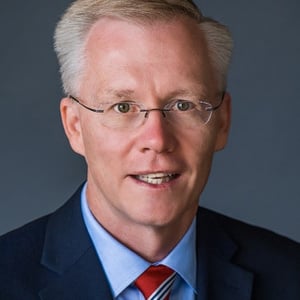
Executive Director, Milken Institute Center for Financial Markets
Michael S. Piwowar is the executive director of the Milken Institute Center for Financial Markets. Dr. Piwowar served as a Commissioner at the U.S. Securities and Exchange Commission from August 15, 2013 to July 6, 2018. He was first appointed to the SEC by President Barack Obama and was designated Acting Chairman of the Commission by President Donald Trump from January 23, 2017 to May 4, 2017. He was previously the Republican chief economist for the U.S. Senate Committee on Banking, Housing, and Urban Affairs under Senators Mike Crapo (R-ID) and Richard Shelby (R-AL) and served as the lead Republican economist on the four SEC-related titles of the Dodd-Frank Act and the JOBS Act. During the financial crisis and its immediate aftermath, Dr. Piwowar served in a one-year fixed-term position at the White House as a senior economist at the President’s Council of Economic Advisers (CEA) in both the George W. Bush and Barack Obama Administrations. Before joining the White House, Dr. Piwowar worked as a Principal at the Securities Litigation and Consulting Group (SLCG). He received a B.A. in Foreign Service and International Politics from the Pennsylvania State University, an M.B.A. from Georgetown University, and a Ph.D. in Finance from the Pennsylvania State University.
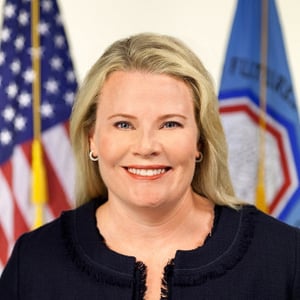
Former Commissioner, The Commodity Futures Trading Commission
Dawn Stump is a senior leader and regulatory expert in domestic and international financial services. Her experience and thought leadership have tactically identified potential risks and initiated regulatory and systemic solutions to protect industries, infrastructures, and economies. Based on her global perspective and industry expertise, Dawn is able to raise critical financial services issues to the board level and/or the global stage as business environments fluctuate. She is widely respected for her leadership, bipartisanism, and consensus building among senior government officials, senior regulatory ministry officials, corporate, and academic leaders worldwide.
Recently, she completed her term as a Commissioner of the CFTC, the independent U.S. agency that regulates the $200+ Trillion derivatives market. As one of five Commissioners, she helped to shape the priorities of the agency while overseeing policy direction and internal planning. Dawn prioritized sector resilience in evolving global markets through robust regulatory strategies necessary during market volatility and changing economic environments. Within the agency, she also championed the importance of enterprise-wide risk management practices. Specifically, Dawn initiated new agency wide data protection procedures for the consistent handling of data intake and strengthening of responses to potential cyber intrusions.
Previously, as Senior Vice President of the Futures Industry Association and concurrently Executive Director of its Americas Advisory Board, Dawn advised its President and global Board of Directors on the impacts of public policy changes on the industry and association members. Earlier, she was Vice President of Government Affairs for NYSE Euronext where she developed regulatory compliance policies alongside her international counterparts to ensure adherence across jurisdictions. Her leadership was critical to the establishment of a new U.S. based derivative exchange/clearing house.
During her early career in public service, she served as majority and minority senior professional staff for the U.S. Senate Committee on Agriculture, Nutrition & Forestry, U.S. House of Representatives Committee on Agriculture, and initially on the staff of U.S. Senator Phil Gramm. She was actively involved in negotiating the reform of derivatives regulations contained in the Dodd-Frank Act and efforts to conduct oversight of commodity and financial derivatives, under the jurisdiction of the CFTC.
Dawn shares her professional expertise as a member of the 3-person Advisory Council to the Women In Derivative’s (WIND) Board of Directors and through committee service for the National Charity League. She earned a Bachelor of Science from Texas Tech University in Lubbock, Texas and is a past President of the Texas Tech Alumni Association’s Washington, DC Chapter. Dawn and her husband have two children and live in the greater Washington, DC area.
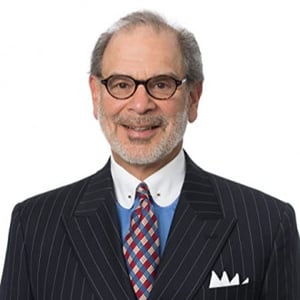
Executive Director, The Financial Technology and Cybersecurity Center
Thomas P. Vartanian is the Executive Director of the Financial Technology & Cybersecurity Center, an author, financial services advisor, expert witness, and board mentor. He is the former Executive Director of the Program on Financial Regulation & Technology at George Mason University’s Antonin Scalia Law School, where he was also a Professor of Law. Between 1983 and 2018, he chaired the Financial Institution’s practices at two international law firms, Dechert LLP and Fried Frank LLP, through four financial crises. Both as a regulator and private practitioner, he has represented parties in a majority of the 50 largest financial institution failures in American history.
Mr. Vartanian served in the Reagan Administration during the S&L crisis as General Counsel of the Federal Home Loan Bank Board and the FSLIC. Prior to that, he served in the Carter Administration in the Office of the Comptroller of the Currency as Special Assistant to the Chief Counsel. Since departing government service, he has advised many subsequent presidential administrations on financial institution issues.
Mr. Vartanian is a futurist and expert in financial technology who has been described by clients in Chambers as “one of the best financial services lawyers in America.” Mr. Vartanian was Chairman of the American Bar Association’s Cyberspace Law Committee between 1998 and 2002, where he chaired an international task force of lawyers from twenty countries which released a seminal report in London in 2000 on the novel issues created by doing business in Cyberspace. He is currently a member of the American Association of Bank Directors’ Task Force on Bank Director Personal Liability Mitigation.
Mr. Vartanian has authored more than four hundred articles and eight books, including his new book, 200 Years of American Financial Panics: Crashes, Recessions, Depressions, and the Technology That Will Change It All chronicling the country’s tumultuous financial history and the impact that technology will have on its future.
He is a frequent lecturer and media commentator on the financial services industry, having appeared on Bloomberg TV, CNN, Fox News, Newsmax, PBS and various local and national radio shows. He has also taught financial services and digital commerce law at Georgetown Law School, George Washington Law School, and Boston University School of Law, and has been a guest lecturer at Harvard Law School.
In 2008, Mr. Vartanian was named “Washingtonian of the Year” based on his use of music and sports to raise money for charities in the D.C. metropolitan area. As a musician, he appeared in the first production in the United States in 1970 of Joseph and the Amazing Technicolor Dreamcoat. His classic rock band, The Johnny Esquire Band, has helped raise approximately $5,000,000 for charities in the Washington D.C. area over the last twenty-five years. Mr. Vartanian also founded and plays for the Washington All Stars, a senior baseball team that has raised more than $500,000 for Special Olympics.
His next book, The Unhackable Internet, will be published in early 2023.
Partner, Fusion Law, PLLC
Paul is the founding partner of Fusion Law, PLLC. He has extensive experience with state, federal, and global regulators building coalitions and implementing policies to promote innovation in financial services. He is responsible for designing and implementing the first state (Arizona) and federal (CFPB) FinTech sandboxes in the United States. He also designed the CFPB no-action letter and trial disclosure policies. He helped found the first global regulatory innovation coalition (Global Financial Innovation Network) and led the founding of the first U.S. regulatory innovation coalition (American Consumer Financial Innovation Network). He served on the Financial Stability Oversight Council subcommittee on digital assets. He also has drafted state-level laws on blockchain and utility tokens.
Paul also has significant enforcement and litigation experience. He led many multi-state consumer protection enforcement matters as Civil Litigation Division Chief at the Arizona Attorney General’s Office.
Prior to his government service, Paul practiced law in the areas of securities litigation and transactional work for approximately six years at two well-known law firms. He also clerked on the U.S. Court of Appeals for the Fourth Circuit.

How Reliable are Corporate ESG Ratings?
James R. Lloyd, Lynn M. LoPucki, Paul N. Watkins, Justin Danhof
Environmental, Social, and Corporate Governance (ESG) investing has grown in popularity in recent years. As...
The 2023 Bank Runs and Failures: What Do They Mean Going Forward?
William M. Isaac, Keith Noreika, Alex J. Pollock, Lawrence J. White
This year's sudden collapse of First Republic, Silicon Valley, and Signature banks were the second,...
Crypto: The Wild West?| Bitcoin Cowboys
Alexandra Gaiser
In this episode of the FedSoc Films Podcast, we spoke with Alexandra Gaiser, Director of...
PG-15: FedSoc Study Break: Cryptocurrency From All Angles
Alex J. Pollock
The Federalist Society’s Financial Services & E-Commerce Practice Group, Student Division & University of Pennsylvania...
Is Crypto Legislation Coming?
J.C. Boggs, Patrick Daugherty, Dina Ellis Rochkind, Alexandra Gaiser, J. French Hill, Patrick J. McCarty
Along with the "crypto crackdown" by financial regulators in the wake of huge cryptocurrency losses...
Crypto International [The FedSoc Films Podcast]
Oonagh Ann McDonald
In this episode of the FedSoc Films Podcast, we spoke with Oonagh McDonald, senior adviser...
Cryptocurrency Regulation in the Aftermath of FTX
Todd H. Baker, J.C. Boggs, Julius L. Loeser, Steven Lofchie, Cynthia Lummis, Alex J. Pollock
The collapse of FTX has intensified the debate about how cryptocurrencies should be regulated, including...
Deep Dive Episode 250 - Examining the CFPB’s Targeting of Discrimination in Consumer Finance Through UDAAP
Bryan Schneider, Todd J. Zywicki, Brian C. Johnson
Under the Biden Administration, Consumer Financial Protection Bureau Director Rohit Chopra has dramatically increased the...
Examining the CFPB’s Targeting of Discrimination in Consumer Finance Through UDAAP
Bryan Schneider, Todd J. Zywicki, Brian C. Johnson
Under the Biden Administration, Consumer Financial Protection Bureau Director Rohit Chopra has dramatically increased the...
The Government’s Arms Around Cryptocurrency: Hug or Stranglehold?
Douglas Elliott, Michael Piwowar, Dawn Stump, Thomas P. Vartanian, Paul N. Watkins
As the cryptocurrency industry grows, state and federal governments are considering how that industry should...