
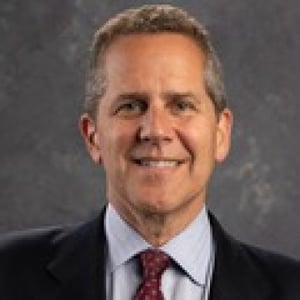
Member, Board of Governors , Federal Reserve System
Michael S. Barr took office as a member of the Board of Governors of the Federal Reserve System on July 19, 2022, for an unexpired term ending January 31, 2032. Mr. Barr served as the Vice Chair for Supervision of the Board of Governors of the Federal Reserve System from July 19, 2022, to February 28, 2025.
Prior to his appointment to the Board, Mr. Barr was the Joan and Sanford Weill Dean of the Gerald R. Ford School of Public Policy, the Frank Murphy Collegiate Professor of Public Policy, the Roy F. and Jean Humphrey Proffitt Professor of Law at the University of Michigan Law School, and the founder and faculty director of the University of Michigan's Center on Finance, Law & Policy. At the University of Michigan Law School, Mr. Barr taught financial regulation and international finance and co-founded the International Transactions Clinic and the Detroit Neighborhood Entrepreneurs Project.
Mr. Barr served as the U.S. Department of the Treasury's assistant secretary for financial institutions, 2009-2010. Under President William J. Clinton, he served as the Treasury Secretary's special assistant, as deputy assistant secretary of the Treasury, as special adviser to the President, and as a special adviser and counselor on the policy planning staff at the U.S. Department of State.
Additionally, Mr. Barr served as a law clerk to U.S. Supreme Court Justice David H. Souter during October Term 1993, and previously to the Honorable Pierre N. Leval, then of the Southern District of New York.
Mr. Barr received a BA in history from Yale University, an MPhil in international relations from Oxford University, and a JD from Yale Law School.
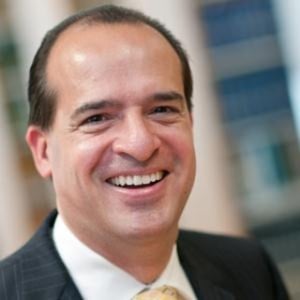
Professor of Law and Rouse Chairholder, Antonin Scalia Law School, George Mason University
Professor Miller holds an Allison and Dorothy Rouse Chair in Law at the Antonin Scalia Law School. An elected member of the American Law Institute and a research member of the European Corporate Governance Institute, Professor Miller is also a Fellow and the Co-Director of the Program on Organizations, Business and Markets at the Classical Liberal Institute at the New York University Law School, an Adjunct Fellow at the Manhattan Institute, and an Affiliated Scholar at the James Wilson Institute on Natural Rights and the American Founding. Prior to joining George Mason University in 2025, Professor Miller was the F. Arnold Daum Chair in Corporate Finance and Law and a Professor of Law at the University of Iowa College of Law, where he had also served as the Associate Dean for Faculty Development.
Professor Miller’s research concerns corporate and securities law, the economic analysis of law, and the philosophy of law. He is particularly interested in applying economic concepts and methods to understand provisions in contracts between sophisticated commercial parties. He has written on material adverse effect clauses under Delaware law, the fiduciary duties of corporate directors, director oversight liability, the history and development of Delaware corporate law, and much more. His articles and working papers are available on his SSRN page.
Professor Miller has been cited by federal and state courts in the United States, including the Delaware Supreme Court and the Delaware Court of Chancery, as well as by the Commercial Court of the United Kingdom and the Ontario Superior Court of Justice (Commercial List) in Canada. Additionally, he is a member of the Committee on Mergers, Acquisitions & Corporate Control Contests and a former chair of the Corporation Law Committee of the New York City Bar Association.
Earlier in his career, Professor Miller was a Professor of Law at the Villanova University School of Law and the Associate Director of the Matthew J. Ryan Center for the Study of Free Institutions and the Public Good at Villanova University. He has been a Visiting Professor of Law at the University of Pennsylvania Law School, a Visiting Assistant Professor of Law at the Cardozo Law School, and an Olin Fellow in Law and Economics at the Columbia Law School.
Before entering academia, Professor Miller was an associate with Wachtell, Lipton, Rosen & Katz. He earned his J.D. from the Yale Law School where he was a Senior Editor of the Yale Law Journal and an Olin Fellow in Law, Economics and Public Policy. He earned his M.A. and M.Phil. degrees in philosophy from Columbia University, where he held a Mellon Fellowship in the Humanities from the Woodrow Wilson National Fellowship Foundation and a Western Civilization Fellowship from the Intercollegiate Studies Institute. He earned his B.A. in philosophy and mathematics from Columbia College.
John Tamny is editor of RealClearMarkets and Forbes Opinions, a senior economic adviser to H.C. Wainwright Economics, and a senior economic adviser to Toreador Research and Trading (www.trtadvisors.com).
John Tamny is editor of RealClearMarkets and Forbes Opinions, a senior economic adviser to H.C. Wainwright Economics, and a senior economic adviser to Toreador Research and Trading (www.trtadvisors.com).
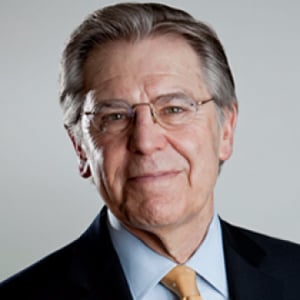
Senior Fellow, Arthur F. Burns Fellow in Financial Policy Studies, American Enterprise Institute
Peter J. Wallison holds the Arthur F. Burns Chair in Financial Policy Studies and is co-director of AEI’s program on Financial Policy Studies. Prior to joining AEI, he practiced banking, corporate and financial law at Gibson, Dunn & Crutcher in Washington, D.C., and New York. Mr. Wallison has held a number of government positions. From June 1981 to January 1985, he was General Counsel of the United States Treasury Department, where he had a significant role in the development of the Reagan Administration's proposals for deregulation in the financial services industry. During 1986 and 1987, Mr. Wallison was White House counsel to President Ronald Reagan, and between 1972 and 1976, he served first as Special Assistant to New York's Gov. Nelson A. Rockefeller and, subsequently, as counsel to Mr. Rockefeller as vice president of the United States.
Mr. Wallison was admitted to practice before the courts of New York and the District of Columbia, and is retired from practice in New York. He continues to be a member of the District of Columbia Bar Association. He received his undergraduate degree from Harvard College in 1963 and law degree from Harvard Law School in 1966.
Mr. Wallison is the author of Ronald Reagan: The Power of Conviction and the Success of His Presidency, published in December 2002 by Westview Press. On campaign finance, he is the author (with Joel Gora) of Better Parties, Better Government, (AEI Press 2009). On financial or regulatory matters, he is the author of Back From the Brink, a proposal for a private deposit insurance system, and co-author of Nationalizing Mortgage Risk: The Growth of Fannie Mae and Freddie Mac; The GAAP Gap: Corporate Disclosure in the Internet Age; Competitive Equity: A Better Way to Organize Mutual Funds; Bad History, Worse Policy: How a False Narrative about the Financial Crisis Led to the Dodd-Frank Act (AEI Press 2013); and Hidden In Plain Sight: What Caused the World’s Worst Financial Crisis and Why it Could Happen Again (Encounter Books 2015). His most recent book is Judicial Fortitude: The Last Chance to Rein in the Administrative State, published by Encounter Books in October 2018.
He testifies frequently before committees of Congress, and is a frequent contributor to the op-ed pages of the Wall Street Journal and other print and online journals. He has also been a speaker at many conferences on financial services, housing, the causes of the financial crisis, the Dodd-Frank Act, accounting, and corporate governance, and was a member of the Shadow Financial Regulatory Committee between 1995 and 2015. He was a member of the SEC Advisory Committee on Improvements to Financial Reporting (2008), co-Chair of the Pew Financial Reform Task Force (2009), and a member of the congressionally- appointed Financial Crisis Inquiry Commission (2009-2011). In May 2011, for his work in financial policy, Mr. Wallison received an honorary doctorate in Humane Letters from the University of Colorado.
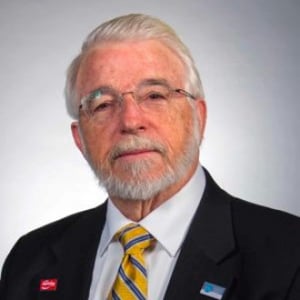
Founder; Chairman Emeritus, Competitive Enterprise Institute
Fred L. Smith, Jr. is the founder and Chairman Emeritus of the Competitive Enterprise Institute. He served as president from 1984 to 2013 and is currently the Director of CEI’s Center for Advancing Capitalism.
His public policy research has covered a wide range of topics, including regulatory reform, free market environmentalism, antitrust law, and international finance and comparative economics. Smith’s current focus is bringing leaders in the business and academic worlds together to defend capitalism and craft narratives that highlight the moral legitimacy of free markets.
His many published works include chapters in the books “Field Guide to Effective Communication” (2004), “Corporate Aftershock: The Public Policy Lessons from the Collapse of Enron and Other Major Corporations” (2003), “Ecology, Liberty, & Property: A Free Market Environmental Reader” (2000), “The Future of Financial Privacy: Private Choices versus Political Rules” (1999), “Environmental Politics: Public Costs, Private Rewards” (1992), and “Steering The Elephant: How Washington Works” (1987). His academic articles have appeared in journals such as Harvard Journal of Law and Economics and Knowledge, Technology, and Policy.
Smith has also written widely for leading newspapers and magazines such as The Wall Street Journal, Washington Post, USA Today, National Journal, Economic Affairs, and Forbes. He has also made hundreds of television and radio appearances on networks such as ABC, CNBC, CNN, Fox News, National Public Radio, and Radio America, among others.
Before founding CEI, Smith served as Director of Government Relations for the Council for a Competitive Economy, as a senior economist for the Association of American Railroads, and for five years as a Senior Policy Analyst at the Environmental Protection Agency. He is currently a member of the Board of Directors of the Competitive Enterprise Institute, the American Conservative Union, and the American Council on Science and Health and a member of the Foundation for Economic Education’s Faculty Network.
Smith graduated with top honors and holds a Bachelors of Science in Theoretical Mathematics and Political Science from Tulane University. He has also done graduate work in mathematics and applied mathematical economics at Harvard, SUNY at Buffalo, and the University of Pennsylvania.
Partner, Mayer Brown
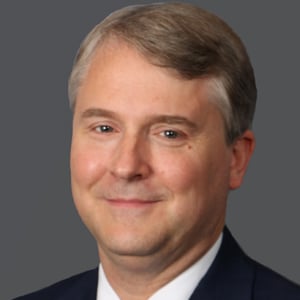
Andrew Olmem is a partner in Mayer Brown’s Washington DC office and a member of its Public Policy, Regulatory & Government Affairs, and Financial Services Regulatory & Enforcement practices. His practice focuses on complex financial services regulatory and public policy matters.
Andrew previously served as the Deputy Assistant to the President for Economic Policy and Deputy Director of the National Economic Council (NEC), where he oversaw the development and coordination of the administrations’ domestic economic policies, including for financial services, technology, telecom, energy, and infrastructure.
Earlier, he also served as the Republican Chief Counsel and Deputy Staff Director at the U.S. Senate Committee on Banking, Housing and Urban Affairs. Andrew began his legal career practicing corporate and securities law at Mayer Brown in New York City. Prior to attending law school, he served as an Assistant Economist at the Federal Reserve Bank of Richmond.
Executive in Residence, Wake Forest University School of Business
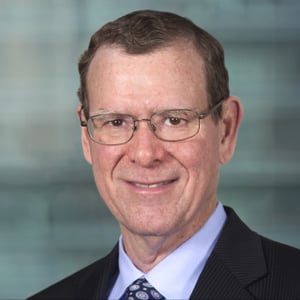
John Allison is an Executive in Residence at the Wake Forest School of Business. He is a member of the Cato Institute’s Board of Directors and Chairman of the Executive Advisory Council of the Cato Institute’s Center for Monetary and Financial Alternatives. Allison was president and CEO of the Cato Institute from October 2012 to April 2015. Prior to joining Cato, Allison was chairman and CEO of BB&T Corporation, the 10th-largest financial services holding company headquartered in the United States. During his tenure as CEO from 1989 to 2008, BB&T grew from $4.5 billion to $152 billion in assets. He was recognized by theHarvard Business Reviewas one of the top 100 most successful CEOs in the world over the last decade.
Allison has received the Corning Award for Distinguished Leadership, been inducted into the North Carolina Business Hall of Fame, and received the Lifetime Achievement Award from theAmerican Banker. He is the author of The Financial Crisis and the Free Market Cure: Why Pure Capitalism Is the World Economy’s Only Hope and The Leadership Crisis and the Free Market Cure: Why the Future of Business Depends on the Return to Life, Liberty, and the Pursuit of Happiness. In addition, he is a former Distinguished Professor of Practice at Wake Forest University School of Business, and serves on the Board of Visitors at the business schools at Wake Forest, Duke, and the University of North Carolina–Chapel Hill.
Allison is a Phi Beta Kappa graduate of the University of North Carolina–Chapel Hill. He received his master’s degree in management from Duke University and is also a graduate of the Stonier Graduate School of Banking. Allison is the recipient of six honorary doctorate degrees.
Wayne A. Abernathy, Wild Bells
Wayne A. Abernathy is a former U.S. Treasury Assistant Secretary for Financial Institutions under President George W. Bush, receiving the Alexander Hamilton Award in recognition of his service. In that office he was also a member of the Board of Directors of the Securities Investor Protection Corporation. Prior to his work at the Treasury, Mr. Abernathy served as Staff Director of the Senate Banking Committee, under Chairman Phil Gramm.
Following his service at the Treasury, Mr. Abernathy worked for 15 years on the staff of the American Bankers Association, as Executive Vice President for Financial Institutions Policy and Regulatory Affairs.
Previous experience with the Senate Banking Committee includes serving as Staff Director of the Subcommittee on Securities during 1995-1998. From 1989 until 1994, Mr. Abernathy was a Republican economist for the committee. He previously worked as a senior legislative assistant for Senator Gramm during 1987-1989 and as an economist for the Banking Committee’s Subcommittee on International Finance and Monetary Policy during 1981-1986, under Chairman Jake Garn.
Mr. Abernathy earned his bachelor’s degree in International Studies from The Johns Hopkins University in 1978. In 1980, he received a master’s degree in International Studies from the School of Advanced International Studies of The Johns Hopkins University.
Kansas Securities Commissioner
Aaron Jack, J.D., M.B.A., is the Kansas Securities Commissioner, a position he was appointed to by Kansas Governor Sam Brownback in 2011. Aaron was previously the West-Central Zone Director for New York Life where his 3,200 registered representatives produced over $1.5 billion in sales annually. Aaron was the first director in the history of New York Life to raise $1 billion in new assets for the company's investment management subsidiary, NYLIM.

The Causes of the Financial Crisis and What Dodd-Frank Doesn't Do About It
Ann Arbor, MIGovernment Barriers to Economic Growth: How Policy Error Gave Us the Great Depression, the 'Financial' Crisis, and Our Present Malaise
Book Review: Fragile by Design: The Political Origins of Banking Crises and Scarce Credit
Andrew Olmem
Fragile by Design: The Political Origins of Banking Crises and Scarce Credit By Charles W....
Government Barriers to Economic Growth: How Government Error Gave Us the Great Depression, the ‘Financial’ Crisis, and the Great Recession
Richmond, VirginiaThe Financial Crisis and the Free Market Cure: A Conversation with John A. Allison
John A. Allison, Wayne A. Abernathy
Note from the Editor: The following is a transcript of a Federalist Society Practice Group...
The Economic Freedom Amendment: A States-Based Response to the Nationalizing Effects of Bailouts and Federal Ownership of Corporate Stock
Aaron Jack
Note from the Editor: This paper discusses a proposed state constitutional amendment that would deny...
Did Dodd-Frank Flunk? Fannie, Freddie, and the Financial Crisis of 2008
Los Angeles, CaliforniaCapitalism, Regulation, and the Financial Crisis
California-Davis Student Chapter
Davis, CA