
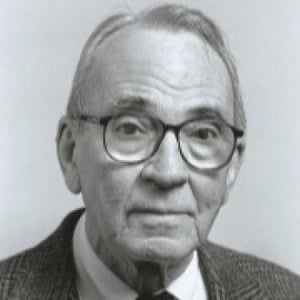
John M. Olin University Professor Emeritus, Georgetown University
Walter Berns is the John M. Olin University Professor Emeritus at Georgetown University and a resident scholar at the American Enterprise Institute. He has taught at the University of Toronto, the University of Chicago (where he earned a Ph.D. in political science), and at Cornell and Yale Universities. His government service includes membership on the National Council on the Humanities, the Council of Scholars in the Library of Congress, the Judicial Fellows Commission, and in 1983 he was the alternate United States representative to the United Nations Commission on Human Rights. He has been a Guggenheim, Rockefeller, and Fulbright Fellow and a Phi Beta Kappa lecturer. He is the author of numerous articles on American government and politics in both professional and popular journals; his many books include In Defense of Liberal Democracy, The First Amendment and the Future of American Democracy, Taking the Constitution Seriously, and Making Patriots. President George W. Bush awarded him the 2005 National Humanities Medal for his scholarship on the history of the constitution.
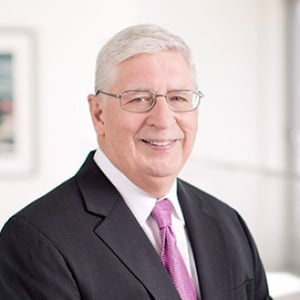
Partner, O'Melveny & Myers LLP
Walter Dellinger is an influential authority on appellate and Supreme Court decisions, lending his experience as a former Solicitor General and decades of legal knowledge to amicus briefs, a multitude of pro bono clients, and public and private companies involved in bet-the-company litigation. A frequent commentator for the Wall Street Journal, Slate, and major television networks, Walter holds the designation of the Douglas B. Maggs Emeritus Professor of Law at Duke University. He was named one of the 100 Most Influential Lawyers in America by the National Law Journal and recognized with a Lifetime Achievement Award from the American Lawyer.
Walter, who formerly served as O’Melveny’s Diversity and Inclusion Partner, helped convince the US Supreme Court that proponents of Proposition 8, California's ban on same-sex marriage, did not have standing to appeal a court order invalidating it. That ruling, Hollingsworth v. Perry, cleared the way for marriage equality in California and eventually nationwide.
Walter served as Assistant Attorney General and head of the Office of Legal Counsel (OLC) from 1993 to 1996. He was acting Solicitor General for the 1996-97 Term of the US Supreme Court. During that time, Walter argued nine cases before the Court, the most by any Solicitor General in more than 20 years. His arguments included cases dealing with physician-assisted suicide, the line item veto, the cable television act, the Brady Act, the Religious Freedom Restoration Act, and the constitutionality of remedial services for parochial school children.
Walter has served as Special Counsel to the Board of Directors of the New York Stock Exchange in connection with the NYSE’s transformation into a publicly held company and its acquisition of an electronic trading company.
After serving in early 1993 in the White House as an advisor to the President on constitutional issues, Walter was nominated by the President to be Assistant Attorney General. He was confirmed by the Senate in October 1993 and served for three years. As head of the OLC, Walter issued opinions on a wide variety of issues, including: the President's authority to deploy United States forces in Haiti and Bosnia; whether the trade agreements required treaty ratification; and a major review of separation of powers questions. He provided extensive legal advice on questions arising out of the shutdown of the federal government, on national debt ceiling issues, and on loan guarantees for Mexico.
Walter has published articles on constitutional issues for scholarly journals including the Harvard Law Review, the Yale Law Journal, and the Duke Law Journal, and has written for the New York Times, the Washington Post, Newsweek, the New Republic, and the London Times. He has been a visiting professor at the Catholic University of Belgium and has given lectures to university faculties in Florence, Siena, Nuremberg, Copenhagen, Leiden, Utrecht, Tilburg, Mexico, and Rio de Janeiro, and has delivered major lectures at Stanford, Yale, Harvard, Michigan, Berkeley, Penn, Duke, Chicago, and other US law schools. He has testified more than 25 times before committees of Congress.
In private practice, Walter’s arguments before the United States Supreme Court have included Exxon Shipping Co. v. Baker, Morgan Stanley Capital Group Inc. v. Public Utility District No. 1 of Snohomish County, Alabama v. North Carolina, Hosanna-Tabor v. EEOC, Heller v. District of Columbia, Jackson v. Birmingham School District, Brown v. Legal Foundation of Washington, US Airways v. Barnett, Utah v. Evans, Hunt v. Cromartie, and Hunt v. Easley. His most notable Court of Appeals and state supreme court arguments include Martha Stewart v. United States, Whiteside v. United States, and Exxon v. Alabama, LCI v. Phillips.
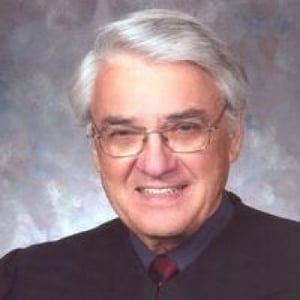
Senior Judge, United States Court of Appeals, Fifth Circuit
Patrick Errol Higginbotham is a federal judge on senior status with the United States Court of Appeals for the 5th Circuit. He joined the court in 1982 after being nominated by President Ronald Reagan.
John M. Olin University Professor Emeritus, Georgetown University
Walter Berns is the John M. Olin University Professor Emeritus at Georgetown University and a resident scholar at the American Enterprise Institute. He has taught at the University of Toronto, the University of Chicago (where he earned a Ph.D. in political science), and at Cornell and Yale Universities. His government service includes membership on the National Council on the Humanities, the Council of Scholars in the Library of Congress, the Judicial Fellows Commission, and in 1983 he was the alternate United States representative to the United Nations Commission on Human Rights. He has been a Guggenheim, Rockefeller, and Fulbright Fellow and a Phi Beta Kappa lecturer. He is the author of numerous articles on American government and politics in both professional and popular journals; his many books include In Defense of Liberal Democracy, The First Amendment and the Future of American Democracy, Taking the Constitution Seriously, and Making Patriots. President George W. Bush awarded him the 2005 National Humanities Medal for his scholarship on the history of the constitution.
Partner, O'Melveny & Myers LLP
Walter Dellinger is an influential authority on appellate and Supreme Court decisions, lending his experience as a former Solicitor General and decades of legal knowledge to amicus briefs, a multitude of pro bono clients, and public and private companies involved in bet-the-company litigation. A frequent commentator for the Wall Street Journal, Slate, and major television networks, Walter holds the designation of the Douglas B. Maggs Emeritus Professor of Law at Duke University. He was named one of the 100 Most Influential Lawyers in America by the National Law Journal and recognized with a Lifetime Achievement Award from the American Lawyer.
Walter, who formerly served as O’Melveny’s Diversity and Inclusion Partner, helped convince the US Supreme Court that proponents of Proposition 8, California's ban on same-sex marriage, did not have standing to appeal a court order invalidating it. That ruling, Hollingsworth v. Perry, cleared the way for marriage equality in California and eventually nationwide.
Walter served as Assistant Attorney General and head of the Office of Legal Counsel (OLC) from 1993 to 1996. He was acting Solicitor General for the 1996-97 Term of the US Supreme Court. During that time, Walter argued nine cases before the Court, the most by any Solicitor General in more than 20 years. His arguments included cases dealing with physician-assisted suicide, the line item veto, the cable television act, the Brady Act, the Religious Freedom Restoration Act, and the constitutionality of remedial services for parochial school children.
Walter has served as Special Counsel to the Board of Directors of the New York Stock Exchange in connection with the NYSE’s transformation into a publicly held company and its acquisition of an electronic trading company.
After serving in early 1993 in the White House as an advisor to the President on constitutional issues, Walter was nominated by the President to be Assistant Attorney General. He was confirmed by the Senate in October 1993 and served for three years. As head of the OLC, Walter issued opinions on a wide variety of issues, including: the President's authority to deploy United States forces in Haiti and Bosnia; whether the trade agreements required treaty ratification; and a major review of separation of powers questions. He provided extensive legal advice on questions arising out of the shutdown of the federal government, on national debt ceiling issues, and on loan guarantees for Mexico.
Walter has published articles on constitutional issues for scholarly journals including the Harvard Law Review, the Yale Law Journal, and the Duke Law Journal, and has written for the New York Times, the Washington Post, Newsweek, the New Republic, and the London Times. He has been a visiting professor at the Catholic University of Belgium and has given lectures to university faculties in Florence, Siena, Nuremberg, Copenhagen, Leiden, Utrecht, Tilburg, Mexico, and Rio de Janeiro, and has delivered major lectures at Stanford, Yale, Harvard, Michigan, Berkeley, Penn, Duke, Chicago, and other US law schools. He has testified more than 25 times before committees of Congress.
In private practice, Walter’s arguments before the United States Supreme Court have included Exxon Shipping Co. v. Baker, Morgan Stanley Capital Group Inc. v. Public Utility District No. 1 of Snohomish County, Alabama v. North Carolina, Hosanna-Tabor v. EEOC, Heller v. District of Columbia, Jackson v. Birmingham School District, Brown v. Legal Foundation of Washington, US Airways v. Barnett, Utah v. Evans, Hunt v. Cromartie, and Hunt v. Easley. His most notable Court of Appeals and state supreme court arguments include Martha Stewart v. United States, Whiteside v. United States, and Exxon v. Alabama, LCI v. Phillips.
Senior Judge, United States Court of Appeals, Fifth Circuit
Patrick Errol Higginbotham is a federal judge on senior status with the United States Court of Appeals for the 5th Circuit. He joined the court in 1982 after being nominated by President Ronald Reagan.

Ronald N. Boyce Presidential Professor of Criminal Law and University Distinguished Professor of Law, The University of Utah College of Law
Paul G. Cassell is an internationally recognized legal scholar on criminal and civil justice, crime victims' rights, constitutional law, evidence, judicial process, and other legal issues. Cassell received a B.A. (1981) and a J.D. (1984) from Stanford University, where he graduated Order of the Coif and was President of the Stanford Law Review. He clerked for then-Judge Antonin Scalia when Scalia was on the U.S. Court of Appeals for the D.C. Circuit (1984-85) and for Chief Justice Warren Burger of the United States Supreme Court (1985-86). Cassell then served as an Associate Deputy Attorney General with the U.S. Justice Department (1986-88) and as an Assistant U.S. Attorney for the Eastern District of Virginia (1988 to 1991). Cassell joined the faculty at the College of Law in 1992, where he taught full-time until he was sworn in as a U.S. District Court Judge for the District of Utah in July 2002. In November 2007, he resigned his judgeship to return full-time to the College of Law to teach, write, and litigate concerning issues relating to crime victims' rights and criminal and civil justice reform. Professor Cassell has also published numerous law review articles in journals such as the Stanford Law Review, the Michigan Law Review, the Harvard Journal of Law and Public Policy, and the Journal of Criminal Law and Criminology. He is a co-author of the nation's only law school textbook on crime victims' rights, Victims in Criminal Procedure (various editions, most recently in its fifth edition published in 2025). Professor Cassell has argued pro bono cases relating to criminal procedure and crime victims' rights before the United States Supreme Court, the 2nd, 4th, 5th, 6th, 7th, 8th, 9th, 10th, 11th, and D.C. Circuits (including the 5th and 11th Circuits en banc), several U.S. District Courts, the Utah Supreme Court, and the Arizona Supreme Court. In 2020, Cassell received the Ronald Wilson Reagan Public Policy Award - National Crime Victims' Service Award from the U.S. Department of Justice. Cassell is a member of the American Law Institute, a fellow of the American Bar Foundation, and an inaugural member of the Council on Criminal Justice. He is also an occasional blogger at The Volokh Conspiracy.
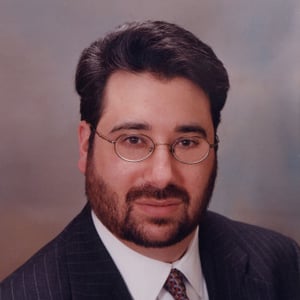
President, Phoenix Center for Advanced Legal and Economic Public Policy Studies
Lawrence J. Spiwak is President of the Phoenix Center for Advanced Legal & Economic Public Policy Studies, a non-profit 501(c)(3) organization that studies broad public-policy issues related to governance, social and economic conditions, with a particular emphasis on the law and economics of the digital age. Mr. Spiwak is a prolific scholar whose work is frequently cited by policymakers, major news media and academic journals around the world, and is in the top 1.3%of authors downloaded on the Social Science Research Network. Mr. Spiwak currently serves as the co-chair of the Federal Communications Bar Association’s (FCBA) committee responsible for overseeing the FEDERAL COMMUNICATIONS LAW JOURNAL and is a member of the program committee of the Telecommunications Policy Research Conference (“TPRC”). Mr. Spiwak is also the recipient of the FCBA’s Distinguished Service Award. Prior to joining the Phoenix Center, Mr. Spiwak was a Senior Attorney with the Competition Division in the FCC’s Office of General Counsel from 1994-1998. While in college, Mr. Spiwak was accepted into the Presidential Stay-In School program where he was responsible for delivering classified and confidential material among senior White House and Reagan Administration officials and received a full FBI security clearance. Mr. Spiwak received his B.A. with Special Honors from the George Washington University and his J.D. from the Benjamin N. Cardozo School of Law. Mr. Spiwak is a member in good standing of the bars of New York, Massachusetts, the District of Columbia, and the U.S. Court of Appeals for the D.C. Circuit.

Senior Vice President for Legal Studies, Cato Institute
Clark Neily is senior vice president for legal studies at the Cato Institute. His areas of interest include constitutional law, overcriminalization, civil forfeiture, police accountability, and gun rights. Neily is the author of Terms of Engagement: How Our Courts Should Enforce the Constitution’s Promise of Limited Government. His writing has appeared in the Wall Street Journal, Forbes, and National Review Online, as well as various law reviews, including the Harvard Journal of Law and Public Policy, George Mason Law Review, Georgetown Journal of Law and Public Policy, NYU Journal of Law and Liberty, and Texas Review of Law and Politics. Neily is a frequent guest speaker and lecturer for the Federalist Society, Institute for Humane Studies, and American Constitution Society.
Before joining Cato in 2017, Neily was a senior attorney and constitutional litigator at the Institute for Justice and director of the Institute’s Center for Judicial Engagement. He is also an adjunct professor at the University of Texas School of Law, where he teaches constitutional litigation and public-interest law.
Neily served as co-counsel in District of Columbia v. Heller, the historic case in which the Supreme Court held for the first time that the Second Amendment protects an individual right to own a gun for self-defense.
Neily began his legal career as a law clerk to Judge Royce Lamberth on the U.S. District Court for the District of Columbia. After that he spent four years in the trial department of the Dallas-based firm Thompson & Knight. Neily received his undergraduate and law degrees from the University of Texas, where he was Chief Articles Editor of the Texas Law Review.
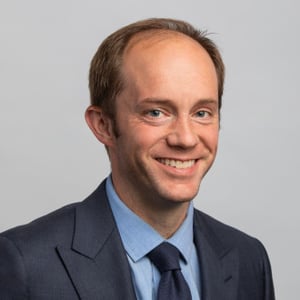
Attorney, Institute for Justice
Jeffrey Redfern joined the Institute for Justice in 2016, and he litigates constitutional cases protecting property rights and free speech.
Before joining IJ, Jeffrey was a member of the appellate group at Mayer Brown LLP, where he authored briefs on various constitutional issues in the U.S. Supreme Court and in lower federal and state courts. He has argued cases before the First and Seventh Circuits. Jeffrey clerked for Judge Laurence Silberman of the U.S. Court of Appeals for the D.C. Circuit.
Jeffrey earned his J.D., cum laude, from Harvard Law School in 2012. Between his first and second years of law school, he clerked at IJ’s Minnesota office. That experience inspired him to file his own pro se constitutional lawsuit against the government while still in school. (After over two years of litigation, the government finally provided the relief he requested.)
Before law school, Jeffrey taught English at a prep school in Southern California. He earned his MA in humanities from the University of Chicago in 2006 and his BA in English, magna cum laude, from Carleton College in 2005. Jeffrey enjoys competitive distance running, and he has a marathon personal best of 2 hours and 30 minutes.
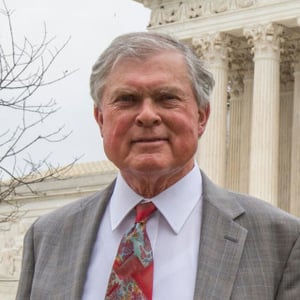
Senior Fellow, Independent Institute
Dr. Stephen P. Halbrook is a Senior Fellow at the Independent Institute. He has taught legal and political philosophy at George Mason University, Howard University, and Tuskegee Institute, and he received his J.D. from the Georgetown University Law Center and Ph.D. in social philosophy from Florida State University.
The winner of three cases before the U.S. Supreme Court (Printz v. United States, United States v. Thompson/Center Arms Company, and Castillo v. United States), he has testified before the Subcommittee on the Constitution of the Senate Judiciary Committee, Senate Subcommittee on the Constitution, Subcommittee on Crime of the House Judiciary Committee, Senate Governmental Affairs Committee, and House Committee on the District of Columbia.
A contributor to numerous scholarly volumes, he is the author of the books, Gun Control in Nazi-Occupied France: Tyranny and Resistance; Gun Control in the Third Reich: Disarming the Jews and “Enemies of the State”; The Founders’ Second Amendment: Origins of the Right to Bear Arms; That Every Man Be Armed: Evolution of a Constitutional Right; A Right to Bear Arms; Firearms Law Deskbook: Federal and State Criminal Practice; Securing Civil Rights: Freedmen, the Fourteenth Amendment, and the Right to Bear Arms; State and Federal Bills of Rights and Constitutional Guarantees; and Target Switzerland: Swiss Armed Neutrality in World War II. Dr. Halbrook’s scholarly articles have appeared in such journals as the Arizona Journal of International and Comparative Law, Drug Law Report, George Mason University Law Review, Journal of Air Law and Commerce, Journal of Law and Policy, Law & Contemporary Problems, National Law Journal, Northern Kentucky Law Review, St. John’s Journal of Legal Commentary; Seton Hall Constitutional Law Journal, Tennessee Law Review, University of Dayton Law Review, Valparaiso University Law Review, Vermont Law Review, and William & Mary Bill of Rights Journal.
Dr. Halbrook's popular articles have appeared in such publications as the Wall Street Journal, Newsday, San Francisco Chronicle, National Review, Investor’s Business Daily, Kansas City Star, Washington Examiner, Shreveport Times, Sacramento Bee, Providence Journal, Tampa Tribune, Pittsburgh Tribune-Review, History News Network, San Antonio Express-News, The Daily Caller, Detroit News, Honolulu Star Advertiser, Birmingham News, Environmental Forum, USA Today, and Washington Times. He has also appeared on numerous national TV/radio programs on CNN, Fox News Channel, Fox Business Network, Court TV, NewsMax TV, CBN, Voice of America, and C-SPAN.
Senior Vice President for Legal Studies, Cato Institute
Clark Neily is senior vice president for legal studies at the Cato Institute. His areas of interest include constitutional law, overcriminalization, civil forfeiture, police accountability, and gun rights. Neily is the author of Terms of Engagement: How Our Courts Should Enforce the Constitution’s Promise of Limited Government. His writing has appeared in the Wall Street Journal, Forbes, and National Review Online, as well as various law reviews, including the Harvard Journal of Law and Public Policy, George Mason Law Review, Georgetown Journal of Law and Public Policy, NYU Journal of Law and Liberty, and Texas Review of Law and Politics. Neily is a frequent guest speaker and lecturer for the Federalist Society, Institute for Humane Studies, and American Constitution Society.
Before joining Cato in 2017, Neily was a senior attorney and constitutional litigator at the Institute for Justice and director of the Institute’s Center for Judicial Engagement. He is also an adjunct professor at the University of Texas School of Law, where he teaches constitutional litigation and public-interest law.
Neily served as co-counsel in District of Columbia v. Heller, the historic case in which the Supreme Court held for the first time that the Second Amendment protects an individual right to own a gun for self-defense.
Neily began his legal career as a law clerk to Judge Royce Lamberth on the U.S. District Court for the District of Columbia. After that he spent four years in the trial department of the Dallas-based firm Thompson & Knight. Neily received his undergraduate and law degrees from the University of Texas, where he was Chief Articles Editor of the Texas Law Review.
Attorney, Institute for Justice
Jeffrey Redfern joined the Institute for Justice in 2016, and he litigates constitutional cases protecting property rights and free speech.
Before joining IJ, Jeffrey was a member of the appellate group at Mayer Brown LLP, where he authored briefs on various constitutional issues in the U.S. Supreme Court and in lower federal and state courts. He has argued cases before the First and Seventh Circuits. Jeffrey clerked for Judge Laurence Silberman of the U.S. Court of Appeals for the D.C. Circuit.
Jeffrey earned his J.D., cum laude, from Harvard Law School in 2012. Between his first and second years of law school, he clerked at IJ’s Minnesota office. That experience inspired him to file his own pro se constitutional lawsuit against the government while still in school. (After over two years of litigation, the government finally provided the relief he requested.)
Before law school, Jeffrey taught English at a prep school in Southern California. He earned his MA in humanities from the University of Chicago in 2006 and his BA in English, magna cum laude, from Carleton College in 2005. Jeffrey enjoys competitive distance running, and he has a marathon personal best of 2 hours and 30 minutes.

Can the Death Penalty be Administered Constitutionally? [Archive Collection]
Walter Berns, Walter E. Dellinger, Patrick E. Higginbotham
On September 9-10, 1988, The Federalist Society hosted its second annual National Lawyers Convention at...
Can the Death Penalty be Administered Constitutionally? [Archive Collection]
Walter Berns, Walter E. Dellinger, Patrick E. Higginbotham
On September 9-10, 1988, The Federalist Society hosted its second annual National Lawyers Convention at...
Topics
Net Neutrality Should Not Live On Through Asymmetrical Merger Commitments
According to the Communications Act, the Federal Communications Commission has concurrent authority with the antitrust...
The Michigan Supreme Court Protects the Rights of Property Owners
On July 17, 2020, the Michigan Supreme Court unanimously held in Rafaeli v. Oakland County...
Topics
Supreme Court Declines to Answer “Is there a ‘Police Powers’ Exception to the Just Compensation Clause?”
On Monday, the Supreme Court denied certiorari in the case of Lech v. Jackson. The...
Miranda v. Arizona [SCOTUSbrief]
Paul G. Cassell
Whenever law enforcement performs a custodial interrogation of a suspect in the United States, it...
Ensuring Due Process at the Surface Transportation Board
Lawrence J. Spiwak
Note from the Editor: The Federalist Society takes no positions on particular legal and public...
Is There a "Police Power" Exception to the Fifth Amendment's Just Compensation Clause?
Clark Neily, Jeffrey H. Redfern
Police in Greenwood Village, CO, chased a shoplifting suspect into a home belonging to Leo...
Is There a "Police Power" Exception to the Fifth Amendment's Just Compensation Clause?
TeleforumTo Bear Arms for Self-Defense: A “Right of the People” or a Privilege of the Few? Part 1
Stephen P. Halbrook
Note from the Editor: The Federalist Society takes no positions on particular legal and public...