

Director, Rule of Law and Governance Program, Arizona State University, Sandra Day O’Connor College of Law
Julia Fromholz serves as director of the rule of law and governance program at Arizona State University Sandra Day O’Connor College of Law, based at the McCain Institute in Washington. Before joining ASU Law, Fromholz worked at the U.S. Department of State, in both Pakistan and Washington. She spent two years as the Senior Director, Rule of Law at the U.S. Embassy in Islamabad, and in Washington advised the Under Secretary of State for Civilian Security, Democracy, and Human Rights on a range of issues, including mass atrocity prevention and human trafficking.
Prior to joining the State Department, Ms. Fromholz worked at Human Rights First’s Washington office, where she directed the Crimes Against Humanity program and worked with the Human Rights Defenders program. Ms. Fromholz had previously lived in Phnom Penh, Cambodia, where she worked with local human rights organizations, focusing on monitoring and reform of the criminal justice system. Ms. Fromholz clerked for Judge William Fletcher on the U.S. Court of Appeals for the Ninth Circuit and practiced law at Keker & Van Nest in San Francisco; before going to law school, she worked at the Boston Consulting Group. Ms. Fromholz graduated magna cum laude from Harvard College, where she was captain of the softball team and wrote her senior thesis on California water policy. She earned her JD from the University of California, Berkeley School of Law (Boalt Hall), where she served as editor in chief of the California Law Review. She speaks French and was a French-American Foundation Young Leader in 2011 and 2012.
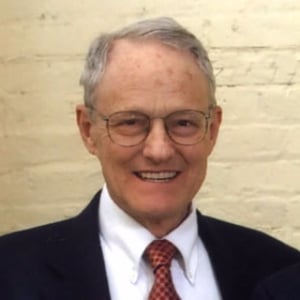
U.S. Court of Appeals, D.C. Circuit
Judge Williams practiced law in New York City (at the firm of Debevoise Plimpton and as an Assistant U.S. Attorney) and then taught law at the University of Colorado Law School from 1969 to 1986, with visiting years at UCLA, SMU, and the University of Chicago (where he was also a fellow in law and economics). He was appointed to the U.S. Court of Appeals for the D.C. Circuit in 1986. His most recent book is a biography of Vasily Maklakov, The Reformer: How One Liberal Fought to Preempt the Russian Revolution (Encounter Books, 2017).
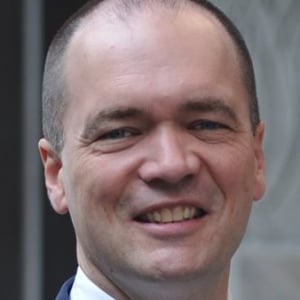
Professor of Law, High Point School of Law
Scott Gaylord directs High Point Law’s Appellate Litigation Clinic and serves as a Professor of Law, teaching Constitutional Law and related upper-level elective courses. The Appellate Clinic works with students to write and file briefs in significant court cases, including appeals before the United States Supreme Court.
Professor Gaylord is a prominent Constitutional Law scholar with an impressive background in both academia and legal practice. He has authored or co-authored 18 substantial law review articles, co-authored a Constitutional Law casebook, and has written more than 35 amicus briefs to the U.S. Supreme Court and federal circuit courts on prominent national cases involving religious liberty and free speech. He is a frequent speaker on constitutional law and First Amendment topics at law schools across the country and has regularly provided commentary on ongoing constitutional issues to national media outlets, including th eNew York Times, USA Today, the Diane Rehm Show, NPR, The National Constitution Center, and Bloomberg Law.
Professor Gaylord also started an appellate advocacy clinic at his former law school and currently serves on the North Carolina Chief Justice’s Commission on Professionalism, along with holding many other service and leadership roles. Prior to joining the academy in 2007, he practiced complex civil and commercial litigation with the Charlotte firm of Robinson Bradshaw & Hinson, and he clerked for Judge Edith H. Jones on the United States Court of Appeals for the Fifth Circuit.
Professor Gaylord earned his B.A. in philosophy and English, summa cum laude, from Colgate University, his Ph.D. in philosophy from the University of North Carolina at Chapel Hill, and his J.D. from Notre Dame Law School, where he also graduated summa cum laude.
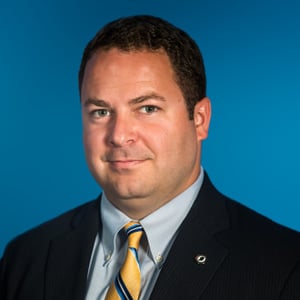
Former Director, State Courts, The Federalist Society for Law and Public Policy Studies
Peter Bisbee served as Director of State Courts for the Federalist Society. In this capacity, he lead a comprehensive effort to promote the discussion on the role of courts in states across the country. Peter also executed the Society’s government and coalition outreach efforts at the national level as Deputy Director of External Relations, working as a liaison to Congress and other public policy organizations. He previously served as Director of Membership at the Society, where he managed relations with the Society’s network of over 70,000 individuals, created outreach campaigns to increase engagement, and developed the organization's recordkeeping and communication systems. Peter holds a B.A. from the University of Michigan in History and lives in Virginia with his wife and daughter.

Professor of Political Science, University of Pittsburgh
Chris W. Bonneau is Professor of Political Science at the University of Pittsburgh, where he has been since 2002. His research is primarily in the areas of judicial selection (specifically, judicial elections) and judicial decisionmaking. Professor Bonneau’s work has been supported by the National Science Foundation and he has published numerous articles, including in the American Journal of Political Science and Journal of Politics. He is also the coauthor of three books: Strategic Behavior and Policy Choice on the U.S. Supreme Court (2005), In Defense of Judicial Elections (2009), and the award-winning Voters’ Verdicts: Citizens, Campaigns, and Institutions in State Supreme Court Elections (2015).
Professor Bonneau teaches undergraduate classes in constitutional law, judicial politics, and research methods, as well as graduate classes in judicial politics and research design.

James L. Oberstar Professor of Law and Public Policy, University of St. Thomas School of Law
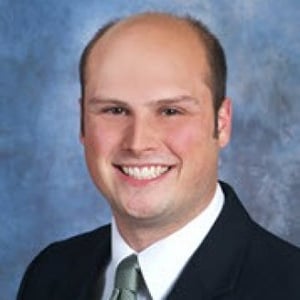
Vice President and Legal Counsel, Evangelical Council for Financial Accountability
Michael Martin is ECFA’s vice president of church relations. He enjoys helping churches and ministries maintain high standards of financial integrity through ECFA membership. Michael also uses his training as an attorney and CPA to contribute to ECFA’s many practical educational resources, including books, webinars, videos, podcasts, and more.
Beginning with the 2013 edition, Mr. Martin co-authored the Zondervan Minister’s Tax & Financial Guide and the Zondervan Church and Nonprofit Tax & Financial Guide.
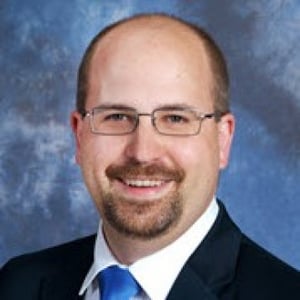
Executive Vice President and General Counsel, Evangelical Council for Financial Accountability
John Van Drunen is the Evangelical Council for Financial Accountability (ECFA)'s executive vice president and general counsel with a bachelor of arts in accounting, magna cum laude, from Anderson University and a juris doctor from Regent University School of Law. His responsibilities at ECFA primarily relate to managing the compliance program and writing and speaking on technical nonprofit issues.
Mr. Van Drunen has received many awards, including Virginia Bar Association recognition for pro bono work during his tenure as a law student. This work included working with nonprofit organizations and assisting low-income individuals with preparing taxes.
Beginning with the 2010 edition, Mr. Van Drunen co-authored the Zondervan Minister’s Tax & Financial Guide and the Zondervan Church and Nonprofit Tax & Financial Guide with ECFA President, Dan Busby, and Michael Martin, ECFA Vice President and legal counsel.
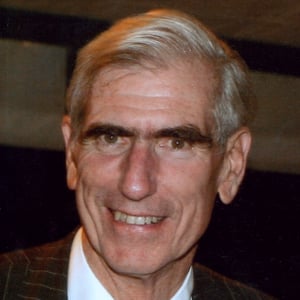
Founding Partner, Boyden Gray & Associates
Ambassador C. Boyden Gray is the founding partner of Boyden Gray & Associates, a law and strategy firm in Washington, D.C., focused on constitutional and regulatory issues.
Mr. Gray worked in the White House for twelve years, first as counsel to the Vice President during the Reagan administration and then as White House Counsel to President George H.W. Bush. In the Reagan administration, he was Counsel to the Presidential Task Force on Regulatory Relief, for which he wrote the original Executive Order 12291 requiring cost-benefit analysis and White House review of regulations (later renumbered as current EO 12866). In the George H.W. Bush Administration, Mr. Gray was in charge of judicial selection and was also instrumental in the enactment of the Clean Air Act Amendments of 1990, the Energy Policy Act of 1992, and a cap-and-trade system for acid rain emissions. In 1993, he received the Presidential Citizens Medal. Under President George W. Bush, Mr. Gray was U.S. Ambassador to the European Union and U.S. Special Envoy to Europe for Eurasian Energy.
Mr. Gray practiced law for 25 years at the law firm of Wilmer, Cutler & Pickering and was chairman of the Administrative Law and Regulatory Practice Section of the American Bar Association from 2000 to 2002. Early in his career, Mr. Gray helped to develop the Business Roundtable and served as its first counsel. He is an adjunct professor at Antonin Scalia Law School and a former adjunct professor at NYU Law School (teaching energy and environmental law). Mr. Gray is on the Board of Directors of the Atlantic Council, the Federalist Society, Reason Foundation, and the Trust for the National Mall.
Mr. Gray earned his A.B. magna cum laude from Harvard, where he was an editor of the Crimson, and his J.D. with high honors from the University of North Carolina at Chapel Hill, where he was editor-in-chief of the Law Review. Mr. Gray served in the United States Marine Corps, and after law school, he clerked for Earl Warren, Chief Justice of the United States Supreme Court.
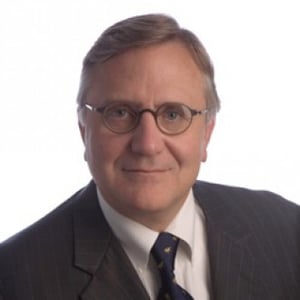
Reed Larson Professor of Labor Law, Ave Maria School of Law and, National Right To Work Legal Defense Foundation
John Raudabaugh is a labor lawyer and former Member of the U.S. National Labor Relations Board. He was a partner in law firms representing management concerning domestic and international labor law matters. Currently, he represents employees seeking relief from union and/or employer unfair labor practices. Mr. Raudabaugh has presented testimony to both Senate and House Committees regarding labor law reform. Professor Raudabaugh teaches Labor Law and a Labor Law Practicum at the Ave Maria School of Law. He is a graduate of the Wharton School of Finance and Commerce and New York State School of Industrial and Labor Relations with B.S. and M.S. degrees in labor economics and a J.D. degree from the University of Virginia Law School of Law.
Former Director, State Courts, The Federalist Society for Law and Public Policy Studies
Peter Bisbee served as Director of State Courts for the Federalist Society. In this capacity, he lead a comprehensive effort to promote the discussion on the role of courts in states across the country. Peter also executed the Society’s government and coalition outreach efforts at the national level as Deputy Director of External Relations, working as a liaison to Congress and other public policy organizations. He previously served as Director of Membership at the Society, where he managed relations with the Society’s network of over 70,000 individuals, created outreach campaigns to increase engagement, and developed the organization's recordkeeping and communication systems. Peter holds a B.A. from the University of Michigan in History and lives in Virginia with his wife and daughter.
Professor of Political Science, University of Pittsburgh
Chris W. Bonneau is Professor of Political Science at the University of Pittsburgh, where he has been since 2002. His research is primarily in the areas of judicial selection (specifically, judicial elections) and judicial decisionmaking. Professor Bonneau’s work has been supported by the National Science Foundation and he has published numerous articles, including in the American Journal of Political Science and Journal of Politics. He is also the coauthor of three books: Strategic Behavior and Policy Choice on the U.S. Supreme Court (2005), In Defense of Judicial Elections (2009), and the award-winning Voters’ Verdicts: Citizens, Campaigns, and Institutions in State Supreme Court Elections (2015).
Professor Bonneau teaches undergraduate classes in constitutional law, judicial politics, and research methods, as well as graduate classes in judicial politics and research design.
Professor of Law, High Point School of Law
Scott Gaylord directs High Point Law’s Appellate Litigation Clinic and serves as a Professor of Law, teaching Constitutional Law and related upper-level elective courses. The Appellate Clinic works with students to write and file briefs in significant court cases, including appeals before the United States Supreme Court.
Professor Gaylord is a prominent Constitutional Law scholar with an impressive background in both academia and legal practice. He has authored or co-authored 18 substantial law review articles, co-authored a Constitutional Law casebook, and has written more than 35 amicus briefs to the U.S. Supreme Court and federal circuit courts on prominent national cases involving religious liberty and free speech. He is a frequent speaker on constitutional law and First Amendment topics at law schools across the country and has regularly provided commentary on ongoing constitutional issues to national media outlets, including th eNew York Times, USA Today, the Diane Rehm Show, NPR, The National Constitution Center, and Bloomberg Law.
Professor Gaylord also started an appellate advocacy clinic at his former law school and currently serves on the North Carolina Chief Justice’s Commission on Professionalism, along with holding many other service and leadership roles. Prior to joining the academy in 2007, he practiced complex civil and commercial litigation with the Charlotte firm of Robinson Bradshaw & Hinson, and he clerked for Judge Edith H. Jones on the United States Court of Appeals for the Fifth Circuit.
Professor Gaylord earned his B.A. in philosophy and English, summa cum laude, from Colgate University, his Ph.D. in philosophy from the University of North Carolina at Chapel Hill, and his J.D. from Notre Dame Law School, where he also graduated summa cum laude.
Governor, State of Georgia
Under Gov. Nathan Deal’s leadership, Georgia has risen to become the No. 1 place in the nation in which to do business, a goal achieved by creating the Competitiveness Initiative, reforming our tax code, shaping our educational system to support our workforce needs and recruiting businesses to relocate here.
As Georgia’s 82nd governor since January 2011, he has cut state taxes, eliminated state agencies, reduced the state government workforce, saved HOPE from the brink of bankruptcy, championed education innovations and implemented significant cost-saving reforms in our criminal justice system. He fought to increase public safety on our waterways, improved our workforce by aiding veterans and technical college students and enacted stricter rules on lobbying to boost public trust.
Though he has reduced the size of state government, Gov. Deal has prioritized education and child safety funding as state revenues rebound from the Great Recession. In 2014, the governor increased k-12 spending by more than half a billion dollars, the largest increase in education in seven years, and in his 2015 State of the State address he proposed the creation of a new Opportunity School District to rescue failing schools. As concerned about our children’s safety as he is about their education, Gov. Deal has also started a three-year plan to add nearly 500 new child welfare case workers at DFCS.
Gov. Deal’s public service to his state spans four decades. The Sandersville native served in the U.S. Army at Fort Gordon in Augusta after graduating with a law degree from Mercer University, and then began a private law practice in Gainesville, the hometown of his wife, Sandra Dunagan Deal. While his wife taught in Hall County public schools, the governor began a long span of service to his community as prosecutor, judge, state senator and U.S. congressman.
During his 17 years in Congress, Deal rose to chair the Health Subcommittee of Energy and Commerce, where he became a noted expert on entitlement reform and health care policy.
Deal ended his congressional career to campaign for governor, becoming the Republican nominee in August 2010 and then winning the governorship in November of that year. In November 2014, Deal was re-elected to a second term in office. He was sworn in again as governor on Jan. 12, 2015.
The governor and first lady have four adult children and six grandchildren.
James L. Oberstar Professor of Law and Public Policy, University of St. Thomas School of Law
Vice President and Legal Counsel, Evangelical Council for Financial Accountability
Michael Martin is ECFA’s vice president of church relations. He enjoys helping churches and ministries maintain high standards of financial integrity through ECFA membership. Michael also uses his training as an attorney and CPA to contribute to ECFA’s many practical educational resources, including books, webinars, videos, podcasts, and more.
Beginning with the 2013 edition, Mr. Martin co-authored the Zondervan Minister’s Tax & Financial Guide and the Zondervan Church and Nonprofit Tax & Financial Guide.
Executive Vice President and General Counsel, Evangelical Council for Financial Accountability
John Van Drunen is the Evangelical Council for Financial Accountability (ECFA)'s executive vice president and general counsel with a bachelor of arts in accounting, magna cum laude, from Anderson University and a juris doctor from Regent University School of Law. His responsibilities at ECFA primarily relate to managing the compliance program and writing and speaking on technical nonprofit issues.
Mr. Van Drunen has received many awards, including Virginia Bar Association recognition for pro bono work during his tenure as a law student. This work included working with nonprofit organizations and assisting low-income individuals with preparing taxes.
Beginning with the 2010 edition, Mr. Van Drunen co-authored the Zondervan Minister’s Tax & Financial Guide and the Zondervan Church and Nonprofit Tax & Financial Guide with ECFA President, Dan Busby, and Michael Martin, ECFA Vice President and legal counsel.

25 Anniversary Celebration & Dinner
San Diego Lawyers Chapter
San Diego, CALawyers Chapter Inaugural Meeting
Knoxville, TNThe Reformer and the Rule of Law
Julia Fromholz, Stephen F. Williams
Besides absolutists of the right (the tsar and his adherents) and left (Lenin and his...
NLRB Trumps Five Obama Board Precedents
Labor & Employment Law Practice Group Teleforum
TeleforumThe Case for Partisan Judicial Elections
Scott W. Gaylord, Peter Bisbee, Chris W. Bonneau
Join us in a discussion with our experts, Professor Chris Bonneau and Professor Scott Gaylord,...
The Case for Partisan Judicial Elections
A Teleforum Sponsored by the State Courts Project
TeleforumLuncheon with Governor Deal
Atlanta, GAIs the "Parsonage Allowance" Allowed?
Thomas C. Berg, Michael Martin, John Van Drunen
Last month, in a challenge brought by the Freedom from Religion Foundation, a Wisconsin federal...
Is the "Parsonage Allowance" Allowed?
Religious Liberties Practice Group Teleforum
TeleforumExxonMobil Litigation Update
C. Boyden Gray
On Monday, January 8, ExxonMobil filed a petition to depose officials of the cities and...