
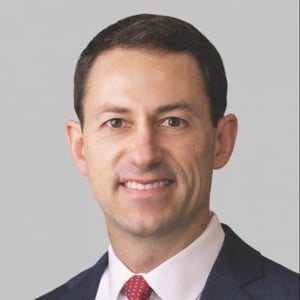
Partner, Foley & Lardner LLP
Matthew Krueger is a partner in the Government Enforcement Defense and Investigations practice group at Foley & Lardner LLP. Before joining Foley, Matt served as the United States Attorney for the Eastern District of Wisconsin after being recommended by a bipartisan nominating commission. As the district’s chief federal law enforcement officer, Matt supervised all criminal and civil litigation involving the United States in 28 counties. He also served for five years as an Assistant U.S. Attorney, prosecuting a broad array of federal crimes. Before serving in the U.S. Attorney’s Office, Matt practiced trial and appellate litigation at an international law firm in Washington, D.C. He clerked for the Hon. Paul V. Niemeyer on the U.S. Court of Appeals for the Fourth Circuit and served as a Bristow Fellow in the Solicitor General’s Office, helping represent the United States before the Supreme Court. Matt received his J.D., summa cum laude, from the University of Minnesota Law School.
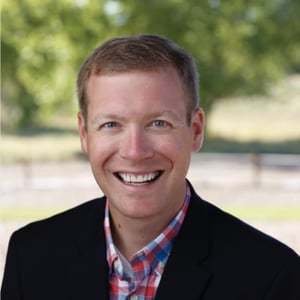
President, Center for American Rights
Daniel Suhr serves as president of the Center for American Rights, where he spends every day on the front lines of the fight to preserve our rights and liberties. The Center's mission is to advance free speech, free enterprise, and parental freedom in education through strategic, precedent-setting litigation.
Daniel formerly worked as policy director for Wisconsin Governor Scott Walker, as chief of staff for Wisconsin Lieutenant Governor Rebecca Kleefisch, and as a law clerk for Judge Diane Sykes of the U.S. Court of Appeals for the Seventh Circuit. He holds a B.A. and J.D. from Marquette University, and master’s degrees from Georgetown and the University of Missouri.

Judge, United States Court of Appeals, Sixth Circuit
Judge Readler earned his undergraduate and law degrees from the University of Michigan. After graduating, he served as a law clerk to Judge Alan Norris of the United States Court of Appeals for the Sixth Circuit. Judge Readler then began practicing law in the Columbus office of the international law firm Jones Day, eventually spending ten years as a partner in the firm’s Issues and Appeals Practice Group. While at Jones Day, Judge Readler appeared in state and federal trial and appellate courts around the country, most frequently the Supreme Court of Ohio and the Sixth Circuit. Judge Readler also successfully argued before the United States Supreme Court in McQuiggin v. Perkins on behalf of an inmate claiming actual innocence. His other pro bono representations include representing capital defendants before the Tenth Circuit and the Supreme Court of Ohio, as well as representing defendants sentenced to life in prison before the Sixth Circuit. While at Jones Day, Judge Readler traveled to Nairobi with Lawyers Without Borders to train Kenyan lawyers in prosecuting domestic violence cases, and he was also a recipient of the American Marshall Memorial Fellowship awarded by the German Marshall Fund of the United States. Following his career in private practice, Judge Readler served as Acting Assistant Attorney General for the Civil Division of the United States Department of Justice from 2017 to 2019. In that role, Judge Readler led and supervised over 1,000 lawyers in the Department’s largest litigating division, briefing and arguing several cases on behalf of the United States in federal courts across the country, including high-profile cases significant to the Administration and the Department. In March 2019, Judge Readler was confirmed to serve as a Circuit Judge on the Sixth Circuit. He resides in Columbus.
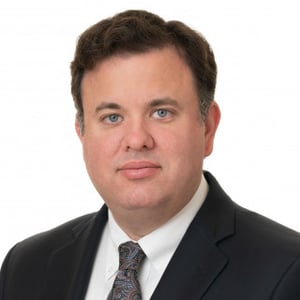
Arthur F. Burns Scholar in Political Economy; Director of Economic Policy Studies, American Enterprise Institute
Michael R. Strain is the director of Economic Policy Studies and the Arthur F. Burns Scholar in Political Economy at the American Enterprise Institute.
His research and writing span a wide range of areas, including labor markets, public finance, social policy, and macroeconomics. He has published several dozen articles in leading academic and policy journals. Dr. Strain is also the author of The American Dream Is Not Dead: (But Populism Could Kill It) (Templeton Press, 2020), in which he examines long-term trends in economic outcomes for typical workers and households. He is the editor or coeditor of Preserving Links in the Pandemic: Policies to Maintain Worker-Firm Attachment in the OECD (AEI Press, 2023); What Has Happened to the American Working Class Since the Great Recession? (American Academy of Political and Social Science, 2021), The US Labor Market: Questions and Challenges for Public Policy (AEI Press, 2016), and Economic Freedom and Human Flourishing: Perspectives from Political Philosophy (AEI Press, 2016). He was a member of the AEI-Brookings Working Group on Poverty and Opportunity, which published in 2015 the report Opportunity, Responsibility, and Security: A Consensus Plan for Reducing Poverty and Restoring the American Dream.
Dr. Strain is concurrently Professor of Practice in the McCourt School of Public Policy at Georgetown University. He is also a research fellow with the IZA Institute of Labor Economics in Bonn, Germany; a research affiliate with the Institute for Research on Poverty at the University of Wisconsin–Madison; and a member of the Aspen Economic Strategy Group. He has served on several committees and working groups at the intersection of academic research and economic and social policy, including for the American Academy of Arts and Sciences; the National Academy of Social Insurance, where he is an elected member; and the National Academies of Sciences, Engineering, and Medicine.
Dr. Strain also writes frequently for popular audiences, and his essays and op-eds have been published by the New York Times, the Wall Street Journal, the Washington Post, the Financial Times, Bloomberg Opinion, and National Review, among other outlets. He is a columnist for Project Syndicate.
Dr. Strain has testified before Congress and speaks often to a variety of audiences. A frequent guest on radio and television, he is regularly interviewed by broadcast networks including CNBC, MSNBC, and NPR.
As the director of Economic Policy Studies at the American Enterprise Institute (AEI), Dr. Strain oversees the Institute’s work in economic policy, financial markets, international trade and finance, tax and budget policy, welfare economics, health care policy, and related areas.
Before joining AEI, Dr. Strain worked in the Center for Economic Studies at the US Census Bureau and in the macroeconomics research group at the Federal Reserve Bank of New York. He holds a PhD in economics from Cornell University.
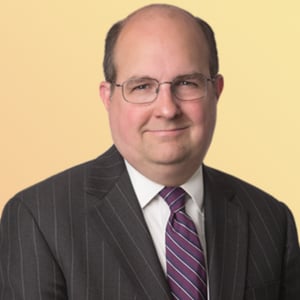
Partner, International Trade, King & Spalding LLP
Stephen P. Vaughn is a Partner in the International Trade Team of King & Spalding who works primarily on international trade litigation and policy matters. In April 2019, Stephen completed more than two years of service as the General Counsel for the Office of the United States Trade Representative (USTR). In that position, he managed a team of government attorneys representing U.S. interests in both trade negotiations and trade litigation. During two months in early 2017, Stephen also served as the acting U.S. Trade Representative. He is widely regarded as one of the world’s foremost authorities on current U.S. trade policy, as well as one of the most talented U.S. trade remedy litigators.
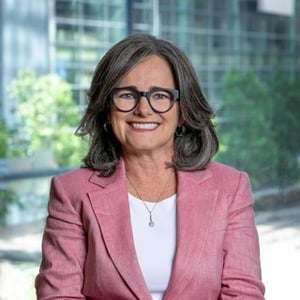
Executive Director, Colorado Lawyers Committee
Kristin M. Bronson is a civic leader, community advocate and civil litigator with over twenty-five years of experience. She joined the Colorado Lawyers Committee in May 2023 after serving as Denver’s City Attorney for six years. As the City’s Chief Legal Officer, she provided legal and policy advice to elected officials, appointees, and senior managers while managing a large legal department. Ms. Bronson also led a number of key initiatives including the formation of the Denver Immigrant Legal Services Fund, the development of a comprehensive citywide youth violence prevention plan, and two national non-partisan convenings of legal experts on voting rights and election integrity. Ms. Bronson practiced law at Lewis Roca Rothgerber Christie LLP for nearly twenty years and is a trained mediator and arbitrator.
She has been the recipient of a number of awards including the Colorado Women’s Bar Association Foundation’s Raising the Bar award, Girl Scouts of Colorado’s Women of Distinction award, Law Week’s Woman Lawyer of the Year, Law Week’s Young Lawyer of the Year, the Colorado Women’s Chamber of Commerce’s 25 Most Powerful Women award, the University of Colorado Law School Dean’s Choice Making a Difference award, the Denver Business Journal’s 40 Under 40 award, the Denver Bar Association and Davis Family Foundation’s Richard Marden Davis award, and others. Ms. Bronson has served dozens of community and civic organizations as a board member or volunteer.
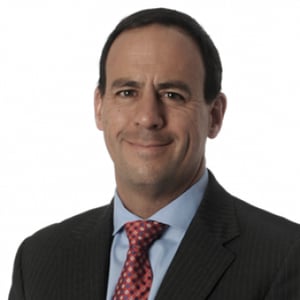
Shareholder, Greenberg Traurig LLP
Troy A. Eid focuses his litigation, mediation and transactional practice on government enforcement, investigations and compliance, environmental law, energy and natural resource development, and Federal Indian law and Native American and Alaska Native tribal law. Troy is a trusted advocate and mediator in the Rocky Mountain West and in federal, state and tribal trial and appellate courtrooms across the country.
Director, Political Law Center, Independent Institute
Shayne M. Madsen, is the Director of the Political Law Center. Madsen most previously lead the Public Policy and Regulatory Affairs Practice Group in the Denver office of law firm Jackson Kelly PLLC. She practiced in the public policy and government affairs area, in election and campaign finance law, and in real estate development law. Madsen is a peer review rated attorney by Martindale- Hubbell (AV Preeminent).
Ms. Madsen has represented clients before the Colorado Legislature and before various local governments for over twenty years. She has extensive experience representing large and small business entities and related national and local trade associations in connection with legislative and public affairs issues, as well as state and local initiatives and referenda. Ms. Madsen is widely recognized as an effective on-the-ground strategist and lobbyist with a track record of success.
Ms. Madsen has worked with a number of political organizations in Colorado, and she is a regular participant in electronic and print media programs on public policy issues, including the establishment of political committees and other advocacy entities, and related litigation. She was a member of the legal team representing the Colorado Secretary of State before the Colorado Supreme Court in connection with the 2003 Congressional redistricting challenge. She is also local counsel for the Institute for Justice in connection with campaign finance litigation in the Colorado courts. Ms. Madsen is a graduate of the University of Colorado (Bachelor of Arts) and Washington University in St. Louis (Juris Doctor).
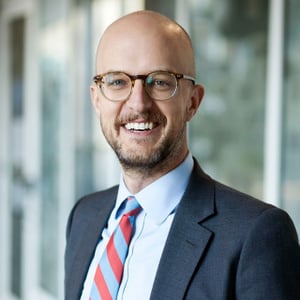
Partner, First & Foremost PLLC
Andrew is one of the leading young litigators in the state of Colorado and the West. His practice focuses on the representation of religious institutions, public figures and political organizations, and small and large businesses. He regularly appears in state and federal courts across the country on behalf of clients in a range of complex commercial, constitutional, and civil-rights disputes. His advocacy has been described by commentators as “excellent,” “nothing short of brilliant,” and “compelling.”
Andrew’s approach was formed by his service as a law clerk to Chief Judge William H. Pryor Jr. of the United States Court of Appeals for the Eleventh Circuit and Judge Daniel Domenico of the United States District Court for the District of Colorado. Andrew’s clerkships exposed him to nearly every area of law, from election issues, to trade-secret and contract protections, copyright, and First Amendment disputes. His practice is similarly broad. He represents clients at all levels of the judiciary on an array of substantive legal issues, including defamation and reputational torts; religious freedom, and the rights to freedom of speech and association; TABOR; trade secrets; legal ethics; the Foreign Sovereign Immunities Act; and contractual rights. His clients run the gamut and include large religious institutions; colleges and universities; corporations of all sizes; and public figures.
Andrew graduated first in his class from Tulane University Law School. Before joining First and Fourteenth, he worked for one of the largest law firms in the world, where he litigated large commercial disputes throughout the country.
Andrew is a fourth-generation Coloradan, an adjunct professor of constitutional law at the University of Colorado, Colorado Springs, a husband to his college sweetheart, a lover of the theology of the Desert Fathers, a board member of Catholic Charities of Central Colorado, a mediocre trout fisherman of the small streams of Colorado’s Greenhorn Valley, an officer of the Colorado Lawyer’s Chapter of the Federalist Society, and a former teacher of ancient Greek philosophy and early Christian theology at a private school in the Twin Cities.
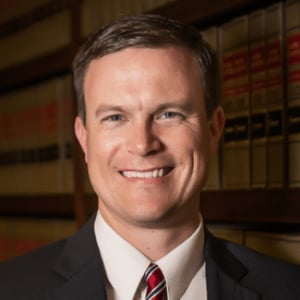
Senior Attorney, Pacific Legal Foundation
Glenn Roper joined Pacific Legal Foundation in 2019. Based in Colorado, he litigates across the country on behalf of individuals and organizations to advance the principles of individual freedom, separation of powers, and the rule of law.
With experience in both private practice and government, Roper has seen the dangers posed to liberty when agencies, bureaucrats, and politicians ignore individual rights in favor of expediency or advancing a political agenda. His interest in combating those dangers spans PLF’s practice areas, including equal protection, separation of powers, environmental law, property rights, and the First Amendment.
Although he grew up in California’s Central Valley, Roper has spent most of his career in the Mountain West. Immediately prior to joining PLF, he served as Deputy Solicitor General in Colorado’s Office of the Attorney General, where he handled select appellate and constitutional litigation on behalf of the State and its agencies and officials. Before joining the Attorney General’s Office, Roper was a partner in a Denver law firm, where he focused on complex civil litigation, e-discovery, and appellate matters. He previously served as Deputy Associate Counsel in the White House Counsel’s Office for President George W. Bush and as a law clerk to Judge David M. Ebel of the Tenth Circuit Court of Appeals. He graduated first in his class from Brigham Young University Law School.
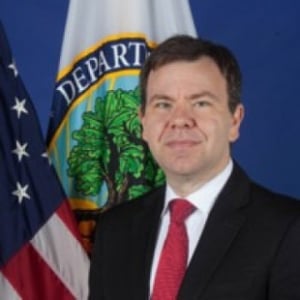
General Counsel, Mountain States Legal Foundation
William E. Trachman is General Counsel for Mountain States Legal Foundation, where he protects the rights of individuals to live freely and securely under the U.S. Constitution. Previously, he was appointed to serve in the Department of Education as Deputy Assistant Secretary in the Office for Civil Rights. Prior to his appointment, he served as General Counsel to the Douglas County School District, where he helped litigate the fight for school choice in the school district. Presently, Mr. Trachman serves as Chair of the Colorado Federalist Society and the Vice Chair of the U.S. Commission on Civil Rights’ Colorado Advisory Board. He previously taught as an Adjunct Professor at the University of Denver, Sturm College of Law. He attended U.C. Berkeley for both undergraduate and law school, and then clerked for the Honorable Harris Hartz on the 10th Circuit Court of Appeals. Mr. Trachman is licensed in Colorado, California, and Washington, D.C.
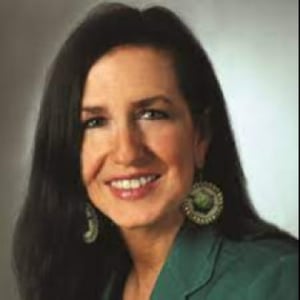
Shareholder, Greenberg Traurig
Jennifer Weddle is the Co-Chair of Greenberg Traurig's American Indian Law Practice and has wide-ranging experience in complex regulatory and jurisdictional issues, with a focus in Indian law, handling a variety of matters for tribal and non-tribal clients. She has a dynamic, inter-disciplinary practice that centers on providing strategies for resolving complex jurisdictional problems. Much of her practice focuses in the areas of tribal economic development and natural resources development. Jennifer also has U.S. Supreme Court experience, including serving as one of the attorneys for the respondent in Nevada v. Hicks (2001) and representing the petitioners in Ute Mountain Ute Tribe v. Padilla (2012) and Grand Canyon Skywalk Development, LLC v. Grand Canyon Resort Corporation (2013) and cert stage amici in Saginaw-Chippewa Tribe v. NLRB (2016) and United States v. Cooley (2020) and amici on the merits in Lewis v. Clarke (2017), U.S. v. Washington (2018), Carpenter v. Murphy (2018), McGirt v. Oklahoma (2020), and United States v. Cooley (2021).
Jennifer's work also includes negotiations for mineral leasing employment matters and representation before federal agencies. She has also been involved in civil litigation, working on numerous complex federal, state and tribal litigation matters, including class action tort litigation and large commercial disputes. Her transactional experience includes oil and gas renewables projects throughout the west, as well as Endangered Species Act work. Jennifer frequently assists tribes, banks and non-bank entities with financing and regulatory matters with Indian law components. Jennifer has wide-ranging project siting experience, including the application of NEPA, NHPA, and other environmental laws on tribal and public lands, including with respect to large linear multi-state energy and infrastructure projects. Jennifer has deep transactional, regulatory and litigation experience involving very complex matters with both legal and policy components.
Jennifer is past President of the National Native American Bar Association and past two-term Chair of the Federal Bar Association Indian Law Section. She currently serves as the Tenth Circuit Representative on the American Bar Association Standing Committee on the Federal Judiciary, a role she has held since 2018, spanning the evaluations for more than two dozen federal judicial nominees at every level of the federal courts. She is a ’00 graduate of Harvard Law School and a ’97 graduate of the University of Michigan (Classical Languages and Literature).
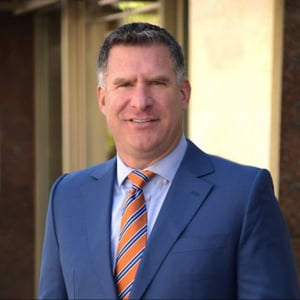
Commercial Litigation/Transaction Attorney, Campbell Killin Brittan & Ray LLC
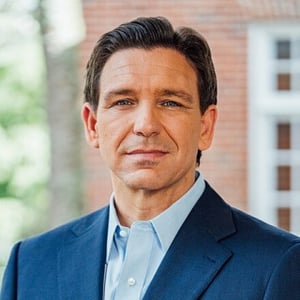
Governor, Florida
Ron DeSantis is the 46th Governor of the State of Florida. Since taking office in January 2019, he has worked hard to expand education opportunities, improve Florida’s water resources and Everglades, champion vocational training, bolster public safety, foster innovation in health care, assist with hurricane recovery, promote infrastructure development and support veterans – all while lowering taxes and being fiscally responsible.
A native Floridian, Governor DeSantis worked his way through Yale University, where he captained the university baseball team and graduated magna cum laude. He also gradated with honors from Harvard Law School. While at Harvard, he earned a commission in the U.S. Navy as a JAG Officer. During his active duty service, then- Lieutenant DeSantis deployed to Iraq as an advisor to a U.S. Navy SEAL Commander in support of the SEAL mission in Iraq. His military decorations include the Iraq Campaign Medal of the Bronze Star Medal (meritorious service).
Prior to serving as Governor, DeSantis served as the U.S. Congressman for Florida’s 6th District. As Chairman of the National Security Subcommittee, DeSantis spearheaded efforts to reform the UA, combat terrorism, identify government waste and relocate the American Embassy in Israel to Jerusalem. As a Congressman, DeSantis championed term limits, fiscal responsibility with a strong national defense.
Governor DeSantis is married to First Lady Casey DeSantis, a former Emmy Award winning television host. They are the proud parents of two children, Madison and Mason. They are the youngest family living in the Florida Governor’s Mansion in nearly fifty years.
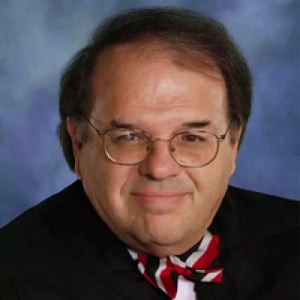
Senior Judge, United States District Court, District of Columbia
Judge Leon was appointed to the United States District Court in February 2002. He received his A.B. from Holy Cross College in 1971, his J.D. cum laude from Suffolk Law School in 1974, and his LL.M. from Harvard Law School in 1981. Immediately prior to his appointment to the bench, Judge Leon was engaged in private practice in Washington, D.C., as a partner in the Washington office of Baker & Hostetler (1989-1999), and Vorys, Sater, Seymour and Pease (1999-2002). Prior to and while in private practice, Judge Leon served as counsel to Congress in the investigations of three sitting Presidents. In 1987, he was the Deputy Chief Minority Counsel for the U.S. House Select “Iran-Contra” Committee. From 1992-1993, he was the Chief Minority Counsel to the U.S. House Foreign Affairs Committee’s “October Surprise” Task Force. In 1994, Judge Leon was Special Counsel to the U.S. House Banking Committee for its “Whitewater” investigation. He also served in 1997 as Special Counsel to the bipartisan U.S. House Ethics Reform Task Force. Earlier in his career, Judge Leon served at the U.S. Department of Justice in a number of positions including Deputy Assistant Attorney General in the Environment Division, Senior Trial Attorney in the Criminal Section of the Tax Division, and as a Special Assistant United States Attorney in the Southern District of New York. He also served as a Commissioner on the White House Fellows Commission and the Judicial Review Commission on Foreign Asset Control. A former full-time law professor at St. John’s Law School (1979-1983), Judge Leon is currently an adjunct law professor at the Georgetown University Law Center and the George Washington University Law School.
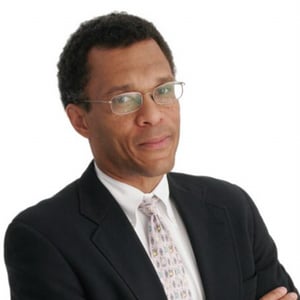
Raymond & Miriam Ehrlich Chair in US Constitutional Law, University of Florida Levin College of Law
Tracey Maclin is Professor of Law and Raymond & Miriam Ehrlich Eminent Scholar Chair. Prior to joining the University of Florida faculty, he was a professor of law and Joseph Lipsitt Faculty Research Scholar at Boston University School of Law. He has also taught at Cornell Law School, Harvard Law School and the University of Kentucky College of Law. Before entering law teaching, Professor Maclin served as a law clerk to Judge Boyce F. Martin, Jr. of the United States Court of Appeals for the Sixth Circuit and worked at Cahill, Gordon & Reindel.
Professor Maclin teaches courses in Constitutional Law and Constitutional Criminal Procedure. He also teaches a seminar on the Supreme Court’s cases in criminal procedure, criminal law, habeas corpus and the death penalty. His scholarship focuses on the Fourth Amendment and the Self-Incrimination Clause of the Fifth Amendment. He has published many law review articles and book chapters on constitutional criminal procedure topics. He is the author of The Supreme Court and the Fourth Amendment’s Exclusionary Rule (Oxford University Press 2013). In addition to his legal scholarship, Professor Maclin has authored over a dozen amicus curiae briefs and served as counsel of record for the American Civil Liberties Union, the National Association of Criminal Defense Lawyers and the Cato Institute in Fourth Amendment cases in the United States Supreme Court.
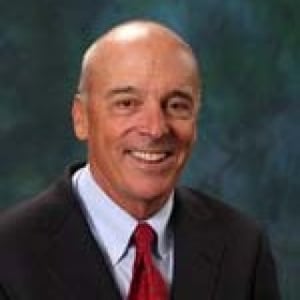
Emeritus Faculty, University of Colorado Law School
William Pizzi has been a member of the Colorado Law School faculty since 1975. He came to Colorado in 1975, after spending a few years as Assistant U.S. Attorney in New Jersey. He specializes in criminal law, with special interest in foreign criminal trial systems. Professor Pizzi's belief in the comparative study of law has compelled him to coordinate many of the law school's study abroad programs, and he recently served as a professor on the Semester-at-Sea program. Professor Pizzi has always been active in Colorado's legal community, working on the Colorado Bar Association's Ethics Committee and, most recently, serving as the reporter for the Governor's Columbine Review Commission. His task was to take the information from more than a year of meetings, testimony and interviews, and put together a cohesive report. He worked to produce the report with help from other members of the commission, while continuing his regular teaching schedule at Colorado Law School. "It was a very difficult task, because there was no model to follow. It was very much a team effort," Professor Pizzi said of the report. He was pleased with the results of the commission and said, "I'm proud of the recommendations that will help make Colorado schools safer."
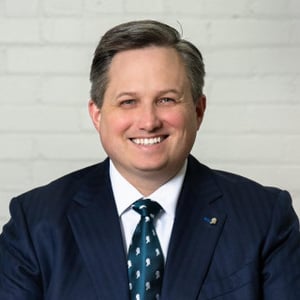
President and CEO, The Federalist Society
Sheldon Gilbert is the President and CEO of The Federalist Society. Gilbert has been involved in the conservative and libertarian legal movement since law school, and has served in prominent roles at both nonprofit organizations as well as corporate America.
A longtime constitutional litigator, Gilbert has represented clients through amicus and party briefs in nearly a hundred cases at the U.S. Supreme Court, at both the certiorari and merits stages. Most recently, Gilbert served as Senior Lead Counsel for Strategic Initiatives at Walmart, the world’s largest company, where he led teams providing legal advice related to government enforcement, internal investigations, government relations, public relations, and special projects at the center of law and policy.
Before joining Walmart, Gilbert served as Vice President for Content and Development and Senior Fellow for Constitutional Studies at the National Constitution Center, a congressionally chartered non-partisan center for constitutional education and debate, where he led both fundraising and programming efforts. While at the NCC, Gilbert helped ensure that the Center’s programming and exhibits incorporated constitutional perspectives from experts on both the right and the left, including the launch of the Center’s landmark permanent exhibit on the Civil War and the Reconstruction Amendments.
Prior to the National Constitution Center, Gilbert served as the director of the Institute for Justice’s Center for Judicial Engagement (CJE), where he educated the public about the role of the courts and the Constitution, where he frequently hosted discussions and debates on constitutional issues, and often spoke at Federalist Society lawyer and student chapters across the country.
He was also a litigator with the U.S. Chamber Litigation Center, the litigation arm of the U.S. Chamber of Commerce, where he represented the U.S. Chamber in over 400 cases in federal and state courts addressing a wide range of legal issues, from free speech to property rights.
Gilbert is a graduate of the George Washington University Law School where he helped found a first-of-its-kind National Religious Freedom Moot Court, which hosted law students from across the country to debate important, emerging religious liberty issues. After graduating from GWU, he also taught as a professorial lecturer at the school.
A graduate of the University of Utah, Gilbert is a child of the Mountain West, where he was born in a coal mining town in Utah and raised in Idaho near the Grand Tetons. Before going to law school, Gilbert’s diverse interests led him to work in a wide range of roles, from software development project management for a nonprofit, to working in his University’s radiobiology research lab, to volunteer service in Rio de Janeiro, Brazil for his church.
Gilbert is married with four children.
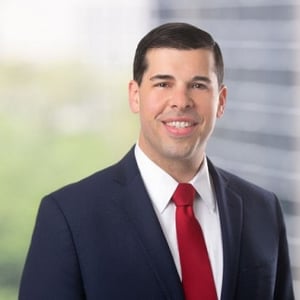
Partner, Boies Schiller Flexner LLP
Jesse, the former third-ranking official at the U.S. Department of Justice, helps clients with their most difficult litigation and regulatory issues─whether that means defending against an enforcement action, pursuing high-stakes litigation and appeals, navigating regulatory thickets at federal and state agencies, or crafting a comprehensive strategy to manage a crisis. He approaches these problems with the knowledge gained both from his broad private-practice experience and from having served at the highest levels of federal and state government.
Jesse has experience across a range of substantive and regulatory areas. He has sued the federal government and has also been one of its top law-enforcement officials; he has represented states and has also navigated their regulatory agencies on behalf of clients; and he has represented companies in business disputes, both as defendants and plaintiffs.
Before joining the firm, Jesse was the Acting Associate Attorney General at the United States Department of Justice. In that role, he oversaw the civil and criminal work of the Antitrust, Civil, Civil Rights, Environment and Natural Resources, and Tax Divisions. During Jesse’s tenure, the Associate’s office closely managed the Department’s most significant litigation, including matters involving large financial institutions, healthcare companies, automakers, energy companies, and state and local governments. In addition, Jesse served as Chair of DOJ’s Regulatory Reform Task Force and Vice Chair of DOJ’s Task Force on Market Integrity and Consumer Fraud. Jesse regularly provided legal and strategic advice to the highest-level decision makers in the federal government, including the Attorney General and Deputy Attorney General, general counsels across the spectrum of federal agencies, and White House officials.
Jesse served for three years as the secretary of Florida’s labor, economic-development, and land-use agency, the Florida Department of Economic Opportunity. Before that, he served as Governor (now Senator) Rick Scott’s general counsel.
Jesse maintains offices in both Washington D.C. and Florida. From Washington, he focuses on federal litigation and crisis management. In Florida, in addition to federal litigation, Jesse employs his knowledge of state government and regulation to help clients in courts across the state, from trial through the Florida Supreme Court.
Jesse currently serves on the Florida Supreme Court Judicial Nominating Commission, the body that provides the governor with nominees for appointment to the Florida Supreme Court. Jesse is also a fellow at the Center for the Study of the Administrative State at the Scalia Law School at George Mason University, where he writes and speaks about administrative law.
Judge, United States Court of Appeals, Sixth Circuit
Judge Readler earned his undergraduate and law degrees from the University of Michigan. After graduating, he served as a law clerk to Judge Alan Norris of the United States Court of Appeals for the Sixth Circuit. Judge Readler then began practicing law in the Columbus office of the international law firm Jones Day, eventually spending ten years as a partner in the firm’s Issues and Appeals Practice Group. While at Jones Day, Judge Readler appeared in state and federal trial and appellate courts around the country, most frequently the Supreme Court of Ohio and the Sixth Circuit. Judge Readler also successfully argued before the United States Supreme Court in McQuiggin v. Perkins on behalf of an inmate claiming actual innocence. His other pro bono representations include representing capital defendants before the Tenth Circuit and the Supreme Court of Ohio, as well as representing defendants sentenced to life in prison before the Sixth Circuit. While at Jones Day, Judge Readler traveled to Nairobi with Lawyers Without Borders to train Kenyan lawyers in prosecuting domestic violence cases, and he was also a recipient of the American Marshall Memorial Fellowship awarded by the German Marshall Fund of the United States. Following his career in private practice, Judge Readler served as Acting Assistant Attorney General for the Civil Division of the United States Department of Justice from 2017 to 2019. In that role, Judge Readler led and supervised over 1,000 lawyers in the Department’s largest litigating division, briefing and arguing several cases on behalf of the United States in federal courts across the country, including high-profile cases significant to the Administration and the Department. In March 2019, Judge Readler was confirmed to serve as a Circuit Judge on the Sixth Circuit. He resides in Columbus.
Partner, International Trade, King & Spalding LLP
Stephen P. Vaughn is a Partner in the International Trade Team of King & Spalding who works primarily on international trade litigation and policy matters. In April 2019, Stephen completed more than two years of service as the General Counsel for the Office of the United States Trade Representative (USTR). In that position, he managed a team of government attorneys representing U.S. interests in both trade negotiations and trade litigation. During two months in early 2017, Stephen also served as the acting U.S. Trade Representative. He is widely regarded as one of the world’s foremost authorities on current U.S. trade policy, as well as one of the most talented U.S. trade remedy litigators.
Arthur F. Burns Scholar in Political Economy; Director of Economic Policy Studies, American Enterprise Institute
Michael R. Strain is the director of Economic Policy Studies and the Arthur F. Burns Scholar in Political Economy at the American Enterprise Institute.
His research and writing span a wide range of areas, including labor markets, public finance, social policy, and macroeconomics. He has published several dozen articles in leading academic and policy journals. Dr. Strain is also the author of The American Dream Is Not Dead: (But Populism Could Kill It) (Templeton Press, 2020), in which he examines long-term trends in economic outcomes for typical workers and households. He is the editor or coeditor of Preserving Links in the Pandemic: Policies to Maintain Worker-Firm Attachment in the OECD (AEI Press, 2023); What Has Happened to the American Working Class Since the Great Recession? (American Academy of Political and Social Science, 2021), The US Labor Market: Questions and Challenges for Public Policy (AEI Press, 2016), and Economic Freedom and Human Flourishing: Perspectives from Political Philosophy (AEI Press, 2016). He was a member of the AEI-Brookings Working Group on Poverty and Opportunity, which published in 2015 the report Opportunity, Responsibility, and Security: A Consensus Plan for Reducing Poverty and Restoring the American Dream.
Dr. Strain is concurrently Professor of Practice in the McCourt School of Public Policy at Georgetown University. He is also a research fellow with the IZA Institute of Labor Economics in Bonn, Germany; a research affiliate with the Institute for Research on Poverty at the University of Wisconsin–Madison; and a member of the Aspen Economic Strategy Group. He has served on several committees and working groups at the intersection of academic research and economic and social policy, including for the American Academy of Arts and Sciences; the National Academy of Social Insurance, where he is an elected member; and the National Academies of Sciences, Engineering, and Medicine.
Dr. Strain also writes frequently for popular audiences, and his essays and op-eds have been published by the New York Times, the Wall Street Journal, the Washington Post, the Financial Times, Bloomberg Opinion, and National Review, among other outlets. He is a columnist for Project Syndicate.
Dr. Strain has testified before Congress and speaks often to a variety of audiences. A frequent guest on radio and television, he is regularly interviewed by broadcast networks including CNBC, MSNBC, and NPR.
As the director of Economic Policy Studies at the American Enterprise Institute (AEI), Dr. Strain oversees the Institute’s work in economic policy, financial markets, international trade and finance, tax and budget policy, welfare economics, health care policy, and related areas.
Before joining AEI, Dr. Strain worked in the Center for Economic Studies at the US Census Bureau and in the macroeconomics research group at the Federal Reserve Bank of New York. He holds a PhD in economics from Cornell University.
Senior Judge, United States District Court, District of Columbia
Judge Leon was appointed to the United States District Court in February 2002. He received his A.B. from Holy Cross College in 1971, his J.D. cum laude from Suffolk Law School in 1974, and his LL.M. from Harvard Law School in 1981. Immediately prior to his appointment to the bench, Judge Leon was engaged in private practice in Washington, D.C., as a partner in the Washington office of Baker & Hostetler (1989-1999), and Vorys, Sater, Seymour and Pease (1999-2002). Prior to and while in private practice, Judge Leon served as counsel to Congress in the investigations of three sitting Presidents. In 1987, he was the Deputy Chief Minority Counsel for the U.S. House Select “Iran-Contra” Committee. From 1992-1993, he was the Chief Minority Counsel to the U.S. House Foreign Affairs Committee’s “October Surprise” Task Force. In 1994, Judge Leon was Special Counsel to the U.S. House Banking Committee for its “Whitewater” investigation. He also served in 1997 as Special Counsel to the bipartisan U.S. House Ethics Reform Task Force. Earlier in his career, Judge Leon served at the U.S. Department of Justice in a number of positions including Deputy Assistant Attorney General in the Environment Division, Senior Trial Attorney in the Criminal Section of the Tax Division, and as a Special Assistant United States Attorney in the Southern District of New York. He also served as a Commissioner on the White House Fellows Commission and the Judicial Review Commission on Foreign Asset Control. A former full-time law professor at St. John’s Law School (1979-1983), Judge Leon is currently an adjunct law professor at the Georgetown University Law Center and the George Washington University Law School.
Raymond & Miriam Ehrlich Chair in US Constitutional Law, University of Florida Levin College of Law
Tracey Maclin is Professor of Law and Raymond & Miriam Ehrlich Eminent Scholar Chair. Prior to joining the University of Florida faculty, he was a professor of law and Joseph Lipsitt Faculty Research Scholar at Boston University School of Law. He has also taught at Cornell Law School, Harvard Law School and the University of Kentucky College of Law. Before entering law teaching, Professor Maclin served as a law clerk to Judge Boyce F. Martin, Jr. of the United States Court of Appeals for the Sixth Circuit and worked at Cahill, Gordon & Reindel.
Professor Maclin teaches courses in Constitutional Law and Constitutional Criminal Procedure. He also teaches a seminar on the Supreme Court’s cases in criminal procedure, criminal law, habeas corpus and the death penalty. His scholarship focuses on the Fourth Amendment and the Self-Incrimination Clause of the Fifth Amendment. He has published many law review articles and book chapters on constitutional criminal procedure topics. He is the author of The Supreme Court and the Fourth Amendment’s Exclusionary Rule (Oxford University Press 2013). In addition to his legal scholarship, Professor Maclin has authored over a dozen amicus curiae briefs and served as counsel of record for the American Civil Liberties Union, the National Association of Criminal Defense Lawyers and the Cato Institute in Fourth Amendment cases in the United States Supreme Court.
Emeritus Faculty, University of Colorado Law School
William Pizzi has been a member of the Colorado Law School faculty since 1975. He came to Colorado in 1975, after spending a few years as Assistant U.S. Attorney in New Jersey. He specializes in criminal law, with special interest in foreign criminal trial systems. Professor Pizzi's belief in the comparative study of law has compelled him to coordinate many of the law school's study abroad programs, and he recently served as a professor on the Semester-at-Sea program. Professor Pizzi has always been active in Colorado's legal community, working on the Colorado Bar Association's Ethics Committee and, most recently, serving as the reporter for the Governor's Columbine Review Commission. His task was to take the information from more than a year of meetings, testimony and interviews, and put together a cohesive report. He worked to produce the report with help from other members of the commission, while continuing his regular teaching schedule at Colorado Law School. "It was a very difficult task, because there was no model to follow. It was very much a team effort," Professor Pizzi said of the report. He was pleased with the results of the commission and said, "I'm proud of the recommendations that will help make Colorado schools safer."
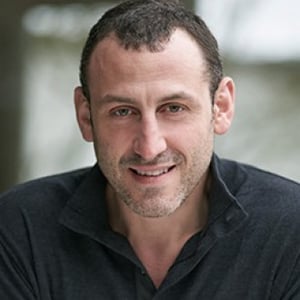
Professor of Law, Northwestern University Pritzker School of Law
Joshua Kleinfeld teaches and writes about political, legal, and moral philosophy, criminal law, and criminal procedure. He also practices law in Northwestern's Juvenile Criminal Defense Clinic. He is a full professor with tenure at the Northwestern Pritzker School of the Law and (by courtesy) in Northwestern’s philosophy department. In 2017-18, he was a visiting professor at Harvard and Stanford Law Schools. He is the recipient of the Bator Award, given annually to one American law professor under the age of 40 who has demonstrated "excellence in legal scholarship, a commitment to teaching, a concern for students, and who has made a significant public impact."
In philosophy, Kleinfeld's research focuses on the idea of "embodied ethical life," as developed in the socio-theoretic tradition of Hegel, Weber, and Durkheim. This tradition aims to understand and critique social life by bringing to light the normative ideas implicit in social practices and institutions. In law, this means that the most interesting philosophical concepts are often those reflected or actualized in legal practice – in the law as judges and lawyers think of it and wield it.
In criminal law and procedure, Kleinfeld has developed a theory known as "reconstructivism," which holds that the chief office of criminal law is not to dole out retributive justice, nor to optimize crime and cost control, but to reconstruct a violated normative order in the wake of a crime. This work, which draws on the thought of Hegel, Durkheim, Jean Hampton, and Antony Duff, develops an alternative to retributive and utilitarian theories of criminal law by focusing on the distinctive social function and sense of justice at work in the criminal system.
Kleinfeld is also involved in practical criminal justice reform. In this vein, he defends children accused of homicide in the Northwestern Juvenile Criminal Defense clinic and assists in litigation efforts meant to reform American criminal law through the courts. He has also developed a view of criminal justice reform known as "democratization," which holds that the root of the American criminal justice crisis is a set of bureaucratic attitudes, structures, and incentives divorced from the American public’s concerns and sense of justice, and that the primary solution is to make criminal justice more community-focused and responsive to lay influences. Working with others, he has developed a number of policy proposals meant to reform American criminal justice in a democratic direction.
Kleinfeld holds a JD from Yale Law School, a PhD in philosophy from the Goethe University of Frankfurt (supervised by Axel Honneth, Klaus Günther, and Rainer Forst), and a BA in philosophy from Yale College. He clerked for Judge J. Harvie Wilkinson on the United States Court of Appeals for the Fourth Circuit; Judge Janice Rogers Brown on the United States Court of Appeals for the D.C. Circuit; and President (chief justice) Aharon Barak of the Supreme Court of Israel. He worked as an Associate at Debevoise & Plimpton LLP in Frankfurt, Germany, in the area of corporate criminal law. Before law school, he worked as a Senior Research Analyst at the White House’s Council on Bioethics.

Patrick Hotung Professor of Constitutional Law, Georgetown University Law Center
Randy Barnett is the Patrick Hotung Professor of Constitutional Law at Georgetown University Law Center. He has argued before the United States Supreme Court, tried murder cases to juries as a prosecutor in Chicago, and appeared as a prosecutor in the feature film Inalienable. He is the author of numerous books, including Restoring the Lost Constitution, The Structure of Liberty, Our Republican Constitution, and The Original Meaning of the Fourteenth Amendment. He has published two memoirs, A Life for Liberty: The Making of an American Originalist, and Felony Review: Tales of True Crime and Corruption in Chicago. He is currently working on a new book, Freedom and Flourishing: Libertarianism for the Real World.

The Exercise of Federal Authority: When and to What Extent is it Constitutionally Permissible?
Milwaukee Lawyers Chapter
Milwaukee, WIDaniel Webster Debate Series: Does Free Trade Harm National Security?
Chad A. Readler, Stephen P. Vaughn, Michael Strain
The Federalist Society's Georgetown Law Chapter'sDaniel Webster Debate Series presents Daniel Webster Debate Series:Does Free...
Daniel Webster Debate Series: Does Free Trade Harm National Security?
Equity, Diversity, and Inclusivity Workshop
Colorado Lawyers Chapter
Denver, COAn Evening with Governor Ron DeSantis
New York City Lawyers Chapter
Daniel Webster Debate Series: Is It Time to Abolish the Exclusionary Rule?
Richard J. Leon, Tracey Maclin, William T. Pizzi
The Federalist Society's Georgetown Law Chapter'sDaniel Webster Debate Series presents Daniel Webster Debate Series:Is It...
Daniel Webster Debate Series: Is It Time to Abolish the Exclusionary Rule?
February Luncheon
Montgomery Lawyers Chapter
Montgomery, ALOpen Minds: Prof. Randy Barnett & Prof. Joshua Kleinfeld Part III
Joshua Kleinfeld, Randy E. Barnett
In Part Three of Open Minds with Prof. Randy Barnett and Prof. Joshua Kleinfeld, Prof....
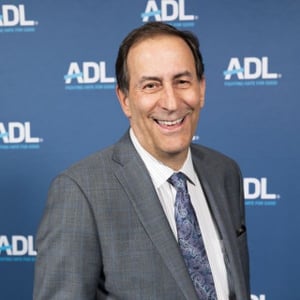
Lunch: An Introduction to Sheldon Gilbert
2025 Florida Chapters Conference
Lake Buena Vista, FL