

Managing Partner, Boyden Gray PLLC
Michael Buschbacher is the managing partner of Boyden Gray PLLC. He represents public and private companies, trade associations, non-profits, and individuals in high-stakes litigation and administrative proceedings, with a particular focus on environmental and energy matters.
In addition to trial-level work, Mr. Buschbacher maintains an active appellate practice, both as merits counsel and as counsel for amici curiae. He has written amicus briefs quoted by the Seventh and Ninth Circuits. And his Supreme Court advocacy has been cited by The New Yorker, The New York Times, and E&E News. Mr. Buschbacher’s commentary on legal issues has been published in The Wall Street Journal, Newsweek, and The American Conservative.
Before joining the firm, Mr. Buschbacher served at the U.S. Department of Justice as counsel to the Assistant Attorney General for the Environment and Natural Resources Division. There, he advised senior Department leadership, served as the lead attorney on several lawsuits, and helped draft policy memoranda for the Department on the proper scope and procedure for environmental enforcement. Prior to serving in the government, Mr. Buschbacher was an associate in the D.C. office of Sidley Austin.
Mr. Buschbacher is a former clerk to Judge Alice M. Batchelder of the U.S. Court of Appeals for the Sixth Circuit and to Magistrate Judge Paul R. Cherry of the U.S. District Court for the Northern District of Indiana.
Mr. Buschbacher holds a B.A. in Music and Germanic Studies from Indiana University and a J.D., magna cum laude, from Notre Dame Law School.

Discovery Counsel, eDiscovery CoCounsel, pllc
Suzanne H. Clark directs the Legal Project Management practice of eDiscovery CoCounsel, pllc. Suzanne graduated from the University of Florida College of Law and began her legal career as merits counsel in commercial litigation. She later transitioned to a full-time focus on Electronic Discovery and is a nationally recognized speaker and panelist in eDiscovery education.
Suzanne is a veteran of numerous document review projects, large and small, from a multi-year SEC investigation involving millions of documents in Relativity to her current practice where she concentrates on Plaintiff’s side eDiscovery, assisting merits counsel with evidence management in mass torts litigation as well as small single-event cases for personal injury firms. In furtherance of this concentration, she has earned the Mass-Tort MDL Certificate from the Bolch Judicial Institute at Duke Law.
She is a frequent lecturer at legal Project Management educational events, including the annual University of Florida eDiscovery Conference, as well as numerous others. Further, Suzanne is an Associate Professor at Samford University, Cumberland School of Law, where she teaches ESI I: Introduction to E-Discovery and ESI II: Discovery to students earning their degree in Master of Studies of Law, an Online Graduate Program.
Suzanne holds the Certified Electronic Discovery Specialist (CEDS) designation of ACEDS, a certification requiring a rigorous peer-reviewed examination in information technology, Project Management fundamentals, evidence management technology, and discovery jurisprudence. She is also a Relativity Certified User. Suzanne co-founded the regional chapter of ACEDS which was later recognized as national Chapter of the Year for its vibrancy and outreach. She served as president of ACEDS Jacksonville for two years and remains an active member of the board. She also sits on the Global Advisory Council 2020 of the Electronic Discovery Reference Model (EDRM).
In past service, for two years, Suzanne chaired the Jacksonville Bar Association's Legal Technology Committee. Prior to that, she served for two years on the Board of the Jacksonville Women Lawyers Association (JWLA).
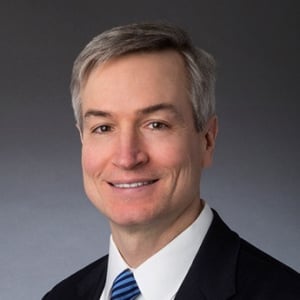
Partner, Sidley Austin LLP
Robert Keeling is an experienced litigator whose practice includes a special focus on electronic discovery matters. He represents both plaintiffs and defendants in complex civil litigation throughout the nation and conducts internal investigations in the United States and throughout the world. Robert handles a wide variety of commercial disputes in state and federal court. He is experienced in multi-district litigation, false claims act litigation, commercial litigation, securities class actions, contract disputes, RICO and fraud actions, insurance coverage litigation and many other types of cases.
Robert is a co-chair of the firm’s E-Discovery Task Force. Robert is experienced with technology-assisted review, predictive coding and other applications that can enable clients to significantly reduce e-discovery costs while maintaining the defensibility of the review.
Robert also has substantial experience conducting investigations both, in the United States and abroad. He has represented numerous clients in international investigations with respect to the Foreign Corrupt Practices Act, and advises companies on the implementation of effective compliance programs related to the FCPA. Robert also has handled internal investigations involving allegations of healthcare fraud and abuse, embezzlement, accounting irregularities and violations of securities and banking regulations.
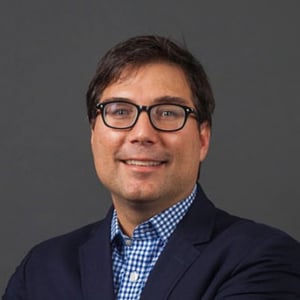
Associate Professor of Law and Director, Program on Economics & Privacy, Antonin Scalia Law School, George Mason University
Associate Professor of Law James C. Cooper brings over a decade of public and private sector experience to his research and teaching. He served as Deputy and Acting Director of the Federal Trade Commission’s Office of Policy Planning, Advisor to Federal Trade Commissioner William Kovacic, and an associate in the antitrust group of Crowell and Moring, LLP. His research on vertical restraints, price discrimination, behavioral economics and antitrust, and privacy policy have appeared in top journals and are widely cited.
Professor Cooper has a BA from the University of South Carolina, received his PhD in economics from Emory University, and his law degree (magna cum laude) from Antonin Scalia Law School, George Mason University, where he was a Levy Fellow and a member of the George Mason Law Review.
He teaches Economics for Lawyers, Advanced Seminar on Law & Economics, and Digital Information Policy Seminar.

Partner, Gibson, Dunn & Crutcher, LLP
Svetlana S. Gans is a partner in the Washington, D.C. office of Gibson, Dunn & Crutcher, LLP where she helps clients navigate complex consumer protection, privacy, and competition related regulatory proceedings before the U.S. Federal Trade Commission (FTC), , U.S. Department of Justice Antitrust Division, State Attorneys General and other enforcement bodies. Ms. Gans also assists on litigation matters and provides strategic counseling and advice related to public policy issues.
Before joining Gibson Dunn, she served as the Vice President & Associate General Counsel at NCTA, the Internet & Television Association, where she helped lead the association’s consumer protection and competition policy work. Prior to joining NCTA, Ms. Gans served with distinction as Chief of Staff to Acting Chairman Maureen K. Ohlhausen at the FTC. As the agency chief of staff, Ms. Gans managed and oversaw agency operations, including bureau and office heads reporting to the Chairman, a seven-member office staff, and an agency budget of over $300 million. She also served as the Acting Chairman’s key advisor on consumer protection and competition investigations and litigation, working with a diverse team of attorneys and economists to preserve competition and protect U.S. consumers. She created, executed, and oversaw several strategic initiatives for the agency, including the agency process reform, regulatory reform, and data security transparency initiatives. Previously, Ms. Gans had the unique experience of serving in both litigating bureaus of the FTC: the Bureau of Competition and the Bureau of Consumer Protection.
Prior to her time in government, Ms. Gans worked as an antitrust associate at major law firms. Her practice focused on defending consumer product, financial services, and trade association clients in regulatory and private investigations alleging conspiracy and violations of antitrust and consumer protection laws.
Ms. Gans has been an active leader in the ABA Antitrust Law Section (“Section”) for two decades, and currently serves as the Section’s Marketing Officer. Ms. Gans helped create the Section’s Young Lawyer Representative Program, now in its 10th year, and the Section’s Law Ambassador Program, each aimed at developing and promoting the next generation of consumer protection and competition attorneys. Ms. Gans is also active in the Federal Communications Bar Association, currently serving as Co-Chair of the Diversity Pipeline Initiative and the Women’s Leadership Committee.
Ms. Gans received her law degree with high honors from the University of Denver College of Law. During law school, Ms. Gans served as a Judicial Intern to the Honorable John L. Kane, Jr. and as an Honors Program Paralegal for the United States Department of Justice Antitrust Division, Merger Taskforce. Ms. Gans earned her undergraduate degree cum laude from Boston University.
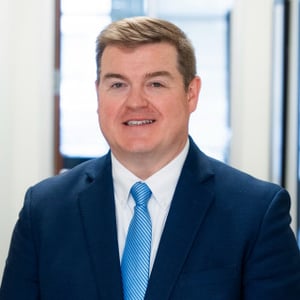
Vice President, Networks, The Federalist Society for Law and Public Policy Studies
Nathan Kaczmarek is Vice President for Networks at the Federalist Society. He began his legal career in Detroit representing nationwide clients in all phases of healthcare litigation and complex medical malpractice claims. He has since served as a Senior Legal and Policy Advisor in the U.S. House of Representatives and as Counsel for the Subcommittee on Regulatory Affairs and Federal Management in the U.S. Senate. Prior to overseeing the Networks, he was Director of the Practice Groups, the Regulatory Transparency Project, and the Article I Initiative for the Federalist Society.
Nathan holds degrees from Hillsdale College and Thomas M. Cooley Law School. He is a Liaison Representative for The Administrative Conference of the United States. He also serves as Vice President of the Associates of St. John Bosco, a Virginia based non-profit dedicated to Catholic high school and college students.

Partner, Kelly, Drye & Warren LLP
Bill MacLeod chairs the Antitrust and Competition practice group at Kelly, Drye & Warren LLP. The Immediate Past Chair of the Antitrust Section of the American Bar Association, Bill is a former bureau director at the U.S. Federal Trade Commission (FTC). He offers his clients decades of experience in competition law, trade regulation, advertising, privacy and security issues, from both an agency and business perspective. Bill represents some of the most prominent drivers of innovation and industry today, from new ventures to multi-national corporations.
Bill guides companies through investigations, approvals and the sophisticated challenges associated with mergers and acquisitions. He has obtained FTC and United States Department of Justice Antitrust Division clearance of numerous acquisitions and joint ventures in a range of industries, including medical devices, grocery products, defense contracting and steel manufacturing. Bill also has helped clients protect themselves from threat of consolidation.
Bill has been involved in the resolution of major initiatives with notable and high-profile results. He served as special counsel for a government investigation of one of the world’s largest and most complex manufacturing industry mergers. He obtained one of the largest judgments ever awarded in an advertising and antitrust case, and successfully defended a major marketer in the FTC’s first trial under the modern unfairness doctrine. Bill was involved in settling the FTC’s first preliminary injunction action in an ad-substantiation case. He has also handled large-scale investigations of privacy and data security practices, litigated a multi-district Sherman Act case over online pricing, and resolved a myriad of price discrimination claims.
In addition, Bill counsels and defends companies and trade associations on pricing, advertising, distribution, intellectual property licensing and competitor relations. In his work with trade associations and their members, he has resolutely fought onerous regulations and advocated sensible, viable policies on competition, biotechnology, health and privacy. In his work on privacy and security, Bill defended the practices of major household-name retailers, manufacturers and financial services companies. Bill also represents companies in advertising, antitrust and intellectual property disputes before the state and federal courts, the FTC and the National Advertising Division of the Council of Better Business Bureaus.
Over the last years, Bill was named the Washington, D.C. Advertising “Lawyer of the Year” by Best Lawyers®, and has been included in The Best Lawyers in America© (Woodword/White, Inc.), The Legal 500 U.S., and among Washington, D.C.’s Super Lawyers. Bill’s clients appreciate his demonstrated skill in translating legal esoterica into functional and useful business advice. Bill is highly valued for his perseverance and ability to produce tangible results and first-rate work product. Bill consistently delivers the requisite experience and intellect needed to assist his clients in achieving their goals. Clients and colleagues alike appreciate Bill’s encyclopedic knowledge of antitrust and consumer protection law.
Bill previously served as director of the FTC’s Bureau of Consumer Protection, which is the chief federal bureau prosecuting unfair and deceptive advertising. In this position, he served as the U.S. delegate to the Organization for Economic Cooperation and Development, where agency heads of Europe, Australia and Japan develop policies for financial regulations, product safety and international advertising. Bill also held such positions as advisor to the assistant attorney general of the U.S. Department of Justice’s Antitrust Division; director of the FTC’s Chicago regional office; and attorney advisor to the FTC chairman.
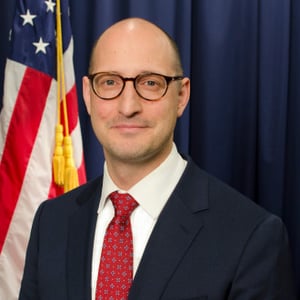
Partner, Cravath, Swaine & Moore LLP
Noah Joshua Phillips is Co-Chair of the Antitrust Practice and previously served as a Commissioner of the Federal Trade Commission. He advises clients on a range of antitrust issues, including mergers and acquisitions, business conduct and compliance, litigation and investigations, and data security and privacy.
On the FTC, Mr. Phillips played an integral role in precedent setting enforcement actions and regulatory efforts concerning antitrust, consumer protection and privacy. He decided dozens of merger and other antitrust enforcement matters across the economy, including in the consumer product, defense, energy, entertainment, healthcare, technology, pharmaceutical and retail industries. Mr. Phillips’ written antitrust opinions were consistently upheld by federal appellate courts.
As Commissioner, Mr. Phillips frequently testified before Congress and represented the FTC before international bodies, including the G7, the Competition Committee of the Organisation for Economic Co-operation and Development, and the International Conference of Data Protection and Privacy Commissioners. He speaks and writes frequently on a range of antitrust, consumer protection and privacy issues.
Prior to the FTC, Mr. Phillips served as Chief Counsel to U.S. Senator John Cornyn, of Texas, on the Senate Judiciary Committee. He advised Senator Cornyn on a variety of legal and policy issues, as well as judicial nominations.
Mr. Phillips received an A.B. magna cum laude from Dartmouth College in 2000 and a J.D. from Stanford Law School in 2005. He began his career at a New York-based investment bank. After law school, Mr. Phillips clerked for Hon. Edward C. Prado of the U.S. Court of Appeals for the Fifth Circuit and joined Cravath’s Litigation Department in 2006. He left the Firm in 2010, and he rejoined Cravath as a partner in December 2022.

Founding Partner, Lodestar Law and Economics PLLC
Josh is the founder of Lodestar Law and Economics, PLLC. On January 1, 2013, the U.S. Senate unanimously confirmed Wright as a Commissioner of the Federal Trade Commission (FTC). He is a leading scholar in antitrust law, economics, intellectual property, regulation, and consumer protection, and has published more than 100 articles and book chapters, co-authored a leading antitrust casebook, and edited several book volumes focusing on these issues. Commentators have recognized Wright as “widely considered his generation’s greatest mind on antitrust law,” and his academic work ranks him as one of the most cited antitrust academics in the world. Wright was also awarded the Paul M. Bator Award by the Federalist Society in 2014 to “an academic who demonstrated excellence in legal scholarship, a commitment to teaching, a concern for students, and who has made a significant public impact.” Wright also served as the Executive Director of the Global Antitrust Institute, the world’s premiere academic institute focused upon antitrust education for judges and regulators and has taught hundreds of judges and thousands of regulators from dozens of countries.
Wright’s practice focuses upon helping clients solve complex competition, consumer protection, and regulatory problems by providing legal and economic analysis, strategic advice and counseling, and economic expert testimony.

Professor of Law and Co-Director, Racial Justice Project, New York Law School
Penelope Andrews joined NYLS in January 2019 and teaches comparative and international law courses. She also serves as Co-Director of NYLS’s Racial Justice Project, focusing on international and South African issues.
Professor Andrews was the 2018–19 Sabbatical Scholar at the Center for the Study of Law and Culture at Columbia Law School. She previously completed two terms as Dean: From 2016 to 2018 as the first Black dean at the University of Cape Town Faculty of Law, and from 2012 to 2015 as the first female dean of Albany Law School in New York. She was previously the Associate Dean for Academic Affairs at the City University of New York (CUNY) School of Law and Director of International Programs at Valparaiso Law School.
She began her teaching career at La Trobe University in Melbourne, Australia, where she taught for eight years before moving to CUNY, where she was on the faculty for 15 years, teaching public international law, gender and law, race and law, comparative law, torts, and lawyering. She has also held visiting appointments at several law schools in the U.S. and internationally, including in South Africa, Canada and Australia. Professor Andrews received her B.A. and. LL.B. degrees from the University of KwaZulu-Natal (formerly University of Natal) in South Africa and an LL.M. from Columbia Law School.
Professor Andrews is active in international collaborative research and mentoring networks and is particularly committed to ensuring the relevance of law and society scholarship to academic communities in the global south and global north. She is an editor of the International Journal of Law in Context, the Human Rights and the Global Economy E-Journal, and the African Law E-Journal.
She has also published several books and articles that focus on comparative constitutional law, gender and racial equality, human rights—particularly the tension between respect for indigenous law and implementing broader human rights norms—the judiciary, and legal education. Her book From Cape Town to Kabul: Rethinking Strategies for Pursuing Women’s Human Rights was published in 2012. She publishes regularly in the popular media and on social media, focusing on issues of race, poverty, legal education, public interest litigation, and the ongoing challenges of transforming an economically unequal and racially divided society.
Professor Andrews’s focus on the judiciary in South Africa seeks to bridge the divide between theory and practice. She is a trainer for the Judicial Institute for Africa, focusing on opinion writing and communications skills for new and experienced judges. She also served as an Acting Judge of the North Gauteng High Court in Pretoria for the 2018 third term, presiding over criminal appeals, motion court, and civil trials. She has served as an arbitrator in hearings on racial discrimination in South Africa.
She has served on significant law school committees and the boards of public interest and human rights organizations, including the Africa Section of Human Rights Watch, South Africa Partners, the Legal Resources Center, and the National Center for Law and Economic Justice. Professor Andrews has received many awards for her work, including, in 2015, the National Bar Association’s International Award for her global human rights advocacy. In recognition of her human rights work, the University of KwaZulu-Natal provides an annual award in her name.
She will start her two-year term as the President of the Law and Society Association in June 2019.

Shareholder, Littler Mendelson PC
Matthew J. Hank practices employment law, including issues arising under the common law and various statutes:
He particularly focuses on disputes concerning (1) wage and hour class actions (including cases involving independent contractor relationships, overtime claims, and payroll debit cards) and (2) noncompetition agreements and trade secrets.
Matthew served as a law clerk to the Hon. Daniel Manion of the U.S. Court of Appeals for the Seventh Circuit and the Hon. Paul V. Gadola of the U.S. District Court for the Eastern District of Michigan. Before attending law school, he served for four years on active duty in the United States Army as an Armor officer.

Attorney, Allen Harris Law
Samantha Harris is a nationally recognized attorney advising students and faculty on issues of campus due process, Title IX, free speech, and academic freedom. Drawing on more than 15 years at the Foundation for Individual Rights in Education (FIRE), where she served as Vice President for Policy Research, she guides students, faculty, administrators, and attorneys through complex disciplinary and constitutional issues involving free speech, fair hearings, and faculty-student rights.
A graduate of Princeton University and the University of Pennsylvania Law School (Articles Editor, Journal of Constitutional Law), Samantha clerked for the Hon. Jay C. Waldman in the U.S. District Court for the Eastern District of Pennsylvania and began her legal career at Pepper Hamilton LLP. At FIRE, she led efforts to reform campus policies and defended individuals in high-profile Title IX and free speech disputes.
Now at Allen Harris PLLC, a firm focused on Title IX and campus defense, Samantha represents students and professors in investigations, hearings, appeals, and related litigation. Samantha’s practice emphasizes strategic advocacy in campus disciplinary systems and litigation-ready defense in federal court. Her blend of policy experience, legal skill, and media visibility positions her as a leading resource for issues at the intersection of education law and constitutional rights.
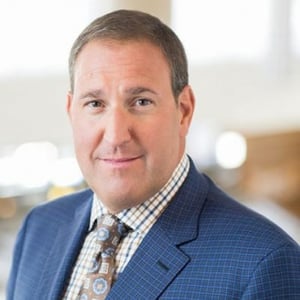
Mr. Sokolow is the Chair of TNG (TNG, LLC), a national multidisciplinary risk management consulting and law firm with more than 3,000 education-sector clients, 35 executive and support employees, and a roster of 25 attorneys and consultants who are at the forefront of the field in their areas of expertise. He also serves as President of ATIXA, the Association of Title IX Administrators, the leading industry association for Title IX compliance, with over 3,600 active school and college members. Mr. Sokolow has been interviewed on CNN, and has been featured in Newsweek, TIME Magazine, The Wall Street Journal, ABC News, The Chronicle of Higher Education, USA Today, The Boston Globe, and many other media outlets. Mr. Sokolow is a graduate of the College of William and Mary and the Villanova School of Law.
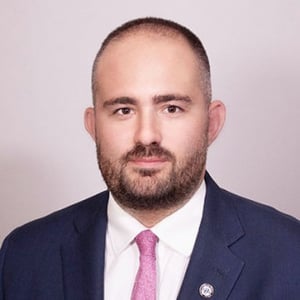
Litigator, Schnader Harrison Segal & Lewis
Mr. Struwe is currently a litigator at Schnader Harrison Segal & Lewis. Previously, Mr. Struwe served as a Captain in the U.S. Army JAG Corps as a Special Victim Prosecutor, where he was responsible for prosecuting rape and sexual assault allegations. Mr. Struwe frequently writes on due process considerations in both military justice and Title IX proceedings.
Shareholder, Littler Mendelson PC
Matthew J. Hank practices employment law, including issues arising under the common law and various statutes:
He particularly focuses on disputes concerning (1) wage and hour class actions (including cases involving independent contractor relationships, overtime claims, and payroll debit cards) and (2) noncompetition agreements and trade secrets.
Matthew served as a law clerk to the Hon. Daniel Manion of the U.S. Court of Appeals for the Seventh Circuit and the Hon. Paul V. Gadola of the U.S. District Court for the Eastern District of Michigan. Before attending law school, he served for four years on active duty in the United States Army as an Armor officer.
Attorney, Allen Harris Law
Samantha Harris is a nationally recognized attorney advising students and faculty on issues of campus due process, Title IX, free speech, and academic freedom. Drawing on more than 15 years at the Foundation for Individual Rights in Education (FIRE), where she served as Vice President for Policy Research, she guides students, faculty, administrators, and attorneys through complex disciplinary and constitutional issues involving free speech, fair hearings, and faculty-student rights.
A graduate of Princeton University and the University of Pennsylvania Law School (Articles Editor, Journal of Constitutional Law), Samantha clerked for the Hon. Jay C. Waldman in the U.S. District Court for the Eastern District of Pennsylvania and began her legal career at Pepper Hamilton LLP. At FIRE, she led efforts to reform campus policies and defended individuals in high-profile Title IX and free speech disputes.
Now at Allen Harris PLLC, a firm focused on Title IX and campus defense, Samantha represents students and professors in investigations, hearings, appeals, and related litigation. Samantha’s practice emphasizes strategic advocacy in campus disciplinary systems and litigation-ready defense in federal court. Her blend of policy experience, legal skill, and media visibility positions her as a leading resource for issues at the intersection of education law and constitutional rights.
Mr. Sokolow is the Chair of TNG (TNG, LLC), a national multidisciplinary risk management consulting and law firm with more than 3,000 education-sector clients, 35 executive and support employees, and a roster of 25 attorneys and consultants who are at the forefront of the field in their areas of expertise. He also serves as President of ATIXA, the Association of Title IX Administrators, the leading industry association for Title IX compliance, with over 3,600 active school and college members. Mr. Sokolow has been interviewed on CNN, and has been featured in Newsweek, TIME Magazine, The Wall Street Journal, ABC News, The Chronicle of Higher Education, USA Today, The Boston Globe, and many other media outlets. Mr. Sokolow is a graduate of the College of William and Mary and the Villanova School of Law.
Litigator, Schnader Harrison Segal & Lewis
Mr. Struwe is currently a litigator at Schnader Harrison Segal & Lewis. Previously, Mr. Struwe served as a Captain in the U.S. Army JAG Corps as a Special Victim Prosecutor, where he was responsible for prosecuting rape and sexual assault allegations. Mr. Struwe frequently writes on due process considerations in both military justice and Title IX proceedings.
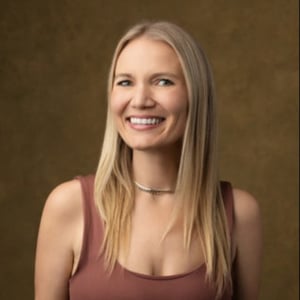
Constitutional Scholarship Director and Senior Legal Analyst, Pacific Legal Foundation
Anastasia Boden is Director of Constitutional Scholarship at Pacific Legal Foundation, where she leads the organization’s Supreme Court commentary and directs scholarly analysis in support of the firm’s litigation. She has represented entrepreneurs and small businesses nationwide in challenges to onerous licensing regimes, anti-competitive titling restrictions, Certificate of Need (“competitor’s veto”) laws, and other forms of unnecessary red tape that block economic opportunity.
Prior to this role, Anastasia developed nearly a dozen constitutional challenges to Certificate of Need laws across the country, helping spur legislative reform in Montana, Pennsylvania, and West Virginia. Her victories include a ruling invalidating Houston’s busking restrictions, multiple appellate decisions expanding access to the courts for civil rights plaintiffs, and the legislative repeal of Virginia’s happy-hour advertising ban.
Her writings on law and liberty have been featured in USA Today, The Washington Post, The Wall Street Journal, the Los Angeles Times, the Chicago Tribune, Forbes, and more, and she has appeared on Headline News, CBS News, Fox News, ReasonTV, Newsmax, and John Stossel. In 2020, she was featured on Libertarian Party presidential candidate Jo Jorgensen’s Supreme Court shortlist.
Anastasia earned her BA with dean’s honors from the University of California, Santa Barbara, and her JD from Georgetown University Law Center, where she was research assistant to Professor Randy E. Barnett—the “intellectual godfather” of the constitutional challenge to Obamacare. She is the co-creator of the podcast Dissed, about infamous Supreme Court dissents. She authors the biweekly newsletter SCOTUS Scoop and the column, “In Dissent” for SCOTUSblog.
Constitutional Scholarship Director and Senior Legal Analyst, Pacific Legal Foundation
Anastasia Boden is Director of Constitutional Scholarship at Pacific Legal Foundation, where she leads the organization’s Supreme Court commentary and directs scholarly analysis in support of the firm’s litigation. She has represented entrepreneurs and small businesses nationwide in challenges to onerous licensing regimes, anti-competitive titling restrictions, Certificate of Need (“competitor’s veto”) laws, and other forms of unnecessary red tape that block economic opportunity.
Prior to this role, Anastasia developed nearly a dozen constitutional challenges to Certificate of Need laws across the country, helping spur legislative reform in Montana, Pennsylvania, and West Virginia. Her victories include a ruling invalidating Houston’s busking restrictions, multiple appellate decisions expanding access to the courts for civil rights plaintiffs, and the legislative repeal of Virginia’s happy-hour advertising ban.
Her writings on law and liberty have been featured in USA Today, The Washington Post, The Wall Street Journal, the Los Angeles Times, the Chicago Tribune, Forbes, and more, and she has appeared on Headline News, CBS News, Fox News, ReasonTV, Newsmax, and John Stossel. In 2020, she was featured on Libertarian Party presidential candidate Jo Jorgensen’s Supreme Court shortlist.
Anastasia earned her BA with dean’s honors from the University of California, Santa Barbara, and her JD from Georgetown University Law Center, where she was research assistant to Professor Randy E. Barnett—the “intellectual godfather” of the constitutional challenge to Obamacare. She is the co-creator of the podcast Dissed, about infamous Supreme Court dissents. She authors the biweekly newsletter SCOTUS Scoop and the column, “In Dissent” for SCOTUSblog.

Senior Attorney, Institute for Justice
Michael Bindas is a senior attorney with the Institute for Justice (IJ) and leads IJ’s educational choice team. In this role, he oversees a talented group of IJ attorneys who help policymakers design constitutionally defensible educational choice programs and who defend educational choice programs in courtrooms nationwide. He joined IJ in 2005.
Michael was part of IJ’s litigation team in Espinoza v. Montana Department of Revenue, in which the U.S. Supreme Court held the exclusion of religious options from Montana’s educational choice program unconstitutional, and he led IJ’s defense of the Choice Scholarship Program for elementary and secondary students in Douglas County, Colorado. He also successfully challenged Washington’s denial of special education services to children in religious schools, as well as the state’s exclusion of sectarian options from its state work study program. Currently, he leads IJ’s team in Carson v. Makin, challenging Maine’s exclusion of religious options from its educational choice program.
Prior to leading IJ’s educational choice team, Michael litigated extensively to secure economic liberty, property rights, and freedom of speech throughout the nation. He was counsel of record at the U.S. Supreme Court for Kimbrough Fine Wine & Spirits in Tennessee Wine and Spirits Retailers Association v. Thomas, a successful challenge to Tennessee’s durational residency requirements for retail liquor licenses. He also led successful challenges to the municipal sign codes of St. Louis, Mo. and Norfolk, Va., after those cities attempted to silence protests of their abusive eminent domain practices.
Prior to joining IJ, Michael spent three years as an attorney with Perkins Coie LLP. He is a former law clerk to Judge Rhesa Hawkins Barksdale of the U.S. Court of Appeals for the Fifth Circuit and served as an engineer officer in the United States Army and Pennsylvania Army National Guard before beginning his legal career.
Michael received his law degree cum laude from the University of Pennsylvania Law School in 2001, where he served as Articles Editor for the Journal of Constitutional Law and was elected to the Order of the Coif. He received his undergraduate degree from the United States Military Academy at West Point in 1995.
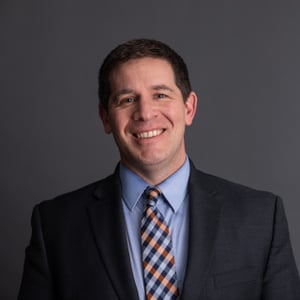
Vice President for Legal Strategy, Stand Together
Casey Mattox is Vice President for Legal Strategy at Stand Together and Senior Advisor at
Americans for Prosperity. In these roles he advocates for and creates strategies and
partnerships to ensure a constitutionally limited government that protects the civil liberties of all
Americans. Prior to joining Stand Together and AFP Casey’s legal career focused on defending
the First Amendment rights of students, faculty, healthcare workers and religious organizations.
Casey has a J.D. from Boston College School of Law and an undergraduate degree from the
University of Virginia. You can find him on Twitter at @CaseyMattox_ and on LinkedIn at
@Casey-Mattox-ST.

Associate, Wiley Rein LLP
Krystal represents and advises clients in a variety of complex litigation and appellate matters in state and federal courts. She has served in legal capacities in both public and private entities, including the U.S. Department of Justice and federal trial and appellate courts, and has extensive litigation experience ranging from pre-complaint investigations and discovery disputes to critical motions practice, trial preparation, and appeals. Krystal specializes in providing creative litigation solutions to give her clients a strategic advantage, both in and out of the courtroom.
Her experience spans a wide variety of practice areas, including government contracts, intellectual property, environment and product regulation, telecommunications, health care, as well as election law and government ethics. Krystal’s appellate work, including before the U.S. Supreme Court, has focused on significant First Amendment issues.
Krystal served as a law clerk for the Honorable Mark S. Davis on the U.S. District Court for the Eastern District of Virginia (the “Rocket Docket”). In addition, she served as a law clerk for the Honorable Alice M. Batchelder on the U.S. Court of Appeals for the Sixth Circuit.
Krystal also maintains an active pro bono practice, and for two consecutive years has won firm awards for her contributions. Most recently, she briefed and argued a multi-issue appeal of a trial verdict in the Ninth Circuit, and successfully obtained remand from the Board of Immigration Appeals after her client was denied protection under the U.N. Convention Against Torture.
Chief Legal Officer & General Counsel, Americans United for Life
Steven H. Aden serves as Chief Legal Officer & General Counsel at Americans United for Life. Aden joined Americans United for Life in August 2017, overseeing all legal operations of America’s most effective pro-life organization. Aden is a highly experienced litigator, having appeared in court against Planned Parenthood and the abortion industry dozens of times and appointed by the attorneys general of six states to defend prolife laws. Mr. Aden secured court victories that upheld an Arizona law that resulted in six abortion businesses ceasing to offer abortion, applied Missouri’s abortion laws to chemical abortion and upheld the right of Louisiana regulators to shut down dangerous abortion facilities. A prolific author and analyst on sanctity of life issues and constitutional jurisprudence, Aden is admitted to the bars of the District of Columbia, Virginia, and Hawaii (inactive), and is a member of the bars of the U.S. Supreme Court and numerous federal circuit and district courts. He has practiced law since 1990 and earned his J.D. (cum laude) from Georgetown University Law Center and his B.A. from the University of Hawaii.

The Problems of Preservation: How Much Evidence is Too Much?
TeleforumIs Social Justice Just? The Moral Obligations of Social Justice [POLICYbrief]
Penelope Andrews
Social justice is a disputed concept in law and philosophy. In this episode of POLICYbrief,...
Deep Dive Episode 120 – FTC Rulemaking: Underutilized Tool or National Nanny Renewed?
A Regulatory Transparency Project Webinar
DEBATE: Were the New Title IX Regulations Needed? Will They Result in Fairer Disciplinary Proceedings?
Matthew J. Hank, Samantha Harris, Brett Sokolow, David Struwe
The Philadelphia Lawyers Chapter of the Federalist Society held a virtual debate between Samantha K....
DEBATE: Were the New Title IX Regulations Needed? Will They Result in Fairer Disciplinary Proceedings?
Matthew J. Hank, Samantha Harris, Brett Sokolow, David Struwe
The Philadelphia Lawyers Chapter of the Federalist Society held a virtual debate between Samantha K....
State Court Docket Watch: Jackson v. Raffensberger
Anastasia P. Boden
A Georgia trial court recently held that the state constitution “does not recognize a right...
State Court Docket Watch: Ladd v. Real Estate Commission
Anastasia P. Boden
In Ladd v. Real Estate Commission,[1] the plaintiff Sarah Ladd was an entrepreneur who used...
Courthouse Steps Decision Teleforum: Espinoza v. Montana Department of Revenue
Michael Bindas
On June 30, the Supreme Court released its decision in the case of Espinoza v....
Courthouse Steps Decision: USAID v. Alliance for Open Society International, Inc.
Casey Mattox, Krystal Brunner Swendsboe
On Monday, the Supreme Court released its decision in United States Agency for International Development...
Courthouse Steps Decision Teleforum: June Medical Services LLC v. Russo
Steven H. Aden
On June 29, 2020, the Supreme Court issued its first major abortion decision on the...