
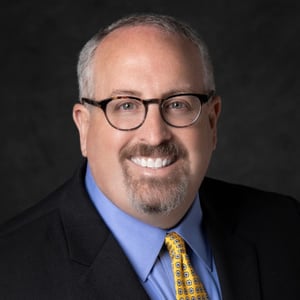
Partner/Member, Hinkle Law Firm
Brad Schlozman is a partner at Hinkle Law Firm in Wichita, KS, where his practice is primarily concentrated on Employee Benefits/ERISA law, as well as government investigations. In his employee benefits work, Brad represents plans, employers, third-party administrators, record-keepers, investment advisors, financial institutions, insurance brokers, and various fiduciaries, helping them to achieve and maintain compliance with the array of laws, regulations, and guidance governing qualified and welfare benefit issues. In his government investigations practice, Brad represents states, municipalities, and law enforcement organizations around the country that are being investigated by the U.S. Department of Justice and state regulatory agencies on various civil rights issues. Representations typically cover voting rights issues, disability matters, as well as a range of policing and law enforcement issues.
Prior to joining the firm, Brad held a series of high-level posts in the Department of Justice, including United States Attorney for the Western District of Missouri, Acting Assistant Attorney General of the Civil Rights Division, and Counsel to the Deputy Attorney General.
Brad graduated from the University of Pennsylvania and received his juris doctor from the George Washington University Law School. After law school, Brad completed a two-year federal judicial clerkship with Chief U.S. District Judge G. Thomas VanBebber of the District of Kansas. He then clerked for an additional year for U.S. Circuit Judge Mary Beck Briscoe of the U.S. Court of Appeals for the Tenth Circuit.
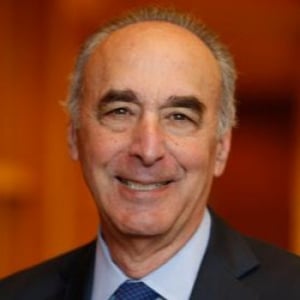
David and Mary Harrison Distinguished Professor of Law, University of Virginia School of Law
Kenneth Abraham is one of the nation’s leading scholars and teachers in the fields of torts and insurance law. He is a fellow of the American Academy of Arts and Sciences and a life member of the American Law Institute. For 20 years he served on the Council of the ALI — the board of lawyers, judges and academics that governs the Institute. He is also an adviser to the ALI’s Restatement of Torts (Third) and Restatement of the Law of Liability Insurance. He has served on a number of other boards and commissions concerned with tort law and insurance reform.
Abraham is a recipient of the All-University of Virginia Outstanding Teacher Award, the Distinguished Faculty Achievement Certificate from the State Council of Higher Education for Virginia for "outstanding achievement in teaching, research and public service,” and the American Bar Association's Robert B. McKay Law Professor Award, given for "outstanding contributions to tort and insurance law." He has been a visiting professor at Harvard Law School and Case Western Reserve Law School.
Abraham is the author of more than 60 law review articles and five books. His first book, "Distributing Risk: Insurance, Legal Theory, and Public Policy" (1986), brought modern legal theory to the study of insurance law. His torts treatise, "The Forms and Functions of Tort Law" (5th ed. 2017), has become a basic text for first-year law students across the country. And his casebook, "Insurance Law and Regulation" (6th ed. 2015) has been used as the principal text in courses on insurance law in more than 100 American law schools.
Abraham has been a consulting counsel and an expert witness in a variety of major insurance coverage cases, involving commercial general liability, directors and officers liability, environmental cleanup liability, toxic tort and products liability, and property insurance claims. He has also served as an arbitrator for the Dalkon Shield Claimants Trust, resolving over 100 claims by women seeking damages for injuries caused by the Dalkon Shield intrauterine device, both in the United States and Europe.
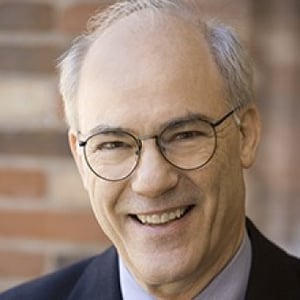
Walter E. Meyer Professor Emeritus of Property and Urban Law and Professorial Lecturer in Law, Yale Law School
Robert C. Ellickson was appointed Walter E. Meyer Professor of Property and Urban Law at Yale Law School in 1988. He has published numerous articles in legal and public policy journals on topics such as land use and housing policy, land tenure systems, social norms, homelessness, and the organization of households, community associations, and cities. Professor Ellickson’s books include Order Without Law: How Neighbors Settle Disputes (1991) (awarded the Order of the Coif Triennial Book Award in 1996), The Household: Informal Order Around the Hearth (2008), Land Use Controls: Cases and Materials (4th edition 2013, with Vicki Been, Roderick M. Hills, Jr. and Christopher Serkin), and Perspectives on Property Law (4th edition 2014, with Carol M. Rose and Henry E. Smith). He has written about ancient systems of land tenure and also periodically teaches a seminar on the history of development of the City of New Haven. Robert Ellickson was a member of the USC Law Faculty in 1970–1981, and the Stanford Law Faculty in 1981–88. He also has been a visiting professor at the Harvard and University of Chicago Law Schools. He was a founding member and later a director of the American Law and Economics Association, and served as its President in 2000–01. In 2016, the Association awarded him the Ronald H. Coase Medal in recognition of his scholarly contributions. Professor Ellickson served as an adviser during the American Law Institute’s preparation of the Restatement, Third, Property—Servitudes, and currently serves in the same capacity for the Restatement (Fourth) of Property. He is a fellow of the American Academy of Arts and Sciences, and, in 2008, received the William & Mary Law School’s Brigham-Kanner Property Rights Prize for Property Scholarship. At Yale Law School he has served as Deputy Dean (1991–92) and, during the reconstruction of the Sterling Law buildings, as chairman of the Building Committee. Prior to entering teaching in 1970, he worked for a Presidential commission on housing policy and then for Levitt & Sons, the homebuilding firm. Professor Ellickson is married to Lynn Hammer and has two children. For many decades he competed in competitive Scrabble tournaments and, during intervals when fortune smiled, was ranked as one of the top 20 players in the United States.
Former Executive Vice President of Academics, Atlas Network
Leonard P. Liggio was the Executive Vice President of Academics at the Atlas Network for the last two decades of his life. He was born July 5, 1933 and died Oct. 14, 2014, at the age of 81.
Leonard’s career advancing liberty spanned seven decades, during which time he served as the President of the Mont Pelerin Society, the Philadelphia Society, and the Institute for Humane Studies, where he later continued to serve as its Distinguished Senior Scholar. He was a professor at George Mason University, a visiting professor at the Universidad Francisco Marroquín, a board member of the Competitive Enterprise Institute, and a Trustee of Liberty Fund.
Leonard’s lifelong work for liberty won him acclaim among diverse audiences. In 2007, he was recognized with the Adam Smith Award, the highest prize bestowed by the Association of Private Enterprise Education. In 2011, he received a Lifetime Achievement Award from the Society for the Development of Austrian Economics. That same year, the then-nascent organization Students for Liberty published an interview with Leonard that called him “The Original Student for Liberty.”
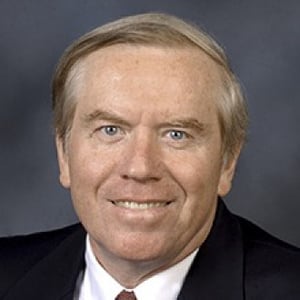
Edward J. Phelps Professor of Law and Economics and Kauffman Distinguished Research Scholar in Law, Economics, and Entrepreneurship, Yale Law School
Professor George L. Priest passed away on Dec. 17, 2024. Please read his obituary here.
George L. Priest is the Edward J. Phelps Professor of Law and Economics and Kauffman Distinguished Research Scholar in Law, Economics, and Entrepreneurship at Yale Law School. An internationally recognized expert, Professor Priest has focused his research over the past two decades on antitrust, the operation of private and public insurance, and the role of the legal system in promoting economic growth. He joined Yale Law School in 1981 and is co-director of the John M. Olin Center for Law, Economics and Public Policy, which facilitates the scholarly work of the Yale law and economics faculty and supports student interest and research in the field. Before coming to Yale, Professor Priest taught law at the University of Chicago, SUNY/Buffalo, and UCLA. His subject areas are antitrust; capitalism; regulated industries; torts; and insurance and public policy. Professor Priest holds a B.A. from Yale and a J.D. from the University of Chicago.
David and Mary Harrison Distinguished Professor of Law, University of Virginia School of Law
Kenneth Abraham is one of the nation’s leading scholars and teachers in the fields of torts and insurance law. He is a fellow of the American Academy of Arts and Sciences and a life member of the American Law Institute. For 20 years he served on the Council of the ALI — the board of lawyers, judges and academics that governs the Institute. He is also an adviser to the ALI’s Restatement of Torts (Third) and Restatement of the Law of Liability Insurance. He has served on a number of other boards and commissions concerned with tort law and insurance reform.
Abraham is a recipient of the All-University of Virginia Outstanding Teacher Award, the Distinguished Faculty Achievement Certificate from the State Council of Higher Education for Virginia for "outstanding achievement in teaching, research and public service,” and the American Bar Association's Robert B. McKay Law Professor Award, given for "outstanding contributions to tort and insurance law." He has been a visiting professor at Harvard Law School and Case Western Reserve Law School.
Abraham is the author of more than 60 law review articles and five books. His first book, "Distributing Risk: Insurance, Legal Theory, and Public Policy" (1986), brought modern legal theory to the study of insurance law. His torts treatise, "The Forms and Functions of Tort Law" (5th ed. 2017), has become a basic text for first-year law students across the country. And his casebook, "Insurance Law and Regulation" (6th ed. 2015) has been used as the principal text in courses on insurance law in more than 100 American law schools.
Abraham has been a consulting counsel and an expert witness in a variety of major insurance coverage cases, involving commercial general liability, directors and officers liability, environmental cleanup liability, toxic tort and products liability, and property insurance claims. He has also served as an arbitrator for the Dalkon Shield Claimants Trust, resolving over 100 claims by women seeking damages for injuries caused by the Dalkon Shield intrauterine device, both in the United States and Europe.
Walter E. Meyer Professor Emeritus of Property and Urban Law and Professorial Lecturer in Law, Yale Law School
Robert C. Ellickson was appointed Walter E. Meyer Professor of Property and Urban Law at Yale Law School in 1988. He has published numerous articles in legal and public policy journals on topics such as land use and housing policy, land tenure systems, social norms, homelessness, and the organization of households, community associations, and cities. Professor Ellickson’s books include Order Without Law: How Neighbors Settle Disputes (1991) (awarded the Order of the Coif Triennial Book Award in 1996), The Household: Informal Order Around the Hearth (2008), Land Use Controls: Cases and Materials (4th edition 2013, with Vicki Been, Roderick M. Hills, Jr. and Christopher Serkin), and Perspectives on Property Law (4th edition 2014, with Carol M. Rose and Henry E. Smith). He has written about ancient systems of land tenure and also periodically teaches a seminar on the history of development of the City of New Haven. Robert Ellickson was a member of the USC Law Faculty in 1970–1981, and the Stanford Law Faculty in 1981–88. He also has been a visiting professor at the Harvard and University of Chicago Law Schools. He was a founding member and later a director of the American Law and Economics Association, and served as its President in 2000–01. In 2016, the Association awarded him the Ronald H. Coase Medal in recognition of his scholarly contributions. Professor Ellickson served as an adviser during the American Law Institute’s preparation of the Restatement, Third, Property—Servitudes, and currently serves in the same capacity for the Restatement (Fourth) of Property. He is a fellow of the American Academy of Arts and Sciences, and, in 2008, received the William & Mary Law School’s Brigham-Kanner Property Rights Prize for Property Scholarship. At Yale Law School he has served as Deputy Dean (1991–92) and, during the reconstruction of the Sterling Law buildings, as chairman of the Building Committee. Prior to entering teaching in 1970, he worked for a Presidential commission on housing policy and then for Levitt & Sons, the homebuilding firm. Professor Ellickson is married to Lynn Hammer and has two children. For many decades he competed in competitive Scrabble tournaments and, during intervals when fortune smiled, was ranked as one of the top 20 players in the United States.
Former Executive Vice President of Academics, Atlas Network
Leonard P. Liggio was the Executive Vice President of Academics at the Atlas Network for the last two decades of his life. He was born July 5, 1933 and died Oct. 14, 2014, at the age of 81.
Leonard’s career advancing liberty spanned seven decades, during which time he served as the President of the Mont Pelerin Society, the Philadelphia Society, and the Institute for Humane Studies, where he later continued to serve as its Distinguished Senior Scholar. He was a professor at George Mason University, a visiting professor at the Universidad Francisco Marroquín, a board member of the Competitive Enterprise Institute, and a Trustee of Liberty Fund.
Leonard’s lifelong work for liberty won him acclaim among diverse audiences. In 2007, he was recognized with the Adam Smith Award, the highest prize bestowed by the Association of Private Enterprise Education. In 2011, he received a Lifetime Achievement Award from the Society for the Development of Austrian Economics. That same year, the then-nascent organization Students for Liberty published an interview with Leonard that called him “The Original Student for Liberty.”
Edward J. Phelps Professor of Law and Economics and Kauffman Distinguished Research Scholar in Law, Economics, and Entrepreneurship, Yale Law School
Professor George L. Priest passed away on Dec. 17, 2024. Please read his obituary here.
George L. Priest is the Edward J. Phelps Professor of Law and Economics and Kauffman Distinguished Research Scholar in Law, Economics, and Entrepreneurship at Yale Law School. An internationally recognized expert, Professor Priest has focused his research over the past two decades on antitrust, the operation of private and public insurance, and the role of the legal system in promoting economic growth. He joined Yale Law School in 1981 and is co-director of the John M. Olin Center for Law, Economics and Public Policy, which facilitates the scholarly work of the Yale law and economics faculty and supports student interest and research in the field. Before coming to Yale, Professor Priest taught law at the University of Chicago, SUNY/Buffalo, and UCLA. His subject areas are antitrust; capitalism; regulated industries; torts; and insurance and public policy. Professor Priest holds a B.A. from Yale and a J.D. from the University of Chicago.

Senior Vice President for Legal Studies, Cato Institute
Clark Neily is senior vice president for legal studies at the Cato Institute. His areas of interest include constitutional law, overcriminalization, civil forfeiture, police accountability, and gun rights. Neily is the author of Terms of Engagement: How Our Courts Should Enforce the Constitution’s Promise of Limited Government. His writing has appeared in the Wall Street Journal, Forbes, and National Review Online, as well as various law reviews, including the Harvard Journal of Law and Public Policy, George Mason Law Review, Georgetown Journal of Law and Public Policy, NYU Journal of Law and Liberty, and Texas Review of Law and Politics. Neily is a frequent guest speaker and lecturer for the Federalist Society, Institute for Humane Studies, and American Constitution Society.
Before joining Cato in 2017, Neily was a senior attorney and constitutional litigator at the Institute for Justice and director of the Institute’s Center for Judicial Engagement. He is also an adjunct professor at the University of Texas School of Law, where he teaches constitutional litigation and public-interest law.
Neily served as co-counsel in District of Columbia v. Heller, the historic case in which the Supreme Court held for the first time that the Second Amendment protects an individual right to own a gun for self-defense.
Neily began his legal career as a law clerk to Judge Royce Lamberth on the U.S. District Court for the District of Columbia. After that he spent four years in the trial department of the Dallas-based firm Thompson & Knight. Neily received his undergraduate and law degrees from the University of Texas, where he was Chief Articles Editor of the Texas Law Review.
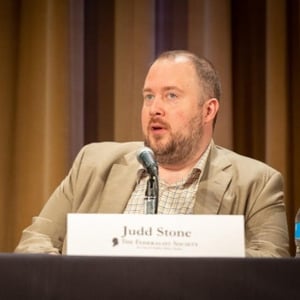
Stone Hilton, Founding Partner
A founding partner of Stone Hilton, Judd Stone is well respected both in Texas and across the nation as an insightful and tenacious appellate litigator. A lifelong Texan, Judd has argued dozens of appeals in both federal and state court, including arguing eight cases before the United States Supreme Court.
Judd began his legal career clerking for United States Supreme Court Justice Antonin Scalia and Fifth Circuit Chief Judge Edith H. Jones. With a J.D. from Northwestern University School of Law where he graduated first in his class, Judd's academic and professional credentials place him among the most distinguished lawyers in the profession. At the helm of countless major legal battles and emergency appeals for the State of Texas, Judd's deep understanding of the law and persuasive advocacy have been instrumental in shaping legal precedents. His tenure as the Solicitor General of Texas is a testament to his expertise and the trust placed in him by high-ranking state officials. Judd's strategic prowess extends beyond the courtroom; his advisory roles have made him a respected figure among policymakers.
His contributions to Stone Hilton and the legal community are characterized by his meticulous approach to cases, his acumen as a counselor, and his unwavering commitment to justice. As a partner at Stone Hilton, Judd continues to apply his formidable talents to advocate for his clients with the utmost dedication and to uphold the pillars of integrity and excellence that the firm stands for.
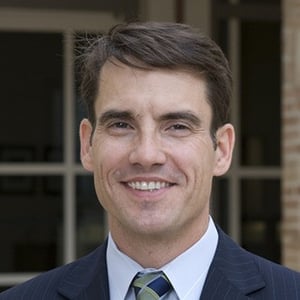
Professor, Dale E. Fowler School of Law, Chapman University
Professor Bell joined the faculty of Fowler School of Law in 1998. Professor Bell specializes in high-tech legal issues and has written a variety of works on intellectual property and Internet law, including the book, Intellectual Privilege: Copyright, Common Law, and the Common Good (2014). He received his Juris Doctor from the University of Chicago Law School in 1993, where he served both as a member of the University of Chicago Law Review and as Articles Editor and cofounder of the University of Chicago Legal Roundtable. After graduating from law school, Professor Bell joined the Silicon Valley law firm of Wilson Sonsini Goodrich & Rosati. He entered teaching in 1995, when he became an Assistant Professor of Law in the Law and Technology Program at the University of Dayton School of Law. During a one year leave of absence from that school, and just prior to joining the Fowler School of Law faculty, he served as Director of Telecommunications and Technology Studies at the Cato Institute in Washington, D.C. Professor Bell joined the faculty of Fowler School of Law in 1998. In addition to writing a steady stream of scholarly works, Professor Bell has appeared on or been quoted in the Wall Street Journal, CNN, Economist, Los Angeles Times, and many other news sources, and starred in several online videos addressing timely legal issues.
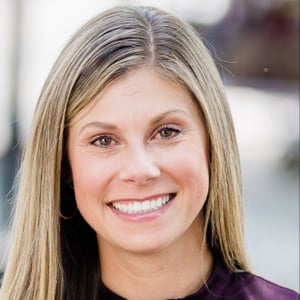
Executive Director, Southeastern Legal Foundation
Kimberly Hermann serves as Executive Director for Southeastern Legal Foundation.
Kim has worked with Southeastern Legal Foundation since 2009. Her belief in liberty and desire to serve started at a young age – instilled by her parents’ dedication to hard work, family values, and love for America.
After earning her undergraduate degree in Analytical Finance and graduate degree in Accounting from Wake Forest University, Kim worked as a licensed CPA with an international accounting firm. But her strong belief in individual liberty, the rule of law, and accountability in government led her to pursue a career in law. While in law school at Georgia State University College of Law, Kim served as a law clerk at SLF. After graduating, Kim worked at a private law firm in Atlanta where she specialized in financial and business litigation but continued to serve SLF in a pro bono capacity. In 2013, Kim returned to SLF full-time and is proud to dedicate her career to the freedom-based law movement.
Kim advances liberty through litigation in federal and state trial and appellate courts on issues ranging from government overreach, free speech, property rights, and economic liberty. In addition to representing clients, Kim testifies before state legislatures, drafts model legislation, and regularly publishes legal articles. Through SLF’s legal initiatives, she informs Americans about their constitutional rights, equipping them with the tools they need to stand up to government overreach. Her work and that of Southeastern Legal Foundation is regularly covered by national media and you will frequently hear or see her on radio, podcasts, and television.
Kim is an active member of the Federalist Society where she serves as an expert on the Federalist Society’s Civil Rights Executive Committee. She is also an active member of her community and when she isn’t fighting for liberty, you can find her at her children’s school or on the sports fields cheering them on. She lives in the Atlanta area with her husband and two children.
Vice President, Networks, The Federalist Society for Law and Public Policy Studies
Nathan Kaczmarek is Vice President for Networks at the Federalist Society. He began his legal career in Detroit representing nationwide clients in all phases of healthcare litigation and complex medical malpractice claims. He has since served as a Senior Legal and Policy Advisor in the U.S. House of Representatives and as Counsel for the Subcommittee on Regulatory Affairs and Federal Management in the U.S. Senate. Prior to overseeing the Networks, he was Director of the Practice Groups, the Regulatory Transparency Project, and the Article I Initiative for the Federalist Society.
Nathan holds degrees from Hillsdale College and Thomas M. Cooley Law School. He is a Liaison Representative for The Administrative Conference of the United States. He also serves as Vice President of the Associates of St. John Bosco, a Virginia based non-profit dedicated to Catholic high school and college students.
Producer, They Say It Can’t be Done
Patrick is the lead Producer on They Say It Can’t be Done. He previously produced the award-winning feature length documentary Of Dogs and Men. He is co-creator and producer on an animated comedy web series based on the NY Times bestselling book series, “The Politically Incorrect Guides,” also to be released Fall 2019. Through his work with corporate partners, Patrick has produced more than 300 animated, documentary, virtual reality and narrative projects. He holds a B.A. from Emory University in Creative Writing and Philosophy
Co-Founder and Chief Executive Officer, Primary Ocean Producers
Scott graduated from Texas A&M University with a Bachelor of Business Administration of Finance. He has extensive start-up, operating, financial, and managerial experience, where he has earned a strong understanding of accounting, project management, logistics, marketing, and financial reporting. Scott began his career with the co-founding of Impulse One, a full-service CPG marketing company, where he oversaw the development of SOP’s, sales and marketing campaigns, brand development, the development of an international supply chain, managed compliance with FDA, USDA, and the Department of Agriculture in all 50 states, oversaw one corporate acquisition, one joint venture with a public company, and managed growth to over $21M in revenues. Shortly thereafter, Scott made his first real estate investments and subsequently co-founded a real estate syndicate, Building Forts Real Estate Investment Fund, and Climbing Fences, a real estate construction company, where he serves as CEO and President, respectively. In 2014, Scott co-founded Venice Fixes, a bicycle marketing and e-commerce platform, where he served as Chief Operating Officer and oversaw sourcing and logistics. Venice Fixies turned a profit in year 1 and was divested. Scott Schmidt currently serves as Chief Investment Officer of the Schmidt 2001 FLP and manages equity and debt investments in the petrochemical, medical, real estate, and beverage industries, and maintains a Directors role in the early and growth-stage companies.
CEO & Board Chair, World Future Society
Julie Friedman Steele is on the Board of Advisors of the United Nations Women for Peace and the Board Chair, and driving force, behind the World Future Society, the most influential international authority for the past 50 years in future thinking.
With a background in education, AI & technology, entertainment, science and child advocacy, Julie is working to realize the vision that utilizing a futurist mindset in education will change the world. She is passionate about emerging technology and accelerating its adoption to make complex technology tools accessible to all. Julie thrives at the cutting edge of disruption and empathy.
Julie is a regular keynote speaker and panelist including for universities discussing the future of education and jobs, TEDX, the United States Patent and Trademark Office, TechWeek, the International Manufacturing Trade Show, and the Chicago Innovation Awards, to name a few. Since becoming Board Chair of the World Future Society, she has advised governments and world leaders across the globe.
Julie has garnered national and international media attention appearing in over 20 countries in print, radio, and television including The Today Show, Al Jazeera, Vanity Fair Italy, Time Magazine, and a profile in Entrepreneur Magazine. She has also been named by The Chicago Tribune as a top 100 Innovator in the City.
As a social entrepreneur and producer Julie created The 3D Printer Experience (3DPX), built an International MPEG standard to make all TV and Film video content searchable and indexable on the internet and produced and directed the Genesis Award winning documentary, Best Friend Forgotten starring actor David Duchovny.
Julie studied biochemistry and molecular biology at Boston University, Music Synthesis at the famed Berklee College of Music, and Artificial Intelligence through Stanford University. With a background in stand-up comedy, Julie brings a fresh and passionate approach to her advisory roles and appearances.
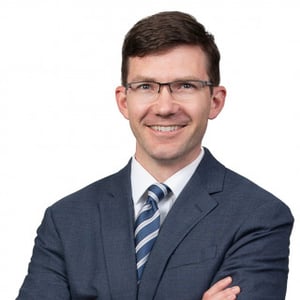
Partner, Nelson Mullins Riley & Scarborough LLP
Miles practices in the areas of appeals, business litigation, and First Amendment law. In addition to representing clients in complex civil and criminal litigation and appeals, Miles advises and represents public and private universities and serves as outside general counsel to several business and educational clients. He also represents and counsels private entities and government agencies and officials, including multiple current and former governors of South Carolina and members of Congress, on issues relating to the constitutional and statutory freedoms of speech, religion, and association. His First Amendment work has been cited by the United States Supreme Court.
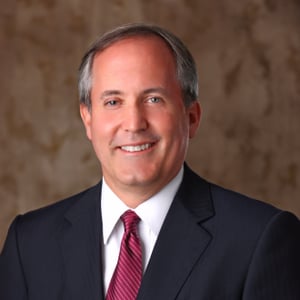
State Attorney General, Texas
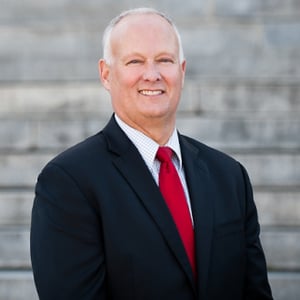
Attorney General, Nebraska
Elected as Nebraska’s 32nd Attorney General in 2014, Doug Peterson has dedicated his career to being an advocate for Nebraskans both in state and federal court.
Peterson was born in Columbus, Nebraska and grew up primarily in Lincoln. He graduated from the University of Nebraska with a business degree in 1981, and from Pepperdine University School of Law in 1985. Following law school, Mr. Peterson spent two years in North Platte, Nebraska, prosecuting both criminal and civil cases for the Lincoln County Attorney. From 1988 to 1990, he served as Assistant Attorney General to the Nebraska Attorney General’s office, representing the State in employment law matters and tort litigation. In 1990, Peterson entered private practice, where he had the opportunity to advise and advocate for both individuals and businesses.
In his role as Attorney General, Peterson works closely with law enforcement agencies across the State to ensure that Nebraska communities are safe. Peterson’s office has supported strengthened legislation and enforcement in the areas of human trafficking, prosecution of child sexual assault and abuse, and consumer protection laws to safeguard all Nebraskans.
Office Overview
The Nebraska Department of Justice/Office of the Attorney General operates, in many respects, as the “State’s law firm.” The office is headed by the Nebraska Attorney General, an independently-elected constitutional officer, and is a diverse organization of highly specialized attorneys and support staff. The Attorney General’s Office is the largest “law firm” in Nebraska outside of Omaha.
Major Duties
Attorney General, South Carolina
Alan Wilson was elected South Carolina’s Fifty-First Attorney General on November 2, 2010, and took office on January 12, 2011, becoming the nation’s youngest Attorney General.
This marks his third stint in the office. Previously, he served as a prosecution division intern under Charlie Condon and as an Assistant Attorney General under Henry McMaster.
As South Carolina’s Attorney General, Wilson is the state’s chief prosecutor, chief securities officer, and the state’s chief legal counsel. The office is comprised of more than two hundred employees and nearly seventy-five attorneys who manage nearly 8,000 active case files.
Wilson has focused on keeping our families safe and defending the Constitution.
He has assembled an unprecedented coalition consisting of the Attorney General’s office, the State Law Enforcement Division, every sheriff, the Police Chief’s Association, and all 16 solicitors. Together, they are actively advancing legislative priorities to ensure South Carolina is the safest place to live, work, and raise a family.
As Attorney General, Wilson has defended the Constitution and the laws of this state even if it means challenging the federal government. He has protected South Carolina’s right-to-work; helped lead the 26-state challenge to the federal health care mandate; and successfully safeguarded South Carolina’s voter identification and immigration laws in court.
Today, he is actively engaged in state and federal litigation to provide safe harbor to South Carolina’s ports, shield the state’s energy interests at Yucca Mountain, as well as a constitutional challenge of Dodd-Frank.
Prior to his election, Wilson served as an Assistant Solicitor and as an Assistant Attorney General before entering private practice with the Columbia firm of Willoughby & Hoefer, P.A. He began his legal career working for the late Judge Marc H. Westbrook.
Growing up, public service was paramount in the Wilson house. Alan and his three brothers have all achieved the rank of Eagle Scout. All four presently serve our nation in uniform.
Wilson joined the National Guard immediately after graduating from college. He was called to serve in Iraq where he led troops through enemy fire and earned the Combat Action Badge. Today, he continues his military service by providing legal support for soldiers and assisting in the prosecution of military crimes as a Lt. Colonel in the Judge Advocate General Corps.
He is a graduate of Francis Marion University and the University of South Carolina School of Law. Wilson and his wife, Jennifer, have two young children, Michael and Anna Grace.
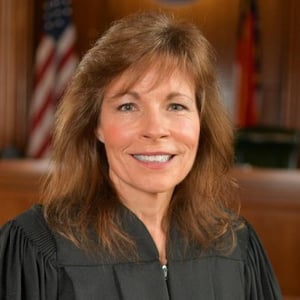
Associate Justice, Supreme Court of North Carolina
Tamara Patterson Barringer is the 101st Associate Justice of the Supreme Court of North Carolina.
Justice Barringer teaches Law and Ethics to Master of Accounting and Undergraduate Business students at the Kenan-Flagler Business School at the University of North Carolina-Chapel Hill, where she has served on the faculty for 15 years. Tamara also serves as the Director and Lead Faculty for the Master of Accounting Mentorship Program, a diversity, equity, and inclusion program, which she founded over a decade ago to introduce careers in accounting and business to first generation and under-represented minority undergraduate students.
Justice Barringer has also taught as an Adjunct Professor of Business Law at North Carolina State University and later designed and taught the first business law paralegal program curriculum at Meredith College.
Justice Barringer began her legal career in private practice in 1985 with Poyner and Spruill, being mentored closely by attorneys Nat Townsend, Curtis Twiddy, and Maria Lynch. She then founded the Barringer Sasser, LLP law firm in Cary in 1988 with her husband, Brent. As Managing Partner, she gained over 20 years’ experience representing entrepreneurs and small business clients in business and tax law, estate planning, and estate administration matters.
Justice Barringer served as a North Carolina Senator, representing District 17 in Southern Wake County from 2012 to 2018. She served as Chair of the Senate Judiciary Committee and Chair of the Joint Legislative Committee for General Government and Information Technology Appropriations.
Justice Barringer’s lifelong mission for healthy children and families in North Carolina began when she and her husband, Brent, served as therapeutic foster parents for the Methodist Home for Children for over 10 years. Through her work in the General Assembly as Chair of the Permanency Innovation Initiative, partnering with the Dave Thomas Foundation and Wendy’s Wonderful Kids Program, 300 older North Carolina children, who had very little chance of being adopted, now have permanent, loving, and stable homes.
Justice Barringer’s life journey began on her family’s farm in Patterson Springs, Cleveland County, North Carolina, growing up with three younger sisters outside Shelby. After graduating from Crest High School in 1977, she became the first member of her family to ever graduate from college when she earned her Bachelor of Science in Business Administration with Highest Honors in 1981 from the Kenan-Flagler Business School at the University of North Carolina at Chapel Hill. She earned her Juris Doctor with Honors from the UNC School of Law in 1985, after serving on the North Carolina Law Review and being inducted into the Order of the Coif.
Justice Barringer is married to her college sweetheart, Brent, and have three adopted children, Jessica, John Charles, and Emily, and two rescue dogs, Lilah and Baloo.
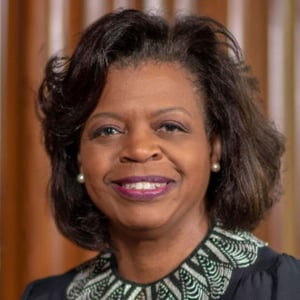
Fmr. Chief Justice, North Carolina Supreme Court
Chief Justice Cheri Beasley has spent more than 20 years dedicated to the rule of law. She began her judicial career as a district court judge in Cumberland County, where she served for a decade before being elected to the North Carolina Court of Appeals in 2008. She served as an associate justice on the Supreme Court of North Carolina for seven years before being appointed by Governor Roy Cooper to lead the Supreme Court and North Carolina's third branch of government, the Judicial Branch. She is the first African-American woman in the Supreme Court’s 200-year history to serve as Chief Justice.
Chief Justice Beasley has spent her entire career advocating for courts that are independent, fair, and accessible, and that serve every person with dignity and respect. As Chief Justice, she is advocating for a court system that not only solves legal disputes, but also helps people better their lives. By engaging local judges, educators and law enforcement, she is helping to reform discipline in our schools and keeping kids out of our courtrooms. She is committed to expanding specialized treatment courts that better serve the needs of North Carolina’s children and families. She is also working to leverage the power of technology to make sure our courts are efficient and accessible.
She has lectured extensively to promote the administration of justice, the importance of an independent judiciary, and fair judicial selection. She is active in her community through leadership in her church, First Baptist of Raleigh, her support of hunger relief efforts, and her mentoring of students from elementary school to law school. She is a graduate of Douglass College of Rutgers University, the University of Tennessee College of Law, and Duke University School of Law where she obtained her LL.M. She and her husband, Curtis Owens, are the proud parents of twin sons, Thomas and Matthew.
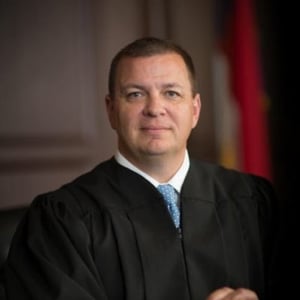
Associate Justice, Supreme Court of North Carolina
Phil was born in Danville, Virginia on March 26, 1972, to Philip and Pat Berger. Phil is a 1990 graduate of Morehead High School in Eden, North Carolina. He graduated from UNC-Wilmington in 1994 with a B.A. in History, and earned his law degree from Wake Forest University School of Law in 1999.
Phil began his legal career in private practice in 1999. From 2001 through 2006, he joined his father and brother, Kevin, forming The Berger Law Firm. In 2006, Phil was elected District Attorney in the 17A Prosecutorial District and was re-elected in 2010.
While serving as District Attorney, Phil was the chair of Project SAFE Rockingham County. A collaboration with the US Attorney's Office and local law enforcement, Project SAFE implemented the “focused-deterrence” model for reducing violent crime among recidivists and gang members. In 2013-14, he served as President of the North Carolina Conference of District Attorneys. Phil represented the National District Attorneys Association in Guantanamo Bay, Cuba, as a Non-Governmental Observer to the United States v. Khalid Sheikh Mohammad, et al hearings.
From 2015-2016, Phil served as an Administrative Law Judge with the North Carolina Office of Administrative Hearings. He was elected to the North Carolina Court of Appeals in 2016. In 2020, Phil was elected to the Supreme Court of North Carolina.
Phil has a passion for helping young people. He serves as a volunteer assistant coach with the baseball team at Cedar Ridge High School. Phil previously coached football at the high school level, and he has also coached youth football with the Durham Firebirds and Greensboro Eagles. Phil was the founder and chair of Eden Youth Football, and he served as a board member and basketball coach with Bethany Community Middle School.
Phil is married to Jodie Church, a public school teacher. They have two children, Philip III and Will.
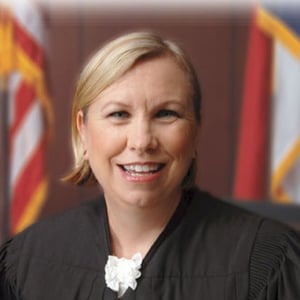
Judge, North Carolina Court of Appeals
Lucy Inman, a judge on the North Carolina Court of Appeals, is a candidate for the North Carolina Supreme Court in 2020. Judge Inman was elected statewide to the Court of Appeals in 2014.
Judge Inman was raised in Raleigh by parents who taught her the value of hard work and respect for people of all races, faiths, and walks of life. She graduated from Sanderson High School and earned a degree in English from N.C. State University.
Judge Inman’s first career was as a newspaper reporter. While covering court proceedings, she was inspired to participate in the justice system. She then moved to Chapel Hill and earned her law degree from UNC School of Law in 1990. Her first job after law school was working as a law clerk for North Carolina Supreme Court Chief Justice Jim Exum.
Judge Inman went on to practice civil litigation for 18 years, first in Los Angeles and then back home in Raleigh. Her clients included small business owners, large corporations, famous individuals, and lesser known -- but no less important -- survivors of negligence, fraud, and sexual abuse.
In 2010, Judge Inman was appointed by Governor Beverly Perdue to serve as a special superior court judge. She served in that role for four years, presiding in hearings and jury trials across North Carolina. Since her election to the Court of Appeals, Judge Inman has authored over 400 appellate decisions in a wide variety of cases, including criminal, civil, and constitutional disputes. She has presided in thousands of other cases.
Judge Inman brings hard work and respect for all others to her personal and professional life every day. She hopes to bring these values, and equal justice for all, to the North Carolina Supreme Court.
Judge Inman and her husband Billy Warden live in Raleigh. They have two college-age children and a black lab rescue who keeps their nest from ever being empty.
Vice President of Marketing and Communications, John Locke Foundation
As Vice President of Marketing and Communications, Donna shares the foundation’s message of freedom, free markets, and limited government across media platforms. She co-hosts Carolina Journal Radio, a weekly syndicated radio show produced by JLF and heard on more than a dozen stations across North Carolina. Donna came to JLF in 2003 after freelance writing for Carolina Journal and contributing to projects for the North Carolina Education Alliance. Her career has been spent in marketing, public relations, and broadcasting, and includes time at UNC-TV and The Arizona Republic, the daily newspaper serving metropolitan Phoenix. Donna is a graduate of Arizona State University and is married to Rick Martinez. She and Rick co-host “You Don’t Say,” a daily radio talk show heard on NewsRadio 680 WPTF in the Triangle.
Chief Justice, North Carolina Supreme Court
Chief Justice Paul Newby was born in Asheboro and grew up in Jamestown, N.C. He received his B.A. degree in Public Policy Studies from Duke University and law degree from UNC-Chapel Hill School of Law.
Chief Justice Newby was first elected to the Supreme Court as an Associate Justice in 2004. He was elevated to the highest judicial office in North Carolina in the 2020 election. As Chief Justice, he is head of the Judicial Branch, a co-equal branch of state government with the Legislative and Executive branches. He is entrusted with leading the Judicial Branch and its 7,600 elected officials and employees.
He is an adjunct professor of law at Campbell University and has published a book on the North Carolina Constitution.
Chief Justice Newby’s legal experience includes private practice and corporate inhouse legal counsel. He also served almost 20 years as an Assistant United States Attorney, during which he played an integral role in conducting the undercover sting operation that recovered North Carolina’s original copy of the Bill of Rights, stolen in the aftermath of the Civil War.
Chief Justice Newby is an Eagle Scout and is the recipient of the Heroism Award (for rescuing nine people from a riptide), the God and Service Award, the Silver Beaver Award, and the Scouter of the Year Award. In 2012, he was designated a Distinguished Eagle Scout, a national honor that recognizes both his service to the Boy Scouts and his dedication to public service.
Chief Justice Newby has been married to Macon Tucker Newby since 1983, and they have four children. He is active in his local church, where he serves as a teacher and mentor to young professionals.
Partner, Jones Day
Corinne Ball has nearly 40 years of experience in business finance and restructuring, with a focus on complex corporate reorganizations and distressed acquisitions, both court-supervised and extra judicial, including matters involving multijurisdictional and cross-border enterprises. She co-leads the New York Office's Business Restructuring & Reorganization Practice and leads the Firm's European Distress Investing and Alternative Capital Initiatives.
Corinne worked extensively on the City of Detroit restructuring, which followed her leading a team of attorneys representing Chrysler in its successful chapter 11 reorganization, which won the Investment Dealers' Digest Deal of the Year award for 2009. She also led a team of attorneys in the restructuring of FGIC and the sale of its portfolio to MBIA; the successful restructuring of Dana Corp., which emerged from bankruptcy in 2008; and has orchestrated many other reorganizations involving companies such as Oncor, Oi, OSX, US Manufacturing, Metaldyne, Axcelis Technologies, Kaiser Aluminum, Tarragon, and The Williams Communications Companies. In addition, she has counseled lenders and bondholders in the ABFS, Comdisco, Excite@Home, Exide SA, GST Communications, the Houston Sport's Authority and Jefferson County, European Wind Farms (Breeze) and the National Portuguese Railway, Loy Yang B, VARIG Airlines, and Worldcom restructurings, among others.
Corinne leads the Firm's distressed M&A efforts and is the featured "Distress M&A" columnist for the New York Law Journal. She won The National Law Journal's "Most Influential Lawyer of the Decade in Bankruptcy & Restructuring," Turnaround Management Association's "International Turnaround Company of the Year" Award, and was named "Dealmaker of the Year" by American Lawyer.
Corinne has served as a director of the American College of Bankruptcy and American Bankruptcy Institute and is a member of the International Institute on Insolvency.
Partner, Jones Day
Todd Geremia is an experienced appellate advocate who has briefed and argued cases throughout the federal appellate system and in New York State. Most of his experience is in complex commercial litigation. Todd has briefed cases in the U.S. Supreme Court and in the U.S. Court of Appeals for the Federal and D.C. Circuits and briefed and argued cases in the U.S. Courts of Appeals for the Second, Third, and Fifth Circuits. He also has extensive experience in representing clients in commercial cases at all levels of the New York state court system. Todd's practice focus is in putative class actions, products liability matters, financial fraud cases — including cases alleging violations of the federal securities laws and state common law claims — and bankruptcy-related litigation.
Representative clients in Todd's recent matters include R.J. Reynolds Tobacco Company, Expedia, Relativity Media, Aradigm Corporation, Cardinal Health, Citibank, Dippin' Dots, Encyclopaedia Britannica EDS, Elekta AB, Lehman Brothers, Lucent Technologies, Pfizer, and the United Services Automobile Association.
Todd is a member of the bar of the State of New York; the U.S. Supreme Court; U.S. Courts of Appeals for the Second, Third, Fifth, Eleventh, Federal, and D.C. Circuits; and the U.S. District Courts for the Southern and Eastern District of New York. He also maintains an active pro bono practice and most recently led the brief writing efforts for two teams prosecuting applications for asylum.
Partner, Jones Day
John Goetz is a recognized authority in aviation and transportation litigation and leads Jones Day's airlines and aviation industry initiative. John has over 30 years of experience defending companies in business and tort litigation and has defended multinational companies such as Doncasters, Parker Hannifin, Penske Automotive, Pilatus Aircraft, Mitsubishi Aircraft, R.J. Reynolds, Textron, U. S. Steel, Yamaha, and WESCO in trial and appellate courts across the United States, Canada, and Europe. John has litigated complex commercial disputes, defended clients in diverse product liability and toxic tort actions, and represented clients in grand jury investigations. He obtained several injunctions preventing the U.S. government from enforcing a key provision of its Affordable Care Act in a landmark case decided by the U.S. Supreme Court.
A licensed pilot, John has defended cases arising from commercial and general aviation accidents in the U.S. and internationally. He also was on trial teams for Parker Hannifin in aviation litigation arising from the crash of a former Missouri governor's plane and in USAir Flight 427. He led the team defending Parker in aviation litigation involving SilkAir Flight 185, FlashAir Flight 604, EgyptAir Flight 990, and other cases. John also counsels aviation, rail, and other clients in NTSB investigations.
John has taught aviation law, deposition skills, and negotiation skills at Duquesne University. He has published articles on litigation strategy, is a frequent speaker at aviation and other seminars, and has served as a hearing committee officer for the Pennsylvania Disciplinary Board. He has been board president for Catholic Charities of Pittsburgh and its Free Health Care Center.
John is the administrative partner for Jones Day's Pittsburgh Office.
Wisconsin Court of Appeals, District II
Brian Hagedorn is a judge on the Wisconsin Court of Appeals, District II. He was appointed by Republican Governor Scott Walker on July 31, 2015. Hagedorn won election to a full six-year term in 2017. His current term will expire on July 31, 2023.
Hagedorn earned an undergraduate degree in philosophy from Trinity International University in 2000 and his J.D. from Northwestern University School of Law in 2006. While at Northwestern, Hagedorn was the president of the school's chapter of the Federalist Society.

State Court Docket Watch: Kelly v. Legislative Coordinating Council
Brad Schlozman
Since the November 2018 election of Democrat Laura Kelly as governor of Kansas, the state’s...
Panel V: The Public and Private Realms: The Privatization Movement and Other Developments [Archive Collection]
Kenneth S. Abraham, Robert C. Ellickson, Leonard Liggio, George L. Priest
On October 16-17, 1987, the Federalist Society hosted a symposium in celebration of the bicentennial...
Panel V: The Public and Private Realms: The Privatization Movement and Other Developments [Archive Collection]
Kenneth S. Abraham, Robert C. Ellickson, Leonard Liggio, George L. Priest
On October 16-17, 1987, the Federalist Society hosted a symposium in celebration of the bicentennial...
It Can Be Done Live: The Future of Our Seas
A Four-Part Virtual Movie Premiere
States’ Attorneys General: Defenders of the Bulwarks of Federalism
South Carolina, Nebraska, and Houston Lawyers Chapter - Online Event
North Carolina Supreme Court Candidate Forum
Triangle and Cape Fear Lawyers Chapters
Special Topics in Religious Liberty Series #2: Sex-Abuse Litigation And Chapter 11 Issues for Religious Organizations
TeleforumJustice Hagedorn: Introducing the Federalist Society
Wisconsin Student Chapter
Madison, WIWhat is No. 86?
The No. 86 project continues the conversation our Founders had in the original 85 Federalist...
Qualified Immunity, a Debate--Retain or Abolish?
Clark Neily, Anthony J. Rodregous, Judd Stone
Created by the Supreme Court in 1967, the legal doctrine of qualified immunity shields government...