
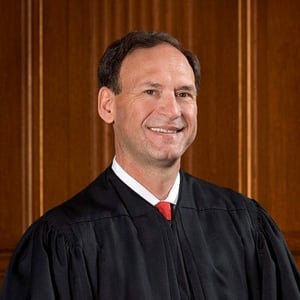
Associate Justice, United States Supreme Court
Samuel A. Alito, Jr., Associate Justice, was born in Trenton, New Jersey, April 1, 1950. He married Martha-Ann Bomgardner in 1985, and has two children - Philip and Laura. He served as a law clerk for Leonard I. Garth of the United States Court of Appeals for the Third Circuit from 1976–1977. He was Assistant U.S. Attorney, District of New Jersey, 1977–1981, Assistant to the Solicitor General, U.S. Department of Justice, 1981–1985, Deputy Assistant Attorney General, U.S. Department of Justice, 1985–1987, and U.S. Attorney, District of New Jersey, 1987–1990. He was appointed to the United States Court of Appeals for the Third Circuit in 1990. President George W. Bush nominated him as an Associate Justice of the Supreme Court, and he took his seat January 31, 2006.

Executive Vice President, The Federalist Society
Dean Reuter is Executive Vice President at the Federalist Society for Law and Public Policy Studies. He has served in two federal government agency Offices of the Inspector General, as Counsel to the Inspector General and Deputy Inspector General, responsible for policing the use of federal funds granted and contracted through those agencies. As such, he helped conduct and oversee criminal investigations across the country. He is the principal author of the non-fiction book, The Hidden Nazi: The Untold Story of America's Deal with the Devil, and editor of Liberty’s Nemesis: The Unchecked Expansion of the State and Confronting Terror: 9/11 and the Future of American National Security. He was appointed by the President and served as Vice-Chairman of the Board of Directors of the Corporation for National and Community Service, and recently served as an appointee on the U.S. Commission on Presidential Scholars. He is a graduate of Hood College (BA with Honors) and the University of Maryland School of Law.
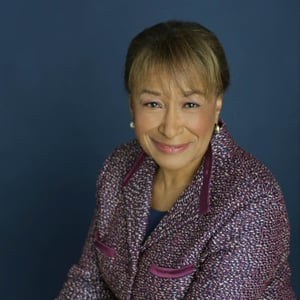
Judge, United States Court of Appeals, District of Columbia Circuit (ret.)
The Honorable Janice Rogers Brown was confirmed to the United States Court of Appeals for the District of Columbia Circuit on June 8, 2005. She retired from the court in 2017. From 1996 to 2005, she was an associate justice of the California Supreme Court. Prior to this, she served as associate justice of the Third District Court of Appeals in Sacramento and as legal affairs secretary to California Governor Pete Wilson. Earlier in her career, she served as Deputy Secretary and General Counsel for California’s Business, Transportation and Housing Agency after having worked in the criminal appellate and civil trial divisions of the California Attorney General’s Office. She currently chairs the Advisory Board of the New Civil Liberties Alliance, and serves on the Board of the Coolidge Foundation and the Association of College Trustees and Alumni. She is the Darling Foundation Jurist-in-Residence and visiting professor of Law at the University of California Boalt School of Law. Brown has been honored with the Jurisprudence Award of Claremont Institute’s Center for Constitutional Jurisprudence, the Baroness Thatcher Award of the Pacific Research Institute, the Edwin Meese III, Originalism and Religious Liberty Award from the Alliance Defending Freedom, the James Wilson Institute Leadership and the Law Award, and the 2019 Bradley Award. She earned her law degree from the University of California – Los Angeles School of Law, and a Master of Laws in judicial process from the University of Virginia School of Law.
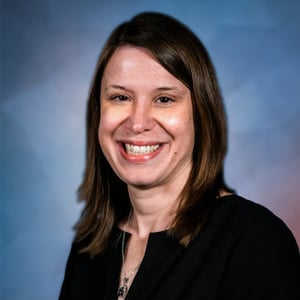
Senior Director of Strategic Partnerships, First Liberty Institute
Lisa Budzynski Ezell is the former Vice President and Director of the Federalist Society’s Lawyers Chapters. In this role, she managed a growing network of over 90 lawyers chapters nationwide, including oversight of leadership recruitment, chapter programming, state conferences, civics education outreach, and young lawyers activities. She holds a Bachelor of Arts degree from Saint Mary’s College in Political Science and History and a Master of Public Policy from George Mason University.
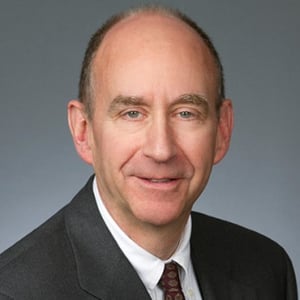
Partner, Kirkland & Ellis LLP
Neil Eggleston is a litigation partner in the Washington, D.C. office of Kirkland & Ellis LLP.
Neil has a distinguished record of public service, and has held a number of senior government roles. He was White House Counsel to President Obama from 2014 to 2017, and advised the president on all legal and constitutional issues across a broad spectrum of domestic and foreign policy matters. Neil’s practice focuses on enforcement defense including at the U.S. Department of Justice (DOJ), U.S. Securities and Exchange Commission (SEC), U.S. Attorney’s Offices, and other enforcement agencies.
Earlier in his career, Neil served as Associate Counsel to President Clinton from 1993 to 1994. Heals o served as Deputy Chief Counsel, U.S. House of Representatives Select Committee Investigating the Iran/Contra Affair (1987-1988); Assistant U.S. Attorney (1981-1987); and Chief Appellate Attorney for the Southern District of New York (1986-1987).
Neil served as a law clerk for the United States Court of Appeals for the Third Circuit (1978-1979) and for Chief Justice Warren E. Burger on the United States Supreme Court (1979-1980).
Neil teaches a seminar in Presidential Power at Harvard Law School in the spring of 2017, 2019, 2020, and 2021 and at Yale Law School in the spring of 2018. He also frequently lectures at American Bar Association and similar seminars.
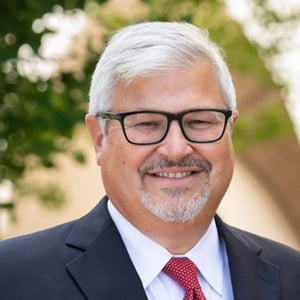
Learned Hand Professor of Law, Harvard Law School
Jack Goldsmith is the Learned Hand Professor of Law at Harvard Law School, a non-resident Senior Fellow at the American Enterprise Institute, and co-founder of Lawfare. He teaches and writes about presidential power, national security law, federal courts, conflict of laws, international law, and internet law. Before coming to Harvard, Professor Goldsmith served as Assistant Attorney General, Office of Legal Counsel from 2003-2004, and Special Counsel to the Department of Defense from 2002-2003. He was a Professor at the University of Chicago Law School from 1997-2002, and at the University of Virginia School of Law from 1994-1997. Before entering the academy, Professor Goldsmith was an associate at Covington & Burling in Washington, D.C., from 1992-1994. He clerked for Supreme Court Justice Anthony M. Kennedy from 1990-1991, for Court of Appeals Judge J. Harvie Wilkinson from 1989-1990, and for Judge George Aldrich on the Iran-U.S. Claims Tribunal from 1991-1992. Professor Goldsmith received a B.A. from Washington and Lee University, a B.A. and M.A. from Oxford University, and a J.D. from Yale Law School.
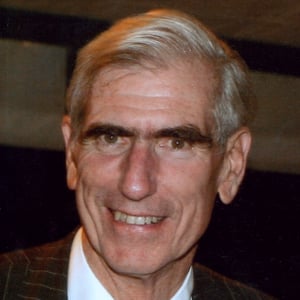
Founding Partner, Boyden Gray & Associates
Ambassador C. Boyden Gray is the founding partner of Boyden Gray & Associates, a law and strategy firm in Washington, D.C., focused on constitutional and regulatory issues.
Mr. Gray worked in the White House for twelve years, first as counsel to the Vice President during the Reagan administration and then as White House Counsel to President George H.W. Bush. In the Reagan administration, he was Counsel to the Presidential Task Force on Regulatory Relief, for which he wrote the original Executive Order 12291 requiring cost-benefit analysis and White House review of regulations (later renumbered as current EO 12866). In the George H.W. Bush Administration, Mr. Gray was in charge of judicial selection and was also instrumental in the enactment of the Clean Air Act Amendments of 1990, the Energy Policy Act of 1992, and a cap-and-trade system for acid rain emissions. In 1993, he received the Presidential Citizens Medal. Under President George W. Bush, Mr. Gray was U.S. Ambassador to the European Union and U.S. Special Envoy to Europe for Eurasian Energy.
Mr. Gray practiced law for 25 years at the law firm of Wilmer, Cutler & Pickering and was chairman of the Administrative Law and Regulatory Practice Section of the American Bar Association from 2000 to 2002. Early in his career, Mr. Gray helped to develop the Business Roundtable and served as its first counsel. He is an adjunct professor at Antonin Scalia Law School and a former adjunct professor at NYU Law School (teaching energy and environmental law). Mr. Gray is on the Board of Directors of the Atlantic Council, the Federalist Society, Reason Foundation, and the Trust for the National Mall.
Mr. Gray earned his A.B. magna cum laude from Harvard, where he was an editor of the Crimson, and his J.D. with high honors from the University of North Carolina at Chapel Hill, where he was editor-in-chief of the Law Review. Mr. Gray served in the United States Marine Corps, and after law school, he clerked for Earl Warren, Chief Justice of the United States Supreme Court.

Judge, United States Court of Appeals, Fifth Circuit
Edith Jones graduated from Alamo Heights High School, where she was a National Merit Scholar. In 1971, she received her B.A. in Economics from Cornell University, graduating with honors. In 1974, she was awarded her J.D. at the University of Texas Law School, where she was a law review editor and received the Order of the Coif.
Judge Jones was the first female partner at Andrews, Kurth, Campbell & Jones (now Hunton Andrews Kurth) where she practiced various types of litigation and bankruptcy cases. Judge Jones went on the federal bench on June 1, 1985.
Judge Jones served as a former member of the National Bankruptcy Review Commission, and as a member of the Judicial Conference Commission on Bankruptcy Rules. Judge Jones served on the White House Fellows Commission. Judge Jones served on the board of the Sam Houston Area Council of the Boy Scouts of America. She has been a member of the Garland Walker Inn of Court in Houston for more than 20 years and its President for at least ten years. Judge Jones is also on the Board of the Calvin Coolidge Presidential Foundation.
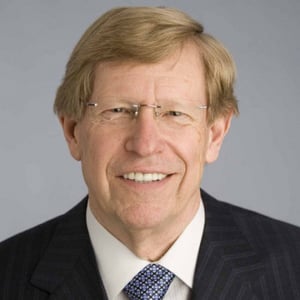
Partner, Gibson Dunn & Crutcher LLP
Theodore B. Olson is a Partner in Gibson, Dunn & Crutcher’s Washington, D.C. office; a founder of the Firm’s Crisis Management, Sports Law, and Appellate and Constitutional Law Practice Groups.
Mr. Olson was Solicitor General of the United States during the period 2001-2004. From 1981-1984, he was Assistant Attorney General in charge of the Office of Legal Counsel in the U.S. Department of Justice. Except for those two intervals, he has been a lawyer with Gibson, Dunn & Crutcher in Los Angeles and Washington, D.C. since 1965.
Selected by Time magazine in 2010 as one of the 100 most influential people in the world, Mr. Olson is one of the nation’s premier appellate and United States Supreme Court advocates. He has argued 65 cases in the Supreme Court and has prevailed in over 75% of those cases. These include the two Bush v Gore cases arising out of the 2000 presidential election; Citizens United v Federal Election Commission; Hollingsworth v Perry, the case affirming the overturning of California’s Proposition 8, banning same-sex marriages; Murphy v NCAA, overturning a federal law prohibiting states from authorizing sports betting; and U.S. Dept. of Homeland Security v Regents of the Univ. of Calif., challenging the Trump Administration’s rescission of the Deferred Action for Childhood Arrivals (“DACA”). Mr. Olson’s practice is concentrated on appellate and constitutional law, federal legislation, media and commercial disputes, and assisting clients with strategies for the containment, management and resolution of major legal crises. He has handled cases at all levels of state and federal court systems throughout the United States. Mr. Olson co-authored “Redeeming the Dream, the Case for Marriage Equality” with David Boies. Both were featured in HBO’s award-winning documentary, “The Case Against 8.”
Mr. Olson's Supreme Court arguments have included cases involving separation of powers; federalism; voting rights; the Tenth Amendment; the First Amendment; the Equal Protection and Due Process Clauses; jury trial rights; punitive damages; takings of property; the Commerce Clause; administrative law; taxation; criminal law; sports wagering; copyright, patent and antitrust; securities; campaign finance; foreign sovereign immunities; telecommunications; the environment; the internet; the Supremacy Clause; and other federal constitutional and statutory questions. As Solicitor General, during the presidency of George W. Bush, Mr. Olson was the Government's principal advocate in the United States Supreme Court, responsible for supervising and coordinating all appellate litigation of the United States, and a legal adviser to the President and the Attorney General. As Assistant Attorney General for the Office of Legal Counsel during the Reagan Administration, Mr. Olson was the Executive Branch's principal legal adviser, rendering legal guidance to the President and to the heads of the Executive Branch departments on a wide range of constitutional and federal statutory questions, and assisting in formulating and articulating the Executive Branch's position on constitutional issues.
Mr. Olson has served as private counsel to two Presidents, Ronald W. Reagan and George W. Bush, in addition to serving those two Presidents in high-level positions in the Department of Justice. He has twice been awarded the United States Department of Justice's Edmund J. Randolph Award, its highest award for public service and leadership, and also received the Department of Defense's Distinguished Public Service Award, its highest civilian award, for his advocacy in the courts of the United States, including the Supreme Court. He also received the American Bar Association Medal, its highest award for “exceptionally distinguished service by a lawyer or lawyers to the cause of American jurisprudence.” Mr. Olson is to receive the 2021 Jack Valenti Friend of the White House Fellows Award in the Fall of 2021 to be presented by the White House Fellows Foundation and Association.
Mr. Olson is a member of the Commission on White House Fellowships; a member of the Board of Trustees of the Ronald Reagan Presidential Foundation; a member of the Board of Visitors of the Federalist Society; the Board of Directors of the Knight First Amendment Institute at Columbia University; and the 9/11 Pentagon Memorial Foundation. He was a visiting scholar at the National Constitution Center in 2007. He served on the President's Privacy and Civil Liberties Oversight Board from 2006 to 2008; and of the Council of the Administrative Conference of the United States from 2010 to 2020. He was Co-Chair of the Knight Commission on the Information Needs of Communities in a Democracy from 2008-2009, and served two terms on the Board of Directors of the National Center for State Courts.
Mr. Olson is a Fellow of both the American College of Trial Lawyers and the American Academy of Appellate Lawyers. He has been repeatedly listed in legal publications as one of the nation’s leading appellate lawyers. The late New York Times columnist William Safire described Mr. Olson as his generation's "most persuasive advocate" before the Supreme Court and "the most effective Solicitor General in decades.”
Mr. Olson received his law degree in 1965 from the University of California at Berkeley (Boalt Hall) where he was a member of the California Law Review and Order of the Coif. He received his bachelor's degree from the University of the Pacific, where he was recognized as the outstanding graduating student in both forensics and journalism. He has written and lectured extensively on appellate advocacy, oral communication in the courtroom, civil justice reform, and constitutional and administrative law.

Former President & CEO, The Federalist Society for Law and Public Policy Studies
Eugene B. Meyer, former President and CEO of the Federalist Society, has served as Executive Director, CEO, and/or President of the organization for more than 40 years. He is responsible for shepherding the organization from a small group of law students to a community of 90,000 lawyers, law students, academics, judges, and others interested in the rule of law. The Society now includes a Student Chapter at nearly every ABA-accredited law school in the country and Lawyers Chapters in 220 major cities across the nation. Gene earned his B.A. in history at Yale in 1975 and his M.A. in political science from the London School of Economics in 1976. Gene currently serves on the boards of the U.S. Chess Center, the Holman Foundation, the Sarah Scaife Foundation, and the advisory board of the Adam Smith Society. He holds the title of International Chess Master.
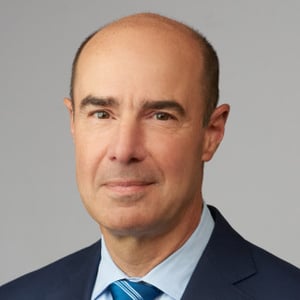
Partner, Gibson, Dunn & Crutcher, and Former United States Secretary of Labor
Eugene Scalia is a partner in the Washington, D.C. office of Gibson, Dunn & Crutcher, co-chair of the firm’s Administrative Law and Regulatory Practice Group, and a senior member of the firm’s Labor and Employment Practice Group and Financial Institutions Practice Group. He returned to the firm after serving as U.S. Secretary of Labor from September 2019 to January 2021.
Mr. Scalia has a nationally-prominent practice in two areas: Labor and employment law, and advice and litigation regarding the regulatory obligations of federal administrative agencies. He also has extensive appellate experience. Federal regulatory actions he has challenged include the SEC’s “proxy access” rule; the CFTC’s “position limits’” rule; MetLife’s designation as “too big to fail” by the Financial Services Oversight Council; the Labor Department’s “fiduciary” rule; and OSHA’s “cooperative compliance program.”
As Labor Secretary, Mr. Scalia engaged at the highest level with national employment policy and matters affecting the financial services industry and international trade, overseeing the enforcement and administration of more than 180 federal employment laws covering more than 150 million workers and 10 million workplaces. He also served as Chair of the Board of Directors of the Pension Benefit Guaranty Corporation and as a member of the White House Coronavirus Task Force. He was closely involved in the drafting and implementation of the CARES Act and other coronavirus-related legislation. Laws administered by the Labor Department also include the workplace safety requirements of OSHA and the Mine Safety and Health Administration, federal minimum wage and overtime protections, the anti-discrimination requirements applicable to federal contractors, and ERISA’s protection of the more than $11 trillion held in employee retirement plans and health plans.
Mr. Scalia served from 2002 to 2003 as Solicitor of the U.S. Department of Labor, with responsibility for all Labor Department litigation and legal advice on rulemakings and administrative law. He is the only person to have served as both Solicitor and Secretary of Labor.
He also served at the U.S. Department of Justice as a Special Assistant to the Attorney General, receiving the Department’s Edmund J. Randolph Award in 1993.
In private practice, Mr. Scalia has represented employers in high-profile matters under the National Labor Relations Act and in class actions and collective actions under Title VII, the Americans with Disabilities Act, the Age Discrimination in Employment Act, ERISA, and federal and state wage hour laws. He has extensive experience in federal district court, the courts of appeals, and in the arbitration of employment disputes. He has been a leading authority on “whistleblower” investigations and litigation since the 2002 enactment of the Sarbanes-Oxley Act. Mr. Scalia also counsels employers on reductions-in-force and the proper conduct of harassment and discrimination investigations. He has provided pro bono representation to workers in discrimination matters, wrongful separation disputes, and other matters.
Mr. Scalia is a Senior Fellow of the Administrative Conference of the United States, a federal agency that makes recommendations to Congress and the Executive Branch on ways to improve the administrative process. He is the author of more than 30 articles and papers on labor and employment law, administrative law, and other subjects. Among other accolades, he has been named an “Employment MVP,” a “Securities MVP,” and an “Appellate MVP” by Law360. The National Law Journal recognized Mr. Scalia as a “Visionary” for his litigation against financial regulatory agencies, and the Nation magazine has called him a “fearsome litigator.” He has been a Lecturer in labor and employment law at the University of Chicago Law School.
Mr. Scalia graduated cum laude from the University of Chicago Law School, where he was editor-in-chief of the Law Review. He graduated With Distinction from the University of Virginia in 1985 and was a speechwriter for Education Secretary William J. Bennett before attending law school. Mr. Scalia and his wife Trish have seven children.

Patrick Hotung Professor of Constitutional Law, Georgetown University Law Center
Randy Barnett is the Patrick Hotung Professor of Constitutional Law at Georgetown University Law Center. He has argued before the United States Supreme Court, tried murder cases to juries as a prosecutor in Chicago, and appeared as a prosecutor in the feature film Inalienable. He is the author of numerous books, including Restoring the Lost Constitution, The Structure of Liberty, Our Republican Constitution, and The Original Meaning of the Fourteenth Amendment. He has published two memoirs, A Life for Liberty: The Making of an American Originalist, and Felony Review: Tales of True Crime and Corruption in Chicago. He is currently working on a new book, Freedom and Flourishing: Libertarianism for the Real World.
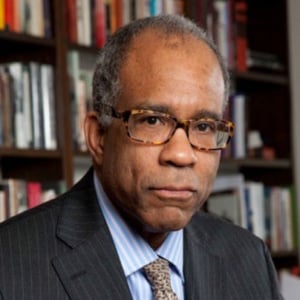
Michael R. Klein Professor of Law, Harvard Law School
Randall Kennedy is Michael R. Klein Professor at Harvard Law School where he teaches courses on contracts, criminal law, and the regulation of race relations. He was born in Columbia, South Carolina. For his education he attended St. Albans School, Princeton University, Oxford University, and Yale Law School. He served as a law clerk for Judge J. Skelly Wright of the United States Court of Appeals and for Justice Thurgood Marshall of the United States Supreme Court. He is a member of the bar of the District of Columbia and the Supreme Court of the United States. Awarded the 1998 Robert F. Kennedy Book Award for Race, Crime, and the Law, Mr Kennedy writes for a wide range of scholarly and general interest publications. His other books are For Discrimination: Race, Affirmative Action, and the Law (2013), The Persistence of the Color Line: Racial Politics and the Obama Presidency (2011), Sellout: The Politics of Racial Betrayal (2008), Interracial Intimacies: Sex, Marriage, Identity, and Adoption (2003), and Nigger: The Strange Career of a Troublesome Word (2002). A member of the American Law Institute, the American Academy of Arts and Sciences, and the American Philosophical Association, Mr. Kennedy is also a Trustee emeritus of Princeton University.
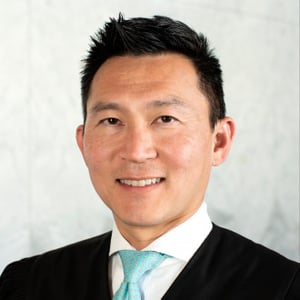
Judge, United States Court of Appeals, Ninth Circuit
Kenneth Kiyul Lee is a judge on the U.S. Court of Appeals for the Ninth Circuit. He was appointed in June 2019 and is based in San Diego, California.
Prior to his appointment, he was a partner at the law firm of Jenner & Block in Los Angeles. Judge Lee previously served as an Associate Counsel to President George W. Bush and as Special Counsel to Senator Arlen Specter, then-chair of the Senate Judiciary Committee. He started his legal career at Wachtell, Lipton, Rosen & Katz in New York.
Judge Lee received his J.D. from Harvard Law School, magna cum laude, and his A.B. from Cornell University, summa cum laude. He clerked for Judge Emilio M. Garza of the U.S. Court of Appeals for the Fifth Circuit.

George C. Dix Professor in Constitutional Law, Northwestern University Pritzker School of Law
John O. McGinnis is a graduate of Harvard College and Harvard Law School where he was an editor of the Harvard Law Review. He also has an MA degree from Balliol College, Oxford, in philosophy and theology. Professor McGinnis clerked on the U.S. Court of Appeals for the District of Columbia. From 1987 to 1991, he was deputy assistant attorney general in the Office of Legal Counsel at the Department of Justice. He is the author of Accelerating Democracy: Transforming Government Through Technology (Princeton 2013) and Originalism and the Good Constitution (Harvard 2013) (with M. Rappaport). He is a past winner of the Paul Bator award given by the Federalist Society to an outstanding academic under 40. He has been listed by the United States on the roster of panelists who may be called upon to decide World Trade Organization Disputes.
Former President & CEO, The Federalist Society for Law and Public Policy Studies
Eugene B. Meyer, former President and CEO of the Federalist Society, has served as Executive Director, CEO, and/or President of the organization for more than 40 years. He is responsible for shepherding the organization from a small group of law students to a community of 90,000 lawyers, law students, academics, judges, and others interested in the rule of law. The Society now includes a Student Chapter at nearly every ABA-accredited law school in the country and Lawyers Chapters in 220 major cities across the nation. Gene earned his B.A. in history at Yale in 1975 and his M.A. in political science from the London School of Economics in 1976. Gene currently serves on the boards of the U.S. Chess Center, the Holman Foundation, the Sarah Scaife Foundation, and the advisory board of the Adam Smith Society. He holds the title of International Chess Master.
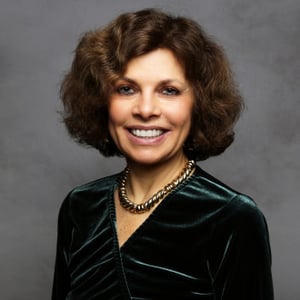
John Marshall Harlan II Professor of Law Emerita, New York Law School; Former President, American Civil Liberties Union
Nadine Strossen, New York Law School Professor Emerita and Senior Fellow at FIRE (the Foundation for Individual Rights and Expression), was national President of the American Civil Liberties Union from 1991 to 2008. An internationally acclaimed free speech scholar and advocate, who regularly addresses diverse audiences and provides media commentary around the world, Strossen is also the Host and Project Consultant for Free To Speak, a 3-hour documentary film series distributed on public television in 2023. Her books about free speech include: Free Speech: What Everyone Needs to Know® (Oxford University Press 2023); HATE: Why We Should Resist It with Free Speech, Not Censorship (Oxford University Press 2018); and Defending Pornography: Free Speech, Sex, and the Fight for Women’s Rights (Scribner 1995), which was republished with a new Preface in 2024 as part of the NYU Classics Series. Her many honors and awards include the National Coalition Against Censorship’s Judy Blume Lifetime Achievement Award for Free Speech. She serves on the Advisory Boards of several organizations that do free speech work, including: ACLU, Academic Freedom Alliance, Foundation Against Intolerance and Racism (FAIR), Heterodox Academy, National Coalition Against Censorship, and the University of Austin.
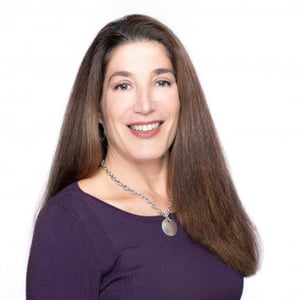
Director, Independent Women's Law Center, Independent Women's
Jennifer C. Braceras, a member of the Federalist Society Board of Visitors, is the director of Independent Women’s Law Center and a former member of the U.S. Commission on Civil Rights.
Ms. Braceras is a graduate of the Harvard Law School, where she served as an editor of the Law Review. After law school, she clerked for two federal judges and practiced labor and employment law with the Boston law firm Ropes & Gray.
A long time political columnist and editor, Ms. Braceras's writing has appeared in a variety of publications, including the Wall Street Journal, the Boston Globe, the Hill, and National Review Online. She co-hosts At the Bar, a bimonthly virtual happy hour discussion about issues at the intersection of law, politics, and culture.
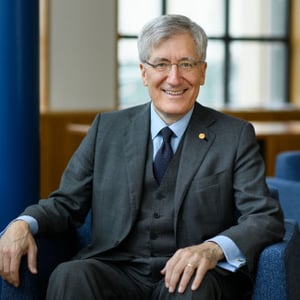
McCormick Professor of Jurisprudence; Director, James Madison Program, Princeton University
Robert P. George is McCormick Professor of Jurisprudence and Director of the James Madison Program in American Ideals and Institutions at Princeton University. He has several times been a Visiting Professor at Harvard Law School. He has served as Chairman of the U.S. Commission on International Religious Freedom and on the U.S. Commission on Civil Rights and the President’s Council on Bioethics. He has also served as the U.S. member of UNESCO’s World Commission on the Ethics of Scientific Knowledge and Technology. He was a Judicial Fellow at the Supreme Court of the United States, where he received the Justice Tom C. Clark Award. A Phi Beta Kappa graduate of Swarthmore, he holds the degrees of J.D. and M.T.S. from Harvard University and the degrees of D.Phil., B.C.L., D.C.L., and D.Litt. from Oxford University, in addition to twenty-one honorary doctorates. He is a recipient of the U.S. Presidential Citizens Medal, the Honorific Medal for the Defense of Human Rights of the Republic of Poland, the Canterbury Medal of the Becket Fund for Religious Liberty, the Bradley Prize, the Irving Kristol Award of the American Enterprise Institute, and Princeton University’s President’s Award for Distinguished Teaching. His books include Making Men Moral: Civil Liberties and Public Morality and In Defense of Natural Law (both published by Oxford University Press), as well as The Clash of Orthodoxies and Conscience and Its Enemies (both published by ISI Books).
Executive Vice President, The Federalist Society
Dean Reuter is Executive Vice President at the Federalist Society for Law and Public Policy Studies. He has served in two federal government agency Offices of the Inspector General, as Counsel to the Inspector General and Deputy Inspector General, responsible for policing the use of federal funds granted and contracted through those agencies. As such, he helped conduct and oversee criminal investigations across the country. He is the principal author of the non-fiction book, The Hidden Nazi: The Untold Story of America's Deal with the Devil, and editor of Liberty’s Nemesis: The Unchecked Expansion of the State and Confronting Terror: 9/11 and the Future of American National Security. He was appointed by the President and served as Vice-Chairman of the Board of Directors of the Corporation for National and Community Service, and recently served as an appointee on the U.S. Commission on Presidential Scholars. He is a graduate of Hood College (BA with Honors) and the University of Maryland School of Law.
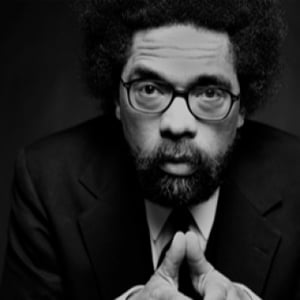
Professor of the Practice of Public Philosophy, Harvard University
Cornel West is a prominent and provocative democratic intellectual. He is Professor of the Practice of Public Philosophy at Harvard University and holds the title of Professor Emeritus at Princeton University. He has also taught at Union Theological Seminary, Yale, Harvard, Dartmouth College, and the University of Paris. Cornel West graduated Magna Cum Laude from Harvard in three years and obtained his M.A. and Ph.D. in Philosophy at Princeton. He has written 20 books and has edited 13. He is best known for his classics -- Democracy Matters and Race Matters -- which recently celebrated the 25th Anniversary of its debut with a new edition. His memoir Brother West: Living and Loving Out Loud, and Black Prophetic Fire have also received much critical acclaim. Dr. West is a frequent guest on the Bill Maher Show, Colbert Report, CNN, C-Span and Democracy Now.
He made his film debut in the Matrix – and was the commentator (with Ken Wilbur) on the official trilogy released in 2004. He also has appeared in over 25 documentaries and films including Examined Life, Call & Response, Sidewalk and Stand.
Last, he has made three spoken word albums including Never Forget, collaborating with Prince, Jill Scott, Andre 3000, Talib Kweli, KRS-One and the late Gerald Levert. His spoken word interludes were featured on Terence Blanchard’s Choices (which won the Grand Prix in France for the best Jazz Album of the year of 2009), The Cornel West Theory’s Second Rome, Raheem DeVaughn’s Grammy-nominated Love & War: Masterpeace, and most recently on Bootsy Collins’ The Funk Capital of the World. In short, Cornel West has a passion to communicate to a vast variety of publics in order to keep alive the legacy of Martin Luther King, Jr. – a legacy of telling the truth and bearing witness to love and justice.
He currently co-hosts a podcast – “The Tight Rope” with Professor Tricia Rose.
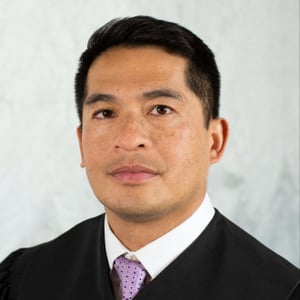
Judge, United States Court of Appeals, Ninth Circuit
Patrick J. Bumatay was confirmed as a U.S. Circuit Judge for the U.S. Court of Appeals for the Ninth Circuit in December 2019. He is based in San Diego, California.
Prior to his appointment, Judge Bumatay served as an Assistant United States Attorney in the U.S. Attorney’s Office for the Southern District of California, where he was a member of the Appellate and Narcotics Sections. He also served as a Counselor to the Attorney General on criminal law issues, including on national opioid strategy and combating transnational organized crime. Judge Bumatay has also worked in the Office of the Deputy Attorney General, the Office of the Associate Attorney General, and the Office of Legal Policy at the U.S. Department of Justice. Judge Bumatay has twice received the Attorney General’s Distinguished Service Award.
Judge Bumatay previously worked as an associate at Morvillo, Abramowitz, Grand, Iason, and Bohrer in New York, New York. Judge Bumatay clerked for the Honorable Timothy M. Tymkovich of the U.S. Court of Appeals for the Tenth Circuit and the Honorable Sandra L. Townes of the U.S. District Court for the Eastern District of New York. Judge Bumatay earned his B.A., cum laude, from Yale University and his J.D. from Harvard Law School.
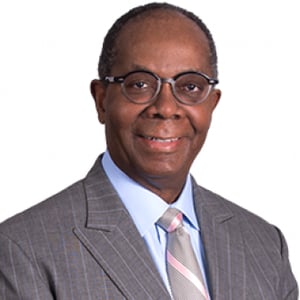
Managing Partner, Crabbe Brown & James LLP
Larry James has been at the heart of the Columbus business, legal, civic, and political scene for the last thirty years. He is a respected litigator, as well as an advisor to local and national leaders. In recognition of his many achievements, the law firm changed its name from Crabbe, Brown, Jones, Potts & Schmidt to Crabbe, Brown & James in January 2001.
In 2011, The Ohio State University selected Mr. James as lead counsel to represent its student athletes in NCAA investigations. In 2013, Armen Keteyian published his book The System: The Glory and Scandal of Big-Time College Football, a chapter of which is dedicated to Larry’s work in representing the OSU football players.
In 2012, Mr. James and his wife, Donna, were awarded the American Red Cross of Greater Columbus’ Humanitarians of the Year Award. In 2015, noted journalist Wil Haygood published his award-winning book Showdown: Thurgood Marshall and the Supreme Court Nomination That Changed America, which he dedicated to Mr. James.
Mr. James is a life member of the Sixth Circuit Judicial Conference, and he has served as General Counsel of the National Fraternal Order of Police since 2001.
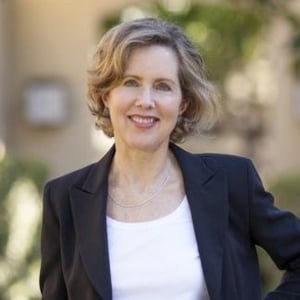
Thomas W. Smith Fellow; Contributing Editor, City Journal, Manhattan Institute
Heather Mac Donald is the Thomas W. Smith Fellow at the Manhattan Institute, a contributing editor of City Journal, and a New York Times bestselling author. She is a recipient of the 2005 Bradley Prize. Mac Donald’s work at City Journal has covered a range of topics, including higher education, immigration, policing, homelessness and homeless advocacy, criminal-justice reform, and race relations. Her writing has appeared in the Wall Street Journal, Washington Post, New York Times, Los Angeles Times, The New Republic, and The New Criterion. Mac Donald's newest book, The Diversity Delusion: How Race and Gender Pandering Corrupt the University and Undermine Our Culture (2018), argues that toxic ideas first spread by higher education have undermined humanistic values, fueled intolerance, and widened divisions in our larger culture.
Mac Donald’s The War on Cops (2016), a New York Times bestseller, warns that raced-based attacks on the criminal-justice system, from the White House on down, are eroding the authority of law and putting lives at risk. Other previous works include The Burden of Bad Ideas (2001), a collection of Mac Donald’s City Journal essays, details the effects of the 1960s counterculture’s destructive march through America’s institutions. In The Immigration Solution: A Better Plan than Today’s (2007), coauthored with Victor Davis Hanson and Steven Malanga, she chronicles the effects of broken immigration laws and proposes a practical solution to securing the country’s porous borders. In Are Cops Racist? (2010), another City Journal anthology, Mac Donald investigates the workings of the police, the controversy over so-called racial profiling, and the anti-profiling lobby’s harmful effects on black Americans.
A nonpracticing lawyer, Mac Donald clerked for the Honorable Stephen Reinhardt, U.S. Court of Appeals for the Ninth Circuit, and was an attorney-advisor in the Office of the General Counsel of the U.S. Environmental Protection Agency and a volunteer with the Natural Resources Defense Council. She has frequently testified before U.S. House and Senate Committees. In 1998, Mac Donald was appointed to Mayor Rudolph Giuliani’s task force on the City University of New York. She has received numerous awards for her writing:
A frequent guest on Fox News and other TV and radio programs, Mac Donald holds a B.A. in English from Yale University, graduating with a Mellon Fellowship to Cambridge University, where she earned an M.A. in English and studied in Italy through a Clare College study grant. She holds a J.D. from Stanford University Law School.
At the Criminal Justice Legal Foundation's 2018 annual meeting in downtown Los Angeles, U.S. Attorney General Jeff Sessions called Mac Donald, “the greatest thinker on criminal justice in America today.”
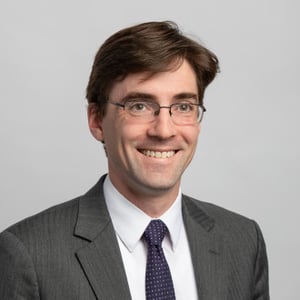
Deputy Litigation Director, Institute for Justice
Robert McNamara serves as Deputy Litigation Director with the Institute for Justice. He joined the Institute in August 2006 and litigates cutting-edge constitutional cases protecting free speech, property rights, economic liberty and other individual liberties in both federal and state courts.
Robert’s work has resulted in court victories for property owners fighting eminent domain abuse, tour guides fighting unconstitutional restrictions on their speech, taxi drivers seeking the right to own their own business, and many others. Robert also litigates in defense of innovation and entrepreneurship in medical care and was co-counsel in Flynn v. Holder, IJ’s landmark challenge to the federal prohibition on compensating bone marrow donors.
Robert’s writing has been published by outlets including The New York Times, The Wall Street Journal, The Washington Post and dozens more nationwide. His opinions and views on legal issues have been featured in radio and television programs ranging from National Public Radio’s All Things Considered to Fox News Channel’s Hannity & Colmes.
Robert is a graduate of Boston University and the New York University School of Law, where he was a founding member and eventual editor-in-chief of the NYU Journal of Law & Liberty. He currently lives in Virginia with his wife and children.
Robert McNamara is a member of the Virginia bar.
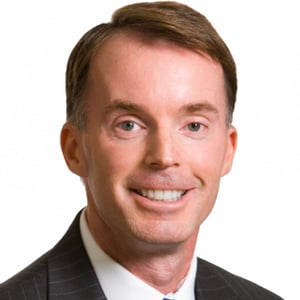
Senior Legal Fellow and Manager, National Security Law Program, The Heritage Foundation
Charles “Cully” Stimson is a widely recognized expert in national security, homeland security, crime control, drug policy and immigration. A senior legal fellow at The Heritage Foundation since 2007, Stimson became Manager of the National Security Law Program in Heritage’s Institute for Constitutional Government in April 2013 after serving as Heritage’s chief of staff for a year.
Stimson writes and lectures on policy issues such as the law of armed conflict, terrorist detainee policy and interrogations, the Geneva Conventions, military commissions, the Patriot Act and FISA, criminal law and the death penalty, immigration and the war on drugs. As chief of staff to then-Heritage President Edwin J. Feulner, he was a key adviser on public policy matters as well as manager of Feulner’s office staff and Heritage’s day-to-day operations.
Stimson’s many research papers, op-eds and articles include special reports such as “Adult Time for Adult Crime,” a comprehensive study on the constitutionality of life sentences for teen-age murderers, and Sexual Assault in the Military: Understanding the Problem and How to Fix It, a ground-breaking paper detailing the inner workings of the military justice system compared to its civilian counterpart. His work on criminal and immigration law has been cited in briefs before the U.S. Supreme Court.
He testifies before the U.S. Senate and House on national security issues, and recently testified before the Senate Armed Services Committee on the Law of Armed Conflict, Law of War, and the 2001 Authorization for Use of Military Force.
Before joining the think tank in 2007, Stimson served as Deputy Assistant Secretary of Defense for Detainee Affairs. He advised then-Secretaries of Defense Donald Rumsfeld and Robert Gates and coordinated the Pentagon’s global detention policy and operations, including at Guantanamo Bay and in Iraq and Afghanistan. He was chairman of detainee-related panels such as the Defense Senior Leadership Oversight Committee, and the Special Detainee Follow Up Group. He represented the United States before the U.N. in Geneva, Switzerland in May 2006 where he led the DOD delegation in defense of the United States’ Second Period Report on the Convention Against Torture.
An accomplished trial lawyer, Stimson worked as a prosecutor at the local, state and federal levels, where he concentrated on violent crimes such as homicide, sexual assault and domestic violence. A third generation naval officer, Cully also served as a military prosecutor, defense counsel, and recently served as Deputy Chief Judge of the Navy-Marine Corps Trial Judiciary. He continues to serve, with the rank of Captain, as the Commanding Officer of the Preliminary Hearing Unit.
Stimson’s thousands of media interviews and appearances include Fox News Channel, MSNBC, CNN, BBC, NPR and C-SPAN. He has been quoted by most major newspapers, including The Washington Post, Wall Street Journal, New York Times, Los Angeles Times, and London Times.
A businessman and educator by training, Stimson is Vice Chairman of his family’s commercial real estate company in Seattle. Before 9/11, he was a Vice President at a New York-based global financial services and insurance brokerage firm where ran the private equity mergers and acquisitions D.C. operation.
Stimson holds a law degree from the George Mason University School of Law, where he later taught as an Adjunct Professor of Law. He is a graduate of Kenyon College, where he was Captain of the men’s varsity soccer team and an All-Conference player. He also studied at Harvard and Exeter universities. An avid soccer player and triathlete, he serves as Chairman of the Board of the United States Soccer Foundation, the charitable giving arm of U.S. Soccer.
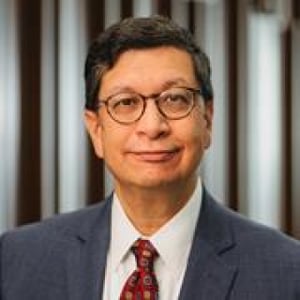
James T. Jensen Endowed Professor for Transactional Law & Director of the Program on Intellectual Property and Technology Law, University of Utah S.J. Quinney College of Law
Jorge L. Contreras is a Distinguished University Professor, the James T. Jensen Endowed Professor for Transactional Law and Director of the Program on Intellectual Property and Technology Law. He teaches and researches in the areas of intellectual property, property law, technical standardization, antitrust and science policy. In 2020 he received the University of Utah's Distinguished Research Award and is an elected member of the American Law Institute. He has testified before the U.S. Senate and House Subcommittees on Intellectual Property, and was awarded the Rossman Memorial Award by the Patent & Trademark Office Society in 2022.
Professor Contreras has written or edited fourteen books and published more than 150 scholarly articles and chapters. His book, The Genome Defense: Inside the Epic Legal Battle to Determine Who Owns Your DNA (NY: Hachette/Algonquin, 2021), has been praised by the NY Times, Wall St. Journal, Nature and numerous other outlets, and was named "Best Patent Law Book of the Year" by the international IPKat blog. His scholarly articles have appeared in leading scientific, legal and policy journals including Science, Nature, NYU Law Review, Georgetown Law Journal, Iowa Law Review and Antitrust Law Journal. He has been quoted by media outlets around the world including the New York Times, Wall Street Journal, Economist, Bloomberg, Washington Post, Korea Times and has been featured on C-SPAN, NPR, PRI and BBC shows and a range of podcasts and online news programs.
Professor Contreras currently serves Co-Chair of the Interdisciplinary Division of the ABA's Section of Science & Technology Law and a member of the Advisory Board of the American Antitrust Institute. He has previously served as Co-Chair of the National Conference of Lawyers and Scientists, a member of the National Academy of Sciences (NAS) Committee on Intellectual Property Management in Standard-Setting Processes, the National Institutes of Health (NIH) Council of Councils, the Advisory Council of NIH's National Center for the Advancement of Translational Sciences (NCATS), the National Advisory Council for Human Genome Research, and the Intellectual Property Rights Policy Committee of the American National Standards Institute (ANSI). In 2021 he served as Chair of the Art Law Section of the Association of American Law Schools (AALS) and currently serves as Chair of the AALS Remedies Section.
Professor Contreras has previously taught at American University Washington College of Law and Washington University in St. Louis. Prior to entering academia he was a partner at the international law firm Wilmer Cutler Pickering Hale and Dorr LLP, where he practiced transactional and intellectual property law in Boston, London and Washington DC. He is a cum laude graduate of Harvard Law School (JD) and Rice University (BA, BSEE) and clerked for Chief Justice Thomas R. Philips of the Texas Supreme Court.

Laurence A. Tisch Professor of Law and Director, Classical Liberal Institute, New York University School of Law; Director, Classical Liberal Institute, Civitas Institute University of Texas at Austin
Richard A. Epstein is the Laurence A. Tisch Professor of Law, at New York University, a senior research fellow at the Civitas Institute at the University of Texas Austin, and a senior Lecturer, the University of Chicago. He received an LL.D., h.c . from the University of Ghent, 2003 , and an LLD h.c . from the University of Siegen in 2018 and the Bradley Prize in 2011. He has been a member of the American Academy of Arts and Sciences since 1985. He has edited both the Journal of Legal Studies (1981-1991) and the Journal of Law and Economics (1991-2001). He is also a founder and director of the Classical Liberal Institute at NYU Law School. His most recent book is The Classical Liberal Constitution: The Uncertain Quest for Limited Government (2014). His other books include Takings: Private Property and the Power of Eminent Domain ( 1985); Bargaining with the State (1993); Simple Rules for a Complex World (1995); Principles for a Free Society: Reconciling Individual Liberty and the Common Good (1998); Skepticism and Freedom: A Modern Theory of Classical Liberalism (2003); Design for Liberty: Private Property, Public Administration and the Rule of Law (2011), and most recently, The Myth of Birthright citizenship—and Beyond (2026). He has taught courses in , administrative law, antitrust, constitutional, contracts, environmental law, land use planning; real property, torts and water law. He has written and spoken extensively on a wide range of topics, and is writes a regular column for Defining Ideas.
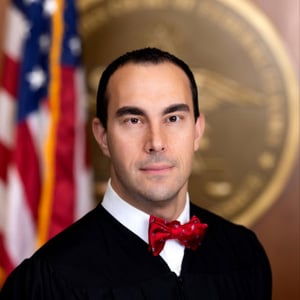
U.S. Court of Federal Claims and Jurist-In-Residence Professor of Law, The University of Akron School of Law
Judge Ryan T. Holte was sworn in as a judge on the United States Court of Federal Claims in July 2019. Prior to confirmation he served as the David L. Brennan Professor of Law and Director of the Center for Intellectual Property Law and Technology at The University of Akron School of Law (2017-2019) and an assistant professor of law at Southern Illinois University School of Law (2013-2017). Judge Holte has written and presented widely on patent law subjects and empirical legal studies of Federal Circuit and district court patent law cases. His most recent articles were published in the Iowa Law Review (2019), George Mason Law Review (2018), and Washington Law Review (2017).
In practice, Judge Holte served for six years as general counsel and partner of an electrical engineering technology company and is co-inventor of multiple patents related to Systems and Methods for Countering Satellite-Navigated Munitions. Prior to entering academia, Judge Holte practiced as a litigation attorney at the Federal Trade Commission and an associate in the Intellectual Property Practice Group at Jones Day. Prior to practice, he served as a law clerk to Judge Stanley F. Birch, Jr. on the United States Court of Appeals for the Eleventh Circuit and as a law clerk to Judge Loren A. Smith on the United States Court of Federal Claims.
Judge Holte received his JD from the University of California Davis School of Law and his BS, magna cum laude, in engineering from the California Maritime Academy where he was a First Class graduate of the Corps of Cadets Third Engineering Division and sailed as a U.S. Merchant Marine oiler.
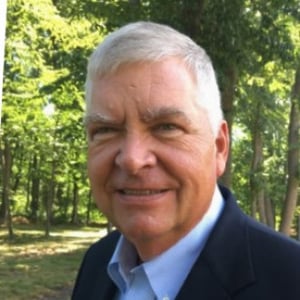
Founder and Principal, Johnson-IP Strategy & Consulting
Philip S. Johnson is Founder and Principal of Johnson-IP Strategy & Consulting. He previously served as Senior Vice President - Law Department and Chief Intellectual Property Counsel of Johnson & Johnson, having joined the corporation in January 2000 after 27 years in private practice. In this position, he managed about 110 patent and trademark attorneys worldwide. Phil is Chair of the Board of Directors of the American Intellectual Property Law Education Foundation, Vice President and President Elect of the Intellectual Property Owners Association, and a member of the Board of the Intellectual Property Owners Association Education Foundation (Past President). He is also a member of the Steering Committee of the Coalition for 21st Century Patent Reform, of the Association of Corporate Patent Counsel (Past President) and of PhRMA’s IP Focus Group (Chair Emeritus). Previously, Phil served as President of INTERPAT.
Before joining Johnson & Johnson, Phil was a senior partner and co-chair of IP litigation at Woodcock Washburn in Philadelphia, where he specialized in intellectual property issues affecting major pharmaceutical, medical device and consumer product companies. Phil has served as trial counsel in over 100 patent cases, including over 50 resulting in reported decisions of the federal district courts and/or of the Federal Circuit Court of Appeals. Phil regularly testifies before both the House and Senate Judiciary Committees on the subject of patent law reform and, more recently, abusive patent litigation. Phil served as a member of Chief Judge Michel’s Advisory Council on Patent Reform, and was recognized in the Congressional Record as a member of the Minority Whip’s “Kitchen Cabinet” for the America Invents Act. Thereafter, Phil served as IPO’s representative on the ABA-AIPLA-IPO committee of six experts (“COSE”) formed at Director Kappos’ request to propose to the USPTO implementing regulations for the PGR-IPR post-grant proceedings created by the AIA.
Phil co-authored “Compensatory Damages Issues In Patent Infringement Cases, A Pocket Guide for Federal District Court Judges,” published by the Federal Judicial Center, and has served that Center as a faculty member on its IP-related judicial education programming. Phil was also featured in the Landslide Publication March/April 2013 issue. The New Jersey Intellectual Property Law Association awarded Phil with its 2013 Jefferson Medal, presented on June 7, 2013.
Phil received his Bachelor of Science degree, cum laude with distinction in biology from Bucknell University, and his J.D. degree from Harvard Law School, where his third year advisor was now-Supreme Court Justice Stephen Breyer.
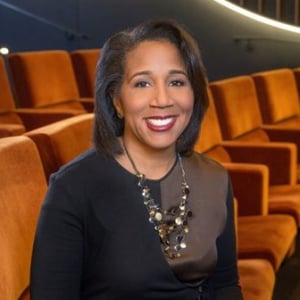
Senior Executive Vice President and Global General Counsel, Motion Picture Association
Karyn A. Temple is Senior Executive Vice President and Global General Counsel for the Motion Picture Association. One of the world’s leading authorities on copyright, Ms. Temple oversees all of the Association’s legal affairs and content protection efforts around the world.
Prior to joining the Motion Picture Association, Ms. Temple served more than eight years in the U.S. Copyright Office, most recently as the Register of Copyrights, where she led the 400-person agency and its eight divisions. Prior to leading the U.S. Copyright Office, Ms. Temple headed its Office of Policy and International Affairs, as well as served in policy and litigation roles at the U.S. Department of Justice; she most recently served in the Obama Administration as Senior Counsel to the Deputy Attorney General of the United States.
Ms. Temple received her J.D. from Columbia University School of Law and her B.A. in English from the University of Michigan.
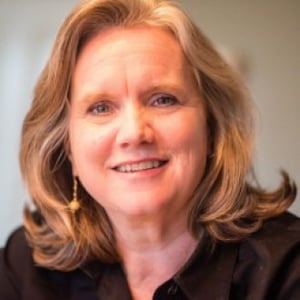
Principal, Sharon Fast Gustafson, Attorney at Law, PLC
SHARON FAST GUSTAFSON is the immediate past General Counsel of the U.S. Equal Employment Opportunity Commission (EEOC), where she enforced Title VII of the Civil Rights Act of 1964, the Americans with Disabilities Act, and the Age Discrimination in Employment Act.
Ms. Gustafson graduated with honors from Georgetown Law Center in 1991 and has concentrated her practice in employment law. She worked for four years in the labor and employment law group at Jones, Day in Washington, D.C. Since that time, she has had a broad-based solo practice advising and representing employers and employees in handling all aspects of the employment relationship, in compliance with federal and state workplace laws, and in designing and implementing sound employment policies and practices.
Ms. Gustafson is an experienced litigator in federal and state courts; before administrative agencies, including the EEOC, state and local civil rights offices, and the Department of Labor (DOL) Wage and Hour Division; and in mediation and arbitration. She is admitted to practice in state and federal courts in Virginia, Maryland, and the District of Columbia, and in the United States Supreme Court.
Ms. Gustafson successfully litigated a pregnancy discrimination case, Young v. UPS, 575 U.S. 206 (2015), from EEOC intake to a successful outcome at the U.S. Supreme Court. In 2016, she received the Metropolitan Washington Employment Lawyers Association’s “Lawyer of the Year” award “in recognition of outstanding dedication to Civil Rights, Equality, and Justice.”
Ms. Gustafson represents both employers and employees in matters relating to employment law.
General Counsel, United States National Labor Relations Board
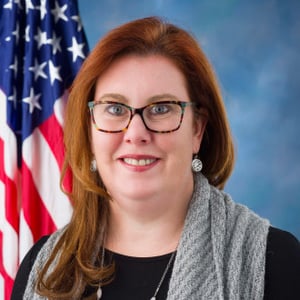
Chief Legal and Government Affairs Officer, BrightStar Care
Cheryl M. Stanton is Chief Legal and Government Affairs Officer at BrightStar Care. Prior to joining BrightStar Care, she served as Administrator of the Department of Labor’s Wage and Hour Division. She was sworn in as WHD’s Administrator by U.S. Secretary of Labor Alexander Acosta on April 29, 2019.
Stanton brought a wealth of experience to WHD, most recently having served as the Executive Director of the South Carolina Department of Employment and Workforce. Under her leadership, South Carolina’s jobless rate dropped to its lowest point in at least 50 years. During that time period, South Carolina’s workforce system helped place over 500,000 South Carolinians into jobs. Stanton also partnered with her colleague at the Department of Corrections to create a job re-entry program for ex-offenders, receiving national accolades. She also oversaw two major information technology modernization projects that improved customer service and increased efficiencies for employees.
Stanton served as the White House’s principal legal liaison to the DOL under President George W. Bush. She is a graduate of Williams College, and earned her law degree from the University of Chicago Law School.
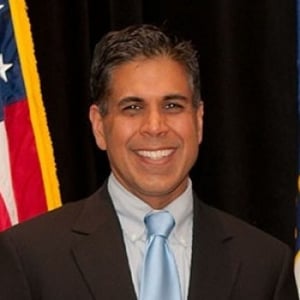
Judge, United States Court of Appeals, Sixth Circuit
Amul R. Thapar serves as a judge on the United States Court of Appeals for the Sixth Circuit. His judicial career began in 2007 when President George W. Bush nominated him to serve on the Eastern District of Kentucky, making him the first South Asian Article III judge in American history. In 2017, he became President Donald J. Trump’s first appellate court nominee.
Before joining the bench, Judge Thapar served as the United States Attorney for the Eastern District of Kentucky. While United States Attorney, Judge Thapar worked on the Attorney General’s Advisory Committee (“AGAC”) and chaired the AGAC’s Controlled Substances and Asset Forfeiture subcommittee. He also served on the Terrorism and National Security subcommittee, the Violent Crime subcommittee, and the Child Exploitation working group.
Judge Thapar has worked in private practice, at Williams & Connolly in Washington, D.C., and Squire, Sanders & Dempsey in Cincinnati, Ohio. He also served as an Assistant United States Attorney in both the Southern District of Ohio and the District of Columbia.
Judge Thapar received his undergraduate degree from Boston College and his law degree from the University of California, Berkeley. After graduating, Judge Thapar worked as a law clerk to the Honorable S. Arthur Spiegel of the United States District Court for the Southern District of Ohio, and the Honorable Nathaniel R. Jones of the United States Court of Appeals for the Sixth Circuit.
Judge Thapar has also published in the Yale Law Journal, Michigan Law Review, and Catholic University Law Review. He teaches courses on originalism, the Federalists and Anti-Federalists, and legal writing at Notre Dame Law School, the University of Virginia School of Law, and Vanderbilt Law School.
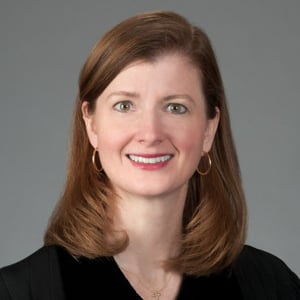
Judge, United States Court of Appeals, Eleventh Circuit
On March 20, 2018, Judge Elizabeth L. Branch (Lisa) was sworn in as a United States Circuit Judge for the Eleventh Circuit.
Judge Branch attended and graduated from Davidson College in North Carolina (B.A., cum laude, 1990), and Emory University School of Law (J.D., with distinction, 1994).
After graduating from law school, Judge Branch served as a federal law clerk to The Honorable J. Owen Forrester of the U.S. District Court for the Northern District of Georgia from 1994 to 1996. Following her clerkship, Judge Branch joined the litigation department of Smith, Gambrell & Russell, LLP in Atlanta as an associate and then a partner.
From 2004 to 2008, Judge Branch was a senior official in the Administration of President George W. Bush in Washington, D.C. She served first as the Associate General Counsel for Rules and Legislation at the U.S. Department of Homeland Security and then as the Counselor to the Administrator of the Office of Information and Regulatory Affairs at the U. S. Office of Management and Budget.
She returned to Smith Gambrell in 2008 as a litigation partner. Judge Branch then was appointed to the Court of Appeals of Georgia by Governor Nathan Deal, taking office on September 4, 2012, where she served until March 19, 2018.
Judge Branch is a member of the Board of Advisors of the Atlanta Lawyers Chapter for the Federalist Society for Law and Public Policy Studies.
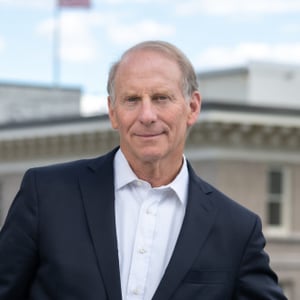
President, Council on Foreign Relations
Dr. Richard Haass is a veteran diplomat, a prominent voice on American foreign policy, and an established leader of nonprofit institutions. He is in his eighteenth year as president of the Council on Foreign Relations, an independent, nonpartisan membership organization, think tank, publisher, and educational institution dedicated to being a resource to help people better understand the world and the foreign policy choices facing the United States and other countries.
In 2013, he served as the chair of the multiparty negotiations in Northern Ireland that provided the foundation for the 2014 Stormont House Agreement. For his efforts to promote peace and conflict resolution, he received the 2013 Tipperary International Peace Award.
From January 2001 to June 2003, Dr. Haass was director of policy planning for the Department of State, where he directed the policy planning staff and was a principal advisor to Secretary of State Colin Powell. Confirmed by the U.S. Senate to hold the rank of ambassador, Dr. Haass also served as U.S. coordinator for policy toward the future of Afghanistan and U.S. envoy to the Northern Ireland peace process.
Dr. Haass has extensive additional government experience. From 1989 to 1993, he was special assistant to President George H.W. Bush and senior director for Near East and South Asian affairs on the staff of the National Security Council. In 1991, Dr. Haass was awarded the Presidential Citizens Medal for his contributions to the development and articulation of U.S. policy during Operations Desert Shield and Desert Storm. Previously, he served in the Departments of State (1981–1985) and Defense (1979–1980), and was a legislative aide in the U.S. Senate.
A Rhodes Scholar, Dr. Haass holds a bachelor’s degree from Oberlin College and master’s and doctorate of philosophy degrees from Oxford University. He has also received numerous honorary degrees and was a member of the faculty of Harvard University’s Kennedy School of Government and Hamilton College.
Dr. Haass is the author or editor of fourteen books on American foreign policy and one book on management. His latest book is The World: A Brief Introduction, published by Penguin Press.
Dr. Haass was born in Brooklyn, New York, and lives in New York City.
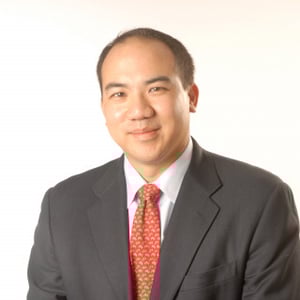
Maurice A. Deane Distinguished Professor of Constitutional Law and Faculty Director of International Programs, Hofstra University School of Law
Professor Ku’s primary research interest is the relationship of international law to constitutional law. He has also conducted academic research on a wide range of topics including international dispute resolution, international criminal law, and China’s relationship with international law. He teaches courses such as U.S. constitutional law, U.S. foreign affairs law, transnational law, and international trade and business law. Since 2014, he has served as the faculty director of international programs, overseeing Hofstra Law’s study abroad, exchange and LL.M. programs. Professor Ku also teaches Constitutional Law in our online degree programs: Master of Laws in American Law and Master of Arts in American Legal Studies. He has also been selected as the John DeWitt Gregory Research Scholar and as a Hofstra Law Research Fellow. He is a member of the American Law Institute.
He is the co-author, with John Yoo, of Taming Globalization: International Law, the U.S. Constitution, and the New World Order (Oxford University Press 2012). He also has published more than 40 law review articles, book chapters and symposia essays. He has given dozens of academic lectures and workshops at major universities and conferences in the United States, Europe and Asia.
He co-founded the leading international law weblog Opinio Juris, which is read daily by thousands worldwide. His essays and op-eds have been published in major news publications such as the Wall Street Journal, the Los Angeles Times, and the NYTimes.com. He has been frequently interviewed for television news programs and quoted in print and electronic media. He has also signed or submitted amicus briefs to national and international courts and served as an expert witness in both domestic and international proceedings.
Before joining the Hofstra Law faculty, Professor Ku served as a law clerk to the Honorable Jerry E. Smith of the U.S. Court of Appeals for the Fifth Circuit and as an Olin Fellow and Lecturer in Law at the University of Virginia Law School. Professor Ku also practiced as an associate at the New York City law firm of Debevoise & Plimpton, specializing in litigation and arbitration arising out of international disputes. He has been a visiting professor at the College of William & Mary Marshall- Wythe School of Law in Williamsburg, Virginia; a Fulbright Distinguished Lecturer in Law at East China University of Political Science and Law in Shanghai, China; and a Taiwan Fellow at National Taiwan University in Taipei, Taiwan. He is a member of the New York Bar and a graduate of Yale College and Yale Law School.
Executive Vice President, The Federalist Society
Dean Reuter is Executive Vice President at the Federalist Society for Law and Public Policy Studies. He has served in two federal government agency Offices of the Inspector General, as Counsel to the Inspector General and Deputy Inspector General, responsible for policing the use of federal funds granted and contracted through those agencies. As such, he helped conduct and oversee criminal investigations across the country. He is the principal author of the non-fiction book, The Hidden Nazi: The Untold Story of America's Deal with the Devil, and editor of Liberty’s Nemesis: The Unchecked Expansion of the State and Confronting Terror: 9/11 and the Future of American National Security. He was appointed by the President and served as Vice-Chairman of the Board of Directors of the Corporation for National and Community Service, and recently served as an appointee on the U.S. Commission on Presidential Scholars. He is a graduate of Hood College (BA with Honors) and the University of Maryland School of Law.
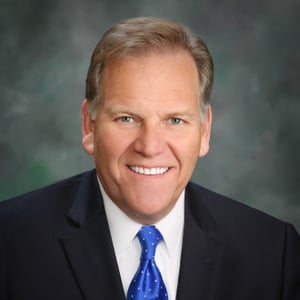
David Abshire Chair, Center for the Study of the Presidency and Congress
Mike Rogers is a former member of Congress representing Michigan's Eighth Congressional District, and previously served as an officer in the U.S. Army and FBI special agent.
While in Congress Mr. Rogers chaired the powerful House Permanent Select Committee on Intelligence (HPSCI) where he authorized and oversaw a budget of $70 billion that funded the nation's 17 intelligence agencies.
He currently serves as the Vice Chairman of the Board at the MITRE Corporation, and as a Director at leading companies including CyberSponse, IAP, and 4IQ. He is currently investing in and helping build companies that are developing solutions for healthcare, energy efficiency and communications challenges.
Mr. Rogers is a Senior Fellow at Harvard University and a member of the Board of Trustees and the David Abshire Chair at the Center for the Study of the Presidency and Congress, where he directs the Center’s national security programs. Mr. Rogers is a regular public speaker on global affairs, cybersecurity, and leadership.
He also serves as a regular national security commentator on CNN and hosted the channel’s documentary-style original series Declassified, which offered viewers insights into America’s spy stories. Mr. Rogers is a 1985 graduate of Adrian College. He is married to Kristi Rogers and has two children.

Address by Justice Samuel Alito
2020 National Lawyers Convention
Address by Judge Janice Rogers Brown
2020 National Lawyers Convention
Showcase Panel II: The Presidency and the Rule of Law
2020 National Lawyers Convention
Address by Secretary of Labor Eugene Scalia
2020 National Lawyers Convention
Showcase Panel I: Law, Social Justice, Wokeness and the Protests: Where Do We Go From Here?
2020 National Lawyers Convention
Showcase Discussion: A Discussion with Professors Robert George and Cornel West on Freedom of Speech, Freedom of Thought, the Black Lives Matter Movement, and the Cancel Culture
2020 National Lawyers Convention
Civil Rights: Modern Quandaries of Law Enforcement
2020 National Lawyers Convention
Intellectual Property: Intellectual Property Rights and the Rule of Law
2020 National Lawyers Convention
Labor & Employment Law: Agency Leaders on Labor Policy
2020 National Lawyers Convention
International & National Security Law: The Law, China, and the Possible New Cold War
2020 National Lawyers Convention