
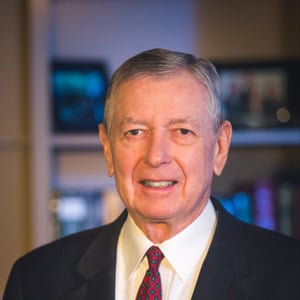
Chairman, The Ashcroft Law Firm LLC, and former United States Attorney General
Former U.S. Attorney General, Governor and U.S. Senator John Ashcroft serves as the firm’s founder and chairman. As Attorney General, and the U.S. Justice Department’s CEO, Mr. Ashcroft led the world’s largest and foremost international law firm and law enforcement agency—an organization larger than most Fortune 500 companies, with over 122,000 employees. Mr. Ashcroft integrated strategic planning, budgeting, and performance measures, which resulted in the DOJ earning a clean audit for the first time in its history.
Mr. Ashcroft boldly led the Department of Justice through the transformational period after the September 11, 2001, terrorist attacks. He subsequently reorganized the Department to focus on its number one priority: preventing terrorism. The tough antiterrorism campaign he directed helped keep America safe throughout his tenure and resulted in the dismantling of terrorist cells across America and the disruption of over 150 terrorist plots worldwide.
Within two months of the attacks, and with financial markets still reeling, the unprecedented corporate scandals at ENRON, WorldCom and dozens more unfolded, further destabilizing the weakened economy. John Ashcroft was called upon to restore America’s faith in the integrity of our marketplace. He marshaled the resources of the federal government to bring to justice those guilty of massive corporate fraud. At all times, he demanded that cases be brought swiftly, with appropriate serious penalties—always taking into account the best interests of the employees and shareholders whose lives were most directly affected.
From 1985 to 1993, as Governor of Missouri, Ashcroft balanced eight consecutive budgets, built a $120 million budget surplus and established a $190 million operating reserve. His management and fiscal integrity helped generate 338,000 new jobs state-wide, a triple-A bond rating from the three major Wall Street rating agencies, a per capita state and local tax burden ranked 49th in the United States and a 12 percent increase in personal income. His new education performance standards led Fortune magazine to name him as one of the nation’s top ten Education Governors. In 1991, the non-partisan National Governors Association voted him Chairman.
Elected to the U.S. Senate in 1994, he brought his management skills to Washington where he authored budget rules protecting Social Security and Medicare and helped balance the federal budget for the first time in decades. As a member of the Senate Judiciary, Foreign Relations and Commerce Committees, he worked to reform laws regulating the banking, telecommunications, aviation, transportation and information technology industries.
In 1973, Mr. Ashcroft served as Missouri Auditor, followed by two terms as Missouri Attorney General. He was raised in Springfield, Missouri, received his undergraduate degree from Yale University and his Juris Doctor from the University of Chicago.
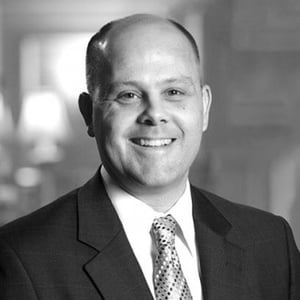
Founding Partner, PNT Law Firm
Austin R. Nimocks has litigated in state and federal courts across the country. Mr. Nimocks focuses his practice on civil litigation (plaintiff and defense), commercial litigation, corporate matters, federal compliance, internal investigations, government relations, white-collar criminal defense, and religious freedom.
Litigating for over 25 years, including three as a public defender, Mr. Nimocks has practiced law within the private, government, and non-profit sectors, geographically spanning the United States and beyond.
Prior to starting the PNT Law Firm (www.pntlawfirm.com), Mr. Nimocks worked for former U.S. Attorney General John Ashcroft in the Ashcroft Law Firm in Austin, Texas. For General Ashcroft, Mr. Nimocks litigated cases against all levels of government (federal, state, and local).
Prior to joining General Ashcroft, Mr. Nimocks served in the Executive Administration of Texas Attorney General Ken Paxton as both Special Counsel and the Associate Deputy Attorney General for Special Litigation. During his time with General Paxton, Mr. Nimocks coordinated and led myriad multi-state lawsuits and strategic litigation against the federal government, other states, and local government entities. On behalf of Texas (and other states), Mr. Nimocks’ teams achieved many victories against the federal government, including the U.S. Department of Justice, U.S. Department of Labor, U.S. Department of Health and Human Services, and other federal agencies
Before joining the Texas Attorney General’s Office, Mr. Nimocks served as Senior Counsel for Alliance Defending Freedom (“ADF”) in Washington, D.C. While at ADF, Mr. Nimocks handled appeals and litigated constitutional cases in state and federal courts across the country, including matters regarding marriage, parental rights, voters’ rights, and religious freedom. Mr. Nimocks also authored several pieces of legislation and policy memoranda and testified before numerous state legislatures, as well as Congress. While with ADF, Mr. Nimocks made regular public appearances, speaking at numerous events and participating in hundreds of television, radio, and newspaper interviews with all major national media outlets.
Mr. Nimocks began practicing law on the Mississippi Gulf Coast. In addition to his time spent as a public defender, Mr. Nimocks’ law practice in Mississippi was extremely diverse, involving personal injury, commercial litigation, appellate, contracts, real estate, administrative law, bankruptcy, libel & defamation, insurance defense, general civil litigation, and other matters.
In addition to his state bar admissions (TX, DC, MI, AZ, AL, MS), Mr. Nimocks is admitted to practice law before the U.S. Supreme Court, the U.S. Courts of Appeals for the D.C., First, Second, Third, Fourth, Fifth, Sixth, Seventh, Ninth, Tenth, and Eleventh Circuits, as well as numerous federal district courts.
Mr. Nimocks is a native Texan, born and raised in the Fort Worth area. Mr. Nimocks resides and attends church in Dripping Springs, Texas, along with his wife and three daughters.
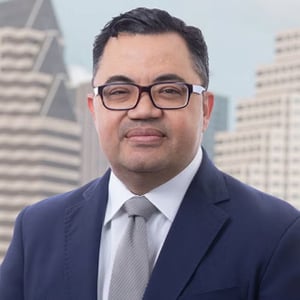
Partner, Troutman Pepper Locke
Lu is a former senior U.S. government official with a wealth of experience advising U.S. and international clients with complex regulatory and enforcement challenges. He has extensive experience representing clients facing state or federal government investigations and enforcement actions, conducting internal investigations, and advising corporate clients on regulatory compliance practices and in crisis response scenarios. As an accomplished legal strategist, Lu provides counsel to CEOs, CLO’s, and other executives, as well as boards of directors across various industries on a myriad of complex issues.
Lu’s clients benefit from his decades of experience providing strategic advice to top-tier government leaders, including the President of the United States and multiple United States Attorneys General. His career is marked by significant roles in federal and state government.
As Deputy Assistant to President George W. Bush, he was a chief advisor to the President and a member of the White House Senior Staff. In that role he provided strategic and human capital related policy advice directly to the President regarding all legal, national security, and international affairs, and presidential appointments administration-wide.
As Deputy Associate Attorney General at the U.S. Department of Justice, he served as Chief of Staff to the Associate Attorney General and had oversight of litigation emanating from the Tax, Civil Rights, Civil, and Community Relations Service Divisions of the agency. At the Department, he also previously served as Counselor to the Assistant Attorney General of the Civil Rights Division, and as Counsel to the Assistant Attorney General for the Civil Division, the division responsible for representing the U.S. in all constitutional challenges to U.S. law and defending the U.S. on all torts, federal programs, and immigration-related litigation.
Prior to joining private practice, Lu also served as the General Counsel for the federal law enforcement agency charged with rooting out waste, fraud, and abuse of the $50+ billion appropriated for the reconstruction of Iraq where he oversaw several federal fraud prosecutions in conjunction with the U.S. Department of Justice Criminal Frauds Section.
Earlier in his career, Lu served as an Assistant Attorney General and Trial Attorney for the Office of the Texas Attorney General, where he handled a robust civil litigation practice at the trial and appellate levels in both state and federal court.
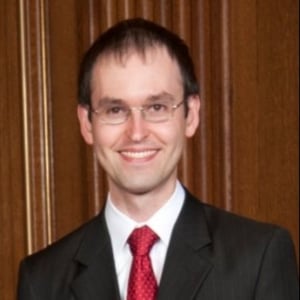
Partner, Cooper & Kirk PLLC
BRIAN W. BARNES has litigated high-stakes cases at all levels of the federal court system and has also argued numerous cases in state trial and appellate courts. He was the principal author of the briefs for the petitioners in Collins v Mnuchin, a multi-billion-dollar administrative law case challenging the nationalization of Fannie Mae and Freddie Mac, which is currently pending in the United States Supreme Court. In related litigation, Mr. Barnes deposed several of the current and former senior executives for Fannie Mae and Freddie Mac, including both companies’ former CEOs. Mr. Barnes also played a central role representing shareholders in disputes over the scope of the government’s discovery obligations in the Fannie Mae/Freddie Mac litigation, successfully persuading the Court of Federal Claims to order the government to show plaintiffs’ counsel most of the documents the government attempted to withhold under the deliberative process and bank examination privileges.
Mr. Barnes also has extensive experience representing plaintiffs in suits filed under the Racketeer Influenced and Corrupt Organizations Act (“RICO”). He briefed and argued St. Luke’s Health Network v. Lancaster General Hospital, 967 F.3d 295 (3d Cir. 2020), in which the Third Circuit reversed dismissal of RICO claims filed as part of a putative class action against a hospital that allegedly defrauded a Pennsylvania program that subsidizes care for indigent patients. Mr. Barnes also helped pioneer the use of RICO to sue state-legalized marijuana businesses: he filed the first such case, successfully argued the case on appeal after it was dismissed, and later helped try the case to a jury on remand. See Safe Streets Alliance v. Hickenlooper, 859 F.3d 865 (10th Cir. 2017).
Mr. Barnes has also worked on a wide range of other matters. He has briefed and argued cases concerning state preemption of local gun regulations in the trial and intermediate appellate courts of Illinois and Pennsylvania. In litigation over the Department of Education’s Title IX regulations, Mr. Barnes represents intervenors who are defending the regulations. And he has an active practice advising institutional investors on the probable outcomes of market-moving litigation in both state and federal courts.
Mr. Barnes clerked for Justice Samuel Alito during the Supreme Court’s 2012 Term and was previously a law clerk to Judge Thomas Griffith of the D.C. Circuit. He is a graduate of Yale Law School, where he was an Articles Editor for the Yale Law Journal and a member of the Yale Supreme Court Clinic. Mr. Barnes received his B.A. from Yale College and is a member of the Colorado and District of Columbia bars.
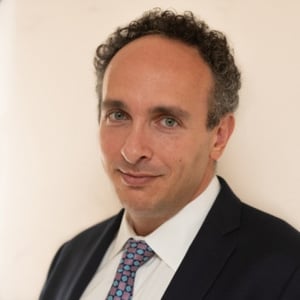
Assistant Professor of Cybersecurity Law, The United States Naval Academy
Jeff Kosseff is an Assistant Professor of Cybersecurity Law at the United States Naval Academy. He is the author of Cybersecurity Law (Wiley), the first comprehensive textbook on U.S. cybersecurity laws and regulations, and in spring 2019 he published The Twenty-Six Words that Created the Internet (Cornell University Press), a nonfiction narrative history of Section 230 of the Communications Decency Act. He currently is writing a third book, also for Cornell University Press, tentatively titled United States of Anonymous, about the history of the First Amendment right to anonymous speech in the United States, from the Federalist Papers to online postings. He received a 2019 Andrew Carnegie Fellowship to research and write the book.
His articles about cybersecurity and Internet law have appeared in Iowa Law Review, Wake Forest Law Review, IEEE Security & Privacy, Computer Law and Security Review, Columbia Science and Technology Law Review, and other publications. In October 2017, he testified about online sex trafficking and Section 230 before the House Judiciary Committee's Subcommittee on Crime, Terrorism, Homeland Security, and Investigations. In March 2017, he testified about Section 702 of the Foreign Intelligence Surveillance Act before the House Judiciary Committee.
Jeff has practiced cybersecurity and privacy law, and clerked for Judge Milan D. Smith, Jr. of the U.S. Court of Appeals for the Ninth Circuit and for Judge Leonie M. Brinkema of the U.S. District Court for the Eastern District of Virginia. He is a graduate of Georgetown University Law Center and the University of Michigan. Before becoming a lawyer, he was a journalist for The Oregonian and was a finalist for the Pulitzer Prize for national reporting.
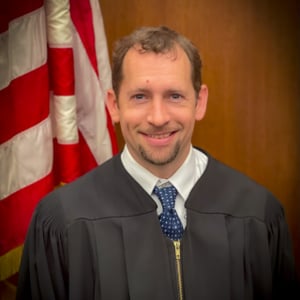
District Judge, United States District Court for the Northern District of Texas
Judge Brantley Starr was appointed to United States District Court for the Northern District of Texas in August 2019. Before his appointment, Judge Starr was the Deputy First Assistant Attorney General of Texas. Prior to that appointment, he served as Deputy Attorney General for Legal Counsel. From 2011 to 2015, Judge Starr served as career staff attorney to Texas Supreme Court Justice Eva Guzman. From 2008 to 2011, he practiced at King & Spalding, LLP. He served in the Office of the Solicitor General from 2006 to 2008. Prior to that, Judge Starr clerked for then-Justice Don Willett on the Texas Supreme Court after serving at the Office of the Attorney General. Judge Starr received his law degree from the University of Texas School of Law and his bachelor of arts degree from Abilene Christian University in 2001. Judge Starr has taught the Origins of the Constitution Class at the University of Texas law, Texas A&M law, and SMU law.

Executive Director, Engine
Kate has been at Engine since 2017 and has served as Engine’s Policy Director since 2019, working on privacy, intermediary liability, and telecommunications issues.
Prior to joining Engine, Kate worked on surveillance reform issues at the Electronic Frontier Foundation. Before joining the advocacy community, Kate spent years as a technology policy reporter in D.C., including at Politico, The Hill, and Communications Daily. She is a graduate of Hamilton College.

Thomas M. Siebel Senior Fellow, The Hoover Institution, Stanford University; Gary T. Schwartz Distinguished Professor of Law Emeritus, UCLA School of Law
Eugene Volokh is the Thomas M. Siebel Senior Fellow at the Hoover Institution (Stanford), as well as the Gary T. Schwartz Distinguished Professor of Law Emeritus and Distinguished Research Professor at UCLA School of Law. He recently retired from teaching at UCLA, after 30 years there, and is now focusing on research.
Volokh is the author of the textbooks The First Amendment and Related Statutes (8th ed. 2023), and Academic Legal Writing (5th ed. 2016), as well as over 100 academic law journal articles, mostly on First Amendment law. He is a member of The American Law Institute; the editor-in-chief of the Journal of Free Speech Law; and the creator and coauthor of The Volokh Conspiracy, a leading legal blog founded in 2002 (hosted at the Washington Post from 2014 to 2017 and now at Reason Magazine).
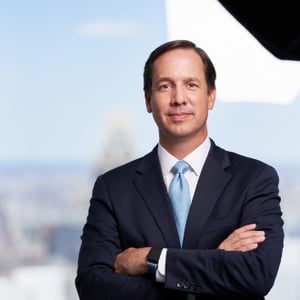
Counsel, Debevoise & Plimpton
Carter Burwell is a litigation counsel based in the Washington, D.C. office of Debevoise & Plimpton and a member of the firm’s White Collar & Regulatory Defense practice. His practice focuses on white collar criminal defense, government investigations and internal investigations, and national security matters.
Mr. Burwell joins Debevoise with more than 15 years of experience in senior roles across the federal government. Most recently, Mr. Burwell served as Counselor to the Secretary of the Treasury for Terrorism and Finance Intelligence, where he advised on matters involving financial sanctions and illicit finance, international corruption and human rights abuses and digital assets. At Treasury, Mr. Burwell worked directly with the National Security Council, other senior executive branch officials, foreign leaders and the private sector to develop and implement policies to protect domestic and international financial systems from national security threats. He also participated in the CFIUS review process and advanced anti-money laundering reforms under the Bank Secrecy Act.
Prior to his role at the Treasury Department, Mr. Burwell served as one of the top lawyers on the U.S. Senate Judiciary Committee, including as Chief Counsel to former Assistant Majority Leader and U.S. Senator John Cornyn and as Counsel to former Chairman and U.S. Senator Chuck Grassley. In the Senate, Mr. Burwell worked on bipartisan efforts to modernize national security and technology laws, reform the criminal justice system and conduct rigorous oversight of government officials and the private sector on matters of national consequence. Mr. Burwell also served as an Assistant U.S. Attorney in the Violent Crime and Terrorism Unit in the U.S. Attorney's Office in the Eastern District of New York (EDNY) and in the National Security and International Crimes Unit in the U.S. Attorney’s Office in the Eastern District of Virginia (EDVA). As a federal prosecutor at EDNY and EDVA, Mr. Burwell supervised and participated in a wide variety of investigations and prosecutions involving international and domestic terrorist groups, international cartels and racketeering organizations, as well as financial and cyber crimes. He successfully tried numerous cases to verdict and briefed and argued appeals in the U.S. Court of Appeals.
Earlier on in his career, Mr. Burwell served as a law clerk to U.S. District Court Judge Gleeson, now a Debevoise litigation partner, before going on to clerk on the U.S. Court of Appeals for the D.C. Circuit for the Hon. Judge Karen Henderson. Mr. Burwell was also a litigation associate at another international law firm.
He received his J.D. from the University Virginia School of Law in 2002, an M.Phil from the University of Cambridge in 1998, and his B.A. from Columbia College in 1996.
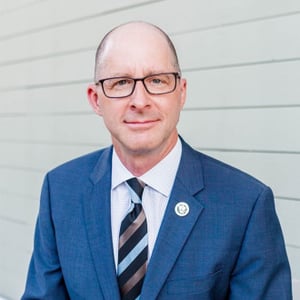
Judge, U.S. District Court for the Southern District of Texas
Hon. Charles Eskridge, Judge, United States District Court for the Southern District of Texas, Houston Division, was born in Cleveland, Ohio, and arrived in Houston, Texas, at the age of 11 with his parents in 1974.
Judge Eskridge received a B.S. from Trinity University and a J.D. from Pepperdine University School of Law. He served as a law clerk to Chief Judge Charles Clark of the United States Court of Appeals for the Fifth Circuit, as a law clerk to Justice Byron White of the Supreme Court of the United States, and as a special assistant to the Hon. Howard Holtzmann of the Iran/U.S. Claims Tribunal in The Hague.
From 1994 to 2019, Judge Eskridge was in private practice in Houston, Texas, litigating complex commercial disputes. He teaches Origins of the Federal Constitution at the University of Houston Law Center and has served as the Distinguished Visiting Practitioner of Law at the Pepperdine University School of Law.
President Donald J. Trump nominated him to the federal bench on May 3, 2019. Following confirmation by the Senate, Judge Eskridge took his seat on October 22, 2019.
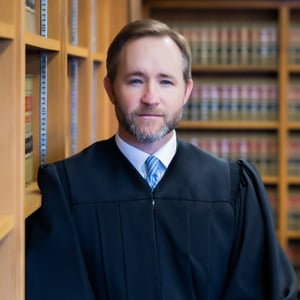
Judge, United States District Court for the Northern District of Texas
Wes Hendrix is a judge on the United States District Court for the Northern District of Texas. He was nominated by President Donald Trump in January 2019 and confirmed by the U.S. Senate in July 2019. He presides over federal civil and criminal cases in the Northern District’s Lubbock, Abilene, and San Angelo Divisions. He is a member of the Fifth Circuit’s Criminal Pattern Jury Instructions Committee and the Northern District of Texas’s Local Rules Committee. He is an adjunct professor at Texas Tech University School of Law.
Prior to his confirmation, Judge Hendrix served as the Appellate Chief for the Northern District of Texas’s United States Attorney’s Office. He served as Chair of the Department of Justice’s Appellate Chiefs Working Group and as an ex officio member of the Attorney General’s Advisory Committee. He regularly coordinated with the Department of Justice’s Criminal Division Appellate Section and the Office of the Solicitor General regarding cases appealed to and argued before the U.S. Supreme Court.
As an Assistant U.S. Attorney, he represented the United States at trial and on appeal. He helped prosecute Hosam Smadi, who was convicted of attempting to use a weapon of mass destruction in a downtown Dallas skyscraper. He also argued over 25 appeals at the Fifth and Seventh Circuits—including two en banc arguments—and served as sole counsel in over 350 appeals. He regularly taught courses at the Department of Justice’s National Advocacy Center.
Prior to his work as a prosecutor, Judge Hendrix was an associate at the Dallas office of Baker Botts L.L.P., where he focused on complex commercial, oil-and-gas, and intellectual-property litigation. He began his legal career as a law clerk to Judge Patrick Higginbotham of the United States Court of Appeals for the Fifth Circuit.
Judge Hendrix received his law degree from the University of Texas, where he served on the Texas Law Review and graduated with high honors and as a Chancellor-at-Large. He received his undergraduate degree with honors from the University of Chicago.
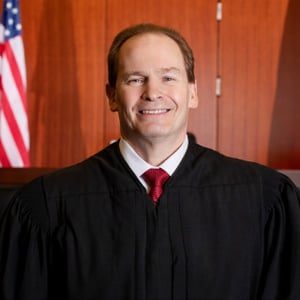
Judge, United States District Court for the Eastern District of Texas
Judge Sean Jordan is a federal district judge for the Eastern District of Texas, Sherman
Division. Prior to taking the bench, Judge Jordan worked on complex civil litigation and
appellate cases for twenty-five years in both government service and private practice.
He has managed the appellate sections of two large law firms and previously served as
Principal Deputy Solicitor General in the Office of the Solicitor General of Texas.
Judge Jordan received his B.A., summa cum laude, from the University of Texas at
Austin and his J.D., with honors, from the University of Texas School of Law. Prior to
attending UT Austin, he served in the U.S. Army as an infantryman and paratrooper in
the 82nd Airborne Division.
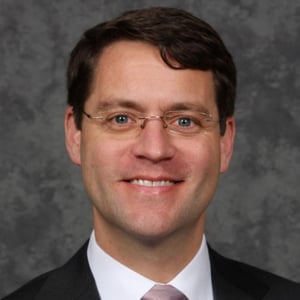
Judge, United States District Court for the Eastern District of Texas
Jeremy D. Kernodle is a judge on the United States District Court for the Eastern District of Texas. He was nominated by President Trump in 2018.
Kernodle previously served as a partner at Haynes and Boone, where he founded and chaired the firm’s False Claims Act practice group and focuses on representing healthcare providers and government contractors in federal courts throughout the country. He also served on the firm’s executive committee.
Kernodle is a past president of the Dallas Chapter of the Federal Bar Association and has served as secretary of the Dallas Bar Association’s Appellate Section.
Before joining Haynes and Boone, Kernodle was an attorney-advisor in the Office of Legal Counsel at the U.S. Department of Justice.
After earning his law degree at Vanderbilt in 2001, Kernodle was a law clerk for Judge Gerald Bard Tjoflat of the U.S. Court of Appeals for the Eleventh Circuit. He then joined Covington and Burling in Washington, D.C., as an associate.
He earned his B.A. and B.B.A., both summa cum laude, from Harding University.
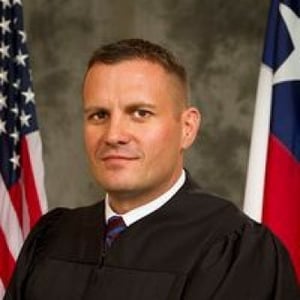
Judge, United States District Court for the Northern District of Texas
Immediately preceding his appointment to the federal bench, Judge Pittman was an Associate Justice on the Court of Appeals for the Second District of Texas since 2017. Prior to his appointment to the Court of Appeals, he served for two years on the trial bench of the 352nd Judicial District Court in Tarrant County.
Judge Pittman is also an experienced litigator, having served as an Enforcement Attorney at the U.S. Securities and Exchange Commission, where he also spent a year on special assignment prosecuting economic crimes as a Special Assistant U.S. Attorney. Prior to that, he was a Senior Attorney for the Federal Deposit Insurance Corporation, an Assistant U.S. Attorney for the Northern District of Texas, and a Trial Attorney in the Civil Division of the U.S. Department of Justice in Washington, D.C. He has also worked in private practice as a civil litigation attorney with Kelly, Hart and Hallman, LLP and served as a law clerk to United States District Judge Eldon B. Mahon in the Northern District of Texas, Fort Worth Division.
Judge Pittman received a Bachelor of Arts degree magna cum laude from Texas A&M University in 1996, and a Doctor of Jurisprudence degree from the University of Texas School of Law in 1999. While studying law, he clerked in the General Counsel’s Office of the Governor of Texas under Governor George W. Bush and was a founding member of the Texas Review of Law & Politics.
Judge Pittman is a former vice-president and founding member of the Fort Worth Chapter of the Federalist Society and a master of the Eldon B. Mahon Inn of Court. He serves on the Board of Ballet Concerto of Fort Worth and the Tarrant County Volunteer Attorney Services Committee and coaches youth sports at the YMCA. Judge Pittman, a history buff, is a member of the Fort Worth Civil War Roundtable and the A.M. Pate Book Award in Civil War History selection committee. A sixth generation Texan, he was born in Big Spring and raised in Cooper. He and his wife, Katrina, have been married fifteen years and are the parents of four children.
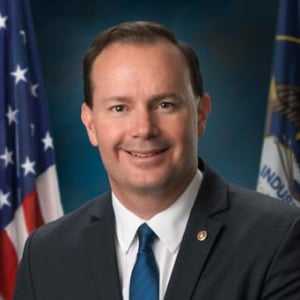
United States Senator, Utah
Elected in 2010 as Utah's 16th Senator, Mike Lee has spent his career defending the basic liberties of Americans and Utahns as a tireless advocate for our founding constitutional principles.
Senator Lee acquired a deep respect for the Constitution early on. His father, Rex Lee, who served as the Solicitor General under President Ronald Reagan, would often discuss varied aspects of judicial and constitutional doctrine around the kitchen table, from Due Process to the uses of Executive Plenary Power. He attended most of his father's arguments before the U.S. Supreme Court, giving him a unique, hands-on experience and understanding of government up close.
Lee graduated from Brigham Young University with a Bachelor of Science in Political Science, and served as BYU's Student Body President in his senior year. He graduated from BYU's Law School in 1997 and went on to serve as law clerk to Judge Dee Benson of the U.S. District Court for the District of Utah, and then with future Supreme Court Justice Judge Samuel A. Alito, Jr. on the U.S. Court of Appeals for the Third Circuit.
Lee spent several years as an attorney with the law firm Sidley & Austin specializing in appellate and Supreme Court litigation, and then served as an Assistant U.S. Attorney in Salt Lake City arguing cases before the U.S. Court of Appeals for the Tenth Circuit.
Lee served the state of Utah as Governor Jon Huntsman's General Counsel and was later honored to reunite with Justice Alito, now on the Supreme Court, for a one-year clerkship. He returned to private practice in 2007.
Throughout his career, Lee earned a reputation as an outstanding practitioner of the law based on his sound judgment, abilities in the courtroom, and thorough understanding of the Constitution.
Today, Lee fights to preserve America's proud founding document in the United States Senate. He advocates efforts to support constitutionally limited government, fiscal responsibility, individual liberty, and economic prosperity.
Lee is a member of the Judiciary Committee, and serves as Chairman of the Antitrust, Competition Policy and Consumer Rights Subcommittee protecting business competition and personal freedom.
He also oversees issues critical to Utah as the Chairman of the Water and Power Subcommittee of the Energy and Natural Resources Committee. He serves on the Commerce Committee and the Joint Economic Committee, as well.
In the 114th Congress, Lee also began his tenure as Chairman of the Senate Steering Committee, where he works with his Republican colleagues in the Senate to introduce bold and innovative solutions to issues facing the American people.
Lee and his wife Sharon live in Alpine, Utah, with their three children. He is a member of The Church of Jesus Christ of Latter-day Saints and served a two-year mission for the Church in the Texas Rio Grande Valley.
United States Senator, Utah
Elected in 2010 as Utah's 16th Senator, Mike Lee has spent his career defending the basic liberties of Americans and Utahns as a tireless advocate for our founding constitutional principles.
Senator Lee acquired a deep respect for the Constitution early on. His father, Rex Lee, who served as the Solicitor General under President Ronald Reagan, would often discuss varied aspects of judicial and constitutional doctrine around the kitchen table, from Due Process to the uses of Executive Plenary Power. He attended most of his father's arguments before the U.S. Supreme Court, giving him a unique, hands-on experience and understanding of government up close.
Lee graduated from Brigham Young University with a Bachelor of Science in Political Science, and served as BYU's Student Body President in his senior year. He graduated from BYU's Law School in 1997 and went on to serve as law clerk to Judge Dee Benson of the U.S. District Court for the District of Utah, and then with future Supreme Court Justice Judge Samuel A. Alito, Jr. on the U.S. Court of Appeals for the Third Circuit.
Lee spent several years as an attorney with the law firm Sidley & Austin specializing in appellate and Supreme Court litigation, and then served as an Assistant U.S. Attorney in Salt Lake City arguing cases before the U.S. Court of Appeals for the Tenth Circuit.
Lee served the state of Utah as Governor Jon Huntsman's General Counsel and was later honored to reunite with Justice Alito, now on the Supreme Court, for a one-year clerkship. He returned to private practice in 2007.
Throughout his career, Lee earned a reputation as an outstanding practitioner of the law based on his sound judgment, abilities in the courtroom, and thorough understanding of the Constitution.
Today, Lee fights to preserve America's proud founding document in the United States Senate. He advocates efforts to support constitutionally limited government, fiscal responsibility, individual liberty, and economic prosperity.
Lee is a member of the Judiciary Committee, and serves as Chairman of the Antitrust, Competition Policy and Consumer Rights Subcommittee protecting business competition and personal freedom.
He also oversees issues critical to Utah as the Chairman of the Water and Power Subcommittee of the Energy and Natural Resources Committee. He serves on the Commerce Committee and the Joint Economic Committee, as well.
In the 114th Congress, Lee also began his tenure as Chairman of the Senate Steering Committee, where he works with his Republican colleagues in the Senate to introduce bold and innovative solutions to issues facing the American people.
Lee and his wife Sharon live in Alpine, Utah, with their three children. He is a member of The Church of Jesus Christ of Latter-day Saints and served a two-year mission for the Church in the Texas Rio Grande Valley.
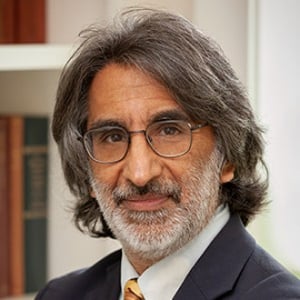
Sterling Professor of Law, Yale Law School
Akhil Reed Amar is Sterling Professor of Law and Political Science at Yale University, where he teaches constitutional law in both Yale College and Yale Law School. After graduating from Yale College, summa cum laude, in 1980 and from Yale Law School in 1984, and clerking for Judge (later Justice) Stephen Breyer, Amar joined the Yale faculty in 1985 at the age of 26. He is Yale’s only living professor to have won the University’s unofficial triple crown — the Sterling Chair for scholarship, the DeVane Medal for teaching, and the Lamar Award for alumni service.
Amar’s work has won awards from both the American Bar Association and the Federalist Society, and he has been cited by Supreme Court justices across the spectrum in more than 50 cases — tops among scholars under age 70. According to both Fred Shapiro’s landmark 2021 study of lifetime scholarly citations and Heinonline’s most recent tabulation of lifetime law-review citations, Amar is America’s second most-cited legal scholar still under age 70. He is a member of the American Academy of Arts and Sciences and has written widely for popular publications, including The New York Times, The Washington Post, The Wall Street Journal, Time, and The Atlantic. He was an informal consultant to the popular TV show The West Wing and his scholarship has been showcased on many broadcasts, including The Colbert Report, Morning Joe, AC360, Velshi, Fox News @ Night with Shannon Bream, Fareed Zakaria GPS, Erin Burnett Outfront, and Constitution USA with Peter Sagal.
He is the author of more than a hundred law review articles and several books, including The Bill of Rights (1998 — winner of the Yale University Press Governors’ Award), America’s Constitution (2005 — winner of the ABA’s Silver Gavel Award), America’s Unwritten Constitution (2012 — named one of the year’s 100 best nonfiction books by The Washington Post), and The Constitution Today (2016 — named one of the year’s top ten nonfiction books by Time magazine). The first volume of his ambitious trilogy on American constitutional history from the Founding to the present, The Words That Made Us: America’s Constitutional Conversation, 1760-1840, came out in May 2021. The second volume, Born Equal: Remaking America’s Constitution, 1840-1920, will be published in September 2025 and is already available for pre-order. All together, his nonfiction books have won two starred reviews from Publishers Weekly and three starred reviews from Kirkus—tops, it is believed, among legal scholars under age 70. Together with Vikram David Amar (YLS ’88), he has a bi-weekly column on the Supreme Court on the distinguished website SCOTUSblog. Along with Andy Lipka, he co-hosts a popular and free weekly podcast, Amarica’s Constitution, whose listeners are eligible for CLE credit in most American jurisdictions. A wide assortment of his articles and op-eds and video links to many of his public lectures and free online courses may be found at akhilamar.com.
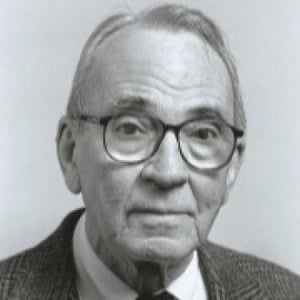
John M. Olin University Professor Emeritus, Georgetown University
Walter Berns is the John M. Olin University Professor Emeritus at Georgetown University and a resident scholar at the American Enterprise Institute. He has taught at the University of Toronto, the University of Chicago (where he earned a Ph.D. in political science), and at Cornell and Yale Universities. His government service includes membership on the National Council on the Humanities, the Council of Scholars in the Library of Congress, the Judicial Fellows Commission, and in 1983 he was the alternate United States representative to the United Nations Commission on Human Rights. He has been a Guggenheim, Rockefeller, and Fulbright Fellow and a Phi Beta Kappa lecturer. He is the author of numerous articles on American government and politics in both professional and popular journals; his many books include In Defense of Liberal Democracy, The First Amendment and the Future of American Democracy, Taking the Constitution Seriously, and Making Patriots. President George W. Bush awarded him the 2005 National Humanities Medal for his scholarship on the history of the constitution.
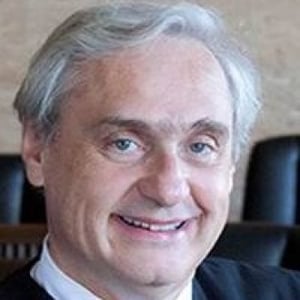
Former Judge, United States Court of Appeals, Ninth Circuit
Judge Kozinski served as a United States Circuit Judge for the Ninth Circuit from November 1985 until December 2017. He served as Chief Judge from 2007 to 2014. He graduated from UCLA, receiving an A.B. degree in 1972, and from UCLA Law School, receiving a J.D. degree in 1975.
Prior to his appointment to the appellate bench, Judge Kozinski served as Chief Judge of the United States Claims Court, 1982-85; Special Counsel, Merit Systems Protection Board, 1981-82; Assistant Counsel, Office of Counsel to the President, 1981; Deputy Legal Counsel, Office of President-Elect Reagan, 1980-81; Attorney, Covington & Burling, 1979-81; Attorney, Forry Golbert Singer & Gelles, 1977-79; Law Clerk to Chief Justice Warren E. Burger, 1976-77; and Law Clerk to Circuit Judge Anthony M. Kennedy, 1975-76.
Judge Kozinski is married to Marcy Jane Tiffany and has three children: Yale, Wyatt and Clayton, and three grandchildren: Quinn, Owen and Anna.
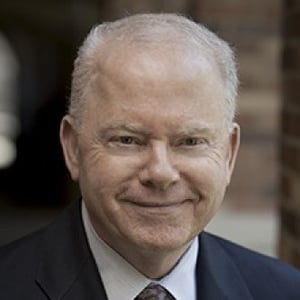
Sterling Professor Emeritus of Law and Legal History, Yale Law
John H. Langbein is Sterling Professor Emeritus of Law and Legal History and Professorial Lecturer in Law. He is an eminent legal historian and a leading American authority on trust, probate, pension, and investment law. He teaches and writes in the fields of Anglo-American and European legal history, modern comparative law, trust and estate law, and pension and employee benefit law (ERISA). He has long been active in law reform work, serving under gubernatorial appointment as a Uniform Law Commissioner since 1984. He was the reporter and principal drafter for the Uniform Prudent Investor Act (1994), which governs fiduciary investing in most American states, and he was Associate Reporter for the American Law Institute’s Restatement (Third) of Property: Wills and Other Donative Transfers (3 vols. 1999-2011). Professor Langbein has written extensively about the history of civil and criminal procedure, and about the contrasts between modern American and Continental procedure. His book, The Origins of Adversary Criminal Trial (2003), received the Coif Biennial Book Award (2006) as the outstanding American book on law. In 2000 the American Society for Legal History awarded him the Sutherland Prize for his "pioneering work" in legal history. In 2009 he published History of the Common Law: The Development of Anglo-American Legal Institutions (with R. Lerner & B. Smith), a textbook on the history of the legal system. He also coauthors a course book on pension and benefit law--Pension & Employee Benefit Law (with D. Pratt, S. Stabile, & A. Stumpff, 6th ed. 2015). Professor Langbein was elected to the American Academy of Arts and Sciences in 1987. He is an honorary fellow of Trinity Hall, Cambridge, and a corresponding fellow of the British Academy. He is admitted to the bar in Florida and the District of Columbia, and as a barrister of the Inner Temple in England.
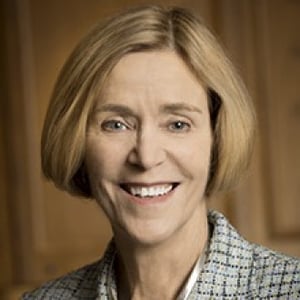
Lafayette S. Foster Professor of Law, Yale Law School
Kate Stith, Lafayette S. Foster Professor of Law at Yale Law School, teaches and writes in the areas of criminal law, criminal procedure, and constitutional law. Prior to joining the faculty at Yale, Professor Stith was an Assistant United States Attorney for the Southern District of New York, where she prosecuted white-collar and organized-crime cases. Professor Stith is serving or has served as an Adviser for the American Law Institute project Model Penal Code Sentencing; on the Committee on Law and Justice of the National Research Council; on the Professional Ethics Committee in the State of Connecticut; as a Commissioner of the Permanent Commission on the Status of Women in Connecticut; as President of the Connecticut Bar Foundation; on the Dartmouth College Board of Trustees; as faculty sponsor and director of the Women's Campaign School at Yale; as Deputy Dean of Yale Law School; and, by appointment of the Chief Justice of the United States, on the Advisory Committee for the Federal Rules of Criminal Procedure. Her book on the federal sentencing guidelines, Fear of Judging (with J.A. Cabranes), was awarded a Certificate of Merit by the ABA in 1999. A graduate of Dartmouth College, the Kennedy School of Government, and Harvard Law School, she clerked for Judge Carl McGowan of the U.S. Court of Appeals for the District of Columbia and for Supreme Court Justice Byron R.White.
Sterling Professor of Law, Yale Law School
Akhil Reed Amar is Sterling Professor of Law and Political Science at Yale University, where he teaches constitutional law in both Yale College and Yale Law School. After graduating from Yale College, summa cum laude, in 1980 and from Yale Law School in 1984, and clerking for Judge (later Justice) Stephen Breyer, Amar joined the Yale faculty in 1985 at the age of 26. He is Yale’s only living professor to have won the University’s unofficial triple crown — the Sterling Chair for scholarship, the DeVane Medal for teaching, and the Lamar Award for alumni service.
Amar’s work has won awards from both the American Bar Association and the Federalist Society, and he has been cited by Supreme Court justices across the spectrum in more than 50 cases — tops among scholars under age 70. According to both Fred Shapiro’s landmark 2021 study of lifetime scholarly citations and Heinonline’s most recent tabulation of lifetime law-review citations, Amar is America’s second most-cited legal scholar still under age 70. He is a member of the American Academy of Arts and Sciences and has written widely for popular publications, including The New York Times, The Washington Post, The Wall Street Journal, Time, and The Atlantic. He was an informal consultant to the popular TV show The West Wing and his scholarship has been showcased on many broadcasts, including The Colbert Report, Morning Joe, AC360, Velshi, Fox News @ Night with Shannon Bream, Fareed Zakaria GPS, Erin Burnett Outfront, and Constitution USA with Peter Sagal.
He is the author of more than a hundred law review articles and several books, including The Bill of Rights (1998 — winner of the Yale University Press Governors’ Award), America’s Constitution (2005 — winner of the ABA’s Silver Gavel Award), America’s Unwritten Constitution (2012 — named one of the year’s 100 best nonfiction books by The Washington Post), and The Constitution Today (2016 — named one of the year’s top ten nonfiction books by Time magazine). The first volume of his ambitious trilogy on American constitutional history from the Founding to the present, The Words That Made Us: America’s Constitutional Conversation, 1760-1840, came out in May 2021. The second volume, Born Equal: Remaking America’s Constitution, 1840-1920, will be published in September 2025 and is already available for pre-order. All together, his nonfiction books have won two starred reviews from Publishers Weekly and three starred reviews from Kirkus—tops, it is believed, among legal scholars under age 70. Together with Vikram David Amar (YLS ’88), he has a bi-weekly column on the Supreme Court on the distinguished website SCOTUSblog. Along with Andy Lipka, he co-hosts a popular and free weekly podcast, Amarica’s Constitution, whose listeners are eligible for CLE credit in most American jurisdictions. A wide assortment of his articles and op-eds and video links to many of his public lectures and free online courses may be found at akhilamar.com.
John M. Olin University Professor Emeritus, Georgetown University
Walter Berns is the John M. Olin University Professor Emeritus at Georgetown University and a resident scholar at the American Enterprise Institute. He has taught at the University of Toronto, the University of Chicago (where he earned a Ph.D. in political science), and at Cornell and Yale Universities. His government service includes membership on the National Council on the Humanities, the Council of Scholars in the Library of Congress, the Judicial Fellows Commission, and in 1983 he was the alternate United States representative to the United Nations Commission on Human Rights. He has been a Guggenheim, Rockefeller, and Fulbright Fellow and a Phi Beta Kappa lecturer. He is the author of numerous articles on American government and politics in both professional and popular journals; his many books include In Defense of Liberal Democracy, The First Amendment and the Future of American Democracy, Taking the Constitution Seriously, and Making Patriots. President George W. Bush awarded him the 2005 National Humanities Medal for his scholarship on the history of the constitution.
Former Judge, United States Court of Appeals, Ninth Circuit
Judge Kozinski served as a United States Circuit Judge for the Ninth Circuit from November 1985 until December 2017. He served as Chief Judge from 2007 to 2014. He graduated from UCLA, receiving an A.B. degree in 1972, and from UCLA Law School, receiving a J.D. degree in 1975.
Prior to his appointment to the appellate bench, Judge Kozinski served as Chief Judge of the United States Claims Court, 1982-85; Special Counsel, Merit Systems Protection Board, 1981-82; Assistant Counsel, Office of Counsel to the President, 1981; Deputy Legal Counsel, Office of President-Elect Reagan, 1980-81; Attorney, Covington & Burling, 1979-81; Attorney, Forry Golbert Singer & Gelles, 1977-79; Law Clerk to Chief Justice Warren E. Burger, 1976-77; and Law Clerk to Circuit Judge Anthony M. Kennedy, 1975-76.
Judge Kozinski is married to Marcy Jane Tiffany and has three children: Yale, Wyatt and Clayton, and three grandchildren: Quinn, Owen and Anna.
Sterling Professor Emeritus of Law and Legal History, Yale Law
John H. Langbein is Sterling Professor Emeritus of Law and Legal History and Professorial Lecturer in Law. He is an eminent legal historian and a leading American authority on trust, probate, pension, and investment law. He teaches and writes in the fields of Anglo-American and European legal history, modern comparative law, trust and estate law, and pension and employee benefit law (ERISA). He has long been active in law reform work, serving under gubernatorial appointment as a Uniform Law Commissioner since 1984. He was the reporter and principal drafter for the Uniform Prudent Investor Act (1994), which governs fiduciary investing in most American states, and he was Associate Reporter for the American Law Institute’s Restatement (Third) of Property: Wills and Other Donative Transfers (3 vols. 1999-2011). Professor Langbein has written extensively about the history of civil and criminal procedure, and about the contrasts between modern American and Continental procedure. His book, The Origins of Adversary Criminal Trial (2003), received the Coif Biennial Book Award (2006) as the outstanding American book on law. In 2000 the American Society for Legal History awarded him the Sutherland Prize for his "pioneering work" in legal history. In 2009 he published History of the Common Law: The Development of Anglo-American Legal Institutions (with R. Lerner & B. Smith), a textbook on the history of the legal system. He also coauthors a course book on pension and benefit law--Pension & Employee Benefit Law (with D. Pratt, S. Stabile, & A. Stumpff, 6th ed. 2015). Professor Langbein was elected to the American Academy of Arts and Sciences in 1987. He is an honorary fellow of Trinity Hall, Cambridge, and a corresponding fellow of the British Academy. He is admitted to the bar in Florida and the District of Columbia, and as a barrister of the Inner Temple in England.
Lafayette S. Foster Professor of Law, Yale Law School
Kate Stith, Lafayette S. Foster Professor of Law at Yale Law School, teaches and writes in the areas of criminal law, criminal procedure, and constitutional law. Prior to joining the faculty at Yale, Professor Stith was an Assistant United States Attorney for the Southern District of New York, where she prosecuted white-collar and organized-crime cases. Professor Stith is serving or has served as an Adviser for the American Law Institute project Model Penal Code Sentencing; on the Committee on Law and Justice of the National Research Council; on the Professional Ethics Committee in the State of Connecticut; as a Commissioner of the Permanent Commission on the Status of Women in Connecticut; as President of the Connecticut Bar Foundation; on the Dartmouth College Board of Trustees; as faculty sponsor and director of the Women's Campaign School at Yale; as Deputy Dean of Yale Law School; and, by appointment of the Chief Justice of the United States, on the Advisory Committee for the Federal Rules of Criminal Procedure. Her book on the federal sentencing guidelines, Fear of Judging (with J.A. Cabranes), was awarded a Certificate of Merit by the ABA in 1999. A graduate of Dartmouth College, the Kennedy School of Government, and Harvard Law School, she clerked for Judge Carl McGowan of the U.S. Court of Appeals for the District of Columbia and for Supreme Court Justice Byron R.White.

Topics
In the Shadow of Sherbert: An Understanding of Smith as Judicial Codification
Like all of the rights guaranteed by the Bill of Rights, the right to freely...
Topics
Federal Judiciary Advisory Committee Proposes Amendments to Expert Testimony Rule
The federal judiciary’s Advisory Committee on Evidence Rules has published proposed amendments to Federal Rule...
Fourth Annual Gregory S. Coleman Memorial Lecture & Luncheon
Seventh Annual Texas Chapters Conference
Dallas, TXPanel 2: Big Tech and The Future of Section 230
Seventh Annual Texas Chapters Conference
Dallas, TXAdvice for Young Lawyers Roundtable
Seventh Annual Texas Chapters Conference
Dallas, TXThe Constitution Line By Line: Article I, Section 4 [Article I Initiative]
Mike S. Lee
In this episode of The Constitution Line By Line, Senator Mike Lee tackles the part...
Topics
Considering Copyright on Constitution Day
Constitution Day is September 17—the 234th anniversary of the Constitution's signing in 1787 by the...
Panel III: The Bill of Rights and Governmental Structure: Republicanism and Mediating Institutions [Archive Collection]
Akhil Reed Amar, Walter Berns, Alex Kozinski, John H. Langbein, Kate Stith
On March 1-2, 1991, the Federalist Society's Yale Law School student chapter hosted the annual...
Panel III: The Bill of Rights and Governmental Structure: Republicanism and Mediating Institutions [Archive Collection]
Akhil Reed Amar, Walter Berns, Alex Kozinski, John H. Langbein, Kate Stith
On March 1-2, 1991, the Federalist Society's Yale Law School student chapter hosted the annual...
Closing Address by Senator Mike Lee
The Antitrust Paradox: Where We've Been and Where We're Going