
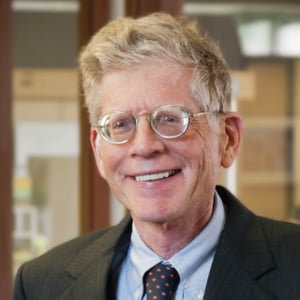
Professor of Law, University of Pittsburgh School of Law
Arthur D. Hellman, a professor of law (emeritus) at the University of Pittsburgh, is a nationally recognized scholar of the federal courts who has also written in the area of the First Amendment. His publications include numerous articles and several books, including casebooks in both areas, Federal Courts: Cases and Materials on Judicial Federalism and the Lawyering Process (5th edition 2022) (with David R. Stras, Ryan W. Scott, F. Andrew Hessick, and Derek T. Muller); and First Amendment Law: Freedom of Speech and Freedom of Religion (5th edition 2022) (with William D. Araiza, Thomas E. Baker, and Ashutosh A. Bhagwat).
In addition to his casebooks and academic writing, Processor Hellman has worked with the Judiciary Committees in the House and Senate in drafting federal courts legislation, including the most recent (2002) revision of the Judicial Conduct and Disability Act (Title 28, Chapter 16). The legislative histories of two major jurisdictional statutes – the Federal Courts Jurisdiction and Venue Clarification Act of 2011 and the “Holmes Group Fix” (enacted as part of the America Invents Act) – acknowledge his contributions.
Professor Hellman has testified as an invited witness at numerous hearings of both Judiciary Committees. His testimony has focused on a wide variety of legislative issues related to the federal courts, including the jurisdiction of the Supreme Court; proposals to divide the Ninth Circuit Court of Appeals; federal judicial discipline; unpublished appellate opinions; and the constitutionality of legislative restrictions on the powers of the federal courts.
In 2005 Professor Hellman was appointed as the inaugural holder of the Sally Ann Semenko Endowed Chair at the University. In 2002 he received the Chancellor’s Distinguished Research Award “as a faculty member who has an outstanding and continuing record of research and scholarly activity.”

Senior Fellow and Director of Constitutional Studies, Manhattan Institute
Ilya Shapiro is a senior fellow and director of constitutional studies at the Manhattan Institute and a contributing editor of City Journal. Previously he was executive director and senior lecturer at the Georgetown Center for the Constitution, and before that a vice president of the Cato Institute.
Shapiro is the author of Lawless: The Miseducation of America’s Elites (2025) and Supreme Disorder: Judicial Nominations and the Politics of America’s Highest Court (2020), coauthor of Religious Liberties for Corporations? (2014), and editor of 11 volumes of the Cato Supreme Court Review (2008-18). He has contributed to a variety of academic, popular, and professional publications, including the Wall Street Journal, Harvard Journal of Law & Public Policy, Washington Post, Los Angeles Times, USA Today, National Review, and Newsweek. He also regularly provides commentary for various media outlets, writes the Shapiro’s Gavel newsletter on Substack, and once appeared on the Colbert Report.
Shapiro has testified many times before Congress and state legislatures and has filed more than 500 amicus curiae “friend of the court” briefs in the Supreme Court. He lectures regularly on behalf of the Federalist Society, is a member of the board of fellows of the Jewish Policy Center, was an inaugural Washington Fellow at the National Review Institute, and has been an adjunct law professor at the George Washington University and University of Mississippi. He is also the chairman of the board of advisers of the Mississippi Justice Institute, a barrister in the Edward Coke Appellate Inn of Court, and a former member of the Virginia Advisory Committee to the U.S. Commission on Civil Rights.
Earlier in his career, Shapiro was a special assistant/adviser to the Multi-National Force in Iraq on rule-of-law issues and practiced at Patton Boggs and Cleary Gottlieb. Before entering private practice, he clerked for Judge E. Grady Jolly of the U.S. Court of Appeals for the Fifth Circuit. He holds an AB from Princeton University, an MSc from the London School of Economics, and a JD from the University of Chicago Law School.
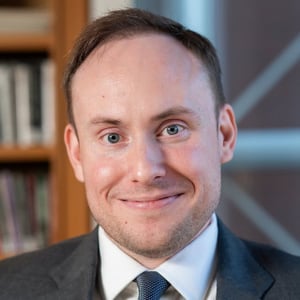
Director, Robert A. Levy Center for Constitutional Studies, Cato Institute
Thomas Berry is the director in the Cato Institute’s Robert A. Levy Center for Constitutional Studies and editor in chief of the Cato Supreme Court Review. Before joining Cato, he was an attorney at Pacific Legal Foundation and clerked for Judge E. Grady Jolly of the U.S. Court of Appeals for the Fifth Circuit. His academic work has appeared in NYU Journal of Law and Liberty, Washington and Lee Law Review Online, and Federalist Society Review. His popular writing has appeared in The Wall Street Journal, National Law Journal, Investor’s Business Daily, National Review Online, and The Hill Online. He has testified before the U.S. Senate, and his work has been cited by the U.S. District Court for the District of Columbia.
Berry holds a J.D. from Stanford Law School, where he was a senior editor on the Stanford Law and Policy Review and a Bradley Student Fellow in the Stanford Constitutional Law Center. He graduated with a B.A. in Liberal Arts from St. John’s College, Santa Fe.
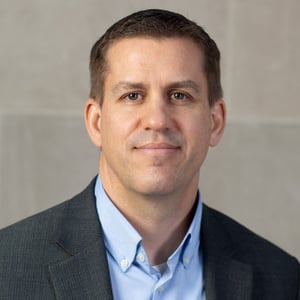
Clinical Professor, University of Texas at Austin School of Law
Steven T. Collis researches and teaches on religion and law and other First Amendment topics. He is the founding faculty director of the Bech-Loughlin First Amendment Center and of Texas's Law & Religion Clinic. On the topic of religious freedom law, he is a sought-after speaker to academic and lay audiences across the United States, including foreign diplomats from countries in Europe, the Middle East, Asia, and South America on behalf of the United States State Department. He has been interviewed by and quoted in various news and media outlets, including The Deseret News, Bloomberg, The Washington Times, Law360, The Salt Lake Tribune, PBS, The Denver Business Journal, Law Week Colorado, CBN News, and numerous podcasts and television shows. His scholarly work has appeared in The Michigan Law Review, The Nebraska Law Review, The University of Denver Law Review Online, and in his book Deep Conviction, which brings to life the history of free exercise law in the United States for lay audiences.
Prior to joining Texas, Steven was the Olin-Darling Research Fellow in the Constitutional Law Center at Stanford Law School.
Earlier in his career, he was an equity partner at Holland & Hart LLP, where he chaired the firm’s nationwide religious institutions and First Amendment practice group and was a member of the firm's complex civil litigation and employment practice groups. He also taught religious liberty law at the University of Denver Sturm College of Law and clerked for Chief Judge Timothy M. Tymkovich of the United States Court of Appeals for the Tenth Circuit.
Steven graduated magna cum laude from the University of Michigan Law School, where he was elected to the Order of the Coif and served as an editor on The Michigan Law Review and The Michigan Journal of Race and Law. He also holds an M.F.A. in creative writing from Virginia Commonwealth University, where he served as the associate editor of the literary journal Blackbird. He completed his undergraduate studies, with university honors, at Brigham Young University.
Adjunct Professor, George Washington University
Howard W. Cox is a former federal prosecutor, criminal investigator and Senior Intelligence Service officer. After almost 40 years of federal service, he retired as the Assistant Inspector General for Investigations of the Central Intelligence Agency. In this capacity, Mr. Cox supervised criminal, civil and administrative investigations conducted by the Office of Inspector General (OIG). Prior to his employment with the CIA, Mr. Cox was the Assistant Deputy Chief of the Computer Crime and Intellectual Property Section of the Department of Justice, where he was responsible for supervising criminal prosecutions of federal hacking and identity theft cases. While at the Department of Justice, Mr. Cox received the Attorney General’s Distinguished Service Award.
Prior to his service with the Department of Justice, Mr. Cox served as a manager, attorney and criminal investigator at OIG offices at the US Postal Service, the Department of Defense, and the General Services Administration. He also served as Staff Counsel for the US Senate Permanent Subcommittee on Investigations. Prior to his federal civilian service, Mr. Cox was also a Captain and trial attorney in the US Army’s Judge Advocate General’s Corps. Mr. Cox also served as Law Secretary to the Hon. Sherwin D. Lester, NJ Superior Court.
Mr. Cox is an adjunct professor at George Washington University, where he teaches graduate level courses in computer forensics. He is also an instructor with the Graduate School USA, and the Federal Law Enforcement Training Center, where he teaches courses related to procurement fraud and electronic search and seizure. Mr. Cox received his AB degree from Seton Hall University, South Orange, NJ. He received his law degree from Georgetown University Law Center, Washington, DC.
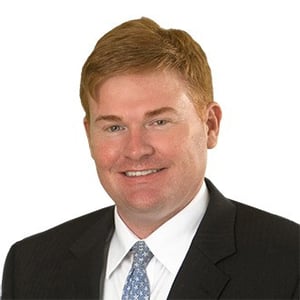
Counsel, Ford & Harrison LLP
Frank has successfully represented national retailers, health care providers, and various other public and private employers in matters arising under Title VII, the ADA, FMLA, ADEA, USERRA, and various other federal and state statutes.
He has extensive litigation experience in many different forums, and he has helped many clients prevail on summary judgment and at trial. Frank frequently serves as a faculty member at employment law seminars, and he has published articles in the ABA Employment Law Newsletter, the Tennessee Bar Journal, and the University of Memphis Law Review. He graduated from the University of Memphis School of Law with honors where he also received special recognition for his performance in moot court and mock trial competitions.
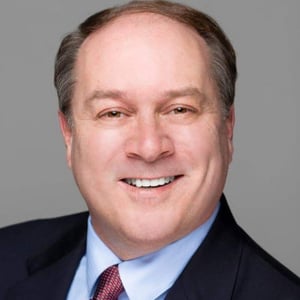
Of Counsel, Fisher & Phillips, LLP
Greg Grisham has over 25 years of successful experience counseling and representing employers in all aspects of workplace law in Tennessee and across the United States.
He has helped employers avoid claims, charges and lawsuits with a focus on preventative practices. Preventative practices include counseling in situations involving discipline, termination, demotion, promotion and other workplace changes in the terms and conditions of employment, harassment investigations, wage and hour compliance, FMLA Compliance, Reasonable Accommodation assessment, supervisor training and the review of employment policies and procedures. In addition, Greg's practice includes the representation of business entities subject to Title III of the Americans with Disabilities Act in Public Accommodation cases.
Greg has successfully litigated hundreds of administrative charges, employment lawsuits, and arbitration demands on behalf of employers, including federal and state law claims alleging discrimination, harassment, retaliation, wrongful termination, defamation, invasion of privacy, breach of contract, wage and hour violations and ERISA violations, among others. He also represents employers before the National Labor Relations Board in unfair labor practice proceedings. He represents employers in the enforcement of post-employment restrictive covenants such as non-compete, non-solicitation and non-disclosure agreements and related trade secret litigation. Greg's practice also includes the defense of property owners and property management companies in federal and state Housing Discrimination charges and litigation. He also advises Tennessee Public Charter Schools on education law and workplace compliance matters.
Greg has extensive experience working with insurance carriers and their insureds in the defense of EPLI claims. He is a regular speaker at public seminars on workplace law issues and has authored numerous articles on a variety of labor and employment law related topics.
Greg holds an AV Preeminent Peer Review rating from Martindale-Hubbell and has been selected for inclusion in Mid-South Super Lawyers and Best Lawyers in America for Employment Litigation-Management side. Greg was elected as a 2016 Fellow to the College of Labor and Employment Lawyers and has been selected to the “Top 20 Lawyers in Traditional Labor & Employment Law” list in conjunction with Human Resource Executive Magazine and LawDragon’s 2017 and 2018 “Most Powerful Employment Attorneys” lists and specialty guides. Greg was also named a Fellow in the American Bar Foundation in 2017.
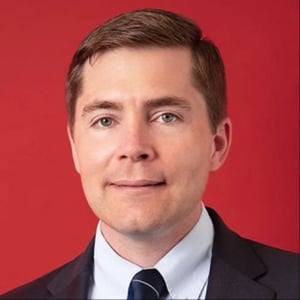
Senior Attorney, Pacific Legal Foundation
Damien Schiff is a senior attorney at Pacific Legal Foundation. He leads its environmental practice group, a unique initiative that draws broadly from PLF’s expertise and success in property rights and separation of powers litigation. Over the years, Damien has represented hundreds of landowners and property rights advocates to defend their liberties against heavy-handed and unwarranted environmental and land-use regulation. His litigation experience includes Sackett v. U.S. Environmental Protection Agency, a groundbreaking decision in which the U.S. Supreme Court upheld the right of landowners to challenge Clean Water Act compliance orders issued by EPA, and Contoski v. Norton, PLF’s successful effort to force the federal government to make good on its promise to delist the bald eagle from the Endangered Species Act.
Besides litigation, Damien has written academic articles on a variety of subjects, including the Endangered Species Act, the Clean Water Act, greenhouse gas torts, the duty to rescue, and international water law. He has appeared on a variety of television and radio programs and has been quoted in The New York Times, The Wall Street Journal, Harper’s Magazine, and The Economist, among other publications.
He obtained his law degree magna cum laude from the University of San Diego School of Law, and his undergraduate degree magna cum laude from Georgetown University. While at USD, he was a research assistant for Professor Bernard Siegan, a leading constitutional theorist and advocate for property rights and economic liberty. Immediately prior to joining PLF, Damien clerked for Judge (and former PLF attorney) Victor Wolski of the United States Court of Federal Claims. Damien credits the mentoring and examples of Professor Siegan and Judge Wolski for his decision to pursue a career in liberty-based public interest litigation.
Damien lives in Sacramento with his wife, two young sons, four chickens, and a cat named Princess. In his off hours he enjoys stamp collecting, Gregorian chant, and martinis—preferably at the same time.
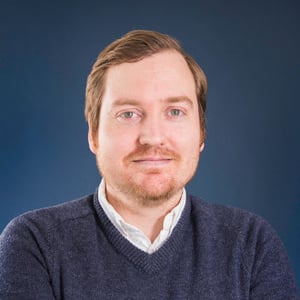
Vice President of Law & Policy, Property and Environment Research Center
Jonathan Wood is vice president of law and policy at the Property and Environment Research Center (PERC). An attorney, Jonathan has litigated environmental and property-rights cases in the Supreme Court of the United States, federal and state appellate courts, and trial courts across the country. His writing has appeared in the Wall Street Journal, Washington Post, National Review, Reason, and other outlets. And his research has been published in journals such as Environmental Law Reporter, Yale Journal on Regulation Notice & Comment, Pace Environmental Law Review, and California Western Law Review.
Prior to coming to PERC, Jonathan was a senior attorney at Pacific Legal Foundation, where he litigated cases concerning the Endangered Species Act, Clean Water Act, and other federal environmental laws. He was co-counsel for forest landowners in Weyerhaeuser Co. v. U.S. Fish and Wildlife Service, in which the Supreme Court ruled unanimously that private land could not be arbitrarily regulated as critical habitat under the ESA. He also led a successful effort to reform regulation of threatened species to better align the incentives of private landowners with the interests of rare species.
Jonathan has testified before several congressional committees on wildlife conservation and endangered species topics. He has also appeared on national television and radio, including NPR’s All Things Considered, C-Span’s Washington Journal, Stossel, Fox News, and Hill.TV.
Jonathan has a law degree from the New York University School of Law, a masters degree in economic policy from the London School of Economics, and a bachelor’s degree in economics from the University of Texas. He is on the executive committee for the Federalist Society’s Environmental Law and Property Rights Practice Group and a steering committee member for the Environmental Law Institute’s Emerging Leaders Initiative.
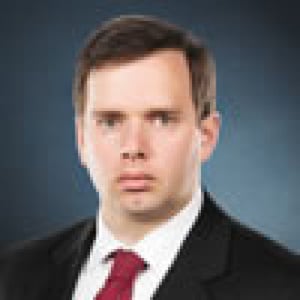
Associate, Arent Fox LLP
Christopher Bowen is an attorney with a Arent Fox LLP where he focuses on government contractor litigation and counseling, including bid protests, contract claims, audits, individual and company debarments and suspensions, security clearances, NISPOM compliance during mergers and acquisitions, and False Claims Act lawsuits. Prior to joining the law firm, Mr. Bowen was an attorney with the United States Department of Justice, where he handled government contract litigation, as well as Fifth Amendment Takings Clause and smuggling claims. He has argued before the United States Court of Appeal for the Federal Circuit, the United States Court of Federal Claims, and the United States District Court for the Eastern District of Virginia. He has filed briefs with the United States Court of Appeals for the Fifth Circuit, the United States District Courts for the District of Colorado and the Northern District of California, and the United States Court of International Trade. Mr. Bowen attended Dartmouth College and the George Washington University Law School, and clerked for the Honorable Diane S. Sykes on the United States Court of Appeals for the Seventh Circuit.
Super Lawyers has recognized Christopher Bowen as a “Rising Star” for both 2014 and 2015.
John Sullivan has specialized in disparity studies since 1990. In that time he has served as expert witness in six challenges to racial preference programs in public contracting. He has published widely on disparity studies in law and public policy journals and in the Wall Street Journal and the Christian Science Monitor. He testified before a Congressional subcommittee on the only federal government-wide disparity study.

The Fraudulent Joinder Prevention Act of 2016: A New Standard and a New Rationale for an Old Doctrine
Arthur D. Hellman
Note from the Editor: This article discusses the doctrine of fraudulent joinder and an ongoing attempt to...
Evenwel v. Abbott: The Court Shanks Its Punt on “One Person, One Vote”
Ilya Shapiro, Thomas Berry
Note from the Editor: This article criticizes the Supreme Court’s recent decision in Evenwel v....
Stormans v. Wiesman: Paths to Strict Scrutiny in Religious Free Exercise Cases
Steven T. Collis
Note from the Editor: This article is about Stormans v. Wiesman, a case from the 9th...
StingRay Technology and Reasonable Expectations of Privacy in the Internet of Everything
Howard W. Cox
Note from the Editor: This article discusses cell site simulators, also known as StingRays, and...
Circumventing Congress: The Use of Sex-Stereotyping Theory to Expand Protected Classes Under Title VII
Frank L. Day, J. Gregory Grisham
Note from the Editor: This article is about the EEOC’s use of the Supreme Court’s...
U.S. Army Corps of Engineers v. Hawkes Co., Inc.: Wetlands Jurisdictional Determinations and the Right of Federal Judicial Review
Damien Michael Schiff
Note from the Editor: This article discusses U.S. Army Corps of Engineers v. Hawkes, a...
Topics
No Fly, No Buy (And No Due Process)
If you have been following the Democratic primaries or keeping up with President Obama’s recent...
People for the Ethical Treatment of Property Owners v. U.S. Fish and Wildlife Service: Did Gonzalez v. Raich Eviscerate All Constitutional Limits on Federal Power?
Jonathan Wood
Note from the Editor: This article discusses an ongoing case questioning the constitutionality of the...
Kellogg Brown & Root—What Happens to a Case Deferred?
Christopher Andrew Bowen
This article details the Fourth Circuit’s and the Supreme Court’s recent decisions in United States...
Anecdotes as Evidence: Proving Public Contracting Discrimination in a Strict Scrutiny World
John Sullivan
Note from the Editor: This article is about the use of anecdotal evidence to justify...