
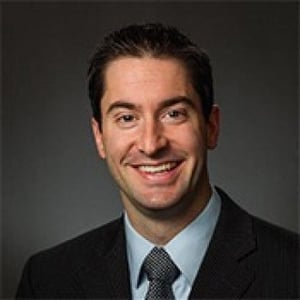
Chief Legal Counsel, Alliance Defending Freedom
Jim Campbell serves as chief legal counsel with Alliance Defending Freedom, where he leads the U.S. Legal Advocacy team. In that role, Campbell oversees all U.S. litigation teams and Allied Legal Affairs.
Prior to joining ADF in March 2023, Campbell was the solicitor general in the office of Nebraska Attorney General Douglas J. Peterson and Michael T. Hilgers. In that role, he represented the state of Nebraska in cases before state and federal courts and oversaw all civil appeals for the state. In February 2023, Campbell argued Biden v. Nebraska before the U.S. Supreme Court, a case in which Nebraska and five other states challenged the Biden administration’s attempt to forgive over $400 billion in federal student loans for over 40 million individuals.
Before joining the Nebraska attorney general’s office in January 2020, Campbell worked as senior counsel with ADF. In that role, he defended his clients’ religious freedom and freedom of speech, with a particular focus on appellate work. Campbell has also authored many articles and legal commentary pieces, including some published by USA Today and The Washington Post.
A native of northeastern Ohio, Campbell earned his Juris Doctor from the University of Akron School of Law, where he graduated summa cum laude in 2006. Following law school, he clerked for the Honorable Alice M. Batchelder of the U.S. Court of Appeals for the 6th Circuit. Campbell is admitted to the state bars of Ohio, Arizona, and Nebraska. He is also admitted to multiple federal district and appellate courts, including the U.S. Supreme Court.
Professor, University of North Carolina at Wilmington
Mike Adams is a professor at the University of North Carolina at Wilmington (UNCW). He writes a weekly column for The Daily Wire and speaks frequently on First Amendment and pro-life issues. After graduating from Mississippi State University in 1993 with a PhD in Criminology, his research emphasized social psychological causes of crime and delinquency. He won the Faculty Member of the Year Award from the Office of the Dean of Students in 1998 and again in 2000. Later, after his involvement in a free speech controversy in the wake of the 9/11 attack his research emphasis shifted to threats to free speech, due process, and academic integrity in higher education. In 2006, he was denied a promotion full professor and filed suit in federal court alleging that UNCW retaliated against him for his criticism the diversity movement in general as well as his criticism of specific policies within his own university. The retaliation lawsuit set up a legal challenge concerning whether Garcetti v. Ceballos (2006), which denied First Amendment protection to public employees who were commenting about their “official duties,” applied to college professors. In Adams v. UNCW (2011), the 4th Circuit Court of Appeals unanimously ruled in his favor. The ruling set up a federal trial on the issue of retaliation, which he also won before a jury in federal district court in Greenville, North Carolina.
Professor of History, Brooklyn College and the CUNY Graduate Center
KC Johnson is professor of history at Brooklyn College and the CUNY Graduate Center, where he has taught since 1999. He has written 13 books on topics in U.S. political history, U.S. foreign policy, and legal and policy debates surrounding campus due process and civil liberties. His Duke lacrosse case blog, Durham-in-Wonderland, was named ABA Journal’s Best Ethics Blog in 2007; and he continues to blog on higher-ed matters at the blog Minding the Campus.
FIRE
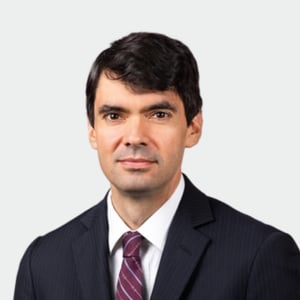
Partner, Baker & Hostetler LLP
Richard Raile is a partner at Baker Hostetler, where he is a member of their Litigation team. He focuses his practice on appeals and major motions. He frequently plays the principal role in drafting briefs for clients and in delivering oral argument, including on dispositive motions, bench trials and appeals. He has represented parties and amici curiae at every level of the judiciary, from trial courts to merits litigation in the U.S. Supreme Court and state supreme courts.
His litigation experience runs the gamut of subject matters, including everything from commercial, civil rights, constitutional, campaign finance, voting rights, labor and bankruptcy law.
Partner, McCarter & English LLP
Mr. Cote represents both small and large businesses and occasionally individuals in both federal and state courts throughout the country. His practice concentrates primarily on hospitality, employment, civil rights, contracts, unfair and deceptive conduct, class action, private property rights and appellate litigation.
During his time with McCarter, Mr. Cote has played an integral role in obtaining several significant victories for the firm's clients, including the dismissal of a challenge under the public trust doctrine to the private ownership of lawfully filled, tidelands that were developed pursuant to a legislative grant issued in 1832 and the successful defense of a large food service company in a case of first impression concerning the application and interpretation of the Massachusetts Tips Act. Mr. Cote was also instrumental in obtaining a sanctions award of $100,000 in connection with a construction accident case brought in bad faith against one of the firm's clients.
Prior to his admission to the bar, Mr. Cote served for over ten years as a paralegal and law clerk in Arizona, Massachusetts, Vermont and Washington, D.C. During this time, he served as the principal legal assistant to the Arizona Legislature's Ombudsman for Private Property Rights. He also clerked for the Honorable Roger J. Marzulla and Nancie G. Marzulla at Defenders of Property Rights, which, at the time, was the nation's only non-profit legal foundation dedicated exclusively to the protection of private property rights. He is a contributing author of that organization's 1999 publication "State Property Rights Legislation Report: Federalism in Action."
Mr. Cote presently serves as the vice-chair of the Boston Lawyers Division of the Federalist Society for Law and Public Policy Studies. He is also a member of the executive committee for the Federalist Society's Litigation Practice Group and the primary author of the Environmental Practice Group's 2001 terrorism briefing paper entitled: "National Security vs. Public Disclosure: The War on Terrorism's Implications Upon Federal Emergency Planning and Right to Know Laws."
Partner, Mayer Brown LLP
Marcia Madsen was Chair of the Government Contracts practice and co-chair of the National Security Practice at Mayer Brown. She represented contractors in regulatory, policy, transactional, litigation, and investigative matters involving virtually every federal agency. Her clients included defense contractors, information technology and systems integrators, telecommunications companies, engineering firms, insurers, and manufacturing companies. Ms. Madsen's practice included defense of False Claims Act matters, internal investigations, audits, bid protests, claims and disputes before administrative forums and in the federal courts. She was a former Chair of the American Bar Association Section of Public Contract Law and currently co-chairs the Section’s Procurement Fraud Committee. She also is a member of the Federalist Society Administrative Law and Regulation Executive Committee. In addition, Marcia was a member of the Court of Federal Claims Advisory Council - Emeritus, and a recipient of the Court's Golden Eagle award. She was a Past President of the Board of Contract Appeals Bar Association. She was appointed by the Executive Office of the President to chair the Section 1423 Panel which recommended revision of the acquisition laws. She spoke and wrote frequently on government contracts and litigation topics.
Georgetown University Law Center, LL.M., 1980
American University - Washington College of Law, J.D., 1976
University of Utah, B.A., 1972
Partner, Mayer Brown
David Dowd is an experienced litigator at Mayer Brown whose practice has a strong emphasis in government contracting issues and controversies. He advises such clients as those involved in health care, information technology, large military systems, engineering services, and other industries regarding federal procurements and related issues. His counsel in this area includes commercial items, conflicts of interest, cost allowability issues, defective pricing, contract and subcontract negotiations, contract financing, assignments and novations, leasing, prime/sub disputes, preparation of claims, and procurement fraud.
David also handles procurement controversies, as he litigates bid protests and disputes before the Government Accountability Office and the Court of Federal Claims, represents contractors in litigation and arbitrations involving government contracts, and tries federal court litigation focused on contract disputes and alleged fraud.
Health care and insurance companies rely on David for advice regarding federal health care and insurance programs, including FEHBA, Medicare, TRICARE, and FEGLI. He represents these industry clients in bid protest and claim litigation regarding federal health care and insurance programs. In related matters, David counsels biotechnology and pharmaceutical companies on biodefense purchasing opportunities and applications, including research and development.
David has more than 20 years of practice experience, having joined Mayer Brown’s Washington, DC office in 2001 after practicing with two other national law firms.

Vice President of Law & Policy, Property and Environment Research Center
Jonathan Wood is vice president of law and policy at the Property and Environment Research Center (PERC). An attorney, Jonathan has litigated environmental and property-rights cases in the Supreme Court of the United States, federal and state appellate courts, and trial courts across the country. His writing has appeared in the Wall Street Journal, Washington Post, National Review, Reason, and other outlets. And his research has been published in journals such as Environmental Law Reporter, Yale Journal on Regulation Notice & Comment, Pace Environmental Law Review, and California Western Law Review.
Prior to coming to PERC, Jonathan was a senior attorney at Pacific Legal Foundation, where he litigated cases concerning the Endangered Species Act, Clean Water Act, and other federal environmental laws. He was co-counsel for forest landowners in Weyerhaeuser Co. v. U.S. Fish and Wildlife Service, in which the Supreme Court ruled unanimously that private land could not be arbitrarily regulated as critical habitat under the ESA. He also led a successful effort to reform regulation of threatened species to better align the incentives of private landowners with the interests of rare species.
Jonathan has testified before several congressional committees on wildlife conservation and endangered species topics. He has also appeared on national television and radio, including NPR’s All Things Considered, C-Span’s Washington Journal, Stossel, Fox News, and Hill.TV.
Jonathan has a law degree from the New York University School of Law, a masters degree in economic policy from the London School of Economics, and a bachelor’s degree in economics from the University of Texas. He is on the executive committee for the Federalist Society’s Environmental Law and Property Rights Practice Group and a steering committee member for the Environmental Law Institute’s Emerging Leaders Initiative.

Senior Fellow and Director of Constitutional Studies, Manhattan Institute
Ilya Shapiro is a senior fellow and director of constitutional studies at the Manhattan Institute and a contributing editor of City Journal. Previously he was executive director and senior lecturer at the Georgetown Center for the Constitution, and before that a vice president of the Cato Institute.
Shapiro is the author of Lawless: The Miseducation of America’s Elites (2025) and Supreme Disorder: Judicial Nominations and the Politics of America’s Highest Court (2020), coauthor of Religious Liberties for Corporations? (2014), and editor of 11 volumes of the Cato Supreme Court Review (2008-18). He has contributed to a variety of academic, popular, and professional publications, including the Wall Street Journal, Harvard Journal of Law & Public Policy, Washington Post, Los Angeles Times, USA Today, National Review, and Newsweek. He also regularly provides commentary for various media outlets, writes the Shapiro’s Gavel newsletter on Substack, and once appeared on the Colbert Report.
Shapiro has testified many times before Congress and state legislatures and has filed more than 500 amicus curiae “friend of the court” briefs in the Supreme Court. He lectures regularly on behalf of the Federalist Society, is a member of the board of fellows of the Jewish Policy Center, was an inaugural Washington Fellow at the National Review Institute, and has been an adjunct law professor at the George Washington University and University of Mississippi. He is also the chairman of the board of advisers of the Mississippi Justice Institute, a barrister in the Edward Coke Appellate Inn of Court, and a former member of the Virginia Advisory Committee to the U.S. Commission on Civil Rights.
Earlier in his career, Shapiro was a special assistant/adviser to the Multi-National Force in Iraq on rule-of-law issues and practiced at Patton Boggs and Cleary Gottlieb. Before entering private practice, he clerked for Judge E. Grady Jolly of the U.S. Court of Appeals for the Fifth Circuit. He holds an AB from Princeton University, an MSc from the London School of Economics, and a JD from the University of Chicago Law School.
Legal Director, The Center for the Rights of Abused Children
Tim Keller is a lawyer who works to ensure all abused and abandoned children are safe and have access to their constitutionally guaranteed rights.
As senior vice president and legal director at the Center for the Rights of Abused Children, Tim’s public interest legal work seeks to defend the constitutional rights of children to be safe from abuse, to prompt timely placement with permanent parents, and to assure a child’s representation by legal counsel. In addition to constitutional litigation, Tim oversees the lawyers in the Center for the Rights of Abused Children’s one-of-a-kind pro bono Children’s Law Clinic and guides its policy initiatives.
When he and his wife, Lisa, hosted a teenage exchange student from Brazil several years ago, they realized how much they enjoyed helping a child thrive. The two felt called to help more kids. Over the following years, Tim and Lisa would become foster parents. Today, they enjoy offering respite care for children in foster care.
Intensely motivated by his time fostering children who’d been abused and neglected, Tim sees his work to ensure children have a constitutional right to counsel as a matter of life and death. As such, he’s particularly proud that in 2021 the Center for the Rights of Abused Children secured the rights of all children in Arizona’s foster system to be represented by legal counsel.
Before joining the Center for the Rights of Abused Children, Tim worked for nearly 20 years at the Institute for Justice. He served as lead counsel in Arizona Christian School Tuition Organization v. Winn, a U.S. Supreme Court victory that protected Arizona’s pioneering school scholarship program. Tim also led the team that secured a U.S. Supreme Court victory in Espinoza v. Montana Department of Revenue, which prevents states from discriminating against religious families and schools in educational choice programs. He has also litigated economic liberty and property rights cases in state and federal courts.
Tim earned his bachelor’s and law degrees from Arizona State University. He clerked for Robert D. Myers, at the time the presiding judge of the Maricopa County Superior Court, and for Ann A. Scott Timmer on the Arizona Court of Appeals.
Tim and Lisa live in Chandler, Ariz., with their four sons, Daniel, Benjamin, Ethan and Noah, and a miniature schnauzer named Gus who has more than 12,000 Instagram followers. The Kellers have traveled to 49 of the 50 United States, and are always looking for recommendations for new card or board games for family game nights.

Compelled Speech in Masterpiece Cakeshop: What the Supreme Court’s June 2018 Decisions Tell Us About the Unresolved Questions
Jim Campbell
Note from the Editor: This article discusses the unresolved compelled-speech questions in Masterpiece Cakeshop v....
The Student Right to Counsel
Mike S. Adams, KC Johnson, Adam Kissell
Note from the Editor: This article argues that a student right to counsel in quasi-criminal...
Partisan Gerrymandering and Party Rights: Why Gill v. Whitford Undermines All Future Partisan-Gerrymandering Claims
Richard B. Raile
Note from the Editor: This article discusses the Supreme Court’s opinion in Gill v. Whitford...
FDA Poised to Spoil a Food Fight, Naturally
Gregory D. Cote
Note from the Editor: This article argues that the FDA should define the term “natural”...
Topics
Supreme Court Refusal to Review the “Net Worth Sweep” Does Not Totally Sweep Away Investors’ Claims
On February 20, the Supreme Court denied the petitions for a writ of certiorari filed...
Independent Review of Procurements Is Worth It: There Is No Support for Hamstringing the GAO Bid Protest Process
Marcia G. Madsen, David F. Dowd, Roger V. Abbott
Note from the Editor: This article criticizes a recent change to the GAO bid protest...
Christie v. NCAA: Anti-Commandeering or Bust
Jonathan Wood, Ilya Shapiro
Note from the Editor: This article argues that the Supreme Court should find unconstitutional the...
Topics
The SCOTUS Tax Case to Watch: Marinello v. United States
The National Law Journal recently called Marinello v. United States one of eight “major SCOTUS...
Topics
Right to Work Laws in the Courts — More Bad News for Union Challengers
Right to Work laws, which prohibit requirements that workers pay union dues as a condition...
Federal Special Education Law and State School Choice Programs
Timothy Keller, Nat Malkus
Note from the Editor: In this article, Nat Malkus and Tim Keller outline the federal...