
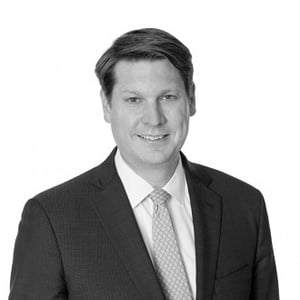
Former Acting Assistant Attorney General, United States Department of Justice; Partner, Winston & Strawn LLP
Jonathan “Jon” Brightbill is a trial and appellate lawyer in Winston’s Washington, D.C. office, and a partner in the firm’s Litigation and White Collar, Regulatory Defense, and Investigations Practices. He represents public and private companies, corporate officers, and other individuals across white collar, regulatory defense, and government and internal investigation matters and rulemaking challenges, as well as complex commercial disputes, citizen suits, and class actions. His commercial litigation experience encompasses business disputes, false advertising, consumer protection and fraud, FCA, and extensive class action defense work; antitrust and unfair competition matters; and intellectual property litigation, such as trademarks, patents, and trade secrets.
Jon served as the Nation’s lead environmental civil and criminal enforcement official and litigator, as Acting Assistant Attorney General for the Environment & Natural Resources Division (“ENRD”) of the U.S. Department of Justice (DOJ). Jon led ENRD’s 425 lawyers, overseeing 6,500 active matters and managing an annual budget of more than $150 million. Jon brings highly experienced executive leadership from among the most senior level of DOJ on white collar and regulatory enforcement, as well as on federal policymaking and rulemaking development and challenges. He speaks with authority on government decision-making processes, and the arguments and perspectives that move regulators and enforcers, best advising and positioning clients to deal with challenges.
Jon argued many of the government’s most significant cases during his time with the DOJ. This included the Navigable Waters Protection Rule and Clean Water Rule Repeal (10th Cir., district courts), the Affordable Clean Energy Rule and Clean Power Plan Repeal (D.C. Cir), defense of EPA actions on pesticide tolerances under FIFRA and the FDCA (9th Cir. en banc), among numerous others. Jon represented the United States in trial courts in both enforcement and defensive cases, including federal enforcement action against Jeffrey Lowe and the Tiger King Park, of Netflix fame, securing a first-of-its-kind injunction for violations of the Endangered Species Act and Animal Welfare Act. Jon directed the litigation and briefing of scores of additional federal cases nationwide, covering all of the major environmental and natural resources statutes, such as the Clean Air Act, the Clean Water Act, FIFRA (pesticides), FDCA (food safety), TSCA (toxics), CERCLA (land remediation), RCRA (waste), National Environmental Policy Act, Federal Land Policy and Management Act, and numerous other land- and resource-management statutes.
Jon has unmatched experience litigating legal and technical issues relating to climate change. He argued in the courts of appeals, including the D.C. Circuit, regarding the most significant climate change regulations by EPA, as well as the preemptive scope of the Clean Air Act. Jon also litigated climate change-related credit and trading schemes and international agreements in district court. During Jon’s time in leadership at ENRD, it successfully defeated one of the most wide-ranging lawsuits regarding climate change to date—obtaining a stay pending interlocutory appeal and dismissal just weeks before a scheduled three-month trial on federal government liability for climate change.
An accomplished trial lawyer, prior to working at DOJ, Jon was a partner in the Washington, D.C. office of another global law firm. He not only represents clients in court, but creatively counsels corporations on balancing business needs and realities with a broad range of litigation risks and compliance obligations. Jon is also an Adjunct Professor at Georgetown University Law Center. He served on the American Bar Association’s E-Discovery Working Group for Bankruptcy Practice, and was a frequent lecturer for District of Columbia Bar Association Continuing Legal Education Programs.
Jon served as an appellate clerk for the Honorable D. Brooks Smith, U.S. Court of Appeals for the Third Circuit, after graduating magna cum laude from the Georgetown University Law Center. He worked in state government as an Executive Policy Specialist for air, waste, land remediation, and radiation matters at the Pennsylvania Department of Environmental Protection.

Associate, Winston & Strawn LLP
Spencer draws on his experience as a former trial and appellate clerk to litigate white collar, commercial, administrative law, and constitutional matters at every stage.
Michael J. Woodrum is an Associate at Winston & Strawn LLP.
Chief Economist, The Phoenix Center for Advanced Legal & Economic Public Policy Studies
George S. Ford is the chief economist for the Phoenix Center for Advanced Legal and Economic Public Policy Studies, a nonprofit 501(c)(3) research organization that studies broad public-policy issues related to governance, social and economic conditions, with a particular emphasis on the law and economics of the digital age.
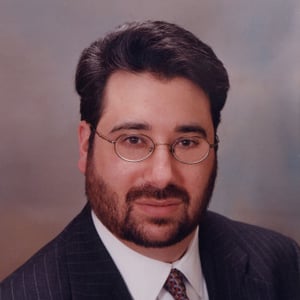
President, Phoenix Center for Advanced Legal and Economic Public Policy Studies
Lawrence J. Spiwak is President of the Phoenix Center for Advanced Legal & Economic Public Policy Studies, a non-profit 501(c)(3) organization that studies broad public-policy issues related to governance, social and economic conditions, with a particular emphasis on the law and economics of the digital age. Mr. Spiwak is a prolific scholar whose work is frequently cited by policymakers, major news media and academic journals around the world, and is in the top 1.3%of authors downloaded on the Social Science Research Network. Mr. Spiwak currently serves as the co-chair of the Federal Communications Bar Association’s (FCBA) committee responsible for overseeing the FEDERAL COMMUNICATIONS LAW JOURNAL and is a member of the program committee of the Telecommunications Policy Research Conference (“TPRC”). Mr. Spiwak is also the recipient of the FCBA’s Distinguished Service Award. Prior to joining the Phoenix Center, Mr. Spiwak was a Senior Attorney with the Competition Division in the FCC’s Office of General Counsel from 1994-1998. While in college, Mr. Spiwak was accepted into the Presidential Stay-In School program where he was responsible for delivering classified and confidential material among senior White House and Reagan Administration officials and received a full FBI security clearance. Mr. Spiwak received his B.A. with Special Honors from the George Washington University and his J.D. from the Benjamin N. Cardozo School of Law. Mr. Spiwak is a member in good standing of the bars of New York, Massachusetts, the District of Columbia, and the U.S. Court of Appeals for the D.C. Circuit.
Chief Economist, The Phoenix Center for Advanced Legal & Economic Public Policy Studies
George S. Ford is the chief economist for the Phoenix Center for Advanced Legal and Economic Public Policy Studies, a nonprofit 501(c)(3) research organization that studies broad public-policy issues related to governance, social and economic conditions, with a particular emphasis on the law and economics of the digital age.
President, Phoenix Center for Advanced Legal and Economic Public Policy Studies
Lawrence J. Spiwak is President of the Phoenix Center for Advanced Legal & Economic Public Policy Studies, a non-profit 501(c)(3) organization that studies broad public-policy issues related to governance, social and economic conditions, with a particular emphasis on the law and economics of the digital age. Mr. Spiwak is a prolific scholar whose work is frequently cited by policymakers, major news media and academic journals around the world, and is in the top 1.3%of authors downloaded on the Social Science Research Network. Mr. Spiwak currently serves as the co-chair of the Federal Communications Bar Association’s (FCBA) committee responsible for overseeing the FEDERAL COMMUNICATIONS LAW JOURNAL and is a member of the program committee of the Telecommunications Policy Research Conference (“TPRC”). Mr. Spiwak is also the recipient of the FCBA’s Distinguished Service Award. Prior to joining the Phoenix Center, Mr. Spiwak was a Senior Attorney with the Competition Division in the FCC’s Office of General Counsel from 1994-1998. While in college, Mr. Spiwak was accepted into the Presidential Stay-In School program where he was responsible for delivering classified and confidential material among senior White House and Reagan Administration officials and received a full FBI security clearance. Mr. Spiwak received his B.A. with Special Honors from the George Washington University and his J.D. from the Benjamin N. Cardozo School of Law. Mr. Spiwak is a member in good standing of the bars of New York, Massachusetts, the District of Columbia, and the U.S. Court of Appeals for the D.C. Circuit.
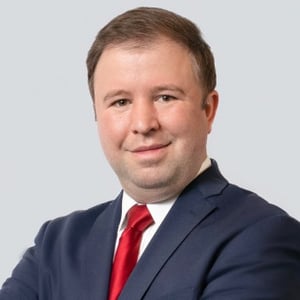
Partner, Wiley Rein LLP
Tom has over 15 years’ experience in private practice and public service at the federal and state levels representing clients in high-stakes appellate and regulatory litigation matters. Tom has argued appeals in the Fourth, Fifth, Ninth, D.C. and Federal Circuits, and the West Virginia Supreme Court of Appeals.
Prior to joining Wiley, Tom was the General Counsel at the Federal Communications Commission (FCC), where he served as the agency’s chief legal officer and briefed dozens of appeals – personally arguing two – in the federal courts of appeals in constitutional and administrative law challenges to the FCC’s orders. Tom managed a team of over 70 attorneys and staff and provided consultation and advice on a wide range of practice areas relating to the FCC’s work, including administrative law, appellate and trial litigation, bankruptcy, ethics, fiscal law, fraud, labor and employment, and public records requests. He has spent his career advising clients on all stages of federal agency rulemaking, adjudication, and litigation, in fields ranging from communications to environmental law to securities to labor and employment. He frequently speaks and writes on legal issues and his articles have appeared in the Wall Street Journal, Washington Post, National Review, Forbes, and Newark Star-Ledger.
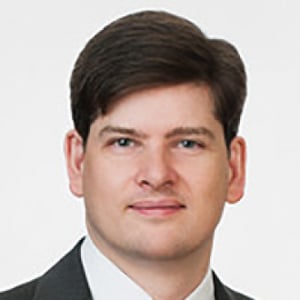
Commissioner, Federal Communications Commission
Nathan Simington was nominated to serve as a Commissioner of the FCC by President Donald J. Trump. He was confirmed by the United States Senate in 2020.
Commissioner Simington brings both private and public-sector experience to the Commission. Previously, he served as Senior Advisor at the National Telecommunications and Information Administration (NTIA.) In this role, he worked on many aspects of telecommunications policy, including spectrum allocation and planning, broadband access, and the US Government’s role in the Internet. Prior to joining the Commission, he was senior counsel to Brightstar Corp., an international mobile device services company. In this capacity, he led and negotiated telecommunications equipment and services transactions with leading providers in over twenty countries. Prior to joining Brightstar, he worked as an attorney in private practice.
Commissioner Simington is a graduate of the University of Michigan Law School. He also holds degrees from the University of Rochester and Lawrence University.
Commissioner Simington grew up in Saskatchewan, Canada. He became a United States citizen and now lives in McLean, Virginia with his wife and three children.
Chief Economist, The Phoenix Center for Advanced Legal & Economic Public Policy Studies
George S. Ford is the chief economist for the Phoenix Center for Advanced Legal and Economic Public Policy Studies, a nonprofit 501(c)(3) research organization that studies broad public-policy issues related to governance, social and economic conditions, with a particular emphasis on the law and economics of the digital age.
President, Phoenix Center for Advanced Legal and Economic Public Policy Studies
Lawrence J. Spiwak is President of the Phoenix Center for Advanced Legal & Economic Public Policy Studies, a non-profit 501(c)(3) organization that studies broad public-policy issues related to governance, social and economic conditions, with a particular emphasis on the law and economics of the digital age. Mr. Spiwak is a prolific scholar whose work is frequently cited by policymakers, major news media and academic journals around the world, and is in the top 1.3%of authors downloaded on the Social Science Research Network. Mr. Spiwak currently serves as the co-chair of the Federal Communications Bar Association’s (FCBA) committee responsible for overseeing the FEDERAL COMMUNICATIONS LAW JOURNAL and is a member of the program committee of the Telecommunications Policy Research Conference (“TPRC”). Mr. Spiwak is also the recipient of the FCBA’s Distinguished Service Award. Prior to joining the Phoenix Center, Mr. Spiwak was a Senior Attorney with the Competition Division in the FCC’s Office of General Counsel from 1994-1998. While in college, Mr. Spiwak was accepted into the Presidential Stay-In School program where he was responsible for delivering classified and confidential material among senior White House and Reagan Administration officials and received a full FBI security clearance. Mr. Spiwak received his B.A. with Special Honors from the George Washington University and his J.D. from the Benjamin N. Cardozo School of Law. Mr. Spiwak is a member in good standing of the bars of New York, Massachusetts, the District of Columbia, and the U.S. Court of Appeals for the D.C. Circuit.

Topics
Network Slicing and Net Neutrality
While the FCC is considering a vote on “Restoring Net Neutrality,” it should be mindful...
Pushing Pause on Liquified Natural Gas Exports: Can the Department of Energy Halt LNG Exports to Save the Planet?
Jonathan Brightbill, Spencer Churchill, Michael Woodrum
The Biden-Harris Administration recently interrupted the normal, export-friendly operation of the Natural Gas Act, triggering...
Net Neutrality, Big Tech, and the FCC
DC Young Lawyers Chapter
Washington, DCTopics
How Will the Supreme Court’s Admin Law Decisions Affect the FCC?
Last term, in Axon Enterprise v. FTC and SEC v. Cochran, the Supreme Court held...
Topics
What Happened at the World Radiocommunication Conference?
For four weeks last quarter, the world gathered to negotiate modifications to the Radio Regulations,...
Law and Economics of Net Neutrality
George Ford, Lawrence J. Spiwak
According to the Telecommunications Act of 1996, the policy of the United States shall be...
Law and Economics of Net Neutrality
George Ford, Lawrence J. Spiwak
According to the Telecommunications Act of 1996, the policy of the United States shall be...
Law and Economics of Net Neutrality
Topics
The FCC’s Digital Discrimination Order: Overreach in Pursuit of a Worthy Goal
In the introduction I prepared for moderating a Federalist Society podcast held on June 23,...
Topics
The FCC Can’t Give You Net Neutrality
One provider prioritizes its own content, steering online users to its affiliated sites and services....