
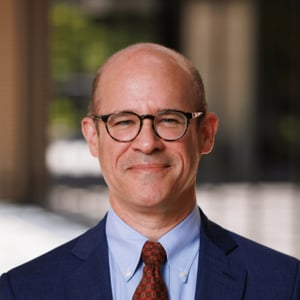
Professor of Law, Stanford Law School
Orin S. Kerr is a Professor of Law at Stanford Law School, where he teaches and writes in the areas of criminal procedure and computer crime law. Kerr earned mechanical engineering degrees from Princeton University and Stanford University before graduating with a J.D. from Harvard Law School. He is a former law clerk to Justice Anthony M. Kennedy at the United States Supreme Court and Judge Leonard I. Garth of the U.S. Court of Appeals for the Third Circuit.

President and Executive Director, Electronic Privacy Information Center
Marc Rotenberg is President and Executive Director of the Electronic Privacy Information Center (EPIC) in Washington, DC. He teaches information privacy law at Georgetown University Law Center and frequently testifies before Congress on emerging privacy and civil liberties issues. He testified before the 9-11 Commission on "Security and Liberty: Protecting Privacy, Preventing Terrorism." He has served on several national and international advisory panels, including the expert panels on Cryptography Policy and Computer Security for the OECD, the Legal Experts on Cyberspace Law for UNESCO, and the Countering Spam program of the ITU. He chairs the ABA Committee on Privacy and Information Protection. He is a founding board member and former Chair of the Public Interest Registry, which manages the .ORG domain. He is editor of "The Privacy Law Sourcebook," and co-editor of "Information Privacy Law" (Aspen Publishing 2006) and "Litigation Under the Federal Open Government Laws" (EPIC 2010). He is a graduate of Harvard College and Stanford Law School. He served as Counsel to Senator Patrick J. Leahy on the Senate Judiciary Committee after graduation from law school. He is the recipient of several awards, including the World Technology Award in Law, the American Lawyer Award for Top Lawyers Under 45, the Norbert Weiner Award for Social and Professional Responsibility, and the Vicennial medal from Georgetown University.
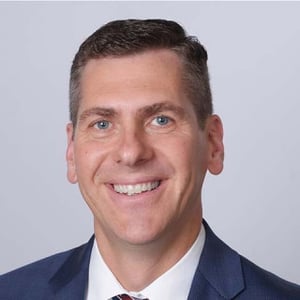
Senior Vice President, Chief Legal Officer and General Counsel, Ryan LLC
John Smith is the Senior Vice President, Chief Legal Officer and General Counsel at Ryan, LLC. Based at Ryan’s global headquarters in Dallas, Texas, John Smith brings more than 20 years of experience as a proven leader in the legal, business, and national security communities, including all three branches of the United States Government.
Prior to joining Ryan, Mr. Smith spent 12 years in Texas and Virginia at Raytheon Technologies, an American multinational aerospace and defense corporation. He pioneered roles as the company’s first cybersecurity lawyer and first privacy lawyer. During the last seven years, as a divisional Vice President and General Counsel, Mr. Smith led the legal departments of the two Raytheon divisions focused primarily on services.
Before Raytheon, Mr. Smith served as Associate Counsel to U.S. President George W. Bush. He was the lead lawyer for the White House Homeland Security Council staff. He began his legal career by clerking for Judge Samuel Alito, a few years before Alito’s elevation to the U.S. Supreme Court, and then by practicing at the international law firm of Covington & Burling.
Mr. Smith served a decade as a U.S. Army reservist and two years as a missionary in Ukraine and Russia, a few years after the collapse of the Soviet Union. He graduated with high honors from both Princeton University and Brigham Young University Law School.
Partner, Steptoe & Johnson LLP
Michael A. Vatis is a partner in the New York office of Steptoe & Johnson LLP. His practice focuses on Internet, e-commerce, and technology matters, providing legal advice and strategic counsel on matters involving privacy, security, encryption, intelligence, law enforcement, Internet gambling, and international regulation of Internet content. He also is an experienced appellate litigator, representing clients before the US Supreme Court and federal courts of appeals.
Mr. Vatis has spent most of his career addressing cutting edge issues at the intersection of law, policy, and technology. He was the founding director of the National Infrastructure Protection Center at the FBI, the first government organization responsible for detecting, warning of, and responding to cyber attacks, including computer crimes, cyber terrorism, cyber espionage, and information warfare. Before that, Mr. Vatis served as Associate Deputy Attorney General and Deputy Director of the Executive Office for National Security in the Department of Justice, where he advised the Attorney General and Deputy Attorney General and coordinated the Department’s activities involving counterterrorism, intelligence, encryption, and cyber crime. In that capacity, he also helped lead the development of the nation’s first policies regarding critical infrastructure protection. Mr. Vatis served as Special Counsel at the Department of Defense, where he handled sensitive legal and policy issues for the Secretary and Deputy Secretary of Defense and the General Counsel, receiving the Secretary of Defense Award for Excellence.
After leaving the government in 2001, Mr. Vatis served as the first Director of the Institute for Security Technology Studies at Dartmouth, a federally funded counterterrorism and cyber security research institute. He was simultaneously the founding Chairman of the Institute for Information Infrastructure Protection (I3P). I3P, a consortium of leading cyber security research organizations, worked with industry, government, and academia to develop a comprehensive research and development agenda to improve the security of the nation’s computer and communications networks. Mr. Vatis also served as the Executive Director of the Markle Task Force on National Security in the Information Age, a highly influential group of technology company executives, former government officials, and civil libertarians that recommended ways the government could more effectively use information and technology to combat terrorism while preserving civil liberties. Mr. Vatis was the principal author of the group’s second report, whose recommendations were adopted by the 9/11 Commission and included in the 2004 Intelligence Reform Act.
Mr. Vatis has been a Senior Fellow at New York University Law School’s Center on Law and Security and a member of numerous expert working groups on counterterrorism, intelligence, and technology issues. He is currently a member of the National Academy of Science/National Research Council Committee on the Policy Consequences and Legal/Ethical Implications of Offensive Information Warfare and served on the Commission on Cyber Security for the 44th Presidency, an independent group of cyber security experts who examined existing and potential cyber security threats and developed recommendations for the US government and private businesses. Mr. Vatis has also regularly testified before congressional committees on counterterrorism, intelligence, and cyber security issues. He is also interviewed frequently on television, radio, and in print media, and has been a guest lecturer at many prestigious law schools and universities and a speaker at industry conferences worldwide.
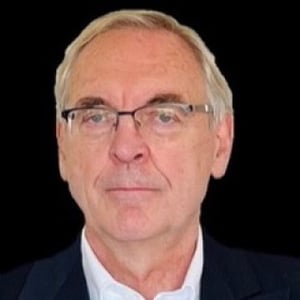
Fellow, National Security Institute, Antonin Scalia Law School, George Mason University
Vince Vitkowsky chaired the Executive Committee of the Federalist Society’s International and National Security Law and Policy Practice Group for over a decade. He is also a Fellow at the National Security Institute of George Mason University Law School. Vince spent 45 years in private practice, primarily in AmLaw 100/200 firms and their spin-offs. His practice included domestic and international commercial arbitration and litigation, as well as cyber risks and liabilities. Vince's current focus is on national security policy, artificial intelligence, cybersecurity, and counterterrorism. He has often written and spoken on national security and other public policy issues. Among other affiliations, Vince has been an Adjunct Fellow at the Center for Law and Counterterrorism of the Foundation for the Defense of Democracies, a member of the Executive Committee of the American Branch of the International Law Association, and Co-Chair of the Committee on Interventions and Trial Observations of the International Bar Association’s Human Rights Institute. He received his B.A. from Northwestern University and his J.D. from Cornell Law School.
Professor of Law, Stanford Law School
Orin S. Kerr is a Professor of Law at Stanford Law School, where he teaches and writes in the areas of criminal procedure and computer crime law. Kerr earned mechanical engineering degrees from Princeton University and Stanford University before graduating with a J.D. from Harvard Law School. He is a former law clerk to Justice Anthony M. Kennedy at the United States Supreme Court and Judge Leonard I. Garth of the U.S. Court of Appeals for the Third Circuit.
President and Executive Director, Electronic Privacy Information Center
Marc Rotenberg is President and Executive Director of the Electronic Privacy Information Center (EPIC) in Washington, DC. He teaches information privacy law at Georgetown University Law Center and frequently testifies before Congress on emerging privacy and civil liberties issues. He testified before the 9-11 Commission on "Security and Liberty: Protecting Privacy, Preventing Terrorism." He has served on several national and international advisory panels, including the expert panels on Cryptography Policy and Computer Security for the OECD, the Legal Experts on Cyberspace Law for UNESCO, and the Countering Spam program of the ITU. He chairs the ABA Committee on Privacy and Information Protection. He is a founding board member and former Chair of the Public Interest Registry, which manages the .ORG domain. He is editor of "The Privacy Law Sourcebook," and co-editor of "Information Privacy Law" (Aspen Publishing 2006) and "Litigation Under the Federal Open Government Laws" (EPIC 2010). He is a graduate of Harvard College and Stanford Law School. He served as Counsel to Senator Patrick J. Leahy on the Senate Judiciary Committee after graduation from law school. He is the recipient of several awards, including the World Technology Award in Law, the American Lawyer Award for Top Lawyers Under 45, the Norbert Weiner Award for Social and Professional Responsibility, and the Vicennial medal from Georgetown University.
Senior Vice President, Chief Legal Officer and General Counsel, Ryan LLC
John Smith is the Senior Vice President, Chief Legal Officer and General Counsel at Ryan, LLC. Based at Ryan’s global headquarters in Dallas, Texas, John Smith brings more than 20 years of experience as a proven leader in the legal, business, and national security communities, including all three branches of the United States Government.
Prior to joining Ryan, Mr. Smith spent 12 years in Texas and Virginia at Raytheon Technologies, an American multinational aerospace and defense corporation. He pioneered roles as the company’s first cybersecurity lawyer and first privacy lawyer. During the last seven years, as a divisional Vice President and General Counsel, Mr. Smith led the legal departments of the two Raytheon divisions focused primarily on services.
Before Raytheon, Mr. Smith served as Associate Counsel to U.S. President George W. Bush. He was the lead lawyer for the White House Homeland Security Council staff. He began his legal career by clerking for Judge Samuel Alito, a few years before Alito’s elevation to the U.S. Supreme Court, and then by practicing at the international law firm of Covington & Burling.
Mr. Smith served a decade as a U.S. Army reservist and two years as a missionary in Ukraine and Russia, a few years after the collapse of the Soviet Union. He graduated with high honors from both Princeton University and Brigham Young University Law School.
Partner, Steptoe & Johnson LLP
Michael A. Vatis is a partner in the New York office of Steptoe & Johnson LLP. His practice focuses on Internet, e-commerce, and technology matters, providing legal advice and strategic counsel on matters involving privacy, security, encryption, intelligence, law enforcement, Internet gambling, and international regulation of Internet content. He also is an experienced appellate litigator, representing clients before the US Supreme Court and federal courts of appeals.
Mr. Vatis has spent most of his career addressing cutting edge issues at the intersection of law, policy, and technology. He was the founding director of the National Infrastructure Protection Center at the FBI, the first government organization responsible for detecting, warning of, and responding to cyber attacks, including computer crimes, cyber terrorism, cyber espionage, and information warfare. Before that, Mr. Vatis served as Associate Deputy Attorney General and Deputy Director of the Executive Office for National Security in the Department of Justice, where he advised the Attorney General and Deputy Attorney General and coordinated the Department’s activities involving counterterrorism, intelligence, encryption, and cyber crime. In that capacity, he also helped lead the development of the nation’s first policies regarding critical infrastructure protection. Mr. Vatis served as Special Counsel at the Department of Defense, where he handled sensitive legal and policy issues for the Secretary and Deputy Secretary of Defense and the General Counsel, receiving the Secretary of Defense Award for Excellence.
After leaving the government in 2001, Mr. Vatis served as the first Director of the Institute for Security Technology Studies at Dartmouth, a federally funded counterterrorism and cyber security research institute. He was simultaneously the founding Chairman of the Institute for Information Infrastructure Protection (I3P). I3P, a consortium of leading cyber security research organizations, worked with industry, government, and academia to develop a comprehensive research and development agenda to improve the security of the nation’s computer and communications networks. Mr. Vatis also served as the Executive Director of the Markle Task Force on National Security in the Information Age, a highly influential group of technology company executives, former government officials, and civil libertarians that recommended ways the government could more effectively use information and technology to combat terrorism while preserving civil liberties. Mr. Vatis was the principal author of the group’s second report, whose recommendations were adopted by the 9/11 Commission and included in the 2004 Intelligence Reform Act.
Mr. Vatis has been a Senior Fellow at New York University Law School’s Center on Law and Security and a member of numerous expert working groups on counterterrorism, intelligence, and technology issues. He is currently a member of the National Academy of Science/National Research Council Committee on the Policy Consequences and Legal/Ethical Implications of Offensive Information Warfare and served on the Commission on Cyber Security for the 44th Presidency, an independent group of cyber security experts who examined existing and potential cyber security threats and developed recommendations for the US government and private businesses. Mr. Vatis has also regularly testified before congressional committees on counterterrorism, intelligence, and cyber security issues. He is also interviewed frequently on television, radio, and in print media, and has been a guest lecturer at many prestigious law schools and universities and a speaker at industry conferences worldwide.
Fellow, National Security Institute, Antonin Scalia Law School, George Mason University
Vince Vitkowsky chaired the Executive Committee of the Federalist Society’s International and National Security Law and Policy Practice Group for over a decade. He is also a Fellow at the National Security Institute of George Mason University Law School. Vince spent 45 years in private practice, primarily in AmLaw 100/200 firms and their spin-offs. His practice included domestic and international commercial arbitration and litigation, as well as cyber risks and liabilities. Vince's current focus is on national security policy, artificial intelligence, cybersecurity, and counterterrorism. He has often written and spoken on national security and other public policy issues. Among other affiliations, Vince has been an Adjunct Fellow at the Center for Law and Counterterrorism of the Foundation for the Defense of Democracies, a member of the Executive Committee of the American Branch of the International Law Association, and Co-Chair of the Committee on Interventions and Trial Observations of the International Bar Association’s Human Rights Institute. He received his B.A. from Northwestern University and his J.D. from Cornell Law School.
Professor of Law, Stanford Law School
Orin S. Kerr is a Professor of Law at Stanford Law School, where he teaches and writes in the areas of criminal procedure and computer crime law. Kerr earned mechanical engineering degrees from Princeton University and Stanford University before graduating with a J.D. from Harvard Law School. He is a former law clerk to Justice Anthony M. Kennedy at the United States Supreme Court and Judge Leonard I. Garth of the U.S. Court of Appeals for the Third Circuit.
President and Executive Director, Electronic Privacy Information Center
Marc Rotenberg is President and Executive Director of the Electronic Privacy Information Center (EPIC) in Washington, DC. He teaches information privacy law at Georgetown University Law Center and frequently testifies before Congress on emerging privacy and civil liberties issues. He testified before the 9-11 Commission on "Security and Liberty: Protecting Privacy, Preventing Terrorism." He has served on several national and international advisory panels, including the expert panels on Cryptography Policy and Computer Security for the OECD, the Legal Experts on Cyberspace Law for UNESCO, and the Countering Spam program of the ITU. He chairs the ABA Committee on Privacy and Information Protection. He is a founding board member and former Chair of the Public Interest Registry, which manages the .ORG domain. He is editor of "The Privacy Law Sourcebook," and co-editor of "Information Privacy Law" (Aspen Publishing 2006) and "Litigation Under the Federal Open Government Laws" (EPIC 2010). He is a graduate of Harvard College and Stanford Law School. He served as Counsel to Senator Patrick J. Leahy on the Senate Judiciary Committee after graduation from law school. He is the recipient of several awards, including the World Technology Award in Law, the American Lawyer Award for Top Lawyers Under 45, the Norbert Weiner Award for Social and Professional Responsibility, and the Vicennial medal from Georgetown University.
Senior Vice President, Chief Legal Officer and General Counsel, Ryan LLC
John Smith is the Senior Vice President, Chief Legal Officer and General Counsel at Ryan, LLC. Based at Ryan’s global headquarters in Dallas, Texas, John Smith brings more than 20 years of experience as a proven leader in the legal, business, and national security communities, including all three branches of the United States Government.
Prior to joining Ryan, Mr. Smith spent 12 years in Texas and Virginia at Raytheon Technologies, an American multinational aerospace and defense corporation. He pioneered roles as the company’s first cybersecurity lawyer and first privacy lawyer. During the last seven years, as a divisional Vice President and General Counsel, Mr. Smith led the legal departments of the two Raytheon divisions focused primarily on services.
Before Raytheon, Mr. Smith served as Associate Counsel to U.S. President George W. Bush. He was the lead lawyer for the White House Homeland Security Council staff. He began his legal career by clerking for Judge Samuel Alito, a few years before Alito’s elevation to the U.S. Supreme Court, and then by practicing at the international law firm of Covington & Burling.
Mr. Smith served a decade as a U.S. Army reservist and two years as a missionary in Ukraine and Russia, a few years after the collapse of the Soviet Union. He graduated with high honors from both Princeton University and Brigham Young University Law School.
Partner, Steptoe & Johnson LLP
Michael A. Vatis is a partner in the New York office of Steptoe & Johnson LLP. His practice focuses on Internet, e-commerce, and technology matters, providing legal advice and strategic counsel on matters involving privacy, security, encryption, intelligence, law enforcement, Internet gambling, and international regulation of Internet content. He also is an experienced appellate litigator, representing clients before the US Supreme Court and federal courts of appeals.
Mr. Vatis has spent most of his career addressing cutting edge issues at the intersection of law, policy, and technology. He was the founding director of the National Infrastructure Protection Center at the FBI, the first government organization responsible for detecting, warning of, and responding to cyber attacks, including computer crimes, cyber terrorism, cyber espionage, and information warfare. Before that, Mr. Vatis served as Associate Deputy Attorney General and Deputy Director of the Executive Office for National Security in the Department of Justice, where he advised the Attorney General and Deputy Attorney General and coordinated the Department’s activities involving counterterrorism, intelligence, encryption, and cyber crime. In that capacity, he also helped lead the development of the nation’s first policies regarding critical infrastructure protection. Mr. Vatis served as Special Counsel at the Department of Defense, where he handled sensitive legal and policy issues for the Secretary and Deputy Secretary of Defense and the General Counsel, receiving the Secretary of Defense Award for Excellence.
After leaving the government in 2001, Mr. Vatis served as the first Director of the Institute for Security Technology Studies at Dartmouth, a federally funded counterterrorism and cyber security research institute. He was simultaneously the founding Chairman of the Institute for Information Infrastructure Protection (I3P). I3P, a consortium of leading cyber security research organizations, worked with industry, government, and academia to develop a comprehensive research and development agenda to improve the security of the nation’s computer and communications networks. Mr. Vatis also served as the Executive Director of the Markle Task Force on National Security in the Information Age, a highly influential group of technology company executives, former government officials, and civil libertarians that recommended ways the government could more effectively use information and technology to combat terrorism while preserving civil liberties. Mr. Vatis was the principal author of the group’s second report, whose recommendations were adopted by the 9/11 Commission and included in the 2004 Intelligence Reform Act.
Mr. Vatis has been a Senior Fellow at New York University Law School’s Center on Law and Security and a member of numerous expert working groups on counterterrorism, intelligence, and technology issues. He is currently a member of the National Academy of Science/National Research Council Committee on the Policy Consequences and Legal/Ethical Implications of Offensive Information Warfare and served on the Commission on Cyber Security for the 44th Presidency, an independent group of cyber security experts who examined existing and potential cyber security threats and developed recommendations for the US government and private businesses. Mr. Vatis has also regularly testified before congressional committees on counterterrorism, intelligence, and cyber security issues. He is also interviewed frequently on television, radio, and in print media, and has been a guest lecturer at many prestigious law schools and universities and a speaker at industry conferences worldwide.
Fellow, National Security Institute, Antonin Scalia Law School, George Mason University
Vince Vitkowsky chaired the Executive Committee of the Federalist Society’s International and National Security Law and Policy Practice Group for over a decade. He is also a Fellow at the National Security Institute of George Mason University Law School. Vince spent 45 years in private practice, primarily in AmLaw 100/200 firms and their spin-offs. His practice included domestic and international commercial arbitration and litigation, as well as cyber risks and liabilities. Vince's current focus is on national security policy, artificial intelligence, cybersecurity, and counterterrorism. He has often written and spoken on national security and other public policy issues. Among other affiliations, Vince has been an Adjunct Fellow at the Center for Law and Counterterrorism of the Foundation for the Defense of Democracies, a member of the Executive Committee of the American Branch of the International Law Association, and Co-Chair of the Committee on Interventions and Trial Observations of the International Bar Association’s Human Rights Institute. He received his B.A. from Northwestern University and his J.D. from Cornell Law School.
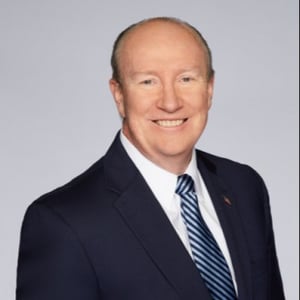
Senior Fellow, National Review
Bestselling author Andrew C. McCarthy is a contributing editor at National Review, a senior fellow at National Review Institute, and a Fox News contributor. He is a former Chief Assistant United States Attorney in the Southern District of New York and led the terrorism prosecution against the “Blind Sheikh” (Omar Abdel Rahman) and eleven other jihadists for conducting a war of urban terrorism against the United States that included the 1993 World Trade Center bombing and a plot to bomb New York City landmarks. During is 20-year career as a prosecutor, he received numerous honors, including the Justice Department’s highest awards. Andy speaks and writes widely on law and national security, radical Islam, politics, and culture. He has testified before Congress as an expert on issues of constitutional law, counterterrorism, and law-enforcement. He is a columnist for The Hill, and his essays and book reviews appear frequently at The New Criterion. His most recent New York Times bestselling book is Ball of Collusion (Encounter Books, 2019), about the Russiagate controversy (an updated version was published in 2020). His other books include Willful Blindness (2008), The Grand Jihad (2010), Spring Fever: The Illusion of Islamic Democracy (2012), and Faithless Execution (2014). He has also written several pamphlets in the Broadside series published by Encounter Books, most recently Islam and Free Speech (2015).
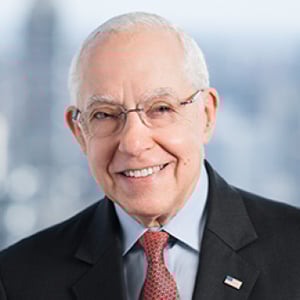
Former United States Attorney General
Michael B. Mukasey is the former Attorney General of the United States, the nation’s chief law enforcement officer. As Attorney General from November 2007 to January 2009, he oversaw the U.S. Department of Justice and advised on critical issues of domestic and international law.
From 1988 to 2006, Judge Mukasey served as a district judge in the United States District Court for the Southern District of New York, becoming Chief Judge in 2000.
From 1972 to 1976, Judge Mukasey served as an Assistant United States Attorney for the Southern District of New York, and as Chief of the Official Corruption Unit from 1975 to 1976. His practice consisted of criminal litigation on behalf of the government, including investigation and prosecution of narcotics, bank robbery, interstate theft, securities fraud, fraud on the government and bribery. From 1976 to 1987 and from 2006 to 2007 he was in private practice.
Judge Mukasey has received numerous honors, including the Federal Bar Council’s Learned Hand Medal for Excellence in Federal Jurisprudence. He served as Chairman of the Committee on Public Access to Information and Proceedings of the New York Bar Association from 1984 to 1987. He served on the Federal Courts Committee of the Association of the Bar of the City of New York from 1979 to 1982 and its Communications Law Committee from 1983 to 1986. Judge Mukasey was also a part-time lecturer at Columbia School of Law from January 1993 to May 2007, teaching trial advocacy.
He received his LL.B. from Yale Law School in 1967 and his B.A. from Columbia College in 1963.
United States Court of Appeals, Second Circuit
Dennis Jacobs is the Chief Judge of the United States Court of Appeals for the Second Circuit. He became Chief Judge on October 1, 2006. At the time of his appointment in 1992, he was a partner in the New York law firm of Simpson Thacher & Bartlett.
Judge Jacobs received his B.A. degree from Queens College of the City University of New York in 1964; his M.A. degree from New York University in 1965; and his J.D. degree from the New York University School of Law in 1973.
Judge Jacobs was a lecturer in the English Department of Queens College of the City University of New York from 1967 until 1969. He was in private practice from 1973 with the New York law firm of Simpson, Thacher & Bartlett, serving as a partner there from 1980 until his judicial appointment.
In 1997-2004, Judge Jacobs was a member of the Committee on Judicial Resources of the Judicial Conference of the United States; starting in 1999 he was chair of that committee.
Judge Jacobs is a native of New York City.
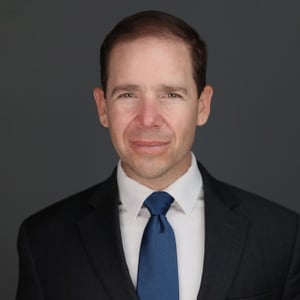
Founder and CEO, Lexpat Global Services
Adam Pearlman is the Founder and Chief Executive Officer of Lexpat Global Services. He is a National Security Law expert and a proven senior leader with experience across the U.S. Departments of Justice, Defense, and State, in the White House, and with the U.S. Federal Judiciary.
Before founding Lexpat, Mr. Pearlman served as the Senior Advisor for Legal Policy in the State Department’s Bureau of Counterterrorism. There, he counseled senior officials on matters covering the entire spectrum of programs and operations to counter terrorism and violent extremism. While participating in sensitive diplomatic engagements and helping to coordinate military operations, he also advised in the development of sanctions policy and initiatives to build legal and operational capacity in partner nations. Mr. Pearlman also managed the Bureau’s participation in federal litigation and led U.S. delegations in multilateral forums concerning criminal justice and rule of law. Separately, Mr. Pearlman supported the State Department’s Bureau of International Narcotics and Law Enforcement Affairs (INL) as the contracted Senior Justice and Rule of Law Advisor in Cabo Verde, Africa. There he was the chief implementer of a Foreign Assistance program that grew eight-fold during his tenure, building host nation capacity across the law enforcement, justice sector, rule of law, anti-money laundering, and corrections disciplines.
A former Associate Deputy General Counsel of the Department of Defense, Mr. Pearlman was agency counsel for complex civil and criminal national security matters in federal and military courts. He also led the Supreme Court and appellate unit of the team dedicated to litigating classified counterterrorism cases. His earlier service in the Department of Justice spanned four litigating divisions and the Office of the Deputy Attorney General. His diverse experience included reviewing complex international transactions and mergers, and advising on immigration removal proceedings, human rights abuses, and terrorist financing investigations. Mr. Pearlman also served with distinction in Iraq as an early advisor to the Iraqi High Tribunal’s prosecution of Saddam Hussein. He was a law clerk for The Honorable Royce C. Lamberth of the U.S. District Court for the District of Columbia, and during law school interned in the White House Counsel’s Office.
Mr. Pearlman is a Senior Fellow at the National Security Institute at George Mason University’s Antonin Scalia Law School, a member of the American Bar Association’s Advisory Committee on Law and National Security, and the Editor-in-Chief of the U.S. Intelligence Community Law Sourcebook. Previously, he has been a Term Member of the Council on Foreign Relations, National Security Fellow at the Foundation for Defense of Democracies, member of the ABA’s Africa Law Initiative Council and of the Center for Strategic & International Studies’ (CSIS) Project on Nuclear Issues, vice chairman of the ABA Section of International Law’s committees on national security, and aerospace and defense, and a liaison to the Board of Directors of the ABA’s Rule of Law Initiative. He has published articles in the Harvard National Security Journal, Stanford Law & Policy Review, Intelligence & National Security, The Foreign Service Journal, Lawfare, and many other outlets.
Mr. Pearlman earned his B.A., with honors, from UCLA, and his J.D., with honors, from The George Washington University Law School, where he was a member of the International Law Review. He also earned a Master of Science of Strategic Intelligence degree from the National Intelligence University, where he was the inaugural recipient of the Kornblum Award for national security law and ethics. Mr. Pearlman is a Certified Financial Crime Specialist and holds certificates in international human rights law from the University of Oxford and in anti-corruption law from American University’s Washington College of Law. He is admitted to the State Bars of California and Virginia, as well as to the Bar of the United States Supreme Court. He speaks and reads Portuguese at the intermediate level.

Executive Vice President of Global Governance, Chief Legal Officer and Corporate Secretary, Walmart Inc.
Rachel Brand is Walmart’s executive vice president of global governance, chief legal officer, and corporate secretary. She oversees the company’s global legal, compliance, ethics, corporate governance, digital citizenship, aviation, investigative, and corporate security functions, including Walmart’s Emergency Operations Center.
Immediately before joining Walmart, Rachel served as the United States Associate Attorney General and holds the distinction of being the first woman to serve in this role. She had previously served in the U.S. Department of Justice as the Assistant Attorney General for the Office of Legal Policy during President George W. Bush’s administration. Her other government service includes an appointment by President Obama to serve as a Member of the U.S. Privacy and Civil Liberties Oversight Board, service as an Associate Counsel to the President at the White House, and judicial clerkships with Justice Charles Fried of the Supreme Judicial Court of Massachusetts and Justice Anthony Kennedy at the Supreme Court of the United States. In the private sector, Rachel was a lawyer in private practice at two law firms in Washington, D.C. and served as the Vice President and Chief Counsel for Regulatory Litigation at the U.S. Chamber of Commerce Litigation Center.
Rachel serves on the board of directors for the Walmart Foundation and is the executive sponsor for Walmart’s Tribal Voices Associate Resource Group. Outside of Walmart, she serves on the board of directors for the International Justice Mission and is a member of The American Law Institute.
Rachel earned her Bachelor of Arts degree from the University of Minnesota-Morris and her J.D. from Harvard Law School.

An FBI Law Enforcement Officer's Perspective on Criminal Law
The FBI on the Beat
Panel Two: Economic Security
Orin S. Kerr, Marc Rotenberg, John Smith, Michael Vatis, Vincent Vitkowsky
Both President Bush and President Obama directed comprehensive reviews of America's cyber security strategy. The...
Panel Two: Economic Security
Orin S. Kerr, Marc Rotenberg, John Smith, Michael Vatis, Vincent Vitkowsky
Both President Bush and President Obama directed comprehensive reviews of America's cyber security strategy. The...
Panel Two: Economic Security
Cyber Security, National Security and Economic Security
Washington, DC2011 James Madison Award Presentation - Prepared Remarks
Andrew McCarthy, Michael B. Mukasey
On April 25, 2011, the New York City Lawyers Chapter hosted its 25th Anniversary Dinner...
Life as an FBI Agent in the Big Apple
Lawyers at War
Dennis Jacobs
Dennis Jacobs is a judge on the United States Court of Appeals for the Second Circuit....
Federal Cybersecurity Programs
Adam R. Pearlman
Brought to you by the International & National Security Law Practice GroupThe Federalist Society takes no position on...
Reauthorization of the USA PATRIOT Act
Rachel L. Brand
Brought to you by the International & National Security Law Practice GroupEDITOR'S NOTE: The final paragraph below, appearing...