
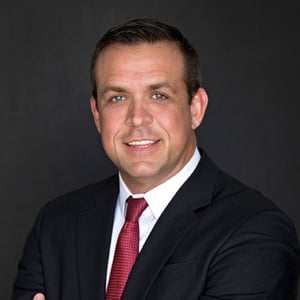
Attorney, Berkshire Law Office
As one of approximately 70 certified specialists in the State of Arizona and one of 36 Fellows in the American Academy of Matrimonial Lawyers, Keith Berkshire is well versed in all areas of family law, including high stakes litigation. In addition to his litigation practice, Keith has a significant appellate practice which includes 23 published Opinions at the Arizona Court of Appeals and the Arizona Supreme Court. Keith also successfully litigated the Howell case at the Supreme Court of the United States.
Keith routinely teaches other attorneys and judges at legal education seminars on various family law issues, including legal decision-making (custody) and appellate matters and regularly serves as an expert witness on variously family law issues.

Attorney, Arizona Center for Disability Law
Sey In is a Hofstra law graduate interested in public interest law with focus in health law, public service, and immigration. He worked in litigation technology for over 10 years prior to going to law school.
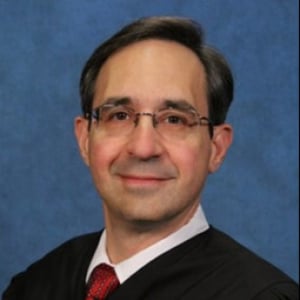
Presiding Judge of the Probate and Mental Health Department, Superior Court of Arizona for Maricopa County
Jay M. Polk is the Presiding Judge of the Probate and Mental Health Department of the Superior Court of Arizona for Maricopa County. He served as the Associate Presiding Judge of that department from April 10, 2017, through June 26, 2020. From November 21, 2011, to April 7, 2017, Judge Polk was assigned to the Family Court Department and served as the Associate Presiding Judge of Family Court Department for the Northeast Regional Court Center for approximately two of those years.
For nearly 20 years prior to his appointment to the bench, Judge Polk limited his practice of law to contested and uncontested matters relating to guardianships, conservatorships, decedents’ estates, the abuse or exploitation of vulnerable adults, and estate planning for modest estates. In addition, he served as a mediator and arbitrator, as a guardian ad litem for minor children and incapacitated adults, and as judge pro tempore. Between 1999 and 2011, Judge Polk was an Arizona Licensed Fiduciary and, as such, served as a personal representative or special administrator for several estates, as well as the special conservator for an attorney.
Judge Polk is a frequent speaker on probate and family law matters. He is an editor of the forthcoming edition of the Arizona Probate Code Practice Manual, was a co-managing editor of the 2014 edition of that publication, an associate editor of the 2000 edition of that publication, and has been a regular contributor to the Judicial College of Arizona’s Probate Benchbook. Throughout his career, Judge Polk has been involved in drafting legislation to improve Arizona’s probate laws. In addition, Judge Polk served on the Arizona Supreme Court’s Probate Rules Committee, which drafted the first set of statewide probate rules of procedure, and the Arizona Supreme Court’s Committee on Improving Judicial Oversight and Processing of Probate Court Matters, which proposed significant reforms to Arizona’s probate laws and rules. From December 2017 until December 2019, Judge Polk served on the Task Force on the Arizona Rules of Probate Procedure and chaired Workgroup 1 of that Task Force. He continues to serve on the Task Force’s Editorial Workgroup, which is updating statewide mandatory probate forms. From September 2018 until December 2019, Judge Polk was a member of the Steering Committee on Arizona Case Processing Standards and chaired the Probate Time Standards subcommittee. Between 2014 and 2015, Judge Polk assisted in creating the Superior Court of Arizona for Maricopa County’s intelligent probate forms.
Since 2011, Judge Polk has been a member of the Fiduciary Board, which regulates Arizona professional fiduciaries. He has been a member of the Executive Board of the Arizona Judges Association since June 2014, and served as Secretary from July 2016 through June 2017, Vice President from July 2017 through June 2018, and President from July 2018 to June 2019. He has been a member of the Arizona Public Safety Personnel Retirement System (“PSPRS”) Advisory Committee since November 2016. Since May 2017, Judge Polk has served as the Judicial Liaison to the Estate Planning, Probate, and Trust Law Section of the Maricopa County Bar Association, and since September 2018, he has served as the Judicial Liaison to the Elder Law, Mental Health, and Special Needs Planning Section of the State of Bar of Arizona. Since June 2019, he also has been the Judicial Liaison to the Probate and Trust Law Section of the State Bar of Arizona. In addition, Judge Polk served as President of The Council For Jews With Special Needs from 2004 to 2006 and was a member of that organization’s Board of Directors from 1998 through 2007.
A graduate of the University of Chicago (A.B. 1989, Political Science) and Arizona State University (J.D. 1992), Judge Polk has been the recipient of numerous professional awards, including the State Bar of Arizona Probate and Trust Law Section’s 2008 Eleanor ter Horst Distinguished Service Award, the Arizona Fiduciaries Association’s 2009 Leadership Award, the Arizona Chapter of the National Academy of Elder Attorneys’ 2011 Craig C. Gordon Outstanding Arizona Chapter Member Award, and the Maricopa County Bar Association Family Law Section’s 2017 Bridging the Gap Award.
Vice Chief Justice, Arizona Supreme Court
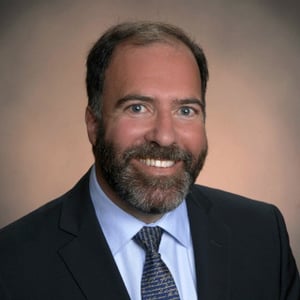
Professor of Law, Widener University Commonwealth Law School
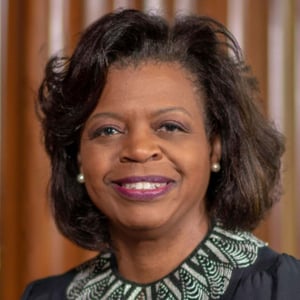
Fmr. Chief Justice, North Carolina Supreme Court
Chief Justice Cheri Beasley has spent more than 20 years dedicated to the rule of law. She began her judicial career as a district court judge in Cumberland County, where she served for a decade before being elected to the North Carolina Court of Appeals in 2008. She served as an associate justice on the Supreme Court of North Carolina for seven years before being appointed by Governor Roy Cooper to lead the Supreme Court and North Carolina's third branch of government, the Judicial Branch. She is the first African-American woman in the Supreme Court’s 200-year history to serve as Chief Justice.
Chief Justice Beasley has spent her entire career advocating for courts that are independent, fair, and accessible, and that serve every person with dignity and respect. As Chief Justice, she is advocating for a court system that not only solves legal disputes, but also helps people better their lives. By engaging local judges, educators and law enforcement, she is helping to reform discipline in our schools and keeping kids out of our courtrooms. She is committed to expanding specialized treatment courts that better serve the needs of North Carolina’s children and families. She is also working to leverage the power of technology to make sure our courts are efficient and accessible.
She has lectured extensively to promote the administration of justice, the importance of an independent judiciary, and fair judicial selection. She is active in her community through leadership in her church, First Baptist of Raleigh, her support of hunger relief efforts, and her mentoring of students from elementary school to law school. She is a graduate of Douglass College of Rutgers University, the University of Tennessee College of Law, and Duke University School of Law where she obtained her LL.M. She and her husband, Curtis Owens, are the proud parents of twin sons, Thomas and Matthew.
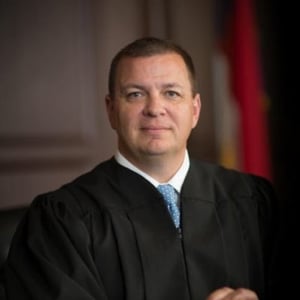
Associate Justice, Supreme Court of North Carolina
Phil was born in Danville, Virginia on March 26, 1972, to Philip and Pat Berger. Phil is a 1990 graduate of Morehead High School in Eden, North Carolina. He graduated from UNC-Wilmington in 1994 with a B.A. in History, and earned his law degree from Wake Forest University School of Law in 1999.
Phil began his legal career in private practice in 1999. From 2001 through 2006, he joined his father and brother, Kevin, forming The Berger Law Firm. In 2006, Phil was elected District Attorney in the 17A Prosecutorial District and was re-elected in 2010.
While serving as District Attorney, Phil was the chair of Project SAFE Rockingham County. A collaboration with the US Attorney's Office and local law enforcement, Project SAFE implemented the “focused-deterrence” model for reducing violent crime among recidivists and gang members. In 2013-14, he served as President of the North Carolina Conference of District Attorneys. Phil represented the National District Attorneys Association in Guantanamo Bay, Cuba, as a Non-Governmental Observer to the United States v. Khalid Sheikh Mohammad, et al hearings.
From 2015-2016, Phil served as an Administrative Law Judge with the North Carolina Office of Administrative Hearings. He was elected to the North Carolina Court of Appeals in 2016. In 2020, Phil was elected to the Supreme Court of North Carolina.
Phil has a passion for helping young people. He serves as a volunteer assistant coach with the baseball team at Cedar Ridge High School. Phil previously coached football at the high school level, and he has also coached youth football with the Durham Firebirds and Greensboro Eagles. Phil was the founder and chair of Eden Youth Football, and he served as a board member and basketball coach with Bethany Community Middle School.
Phil is married to Jodie Church, a public school teacher. They have two children, Philip III and Will.
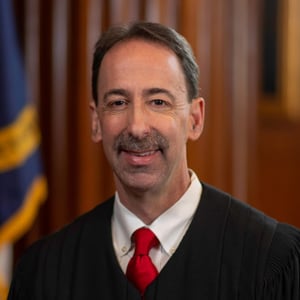
Associate Justice, North Carolina Supreme Court
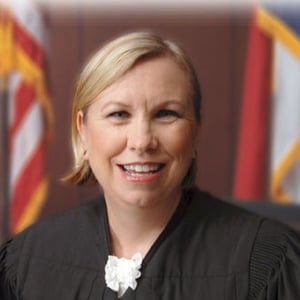
Judge, North Carolina Court of Appeals
Lucy Inman, a judge on the North Carolina Court of Appeals, is a candidate for the North Carolina Supreme Court in 2020. Judge Inman was elected statewide to the Court of Appeals in 2014.
Judge Inman was raised in Raleigh by parents who taught her the value of hard work and respect for people of all races, faiths, and walks of life. She graduated from Sanderson High School and earned a degree in English from N.C. State University.
Judge Inman’s first career was as a newspaper reporter. While covering court proceedings, she was inspired to participate in the justice system. She then moved to Chapel Hill and earned her law degree from UNC School of Law in 1990. Her first job after law school was working as a law clerk for North Carolina Supreme Court Chief Justice Jim Exum.
Judge Inman went on to practice civil litigation for 18 years, first in Los Angeles and then back home in Raleigh. Her clients included small business owners, large corporations, famous individuals, and lesser known -- but no less important -- survivors of negligence, fraud, and sexual abuse.
In 2010, Judge Inman was appointed by Governor Beverly Perdue to serve as a special superior court judge. She served in that role for four years, presiding in hearings and jury trials across North Carolina. Since her election to the Court of Appeals, Judge Inman has authored over 400 appellate decisions in a wide variety of cases, including criminal, civil, and constitutional disputes. She has presided in thousands of other cases.
Judge Inman brings hard work and respect for all others to her personal and professional life every day. She hopes to bring these values, and equal justice for all, to the North Carolina Supreme Court.
Judge Inman and her husband Billy Warden live in Raleigh. They have two college-age children and a black lab rescue who keeps their nest from ever being empty.
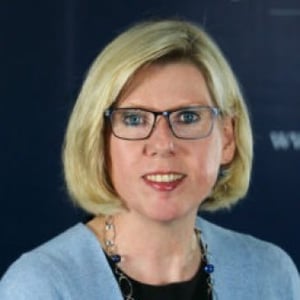
Vice President of Marketing and Communications, John Locke Foundation
As Vice President of Marketing and Communications, Donna shares the foundation’s message of freedom, free markets, and limited government across media platforms. She co-hosts Carolina Journal Radio, a weekly syndicated radio show produced by JLF and heard on more than a dozen stations across North Carolina. Donna came to JLF in 2003 after freelance writing for Carolina Journal and contributing to projects for the North Carolina Education Alliance. Her career has been spent in marketing, public relations, and broadcasting, and includes time at UNC-TV and The Arizona Republic, the daily newspaper serving metropolitan Phoenix. Donna is a graduate of Arizona State University and is married to Rick Martinez. She and Rick co-host “You Don’t Say,” a daily radio talk show heard on NewsRadio 680 WPTF in the Triangle.
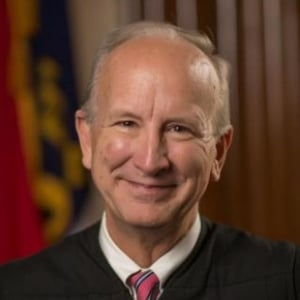
Chief Justice, North Carolina Supreme Court
Chief Justice Paul Newby was born in Asheboro and grew up in Jamestown, N.C. He received his B.A. degree in Public Policy Studies from Duke University and law degree from UNC-Chapel Hill School of Law.
Chief Justice Newby was first elected to the Supreme Court as an Associate Justice in 2004. He was elevated to the highest judicial office in North Carolina in the 2020 election. As Chief Justice, he is head of the Judicial Branch, a co-equal branch of state government with the Legislative and Executive branches. He is entrusted with leading the Judicial Branch and its 7,600 elected officials and employees.
He is a former adjunct professor of law at Campbell University and has published a book on the North Carolina Constitution.
Chief Justice Newby’s legal experience includes private practice and corporate inhouse legal counsel. He also served almost 20 years as an Assistant United States Attorney, during which he played an integral role in conducting the undercover sting operation that recovered North Carolina’s original copy of the Bill of Rights, stolen in the aftermath of the Civil War.
Chief Justice Newby is an Eagle Scout and is the recipient of the Heroism Award (for rescuing nine people from a riptide), the God and Service Award, the Silver Beaver Award, and the Scouter of the Year Award. In 2012, he was designated a Distinguished Eagle Scout, a national honor that recognizes both his service to the Boy Scouts and his dedication to public service.
Chief Justice Newby has been married to Macon Tucker Newby since 1983, and they have four children. He is active in his local church, where he serves as a teacher and mentor to young professionals.
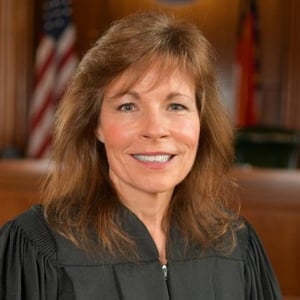
Associate Justice, Supreme Court of North Carolina
Tamara Patterson Barringer is the 101st Associate Justice of the Supreme Court of North Carolina.
Justice Barringer teaches Law and Ethics to Master of Accounting and Undergraduate Business students at the Kenan-Flagler Business School at the University of North Carolina-Chapel Hill, where she has served on the faculty for 15 years. Tamara also serves as the Director and Lead Faculty for the Master of Accounting Mentorship Program, a diversity, equity, and inclusion program, which she founded over a decade ago to introduce careers in accounting and business to first generation and under-represented minority undergraduate students.
Justice Barringer has also taught as an Adjunct Professor of Business Law at North Carolina State University and later designed and taught the first business law paralegal program curriculum at Meredith College.
Justice Barringer began her legal career in private practice in 1985 with Poyner and Spruill, being mentored closely by attorneys Nat Townsend, Curtis Twiddy, and Maria Lynch. She then founded the Barringer Sasser, LLP law firm in Cary in 1988 with her husband, Brent. As Managing Partner, she gained over 20 years’ experience representing entrepreneurs and small business clients in business and tax law, estate planning, and estate administration matters.
Justice Barringer served as a North Carolina Senator, representing District 17 in Southern Wake County from 2012 to 2018. She served as Chair of the Senate Judiciary Committee and Chair of the Joint Legislative Committee for General Government and Information Technology Appropriations.
Justice Barringer’s lifelong mission for healthy children and families in North Carolina began when she and her husband, Brent, served as therapeutic foster parents for the Methodist Home for Children for over 10 years. Through her work in the General Assembly as Chair of the Permanency Innovation Initiative, partnering with the Dave Thomas Foundation and Wendy’s Wonderful Kids Program, 300 older North Carolina children, who had very little chance of being adopted, now have permanent, loving, and stable homes.
Justice Barringer’s life journey began on her family’s farm in Patterson Springs, Cleveland County, North Carolina, growing up with three younger sisters outside Shelby. After graduating from Crest High School in 1977, she became the first member of her family to ever graduate from college when she earned her Bachelor of Science in Business Administration with Highest Honors in 1981 from the Kenan-Flagler Business School at the University of North Carolina at Chapel Hill. She earned her Juris Doctor with Honors from the UNC School of Law in 1985, after serving on the North Carolina Law Review and being inducted into the Order of the Coif.
Justice Barringer is married to her college sweetheart, Brent, and have three adopted children, Jessica, John Charles, and Emily, and two rescue dogs, Lilah and Baloo.

Free Britney!
Do the Probate & Family Courts have too much power to control individual autonomy?
Phoenix, AZCourthouse Steps Oral Arguments Teleforum: Carney v. Adams
Michael R. Dimino
In Delaware, there is a state constitutional provision that requires the state’s three highest courts...
North Carolina Supreme Court Candidate Forum
Cheri Beasley, Phil Berger, Mark Davis, Lucy Inman, Donna Martinez, Paul Newby, Tamara Patterson Barringer
On September 10, 2020, The Federalist Society's Triangle and Cape Fear Lawyers Chapters hosted a...