
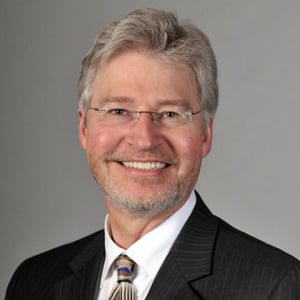
Vice President for Research and Technology Transfer, Colorado School of Mines; Former Director, National Institute of Standards and Technology
Dr. Walter Copan is senior adviser of the Renewing American Innovation Project at the Center for Strategic and International Studies. Currently, he serves as vice president for research and technology transfer at the Colorado School of Mines in Golden, Colorado. He previously served as under secretary of commerce for standards and technology and 16th director of the National Institute of Standards and Technology (NIST), a position to which he was confirmed unanimously by the Senate. He served as the U.S. principal presidential adviser on standards policy and technology matters and provided high-level oversight and strategic leadership for NIST, a world-leading science and technology institute. Dr. Copan has wide-ranging experience spanning large company, entrepreneurial tech start-up, U.S. government, nonprofit, and other public sector settings. For the U.S. government, he also served with two of the Department of Energy national laboratories: the National Renewable Energy Laboratory and Brookhaven National Laboratory. He is a sought-after speaker and thought leader on matters of science and technology, strategy, entrepreneurship, technology commercialization, intellectual property, and innovation. Dr. Copan began his career in research and development and business leadership at the Lubrizol Corporation. He earned undergraduate degrees and his PhD in physical chemistry from Case Western Reserve University and holds a certificate in advanced business administration studies at Harvard Business School. He was named 2020 laboratory director of the year by the U.S. Federal Laboratory Consortium. The Association of University Technology Managers (AUTM) recognized Dr. Copan with its 2021 Bayh-Dole Award for contributions to innovation and technology transfer.
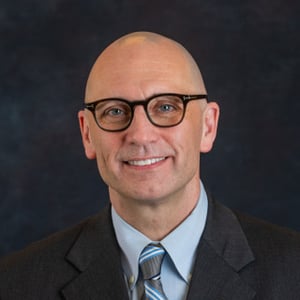
Senior Counsel for Law and Policy, Committee for Justice
Jeff is a registered patent attorney and an intellectual property and innovation policy professional with a unique combination of training and real-world experience. Jeff is also currently a PhD candidate at the University of Pittsburgh Graduate School of Public and International Affairs (GSPIA). His dissertation is entitled “An Inquiry into the Nature and Causes of American Innovation: An Austrian Economics Perspective.”
Jeff maintains an active intellectual property law practice in the life sciences space. While counseling clients and working on his dissertation and other scholarship, Jeff remains active in the policy analysis and advocacy space. He currently serves as the President of the Association for American Innovation and a member and former Chair of the Public Policy Legal Task Force (PPLTF) for the Association of University of Technology Managers (AUTM).
Jeff has a bachelor’s degree chemical and biomedical engineering with concentrations in molecular biology and fermentation technology and from Carnegie Mellon. He also has a master’s degree in industrial administration (business) from Carnegie Mellon where he concentrated on international management, marketing and finance. He earned his law degree from the Duquesne University School of Law with a focus on intellectual property law.
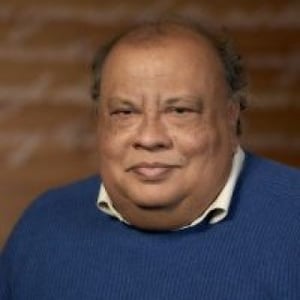
Crandall Melvin Professor of Law, Director, Syracuse Intellectual Property Law Institute, Syracuse University College of Law
Dr. Shubha Ghosh earned his J.D. from Stanford University, with distinction, and his Ph.D. in Economics from the University of Michigan. He earned his B.A., cum laude, from Amherst College. Prior to joining Syracuse University College of Law, Ghosh taught at the University of Wisconsin Law School as a chaired, tenured professor and co-director of the Innovation cluster, consisting of faculty in the law and business schools.
Ghosh joined the Syracuse University College of Law in January, 2016, as Crandall Melvin Professor of Law and Director of the Technology Commercialization Curricular Program, a unique program which trains students in intellectual property, business law, and the legal foundations for the commercialization of patents, copyrights, trademarks, and other legal property governing technology and innovation. The Program consists of the Syracuse Intellectual Property Law Institute (SIPLI), which Professor Ghosh manages, and the Innovation Law Center, which offers clinical experience for students in the Program.
Ghosh also works through the state-funded New York State Science and Technology Law Center (NYSSTLC), an entity that guides entrepreneurs, start-ups, universities, and research centers in New York State and beyond. In this capacity, Ghosh frequently works with administrators in Albany who focus on economic development and innovation policy in the State. Most recently, he has advised on the risks to 501(c) entities that collaborate with private enterprise and on intellectual property and technology licensing policies for state research entities.
His extensive research focuses on the development and commercialization of intellectual property and technology as a means of promoting economic and social development. He has published extensively on pharmaceutical, design, copyright protection of standards, competition policy, and other intellectual property issues; antitrust law; legal construction of the marketplace; technology transfer; and the role of intellectual property law and policy in shaping these diverse areas. His most recent book, Exhausting Intellectual Property Rights (Cambridge, 2018) was the subject of a panel discussion at the World Trade Organization in Geneva and the AALS Annual Meeting in New Orleans.
Ghosh is also a frequent blogger and commentator in webcasts and webinars, including the JOTWELL section on International & Comparative Law; Hedgehogs and Foxes, a blog on law and popular culture; and the webcast series for SIPLI and the Technology Commercialization Law Program.

Partner, Sullivan & Cromwell LLP
Andrei Iancu is a partner at Sullivan & Cromwell and one of the leading voices in intellectual property law and innovation policy. He is a former Undersecretary of Commerce for Intellectual Property and Director of the U.S. Patent and Trademark Office (USPTO), a position to which he was confirmed unanimously by the Senate. Andrei has decades of experience representing plaintiffs and defendants in IP matters across the technical and scientific spectra, including medical devices, genetic testing, therapeutics, the Internet, telephony, TV broadcasting, video game systems and computer peripherals. He represents clients in litigation and trials before the district courts, the U.S. International Trade Commission and the USPTO, the Federal Circuit and U.S. Supreme Court, and also counsels clients on obtaining, licensing, enforcing and defending against IP rights globally.
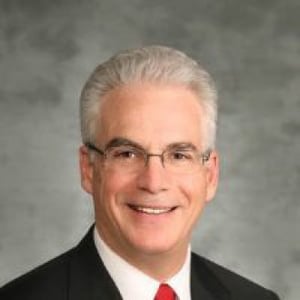
Dinsmore & Shohl LLP, Partner
Brian is chair of Dinsmore’s IP Transactions and Licensing Group. He is a past president of the Licensing Executives Society (USA and Canada), Inc. (LES), the leading professional society devoted to commercial transactions and licensing of intangible property. He continues to serve LES as senior vice president for public policy. He has extensive experience in a wide variety of commercial transactions involving intangible property, and is known for creative licensing strategies to promote collaboration and resolve IP-related disputes.
He is a registered patent attorney with more than 30 years of experience before the U.S. Patent and Trademark Office and in structuring global IP portfolios and strategies. He has extensive experience in contested proceedings before the USPTO Patent Trial and Appeal Board (interferences, Inter Partes Reviews and Post Grant Reviews), as well as contested matters in federal courts and the International Trade Commission. His wide-ranging experience affords a broad, informed perspective and facilitates creative approaches to intellectual property management, licensing, and enforcement.
In addition to his leadership of LES, Brian served on the LES Board of Directors 2007 – 2018. In his ongoing role as senior vice president for public policy he is responsible for coordinating the society’s public policy positions, amicus briefs, and congressional outreach. He works with legislators, the executive branch, and the courts toward consistent, reliable, and prudent IP laws and policies that advance innovation and economic development. He has also served LES as trustee for education, and has long served as an author, editor, and faculty member of LES educational programs focusing on best practices in IP licensing.
He is also active in the global society, LES International (LESI). Among his various roles in LESI, he has served as co-chair of the External Relations Committee, coordinating public policy and advocacy for effective IP laws and policies among the 33 regional LES societies, and with various non-governmental organizations such as WIPO and EPO. In 2019, he received the LES International President’s Service Recognition Award.
Brian also serves as Chair of the Board of Directors of the Bayh Dole Coalition, a 501(c)(4) corporation dedicated to promoting and preserving the Bayh Dole Act. He is a member of the Founding Board of Directors of the United States Intellectual Property Alliance (USIPA), an organization dedicated to raising public awareness of, and appreciation for, the role of IP in fostering innovation for the public good; and he has served on the DC Bar Intellectual Property Section Steering Committee (2013 – 2016).
In 2016, Brian testified before the U.S. Senate Committee on Small Business and Entrepreneurship on the effects of the America Invents Act on small business and entrepreneurs in a hearing entitled “An Examination of Changes to the U.S. Patent System & Impacts on America's Small Businesses.”
With his longstanding and diverse patent practice, in both private practice and in-house, Brian advises corporate leaders and entrepreneurs in effective IP procurement practices, and in maximizing value from IP assets. He has been retained as a testifying witness in IP and licensing disputes by the U.S. Department of Justice, the U.S. Department of the Treasury, and by various private enterprises.
Brian has been acknowledged by IAM magazine as among its “IAM Strategy 300”, the world’s leading IP strategists, and among “The World's Leading Patent and Technology Licensing Lawyers.”
He earned B.S. and M.S. degrees from the Department of Chemistry, Rochester Institute of Technology, Rochester, NY; and Juris Doctor from Syracuse University, College of Law, Syracuse, NY (1986).
Brian has served his alma mater as president of the RIT Alumni Association 2005 – 2009; and now serves on the RIT Board of Trustees as a member of its Executive Committee, chair of its Student Life Committee, and vice-chair of its Committee on Trustees. In 2013, Brian was awarded RIT’s Outstanding Alumnus Award, and in 2005 he was awarded the Distinguished Alumnus Award by RIT’s College of Science.
Vice President for Research and Technology Transfer, Colorado School of Mines; Former Director, National Institute of Standards and Technology
Dr. Walter Copan is senior adviser of the Renewing American Innovation Project at the Center for Strategic and International Studies. Currently, he serves as vice president for research and technology transfer at the Colorado School of Mines in Golden, Colorado. He previously served as under secretary of commerce for standards and technology and 16th director of the National Institute of Standards and Technology (NIST), a position to which he was confirmed unanimously by the Senate. He served as the U.S. principal presidential adviser on standards policy and technology matters and provided high-level oversight and strategic leadership for NIST, a world-leading science and technology institute. Dr. Copan has wide-ranging experience spanning large company, entrepreneurial tech start-up, U.S. government, nonprofit, and other public sector settings. For the U.S. government, he also served with two of the Department of Energy national laboratories: the National Renewable Energy Laboratory and Brookhaven National Laboratory. He is a sought-after speaker and thought leader on matters of science and technology, strategy, entrepreneurship, technology commercialization, intellectual property, and innovation. Dr. Copan began his career in research and development and business leadership at the Lubrizol Corporation. He earned undergraduate degrees and his PhD in physical chemistry from Case Western Reserve University and holds a certificate in advanced business administration studies at Harvard Business School. He was named 2020 laboratory director of the year by the U.S. Federal Laboratory Consortium. The Association of University Technology Managers (AUTM) recognized Dr. Copan with its 2021 Bayh-Dole Award for contributions to innovation and technology transfer.
Senior Counsel for Law and Policy, Committee for Justice
Jeff is a registered patent attorney and an intellectual property and innovation policy professional with a unique combination of training and real-world experience. Jeff is also currently a PhD candidate at the University of Pittsburgh Graduate School of Public and International Affairs (GSPIA). His dissertation is entitled “An Inquiry into the Nature and Causes of American Innovation: An Austrian Economics Perspective.”
Jeff maintains an active intellectual property law practice in the life sciences space. While counseling clients and working on his dissertation and other scholarship, Jeff remains active in the policy analysis and advocacy space. He currently serves as the President of the Association for American Innovation and a member and former Chair of the Public Policy Legal Task Force (PPLTF) for the Association of University of Technology Managers (AUTM).
Jeff has a bachelor’s degree chemical and biomedical engineering with concentrations in molecular biology and fermentation technology and from Carnegie Mellon. He also has a master’s degree in industrial administration (business) from Carnegie Mellon where he concentrated on international management, marketing and finance. He earned his law degree from the Duquesne University School of Law with a focus on intellectual property law.
Crandall Melvin Professor of Law, Director, Syracuse Intellectual Property Law Institute, Syracuse University College of Law
Dr. Shubha Ghosh earned his J.D. from Stanford University, with distinction, and his Ph.D. in Economics from the University of Michigan. He earned his B.A., cum laude, from Amherst College. Prior to joining Syracuse University College of Law, Ghosh taught at the University of Wisconsin Law School as a chaired, tenured professor and co-director of the Innovation cluster, consisting of faculty in the law and business schools.
Ghosh joined the Syracuse University College of Law in January, 2016, as Crandall Melvin Professor of Law and Director of the Technology Commercialization Curricular Program, a unique program which trains students in intellectual property, business law, and the legal foundations for the commercialization of patents, copyrights, trademarks, and other legal property governing technology and innovation. The Program consists of the Syracuse Intellectual Property Law Institute (SIPLI), which Professor Ghosh manages, and the Innovation Law Center, which offers clinical experience for students in the Program.
Ghosh also works through the state-funded New York State Science and Technology Law Center (NYSSTLC), an entity that guides entrepreneurs, start-ups, universities, and research centers in New York State and beyond. In this capacity, Ghosh frequently works with administrators in Albany who focus on economic development and innovation policy in the State. Most recently, he has advised on the risks to 501(c) entities that collaborate with private enterprise and on intellectual property and technology licensing policies for state research entities.
His extensive research focuses on the development and commercialization of intellectual property and technology as a means of promoting economic and social development. He has published extensively on pharmaceutical, design, copyright protection of standards, competition policy, and other intellectual property issues; antitrust law; legal construction of the marketplace; technology transfer; and the role of intellectual property law and policy in shaping these diverse areas. His most recent book, Exhausting Intellectual Property Rights (Cambridge, 2018) was the subject of a panel discussion at the World Trade Organization in Geneva and the AALS Annual Meeting in New Orleans.
Ghosh is also a frequent blogger and commentator in webcasts and webinars, including the JOTWELL section on International & Comparative Law; Hedgehogs and Foxes, a blog on law and popular culture; and the webcast series for SIPLI and the Technology Commercialization Law Program.
Partner, Sullivan & Cromwell LLP
Andrei Iancu is a partner at Sullivan & Cromwell and one of the leading voices in intellectual property law and innovation policy. He is a former Undersecretary of Commerce for Intellectual Property and Director of the U.S. Patent and Trademark Office (USPTO), a position to which he was confirmed unanimously by the Senate. Andrei has decades of experience representing plaintiffs and defendants in IP matters across the technical and scientific spectra, including medical devices, genetic testing, therapeutics, the Internet, telephony, TV broadcasting, video game systems and computer peripherals. He represents clients in litigation and trials before the district courts, the U.S. International Trade Commission and the USPTO, the Federal Circuit and U.S. Supreme Court, and also counsels clients on obtaining, licensing, enforcing and defending against IP rights globally.
Dinsmore & Shohl LLP, Partner
Brian is chair of Dinsmore’s IP Transactions and Licensing Group. He is a past president of the Licensing Executives Society (USA and Canada), Inc. (LES), the leading professional society devoted to commercial transactions and licensing of intangible property. He continues to serve LES as senior vice president for public policy. He has extensive experience in a wide variety of commercial transactions involving intangible property, and is known for creative licensing strategies to promote collaboration and resolve IP-related disputes.
He is a registered patent attorney with more than 30 years of experience before the U.S. Patent and Trademark Office and in structuring global IP portfolios and strategies. He has extensive experience in contested proceedings before the USPTO Patent Trial and Appeal Board (interferences, Inter Partes Reviews and Post Grant Reviews), as well as contested matters in federal courts and the International Trade Commission. His wide-ranging experience affords a broad, informed perspective and facilitates creative approaches to intellectual property management, licensing, and enforcement.
In addition to his leadership of LES, Brian served on the LES Board of Directors 2007 – 2018. In his ongoing role as senior vice president for public policy he is responsible for coordinating the society’s public policy positions, amicus briefs, and congressional outreach. He works with legislators, the executive branch, and the courts toward consistent, reliable, and prudent IP laws and policies that advance innovation and economic development. He has also served LES as trustee for education, and has long served as an author, editor, and faculty member of LES educational programs focusing on best practices in IP licensing.
He is also active in the global society, LES International (LESI). Among his various roles in LESI, he has served as co-chair of the External Relations Committee, coordinating public policy and advocacy for effective IP laws and policies among the 33 regional LES societies, and with various non-governmental organizations such as WIPO and EPO. In 2019, he received the LES International President’s Service Recognition Award.
Brian also serves as Chair of the Board of Directors of the Bayh Dole Coalition, a 501(c)(4) corporation dedicated to promoting and preserving the Bayh Dole Act. He is a member of the Founding Board of Directors of the United States Intellectual Property Alliance (USIPA), an organization dedicated to raising public awareness of, and appreciation for, the role of IP in fostering innovation for the public good; and he has served on the DC Bar Intellectual Property Section Steering Committee (2013 – 2016).
In 2016, Brian testified before the U.S. Senate Committee on Small Business and Entrepreneurship on the effects of the America Invents Act on small business and entrepreneurs in a hearing entitled “An Examination of Changes to the U.S. Patent System & Impacts on America's Small Businesses.”
With his longstanding and diverse patent practice, in both private practice and in-house, Brian advises corporate leaders and entrepreneurs in effective IP procurement practices, and in maximizing value from IP assets. He has been retained as a testifying witness in IP and licensing disputes by the U.S. Department of Justice, the U.S. Department of the Treasury, and by various private enterprises.
Brian has been acknowledged by IAM magazine as among its “IAM Strategy 300”, the world’s leading IP strategists, and among “The World's Leading Patent and Technology Licensing Lawyers.”
He earned B.S. and M.S. degrees from the Department of Chemistry, Rochester Institute of Technology, Rochester, NY; and Juris Doctor from Syracuse University, College of Law, Syracuse, NY (1986).
Brian has served his alma mater as president of the RIT Alumni Association 2005 – 2009; and now serves on the RIT Board of Trustees as a member of its Executive Committee, chair of its Student Life Committee, and vice-chair of its Committee on Trustees. In 2013, Brian was awarded RIT’s Outstanding Alumnus Award, and in 2005 he was awarded the Distinguished Alumnus Award by RIT’s College of Science.
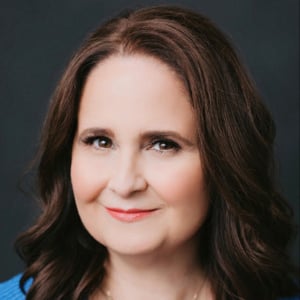
Chief Judge, United States Court of Appeals, Fifth Circuit
Jennifer Walker Elrod is the Chief Judge of the United States Court of Appeals for the Fifth Circuit. She was nominated to the Fifth Circuit in 2007, and she served as a Circuit Judge on the court until assuming the role of Chief Judge in October 2024. Prior to serving as a Circuit Judge, Chief Judge Elrod was appointed and then twice elected Judge of the 190th District Court of Harris County, Texas, where she spent over five years presiding over more than 200 jury and non-jury trials.
Chief Judge Elrod graduated cum laude from Harvard Law School, where she was an active member of the Harvard Federalist Society, an Ames Moot Court finalist, and a Senior Editor of the Harvard Journal of Law & Public Policy. She clerked for the Honorable Sim Lake in the Southern District of Texas. Before serving as a judge, Chief Judge Elrod worked in private practice, focusing on civil litigation, antitrust, and employment matters.
She has been repeatedly recognized for her work as a jurist, as well as for her pro bono work and contributions to the community. She has been named the 2022 Texas Review of Law & Politics’ Jurist of the Year, the 2018 Harvard Federalist Society’s Alumni of the Year, the 2016–17 Texas Association of Civil Trial and Appellate Specialists’ Appellate Judge of the Year, and the 2008 Mexican-American Bar Association of Texas’s Judge of the Year.
Chief Judge Elrod is actively engaged in the academic and legal communities. Chief Judge Elrod currently serves on the Board of Directors and as the Jurist-in-Residence at the South Texas College of Law, where she teaches civil procedure and First Amendment law. She is also a member of the American Law Institute and of the Board of Advisors for the Harvard Journal of Law & Public Policy, and she is a former member of the Board of Regents of her alma mater, Baylor University, and the Board of Visitors at Brigham Young University Law School. She previously served as the Chair of the Codes of Conduct Committee for the Judicial Conference of the United States. She has also served as the M.D. Anderson Visiting Public Service Professor at the Texas Tech University School of Law and as Jurist-in-Residence at Brigham Young University Law School, and she has taught legal writing at the University of Houston Law Center. She presented the Lewis F. Powell, Jr. Distinguished Lecture at the Washington and Lee University School of Law and is a frequent speaker on the topics of trial and appellate procedure, ethics, employment law, and constitutional law. Chief Judge Elrod also serves on the board of the Garland R. Walker Inn of Court, and co-produces an annual musical CLE, for which her pupilage group has won multiple national awards.
Chief Judge Elrod’s publications include: Trial by Siri: AI Comes to the Courtroom; Don’t Mess with Texas Judges: In Praise of the State Judiciary; For Good: Enriching Your Practice and Your Life Through Pro Bono and Community Service; Is the Jury Still Out?: A Case for the Continued Viability of the American Jury; and W(h)ither the Jury? The Diminishing Role of the Jury Trial in our Legal System.

James G. Phillipp Professor of Law, University of Michigan Law School
Julian Davis Mortenson writes on constitutional and international law. His current book project—The Founders' President (under contract, Harvard University Press)—develops a comprehensive account of presidential power at the American Founding. He is also co-authoring a new constitutional law casebook, scheduled for publication by Foundation Press in 2020.
Professor Mortenson is an award-winning teacher and an active litigator. Representative constitutional matters include his work as lead counsel in a pre-Obergefell suit that required Michigan to recognize the marriages of more than 300 same-sex couples; his representation of discharged military service members challenging the "Don't Ask, Don't Tell" law; and his work as one of the principal drafters of the merits briefs in the landmark case Boumediene v. Bush, which secured the right of Guantanamo detainees to challenge their incarceration. He regularly litigates complex transnational matters in the U.S. courts, and has served as arbitrator, counsel, and expert witness in a wide variety of commercial and investor-state disputes.
Before joining the faculty, Professor Mortenson worked at the law firm WilmerHale, in the President's Office of the International Criminal Tribunal for the former Yugoslavia, and as a law clerk for both Justice David H. Souter and The Hon. J. Harvie Wilkinson III. Prior to law school, he was a management consultant with a client portfolio spanning the finance, manufacturing, oil and gas, and information technology industries. Professor Mortenson was salutatorian of his class at Stanford Law School and received an AB in history, summa cum laude, from Harvard College.
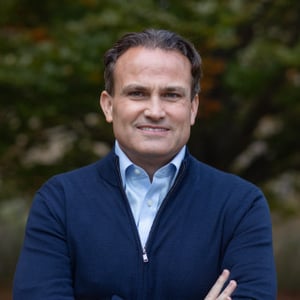
Professor of Law, University of Michigan Law School
Christopher J. Walker is a Professor of Law at the University of Michigan. Prior to joining Michigan law faculty in 2022, he spent a decade teaching at The Ohio State University Moritz College of Law. He previously clerked for Justice Anthony Kennedy of the U.S. Supreme Court, worked on the Civil Appellate Staff at the U.S. Department of Justice, and served on the Senate Judiciary Committee staff for the Gorsuch Supreme Court confirmation. Professor Walker’s research focuses on administrative law, regulation, and law and policy at the agency level. Outside the law school, he chaired the American Bar Association’s Section of Administrative Law and Regulatory Practice in 2020-21 and served as one of forty Public Members of the Administrative Conference of the United States from 2016-2022, and he continues to serve in both organizations in various capacities. He also works of counsel at the U.S. Chamber Litigation Center. In 2022, he received the Federalist Society’s Joseph Story Award.
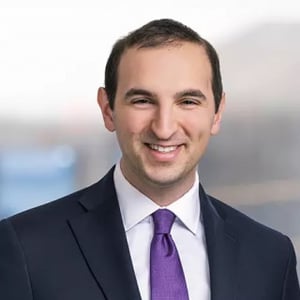
Associate, Covington & Burling LLP
Eli Nachmany is an associate at Covington & Burling LLP in the Washington, DC, office. He clerked for Judge Steven J. Menashi of the U.S. Court of Appeals for the Second Circuit. Eli graduated magna cum laude from Harvard Law School, where he was Editor-in-Chief of the Harvard Journal of Law & Public Policy. Prior to law school, Eli served as the speechwriter to the U.S. Secretary of the Interior and as a domestic policy aide in the White House Office of American Innovation. He graduated summa cum laude from New York University with a B.S. in Sports Management. Eli’s scholarship on administrative law and executive power has appeared in the BYU Law Review, George Mason Law Review, Wake Forest Law Review, and Yale Law Journal Forum.
Chief Judge, United States Court of Appeals, Fifth Circuit
Jennifer Walker Elrod is the Chief Judge of the United States Court of Appeals for the Fifth Circuit. She was nominated to the Fifth Circuit in 2007, and she served as a Circuit Judge on the court until assuming the role of Chief Judge in October 2024. Prior to serving as a Circuit Judge, Chief Judge Elrod was appointed and then twice elected Judge of the 190th District Court of Harris County, Texas, where she spent over five years presiding over more than 200 jury and non-jury trials.
Chief Judge Elrod graduated cum laude from Harvard Law School, where she was an active member of the Harvard Federalist Society, an Ames Moot Court finalist, and a Senior Editor of the Harvard Journal of Law & Public Policy. She clerked for the Honorable Sim Lake in the Southern District of Texas. Before serving as a judge, Chief Judge Elrod worked in private practice, focusing on civil litigation, antitrust, and employment matters.
She has been repeatedly recognized for her work as a jurist, as well as for her pro bono work and contributions to the community. She has been named the 2022 Texas Review of Law & Politics’ Jurist of the Year, the 2018 Harvard Federalist Society’s Alumni of the Year, the 2016–17 Texas Association of Civil Trial and Appellate Specialists’ Appellate Judge of the Year, and the 2008 Mexican-American Bar Association of Texas’s Judge of the Year.
Chief Judge Elrod is actively engaged in the academic and legal communities. Chief Judge Elrod currently serves on the Board of Directors and as the Jurist-in-Residence at the South Texas College of Law, where she teaches civil procedure and First Amendment law. She is also a member of the American Law Institute and of the Board of Advisors for the Harvard Journal of Law & Public Policy, and she is a former member of the Board of Regents of her alma mater, Baylor University, and the Board of Visitors at Brigham Young University Law School. She previously served as the Chair of the Codes of Conduct Committee for the Judicial Conference of the United States. She has also served as the M.D. Anderson Visiting Public Service Professor at the Texas Tech University School of Law and as Jurist-in-Residence at Brigham Young University Law School, and she has taught legal writing at the University of Houston Law Center. She presented the Lewis F. Powell, Jr. Distinguished Lecture at the Washington and Lee University School of Law and is a frequent speaker on the topics of trial and appellate procedure, ethics, employment law, and constitutional law. Chief Judge Elrod also serves on the board of the Garland R. Walker Inn of Court, and co-produces an annual musical CLE, for which her pupilage group has won multiple national awards.
Chief Judge Elrod’s publications include: Trial by Siri: AI Comes to the Courtroom; Don’t Mess with Texas Judges: In Praise of the State Judiciary; For Good: Enriching Your Practice and Your Life Through Pro Bono and Community Service; Is the Jury Still Out?: A Case for the Continued Viability of the American Jury; and W(h)ither the Jury? The Diminishing Role of the Jury Trial in our Legal System.
James G. Phillipp Professor of Law, University of Michigan Law School
Julian Davis Mortenson writes on constitutional and international law. His current book project—The Founders' President (under contract, Harvard University Press)—develops a comprehensive account of presidential power at the American Founding. He is also co-authoring a new constitutional law casebook, scheduled for publication by Foundation Press in 2020.
Professor Mortenson is an award-winning teacher and an active litigator. Representative constitutional matters include his work as lead counsel in a pre-Obergefell suit that required Michigan to recognize the marriages of more than 300 same-sex couples; his representation of discharged military service members challenging the "Don't Ask, Don't Tell" law; and his work as one of the principal drafters of the merits briefs in the landmark case Boumediene v. Bush, which secured the right of Guantanamo detainees to challenge their incarceration. He regularly litigates complex transnational matters in the U.S. courts, and has served as arbitrator, counsel, and expert witness in a wide variety of commercial and investor-state disputes.
Before joining the faculty, Professor Mortenson worked at the law firm WilmerHale, in the President's Office of the International Criminal Tribunal for the former Yugoslavia, and as a law clerk for both Justice David H. Souter and The Hon. J. Harvie Wilkinson III. Prior to law school, he was a management consultant with a client portfolio spanning the finance, manufacturing, oil and gas, and information technology industries. Professor Mortenson was salutatorian of his class at Stanford Law School and received an AB in history, summa cum laude, from Harvard College.
Associate, Covington & Burling LLP
Eli Nachmany is an associate at Covington & Burling LLP in the Washington, DC, office. He clerked for Judge Steven J. Menashi of the U.S. Court of Appeals for the Second Circuit. Eli graduated magna cum laude from Harvard Law School, where he was Editor-in-Chief of the Harvard Journal of Law & Public Policy. Prior to law school, Eli served as the speechwriter to the U.S. Secretary of the Interior and as a domestic policy aide in the White House Office of American Innovation. He graduated summa cum laude from New York University with a B.S. in Sports Management. Eli’s scholarship on administrative law and executive power has appeared in the BYU Law Review, George Mason Law Review, Wake Forest Law Review, and Yale Law Journal Forum.
Professor of Law, University of Michigan Law School
Christopher J. Walker is a Professor of Law at the University of Michigan. Prior to joining Michigan law faculty in 2022, he spent a decade teaching at The Ohio State University Moritz College of Law. He previously clerked for Justice Anthony Kennedy of the U.S. Supreme Court, worked on the Civil Appellate Staff at the U.S. Department of Justice, and served on the Senate Judiciary Committee staff for the Gorsuch Supreme Court confirmation. Professor Walker’s research focuses on administrative law, regulation, and law and policy at the agency level. Outside the law school, he chaired the American Bar Association’s Section of Administrative Law and Regulatory Practice in 2020-21 and served as one of forty Public Members of the Administrative Conference of the United States from 2016-2022, and he continues to serve in both organizations in various capacities. He also works of counsel at the U.S. Chamber Litigation Center. In 2022, he received the Federalist Society’s Joseph Story Award.
Vice President for Research and Technology Transfer, Colorado School of Mines; Former Director, National Institute of Standards and Technology
Dr. Walter Copan is senior adviser of the Renewing American Innovation Project at the Center for Strategic and International Studies. Currently, he serves as vice president for research and technology transfer at the Colorado School of Mines in Golden, Colorado. He previously served as under secretary of commerce for standards and technology and 16th director of the National Institute of Standards and Technology (NIST), a position to which he was confirmed unanimously by the Senate. He served as the U.S. principal presidential adviser on standards policy and technology matters and provided high-level oversight and strategic leadership for NIST, a world-leading science and technology institute. Dr. Copan has wide-ranging experience spanning large company, entrepreneurial tech start-up, U.S. government, nonprofit, and other public sector settings. For the U.S. government, he also served with two of the Department of Energy national laboratories: the National Renewable Energy Laboratory and Brookhaven National Laboratory. He is a sought-after speaker and thought leader on matters of science and technology, strategy, entrepreneurship, technology commercialization, intellectual property, and innovation. Dr. Copan began his career in research and development and business leadership at the Lubrizol Corporation. He earned undergraduate degrees and his PhD in physical chemistry from Case Western Reserve University and holds a certificate in advanced business administration studies at Harvard Business School. He was named 2020 laboratory director of the year by the U.S. Federal Laboratory Consortium. The Association of University Technology Managers (AUTM) recognized Dr. Copan with its 2021 Bayh-Dole Award for contributions to innovation and technology transfer.
Senior Counsel for Law and Policy, Committee for Justice
Jeff is a registered patent attorney and an intellectual property and innovation policy professional with a unique combination of training and real-world experience. Jeff is also currently a PhD candidate at the University of Pittsburgh Graduate School of Public and International Affairs (GSPIA). His dissertation is entitled “An Inquiry into the Nature and Causes of American Innovation: An Austrian Economics Perspective.”
Jeff maintains an active intellectual property law practice in the life sciences space. While counseling clients and working on his dissertation and other scholarship, Jeff remains active in the policy analysis and advocacy space. He currently serves as the President of the Association for American Innovation and a member and former Chair of the Public Policy Legal Task Force (PPLTF) for the Association of University of Technology Managers (AUTM).
Jeff has a bachelor’s degree chemical and biomedical engineering with concentrations in molecular biology and fermentation technology and from Carnegie Mellon. He also has a master’s degree in industrial administration (business) from Carnegie Mellon where he concentrated on international management, marketing and finance. He earned his law degree from the Duquesne University School of Law with a focus on intellectual property law.
Crandall Melvin Professor of Law, Director, Syracuse Intellectual Property Law Institute, Syracuse University College of Law
Dr. Shubha Ghosh earned his J.D. from Stanford University, with distinction, and his Ph.D. in Economics from the University of Michigan. He earned his B.A., cum laude, from Amherst College. Prior to joining Syracuse University College of Law, Ghosh taught at the University of Wisconsin Law School as a chaired, tenured professor and co-director of the Innovation cluster, consisting of faculty in the law and business schools.
Ghosh joined the Syracuse University College of Law in January, 2016, as Crandall Melvin Professor of Law and Director of the Technology Commercialization Curricular Program, a unique program which trains students in intellectual property, business law, and the legal foundations for the commercialization of patents, copyrights, trademarks, and other legal property governing technology and innovation. The Program consists of the Syracuse Intellectual Property Law Institute (SIPLI), which Professor Ghosh manages, and the Innovation Law Center, which offers clinical experience for students in the Program.
Ghosh also works through the state-funded New York State Science and Technology Law Center (NYSSTLC), an entity that guides entrepreneurs, start-ups, universities, and research centers in New York State and beyond. In this capacity, Ghosh frequently works with administrators in Albany who focus on economic development and innovation policy in the State. Most recently, he has advised on the risks to 501(c) entities that collaborate with private enterprise and on intellectual property and technology licensing policies for state research entities.
His extensive research focuses on the development and commercialization of intellectual property and technology as a means of promoting economic and social development. He has published extensively on pharmaceutical, design, copyright protection of standards, competition policy, and other intellectual property issues; antitrust law; legal construction of the marketplace; technology transfer; and the role of intellectual property law and policy in shaping these diverse areas. His most recent book, Exhausting Intellectual Property Rights (Cambridge, 2018) was the subject of a panel discussion at the World Trade Organization in Geneva and the AALS Annual Meeting in New Orleans.
Ghosh is also a frequent blogger and commentator in webcasts and webinars, including the JOTWELL section on International & Comparative Law; Hedgehogs and Foxes, a blog on law and popular culture; and the webcast series for SIPLI and the Technology Commercialization Law Program.
Partner, Sullivan & Cromwell LLP
Andrei Iancu is a partner at Sullivan & Cromwell and one of the leading voices in intellectual property law and innovation policy. He is a former Undersecretary of Commerce for Intellectual Property and Director of the U.S. Patent and Trademark Office (USPTO), a position to which he was confirmed unanimously by the Senate. Andrei has decades of experience representing plaintiffs and defendants in IP matters across the technical and scientific spectra, including medical devices, genetic testing, therapeutics, the Internet, telephony, TV broadcasting, video game systems and computer peripherals. He represents clients in litigation and trials before the district courts, the U.S. International Trade Commission and the USPTO, the Federal Circuit and U.S. Supreme Court, and also counsels clients on obtaining, licensing, enforcing and defending against IP rights globally.
Dinsmore & Shohl LLP, Partner
Brian is chair of Dinsmore’s IP Transactions and Licensing Group. He is a past president of the Licensing Executives Society (USA and Canada), Inc. (LES), the leading professional society devoted to commercial transactions and licensing of intangible property. He continues to serve LES as senior vice president for public policy. He has extensive experience in a wide variety of commercial transactions involving intangible property, and is known for creative licensing strategies to promote collaboration and resolve IP-related disputes.
He is a registered patent attorney with more than 30 years of experience before the U.S. Patent and Trademark Office and in structuring global IP portfolios and strategies. He has extensive experience in contested proceedings before the USPTO Patent Trial and Appeal Board (interferences, Inter Partes Reviews and Post Grant Reviews), as well as contested matters in federal courts and the International Trade Commission. His wide-ranging experience affords a broad, informed perspective and facilitates creative approaches to intellectual property management, licensing, and enforcement.
In addition to his leadership of LES, Brian served on the LES Board of Directors 2007 – 2018. In his ongoing role as senior vice president for public policy he is responsible for coordinating the society’s public policy positions, amicus briefs, and congressional outreach. He works with legislators, the executive branch, and the courts toward consistent, reliable, and prudent IP laws and policies that advance innovation and economic development. He has also served LES as trustee for education, and has long served as an author, editor, and faculty member of LES educational programs focusing on best practices in IP licensing.
He is also active in the global society, LES International (LESI). Among his various roles in LESI, he has served as co-chair of the External Relations Committee, coordinating public policy and advocacy for effective IP laws and policies among the 33 regional LES societies, and with various non-governmental organizations such as WIPO and EPO. In 2019, he received the LES International President’s Service Recognition Award.
Brian also serves as Chair of the Board of Directors of the Bayh Dole Coalition, a 501(c)(4) corporation dedicated to promoting and preserving the Bayh Dole Act. He is a member of the Founding Board of Directors of the United States Intellectual Property Alliance (USIPA), an organization dedicated to raising public awareness of, and appreciation for, the role of IP in fostering innovation for the public good; and he has served on the DC Bar Intellectual Property Section Steering Committee (2013 – 2016).
In 2016, Brian testified before the U.S. Senate Committee on Small Business and Entrepreneurship on the effects of the America Invents Act on small business and entrepreneurs in a hearing entitled “An Examination of Changes to the U.S. Patent System & Impacts on America's Small Businesses.”
With his longstanding and diverse patent practice, in both private practice and in-house, Brian advises corporate leaders and entrepreneurs in effective IP procurement practices, and in maximizing value from IP assets. He has been retained as a testifying witness in IP and licensing disputes by the U.S. Department of Justice, the U.S. Department of the Treasury, and by various private enterprises.
Brian has been acknowledged by IAM magazine as among its “IAM Strategy 300”, the world’s leading IP strategists, and among “The World's Leading Patent and Technology Licensing Lawyers.”
He earned B.S. and M.S. degrees from the Department of Chemistry, Rochester Institute of Technology, Rochester, NY; and Juris Doctor from Syracuse University, College of Law, Syracuse, NY (1986).
Brian has served his alma mater as president of the RIT Alumni Association 2005 – 2009; and now serves on the RIT Board of Trustees as a member of its Executive Committee, chair of its Student Life Committee, and vice-chair of its Committee on Trustees. In 2013, Brian was awarded RIT’s Outstanding Alumnus Award, and in 2005 he was awarded the Distinguished Alumnus Award by RIT’s College of Science.
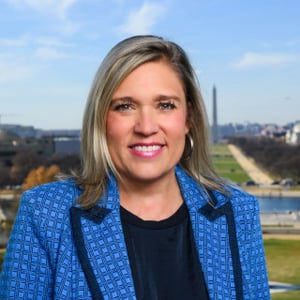
General Counsel, Office of Speaker Mike Johnson
Ashley Callen has served in the legislative and executive branches for nearly 25 years. Currently, she serves as General Counsel to Speaker Mike Johnson. Prior to her current role, she was General Counsel to Majority Leader Steve Scalise. She got to know Leader Scalise during the 117th Congress serving as the top staffer on the Select Subcommittee on the Coronavirus Crisis as well as serving then-Ranking Member James Comer as Deputy Staff Director of the Oversight and Reform Committee. Ashley has also served as a top oversight and investigations staffer at the House Agriculture Committee (Chairman Mike Conaway), the Science Space and Technology Committee (Chairman Lamar Smith), and the House Judiciary Committee (Ranking Member Doug Collins). She began her career on the Senate side working for her home state senator, Strom Thurmond. After the Senator retired in 2003, Ashley worked for the Air Force General Counsel’s Office. Ashley earned her BA in English at the University of South Carolina and her JD at the Antonin Scalia Law School. She lives in Arlington, VA with her husband and three children
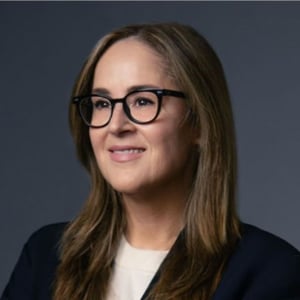
Partner, Mayer Brown
Kimberly Hamm is a partner in Mayer Brown’s Litigation & Dispute Resolution and Public Policy, Regulatory & Government Affairs practices. She also leads the firm’s congressional investigations group. Prior to joining Mayer Brown, Kim served as the General Counsel to U.S. House of Representatives Speaker Kevin McCarthy where she provided strategic guidance to House committees on congressional investigations and oversight, including issuance and enforcement of committee subpoenas to agencies and private parties. Before joining Speaker McCarthy’s senior team, Kim worked in the public policy group of a global asset management firm, where she led advocacy and external engagement in the areas of financial stability, corporate governance, and regulatory frameworks impacting mutual funds. Kim also served as Republican Chief Counsel for Investigations for the Senate Committee on Rules & Administration.
From 2019 to 2021, Kim was chief counsel to SEC Chairman Jay Clayton, where she oversaw regulatory initiatives across all divisions of the SEC, including the issuance of more than 45 final rules. She also advised on significant legal and policy matters, including cross-border regulation, financial stability risks, major market events, and congressional inquiries.
She also previously served for over four years at the House of Representatives’ Office of General Counsel, where she advised committees on all aspects of congressional investigations and handled litigation arising from subpoena disputes. Kim also represented the House, its members and committees in numerous grand jury, trial, and appellate proceedings on a wide range of other issues arising from official duties, including criminal investigations and constitutional litigation.
Kim began her legal career in the litigation department of an international law firm in London and New York, where she practiced for over a decade and advised clients on securities, compliance, antitrust, insurance, regulatory, and internal investigation matters.
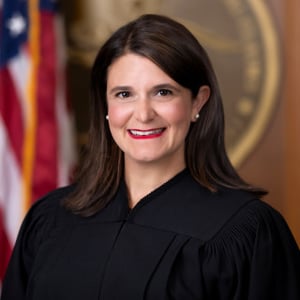
Judge, United States Court of Federal Claims
Judge Roumel was appointed to the United States Court of Federal Claims in 2020 and served as Chief Judge from 2020-2021. She serves as Chair of the court’s Advisory Council for Intellectual Property, is the Chair of the court’s Attorney Discipline Panel, serves on the court’s Pro Bono Policy Committee, and is the court’s Liaison Representative on the Administrative Conference of the United States. Judge Roumel previously served as the Deputy Counsel to Vice President Pence. Prior to her tenure at the White House, she served as Assistant General Counsel in the U.S. House of Representatives Office of General Counsel, where she advised and represented the U.S. House of Representatives, Members of Congress, and congressional staff in federal trial and appellate courts across the country.
Judge Roumel previously was a partner with Nelson Mullins Riley & Scarborough, LLP, in Charleston, South Carolina, and before that practiced at Wilmer Cutler Pickering Hale and Dorr, LLP and Skadden Arps Slate Meagher & Flom, LLP in New York City. She also was an adjunct professor at the Charleston School of Law, where she taught intellectual property law. Judge Roumel served as a law clerk to the Honorable William H. Pauley III, United States District Judge for the Southern District of New York.
She received her J.D., magna cum laude, from Tulane Law School, where she graduated Order of the Coif and was an editor of the Tulane Law Review. Judge Roumel also received her M.B.A. from Tulane University's A.B. Freeman School of Business. She earned her B.A., cum laude, from Wake Forest University.
Chief Judge, United States Court of Appeals, Fifth Circuit
Jennifer Walker Elrod is the Chief Judge of the United States Court of Appeals for the Fifth Circuit. She was nominated to the Fifth Circuit in 2007, and she served as a Circuit Judge on the court until assuming the role of Chief Judge in October 2024. Prior to serving as a Circuit Judge, Chief Judge Elrod was appointed and then twice elected Judge of the 190th District Court of Harris County, Texas, where she spent over five years presiding over more than 200 jury and non-jury trials.
Chief Judge Elrod graduated cum laude from Harvard Law School, where she was an active member of the Harvard Federalist Society, an Ames Moot Court finalist, and a Senior Editor of the Harvard Journal of Law & Public Policy. She clerked for the Honorable Sim Lake in the Southern District of Texas. Before serving as a judge, Chief Judge Elrod worked in private practice, focusing on civil litigation, antitrust, and employment matters.
She has been repeatedly recognized for her work as a jurist, as well as for her pro bono work and contributions to the community. She has been named the 2022 Texas Review of Law & Politics’ Jurist of the Year, the 2018 Harvard Federalist Society’s Alumni of the Year, the 2016–17 Texas Association of Civil Trial and Appellate Specialists’ Appellate Judge of the Year, and the 2008 Mexican-American Bar Association of Texas’s Judge of the Year.
Chief Judge Elrod is actively engaged in the academic and legal communities. Chief Judge Elrod currently serves on the Board of Directors and as the Jurist-in-Residence at the South Texas College of Law, where she teaches civil procedure and First Amendment law. She is also a member of the American Law Institute and of the Board of Advisors for the Harvard Journal of Law & Public Policy, and she is a former member of the Board of Regents of her alma mater, Baylor University, and the Board of Visitors at Brigham Young University Law School. She previously served as the Chair of the Codes of Conduct Committee for the Judicial Conference of the United States. She has also served as the M.D. Anderson Visiting Public Service Professor at the Texas Tech University School of Law and as Jurist-in-Residence at Brigham Young University Law School, and she has taught legal writing at the University of Houston Law Center. She presented the Lewis F. Powell, Jr. Distinguished Lecture at the Washington and Lee University School of Law and is a frequent speaker on the topics of trial and appellate procedure, ethics, employment law, and constitutional law. Chief Judge Elrod also serves on the board of the Garland R. Walker Inn of Court, and co-produces an annual musical CLE, for which her pupilage group has won multiple national awards.
Chief Judge Elrod’s publications include: Trial by Siri: AI Comes to the Courtroom; Don’t Mess with Texas Judges: In Praise of the State Judiciary; For Good: Enriching Your Practice and Your Life Through Pro Bono and Community Service; Is the Jury Still Out?: A Case for the Continued Viability of the American Jury; and W(h)ither the Jury? The Diminishing Role of the Jury Trial in our Legal System.
James G. Phillipp Professor of Law, University of Michigan Law School
Julian Davis Mortenson writes on constitutional and international law. His current book project—The Founders' President (under contract, Harvard University Press)—develops a comprehensive account of presidential power at the American Founding. He is also co-authoring a new constitutional law casebook, scheduled for publication by Foundation Press in 2020.
Professor Mortenson is an award-winning teacher and an active litigator. Representative constitutional matters include his work as lead counsel in a pre-Obergefell suit that required Michigan to recognize the marriages of more than 300 same-sex couples; his representation of discharged military service members challenging the "Don't Ask, Don't Tell" law; and his work as one of the principal drafters of the merits briefs in the landmark case Boumediene v. Bush, which secured the right of Guantanamo detainees to challenge their incarceration. He regularly litigates complex transnational matters in the U.S. courts, and has served as arbitrator, counsel, and expert witness in a wide variety of commercial and investor-state disputes.
Before joining the faculty, Professor Mortenson worked at the law firm WilmerHale, in the President's Office of the International Criminal Tribunal for the former Yugoslavia, and as a law clerk for both Justice David H. Souter and The Hon. J. Harvie Wilkinson III. Prior to law school, he was a management consultant with a client portfolio spanning the finance, manufacturing, oil and gas, and information technology industries. Professor Mortenson was salutatorian of his class at Stanford Law School and received an AB in history, summa cum laude, from Harvard College.
Associate, Covington & Burling LLP
Eli Nachmany is an associate at Covington & Burling LLP in the Washington, DC, office. He clerked for Judge Steven J. Menashi of the U.S. Court of Appeals for the Second Circuit. Eli graduated magna cum laude from Harvard Law School, where he was Editor-in-Chief of the Harvard Journal of Law & Public Policy. Prior to law school, Eli served as the speechwriter to the U.S. Secretary of the Interior and as a domestic policy aide in the White House Office of American Innovation. He graduated summa cum laude from New York University with a B.S. in Sports Management. Eli’s scholarship on administrative law and executive power has appeared in the BYU Law Review, George Mason Law Review, Wake Forest Law Review, and Yale Law Journal Forum.
Professor of Law, University of Michigan Law School
Christopher J. Walker is a Professor of Law at the University of Michigan. Prior to joining Michigan law faculty in 2022, he spent a decade teaching at The Ohio State University Moritz College of Law. He previously clerked for Justice Anthony Kennedy of the U.S. Supreme Court, worked on the Civil Appellate Staff at the U.S. Department of Justice, and served on the Senate Judiciary Committee staff for the Gorsuch Supreme Court confirmation. Professor Walker’s research focuses on administrative law, regulation, and law and policy at the agency level. Outside the law school, he chaired the American Bar Association’s Section of Administrative Law and Regulatory Practice in 2020-21 and served as one of forty Public Members of the Administrative Conference of the United States from 2016-2022, and he continues to serve in both organizations in various capacities. He also works of counsel at the U.S. Chamber Litigation Center. In 2022, he received the Federalist Society’s Joseph Story Award.

Topics
A Win for Texas in U.S. v. Abbott: Examining the States’ Power to Defend Their Borders
In July 2023, in response to record levels of illegal border crossings, the State of...
Is the National Institute of Standards and Technology’s New Proposal on March-in a Price-Control Vehicle?
Walter Copan, Jeffrey E. Depp, Shubha Ghosh, Andrei Iancu, Brian O'Shaughnessy
The Biden Administration recently proposed new regulatory guidelines that would permit agencies to impose price...
Is the National Institute of Standards and Technology’s New Proposal on March-in a Price-Control Vehicle?
Walter Copan, Jeffrey E. Depp, Shubha Ghosh, Andrei Iancu, Brian O'Shaughnessy
The Biden Administration recently proposed new regulatory guidelines that would permit agencies to impose price...
Is the National Institute of Standards and Technology’s New Proposal on March-in a Price-Control Vehicle?
Panel II: The Executive Power, the Legislative Power, and the Administrative State
Jennifer Walker Elrod, Julian Davis Mortenson, Jed Shugerman, Christopher J. Walker, Eli Nachmany
Many critics of modern administrative law want a world where Congress does more things, and...
Panel II: The Executive Power, the Legislative Power, and the Administrative State
Jennifer Walker Elrod, Julian Davis Mortenson, Eli Nachmany, Jed Shugerman, Christopher J. Walker
Many critics of modern administrative law want a world where Congress does more things, and...
A Matter of Investigation: Congress’ Role in Overseeing the Executive Branch - A Conversation with General Counsels to the Speaker of the House
Washington, DCTopics
Cabinet Officials Descend on Congress
The 118th Congress has spent the last few days voting on a spending bill to fund...
Panel II: The Executive Power, the Legislative Power, and the Administrative State
2024 National Student Symposium
Cambridge, MA2024 National Student Symposium
Why Separate Powers?
Cambridge, MA