

Chief Oversight Counsel, Senate Committee on Finance
Chris Armstrong is Deputy Chief Oversight Counsel to Chairman Orrin G. Hatch on the Senate Committee on Finance. He previously worked for Chairman Dave Camp on the House Committee on Ways and Means and Senator Charles E. Grassley. He serves on the Executive Committee of the Federalist Society’s Federalism & Separation of Powers Practice Group. The views expressed herein are the author’s own, and do not necessarily reflect those of Chairman Hatch or the Finance Committee.

Partner, Gibson Dunn & Crutcher LLP
Michael Bopp is a partner in the Washington, D.C. office of Gibson, Dunn & Crutcher. He is Chair of the Public Policy Practice Group and a member of the Firm’s White Collar Defense and Investigations and Crisis Management Practice Groups, where he chairs the firm’s Congressional Investigations Subgroup. He also chairs the firm’s Financial Markets Crisis Group, a multi-disciplinary group formed to address client concerns stemming from the credit and capital markets crisis. Mr. Bopp’s practice focuses on congressional, internal corporate, and other government investigations, public policy consulting in a variety of fields, and managing and responding to major crises involving multiple government agencies and branches.
From 2006-2008, Mr. Bopp served as Associate Director of OMB and was responsible for overseeing budgets and coordinating regulatory, legislative, and other policy for approximately $150 billion worth of spending for various government agencies, including the Departments of Treasury, Homeland Security, Transportation, Justice, Housing and Urban Development, and Commerce, the General Services Administration, the U.S. Securities and Exchange Commission and the Commodity Futures Trading Commission.
From 2003 to 2006, he served as Staff Director and Chief Counsel of the Committee on Homeland Security and Governmental Affairs, one of the Senate's largest committees and most expansive in terms of jurisdiction. He oversaw more than 100 hearings, led numerous investigations and was a primary drafter of key legislation, including the Intelligence Reform and Terrorism Prevention Act of 2004, the most significant reform of the intelligence community in more than 50 years, and 2006 legislation strengthening port security and overhauling the Federal Emergency Management Agency. He also directed a 50-person investigation of the failure of preparations and response to Hurricane Katrina. The investigation included 22 hearings, 325 witnesses, more than 800,000 pages of documents and an 800 page report.
Mr. Bopp served as Legislative Director and General Counsel to Senator Susan Collins of Maine from 1999 to 2003. He was Chief Counsel to the Subcommittee on Oversight and Investigations of the Committee on Education and the Workforce in the U.S. House of Representatives from 1998 to 1999, where he investigated alleged improper activities undertaken by Teamsters' officials. Before that, he worked on the Congressional investigation of campaign finance abuses as senior investigative counsel to the House Committee on Government Reform and Oversight and as counsel for the Senate Committee on Governmental Affairs. He also previously served as counsel on the Senate Permanent Subcommittee on Investigations. Mr. Bopp served as outside general counsel to the campaign to re-elect Senator Susan Collins.
Mr. Bopp received his law degree cum laude in 1992 from Harvard Law School where he was Articles Editor on the Journal of Law and Public Policy. He graduated magna cum laude, with honors, in public policy from Brown University in 1987.
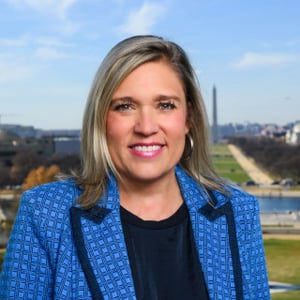
General Counsel, Office of Speaker Mike Johnson
Ashley Callen has served in the legislative and executive branches for nearly 25 years. Currently, she serves as General Counsel to Speaker Mike Johnson. Prior to her current role, she was General Counsel to Majority Leader Steve Scalise. She got to know Leader Scalise during the 117th Congress serving as the top staffer on the Select Subcommittee on the Coronavirus Crisis as well as serving then-Ranking Member James Comer as Deputy Staff Director of the Oversight and Reform Committee. Ashley has also served as a top oversight and investigations staffer at the House Agriculture Committee (Chairman Mike Conaway), the Science Space and Technology Committee (Chairman Lamar Smith), and the House Judiciary Committee (Ranking Member Doug Collins). She began her career on the Senate side working for her home state senator, Strom Thurmond. After the Senator retired in 2003, Ashley worked for the Air Force General Counsel’s Office. Ashley earned her BA in English at the University of South Carolina and her JD at the Antonin Scalia Law School. She lives in Arlington, VA with her husband and three children
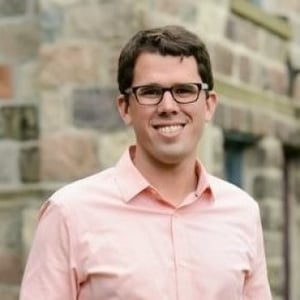
Chief Investigative Counsel, Senate Finance Subcommittee
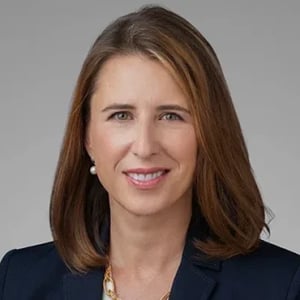
Partner, Kirkland & Ellis LLP
Allison Murphy is a partner in the Government, Regulatory & Internal Investigations Practice Group in the Washington, D.C., office of Kirkland & Ellis LLP.
Allison has been a legal and strategic counselor on high-profile investigations with broad reach across the government and private sector, including as White House Associate Counsel under President Obama. She has managed congressional investigations from all angles. Most recently, Allison was Chief Oversight Counsel of the House Select Subcommittee on the Coronavirus Crisis, Majority Staff. She also served in the Senate as Counsel for the Permanent Subcommittee on Investigations. Previously, Allison was Attorney Advisor to the Federal Energy Regulatory Commission’s Division of Enforcement. She began her legal career as an associate at Wilmer Cutler Pickering Hale & Dorr.
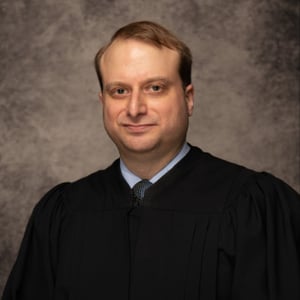
Judge, United States Court of Appeals, Second Circuit
Judge Menashi was appointed to the U.S. Court of Appeals for the Second Circuit on November 14, 2019. Previously, he served as special assistant and associate counsel to the President in the White House and as acting general counsel at the U.S. Department of Education. He was assistant professor of law at Scalia Law School, George Mason University, where he taught administrative law and civil procedure, and a research fellow at New York University School of Law and Georgetown University Law Center. He was also a partner at Kirkland & Ellis LLP in New York, where he practiced appellate and commercial litigation, and served as a law clerk to Justice Samuel Alito on the Supreme Court of the United States and to Judge Douglas Ginsburg on the U.S. Court of Appeals for the District of Columbia Circuit. He graduated from Stanford Law School, where he was elected to Order of the Coif and served as senior articles editor of the Stanford Law Review, and from Dartmouth College, where he was elected to Phi Beta Kappa.
Partner, Jones Day

Professor of Law, Georgetown University Law Center
Eloise Pasachoff is Professor of Law, Anne Fleming Research Professor, and Associate Dean for Careers at the Georgetown University Law Center, where she specializes in the administrative law of federal funding. An award-winning teacher and scholar, she is a public member of the Administrative Conference of the United States and serves on the Academic Advisory Board of the Supreme Court Fellows program. She is a former law clerk to Justice Sotomayor (Supreme Court), Judge Robert A. Katzmann (Second Circuit), and Judge Jed S. Rakoff (Southern District of New York).
Partner, Sidley Austin LLP
Virginia Seitz is a partner in Sidley Austin’s Supreme Court and Appellate practice. On behalf of a wide range of clients, she has handled cases in the United States Supreme Court, in virtually all federal courts of appeals, and in state appellate courts. Virginia was counsel of record on the amicus brief on behalf of retired military officers in Grutter v. Bollinger, 539 U.S. 306 (2003), and Gratz v. Bollinger, 539 U.S. 244 (2003), which the Supreme Court cited at oral argument and in its opinion and which the New York Times piece noted “may have been the most influential amicus brief in the history of the Supreme Court.” She has handled an array of district court litigation involving important constitutional and federal law issues, including the Appropriations and Supremacy Clauses of the Constitution, the First Amendment, Title IX, Title VII, the Anti-Deficiency Act, ERISA, and federal labor laws.
Virginia returned to Sidley in 2014 after serving in the Senate-confirmed position of Assistant Attorney General for the Office of Legal Counsel in the Department of Justice. She was the first woman to be confirmed to that position. As the leader of that Office, Virginia was responsible for providing legal advice to the President and Executive Branch departments and agencies on issues of particular difficulty and importance. Virginia previously served as an appointee of the Chief Justice on the Advisory Committee on Civil Rules. In January 2017, she was elected to the American Law Institute. Earlier in her career, Virginia was confirmed by the Senate to the first Board of Directors of the Congressional Office of Compliance and served from May 1995 to 2000. Virginia has been recognized for her Appellate Law practice by Chambers USA, in The Legal 500 US in Litigation: Supreme Court and Appellate, and in The Best Lawyers in America.
Virginia clerked at the Supreme Court for Justice William J. Brennan, Jr., and before that for Judge Harry T. Edwards of the D.C. Circuit. She is a graduate of University at Buffalo Law School, received her M.A. from Oxford University where she was a Rhodes Scholar, and received her B.A. from Duke University, summa cum laude with distinction.
Partner, McGuireWoods LLP
Farnaz is a skilled litigator with extensive experience in representing employers and institutions of higher education, including academic medical centers, in breach of contract, constitutional, discrimination, and tort litigation. She has conducted investigations, advised clients on employment and education laws, and represented them before federal agencies, including the U.S. Department of Labor and U.S. Department of Education.
Farnaz successfully has defended employers, state agencies, government officials, and institutions of higher education in over 30 civil actions as first chair before federal and state courts as well as trial and appellate courts. Farnaz also has advised clients on investigations under civil rights laws such as Title VI of the Civil Rights Act of 1964 (discrimination based on race, color, or national origin), Title VII of the Civil Rights Act of 1964 (discrimination based on race, color, religion, sex, and national origin), and Title IX of the Education Amendments of 1972 (discrimination based on sex). Her deep knowledge of education laws and regulations includes the Higher Education Act of 1965, as amended; accreditation; borrower defense to repayment; gainful employment; financial responsibility standards; FERPA and other privacy laws; the Clery Act; and the Violence Against Women Act (VAWA).
Farnaz is experienced with student and employee disciplinary issues, including under Title IX, and has represented institutions in such matters in several of her previous roles. Representing institutions in Title IX cases requires a nuanced approach, as the institution must balance legal compliance with compassion and care, supporting victims while providing a fair process for both parties, including the accused. Farnaz strikes this balance and is a trusted resource for her clients.
Prior to joining McGuireWoods, Farnaz served as the Deputy General Counsel for Postsecondary Education at the U.S. Department of Education and also as in-house counsel at the University of Virginia. She advised the U.S. Department of Education on litigation strategy and worked closely with the U.S. Department of Justice in cases arising under federal antidiscrimination laws and the Administrative Procedure Act. Government officials also relied on her close counsel in preparation for congressional investigations and hearings. At the University of Virginia, she advised University officials on federal education and employment laws and represented the University and its academic medical center in litigation. She also drafted the University’s antidiscrimination and conduct policies, including free speech policies.
She began her legal career as a law clerk to the Honorable Eric G. Bruggink, Senior Judge, U.S. Court of Federal Claims, and later as a law clerk to the Honorable Leroy Rountree Hassell, Sr., the former Chief Justice, Supreme Court of Virginia.

Senior Research Fellow (Wolfson College); Fellow (Lauterpacht Centre for International Law), Faculty of Law, University of Cambridge
Over twenty years' experience as legal adviser, advocate, and strategist in complex multi-jurisdiction matters across several substantive fields, including public international law, international investment protection, trade law, and law of the sea. Academic writings on international arbitration, international organizations, use of force, State immunity, State succession, recognition of States, artificial intelligence, law & technology.

Stevenson Bernard Professor, George Washington University Law School
The Honorable F. Scott Kieff is the Stevenson Bernard Professor at George Washington University Law School and a Visiting Fellow at Stanford University’s Hoover Institution.
He served as Commissioner of the U.S. International Trade Commission from 2013-2017. He also served during the Bush, Obama, and Trump Administrations in the part-time leadership of the national security defense-intelligence community.
He was previously a professor of law and medicine at Washington University in Saint Louis and a Senior Fellow at Hoover. A former law clerk to U.S. Circuit Judge Giles S. Rich, he is a graduate of Penn Law School and MIT, where he studied molecular biology and microeconomics. He was elected to the European Academy of Sciences and Arts in 2012 and the Academia Europaea in 2024.
His private sector work through Kieff Strategies LLC (www.kieffstrategies.com) provides neutral services including mediation and compliance, and expert services including crisis management, advising, and testimony.
Senior Fellow, Brookings Institution
Dr. Meltzer is a senior fellow at the Brookings Institution in Washington D.C., where he is an expert on international trade law and policy issues, including digital trade, emerging technologies and AI. At Brookings, Meltzer leads the Digital Economy and Trade Project and co-leads the Forum for Cooperation on AI. Meltzer has testified before the U.S. Congress, the U.S. International Trade Commission and the European Parliament on trade issues. He has been an expert witness in litigation on data flows and privacy issues in the EU and a consultant to the World Bank on trade and privacy matters. He is also a member of Australia’s National Data Advisory Council. Meltzer teaches digital trade law at Melbourne University Law School and at the University of Toronto Law School, where he is an adjunct professor. Meltzer also teaches ecommerce and digital trade at the UK Foreign, Commonwealth and Development Office diplomatic academy. Before joining Brookings, Meltzer was posted as a diplomat at the Australian Embassy in Washington D.C. and prior to that was an international trade negotiator in Australia’s Department of Foreign Affairs and Trade. Meltzer has appeared in print and news media, including the Economist, the New York Times, the Washington Post, CNN, Bloomberg, MSNBC, CBS, Fox, the Asahi Shimbun and China Daily. Meltzer holds an S.J.D. and LL.M. from the University of Michigan Law School in Ann Arbor and law and commerce degrees from Monash University in Melbourne, Australia.

CoFounder, RightsClick
Steven’s extensive background in IP law and policy began as an attorney for the U.S. Senate Judiciary Committee, after which, he served as senior counsel for Policy and International Affairs at the U.S. Copyright Office and then as Chief Intellectual Property Counsel for the Global Intellectual Property Center of the U.S. Chamber of Commerce. Before co-founding RightsClick, he started the IP consultancy Sentinel Worldwide, and teaches copyright law at George Washington University Law School.

Partner, BakerHostetler, Adjunct Fellow, The Manhattan Institute
Andrew Grossman leads BakerHostetler’s Appellate and Major Motion team. He has appeared before the U.S. Supreme Court, nearly all the federal courts of appeals, as well as some state appellate courts, litigating high-profile and complex commercial, administrative and constitutional issues.
Andrew works with practice groups across BakerHostetler to identify and tackle complex issues, advise on administrative law and strategy, tee up issues for appeal and tackle appeals. He has developed and implemented litigation and administrative strategies for clients in several fields and industries.
In addition to his practice, Andrew advises members of Congress on matters of constitutional and administrative law, having testified more than a dozen times before the House and Senate Judiciary Committees. He has been a frequent legal commentator on radio and television, having appeared on Fox News, CNN, MSNBC, CNBC, NPR and its affiliates, CBN and elsewhere. His legal commentary has also appeared in dozens of magazines and newspapers, including The Wall Street Journal, USA Today, The Washington Post, The Washington Times and many others.
Andrew is a Senior Legal Fellow at the Buckeye Institute, an Adjunct Fellow the Manhattan Institute and a member of the leadership of the Federalist Society. He previously served as an adjunct scholar at the Cato Institute’s Robert A. Levy Center for Constitutional Studies and a legal fellow at the Heritage Foundation’s Meese Center for Legal and Judicial Studies. He clerked for Judge Edith H. Jones on the U.S. Court of Appeals for the Fifth Circuit.
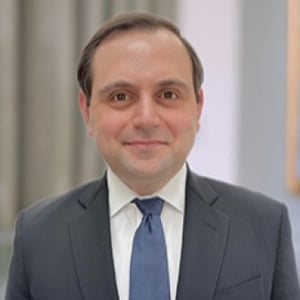
Associate, Baker Hostetler
Sean Sandoloski is a member of BakerHostetler’s Appellate and Major Motions Team. Sean has represented clients at every level of the federal judiciary, as well as in multiple federal agencies and state courts. He has extensive experience in constitutional, administrative, and antitrust law and litigation.
Sean has developed and implemented litigation, administrative, legislative, and communications strategies for clients—presenting holistic solutions for complex problems. He regularly works across groups and offices to tackle high-stakes, fast-moving issues, and advise clients on strategic and regulatory matters. Throughout his career, Sean has worked to cultivate and foster relationships at all levels from the highest offices in government to corporate executives to benefit his clients.
Prior to joining BakerHostetler, Sean served as Special Assistant and Associate Counsel to the President in the Office of White House Counsel, where his primary responsibilities included the selection and confirmation of judicial nominees. There, Sean worked closely with the Department of Justice, a number of federal agencies, and various congressional committees. He also previously served in the Appellate Section of the Department of Justice’s Antitrust Division, representing the United States in the courts of appeals and advising Division leadership on complex issues of federal law. Additionally, he clerked for Judge Steven M. Colloton of the United States Court of Appeals for the Eighth Circuit.
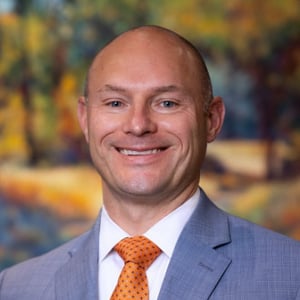
Partner, DBL Law
Mitchel joined DBL Law as a partner in its Louisville office in 2018. Mitchel’s wide range of experience makes him a sought-after attorney and advisor. He uses this experience to advise his client on a wide variety of legal issues. Mitchel primarily focusses in the firm’s Health Care, Administrative Law, Civil Litigation, and Government practice groups. His health care practice focusses on items ranging from Stark and Anti-kickback analysis and defense to mergers and asset purchase arrangements. In the administrative law and civil litigation realm, Mitchel represents numerous entities before various administrative agencies and handles administrative appeals in Kentucky Courts. He also represents entities in employment litigation and other civil litigation in both federal and state courts. Mitchel also regularly advises clients on matters ranging from open records/FOIA disputes, election law, and white collar crime.
Prior to joining the firm, Mitchel was the Assistant Deputy Attorney General in the Kentucky Office of the Attorney General. In that role, he supervised nearly every division in the office, handling the most sensitive and high profile matters. These matters included successful challenges to the Kentucky Governor’s executive authority, litigation involving Environmental Protection Agency regulations, and the prosecution of numerous state and local officials. On the administrative and civil side, Mitchel also oversaw the divisions which enforce non-profit organizations, election laws, environmental law, Medicaid fraud, open records laws, utility rate making, On the criminal side, Mitchel supervised investigations, prosecutions, and appeals of Kentucky’s criminal laws.
As part of his work at the Attorney General’s Office Mitchel advised various Kentucky agencies related to the promulgation of administrative regulations, including co-authoring the controlled substance prescribing standards and the pain clinic regulations. Mitchel served at the Attorney General’s designee on various boards and advised other boards and commissions on matters ranging from constitutional and statutory compliance to personnel matters.
Mitchel has also served as the Executive Director of Medicaid Fraud Control Unit where he led litigation involving pharmaceutical companies and medical device manufacturers, obtaining multi-million dollar settlements for the Commonwealth of Kentucky. During his time supervising this division, it collected approximately $300 Million for the Commonwealth. He also previously served as an Assistant Commonwealth’s Attorney in Jefferson County, the state’s largest jurisdiction, prosecuting felony crimes on behalf of the Commonwealth. Working with federal and state law enforcement, he focused on large-scale criminal syndications, including handling what is still the largest criminal syndication case in Kentucky history.
Mitchel is admitted to practice law in Kentucky, the Kentucky Eastern and Western Districts, the Sixth Circuit, the DC Circuit, and the United States Supreme Court. Mitchel has argued cases before numerous federal and state courts and the Kentucky Supreme Court.
Mitchel is a proud 2019 graduate of Leadership Kentucky. He an active member of the Louisville community, serving on the Board of Directors for the Louisville Regional Airport Authority, Treasurer of the Norton Children’s Hospital Foundation, and volunteer with the Bluegrass Center for Autism. He resides in Louisville with his wife and three children.
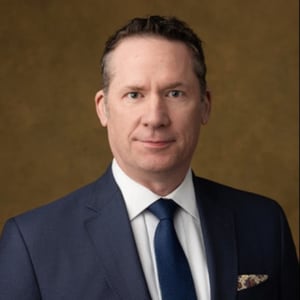
Senior Attorney, Pacific Legal Foundation
Oliver Dunford joined the Pacific Legal Foundation in March 2017. He litigates across the country to defend and advance individual liberty and the rule of law. Oliver’s cases involve the separation of powers, economic liberty, property rights, and the First Amendment.
Oliver remains inspired by the Classical Liberal ideals upon which our Founders declared independence and secured the blessings of liberty. The Constitution’s promises, however, are not self-executing. As James Madison explained, “In framing a government which is to be administered by men over men, the great difficulty lies in this: you must first enable the government to control the governed; and in the next place oblige it to control itself.” Oliver feels lucky that his work helps oblige the government to control itself—to the end that all individuals may pursue their rights of life, liberty, and the pursuit of happiness.
Before joining PLF, Oliver clerked at the Ohio Supreme Court and the Ohio Court of Appeals, and spent more than a decade in private practice working on complex commercial litigation. Originally from Cleveland, Oliver is a graduate of the University of Dayton and Cleveland-Marshall College of Law, where he was a managing editor for the Cleveland State Law Review. Oliver is admitted to the state bars of Florida, California, and Ohio, as well as several federal courts including the United States Supreme Court.
Oliver spends all of his free time following the Cleveland Indians.
Judge, United States Court of Appeals, Second Circuit
Judge Menashi was appointed to the U.S. Court of Appeals for the Second Circuit on November 14, 2019. Previously, he served as special assistant and associate counsel to the President in the White House and as acting general counsel at the U.S. Department of Education. He was assistant professor of law at Scalia Law School, George Mason University, where he taught administrative law and civil procedure, and a research fellow at New York University School of Law and Georgetown University Law Center. He was also a partner at Kirkland & Ellis LLP in New York, where he practiced appellate and commercial litigation, and served as a law clerk to Justice Samuel Alito on the Supreme Court of the United States and to Judge Douglas Ginsburg on the U.S. Court of Appeals for the District of Columbia Circuit. He graduated from Stanford Law School, where he was elected to Order of the Coif and served as senior articles editor of the Stanford Law Review, and from Dartmouth College, where he was elected to Phi Beta Kappa.
Partner, Jones Day
Professor of Law, Georgetown University Law Center
Eloise Pasachoff is Professor of Law, Anne Fleming Research Professor, and Associate Dean for Careers at the Georgetown University Law Center, where she specializes in the administrative law of federal funding. An award-winning teacher and scholar, she is a public member of the Administrative Conference of the United States and serves on the Academic Advisory Board of the Supreme Court Fellows program. She is a former law clerk to Justice Sotomayor (Supreme Court), Judge Robert A. Katzmann (Second Circuit), and Judge Jed S. Rakoff (Southern District of New York).
Partner, Sidley Austin LLP
Virginia Seitz is a partner in Sidley Austin’s Supreme Court and Appellate practice. On behalf of a wide range of clients, she has handled cases in the United States Supreme Court, in virtually all federal courts of appeals, and in state appellate courts. Virginia was counsel of record on the amicus brief on behalf of retired military officers in Grutter v. Bollinger, 539 U.S. 306 (2003), and Gratz v. Bollinger, 539 U.S. 244 (2003), which the Supreme Court cited at oral argument and in its opinion and which the New York Times piece noted “may have been the most influential amicus brief in the history of the Supreme Court.” She has handled an array of district court litigation involving important constitutional and federal law issues, including the Appropriations and Supremacy Clauses of the Constitution, the First Amendment, Title IX, Title VII, the Anti-Deficiency Act, ERISA, and federal labor laws.
Virginia returned to Sidley in 2014 after serving in the Senate-confirmed position of Assistant Attorney General for the Office of Legal Counsel in the Department of Justice. She was the first woman to be confirmed to that position. As the leader of that Office, Virginia was responsible for providing legal advice to the President and Executive Branch departments and agencies on issues of particular difficulty and importance. Virginia previously served as an appointee of the Chief Justice on the Advisory Committee on Civil Rules. In January 2017, she was elected to the American Law Institute. Earlier in her career, Virginia was confirmed by the Senate to the first Board of Directors of the Congressional Office of Compliance and served from May 1995 to 2000. Virginia has been recognized for her Appellate Law practice by Chambers USA, in The Legal 500 US in Litigation: Supreme Court and Appellate, and in The Best Lawyers in America.
Virginia clerked at the Supreme Court for Justice William J. Brennan, Jr., and before that for Judge Harry T. Edwards of the D.C. Circuit. She is a graduate of University at Buffalo Law School, received her M.A. from Oxford University where she was a Rhodes Scholar, and received her B.A. from Duke University, summa cum laude with distinction.
Partner, McGuireWoods LLP
Farnaz is a skilled litigator with extensive experience in representing employers and institutions of higher education, including academic medical centers, in breach of contract, constitutional, discrimination, and tort litigation. She has conducted investigations, advised clients on employment and education laws, and represented them before federal agencies, including the U.S. Department of Labor and U.S. Department of Education.
Farnaz successfully has defended employers, state agencies, government officials, and institutions of higher education in over 30 civil actions as first chair before federal and state courts as well as trial and appellate courts. Farnaz also has advised clients on investigations under civil rights laws such as Title VI of the Civil Rights Act of 1964 (discrimination based on race, color, or national origin), Title VII of the Civil Rights Act of 1964 (discrimination based on race, color, religion, sex, and national origin), and Title IX of the Education Amendments of 1972 (discrimination based on sex). Her deep knowledge of education laws and regulations includes the Higher Education Act of 1965, as amended; accreditation; borrower defense to repayment; gainful employment; financial responsibility standards; FERPA and other privacy laws; the Clery Act; and the Violence Against Women Act (VAWA).
Farnaz is experienced with student and employee disciplinary issues, including under Title IX, and has represented institutions in such matters in several of her previous roles. Representing institutions in Title IX cases requires a nuanced approach, as the institution must balance legal compliance with compassion and care, supporting victims while providing a fair process for both parties, including the accused. Farnaz strikes this balance and is a trusted resource for her clients.
Prior to joining McGuireWoods, Farnaz served as the Deputy General Counsel for Postsecondary Education at the U.S. Department of Education and also as in-house counsel at the University of Virginia. She advised the U.S. Department of Education on litigation strategy and worked closely with the U.S. Department of Justice in cases arising under federal antidiscrimination laws and the Administrative Procedure Act. Government officials also relied on her close counsel in preparation for congressional investigations and hearings. At the University of Virginia, she advised University officials on federal education and employment laws and represented the University and its academic medical center in litigation. She also drafted the University’s antidiscrimination and conduct policies, including free speech policies.
She began her legal career as a law clerk to the Honorable Eric G. Bruggink, Senior Judge, U.S. Court of Federal Claims, and later as a law clerk to the Honorable Leroy Rountree Hassell, Sr., the former Chief Justice, Supreme Court of Virginia.
Senior Research Fellow (Wolfson College); Fellow (Lauterpacht Centre for International Law), Faculty of Law, University of Cambridge
Over twenty years' experience as legal adviser, advocate, and strategist in complex multi-jurisdiction matters across several substantive fields, including public international law, international investment protection, trade law, and law of the sea. Academic writings on international arbitration, international organizations, use of force, State immunity, State succession, recognition of States, artificial intelligence, law & technology.
Stevenson Bernard Professor, George Washington University Law School
The Honorable F. Scott Kieff is the Stevenson Bernard Professor at George Washington University Law School and a Visiting Fellow at Stanford University’s Hoover Institution.
He served as Commissioner of the U.S. International Trade Commission from 2013-2017. He also served during the Bush, Obama, and Trump Administrations in the part-time leadership of the national security defense-intelligence community.
He was previously a professor of law and medicine at Washington University in Saint Louis and a Senior Fellow at Hoover. A former law clerk to U.S. Circuit Judge Giles S. Rich, he is a graduate of Penn Law School and MIT, where he studied molecular biology and microeconomics. He was elected to the European Academy of Sciences and Arts in 2012 and the Academia Europaea in 2024.
His private sector work through Kieff Strategies LLC (www.kieffstrategies.com) provides neutral services including mediation and compliance, and expert services including crisis management, advising, and testimony.
Senior Fellow, Brookings Institution
Dr. Meltzer is a senior fellow at the Brookings Institution in Washington D.C., where he is an expert on international trade law and policy issues, including digital trade, emerging technologies and AI. At Brookings, Meltzer leads the Digital Economy and Trade Project and co-leads the Forum for Cooperation on AI. Meltzer has testified before the U.S. Congress, the U.S. International Trade Commission and the European Parliament on trade issues. He has been an expert witness in litigation on data flows and privacy issues in the EU and a consultant to the World Bank on trade and privacy matters. He is also a member of Australia’s National Data Advisory Council. Meltzer teaches digital trade law at Melbourne University Law School and at the University of Toronto Law School, where he is an adjunct professor. Meltzer also teaches ecommerce and digital trade at the UK Foreign, Commonwealth and Development Office diplomatic academy. Before joining Brookings, Meltzer was posted as a diplomat at the Australian Embassy in Washington D.C. and prior to that was an international trade negotiator in Australia’s Department of Foreign Affairs and Trade. Meltzer has appeared in print and news media, including the Economist, the New York Times, the Washington Post, CNN, Bloomberg, MSNBC, CBS, Fox, the Asahi Shimbun and China Daily. Meltzer holds an S.J.D. and LL.M. from the University of Michigan Law School in Ann Arbor and law and commerce degrees from Monash University in Melbourne, Australia.
CoFounder, RightsClick
Steven’s extensive background in IP law and policy began as an attorney for the U.S. Senate Judiciary Committee, after which, he served as senior counsel for Policy and International Affairs at the U.S. Copyright Office and then as Chief Intellectual Property Counsel for the Global Intellectual Property Center of the U.S. Chamber of Commerce. Before co-founding RightsClick, he started the IP consultancy Sentinel Worldwide, and teaches copyright law at George Washington University Law School.

Congressional Oversight and Investigations: New Developments and Outlook for the 117th Congress
Article I Initiative and Administrative Law & Regulation Practice Group Teleforum
TeleforumThe End of Independent Agencies? Restoring Presidential Control of the Executive Branch
Andrew Grossman, Sean Sandoloski
On the day that President Joe Biden took office, among his first official acts was...
Deep Dive Episode 181 – State of Emergency? Kentucky’s Legislature vs. Governor
Mitchel Denham, Oliver Dunford
On June 10, the Kentucky Supreme Court heard a pair of cases to consider whether...
Is Faithful Execution being Devoured By Factional Execution?
Administrative Law & Regulation Practice Group
Is Faithful Execution being Devoured By Factional Execution?
Steven J. Menashi, Hashim M. Mooppan, Eloise Pasachoff, Virginia Seitz, Farnaz F. Thompson
Abrupt and complete reversals of position from one Administration to the next, whether by Executive...
Trade and Its Cross-Cutting Equities: New Horizons, New Challenges
Intellectual Property and International & National Security Law Practice Groups
Trade and Its Cross-Cutting Equities: New Horizons, New Challenges
Thomas D. Grant, F. Scott Kieff, Joshua Meltzer, Steven M. Tepp
The Trump Administration re-focused U.S. trade policy on the interests of several sectors of the...
Topics
Assessing the Nondelegation Challenge in Texas’s Keystone XL Pipeline Lawsuit Against the Biden Administration
Justice Alito’s concurrence in the recent case of Gundy v. United States signaled that the...
Topics
A Foundation for Rethinking Administrative Law
New casebooks can be hard to justify. Many legal doctrines and their canonical cases are...
Topics
New Book Review: John Yoo on Michael McConnell on Executive Power
In his new book, The President Who Would Not Be King, Professor Michael McConnell analyzes...