
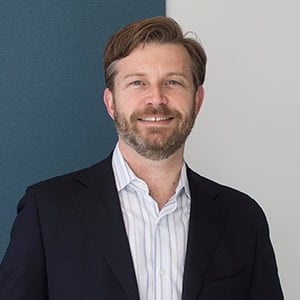
Senior Executive & Director, Center for City Solutions, National League of Cities
Brooks Rainwater is the senior executive and director of the National League of Cities’ (NLC) Center for City Solutions. Rainwater drives the organization’s research agenda, community engagement efforts, and leadership education programming to help city leaders create strong local economies, safe and vibrant neighborhoods, world-class infrastructure, and a sustainable environment.
As an advocate for strong local leadership, Rainwater leads a team of experts across the field of urban policy, and regularly advises cities both in the United States and globally on critical issues faced now and yet to come. He has published a wide variety of reports and articles on innovative solutions that lead to vibrant and successful cities.
Rainwater speaks regularly across the country and overseas on issues facing city leaders. Under his leadership of the Center, it has grown and developed a host of new programs from land use and equitable development to alternative energy and resilience to urban innovation and enhanced city governance strategies.
Rainwater’s research and interests include advancements in technology and city innovation, the sharing economy, and how the rise of state preemption is impacting local authority. His expertise is a draw for media outlets, including the TODAY Show, Wall Street Journal, The Washington Post, CNN, NPR, and the New York Times. Rainwater also frequently contributes to publications such as Fast Company, Forbes, CityLab, Business Insider, TechCrunch, and Fortune.
Prior to joining NLC, Rainwater was Director of Public Policy for the American Institute of Architects (AIA). While there he developed the Local Leaders research series and spearheaded the Cities as a Lab initiative focused on the key role cities play as creative instigators of innovative practices.
Rainwater serves on numerous boards with current and past service to the STAR Communities Board, the American Library Association Public Policy Advisory Council, the International Advisory Board for the City of Rotterdam, and the Arlington County Environment and Energy Conservation Commission.
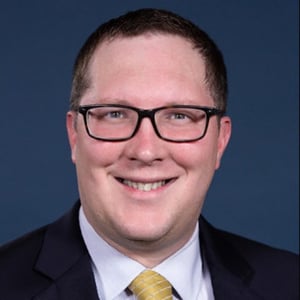
Attorney, Pacific Legal Foundation
Luke A. Wake is an attorney at the Pacific Legal Foundation. Prior to joining PLF, he was a senior staff attorney at the NFIB Small Business Legal Center.
Wake has particular expertise on environmental and land use issues, and has worked on numerous other constitutional issues and matters of importance to small business owners. He is an ardent defender of private property rights, which he believes are essential to the free enterprise system and the foundation of American liberty. As a strong advocate of individual rights and economic liberties, he has built his career defending small business interests.
Wake has focused on a whole host of issues, from employment law matters to regulatory compliance. In addition to serving as a resource for small business owners, Wake is committed to ensuring that the voice of small business is heard in the nation’s courts. As an appellate practitioner, Wake has focused particularly on informing the courts on matters of administrative law and on issues under the Fifth Amendment’s Takings Clause. He is also working to advance small business interests in law review articles, and was recently published in the Berkeley Journal of Law & Ecology. See R.S. Radford & Luke A. Wake, Deciphering and Extrapolating: Searching for Sense in Penn Central, 38 Ecology L.Q. 731, 746-747 (2011).
Before joining the Legal Center’s team, Wake completed a prestigious two-year fellowship as an attorney in the Pacific Legal Foundation’s College of Public Interest Law. Wake is a graduate of Case Western Reserve University School of Law in Cleveland Ohio, and is a member of the California Bar. He completed his undergraduate studies at Elon University in North Carolina in 2006 where he focused on political theory and corporate communications.
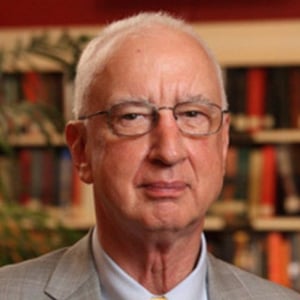
Former Chief Judge, United States Court of Appeals for the Federal Circuit
Judge Michel served for more than 22 years on the Federal Circuit, retiring on May 31, 2010. From December 25, 2004 until his retirement, he also discharged the duties of Chief Judge of this national court, serving simultaneously on the U.S. Judicial Conference -- the Judiciary's governing body -- and by appointment of the Chief Justice on its seven-judge Executive Committee.
He judged several thousand appeals and authored more than 800 opinions, one third concerning intellectual property law. Intellectual Asset Management magazine inducted him into its Hall of Fame and he was designated one of the 50 most influential leaders in intellectual property law in the world. His contributions were also recognized by lifetime achievement and similar awards by the American Intellectual Property Law Association (AIPLA); Intellectual Property Owners Education Foundation (IPO); the American Bar Association's Intellectual Property Section; Managing Intellectual Property magazine; the Sedona Conference; the Patent and Trademark Office Society (PTOS); the New York, Chicago, Philadelphia, and Los Angeles Intellectual Property Law Associations; and the William C. Connor, the Giles S. Rich, and the Richard Linn Intellectual Property American Inns of Court. In 2010 the Los Angeles IP Inn was renamed in his honor as the Paul R. Michel IP Inn.
Judge Michel received the Jefferson Medal, the Eli Whitney Award, and the Katz-Kiley Prize as well as Honorary Doctor of Law degrees from the Catholic University of America and the John Marshall Law School. He is a lifetime Member of Honore of FICPI, the international association of private practitioners of intellectual property law. Williams College granted him the Kellogg Award for "outstanding leadership in law and public service."
Judge Michel has written numerous articles on patent law and advocacy, taught related courses and master classes at George Washington University, the University of Akron, and John Marshall law schools, serving as well on their IP advisory boards and on counterpart boards at the universities of California (Berkley), Washington, and Maryland. He co-authored a casebook, Patent Litigation and Strategy (West, 1999) and an August 2010 editorial in the New York Times on strengthening the patent system to promote prosperity and create new jobs.
A frequent speaker at conferences and law schools during his judicial tenure and since, he retired from a lifetime appointment to be free to speak out on the national need for better patent policy and protection of intellectual property and the vital, unmet resource needs of the courts, the PTO, the International Trade Commission, and other IP-related agencies. He was appointed Distinguished Scholar in Residence by IPO, following his retirement. Judge Michel also consults for law firms and their clients in intellectual property litigations, conducting moot courts, mock trials, case evaluations, editing briefs, advising on strategy and providing mediation and arbitration services.

Professor of Law, Antonin Scalia Law School, George Mason University
Adam Mossoff is Professor of Law at Antonin Scalia Law School, George Mason University. He has published extensively on why patents, copyrights, and other intellectual property rights have been—and should be—legally secured to innovators and creators as property rights. His scholarship has been relied on by the United States Supreme Court, by lower federal courts, and by U.S. federal agencies. He has been invited to testify numerous times before the U.S. Senate and the House of Representatives on intellectual property legislation. His writings on intellectual property policy have also appeared in the Wall Street Journal, New York Times, Forbes, Investors Business Daily, and in other media outlets. His journal articles can be downloaded here.
Professor Mossoff is a longstanding member of the Executive Committee of the Intellectual Property Practice Group of the Federalist Society, on which he served as Chairperson from 2016-2018, and he is Chair of the Intellectual Property Working Group of the Regulatory Transparency Project of the Federalist Society. He is a Senior Fellow and Chair of the Forum for Intellectual Property at the Hudson Institute, a Visiting Intellectual Property Fellow at the Heritage Foundation, and a member of the Board of Directors of the Center for Intellectual Property Understanding. He is a member of the Intellectual Property Rights Policy Committee of ANSI and he has served as Chair and Vice-Chair of the Intellectual Property Committee of the IEEE-USA, on which he remains a member in good standing.
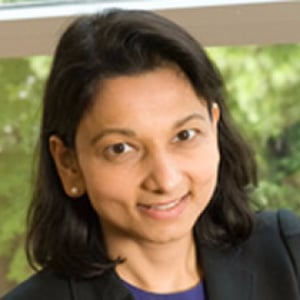
Elvin R. Latty Professor of Law, Duke University School of Law
Arti Rai, Elvin R. Latty Professor of Law and co-Director, Duke Law Center for Innovation Policy, is an internationally recognized expert in intellectual property (IP) law, administrative law, and health policy. Rai has also taught at Harvard, Yale, and the University of Pennsylvania law schools. Rai's research on IP law and policy in biotechnology, pharmaceuticals, and software has been funded by NIH, the Kauffman Foundation, and the Woodrow Wilson Center. She has published over 50 articles, essays, and book chapters on IP law, administrative law, and health policy. Her publications have appeared in both peer-reviewed journals and law reviews, including Science, the New England Journal of Medicine, the Journal of Legal Studies, Nature Biotechnology, and the Columbia, Georgetown, and Northwestern law reviews. She is the editor of Intellectual Property Law and Biotechnology: Critical Concepts (Edward Elgar, 2011) and the co-author of a 2012 Kauffman Foundation monograph on cost-effective health care innovation.
From 2009-2010, Rai served as the Administrator of the Office of External Affairs at the U.S. Patent and Trademark Office (USPTO). As External Affairs Administrator, Rai led policy analysis of the patent reform legislation that ultimately became the America Invents Act and worked to establish the USPTO’s Office of the Chief Economist. Prior to that time, she had served on President-Elect Obama’s transition team reviewing the USPTO. Prior to entering academia, Rai clerked for the Honorable Marilyn Hall Patel of the U.S. District Court for the Northern District of California; was a litigation associate at Jenner & Block (doing patent litigation as well as other litigation); and was a litigator at the Federal Programs Branch of the U.S. Department of Justice's Civil Division.
Rai regularly testifies before Congress and relevant administrative bodies on IP law and policy issues and regularly advises federal agencies on IP policy issues raised by the research that they fund. She is a member of the National Advisory Council for Human Genome Research and of an Expert Advisory Council to the Defense Advanced Projects Research Agency (DARPA). Rai is a public member of the Administrative Conference of the United States, a member of the American Law Institute, and co-chair of the IP Committee of the Administrative Law Section of the ABA. Rai is currently a member of the Institute of Medicine Committee on Strategies for Responsible Sharing of Clinical Trial Data and has served on, or as a reviewer for, numerous National Academies of Science committees. In 2011, Rai won the World Technology Network Award for Law.
Rai graduated from Harvard College, magna cum laude, with a degree in biochemistry and history (history and science), attended Harvard Medical School for the 1987-1988 academic year, and received her J.D., cum laude, from Harvard Law School in 1991. Rai's moot court team at Harvard Law School won Best Brief and Team honors at the school's prestigious Ames Moot Court Competition.
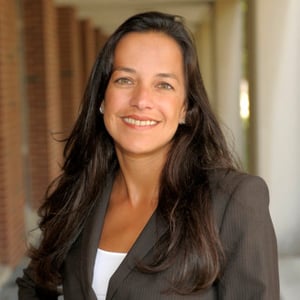
Charles Tilford McCormick Professor of Law, University of Texas Law
Melissa Wasserman joined the University of Texas law faculty in 2016. Her research focuses on the institutional design of innovation policy, with a particular emphasis on patent law and administrative law. Her articles have been published or are forthcoming in both student edited law reviews and peer review journals including Stanford Law Review, Vanderbilt Law Review, Texas Law Review, Duke Law Journal, Review of Economics and Statistics, and Journal of Empirical Legal Studies. Prior to joining the Texas faculty, she served as Professor at the University of Illinois College of Law. Her work has been selected for presentation in the 2015 Yale/Stanford/Harvard Junior Faculty Forum and in 2012 she was awarded the University of Illinois College of Law’s Carroll P. Hurd Award for Excellence in Faculty Scholarship, which is given to the most outstanding piece of faculty scholarship published in the previous year.
Professor Wasserman received her B.S. in chemical engineering with high honors from Pennsylvania State University. She received her Ph.D. in chemical engineering from Princeton for her work on the thermodynamics of network-forming liquids at low temperatures. As a graduate student, Professor Wasserman was both a National Science Foundation Graduate Research Fellow and American Association of University Women Selected Professions Fellow. She received her J.D. magna cum laude from New York University School of Law, where she served as an articles editor of New York University Law Review. Following law school, Professor Wasserman clerked for Judge Kimberly A. Moore of the U.S. Court of Appeals for the Federal Circuit and then was an academic fellow and lecturer at the Petrie Flom Center for Health Law, Policy, Biotechnology, and Bioethics.
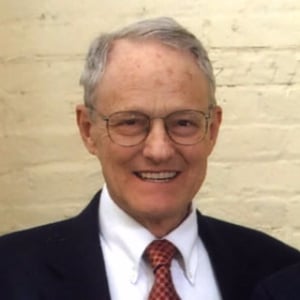
U.S. Court of Appeals, D.C. Circuit
Judge Williams practiced law in New York City (at the firm of Debevoise Plimpton and as an Assistant U.S. Attorney) and then taught law at the University of Colorado Law School from 1969 to 1986, with visiting years at UCLA, SMU, and the University of Chicago (where he was also a fellow in law and economics). He was appointed to the U.S. Court of Appeals for the D.C. Circuit in 1986. His most recent book is a biography of Vasily Maklakov, The Reformer: How One Liberal Fought to Preempt the Russian Revolution (Encounter Books, 2017).
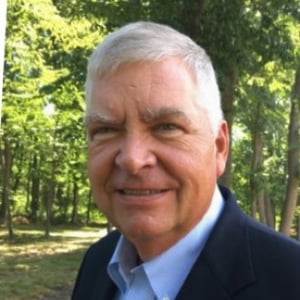
Founder and Principal, Johnson-IP Strategy & Consulting
Philip S. Johnson is Founder and Principal of Johnson-IP Strategy & Consulting. He previously served as Senior Vice President - Law Department and Chief Intellectual Property Counsel of Johnson & Johnson, having joined the corporation in January 2000 after 27 years in private practice. In this position, he managed about 110 patent and trademark attorneys worldwide. Phil is Chair of the Board of Directors of the American Intellectual Property Law Education Foundation, Vice President and President Elect of the Intellectual Property Owners Association, and a member of the Board of the Intellectual Property Owners Association Education Foundation (Past President). He is also a member of the Steering Committee of the Coalition for 21st Century Patent Reform, of the Association of Corporate Patent Counsel (Past President) and of PhRMA’s IP Focus Group (Chair Emeritus). Previously, Phil served as President of INTERPAT.
Before joining Johnson & Johnson, Phil was a senior partner and co-chair of IP litigation at Woodcock Washburn in Philadelphia, where he specialized in intellectual property issues affecting major pharmaceutical, medical device and consumer product companies. Phil has served as trial counsel in over 100 patent cases, including over 50 resulting in reported decisions of the federal district courts and/or of the Federal Circuit Court of Appeals. Phil regularly testifies before both the House and Senate Judiciary Committees on the subject of patent law reform and, more recently, abusive patent litigation. Phil served as a member of Chief Judge Michel’s Advisory Council on Patent Reform, and was recognized in the Congressional Record as a member of the Minority Whip’s “Kitchen Cabinet” for the America Invents Act. Thereafter, Phil served as IPO’s representative on the ABA-AIPLA-IPO committee of six experts (“COSE”) formed at Director Kappos’ request to propose to the USPTO implementing regulations for the PGR-IPR post-grant proceedings created by the AIA.
Phil co-authored “Compensatory Damages Issues In Patent Infringement Cases, A Pocket Guide for Federal District Court Judges,” published by the Federal Judicial Center, and has served that Center as a faculty member on its IP-related judicial education programming. Phil was also featured in the Landslide Publication March/April 2013 issue. The New Jersey Intellectual Property Law Association awarded Phil with its 2013 Jefferson Medal, presented on June 7, 2013.
Phil received his Bachelor of Science degree, cum laude with distinction in biology from Bucknell University, and his J.D. degree from Harvard Law School, where his third year advisor was now-Supreme Court Justice Stephen Breyer.
Professor of Law, Antonin Scalia Law School, George Mason University
Adam Mossoff is Professor of Law at Antonin Scalia Law School, George Mason University. He has published extensively on why patents, copyrights, and other intellectual property rights have been—and should be—legally secured to innovators and creators as property rights. His scholarship has been relied on by the United States Supreme Court, by lower federal courts, and by U.S. federal agencies. He has been invited to testify numerous times before the U.S. Senate and the House of Representatives on intellectual property legislation. His writings on intellectual property policy have also appeared in the Wall Street Journal, New York Times, Forbes, Investors Business Daily, and in other media outlets. His journal articles can be downloaded here.
Professor Mossoff is a longstanding member of the Executive Committee of the Intellectual Property Practice Group of the Federalist Society, on which he served as Chairperson from 2016-2018, and he is Chair of the Intellectual Property Working Group of the Regulatory Transparency Project of the Federalist Society. He is a Senior Fellow and Chair of the Forum for Intellectual Property at the Hudson Institute, a Visiting Intellectual Property Fellow at the Heritage Foundation, and a member of the Board of Directors of the Center for Intellectual Property Understanding. He is a member of the Intellectual Property Rights Policy Committee of ANSI and he has served as Chair and Vice-Chair of the Intellectual Property Committee of the IEEE-USA, on which he remains a member in good standing.
Dana Rao is the Vice President of Intellectual Property and Litigation at Adobe Systems. He oversees all aspects of Adobe’s intellectual property and litigation matters, including procuring, licensing, and defending Adobe’s patents, trademarks, and copyrights, and managing all aspects of Adobe’s litigation practice.
Before Adobe, Dana was an Associate General Counsel of Patents at Microsoft Corporation, focusing on their Windows Phone and Xbox patent issues. Dana began his legal career at Fenwick & West, focusing on patent prosecution, licensing, and litigation. Dana received his undergraduate degree from Villanova University in Electrical Engineering, and received his law degree from The George Washington University School of Law, where he graduated Order of the Coif.

Partner, Fenwick & West LLP
Robert Sachs is President at Robert R. Sachs PC and concentrates his practice on strategic patent counseling and prosecution for software technologies. Bob has extensive experience in developing patent portfolios for companies of all sizes, from startups to multi-nationals.
He is the primary evaluator for standards essential patents on today's most important audio, video, and communications technologies, including 3GPP-LTE, IEEE 802.11, MPEG-4 AAC, DVB-MHP, OCAP, Digital Radio Mondiale, AMR-NB, AMR-WB, AMR-WB+, G.711, G.729, AGORA-C, and NFC-IP. He conducts and supervises patent evaluations in US, as well as Europe, Japan, China, South Korea, Mexico and Canada.
One of Bob’s areas of expertise is patentable subject matter: the question of what kinds of inventions are eligible for patent protection, and particularly whether software and life sciences related inventions are patentable. This issue has become the new battleground in the development of the patent law, with several important cases having been recently decided by the Supreme Court and the Court of Appeals for the Federal Circuit. While most authors and scholars take a results-oriented approach to this question, Bob instead starts with the first principles of creativity and innovation that drive humans to solve functional problems. From that understanding, software and life sciences inventions are squarely in the domain of what the patent law is designed to protect.
Former Chief Judge, United States Court of Appeals for the Federal Circuit
Judge Michel served for more than 22 years on the Federal Circuit, retiring on May 31, 2010. From December 25, 2004 until his retirement, he also discharged the duties of Chief Judge of this national court, serving simultaneously on the U.S. Judicial Conference -- the Judiciary's governing body -- and by appointment of the Chief Justice on its seven-judge Executive Committee.
He judged several thousand appeals and authored more than 800 opinions, one third concerning intellectual property law. Intellectual Asset Management magazine inducted him into its Hall of Fame and he was designated one of the 50 most influential leaders in intellectual property law in the world. His contributions were also recognized by lifetime achievement and similar awards by the American Intellectual Property Law Association (AIPLA); Intellectual Property Owners Education Foundation (IPO); the American Bar Association's Intellectual Property Section; Managing Intellectual Property magazine; the Sedona Conference; the Patent and Trademark Office Society (PTOS); the New York, Chicago, Philadelphia, and Los Angeles Intellectual Property Law Associations; and the William C. Connor, the Giles S. Rich, and the Richard Linn Intellectual Property American Inns of Court. In 2010 the Los Angeles IP Inn was renamed in his honor as the Paul R. Michel IP Inn.
Judge Michel received the Jefferson Medal, the Eli Whitney Award, and the Katz-Kiley Prize as well as Honorary Doctor of Law degrees from the Catholic University of America and the John Marshall Law School. He is a lifetime Member of Honore of FICPI, the international association of private practitioners of intellectual property law. Williams College granted him the Kellogg Award for "outstanding leadership in law and public service."
Judge Michel has written numerous articles on patent law and advocacy, taught related courses and master classes at George Washington University, the University of Akron, and John Marshall law schools, serving as well on their IP advisory boards and on counterpart boards at the universities of California (Berkley), Washington, and Maryland. He co-authored a casebook, Patent Litigation and Strategy (West, 1999) and an August 2010 editorial in the New York Times on strengthening the patent system to promote prosperity and create new jobs.
A frequent speaker at conferences and law schools during his judicial tenure and since, he retired from a lifetime appointment to be free to speak out on the national need for better patent policy and protection of intellectual property and the vital, unmet resource needs of the courts, the PTO, the International Trade Commission, and other IP-related agencies. He was appointed Distinguished Scholar in Residence by IPO, following his retirement. Judge Michel also consults for law firms and their clients in intellectual property litigations, conducting moot courts, mock trials, case evaluations, editing briefs, advising on strategy and providing mediation and arbitration services.

Partner, Covington & Burling LLP
Robert Haslam is a partner in Covington & Burling's Silicon Valley office. His practice has emphasized trial work involving patent and trade secret litigation and other related high technology disputes. He has represented clients in litigation involving a range of arts and practices, including semiconductor products and processes, cryptography, GPS and cellular technology, electronic circuits, microprocessors and software products, and medical devices and other life science products. He has tried cases in both federal and state court. In addition, Mr. Haslam advises clients on strategies relating to intellectual property matters.
Mr. Haslam is a Fellow of the American College of Trial Lawyers, which is composed of the best of the trial bar and is widely considered to be the premier professional trial organization in America. Membership in the College can never be more than 1% of the total lawyer population of any state or province, and fellowship in the College is extended by invitation only to those experienced trial lawyers who have mastered the art of advocacy and whose professional careers have been marked by the highest standards of ethical conduct, professionalism, civility and collegiality.
He has also been recognized as a leading intellectual property lawyer by a number of publications, including Chambers USA; The Recorder, where they named him as one of the top two “go to” patent litigators in Northern California; and the Daily Journal who has named him not only as one of the “brain trust of 25 lawyers who comprise the state’s best and brightest” intellectual property lawyers in California, but as one of the “Top IP Litigators in California” for each year the list has been in existence.
Mr. Haslam has also twice served on, once as chair of, the Northern District of California Patent Rules Committee, which issued revisions to the local rules for the management of patent litigation. These rules have served as a model and have been adopted in whole or in part by other judicial districts.
Professor of Law, Antonin Scalia Law School, George Mason University
Adam Mossoff is Professor of Law at Antonin Scalia Law School, George Mason University. He has published extensively on why patents, copyrights, and other intellectual property rights have been—and should be—legally secured to innovators and creators as property rights. His scholarship has been relied on by the United States Supreme Court, by lower federal courts, and by U.S. federal agencies. He has been invited to testify numerous times before the U.S. Senate and the House of Representatives on intellectual property legislation. His writings on intellectual property policy have also appeared in the Wall Street Journal, New York Times, Forbes, Investors Business Daily, and in other media outlets. His journal articles can be downloaded here.
Professor Mossoff is a longstanding member of the Executive Committee of the Intellectual Property Practice Group of the Federalist Society, on which he served as Chairperson from 2016-2018, and he is Chair of the Intellectual Property Working Group of the Regulatory Transparency Project of the Federalist Society. He is a Senior Fellow and Chair of the Forum for Intellectual Property at the Hudson Institute, a Visiting Intellectual Property Fellow at the Heritage Foundation, and a member of the Board of Directors of the Center for Intellectual Property Understanding. He is a member of the Intellectual Property Rights Policy Committee of ANSI and he has served as Chair and Vice-Chair of the Intellectual Property Committee of the IEEE-USA, on which he remains a member in good standing.
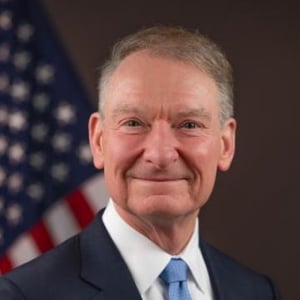
Chairman of the Securities and Exchange Commission
Paul S. Atkins was sworn into office as the 34th Chairman of the Securities and Exchange Commission on April 21, 2025, after being nominated by President Donald J. Trump on January 20, 2025, and confirmed by the U.S. Senate on April 9, 2025.
Prior to returning to the SEC, Chairman Atkins was most recently chief executive of Patomak Global Partners, a company he founded in 2009. Chairman Atkins helped lead efforts to develop best practices for the digital asset sector. He served as an independent director and non-executive chairman of the board of BATS Global Markets, Inc. from 2012 to 2015.
Chairman Atkins was appointed by President George W. Bush to serve as a Commissioner of the SEC from 2002 to 2008. During his tenure, he advocated for transparency, consistency, and the use of cost-benefit analysis at the agency. Chairman Atkins also represented the SEC at meetings of the President’s Working Group on Financial Markets and the U.S.-EU Transatlantic Economic Council. From 2009 to 2010, he was appointed a member of the Congressional Oversight Panel for the Troubled Asset Relief Program.
Before serving as an SEC Commissioner, Chairman Atkins was a consultant on securities and investment management industry matters, especially regarding issues of strategy, regulatory compliance, risk management, new product development, and organizational control.
From 1990 to 1994, Chairman Atkins served on the staff of two chairmen of the SEC, Richard C. Breeden and Arthur Levitt, ultimately as chief of staff and counselor, respectively. He received the SEC’s 1992 Law and Policy Award for work regarding corporate governance matters.
Chairman Atkins began his career as a lawyer in New York, focusing on a wide range of corporate transactions for U.S. and foreign clients, including public and private securities offerings and mergers and acquisitions. He was resident for 2½ years in his firm's Paris office and admitted as conseil juridique in France.
A member of the New York and Florida bars, Chairman Atkins received his J.D. from Vanderbilt University School of Law in 1983 and was Senior Student Writing Editor of the Vanderbilt Law Review. He received his A.B., Phi Beta Kappa, from Wofford College in 1980.
Originally from Lillington, North Carolina, Chairman Atkins grew up in Tampa, Florida. He and his wife Sarah have three sons.
Bernard L. Schwartz Chair in Economic Policy, Brookings Institution

Resident Fellow, American Enterprise Institute
Timothy P. Carney is a resident fellow at the American Enterprise Institute, where he works on economic competition, cronyism, civil society, localism, and religion in America. He is concurrently the commentary editor at the Washington Examiner.
Mr. Carney’s latest book, “Alienated America: Why Some Places Thrive While Others Collapse” (HarperCollins), was published in February 2019. His previous books include “Obamanomics: How Barack Obama Is Bankrupting You and Enriching His Wall Street Friends, Corporate Lobbyists, and Union Bosses” (Regnery Publishing, 2009) and “The Big Ripoff: How Big Business and Big Government Steal Your Money” (John Wiley & Sons, 2006), which was awarded the 2008 Culture of Enterprise award by the Intercollegiate Studies Institute.
In addition to his Washington Examiner columns, Mr. Carney’s work has been published in a variety of magazines, websites, and newspapers, including The Atlantic, New York Post, The New York Times, Reason Magazine, and The Wall Street Journal. His television appearances include CNBC, CNN, Fox News, MSNBC, and the “PBS NewsHour.”
Mr. Carney has a bachelor’s degree from St. John’s College in Annapolis.
Partner, Davis Polk & Wardwell LLP
Mr. Guynn is head of Davis Polk’s Financial Institutions Group. He has been recognized as a thought-leader on financial regulatory reform and as one of the most widely consulted U.S. legal advisers during the financial crisis. See “In the Red Zone,”The American Lawyer, January 2009 and “For Davis Polk, Dodd-Frank Pays,” The American Lawyer, December 2010.
He has advised the Securities Industry and Financial Markets Association (SIFMA), the principal trade organization for U.S. banks, securities firms and asset managers, all of the U.S.’s six-largest banks and several foreign banks on the Dodd-Frank Act and its regulatory implementation.
His practice focuses on providing strategic bank and regulatory and enforcement advice and advising on M&A and capital markets transactions when the target or issuer is a banking organization or other financial institution. He also advises on bank failures and recapitalizations, corporate governance and internal controls, cross-border collateral transactions, credit risk management, securities settlement systems and payment systems.

Director of Research, Bloomberg Government, Bloomberg News
Now Director of Research at Bloomberg Government, Robert E. Litan has had a distinguished career. He had been vice president for Research and Policy at the Ewing Marion Kauffman Foundation in Kansas City, where he oversaw the Foundation’s extensive program for funding data collection and research relating entrepreneurship and economic growth. Dr. Litan also writes frequently with the Foundation’s president, Carl Schramm. Their book, Good Capitalism, Bad Capitalism, and the Economics of Growth and Prosperity, co-authored with William Baumol, (Yale University Press, 2007) has been translated into ten languages and is used as a college text around the world.
Dr. Litan was also a senior fellow in Economic Studies at the Brookings Institution, where he previously was vice president and director of Economic Studies. During his career, Dr. Litan has authored or co-authored over twenty books, edited another fourteen, and authored or co-authored over 200 articles in journals, magazines, and newspapers on a broad range of public policy issues. His other recent books include: Competitive Equity: Developing a Lower Cost Alternative for Mutual Funds (with Peter J. Wallison, AEI Press, 2007); Worldwide Financial Reporting (Oxford University Press, 2006, with three co-authors); Financial Statecraft (with Benn Steil, Yale University Press, 2006); and Follow The Money: The Enron Failure and the State of Corporate Disclosure (AEI-Brookings Joint Center for Regulatory Studies, 2003, with 3 co-authors).
Dr. Litan has been a lecturer in banking law at the Yale Law School, consulted for numerous organizations (public and private), and testified as an expert witness in a variety of legal and regulatory proceedings involving domestic (banking, antitrust) and international (primarily trade) issues. He also consulted for private sector firms and the Department of Justice on antitrust matters. Among his various assignments, he has written a number of influential federal reports. He co-authored two Congressionally-mandated studies for the Treasury Department on the role of the Community Reinvestment Act after the Financial Modernization Act of 1999. During 1996-97, he served as a consultant to the Treasury Department and was the lead author of its report to Congress on the future of the financial services industry (American Finance in the 21st Century), and in 1998-99, he was the main author of the Report of President’s Commission to Study Capital Budgeting. In 1998, he also chaired the National Academy of Sciences Committee on Assessing the Costs of Natural Disasters, which produced a report, The Impacts of Natural Disasters: A Framework for Loss Estimation.
Dr. Litan has served in several capacities in the federal government. During 1995 and 1996, he was associate director of the Office of Management and Budget, where he was responsible for overseeing budgetary and other policies of six cabinet agencies. From 1993 to 1995, he was Deputy Assistant Attorney General, in charge of civil antitrust litigation and regulatory issues at the Department of Justice (where among other matters, he supervised the first Microsoft investigation, which resulted in a consent decree; and the investigation against NASDAQ). From 1977 to 1979, he was the regulatory and legal staff specialist at the President’s Council of Economic Advisers. In the early 1990s, Dr. Litan was a member of the Commission on the Causes of the Savings and Loan Crisis.
Dr. Litan received his B.S. in economics (summa cum laude) from the Wharton School of Finance at the University of Pennsylvania; his J.D. from Yale Law School; and both his M. Phil. and Ph.D. in economics from Yale University.
Senior Counsel, Wilmer Cutler Pickering Hale and Dorr LLP
Arthur Gajarsa is a senior counsel in the Litigation/Controversy Department and a member of the Intellectual Property Litigation Practice. He joined the firm in 2012.
Prior to joining WilmerHale, Judge Gajarsa had a long and distinguished career in the judiciary. He was nominated to the Federal Circuit in 1996 by President Clinton, confirmed by the US Senate in 1997 and served for 15 years, retiring in June 2012. Prior to his appointment, Judge Gajarsa was a well-recognized litigator who also practiced corporate law, intellectual property, securities law and general litigation with various law firms as a partner or principal officer. His career includes service at the Department of Commerce, Department of the Interior and Department of Defense.
Judge Gajarsa has represented Native American tribal interests for whom he made several appearances before the US Supreme Court. In 1987, he joined the firm of Joseph, Gajarsa, McDermott & Reiner, P.C., where he continued his international and corporate law interests, including an expansive representation of Native American tribal interests.
After graduation from law school, Judge Gajarsa served as a law clerk for the Honorable Joseph J. McGarraghy of the US District Court in Washington DC. In 1968, he became an associate in the office of the General Counsel of Aetna Life & Casualty. Secretary of the Interior, Walter J. Hickle, and Commissioner of Indian Affairs, Louis R. Bruce, subsequently appointed him as a special counsel to the Commissioner of Indian Affairs at the Department of the Interior. He remained in that position until 1971.

Senior Judge, United States Court of Appeals, District of Columbia Circuit
Circuit Judge Douglas H. Ginsburg was appointed to the United States Court of Appeals for the District of Columbia in 1986. After receiving his B.S. from Cornell University in 1970, and his J.D. from the University of Chicago Law School in 1973, he clerked on the D.C. Circuit and for Justice Thurgood Marshall on the United States Supreme Court. Thereafter, Judge Ginsburg was a professor at the Harvard Law School, the Deputy Assistant and then Assistant Attorney General for the Antitrust Division of the Department of Justice, as well as the Administrator of the Office of Information and Regulatory Affairs in the Office of Management and Budget. Concurrent with his service as a federal judge, Judge Ginsburg has taught at the University of Chicago Law School and the New York University School of Law. Judge Ginsburg is currently a Professor of Law at the George Mason University and a visiting professor at University College London, Faculty of Laws.
Judge Ginsburg is the Chairman of the International Advisory Board of the Global Antitrust Institute at the Law and Economics Center of the George Mason University School of Law. He also serves on the Advisory Boards of: Competition Policy International; the Harvard Journal of Law and Public Policy; the Journal of Competition Law and Economics; the Journal of Law, Economics & Policy; the Supreme Court Economic Review; the University of Chicago Law Review; the New York University Journal of Law and Liberty; and, at University College London, both the Centre for Law, Economics and Society and the Jevons Institute for Competition Law and Economics.
In 2020, Judge Ginsburg was the 11th recipient of the John Sherman Award, presented by the Antitrust Division of the Department of Justice in recognition of the awardee’s Lifetime Contributions to Antitrust Law and Policy.
In 2014, Judge Ginsburg received the Lifetime Achievement Award given annually by the Global Competition Review.
He is the author or co-author of several books and more than 100 articles on competition and regulation, including, most recently, Growing Convergence: The Limited Role of Antitrust in Standard Essential Patent Disputes, in CPI Antitrust Chronicle, Summer 2021, Vol. 1, No. 2.
Former Chief Judge, United States Court of Appeals for the Federal Circuit
Judge Michel served for more than 22 years on the Federal Circuit, retiring on May 31, 2010. From December 25, 2004 until his retirement, he also discharged the duties of Chief Judge of this national court, serving simultaneously on the U.S. Judicial Conference -- the Judiciary's governing body -- and by appointment of the Chief Justice on its seven-judge Executive Committee.
He judged several thousand appeals and authored more than 800 opinions, one third concerning intellectual property law. Intellectual Asset Management magazine inducted him into its Hall of Fame and he was designated one of the 50 most influential leaders in intellectual property law in the world. His contributions were also recognized by lifetime achievement and similar awards by the American Intellectual Property Law Association (AIPLA); Intellectual Property Owners Education Foundation (IPO); the American Bar Association's Intellectual Property Section; Managing Intellectual Property magazine; the Sedona Conference; the Patent and Trademark Office Society (PTOS); the New York, Chicago, Philadelphia, and Los Angeles Intellectual Property Law Associations; and the William C. Connor, the Giles S. Rich, and the Richard Linn Intellectual Property American Inns of Court. In 2010 the Los Angeles IP Inn was renamed in his honor as the Paul R. Michel IP Inn.
Judge Michel received the Jefferson Medal, the Eli Whitney Award, and the Katz-Kiley Prize as well as Honorary Doctor of Law degrees from the Catholic University of America and the John Marshall Law School. He is a lifetime Member of Honore of FICPI, the international association of private practitioners of intellectual property law. Williams College granted him the Kellogg Award for "outstanding leadership in law and public service."
Judge Michel has written numerous articles on patent law and advocacy, taught related courses and master classes at George Washington University, the University of Akron, and John Marshall law schools, serving as well on their IP advisory boards and on counterpart boards at the universities of California (Berkley), Washington, and Maryland. He co-authored a casebook, Patent Litigation and Strategy (West, 1999) and an August 2010 editorial in the New York Times on strengthening the patent system to promote prosperity and create new jobs.
A frequent speaker at conferences and law schools during his judicial tenure and since, he retired from a lifetime appointment to be free to speak out on the national need for better patent policy and protection of intellectual property and the vital, unmet resource needs of the courts, the PTO, the International Trade Commission, and other IP-related agencies. He was appointed Distinguished Scholar in Residence by IPO, following his retirement. Judge Michel also consults for law firms and their clients in intellectual property litigations, conducting moot courts, mock trials, case evaluations, editing briefs, advising on strategy and providing mediation and arbitration services.
Professor of Law, Antonin Scalia Law School, George Mason University
Adam Mossoff is Professor of Law at Antonin Scalia Law School, George Mason University. He has published extensively on why patents, copyrights, and other intellectual property rights have been—and should be—legally secured to innovators and creators as property rights. His scholarship has been relied on by the United States Supreme Court, by lower federal courts, and by U.S. federal agencies. He has been invited to testify numerous times before the U.S. Senate and the House of Representatives on intellectual property legislation. His writings on intellectual property policy have also appeared in the Wall Street Journal, New York Times, Forbes, Investors Business Daily, and in other media outlets. His journal articles can be downloaded here.
Professor Mossoff is a longstanding member of the Executive Committee of the Intellectual Property Practice Group of the Federalist Society, on which he served as Chairperson from 2016-2018, and he is Chair of the Intellectual Property Working Group of the Regulatory Transparency Project of the Federalist Society. He is a Senior Fellow and Chair of the Forum for Intellectual Property at the Hudson Institute, a Visiting Intellectual Property Fellow at the Heritage Foundation, and a member of the Board of Directors of the Center for Intellectual Property Understanding. He is a member of the Intellectual Property Rights Policy Committee of ANSI and he has served as Chair and Vice-Chair of the Intellectual Property Committee of the IEEE-USA, on which he remains a member in good standing.
Senior Lecturer in Law, University of Chicago Law School
Following his graduation from Harvard Law School, Judge Posner clerked for Justice William J. Brennan, Jr. From 1963 to 1965, he was assistant to Commissioner Philip Elman of the Federal Trade Commission. For the next two years, he was assistant to the solicitor general of the United States. Prior to going to Stanford Law School in 1968 as Associate Professor, Judge Posner served as general counsel of the President's Task Force on Communications Policy. He first came to the University of Chicago Law School in 1969, and was Lee and Brena Freeman Professor of Law prior to his appointment in 1981 as a judge of the US Court of Appeals for the Seventh Circuit. He was the chief judge of the court from 1993 to 2000.
Judge Posner has written a number of books, including Economic Analysis of Law (9th ed., 2014); The Economics of Justice (1981); Law and Literature (3rd ed. 2009); The Problems of Jurisprudence (1990); Cardozo: A Study in Reputation (1990); The Essential Holmes (1992); Sex and Reason (1992); Overcoming Law (1995); The Federal Courts: Challenge and Reform (1996); Law and Legal Theory in England and America (1996); The Problematics of Moral and Legal Theory (1999); Antitrust Law (2d ed. 2001); Law, Pragmatism, and Democracy (2003); Catastrophe: Risk and Response (2004); Preventing Surprise Attacks: Intelligence Reform in the Wake of 9/11 (2005); How Judges Think (2008); A Failure of Capitalism: The Crisis of '08 and the Descent into Depression (2009); The Crisis of Capitalist Democracy (2010); The Behavior of Federal Judges: A Theoretical and Empirical Study of Rational Choice (coauthored with Lee Epstein and William M. Landes) (2013); and Reflections on Judging (2013). He also wrote books on the Clinton impeachment and Bush v. Gore, many articles in legal and economic journals, and book reviews in the popular press.
He has taught administrative law, antitrust, economic analysis of law, history of legal thought, conflict of laws, regulated industries, law and literature, the legislative process, family law, primitive law, torts, civil procedure, evidence, health law and economics, law and science, and jurisprudence. He was the founding editor of the Journal of Legal Studies and (with Orley Ashenfelter) the American Law and Economics Review. He is an Honorary Bencher of the Inner Temple and a corresponding fellow of the British Academy, and he was the President of the American Law and Economics Association from 1995 to 1996 and the honorary President of the Bentham Club of University College, London, for 1998. He has received honorary degrees from leading American and foreign universities, along with a number of awards, including the Thomas Jefferson Memorial Foundation Award in Law from the University of Virginia in 1994, the Marshall-Wythe Medallion from the College of William and Mary in 1998, the 2003 Research Award from the Fellows of the American Bar Foundation, the 2003 John Sherman Award from the US Department of Justice, the Learned Hand Medal for Excellence in Federal Jurisprudence from the Federal bar Council in 2005, the Thomas C. Schelling Award from the John F. Kennedy School of Government at Harvard University in 2005, and the Ronald H. Coase Medal from the American Law and Economics Association in 2010.
Partner, McCarter & English, LLP
Erik concentrates his practice in the area of Intellectual Property/Information Technology. He is a trial attorney specializing in patent, trademark, and licensing disputes in federal and state courts, arbitrations, and the U.S. Patent and Trademark Office. He has handled a wide range of technology cases involving, for example, x-ray inspection systems, speech recognition software, Internet security software, diagnostic and medical devices, immunoassays, telecommunications electronics, and water purification systems.
Erik has extensive experience representing national and international clients in patent litigation in federal courts throughout the country. He has successfully enforced patent rights and has also defended companies accused of infringement. Erik has also designed and implemented trademark and copyright protection and enforcement strategies for clients in virtually every industry, including business consulting, financial services, life sciences, electronics, communications equipment, computer products, and consumer goods.
Erik's recent litigation victories include, for example, a case involving infringement of x-ray technology patents in which he obtained sanctions against an alleged infringer for making material misrepresentations to the court and for other misconduct. Sanctions included an award of attorneys' fees and striking of the validity defenses. He also successfully moved to exclude the alleged infringer's expert witness. This case settled on the first day of trial, after Erik and his team defeated the accused infringer's motion for summary judgment of non-infringement and won a number of motionsin limine.
In a precedent-setting case, Erik represented a vendor of Internet security software that had been sued by an adware company for blocking pop-up ads and adware. A federal court dismissed the claims, holding that his client was immune from civil liability under the Communications Decency Act. 47 USC § 230(c)(2)(B). The United States Court of Appeals for the Ninth Circuit affirmed the district court's ruling. SeeZango, Inc. v. Kaspersky Lab., Inc.(9th Cir. Case No. 07-35800). The case set precedent as the first application of the Act to immunize a vendor of Internet security software used to screen adware and spyware.
Erik represented a Sonoma winery that that owned a well-known trademark. In a summary judgment decision, a federal court ruled that the winery's licensee, an importer of luxury vodka, breached the license, that the winery properly terminated the license, and that the importer's continued sale of the vodka infringed the winery's trademark rights. The case settled soon afterwards.
Erik represented an R&D lab that had invented the key component of a medical diagnostic device. When the R&D lab discovered that its licensee, the manufacturer of the device, was using questionable accounting methods to reduce royalties, the lab sued to recover the unpaid royalties. Erik's client was awarded approximately $11 million in unpaid royalties, attorneys' fees, and interest. The First Circuit Court of Appeals upheld this award. SeeCytyc Corp. v. DEKA Products Limited Partnership, 439 F.2d 27 (1st Cir. 2006).
Erik writes and speaks on intellectual property and litigation issues. He has been honored for the past four years as aMassachusetts Super Lawyerin the field of intellectual property litigation in Massachusetts by Law & Politics and Boston Magazine.
Partner, Burns & Levinson LLP
Prior to joining Burns & Levinson LLP in January 2006, Mr. Cohen was a partner with the firm Perkins Smith & Cohen LLP.
He has more than 40 years experience as a lawyer dealing with patent, copyright, trademark, unfair competition, licensing/franchising, visual arts, software, databases and publication law, formation and operation of business enterprises and not-for-profit organizations, international trade, litigation/ADR, and legal ethics. He handles acquisition, licensing and litigation of intellectual property rights. He has also served as an expert witness, arbitrator and mediator in intellectual property matters.
Partner, McCarter & English LLP
Mr. Cote represents both small and large businesses and occasionally individuals in both federal and state courts throughout the country. His practice concentrates primarily on hospitality, employment, civil rights, contracts, unfair and deceptive conduct, class action, private property rights and appellate litigation.
During his time with McCarter, Mr. Cote has played an integral role in obtaining several significant victories for the firm's clients, including the dismissal of a challenge under the public trust doctrine to the private ownership of lawfully filled, tidelands that were developed pursuant to a legislative grant issued in 1832 and the successful defense of a large food service company in a case of first impression concerning the application and interpretation of the Massachusetts Tips Act. Mr. Cote was also instrumental in obtaining a sanctions award of $100,000 in connection with a construction accident case brought in bad faith against one of the firm's clients.
Prior to his admission to the bar, Mr. Cote served for over ten years as a paralegal and law clerk in Arizona, Massachusetts, Vermont and Washington, D.C. During this time, he served as the principal legal assistant to the Arizona Legislature's Ombudsman for Private Property Rights. He also clerked for the Honorable Roger J. Marzulla and Nancie G. Marzulla at Defenders of Property Rights, which, at the time, was the nation's only non-profit legal foundation dedicated exclusively to the protection of private property rights. He is a contributing author of that organization's 1999 publication "State Property Rights Legislation Report: Federalism in Action."
Mr. Cote presently serves as the vice-chair of the Boston Lawyers Division of the Federalist Society for Law and Public Policy Studies. He is also a member of the executive committee for the Federalist Society's Litigation Practice Group and the primary author of the Environmental Practice Group's 2001 terrorism briefing paper entitled: "National Security vs. Public Disclosure: The War on Terrorism's Implications Upon Federal Emergency Planning and Right to Know Laws."

Stevenson Bernard Professor, George Washington University Law School
The Honorable F. Scott Kieff is the Stevenson Bernard Professor at George Washington University Law School and a Visiting Fellow at Stanford University’s Hoover Institution.
He served as Commissioner of the U.S. International Trade Commission from 2013-2017. He also served during the Bush, Obama, and Trump Administrations in the part-time leadership of the national security defense-intelligence community.
He was previously a professor of law and medicine at Washington University in Saint Louis and a Senior Fellow at Hoover. A former law clerk to U.S. Circuit Judge Giles S. Rich, he is a graduate of Penn Law School and MIT, where he studied molecular biology and microeconomics. He was elected to the European Academy of Sciences and Arts in 2012 and the Academia Europaea in 2024.
His private sector work through Kieff Strategies LLC (www.kieffstrategies.com) provides neutral services including mediation and compliance, and expert services including crisis management, advising, and testimony.

Professor of Law, Boston University School of Law
The son of an economics professor, Michael Meurer knew by the time he was 13 that he, too, wanted to teach at the university level. An S.B., J.D. and Ph.D. later, he became an economics professor at Duke University and later a law professor at the University of Buffalo. He came to Boston University School of Law in 1999, where he has taught courses in patents, intellectual property and public policy toward the high-tech industry. "It's a special privilege to be able to speak three times a week to an attentive and thoughtful audience," he says.
Professor Meurer has received several grants and fellowships, including two grants from the Pew Charitable Trust, a Ford Foundation grant, an Olin Faculty Fellowship at Yale Law School and a postdoctoral fellowship at AT&T Bell Labs. He has served as an expert witness for the Federal Trade Commission on a merger case presenting issues related to patent licensing. He also has consulted with government officials from developing countries about antitrust law, and taught short courses in American intellectual property law at the law faculties of the University of Victoria and the National University of Singapore. "I'm excited by the prospect of having a positive influence on American technology law and policy," Professor Meurer says. Outside of work, he enjoys playing and watching basketball.
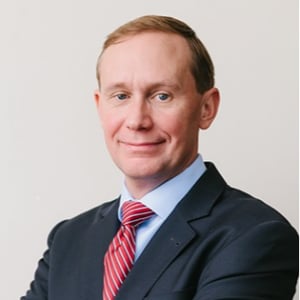
Associate Professor, Boston College Law School
David Olson is an associate professor and the Faculty Director of the Program on Innovation and Entrepreneurship. He teaches patent law, intellectual property law, antitrust law, and various seminars. His research and writing primarily focus on patents, copyrights, antitrust, and incentives for innovation and competition. Since joining BC Law in 2007, he has been recognized for his teaching excellence and contributions. In 2011, he received the Business & Law Society Faculty Award for Achievement in Business & Law. In 2012, he received the Professor Emil Slizewski Award for Faculty Excellence. For one semester in 2015, Olson served as a visiting professor at Pontifical Catholic University, Rio de Janeiro, Brazil, where he conducted research and taught a course on intellectual property.
Olson has published scholarly articles on patent law, copyright law, antitrust, music licensing, and first amendment copyright issues. His writing has been cited in Supreme Court and other legal opinions. He has testified before the U.S. Congress on matters of drug patents, FDA regulation, and antitrust.
The media frequently seeks Olson’s insights and opinions. He has been quoted in the Wall Street Journal, Associated Press, and Reuters, among others. He has appeared as a guest panelist on WBUR’s Radio Boston, WAMU's Kojo Namdi Show, and Public Radio Canada. His op-eds have appeared in the Chicago Tribune, Washington Times, and The Hill.
Olson came to Boston College from Stanford Law School's Center for Internet and Society, where he conducted research on patent law and litigated copyright fair use impact cases. Before entering academia, Olson practiced law as a patent litigator. He clerked for Judge Jerry Smith of the U.S. Court of Appeals for the Fifth Circuit.

Analyzing the Regulatory Thicket
Brooks Rainwater, Luke A. Wake
Regulation is a pervasive and increasingly a contentious issue in 21st Century America. The propriety...
Administrative Cancellation of Patents: Regulatory Overreach at the Patent Office?
Paul Redmond Michel, Adam Mossoff, Arti K. Rai, Melissa F. Wasserman, Stephen F. Williams
The Sixth Annual Executive Branch Review Conference is scheduled for Tuesday, April 17 at the...
Should Congress Amend Section 101 of the Patent Act?
Philip Johnson, Adam Mossoff, Dana S. Rao, Robert Sachs
This Teleforum addresses whether there is a need to amend Section 101 of the Patent...
Patent Litigation and Federal Rules - Podcast
Paul Redmond Michel, Robert T. Haslam, Adam Mossoff
A former Director of the United States Patent and Trademark Office and former Chief Judge...
Financial Services: Too Big To Fail - What Now?
Paul S. Atkins, Martin Neil Baily, Timothy P. Carney, Randall D. Guynn, Robert E. Litan
In the aftermath of the recent economic crisis a remarkable political consensus developed that no...
Is the Patent System Working or Broken? A Discussion with Four Distinguished Federal Judges
Arthur J. Gajarsa, Douglas H. Ginsburg, Paul Redmond Michel, Adam Mossoff, Richard Posner
Today, people read almost daily reports about the "broken patent system" in newspaper articles, blogs...
Law & Growth
Patent Enforcement in the 21st Century
Erik P. Belt, Jerry Cohen, Gregory D. Cote, F. Scott Kieff, Michael J. Meurer, David S. Olson
This panel will explore the long-standing debate over remedies for patent infringement and whether and...