

Executive Director, Southeastern Legal Foundation
Kimberly Hermann serves as Executive Director for Southeastern Legal Foundation.
Kim has worked with Southeastern Legal Foundation since 2009. Her belief in liberty and desire to serve started at a young age – instilled by her parents’ dedication to hard work, family values, and love for America.
After earning her undergraduate degree in Analytical Finance and graduate degree in Accounting from Wake Forest University, Kim worked as a licensed CPA with an international accounting firm. But her strong belief in individual liberty, the rule of law, and accountability in government led her to pursue a career in law. While in law school at Georgia State University College of Law, Kim served as a law clerk at SLF. After graduating, Kim worked at a private law firm in Atlanta where she specialized in financial and business litigation but continued to serve SLF in a pro bono capacity. In 2013, Kim returned to SLF full-time and is proud to dedicate her career to the freedom-based law movement.
Kim advances liberty through litigation in federal and state trial and appellate courts on issues ranging from government overreach, free speech, property rights, and economic liberty. In addition to representing clients, Kim testifies before state legislatures, drafts model legislation, and regularly publishes legal articles. Through SLF’s legal initiatives, she informs Americans about their constitutional rights, equipping them with the tools they need to stand up to government overreach. Her work and that of Southeastern Legal Foundation is regularly covered by national media and you will frequently hear or see her on radio, podcasts, and television.
Kim is an active member of the Federalist Society where she serves as an expert on the Federalist Society’s Civil Rights Executive Committee. She is also an active member of her community and when she isn’t fighting for liberty, you can find her at her children’s school or on the sports fields cheering them on. She lives in the Atlanta area with her husband and two children.

Founder & CEO, Jewish Institute for Liberal Values
A passionate advocate of the free expression of ideas and Israel, David Bernstein is the founder of the Jewish Institute for Liberal Values (JILV), which opposes illiberal ideologies and supports liberal values in and out of the Jewish community, and author of Woke Antisemitism: How a Progressive Ideology Harms Jews. He is also a co-founder of the Institute for Liberal Values, a consortium of like-minded organizations supporting liberal principles. He is past President and CEO of Jewish Council for Public Affairs and former executive director of the David Project. He spent 13 years at the American Jewish Committee in senior roles. David is a prolific speaker, podcaster and writer, having written hundreds of opinion pieces in the Jewish and general press.
Executive Director, Southeastern Legal Foundation
Kimberly Hermann serves as Executive Director for Southeastern Legal Foundation.
Kim has worked with Southeastern Legal Foundation since 2009. Her belief in liberty and desire to serve started at a young age – instilled by her parents’ dedication to hard work, family values, and love for America.
After earning her undergraduate degree in Analytical Finance and graduate degree in Accounting from Wake Forest University, Kim worked as a licensed CPA with an international accounting firm. But her strong belief in individual liberty, the rule of law, and accountability in government led her to pursue a career in law. While in law school at Georgia State University College of Law, Kim served as a law clerk at SLF. After graduating, Kim worked at a private law firm in Atlanta where she specialized in financial and business litigation but continued to serve SLF in a pro bono capacity. In 2013, Kim returned to SLF full-time and is proud to dedicate her career to the freedom-based law movement.
Kim advances liberty through litigation in federal and state trial and appellate courts on issues ranging from government overreach, free speech, property rights, and economic liberty. In addition to representing clients, Kim testifies before state legislatures, drafts model legislation, and regularly publishes legal articles. Through SLF’s legal initiatives, she informs Americans about their constitutional rights, equipping them with the tools they need to stand up to government overreach. Her work and that of Southeastern Legal Foundation is regularly covered by national media and you will frequently hear or see her on radio, podcasts, and television.
Kim is an active member of the Federalist Society where she serves as an expert on the Federalist Society’s Civil Rights Executive Committee. She is also an active member of her community and when she isn’t fighting for liberty, you can find her at her children’s school or on the sports fields cheering them on. She lives in the Atlanta area with her husband and two children.

Founder, Chairman, and CEO, Louis D. Brandeis Center for Human Rights Under Law
Hon. Kenneth L. Marcus is an internationally recognized expert in civil and human rights, as well as a leader in the fight against anti-Semitism on and off university campuses. He is the Founder, Chairman, and CEO of The Louis D. Brandeis Center for Human Rights Under Law, the leading civil rights legal organization fighting against anti-Semitism. The New York Times has called him “The Man Who Helped Redefine Campus Anti-Semitism.” He been described, in that paper, as “the single most effective and respected force” to combat anti-Semitism.
During his public service career, Marcus served as Assistant U.S. Secretary of Education for Civil Rights; Staff Director at the U.S. Commission on Civil Rights; and General Deputy Assistant U.S. Secretary of Housing and Urban Development for Fair Housing and Equal Opportunity.
In academia, he serves as Professorial Lecturer in Law at George Washington University. He formerly held the Lillie and Nathan Ackerman Chair in Equality and Justice in America at the City University of New York’s Bernard M. Baruch College, served as Visiting Research Professor of Political Science at Yeshiva University, and was a Board of Visitors member George Mason University and Distinguished Senior Fellow at that university’s law school. He is a member of the editorial board of the Journal of Contemporary Antisemitism and previously served as Associate Editor of the Journal for the Study of Anti-Semitism.
Marcus is also author of The Definition of Anti-Semitism (Oxford University Press) and Jewish Identity and Civil Rights in America (Cambridge University Press). He has published widely in academic journals as well as in more popular venues such as The Wall Street Journal, Washington Post, Newsweek, USA Today, and Politico. He is a graduate of Williams College and the University of California at Berkeley School of Law.
Earlier in his career, he was a litigation partner in two major law firms, where he conducted complex commercial and constitutional litigation. He also serves as Chairman emeritus of the Executive Committee of the Federalist Society for Law & Public Policy Civil Rights Practice Group.
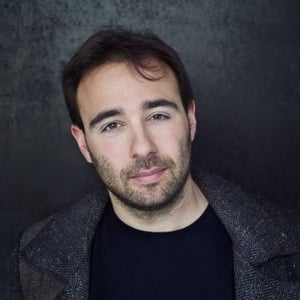
Professor of the Practice of International Affairs, Johns Hopkins University; Contributing Editor, The Atlantic; Senior Fellow, The Council on Foreign Relations
Yascha Mounk is a writer and academic known for his work on the crisis of democracy and the defense of philosophically liberal values.
Born in Germany to Polish parents, Yascha received his BA in History from Trinity College Cambridge and his PhD in Government from Harvard University. He is a Professor of the Practice of International Affairs at Johns Hopkins University, where he holds appointments in both the School of Advanced International Studies and the SNF Agora Institute. Yascha is also a Contributing Editor at The Atlantic, a Senior Fellow at the Council on Foreign Relations, a Moynihan Public Fellow at City College. He is the Founder of Persuasion, the host of The Good Fight podcast, and serves as a publisher (Herausgeber) at Die Zeit.
Yascha has written five books: Stranger in My Own Country - A Jewish Family in Modern Germany, a memoir about Germany’s fraught attempts to deal with its past; The Age of Responsibility – Luck, Choice and the Welfare State, which argues that a growing obsession with the concept of individual responsibility has transformed western welfare states; The People versus Democracy – Why Our Freedom Is in Danger and How to Save It, which explains the causes of the populist rise and investigates how to renew liberal democracy; and The Great Experiment - Why Diverse Democracies Fall Apart and How They Can Endure, which argues that anybody who seeks to help ethnically and religiously diverse democracies thrive has reason to embrace a more ambitious vision for their future than is now fashionable; and his latest, The Identity Trap - A Story of Ideas and Power in Our Time, which tells the story of how a new set of ideas about race, gender and sexual orientation came to be extremely influential in mainstream institutions, and why it would be a mistake to give up on a more universalist humanism. Next to his work for The Atlantic, Yascha also occasionally writes for newspapers and magazines including The New York Times, the Wall Street Journal, and Foreign Affairs. He is also a regular contributor to major international publications including Die Zeit, La Repubblica, El País, l'Express and Folha de São Paolo, among others.
To get a better sense of Yascha’s work, listen to his podcast, read his writing at The Atlantic, Foreign Affairs or Persuasion, or follow him on Facebook and Twitter. Or check out some profiles of Yascha and reviews of his recent books.
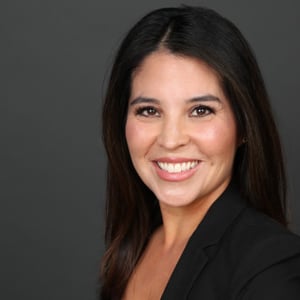
President, Defending Education
Nicole Neily is the president and founder of Defending Education, a national membership organization that gives parents, students, and others the resources and support they need to advocate for their children’s education. She is also the executive director of PDE Action, a 501(c)4 advocacy organization.
Defending Education champions equal protection and combats race and sex-based discrimination in both the court of law and the court of public opinion, and has successfully sued school districts and the US Department of Education in federal court; facilitated tens of thousands of comments submitted to the Federal Register; filed dozens of federal OCR and EEOC complaints, as well as over two thousand public records requests since its launch in 2021. The organization regularly releases deep-dive education investigations, recently covering political spending by teachers’ unions, biased accreditation agencies, and ethnic studies curriculum in both K-12 and universities.
Prior to launching Defending Education, Nicole created Speech First, a campus free speech organization that sued 6 public universities under her leadership; she has also worked as president of the Franklin Center for Government & Public Integrity; as executive director and senior fellow at the Independent Women’s Forum; and at the Cato Institute. She is the mother of two school-aged children and serves on the board of a public university.

Patrick Hotung Professor of Constitutional Law, Georgetown University Law Center; Faculty Director, Georgetown Center for the Constitution
Randy E. Barnett is the Patrick Hotung Professor of Constitutional Law at the Georgetown University Law Center and is the Faculty Director of the Georgetown Center for the Constitution. After graduating from Northwestern University and Harvard Law School, he tried many felony cases as a prosecutor in the Cook County States’ Attorney’s Office in Chicago. A recipient of a Guggenheim Fellowship in Constitutional Studies and the Bradley Prize, Professor Barnett has been a visiting professor at Penn, Northwestern and Harvard Law School.
Professor Barnett’s publications includes thirteen books, more than one hundred articles and reviews, as well as numerous op-eds. His most recent book is Felony Review: Tales of True Crime and Corruption in Chicago (2026). His other books on the Constitution include: A Life for Liberty: The Making of an American Originalist (2024); The Original Meaning of the Fourteenth Amendment: Its Letter and Spirit (2021) (with Evan Bernick); An Introduction to Constitutional Law: 100 Supreme Court Cases Everyone Should Know (2019) (with Josh Blackman); Restoring the Lost Constitution: The Presumption of Liberty (2nd ed. 2013); Our Republican Constitution: Securing the Liberty and Sovereignty of We the People (2016); and Constitutional Law: Cases in Context (5th ed. forthcoming 2027) (with Josh Blackman). His books on contracts are The Oxford Introductions to U.S. Law: Contracts (2010) and Contracts: Cases and Doctrine (7th ed. 2021) (with Nate Oman). And he is the author of The Structure of Liberty: Justice and the Rule of Law (2nd ed. 2014).
In 2004, he argued the medical marijuana case of Gonzalez v. Raich before the U.S. Supreme Court. In 2012, he was one of the lawyers representing the National Federation of Independent Business in its constitutional challenge to the Affordable Care Act in NFIB v. Sebelius. He’s appeared in numerous documentaries and portrayed a prosecutor in the 2010 science-fiction feature film, InAlienable: The Movie. On X he is @RandyEBarnett

Professor of Law, Northwestern University Pritzker School of Law
Joshua Kleinfeld teaches and writes about political, legal, and moral philosophy, criminal law, and criminal procedure. He also practices law in Northwestern's Juvenile Criminal Defense Clinic. He is a full professor with tenure at the Northwestern Pritzker School of the Law and (by courtesy) in Northwestern’s philosophy department. In 2017-18, he was a visiting professor at Harvard and Stanford Law Schools. He is the recipient of the Bator Award, given annually to one American law professor under the age of 40 who has demonstrated "excellence in legal scholarship, a commitment to teaching, a concern for students, and who has made a significant public impact."
In philosophy, Kleinfeld's research focuses on the idea of "embodied ethical life," as developed in the socio-theoretic tradition of Hegel, Weber, and Durkheim. This tradition aims to understand and critique social life by bringing to light the normative ideas implicit in social practices and institutions. In law, this means that the most interesting philosophical concepts are often those reflected or actualized in legal practice – in the law as judges and lawyers think of it and wield it.
In criminal law and procedure, Kleinfeld has developed a theory known as "reconstructivism," which holds that the chief office of criminal law is not to dole out retributive justice, nor to optimize crime and cost control, but to reconstruct a violated normative order in the wake of a crime. This work, which draws on the thought of Hegel, Durkheim, Jean Hampton, and Antony Duff, develops an alternative to retributive and utilitarian theories of criminal law by focusing on the distinctive social function and sense of justice at work in the criminal system.
Kleinfeld is also involved in practical criminal justice reform. In this vein, he defends children accused of homicide in the Northwestern Juvenile Criminal Defense clinic and assists in litigation efforts meant to reform American criminal law through the courts. He has also developed a view of criminal justice reform known as "democratization," which holds that the root of the American criminal justice crisis is a set of bureaucratic attitudes, structures, and incentives divorced from the American public’s concerns and sense of justice, and that the primary solution is to make criminal justice more community-focused and responsive to lay influences. Working with others, he has developed a number of policy proposals meant to reform American criminal justice in a democratic direction.
Kleinfeld holds a JD from Yale Law School, a PhD in philosophy from the Goethe University of Frankfurt (supervised by Axel Honneth, Klaus Günther, and Rainer Forst), and a BA in philosophy from Yale College. He clerked for Judge J. Harvie Wilkinson on the United States Court of Appeals for the Fourth Circuit; Judge Janice Rogers Brown on the United States Court of Appeals for the D.C. Circuit; and President (chief justice) Aharon Barak of the Supreme Court of Israel. He worked as an Associate at Debevoise & Plimpton LLP in Frankfurt, Germany, in the area of corporate criminal law. Before law school, he worked as a Senior Research Analyst at the White House’s Council on Bioethics.

University Professor of Law and Executive Director, Liberty & Law Center, Antonin Scalia Law School, George Mason University
David Bernstein holds a University Professorship chair at the Antonin Scalia Law School, where he has been teaching since 1995. He has also been a visiting professor at the University of Michigan, Georgetown University, William & Mary, Brooklyn Law School, the University of Turin, and Hebrew University. Professor Bernstein teaches Constitutional Law, Evidence, and Products Liability.
A prolific author, Professor Bernstein often challenges the conventional wisdom with prodigious research and sharp, original analysis. He is the author of five books, and coauthor of two more. Professor Bernstein’s book Rehabilitating Lochner was praised across the political spectrum as “intellectual history in its highest form,” a “fresh perspective and a cogent analysis,” “delightful and informative,” “sharp and iconoclastic,” and “a terrific work of historical revisionism.” Columnist George Will praised Bernstein’s most recent book, Classified, The Untold Story of Racial Classification in America, as “perhaps the most consequential American book of 2022.”
Professor Bernstein has also written dozens of articles and essays published in major law reviews, including the California Law Review, Columbia Law Review, Michigan Law Review, and Yale Law Journal. An article he coauthored, Defending Daubert: It’s Time to Amend Federal Rule of Evidence 702, directly inspired a pending amendment to Rule 702.
Professor Bernstein blogs at the Instapundit.com, the Times of Israel, and the Volokh Conspiracy. He is a graduate of the Yale Law School, where he was senior editor of the Yale Law Journal and a John M. Olin Fellow in Law, Economics, and Public Policy.

Thomas M. Siebel Senior Fellow, The Hoover Institution, Stanford University; Gary T. Schwartz Distinguished Professor of Law Emeritus, UCLA School of Law
Eugene Volokh is the Thomas M. Siebel Senior Fellow at the Hoover Institution (Stanford), as well as the Gary T. Schwartz Distinguished Professor of Law Emeritus and Distinguished Research Professor at UCLA School of Law. He recently retired from teaching at UCLA, after 30 years there, and is now focusing on research.
Volokh is the author of the textbooks The First Amendment and Related Statutes (8th ed. 2023), and Academic Legal Writing (5th ed. 2016), as well as over 100 academic law journal articles, mostly on First Amendment law. He is a member of The American Law Institute; the editor-in-chief of the Journal of Free Speech Law; and the creator and coauthor of The Volokh Conspiracy, a leading legal blog founded in 2002 (hosted at the Washington Post from 2014 to 2017 and now at Reason Magazine).
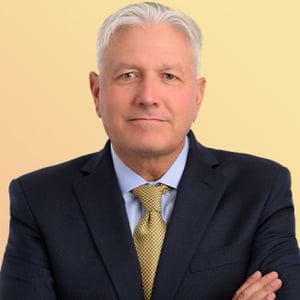
Partner, King & Spalding
A partner in the firm’s Government Advocacy and Public Policy group, J.C. helps companies and trade associations navigate legal, political and regulatory issues commonly associated with doing business in Europe and the United States. He is recognized by clients for his strong, bipartisan relationships with Members of Congress, State Attorneys General, congressional staff and senior government officials across key regulatory and executive branch agencies. He is trusted for his ability to rapidly synthesize complex information and communicate its strategic implications to policymakers and senior institutional stakeholders as well as his candid evaluation of options and potential for success.
As former counsel to the Senate Banking Committee, J.C has developed a deep expertise in financial services, fintech, and emerging technology policy. He has a proven track record of influencing federal legislation, regulatory frameworks, and agency rulemaking impacting digital assets, banking, payments, and technology platforms. J.C. regularly interfaces with financial regulators on a wide array of policy and institution-specific issues, and as co-chair of the firm’s State Attorneys General practice, delivers results on high-impact legal work at the intersection of law, policy and regulation.
J.C. is skilled in developing and executing comprehensive advocacy strategies, shaping legislative language, and positioning clients to successfully navigate complex and evolving policy environments at the federal, state and international levels. As President of the Parliamentary Intelligence-Security Forum, he has briefed policymakers throughout Europe, Africa, Latin America, and the Indo-Pacific. JC also advises international clients seeking to invest, expand, or operate in the United States.
President George W. Bush appointed J.C. to a six-year term as U.S. representative to the World Bank’s International Centre for Settlement of Investment Disputes (ICSID). Mayor Muriel Bowser also appointed J.C. to the District of Columbia; Board of Elections, in which capacity he also served on the U.S. Election Assistance Commission Standards Board. He is currently chairman of the Board of Visitors of The Catholic University Columbus School of Law and President of the Parliamentary Intelligence-Security Forum, where he is a regular speaker on cryptocurrency, artificial intelligence and critical minerals.
Earlier in his career, J.C. established the Boggs Scholarship for Public Service at the University of Delaware in honor of his grandfather and namesake, former U.S. Congressman, Senator and Governor of Delaware, J. Caleb Boggs. He has also served on numerous corporate and non-profit boards, including Jobs for Delaware Graduates (Chairman); The Reserve Trust Company (Vice Chairman), Global Center for Social Entrepreneurship Network (Secretary), Republican National Lawyers Association (President), Kimball Union Academy (Chairman of the Committee on Trustees), and AAA Mid-Atlantic.
J.C. enjoys open-water swimming and is member of U.S. Masters Swimming and the historic Serpentine Swimming Club situated in London's Hyde Park. He has competed in swimming events across all 50 states, ten Canadian provinces and around the world.
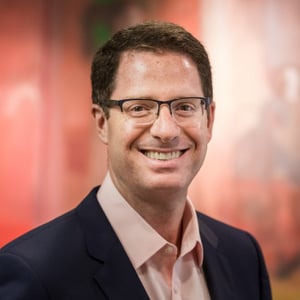
Partner, O’Melveny & Myers
Brian P. Brooks is the Managing Partner of Valor Capital Group. He has served as CEO of the Bitfury Group and CEO of digital asset exchange and marketplace Binance.US.
Mr. Brooks became Acting Comptroller of the Currency upon the resignation of the 31st Comptroller of the Currency Joseph M. Otting as a result of his designation as First Deputy Comptroller by Treasury Secretary Steven T. Mnuchin pursuant to his authority under 12 USC § 4.
As Acting Comptroller of the Currency, Mr. Brooks was the administrator of the federal banking system and chief officer of the Office of the Comptroller of the Currency (OCC). The OCC supervises nearly 1,200 national banks, federal savings associations, and federal branches and agencies of foreign banks that conduct approximately 70% of all banking business in the United States. The mission of the OCC is to ensure that national banks and federal savings associations operate in a safe and sound manner, provide fair access to financial services, treat customers fairly, and comply with applicable laws and regulations.
The Comptroller also serves as a director of the Federal Deposit Insurance Corporation and a member of the Financial Stability Oversight Council and the Federal Financial Institutions Examination Council.
Prior to becoming Acting Comptroller, Mr. Brooks served as Senior Deputy Comptroller and Chief Operating Officer. In this role, he oversaw OCC bank supervision, bank supervision policy, economics, supervisory system and analytical support, systemic risk identification support and specialty supervision, and innovation. He also served as a member of the OCC's Executive Committee and was the Chair of the Technology and Systems Subcommittee, since joining the agency in April 2020.
Prior to joining the OCC, Mr. Brooks served as Chief Legal Officer of Coinbase Global, Inc., where he headed the legal, compliance, audit, investigations, and government relations functions for the company, which served 20 million customers. He held this position since September 2018.
From 2014-2018, Mr. Brooks served as Executive Vice President, General Counsel, and Corporate Secretary of the $3.2 trillion Fannie Mae. Prior to joining Fannie Mae, he served as a Vice Chairman of OneWest Bank, N.A., from 2011 to 2014. Prior to joining OneWest, he served managing partner of the Washington, D.C. office of the global law firm O'Melveny & Myers LLP, where he also served as chair of the firm's financial services practice group. Prior to joining the OCC, Mr. Brooks also served on the Boards of Directors of Avant, Inc. and Fannie Mae, and also served as an advisor to a number of technology startups.
Mr. Brooks holds a bachelor’s degree from Harvard University in government and a law degree from the University of Chicago.
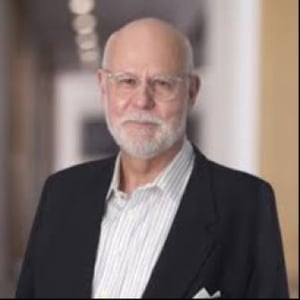
Partner, Foley & Lardner LLP
Patrick Daugherty is a senior corporate and securities law partner of Foley & Lardner LLP, based in Chicago. He also is an adjunct professor of Cornell Law School, where he teaches in residence each Fall Term.
Mr. Daugherty is a member of the Bar in New York, the District of Columbia, North Carolina, Michigan and Illinois. Credentialing organizations have named him “Lawyer of the Year” in both Michigan (2007) and Illinois (2022). A graduate of Northwestern University and of Cornell Law School (Class of 1981), he clerked for SDNY Chief Judge Lloyd F. MacMahon for a year before entering private practice. Mr. Daugherty also served as Counsel to SEC Commissioner Edward H. Fleischman in Washington, D.C., from 1986 to 1989. An Emeritus Member of the American Law Institute, he is the author, co-author or editor of several books and many articles on securities regulation and new financial products.
Mr. Daugherty believes that he was the first lawyer inside the SEC to join the Federalist Society when he became a member in the late 1980s. A mainstay of the Chicago Lawyers Chapter, at the national level of the Society he serves on the Executive Committee for the Financial Services & E-Commerce Practice Group.
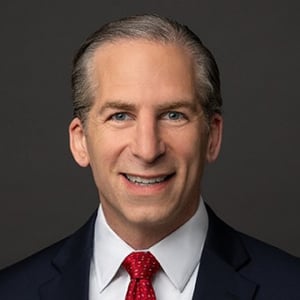
Partner, Cahill Gordon & Reindel LLP; Special Professor of Law, Maurice A. Dean School of Law, Hofstra University
Gary E. Kalbaugh is a nationally recognized leader in commodities, futures, and derivatives law.
Gary is a partner in the New York office of Cahill Gordon & Reindel LLP as well as a Special Professor of Law at the Maurice A. Deane School of Law at Hofstra University, where he teaches derivatives law and banking law.
A preeminent authority in the derivatives field, Gary is the author of the principal treatise Derivatives Law and Regulation (3rd ed. 2021) and serves as Editor-in-Chief of the Futures and Derivatives Law Report, the foremost industry publication. He is a past chair of the New York City Bar Association’s Committee on the Regulation of Futures and Derivatives and has over 15 years of experience as a professor teaching derivatives and banking law.
Gary is the leading derivatives lawyer in the digital assets space, and one of few to truly understand the technical side of emerging financial technology. He serves on the CFTC’s Future of Finance Subcommittee, reflecting his recognized leadership at the intersection of financial regulation and emerging technologies. A frequent speaker, writer, and commentator on derivatives, banking law, artificial intelligence, and digital assets regulation, he has served as conference co-chair for the American Bar Association’s “Artificial Intelligence and Derivatives Market” conference and regularly speaks at major industry conferences on cutting-edge issues in financial regulation and technology. Gary is sought after as a thought leader on the evolving landscape of digital asset regulation and the regulatory implications of AI in financial markets.
At ING, Gary served as Deputy General Counsel and Director, where he chaired swap dealer and security-based swap dealer regulatory committees and provided strategic leadership on U.S., European, and other regulations impacting the organization. He had global responsibility for U.S. derivatives regulatory issues and maintained strong relationships with regulators. Gary also co-developed ING legal’s global artificial intelligence training program and was responsible for U.S. regulatory issues relating to ING’s blockchain-based pilot programs and crypto initiatives.
Previously, Gary served as a lecturer-in-law at Columbia Law School and held senior roles at WestLB, where he was executive director, counsel, and chief U.S. data protection officer and chaired the global Dodd-Frank and underwriting committees. He began his career as an associate at a notable international firm.
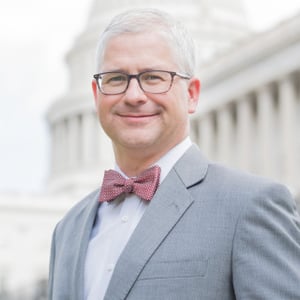
United States Representative, North Carolina's 10th District
Congressman Patrick McHenry is serving his tenth term as the representative for North Carolina's 10th Congressional District which comprises all or parts of nine counties in North Carolina, from the suburbs of Charlotte on Lake Norman to Pisgah National Forest in Burke County.
In the 118th Congress, Congressman McHenry was elected as the Chairman of the House Financial Services Committee, a committee he has served on since he was elected to Congress. As Chairman, he will continue advocating for innovative solutions that increase access to banking services and credit for American families and small businesses.
Prior to serving as the Chairman, Congressman McHenry was elected as the Republican Leader at the beginning of the 116th Congress. He also served as Vice Chairman of the House Financial Services Committee, a position he was appointed to at the beginning of the 114th Congress by then Chairman Jeb Hensarling (TX-05).
In 2015, Congressman McHenry was selected by then House Majority Whip Steve Scalise (LA-01) to be the Chief Deputy Whip. As Chief Deputy Whip, Congressman McHenry directly assisted Majority Whip Scalise by building consensus for the conservative policy agenda of the House Republican Conference. One of his proudest accomplishments as Chief Deputy Whip was the passage of the Tax Cuts and Jobs Act, which helped to fix our nation’s broken tax code and provided much-needed tax relief to American families and businesses.
During the 113th Congress, Congressman McHenry served as Chairman of the House Financial Services Committee’s Oversight and Investigations Subcommittee. In this role, he provided oversight of the Federal Reserve, the Treasury Department, the Securities and Exchange Commission, and other federal financial regulators. Congressman McHenry was previously a member of the House Committee on Oversight and Government Reform.
In addition to his leadership roles on the Financial Services Committee, Congressman McHenry has successfully passed important legislation into law that helps entrepreneurs and startup investing. In the 114thCongress, Congressman McHenry authored the “RAISE Act” (Reforming Access for Investments in Startup Enterprises), which was signed into law by President Obama, providing the means for startup employees to sell their stock options to private investors.
Additionally, Congressman McHenry authored the primary legislation to legalize equity-based crowdfunding in the United States. The crowdfunding language he first authored in 2011 was eventually included in the JOBS Act which President Obama signed into law in April 2012. In recognition of his work supporting crowdfunding, Congressman McHenry was presented with the 2013 “Crowdfunding Visionary Award” by the Global Crowdfunding Convention. Congressman McHenry was also awarded the Crowdfunding Leadership Award by the University of California at Berkeley Fung Institute’s Program for Innovation in Entrepreneurial Finance in 2013.
Congressman McHenry’s interest in crowdfunding and capital formation more broadly developed as a child, when his father attempted to grow a small business but struggled for financing. It was this experience—and the lack of small business financing in rural western North Carolina—that drove Congressman McHenry to become a leader on crowdfunding, capital formation, and other forms of disruptive finance. Recently this has expanded to encompass fintech as he works with industry leaders to discover innovative ways to combine finance and technology with the goal of expanding access to capital for America’s entrepreneurs and small businesses.
Throughout his career, Congressman McHenry has been a vocal and effective advocate for the men and women who wear the uniform of our country. He received awards from the North Carolina Chapters of the American Legion and Marine Corps League for his extensive work in bringing a veterans’ health care clinic to his district after nearly two decades of delay. The National Guard presented Patrick McHenry with the Charles Dick Medal of Merit for his exceptional service to the North Carolina National Guard.
Congressman McHenry has been recognized as a leader of the conservative movement in America. Having never voted for a tax increase in his career, Congressman McHenry is continually recognized as a “Hero of the Taxpayer” by Americans for Tax Reform.
Congressman McHenry is the recipient of several additional awards including: the National Association of Manufacturing’s “Manufacturing Legislative Excellence” Award, the Small Business and Entrepreneurship Council’s “Small Business Champion” Award, the U.S. Chamber of Commerce’s “Spirit of Enterprise” Award, the 60 Plus Association’s “Guardian of Seniors’ Rights” Award, the Family Research Council’s “True Blue” Award, and Citizens Against Government Waste’s “Taxpayer Hero” Award. In 2009 he was recognized by Time Magazine as one of the “40 Under 40,” a list of rising stars in American politics.
Most importantly, Congressman McHenry continues to listen to the voters of the 10th District and act as their voice in Washington. His main focus is to provide the highest level of constituent services at home in western North Carolina.
Prior to being elected to Congress in 2004 at the age of 29, Congressman McHenry represented the 109thDistrict in the North Carolina House of Representatives. He also served as Special Assistant to the Secretary of the U.S. Department of Labor, a post he was appointed to by President George W. Bush.
Congressman McHenry is a graduate of Ashbrook High School in Gastonia, N.C. and Belmont Abbey College, where he earned a Bachelor of Arts in History. Congressman McHenry and his wife Giulia live in Denver, N.C. and worship at Holy Spirit Church. They are the parents of two daughters, Cecelia Rose and Therese Anne (who goes by Rese), and one son, Peregrine Callan (who goes by Perry).
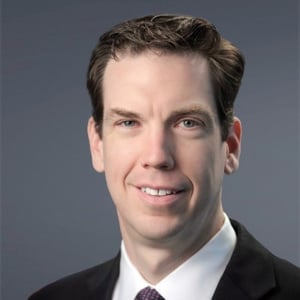
Partner, Fusion Law, PLLC
Paul is the founding partner of Fusion Law, PLLC. He has extensive experience with state, federal, and global regulators building coalitions and implementing policies to promote innovation in financial services. He is responsible for designing and implementing the first state (Arizona) and federal (CFPB) FinTech sandboxes in the United States. He also designed the CFPB no-action letter and trial disclosure policies. He helped found the first global regulatory innovation coalition (Global Financial Innovation Network) and led the founding of the first U.S. regulatory innovation coalition (American Consumer Financial Innovation Network). He served on the Financial Stability Oversight Council subcommittee on digital assets. He also has drafted state-level laws on blockchain and utility tokens.
Paul also has significant enforcement and litigation experience. He led many multi-state consumer protection enforcement matters as Civil Litigation Division Chief at the Arizona Attorney General’s Office.
Prior to his government service, Paul practiced law in the areas of securities litigation and transactional work for approximately six years at two well-known law firms. He also clerked on the U.S. Court of Appeals for the Fourth Circuit.
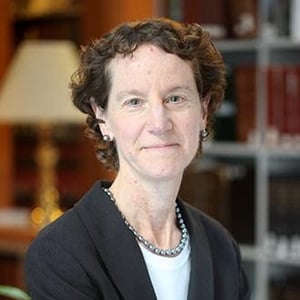
Partner, Arnold & Porter
Debbie Feinstein heads the firm's Global Antitrust group, and brings a wealth of experience to her practice in advising clients on a range of antitrust challenges before US antitrust authorities. She recently re-joined the firm from the US Federal Trade Commission (FTC), where she was Director of the Bureau of Competition. In that capacity, she was responsible for supervising the investigation and enforcement of the US antitrust laws against anticompetitive mergers and conduct. During her tenure from 2013 to 2017, the FTC had substantial litigation success and a number of major merger wins, including challenges to Sysco Corp.'s acquisition of rival US Foods Inc., and Staples Inc.'s merger with Office Depot Inc. She had previously served at the FTC from 1989 to 1991 as Assistant to the Director of the Bureau of Competition and Attorney Advisor.
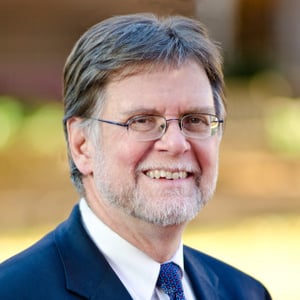
Global Competition Professor of Law and Policy, George Washington University Law School
Before joining the law school in 1999, William E. Kovacic was the George Mason University Foundation Professor at the George Mason University School of Law. From January 2006 to October 2011, he was a member of the Federal Trade Commission and chaired the agency from March 2008 to March 2009. He was the FTC’s General Counsel from June 2001 to December 2004. In 2011 he received the FTC’s Miles W. Kirkpatrick Award for Lifetime Achievement.
Since August 2013, Professor Kovacic has served as a Non-Executive Director with the United Kingdom’s Competition and Markets Authority. From January 2009 to September 2011, he was Vice-Chair for Outreach for the International Competition Network. He has advised many countries and international organizations on antitrust, consumer protection, government contracts, and the design of regulatory institutions.
At GW, Professor Kovacic has taught antitrust, contracts, and government contracts. He is co-editor (with Ariel Ezrachi) of the Journal of Antitrust Enforcement. His publications since returning to GW in 2011 include “Good Agency Practice and the Implementation of Competition Law” in European Yearbook of International Economic Law (Christoph Hermann ed. 2013); “Antitrust in High-Tech Industries: Improving the Federal Antitrust Joint Venture” in George Mason Law Review (2012); “Behavioral Economics: Implications for Regulatory Agency Behavior” in Journal of Regulatory Economics (2012) (with James Cooper); “Competition Agency Design: What’s on the Menu?” in European Competition Journal (2012) (with David Hyman); “Plus Factors and Agreement in Antitrust Law” in Michigan Law Review (2011) (with Robert Marshall, Leslie Marx & Halbert White); “Ensuring Integrity and Competition and Public Procurement Markets: A Dual Challenge for Good Governance” in The WTO Regime on Government Procurement: Challenge and Reform (Sue Arrowsmith & Robert Anderson, eds. 2011) (with Robert Anderson & Anna Caroline Mueller); “The International Competition Network: Its Past, Current, and Future Role” inMinnesota Journal of International Law (2011) (with Hugh Hollman); “The William Humphrey and Abram Myers Years: The FTC from 1925 to 1929” in Antitrust Law Journal (2011) (with Marc Winerman); Professor Kovacic also is co-author (with Andrew Gavil & Jonathan Baker) of Antitrust Law in Perspective: Cases, Concepts and Problems in Competition Policy (2d ed. 2008) and Antitrust Law & Economics in a Nutshell (5th ed. 2004) (with Ernest Gellhorn & Stephen Calkins).
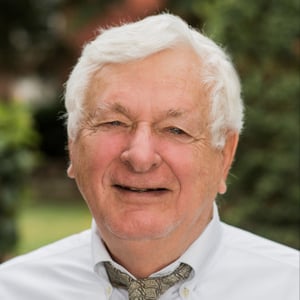
Lyle T. Alverson Professor of Law, George Washington University Law School
Professor Pierce is author of over twenty books and 130 articles on administrative law, government regulation, and the effects of various forms of government intervention on the performance of markets. His books and articles have been cited in hundreds of judicial opinions, including over a dozen opinions of the U.S. Supreme Court.
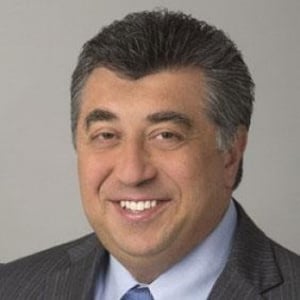
Counsel, Cadwalader, Wickersham & Taft LLP; Senior Competition Counsel, TechFreedom
Bilal Sayyed represents clients before the Federal Trade Commission (FTC) and Department of Justice (DOJ) in significant merger, civil and criminal antitrust matters. A significant portion of his practice involves representing investment funds on antitrust and Hart-Scott-Rodino (HSR) Act compliance matters; he has also provided expert witness services related to HSR compliance. Bilal also counsels clients before the FTC in consumer protection and privacy investigations. He maintains an active amicus and appellate brief writing practice in antitrust litigation and antitrust merger matters.
Prior to joining Cadwalader, Bilal was the Director of the FTC’s Office of Policy Planning (OPP) (2018-2021). In that role, he provided legal and policy advice to the Chairman and Commissioners on antitrust and consumer protection matters and worked closely with the senior and career leadership of the FTC’s Bureaus of Competition, Consumer Protection, and Economics. Bilal previously served as an Attorney Advisor to FTC Chairman Timothy J. Muris from 2001 to 2004. In that role, Bilal advised the Chairman on matters involving a wide spectrum of industries, including chemical and mining, petroleum and natural gas, health care and pharmaceutical, defense and transportation, gaming, various consumer products and retail operations, and professional associations and standard-setting organizations.
Bilal has taught antitrust and competition law at the George Mason University School of Law since 2011.
Bilal received his B.A. from Case Western Reserve University, and a J.D. from George Mason University School of Law. He is admitted to practice in the District of Columbia and the State of New York, as well as before the U.S. District Courts for the District of Colorado and the District of Columbia, the U.S. Court of Appeals for the District of Columbia Circuit, the Fifth Circuit, the Ninth Circuit, and the U.S. Supreme Court.
Bilal is the host of Rethinking Antitrust, a podcast published by TechFreedom that examines the economics, institutions, law, legislation, and policy goals of antitrust enforcement.

Founding Partner, Lodestar Law and Economics PLLC
Josh is the founder of Lodestar Law and Economics, PLLC. On January 1, 2013, the U.S. Senate unanimously confirmed Wright as a Commissioner of the Federal Trade Commission (FTC). He is a leading scholar in antitrust law, economics, intellectual property, regulation, and consumer protection, and has published more than 100 articles and book chapters, co-authored a leading antitrust casebook, and edited several book volumes focusing on these issues. Commentators have recognized Wright as “widely considered his generation’s greatest mind on antitrust law,” and his academic work ranks him as one of the most cited antitrust academics in the world. Wright was also awarded the Paul M. Bator Award by the Federalist Society in 2014 to “an academic who demonstrated excellence in legal scholarship, a commitment to teaching, a concern for students, and who has made a significant public impact.” Wright also served as the Executive Director of the Global Antitrust Institute, the world’s premiere academic institute focused upon antitrust education for judges and regulators and has taught hundreds of judges and thousands of regulators from dozens of countries.
Wright’s practice focuses upon helping clients solve complex competition, consumer protection, and regulatory problems by providing legal and economic analysis, strategic advice and counseling, and economic expert testimony.

Senior Fellow and Director of Constitutional Studies, Manhattan Institute
Ilya Shapiro is a senior fellow and director of constitutional studies at the Manhattan Institute and a contributing editor of City Journal. Previously he was executive director and senior lecturer at the Georgetown Center for the Constitution, and before that a vice president of the Cato Institute.
Shapiro is the author of Lawless: The Miseducation of America’s Elites (2025) and Supreme Disorder: Judicial Nominations and the Politics of America’s Highest Court (2020), coauthor of Religious Liberties for Corporations? (2014), and editor of 11 volumes of the Cato Supreme Court Review (2008-18). He has contributed to a variety of academic, popular, and professional publications, including the Wall Street Journal, Harvard Journal of Law & Public Policy, Washington Post, Los Angeles Times, USA Today, National Review, and Newsweek. He also regularly provides commentary for various media outlets, writes the Shapiro’s Gavel newsletter on Substack, and once appeared on the Colbert Report.
Shapiro has testified many times before Congress and state legislatures and has filed more than 500 amicus curiae “friend of the court” briefs in the Supreme Court. He lectures regularly on behalf of the Federalist Society, is a member of the board of fellows of the Jewish Policy Center, was an inaugural Washington Fellow at the National Review Institute, and has been an adjunct law professor at the George Washington University and University of Mississippi. He is also the chairman of the board of advisers of the Mississippi Justice Institute, a barrister in the Edward Coke Appellate Inn of Court, and a former member of the Virginia Advisory Committee to the U.S. Commission on Civil Rights.
Earlier in his career, Shapiro was a special assistant/adviser to the Multi-National Force in Iraq on rule-of-law issues and practiced at Patton Boggs and Cleary Gottlieb. Before entering private practice, he clerked for Judge E. Grady Jolly of the U.S. Court of Appeals for the Fifth Circuit. He holds an AB from Princeton University, an MSc from the London School of Economics, and a JD from the University of Chicago Law School.

Professor of Law, Antonin Scalia Law School, George Mason University
ILYA SOMIN is Professor of Law at George Mason University and the B. Kenneth Simon Chair in Constitutional Studies at the Cato Institute. His research focuses on constitutional law, property law, democratic theory, federalism, and migration rights. He is the author of Free to Move: Foot Voting, Migration, and Political Freedom (Oxford University Press, revised and expanded edition, 2022), Democracy and Political Ignorance: Why Smaller Government is Smarter (Stanford University Press, revised and expanded second edition, 2016), and The Grasping Hand: Kelo v. City of New London and the Limits of Eminent Domain (University of Chicago Press, 2015, rev. paperback ed., 2016), coauthor of A Conspiracy Against Obamacare: The Volokh Conspiracy and the Health Care Case (Palgrave Macmillan, 2013), and co-editor of Eminent Domain: A Comparative Perspective (Cambridge University Press, 2017). Democracy and Political Ignorance has been translated into Italian and Japanese.
Somin’s work has appeared in numerous scholarly journals, including the Yale Law Journal, Stanford Law Review, Northwestern University Law Review, Georgetown Law Journal, Critical Review, and others. Somin has also published articles in a variety of popular press outlets, including the New York Times, Washington Post, Wall Street Journal, Los Angeles Times, CNN, NBC, The Atlantic, USA Today, Boston Globe, US News and World Report, South China Morning Post, National Law Journal and Reason. He has been quoted or interviewed by the New York Times, Washington Post, Wall Street Journal, Time, Newsweek, The Economist, the Christian Science Monitor, the Financial Times, The Guardian, the Associated Press, CBS, MSNBC, NPR, BBC, Reuters, the Canadian Broadcasting Corporation, the Australian Broadcasting Corporation, Radio Free Europe/Radio Liberty, Al Jazeera, and the Voice of America, among other media.
Somin’s writings have been cited in decisions by the United States Supreme Court, multiple state supreme courts and lower federal courts, and the Supreme Court of Israel. He is co-counsel for the plaintiffs in VOS Selections, Inc. v. Trump, a case challenging the constitutionality of President Trump’s “Liberation Day” tariffs. Somin has testified on the use of drones for targeted killing in the War on Terror before the US Senate Judiciary Subcommittee on the Constitution, Civil Rights, and Human Rights. In 2009, he testified on property rights issues at the United States Senate Judiciary Committee confirmation hearings for Supreme Court Justice Sonia Sotomayor. Somin writes regularly for the popular Volokh Conspiracy law and politics blog, now affiliated with Reason magazine (previously affiliated with the Washington Post from 2014 to 2017). From 2006 to 2013, he served as Co-Editor of the Supreme Court Economic Review, one of the country’s top-rated law and economics journals.
Somin has served as a visiting professor at the University of Pennsylvania Law School. He has also been a visiting professor or scholar at the Georgetown University Law Center, the University of Hamburg, Germany, the University of Torcuato Di Tella in Buenos Aires, Argentina, Uriel Reichman University in Israel, and Zhengzhou University in China. He is a University Affiliate of the Schar School of Policy and Government at George Mason University, and an affiliated faculty member of the George Mason University Institute for Immigration Research. Before joining the faculty at George Mason, Somin was the John M. Olin Fellow in Law at Northwestern University Law School in 2002-2003. In 2001-2002, he clerked for the Hon. Judge Jerry E. Smith of the U.S. Court of Appeals for the Fifth Circuit. Professor Somin earned his B.A., Summa Cum Laude, at Amherst College, M.A. in Political Science from Harvard University, and J.D. from Yale Law School.

Litigation Update: Deemar v. Evanston/Skokie School District 65
Litigation Update: Deemar v. Evanston/Skokie School District 65
Kimberly Hermann
It is widely known that schools have instituted equity-focused policies, teacher training, and curriculum. Critics...
Litigation Update: Deemar v. Evanston/Skokie School District 65
Kimberly Hermann
It is widely known that schools have instituted equity-focused policies, teacher training, and curriculum. Critics...
Is DEI on Its Way Out?
David Bernstein, Kimberly Hermann, Kenneth L. Marcus, Yascha Mounk, Nicole Neily
Due to impending inclement weather this event has been converted to a webinar. Please...
Open Minds: Prof. Randy Barnett & Prof. Joshua Kleinfeld Part II
Randy E. Barnett, Joshua Kleinfeld
In Part Two of Open Minds with Prof. Randy Barnett and Prof. Joshua Kleinfeld, Prof....
Explainer 69 - Discussing the Anti-Semitism Awareness Act
David Bernstein, Eugene Volokh
In this episode of the Fourth Branch Explainer podcast, Prof. Eugene Volokh, from UCLA Law School,...
Will Congress Create a Statutory Framework for Digital Asset Regulation?
J.C. Boggs, Brian P. Brooks, Patrick Daugherty, Gary Kalbaugh, Patrick McHenry, Paul N. Watkins
Will the 118th Congress succeed in creating a statutory framework for effective regulation of cryptocurrencies? ...
A Roundtable on Recent Developments at the FTC
Debbie Feinstein, William Kovacic, Richard J. Pierce, Bilal Sayyed, Joshua D. Wright
Recent months have seen a flurry of notable developments at the Federal Trade Commission, including...
Sanctuary City & State Litigation Update: What Happens When Federal and Local Enforcement Priorities Conflict?
Ilya Shapiro, Ilya Somin
The litigation over California's "sanctuary state" law raises important federalism questions that go far beyond...
Report Finds Strong Potential for Foot Patrol as a Policing Change Agent
September 14, 2016 – Washington, D.C. – Arguably, nothing is more important in policing today than...