

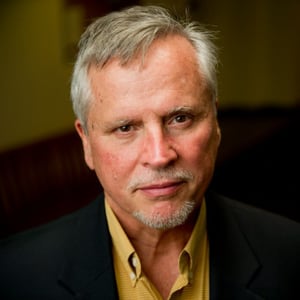
Partner, Steptoe & Johnson LLP
Stewart Baker is a partner in the law firm of Steptoe & Johnson in Washington, D.C. From 2005 to 2009, he was the first Assistant Secretary for Policy at the Department of Homeland Security. His law practice covers cybersecurity, data protection, homeland security, and travel and foreign investment regulation; he has been awarded one patent.
Mr. Baker has been General Counsel of the National Security Agency and General Counsel of the commission that investigated WMD intelligence failures prior to the Iraq war. He is the author of Skating on Stilts, a book on terrorism, cybersecurity, and other technology issues; he also hosts the weekly Cyberlaw Podcast.
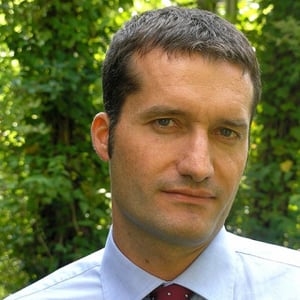
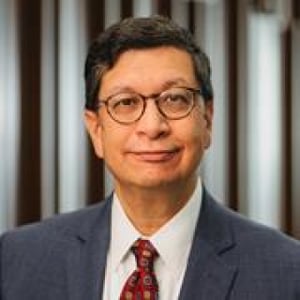
Professor of International and European Law, University Grenoble Alpes
Theodore Christakis is Professor of International and European Law at University Grenoble Alpes, Director of Research for Europe with the Cross-Border Data Forum, and a former Distinguished Visiting Fellow at the New York University Cybersecurity Centre. He is also Chair on the Legal and Regulatory Implications of Artificial Intelligence with the Multidisciplinary Institute on AI (ai-regulation.com), Director of the Centre for International Security and European Studies, and Co-Director of the Grenoble Alpes Data Institute. He is a honorary member of the Institut Universitaire de France.
At the national level, he has exercised responsibilities on digital issues as an active member of the French National Committee for Digital Ethics (created in December 2019 at the request of the French Prime Minister) and as a past member of the French National Digital Council, an independent advisory commission of the French government (2018-2020).
He has published or co-edited 11 books, he is author or co-author of more than 90 academic articles and book chapters, and he has been invited to give lectures and present his work at conferences, workshops, and seminars on over a hundred occasions in more than 31 different countries.
As an international expert he has advised governments, international organisations, and private companies on issues concerning international and European law, cybersecurity, artificial intelligence, and data protection law. He also has experience working as external Data Protection Officer (GDPR compliance) for tech companies.
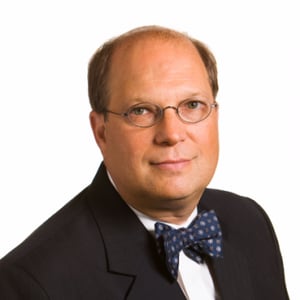
Professorial Lecturer in Law, The George Washington University
Paul Rosenzweig is an accomplished writer and speaker with a national reputation in cyber security and homeland security. He is the founder of Red Branch Consulting PLLC, a homeland security consulting company. He is also a Senior Advisor to The Chertoff Group. Mr. Rosenzweig formerly served as Deputy Assistant Secretary for Policy in the Department of Homeland Security.
He is a Professorial Lecturer in Law at George Washington University, and a Senior Fellow in the Tech, Law & Security Program at the American University, Washington College of Law. He serves as an advisor to and former member of the American Bar Association Standing Committee on Law and National Security, and a Contributing Editor of the Lawfare blog. He is a member of the ABA Cybersecurity Legal Task Force and of the United States Court of Appeals for the District of Columbia Circuit Advisory Committee on Admissions and Grievances. He serves, as well, as a Hearing Committee Member of the District of Columbia Board of Professional Responsibility. In 2011 he was a Carnegie Fellow in National Security Journalism at the Medill School of Journalism, Northwestern University.
Mr. Rosenzweig is a cum laude graduate of the University of Chicago Law School. He has an M.S. in Chemical Oceanography from the Scripps Institution of Oceanography, University of California at San Diego and a B.A from Haverford College. Following graduation from law school he served as a law clerk to the Honorable R. Lanier Anderson, III of the United States Court of Appeals for the Eleventh Circuit.
He is the author of Cyber Warfare: How Conflicts in Cyberspace are Challenging America and Changing the World and of three video lecture series from The Great Courses, Thinking About Cybersecurity: From Cyber Crime to Cyber Warfare; The Surveillance State: Big Data, Freedom, and You; and Investigating American Presidents.
He is the co-author (with James Jay Carafano) of Winning the Long War: Lessons from the Cold War for Defeating Terrorism and Preserving Freedom and co-editor (with Jill D. Rhodes and Robert S. Litt) of the Cybersecurity Handbook (3rd ed.). He is also co-editor (with Timothy McNulty and Ellen Shearer) of two books, Whistleblowers, Leaks and the Media: The First Amendment and National Security, and National Security Law in the News: A Guide for Journalists, Scholars, and Policymakers. Mr. Rosenzweig is a member of the Literary Society of Washington.
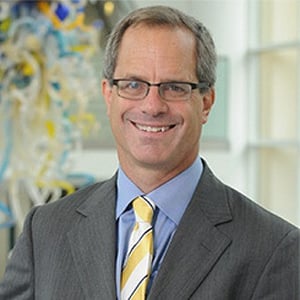
Elizabeth and Thomas Holder Chair, Scheller College of Business, Georgia Institute of Technology
Peter Swire has been a leading privacy and cyberlaw scholar, government leader, and practitioner since the rise of the Internet in the 1990’s. He came to the Georgia Institute of Technology in 2013, where he is the Elizabeth and Tommy Holder Chair in the Scheller College of Business, and Professor in the School of Cybersecurity and Privacy. He is senior counsel with the law firm of Alston & Bird LLP.
Swire served as one of five members of President Obama’s Review Group on Intelligence and Communications Technology. Prior to that, he was co-chair of the global Do Not Track process for the World Wide Web Consortium. He is a Senior Fellow with the Future of Privacy Forum, and has served on the National Academy of Sciences & Engineering Forum on Cyber Resilience.
Under President Clinton, Swire was the Chief Counselor for Privacy, in the U.S. Office of Management and Budget, the first person to have U.S. government-wide responsibility for privacy policy. Under President Obama, he was Special Assistant to the President for Economic Policy.
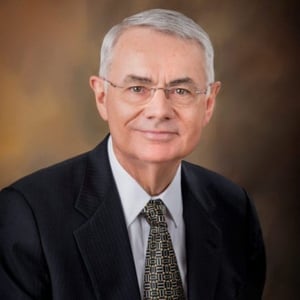
Distinguished University Professor of Global Affairs and Director, Center for Global Economic and Environmental Opportunity, University of Central Florida
James Bacchus is the Distinguished University Professor of Global Affairs and Director of the Center for Global Economic and Environmental Opportunity at the University of Central Florida. He was a founding judge and was twice the Chairman – the chief judge – of the highest court of world trade, the Appellate Body of the World Trade Organization in Geneva, Switzerland. He is a former Member of the Congress of the United States, from Florida, and also a former international trade negotiator for the United States. He is a Global Fellow of the Centre for International Governance Innovation in Canada and an Adjunct Scholar of the Cato Institute in Washington, D.C. He is the Pao Yue – Kong Chair Professor at Zhejiang University in Hangzhou, China. He served on the High-Level Advisory Panel to the Conference of Parties of the United Nations Framework Convention on Climate Change, chairs the global Commission on Trade and Investment Policy of the International Chamber of Commerce, and chaired the global sustainability council of the World Economic Forum. For more than fourteen years, he chaired the global practice of the largest law firm in the United States and one of the largest in the world. Professor Bacchus is the author of the books Trade and Freedom, published by Cameron May in London in 2004, and The Willing World: Shaping and Sharing a Sustainable Global Prosperity, published by Cambridge University Press in 2018. The Financial Times named The Willing World one of the “Best Books of 2018.” He is a frequent writer in leading publications and a frequent speaker on prominent platforms worldwide on numerous topics relating to international law and international political economy.
Professor of Law, Northeastern University School of Law
Professor Baker teaches disability discrimination law, negotiations and a new course on human rights, intellectual property, and access to medicines. He taught and consulted in South African law schools and law school clinics between 1997-2012. Professor Baker is an honorary research fellow at the University of KwaZulu Natal in Durban, South Africa.
Professor Baker is also a senior policy analyst for Health GAP (Global Access Project) and is actively engaged in campaigns for universal access to treatment, prevention, and care for people living with HIV/AIDS, especially expanded and improved medical treatment. More recently he has been working on accelerating research on and equitable global access to vaccines, medicines, and diagnostics to respond to the COVID-19 pandemic. He has written and consulted extensively on intellectual property rights, trade, investor-state dispute settlement, access to medicines, and medicines regulatory policy, including with the African Union, NEPAD, South Africa, Uganda, ASEAN, Thailand, Indonesia, Brazil, Venezuela, CARICOM, UK DfID, the World Health Organization, the Millennium Development Goals Project, the Global Fund to Fight AIDS, Tuberculosis and Malaria, Open Society Institute, UNAIDS, UNDP, Unitaid, the Medicines Patent Pool, the Global Commission on HIV and the Law and others. He has served as a key, alternative board member and board member of the NGO delegation to Unitaid, which acts to improve market dynamics and early market entry of medicines and diagnostics needed to address HIV/AIDS, TB, Hepatitis C and malaria. He presently is a civil society representative to the Therapeutics Pillar of the Access to COVID-19 Tools Acclerator.
Professor Baker also works on policy issues concerning the Global Fund and the US PEPFAR Program, and how those priority disease initiatives might contribute more broadly to improving health care delivery in developing countries. Finally, he analyzes resource needs for global health, innovative financing mechanisms and IMF macroeconomic policies that restrict increased government and donor spending on health and education in developing countries.
James T. Jensen Endowed Professor for Transactional Law & Director of the Program on Intellectual Property and Technology Law, University of Utah S.J. Quinney College of Law
Jorge L. Contreras is a Distinguished University Professor, the James T. Jensen Endowed Professor for Transactional Law and Director of the Program on Intellectual Property and Technology Law. He teaches and researches in the areas of intellectual property, property law, technical standardization, antitrust and science policy. In 2020 he received the University of Utah's Distinguished Research Award and is an elected member of the American Law Institute. He has testified before the U.S. Senate and House Subcommittees on Intellectual Property, and was awarded the Rossman Memorial Award by the Patent & Trademark Office Society in 2022.
Professor Contreras has written or edited fourteen books and published more than 150 scholarly articles and chapters. His book, The Genome Defense: Inside the Epic Legal Battle to Determine Who Owns Your DNA (NY: Hachette/Algonquin, 2021), has been praised by the NY Times, Wall St. Journal, Nature and numerous other outlets, and was named "Best Patent Law Book of the Year" by the international IPKat blog. His scholarly articles have appeared in leading scientific, legal and policy journals including Science, Nature, NYU Law Review, Georgetown Law Journal, Iowa Law Review and Antitrust Law Journal. He has been quoted by media outlets around the world including the New York Times, Wall Street Journal, Economist, Bloomberg, Washington Post, Korea Times and has been featured on C-SPAN, NPR, PRI and BBC shows and a range of podcasts and online news programs.
Professor Contreras currently serves Co-Chair of the Interdisciplinary Division of the ABA's Section of Science & Technology Law and a member of the Advisory Board of the American Antitrust Institute. He has previously served as Co-Chair of the National Conference of Lawyers and Scientists, a member of the National Academy of Sciences (NAS) Committee on Intellectual Property Management in Standard-Setting Processes, the National Institutes of Health (NIH) Council of Councils, the Advisory Council of NIH's National Center for the Advancement of Translational Sciences (NCATS), the National Advisory Council for Human Genome Research, and the Intellectual Property Rights Policy Committee of the American National Standards Institute (ANSI). In 2021 he served as Chair of the Art Law Section of the Association of American Law Schools (AALS) and currently serves as Chair of the AALS Remedies Section.
Professor Contreras has previously taught at American University Washington College of Law and Washington University in St. Louis. Prior to entering academia he was a partner at the international law firm Wilmer Cutler Pickering Hale and Dorr LLP, where he practiced transactional and intellectual property law in Boston, London and Washington DC. He is a cum laude graduate of Harvard Law School (JD) and Rice University (BA, BSEE) and clerked for Chief Justice Thomas R. Philips of the Texas Supreme Court.
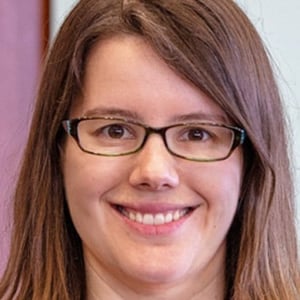
Assistant Professor, Saint Louis University School of Law
Rutschman has published and presented widely on topics related to health law, food and drug regulation, intellectual property, innovation in the life sciences, and law and technology. Recent presentations have covered topics related to vaccines and other biotechnologies, healthcare blockchain, e-health and artificial intelligence in medicine. Her legal scholarship has appeared or is forthcoming in UCLA Law Review, Emory Law Journal, Arizona Law Review, Yale Law Journal Forum, University of Chicago Legal Forum, Michigan Law Review Online, Annals of Health Law and Duke Law and Technology Review, among others. Her peer-reviewed work has appeared in the Journal of Law and the Biosciences, the American Journal of Infection Control and Emerging Infectious Diseases. Her commentary pieces have been published by The Huffington Post and The Conversation and reprinted in Scientific American, Newsweek Japan and newspapers around the U.S., including the Chicago Tribune. Her ongoing book, Vaccines as Technology: Innovation, Barriers and the Public Interest, is under contract with Cambridge University Press.
CoFounder, RightsClick
Steven’s extensive background in IP law and policy began as an attorney for the U.S. Senate Judiciary Committee, after which, he served as senior counsel for Policy and International Affairs at the U.S. Copyright Office and then as Chief Intellectual Property Counsel for the Global Intellectual Property Center of the U.S. Chamber of Commerce. Before co-founding RightsClick, he started the IP consultancy Sentinel Worldwide, and teaches copyright law at George Washington University Law School.
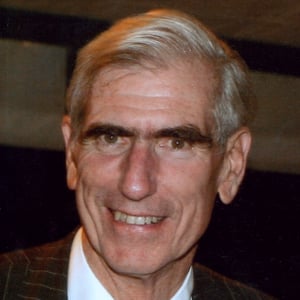
Founding Partner, Boyden Gray & Associates
Ambassador C. Boyden Gray is the founding partner of Boyden Gray & Associates, a law and strategy firm in Washington, D.C., focused on constitutional and regulatory issues.
Mr. Gray worked in the White House for twelve years, first as counsel to the Vice President during the Reagan administration and then as White House Counsel to President George H.W. Bush. In the Reagan administration, he was Counsel to the Presidential Task Force on Regulatory Relief, for which he wrote the original Executive Order 12291 requiring cost-benefit analysis and White House review of regulations (later renumbered as current EO 12866). In the George H.W. Bush Administration, Mr. Gray was in charge of judicial selection and was also instrumental in the enactment of the Clean Air Act Amendments of 1990, the Energy Policy Act of 1992, and a cap-and-trade system for acid rain emissions. In 1993, he received the Presidential Citizens Medal. Under President George W. Bush, Mr. Gray was U.S. Ambassador to the European Union and U.S. Special Envoy to Europe for Eurasian Energy.
Mr. Gray practiced law for 25 years at the law firm of Wilmer, Cutler & Pickering and was chairman of the Administrative Law and Regulatory Practice Section of the American Bar Association from 2000 to 2002. Early in his career, Mr. Gray helped to develop the Business Roundtable and served as its first counsel. He is an adjunct professor at Antonin Scalia Law School and a former adjunct professor at NYU Law School (teaching energy and environmental law). Mr. Gray is on the Board of Directors of the Atlantic Council, the Federalist Society, Reason Foundation, and the Trust for the National Mall.
Mr. Gray earned his A.B. magna cum laude from Harvard, where he was an editor of the Crimson, and his J.D. with high honors from the University of North Carolina at Chapel Hill, where he was editor-in-chief of the Law Review. Mr. Gray served in the United States Marine Corps, and after law school, he clerked for Earl Warren, Chief Justice of the United States Supreme Court.
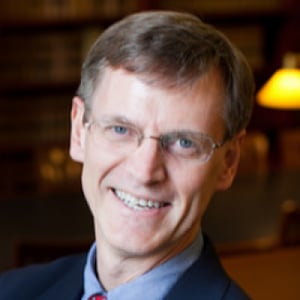
Manatt/Ahn Professor of International Law, The George Washington University Law School
Sean D. Murphy teaches, writes, and practices in the fields of public international law and U.S. foreign relations law.
Before joining The George Washington University Law School faculty in 1998, Professor Murphy served as legal counselor at the U.S. Embassy in The Hague, arguing several cases before the International Court of Justice and representing the U.S. government in matters before the International Criminal Tribunal for the former Yugoslavia. He also served as U.S. agent to the Iran-U.S. Claims Tribunal, arguing cases on behalf of the U.S. government and providing advice to U.S. nationals appearing before that tribunal. Between 1987 and 1995, he served in the U.S. Department of State Office of the Legal Adviser, primarily advising on matters relating to oceans and international environmental law, international claims, and international humanitarian law. Since leaving the U.S. Government, Professor Murphy has represented several countries in international courts and tribunals, including Ethiopia, Jordan, Kosovo, North Macedonia, Suriname, and the United States, has served as an arbitrator in inter-State and investor-State arbitrations, and is currently an ad hoc judge on the International Tribunal for the Law of the Sea.
Professor Murphy has published numerous articles on international law; his article on international environmental liability won the American Journal of International Law (AJIL) 1994 Deak Prize for best scholarship by a younger author. His book Humanitarian Intervention: The United Nations in an Evolving World Order won the 1997 American Society of International Law 1997 certificate for preeminent contribution to creative scholarship. His most recent books are Principles of International Law (3d ed. 2018); International Law: Cases and Materials (7th ed. 2018) (with Damrosch); International Law relating to Islands (2017); Foreign Relations and National Security Law: Cases, Materials and Simulations (5th ed. 2017) (with Swaine and Wuerth); and Litigating War: Arbitration of Civil Injury by the Eritrea-Ethiopia Claims Commission (2013) (with Kidane and Snider).
Professor Murphy is a Member of the U.N. International Law Commission, and was appointed its special rapporteur for crimes against humanity. Professor Murphy served for ten years on the AJIL Board of Editors and, during 2018-20, as President of the American Society of International Law.
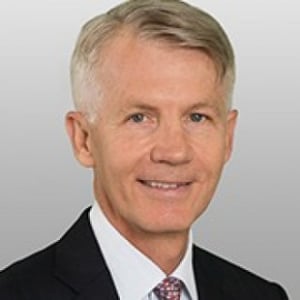
Senior Of Counsel, Covington & Burling LLP
With wide-ranging experience working on national security issues in the White House, the State Department, and the U.S. Senate and House of Representatives, Stephen Rademaker helps clients navigate international policy, sanctions, and CFIUS challenges.
Among his accomplishments in public service, Mr. Rademaker had lead responsibility, as a U.S. House staffer, for drafting the legislation that created the U.S. Department of Homeland Security. Serving as an Assistant Secretary of State from 2002 through 2006, he headed at various times three bureaus of the State Department, including the Bureau of Arms Control and the Bureau of International Security and Nonproliferation. He directed the Proliferation Security Initiative, as well as nonproliferation policy toward Iran and North Korea, and led strategic dialogues with Russia, China, India, and Pakistan. He also headed U.S. delegations to numerous international conferences, including the 2005 Review Conference of the Parties to the Treaty on the Nonproliferation of Nuclear Weapons.
Mr. Rademaker concluded his government career on Capitol Hill in 2007, serving as Senior Counsel and Policy Director for National Security Affairs for then-Senate Majority Leader Bill Frist (R-TN). In this role, he helped manage all aspects of the legislative process relating to foreign policy, defense, intelligence and national security. He earlier served as Chief Counsel for the House Select Committee on Homeland Security of the U.S. House of Representatives and as Deputy Staff Director and Chief Counsel of the House Committee on International Relations.
During President George H. W. Bush’s administration, Mr. Rademaker served as General Counsel of the Peace Corps, Associate Counsel to the President in the Office of White House Counsel, and as Deputy Legal Adviser to the National Security Council. After leaving government in 2007, he continued to serve as the U.S. representative on the United Nations Secretary-General’s Advisory Board on Disarmament Matters, and he was subsequently appointed by House Republican Leader John Boehner (R-OH) to the U.S. Commission on the Prevention of Weapons of Mass Destruction Proliferation and Terrorism.
Schott-van den Eynden Professor of Business Law and Professor of Political Science; Associate Dean for Global Legal Studies, Case Western Reserve University School of Law
Juscelino F. Colares is Associate Dean for Global Legal Studies and Schott-van den Eynden Professor of Business Law. He is also Co-director of the Frederick K. Cox International Law Center and Professor of Political Science, with a secondary appointment in Case Western Reserve University's College of Arts and Sciences. Colares teaches civil procedure, conflict of laws and variety of courses and seminars on international business law and regulatory law. His scholarship focuses on interjurisdictional conflicts between national regulatory law and local, supranational or international norms in areas ranging from commercial law to corruption and from trade to environmental law. Colares's research has appeared in leading peer-reviewed journals and law reviews, including the American Law and Economics Review, Journal of Empirical Legal Studies, Journal of International Economic Law, Journal of World Trade, Jurimetrics, Revista dos Tribunais (Brazil), Columbia Journal of European Law, Cornell International Law Journal and Vanderbilt Journal of Transnational Law.
A former clerk for the Hon. Jean-Louis Debré, former Chief Justice of the Conseil constitutionnel (the French Constitutional Court) (2008-09 term) and visiting professor at Ecole normale supérieure in Paris, Colares, was born in Brazil and is a naturalized citizen of the United States. Colares practiced law at Dewey Ballantine, LLP in Washington, D.C., where he litigated trade cases before federal agencies, federal courts and NAFTA panels.
The 2018 recipient of the School of Law's Distinguished Law Faculty Research Award, Colares was awarded an endowed chair in 2015. Colares served as Vice-Chair, Chair and Past-Chair of the CWRU Faculty Senate (2016-19) and was recently reappointed by the Office of the United Trade Representative to serve on the United States Roster of NAFTA Chapter 19 (Trade) Panelists (serving since 2013).
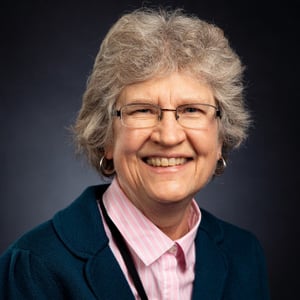
Associate Professor of Law, Liberty University School of Law
Barbara Mouly began teaching at the School of Law in 2007 as Visiting Assistant Professor of Law teaching Torts and Lawyering Skills. In 2004, she began working in juvenile and criminal practice courts in Virginia. Before that, Professor Mouly practiced with a law group in Virginia from 2001- 2004, practicing personal injury litigation, malpractice, and products liability.
Professor Mouly earned her bachelor’s degree in English and was the recipient of the T.G. Jones Literary Prize. She earned her master’s in music in 1976 and continued her education at the Virginia Trial Advocacy Institute at the University of Virginia in 2002. Mouly is the author of Intelligent Design and Tort Law: Partners in a Unified Theory of Causation, 3 Liberty University Law Review, at 543- 574, No. 2 (Spring 2009).
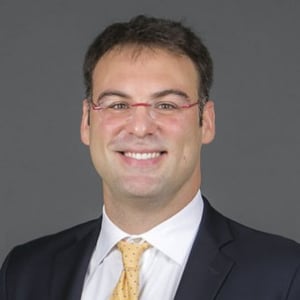
Assistant Professor of Law, George Mason University Antonin Scalia Law School
Paolo Saguato is an Assistant Professor of Law at Antonin Scalia Law School, George Mason University specializing in financial regulation. His research interests encompass the intersection of banking, securities and derivatives regulation; the international and comparative dynamics and regulations of financial institutions; financial innovation and technology; and corporate law and theory. His recent scholarship has been published in the Yale Journal on Regulation; the Stanford Journal of Law, Business and Finance; the Journal of Corporate Law Studies; and the Oxford Handbook of Financial Regulation.
Before joining Antonin Scalia Law School, Professor Saguato was a Research Fellow at the Georgetown Law Center (Institute of International Economic Law) and a Fellow at the London School of Economics and Political Science, where he received the Teaching Excellence Award. Before that he was a Global Hauser Fellow at New York University School of Law where he was affiliated with the Center for Financial Institutions. Professor Saguato earned a BA (Laurea in Scienze Giuridiche) and a JD (Laurea Magistrale in Giurisprudenza) summa cum laude at the University of Genoa (Italy) and a PhD in Private, Business, and International Law at the same university. In addition, he holds a LLM from Yale Law School, which he attended as a Fulbright Scholar, where he focused his studies on financial markets regulation and corporate law and was a senior editor of the Yale Journal on Regulation.
Professor Saguato teaches Business Associations and International Finance and Regulation.
Distinguished University Professor of Global Affairs and Director, Center for Global Economic and Environmental Opportunity, University of Central Florida
James Bacchus is the Distinguished University Professor of Global Affairs and Director of the Center for Global Economic and Environmental Opportunity at the University of Central Florida. He was a founding judge and was twice the Chairman – the chief judge – of the highest court of world trade, the Appellate Body of the World Trade Organization in Geneva, Switzerland. He is a former Member of the Congress of the United States, from Florida, and also a former international trade negotiator for the United States. He is a Global Fellow of the Centre for International Governance Innovation in Canada and an Adjunct Scholar of the Cato Institute in Washington, D.C. He is the Pao Yue – Kong Chair Professor at Zhejiang University in Hangzhou, China. He served on the High-Level Advisory Panel to the Conference of Parties of the United Nations Framework Convention on Climate Change, chairs the global Commission on Trade and Investment Policy of the International Chamber of Commerce, and chaired the global sustainability council of the World Economic Forum. For more than fourteen years, he chaired the global practice of the largest law firm in the United States and one of the largest in the world. Professor Bacchus is the author of the books Trade and Freedom, published by Cameron May in London in 2004, and The Willing World: Shaping and Sharing a Sustainable Global Prosperity, published by Cambridge University Press in 2018. The Financial Times named The Willing World one of the “Best Books of 2018.” He is a frequent writer in leading publications and a frequent speaker on prominent platforms worldwide on numerous topics relating to international law and international political economy.
Professor of Law, Northeastern University School of Law
Professor Baker teaches disability discrimination law, negotiations and a new course on human rights, intellectual property, and access to medicines. He taught and consulted in South African law schools and law school clinics between 1997-2012. Professor Baker is an honorary research fellow at the University of KwaZulu Natal in Durban, South Africa.
Professor Baker is also a senior policy analyst for Health GAP (Global Access Project) and is actively engaged in campaigns for universal access to treatment, prevention, and care for people living with HIV/AIDS, especially expanded and improved medical treatment. More recently he has been working on accelerating research on and equitable global access to vaccines, medicines, and diagnostics to respond to the COVID-19 pandemic. He has written and consulted extensively on intellectual property rights, trade, investor-state dispute settlement, access to medicines, and medicines regulatory policy, including with the African Union, NEPAD, South Africa, Uganda, ASEAN, Thailand, Indonesia, Brazil, Venezuela, CARICOM, UK DfID, the World Health Organization, the Millennium Development Goals Project, the Global Fund to Fight AIDS, Tuberculosis and Malaria, Open Society Institute, UNAIDS, UNDP, Unitaid, the Medicines Patent Pool, the Global Commission on HIV and the Law and others. He has served as a key, alternative board member and board member of the NGO delegation to Unitaid, which acts to improve market dynamics and early market entry of medicines and diagnostics needed to address HIV/AIDS, TB, Hepatitis C and malaria. He presently is a civil society representative to the Therapeutics Pillar of the Access to COVID-19 Tools Acclerator.
Professor Baker also works on policy issues concerning the Global Fund and the US PEPFAR Program, and how those priority disease initiatives might contribute more broadly to improving health care delivery in developing countries. Finally, he analyzes resource needs for global health, innovative financing mechanisms and IMF macroeconomic policies that restrict increased government and donor spending on health and education in developing countries.
James T. Jensen Endowed Professor for Transactional Law & Director of the Program on Intellectual Property and Technology Law, University of Utah S.J. Quinney College of Law
Jorge L. Contreras is a Distinguished University Professor, the James T. Jensen Endowed Professor for Transactional Law and Director of the Program on Intellectual Property and Technology Law. He teaches and researches in the areas of intellectual property, property law, technical standardization, antitrust and science policy. In 2020 he received the University of Utah's Distinguished Research Award and is an elected member of the American Law Institute. He has testified before the U.S. Senate and House Subcommittees on Intellectual Property, and was awarded the Rossman Memorial Award by the Patent & Trademark Office Society in 2022.
Professor Contreras has written or edited fourteen books and published more than 150 scholarly articles and chapters. His book, The Genome Defense: Inside the Epic Legal Battle to Determine Who Owns Your DNA (NY: Hachette/Algonquin, 2021), has been praised by the NY Times, Wall St. Journal, Nature and numerous other outlets, and was named "Best Patent Law Book of the Year" by the international IPKat blog. His scholarly articles have appeared in leading scientific, legal and policy journals including Science, Nature, NYU Law Review, Georgetown Law Journal, Iowa Law Review and Antitrust Law Journal. He has been quoted by media outlets around the world including the New York Times, Wall Street Journal, Economist, Bloomberg, Washington Post, Korea Times and has been featured on C-SPAN, NPR, PRI and BBC shows and a range of podcasts and online news programs.
Professor Contreras currently serves Co-Chair of the Interdisciplinary Division of the ABA's Section of Science & Technology Law and a member of the Advisory Board of the American Antitrust Institute. He has previously served as Co-Chair of the National Conference of Lawyers and Scientists, a member of the National Academy of Sciences (NAS) Committee on Intellectual Property Management in Standard-Setting Processes, the National Institutes of Health (NIH) Council of Councils, the Advisory Council of NIH's National Center for the Advancement of Translational Sciences (NCATS), the National Advisory Council for Human Genome Research, and the Intellectual Property Rights Policy Committee of the American National Standards Institute (ANSI). In 2021 he served as Chair of the Art Law Section of the Association of American Law Schools (AALS) and currently serves as Chair of the AALS Remedies Section.
Professor Contreras has previously taught at American University Washington College of Law and Washington University in St. Louis. Prior to entering academia he was a partner at the international law firm Wilmer Cutler Pickering Hale and Dorr LLP, where he practiced transactional and intellectual property law in Boston, London and Washington DC. He is a cum laude graduate of Harvard Law School (JD) and Rice University (BA, BSEE) and clerked for Chief Justice Thomas R. Philips of the Texas Supreme Court.
Assistant Professor, Saint Louis University School of Law
Rutschman has published and presented widely on topics related to health law, food and drug regulation, intellectual property, innovation in the life sciences, and law and technology. Recent presentations have covered topics related to vaccines and other biotechnologies, healthcare blockchain, e-health and artificial intelligence in medicine. Her legal scholarship has appeared or is forthcoming in UCLA Law Review, Emory Law Journal, Arizona Law Review, Yale Law Journal Forum, University of Chicago Legal Forum, Michigan Law Review Online, Annals of Health Law and Duke Law and Technology Review, among others. Her peer-reviewed work has appeared in the Journal of Law and the Biosciences, the American Journal of Infection Control and Emerging Infectious Diseases. Her commentary pieces have been published by The Huffington Post and The Conversation and reprinted in Scientific American, Newsweek Japan and newspapers around the U.S., including the Chicago Tribune. Her ongoing book, Vaccines as Technology: Innovation, Barriers and the Public Interest, is under contract with Cambridge University Press.
CoFounder, RightsClick
Steven’s extensive background in IP law and policy began as an attorney for the U.S. Senate Judiciary Committee, after which, he served as senior counsel for Policy and International Affairs at the U.S. Copyright Office and then as Chief Intellectual Property Counsel for the Global Intellectual Property Center of the U.S. Chamber of Commerce. Before co-founding RightsClick, he started the IP consultancy Sentinel Worldwide, and teaches copyright law at George Washington University Law School.
Distinguished University Professor of Global Affairs and Director, Center for Global Economic and Environmental Opportunity, University of Central Florida
James Bacchus is the Distinguished University Professor of Global Affairs and Director of the Center for Global Economic and Environmental Opportunity at the University of Central Florida. He was a founding judge and was twice the Chairman – the chief judge – of the highest court of world trade, the Appellate Body of the World Trade Organization in Geneva, Switzerland. He is a former Member of the Congress of the United States, from Florida, and also a former international trade negotiator for the United States. He is a Global Fellow of the Centre for International Governance Innovation in Canada and an Adjunct Scholar of the Cato Institute in Washington, D.C. He is the Pao Yue – Kong Chair Professor at Zhejiang University in Hangzhou, China. He served on the High-Level Advisory Panel to the Conference of Parties of the United Nations Framework Convention on Climate Change, chairs the global Commission on Trade and Investment Policy of the International Chamber of Commerce, and chaired the global sustainability council of the World Economic Forum. For more than fourteen years, he chaired the global practice of the largest law firm in the United States and one of the largest in the world. Professor Bacchus is the author of the books Trade and Freedom, published by Cameron May in London in 2004, and The Willing World: Shaping and Sharing a Sustainable Global Prosperity, published by Cambridge University Press in 2018. The Financial Times named The Willing World one of the “Best Books of 2018.” He is a frequent writer in leading publications and a frequent speaker on prominent platforms worldwide on numerous topics relating to international law and international political economy.
Professor of Law, Northeastern University School of Law
Professor Baker teaches disability discrimination law, negotiations and a new course on human rights, intellectual property, and access to medicines. He taught and consulted in South African law schools and law school clinics between 1997-2012. Professor Baker is an honorary research fellow at the University of KwaZulu Natal in Durban, South Africa.
Professor Baker is also a senior policy analyst for Health GAP (Global Access Project) and is actively engaged in campaigns for universal access to treatment, prevention, and care for people living with HIV/AIDS, especially expanded and improved medical treatment. More recently he has been working on accelerating research on and equitable global access to vaccines, medicines, and diagnostics to respond to the COVID-19 pandemic. He has written and consulted extensively on intellectual property rights, trade, investor-state dispute settlement, access to medicines, and medicines regulatory policy, including with the African Union, NEPAD, South Africa, Uganda, ASEAN, Thailand, Indonesia, Brazil, Venezuela, CARICOM, UK DfID, the World Health Organization, the Millennium Development Goals Project, the Global Fund to Fight AIDS, Tuberculosis and Malaria, Open Society Institute, UNAIDS, UNDP, Unitaid, the Medicines Patent Pool, the Global Commission on HIV and the Law and others. He has served as a key, alternative board member and board member of the NGO delegation to Unitaid, which acts to improve market dynamics and early market entry of medicines and diagnostics needed to address HIV/AIDS, TB, Hepatitis C and malaria. He presently is a civil society representative to the Therapeutics Pillar of the Access to COVID-19 Tools Acclerator.
Professor Baker also works on policy issues concerning the Global Fund and the US PEPFAR Program, and how those priority disease initiatives might contribute more broadly to improving health care delivery in developing countries. Finally, he analyzes resource needs for global health, innovative financing mechanisms and IMF macroeconomic policies that restrict increased government and donor spending on health and education in developing countries.
James T. Jensen Endowed Professor for Transactional Law & Director of the Program on Intellectual Property and Technology Law, University of Utah S.J. Quinney College of Law
Jorge L. Contreras is a Distinguished University Professor, the James T. Jensen Endowed Professor for Transactional Law and Director of the Program on Intellectual Property and Technology Law. He teaches and researches in the areas of intellectual property, property law, technical standardization, antitrust and science policy. In 2020 he received the University of Utah's Distinguished Research Award and is an elected member of the American Law Institute. He has testified before the U.S. Senate and House Subcommittees on Intellectual Property, and was awarded the Rossman Memorial Award by the Patent & Trademark Office Society in 2022.
Professor Contreras has written or edited fourteen books and published more than 150 scholarly articles and chapters. His book, The Genome Defense: Inside the Epic Legal Battle to Determine Who Owns Your DNA (NY: Hachette/Algonquin, 2021), has been praised by the NY Times, Wall St. Journal, Nature and numerous other outlets, and was named "Best Patent Law Book of the Year" by the international IPKat blog. His scholarly articles have appeared in leading scientific, legal and policy journals including Science, Nature, NYU Law Review, Georgetown Law Journal, Iowa Law Review and Antitrust Law Journal. He has been quoted by media outlets around the world including the New York Times, Wall Street Journal, Economist, Bloomberg, Washington Post, Korea Times and has been featured on C-SPAN, NPR, PRI and BBC shows and a range of podcasts and online news programs.
Professor Contreras currently serves Co-Chair of the Interdisciplinary Division of the ABA's Section of Science & Technology Law and a member of the Advisory Board of the American Antitrust Institute. He has previously served as Co-Chair of the National Conference of Lawyers and Scientists, a member of the National Academy of Sciences (NAS) Committee on Intellectual Property Management in Standard-Setting Processes, the National Institutes of Health (NIH) Council of Councils, the Advisory Council of NIH's National Center for the Advancement of Translational Sciences (NCATS), the National Advisory Council for Human Genome Research, and the Intellectual Property Rights Policy Committee of the American National Standards Institute (ANSI). In 2021 he served as Chair of the Art Law Section of the Association of American Law Schools (AALS) and currently serves as Chair of the AALS Remedies Section.
Professor Contreras has previously taught at American University Washington College of Law and Washington University in St. Louis. Prior to entering academia he was a partner at the international law firm Wilmer Cutler Pickering Hale and Dorr LLP, where he practiced transactional and intellectual property law in Boston, London and Washington DC. He is a cum laude graduate of Harvard Law School (JD) and Rice University (BA, BSEE) and clerked for Chief Justice Thomas R. Philips of the Texas Supreme Court.
Assistant Professor, Saint Louis University School of Law
Rutschman has published and presented widely on topics related to health law, food and drug regulation, intellectual property, innovation in the life sciences, and law and technology. Recent presentations have covered topics related to vaccines and other biotechnologies, healthcare blockchain, e-health and artificial intelligence in medicine. Her legal scholarship has appeared or is forthcoming in UCLA Law Review, Emory Law Journal, Arizona Law Review, Yale Law Journal Forum, University of Chicago Legal Forum, Michigan Law Review Online, Annals of Health Law and Duke Law and Technology Review, among others. Her peer-reviewed work has appeared in the Journal of Law and the Biosciences, the American Journal of Infection Control and Emerging Infectious Diseases. Her commentary pieces have been published by The Huffington Post and The Conversation and reprinted in Scientific American, Newsweek Japan and newspapers around the U.S., including the Chicago Tribune. Her ongoing book, Vaccines as Technology: Innovation, Barriers and the Public Interest, is under contract with Cambridge University Press.
CoFounder, RightsClick
Steven’s extensive background in IP law and policy began as an attorney for the U.S. Senate Judiciary Committee, after which, he served as senior counsel for Policy and International Affairs at the U.S. Copyright Office and then as Chief Intellectual Property Counsel for the Global Intellectual Property Center of the U.S. Chamber of Commerce. Before co-founding RightsClick, he started the IP consultancy Sentinel Worldwide, and teaches copyright law at George Washington University Law School.

A Discussion on the US-EU Trans-Atlantic Data Privacy Framework
A Regulatory Transparency Project Webinar
TeleforumTopics
Caveat Emptor in the 21st Century: The Forced Sale of Chelsea Football Club
On February 24, 2022, the Russian military invaded Ukraine. International condemnation of Russia and its...
Covid-19 Vaccines and Intellectual Property
James Bacchus, Brook K. Baker, Jorge L. Contreras, Ana Santos Rutschman, Steven M. Tepp
In October 2020, two countries, India and South Africa, that had been hit particularly hard...
Covid-19 Vaccines and Intellectual Property
James Bacchus, Brook K. Baker, Jorge L. Contreras, Ana Santos Rutschman, Steven M. Tepp
In October 2020, two countries, India and South Africa, that had been hit particularly hard...
Covid-19 Vaccines and Intellectual Property
Practice Groups Teleforum
TeleforumHas Coke Gone Woke? The Corporate Social Agenda and the Law
Colorado Lawyers Chapter - Online Event
Has Coke Gone Woke? The Corporate Social Agenda and the Law
Colorado Lawyers Chapter - Online Event
Peace Through States: Serbia/Kosovo Reconciliation and EU Membership
7 Minute Presentations of Works in Progress Panel 2-A
23rd Annual Federalist Society Faculty Conference
Topics
The Real World Costs of Heavy-Handed Chemical Regulation
Over the last few months, people around the world have learned more about the global...