
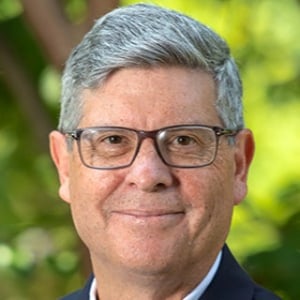
E. Claiborne Robins Distinguished Chair in Law, University of Richmond School of Law
Professor Kurt Lash teaches and writes about constitutional law. Founder and director of the Richmond Program on the American Constitution, Professor Lash has published widely on the subjects of constitutional law and constitutional history, including The Fourteenth Amendment and the Privileges or Immunities of American Citizenship (Cambridge University Press, 2014), The Lost History of the Ninth Amendment (Oxford University Press, 2009), and The American First Amendment in the Twenty-first Century: Cases and Materials(with William W. Van Alstyne) (5th ed., Foundation Press, 2014). An elected member of the American Law Institute, Professor Lash’s work has appeared in numerous legal journals including the Stanford Law Journal, Georgetown Law Journal, Virginia Law Review, andNotre Dame Law Review. He has been a visiting professor at Northwestern University School of Law and is the former director of the University of Illinois College of Law Program in Constitutional Theory, History, and Law.

Professor Emeritus, Paul M. Hebert Law Center, Louisiana State University
In memoriam
Dr. John Baker is Professor Emeritus of Law, and previously the Dale E. Bennett Professor of Law, at Louisiana State University Law School. He is currently Visiting Professor at Peking University School of Transnational Law (via Zoom) and has been Visiting Professor at The Center for the Constitution, Georgetown Law School (2013-2020). He has also been a Visiting Fellow at Oriel College, the University of Oxford (2012-2014) and taught at Blackfriars Hall, Oxford in 2014. Dr. Baker has also been an adjunct Fellow at the Heritage Foundation (Spring, 2008) and a Distinguished Scholar at the Catholic University of America Law School (2011-12). He has taught at Tulane Law School, George Mason Law School, Pepperdine Law School, New York Law School, Hong Kong University, and the University of Dallas, School of Management and also taught and/or lectured in 17 foreign countries. Notable among his foreign visits are the
following: Visiting Professor at the University of Lyon III (France) (1999-2011); Visiting Professor at the Universidad de los Andes, Chile (2012), as a Fulbright Specialist (2006); and a Fulbright Scholar at various universities in the Philippines. Dr. Baker received his J.D., with honors, from the University of Michigan Law School and his B.A., magna cum laude, from the University of Dallas. He also earned a Ph.D. in Political Thought from the University of London. Baker has taught over a dozen different subjects, mostly courses in public law. His main areas of interest are Constitutional Law (particularly federalism and separation of powers), Criminal Law, Anti-Terrorism Law, International Law, Health Care Law, Mediation, and Comparative Law.
In addition to law review articles and book chapters, Dr. Baker’s academic publications include Hall's Criminal Law: Cases and Materials (with Benson, Force and George; 5th ed. Michie, 1993); An Introduction to the Law of the United States (ed. with Levasseur; University Press of America, 1992). He has also published on Forbes.com, FoxNews.com, in The Washington Times, and a number of times in The Wall Street Journal. He argues in federal court, including two oral arguments in the U.S. Supreme Court. For many years, he co-taught courses for the Federalist Society on separation of powers with the late Supreme Court Justice Antonin Scalia. In September 2016, he co-taught a Supreme Court seminar in China with Justice Samuel Alito. Following law school, he served as a law clerk in federal district court and as an assistant district attorney in New Orleans before joining LSU in 1975. While a professor, he has been as a consultant to USAID, USIA (since rolled into the State Department), the Justice Department, the U.S. Senate Judiciary Subcommittee on Separation of Powers, and the Office of Planning in the White House. He served on an ABA Task Force which issued the report, The Federalization of Crime (1998) and later as a consultant to the “Bi-Partisan Task Force on the Over- federalization of Crime” (2012-2014) created by the U.S. House Judiciary Subcommittee on Crime. Dr. Baker was a co-founder of the first iteration (1995) of Stratfor Inc., a global intelligence agency. He co-authored its first book: The Intelligence Edge (with Friedman, Friedman and Chapman; Crown Books/Random House 1997). In 2022, he began a short, weekly video podcast available on YouTube and Rumble, The Baker Brief.
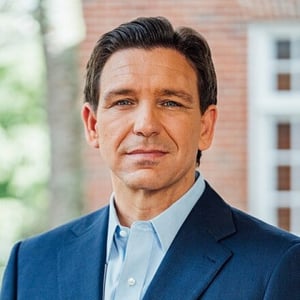
Governor, Florida
Ron DeSantis is the 46th Governor of the State of Florida. Since taking office in January 2019, he has worked hard to expand education opportunities, improve Florida’s water resources and Everglades, champion vocational training, bolster public safety, foster innovation in health care, assist with hurricane recovery, promote infrastructure development and support veterans – all while lowering taxes and being fiscally responsible.
A native Floridian, Governor DeSantis worked his way through Yale University, where he captained the university baseball team and graduated magna cum laude. He also gradated with honors from Harvard Law School. While at Harvard, he earned a commission in the U.S. Navy as a JAG Officer. During his active duty service, then- Lieutenant DeSantis deployed to Iraq as an advisor to a U.S. Navy SEAL Commander in support of the SEAL mission in Iraq. His military decorations include the Iraq Campaign Medal of the Bronze Star Medal (meritorious service).
Prior to serving as Governor, DeSantis served as the U.S. Congressman for Florida’s 6th District. As Chairman of the National Security Subcommittee, DeSantis spearheaded efforts to reform the UA, combat terrorism, identify government waste and relocate the American Embassy in Israel to Jerusalem. As a Congressman, DeSantis championed term limits, fiscal responsibility with a strong national defense.
Governor DeSantis is married to First Lady Casey DeSantis, a former Emmy Award winning television host. They are the proud parents of two children, Madison and Mason. They are the youngest family living in the Florida Governor’s Mansion in nearly fifty years.

Vice President for Legal Affairs, Cato Institute
Roger Pilon is the Cato’s Institute’s vice president for legal affairs, the founding director of Cato’s Robert A. Levy Center for Constitutional Studies, the inaugural holder of Cato’s B. Kenneth Simon Chair in Constitutional Studies, and the founding publisher of the Cato Supreme Court Review.
Prior to joining Cato, Pilon held five senior posts in the Reagan administration, including at State and Justice, and was a national fellow at Stanford’s Hoover Institution. In 1989 the Bicentennial Commission presented him with its Benjamin Franklin Award for excellence in writing on the U.S. Constitution. In 2001 Columbia University’s School of General Studies awarded him its Alumni Medal of Distinction. Pilon lectures and debates at universities and law schools across the country and testifies often before Congress.
His writing has appeared in the Wall Street Journal, the Washington Post, the New York Times, the Los Angeles Times, Legal Times, National Law Journal, Harvard Journal of Law and Public Policy, Stanford Law and Policy Review, and elsewhere. He has appeared on ABC’s Nightline, CBS’s 60 Minutes II, Fox News Channel, NPR, CNN, MSNBC, CNBC, C-SPAN, and other media.
Pilon holds a BA from Columbia University, an MA and a PhD from the University of Chicago, and a JD from the George Washington University School of Law.

Chief Judge, United States Court of Appeals, Eleventh Circuit
William H. Pryor Jr. serves as Chief Circuit Judge on the United States Court of Appeals for the Eleventh Circuit.
In 2013–18, he served on the United States Sentencing Commission and, in 2017–18, served as Acting Chair.
He has taught as a visiting professor at the University of Alabama School of Law and previously taught as an adjunct professor at the Cumberland School of Law of Samford University.
He served as the 45th Attorney General of Alabama from 1997 to 2004. When he took office, he was the youngest attorney general in the nation. In his reelection, he received the highest percentage of votes of any statewide candidate.
He graduated magna cum laude from Tulane Law School where he finished first in the common-law curriculum and was editor in chief of the Tulane Law Review. He then served as a law clerk for Judge John Minor Wisdom of the U.S. Court of Appeals for the Fifth Circuit.
He is a member of The American Law Institute and an Adviser for the RESTATEMENT OF THE LAW THIRD, CONFLICT OF LAWS. He is a coauthor with Bryan Garner, Justices Gorsuch and Kavanaugh, and several other judges of a treatise, THE LAW OF JUDICIAL PRECEDENT. He has published in the Yale Law Journal, Columbia Law Review, Virginia Law Review, Notre Dame Law Review, Harvard Journal of Law & Public Policy, Yale Law & Policy Review, George Mason Law Review, Florida Law Review, Alabama Law Review, Case Western Reserve Law Review, and Tulane Law Review. He has published op-eds in The Wall Street Journal, The New York Times, National Review, and USA Today. He has debated at National Lawyers’ Conventions of the Federalist Society (including on National Public Radio) and at the Oxford Union in the United Kingdom. And he is listed among several “widely admired judicial writers” in Bryan Garner’s The Redbook: A Manual on Legal Style.
He is a member of the Tulane Law School Hall of Fame and has received the Defender of the Constitution Award from the Heritage Foundation, the Jurist of the Year Award from the Texas Review of Law & Politics, and the St. Thomas More Award from the St. Thomas More Society of Atlanta. Judge Pryor is also a proud member of the National Society of the Sons of the American Revolution.
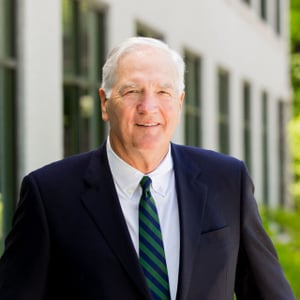
Former Senator, State of Alabama
Luther J. Strange, III is a former Republican member of the U.S. Senate from the state of Alabama. Strange was first appointed to the Senate position by Gov. Robert Bentley on February 9, 2017. He replaced Jeff Sessions, who was confirmed as United States Attorney General.
Strange is the former Republican Attorney General of Alabama. He was first elected to the statewide position in 2010 and assumed office on January 17, 2011. Strange's first four-year term ended on January 19, 2015, and he won re-election to a second term on November 4, 2014.
Prior to his election as Attorney General, Luther Strange practiced law in Birmingham, Alabama. In 2010, U.S. News-Best Lawyers "Best Law Firms" gave his firm a first-tier ranking, and the firm was named as one of the Top Ten Law Firms that Understand Economic Development by Southern Business & Development magazine.
Before establishing his own law firm, Strange was a partner with Bradley Arant Boult Cummings LLP. During his time in private practice, he was recognized in Best Lawyers in America® , named Best of the Bar by the Birmingham Business Journal, and called one of the "Best Lawyers" in Alabama by Birmingham magazine.
His tenure in office was marked by a strong emphasis on fighting public corruption, including the conviction and removal from office of the Alabama House Speaker in June 2016. He was also a leader in opposing costly overregulation and the expansion of the federal government at the expense of the states.
Luther Strange served as the court-appointed Coordinating Counsel for the Gulf Coast States in the historic Deepwater Horizon Oil spill litigation. Strange was actively involved in trying the case, which led to a landmark settlement agreement to compensate Alabama for both economic and environmental damages as a result of that disaster.
Among many civic commitments, he has served on the Advisory Board of the United States Merchant Marine Academy and as a Trustee of Talladega College, Alabama’s oldest historically black college.
An Eagle Scout since he was 13 and a recipient of the Distinguished Eagle Scout Award from the Boy Scouts of America in 2011, Strange is passionate about encouraging young people in Alabama to become involved in public service.
Strange received both his undergraduate and law degrees from Tulane University. He was a scholarship basketball player while earning his undergraduate degree at Tulane. In June of 2016, he was inducted into the Tulane Law School Hall of Fame.

J.B. and Maurice C. Shapiro Professor of Public Interest Law, The George Washington University Law School
Jonathan Turley is a nationally recognized legal scholar who has written extensively in areas ranging from constitutional law to legal theory to tort law. After a stint at Tulane Law School, Professor Turley joined the GW Law faculty in 1990, and in 1998, became the youngest chaired professor in the university's history.
He is the founder and executive director of the Project for Older Prisoners (POPS). He has written more than three dozen academic articles that have appeared in a variety of leading law journals including those of Cornell, Duke, Georgetown, Harvard, and Northwestern Universities, among others. He most recently completed a three-part study of the historical and constitutional evolution of the military system.
Professor Turley has served as counsel in some of the most notable cases in the last two decades, including his representation of the Area 51 workers at a secret air base in Nevada; the nuclear couriers at Oak Ridge, Tennessee; the Rocky Flats grand jury in Colorado; Dr. Eric Foretich, the husband in the Elizabeth Morgan custody controversy; and four former U.S. Attorney Generals during the Clinton impeachment litigation. Professor Turley also has served as counsel in a variety of national security and terrorism cases, and has been ranked as one of the top 10 lawyers handling military cases.
He has served as a consultant on statutory and constitutional issues, and he has been a witness in over 100 hearings before the House and Senate, including the impeachments of Presidents Bill Clinton and Donald Trump. He also is a nationally recognized legal commentator; he ranked 38th in the top 100 most cited ‘public intellectuals’ in a recent study by Judge Richard Posner and was found to be the second most cited law professor in the country.
He is a member of the USA Today board of contributors and the recipient of the “2005 Single Issue Advocate of the Year” – the annual opinion award for the Aspen Institute and The Week magazine. Hundreds of his articles on legal and policy issues regularly appear in national newspapers. He also has worked as the legal analyst for four networks, CBS, NBC, BBC, and Fox. After 30 years as a columnist and commentator, the Washington Post called him the "Dean of Legal Analysts."
He is a best-selling author, including his latest New York Times bestseller "Rage and the Republic: The Unfinished Story of the American Revolution." (Simon & Schuster 2026). Turley's blog, Res Ipsa (www.jonathanturley.org), is one of the most read legal sites in the country.

Sterling Professor of Law and Political Science, Yale Law School
Akhil Reed Amar is Sterling Professor of Law and Political Science at Yale University, where he teaches constitutional law in both Yale College and Yale Law School. After graduating from Yale College, summa cum laude, in 1980 and from Yale Law School in 1984, and clerking for Judge (later Justice) Stephen Breyer, Amar joined the Yale faculty in 1985 at the age of 26. He is Yale’s only living professor to have won the University’s unofficial triple crown — the Sterling Chair for scholarship, the DeVane Medal for teaching, and the Lamar Award for alumni service.
Amar’s work has won awards from both the American Bar Association and the Federalist Society, and he has been cited by Supreme Court justices across the spectrum in more than 50 cases — tops among scholars under age 70. According to both Fred Shapiro’s landmark 2021 study of lifetime scholarly citations and Heinonline’s most recent tabulation of lifetime law-review citations, Amar is America’s second most-cited legal scholar still under age 70. He is a member of the American Academy of Arts and Sciences and has written widely for popular publications, including The New York Times, The Washington Post, The Wall Street Journal, Time, and The Atlantic. He was an informal consultant to the popular TV show The West Wing and his scholarship has been showcased on many broadcasts, including The Colbert Report, Morning Joe, AC360, Velshi, Fox News @ Night with Shannon Bream, Fareed Zakaria GPS, Erin Burnett Outfront, and Constitution USA with Peter Sagal.
He is the author of more than a hundred law review articles and several books, including The Bill of Rights (1998 — winner of the Yale University Press Governors’ Award), America’s Constitution (2005 — winner of the ABA’s Silver Gavel Award), America’s Unwritten Constitution (2012 — named one of the year’s 100 best nonfiction books by The Washington Post), and The Constitution Today (2016 — named one of the year’s top ten nonfiction books by Time magazine). The first volume of his ambitious trilogy on American constitutional history from the Founding to the present, The Words That Made Us: America’s Constitutional Conversation, 1760-1840, came out in May 2021. The second volume, Born Equal: Remaking America’s Constitution, 1840-1920, will be published in September 2025 and is already available for pre-order. All together, his nonfiction books have won two starred reviews from Publishers Weekly and three starred reviews from Kirkus—tops, it is believed, among legal scholars under age 70. Together with Vikram David Amar (YLS ’88), he has a bi-weekly column on the Supreme Court on the distinguished website SCOTUSblog. Along with Andy Lipka, he co-hosts a popular and free weekly podcast, Amarica’s Constitution, whose listeners are eligible for CLE credit in most American jurisdictions. A wide assortment of his articles and op-eds and video links to many of his public lectures and free online courses may be found at akhilamar.com.
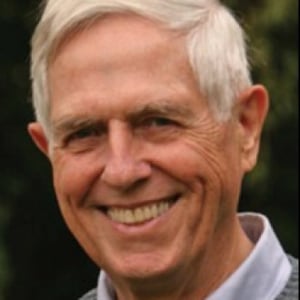
U.S. Court of Appeals for the D.C. Circuit (ret.) and former U.S. Senator
James L. Buckley was born in New York City in 1923, grew up in rural Connecticut, and received his B.A. degree from Yale. Following service as a naval officer in World War II, he returned to New Haven to secure his law degree. After several years in private practice, he joined a group of small companies engaged in oil exploration abroad. He was elected to the United States Senate in 1970 as the candidate of New York's Conservative Party. He failed of re-election; but he has since served as an under secretary of state in the Reagan administration, as president of Radio Free Europe/Radio Liberty in Munich, Germany, and, most recently, as a judge on the U.S. Court of Appeals for the District of Columbia Circuit. He retired in 2000 and now resides in Bethesda, Maryland.
Scholar in Residence, The Constitution Project
Louis Fisher is Scholar in Residence at the Constitution Project. Previously he worked for four decades at the Library of Congress as Senior Specialist in Separation of Powers (Congressional Research Service, from 1970 to 2006) and Specialist in Constitutional Law (the Law Library, from 2006 to 2010). During his service with CRS he was research director of the House Iran-Contra Committee in 1987, writing major sections of the final report. Fisher's specialties include constitutional law, war powers, budget policy, executive-legislative relations, and judicial-congressional relations.
After completing his doctoral work in political science at the New School for Social Research in 1967, he taught full-time at Queens College for three years. Later he taught part-time at Georgetown University, American University, Catholic University law school, Indiana University, Catholic University, the College of William and Mary law school, and Johns Hopkins University. Currently he is a Visiting Professor at the William and Mary law school.
His books include President and Congress (1972), Presidential Spending Power (1975), The Constitution Between Friends (1978), The Politics of Shared Power (4th ed. 1998), Constitutional Conflicts Between Congress and the President (6th ed. 2014), Constitutional Dialogues (1988),American Constitutional Law (with Katy J. Harriger, 10th ed. 2013), Presidential War Power (3rd ed. 2014), Political Dynamics of Constitutional Law (with Neal Devins, 5th ed. 2011), Congressional Abdication on War and Spending (2000), Religious Liberty in America: Political Safeguards (2002), Nazi Saboteurs on Trial: A Military Tribunal & American Law (2003; 2d ed. 2005), The Politics of Executive Privilege (2004), The Democratic Constitution (with Neal Devins, 2004), Military Tribunals and Presidential Power: American Revolution to the War on Terrorism (2005), In the Name of National Security: Unchecked Presidential Power and the Reynolds Case (2006), The Constitution and 9/11: Recurring Threats to America’s Freedoms (2008), The Supreme Court and Congress: Rival Interpretations (2009), On Appreciating Congress: The People’s Branch (2010), Defending Congress and the Constitution (2011), On the Supreme Court: Without Illusion and Idolatry(2013), and The Law of the Executive Branch: Presidential Power (2014). His textbook in constitutional law is available in two paperbacks:Constitutional Structures: Separation of Powers and Federalism and Constitutional Rights: Civil Rights and Civil Liberties. With Leonard W. Levy he edited the four-volume Encyclopedia of the American Presidency (1994).
He has twice won the Louis Brownlow Book Award (for Presidential Spending Power and Constitutional Dialogues). The encyclopedia he co-edited was awarded the Dartmouth Medal. In 1995 he received the Aaron B. Wildavsky Award “For Lifetime Scholarly Achievement in Public Budgeting” from the Association for Budgeting and Financial Management. In 2006 he received the Neustadt Book Award for Military Tribunals and Presidential Power. In 2011 he received the Walter Beach Pi Sigma Alpha Award from the National Capital Area Political Science Association for strengthening the relationship between political science and public service. In 2012 he received the Hubert H. Humphrey Award from the American Political Science Association in recognition of notable public service by a political scientist. The July 2013 issue of PS: Political Science & Politics includes a symposium on "Law and (Disciplinary) Order: A Dialogue about Louis Fisher, Constitutionalism, and Political Science.
Dr. Fisher has been invited to testify before Congress more than 50 times on such issues as war powers, state secrets privilege, NSA surveillance, executive spending discretion, presidential reorganization authority, Congress and the Constitution, the legislative veto, the item veto, the Gramm-Rudman deficit control act, executive privilege, committee subpoenas, executive lobbying, CIA whistleblowing, covert spending, the pocket veto, recess appointments, the budget process, the balanced budget amendment, biennial budgeting, and presidential impoundment powers.
He has been active with CEELI (Central and East European Law Initiative) of the American Bar Association, traveling to Bulgaria, Albania, and Hungary to assist constitution-writers; participating in CEELI conferences in Washington, D.C. with delegations from Bosnia-Herzegovina, Lithuania, Romania, and Russia; serving on CEELI "working groups" on Armenia and Belarus; and assisted in drafting constitutional amendments for the Kyrgyz Republic. As part of CRS delegations he traveled to Russia and Ukraine to assist on constitutional questions. For the International Bar Association he helped analyze the draft constitutions for Swaziland and Zimbabwe.
He is the author of more than 500 articles in law reviews, political science journals, encyclopedias, books, magazines, and newspapers. He has been invited to speak in Albania, Australia, Belgium, Bulgaria, Canada, China, the Czech Republic, Denmark, England, France, Germany, Greece, Israel, Japan, Macedonia, Malaysia, Mexico, the Netherlands, Oman, the Philippines, Poland, Romania, Russia, Slovenia, South Korea, Sweden, Taiwan, Ukraine, and the United Arab Emirates. The topics include a range of constitutional, political, and institutional issues.
Partner, Torridon Law PLLC
Tara Helfman is a Partner at Torridon Law PLLC. Her practice includes internal investigations, general advising, litigation, and crisis management. She has represented clients in matters involving constitutional law, public and private international law, employment discrimination, commercial litigation, and federal agency litigation.
Helfman served as Associate Counsel and Special Assistant to the President during the administration of President Donald J. Trump. In that capacity, she managed the background investigation process for all nominees to Senate-confirmed positions, advised on judicial selection, and liaised with the USDA on policy initiatives, rulemaking, and litigation. She has also held leadership positions in the Department of Justice Civil Rights Division and at the Equal Employment Opportunity Commission.
A British Marshall Scholar, Helfman was a tenured Associate Professor at Syracuse University College of Law and a Visiting Scholar at the Georgetown University Law Center. She has published a two-volume constitutional history of the United States and numerous scholarly articles.
Clerkship
Education
Bar Admissions
Robert and Katheryn Dockson Professor of Public Policy and Professor Emeritus, Pepperdine University School of Public Policy
Gordon Lloyd is the Robert and Katheryn Dockson Professor of Public Policy at Pepperdine University. He earned his bachelor of arts degree in economics and political science at McGill University. He completed all the course work toward a doctorate in economics at the University of Chicago before receiving his master of arts and PhD degrees in government at Claremont Graduate School. The coauthor of three books on the American founding and sole author of a book on the political economy of the New Deal, he also has numerous articles, reviews, and opinion-editorials to his credit. His latest coauthored book, The New Deal & Modern American Conservatism: A Defining Rivalry, was published in 2013, and he most recently released as editor, Debates in the Federal Convention of 1787, in September 2014. He is the creator, with the help of the Ashbrook Center, of four highly regarded websites on the origin of the Constitution. He has received many teaching, scholarly, and leadership awards including admission to Phi Beta Kappa and the Howard White Award for Teaching Excellence at Pepperdine University. He currently serves on the National Advisory Council for the Walter and Leonore Annenberg Presidential Learning Center through the Ronald Reagan Presidential Foundation.
Partner, Cooper & Kirk PLLC
Adam Paul Laxalt is a partner at Cooper & Kirk which he joined in March 2019. Mr. Laxalt served as Nevada’s 33rd Attorney General from 2015-2019. Mr. Laxalt graduated Magna Cum Laude from Georgetown University and also graduated from Georgetown University Law Center. He is a former Navy and Iraq War veteran. Mr. Laxalt also served as an Assistant Professor of Law at the U.S. Naval Academy.
As Nevada’s Attorney General and top law-enforcement officer, Mr. Laxalt supervised all criminal and civil matters for Nevada’s largest law office. He provided strategic direction and supervision of almost 400 employees, thousands of legal matters, and nearly 50 trials. Mr. Laxalt served as chief legal counsel for the state of Nevada, as well as to Constitutional Officers, state agencies, boards, and commissions. He managed approximately $1.2 billion in potential civil liabilities for the state.
As a former member of the military, Laxalt’s support of service members culminated in the creation of the Office of Military Legal Assistance, a first-of-its-kind program that provides Nevada’s military members with free legal representation. The program was recently named a “Best Practice Program” by the Department of Defense with a recommendation for duplication in states throughout the country, and to date, has helped military personnel and veterans handle over 210 pro bono matters.
Consistent with his commitment to defending our nation’s constitutional principles and protecting the important role of the States in our federalist system of government, Laxalt created Nevada’s first ever Federalism Unit within the Attorney General’s Office. To protect the interests of Nevadans, the Federalism Unit has challenged multiple occasions of unlawful federal overreach, including the Environmental Protection Agency’s Waters of the United States Rule, the Bureau of Land Management’s Sage Grouse Plan, and other instances of unilateral federal executive orders. The Unit has also filed friend of the court briefs on many important issues including public roads, Environmental Protection Agency overreach, federal interference with Nevada’s criminal justice system and Second Amendment issues.

Professor of Law, Georgetown University Law Center
Nicholas Quinn Rosenkranz teaches constitutional law and federal jurisdiction, and he writes articles for the Harvard Law Review and the Stanford Law Review.
He is currently developing a new theory of constitutional interpretation and judicial review. The first installment, entitledThe Subjects of the Constitution, was published in the Stanford Law Review in May of 2010, and it is among the most downloaded articles about constitutional interpretation, judicial review, and/or federal courts in the history of SSRN. The second installment, The Objects of the Constitution, was published in May of 2011, also in the Stanford Law Review. And the comprehensive version is forthcoming as a book by Oxford University Press.
Rosenkranz has served and advised the federal government in a variety of capacities. He clerked for Judge Frank H. Easterbrook on the U.S. Court of Appeals for the Seventh Circuit (1999-2000) and for Justice Anthony M. Kennedy at the U.S. Supreme Court (October Term 2001). He served as an Attorney-Advisor at the Office of Legal Counsel in the U.S. Department of Justice (November 2002 - July 2004). He often testifies before Congress as a constitutional expert—most recently before the House Financial Services Oversight Subcommittee, regarding the Obama Administration's use of bank settlement agreements to circumvent the Appropriations Clause. He has also filed briefs and presented oral argument before the U.S. Supreme Court. His most recent Supreme Court brief, in Los Angeles v. Patel, was cited by Justice Alito in dissent.
Rosenkranz is a member of the New York Bar and the U.S. Supreme Court Bar. He is a Senior Fellow at the Cato Institute. He serves on the Board of Directors of the Foundation for Individual Rights in Education (FIRE). He is a founding member of Heterodox Academy and a member of its Executive Committee. He also serves on the Board of Directors of the Federalist Society and as the faculty advisor to the Georgetown chapter.

Dr. John Eastman is the former Henry Salvatori Professor of Law & Community Service and former Dean at Chapman University's Dale E. Fowler School of Law, where he had been a member of the faculty since 1999, specializing in Constitutional Law, Legal History, and Property. He is a founding director of the Center for Constitutional Jurisprudence, a public interest law firm affiliated with the Claremont Institute that he founded in 1999. He has a Ph.D. in Government from the Claremont Graduate School and a J.D. from the University of Chicago Law School, and a B.A. in Politics and Economics from the University of Dallas. He serves as the Chairman of the Board of the National Organization for Marriage.
Prior to joining the Chapman law faculty, Dr. Eastman served as a law clerk to the Honorable Clarence Thomas, Associate Justice, Supreme Court of the United States, and to the Honorable J. Michael Luttig, Judge, United States Court of Appeals for the Fourth Circuit and practiced law with the national law firm of Kirkland & Ellis. Dr. Eastman has also represented numerous clients in important constitutional law matters and has argued before the Supreme Court. On behalf of the Claremont Institute Center for Constitutional Jurisprudence, he has participated as amicus curiae before the Supreme Court of the United States, U.S. Courts of Appeals, and State Supreme Courts in more than one hundred cases of constitutional significance, including Boy Scouts of America v. Dale, Zelman v. Simmons-Harris (the school vouchers case), Kelo v. New London, Ct. (eminent domain), and Van Orden v. Perry (the 10 Commandments case). He has also appeared as an expert legal commentator on numerous television and radio programs, including C-SPAN, Fox News, PBS, NewsHour, and The O'Reilly Factor.
Professor of Law, Georgetown University Law Center
Nicholas Quinn Rosenkranz teaches constitutional law and federal jurisdiction, and he writes articles for the Harvard Law Review and the Stanford Law Review.
He is currently developing a new theory of constitutional interpretation and judicial review. The first installment, entitledThe Subjects of the Constitution, was published in the Stanford Law Review in May of 2010, and it is among the most downloaded articles about constitutional interpretation, judicial review, and/or federal courts in the history of SSRN. The second installment, The Objects of the Constitution, was published in May of 2011, also in the Stanford Law Review. And the comprehensive version is forthcoming as a book by Oxford University Press.
Rosenkranz has served and advised the federal government in a variety of capacities. He clerked for Judge Frank H. Easterbrook on the U.S. Court of Appeals for the Seventh Circuit (1999-2000) and for Justice Anthony M. Kennedy at the U.S. Supreme Court (October Term 2001). He served as an Attorney-Advisor at the Office of Legal Counsel in the U.S. Department of Justice (November 2002 - July 2004). He often testifies before Congress as a constitutional expert—most recently before the House Financial Services Oversight Subcommittee, regarding the Obama Administration's use of bank settlement agreements to circumvent the Appropriations Clause. He has also filed briefs and presented oral argument before the U.S. Supreme Court. His most recent Supreme Court brief, in Los Angeles v. Patel, was cited by Justice Alito in dissent.
Rosenkranz is a member of the New York Bar and the U.S. Supreme Court Bar. He is a Senior Fellow at the Cato Institute. He serves on the Board of Directors of the Foundation for Individual Rights in Education (FIRE). He is a founding member of Heterodox Academy and a member of its Executive Committee. He also serves on the Board of Directors of the Federalist Society and as the faculty advisor to the Georgetown chapter.
Dr. John Eastman is the former Henry Salvatori Professor of Law & Community Service and former Dean at Chapman University's Dale E. Fowler School of Law, where he had been a member of the faculty since 1999, specializing in Constitutional Law, Legal History, and Property. He is a founding director of the Center for Constitutional Jurisprudence, a public interest law firm affiliated with the Claremont Institute that he founded in 1999. He has a Ph.D. in Government from the Claremont Graduate School and a J.D. from the University of Chicago Law School, and a B.A. in Politics and Economics from the University of Dallas. He serves as the Chairman of the Board of the National Organization for Marriage.
Prior to joining the Chapman law faculty, Dr. Eastman served as a law clerk to the Honorable Clarence Thomas, Associate Justice, Supreme Court of the United States, and to the Honorable J. Michael Luttig, Judge, United States Court of Appeals for the Fourth Circuit and practiced law with the national law firm of Kirkland & Ellis. Dr. Eastman has also represented numerous clients in important constitutional law matters and has argued before the Supreme Court. On behalf of the Claremont Institute Center for Constitutional Jurisprudence, he has participated as amicus curiae before the Supreme Court of the United States, U.S. Courts of Appeals, and State Supreme Courts in more than one hundred cases of constitutional significance, including Boy Scouts of America v. Dale, Zelman v. Simmons-Harris (the school vouchers case), Kelo v. New London, Ct. (eminent domain), and Van Orden v. Perry (the 10 Commandments case). He has also appeared as an expert legal commentator on numerous television and radio programs, including C-SPAN, Fox News, PBS, NewsHour, and The O'Reilly Factor.

Executive Vice President, The Federalist Society
Dean Reuter is Executive Vice President at the Federalist Society for Law and Public Policy Studies. He has served in two federal government agency Offices of the Inspector General, as Counsel to the Inspector General and Deputy Inspector General, responsible for policing the use of federal funds granted and contracted through those agencies. As such, he helped conduct and oversee criminal investigations across the country. He is the principal author of the non-fiction book, The Hidden Nazi: The Untold Story of America's Deal with the Devil, and editor of Liberty’s Nemesis: The Unchecked Expansion of the State and Confronting Terror: 9/11 and the Future of American National Security. He was appointed by the President and served as Vice-Chairman of the Board of Directors of the Corporation for National and Community Service, and recently served as an appointee on the U.S. Commission on Presidential Scholars. He is a graduate of Hood College (BA with Honors) and the University of Maryland School of Law.

Patrick Hotung Professor of Constitutional Law, Georgetown University Law Center; Faculty Director, Georgetown Center for the Constitution
Randy E. Barnett is the Patrick Hotung Professor of Constitutional Law at the Georgetown University Law Center and is the Faculty Director of the Georgetown Center for the Constitution. After graduating from Northwestern University and Harvard Law School, he tried many felony cases as a prosecutor in the Cook County States’ Attorney’s Office in Chicago. A recipient of a Guggenheim Fellowship in Constitutional Studies and the Bradley Prize, Professor Barnett has been a visiting professor at Penn, Northwestern and Harvard Law School.
Professor Barnett’s publications includes thirteen books, more than one hundred articles and reviews, as well as numerous op-eds. His most recent book is Felony Review: Tales of True Crime and Corruption in Chicago (2026). His other books on the Constitution include: A Life for Liberty: The Making of an American Originalist (2024); The Original Meaning of the Fourteenth Amendment: Its Letter and Spirit (2021) (with Evan Bernick); An Introduction to Constitutional Law: 100 Supreme Court Cases Everyone Should Know (2019) (with Josh Blackman); Restoring the Lost Constitution: The Presumption of Liberty (2nd ed. 2013); Our Republican Constitution: Securing the Liberty and Sovereignty of We the People (2016); and Constitutional Law: Cases in Context (5th ed. forthcoming 2027) (with Josh Blackman). His books on contracts are The Oxford Introductions to U.S. Law: Contracts (2010) and Contracts: Cases and Doctrine (7th ed. 2021) (with Nate Oman). And he is the author of The Structure of Liberty: Justice and the Rule of Law (2nd ed. 2014).
In 2004, he argued the medical marijuana case of Gonzalez v. Raich before the U.S. Supreme Court. In 2012, he was one of the lawyers representing the National Federation of Independent Business in its constitutional challenge to the Affordable Care Act in NFIB v. Sebelius. He’s appeared in numerous documentaries and portrayed a prosecutor in the 2010 science-fiction feature film, InAlienable: The Movie. On X he is @RandyEBarnett
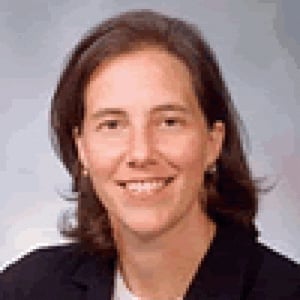
Executive Director and Executive Vice President, American Society of International Law
Elizabeth (Betsy) Andersen is Executive Director and Executive Vice President of the American Society of International Law (ASIL), a position she has held since 2006. Previously she served as the Executive Director of the American Bar Association's Central European and Eurasian Law Initiative (ABA CEELI), and as Executive Director of Human Rights Watch's Europe and Central Asia Division. Earlier in her career, she served as Legal Assistant to Judge Georges Abi-Saab of the International Criminal Tribunal for the former Yugoslavia and as a law clerk to Judge Kimba M. Wood of the U.S. District Court of the Southern District of New York.
Ms. Andersen is a graduate of Yale Law School, the Woodrow Wilson School of Public and International Affairs at Princeton University, and Williams College, from which she received the College’s Bicentennial Medal in 2006. Her area of expertise is international humanitarian, human rights, and refugee law. She serves as co-editor of the ASIL Studies in Transnational Legal Theory Series; as a member of the governing boards of the Washington Foreign Law Society and Friends of the Law Library of Congress; and as a member of the advisory committees of the American University Academy on Human Rights and Humanitarian Law, the International Senior Lawyers Project, and the Journal of International Humanitarian Legal Studies.
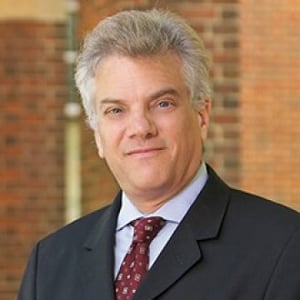
Sudler Family Professor of Constitutional Law, New York University School of Law
Richard H. Pildes is one of the nation’s leading scholars of constitutional law and a specialist in legal issues affecting democracy. He is a Member of the American Academy of Arts and Sciences and the American Law Institute, and has received recognition as a Guggenheim Fellow and a Carnegie Scholar. His acclaimed casebook, The Law of Democracy: Legal Structure of the Political Process (now in its fourth edition), helped create an entirely new field of study in the law schools. The Law of Democracy systematically explores legal and policy issues concerning the structure of democratic elections and institutions, such as the role of money in politics, the design of election districts, the regulation of political parties, the design of voting systems, the representation of minority interests in democratic institutions, and similar issues. He has written extensively on the rise of political polarization in the United States, the Voting Rights Act, the dysfunction of America’s political processes, the role of the Supreme Court in overseeing American democracy, the powers of the American President and Congress, and he has criticized excessively “romantic” understandings of democracy. In addition to his scholarship on these issues, he has written on national-security law, the design of the regulatory state, and American constitutional history and theory.
Respect for his expertise in these areas is reflected in frequent citations of his work in U.S. Supreme Court opinions, the translation of his work into many languages, and his frequent public lectures and appearances around the world, including his nomination with the NBC News Team for an Emmy Award for coverage of the 2000 Presidential election litigation.
His work has been translated and published in Chinese, French, Spanish, and Portuguese. In addition to his scholarship, Professor Pildes plays an active role litigating in these areas. He has won two cases before the United States Supreme Court, including a 2015 victory in Alabama Democratic Conference v. Alabama, a case involving race and redistricting. He served as counsel to a group of former chairmen of the Securities and Exchange Commission in litigation defending the constitutionality of the Sarbanes-Oxley Act; as counsel in election litigation to the Puerto Rico Electoral Commission; as counsel to the government of Puerto Rico; as a federal court-appointed independent expert on voting rights litigation; and as counsel in successful Supreme Court litigation that challenged the way the United States Tax Court operated. He was also a senior legal advisor to the 2008 and 2012 campaigns of President Obama.
Pildes received his A.B. in physical chemistry summa cum laude from Princeton, and his J.D. magna cum laude from Harvard, where he served as Supreme Court Note Editor on the Harvard Law Review. He clerked for Judge Abner J. Mikva of the U.S. Court of Appeals for the District of Columbia Circuit and for Justice Thurgood Marshall of the U.S. Supreme Court. After practicing law in Boston, he began his academic career at the University of Michigan Law School, before joining the NYU School of Law in 2001.
Professor of Law, Georgetown University Law Center
Nicholas Quinn Rosenkranz teaches constitutional law and federal jurisdiction, and he writes articles for the Harvard Law Review and the Stanford Law Review.
He is currently developing a new theory of constitutional interpretation and judicial review. The first installment, entitledThe Subjects of the Constitution, was published in the Stanford Law Review in May of 2010, and it is among the most downloaded articles about constitutional interpretation, judicial review, and/or federal courts in the history of SSRN. The second installment, The Objects of the Constitution, was published in May of 2011, also in the Stanford Law Review. And the comprehensive version is forthcoming as a book by Oxford University Press.
Rosenkranz has served and advised the federal government in a variety of capacities. He clerked for Judge Frank H. Easterbrook on the U.S. Court of Appeals for the Seventh Circuit (1999-2000) and for Justice Anthony M. Kennedy at the U.S. Supreme Court (October Term 2001). He served as an Attorney-Advisor at the Office of Legal Counsel in the U.S. Department of Justice (November 2002 - July 2004). He often testifies before Congress as a constitutional expert—most recently before the House Financial Services Oversight Subcommittee, regarding the Obama Administration's use of bank settlement agreements to circumvent the Appropriations Clause. He has also filed briefs and presented oral argument before the U.S. Supreme Court. His most recent Supreme Court brief, in Los Angeles v. Patel, was cited by Justice Alito in dissent.
Rosenkranz is a member of the New York Bar and the U.S. Supreme Court Bar. He is a Senior Fellow at the Cato Institute. He serves on the Board of Directors of the Foundation for Individual Rights in Education (FIRE). He is a founding member of Heterodox Academy and a member of its Executive Committee. He also serves on the Board of Directors of the Federalist Society and as the faculty advisor to the Georgetown chapter.
Patrick Hotung Professor of Constitutional Law, Georgetown University Law Center; Faculty Director, Georgetown Center for the Constitution
Randy E. Barnett is the Patrick Hotung Professor of Constitutional Law at the Georgetown University Law Center and is the Faculty Director of the Georgetown Center for the Constitution. After graduating from Northwestern University and Harvard Law School, he tried many felony cases as a prosecutor in the Cook County States’ Attorney’s Office in Chicago. A recipient of a Guggenheim Fellowship in Constitutional Studies and the Bradley Prize, Professor Barnett has been a visiting professor at Penn, Northwestern and Harvard Law School.
Professor Barnett’s publications includes thirteen books, more than one hundred articles and reviews, as well as numerous op-eds. His most recent book is Felony Review: Tales of True Crime and Corruption in Chicago (2026). His other books on the Constitution include: A Life for Liberty: The Making of an American Originalist (2024); The Original Meaning of the Fourteenth Amendment: Its Letter and Spirit (2021) (with Evan Bernick); An Introduction to Constitutional Law: 100 Supreme Court Cases Everyone Should Know (2019) (with Josh Blackman); Restoring the Lost Constitution: The Presumption of Liberty (2nd ed. 2013); Our Republican Constitution: Securing the Liberty and Sovereignty of We the People (2016); and Constitutional Law: Cases in Context (5th ed. forthcoming 2027) (with Josh Blackman). His books on contracts are The Oxford Introductions to U.S. Law: Contracts (2010) and Contracts: Cases and Doctrine (7th ed. 2021) (with Nate Oman). And he is the author of The Structure of Liberty: Justice and the Rule of Law (2nd ed. 2014).
In 2004, he argued the medical marijuana case of Gonzalez v. Raich before the U.S. Supreme Court. In 2012, he was one of the lawyers representing the National Federation of Independent Business in its constitutional challenge to the Affordable Care Act in NFIB v. Sebelius. He’s appeared in numerous documentaries and portrayed a prosecutor in the 2010 science-fiction feature film, InAlienable: The Movie. On X he is @RandyEBarnett
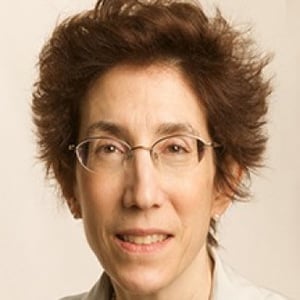
U.S. Court of Appeals, Ninth Circuit
Sandra Segal Ikuta was confirmed as a judge of the U.S. Court of Appeals for the Ninth Circuit on June 19, 2006. She filled a judgeship vacant since September 1, 2000, when Chief Judge Emeritus James R. Browning took senior status.
Before becoming a U.S. Circuit Judge, California Gov. Arnold Schwarzenegger appointed her to be deputy secretary and general counsel of the California Resources Agency in January 2004.
Prior to her political appointment, Judge Ikuta was a partner at the Los Angeles office of O'Melveny & Myers LLP. She joined the law firm in 1990 as an associate and became a partner in 1997. She specialized in environmental and natural resources law and co-chaired the firm's environmental practice group. She previously served as a law clerk for U.S. Supreme Court Justice Sandra Day O'Connor, 1989-90, and Judge Alex Kozinski of the U.S. Court of Appeals for the Ninth Circuit, 1988-89.
Prior to her legal career, Judge Ikuta took an unorthodox career path, which included serving as the first female editor-in-chief of a national martial arts magazine.
She received her J.D. from the University of California at Los Angeles School of Law and a Master of Science from Columbia University School of Journalism. She earned her undergraduate degree from the University of California at Berkeley in 1976.
In addition to her duties as an active U.S. Circuit Judge, Judge Ikuta was an appointed member of the Judicial Conference of the U.S. Advisory Committee on Bankruptcy Rules.
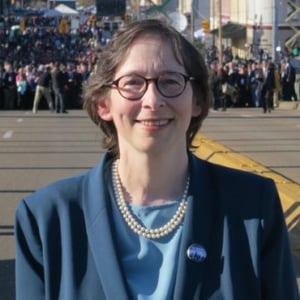
Kenneth and Harle Montgomery Professor of Public Interest Law and Co-Director, Supreme Court Litigation Clinic, Stanford Law School
A productive scholar and an award-winning teacher, Pamela S. Karlan is co-director of the school’s Supreme Court Litigation Clinic, where students litigate live cases before the Court. One of the nation’s leading experts on voting and the political process, she has served as a commissioner on the California Fair Political Practices Commission, an assistant counsel and cooperating attorney for the NAACP Legal Defense Fund, and a Deputy Assistant Attorney General in the Civil Rights Division of the U.S. Department of Justice (where she received the Attorney General’s Award for Exceptional Service – the department’s highest award for employee performance – as part of the team responsible for implementing the Supreme Court’s decision in United States v. Windsor). Professor Karlan is the co-author of leading casebooks on constitutional law, constitutional litigation, and the law of democracy, as well as numerous scholarly articles.
Before joining the Stanford Law School faculty in 1998, she was a professor of law at the University of Virginia School of Law and served as a law clerk to Justice Harry A. Blackmun of the U.S. Supreme Court and Judge Abraham D. Sofaer of the U.S. District Court for the Southern District of New York. Karlan is a member of the American Academy of Arts and Sciences, the American Academy of Appellate Lawyers, and the American Law Institute.
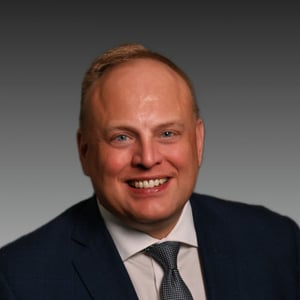
Executive Vice President and Director of Litigation, EdChoice Legal Advocates
Before founding a public interest law firm at EdChoice, Tom Fisher served as Indiana’s first Solicitor General from 2005-2023. Fisher has argued dozens of high-profile cases before both the Indiana Supreme Court and the Seventh Circuit U.S. Court of Appeals and five cases before the U.S. Supreme Court. A two-time recipient of the National Association of Attorneys General Best Brief Award, Fisher is a Fellow of the American Academy of Appellate Lawyers and a Sagamore of the Wabash. Fisher is a graduate of Wabash College and Indiana University Maurer School of Law, where he serves as an Adjunct Professor of Law.
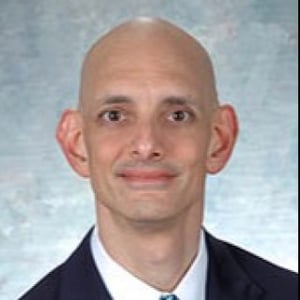
Distinguished Professor and Lawrence A. Jegen III Professor, Indiana University Robert H. McKinney School of Law
Gerard N. Magliocca is a Distinguished Professor and the Lawrence A. Jegen III Professor at the Indiana University Robert H. McKinney School of Law. Professor Magliocca is the author of five books on constitutional law. His next book will be about Justice Robert Jackson’s landmark concurring opinion in Youngstown Sheet and Tube Company v. Sawyer. His biography of Justice Bushrod Washington won the Erwin N. Griswold Prize from the Supreme Court Historical Society.
Professor Magliocca received his undergraduate degree from Stanford and his law degree from Yale. He joined the faculty in 2001 after two years as an attorney and one year as a law clerk for Judge Guido Calabresi on the United States Court of Appeals for the Second Circuit. In 2008, Professor Magliocca held the Fulbright-Dow Distinguished Research Chair of the Roosevelt Study Center in Middelburg, The Netherlands. He was a Fellow at the Washington Library at Mount Vernon from 2019-2021.
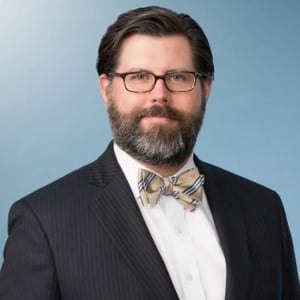
Partner, Faegre Drinker Biddle & Reath LLP
Brian J. Paul is an appellate lawyer and leads law teams in high-stakes commercial litigation. He has briefed and argued everything from weighty abstract constitutional issues to dollars-and-cents business issues and everything in-between, both on appeal and in trial courts around the country. A member of the American Law Institute, recent past-president of the Seventh Circuit Bar Association and top-tier ranked Chambers appellate lawyer, Brian had one client say about him: “Brian is one of the most respected and skilled appellate lawyers, not only in Indianapolis but across the country. He is trusted to deliver timely guidance on complex issues.” Another said: “He is excellent. I enjoyed working with him. He is able to put things into layman’s terms and explains things really well. His written and oral advocacy are short, crisp and to the point.”
Clients hire Brian to digest the complex, and make the complex simple and compelling for busy, generalist judges. In his writing, he strives to cut through jargon and legalese, and distill things down to what’s important. In his oral advocacy, by intense preparation, he strives to be the advocate whom judges trust for the right answers. In the dozens of cases he has argued, Brian has helped clients win on both sides of the “v.” His recent representations include:

Reconstructing First Principles [NSS 2018]
Kurt Lash
With its dramatic expansion of individual rights, did the Fourteenth Amendment change the structure of...
Federalism & Separation of Powers: Justice Scalia on Federalism and Separation of Powers
John S. Baker, Ron DeSantis, Roger Pilon, William H. Pryor, Luther Johnson Strange, Jonathan R. Turley
Justice Scalia often said that, while he always tried to get the Bill of Rights...
Showcase Panel I: The Original View of Congress
Akhil Reed Amar, James L. Buckley, Louis Fisher, Tara Helfman, Gordon Lloyd
What was the founders' conception of the role of Congress? Was that conception clearly understood?...
Attorney General Adam Laxalt on the Role of Congress
Adam P. Laxalt
"We need to get folks in Congress that come in with a mindset that they...
Bond v. U.S. Decided - Podcast
Nicholas Quinn Rosenkranz, John C. Eastman
On June 2, 2014, the U.S. Supreme Court decided Bond v. U.S. The Court did...
US v. Bond: Expanding Congress' Power? - Podcast
Nicholas Quinn Rosenkranz, John C. Eastman, Dean Reuter
Do the Constitution’s structural limits on federal authority impose constraints on the scope of Congress’...
United States v. Kebodeaux - Post-Argument SCOTUScast
Randy E. Barnett
On April 17, 2013, the Supreme Court heard oral argument in United States v. Kebodeaux. The...
Luncheon Debate: Resolved: Congress's Enumerated Powers Cannot be Increased by Treaty
Elizabeth Andersen, Richard H. Pildes, Nicholas Quinn Rosenkranz
The Federalist Society's Facutly Division hosted this debate on Saturday, January 5, 2013, during the 15th...
Debate: The Constitutionality of the Affordable Care Act
Randy E. Barnett, Sandra Segal Ikuta, Pamela S. Karlan, Michael Reynolds
This debate will focus on the constitutionality of the Affordable Care Act. While specific attention...
A Debate Over the Constitutionality of the Health Care Reform Act
Thomas M. Fisher, Gerard N. Magliocca, Brian J. Paul
On October 25, 2011, the Indianapolis Lawyers Chapter of the Federalist Society hosted a debate...