

Chief Policy Counsel, Council on Criminal Justice and Senior Advisor, Right on Crime
Marc A. Levin is the Chief Policy Counsel for the Council on Criminal Justice (counciloncj.org) and Senior Advisor for Right on Crime.
An attorney and accomplished author on legal and public policy issues, Marc began the Foundation’s criminal justice program in 2005. This work contributed to nationally praised policy changes that have been followed by dramatic declines in crime and incarceration in Texas. Building on this success, in 2010, Levin developed the concept for the Right on Crime initiative, a TPPF project in partnership with Prison Fellowship and the American Conservative Union Foundation. Right on Crime has become the national clearinghouse for conservative criminal justice reforms and has contributed to the adoption of policies in dozens of states that fight crime, support victims, and protect taxpayers.
In 2014, Levin was named one of the “Politico 50” in the magazine’s annual “list of thinkers, doers, and dreamers who really matter in this age of gridlock and dysfunction.”
Marc has testified on criminal justice policy on four occasions before Congress and has testified before legislatures in states including Texas, Nevada, Kansas, Wisconsin, and California. He also has met personally with leaders such as U.S. Presidents, Speakers of the House, and the Justice Commtitee of the United Kingdom Parliament to share his ideas on criminal justice reform. In 2007, he was honored in a resolution unanimously passed by the Texas House of Representatives that stated, “Mr. Levin’s intellect is unparalleled and his research is impeccable.”
Since 2005, Marc has published dozens of policy papers on topics such as sentencing, probation, parole, reentry, and overcriminalization which are available on the TPPF website. Levin’s articles on law and public policy have been featured in publications such as the Wall Street Journal, USA Today, Texas Review of Law & Politics, National Law Journal, New York Daily News, Jerusalem Post, Toronto Star, Atlanta Journal-Constitution, Philadelphia Inquirer, San Francisco Chronicle, Washington Times, Los Angeles Daily Journal, Charlotte Observer, Dallas Morning News, Houston Chronicle, Austin American-Statesman, San Antonio Express-News and Reason Magazine.
In 1999, Marc graduated with honors from the University of Texas with a B.A. in Plan II Honors and Government. In 2002, Marc received his J.D. with honors from the University of Texas School of Law. Marc was a Charles G. Koch Summer Fellow in 1996. He served as a law clerk to Judge Will Garwood on the U.S. Court of Appeals for the Fifth Circuit and Staff Attorney at the Texas Supreme Court.
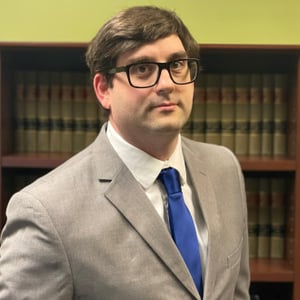
Bureau Chief of the Legal Affairs Unit, Albany County District Attorney’s Office
Vincent Stark is Bureau Chief of the Legal Affairs Unit at the Albany County District Attorney’s Office in Upstate New York. His practice primarily deals with appeals, post-conviction remedies, and sealing and expungement.
Vincent received his juris doctorate cum laude from the University of Notre Dame Law School, where he served as Executive Editor of the Journal of Legislation. He received his bachelor’s degree in Political Science magna cum laude from Syracuse University. After law school he served as a legislative fellow in the New York State Senate before joining the District Attorney’s Office. His published works have appeared in the Albany Law Review and the Georgetown Journal of Gender and the Law, and he has frequently taught classes and CLEs on criminal law, legal research and writing, and sealing and expungement programs to support the re-entry of convicts into society.

Attorney, Institute for Justice
Marie Miller is an attorney with the Institute for Justice. Her practice focuses on protecting economic liberty, property rights, and educational choice.
Marie received her law degree from Indiana University’s Maurer School of Law. She received her undergraduate degree in music from the University of Notre Dame. And she holds masters degrees in music, from Indiana University’s Jacobs School of Music, and public affairs, from Indiana University’s School of Public and Environmental Affairs. After law school, Marie clerked for Chief Justice Loretta H. Rush of the Indiana Supreme Court and for Judge Michael S. Kanne of the U.S. Court of Appeals for the Seventh Circuit.
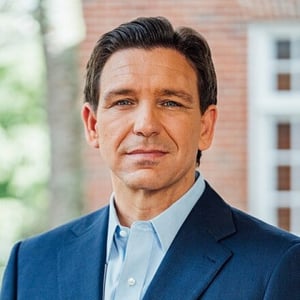
Governor, Florida
Ron DeSantis is the 46th Governor of the State of Florida. Since taking office in January 2019, he has worked hard to expand education opportunities, improve Florida’s water resources and Everglades, champion vocational training, bolster public safety, foster innovation in health care, assist with hurricane recovery, promote infrastructure development and support veterans – all while lowering taxes and being fiscally responsible.
A native Floridian, Governor DeSantis worked his way through Yale University, where he captained the university baseball team and graduated magna cum laude. He also gradated with honors from Harvard Law School. While at Harvard, he earned a commission in the U.S. Navy as a JAG Officer. During his active duty service, then- Lieutenant DeSantis deployed to Iraq as an advisor to a U.S. Navy SEAL Commander in support of the SEAL mission in Iraq. His military decorations include the Iraq Campaign Medal of the Bronze Star Medal (meritorious service).
Prior to serving as Governor, DeSantis served as the U.S. Congressman for Florida’s 6th District. As Chairman of the National Security Subcommittee, DeSantis spearheaded efforts to reform the UA, combat terrorism, identify government waste and relocate the American Embassy in Israel to Jerusalem. As a Congressman, DeSantis championed term limits, fiscal responsibility with a strong national defense.
Governor DeSantis is married to First Lady Casey DeSantis, a former Emmy Award winning television host. They are the proud parents of two children, Madison and Mason. They are the youngest family living in the Florida Governor’s Mansion in nearly fifty years.
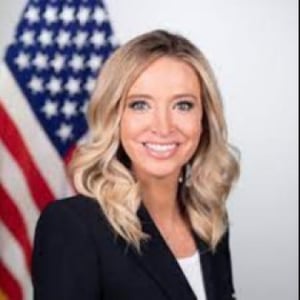
Former White House Press Secretary
Kayleigh McEnany currently serves as co-host of Outnumbered (weekdays, 12 PM/ET) on FOX News Channel. McEnany also contributes across all of FOX News Media platforms as an on-air commentator. She joined the network in March 2021.
Prior to joining FOX News Channel, McEnany served as White House Press Secretary under former President Donald Trump. She served as White House Press Secretary from April 2020 through the end of former President Trump’s term. Previously, McEnany held the title of national spokesperson for the Republican National Committee before joining the Trump campaign as national press secretary. She got her start in politics as an intern for former Rep. Adam Putnam (R-FL) and later, in the White House Office of Media Affairs during President George W. Bush’s administration.
Additionally prior to her role at the White House, McEnany worked as a political analyst at CNN. She has also been a contributor at The Hill and a columnist for Above the Law. She began her career in media as an intern at FOX News, where she later became a production assistant.
An alumna of Harvard Law School, McEnany earned her Juris Doctor in 2016. She also holds a degree in international politics from Georgetown University’s School of Foreign Affairs and studied politics and international relations at Oxford University, St. Edmund Hall. In 2018, McEnany authored her first book, The New American Revolution: The Making of a Populist Movement.

Attorney and Legal Commentator
John Shu is an attorney and legal commentator. His focus areas include constitutional law, securities & corporate law, antitrust law, administrative law, politics, and international affairs. Mr. Shu has lectured and published on a wide variety of issues.
Mr. Shu served President George H.W. Bush and President George W. Bush. He also served Judge Stanley Sporkin, U.S. District Court for the District of Columbia, who was Director of Enforcement at the U.S. Securities & Exchange Commission and General Counsel at the Central Intelligence Agency, and Judge Paul Roney, U.S. Court of Appeals for the Eleventh Circuit, who was Presiding Judge of the Foreign Intelligence Surveillance Court of Review.
Mr. Shu is a member of the National Committee on U.S. - China Relations, the Pacific Council on International Policy, and the Foreign Policy Association.

Tazewell Taylor Professor of Law and William H. Cabell Research Professor, William & Mary Law School
Jonathan H. Adler joined the William & Mary law faculty as the Tazwell Taylor Professor of Law and William H. Cabell Research Professor in 2025. Prior to joining the faculty, he was the inaugural Johan Verheij Memorial Professor of Law and the founding Director of the Coleman P. Burke Center for Environmental Law at the Case Western Reserve University School of Law.
Professor Adler is the author or editor of seven books, including Climate Liberalism: Perspectives on Liberty, Property and Pollution (Palgrave, 2023), Marijuana Federalism: Uncle Sam and Mary Jane (Brookings Institution Press, 2020), Business and the Roberts Court (Oxford University Press, 2016) and Rebuilding the Ark: New Perspectives on Endangered Species Act Reform (AEI Press, 2011).
His articles have appeared in publications ranging from the Harvard Environmental Law Review and Yale Journal on Regulation to the Wall Street Journal, New York Times, and Washington Post. He has testified before Congress a dozen times, and his work has been cited in the U.S. Supreme Court. A 2024 study identified Professor Adler as the seventh most cited legal academic in administrative and environmental law from 2019 to 2023.
Professor Adler is a contributing editor to Civitas Outlook and a regular contributor to the popular legal blog, The Volokh Conspiracy. A regular commentator on constitutional and regulatory issues, he has appeared on numerous radio and television programs, ranging from the PBS Newshour and National Public Radio to the Fox News Channel and Entertainment Tonight.
Professor Adler is a senior fellow at the Property & Environment Research Center in Bozeman, Montana. In 2018, Professor Adler was elected to membership in the American Law Institute and helped co-found the organization Checks and Balances. In 2024, Professor Adler was appointed a public member of the Administrative Conference of the United States.
Professor Adler clerked for the Honorable David B. Sentelle on the U.S. Court of Appeals for the District of Columbia Circuit.

Adam Griffin is a graduate of the University of North Carolina School of Law. During law school, he served as a research assistant to Professor Stephen E. Sachs and UNC Law Dean Martin Brinkley. After law school, Adam spent two years litigating for liberty at the Institute for Justice as an inaugural Law and Liberty Fellow. He then served as a law clerk to Chief Judge Richard E. Myers in the United States District Court for the Eastern District of North Carolina, and previously worked at Pacific Legal Foundation and the Civil Rights Division of the Department of Justice.
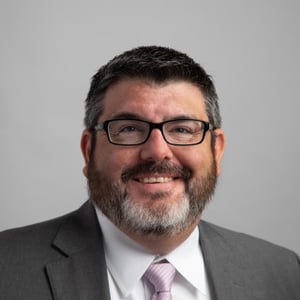
Senior Attorney, Institute for Justice
Paul Avelar is the Managing Attorney of the Institute for Justice Arizona Office. He joined the Institute in March 2010 and litigates free speech, property rights, economic liberty, school choice and other constitutional cases in federal and state courts.
As the head of IJ’s national Braiding Freedom Initiative, Paul represents natural hair braiders across the country to protect their right to earn an honest living. The Initiative uses lawsuits, activism and research to remove laws that require potential braiders to undergo hundreds of costly training hours just to braid hair. Since IJ launched the Braiding Freedom Initiative in 2014, 12 additional states have freed braiders from unnecessary licensing burdens. Paul drafted the model Natural Hair Braiding Protection Act, which has been adopted in Arkansas, Indiana, Iowa, Kentucky, Nebraska, New Hampshire, Texas and South Dakota. He is currently representing braiders in Missouri, where state laws infringe upon their right to earn an honest living.
In his free speech work, Paul has challenged numerous laws that trample First Amendment rights. In Arizona Freedom Club PAC v. Bennett, he represented candidates and independent groups in a successful U.S. Supreme Court challenge to the “matching funds” provision of Arizona’s publicly financed elections system. He represented grassroots groups and individuals in Arizona, Mississippi and Washington, where state laws burdened their political speech by requiring them to register with the government, to navigate complex regulations and to face fines and possible criminal penalties merely because they talked about political issues. In Washington, Paul protected a lawyer’s right to defend, pro-bono, the First Amendment rights of political speakers. Through litigation and legislation, Paul leads the fight against abusive civil forfeiture laws in Arizona and elsewhere.
Paul also co-authored the most comprehensive published study of economic liberty protections in the Arizona Constitution. The Chief Justice of the Arizona Supreme Court appointed Paul to the Task Force on the Review of the Role and Governance Structure of the State Bar of Arizona, where he dissented from the majority report and called on leaders to substantially reform the Bar and state regulation of the practice of law. He often speaks at law schools across the country about constitutional issues and his work at IJ.
Prior to joining IJ-AZ, Paul worked as an attorney in Philadelphia. He clerked for Judge Roger Miner on the 2nd U.S. Circuit Court of Appeals, Justice Andrew Hurwitz on the Arizona Supreme Court, and Judge Daniel Barker on the Arizona Court of Appeals.
Paul graduated manga cum laude from the Arizona State University College of Law in 2004 and was elected to the Order of the Coif. He received his undergraduate degree from Princeton University in 2000.
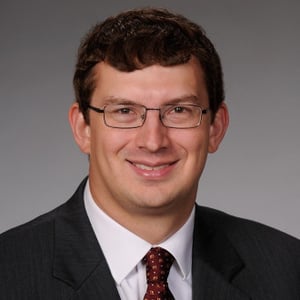
Mr. Pekron’s practice is primarily devoted to complex business, tort, and class action litigation. Mr. Pekron is listed in The Best Lawyers in America® in the area of Commercial Litigation, recognized as a Rising Star in the area of Business Litigation by Mid-South Super Lawyers, and a Future Star in Litigation by Benchmark Litigation. He has represented companies and individuals in cases throughout the nation involving breach of contract, professional liability, consumer fraud, products liability, and ERISA issues. He has significant experience in representing accounting firms, publicly-traded companies, and corporate officers and directors in securities litigation, regulatory matters, professional malpractice actions, and internal investigations.
Mr. Pekron also has an active appellate practice and has appeared in numerous state and federal appellate courts, including the Supreme Court of Illinois, the New York Court of Appeals, and the United States Courts of Appeals for the Third, Fourth, Fifth, and Sixth Circuits. He has argued cases before the Arkansas Supreme Court, the Arkansas Court of Appeals, and the United States Court of Appeals for the Seventh Circuit. He has also been responsible for petitions for certiorari and amicus briefs in the United States Supreme Court.
Mr. Pekron received his law degree from Yale Law School, where he served as Book Reviews Editor of the Yale Law Journal. His work has been published in the Hamline Law Review.
After graduating from law school, Mr. Pekron clerked for Judge Morris Sheppard Arnold of the United States Court of Appeals for the Eighth Circuit. During his clerkship, he served as an adjunct professor of law at the University of Arkansas at Little Rock School of Law. He then worked as an associate at the Chicago law firm of Sidley Austin LLP.

Principal, Sharon Fast Gustafson, Attorney at Law, PLC
SHARON FAST GUSTAFSON is the immediate past General Counsel of the U.S. Equal Employment Opportunity Commission (EEOC), where she enforced Title VII of the Civil Rights Act of 1964, the Americans with Disabilities Act, and the Age Discrimination in Employment Act.
Ms. Gustafson graduated with honors from Georgetown Law Center in 1991 and has concentrated her practice in employment law. She worked for four years in the labor and employment law group at Jones, Day in Washington, D.C. Since that time, she has had a broad-based solo practice advising and representing employers and employees in handling all aspects of the employment relationship, in compliance with federal and state workplace laws, and in designing and implementing sound employment policies and practices.
Ms. Gustafson is an experienced litigator in federal and state courts; before administrative agencies, including the EEOC, state and local civil rights offices, and the Department of Labor (DOL) Wage and Hour Division; and in mediation and arbitration. She is admitted to practice in state and federal courts in Virginia, Maryland, and the District of Columbia, and in the United States Supreme Court.
Ms. Gustafson successfully litigated a pregnancy discrimination case, Young v. UPS, 575 U.S. 206 (2015), from EEOC intake to a successful outcome at the U.S. Supreme Court. In 2016, she received the Metropolitan Washington Employment Lawyers Association’s “Lawyer of the Year” award “in recognition of outstanding dedication to Civil Rights, Equality, and Justice.”
Ms. Gustafson represents both employers and employees in matters relating to employment law.
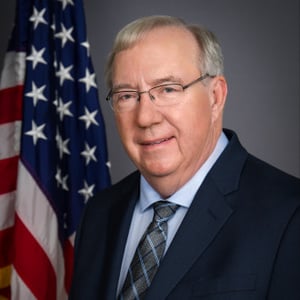
General Counsel, United States National Labor Relations Board
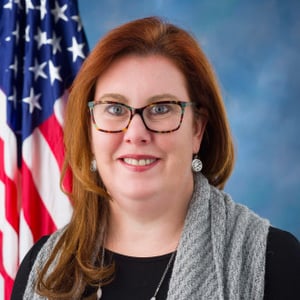
Chief Legal and Government Affairs Officer, BrightStar Care
Cheryl M. Stanton is Chief Legal and Government Affairs Officer at BrightStar Care. Prior to joining BrightStar Care, she served as Administrator of the Department of Labor’s Wage and Hour Division. She was sworn in as WHD’s Administrator by U.S. Secretary of Labor Alexander Acosta on April 29, 2019.
Stanton brought a wealth of experience to WHD, most recently having served as the Executive Director of the South Carolina Department of Employment and Workforce. Under her leadership, South Carolina’s jobless rate dropped to its lowest point in at least 50 years. During that time period, South Carolina’s workforce system helped place over 500,000 South Carolinians into jobs. Stanton also partnered with her colleague at the Department of Corrections to create a job re-entry program for ex-offenders, receiving national accolades. She also oversaw two major information technology modernization projects that improved customer service and increased efficiencies for employees.
Stanton served as the White House’s principal legal liaison to the DOL under President George W. Bush. She is a graduate of Williams College, and earned her law degree from the University of Chicago Law School.

Judge, United States Court of Appeals, Sixth Circuit
Amul R. Thapar serves as a judge on the United States Court of Appeals for the Sixth Circuit. His judicial career began in 2007 when President George W. Bush nominated him to serve on the Eastern District of Kentucky, making him the first South Asian Article III judge in American history. In 2017, he became President Donald J. Trump’s first appellate court nominee.
Before joining the bench, Judge Thapar served as the United States Attorney for the Eastern District of Kentucky. While United States Attorney, Judge Thapar worked on the Attorney General’s Advisory Committee (“AGAC”) and chaired the AGAC’s Controlled Substances and Asset Forfeiture subcommittee. He also served on the Terrorism and National Security subcommittee, the Violent Crime subcommittee, and the Child Exploitation working group.
Judge Thapar has worked in private practice, at Williams & Connolly in Washington, D.C., and Squire, Sanders & Dempsey in Cincinnati, Ohio. He also served as an Assistant United States Attorney in both the Southern District of Ohio and the District of Columbia.
Judge Thapar received his undergraduate degree from Boston College and his law degree from the University of California, Berkeley. After graduating, Judge Thapar worked as a law clerk to the Honorable S. Arthur Spiegel of the United States District Court for the Southern District of Ohio, and the Honorable Nathaniel R. Jones of the United States Court of Appeals for the Sixth Circuit.
Judge Thapar has also published in the Yale Law Journal, Michigan Law Review, and Catholic University Law Review. He teaches courses on originalism, the Federalists and Anti-Federalists, and legal writing at Notre Dame Law School, the University of Virginia School of Law, and Vanderbilt Law School.

Senior Vice President for Legal Studies, Cato Institute
Clark Neily is senior vice president for legal studies at the Cato Institute. His areas of interest include constitutional law, overcriminalization, civil forfeiture, police accountability, and gun rights. Neily is the author of Terms of Engagement: How Our Courts Should Enforce the Constitution’s Promise of Limited Government. His writing has appeared in the Wall Street Journal, Forbes, and National Review Online, as well as various law reviews, including the Harvard Journal of Law and Public Policy, George Mason Law Review, Georgetown Journal of Law and Public Policy, NYU Journal of Law and Liberty, and Texas Review of Law and Politics. Neily is a frequent guest speaker and lecturer for the Federalist Society, Institute for Humane Studies, and American Constitution Society.
Before joining Cato in 2017, Neily was a senior attorney and constitutional litigator at the Institute for Justice and director of the Institute’s Center for Judicial Engagement. He is also an adjunct professor at the University of Texas School of Law, where he teaches constitutional litigation and public-interest law.
Neily served as co-counsel in District of Columbia v. Heller, the historic case in which the Supreme Court held for the first time that the Second Amendment protects an individual right to own a gun for self-defense.
Neily began his legal career as a law clerk to Judge Royce Lamberth on the U.S. District Court for the District of Columbia. After that he spent four years in the trial department of the Dallas-based firm Thompson & Knight. Neily received his undergraduate and law degrees from the University of Texas, where he was Chief Articles Editor of the Texas Law Review.
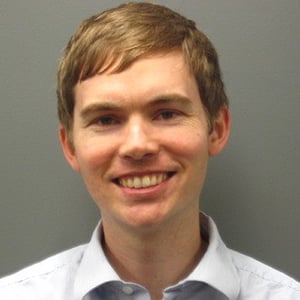
Policy Director, The Hamilton Project; Fellow in Economic Studies, Brookings Institution
Ryan Nunn is a fellow in Economic Studies and policy director for the Hamilton Project at the Brookings Institution. Prior to joining Brookings, Nunn worked at the U.S. Department of the Treasury in the Office of Economic Policy. Nunn also teaches at the University of Maryland.
Nunn earned his Ph.D. in economics and public policy at the University of Michigan, Ann Arbor. His research interests include labor economics and public finance, with a particular focus on labor market institutions.

Regulation Fellow, Penn Program on Regulation, University of Pennsylvania Law School
Gabe Scheffler is a Regulation Fellow in the Penn Program on Regulation. His research focuses primarily on health law and policy, occupational regulation, and administrative law. Before joining Penn Law School, he was a Staff Economist at the White House Council of Economic Advisers and a research assistant at the Harvard Kennedy School’s Center for International Development.
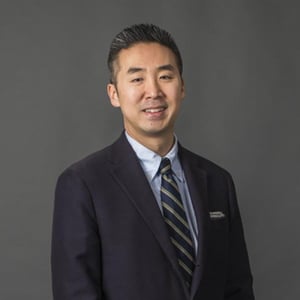
Associate Professor of Law and Director of Economic Education at the Global Antitrust Institute, George Mason University Antonin Scalia Law School
John M. Yun is an Associate Professor of Law at the Antonin Scalia Law School, George Mason University, and the Director of Economic Education at the Global Antitrust Institute (GAI). Prior to joining Scalia Law, he was an Acting Deputy Assistant Director in the Bureau of Economics, Antitrust Division, at the U.S. Federal Trade Commission (FTC). He has also taught economics at Georgetown University, Emory University, and Georgia Tech. He received his BA in economics at UCLA and his PhD in economics at Emory University.
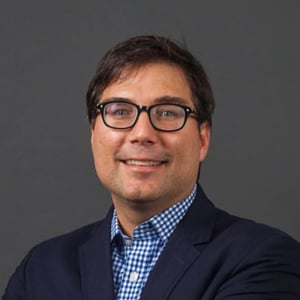
Associate Professor of Law and Director, Program on Economics & Privacy, Antonin Scalia Law School, George Mason University
Associate Professor of Law James C. Cooper brings over a decade of public and private sector experience to his research and teaching. He served as Deputy and Acting Director of the Federal Trade Commission’s Office of Policy Planning, Advisor to Federal Trade Commissioner William Kovacic, and an associate in the antitrust group of Crowell and Moring, LLP. His research on vertical restraints, price discrimination, behavioral economics and antitrust, and privacy policy have appeared in top journals and are widely cited.
Professor Cooper has a BA from the University of South Carolina, received his PhD in economics from Emory University, and his law degree (magna cum laude) from Antonin Scalia Law School, George Mason University, where he was a Levy Fellow and a member of the George Mason Law Review.
He teaches Economics for Lawyers, Advanced Seminar on Law & Economics, and Digital Information Policy Seminar.

Fellow, National Security Institute, Antonin Scalia Law School, George Mason University
Vince Vitkowsky chaired the Executive Committee of the Federalist Society’s International and National Security Law and Policy Practice Group for over a decade. He is also a Fellow at the National Security Institute of George Mason University Law School. Vince spent 45 years in private practice, primarily in AmLaw 100/200 firms and their spin-offs. His practice included domestic and international commercial arbitration and litigation, as well as cyber risks and liabilities. Vince's current focus is on national security policy, artificial intelligence, cybersecurity, and counterterrorism. He has often written and spoken on national security and other public policy issues. Among other affiliations, Vince has been an Adjunct Fellow at the Center for Law and Counterterrorism of the Foundation for the Defense of Democracies, a member of the Executive Committee of the American Branch of the International Law Association, and Co-Chair of the Committee on Interventions and Trial Observations of the International Bar Association’s Human Rights Institute. He received his B.A. from Northwestern University and his J.D. from Cornell Law School.

Courthouse Steps Decision: Determining Finality for Pursuing Liability: The Implications of Thompson v. Clark
Marc Levin, Vincent Stark, Marie Miller
In Thompson v. Clark, the plaintiff sought to bring a civil suit claiming he was...
Featured Fireside Chat with Gov. Ron DeSantis and Kayleigh McEnany [Florida Chapters Conference]
Ron DeSantis, Kayleigh McEnany
Forida Governor Ron Desantis and former White House Press Secretary Kayleigh McEnany held a fireside...
Opioid Litigations and Public Nuisance: Updates From California, Oklahoma, and Ohio
John Shu
On February 25, 2022, Johnson & Johnson, Teva Pharmaceutical Industries, Ltd., McKesson Corp., Cardinal Health,...
Federalism in the Age of Pandemic Health Measures
Jonathan H. Adler
Featuring: Jonathan H. Adler, Johan Verheij Memorial Professor of Law and Director, Coleman P. Burke...
Protecting Economic Liberty in the Federal Courts: Theory, Precedent, Practice
Adam F. Griffin
The 14th Amendment meaningfully protects economic liberty. While this protection was originally housed in the...
The Right to Earn an Honest Living: Occupational Licensing Versus the American Dream
Paul Avelar, Chad W. Pekron
On March 1, 2021, the Federalist Society's Little Rock Lawyers Chapter hosted Paul Avelar to...
Labor & Employment Law: Agency Leaders on Labor Policy
Sharon Fast Gustafson, Peter B. Robb, Cheryl M. Stanton, Amul R. Thapar
On November 11, 2020, The Federalist Society's Professional Labor & Employment Law Practice Group hosted...
Topics
California’s Occupational Licensing Laws Shouldn’t Kick People When They’re Down
It’s become somewhat of a banality to say that occupational licensing has run amok. As...
Regulating the Modern Workforce
Clark Neily, Ryan Nunn, Gabriel Scheffler, John Yun, James C. Cooper
This symposium was co-sponsored by the Regulatory Transparency Project and took place at the Antonin...
Cyber, Robotic, and Space Weapons in International Conflict
Vincent Vitkowsky
A review of: Striking Power: How Cyber, Robots, and Space Weapons Change the Rules for...