

Judge, United States Court of Appeals, District of Columbia Circuit
Judge Katsas was appointed to the D.C. Circuit in December 2017. He graduated from Princeton University and Harvard Law School, where he was an executive editor on the Harvard Law Review. Between 1989 and 1992, he served as a law clerk to Judge Edward Becker on the Third Circuit, to then-Judge Clarence Thomas on the D.C. Circuit, and to Justice Thomas on the Supreme Court. Between 1992 and 2001, he was an associate and then partner in the Washington office of Jones Day, where he specialized in appellate and complex civil litigation. Between 2001 and 2009, he served in many senior positions in the Department of Justice, including as Assistant Attorney General for the Civil Division and as Acting Associate Attorney General. In 2009, he returned to Jones Day. From January to December 2017, he served as Deputy Assistant to the President and Deputy Counsel to the President.
Before joining the bench, Judge Katsas argued more than 75 appeals, including three cases in the Supreme Court, 13 cases in the D.C. Circuit, and cases in every other federal court of appeals. By appointment of the Chief Justice, he served on the Advisory Committee on Appellate Rules from 2013 to 2017. In 2016, he was elected to membership in the American Academy of Appellate Lawyers.
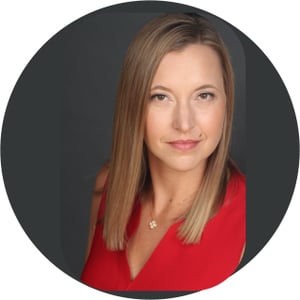
Partner, Clare Locke LLP
Libby is one of the country’s most sought-after libel lawyers. She is a trusted counselor and fierce advocate for Fortune 100 companies and high-profile individuals facing existential reputational attacks from the national media and other influential publishers, achieving remarkable results for her clients both in and outside the courtroom. Court watchers have called her “as good as they get,” “aggressive and not afraid to litigate,” and someone who has the media savvy to handle high profile matters in the public eye.
After co-founding Clare Locke LLP in 2014, Libby rapidly rose to national prominence for a highly-publicized multi-million dollar trial victory against Rolling Stone magazine about a fabricated gang rape at a University of Virginia fraternity. In 2019, she was lead trial counsel and won a $26 million federal jury verdict on behalf of a successful North Carolina businessman who was defamed by a public company during a proxy fight. A commentator opined that “she was excellent in trial and she eviscerated the other side,” and the federal judge concluded that her vigorous cross-examination “exposed [Defendant’s] CEO as a non-credible witness.” A skilled appellate advocate and former federal circuit clerk, in 2019 Libby achieved a rare win against The New York Times on behalf of former Gov. Sarah Palin in the U.S. Court of Appeals for the Second Circuit arising out of a false and defamatory editorial. She is actively litigating matters against a variety of mainstream news outlets, including CNN and The New York Times.
Libby’s success in the courtroom gets her results in the newsroom. She regularly advises clients and their PR counsel in dealing with the national media in crisis situations, and some of her biggest wins are the false stories the public will never hear about. She has killed flawed articles, storylines, and broadcast segments in outlets including in The New York Times, The Washington Post, Vanity Fair, The National Enquirer, and on Bloomberg, CBS and The Dr. Oz Show. Libby has also vindicated her clients’ reputations by obtaining myriad retractions of false publications. Examples include securing a $3.375 million settlement and video apology from the Southern Poverty Law Center, a complete retraction of a Bloomberg podcast, a multi-article correction from The Chicago Tribune, and the removal of a paperback edition book from publication by Simon & Schuster.
Recognized as an expert in libel law and the First Amendment, Libby has been ranked as a Band 1 global defamation/reputation management provider in Chambers & Partners HNW directory every year since its inception in 2016, and a Band 1 First Amendment Litigator in Chambers & Partners USA in 2020. She has numerous national awards and accolades from the National Law Journal, including being named as one of D.C.’s 40 Under 40 in 2019. She is regularly asked to speak on issues involving the First Amendment, media, and reputation, including publishing multiple op-eds in The Wall Street Journal and appearing as a guest on Fox News, CNN, and ABC’s 20/20. Libby has also served as an adjunct professor at Georgetown University Law Center and George Washington University Law School.
Libby graduated from NYU’s College of Arts and Science with a degree in Politics and Economics, and she received her J.D. from Georgetown University Law Center. After law school, she clerked on the U.S. Court of Appeals for the Fifth Circuit, and then began her career in private practice at Kirkland & Ellis. Perhaps the accomplishment of which she is most proud, Libby is a mom of five. She lives in Alexandria, Virginia with her husband and law partner, Tom Clare, their children, and the world’s most spoiled Labrador Retriever, Gipper.
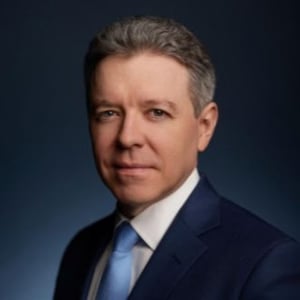
Former Solicitor General of Texas
Jonathan F. Mitchell is Principal at Mitchell Law PLLC. He received his law degree with high honors from the University of Chicago Law School, where he was an articles editor of The University of Chicago Law Review and a member of the Order of the Coif.
After graduating from law school, Mr. Mitchell clerked for Judge J. Michael Luttig of the U.S. Court of Appeals for the Fourth Circuit and for Justice Antonin Scalia of the Supreme Court of the United States. He then served as an Attorney-Adviser in the Office of Legal Counsel of the United States Department of Justice from 2003 through 2006. After leaving the Department of Justice, Mr. Mitchell served as a Visiting Researcher at Georgetown University Law Center, a Visiting Assistant Professor at the University of Chicago Law School from 2006 through 2008, and an Assistant Professor of Law at George Mason University from 2008 through 2010.
In 2010, Mr. Mitchell was appointed Solicitor General of Texas, a position he held until January 2015. After leaving the Texas Solicitor General’s office, Mr. Mitchell served as the Searle Visiting Professor of Law at the University of Texas School of Law before joining the Hoover Institution as a Visiting Fellow from 2015 to 2016. Mr. Mitchell also served as a Visiting Professor of Law at Stanford Law School before opening his own law firm in 2018.
Mr. Mitchell has published numerous works of scholarship in top-10 law journals, and he has written articles on textualism, national-security law, criminal law and procedure, judicial review and judicial federalism, and the legality of stare decisis in constitutional adjudication.
Mr. Mitchell has argued eight times before the Supreme Court of the United States, and more than 20 times in the federal courts of appeals. He has also argued before Supreme Court of Texas and in numerous trial courts. Mr. Mitchell has authored the principal merits brief in 11 Supreme Court cases, and has written and submitted more than 20 amicus curiae briefs in the Supreme Court.
Mr. Mitchell devised the novel enforcement mechanism in the Texas Heartbeat Act, also known as Senate Bill 8, which avoids pre-enforcement judicial review by prohibiting government officials from enforcing the statute and empowering private citizens to bring lawsuits against those who violate it. This produced an end-run around Roe v. Wade and allowed Texas and other states to impose pre-viability abortion bans despite the continued existence of Roe.
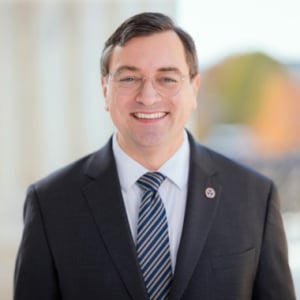
Attorney General of Tennessee
Jonathan Skrmetti was sworn in to an eight-year term as Tennessee’s Attorney General and Reporter on September 1, 2022.
Prior to his current role, General Skrmetti served as Chief Counsel to Governor Bill Lee and as Chief Deputy Attorney General to his predecessor, Tennessee Attorney General Herbert Slatery.
Before working for the State of Tennessee, General Skrmetti was a partner at Butler Snow LLP in Memphis. His legal career began with nearly a decade as a federal prosecutor. He worked at the Civil Rights Division at Main Justice and then at the Memphis U.S. Attorney’s Office and prosecuted sex traffickers, corrupt government officials, and violent white supremacists. In addition, General Skrmetti taught cyberlaw as an adjunct professor at the University of Memphis.
General Skrmetti earned honors degrees from George Washington University, the University of Oxford, and Harvard Law School, where he was editor-in-chief of the Harvard Journal of Law & Public Policy. Following law school, Jonathan clerked for Judge Steven Colloton on the U.S. Court of Appeals for the Eighth Circuit. He lives in Franklin, Tennessee, with his wife and four children.
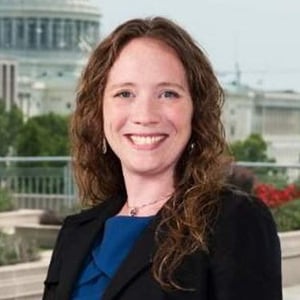
Partner, Luther Strange & Associates
Annie Donaldson Talley is Partner at Luther Strange and Associates. She recently departed the White House after serving as Deputy Assistant to the President and Deputy Counsel to the President. Over the past four years, she provided outside counsel to the Donald J. Trump for President campaign; helped stand up and manage the White House Counsel’s Office; interfaced with agencies across the federal government; and advised the President of the United States, White House Counsel, Chief of Staff and other senior staff across the Executive Office of the President on a broad range of issues from regulatory reform to executive nominations to the day-to-day issues facing the Administration.
Prior to her White House service, Annie Donaldson Talley counseled clients in the non-profit, for-profit, political, and government sectors, as well as high-profile individuals in private practice at Jones Day and Patton Boggs. She provided strategic counseling to clients structuring their affairs to ensure compliance with a web of state and federal laws and represented clients in complex, multi-faceted investigations, leading teams navigating issues of intense public scrutiny.
Annie Donaldson Talley is also a veteran of three presidential campaigns and served in state government. She holds a B.A., summa cum laude, from the University of Alabama and a J.D. from Harvard Law School, where she served on the Harvard Law Review. She lives in Montgomery, Alabama with her husband, Brett.
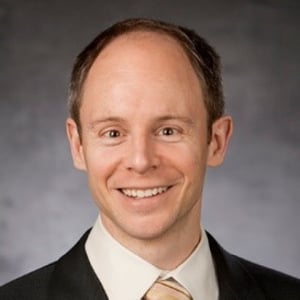
Professor of Computer Science & Director, Foundations of Cooperative AI Lab (FOCAL), Carnegie Mellon University
Vincent Conitzer is the Director of the Foundations of Cooperative AI Lab (FOCAL) and a Professor of Computer Science with affiliate appointments in Machine Learning and Philosophy. Prior to this he was the Kimberly J. Jenkins Distinguished University Professor of New Technologies and Professor of Computer Science, Professor of Economics, and Professor of Philosophy at Duke University. He is also Head of Technical AI Engagement at the Institute for Ethics in AI, and Professor of Computer Science and Philosophy, at the University of Oxford. He received Ph.D. (2006) and M.S. (2003) degrees in Computer Science from Carnegie Mellon University, and an A.B. (2001) degree in Applied Mathematics from Harvard University. Conitzer works on artificial intelligence (AI). Much of his work has focused on AI and game theory, for example designing algorithms for the optimal strategic placement of defensive resources. More recently, he has started to work on AI and ethics: how should we determine the objectives that AI systems pursue, when these objectives have complex effects on various stakeholders?
Conitzer has received the 2021 ACM/SIGAI Autonomous Agents Research Award, the Social Choice and Welfare Prize, a Presidential Early Career Award for Scientists and Engineers (PECASE), the IJCAI Computers and Thought Award, an NSF CAREER award, the inaugural Victor Lesser dissertation award, an honorable mention for the ACM dissertation award, and several awards for papers and service at the AAAI and AAMAS conferences. He has also been named a Guggenheim Fellow, a Sloan Fellow, a Kavli Fellow, a Bass Fellow, an ACM Fellow, a AAAI Fellow, and one of AI's Ten to Watch. He has served as program and/or general chair of the AAAI, AAMAS, AIES, COMSOC, and EC conferences. Conitzer and Preston McAfee were the founding Editors-in-Chief of the ACM Transactions on Economics and Computation (TEAC).
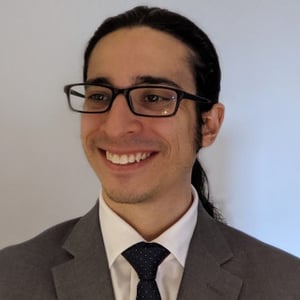
Senior Policy Counsel, Public Knowledge
Nicholas P. Garcia is a Senior Policy Counsel at Public Knowledge, focusing on emerging technologies, intellectual property, and closing the digital divide.
Before joining Public Knowledge, Nick served as an Assistant District Attorney in the Investigations Division of the Bronx County District Attorney’s Office, where he investigated and prosecuted cybercrime, fraud, grand larceny, and organized crime. He previously worked as a Legal Intern at Public Knowledge and as a Student Attorney for the Communications & Technology Law Clinic at Georgetown University Law Center’s Institute for Public Representation.
Nick received his J.D. from Georgetown University Law Center, his M.A. in Ethics and Society from Fordham University’s Center for Ethics Education, and his B.A. in cursu honorum in Philosophy from Fordham University, where he was a member of the Phi Sigma Tau Honor Society.
Nick is a native New Yorker, and an unabashed nerd who loves video games, science fiction, and tabletop RPGs.
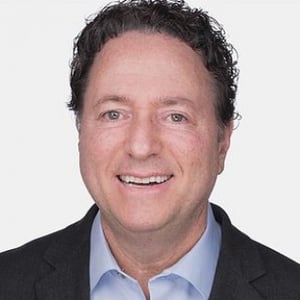
President, Committee for Justice
Curt Levey is President of the Committee For Justice, an organization devoted to advancing constitutionally limited government and individual liberty. He is a veteran of Supreme Court and other judicial confirmation battles and serves on the executive committee of the Federalist Society's Civil Rights Practice Group.
After graduating Harvard Law School with honors and clerking for the U.S. Court of Appeals for the Sixth Circuit, Mr. Levey served as Director of Legal & Public Affairs at the Center for Individual Rights (CIR). There he worked on landmark Supreme Court cases, including the University of Michigan affirmative action cases and the successful constitutional challenge to the Violence Against Women Act. After CIR, Mr. Levey headed the Title IX policy group at the U.S. Department of Education.
Before attending law school, Mr. Levey earned an M.S. and B.A. in computer science from Brown University and worked in the field of artificial intelligence (AI). He invented a new type of AI technology, for which he wrote a successful patent application.

Founder, Chairman, and CEO, Louis D. Brandeis Center for Human Rights Under Law
Hon. Kenneth L. Marcus is an internationally recognized expert in civil and human rights, as well as a leader in the fight against anti-Semitism on and off university campuses. He is the Founder, Chairman, and CEO of The Louis D. Brandeis Center for Human Rights Under Law, the leading civil rights legal organization fighting against anti-Semitism. The New York Times has called him “The Man Who Helped Redefine Campus Anti-Semitism.” He been described, in that paper, as “the single most effective and respected force” to combat anti-Semitism.
During his public service career, Marcus served as Assistant U.S. Secretary of Education for Civil Rights; Staff Director at the U.S. Commission on Civil Rights; and General Deputy Assistant U.S. Secretary of Housing and Urban Development for Fair Housing and Equal Opportunity.
In academia, he serves as Professorial Lecturer in Law at George Washington University. He formerly held the Lillie and Nathan Ackerman Chair in Equality and Justice in America at the City University of New York’s Bernard M. Baruch College, served as Visiting Research Professor of Political Science at Yeshiva University, and was a Board of Visitors member George Mason University and Distinguished Senior Fellow at that university’s law school. He is a member of the editorial board of the Journal of Contemporary Antisemitism and previously served as Associate Editor of the Journal for the Study of Anti-Semitism.
Marcus is also author of The Definition of Anti-Semitism (Oxford University Press) and Jewish Identity and Civil Rights in America (Cambridge University Press). He has published widely in academic journals as well as in more popular venues such as The Wall Street Journal, Washington Post, Newsweek, USA Today, and Politico. He is a graduate of Williams College and the University of California at Berkeley School of Law.
Earlier in his career, he was a litigation partner in two major law firms, where he conducted complex commercial and constitutional litigation. He also serves as Chairman emeritus of the Executive Committee of the Federalist Society for Law & Public Policy Civil Rights Practice Group.

PhD, Professor of Finance, University of Colorado
Sanjai Bhagat, PhD, is professor of finance at University of Colorado. Previously, he has taught finance at Princeton University, and University of Chicago. He has deep expertise in finance and investments, cybersecurity governance, IPO valuation, energy and ESG, and M&A. He has advised the U.S. Securities & Exchange Commission, and U.S. Department of Treasury on finance and corporate governance. He has served as a board member of a venture capital company focused on cutting-edge technologies in life sciences. Currently, he is serving as an Independent Board Member of an enterprise-level application software company.
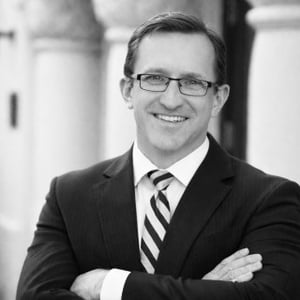
VP and Senior Counsel, Becket Fund
Eric Baxter joined The Becket Fund as Senior Counsel in 2011. Since then he has represented religious organizations and individuals in a wide array of religious liberty disputes at both the trial and appellate level. Recent victories including a Ninth Circuit ruling upholding the “Big Mountain Jesus” statue that has stood on Forest Service land near Kalispell, Montana, for more than sixty years, and a rare Pentagon decision allowing a Sikh soldier to maintain his full beard and turban while serving in the Army. Mr. Baxter has extensive experience fighting efforts under state Blaine amendments to exclude religious organizations and individuals from participating on equal terms in the public square. He also regularly advises religious institutions of higher education in defending their religious missions against government encroachment.
Mr. Baxter has frequently appeared in the national media to discuss religious liberty issues, including appearances on Fox News (Kelly File, Fox & Friends), WSJ Live, CBS New York, Christian Broadcasting Network, Newsmax TV, and Al Jazeera. He has also written op-eds and been quoted in many major newspapers and other print media, including the New York Times, Washington Post, LA Times, Fox News, New York Post, Washington Times, and New Boston Post.
Before joining the Becket Fund, Mr. Baxter was a partner at Arent Fox LLP in Washington, DC, where he maintained a commercial complex litigation practice representing clients primarily in employment, intellectual property, and biotechnology disputes. He also served for many years as outside counsel to a DC church and its affiliated school. In 2007, he was awarded the Albert E. Arent Pro Bono Award for his work representing several parents adopting a total of seven children from foster care.
From 2000 to 2002, Mr. Baxter clerked for the Honorable Robert H. Cleland in the United States District Court for the Eastern District of Michigan (Detroit). Mr. Baxter received a B.A. in Russian Literature and Linguistics from Brigham Young University and graduated magna cum laude from the J. Reuben Clark Law School at BYU, where he served as Executive Editor of the Law Review and was elected to the Order of the Coif. Eric speaks Russian and some Spanish. He and his wife have seven children and an amateur family bluegrass band.
Mr. Baxter has been featured on the Kelly File, Al Jazeera, WSJ Video, and NewsmaxTV.
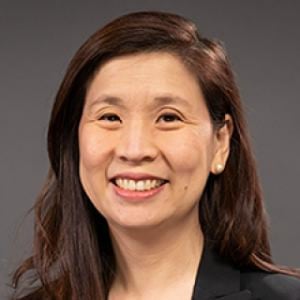
Senior Counsel, Vice President of Advocacy Strategy, Alliance Defending Freedom
Emilie Kao serves as senior counsel and vice president of advocacy strategy for Alliance Defending Freedom, where she is a member of the U.S. Legal Team. In this role, she supports ADF’s legal and legislative objectives through culture shaping initiatives.
Before joining ADF, Kao served as director of the DeVos Center for Religion and Civil Society at the Heritage Foundation. She led a team of experts who provided strategy, research, and policy recommendations on life, marriage, and religious freedom consistent with Constitutional principles. She convened coalitions of strategic partners to support the protection of religious freedom and launched the Promise to America’s Children, a movement dedicated to the protection of children and parental rights.
Kao also served as senior legal counsel at an international human rights law firm, East Asia team leader in the U.S. Department of State’s Office of International Human Rights, and director of international advocacy at the Becket Fund for Religious Liberty. She was an adjunct professor at Antonin Scalia Law School at George Mason University and is co-editor of the “First Principles on International Human Rights” essay series.
She has testified before the U.S. Congress and spoken at the United Nations in Geneva and New York. She has been interviewed and quoted extensively in the media, including The New York Times, The Washington Post, CNN, C-SPAN, and 60 Minutes+.
Kao earned her A.B. cum laude from Harvard University and her J.D. from Harvard Law School. She is a member of the state bars of California and the District of Columbia and is admitted to practice in the U.S. Supreme Court. She speaks Mandarin Chinese.
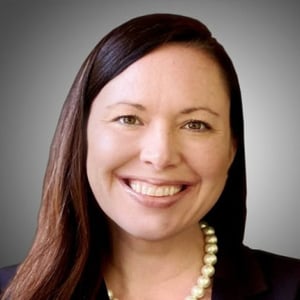
Partner, Copilevitz Lam & Raney
Karen Donnelly is a partner at Copilevitz Law & Raney and president of the Kansas City Lawyers Chapter with the Federalist Society. Karen’s practice focuses on First Amendment litigation and regulatory law in the areas of charitable, political and commercial speech. She represents nonprofit and commercial entities within the fundraising, advertising and marketing communities, including state attorney general investigations, Federal Trade Commission investigations, IRS audits, multi-state investigations, civil rights litigation and appellate practice in federal and state courts.
In 2023, Karen argued before the U.S. Court of Appeals for the Tenth Circuit in a First Amendment case involving a statutory ban on charitable fundraising.
In 2021, Karen coordinated and filed an amicus brief before the U.S. Supreme Court in Americans for Prosperity v. Bonta on behalf of The Nonprofit Alliance (TNPA), People for the Ethical Treatment of Animals (PETA), Association of Fundraising Professionals (AFP) and 123 nonprofit organizations across the ideological spectrum in support of the petitioners. Our brief contributed to a victory for the entire philanthropic sector–SCOTUS facially invalidated California’s mandatory disclosure of major donors as a condition of soliciting charitable contributions in the State.
In 2018, Karen argued before the U.S. Court of Appeals for the DC Circuit in a case involving administrative law and First Amendment claims in the charitable speech context.
In 2019 and 2020, Karen successfully represented nonprofit and commercial organizations in federal trademark matters in federal district court and before the USPTO’s Trademark Trial and Appeal Board.
Karen also counsels on the formation, structuring and qualification of tax-exempt organizations. She advises clients on nonprofit governance issues, corporate law, regulatory compliance, tax-exempt organizations law, and constitutional law.
She has also worked in the areas of direct marketing and nonprofit fundraising in Washington, D.C.
Karen is the President of the Kansas City Lawyers Chapter of the Federalist Society. She also serves on the Board of Kansas City-based Non-Profit Connect and participates in the Government Affairs Committee of The Nonprofit Alliance based in Washington, D.C. Karen is Chair of the St. Anthony’s Pastoral Council, Lector and Pre-Cana Minister. In her spare time, she enjoys travel, running, and spending time with family.

Director of Litigation and Senior Attorney, Hamilton Lincoln Law Institute
Theodore H. Frank is director at the Hamilton Lincoln Law Institute and the Center for Class Action Fairness. Frank founded and ran CCAF as a non-profit, public interest law firm in 2009.
Frank has won several landmark appeals and tens of millions of dollars for consumers and other plaintiffs through his class action work. Adam Liptak of The New York Times calls Frank “the leading critic of abusive class action settlements” and the American Lawyer Litigation Daily referred to him as “the indefatigable scourge of underwhelming class action settlements.”
Previously, Frank clerked for the Honorable Frank H. Easterbrook on the Seventh Circuit Court of Appeals, and was a litigator at firms in Washington and Los Angeles and a resident fellow at the American Enterprise Institute. Frank is a frequent public speaker and has testified before Congress multiple times on legal issues. He has been profiled by The Wall Street Journal, Forbes, GQ, and the ABA Journal, among other publications.
In 2008, Frank was elected to membership in the American Law Institute. He also serves on the Executive Committee of the Federalist Society Litigation Practice Group. Frank graduated from The University of Chicago Law School in 1994 with high honors and as a member of the Order of the Coif and the Law Review. He is a member of the District of Columbia Bar and the state bars of California and Illinois.
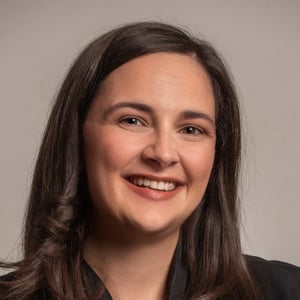
Associate, Bartimus Frickleton Robertson Rader P.C.
Kelly Frickleton is an associate attorney at Bartimus Frickleton Robertson Rader P.C. Since joining the firm in 2017, Kelly has focused her practice on complex personal injury cases, including medical malpractice and insurance bad faith litigation, and appeals. A natural problem-solver, Kelly uses her strong research and writing skills to craft legal strategies that help ensure the best possible outcome for each case. Prior to working in the legal field, Kelly was trained as an actor, which prepared her for many elements of being a trial lawyer – both in the performance aspect and her approach to cases. Her focus is always on understanding the client as an individual and telling their story in a way that will get the case to its best resolution. Kelly has also spent a considerable amount of time studying the intersection of law and race – which culminated in 2019 with her presentation of “An Exploration of Segregation in Kanas City” at KCMBA’s Bench Bar & Boardroom Conference. Kelly currently serves KCMBA/KCMBF as Chair of the YLS Board’s CLE Committee, Vice Chair of the Student Law Academy Committee, and as a member of the Bar Leadership Academy Taskforce and Communications Advisory Committee. She is also a member of the Association for Women Lawyers of Greater Kansas City, American Association for Justice, MATA, and The Women’s Foundation.
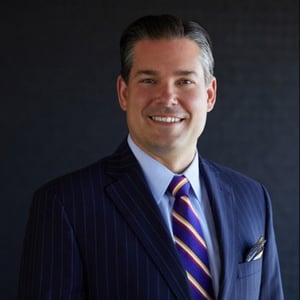
Partner, Graves Garrett Greim LLC
Edward “Eddie” Greim focuses his practice on complex commercial litigation, free speech and election law, and internal investigations and whistleblower claims. He has been recognized for his successful representation of businesses and individuals in commercial litigation while also being named a “go-to” lawyer on policy and constitutional issues.
Eddie was named a Constitutional and Election Law Trailblazer by the National Law Journal in 2020. His free speech and election law practice has included numerous constitutional challenges to election and campaign finance laws; representation of clients in state and federal ethics and campaign finance enforcement actions and investigations; initiative petition drafting and litigation; litigation and advice regarding First Amendment protections for petition circulation; representation of not-for-profit clients before state regulators; litigation of state and federal redistricting issues; and advice on campaign and election law compliance.
Eddie complements his trial work in complex, high-profile commercial and constitutional cases with oral advocacy and briefing in important appeals. Recognized as a Missouri Lawyers Media POWER 30 Appellate Attorney in 2021, he has argued before the Missouri and Kansas supreme courts multiple times, other state appellate courts across the country, and before the Sixth, Seventh, Eighth, and Tenth U.S. Courts of Appeals.
Eddie’s notable work for clients includes:
Recovering substantial compensation and injunctive relief for plaintiffs, in complex multiyear litigation, as lead counsel in the first and only nationwide class action certified against the Internal Revenue Service for violating taxpayer protection statutes when it targeted hundreds of groups based on their political viewpoints.
Successful First Amendment challenge to Missouri’s 2016 campaign finance restrictions.
Successful challenge to a vast, multiyear, secret criminal investigation into Wisconsin political groups and nonprofits, and follow-up challenge to expose role of state ethics board which secretly aided the investigation and was later dissolved by the legislature.
U.S. Supreme Court amicus brief for the National Republican Redistricting Trust in the 2019 Rucho litigation, and federal and state redistricting litigation and advice since 2011.
Challenges under the First Amendment in federal court, and in briefing to the Michigan Supreme Court on state constitutional grounds, to unprecedented emergency powers claimed by Michigan Governor in 2020.
Representation of numerous public officials and private citizens who are subject to “lawfare” attacks based on their political viewpoints or policy objectives.
Oversight of multiple internal investigations.
Eddie received his law degree from Harvard Law School in 2002, where he taught on the Board of Student Advisers, received the Dean’s Award for Leadership, and served as President of the Harvard Catholic Law Students Association. He received two bachelor’s degrees, summa cum laude, in economics and political science from the University of Missouri.
A native of Excelsior Springs, Missouri, Eddie lives in Kansas City with his family. He enjoys Missouri and military history. On many weekends, he can be found with his wife and daughters exploring sites of local interest. He enjoys reading and debating and has given presentations or organized discussions at numerous gatherings, formal and informal, of professional and personal interest.

University Professor of Law and Executive Director, Liberty & Law Center, Antonin Scalia Law School, George Mason University
David Bernstein holds a University Professorship chair at the Antonin Scalia Law School, where he has been teaching since 1995. He has also been a visiting professor at the University of Michigan, Georgetown University, William & Mary, Brooklyn Law School, the University of Turin, and Hebrew University. Professor Bernstein teaches Constitutional Law, Evidence, and Products Liability.
A prolific author, Professor Bernstein often challenges the conventional wisdom with prodigious research and sharp, original analysis. He is the author of five books, and coauthor of two more. Professor Bernstein’s book Rehabilitating Lochner was praised across the political spectrum as “intellectual history in its highest form,” a “fresh perspective and a cogent analysis,” “delightful and informative,” “sharp and iconoclastic,” and “a terrific work of historical revisionism.” Columnist George Will praised Bernstein’s most recent book, Classified, The Untold Story of Racial Classification in America, as “perhaps the most consequential American book of 2022.”
Professor Bernstein has also written dozens of articles and essays published in major law reviews, including the California Law Review, Columbia Law Review, Michigan Law Review, and Yale Law Journal. An article he coauthored, Defending Daubert: It’s Time to Amend Federal Rule of Evidence 702, directly inspired a pending amendment to Rule 702.
Professor Bernstein blogs at the Instapundit.com, the Times of Israel, and the Volokh Conspiracy. He is a graduate of the Yale Law School, where he was senior editor of the Yale Law Journal and a John M. Olin Fellow in Law, Economics, and Public Policy.
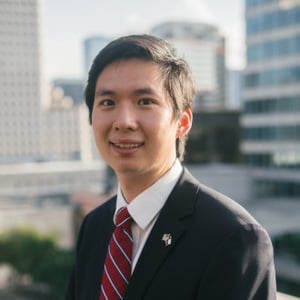
State District Judge, Austin, Texas
Cory Liu is a state district judge in Austin, Texas. He previously served as assistant general counsel to Texas Governor Greg Abbott. Mr. Liu clerked for Judge Andrew Oldham on the U.S. Court of Appeals for the Fifth Circuit and Judge Danny Boggs on the U.S. Court of Appeals for the Sixth Circuit. He was Editor-in-Chief of the Harvard Journal of Law & Public Policy and is a graduate of Harvard Law School and the University of Chicago.
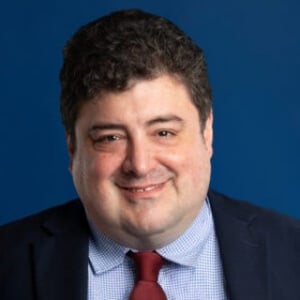
Senior Fellow and Director of Finance Policy, Competitive Enterprise Institute
John Berlau is a senior fellow and Director of Finance Policy at the Competitive Enterprise Institute. His work focuses on how public policy affects access to capital, entrepreneurship, and investments made by the public and business community alike. In recent years, he has studied the consequences of financial reform efforts passed by Congress like the Sarbanes-Oxley Act, the government’s response to the 2008 financial crisis including the Dodd-Frank Act, the placement of Fannie Mae and Freddie Mac into conservatorship, and the rise of cryptocurrency.
He is also the author of the book George Washington: Entrepreneur: How Our Founding Father’s Private Business Pursuits Changed America and the World. The book received rave reviews in the Wall Street Journal and other forums, and was endorsed by eminent historians and scholars such as Richard Brookhiser, Amity Shlaes, and Craig Shirley.
Berlau is a contributing writer for Forbes. His work has been published and cited in The Wall Street Journal, The New York Times, The Washington Post, Financial Times, Bloomberg News, The Atlantic, Politico, Daily Caller, Washington Examiner, Investor’s Business Daily, National Journal, National Review, American Spectator, Reason Magazine, and more. He is a frequent guest on radio and television programs, including CNBC’s “The Call,” “Power Lunch” and “Closing Bell,” Fox News’ “Fox & Friends” and “Your World with Neil Cavuto,” and Fox Business’ “Cavuto.”
He has testified on the impact of financial regulation before the House Committee on Financial Services and the House Committee on Energy and Commerce. A recognized expert on the phenomenon of crowdfunding, Berlau has spoken at prominent conferences such as South by Southwest Interactive in Austin, Money 20/20 in Las Vegas, the FinTech Global Expo in San Diego, the CFGE Crowdfund Banking and Lending Summit in San Francisco and the Crowdfund Intermediary Regulatory Advocates (CFIRA) Summit in Washington, D.C. He is also author of the widely cited paper “Declaration of Crowdfunding Independence: Finance of the People, by the People, and for the People.”
Berlau is an award-winning financial and political journalist. He served as Washington correspondent for Investor’s Business Daily and as a staff writer for Insight magazine, published by The Washington Times. In 2002, he received the Sandy Hume Memorial Award for Excellence in Political Journalism from Washington’s National Press Club. He was a media fellow at the Hoover Institution in 2003. He graduated from the University of Missouri-Columbia in 1994 with degrees in journalism and economics.
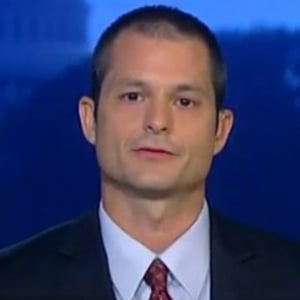
Principal Attorney, Jossey PLLC
Paul H. Jossey is principal attorney at Jossey PLLC. He has practiced law for six years representing clients in both state and federal court in Florida, Georgia, Virginia, and Washington, DC.
His wide-ranging practice has included everything from simple contract disputes to First Amendment litigation to international terrorism. Paul has specialized in campaign finance and election law for the past three years. He has now expanded into business startup and capitalization focusing on the crowdfunding provisions of Title III of the JOBS Act of 2012, whose regulations went live on May 16, 2016.
In addition to managing his own firm, Paul is an Adjunct Fellow at the Center for Competitive Politics where he researches and writes commentary about campaign finance issues. His work has been published in the New York Post, The Hill, The Federalist, The Daily Caller among others.
Prior to starting his own firm, he worked for law firms in Washington, DC and Alexandria, Virginia. After graduating law school he litigated cases for a nonprofit in Atlanta, Georgia.
He is licensed to practice in Georgia, Virginia, and Washington, DC. He holds a Juris Doctor from Case Western Reserve University School of Law and a Bachelor of Science from the University of Southern Mississippi.
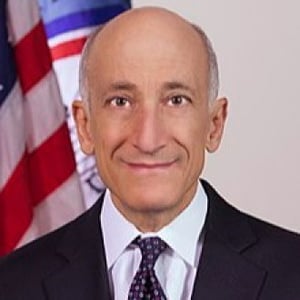
Research Fellow, Harvard Kennedy School
Timothy Massad is currently a Research Fellow at the Kennedy School of Government at Harvard University, an Adjunct Professor of Law at Georgetown Law School and a consultant on financial regulatory and fintech issues.
Mr. Massad served as Chairman of the U.S. Commodity Futures Trading Commission from 2014-2017. Under his leadership, the agency implemented the Dodd Frank reforms of the over-the-counter swaps market and harmonized many aspects of cross-border regulation, including reaching a landmark agreement with the European Union on clearinghouse oversight. The agency also declared virtual currencies to be commodities, introduced reforms to address automated trading and strengthened cybersecurity protections.
Previously, Mr. Massad served as the Assistant Secretary for Financial Stability of the U.S. Department of the Treasury. In that capacity, he oversaw the Troubled Asset Relief Program (TARP), the principal U.S. governmental response to the 2008 financial crisis. During his tenure, Treasury recovered more on all the crisis investments than was disbursed. Mr. Massad was with the Treasury from 2009 to 2014 and also served as a counselor to the Treasury Secretary.
Prior to his government service, Mr. Massad was a partner in the law firm of Cravath, Swaine & Moore, LLP. His practice included corporate finance, derivatives and advising boards of directors. He managed the firm’s Hong Kong office from 1998 to 2002 and represented governments and corporations on transactions throughout Asia. Mr. Massad was also one of a small group of lawyers who drafted the original ISDA standard agreements for swaps.
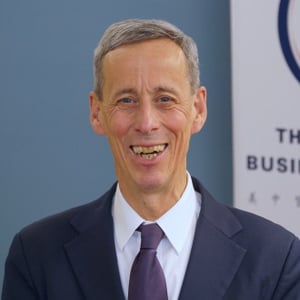
President, US-China Business Council
On July 26, 2018, Craig Allen began his tenure in Washington, DC as the president of the US-China Business Council (USCBC), a private, nonpartisan, nonprofit organization representing over 200 American companies doing business with China. Prior to joining USCBC, Craig had a long, distinguished career in US public service.
Craig began his government career in 1985 at the Department of Commerce’s International Trade Administration (ITA). He entered government as a Presidential Management Intern, rotating through the four branches of ITA. From 1986 to 1988, he was an international economist in ITA’s China Office.
In 1988, Craig transferred to the American Institute in Taiwan, where he served as Director of the American Trade Center in Taipei. He held this position until 1992, when he returned to the Department of Commerce for a three-year posting at the US Embassy in Beijing as Commercial Attaché.
In 1995, Craig was assigned to the US Embassy in Tokyo, where he served as a Commercial Attaché. In 1998, he was promoted to Deputy Senior Commercial Officer. In 1999, Craig became a member of the Senior Foreign Service.
From 2000, Craig served a two-year tour at the National Center for APEC in Seattle. While there, he worked on the APEC Summits in Brunei, China, and Mexico. In 2002, it was back to Beijing, where Craig served as the Senior Commercial Officer. In Beijing, Craig was promoted to the Minister Counselor rank of the Senior Foreign Service.
After a four-year tour in South Africa, Craig became Deputy Assistant Secretary for Asia at the US Department of Commerce’s International Trade Administration. He later became Deputy Assistant Secretary for China. Craig was sworn in as the United States ambassador to Brunei Darussalam on December 19, 2014. He served there until July 2018, when he transitioned to President of the US-China Business Council.
Craig received a B.A. from the University of Michigan in Political Science and Asian Studies in 1979. He received a Master of Science in Foreign Service from Georgetown University in 1985.

Judge, United States Court of Appeals, Ninth Circuit
Judge Carlos Bea serves as a judge on the United States Court of Appeals for the Ninth Circuit. He received his Bachelor's Degree from Stanford University in 1956 and his J.D. from Stanford Law School in 1958. Judge Bea was born in San Sebastian, Spain, and immigrated with his family to Cuba in 1939. In 1952, he represented Cuba on the Cuban National basketball team in the Helsinki Olympics. Judge Bea became a naturalized citizen of the United States in 1958. He engaged in private practice in San Francisco, principally in the area of civil trials (jury and non-jury), from 1959-75 at Dunne, Phelps & Mills and from 1975-90 at Carlos Bea, A Law Corporation. He taught courses in civil litigation advocacy at Hastings College of Law and Stanford Law School. From 1990 to 2003, Judge Bea served as a judge of the San Francisco Superior Court. He was nominated by President George W. Bush to the United States Court of Appeals for the Ninth Circuit and was confirmed in 2003.
Judge Bea and his wife Louise reside in San Francisco, where they raised their four sons, Sebastian, Alexander, Nicholas, and Dominic.
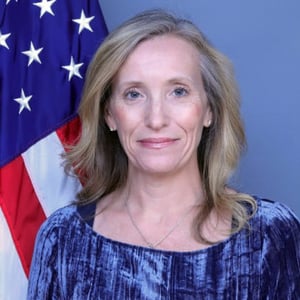
Adjunct Senior Fellow, Indo-Pacific Security Program, Center for New American Security; Senior Advisor, Krach Institute for Tech Diplomacy, Purdue University
Throughout her career in foreign policy, Ambassador Kelley E. Currie has specialized in human rights, political reform, development, and humanitarian issues, with a focus on the Indo-Pacific region. Ambassador Currie is currently an Adjunct Senior Fellow at the Center for a New American Security, a Washington D.C. think tank, and a Senior Advisor to the Krach Institute for Tech Diplomacy at Purdue University. She is a member of the board of directors of the National Endowment for Democray; the board of governors of the East-West Center; and the advisory boards of Spirit of America and the Vandenberg Coalition.
Ambassador Currie was unanimously confirmed in December 2019 as Ambassador-at-Large for Global Women's Issues and the U.S. Representative at the United Nations Commission on the Status of Women and served in that position until January 2021. Prior to that appointment, she served under Ambassador Nikki Haley as the U.S. Representative to the UN Economic and Social Council and Alternative Representative to the UN General Assembly (2017-2018). While awaiting confirmation between ambassadorial appointments, she was appointed interim senior official in the Department of State's Office of Global Criminal Justice. From 2009 until her appointment to the USUN leadership, she was a Senior Fellow with the Project 2049 Institute and the founding Director of the Institute's Burma Transition Initiative. Ambassador Currie also held senior policy positions with the U.S. Congress, international organizatons, and non-governmental organizations.
Ambassador Currie received a Juris Doctor from Georgetown University Law Center with a focus on International Human Rights Law, and an undergraduate degree cum laude in Political Science from the University of Georgia's School of Public and International Affairs.
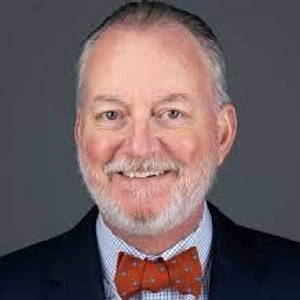
Executive Vice President and General Counsel, TE Connectivity
John S. Jenkins Jr. is the Executive Vice President, General Counsel of TE Connectivity. John is responsible for the company’s global legal, compliance, corporate governance, government affairs, intellectual property, security and risk management, and corporate social responsibility activities. He is also responsible for bringing TE’s industry-leading connectivity solutions, engineering, and operations expertise to the emerging markets with focus on India, China, and South America. He joined TE Connectivity in October 2012.
Prior to joining TE Connectivity, John was with Tyco International for ten years and was the Vice President, Corporate Secretary, and International General Counsel. John was responsible for the Board of Directors activities, securities and capital markets transactions and reporting, mergers and acquisitions, executive compensation, global procurement, real estate, and tax planning. Prior to 2003, John worked as a litigator with McGuireWoods, LLP. John began his career in 1987 as an Officer in the United States Navy, and served as a judge advocate both as Military Prosecutor and Senior Defense Counsel, and finally as Legislative Counsel to the Secretary of the Navy.
John earned his law degree from George Washington University with high honors and his Bachelor’s degree from the University of Virginia.

Director of Foreign and Defense Policy Studies, American Enterprise Institute
Kori Schake leads foreign and defense policy studies at the American Enterprise Institute. She is the author of Safe Passage: the Transition from British to American Hegemony, and with Jim Mattis the editor of Warriors and Citizens: American Views on Our Military. Dr. Schake has taught at Stanford, Johns Hopkins SAIS, and West Point. She has also had a distinguished career in government, working at the US State Department, the US Department of Defense, and the National Security Council.

Partner, Steptoe & Johnson LLP
Stewart Baker is a partner in the law firm of Steptoe & Johnson in Washington, D.C. From 2005 to 2009, he was the first Assistant Secretary for Policy at the Department of Homeland Security. His law practice covers cybersecurity, data protection, homeland security, and travel and foreign investment regulation; he has been awarded one patent.
Mr. Baker has been General Counsel of the National Security Agency and General Counsel of the commission that investigated WMD intelligence failures prior to the Iraq war. He is the author of Skating on Stilts, a book on terrorism, cybersecurity, and other technology issues; he also hosts the weekly Cyberlaw Podcast.
President, Committee for Justice
Curt Levey is President of the Committee For Justice, an organization devoted to advancing constitutionally limited government and individual liberty. He is a veteran of Supreme Court and other judicial confirmation battles and serves on the executive committee of the Federalist Society's Civil Rights Practice Group.
After graduating Harvard Law School with honors and clerking for the U.S. Court of Appeals for the Sixth Circuit, Mr. Levey served as Director of Legal & Public Affairs at the Center for Individual Rights (CIR). There he worked on landmark Supreme Court cases, including the University of Michigan affirmative action cases and the successful constitutional challenge to the Violence Against Women Act. After CIR, Mr. Levey headed the Title IX policy group at the U.S. Department of Education.
Before attending law school, Mr. Levey earned an M.S. and B.A. in computer science from Brown University and worked in the field of artificial intelligence (AI). He invented a new type of AI technology, for which he wrote a successful patent application.
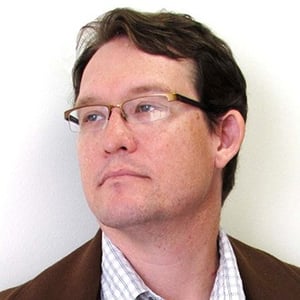
Researcher, International Computer Science Institute and Lecturer, UC Berkeley
Nicholas Weaver received a B.A. in Astrophysics and Computer Science in 1995, and a Ph.D. in Computer Science in 2003 both from the University of California at Berkeley. Although his dissertation was on novel FPGA architectures, he also was highly interested in Computer Security, including postulating the possibility of very fast computer worms in 2001.
In 2003, he joined the International Computer Science Institute, first as a postdoc and then as a staff researcher. His primary research focus is on network security, notably worms, botnets, and other internet-scale attacks, and network measurement. Other areas have included both hardware acceleration and software parallelization of network intrusion detection, defenses for DNS resolvers, and tools for detecting ISP-introduced manipulations of a user's network connection. He is also a lecturer in the Computer Science Department at UC Berkeley.

Topics
Roosevelt’s Four Freedoms Include Two That Are Real
Franklin Roosevelt delivered his eighth State of The Union Address in January of 1941. The...
Freedom of Thought: On Building a Courageous and Effective Career
Gregory G. Katsas, Libby Locke, Jonathan Mitchell, Jonathan Skrmetti, Annie Donaldson Talley
Accomplishing anything of significance in this political environment requires courage. The legal industry has a...
Is AI Woke, in What Ways, and Should We Worry?
Vincent Conitzer, Nicholas P. Garcia, Curt Levey, Kenneth L. Marcus
Discussions of the dangers of Artificial Intelligence (AI) have long included concerns about AI systems’...
Is There a Business Case for Racial and Ethnic Diversity for Corporate Leadership?
Sanjai Bhagat
An influential 2015 McKinsey study claims a business case for racial and ethnic diversity in...
Litigation Update: Mahmoud v. McKnight
Eric Baxter, Emilie Kao
In Fall 2022 the Montgomery County Board of Education (MCBOE) revised its literature/ language arts...
Panel 1: "Do Words Matter?"
Karen M. Donnelly, Theodore "Ted" Frank, Kelly Frickleton, Edward D. Greim
This panel explored the concept of whether what has come to be called “inclusive language,"...
Talks With Authors: Classified: The Untold Story of Racial Classification in America
David Bernstein, Cory R. Liu
In his recent book, Classified: The Untold Story of Racial Classification in America, Professor...
A Discussion on Stablecoins
John Berlau, Paul H. Jossey, Timothy G. Massad
Stablecoins are unique types of digital tokens that have emerged out of the cryptocurrency revolution...
China, Global Companies, and Human Rights
Craig B. Allen, Carlos T. Bea, Kelley Currie, John S. Jenkins, Kori Schake
The 2021 National Lawyers Convention took place November 11-13, 2021 at the Mayflower Hotel in...
Artificial Intelligence and Bias
Stewart A. Baker, Curt Levey, Nicholas Weaver
It is hard to find a discussion of artificial intelligence these days that does not...