
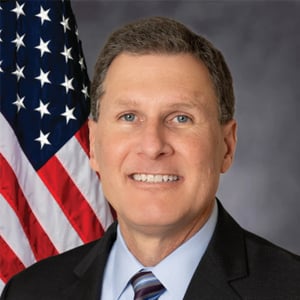
United States Attorney, Eastern District of California
Mr. Grant was appointed by Attorney General Pam Bondi to serve as the United States Attorney for the Eastern District of California beginning on August 11, 2025. Pursuant to 28 U.S.C. § 546(d), he was further appointed by the district court effective December 9, 2025.
Mr. Grant is a veteran of the Department of Justice, having served twice in Washington, D.C.: from 1991 to 1993 as an Attorney-Adviser in the Office of Legal Counsel, and from 2017 to 2021 as a Deputy Assistant Attorney General in the Environment and Natural Resources Division (ENRD). During his tenure at ENRD, he supervised more than a hundred Department litigators advancing the interests of the United States and its agencies in both enforcement and defensive matters, both civil and criminal.
In addition to his service in the Department, Mr. Grant has decades of experience in private practice in Washington, D.C. and Sacramento. That experience includes arguments in the U.S. Supreme Court, the California Supreme Court, and numerous other federal and state courts.
Mr. Grant served as a law clerk to Chief Justice Warren E. Burger (retired) and Associate Justice Clarence Thomas during the Supreme Court’s October 1994 Term. Earlier he served as a law clerk to Judge Edith H. Jones of the U.S. Court of Appeals for the Fifth Circuit in Houston, Texas.
Mr. Grant grew up in Modesto, California and raised his family in Sacramento County. He attended the University of California, Berkeley, from which he earned a bachelor’s degree in economics (1986) and a law degree (1990).
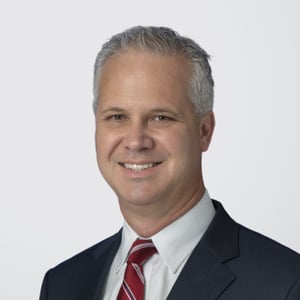
Partner, Hunton Andrews Kurth
Mr. Leopold is a Partner with the law firm of Hunton Andrews Kurth in Washington, DC. He is the former Senate-confirmed general counsel of the U.S. EPA from 2018-2020, and he previously was a litigator at the U.S. Department of Justice, Environment and Natural Resources Division form 2007-2013. As EPA General Counsel, he counseled on the development and defense of EPA’s most significant rulemakings, including the Affordable Clean Energy Rule, the Navigable Waters Protection Rule, and the Safe Affordable Fuel‐Efficient (SAFE) Vehicles Rule, as well as several pesticide actions. He was personally involved in defending EPA in litigation, including the County of Maui v. Hawaii Wildlife Fund in the U.S. Supreme Court. Mr. Leopold’s prior government service also includes working in Florida as general counsel of the Florida Department of Environmental Protection. He now represents clients in regulatory advocacy before federal agencies, litigates federal environmental actions, and defends clients with EPA enforcement issues.
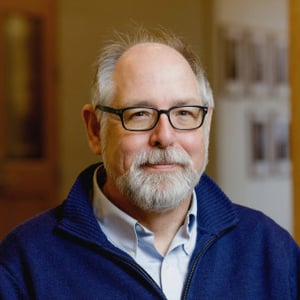
Emmett Visiting Assistant Clinical Professor of Law in Environmental Law, Harvard Law School
Andrew Mergen is a Visiting Assistant Clinical Professor of Law and Faculty Director of the Emmett Environmental Law & Policy Clinic. Prior to joining the Harvard Law School faculty, Andrew Mergen served in the Appellate Section of the Environment & Natural Resources Division (ENRD) at the United States Department of Justice. Professor Mergen began his career at the Justice Department in the Honors Program and concluded his career as Chief of ENRD’s Appellate Section. He has presented oral arguments in all 13 federal courts of appeals, including two en banc courts, and before several state intermediate and supreme courts. He has also worked on over a dozen merits cases in the Supreme Court of the United States. In addition, in 2009, Professor Mergen assisted the Office of White House Counsel on the confirmation of the Honorable Sonia Sotomayor as Associate Justice of the Supreme Court. During his career at the Justice Department, Professor Mergen received the Attorney General’s Award for Distinguished Service three times. He also received ENRD’s Muskee-Chafee Award, honoring his work’s significant contribution to protecting the environment.
Before entering clinical teaching, Professor Mergen taught at several law schools including, Harvard Law School (Advanced Environmental Law), the University of Michigan Law School (Natural Resources Law) and the William S. Richardson School of Law, University of Hawaii-Manoa (Administrative Law). Professor Mergen has written about federal water rights in “A Misplaced Sensitivity: The Draft Opinions in Wyoming v. United States” (68 Colo. L. Rev. 683 (1997), with Sylvia F. Liu); energy development on public lands in “Surface Tension: The Problem of Federal Private Split Estates” (33 Land & Water L. Rev. 419 (1998)); climate change and the Endangered Species Act in “The Role of Climate Change in ESA Listing Decisions” (53 Rocky Mt. Min. L. Fdn. 67 (2016), with Murray Feldman) and the accommodation of Native American sacred sites on federal land in “Finding the Path Forward for Indigenous Sacred and Cultural Spaces on Federal Public Land,” 68 Nat. Resources & Energy L. Inst. 32-1 (2022). Professor Mergen is a graduate of the University of Wisconsin—Madison and the George Washington University Law School.

Senior Vice President of Programs, Earthjustice
Sam Sankar is Earthjustice’s Senior Vice President for Programs. Sam leads our Program Leadership Team, which develops Earthjustice’s strategy for carrying out our mission through litigation, lobbying and regulatory advocacy, and communications.
Sam has been working on environmental issues throughout his career, which has included service as a line attorney at the Justice Department’s Environment and Natural Resources Division, as a senior executive at General Electric, and as deputy chief counsel of a presidential commission formed to investigate the 2010 Deepwater Horizon oil spill. He has also worked as a boat captain, machinist, and senior advisor to The Nature Conservancy.
Sam received his B.S. in civil engineering from Cornell University, an M.S. in environmental engineering from Stanford University, and his law degree from the University of California, Berkeley. After law school, he clerked for Judge William Fletcher of the Ninth Circuit, Judge Louis Pollak of the Eastern District of Pennsylvania, and Justice Sandra Day O’Connor of the U.S. Supreme Court.
Sam lives in Washington, D.C., with his wife and two children.
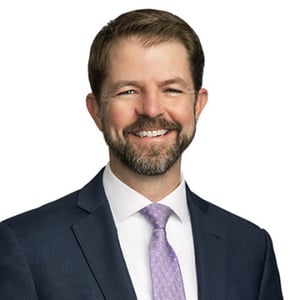
Partner, Baker Botts LLP
Drawing from two decades of experience in senior government, in-house corporate, and private law firm roles, Jeff Wood helps clients with federal enforcement, compliance, litigation, permitting, and policy challenges primarily in the energy and environmental fields.
Prior to joining Baker Botts, Mr. Wood served for almost two years as the Acting Assistant Attorney General (AAG) for the Justice Department's Environment and Natural Resources Division (ENRD). In that capacity, Mr. Wood led ENRD and its more than 600 attorneys and staff representing EPA, Departments of the Interior, Energy, and Defense, and other agencies in civil and criminal enforcement and defensive environmental, energy, and natural resources litigation.
As the top official in ENRD, Mr. Wood managed a complex organization with an annual budget exceeding $200 million and a docket of more than 6,000 cases and matters. E&E News noted that “Wood maintains a strong relationship with ENRD's career staff” (Greenwire, Oct. 31, 2018). He previously served on the staff of the United States Senate Committee on Environment and Public Works.
At the Justice Department, Mr. Wood oversaw the Division's civil and criminal enforcement programs and was responsible for developing legal strategies and approving briefs in key cases including filings before the Supreme Court and Courts of Appeals in coordination with the Office of Solicitor General. In this role, Mr. Wood held the highest level security clearance and worked closely with top leadership at DOJ, EPA, the Interior Department, USDA, the Energy Department, Transportation Department, FERC, NRC and across the Executive Branch, including the White House.
With many years of both private law firm and in-house legal experience, Mr. Wood has handled complex environmental enforcement, regulatory, policy, and litigation matters for electric utilities, energy companies, maritime companies, mining companies, real estate developers, financial institutions, industrial companies and manufacturers, business coalitions, associations, small businesses, and individual property owners. Drawing from his experiences in-house, Mr. Wood brings a common-sense, cost-effective, client-focused approach to his work every day.
With a strong national reputation, Mr. Wood is a frequent speaker on environmental law and policy matters, with recent speeches and presentations at the Environmental Law Institute, Harvard Law School, Vanderbilt Law School, American University Law School, American Bar Association Environmental Law Conferences, the Texas Environmental SuperConference, Air Force Judge Advocate General School's Advanced Environmental Law Course, Baker Institute's Center for Energy Studies (Rice University), and many other venues. He frequently appears in national news to share insights on significant environmental law and policy issues, including recent quotes in the New York Times, Washington Post, Wall Street Journal, Bloomberg, Law360, and E&E News, among others.
United States Attorney, Eastern District of California
Mr. Grant was appointed by Attorney General Pam Bondi to serve as the United States Attorney for the Eastern District of California beginning on August 11, 2025. Pursuant to 28 U.S.C. § 546(d), he was further appointed by the district court effective December 9, 2025.
Mr. Grant is a veteran of the Department of Justice, having served twice in Washington, D.C.: from 1991 to 1993 as an Attorney-Adviser in the Office of Legal Counsel, and from 2017 to 2021 as a Deputy Assistant Attorney General in the Environment and Natural Resources Division (ENRD). During his tenure at ENRD, he supervised more than a hundred Department litigators advancing the interests of the United States and its agencies in both enforcement and defensive matters, both civil and criminal.
In addition to his service in the Department, Mr. Grant has decades of experience in private practice in Washington, D.C. and Sacramento. That experience includes arguments in the U.S. Supreme Court, the California Supreme Court, and numerous other federal and state courts.
Mr. Grant served as a law clerk to Chief Justice Warren E. Burger (retired) and Associate Justice Clarence Thomas during the Supreme Court’s October 1994 Term. Earlier he served as a law clerk to Judge Edith H. Jones of the U.S. Court of Appeals for the Fifth Circuit in Houston, Texas.
Mr. Grant grew up in Modesto, California and raised his family in Sacramento County. He attended the University of California, Berkeley, from which he earned a bachelor’s degree in economics (1986) and a law degree (1990).
Partner, Hunton Andrews Kurth
Mr. Leopold is a Partner with the law firm of Hunton Andrews Kurth in Washington, DC. He is the former Senate-confirmed general counsel of the U.S. EPA from 2018-2020, and he previously was a litigator at the U.S. Department of Justice, Environment and Natural Resources Division form 2007-2013. As EPA General Counsel, he counseled on the development and defense of EPA’s most significant rulemakings, including the Affordable Clean Energy Rule, the Navigable Waters Protection Rule, and the Safe Affordable Fuel‐Efficient (SAFE) Vehicles Rule, as well as several pesticide actions. He was personally involved in defending EPA in litigation, including the County of Maui v. Hawaii Wildlife Fund in the U.S. Supreme Court. Mr. Leopold’s prior government service also includes working in Florida as general counsel of the Florida Department of Environmental Protection. He now represents clients in regulatory advocacy before federal agencies, litigates federal environmental actions, and defends clients with EPA enforcement issues.
Emmett Visiting Assistant Clinical Professor of Law in Environmental Law, Harvard Law School
Andrew Mergen is a Visiting Assistant Clinical Professor of Law and Faculty Director of the Emmett Environmental Law & Policy Clinic. Prior to joining the Harvard Law School faculty, Andrew Mergen served in the Appellate Section of the Environment & Natural Resources Division (ENRD) at the United States Department of Justice. Professor Mergen began his career at the Justice Department in the Honors Program and concluded his career as Chief of ENRD’s Appellate Section. He has presented oral arguments in all 13 federal courts of appeals, including two en banc courts, and before several state intermediate and supreme courts. He has also worked on over a dozen merits cases in the Supreme Court of the United States. In addition, in 2009, Professor Mergen assisted the Office of White House Counsel on the confirmation of the Honorable Sonia Sotomayor as Associate Justice of the Supreme Court. During his career at the Justice Department, Professor Mergen received the Attorney General’s Award for Distinguished Service three times. He also received ENRD’s Muskee-Chafee Award, honoring his work’s significant contribution to protecting the environment.
Before entering clinical teaching, Professor Mergen taught at several law schools including, Harvard Law School (Advanced Environmental Law), the University of Michigan Law School (Natural Resources Law) and the William S. Richardson School of Law, University of Hawaii-Manoa (Administrative Law). Professor Mergen has written about federal water rights in “A Misplaced Sensitivity: The Draft Opinions in Wyoming v. United States” (68 Colo. L. Rev. 683 (1997), with Sylvia F. Liu); energy development on public lands in “Surface Tension: The Problem of Federal Private Split Estates” (33 Land & Water L. Rev. 419 (1998)); climate change and the Endangered Species Act in “The Role of Climate Change in ESA Listing Decisions” (53 Rocky Mt. Min. L. Fdn. 67 (2016), with Murray Feldman) and the accommodation of Native American sacred sites on federal land in “Finding the Path Forward for Indigenous Sacred and Cultural Spaces on Federal Public Land,” 68 Nat. Resources & Energy L. Inst. 32-1 (2022). Professor Mergen is a graduate of the University of Wisconsin—Madison and the George Washington University Law School.
Senior Vice President of Programs, Earthjustice
Sam Sankar is Earthjustice’s Senior Vice President for Programs. Sam leads our Program Leadership Team, which develops Earthjustice’s strategy for carrying out our mission through litigation, lobbying and regulatory advocacy, and communications.
Sam has been working on environmental issues throughout his career, which has included service as a line attorney at the Justice Department’s Environment and Natural Resources Division, as a senior executive at General Electric, and as deputy chief counsel of a presidential commission formed to investigate the 2010 Deepwater Horizon oil spill. He has also worked as a boat captain, machinist, and senior advisor to The Nature Conservancy.
Sam received his B.S. in civil engineering from Cornell University, an M.S. in environmental engineering from Stanford University, and his law degree from the University of California, Berkeley. After law school, he clerked for Judge William Fletcher of the Ninth Circuit, Judge Louis Pollak of the Eastern District of Pennsylvania, and Justice Sandra Day O’Connor of the U.S. Supreme Court.
Sam lives in Washington, D.C., with his wife and two children.
Partner, Baker Botts LLP
Drawing from two decades of experience in senior government, in-house corporate, and private law firm roles, Jeff Wood helps clients with federal enforcement, compliance, litigation, permitting, and policy challenges primarily in the energy and environmental fields.
Prior to joining Baker Botts, Mr. Wood served for almost two years as the Acting Assistant Attorney General (AAG) for the Justice Department's Environment and Natural Resources Division (ENRD). In that capacity, Mr. Wood led ENRD and its more than 600 attorneys and staff representing EPA, Departments of the Interior, Energy, and Defense, and other agencies in civil and criminal enforcement and defensive environmental, energy, and natural resources litigation.
As the top official in ENRD, Mr. Wood managed a complex organization with an annual budget exceeding $200 million and a docket of more than 6,000 cases and matters. E&E News noted that “Wood maintains a strong relationship with ENRD's career staff” (Greenwire, Oct. 31, 2018). He previously served on the staff of the United States Senate Committee on Environment and Public Works.
At the Justice Department, Mr. Wood oversaw the Division's civil and criminal enforcement programs and was responsible for developing legal strategies and approving briefs in key cases including filings before the Supreme Court and Courts of Appeals in coordination with the Office of Solicitor General. In this role, Mr. Wood held the highest level security clearance and worked closely with top leadership at DOJ, EPA, the Interior Department, USDA, the Energy Department, Transportation Department, FERC, NRC and across the Executive Branch, including the White House.
With many years of both private law firm and in-house legal experience, Mr. Wood has handled complex environmental enforcement, regulatory, policy, and litigation matters for electric utilities, energy companies, maritime companies, mining companies, real estate developers, financial institutions, industrial companies and manufacturers, business coalitions, associations, small businesses, and individual property owners. Drawing from his experiences in-house, Mr. Wood brings a common-sense, cost-effective, client-focused approach to his work every day.
With a strong national reputation, Mr. Wood is a frequent speaker on environmental law and policy matters, with recent speeches and presentations at the Environmental Law Institute, Harvard Law School, Vanderbilt Law School, American University Law School, American Bar Association Environmental Law Conferences, the Texas Environmental SuperConference, Air Force Judge Advocate General School's Advanced Environmental Law Course, Baker Institute's Center for Energy Studies (Rice University), and many other venues. He frequently appears in national news to share insights on significant environmental law and policy issues, including recent quotes in the New York Times, Washington Post, Wall Street Journal, Bloomberg, Law360, and E&E News, among others.
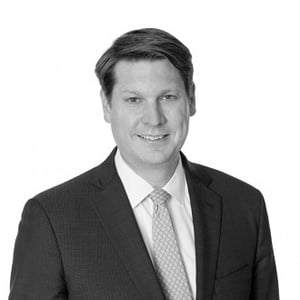
Former Acting Assistant Attorney General, United States Department of Justice; Partner, Winston & Strawn LLP
Jonathan “Jon” Brightbill is a trial and appellate lawyer in Winston’s Washington, D.C. office, and a partner in the firm’s Litigation and White Collar, Regulatory Defense, and Investigations Practices. He represents public and private companies, corporate officers, and other individuals across white collar, regulatory defense, and government and internal investigation matters and rulemaking challenges, as well as complex commercial disputes, citizen suits, and class actions. His commercial litigation experience encompasses business disputes, false advertising, consumer protection and fraud, FCA, and extensive class action defense work; antitrust and unfair competition matters; and intellectual property litigation, such as trademarks, patents, and trade secrets.
Jon served as the Nation’s lead environmental civil and criminal enforcement official and litigator, as Acting Assistant Attorney General for the Environment & Natural Resources Division (“ENRD”) of the U.S. Department of Justice (DOJ). Jon led ENRD’s 425 lawyers, overseeing 6,500 active matters and managing an annual budget of more than $150 million. Jon brings highly experienced executive leadership from among the most senior level of DOJ on white collar and regulatory enforcement, as well as on federal policymaking and rulemaking development and challenges. He speaks with authority on government decision-making processes, and the arguments and perspectives that move regulators and enforcers, best advising and positioning clients to deal with challenges.
Jon argued many of the government’s most significant cases during his time with the DOJ. This included the Navigable Waters Protection Rule and Clean Water Rule Repeal (10th Cir., district courts), the Affordable Clean Energy Rule and Clean Power Plan Repeal (D.C. Cir), defense of EPA actions on pesticide tolerances under FIFRA and the FDCA (9th Cir. en banc), among numerous others. Jon represented the United States in trial courts in both enforcement and defensive cases, including federal enforcement action against Jeffrey Lowe and the Tiger King Park, of Netflix fame, securing a first-of-its-kind injunction for violations of the Endangered Species Act and Animal Welfare Act. Jon directed the litigation and briefing of scores of additional federal cases nationwide, covering all of the major environmental and natural resources statutes, such as the Clean Air Act, the Clean Water Act, FIFRA (pesticides), FDCA (food safety), TSCA (toxics), CERCLA (land remediation), RCRA (waste), National Environmental Policy Act, Federal Land Policy and Management Act, and numerous other land- and resource-management statutes.
Jon has unmatched experience litigating legal and technical issues relating to climate change. He argued in the courts of appeals, including the D.C. Circuit, regarding the most significant climate change regulations by EPA, as well as the preemptive scope of the Clean Air Act. Jon also litigated climate change-related credit and trading schemes and international agreements in district court. During Jon’s time in leadership at ENRD, it successfully defeated one of the most wide-ranging lawsuits regarding climate change to date—obtaining a stay pending interlocutory appeal and dismissal just weeks before a scheduled three-month trial on federal government liability for climate change.
An accomplished trial lawyer, prior to working at DOJ, Jon was a partner in the Washington, D.C. office of another global law firm. He not only represents clients in court, but creatively counsels corporations on balancing business needs and realities with a broad range of litigation risks and compliance obligations. Jon is also an Adjunct Professor at Georgetown University Law Center. He served on the American Bar Association’s E-Discovery Working Group for Bankruptcy Practice, and was a frequent lecturer for District of Columbia Bar Association Continuing Legal Education Programs.
Jon served as an appellate clerk for the Honorable D. Brooks Smith, U.S. Court of Appeals for the Third Circuit, after graduating magna cum laude from the Georgetown University Law Center. He worked in state government as an Executive Policy Specialist for air, waste, land remediation, and radiation matters at the Pennsylvania Department of Environmental Protection.
Senior Attorney of the Clean Energy Program, Earthjustice
Thomas Cmar is a senior attorney for the Clean Energy Program, and is based in Cincinnati, Ohio.
Thomas first joined Earthjustice in 2012 after working for six years as an attorney with the Natural Resources Defense Council, where he specialized in energy and water issues. Thomas was deputy managing attorney of the Earthjustice Coal Program from 2018 to 2021. In 2021, Thomas moved back home to Ohio and spent a year working in private practice before rejoining Earthjustice in 2022.
Thomas has also worked as an adjunct lecturer in the Environmental Policy & Culture Program at Northwestern University, as an attorney with the International Labor Rights Fund in Washington, D.C., and as a law clerk for United States Magistrate Judge Debra Freeman of the United States District Court for the Southern District of New York. He is a 2004 graduate of Harvard Law School and has a B.A. in Politics & Philosophy from the University of Pittsburgh.

Director of Energy Policy, Chamber of Digital Commerce, Digital Power Network
Ms. Czapla is the Director of Energy Policy of the Chamber of Digital Commerce at the Digital Power Network. Prior to her current job, she worked on energy and climate policy at Citizens for Responsible Energy Solutions and the American Action Forum. In addition, Ms. Czapla worked for more than 5 years at Arbo, where she advised developers as well as the federal government on regulatory issues that arise throughout the planning, siting, construction and operation of energy infrastructure projects.
She earned a JD from the Columbus School of Law at the Catholic University of America, as well as a BS in Geological Sciences, and a BA in Philosophy with a concentration in Public Affairs, from George Washington University.

Litigation Counsel, New Civil Liberties Alliance
Kara Rollins, Litigation Counsel, comes to NCLA with experience in vindicating client’s rights from agency overreach and holding the administrative state accountable through government transparency projects. Before joining NCLA, Kara was Counsel for Cause of Action Institute where she represented clients in various Federal Trade Commission enforcement actions. She also engaged in strategic research and oversight of Executive Branch agencies, focusing on administrative rulemaking and government oversight and compliance. Prior to joining the Cause of Action Institute in 2016, she clerked for the Hon. Karen M. Cassidy, A.J.S.C. in the Superior Court of New Jersey, Union Vicinage. Preceding her legal career, Kara served as the Political Programs Manager for the National Federation of Independent Business, where she worked with small business owners throughout the country and learned firsthand about the adverse impact the regulatory state has on individuals.
Kara graduated with honors from Rutgers College, Rutgers University with a B.A. in Political Science in 2007, and cum laude from Catholic University’s Columbus School of Law in 2014. During law school, she was a member of The Catholic University Law Review and a Moot Court Associate for the Seigenthaler-Sutherland Cup National First Amendment Moot Court Competition.
Kara is admitted to practice in the District of Columbia, New York, and New Jersey, as well as to the U.S. District Court for the District of Columbia, the U.S. Court of Appeals for the Eleventh Circuit, and the U.S. Supreme Court.
Her work has been published on The Hill.com.
Former Acting Assistant Attorney General, United States Department of Justice; Partner, Winston & Strawn LLP
Jonathan “Jon” Brightbill is a trial and appellate lawyer in Winston’s Washington, D.C. office, and a partner in the firm’s Litigation and White Collar, Regulatory Defense, and Investigations Practices. He represents public and private companies, corporate officers, and other individuals across white collar, regulatory defense, and government and internal investigation matters and rulemaking challenges, as well as complex commercial disputes, citizen suits, and class actions. His commercial litigation experience encompasses business disputes, false advertising, consumer protection and fraud, FCA, and extensive class action defense work; antitrust and unfair competition matters; and intellectual property litigation, such as trademarks, patents, and trade secrets.
Jon served as the Nation’s lead environmental civil and criminal enforcement official and litigator, as Acting Assistant Attorney General for the Environment & Natural Resources Division (“ENRD”) of the U.S. Department of Justice (DOJ). Jon led ENRD’s 425 lawyers, overseeing 6,500 active matters and managing an annual budget of more than $150 million. Jon brings highly experienced executive leadership from among the most senior level of DOJ on white collar and regulatory enforcement, as well as on federal policymaking and rulemaking development and challenges. He speaks with authority on government decision-making processes, and the arguments and perspectives that move regulators and enforcers, best advising and positioning clients to deal with challenges.
Jon argued many of the government’s most significant cases during his time with the DOJ. This included the Navigable Waters Protection Rule and Clean Water Rule Repeal (10th Cir., district courts), the Affordable Clean Energy Rule and Clean Power Plan Repeal (D.C. Cir), defense of EPA actions on pesticide tolerances under FIFRA and the FDCA (9th Cir. en banc), among numerous others. Jon represented the United States in trial courts in both enforcement and defensive cases, including federal enforcement action against Jeffrey Lowe and the Tiger King Park, of Netflix fame, securing a first-of-its-kind injunction for violations of the Endangered Species Act and Animal Welfare Act. Jon directed the litigation and briefing of scores of additional federal cases nationwide, covering all of the major environmental and natural resources statutes, such as the Clean Air Act, the Clean Water Act, FIFRA (pesticides), FDCA (food safety), TSCA (toxics), CERCLA (land remediation), RCRA (waste), National Environmental Policy Act, Federal Land Policy and Management Act, and numerous other land- and resource-management statutes.
Jon has unmatched experience litigating legal and technical issues relating to climate change. He argued in the courts of appeals, including the D.C. Circuit, regarding the most significant climate change regulations by EPA, as well as the preemptive scope of the Clean Air Act. Jon also litigated climate change-related credit and trading schemes and international agreements in district court. During Jon’s time in leadership at ENRD, it successfully defeated one of the most wide-ranging lawsuits regarding climate change to date—obtaining a stay pending interlocutory appeal and dismissal just weeks before a scheduled three-month trial on federal government liability for climate change.
An accomplished trial lawyer, prior to working at DOJ, Jon was a partner in the Washington, D.C. office of another global law firm. He not only represents clients in court, but creatively counsels corporations on balancing business needs and realities with a broad range of litigation risks and compliance obligations. Jon is also an Adjunct Professor at Georgetown University Law Center. He served on the American Bar Association’s E-Discovery Working Group for Bankruptcy Practice, and was a frequent lecturer for District of Columbia Bar Association Continuing Legal Education Programs.
Jon served as an appellate clerk for the Honorable D. Brooks Smith, U.S. Court of Appeals for the Third Circuit, after graduating magna cum laude from the Georgetown University Law Center. He worked in state government as an Executive Policy Specialist for air, waste, land remediation, and radiation matters at the Pennsylvania Department of Environmental Protection.
Senior Attorney of the Clean Energy Program, Earthjustice
Thomas Cmar is a senior attorney for the Clean Energy Program, and is based in Cincinnati, Ohio.
Thomas first joined Earthjustice in 2012 after working for six years as an attorney with the Natural Resources Defense Council, where he specialized in energy and water issues. Thomas was deputy managing attorney of the Earthjustice Coal Program from 2018 to 2021. In 2021, Thomas moved back home to Ohio and spent a year working in private practice before rejoining Earthjustice in 2022.
Thomas has also worked as an adjunct lecturer in the Environmental Policy & Culture Program at Northwestern University, as an attorney with the International Labor Rights Fund in Washington, D.C., and as a law clerk for United States Magistrate Judge Debra Freeman of the United States District Court for the Southern District of New York. He is a 2004 graduate of Harvard Law School and has a B.A. in Politics & Philosophy from the University of Pittsburgh.
Director of Energy Policy, Chamber of Digital Commerce, Digital Power Network
Ms. Czapla is the Director of Energy Policy of the Chamber of Digital Commerce at the Digital Power Network. Prior to her current job, she worked on energy and climate policy at Citizens for Responsible Energy Solutions and the American Action Forum. In addition, Ms. Czapla worked for more than 5 years at Arbo, where she advised developers as well as the federal government on regulatory issues that arise throughout the planning, siting, construction and operation of energy infrastructure projects.
She earned a JD from the Columbus School of Law at the Catholic University of America, as well as a BS in Geological Sciences, and a BA in Philosophy with a concentration in Public Affairs, from George Washington University.
Litigation Counsel, New Civil Liberties Alliance
Kara Rollins, Litigation Counsel, comes to NCLA with experience in vindicating client’s rights from agency overreach and holding the administrative state accountable through government transparency projects. Before joining NCLA, Kara was Counsel for Cause of Action Institute where she represented clients in various Federal Trade Commission enforcement actions. She also engaged in strategic research and oversight of Executive Branch agencies, focusing on administrative rulemaking and government oversight and compliance. Prior to joining the Cause of Action Institute in 2016, she clerked for the Hon. Karen M. Cassidy, A.J.S.C. in the Superior Court of New Jersey, Union Vicinage. Preceding her legal career, Kara served as the Political Programs Manager for the National Federation of Independent Business, where she worked with small business owners throughout the country and learned firsthand about the adverse impact the regulatory state has on individuals.
Kara graduated with honors from Rutgers College, Rutgers University with a B.A. in Political Science in 2007, and cum laude from Catholic University’s Columbus School of Law in 2014. During law school, she was a member of The Catholic University Law Review and a Moot Court Associate for the Seigenthaler-Sutherland Cup National First Amendment Moot Court Competition.
Kara is admitted to practice in the District of Columbia, New York, and New Jersey, as well as to the U.S. District Court for the District of Columbia, the U.S. Court of Appeals for the Eleventh Circuit, and the U.S. Supreme Court.
Her work has been published on The Hill.com.
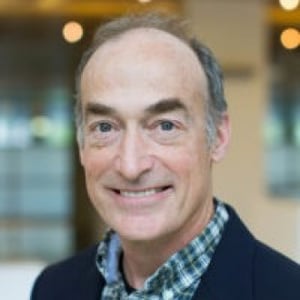
Professor of Law, Georgetown Law
William W. Buzbee is a professor of law at Georgetown University Law Center. In his teaching and scholarship, he specializes in environmental law, legislation and regulation, and administrative law. Recent publications focus on climate regulation, deregulation and law governing agency policy change, and federalism. He also offers seminars on advanced environmental, regulatory, and constitutional law subjects, with his most recent seminar focused on “The Art of Regulatory War.”
Professor Buzbee’s books include the recently published Fighting Westway: Environmental Law, Citizen Activism, and the Regulatory War that Transformed New York City (Cornell University Press 2014) and Preemption Choice: The Theory, Law and Reality of Federalism’s Core Question(Cambridge University Press, hardcover 2009, paperback 2011) (William W. Buzbee editor and contributor). He has been a co-author of the 5th , 6th, 7th and forthcoming 8th editions of Environmental Protection: Law and Policy (Aspen/Wolters Kluwer). Law review scholarship includes publications in New York University Law Review, University of Pennsylvania Law Review, Michigan Law Review, Stanford Law Review (co-authored), Cornell Law Review (co-authored), Duke Law Journal (forthcoming), George Washington Law Review, Iowa Law Review, The Journal of Law and Politics and in an array of other journals, books, news outlets, and blogs. Three of his articles have been named among the 10 best environmental or land use law articles of that year and republished in the Land Use and Environment Law Review. He regularly assists with appellate and Supreme Court environmental, federalism, and regulatory litigation, and also has testified before congressional committees on environmental and regulatory matters. He has published op-eds on regulatory and environmental issues with The New York Times, The Hill, CNN, and been quoted and interviewed by numerous press and media outlets.
Professor Buzbee joined Georgetown from Emory Law School, where he was a professor of law and directed its Environmental and Natural Resources Law Program. He also co-directed Emory’s Center on Federalism and Intersystemic Governance. He has been a visiting professor of law at Columbia, Cornell and Illinois law schools. He has also served as a professor for the Leiden-Amsterdam-Columbia Law School Summer Program in American Law. Professor Buzbee is a founding Member Scholar of the Center for Progressive Reform, a Washington D.C.-based regulatory think tank. Professor Buzbee was awarded the 2007-2008 Emory Williams Teaching Award for excellence in teaching. Professor Buzbee clerked for United States Judge Jose A. Cabranes, and before becoming a professor was an attorney-fellow at the Natural Resources Defense Council, and did environmental, land use and litigation work for the New York City law firm, Patterson, Belknap, Webb & Tyler. JD, Columbia Law School, 1986; BA, Amherst College, magna cum laude, 1983.
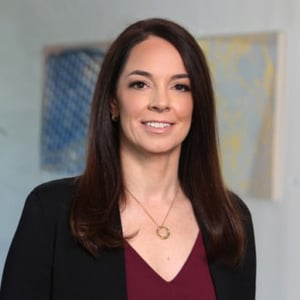
Partner, Hunton Andrews Kurth
A co-leader of Hunton Andrews Kurth’s environmental practice, Deidre is lauded in Chambers USA, 2016 as “extremely capable,” “very familiar with the regulations and agencies,” and excels at giving clients “good insight into getting an expeditious outcome.” Her practice focuses exclusively on environmental, energy and administrative law.
Deidre represents clients on permitting, compliance and litigation relating to the Clean Water Act (CWA), the Endangered Species Act (ESA), the National Environmental Policy Act (NEPA) and other environmental statutes. She frequently counsels clients on administrative rulemaking and policy, providing regulatory clarifications when necessary, and drafting federal and state legislation on myriad intricate issues. She is also well known for negotiating and obtaining permits for complicated energy and development projects. Her clients include development companies, oil and natural gas pipelines, electric utilities, agricultural interests, state and local agencies, and various trade associations.
Prior to entering private practice, Deidre served as assistant general counsel of the Army at the Pentagon, advising the secretary of the Army on environmental and land use issues involving the Corps of Engineers’ Civil Works and section 404 Regulatory program, as well as the Base Realignment and Closure (BRAC) program. Deidre has extensive experience with federal regulatory agencies, military departments and the US Department of Justice.
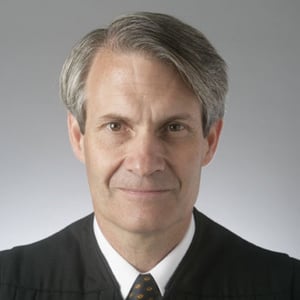
Special Counsel, Hunton Andrews Kurth
After serving on the United State Court of Appeals for the D. C. Circuit from 2005, Judge Griffith stepped down from the bench in 2020. Currently he is a Lecturer on Law at Harvard Law School, a Fellow at the Wheatley Institute at Brigham Young University, and Special Counsel in the Washington, DC office of the law firm of Hunton Andrews Kurth. Most recently, he was a member of President Biden's Commission on the Supreme Court. He is the author of Civic Charity and the Constitution , and the co-author, along with former judges Michael Luttig and Michael McConnell, of Lost, Not Stolen: The Conservative Case that Trump Lost and Biden Won the 2020 Presidential Election. https://lostnotstolen.org/ . Before being appointed to the D. C. Circuit, Judge Griffith was the General Counsel at BYU; Senate Legal Counsel, the non-partisan chief legal officer of the U. S. Senate; and a partner at Wiley, Rein & Fielding. Long active in rule-of-law programs in former communist nations, Judge Griffith is a member of the international advisory board of the CEELI Institute in Prague. He is a graduate of BYU and the University of Virginia School of Law and is a member of the American Law Institute.
Senior Vice President of Programs, Earthjustice
Sam Sankar is Earthjustice’s Senior Vice President for Programs. Sam leads our Program Leadership Team, which develops Earthjustice’s strategy for carrying out our mission through litigation, lobbying and regulatory advocacy, and communications.
Sam has been working on environmental issues throughout his career, which has included service as a line attorney at the Justice Department’s Environment and Natural Resources Division, as a senior executive at General Electric, and as deputy chief counsel of a presidential commission formed to investigate the 2010 Deepwater Horizon oil spill. He has also worked as a boat captain, machinist, and senior advisor to The Nature Conservancy.
Sam received his B.S. in civil engineering from Cornell University, an M.S. in environmental engineering from Stanford University, and his law degree from the University of California, Berkeley. After law school, he clerked for Judge William Fletcher of the Ninth Circuit, Judge Louis Pollak of the Eastern District of Pennsylvania, and Justice Sandra Day O’Connor of the U.S. Supreme Court.
Sam lives in Washington, D.C., with his wife and two children.
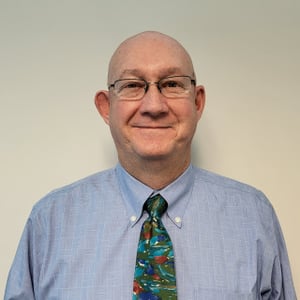
Vice President, Legal Advocacy, Office of General Counsel, National Association of Home Builders
Tom obtained his undergraduate degree in Mechanical Engineering from the University of Delaware and graduated from Widener University School of Law in 1994.
Tom joined NAHB’s Litigation Department in the fall of 1999. Currently he oversees NAHB’s litigation efforts where he develops NAHB’s legal strategies and provides litigation support to local home builders associations. He also supports NAHB’s lobbyists, and coordinates with NAHB’s regulatory staff to identify government activities (i.e. regulations or guidance documents) that may require involvement by the Litigation Department. One of the first cases Tom worked on for NAHB was United States v. Deaton where NAHB argued that the Deaton wetland was not a “water of the United States.” 20 years later we were proven right.
Professor of Law, Georgetown Law
William W. Buzbee is a professor of law at Georgetown University Law Center. In his teaching and scholarship, he specializes in environmental law, legislation and regulation, and administrative law. Recent publications focus on climate regulation, deregulation and law governing agency policy change, and federalism. He also offers seminars on advanced environmental, regulatory, and constitutional law subjects, with his most recent seminar focused on “The Art of Regulatory War.”
Professor Buzbee’s books include the recently published Fighting Westway: Environmental Law, Citizen Activism, and the Regulatory War that Transformed New York City (Cornell University Press 2014) and Preemption Choice: The Theory, Law and Reality of Federalism’s Core Question(Cambridge University Press, hardcover 2009, paperback 2011) (William W. Buzbee editor and contributor). He has been a co-author of the 5th , 6th, 7th and forthcoming 8th editions of Environmental Protection: Law and Policy (Aspen/Wolters Kluwer). Law review scholarship includes publications in New York University Law Review, University of Pennsylvania Law Review, Michigan Law Review, Stanford Law Review (co-authored), Cornell Law Review (co-authored), Duke Law Journal (forthcoming), George Washington Law Review, Iowa Law Review, The Journal of Law and Politics and in an array of other journals, books, news outlets, and blogs. Three of his articles have been named among the 10 best environmental or land use law articles of that year and republished in the Land Use and Environment Law Review. He regularly assists with appellate and Supreme Court environmental, federalism, and regulatory litigation, and also has testified before congressional committees on environmental and regulatory matters. He has published op-eds on regulatory and environmental issues with The New York Times, The Hill, CNN, and been quoted and interviewed by numerous press and media outlets.
Professor Buzbee joined Georgetown from Emory Law School, where he was a professor of law and directed its Environmental and Natural Resources Law Program. He also co-directed Emory’s Center on Federalism and Intersystemic Governance. He has been a visiting professor of law at Columbia, Cornell and Illinois law schools. He has also served as a professor for the Leiden-Amsterdam-Columbia Law School Summer Program in American Law. Professor Buzbee is a founding Member Scholar of the Center for Progressive Reform, a Washington D.C.-based regulatory think tank. Professor Buzbee was awarded the 2007-2008 Emory Williams Teaching Award for excellence in teaching. Professor Buzbee clerked for United States Judge Jose A. Cabranes, and before becoming a professor was an attorney-fellow at the Natural Resources Defense Council, and did environmental, land use and litigation work for the New York City law firm, Patterson, Belknap, Webb & Tyler. JD, Columbia Law School, 1986; BA, Amherst College, magna cum laude, 1983.
Partner, Hunton Andrews Kurth
A co-leader of Hunton Andrews Kurth’s environmental practice, Deidre is lauded in Chambers USA, 2016 as “extremely capable,” “very familiar with the regulations and agencies,” and excels at giving clients “good insight into getting an expeditious outcome.” Her practice focuses exclusively on environmental, energy and administrative law.
Deidre represents clients on permitting, compliance and litigation relating to the Clean Water Act (CWA), the Endangered Species Act (ESA), the National Environmental Policy Act (NEPA) and other environmental statutes. She frequently counsels clients on administrative rulemaking and policy, providing regulatory clarifications when necessary, and drafting federal and state legislation on myriad intricate issues. She is also well known for negotiating and obtaining permits for complicated energy and development projects. Her clients include development companies, oil and natural gas pipelines, electric utilities, agricultural interests, state and local agencies, and various trade associations.
Prior to entering private practice, Deidre served as assistant general counsel of the Army at the Pentagon, advising the secretary of the Army on environmental and land use issues involving the Corps of Engineers’ Civil Works and section 404 Regulatory program, as well as the Base Realignment and Closure (BRAC) program. Deidre has extensive experience with federal regulatory agencies, military departments and the US Department of Justice.
Special Counsel, Hunton Andrews Kurth
After serving on the United State Court of Appeals for the D. C. Circuit from 2005, Judge Griffith stepped down from the bench in 2020. Currently he is a Lecturer on Law at Harvard Law School, a Fellow at the Wheatley Institute at Brigham Young University, and Special Counsel in the Washington, DC office of the law firm of Hunton Andrews Kurth. Most recently, he was a member of President Biden's Commission on the Supreme Court. He is the author of Civic Charity and the Constitution , and the co-author, along with former judges Michael Luttig and Michael McConnell, of Lost, Not Stolen: The Conservative Case that Trump Lost and Biden Won the 2020 Presidential Election. https://lostnotstolen.org/ . Before being appointed to the D. C. Circuit, Judge Griffith was the General Counsel at BYU; Senate Legal Counsel, the non-partisan chief legal officer of the U. S. Senate; and a partner at Wiley, Rein & Fielding. Long active in rule-of-law programs in former communist nations, Judge Griffith is a member of the international advisory board of the CEELI Institute in Prague. He is a graduate of BYU and the University of Virginia School of Law and is a member of the American Law Institute.
Senior Vice President of Programs, Earthjustice
Sam Sankar is Earthjustice’s Senior Vice President for Programs. Sam leads our Program Leadership Team, which develops Earthjustice’s strategy for carrying out our mission through litigation, lobbying and regulatory advocacy, and communications.
Sam has been working on environmental issues throughout his career, which has included service as a line attorney at the Justice Department’s Environment and Natural Resources Division, as a senior executive at General Electric, and as deputy chief counsel of a presidential commission formed to investigate the 2010 Deepwater Horizon oil spill. He has also worked as a boat captain, machinist, and senior advisor to The Nature Conservancy.
Sam received his B.S. in civil engineering from Cornell University, an M.S. in environmental engineering from Stanford University, and his law degree from the University of California, Berkeley. After law school, he clerked for Judge William Fletcher of the Ninth Circuit, Judge Louis Pollak of the Eastern District of Pennsylvania, and Justice Sandra Day O’Connor of the U.S. Supreme Court.
Sam lives in Washington, D.C., with his wife and two children.
Vice President, Legal Advocacy, Office of General Counsel, National Association of Home Builders
Tom obtained his undergraduate degree in Mechanical Engineering from the University of Delaware and graduated from Widener University School of Law in 1994.
Tom joined NAHB’s Litigation Department in the fall of 1999. Currently he oversees NAHB’s litigation efforts where he develops NAHB’s legal strategies and provides litigation support to local home builders associations. He also supports NAHB’s lobbyists, and coordinates with NAHB’s regulatory staff to identify government activities (i.e. regulations or guidance documents) that may require involvement by the Litigation Department. One of the first cases Tom worked on for NAHB was United States v. Deaton where NAHB argued that the Deaton wetland was not a “water of the United States.” 20 years later we were proven right.

Tazewell Taylor Professor of Law and William H. Cabell Research Professor, William & Mary Law School
Jonathan H. Adler joined the William & Mary law faculty as the Tazwell Taylor Professor of Law and William H. Cabell Research Professor in 2025. Prior to joining the faculty, he was the inaugural Johan Verheij Memorial Professor of Law and the founding Director of the Coleman P. Burke Center for Environmental Law at the Case Western Reserve University School of Law.
Professor Adler is the author or editor of seven books, including Climate Liberalism: Perspectives on Liberty, Property and Pollution (Palgrave, 2023), Marijuana Federalism: Uncle Sam and Mary Jane (Brookings Institution Press, 2020), Business and the Roberts Court (Oxford University Press, 2016) and Rebuilding the Ark: New Perspectives on Endangered Species Act Reform (AEI Press, 2011).
His articles have appeared in publications ranging from the Harvard Environmental Law Review and Yale Journal on Regulation to the Wall Street Journal, New York Times, and Washington Post. He has testified before Congress a dozen times, and his work has been cited in the U.S. Supreme Court. A 2024 study identified Professor Adler as the seventh most cited legal academic in administrative and environmental law from 2019 to 2023.
Professor Adler is a contributing editor to Civitas Outlook and a regular contributor to the popular legal blog, The Volokh Conspiracy. A regular commentator on constitutional and regulatory issues, he has appeared on numerous radio and television programs, ranging from the PBS Newshour and National Public Radio to the Fox News Channel and Entertainment Tonight.
Professor Adler is a senior fellow at the Property & Environment Research Center in Bozeman, Montana. In 2018, Professor Adler was elected to membership in the American Law Institute and helped co-found the organization Checks and Balances. In 2024, Professor Adler was appointed a public member of the Administrative Conference of the United States.
Professor Adler clerked for the Honorable David B. Sentelle on the U.S. Court of Appeals for the District of Columbia Circuit.
United States Attorney, Eastern District of California
Mr. Grant was appointed by Attorney General Pam Bondi to serve as the United States Attorney for the Eastern District of California beginning on August 11, 2025. Pursuant to 28 U.S.C. § 546(d), he was further appointed by the district court effective December 9, 2025.
Mr. Grant is a veteran of the Department of Justice, having served twice in Washington, D.C.: from 1991 to 1993 as an Attorney-Adviser in the Office of Legal Counsel, and from 2017 to 2021 as a Deputy Assistant Attorney General in the Environment and Natural Resources Division (ENRD). During his tenure at ENRD, he supervised more than a hundred Department litigators advancing the interests of the United States and its agencies in both enforcement and defensive matters, both civil and criminal.
In addition to his service in the Department, Mr. Grant has decades of experience in private practice in Washington, D.C. and Sacramento. That experience includes arguments in the U.S. Supreme Court, the California Supreme Court, and numerous other federal and state courts.
Mr. Grant served as a law clerk to Chief Justice Warren E. Burger (retired) and Associate Justice Clarence Thomas during the Supreme Court’s October 1994 Term. Earlier he served as a law clerk to Judge Edith H. Jones of the U.S. Court of Appeals for the Fifth Circuit in Houston, Texas.
Mr. Grant grew up in Modesto, California and raised his family in Sacramento County. He attended the University of California, Berkeley, from which he earned a bachelor’s degree in economics (1986) and a law degree (1990).
Partner, Hunton Andrews Kurth
Mr. Leopold is a Partner with the law firm of Hunton Andrews Kurth in Washington, DC. He is the former Senate-confirmed general counsel of the U.S. EPA from 2018-2020, and he previously was a litigator at the U.S. Department of Justice, Environment and Natural Resources Division form 2007-2013. As EPA General Counsel, he counseled on the development and defense of EPA’s most significant rulemakings, including the Affordable Clean Energy Rule, the Navigable Waters Protection Rule, and the Safe Affordable Fuel‐Efficient (SAFE) Vehicles Rule, as well as several pesticide actions. He was personally involved in defending EPA in litigation, including the County of Maui v. Hawaii Wildlife Fund in the U.S. Supreme Court. Mr. Leopold’s prior government service also includes working in Florida as general counsel of the Florida Department of Environmental Protection. He now represents clients in regulatory advocacy before federal agencies, litigates federal environmental actions, and defends clients with EPA enforcement issues.
Emmett Visiting Assistant Clinical Professor of Law in Environmental Law, Harvard Law School
Andrew Mergen is a Visiting Assistant Clinical Professor of Law and Faculty Director of the Emmett Environmental Law & Policy Clinic. Prior to joining the Harvard Law School faculty, Andrew Mergen served in the Appellate Section of the Environment & Natural Resources Division (ENRD) at the United States Department of Justice. Professor Mergen began his career at the Justice Department in the Honors Program and concluded his career as Chief of ENRD’s Appellate Section. He has presented oral arguments in all 13 federal courts of appeals, including two en banc courts, and before several state intermediate and supreme courts. He has also worked on over a dozen merits cases in the Supreme Court of the United States. In addition, in 2009, Professor Mergen assisted the Office of White House Counsel on the confirmation of the Honorable Sonia Sotomayor as Associate Justice of the Supreme Court. During his career at the Justice Department, Professor Mergen received the Attorney General’s Award for Distinguished Service three times. He also received ENRD’s Muskee-Chafee Award, honoring his work’s significant contribution to protecting the environment.
Before entering clinical teaching, Professor Mergen taught at several law schools including, Harvard Law School (Advanced Environmental Law), the University of Michigan Law School (Natural Resources Law) and the William S. Richardson School of Law, University of Hawaii-Manoa (Administrative Law). Professor Mergen has written about federal water rights in “A Misplaced Sensitivity: The Draft Opinions in Wyoming v. United States” (68 Colo. L. Rev. 683 (1997), with Sylvia F. Liu); energy development on public lands in “Surface Tension: The Problem of Federal Private Split Estates” (33 Land & Water L. Rev. 419 (1998)); climate change and the Endangered Species Act in “The Role of Climate Change in ESA Listing Decisions” (53 Rocky Mt. Min. L. Fdn. 67 (2016), with Murray Feldman) and the accommodation of Native American sacred sites on federal land in “Finding the Path Forward for Indigenous Sacred and Cultural Spaces on Federal Public Land,” 68 Nat. Resources & Energy L. Inst. 32-1 (2022). Professor Mergen is a graduate of the University of Wisconsin—Madison and the George Washington University Law School.
Senior Vice President of Programs, Earthjustice
Sam Sankar is Earthjustice’s Senior Vice President for Programs. Sam leads our Program Leadership Team, which develops Earthjustice’s strategy for carrying out our mission through litigation, lobbying and regulatory advocacy, and communications.
Sam has been working on environmental issues throughout his career, which has included service as a line attorney at the Justice Department’s Environment and Natural Resources Division, as a senior executive at General Electric, and as deputy chief counsel of a presidential commission formed to investigate the 2010 Deepwater Horizon oil spill. He has also worked as a boat captain, machinist, and senior advisor to The Nature Conservancy.
Sam received his B.S. in civil engineering from Cornell University, an M.S. in environmental engineering from Stanford University, and his law degree from the University of California, Berkeley. After law school, he clerked for Judge William Fletcher of the Ninth Circuit, Judge Louis Pollak of the Eastern District of Pennsylvania, and Justice Sandra Day O’Connor of the U.S. Supreme Court.
Sam lives in Washington, D.C., with his wife and two children.
Partner, Baker Botts LLP
Drawing from two decades of experience in senior government, in-house corporate, and private law firm roles, Jeff Wood helps clients with federal enforcement, compliance, litigation, permitting, and policy challenges primarily in the energy and environmental fields.
Prior to joining Baker Botts, Mr. Wood served for almost two years as the Acting Assistant Attorney General (AAG) for the Justice Department's Environment and Natural Resources Division (ENRD). In that capacity, Mr. Wood led ENRD and its more than 600 attorneys and staff representing EPA, Departments of the Interior, Energy, and Defense, and other agencies in civil and criminal enforcement and defensive environmental, energy, and natural resources litigation.
As the top official in ENRD, Mr. Wood managed a complex organization with an annual budget exceeding $200 million and a docket of more than 6,000 cases and matters. E&E News noted that “Wood maintains a strong relationship with ENRD's career staff” (Greenwire, Oct. 31, 2018). He previously served on the staff of the United States Senate Committee on Environment and Public Works.
At the Justice Department, Mr. Wood oversaw the Division's civil and criminal enforcement programs and was responsible for developing legal strategies and approving briefs in key cases including filings before the Supreme Court and Courts of Appeals in coordination with the Office of Solicitor General. In this role, Mr. Wood held the highest level security clearance and worked closely with top leadership at DOJ, EPA, the Interior Department, USDA, the Energy Department, Transportation Department, FERC, NRC and across the Executive Branch, including the White House.
With many years of both private law firm and in-house legal experience, Mr. Wood has handled complex environmental enforcement, regulatory, policy, and litigation matters for electric utilities, energy companies, maritime companies, mining companies, real estate developers, financial institutions, industrial companies and manufacturers, business coalitions, associations, small businesses, and individual property owners. Drawing from his experiences in-house, Mr. Wood brings a common-sense, cost-effective, client-focused approach to his work every day.
With a strong national reputation, Mr. Wood is a frequent speaker on environmental law and policy matters, with recent speeches and presentations at the Environmental Law Institute, Harvard Law School, Vanderbilt Law School, American University Law School, American Bar Association Environmental Law Conferences, the Texas Environmental SuperConference, Air Force Judge Advocate General School's Advanced Environmental Law Course, Baker Institute's Center for Energy Studies (Rice University), and many other venues. He frequently appears in national news to share insights on significant environmental law and policy issues, including recent quotes in the New York Times, Washington Post, Wall Street Journal, Bloomberg, Law360, and E&E News, among others.
Former Acting Assistant Attorney General, United States Department of Justice; Partner, Winston & Strawn LLP
Jonathan “Jon” Brightbill is a trial and appellate lawyer in Winston’s Washington, D.C. office, and a partner in the firm’s Litigation and White Collar, Regulatory Defense, and Investigations Practices. He represents public and private companies, corporate officers, and other individuals across white collar, regulatory defense, and government and internal investigation matters and rulemaking challenges, as well as complex commercial disputes, citizen suits, and class actions. His commercial litigation experience encompasses business disputes, false advertising, consumer protection and fraud, FCA, and extensive class action defense work; antitrust and unfair competition matters; and intellectual property litigation, such as trademarks, patents, and trade secrets.
Jon served as the Nation’s lead environmental civil and criminal enforcement official and litigator, as Acting Assistant Attorney General for the Environment & Natural Resources Division (“ENRD”) of the U.S. Department of Justice (DOJ). Jon led ENRD’s 425 lawyers, overseeing 6,500 active matters and managing an annual budget of more than $150 million. Jon brings highly experienced executive leadership from among the most senior level of DOJ on white collar and regulatory enforcement, as well as on federal policymaking and rulemaking development and challenges. He speaks with authority on government decision-making processes, and the arguments and perspectives that move regulators and enforcers, best advising and positioning clients to deal with challenges.
Jon argued many of the government’s most significant cases during his time with the DOJ. This included the Navigable Waters Protection Rule and Clean Water Rule Repeal (10th Cir., district courts), the Affordable Clean Energy Rule and Clean Power Plan Repeal (D.C. Cir), defense of EPA actions on pesticide tolerances under FIFRA and the FDCA (9th Cir. en banc), among numerous others. Jon represented the United States in trial courts in both enforcement and defensive cases, including federal enforcement action against Jeffrey Lowe and the Tiger King Park, of Netflix fame, securing a first-of-its-kind injunction for violations of the Endangered Species Act and Animal Welfare Act. Jon directed the litigation and briefing of scores of additional federal cases nationwide, covering all of the major environmental and natural resources statutes, such as the Clean Air Act, the Clean Water Act, FIFRA (pesticides), FDCA (food safety), TSCA (toxics), CERCLA (land remediation), RCRA (waste), National Environmental Policy Act, Federal Land Policy and Management Act, and numerous other land- and resource-management statutes.
Jon has unmatched experience litigating legal and technical issues relating to climate change. He argued in the courts of appeals, including the D.C. Circuit, regarding the most significant climate change regulations by EPA, as well as the preemptive scope of the Clean Air Act. Jon also litigated climate change-related credit and trading schemes and international agreements in district court. During Jon’s time in leadership at ENRD, it successfully defeated one of the most wide-ranging lawsuits regarding climate change to date—obtaining a stay pending interlocutory appeal and dismissal just weeks before a scheduled three-month trial on federal government liability for climate change.
An accomplished trial lawyer, prior to working at DOJ, Jon was a partner in the Washington, D.C. office of another global law firm. He not only represents clients in court, but creatively counsels corporations on balancing business needs and realities with a broad range of litigation risks and compliance obligations. Jon is also an Adjunct Professor at Georgetown University Law Center. He served on the American Bar Association’s E-Discovery Working Group for Bankruptcy Practice, and was a frequent lecturer for District of Columbia Bar Association Continuing Legal Education Programs.
Jon served as an appellate clerk for the Honorable D. Brooks Smith, U.S. Court of Appeals for the Third Circuit, after graduating magna cum laude from the Georgetown University Law Center. He worked in state government as an Executive Policy Specialist for air, waste, land remediation, and radiation matters at the Pennsylvania Department of Environmental Protection.
Senior Attorney of the Clean Energy Program, Earthjustice
Thomas Cmar is a senior attorney for the Clean Energy Program, and is based in Cincinnati, Ohio.
Thomas first joined Earthjustice in 2012 after working for six years as an attorney with the Natural Resources Defense Council, where he specialized in energy and water issues. Thomas was deputy managing attorney of the Earthjustice Coal Program from 2018 to 2021. In 2021, Thomas moved back home to Ohio and spent a year working in private practice before rejoining Earthjustice in 2022.
Thomas has also worked as an adjunct lecturer in the Environmental Policy & Culture Program at Northwestern University, as an attorney with the International Labor Rights Fund in Washington, D.C., and as a law clerk for United States Magistrate Judge Debra Freeman of the United States District Court for the Southern District of New York. He is a 2004 graduate of Harvard Law School and has a B.A. in Politics & Philosophy from the University of Pittsburgh.
Director of Energy Policy, Chamber of Digital Commerce, Digital Power Network
Ms. Czapla is the Director of Energy Policy of the Chamber of Digital Commerce at the Digital Power Network. Prior to her current job, she worked on energy and climate policy at Citizens for Responsible Energy Solutions and the American Action Forum. In addition, Ms. Czapla worked for more than 5 years at Arbo, where she advised developers as well as the federal government on regulatory issues that arise throughout the planning, siting, construction and operation of energy infrastructure projects.
She earned a JD from the Columbus School of Law at the Catholic University of America, as well as a BS in Geological Sciences, and a BA in Philosophy with a concentration in Public Affairs, from George Washington University.
Litigation Counsel, New Civil Liberties Alliance
Kara Rollins, Litigation Counsel, comes to NCLA with experience in vindicating client’s rights from agency overreach and holding the administrative state accountable through government transparency projects. Before joining NCLA, Kara was Counsel for Cause of Action Institute where she represented clients in various Federal Trade Commission enforcement actions. She also engaged in strategic research and oversight of Executive Branch agencies, focusing on administrative rulemaking and government oversight and compliance. Prior to joining the Cause of Action Institute in 2016, she clerked for the Hon. Karen M. Cassidy, A.J.S.C. in the Superior Court of New Jersey, Union Vicinage. Preceding her legal career, Kara served as the Political Programs Manager for the National Federation of Independent Business, where she worked with small business owners throughout the country and learned firsthand about the adverse impact the regulatory state has on individuals.
Kara graduated with honors from Rutgers College, Rutgers University with a B.A. in Political Science in 2007, and cum laude from Catholic University’s Columbus School of Law in 2014. During law school, she was a member of The Catholic University Law Review and a Moot Court Associate for the Seigenthaler-Sutherland Cup National First Amendment Moot Court Competition.
Kara is admitted to practice in the District of Columbia, New York, and New Jersey, as well as to the U.S. District Court for the District of Columbia, the U.S. Court of Appeals for the Eleventh Circuit, and the U.S. Supreme Court.
Her work has been published on The Hill.com.
Professor of Law, Georgetown Law
William W. Buzbee is a professor of law at Georgetown University Law Center. In his teaching and scholarship, he specializes in environmental law, legislation and regulation, and administrative law. Recent publications focus on climate regulation, deregulation and law governing agency policy change, and federalism. He also offers seminars on advanced environmental, regulatory, and constitutional law subjects, with his most recent seminar focused on “The Art of Regulatory War.”
Professor Buzbee’s books include the recently published Fighting Westway: Environmental Law, Citizen Activism, and the Regulatory War that Transformed New York City (Cornell University Press 2014) and Preemption Choice: The Theory, Law and Reality of Federalism’s Core Question(Cambridge University Press, hardcover 2009, paperback 2011) (William W. Buzbee editor and contributor). He has been a co-author of the 5th , 6th, 7th and forthcoming 8th editions of Environmental Protection: Law and Policy (Aspen/Wolters Kluwer). Law review scholarship includes publications in New York University Law Review, University of Pennsylvania Law Review, Michigan Law Review, Stanford Law Review (co-authored), Cornell Law Review (co-authored), Duke Law Journal (forthcoming), George Washington Law Review, Iowa Law Review, The Journal of Law and Politics and in an array of other journals, books, news outlets, and blogs. Three of his articles have been named among the 10 best environmental or land use law articles of that year and republished in the Land Use and Environment Law Review. He regularly assists with appellate and Supreme Court environmental, federalism, and regulatory litigation, and also has testified before congressional committees on environmental and regulatory matters. He has published op-eds on regulatory and environmental issues with The New York Times, The Hill, CNN, and been quoted and interviewed by numerous press and media outlets.
Professor Buzbee joined Georgetown from Emory Law School, where he was a professor of law and directed its Environmental and Natural Resources Law Program. He also co-directed Emory’s Center on Federalism and Intersystemic Governance. He has been a visiting professor of law at Columbia, Cornell and Illinois law schools. He has also served as a professor for the Leiden-Amsterdam-Columbia Law School Summer Program in American Law. Professor Buzbee is a founding Member Scholar of the Center for Progressive Reform, a Washington D.C.-based regulatory think tank. Professor Buzbee was awarded the 2007-2008 Emory Williams Teaching Award for excellence in teaching. Professor Buzbee clerked for United States Judge Jose A. Cabranes, and before becoming a professor was an attorney-fellow at the Natural Resources Defense Council, and did environmental, land use and litigation work for the New York City law firm, Patterson, Belknap, Webb & Tyler. JD, Columbia Law School, 1986; BA, Amherst College, magna cum laude, 1983.
Partner, Hunton Andrews Kurth
A co-leader of Hunton Andrews Kurth’s environmental practice, Deidre is lauded in Chambers USA, 2016 as “extremely capable,” “very familiar with the regulations and agencies,” and excels at giving clients “good insight into getting an expeditious outcome.” Her practice focuses exclusively on environmental, energy and administrative law.
Deidre represents clients on permitting, compliance and litigation relating to the Clean Water Act (CWA), the Endangered Species Act (ESA), the National Environmental Policy Act (NEPA) and other environmental statutes. She frequently counsels clients on administrative rulemaking and policy, providing regulatory clarifications when necessary, and drafting federal and state legislation on myriad intricate issues. She is also well known for negotiating and obtaining permits for complicated energy and development projects. Her clients include development companies, oil and natural gas pipelines, electric utilities, agricultural interests, state and local agencies, and various trade associations.
Prior to entering private practice, Deidre served as assistant general counsel of the Army at the Pentagon, advising the secretary of the Army on environmental and land use issues involving the Corps of Engineers’ Civil Works and section 404 Regulatory program, as well as the Base Realignment and Closure (BRAC) program. Deidre has extensive experience with federal regulatory agencies, military departments and the US Department of Justice.
Special Counsel, Hunton Andrews Kurth
After serving on the United State Court of Appeals for the D. C. Circuit from 2005, Judge Griffith stepped down from the bench in 2020. Currently he is a Lecturer on Law at Harvard Law School, a Fellow at the Wheatley Institute at Brigham Young University, and Special Counsel in the Washington, DC office of the law firm of Hunton Andrews Kurth. Most recently, he was a member of President Biden's Commission on the Supreme Court. He is the author of Civic Charity and the Constitution , and the co-author, along with former judges Michael Luttig and Michael McConnell, of Lost, Not Stolen: The Conservative Case that Trump Lost and Biden Won the 2020 Presidential Election. https://lostnotstolen.org/ . Before being appointed to the D. C. Circuit, Judge Griffith was the General Counsel at BYU; Senate Legal Counsel, the non-partisan chief legal officer of the U. S. Senate; and a partner at Wiley, Rein & Fielding. Long active in rule-of-law programs in former communist nations, Judge Griffith is a member of the international advisory board of the CEELI Institute in Prague. He is a graduate of BYU and the University of Virginia School of Law and is a member of the American Law Institute.
Senior Vice President of Programs, Earthjustice
Sam Sankar is Earthjustice’s Senior Vice President for Programs. Sam leads our Program Leadership Team, which develops Earthjustice’s strategy for carrying out our mission through litigation, lobbying and regulatory advocacy, and communications.
Sam has been working on environmental issues throughout his career, which has included service as a line attorney at the Justice Department’s Environment and Natural Resources Division, as a senior executive at General Electric, and as deputy chief counsel of a presidential commission formed to investigate the 2010 Deepwater Horizon oil spill. He has also worked as a boat captain, machinist, and senior advisor to The Nature Conservancy.
Sam received his B.S. in civil engineering from Cornell University, an M.S. in environmental engineering from Stanford University, and his law degree from the University of California, Berkeley. After law school, he clerked for Judge William Fletcher of the Ninth Circuit, Judge Louis Pollak of the Eastern District of Pennsylvania, and Justice Sandra Day O’Connor of the U.S. Supreme Court.
Sam lives in Washington, D.C., with his wife and two children.
Vice President, Legal Advocacy, Office of General Counsel, National Association of Home Builders
Tom obtained his undergraduate degree in Mechanical Engineering from the University of Delaware and graduated from Widener University School of Law in 1994.
Tom joined NAHB’s Litigation Department in the fall of 1999. Currently he oversees NAHB’s litigation efforts where he develops NAHB’s legal strategies and provides litigation support to local home builders associations. He also supports NAHB’s lobbyists, and coordinates with NAHB’s regulatory staff to identify government activities (i.e. regulations or guidance documents) that may require involvement by the Litigation Department. One of the first cases Tom worked on for NAHB was United States v. Deaton where NAHB argued that the Deaton wetland was not a “water of the United States.” 20 years later we were proven right.

An Environmental Law Revolution: Will DOGE and the Second Trump Administration Achieve Lasting Positive Change?
Eric Grant, Matthew Z. Leopold, Andrew Mergen, Sambhav Sankar, Jeffrey H. Wood
Since Inauguration Day, President Trump and his Cabinet have taken a range of important executive...
An Environmental Law Revolution: Will DOGE and the Second Trump Administration Achieve Lasting Positive Change?
Eric Grant, Matthew Z. Leopold, Andrew Mergen, Sambhav Sankar, Jeffrey H. Wood
Since Inauguration Day, President Trump and his Cabinet have taken a range of important executive...
An Environmental Law Revolution: Will DOGE and the Second Trump Administration Achieve Lasting Positive Change?
Theories of Presidential Power Series
Crypto, Data Centers, and Climate
A Look at Federal and State Regulation of the Environmental Effects of Bitcoin
Crypto, Data Centers, and Climate
Jonathan Brightbill, Thomas Cmar, Ewelina Czapla, Kara Rollins
In January 2024, the U.S. Energy Information Administration (EIA) initiated an “emergency collection” of information...
Crypto, Data Centers, and Climate
Jonathan Brightbill, Thomas Cmar, Ewelina Czapla, Kara Rollins
In January 2024, the U.S. Energy Information Administration (EIA) initiated an “emergency collection” of information...
Courthouse Steps Decision: Sackett v. Environmental Protection Agency
William W. Buzbee, Deidre G. Duncan, Thomas B. Griffith, Sambhav Sankar, Thomas J. Ward
Sponsors: Environmental Law & Property Rights Practice GroupDC Young Lawyers ChapterHunton Andrews Kurth LLP Where:Hunton...
Courthouse Steps Decision: Sackett v. Environmental Protection Agency
William W. Buzbee, Deidre G. Duncan, Thomas B. Griffith, Sambhav Sankar, Thomas J. Ward
Sponsors: Environmental Law & Property Rights Practice GroupDC Young Lawyers ChapterHunton Andrews Kurth LLP Where:Hunton...
Courthouse Steps Decision: Sackett v. Environmental Protection Agency
Join us for a special in-person event at Hunton Andrews Kurth on Sackett v. EPA.
Washington, DCShould Federal Wetlands Regulation Give Way to State and Private Initiatives?
Jonathan H. Adler
It is hard for many to believe that Maryland developer James J. Wilson could be...