

CEO, Asset Forfeiture Law, LLC
As a federal prosecutor, Stefan D. Cassella was one of the federal government’s leading experts on asset forfeiture and money laundering law for over thirty years. He now serves as an expert witness and consultant to law enforcement agencies and the private sector as the CEO of AssetForfeitureLaw, LLC.
As a Deputy Chief of the Justice Department’s Asset Forfeiture and Money Laundering Section and later as the Chief of the Asset Forfeiture and Money Laundering Section in the U.S. Attorney’s Office in Baltimore, Maryland, Mr. Cassella litigated some of the Government’s most significant forfeiture and money laundering cases and drafted many of the federal forfeiture and money laundering statutes.
He is the author of Asset Forfeiture Law in the United States, a one-volume resource designed to lead the practitioner, prosecutor, judge and policy maker through the labyrinth of statutes, rules and cases that govern this dynamic area of the law, and of more than 40 law review articles on money laundering and forfeiture. He has trained state and federal prosecutors and agents and their counterparts in numerous foreign countries, including over 200 lectures at the National Advocacy Center at the University of South Carolina.
Mr. Cassella is also the author and publisher of the Money Laundering and Forfeiture Digest, a monthly compendium of the forfeiture and money laundering cases decided by the federal courts that is circulated to hundreds of state, federal and foreign prosecutors and lawyers, law enforcement agents, academics and policy makers in the U.S. and abroad.
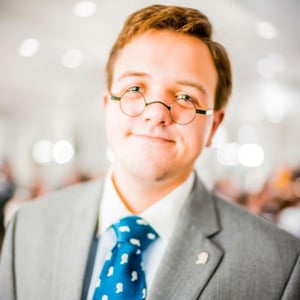
Adam Griffin is a graduate of the University of North Carolina School of Law. During law school, he served as a research assistant to Professor Stephen E. Sachs and UNC Law Dean Martin Brinkley. After law school, Adam spent two years litigating for liberty at the Institute for Justice as an inaugural Law and Liberty Fellow. He then served as a law clerk to Chief Judge Richard E. Myers in the United States District Court for the Eastern District of North Carolina, and previously worked at Pacific Legal Foundation and the Civil Rights Division of the Department of Justice.
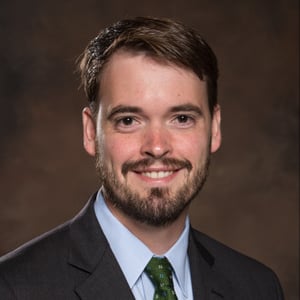
Senior Attorney, Institute for Justice
Rob Johnson is a senior attorney at the Institute for Justice, where he litigates to protect private property, free speech, and other individual rights. Rob is a nationally-recognized expert on civil forfeiture. He previously represented a series of small business owners who had their entire bank accounts seized by the IRS, and he launched an initiative that resulted in the IRS reopening hundreds of closed forfeiture cases and returning millions of dollars. He has also litigated cases challenging the constitutionality of civil forfeiture procedures, and he scored a victory striking down a forfeiture program as a violation of due process.
Beyond civil forfeiture, Rob has litigated cases defending a range of constitutional rights. He was part of teams that successfully challenged occupational licensing requirements for tour guides in Savannah and Charleston. He also developed a class action lawsuit fighting the NYPD’s use of a draconian “no-fault eviction” statute to coerce residents to waive their constitutional rights, which led New York City to reform the challenged law.
Rob’s writing has been published in the Wall Street Journal, Washington Post, Politico, and Reason, among other venues. Rob has testified about occupational licensing before the House and Senate Judiciary Committees and has twice testified about civil forfeiture before the House Ways & Means Oversight Subcommittee. He has also testified before state legislatures across the country.
From 2014-2017, Rob served as IJ’s first Elfie Gallun Fellow for Freedom and the Constitution. In that role, Rob wrote and spoke about the vital role the U.S. Constitution plays in protecting our most precious freedoms. He is currently at work on a book about the Fourteenth Amendment.
Rob studied literature and anthropology at Columbia University, and he studied law at Harvard Law School. Upon graduation, he clerked for Chief Judge Alex Kozinski on the Ninth Circuit and for Justice Anthony Kennedy on the Supreme Court.
Rob lives in Cleveland with his wife and two daughters—all named after characters in Shakespeare plays—and is an amateur large format photographer.
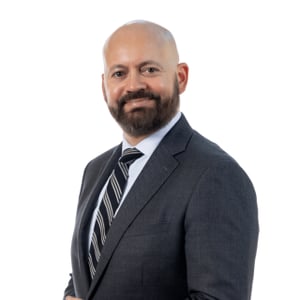
Milton R. Underwood Chair in Free Enterprise, Vanderbilt University Law School
Brian Fitzpatrick is the Milton R. Underwood Chair in Free Enterprise and Professor of Law at Vanderbilt Law School, where his research focuses on class action litigation, federal courts, judicial selection, and constitutional law. He is best known for his empirical studies of class action settlements as well as his book The Conservative Case for Class Actions (University of Chicago Press, 2019). Professor Fitzpatrick joined Vanderbilt's law faculty in 2007 after serving as the John M. Olin Fellow at New York University School of Law. He graduated first in his class from Harvard Law School and went on to clerk for Judge Diarmuid O'Scannlain on the U.S. Court of Appeals for the Ninth Circuit and Justice Antonin Scalia on the U.S. Supreme Court. After his clerkships, Professor Fitzpatrick practiced commercial and appellate litigation for several years at Sidley Austin in Washington, D.C., and served as Special Counsel for Supreme Court Nominations to U.S. Senator John Cornyn. Before earning his law degree, Fitzpatrick graduated summa cum laude with a bachelor's of science in chemical engineering from the University of Notre Dame. He has received the Hall-Hartman Outstanding Professor Award, which recognizes excellence in classroom teaching, for his Civil Procedure and Federal Courts courses.
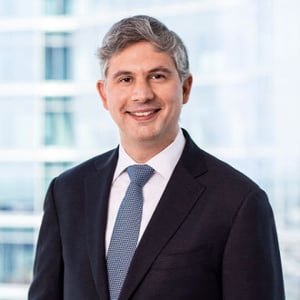
Partner, Keller Postman
Ashley Keller is one of the founding Partners of Keller Postman LLC. An experienced trial and appellate lawyer, Ashley helps set strategic direction across virtually all of the firm’s cases. He represents clients in a wide variety of practice areas and types of claims, including product-liability, antitrust, class action, and arbitration matters.
Ashley is one of the leaders of Keller Postman’s national product-liability practice. He leverages his ability to detangle complex concepts and develop novel legal theories to support individual client matters and as counsel on numerous product-liability multidistrict litigation matters. He chairs the plaintiffs’ Law & Briefing Committee in the Zantac (Ranitidine) Product Liability MDL in the U.S. District Court for the Southern District of Florida.
Ashley also litigates complex antitrust and class action matters. Among his notable cases, Ashley represents numerous States in antitrust litigation against Google for monopolizing products and services used by advertisers and publishers in online-display advertising.
Ashley also has played a central role in developing the firm’s pioneering arbitration practice, which includes pursuing individual arbitrations for clients whose claims are subject to arbitration clauses with class-action waivers. In part through managing the complexity of pursuing these individual claims simultaneously, the firm has secured millions in settlements for more than 500,000 employees and consumers.
Before launching Keller Postman, Ashley co-founded the litigation finance firm Gerchen Keller Capital, which grew to more than $1.3 billion in assets under management and was the world’s largest private investment manager focused on legal and regulatory risk prior to being acquired by Burford Capital in 2016.
Previously, Ashley was a partner at Bartlit Beck Herman Palenchar & Scott LLP, The American Lawyer’s litigation boutique of the year. While there, he handled various trial and appellate matters involving multi-billion-dollar securities and patent cases, contract disputes, mass torts, and class actions.
Ashley also worked as an analyst at Alyeska Investment Group, a Chicago-based market-neutral hedge fund, where he focused on investments in companies facing litigation and other complicated regulatory matters.
Ashley was named a 2021 Plaintiffs’ Lawyers Trailblazer by the National Law Journal. He is also listed on Lawdragon’s 500 Leading Lawyers in America, Lawdragon’s 500 Leading Plaintiff Consumer Lawyers, Lawdragon’s Leading Plaintiff Financial Lawyers, National Trial Lawyers’ Top 100, and Illinois Super Lawyers.
Ashley was a law clerk for Justice Anthony M. Kennedy at the Supreme Court of the United States and Judge Richard Posner at the U.S. Court of Appeals for the Seventh Circuit. He graduated magna cum laude from Harvard College, received his M.B.A. from the University of Chicago Booth School of Business and received his J.D. from the University of Chicago Law School, where he graduated first in his class.
Counsel, Keller Postman LLC
John Masslon is a Counsel at Keller Postman LLC, where he works on a broad range of disputes, including products liability and consumer protections suits. He helps develop legal strategies, writes briefs, and presents argument on legal questions. Before joining Keller Postman, John was senior litigation counsel at Washington Legal Foundation. There, he wrote about 100 amicus briefs supporting free enterprise in courts across the country. He filed the first amicus brief in the Supreme Court supporting the challenge to OSHA’s vaccine mandate. He also filed a brief supporting ending the in-house proceedings at the Securities and Exchange Commission. Previously, John served as assistant solicitor general in a state attorney general’s office. There, he was first chair in a federal trial challenging a state election law that was ultimately upheld. He also wrote the briefs that convinced the state supreme court to uphold the State’s right-to-work statute.
John obtained his B.S. in economics with a minor in mathematical sciences from Clemson University. He then received his J.D. and LL.M. in Taxation from Georgetown University Law Center. After law school, John worked for Judge Arthur J. Schwab of the United States District Court for the Western District of Pennsylvania and clerked for Judge Judith Ference Olson of the Superior Court of Pennsylvania.
Milton R. Underwood Chair in Free Enterprise, Vanderbilt University Law School
Brian Fitzpatrick is the Milton R. Underwood Chair in Free Enterprise and Professor of Law at Vanderbilt Law School, where his research focuses on class action litigation, federal courts, judicial selection, and constitutional law. He is best known for his empirical studies of class action settlements as well as his book The Conservative Case for Class Actions (University of Chicago Press, 2019). Professor Fitzpatrick joined Vanderbilt's law faculty in 2007 after serving as the John M. Olin Fellow at New York University School of Law. He graduated first in his class from Harvard Law School and went on to clerk for Judge Diarmuid O'Scannlain on the U.S. Court of Appeals for the Ninth Circuit and Justice Antonin Scalia on the U.S. Supreme Court. After his clerkships, Professor Fitzpatrick practiced commercial and appellate litigation for several years at Sidley Austin in Washington, D.C., and served as Special Counsel for Supreme Court Nominations to U.S. Senator John Cornyn. Before earning his law degree, Fitzpatrick graduated summa cum laude with a bachelor's of science in chemical engineering from the University of Notre Dame. He has received the Hall-Hartman Outstanding Professor Award, which recognizes excellence in classroom teaching, for his Civil Procedure and Federal Courts courses.
Partner, Keller Postman
Ashley Keller is one of the founding Partners of Keller Postman LLC. An experienced trial and appellate lawyer, Ashley helps set strategic direction across virtually all of the firm’s cases. He represents clients in a wide variety of practice areas and types of claims, including product-liability, antitrust, class action, and arbitration matters.
Ashley is one of the leaders of Keller Postman’s national product-liability practice. He leverages his ability to detangle complex concepts and develop novel legal theories to support individual client matters and as counsel on numerous product-liability multidistrict litigation matters. He chairs the plaintiffs’ Law & Briefing Committee in the Zantac (Ranitidine) Product Liability MDL in the U.S. District Court for the Southern District of Florida.
Ashley also litigates complex antitrust and class action matters. Among his notable cases, Ashley represents numerous States in antitrust litigation against Google for monopolizing products and services used by advertisers and publishers in online-display advertising.
Ashley also has played a central role in developing the firm’s pioneering arbitration practice, which includes pursuing individual arbitrations for clients whose claims are subject to arbitration clauses with class-action waivers. In part through managing the complexity of pursuing these individual claims simultaneously, the firm has secured millions in settlements for more than 500,000 employees and consumers.
Before launching Keller Postman, Ashley co-founded the litigation finance firm Gerchen Keller Capital, which grew to more than $1.3 billion in assets under management and was the world’s largest private investment manager focused on legal and regulatory risk prior to being acquired by Burford Capital in 2016.
Previously, Ashley was a partner at Bartlit Beck Herman Palenchar & Scott LLP, The American Lawyer’s litigation boutique of the year. While there, he handled various trial and appellate matters involving multi-billion-dollar securities and patent cases, contract disputes, mass torts, and class actions.
Ashley also worked as an analyst at Alyeska Investment Group, a Chicago-based market-neutral hedge fund, where he focused on investments in companies facing litigation and other complicated regulatory matters.
Ashley was named a 2021 Plaintiffs’ Lawyers Trailblazer by the National Law Journal. He is also listed on Lawdragon’s 500 Leading Lawyers in America, Lawdragon’s 500 Leading Plaintiff Consumer Lawyers, Lawdragon’s Leading Plaintiff Financial Lawyers, National Trial Lawyers’ Top 100, and Illinois Super Lawyers.
Ashley was a law clerk for Justice Anthony M. Kennedy at the Supreme Court of the United States and Judge Richard Posner at the U.S. Court of Appeals for the Seventh Circuit. He graduated magna cum laude from Harvard College, received his M.B.A. from the University of Chicago Booth School of Business and received his J.D. from the University of Chicago Law School, where he graduated first in his class.
Counsel, Keller Postman LLC
John Masslon is a Counsel at Keller Postman LLC, where he works on a broad range of disputes, including products liability and consumer protections suits. He helps develop legal strategies, writes briefs, and presents argument on legal questions. Before joining Keller Postman, John was senior litigation counsel at Washington Legal Foundation. There, he wrote about 100 amicus briefs supporting free enterprise in courts across the country. He filed the first amicus brief in the Supreme Court supporting the challenge to OSHA’s vaccine mandate. He also filed a brief supporting ending the in-house proceedings at the Securities and Exchange Commission. Previously, John served as assistant solicitor general in a state attorney general’s office. There, he was first chair in a federal trial challenging a state election law that was ultimately upheld. He also wrote the briefs that convinced the state supreme court to uphold the State’s right-to-work statute.
John obtained his B.S. in economics with a minor in mathematical sciences from Clemson University. He then received his J.D. and LL.M. in Taxation from Georgetown University Law Center. After law school, John worked for Judge Arthur J. Schwab of the United States District Court for the Western District of Pennsylvania and clerked for Judge Judith Ference Olson of the Superior Court of Pennsylvania.
Senior Counsel, Litigation, Defense of Freedom Institute
Don Daugherty is Senior Counsel, Litigation, at the Defense of Freedom Institute for Policy Studies. He previously served as a Senior Counsel at the Institute for Free Speech and the Wisconsin Institute for Law & Liberty. Before that, he was a partner at three of Wisconsin’s largest firms, with nearly 30 years of trial and appellate litigation experience. He has been consistently recognized as among the “Best Lawyers in America,” as well as Wisconsin’s “Super Lawyers.” He received his B.A. from the University of Virginia and his J.D. from Northwestern University Law School. After law school, he served as a clerk to the Honorable Roger J. Miner of the United States Court of Appeals for the Second Circuit.
Don is on the Board of Advisors for the Milwaukee Lawyers’ Chapter of the Federalist Society, and on the Executive Committee of the Federalist Society’s Litigation Practice Group.
CEO, Asset Forfeiture Law, LLC
As a federal prosecutor, Stefan D. Cassella was one of the federal government’s leading experts on asset forfeiture and money laundering law for over thirty years. He now serves as an expert witness and consultant to law enforcement agencies and the private sector as the CEO of AssetForfeitureLaw, LLC.
As a Deputy Chief of the Justice Department’s Asset Forfeiture and Money Laundering Section and later as the Chief of the Asset Forfeiture and Money Laundering Section in the U.S. Attorney’s Office in Baltimore, Maryland, Mr. Cassella litigated some of the Government’s most significant forfeiture and money laundering cases and drafted many of the federal forfeiture and money laundering statutes.
He is the author of Asset Forfeiture Law in the United States, a one-volume resource designed to lead the practitioner, prosecutor, judge and policy maker through the labyrinth of statutes, rules and cases that govern this dynamic area of the law, and of more than 40 law review articles on money laundering and forfeiture. He has trained state and federal prosecutors and agents and their counterparts in numerous foreign countries, including over 200 lectures at the National Advocacy Center at the University of South Carolina.
Mr. Cassella is also the author and publisher of the Money Laundering and Forfeiture Digest, a monthly compendium of the forfeiture and money laundering cases decided by the federal courts that is circulated to hundreds of state, federal and foreign prosecutors and lawyers, law enforcement agents, academics and policy makers in the U.S. and abroad.
Adam Griffin is a graduate of the University of North Carolina School of Law. During law school, he served as a research assistant to Professor Stephen E. Sachs and UNC Law Dean Martin Brinkley. After law school, Adam spent two years litigating for liberty at the Institute for Justice as an inaugural Law and Liberty Fellow. He then served as a law clerk to Chief Judge Richard E. Myers in the United States District Court for the Eastern District of North Carolina, and previously worked at Pacific Legal Foundation and the Civil Rights Division of the Department of Justice.
Senior Attorney, Institute for Justice
Rob Johnson is a senior attorney at the Institute for Justice, where he litigates to protect private property, free speech, and other individual rights. Rob is a nationally-recognized expert on civil forfeiture. He previously represented a series of small business owners who had their entire bank accounts seized by the IRS, and he launched an initiative that resulted in the IRS reopening hundreds of closed forfeiture cases and returning millions of dollars. He has also litigated cases challenging the constitutionality of civil forfeiture procedures, and he scored a victory striking down a forfeiture program as a violation of due process.
Beyond civil forfeiture, Rob has litigated cases defending a range of constitutional rights. He was part of teams that successfully challenged occupational licensing requirements for tour guides in Savannah and Charleston. He also developed a class action lawsuit fighting the NYPD’s use of a draconian “no-fault eviction” statute to coerce residents to waive their constitutional rights, which led New York City to reform the challenged law.
Rob’s writing has been published in the Wall Street Journal, Washington Post, Politico, and Reason, among other venues. Rob has testified about occupational licensing before the House and Senate Judiciary Committees and has twice testified about civil forfeiture before the House Ways & Means Oversight Subcommittee. He has also testified before state legislatures across the country.
From 2014-2017, Rob served as IJ’s first Elfie Gallun Fellow for Freedom and the Constitution. In that role, Rob wrote and spoke about the vital role the U.S. Constitution plays in protecting our most precious freedoms. He is currently at work on a book about the Fourteenth Amendment.
Rob studied literature and anthropology at Columbia University, and he studied law at Harvard Law School. Upon graduation, he clerked for Chief Judge Alex Kozinski on the Ninth Circuit and for Justice Anthony Kennedy on the Supreme Court.
Rob lives in Cleveland with his wife and two daughters—all named after characters in Shakespeare plays—and is an amateur large format photographer.
Milton R. Underwood Chair in Free Enterprise, Vanderbilt University Law School
Brian Fitzpatrick is the Milton R. Underwood Chair in Free Enterprise and Professor of Law at Vanderbilt Law School, where his research focuses on class action litigation, federal courts, judicial selection, and constitutional law. He is best known for his empirical studies of class action settlements as well as his book The Conservative Case for Class Actions (University of Chicago Press, 2019). Professor Fitzpatrick joined Vanderbilt's law faculty in 2007 after serving as the John M. Olin Fellow at New York University School of Law. He graduated first in his class from Harvard Law School and went on to clerk for Judge Diarmuid O'Scannlain on the U.S. Court of Appeals for the Ninth Circuit and Justice Antonin Scalia on the U.S. Supreme Court. After his clerkships, Professor Fitzpatrick practiced commercial and appellate litigation for several years at Sidley Austin in Washington, D.C., and served as Special Counsel for Supreme Court Nominations to U.S. Senator John Cornyn. Before earning his law degree, Fitzpatrick graduated summa cum laude with a bachelor's of science in chemical engineering from the University of Notre Dame. He has received the Hall-Hartman Outstanding Professor Award, which recognizes excellence in classroom teaching, for his Civil Procedure and Federal Courts courses.
Partner, Keller Postman
Ashley Keller is one of the founding Partners of Keller Postman LLC. An experienced trial and appellate lawyer, Ashley helps set strategic direction across virtually all of the firm’s cases. He represents clients in a wide variety of practice areas and types of claims, including product-liability, antitrust, class action, and arbitration matters.
Ashley is one of the leaders of Keller Postman’s national product-liability practice. He leverages his ability to detangle complex concepts and develop novel legal theories to support individual client matters and as counsel on numerous product-liability multidistrict litigation matters. He chairs the plaintiffs’ Law & Briefing Committee in the Zantac (Ranitidine) Product Liability MDL in the U.S. District Court for the Southern District of Florida.
Ashley also litigates complex antitrust and class action matters. Among his notable cases, Ashley represents numerous States in antitrust litigation against Google for monopolizing products and services used by advertisers and publishers in online-display advertising.
Ashley also has played a central role in developing the firm’s pioneering arbitration practice, which includes pursuing individual arbitrations for clients whose claims are subject to arbitration clauses with class-action waivers. In part through managing the complexity of pursuing these individual claims simultaneously, the firm has secured millions in settlements for more than 500,000 employees and consumers.
Before launching Keller Postman, Ashley co-founded the litigation finance firm Gerchen Keller Capital, which grew to more than $1.3 billion in assets under management and was the world’s largest private investment manager focused on legal and regulatory risk prior to being acquired by Burford Capital in 2016.
Previously, Ashley was a partner at Bartlit Beck Herman Palenchar & Scott LLP, The American Lawyer’s litigation boutique of the year. While there, he handled various trial and appellate matters involving multi-billion-dollar securities and patent cases, contract disputes, mass torts, and class actions.
Ashley also worked as an analyst at Alyeska Investment Group, a Chicago-based market-neutral hedge fund, where he focused on investments in companies facing litigation and other complicated regulatory matters.
Ashley was named a 2021 Plaintiffs’ Lawyers Trailblazer by the National Law Journal. He is also listed on Lawdragon’s 500 Leading Lawyers in America, Lawdragon’s 500 Leading Plaintiff Consumer Lawyers, Lawdragon’s Leading Plaintiff Financial Lawyers, National Trial Lawyers’ Top 100, and Illinois Super Lawyers.
Ashley was a law clerk for Justice Anthony M. Kennedy at the Supreme Court of the United States and Judge Richard Posner at the U.S. Court of Appeals for the Seventh Circuit. He graduated magna cum laude from Harvard College, received his M.B.A. from the University of Chicago Booth School of Business and received his J.D. from the University of Chicago Law School, where he graduated first in his class.
Counsel, Keller Postman LLC
John Masslon is a Counsel at Keller Postman LLC, where he works on a broad range of disputes, including products liability and consumer protections suits. He helps develop legal strategies, writes briefs, and presents argument on legal questions. Before joining Keller Postman, John was senior litigation counsel at Washington Legal Foundation. There, he wrote about 100 amicus briefs supporting free enterprise in courts across the country. He filed the first amicus brief in the Supreme Court supporting the challenge to OSHA’s vaccine mandate. He also filed a brief supporting ending the in-house proceedings at the Securities and Exchange Commission. Previously, John served as assistant solicitor general in a state attorney general’s office. There, he was first chair in a federal trial challenging a state election law that was ultimately upheld. He also wrote the briefs that convinced the state supreme court to uphold the State’s right-to-work statute.
John obtained his B.S. in economics with a minor in mathematical sciences from Clemson University. He then received his J.D. and LL.M. in Taxation from Georgetown University Law Center. After law school, John worked for Judge Arthur J. Schwab of the United States District Court for the Western District of Pennsylvania and clerked for Judge Judith Ference Olson of the Superior Court of Pennsylvania.

Courthouse Steps Preview: Culley v. Marshall
Stefan D. Cassella, Adam F. Griffin, Robert E. Johnson
Which Test is it Anyway? Civil Asset Forfeiture and the Right to a Prompt Post-Seizure...
Courthouse Steps Preview: Culley v. Marshall
Topics
Yes, Congress Has Constitutional Authority to Protect Unborn Children
The Supreme Court’s decision in Dobbs v. Jackson Women’s Health Organization, holding that the Constitution...
Topics
A Federal Gestational Age Abortion Ban is the Wrong (and Unconstitutional) Hill for the Pro-Life Movement to Die On
In Dobbs v. Jackson Women’s Health Organization, decided in June 2022, the Supreme Court overruled...
Topics
Mallory v. Norfolk Southern: The Originalist Revolution That Wasn’t
In Mallory v. Norfolk Southern Railroad, the Supreme Court held that a Pennsylvania statute that...
Topics
Tyler v. Hennepin County: Why This Seemingly Innocent Decision is Disquieting
A Supreme Court ruling, like many other things, may not be quite what it seems....
Courthouse Steps Decision: Mallory v. Norfolk Southern Railway Co.
Brian T. Fitzpatrick, Ashley Keller, John Masslon
On Tuesday, June 27, 2023, the Supreme Court issued its decision in Mallory v. Norfolk...
Courthouse Steps Decision: Mallory v. Norfolk Southern Railway Co.
Brian T. Fitzpatrick, Ashley Keller, John Masslon
On Tuesday, June 27, 2023, the Supreme Court issued its decision in Mallory v. Norfolk...
Courthouse Steps Decision: Mallory v. Norfolk Southern Railway Co.
TeleforumOriginalism Carries On
Donald A. Daugherty
A review of Erwin Chemerinsky, A Momentous Year in the Supreme Court: October Term 2021...