
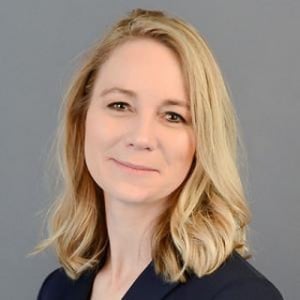
Supreme Court & Appellate Litigation Chair, Lex Politica; Of Counsel, Alliance Defending Freedom
Erin Morrow Hawley serves as Chair of Lex Politica's Supreme Court and Appellate Practice overseeing the firm’s strategic appellate litigation and critical motions practice in the trial courts. Erin is an experienced litigator who represents clients in constitutional, regulatory, and appellate matters in federal and state courts throughout the country.
Erin has represented dozens of clients before the Supreme Court of the United States, served as lead counsel in high-profile cases raising novel constitutional and statutory issues, and authored numerous successful petitions for certiorari and briefs in opposition. She has argued in state and federal appellate and trial courts throughout the country, including the Supreme Court of the United States. Erin represents diverse clients in high-stakes litigation from state governments to faith-based nonprofits to Fortune 100 companies. She possesses expertise on a wide range of subject matters including administrative law, the First Amendment, religious liberty, federal jurisdiction, federal preemption, equitable jurisdiction, tax law, the Affordable Care Act, and Title IX.
Erin represents clients in cases where public communications strategy is paramount. She is a sought-after speaker and writer, has testified multiple times before Congress, and is a frequent presenter on constitutional and administrative law issues, including at the Oxford Union, the National Federalist Society Convention, and university campuses across the country. She is a frequent commentator to media outlets, including Fox News, MSNBC, the Wall Street Journal, WORLD, USA Today, the Federalist, and the Hill.
Erin previously oversaw Alliance Defending Freedom’s--where she still serves as Of Counsel--litigation strategies to empower women and protect the dignity of life, defend pregnancy centers’ First Amendment rights from government overreach, and safeguard Americans’ freedoms from the ever-encroaching administrative state.
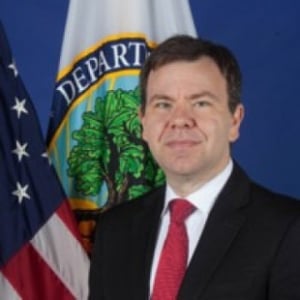
General Counsel, Mountain States Legal Foundation
William E. Trachman is General Counsel for Mountain States Legal Foundation, where he protects the rights of individuals to live freely and securely under the U.S. Constitution. Previously, he was appointed to serve in the Department of Education as Deputy Assistant Secretary in the Office for Civil Rights. Prior to his appointment, he served as General Counsel to the Douglas County School District, where he helped litigate the fight for school choice in the school district. Presently, Mr. Trachman serves as Chair of the Colorado Federalist Society and the Vice Chair of the U.S. Commission on Civil Rights’ Colorado Advisory Board. He previously taught as an Adjunct Professor at the University of Denver, Sturm College of Law. He attended U.C. Berkeley for both undergraduate and law school, and then clerked for the Honorable Harris Hartz on the 10th Circuit Court of Appeals. Mr. Trachman is licensed in Colorado, California, and Washington, D.C.
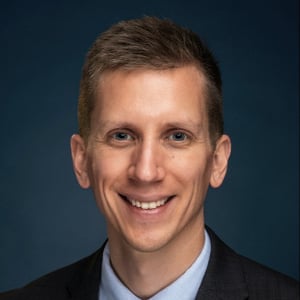
Deputy Counsel, Wisconsin Institute for Law & Liberty
Luke joined WILL from the Wisconsin Department of Justice where he served for nearly four years as a Deputy Solicitor General and Assistant Attorney General.
Berg has argued nine cases before the Wisconsin Supreme Court and four before the Seventh Circuit, including one en banc argument. He graduated from the University of Wisconsin – Madison (B.S.) and New York University (J.D.) and served as a law clerk for Judge Diane Sykes of the United States Court of Appeals for the Seventh Circuit. Prior to joining the Wisconsin DOJ in 2015, Berg worked as an attorney for the Office of the Comptroller of Currency in Washington D.C.
Berg resides in Madison with his wife and three boys.
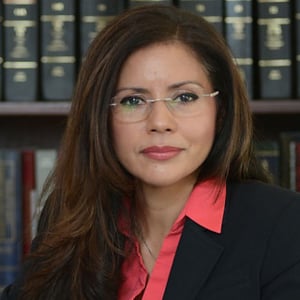
President, General Counsel, and Founder, Child and Parental Rights Campaign, Inc
Vernadette Broyles is the President, General Counsel, and founder of Child and Parental Rights Campaign, Inc. She is an experienced family law litigator and Guardian Ad Litem representing the best interests of children in court, and has been an advocate for student privacy, parental rights, and Title IX protections in public schools. She brings to this role her knowledge and experience in the legislative process and background in science and research. Vernadette graduated with Honors from Yale University with a bachelor of science degree in Biology, and received her law degree from Harvard Law School.
Vernadette has practiced as a commercial litigator and served as a state Prosecutor with the Fulton County, Georgia, District Attorney’s Office. Prior to law school, she worked in neuro-pharmaceutical research. Vernadette was appointed by Governor Sonny Perdue to the State Board of the Georgia Department of Human Services for five years, where she co-chaired the Department of Family and Children Services Committee and gained many insights into state child protective services. She has served on Advisory Boards to the U.S. Department of Justice Violence Against Women program and the Juvenile Justice and Delinquency Prevention program and as a Public Interest Director with the Federal Home Loan Bank of Atlanta. Vernadette has also been featured as a columnist with The Atlanta Journal-Constitution. She and her husband have two children.
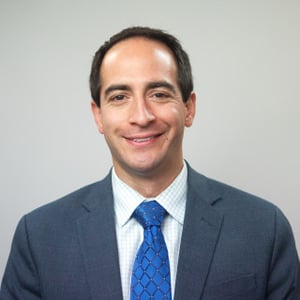
Senior Counsel, Home School Legal Defense Association
William Estrada serves as Senior Counsel for Home School Legal Defense Association. Mr. Estrada served as a legal assistant with HSLDA starting in 2004 while attending Oak Brook School of Law. After he passed the California bar, Mr. Estrada rose to be HSLDA’s director of federal relations. He left in 2018 to work at the US Department of Health and Human Services, where he became a career employee in the Conscience and Religious Freedom Division within the Office for Civil Rights. He is a member of the California Bar, the District of Columbia Bar, and the US Supreme Court bar.
Mr. Estrada previously served the Parental Rights Foundation as their first full-time president from November 2021 to May 2023.
Mr. Estrada and his wife, Rachel, live in Northern Virginia with their two sons, Dominic and Merrick. Mr. Estrada is a man of faith and family. He is a self-proclaimed outdoorsman, foodie, gardener, and a beekeeper.
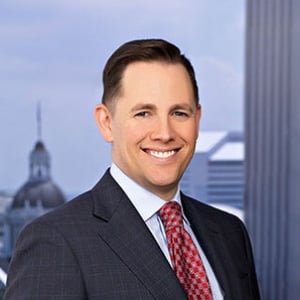
Partner, Shutts & Bowen LLP
Ben Gibson is an attorney in the Tallahassee office of Shutts & Bowen LLP, where he is Vice-Chair of the Appellate practice group. His statewide practice focuses on government, political, and corporate clients representing them in government affairs, appellate, litigation, and administrative matters.
Most recently, Ben was named general counsel to Florida Governor Ron DeSantis’ Transition Team, advising the new administration on legal issues and the appointment of three Florida Supreme Court justices. Before joining Shutts, Ben served as the Deputy General Counsel and an Assistant General Counsel to Florida Governor Rick Scott for nearly five years, where he helped advise the Governor on the appointment of more than 120 judges to Florida’s county, circuit, DCA, and Supreme Courts. His extensive responsibilities included providing legal counsel to the Executive Office of the Governor and overseeing high profile legal issues at executive branch agencies.
Gibson’s government law practice includes serving as counsel to state entities, advising on public records, the Sunshine Law, and ethics issues as well as representing clients before state and federal courts and administrative agencies.
His state and federal election law practice focuses on advising candidates, party organizations, and political committees and representing clients in compliance and enforcement matters. As general counsel to the Republican Party of Florida he led all of the party’s legal efforts during the 2018 election cycle including through three statewide recounts.
With a deep understanding of Florida government and politics, Ben has also worked as an attorney with the Florida House of Representatives helping to author the largest rewrite of Florida’s growth management laws in 25 years. Prior to joining Shutts, Ben founded his own law firm focusing on government and election law.
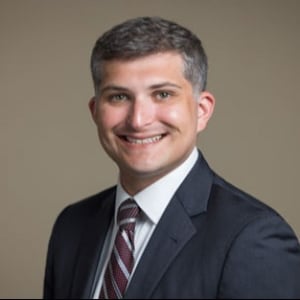
Associate, Consovoy McCarthy PLLC
Mr. Vaseliou assists clients with a variety of litigation and appellate matters that encompass constitutional law, administrative law, and election law.
Before joining the firm, Mr. Vaseliou was a law clerk to Judge Andrew S. Oldham of the U.S. Court of Appeals for the Fifth Circuit and to Judge Richard G. Taranto of the U.S. Court of Appeals for the Federal Circuit. Mr. Vaseliou earned his J.D. magna cum laude from the University of Pennsylvania, where he was selected for the Order of the Coif. Mr. Vaseliou earned his B.S. in Electrical Engineering summa cum laude from the University of Florida. Mr. Vaseliou is a member of the Texas bar.*
*Supervised by principals of the firm who are members of the Virginia bar.
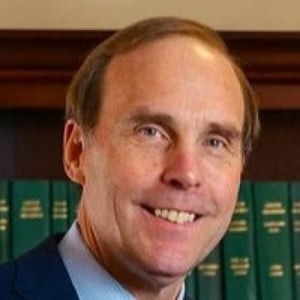
Distinguished Research Professor, Center for Citizenship and Constitutional Government, University of Notre Dame
Donald L. Drakeman is Distinguished Research Professor in the Center for Citizenship and Constitutional Government at the University of Notre Dame, and a Fellow of the Centre for Health Leadership and Enterprise at the University of Cambridge. His writings have been cited by the Supreme Courts of the United States and the Philippines. He has published seven books, including The Hollow Core of Constitutional Theory (Cambridge University Press, 2021), Why We Need the Humanities (Palgrave, 2016), and Church, State, and Original Intent (Cambridge University Press, 2010). He received an A.B. magna cum laude from Dartmouth College; a J.D. from Columbia Law School, where he was a Harlan Fiske Stone Scholar; and a Ph.D. from Princeton University. He is a Fellow of the Royal Historical Society, and he was the founding chair of the Advisory Council for the James Madison Program on American Ideals and Institutions at Princeton University.

Legal Fellow, Edwin Meese III Center for Legal and Judicial Studies, The Heritage Foundation
Jack Fitzhenry is a Legal Fellow in the Edwin Meese III Center for Legal and Judicial Studies.
He previously served as a law clerk for the Hon. Madeline H. Haikala on the United States District Court for the Northern District of Alabama and for the Hon. Patrick E. Higginbotham on the United States Court of Appeals for the Fifth Circuit. Between clerkships, he litigated a variety of commercial disputes as an associate with Quinn Emanuel Urquhart & Sullivan LLP.
Fitzhenry received his law degree from the University of Michigan Law School and his bachelor’s degree in English Literature from Williams College.
Supreme Court & Appellate Litigation Chair, Lex Politica; Of Counsel, Alliance Defending Freedom
Erin Morrow Hawley serves as Chair of Lex Politica's Supreme Court and Appellate Practice overseeing the firm’s strategic appellate litigation and critical motions practice in the trial courts. Erin is an experienced litigator who represents clients in constitutional, regulatory, and appellate matters in federal and state courts throughout the country.
Erin has represented dozens of clients before the Supreme Court of the United States, served as lead counsel in high-profile cases raising novel constitutional and statutory issues, and authored numerous successful petitions for certiorari and briefs in opposition. She has argued in state and federal appellate and trial courts throughout the country, including the Supreme Court of the United States. Erin represents diverse clients in high-stakes litigation from state governments to faith-based nonprofits to Fortune 100 companies. She possesses expertise on a wide range of subject matters including administrative law, the First Amendment, religious liberty, federal jurisdiction, federal preemption, equitable jurisdiction, tax law, the Affordable Care Act, and Title IX.
Erin represents clients in cases where public communications strategy is paramount. She is a sought-after speaker and writer, has testified multiple times before Congress, and is a frequent presenter on constitutional and administrative law issues, including at the Oxford Union, the National Federalist Society Convention, and university campuses across the country. She is a frequent commentator to media outlets, including Fox News, MSNBC, the Wall Street Journal, WORLD, USA Today, the Federalist, and the Hill.
Erin previously oversaw Alliance Defending Freedom’s--where she still serves as Of Counsel--litigation strategies to empower women and protect the dignity of life, defend pregnancy centers’ First Amendment rights from government overreach, and safeguard Americans’ freedoms from the ever-encroaching administrative state.
General Counsel, Mountain States Legal Foundation
William E. Trachman is General Counsel for Mountain States Legal Foundation, where he protects the rights of individuals to live freely and securely under the U.S. Constitution. Previously, he was appointed to serve in the Department of Education as Deputy Assistant Secretary in the Office for Civil Rights. Prior to his appointment, he served as General Counsel to the Douglas County School District, where he helped litigate the fight for school choice in the school district. Presently, Mr. Trachman serves as Chair of the Colorado Federalist Society and the Vice Chair of the U.S. Commission on Civil Rights’ Colorado Advisory Board. He previously taught as an Adjunct Professor at the University of Denver, Sturm College of Law. He attended U.C. Berkeley for both undergraduate and law school, and then clerked for the Honorable Harris Hartz on the 10th Circuit Court of Appeals. Mr. Trachman is licensed in Colorado, California, and Washington, D.C.
Deputy Counsel, Wisconsin Institute for Law & Liberty
Luke joined WILL from the Wisconsin Department of Justice where he served for nearly four years as a Deputy Solicitor General and Assistant Attorney General.
Berg has argued nine cases before the Wisconsin Supreme Court and four before the Seventh Circuit, including one en banc argument. He graduated from the University of Wisconsin – Madison (B.S.) and New York University (J.D.) and served as a law clerk for Judge Diane Sykes of the United States Court of Appeals for the Seventh Circuit. Prior to joining the Wisconsin DOJ in 2015, Berg worked as an attorney for the Office of the Comptroller of Currency in Washington D.C.
Berg resides in Madison with his wife and three boys.
President, General Counsel, and Founder, Child and Parental Rights Campaign, Inc
Vernadette Broyles is the President, General Counsel, and founder of Child and Parental Rights Campaign, Inc. She is an experienced family law litigator and Guardian Ad Litem representing the best interests of children in court, and has been an advocate for student privacy, parental rights, and Title IX protections in public schools. She brings to this role her knowledge and experience in the legislative process and background in science and research. Vernadette graduated with Honors from Yale University with a bachelor of science degree in Biology, and received her law degree from Harvard Law School.
Vernadette has practiced as a commercial litigator and served as a state Prosecutor with the Fulton County, Georgia, District Attorney’s Office. Prior to law school, she worked in neuro-pharmaceutical research. Vernadette was appointed by Governor Sonny Perdue to the State Board of the Georgia Department of Human Services for five years, where she co-chaired the Department of Family and Children Services Committee and gained many insights into state child protective services. She has served on Advisory Boards to the U.S. Department of Justice Violence Against Women program and the Juvenile Justice and Delinquency Prevention program and as a Public Interest Director with the Federal Home Loan Bank of Atlanta. Vernadette has also been featured as a columnist with The Atlanta Journal-Constitution. She and her husband have two children.
Senior Counsel, Home School Legal Defense Association
William Estrada serves as Senior Counsel for Home School Legal Defense Association. Mr. Estrada served as a legal assistant with HSLDA starting in 2004 while attending Oak Brook School of Law. After he passed the California bar, Mr. Estrada rose to be HSLDA’s director of federal relations. He left in 2018 to work at the US Department of Health and Human Services, where he became a career employee in the Conscience and Religious Freedom Division within the Office for Civil Rights. He is a member of the California Bar, the District of Columbia Bar, and the US Supreme Court bar.
Mr. Estrada previously served the Parental Rights Foundation as their first full-time president from November 2021 to May 2023.
Mr. Estrada and his wife, Rachel, live in Northern Virginia with their two sons, Dominic and Merrick. Mr. Estrada is a man of faith and family. He is a self-proclaimed outdoorsman, foodie, gardener, and a beekeeper.
Partner, Shutts & Bowen LLP
Ben Gibson is an attorney in the Tallahassee office of Shutts & Bowen LLP, where he is Vice-Chair of the Appellate practice group. His statewide practice focuses on government, political, and corporate clients representing them in government affairs, appellate, litigation, and administrative matters.
Most recently, Ben was named general counsel to Florida Governor Ron DeSantis’ Transition Team, advising the new administration on legal issues and the appointment of three Florida Supreme Court justices. Before joining Shutts, Ben served as the Deputy General Counsel and an Assistant General Counsel to Florida Governor Rick Scott for nearly five years, where he helped advise the Governor on the appointment of more than 120 judges to Florida’s county, circuit, DCA, and Supreme Courts. His extensive responsibilities included providing legal counsel to the Executive Office of the Governor and overseeing high profile legal issues at executive branch agencies.
Gibson’s government law practice includes serving as counsel to state entities, advising on public records, the Sunshine Law, and ethics issues as well as representing clients before state and federal courts and administrative agencies.
His state and federal election law practice focuses on advising candidates, party organizations, and political committees and representing clients in compliance and enforcement matters. As general counsel to the Republican Party of Florida he led all of the party’s legal efforts during the 2018 election cycle including through three statewide recounts.
With a deep understanding of Florida government and politics, Ben has also worked as an attorney with the Florida House of Representatives helping to author the largest rewrite of Florida’s growth management laws in 25 years. Prior to joining Shutts, Ben founded his own law firm focusing on government and election law.
Associate, Consovoy McCarthy PLLC
Mr. Vaseliou assists clients with a variety of litigation and appellate matters that encompass constitutional law, administrative law, and election law.
Before joining the firm, Mr. Vaseliou was a law clerk to Judge Andrew S. Oldham of the U.S. Court of Appeals for the Fifth Circuit and to Judge Richard G. Taranto of the U.S. Court of Appeals for the Federal Circuit. Mr. Vaseliou earned his J.D. magna cum laude from the University of Pennsylvania, where he was selected for the Order of the Coif. Mr. Vaseliou earned his B.S. in Electrical Engineering summa cum laude from the University of Florida. Mr. Vaseliou is a member of the Texas bar.*
*Supervised by principals of the firm who are members of the Virginia bar.

Courthouse Steps Oral Argument: United States v. Skrmetti
Erin M. Hawley, William E. Trachman
In the last several years, numerous minors who identify as transgender have undergone surgery and...
Courthouse Steps Oral Argument: United States v. Skrmetti
Topics
United States v. Skrmetti: Oral Arguments Indicate SCOTUS Justices Are Likely to Uphold Tennessee’s Ban on Gender Medicine for Minors
On Wednesday, December 3, the U.S. Supreme Court heard oral arguments in one of the...
Topics
Due Process on Campus: Part III in a Series on the Biden Administration’s Final Title IX Rule
On April 29, 2024, the Department of Education published a 423-page final rule amending its...
Plenary Session 3: A Discussion on the Right: Parental Rights in Education
Washington , DCPlenary Session 3: A Discussion on the Right: Parental Rights in Education
Luke Berg, Vernadette Ramírez Broyles, William Anthony Estrada, Ben J. Gibson, Thomas S. Vaseliou
Next year marks a century since the Supreme Court concluded in Pierce v. Society of...
Topics
Jarkesy & the FCC’s ALJ Process
By all accounts, the closing days of the U.S. Supreme Court’s 2023 term resulted in...
Topics
An Observation About Culley v. Marshall
This morning, the Supreme Court handed down its decision in Culley v. Marshall. By a vote...
Establishing an Agreement to Disagree About Church and State
Donald L. Drakeman
A review of Nathan Chapman & Michael McConnell, Agreeing to Disagree: How the Establishment Clause...
Georgia Supreme Court Carves Its Own Path on Due Process to Strike Down Occupational Licensing Law
Jack Fitzhenry
A unanimous Georgia Supreme Court held in Raffensperger v. Jackson that an occupational licensing law...