

Partner, Lewis Brisbois
Sarah E. Lang is a partner in the New York office of Lewis Brisbois and a member of the Appellate Practice. Ms. Lang has represented clients at all levels of state and federal courts, including the New York State Appellate Division, the Second Circuit Court of Appeals, and the U.S. Supreme Court. The primary focus of her practice is drafting and arguing substantive motions and appeals before the federal courts and New York’s trial and appellate courts in substantive areas including general liability, New York Labor Law, medical malpractice, premises liability, and rideshare and transportation matters, among others. She also has extensive experience representing clients, including religious institutions, in matters arising under Title VII, the First Amendment, RLUIPA, New York’s City and State Human Rights Laws, New York’s Religious Corporations Law, and New York’s Real Property Tax Law. This includes federal jury trial experience and providing preventive advice and counseling. Prior to joining the firm, Ms. Lang clerked on the United States Court of Appeals for the Eighth Circuit, as well as the United States District Court for the Eastern District of North Carolina. She also previously served as an Attorney Advisor for the United States Department of Education.
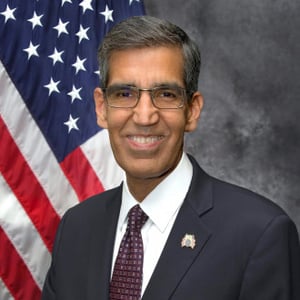
Acting Administrator, Drug Enforcement Administration (DEA)
Uttam Dhillon was appointed Acting Administrator of the Drug Enforcement Administration (DEA) on July 2, 2018. As Acting Administrator, Mr. Dhillon leads a workforce of over 15,000 and oversees a budget of $3.2 billion. He is responsible for DEA’s enforcement, intelligence, administrative, and regulatory activities worldwide. He currently serves on the Board of Directors for the International Association of Chiefs of Police (IACP), and is co-chair of the IACP Narcotics and Dangerous Drugs Committee.
Before joining DEA, Mr. Dhillon served as Deputy Counsel and Deputy Assistant to the President of the United States.
In 2006, Mr. Dhillon was confirmed by the United States Senate as the first Director of the Office of Counternarcotics Enforcement at the Department of Homeland Security (DHS). In that role, he worked closely with other federal agencies to coordinate the federal government’s anti-drug efforts. Prior to DHS, Mr. Dhillon served as an Associate Deputy Attorney General in the United States Department of Justice.
Earlier in his career, Mr. Dhillon served as an Assistant United States Attorney in the Central District of California. In that role, he successfully prosecuted complex investigations involving drug trafficking, money laundering, alien smuggling, and gun possession. He also argued multiple appeals before the Ninth Circuit Court of Appeals.
Mr. Dhillon also has significant experience in the Legislative Branch, holding several senior roles, including Chief Oversight Counsel for the House Financial Services Committee, Chief Counsel and Deputy Staff Director for the House Select Committee on Homeland Security, and Senior Investigative Counsel for the House Committee on Oversight and Government Reform.
Mr. Dhillon graduated from Boalt Hall School of Law at the University of California, Berkeley. He earned a Master of Arts degree in psychology from the University of California, San Diego and a Bachelor of Arts degree in psychology from California State University, Sacramento. He is a member of the District of Columbia Bar.

Shareholder, Brownstein, Hyatt, Farber, Shreck
With more than 20 years of experience both as a first-chair litigator and in public service, Greg Brower’s practice focuses on civil and criminal litigation, as well as regulatory and enforcement actions, corporate investigations, cybersecurity matters and federal and state government relations.
Most recently, Greg served as the assistant director for the Office of Congressional Affairs at the Federal Bureau of Investigation (FBI), serving as the FBI’s chief liaison to Congress on a wide range of critical oversight and investigative matters. He previously served as the FBI’s Deputy General Counsel, managing a diverse portfolio of legal matters, including litigation, privacy, procurement, compliance and ethics. During his time as a senior FBI executive, spanning two administrations, he worked closely with high-ranking officials in the U.S. Department of Justice (DOJ), the U.S. intelligence community and with key leaders on Capitol Hill. Greg is a regular commentator and contributor on national security, legal and cybersecurity issues, regularly appearing on CNN and MSNBC, and he is the featured contributor on white collar crime and corporate compliance for the Washington Legal Foundation’s Legal Pulse blog.
Greg has a long history of public service. At the federal level, he previously served as the U.S. Attorney for the District of Nevada, and as both General Counsel and Inspector General at the U.S. Government Publishing Office. Greg also served at DOJ as Legislative Counsel in the Executive Office for U.S. Attorneys. At the state level, he has served in a variety of public policy roles, including five terms in the Nevada Legislature, where he was chairman of the Senate Judiciary Committee. He has also served on the Nevada Gaming Policy Committee, the Nevada Advisory Commission on the Administration of Justice, the Nevada Sentencing Commission and the Nevada Juvenile Justice Commission.
Throughout his career, Greg has served the Nevada legal community as an adjunct professor of law at the William S. Boyd School of Law at the University of Nevada, Las Vegas, where he has taught courses in national security law and trial advocacy. Before attending law school, Greg served in the U.S. Navy as a Surface Warfare Officer.
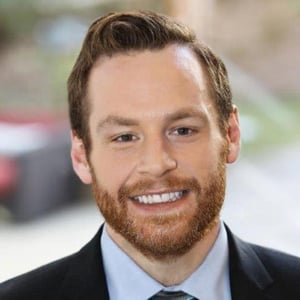
Deputy Director - Center for Effective Public Management; Senior Fellow - Governance Studies, The Brookings Institution
John Hudak is deputy director of the Center for Effective Public Management and a senior fellow in Governance Studies. His research examines questions of presidential power in the contexts of administration, personnel, and public policy. Additionally, he focuses on campaigns and elections, legislative-executive interaction, and state and federal marijuana policy.
John’s 2016 book, Marijuana: A Short History, offers a unique, up-to-date profile of how cannabis emerged from the shadows of counterculture and illegality to become a serious, even mainstream, public policy issue and source of legal revenue for both businesses and governments. In it, he describes why attitudes and policy have changed, and what those changes mean for marijuana's future place in society.
His 2014 Presidential Pork: White House Influence over the Distribution of Federal Grants demonstrates that pork-barrel politics occurs beyond the halls of Congress. Presidents capitalize on their discretionary funding authority to target federal dollars to swing states in advance of presidential elections. His other work explores how agency staffing, expertise, and institutional structure facilitate or hinder presidential power and influence. This research explores the balance between political control and bureaucratic expertise in the delivery of public policy.
John’s work has been recognized for its quality and contribution by the Midwest Political Science Association and the American Political Science Association’s Presidency Research Group. His work has been supported by institutions including the National Science Foundation.
Prior to joining Brookings, John served as the program director and as a graduate fellow at the Center for the Study of Democratic Institutions. He holds a B.A. in political science and economics from the University of Connecticut and an M.A. and Ph.D. in political science from Vanderbilt University.

Senior Fellow, Hudson Institute
David W. Murray is a Senior Fellow at Hudson Institute where he co-directs the Center for Substance Abuse Policy Research. While serving previous posts as Chief Scientist and Associate Deputy Director (Supply Reduction) in the federal government’s Office of National Drug Control Policy, Murray directed extensive scientific research on all aspects of the drug problem and helped coordinate high-level inter-agency efforts to limit the production of illicit drugs and counter the transnational criminal organizations that control their global shipment and marketing.
Before entering government, Murray was executive director of the Statistical Assessment Service and held academic appointments at Connecticut College and Brown, Brandeis, and Georgetown Universities. He is the author of numerous scholarly papers, essays, and commentaries; co-author (with Joel Schwartz and S. Robert Lichter) of the widely-noted book It Ain’t Necessarily So: How Media Make and Unmake the Scientific Picture of Reality; and a frequent guest on major network television and radio programs.
Murray holds an M.A. and Ph.D. in social anthropology from the University of Chicago.

Judge, United States District Court for the Eastern District of Tennessee
On December 23, 2020, Katherine A. Crytzer was sworn in as a United States District Judge for the Eastern District of Tennessee following confirmation by the United States Senate. Judge Crytzer sits in Knoxville, Tennessee. Prior to her confirmation, Judge Crytzer served as Principal Deputy Assistant Attorney General at the Department of Justice’s Office of Legal Policy in Washington, D.C., where she provided legal and policy advice to the Assistant Attorney General and Department of Justice Leadership. Before joining the Department of Justice’s Main Office, Judge Crytzer served as an Assistant United States Attorney in the United States Attorney’s Office for the Eastern District of Kentucky. In advance of entering public service, Judge Crytzer was a litigator at Kirkland & Ellis LLP. She began her legal career as a law clerk to The Honorable Raymond W. Gruender on the United States Court of Appeals for the Eighth Circuit. Judge Crytzer earned her Juris Doctor, magna cum laude, from George Mason University’s Antonin Scalia School of Law and her Bachelor of Science, summa cum laude, from Middle Tennessee State University.
Acting Administrator, Drug Enforcement Administration (DEA)
Uttam Dhillon was appointed Acting Administrator of the Drug Enforcement Administration (DEA) on July 2, 2018. As Acting Administrator, Mr. Dhillon leads a workforce of over 15,000 and oversees a budget of $3.2 billion. He is responsible for DEA’s enforcement, intelligence, administrative, and regulatory activities worldwide. He currently serves on the Board of Directors for the International Association of Chiefs of Police (IACP), and is co-chair of the IACP Narcotics and Dangerous Drugs Committee.
Before joining DEA, Mr. Dhillon served as Deputy Counsel and Deputy Assistant to the President of the United States.
In 2006, Mr. Dhillon was confirmed by the United States Senate as the first Director of the Office of Counternarcotics Enforcement at the Department of Homeland Security (DHS). In that role, he worked closely with other federal agencies to coordinate the federal government’s anti-drug efforts. Prior to DHS, Mr. Dhillon served as an Associate Deputy Attorney General in the United States Department of Justice.
Earlier in his career, Mr. Dhillon served as an Assistant United States Attorney in the Central District of California. In that role, he successfully prosecuted complex investigations involving drug trafficking, money laundering, alien smuggling, and gun possession. He also argued multiple appeals before the Ninth Circuit Court of Appeals.
Mr. Dhillon also has significant experience in the Legislative Branch, holding several senior roles, including Chief Oversight Counsel for the House Financial Services Committee, Chief Counsel and Deputy Staff Director for the House Select Committee on Homeland Security, and Senior Investigative Counsel for the House Committee on Oversight and Government Reform.
Mr. Dhillon graduated from Boalt Hall School of Law at the University of California, Berkeley. He earned a Master of Arts degree in psychology from the University of California, San Diego and a Bachelor of Arts degree in psychology from California State University, Sacramento. He is a member of the District of Columbia Bar.
Shareholder, Brownstein, Hyatt, Farber, Shreck
With more than 20 years of experience both as a first-chair litigator and in public service, Greg Brower’s practice focuses on civil and criminal litigation, as well as regulatory and enforcement actions, corporate investigations, cybersecurity matters and federal and state government relations.
Most recently, Greg served as the assistant director for the Office of Congressional Affairs at the Federal Bureau of Investigation (FBI), serving as the FBI’s chief liaison to Congress on a wide range of critical oversight and investigative matters. He previously served as the FBI’s Deputy General Counsel, managing a diverse portfolio of legal matters, including litigation, privacy, procurement, compliance and ethics. During his time as a senior FBI executive, spanning two administrations, he worked closely with high-ranking officials in the U.S. Department of Justice (DOJ), the U.S. intelligence community and with key leaders on Capitol Hill. Greg is a regular commentator and contributor on national security, legal and cybersecurity issues, regularly appearing on CNN and MSNBC, and he is the featured contributor on white collar crime and corporate compliance for the Washington Legal Foundation’s Legal Pulse blog.
Greg has a long history of public service. At the federal level, he previously served as the U.S. Attorney for the District of Nevada, and as both General Counsel and Inspector General at the U.S. Government Publishing Office. Greg also served at DOJ as Legislative Counsel in the Executive Office for U.S. Attorneys. At the state level, he has served in a variety of public policy roles, including five terms in the Nevada Legislature, where he was chairman of the Senate Judiciary Committee. He has also served on the Nevada Gaming Policy Committee, the Nevada Advisory Commission on the Administration of Justice, the Nevada Sentencing Commission and the Nevada Juvenile Justice Commission.
Throughout his career, Greg has served the Nevada legal community as an adjunct professor of law at the William S. Boyd School of Law at the University of Nevada, Las Vegas, where he has taught courses in national security law and trial advocacy. Before attending law school, Greg served in the U.S. Navy as a Surface Warfare Officer.

Topics
Pulsifer v. United States: The Statutory Interpretation Rubber Hits the Criminal Law Road
In Pulsifer v. United States, the Supreme Court examined the criteria for a defendant to...
Groff v. DeJoy: The Death of the “De Minimis” Test Breathes Life Back into Religious Accommodation
Sarah E. Lang
In a unanimous decision last June, the Supreme Court in Groff v. DeJoy heightened the...
US Department of Justice Office of Legal Policy: Policy, Regulations, and Nominations
Knoxville Lawyers Chapter
Knoxville, TNCapital Conversations: Uttam Dhillon, Acting Administrator of the Drug Enforcement Administration
Uttam Dhillon
Join us as Uttam Dhillon, the Acting Administrator of the Drug Enforcement Administration, discusses the response...
Capital Conversations: Uttam Dhillon, Acting Administrator of the Drug Enforcement Administration
TeleforumTopics
Salgado v. United States: Will the Supreme Court Require the Department of Justice to Follow the Plain Text of CAFRA’s Attorneys’ Fees Provision?
On April 3rd, the Supreme Court is scheduled to review a crucial petition for a...
Courthouse Steps Decision Teleforum: Shular v. United States
Greg Brower
On Tuesday, in a 9-0 decision, the Supreme Court decided Shular v. United States, rejecting...
Courthouse Steps Decision Teleforum: Shular v. United States
TeleforumShould DEA Remove Cannabis from Schedule I? [POLICYbrief]
John Hudak, David W. Murray
The Drug Enforcement Agency lists cannabis as a Schedule I substance, meaning it has no...
Topics
OSHA Drones in the Workplace?
“That buzzing noise over a construction site could be an OSHA drone searching for safety...