
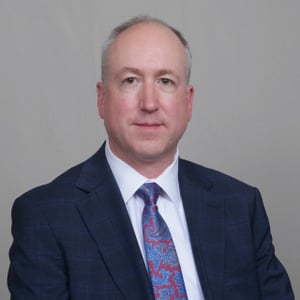
Government Affairs Program Manager, Energy Northwest
Daniel Himebaugh is a lawyer working in government affairs.

Dr. John Eastman is the former Henry Salvatori Professor of Law & Community Service and former Dean at Chapman University's Dale E. Fowler School of Law, where he had been a member of the faculty since 1999, specializing in Constitutional Law, Legal History, and Property. He is a founding director of the Center for Constitutional Jurisprudence, a public interest law firm affiliated with the Claremont Institute that he founded in 1999. He has a Ph.D. in Government from the Claremont Graduate School and a J.D. from the University of Chicago Law School, and a B.A. in Politics and Economics from the University of Dallas. He serves as the Chairman of the Board of the National Organization for Marriage.
Prior to joining the Chapman law faculty, Dr. Eastman served as a law clerk to the Honorable Clarence Thomas, Associate Justice, Supreme Court of the United States, and to the Honorable J. Michael Luttig, Judge, United States Court of Appeals for the Fourth Circuit and practiced law with the national law firm of Kirkland & Ellis. Dr. Eastman has also represented numerous clients in important constitutional law matters and has argued before the Supreme Court. On behalf of the Claremont Institute Center for Constitutional Jurisprudence, he has participated as amicus curiae before the Supreme Court of the United States, U.S. Courts of Appeals, and State Supreme Courts in more than one hundred cases of constitutional significance, including Boy Scouts of America v. Dale, Zelman v. Simmons-Harris (the school vouchers case), Kelo v. New London, Ct. (eminent domain), and Van Orden v. Perry (the 10 Commandments case). He has also appeared as an expert legal commentator on numerous television and radio programs, including C-SPAN, Fox News, PBS, NewsHour, and The O'Reilly Factor.
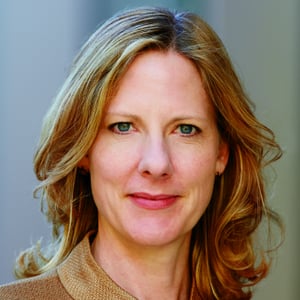
Dean and Sol & Lillian Goldman Professor of Law, Yale Law School
Heather Gerken is the Dean and Sol & Lillian Goldman Professor of Law at Yale Law School. Dean Gerken is one of the country’s leading experts on constitutional law and election law. A founder of the “nationalist school” of federalism, her work focuses on federalism, diversity, and dissent.
Hailed as an “intellectual guru” in the New York Times, Gerken’s scholarship has been featured in The Atlantic, the Boston Globe, NPR, the New York Times, and Time. In 2017, Politico Magazine named Gerken one of The Politico 50, a list of idea makers in American politics. Her work on election reform has affected policy at a national level.
At Yale, she founded and runs the country’s most innovative clinic in local government law, the San Francisco Affirmative Litigation Project (SFALP). Professor Gerken is also a renowned teacher who has won awards at both Yale and Harvard. She was named one of the nation’s “twenty-six best law teachers” in a book published by the Harvard University Press.
A native of Massachusetts, Gerken graduated from Princeton University, where she received her A.B. degree, summa cum laude in 1991. A Darrow Scholar, she graduated from the University of Michigan Law School summa cum laude in 1994. Gerken currently serves as a trustee for Princeton University.
After law school, Dean Gerken clerked for Judge Stephen Reinhardt of the 9th Circuit and Justice David Souter of the United States Supreme Court. She then served as an appellate lawyer in Washington, D.C., before joining the Harvard Law School faculty in 2000. Gerken came to Yale in 2006 and became the inaugural J. Skelly Wright Professor of Law in 2008. She became dean of Yale Law School on July 1, 2017.
Gerken has published extensively. Her work has been featured in the Harvard Law Review, the Yale Law Journal, the Stanford Law Review as well as numerous popular publications. Her work has been the subject of four symposia, and she has served as a commentator for a number of major media outlets, including The New York Times, The New Yorker, NPR, CNN, MSNBC, and NBC News. Dean Gerken served as a senior advisor to the Obama campaign in 2008 and 2012. In 2013, her proposal for creating a “Democracy Index” – a national ranking of election systems — was adopted by the Pew Charitable Trusts, which created the nation’s first Election Performance Index. She has been featured in the National Law Journal for balancing teaching and research, won a Green Bag award for legal writing, and has testified before the Senate three times. Gerken is a member of the American Academy of Arts and Sciences.
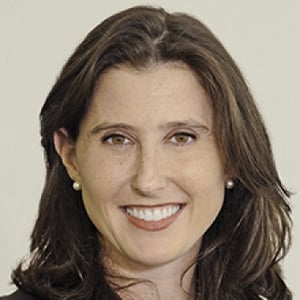
Professor of Law and Faculty Director, Solomon Center for Health Law and Policy, Yale Law School
Abbe R. Gluck is a Professor of Law and the Faculty Director of the Solomon Center for Health Law and Policy at Yale Law School. She joined Yale Law School in 2012, having previously served on the faculty of Columbia Law School. She is an expert on Congress and the political process, federalism, civil procedure, and health law, and is the chair emerita of Section on Legislation and the Law of the Political Process for the Association of American Law Schools. Gluck has extensive experience working as a lawyer in all levels of government. Prior to joining Columbia, she served in the administration of New Jersey Governor Jon Corzine as the special counsel and senior advisor to the New Jersey Attorney General; and in the administration of New York City Mayor Michael Bloomberg, as chief of staff and counsel to the Deputy Mayor for Health and Human Services, senior counsel in the New York City Office of Legal Counsel, and deputy special counsel to the New York City Charter Revision Commission. Prior to law school, she worked in the U.S. Senate for Senator Paul S. Sarbanes of Maryland. Before returning to government work after law school, Professor Gluck was associated with the Paul Weiss firm in New York. She earned her B.A. from Yale University, summa cum laude, and her J.D. from Yale Law School. Following law school, she clerked for then-Chief Judge Ralph K. Winter on the U.S. Court of Appeals for the Second Circuit, and for U.S. Supreme Court Justice Ruth Bader Ginsburg. Gluck's scholarship has been published in the Yale Law Journal, the Harvard Law Review, the Stanford Law Review, the Columbia Law Review, the New England Journal of Medicine, Health Affairs, and many other journals. Among her most recent work is the most extensive empirical study ever conducted about the realities of the congressional law-making process (published in the Stanford Law Review) and the Harvard Law Review's Supreme Court issue comment on King v. Burwell, the 2015 challenge to the Affordable Care Act. She also served as co-counsel on a Supreme Court brief in both King and the 2012 ACA challenge, NFIB v. Sebelius. Professor Gluck currently serves on numerous boards and commissions, including as an appointed member of both the Uniform Law Commission and the New York State Taskforce on Life and the Law, and as an elected member of the American Law Institute. In 2015, Gluck received the Law School's teaching award.

George C. Dix Professor in Constitutional Law, Northwestern University Pritzker School of Law
John O. McGinnis is a graduate of Harvard College and Harvard Law School where he was an editor of the Harvard Law Review. He also has an MA degree from Balliol College, Oxford, in philosophy and theology. Professor McGinnis clerked on the U.S. Court of Appeals for the District of Columbia. From 1987 to 1991, he was deputy assistant attorney general in the Office of Legal Counsel at the Department of Justice. He is the author of Accelerating Democracy: Transforming Government Through Technology (Princeton 2013) and Originalism and the Good Constitution (Harvard 2013) (with M. Rappaport). He is a past winner of the Paul Bator award given by the Federalist Society to an outstanding academic under 40. He has been listed by the United States on the roster of panelists who may be called upon to decide World Trade Organization Disputes.

Chief Judge, United States Court of Appeals, Eleventh Circuit
William H. Pryor Jr. serves as Chief Circuit Judge on the United States Court of Appeals for the Eleventh Circuit.
In 2013–18, he served on the United States Sentencing Commission and, in 2017–18, served as Acting Chair.
He has taught as a visiting professor at the University of Alabama School of Law and previously taught as an adjunct professor at the Cumberland School of Law of Samford University.
He served as the 45th Attorney General of Alabama from 1997 to 2004. When he took office, he was the youngest attorney general in the nation. In his reelection, he received the highest percentage of votes of any statewide candidate.
He graduated magna cum laude from Tulane Law School where he finished first in the common-law curriculum and was editor in chief of the Tulane Law Review. He then served as a law clerk for Judge John Minor Wisdom of the U.S. Court of Appeals for the Fifth Circuit.
He is a member of The American Law Institute and an Adviser for the RESTATEMENT OF THE LAW THIRD, CONFLICT OF LAWS. He is a coauthor with Bryan Garner, Justices Gorsuch and Kavanaugh, and several other judges of a treatise, THE LAW OF JUDICIAL PRECEDENT. He has published in the Yale Law Journal, Columbia Law Review, Virginia Law Review, Notre Dame Law Review, Harvard Journal of Law & Public Policy, Yale Law & Policy Review, George Mason Law Review, Florida Law Review, Alabama Law Review, Case Western Reserve Law Review, and Tulane Law Review. He has published op-eds in The Wall Street Journal, The New York Times, National Review, and USA Today. He has debated at National Lawyers’ Conventions of the Federalist Society (including on National Public Radio) and at the Oxford Union in the United Kingdom. And he is listed among several “widely admired judicial writers” in Bryan Garner’s The Redbook: A Manual on Legal Style.
He is a member of the Tulane Law School Hall of Fame and has received the Defender of the Constitution Award from the Heritage Foundation, the Jurist of the Year Award from the Texas Review of Law & Politics, and the St. Thomas More Award from the St. Thomas More Society of Atlanta. Judge Pryor is also a proud member of the National Society of the Sons of the American Revolution.

Professor of Law, Antonin Scalia Law School, George Mason University
ILYA SOMIN is Professor of Law at George Mason University and the B. Kenneth Simon Chair in Constitutional Studies at the Cato Institute. His research focuses on constitutional law, property law, democratic theory, federalism, and migration rights. He is the author of Free to Move: Foot Voting, Migration, and Political Freedom (Oxford University Press, revised and expanded edition, 2022), Democracy and Political Ignorance: Why Smaller Government is Smarter (Stanford University Press, revised and expanded second edition, 2016), and The Grasping Hand: Kelo v. City of New London and the Limits of Eminent Domain (University of Chicago Press, 2015, rev. paperback ed., 2016), coauthor of A Conspiracy Against Obamacare: The Volokh Conspiracy and the Health Care Case (Palgrave Macmillan, 2013), and co-editor of Eminent Domain: A Comparative Perspective (Cambridge University Press, 2017). Democracy and Political Ignorance has been translated into Italian and Japanese.
Somin’s work has appeared in numerous scholarly journals, including the Yale Law Journal, Stanford Law Review, Northwestern University Law Review, Georgetown Law Journal, Critical Review, and others. Somin has also published articles in a variety of popular press outlets, including the New York Times, Washington Post, Wall Street Journal, Los Angeles Times, CNN, NBC, The Atlantic, USA Today, Boston Globe, US News and World Report, South China Morning Post, National Law Journal and Reason. He has been quoted or interviewed by the New York Times, Washington Post, Wall Street Journal, Time, Newsweek, The Economist, the Christian Science Monitor, the Financial Times, The Guardian, the Associated Press, CBS, MSNBC, NPR, BBC, Reuters, the Canadian Broadcasting Corporation, the Australian Broadcasting Corporation, Radio Free Europe/Radio Liberty, Al Jazeera, and the Voice of America, among other media.
Somin’s writings have been cited in decisions by the United States Supreme Court, multiple state supreme courts and lower federal courts, and the Supreme Court of Israel. He is co-counsel for the plaintiffs in VOS Selections, Inc. v. Trump, a case challenging the constitutionality of President Trump’s “Liberation Day” tariffs. Somin has testified on the use of drones for targeted killing in the War on Terror before the US Senate Judiciary Subcommittee on the Constitution, Civil Rights, and Human Rights. In 2009, he testified on property rights issues at the United States Senate Judiciary Committee confirmation hearings for Supreme Court Justice Sonia Sotomayor. Somin writes regularly for the popular Volokh Conspiracy law and politics blog, now affiliated with Reason magazine (previously affiliated with the Washington Post from 2014 to 2017). From 2006 to 2013, he served as Co-Editor of the Supreme Court Economic Review, one of the country’s top-rated law and economics journals.
Somin has served as a visiting professor at the University of Pennsylvania Law School. He has also been a visiting professor or scholar at the Georgetown University Law Center, the University of Hamburg, Germany, the University of Torcuato Di Tella in Buenos Aires, Argentina, Uriel Reichman University in Israel, and Zhengzhou University in China. He is a University Affiliate of the Schar School of Policy and Government at George Mason University, and an affiliated faculty member of the George Mason University Institute for Immigration Research. Before joining the faculty at George Mason, Somin was the John M. Olin Fellow in Law at Northwestern University Law School in 2002-2003. In 2001-2002, he clerked for the Hon. Judge Jerry E. Smith of the U.S. Court of Appeals for the Fifth Circuit. Professor Somin earned his B.A., Summa Cum Laude, at Amherst College, M.A. in Political Science from Harvard University, and J.D. from Yale Law School.

Executive Vice President, Chief Legal Officer, Gates Corporation
Matthew R. A. Heiman joined the Company in May 2026 and has served as the Company’s Chief Legal Officer and Corporate Secretary since June 2026. As Chief Legal Officer, Mr. Heiman is responsible for all legal functions for Gates, including securities and corporate governance, M&A, litigation, commercial, regulatory, compliance, patents and trademarks, real estate, employment and labor, sustainability and environmental matters. Prior to joining Gates, Mr. Heiman held senior legal leadership roles at Waystar, where he served as Chief Legal & Administrative Officer from 2023 to 2025 and as General Counsel and Corporate Secretary from 2020 to 2023. Prior to that, he was with Johnson Controls, where he served as Vice President, Corporate Secretary, and Associate General Counsel. Mr. Heiman has been a Senior Fellow for the National Security Institute at George Mason University’s Antonin Scalia School of Law since 2018.
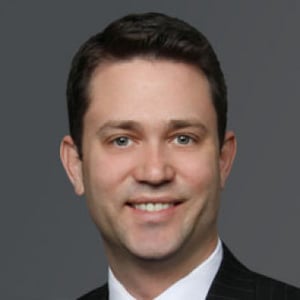
Partner, Mayer Brown
Prof. Tim Keeler, an attorney in the Government and International Trade Group, joined Mayer Brown in 2009, and brings an in-depth knowledge of international trade law and economic policy matters, and a history of working in the Executive Branch and Congress on major economic, legislative and regulatory issues.
Prior to joining Mayer Brown, Professor Keeler served in a variety of senior positions in the U.S. Government for almost 12 years. Most recently he was the Chief of Staff in the Office of the U.S. Trade Representative (USTR) from 2006 - 2009, where he oversaw implementation of U.S. policy, strategy and negotiations involving all aspects of international trade and investment matters. He worked on a number of key issues including: climate change and trade; US and China relations; WTO negotiations and litigation; free trade agreement negotiations and implementation; and CFIUS decisions.
Before working for USTR, Prof. Keeler spent more than five years at the Treasury Department from 2001 – 2006. He joined the Office of Legislative Affairs in 2001 as a Deputy to the Assistant Secretary for International Issues, where he was responsible for Treasury’s legislative strategy on issues including capital market sanctions, foreign exchange rate policy testimony, appropriations for U.S. agreements to replenish the World Bank and other Multilateral Development Banks, multilateral debt relief, and U.S. participation in the International Monetary Fund. He later managed the Office of Legislative Affairs from 2002 - 2006 and assisted on all policy and personnel issues in the Office. This included leading Treasury nominees through the U.S. Senate confirmation process, legislative strategy on Treasury Intelligence and Terrorist Financing matters, and advising on major economic legislative initiatives such as the 2003 tax cuts and social security reform proposals.
Prof. Keeler also served on the Presidential Transition Team in 2000–2001 as a policy coordinator on export control and trade remedy policy, handling the Commerce Department’s Bureau of Export Administration (now called the Bureau of Industry and Security) and the International Trade Commission (ITC).
Earlier in his career, Prof. Keeler served as a professional staff member for international trade on the US Senate Finance Committee under Chairman William V. Roth (R-DE). There he worked on legislation establishing permanent normal trade relations (PNTR) between the U.S. and China, preferential trade programs for Sub-Saharan Africa (the African Growth and Opportunity Act) and the Caribbean basin, the Generalized System of Preferences, legislation to bring the U.S. into compliance with the WTO decision on the Foreign Sales Corporation provisions of the Internal Revenue Code, and the miscellaneous tariff bill.
In recognition of his government service, Prof. Keeler was awarded the USTR Distinguished Service Award, the Treasury Distinguished Service Award, and the Treasury Secretary’s Honor Award twice.
Prof. Keeler is also an adjunct professor at the Georgetown University School of Law, co-teaching a course on U.S. and WTO law, policy, and politics; is a member of the Board of Directors of the Washington International Trade Foundation; and is a term member of the Council on Foreign Relations. Prof. Keeler has spoken at conferences on international trade and economic issues sponsored by, inter alia, the American Bar Association (Climate Change and Trade, March 2009), the Korea Economic Institute (the U.S. – Korea Free Trade Agreement, October 2010), and the U.S.-China Business Council (Sec. 421 tires safeguard case, July 2009; and the U.S. – China Economic and Political Relationship, January 2010).
George C. Dix Professor in Constitutional Law, Northwestern University Pritzker School of Law
John O. McGinnis is a graduate of Harvard College and Harvard Law School where he was an editor of the Harvard Law Review. He also has an MA degree from Balliol College, Oxford, in philosophy and theology. Professor McGinnis clerked on the U.S. Court of Appeals for the District of Columbia. From 1987 to 1991, he was deputy assistant attorney general in the Office of Legal Counsel at the Department of Justice. He is the author of Accelerating Democracy: Transforming Government Through Technology (Princeton 2013) and Originalism and the Good Constitution (Harvard 2013) (with M. Rappaport). He is a past winner of the Paul Bator award given by the Federalist Society to an outstanding academic under 40. He has been listed by the United States on the roster of panelists who may be called upon to decide World Trade Organization Disputes.
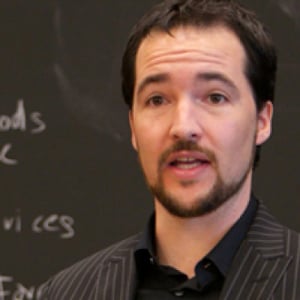
Professor of Law, Georgetown University Law Center
Alvaro Santos is Professor of Law and Director of the Center for the Advancement of the Rule of Law in the Americas (CAROLA) at Georgetown University. He teaches and writes in the areas of international trade, economic development, drug policy, transnational labor law and the future of NAFTA.
Professor Santos is co-editor of Law and the New Developmental State: The Brazilian Experience in Latin America (2013) and The New Law and Economic Development: A Critical Appraisal (2006). He is also the author of a number of articles and book chapters, including “Carving Out Policy Autonomy for Developing Countries in the World Trade Organization: The Experience of Brazil and Mexico” in the Virginia Journal of International Law (2012), and "Three Transnational Discourses of Labor Law in Domestic Reforms" in the University of Pennsylvania Journal of International Law (2010). In 2016, he contributed to a research manifesto authored by working group at the Harvard Institute for Global Law and Policy, examining the role of law in global value chains. Professor Santos serves on the editorial boards of the American Journal of Comparative Law, the Journal of International Economic Law, the Law and Development Review, and the Latin American Journal of International Trade Law. He regularly teaches at Georgetown's WTO Academy and Harvard's Institute for Global Law and Policy (IGLP) and has also taught at the University of Texas, Tufts University, Melbourne Law School, and the University of Turin. Santos received a JD with high honors from Universidad Nacional Autonóma de México and an LLM and SJD from Harvard Law School.
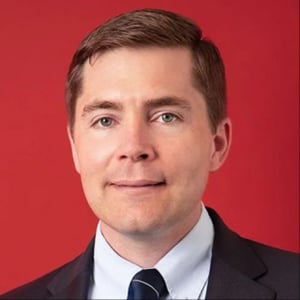
Senior Attorney, Pacific Legal Foundation
Damien Schiff is a senior attorney at Pacific Legal Foundation. He leads its environmental practice group, a unique initiative that draws broadly from PLF’s expertise and success in property rights and separation of powers litigation. Over the years, Damien has represented hundreds of landowners and property rights advocates to defend their liberties against heavy-handed and unwarranted environmental and land-use regulation. His litigation experience includes Sackett v. U.S. Environmental Protection Agency, a groundbreaking decision in which the U.S. Supreme Court upheld the right of landowners to challenge Clean Water Act compliance orders issued by EPA, and Contoski v. Norton, PLF’s successful effort to force the federal government to make good on its promise to delist the bald eagle from the Endangered Species Act.
Besides litigation, Damien has written academic articles on a variety of subjects, including the Endangered Species Act, the Clean Water Act, greenhouse gas torts, the duty to rescue, and international water law. He has appeared on a variety of television and radio programs and has been quoted in The New York Times, The Wall Street Journal, Harper’s Magazine, and The Economist, among other publications.
He obtained his law degree magna cum laude from the University of San Diego School of Law, and his undergraduate degree magna cum laude from Georgetown University. While at USD, he was a research assistant for Professor Bernard Siegan, a leading constitutional theorist and advocate for property rights and economic liberty. Immediately prior to joining PLF, Damien clerked for Judge (and former PLF attorney) Victor Wolski of the United States Court of Federal Claims. Damien credits the mentoring and examples of Professor Siegan and Judge Wolski for his decision to pursue a career in liberty-based public interest litigation.
Damien lives in Sacramento with his wife, two young sons, four chickens, and a cat named Princess. In his off hours he enjoys stamp collecting, Gregorian chant, and martinis—preferably at the same time.
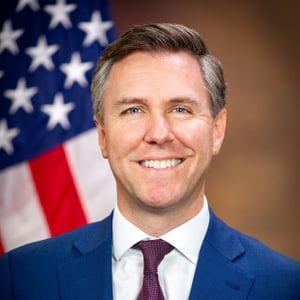
Assistant Attorney General, Civil Division, United States Department of Justice
Brett A. Shumate was sworn in as the Civil Division’s 36th Assistant Attorney General on June 11, 2025. He previously served in the Civil Division from 2017 to 2019 as the Deputy Assistant Attorney General for the Federal Programs Branch. Prior to rejoining the Department, Mr. Shumate was a partner at Jones Day in Washington, D.C.
Mr. Shumate clerked for Judge Edith H. Jones on the United States Court of Appeals for the Fifth Circuit. He graduated from Wake Forest University School of Law and Furman University.
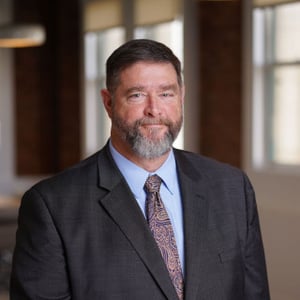
Partner, Briscoe Prows Kao Ivester & Bazel LLP
Tony Francois is experienced in Water and Real Property Law, Land Use and Zoning, Environmental Regulation, Natural Resources Development, Agricultural Law, and Constitutional Law. He has represented homeowners, builders, farmers and ranchers, trade associations, and water districts in administrative, civil, and criminal proceedings before state and federal administrative agencies and state and federal trial and appellate courts. He is a member of the California State Bar and the Northern, Eastern, and Central Districts of California and the Districts of New Mexico and North Dakota, and has litigated cases in federal courts in California, Oregon, Washington, Idaho, Montana, Nevada, Arizona, New Mexico, Colorado, North and South Dakota, Minnesota, Massachusetts, Maryland, South Carolina, and the District of Columbia, as well as the Sixth, Eighth, Ninth, and Tenth Circuit Courts of Appeals. He has appeared before the Supreme Courts of California, Idaho, Nevada, and the United States.
Prior to attending law school, he served as an infantry officer in the United States Army, and was stationed in the former West Germany during the fall of the Berlin Wall.
Tony was an Attorney at Pacific Legal Foundation from 2012 to 2021. He was a lobbyist for 10 years, first with California Farm Bureau Federation from 2003 to 2007, and then with KP Public Affairs from 2007 to 2012. He was an attorney at McQuaid, Bedford & Van Zandt in San Francisco from 1999 – 2003.
Professor of Environmental Practice and Director, California Env, UC Davis School of Law
Richard M. Frank is a Professor of Environmental Practice and Director of the California Environmental Law and Policy Center (CELPC). Formerly the executive director of the Center for Law, Energy, & the Environment (CLEE) at UC Berkeley School of Law, Frank returned to UC Davis School of Law in January 2010. In addition to leading the CELPC, he teaches classroom courses in the environmental law curriculum.
Before coming to CLEE and UC Berkeley, Professor Frank practiced law with federal and state agencies for 32 years, most of that time with the California Department of Justice. Immediately before joining Berkeley Law, he served as California's Chief Deputy Attorney General for Legal Affairs.
In 2006, Governor Schwarzenegger appointed Frank to the Delta Vision Task Force, an advisory body asked to develop policy recommendations for the Governor and Legislature, addressing environmental problems confronting the California Delta. He served in that capacity in 2007-08. In May 2009, the Chair of the California Air Resources Board appointed Frank Vice Chair of the Economic Allocation & Advisory Committee, an advisory body formed to assist the Air Resources Board in implementing California's landmark Global Warming Solutions Act (AB 32).

Professor of Law and Executive Director, Law and Economics Center, Antonin Scalia Law School, George Mason University
Donald Kochan is Professor of Law and Executive Director of the Law & Economics Center (LEC). Professor Kochan is an elected member of the American Law Institute (ALI) and serves as an Adviser to ALI's Restatement of the Law Fourth, Property project. Professor Kochan is a Nonresident Scholar at the Center for the Constitution at Georgetown University Law Center, where he was a Visiting Scholar in residence during Fall 2018. Before joining the Antonin Scalia Law School faculty, he was the Parker S. Kennedy Professor in Law at Chapman University’s Dale E. Fowler School of Law from 2004 to 2020. From 2003 to 2004, Professor Kochan was an Olin Fellow at the University of Virginia School of Law. During 2002-2003, he was a Visiting Assistant Professor of Law at George Mason’s Scalia Law School.
Professor Kochan’s scholarship focuses on areas of property law, constitutional law, administrative law, local government law, natural resources and environmental law, and law & economics. He has published several books and more than 50 scholarly articles and essays in well-regarded law journals. His work has been cited in more than a dozen state and federal court opinions, in more than 75 briefs filed in state and federal courts including more than 25 filed in the U.S. Supreme Court, in dozens of books and treatises, and in more than 800 scholarly articles.
Professor Kochan received his JD from Cornell Law School, where he was a John M. Olin Scholar in Law and Economics and managing editor of the Cornell International Law Journal. During law school, he also served as editor and executive editor of the Harvard Journal of Law & Public Policy symposium issues in 1997 and 1998. He received his BA from Western Michigan University, magna cum laude, with majors in both political science and philosophy, where he studied as the John W. Gill Medallion Scholar and was honored as the Presidential Scholar (awarded to the top graduate in the political science department).
After graduating from law school, Professor Kochan was a law clerk to The Honorable Richard F. Suhrheinrich of the United States Court of Appeals for the Sixth Circuit. Following his clerkship, Professor Kochan was an associate with the firm of Crowell & Moring LLP in Washington, D.C., where he specialized in natural resources & environmental law as well as tort, products, and consumer civil litigation & legislative affairs.

Judge, Arizona Court of Appeals, Division One
The Honorable Jennifer M. Perkins began service on the Arizona Court of Appeals, Division One, on October 30, 2017. At the time of her appointment by Governor Douglas Ducey, Judge Perkins was Assistant Solicitor General for the State of Arizona.
Judge Perkins was born in Portales, New Mexico, and primarily raised in Albuquerque. She attended the prestigious Albuquerque Academy from 1988-1995, before moving to Washington D.C. to attend the Elliott School of International Affairs at the George Washington University as a National Merit Scholar. Therafter, she relocated again to Dallas, Texas, and earned her juris doctor from the SMU Dedman School of Law, graduating cum laude in 2002.
Judge Perkins started her career at the law firm of Browning & Peifer (now Peifer, Hanson, Mullins, and Baker) in Albuquerque, New Mexico. While there, she litigated complex commercial matters including class action plaintiff and defense work, and assisted with employment and contract litigation. In 2003, the judge accompanied the Honorable James O. Browning in transitioning to the federal district court bench, serving as his first law clerk.
After her clerkship, Judge Perkins moved to Arizona to work for the Institute for Justice, Arizona Chapter, a public interest law firm. She spent five years with IJ-AZ litigating civil rights cases in Arizona and across the country. In 2009, the judge became Disciplinary Counsel for the Arizona Commission on Judicial Conduct, where she reviewed and prosecuted ethics complaints against state court judges throughout Arizona. After five years serving the state in this capacity, Judge Perkins entered private practice by joining an appellate law firm in Phoenix. While there, she worked on state and federal appeals involving a wide range of legal subjects, including complex business disputes, property rights, judicial ethics, and personal injury matters.
In January 2015, Judge Perkins joined the Office of the Arizona Attorney General to serve as the first Assistant Solicitor General; in that capacity, she was responsible for oversight of Attorney General Opinions and served as ethics counsel to the entire office. In addition to these two primary roles, the judge assisted on a variety of matters including trial and appellate litigation of election-related matters; federal appellate litigation with the Federalism Unit; state criminal appeals; and drafting amicus briefs on behalf of Arizona in state and federal courts.
Associate Professor, University of Denver Sturm College of Law
Professor Justin Pidot graduated with high honors from Wesleyan University before attending Stanford Law School, where he graduated with distinction and was editor in chief of the Stanford Environmental Law Journal. Professor Pidot clerked for Judge Judith W. Rogers of the U.S. Court of Appeals for the District of Columbia Circuit. Prior to joining the University of Denver faculty, he was an appellate litigator at the Environment and Natural Resources Division of the U.S. Department of Justice, where he presented argument in more than a dozen federal appellate cases and acted as the staff attorney on two cases before the United States Supreme Court. Professor Pidot also completed a fellowship at the Georgetown Environmental Law & Policy Institute.
Professor Pidot’s scholarship and teaching focus on environmental law, natural resources law, and federal courts.
United States Court of Appeals, 9th Circuit
Milan Smith was confirmed on May 16, 2006 to the Ninth Circuit, which hears appeals from the federal district courts of Alaska, Arizona, California, Guam, Hawaii, Idaho, Montana, Nevada, Oregon, and Washington.
Judge Smith has a distinguished record as a practicing attorney in the public and private sectors. In his private practice, Judge Smith was well recognized for his expertise in real estate law. He represented major corporations, such as Honeywell International and Toyota Motor sales USA, Inc., and a wide range of public clients, such as the Palos Verdes Unified School District, the Los Angeles State Business Authority, and non-profit organizations such as Marymount College. Judge Smith also has extensive experience in the areas of tax law, corporate law and environmental law.
In 1988, Judge Smith was appointed by Governor George Deukmejian to the California Fair Employment and Housing Commission. This Commission hears cases of alleged housing and employment discrimination and determines whether and how much recovery to award to claimants. Mr. Smith participated in dozens of such cases on such topics as racial discrimination and sexual harassment.
Judge Smith’s litigation experience encompassed not only real estate matters, but also contract, family law, tax, and administrative cases. He also had a thriving transactional practice.
Judge Smith graduated from Brigham Young University in 1966, where he received his degree cum laude. In 1969, Judge Smith received his Juris Doctor degree from the University of Chicago Law School

Partner, Baker Hostetler LLP
David Rivkin is a member of the firm's litigation, international and environmental teams and is co-leader of the firm's national appellate practice. He has extensive experience in constitutional, administrative and international law litigation and has been involved in numerous high-profile cases. With his prior experience in the government sector, David draws on a wealth of knowledge when providing compliance advice to companies and handling enforcement proceedings before government agencies on issues arising out of multilateral and unilateral sanctions, the Foreign Corrupt Practices Act (FCPA), anti-boycott issues, bankruptcy and financial fraud matters, and environmental and energy issues.
David has developed and implemented legislative, regulatory and litigation initiatives for two presidential administrations. Over the years, he has published hundreds of articles, op-eds, book reviews and book chapters on a variety of international, legal, constitutional, defense, arms control, foreign policy, environmental and energy issues for various newspapers and magazines, including The Wall Street Journal, The Washington Post, The New York Times, USA Today and The Los Angeles Times, and has been a frequent commentator and guest on TV and radio shows including ABC, CBS, NBC, CNN, Fox News, NPR and PBS.

Special Counsel, Hunton Andrews Kurth
After serving on the United State Court of Appeals for the D. C. Circuit from 2005, Judge Griffith stepped down from the bench in 2020. Currently he is a Lecturer on Law at Harvard Law School, a Fellow at the Wheatley Institute at Brigham Young University, and Special Counsel in the Washington, DC office of the law firm of Hunton Andrews Kurth. Most recently, he was a member of President Biden's Commission on the Supreme Court. He is the author of Civic Charity and the Constitution , and the co-author, along with former judges Michael Luttig and Michael McConnell, of Lost, Not Stolen: The Conservative Case that Trump Lost and Biden Won the 2020 Presidential Election. https://lostnotstolen.org/ . Before being appointed to the D. C. Circuit, Judge Griffith was the General Counsel at BYU; Senate Legal Counsel, the non-partisan chief legal officer of the U. S. Senate; and a partner at Wiley, Rein & Fielding. Long active in rule-of-law programs in former communist nations, Judge Griffith is a member of the international advisory board of the CEELI Institute in Prague. He is a graduate of BYU and the University of Virginia School of Law and is a member of the American Law Institute.

David McIntosh is a leader for the principles of limited constitutional government and individual freedom. He is president of the Club for Growth, the leading advocate for economic liberty.
Former Congressman David McIntosh represented Indiana's 2nd Congressional District in the United States Congress from 1995-2001. As a Freshman, David chaired the Subcommittee on Regulatory Relief. He passed the Congressional Review Act and held extensive oversight and field hearings to build a record of public support for regulatory relief initiatives in energy, biotechnology, pharmaceutical, healthcare, transportation and technology sectors. Another issue that he championed was the elimination of the marriage penalty in the Federal Tax Code.
David served during the Reagan administration as special assistant to Attorney General Edwin Meese III, and as special assistant to President Reagan for Domestic Affairs. During the first Bush administration, he served as executive director of the President's Council on Competitiveness and assistant to the Vice President. The Competitiveness Council coordinated the cost/benefit review of major regulations and promoted legal reform measures.
David is a co-founder of the Federalist Society for Law and Public Policy and serves on the Board of Directors. He remains active with several free market and conservative think tanks and grassroots organizations. David has also had stints at the Hudson Institute and as a Professor of Economics at Ball State School of Business.
Prior to the Club for Growth, David was a partner at Mayer Brown, LLP in Washington, DC.
David graduated from the University of Chicago Law School in 1983, and Yale University, BA, cum laude, in 1980. He and his wife, Ruthie, are the proud parents of Ellie age 17 and Davey age 13.

Senior Vice President for Legal Studies, Cato Institute
Clark Neily is senior vice president for legal studies at the Cato Institute. His areas of interest include constitutional law, overcriminalization, civil forfeiture, police accountability, and gun rights. Neily is the author of Terms of Engagement: How Our Courts Should Enforce the Constitution’s Promise of Limited Government. His writing has appeared in the Wall Street Journal, Forbes, and National Review Online, as well as various law reviews, including the Harvard Journal of Law and Public Policy, George Mason Law Review, Georgetown Journal of Law and Public Policy, NYU Journal of Law and Liberty, and Texas Review of Law and Politics. Neily is a frequent guest speaker and lecturer for the Federalist Society, Institute for Humane Studies, and American Constitution Society.
Before joining Cato in 2017, Neily was a senior attorney and constitutional litigator at the Institute for Justice and director of the Institute’s Center for Judicial Engagement. He is also an adjunct professor at the University of Texas School of Law, where he teaches constitutional litigation and public-interest law.
Neily served as co-counsel in District of Columbia v. Heller, the historic case in which the Supreme Court held for the first time that the Second Amendment protects an individual right to own a gun for self-defense.
Neily began his legal career as a law clerk to Judge Royce Lamberth on the U.S. District Court for the District of Columbia. After that he spent four years in the trial department of the Dallas-based firm Thompson & Knight. Neily received his undergraduate and law degrees from the University of Texas, where he was Chief Articles Editor of the Texas Law Review.

Distinguished Senior Fellow and Antonin Scalia Chair in Constitutional Studies, Ethics and Public Policy Center
Edward Whelan is a Distinguished Senior Fellow of the Ethics and Public Policy Center and holds EPPC’s Antonin Scalia Chair in Constitutional Studies. He is the longest-serving President in EPPC’s history, having held that position from March 2004 through January 2021.
Mr. Whelan directs EPPC’s program on The Constitution, the Courts, and the Culture. His areas of expertise include constitutional law and the judicial confirmation process. As a contributor to National Review Online’s Bench Memos blog, he has been a leading commentator on nominations to the Supreme Court and the lower courts and on issues of constitutional law. He has written essays and op-eds for leading newspapers—including the Wall Street Journal, the New York Times, and the Washington Post—opinion journals, and academic symposia and law reviews. The National Law Journal has named Mr. Whelan among its “Champions and Visionaries” in the practice of law in D.C.
Mr. Whelan is co-editor of three volumes of Supreme Court Justice Antonin Scalia’s work: Scalia Speaks: Reflections on Law, Faith, and Life Well Lived (Crown Forum, 2017), a New York Times bestselling collection of speeches by Justice Scalia; On Faith: Lessons from an American Believer (Crown Forum, 2019), a collection of Justice Scalia’s writings on faith and religion; and The Essential Scalia: On the Constitution, the Courts, and the Rule of Law (Crown Forum, 2020), a collection of Justice Scalia’s views on legal issues.
Mr. Whelan, a lawyer and a former law clerk to Justice Scalia, has served in positions of responsibility in all three branches of the federal government. From just before the terrorist attacks of September 11, 2001, until joining EPPC in 2004, Mr. Whelan was the Principal Deputy Assistant Attorney General for the Office of Legal Counsel in the U.S. Department of Justice. In that capacity, he advised the White House Counsel’s Office, the Attorney General and other senior DOJ officials, and departments and agencies throughout the executive branch on difficult and sensitive legal questions. Mr. Whelan previously served on Capitol Hill as General Counsel to the U.S. Senate Committee on the Judiciary. In addition to clerking for Justice Scalia, he was a law clerk to Judge J. Clifford Wallace of the U.S. Court of Appeals for the Ninth Circuit.
In 1981 Mr. Whelan graduated with honors from Harvard College and was inducted into Phi Beta Kappa. He received his J.D. magna cum laude in 1985 from Harvard Law School, where he was a member of the Board of Editors of the Harvard Law Review.
For more on Mr. Whelan’s background, see this interview.

Extraterritorial Ambition: State Energy Taxes and the Question of Imported Electricity
Daniel Himebaugh
Note from the Editor: This article discusses the extraterritoriality doctrine and whether and how it...
Is Everyone Now for Federalism?
John C. Eastman, Heather K. Gerken, Abbe R. Gluck, John O. McGinnis, William H. Pryor, Ilya Somin
President Trump's administration has helped renew interest in federalism among Democrats and liberals. Is there...
Applying Heightened Scrutiny to Protectionist Alcohol Laws
Recently, the South Carolina Supreme Court issued a decision striking down a state law that...
What is the Future of Trade Law?
Matthew R. A. Heiman, Timothy J. Keeler, John O. McGinnis, Alvaro Santos
The Federalist Society's Practice Group and Student Divisions and the American Branch of the International Law...
Topics
How will President Obama's judicial appointees affect the federal courts?
How will President Obama's judicial appointees affect the federal courts? Earlier this week, the Federalist Society...
The President's Judicial Legacy - Podcast
Damien Michael Schiff, Brett Shumate
After almost eight years in office, President Obama’s 322 appointments to the federal courts have...
Federalism, the Environment, Land Use, and Energy Independence
Tony Francois, Richard Frank, Donald J. Kochan, Jennifer Perkins, Justin Pidot, Milan D. Smith
Some states have criticized Washington overreach on a number of energy and environmental issues, from...
The Story Behind Iran's Assets - Podcast
David B. Rivkin
Iran is a highly stressed country, and an overwhelming majority of Iranians detest the regime,...
America Is Exceptional—For Now
American exceptionalism—and America is exceptional—is a result of the Scottish Enlightenment, the waves of immigration...
Plenary Panel: Should Federal Law Enjoy a Presumption of Constitutionality?
Thomas B. Griffith, David M. McIntosh, Clark Neily, Edward Whelan
Does the judiciary owe Congress presumptive deference in reviewing and considering challenges to federal statutes?...