
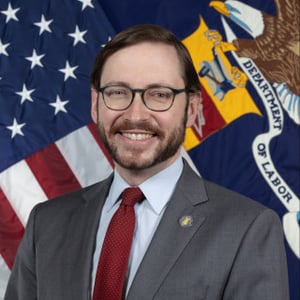
Solicitor, U.S. Department of Labor
Jonathan Berry is Solicitor at the U.S. Department of Labor, in service to President Trump’s agenda to put American workers first. He leads the Department’s lawyers in advising the Secretary and agency leadership on all aspects of law and in representing the Department in court. He was previously managing partner at Boyden Gray PLLC, where he provided strategic counsel and litigated on issues at the intersection of law, politics, and public policy. Earlier, he headed the regulatory office at Labor, and also served at the Department of Justice, in the first Trump Administration. Mr. Berry served as a law clerk to Judge Jerry E. Smith of the United States Court of Appeals for the Fifth Circuit, and to Associate Justice Samuel A. Alito, Jr., of the Supreme Court of the United States.

Partner, O'Melveny & Myers LLP
Gregory Jacob is a partner in O’Melveny’s Washington, D.C. office. Greg Jacob represents financial services companies including banks, investment managers, health care payors, and insurers, as well as other employers, in class action and other litigation concerning ERISA and other labor and employment matters. A former Solicitor of Labor, Greg has extensive knowledge on a wide variety of labor and employment issues including ERISA, FLSA, OFCCP, and whistleblower law. He regularly litigates in federal courts throughout the country, defends clients against Department of Labor investigations, and provides counseling to plans and plan sponsors.
Prior to rejoining O’Melveny in 2021, Greg served as Counsel to Vice President Pence and Deputy Assistant to the President. He directly advised the Vice President on all legal issues relating to the Office of the Vice President, and advised the White House Coronavirus Task Force concerning the Defense Production Act and other legal issues related to bolstering the domestic supply chain.
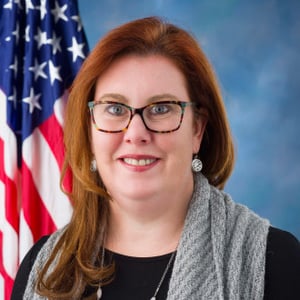
Chief Legal and Government Affairs Officer, BrightStar Care
Cheryl M. Stanton is Chief Legal and Government Affairs Officer at BrightStar Care. Prior to joining BrightStar Care, she served as Administrator of the Department of Labor’s Wage and Hour Division. She was sworn in as WHD’s Administrator by U.S. Secretary of Labor Alexander Acosta on April 29, 2019.
Stanton brought a wealth of experience to WHD, most recently having served as the Executive Director of the South Carolina Department of Employment and Workforce. Under her leadership, South Carolina’s jobless rate dropped to its lowest point in at least 50 years. During that time period, South Carolina’s workforce system helped place over 500,000 South Carolinians into jobs. Stanton also partnered with her colleague at the Department of Corrections to create a job re-entry program for ex-offenders, receiving national accolades. She also oversaw two major information technology modernization projects that improved customer service and increased efficiencies for employees.
Stanton served as the White House’s principal legal liaison to the DOL under President George W. Bush. She is a graduate of Williams College, and earned her law degree from the University of Chicago Law School.
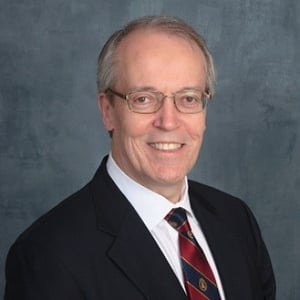
Professor of History, Western Connecticut State University
Kevin R. C. Gutzman is the New York Times best-selling author of five books, including the new Thomas Jefferson—Revolutionary: A Radical’s Struggle to Remake America, a History Book Club Selection. Gutzman is Professor and former Chairman in the Department of History at Western Connecticut State University and a faculty member at LibertyClassroom.com . He holds a bachelor's degree (With Honors and With Special Honors in History), a master of public affairs degree, and a law degree from the University of Texas at Austin, as well as an MA and a PhD in American history from the University of Virginia.
Dr. Gutzman's first book was the New York Times best-seller The Politically Incorrect Guide to the Constitution, which was a Main Selection of the Conservative Book Club. It is the only Jeffersonian account of American constitutional history. His second book, Virginia’s American Revolution: From Dominion to Republic, 1776-1840, explores the issue what the Revolutionaries made of the Revolution in Thomas Jefferson’s home state. After that, he co-authored Who Killed the Constitution? The Federal Government vs. American Liberty from World War I to Barack Obama with New York Times best-selling author Thomas E. Woods, Jr. His fourth book, James Madison and the Making of America, a Main Selection of the History Book Club, received positive reviews from The Wall Street Journal, The Journal of Southern History, The Washington Times, and numerous other publications. His latest book, Thomas Jefferson—Revolutionary: A Radical’s Struggle to Remake America, published on January 31, 2017, was a Selection of the History Book Club.
Gutzman's essay “Lincoln as Jeffersonian: The Colonization Chimera” appeared in Lincoln Emancipated: The President and the Politics of Race, and his “James Madison and Ratification: A Triumph Over Adversity” appeared in A Companion to James Madison and James Monroe. His scholarly articles have appeared in The Journal of Southern History, The Journal of the Early Republic, The Virginia Magazine of History and Biography, The Review of Politics, and The Journal of the Historical Society, among other publications. He has written a hundred book reviews for outlets scholarly and popular, and he has contributed three dozen essays to historical encyclopedias. Gutzman has written for numerous popular magazines and newspapers, including Canada’s National Post, the San Antonio Express-News, and the Richmond Times-Dispatch, among others.
Kevin R. C. Gutzman has appeared on hundreds of radio programs, such as NPR’s “Backstory With the American History Guys” and many of the most prominent commercial programs, terrestrial and satellite, as well as on national television programs including C-SPAN 2's “BookTV,” CNN's “Lou Dobbs Tonight,” Fox News's “The Glenn Beck Program” (both with Beck and with Judge Andrew Napolitano), and NewsMax TV, besides on the BBC and several local television broadcasts. He has been interviewed by reporters from major outlets such as the AP, The Washington Times, The Philadelphia Enquirer, The Washington Post, The Hartford Business Journal, The Houston Chronicle online, Investor's Business Daily, Money Magazine, Connecticut Magazine, and The New York Times, among others.
Gutzman was a featured expert in the documentary movies “John Marshall: Citizen, Statesman, Jurist” and “Nullification: The Rightful Remedy.”

Professor of Law, American University Washington College of Law
Robert L. Tsai is Professor of Law at American University and a prize-winning essayist in constitutional law and history. Though he was born in Taiwan, he has always considered America his home. In fact, one of the proudest moments of his life was the day he was sworn in as a U.S. citizen. Tsai spent his formative years in the Pacific Northwest, working in his parents’ cafe in charming Port Townsend, Washington, and dreaming about the world beyond his small town. He left the area for college and earned a B.A. magna cum laude in History and Political Science from the University of California, Los Angeles, where he was elected to Phi Beta Kappa and received the Carey McWilliams Prize for his honors thesis on the political significance of early Christian teachings.
He then headed to Yale Law School, where he helped edit the Yale Law Journal, served on the Board of the Morris Tyler Moot Court, and was awarded Honorable Mention for Oral Advocacy as a Harlan Fiske Stone Prize Finalist. After graduating from law school, he learned the intricacies of America’s justice system by working as a law clerk for federal judges in New York and Boston: U.S. District Judge Denny Chin (later appointed by President Obama to the U.S. Court of Appeals for the Second Circuit) and U.S. Court of Appeals Judge Hugh H. Bownes (a Carter appointee who passed away in 2003).
After two years of judicial tutelage, Tsai relocated to the South to become a civil rights lawyer in Georgia. Those exhilarating years working with students, clergy, protesters, prisoners, and the homeless left a lasting impression. His first teaching gig was at the University of Oregon Law School, where he earned tenure, along with awards for teaching and research from the law school and the university.
Tsai is the author of three books, Practical Equality: Forging Justice in a Divided Nation (W.W. Norton Feb. 19, 2019), America’s Forgotten Constitutions: Defiant Visions of Power and Community (Harvard 2014), and Eloquence and Reason: Creating a First Amendment Culture (Yale 2008). Practical Equality, which will be published by W.W. Norton in February 2019, is a call to arms to do the hard work of equality, brimming with historical lessons for how to make social progress in tough times. America’s Forgotten Constitutions, which explores how citizens have written a wide range of alternative constitutions to resist mainstream constitutional law, has been called “captivating,” “magisterial,” and “a remarkable feat of excavation.” Eloquence and Reason, his book on the development of America’s free speech values, has been described as “fresh,” “sophisticated,” and “compelling.”
Tsai’s research spans constitutional law, legal history, democratic theory, American political culture, social movements, criminal procedure, presidential leadership, and radical constitutionalism. He has written about the legal obstacles placed in the way of black civil rights activists, President Franklin Roosevelt and freedom of religion, the philosophy of John Brown and his followers, modern white supremacy and the militia movement, the Republic of New Afrika’s ideas about the Constitution, the historical treatment of migrants, early socialism in America, the rise and fall of the “one world” movement, President Obama’s reversal on same-sex marriage, and ideas of equality in the poetry and fiction of Langston Hughes.
His work has been published by the Journal of American History, Contemporary Political Theory, Constitutional Commentary, Perspectives on Politics, Yale Law Journal, Michigan Law Review, Georgetown Law Journal, Washington University Law Review, and Boston University Law Review. His popular essays have appeared in Los Angeles Review of Books, Boston Globe, Washington Post, Politico, Boston Review, and Slate. He has been interviewed by the New York Times, NPR, and CNN. He lives with his family in Washington, D.C.
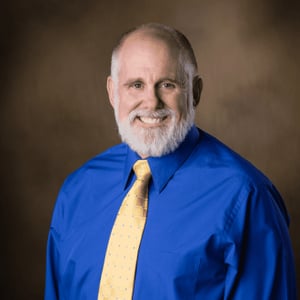
Communications Director, Tenth Amendment Center
Michael Maharrey serves as the national communications director for the Tenth Amendment Center and the managing editor of the SchiffGold blog. He hosts his own podcast, Thoughts from Maharrey Head, as well as the Friday Gold Wrap podcast and the It’s Your Dime interview series for SchiffGold.
Michael is the author of three books. Our Last Hope – Rediscovering the Lost Path to Liberty, makes the historical, philosophical and moral case for nullification. Smashing Myths: Understanding Madison’s Notes on Nullification digs deep into James Madison’s views on nullification, focusing on his writing’s later in life. Finally, Michael joined Tenth Amendment Center executive director Michael Boldin in penning Nullification Objections: Dismantling the Opposition, a book that takes apart the common objections to nullification one at a time. He’s also penned several e-books, including The Power of No: The Historical and Constitutional Basis for State Nullification to Limit Federal Powe and Its Practical Application, The Constitution and the Report of 1800, and The Jefferson Letters, Vol. 1: Kentucky and Virginia Resolutions.
Michael earned a degree in Mass Communications and Media Studies from the University of South Florida St. Petersburg. As a non-traditional student, he won several academic awards and was a member of the school’s ethics bowl team that placed eighth in the nation. Mike played for the USF ice hockey team at the ripe old age of 40, earning American Collegiate Hockey Association Academic All-American honors. He also holds a B.S. degree in Accounting from the University of Kentucky. Along with his formal schooling, he’s had the opportunity to associate with and study under some of the top academics in constitutional history and our founding principles.
Michael speaks at events across the United States, and frequently appears as a guest on local, national and international radio shows advancing constitutional fidelity and liberty through decentralization.
As a working journalist, Michael has written and reported for several newspapers, including the St. Petersburg Times and the Kentucky Gazette, covering local and state politics, and sports. Mike won a pair of 2009 Kentucky Press Association awards while serving as the sports editor for the Woodford Sun in 2009. He also worked for a local television news outlet writing web content for the station’s award-winning website.
Michael lives in Lexington, Ky., with his beautiful wife Cynthia, and has two daughters and a son. Although a native Kentuckian, he spent much of his adult life in Florida and considers the Sunshine state his adopted home. In his spare time, he still plays ice hockey and is equally passionate about defending the Constitution and his crease.
Solicitor, U.S. Department of Labor
Jonathan Berry is Solicitor at the U.S. Department of Labor, in service to President Trump’s agenda to put American workers first. He leads the Department’s lawyers in advising the Secretary and agency leadership on all aspects of law and in representing the Department in court. He was previously managing partner at Boyden Gray PLLC, where he provided strategic counsel and litigated on issues at the intersection of law, politics, and public policy. Earlier, he headed the regulatory office at Labor, and also served at the Department of Justice, in the first Trump Administration. Mr. Berry served as a law clerk to Judge Jerry E. Smith of the United States Court of Appeals for the Fifth Circuit, and to Associate Justice Samuel A. Alito, Jr., of the Supreme Court of the United States.
Partner, O'Melveny & Myers LLP
Gregory Jacob is a partner in O’Melveny’s Washington, D.C. office. Greg Jacob represents financial services companies including banks, investment managers, health care payors, and insurers, as well as other employers, in class action and other litigation concerning ERISA and other labor and employment matters. A former Solicitor of Labor, Greg has extensive knowledge on a wide variety of labor and employment issues including ERISA, FLSA, OFCCP, and whistleblower law. He regularly litigates in federal courts throughout the country, defends clients against Department of Labor investigations, and provides counseling to plans and plan sponsors.
Prior to rejoining O’Melveny in 2021, Greg served as Counsel to Vice President Pence and Deputy Assistant to the President. He directly advised the Vice President on all legal issues relating to the Office of the Vice President, and advised the White House Coronavirus Task Force concerning the Defense Production Act and other legal issues related to bolstering the domestic supply chain.
Chief Legal and Government Affairs Officer, BrightStar Care
Cheryl M. Stanton is Chief Legal and Government Affairs Officer at BrightStar Care. Prior to joining BrightStar Care, she served as Administrator of the Department of Labor’s Wage and Hour Division. She was sworn in as WHD’s Administrator by U.S. Secretary of Labor Alexander Acosta on April 29, 2019.
Stanton brought a wealth of experience to WHD, most recently having served as the Executive Director of the South Carolina Department of Employment and Workforce. Under her leadership, South Carolina’s jobless rate dropped to its lowest point in at least 50 years. During that time period, South Carolina’s workforce system helped place over 500,000 South Carolinians into jobs. Stanton also partnered with her colleague at the Department of Corrections to create a job re-entry program for ex-offenders, receiving national accolades. She also oversaw two major information technology modernization projects that improved customer service and increased efficiencies for employees.
Stanton served as the White House’s principal legal liaison to the DOL under President George W. Bush. She is a graduate of Williams College, and earned her law degree from the University of Chicago Law School.
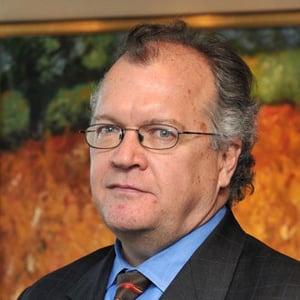
Partner, Morris, Manning, & Martin
Donald B. Cameron, Jr. is a Partner in Morris, Manning, & Martin’s International Trade practice. He has over three decades of experience representing multinational businesses, foreign governments, foreign trade associations and U.S. importers in litigation under U.S. antidumping, countervailing duty, and safeguards law. He also advises clients from around the globe in international trade disputes and market access issues, and has particular experience defending clients in industry sectors that are politically sensitive. Mr. Cameron has represented foreign producers and importers in sectors such as footwear, lumber, textiles, electronic products, and steel products. He practices regularly before the U.S. Department of Commerce, the U.S. International Trade Commission, the Office of the U.S. Trade Representative, the U.S. Court of International Trade and the U.S. Court of Appeals for the Federal Circuit.
Mr. Cameron has extensive experience representing private-sector interests and governments in dispute settlement proceedings before the World Trade Organization (WTO) and its predecessor, the General Agreement on Tariffs and Trade (GATT) in Geneva, and has argued on behalf of clients before the WTO Panels and WTO Appellate Body. He has also defended clients in North American Free Trade Agreement (NAFTA) Chapter 19 proceedings and has argued before NAFTA Panels. Mr. Cameron also advised the Government of Korea in the successful WTO challenges to the U.S. safeguard actions on line pipe and certain steel products (AB-2001-9 and AB-2003-3).
As counsel for foreign manufacturers, Mr. Cameron has also advised and assisted foreign governments in a variety of bilateral and multilateral trade negotiations, most prominent being the steel Voluntary Restraint Arrangements negotiations, bilateral subsidies negotiations and the OECD shipbuilding negotiations.

President, Cass & Associates, PC
Ronald A. Cass is Dean Emeritus of Boston University School of Law (where he was Dean from 1990-2004), President of Cass & Associates, PC, former Vice-Chairman and Commissioner of the U.S. International Trade Commission, former faculty member at Boston University School of Law and the University of Virginia Law School, and Distinguished Senior Fellow at the C. Boyden Gray Center for the Study of the Administrative State. Dean Cass also sits as an arbitrator for commercial, international, and intellectual property rights disputes, and is a former United States member of the Panel of Conciliators of the International Centre for Settlement of Investment Disputes. He is a member of the Council of the Administrative Conference of the United States and has received seven presidential appointments, spanning Presidents Ronald Reagan to Donald J. Trump.
As a law professor, lecturer, and scholar, Dean Cass has been teaching and writing about a wide array of legal issues on topics such as administrative law and regulation, antitrust, constitutional law, communications, intellectual property, international trade, separation of powers, and legal process. He has published more than 160 scholarly books, chapters, articles, and papers, including a leading casebook on administrative law. Dean Cass has taught judges as well as students in schools of law, economics, business, and public policy and has held academic appointments in the United States, Europe, and Latin America.
In addition to his academic work, Dean Cass has participated in numerous important legal cases as an amicus, consultant, or expert, and has advised businesses, law firms, investment funds, and government agencies on a range of trade, antitrust, intellectual property, and regulatory issues. He has a broad range of affiliations with professional groups, and has received numerous honors, fellowships and awards.
Dean Cass is a graduate of the University of Virginia and the University of Chicago Law School.
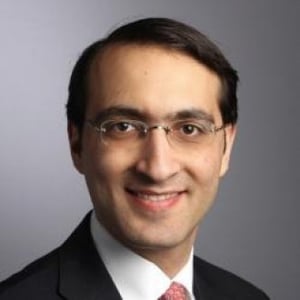
U.S. Department of Commerce, International Trade Administration, Assistant Secretary of Commerce for Enforcement and Compliance
Jeffrey I. Kessler was confirmed unanimously by the U.S. Senate on April 3, 2019 and assumed his position as Assistant Secretary of Commerce for Enforcement and Compliance on April 11, 2019. In his role, Mr. Kessler administers U.S. antidumping and countervailing duty laws, works to ensure foreign compliance with trade agreements, supports the negotiation and implementation of international trade agreements to open foreign markets, and administers the Foreign Trade Zones program – all with the goal of promoting U.S. jobs and economic growth.
Prior to joining the Department of Commerce, Mr. Kessler worked as an international trade attorney in private practice. In that capacity, Mr. Kessler advised leading global companies and U.S. industry associations on a wide range of high-profile, cutting-edge international trade, investment, and market access issues. Mr. Kessler was also involved in litigating several precedent-setting World Trade Organization cases, with successful challenges to foreign country trade practices that restrict billions of dollars of international trade per year, as well as successful defenses of U.S. trade practices.
Mr. Kessler also assisted U.S. companies and industry associations – especially those in innovative, IP-intensive industries – to decipher and navigate foreign trade and investment barriers. Mr. Kessler earned a BA magna cum laude from Yale University, an MA from the University of Chicago, and an JD and MA from Stanford University, where he was an Articles Editor of the Stanford Law Review and a John M. Olin Law and Economics fellow. Additionally,
Mr. Kessler is a member of the American Bar Association and a Term Member of the Council on Foreign Relations. Mr. Kessler resides in Arlington, Virginia with his wife Bethany and their two daughters, Lucy and Diana.

Executive Vice President, The Federalist Society
Dean Reuter is Executive Vice President at the Federalist Society for Law and Public Policy Studies. He has served in two federal government agency Offices of the Inspector General, as Counsel to the Inspector General and Deputy Inspector General, responsible for policing the use of federal funds granted and contracted through those agencies. As such, he helped conduct and oversee criminal investigations across the country. He is the principal author of the non-fiction book, The Hidden Nazi: The Untold Story of America's Deal with the Devil, and editor of Liberty’s Nemesis: The Unchecked Expansion of the State and Confronting Terror: 9/11 and the Future of American National Security. He was appointed by the President and served as Vice-Chairman of the Board of Directors of the Corporation for National and Community Service, and recently served as an appointee on the U.S. Commission on Presidential Scholars. He is a graduate of Hood College (BA with Honors) and the University of Maryland School of Law.
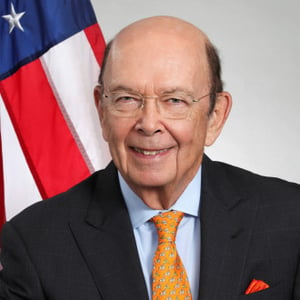
Secretary of Commerce, Department of Commerce
Wilbur L. Ross, Jr. was sworn in by Vice President Mike Pence as the 39th Secretary of Commerce on February 28, 2017. Secretary Ross is the principal voice of business in the Trump Administration, ensuring that U.S. entrepreneurs and businesses have the tools they need to create jobs and economic opportunity.
Secretary Ross is the former Chairman and Chief Strategy Officer of WL Ross & Co. LLC and has over 55 years of investment banking and private equity experience. He has restructured over $400 billion of assets in the airline, apparel, auto parts, banking, beverage, chemical, credit card, electric utility, food service, furniture, gypsum, homebuilding, insurance, marine transport, mortgage origination and servicing, oil and gas, railcar manufacturing and leasing, real estate, restaurant, shipyard, steel, textile and trucking industries. Secretary Ross has been chairman or lead director of more than 100 companies operating in more than 20 different countries.
Named by Bloomberg Markets as one of the 50 most influential people in global finance, Secretary Ross is the only person elected to both the Private Equity Hall of Fame and the Turnaround Management Hall of Fame. He previously served as privatization adviser to New York City Mayor Rudy Giuliani and was appointed by President Bill Clinton to the board of the U.S.-Russia Investment Fund. President Kim Dae-jung awarded Secretary Ross a medal for helping South Korea during its financial crisis and, in November 2014, the Emperor of Japan awarded him the Order of the Rising Sun, Gold and Silver Star.
As a philanthropist, Secretary Ross has served as Chairman of the Japan Society, Trustee of the Brookings Institution and Chairman of its Economic Studies Council, International Counsel Member of the Musée des Arts Décoratifs in Paris, Trustee of the Blenheim Foundation, President of the American Friends of the Rene Magritte Museum in Brussels and Director of the Palm Beach Civic Association. He also was an Advisory Board Member of Yale University School of Management.
Secretary Ross is a graduate of Yale University and Harvard Business School (with distinction). He and his wife Hilary Geary Ross have four children, Jessica Ross, Amanda Ross, Ted Geary and Jack Geary.

Senior Fellow, Cato Institute
Doug Bandow is a senior fellow at the Cato Institute, specializing in foreign policy and civil liberties. He worked as special assistant to President Reagan and editor of the political magazine Inquiry. He writes regularly for leading publications such as Fortune magazine, National Interest, Wall Street Journal, and Washington Times. Bandow speaks frequently at academic conferences, on college campuses, and to business groups. Bandow has been a regular commentator on ABC, CBS, NBC, CNN, Fox News Channel, and MSNBC. He holds a J.D. from Stanford University.
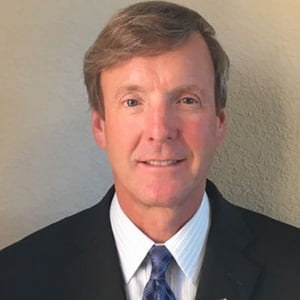
Professor of Law; Director, Warrior Defense Project, St. Mary's University School of Law
Lt. Colonel (U.S. Army, Ret.) Jeffrey F. Addicott is a Distingushed Professor of Law and the Director of the Warrior Defense Project at St. Mary’s University School of Law, San Antonio, Texas (2000-current). An active-duty Army officer in the Judge Advocate General’s Corps for twenty years, Professor Addicott spent a quarter of his career as the senior legal advisor to the United States Army’s Special Forces. As an internationally recognized authority on national security and terrorism law Professor Addicott not only lectures and participates in professional and academic organizations both in the United States and abroad (over 1,000 speeches), but he also testifies before Congress on a variety of legal issues. Dr. Addicott is a regular contributor to national and international news media outlets to include FOX News, MSNBC, OAN, CNN, BBC, New York Times, Washington Post, Wall Street Journal, and USA Today, (over 5,000 interviews). Addicott is a prolific author, publishing over 100 books, articles, and monographs on a variety of legal and policy issues. His most recent book (2026) is entitled: Christian Doctrines.
Among his many contributions to the field, Professor Addicott pioneered the teaching of law of war and human rights courses to the militaries of numerous nascent democracies in Eastern Europe and Latin America. For these efforts he was awarded the Legion of Merit, named the “Army Judge Advocate of the Year,” and honored as a co-recipient of the American Bar Association’s Hodson Award. Addicott has served in senior legal positions in Germany, Korea, Panama, and throughout the United States (1980-2000). Professor Addicott holds a Doctor of Juridical Science (S.J.D.) and Master of Laws (LL.M.) from the University of Virginia School of Law. He also received a Master of Laws (LL.M.) from the Army Judge Advocate General’s School, where he was the Deputy Director of the International & Operational Law Division, and a Juris Doctor (J.D.) from the University of Alabama School of Law. Apart from teaching a variety of courses at the law school to include National Security Law and Terrorism Law, Dr. Addicott served as the Associate Dean for Administration at St. Mary's University School of Law (2006-2007) and as the Director of the Center for Terrorism Law (2005-2018). Dr. Addicott was the 2007 recipient of “St. Mary’s University School of Law Distinguished Faculty Award.” Dr. Addicott also heads Christian Doctrine Ministries, where he teaches non-denominational Bible classes (2009-current) at St. Mary’s University School of Law.

Professor of Law, South Texas College of Law Houston
Josh Blackman is a national thought leader on constitutional law and the United States Supreme Court. Josh’s work was quoted during two presidential impeachment trials. He has testified before Congress and advises federal and state lawmakers. Josh regularly appears on TV, including NBC, CBS, ABC, Fox, and the BBC. Josh is also a frequent guest on NPR and other syndicated radio programs. He has published commentaries in the New York Times, Wall Street Journal, Washington Post, and leading national publications.
Since 2012, Josh has served as a professor at the South Texas College of Law Houston. He holds the Centennial Chair of Constitutional Law. Josh is an Adjunct Fellow at the Manhattan Institute. Josh has written more than seven dozen law review articles that have been cited more than a thousand times. Josh was selected as the Jurist of the Year by the Texas Journal of Law & Public Policy, received the inaugural Meese III Originalism Award, and was awarded the Inaugural Joseph Story Award. Josh was selected by Forbes Magazine for the “30 Under 30” in Law and Policy. Josh is the President of the Harlan Institute, and founded FantasySCOTUS, the Internet’s Premier Supreme Court Fantasy League. He blogs at the Volokh Conspiracyand posts@JoshMBlackman.

Deep Dive Episode 74 – A Discussion on Current Department of Labor Priorities
Jonathan Berry, Gregory Frederick Jacob, Cheryl M. Stanton
The Department of Labor administers and enforces more than 180 federal laws, with mandates and...
Deep Dive Episode 74 – A Discussion on Current Department of Labor Priorities
Regulatory Transparency Project's Fourth Branch Podcast
TeleforumFair Trade: Reinvigorating American Leadership in the 21st Century
International & National Security Law Practice Group
Washington, DCWhat Is a Constitutional Crisis? Would You Know it if We Were in One?
Kevin R.C Gutzman, Robert L. Tsai, Michael Maharrey
Is the United States experiencing a constitutional crisis--or multiple crises? How would we even know...
Law and Politics in the Era of Donald Trump
North Carolina Central Student Chapter
Durham, NCA Foreign Policy Discussion: President Trump's National Security Policy
Cornell Student Chapter
Ithaca, NYCongratulations to Hon. Edwin Meese III on Receiving the Presidential Medal of Freedom
Today, President Donald J. Trump awarded Hon. Edwin Meese III the Presidential Medal of Freedom. "This prestigious...
The Lowest Ebb: Executive Power in the Trump Era
Toledo Student Chapter
Toledo, OHTopics
Impeaching Donald Trump: A Game of Political High Stakes Poker
On September 24, Speaker Nancy Pelosi announced that the House of Representatives would begin a...
Judicial Nominations in the Trump Administration
Milwaukee Lawyers Chapter
Milwaukee, WI