

Supreme Court Director, Institute for Constitutional Advocacy & Protection, Georgetown Law
Kelsi Corkran is the Supreme Court Director at the Institute for Constitutional Advocacy & Protection and a Senior Lecturer at Georgetown Law. Kelsi has served as lead counsel in numerous civil rights cases before the Supreme Court, including Trump v. CASA, Grants Pass v. Johnson, Acheson Hotels v. Laufer, Torres v. Madrid, and City of Hays v. Vogt. She has also argued over 30 cases in the courts of appeals, including 12 of the 13 U.S. Courts of Appeals and the en banc Sixth and Ninth Circuits.
Immediately prior to joining ICAP, Kelsi was the Head of the Supreme Court Practice at Orrick, Herrington & Sutcliffe. She previously served as a law clerk to Justice Ruth Bader Ginsburg of the United States Supreme Court and Judge David S. Tatel of the U.S. Court of Appeals for the D.C. Circuit. Among other positions, she was as an attorney with the Civil Appellate Staff at the U.S. Department of Justice and in the Communications Office of the White House’s Executive Office of the President, where she assisted with judicial nominations, including the confirmation hearings of Justice Sonia Sotomayor. Before law school, she was a social worker in Philadelphia’s foster care system.
Kelsi is a member of the American Law Institute, the Executive Committee of the Board of Directors for the Washington Lawyers Committee for Civil Rights and Urban Affairs, and the D.C. Circuit Advisory Committee on Procedures. She previously served on the Supreme Court Practitioners’ Committee for the Presidential Commission on the Supreme Court of the United States and on the Executive Committee of the Board of Trustees for the Legal Aid Society of the District of Columbia. She received her B.A. from the University of Pennsylvania and her J.D. and M.P.P. from the University of Chicago.
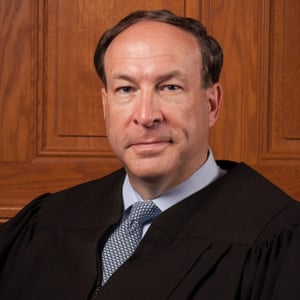
Judge, United States Court of Appeals, Seventh Circuit
Michael B. Brennan was confirmed and sworn in as a Circuit Judge for the U.S. Court of Appeals for the Seventh Circuit in May 2018.
He previously worked as a partner in the Milwaukee law firm of Gass Weber Mullins LLC, where he tried cases and handled appeals in federal and state courts, as a judge on the Milwaukee County Circuit, where he presided over a variety of criminal and civil calendars, and as an assistant district attorney in the Milwaukee County District Attorney’s office.
Brennan’s undergraduate degree is from the University of Notre Dame, and his law degree from Northwestern University School of Law, where he was an editor on the law review and the moot court champion. He served as a law clerk on the U.S. District Court for the Eastern District of Wisconsin and the U.S. Court of Appeals for the Seventh Circuit.
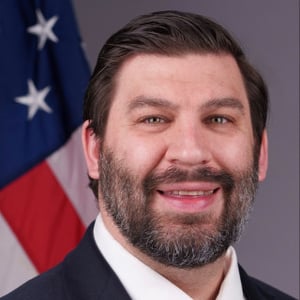
Deputy Counsel, the President
Gary currently is the Deputy Counsel to the President. He was previously a partner at the Dhillon Law Group and worked at the Department of the Interior and Federal Election Commission. He is a native of Virginia, and earned his B.A. and J.D. from the University of Virginia.
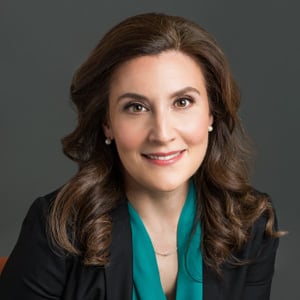
Board Member, U.S. Privacy and Civil Liberties Oversight Board
Beth A. Williams is a Board Member of the United States Privacy and Civil Liberties Oversight Board, an agency whose mission is to ensure that the federal government's efforts to prevent terrorism are balanced with the need to protect privacy and civil liberties.
Prior to her Board service, Ms. Williams was the Assistant Attorney General for the Office of Legal Policy at the United States Department of Justice from August 2017 to December 2020. In that role, she served as the primary policy advisor to the Attorney General and the Deputy Attorney General, and as the Chief Regulatory Officer for the Department. Ms. Williams also led the judicial nomination process for the Department, assisting in the selection and confirmation of more than 230 Article III judges to the bench.
Prior to becoming Assistant Attorney General, Ms. Williams was a litigation and appellate partner at a national law firm, where her practice focused on complex commercial, securities, appellate, and First Amendment litigation. From 2005-2006, Ms. Williams served as Special Counsel to the United States Senate Committee on the Judiciary, where she assisted with the confirmation of Chief Justice John G. Roberts, Jr. and Associate Justice Samuel A. Alito, Jr. to the United States Supreme Court.
Ms. Williams clerked for the Hon. Richard C. Wesley on the United State Court of Appeals for the Second Circuit. She graduated from Harvard College magna cum laude, with a degree in History and Literature, and she earned her law degree from Harvard Law School, where she served as Executive Editor of the Harvard Journal of Law and Public Policy.
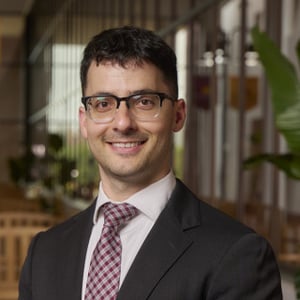
Professor, University of Minnesota Law School
Ilan Wurman is the Julius E. Davis Professor of Law at the University of Minnesota, where he teaches administrative law and constitutional law. He previously taught at Arizona State University. He writes primarily on the Fourteenth Amendment, administrative law, separation of powers, and constitutionalism. His academic writing has appeared in the Yale Law Journal, the Stanford Law Review, the University of Chicago Law Review, the University of Pennsylvania Law Review, the Virginia Law Review, the Duke Law Journal, the Minnesota Law Review, the Notre Dame Law Review, and the Texas Law Review among other journals.
Professor Wurman is the author of the new book The Constitution of 1789: A New Introduction (Cambridge 2026). His previous books include A Debt Against the Living: An Introduction to Originalism (Cambridge 2017), and The Second Founding: An Introduction to the Fourteenth Amendment (Cambridge 2020). He is also the author of the casebook, Administrative Law Theory and Fundamentals: An Integrated Approach (Foundation Press 3d ed. 2025).
Professor Wurman practices law with the firm Tully Bailey. He has litigated a variety of administrative law and constitutional law cases, including cases involving COVID-19 restrictions, transmission lines, and Appointments Clause challenges. He also devised winning public nuisance theories to force city governments to address the increasingly challenging public camping crises throughout the country.
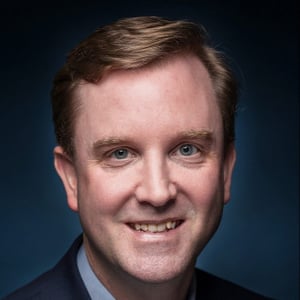
Vice President and Deputy Counsel, Wisconsin Institute for Law and Liberty
Publius comes from the pen name Alexander Hamilton, James Madison, and John Jay used when they wrote 85 publicly printed letters now known as the Federalist Papers. Hamilton chose “Publius” as a name that would represent friends of the newly proposed American republic - Publius Valeria Publicola was a Roman general who helped to found the Roman Republic. The Federalist Society continues the tradition of publishing things under the name Publius in celebration of our constitutional roots and recognition that author credit is not always necessary.
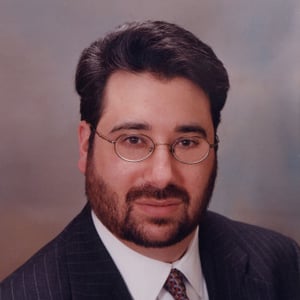
President, Phoenix Center for Advanced Legal and Economic Public Policy Studies
Lawrence J. Spiwak is President of the Phoenix Center for Advanced Legal & Economic Public Policy Studies, a non-profit 501(c)(3) organization that studies broad public-policy issues related to governance, social and economic conditions, with a particular emphasis on the law and economics of the digital age. Mr. Spiwak is a prolific scholar whose work is frequently cited by policymakers, major news media and academic journals around the world, and is in the top 1.3%of authors downloaded on the Social Science Research Network. Mr. Spiwak currently serves as the co-chair of the Federal Communications Bar Association’s (FCBA) committee responsible for overseeing the FEDERAL COMMUNICATIONS LAW JOURNAL and is a member of the program committee of the Telecommunications Policy Research Conference (“TPRC”). Mr. Spiwak is also the recipient of the FCBA’s Distinguished Service Award. Prior to joining the Phoenix Center, Mr. Spiwak was a Senior Attorney with the Competition Division in the FCC’s Office of General Counsel from 1994-1998. While in college, Mr. Spiwak was accepted into the Presidential Stay-In School program where he was responsible for delivering classified and confidential material among senior White House and Reagan Administration officials and received a full FBI security clearance. Mr. Spiwak received his B.A. with Special Honors from the George Washington University and his J.D. from the Benjamin N. Cardozo School of Law. Mr. Spiwak is a member in good standing of the bars of New York, Massachusetts, the District of Columbia, and the U.S. Court of Appeals for the D.C. Circuit.

Partner, Briscoe Prows Kao Ivester & Bazel LLP
Tony Francois is experienced in Water and Real Property Law, Land Use and Zoning, Environmental Regulation, Natural Resources Development, Agricultural Law, and Constitutional Law. He has represented homeowners, builders, farmers and ranchers, trade associations, and water districts in administrative, civil, and criminal proceedings before state and federal administrative agencies and state and federal trial and appellate courts. He is a member of the California State Bar and the Northern, Eastern, and Central Districts of California and the Districts of New Mexico and North Dakota, and has litigated cases in federal courts in California, Oregon, Washington, Idaho, Montana, Nevada, Arizona, New Mexico, Colorado, North and South Dakota, Minnesota, Massachusetts, Maryland, South Carolina, and the District of Columbia, as well as the Sixth, Eighth, Ninth, and Tenth Circuit Courts of Appeals. He has appeared before the Supreme Courts of California, Idaho, Nevada, and the United States.
Prior to attending law school, he served as an infantry officer in the United States Army, and was stationed in the former West Germany during the fall of the Berlin Wall.
Tony was an Attorney at Pacific Legal Foundation from 2012 to 2021. He was a lobbyist for 10 years, first with California Farm Bureau Federation from 2003 to 2007, and then with KP Public Affairs from 2007 to 2012. He was an attorney at McQuaid, Bedford & Van Zandt in San Francisco from 1999 – 2003.
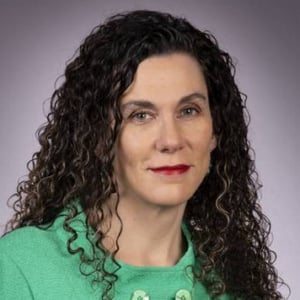
Associate Professor of Law, Center for Intellectual Property and Entrepreneurship, University of Missouri School of Law
Professor Lietzan researches, writes, and teaches primarily in the areas of food and drug regulation, intellectual property, and administrative law. Some of her recent scholarship has focused on the nature and purpose of the new drug approval system, federal regulation of fecal microbiota transplantation, federal regulation of products derived from cannabis, the political economy of the Hatch-Waxman (generic drug) statute, and incentives to study already approved drugs for new uses. She is an award-winning teacher, and she has been an elected member of the American Law Institute since 2006.
Professor Lietzan brings to her scholarship and teaching eighteen years of private practice experience, eight of them as a partner in the food and drug group at Covington & Burling in Washington, DC. In practice, she handled a wide range of complex legal problems and broader legislative and regulatory policy questions affecting FDA-regulated companies. This work included lifecycle management and strategy issues, regulatory strategy and advocacy, white collar defense, congressional investigations, briefing in products liability cases, and international regulatory policy work. She was involved in every major amendment to the Federal Food, Drug, and Cosmetic Act (FDCA) between 1997 and 2014 and was deeply immersed for more than a decade in the development of the Biologics Price Competition and Innovation Act of 2010. She has been consistently identified by her peers in private practice as a “Best Lawyer in America” in the categories of FDA law (since 2013) and Biotechnology Law (since 2007).
Professor Lietzan has held one leadership position or another at the Food and Drug Law Institute (FDLI) since 2004, including a stint on its Board of Directors from 2008 to 2012. She also held leadership positions in the American Bar Association’s Section of Science and Technology Law for fourteen years.
Professor Lietzan received a bachelor’s degree from the University of North Carolina, where she graduated with honors in history. She holds a master’s degree in history from UCLA and a law degree with high honors from Duke Law School.
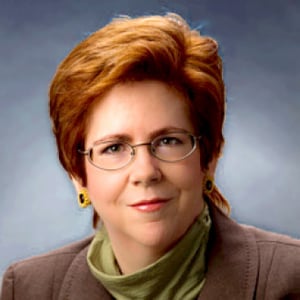
Partner, Wilkinson Barker Knauer LLP
Rosemary C. Harold joined the firm as a partner in 2011, specializing in media, broadband, and First Amendment issues. She advises a wide range of clients – including commercial and noncommercial broadcasters, cable operators, video programmers, wireless providers, and satellite operators – on legal, regulatory, and policy matters. Her work includes representation of clients in major rulemakings, transactions both large and small, and regulatory compliance counseling. Ms. Harold also regularly provides investors and others in the financial community with insights into developments at the FCC and on Capitol Hill, including the interplay between the agency and lawmakers, as well as inter-agency dealings among the FCC, the Department of Justice, and the Federal Trade Commission on competition issues.
From 2005 to 2011, Ms. Harold served at the Federal Communications Commission, most recently as Legal Advisor to FCC Commissioner Robert M. McDowell for media and broadband issues, with a particular focus on First Amendment concerns. She earlier served as Deputy Chief of the FCC’s Media Bureau, where she led the staff teams working on major rulemakings such as video franchising reform and media ownership, as well as on major transactional reviews such as the Sirius/XM merger.
Before her government service, Ms. Harold’s work in private practice included FCC regulatory proceedings in the media, satellite, and wireless areas, diversity and EEO matters at the FCC and EEOC, and First Amendment commercial speech matters before the FTC, FDA and federal appellate courts. She began her career as a journalist, including work as a reporter and bureau chief for the Miami Herald, an editor at C-SPAN and, during law school, a columnist for the ABA Student Lawyer magazine.
Ms. Harold frequently speaks at industry conferences and events on media and broadband issues. She currently serves as the co-chair of the Women in Communications Law subcommittee of the American Bar Association’s Forum Committee on Communications Law, an adjunct professor in the Communications Law Institute at Catholic University’s Columbus School of Law, and member of Board of Advisors for the Thomas Jefferson Public Policy Program at the College of William and Mary. An active member of the Federal Communications Bar Association, Ms. Harold has served on the FCBA’s Executive Committee and co-chaired the FCBA’s Mass Media Committee, Video Programming & Distribution Committee, and Professional Responsibility Committee.
J.D., Georgetown University Law Center, 1991, magna cum laude
M.A., University of Missouri, 1985
B.A., College of William and Mary, 1980
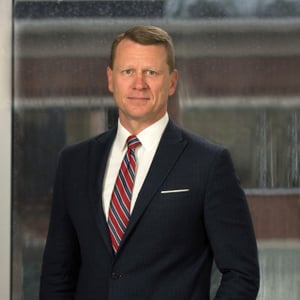
Partner, Phelps Dunbar LLP
Mike Hurst is a partner with Phelps Dunbar LLP where he optimizes his in-depth knowledge of the court system, investigative and prosecutorial agencies, the regulatory arena, and the public policy realm to help clients facing government investigations, enforcement actions, regulatory matters, general litigation and policy issues. Mike currently serves as the General Counsel of the Republican National Committee and as Chairman of the Mississippi Republican Party. He previously served as the U.S. Attorney for the Southern District of Mississippi from 2017-2021, and with over 20 years of experience before judges, juries and policy makers, handling some of the largest and most high-profile cases in Mississippi, he's known for untangling the most complex legal issues.
As U.S. Attorney, Mike was described as a “hard charger,” leading efforts to combat violent crime, human trafficking and public corruption, among many other issues, throughout Mississippi. He almost tripled prosecutions in the U.S. Attorney’s Office over a three-year period, resulting in the most indictments and federal defendants indicted in a one-year period in Mississippi history. He created innovative and national award-winning crime-fighting solutions, like “Project EJECT,” and he established the first statewide, multilevel and multidisciplinary human trafficking body, the Mississippi Human Trafficking Council, to comprehensively and holistically address this criminal scourge.
During his tenure as U.S. Attorney, Mike oversaw some of the biggest cases in Mississippi history: the largest health care fraud scheme (Wade Walters, et. al.), the largest Ponzi scheme (Lamar Adams), the largest False Claims Act health care fraud settlement (Region 8), and the largest nursing home False Claim Act settlement (Hyperion). In addition, as Chief Federal Law Enforcement Officer for the Southern District, Mike coordinated the largest single-state immigration worksite enforcement operation in our nation’s history, involving hundreds of federal law enforcement agents covering seven different locations operated by multiple companies.
Mike’s no show pony – he’s a work horse. Before his tenure as U.S. Attorney, Mike was an Assistant U.S. Attorney for the Southern District of Mississippi for more than eight years. He handled some of the most difficult and complex cases in that office, dealing with white collar crimes, public corruption and financial fraud, including numerous jury trials before almost every federal judge in the Southern District.
He also has experience in the private sector. He has practiced law in Washington, D.C., and has served as a litigator and general counsel for a conservative nonprofit. He also has extensive experience in public policy, having served as the Legislative Director to a U.S. Congressman and as Counsel to the House Judiciary Committee.
Mike has also testified before both the United States Senate and the U.S. House of Representatives on issues ranging from crime to Presidential pardons. He has worked on all sides of the legal, regulatory, investigative, prosecutorial and policy spectrum. The incredible insight gained from this varied experience enables him to find a path forward for clients, no matter how complicated the case.
Judge, United States Court of Appeals, Seventh Circuit
Michael B. Brennan was confirmed and sworn in as a Circuit Judge for the U.S. Court of Appeals for the Seventh Circuit in May 2018.
He previously worked as a partner in the Milwaukee law firm of Gass Weber Mullins LLC, where he tried cases and handled appeals in federal and state courts, as a judge on the Milwaukee County Circuit, where he presided over a variety of criminal and civil calendars, and as an assistant district attorney in the Milwaukee County District Attorney’s office.
Brennan’s undergraduate degree is from the University of Notre Dame, and his law degree from Northwestern University School of Law, where he was an editor on the law review and the moot court champion. He served as a law clerk on the U.S. District Court for the Eastern District of Wisconsin and the U.S. Court of Appeals for the Seventh Circuit.
Supreme Court Director, Institute for Constitutional Advocacy & Protection, Georgetown Law
Kelsi Corkran is the Supreme Court Director at the Institute for Constitutional Advocacy & Protection and a Senior Lecturer at Georgetown Law. Kelsi has served as lead counsel in numerous civil rights cases before the Supreme Court, including Trump v. CASA, Grants Pass v. Johnson, Acheson Hotels v. Laufer, Torres v. Madrid, and City of Hays v. Vogt. She has also argued over 30 cases in the courts of appeals, including 12 of the 13 U.S. Courts of Appeals and the en banc Sixth and Ninth Circuits.
Immediately prior to joining ICAP, Kelsi was the Head of the Supreme Court Practice at Orrick, Herrington & Sutcliffe. She previously served as a law clerk to Justice Ruth Bader Ginsburg of the United States Supreme Court and Judge David S. Tatel of the U.S. Court of Appeals for the D.C. Circuit. Among other positions, she was as an attorney with the Civil Appellate Staff at the U.S. Department of Justice and in the Communications Office of the White House’s Executive Office of the President, where she assisted with judicial nominations, including the confirmation hearings of Justice Sonia Sotomayor. Before law school, she was a social worker in Philadelphia’s foster care system.
Kelsi is a member of the American Law Institute, the Executive Committee of the Board of Directors for the Washington Lawyers Committee for Civil Rights and Urban Affairs, and the D.C. Circuit Advisory Committee on Procedures. She previously served on the Supreme Court Practitioners’ Committee for the Presidential Commission on the Supreme Court of the United States and on the Executive Committee of the Board of Trustees for the Legal Aid Society of the District of Columbia. She received her B.A. from the University of Pennsylvania and her J.D. and M.P.P. from the University of Chicago.
Deputy Counsel, the President
Gary currently is the Deputy Counsel to the President. He was previously a partner at the Dhillon Law Group and worked at the Department of the Interior and Federal Election Commission. He is a native of Virginia, and earned his B.A. and J.D. from the University of Virginia.
Board Member, U.S. Privacy and Civil Liberties Oversight Board
Beth A. Williams is a Board Member of the United States Privacy and Civil Liberties Oversight Board, an agency whose mission is to ensure that the federal government's efforts to prevent terrorism are balanced with the need to protect privacy and civil liberties.
Prior to her Board service, Ms. Williams was the Assistant Attorney General for the Office of Legal Policy at the United States Department of Justice from August 2017 to December 2020. In that role, she served as the primary policy advisor to the Attorney General and the Deputy Attorney General, and as the Chief Regulatory Officer for the Department. Ms. Williams also led the judicial nomination process for the Department, assisting in the selection and confirmation of more than 230 Article III judges to the bench.
Prior to becoming Assistant Attorney General, Ms. Williams was a litigation and appellate partner at a national law firm, where her practice focused on complex commercial, securities, appellate, and First Amendment litigation. From 2005-2006, Ms. Williams served as Special Counsel to the United States Senate Committee on the Judiciary, where she assisted with the confirmation of Chief Justice John G. Roberts, Jr. and Associate Justice Samuel A. Alito, Jr. to the United States Supreme Court.
Ms. Williams clerked for the Hon. Richard C. Wesley on the United State Court of Appeals for the Second Circuit. She graduated from Harvard College magna cum laude, with a degree in History and Literature, and she earned her law degree from Harvard Law School, where she served as Executive Editor of the Harvard Journal of Law and Public Policy.
Professor, University of Minnesota Law School
Ilan Wurman is the Julius E. Davis Professor of Law at the University of Minnesota, where he teaches administrative law and constitutional law. He previously taught at Arizona State University. He writes primarily on the Fourteenth Amendment, administrative law, separation of powers, and constitutionalism. His academic writing has appeared in the Yale Law Journal, the Stanford Law Review, the University of Chicago Law Review, the University of Pennsylvania Law Review, the Virginia Law Review, the Duke Law Journal, the Minnesota Law Review, the Notre Dame Law Review, and the Texas Law Review among other journals.
Professor Wurman is the author of the new book The Constitution of 1789: A New Introduction (Cambridge 2026). His previous books include A Debt Against the Living: An Introduction to Originalism (Cambridge 2017), and The Second Founding: An Introduction to the Fourteenth Amendment (Cambridge 2020). He is also the author of the casebook, Administrative Law Theory and Fundamentals: An Integrated Approach (Foundation Press 3d ed. 2025).
Professor Wurman practices law with the firm Tully Bailey. He has litigated a variety of administrative law and constitutional law cases, including cases involving COVID-19 restrictions, transmission lines, and Appointments Clause challenges. He also devised winning public nuisance theories to force city governments to address the increasingly challenging public camping crises throughout the country.

The Forces Shaping Administrative Law: Executive, Courts, and Beyond
Kelsi Corkran, Michael B. Brennan, Gary Lawkowski, Beth A. Williams, Ilan Wurman
CLE credit for this event is available at On-Demand CLE. Recent Supreme Court decisions—often via the...
The Forces Shaping Administrative Law: Executive, Courts, and Beyond
Administrative Law Practice Group
Washington, DCThe Twin Commands: Streamlining Equality Litigation Based on Students for Fair Admissions
Daniel Lennington
Each year, government contracting programs dole out tens of billions of dollars to businesses that...
State Court Docket Watch: 2021 Edition
In an effort to increase dialogue about state court jurisprudence, the Federalist Society presents State...
State Court Docket Watch: 2020 Edition
Publius
In an effort to increase dialogue about state court jurisprudence, the Federalist Society presents State...
Ensuring Due Process at the Surface Transportation Board
Lawrence J. Spiwak
Note from the Editor: The Federalist Society takes no positions on particular legal and public...
Will We Soon Have Clarity on Navigable Waters?: How the Supreme Court’s October 2017 Term Set the Stage
Tony Francois
Note from the Editor: This article discusses the longstanding legal battle over the meaning of...
A Second Look at the CREATES Act: What’s Not Being Said
Erika Lietzan
Note from the Editor: This article critically discusses the CREATES Act, which is currently pending...
The FCC Forgot Something in Piecing Together Its Complex Proposal for Broadband Privacy Regulation: Consumers
Rosemary C. Harold
Note from the Editor: This article discusses the FCC’s proposed rules for broadband privacy, and...
Is the Long Arm of the Law Shrinking? Geographic Boundaries for the Approval of Wiretaps and Bugs and the Shifting Jurisdictional Reach of Federal Judges to Authorize Electronic Surveillance
Mike Hurst
Recent court decisions from around the country are raising serious questions as to the potential...