
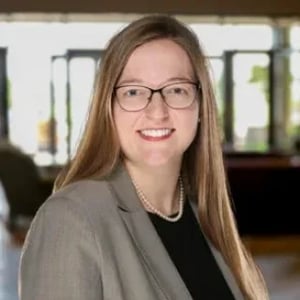
Counsel, First Liberty Institute
Kayla Toney is Associate Counsel with First Liberty Institute, concentrating on religious liberty matters and First Amendment rights for clients of all faiths.
Prior to joining First Liberty, Kayla litigated religious freedom cases as a Constitutional Law Fellow at the Becket Fund for Religious Liberty. She clerked for Judge Gregory E. Maggs on the U.S. Court of Appeals for the Armed Forces, where she gained valuable experience in the military justice system. Kayla also worked as a litigation associate in the D.C. office of Winston & Strawn LLP, where she enjoyed working on pro bono religious liberty matters.
Kayla earned her law degree from George Washington University, where she served as president of the Federalist Society chapter, a member of the GW International Law Review, and a writing fellow. She graduated summa cum laude from Grove City College with a degree in history and economics.
A native of Michigan, Kayla is based in First Liberty’s Washington, D.C. office and is licensed to practice law in Virginia and D.C.
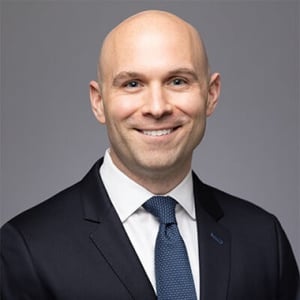
Associate Counsel, Clement & Murphy, PLLC
Kevin’s practice focuses on briefing complex legal issues at all levels of the federal court system. Before joining Clement & Murphy, Kevin served as a Trial Attorney in the Department of Justice’s Civil Division, where he briefed and argued high-profile cases challenging federal laws as well as Executive Branch policies and decisions. Those cases involved both merits and discovery issues concerning a wide range of constitutional provisions, the Administrative Procedure Act, the Privacy Act, the Freedom of Information Act, Title VII, and various national security issues, including habeas litigation involving Guantanamo Bay detainees.
Kevin earned his J.D. from the University of Pennsylvania, where he was an Executive Editor of the University of Pennsylvania Law Review, a member of the Supreme Court Clinic, a Littleton Fellow in legal writing, and a member of the Moot Court Board. After graduating from Penn, Kevin clerked for Judge David Sentelle of the U.S. Court of Appeals for the D.C. Circuit, Judge D. Brooks Smith of the U.S. Court of Appeals for the Third Circuit, and Judge Royce Lamberth of the U.S. District Court for the District of Columbia.

Senior Counsel, Miller Johnson
Brett Swearingen is a Senior Counsel in Miller Johnson’s Employment and Labor practice. A native of Southwest Michigan, Brett’s practice focuses on employment and ERISA litigation, as well as counseling clients on employment matters and dealing with the government.
Mr. Swearingen litigates on behalf of clients in complex matters of employment and ERISA law, including FLSA collective actions, multiemployer pension withdrawal liability disputes, and government investigations. In addition, Brett regularly advises clients—especially state and federal contractors and grantees—on compliance with civil rights laws, as well as religious non-profits on matters regarding employment law and religious liberty. Brett is also experienced in the statistical analysis of workplace issues, such as using “disparate impact analysis” to help employers test for (and root out) potential discriminatory effects of workplace policies and practices.
Brett previously served as Counselor to the Deputy Secretary at the United States Department of Labor. At the DOL, he advised the Deputy Secretary and Secretary on employee benefits and civil rights matters and was a key advisor on several important rulemakings within the Employee Benefits Security Administration (EBSA) and the Office of Federal Contract Compliance Programs (OFCCP), including regulations concerning ESG investing, proxy voting, and fiduciary investment advice, and reforms to OFCCP’s enforcement procedures and religious exemption.
Prior to his time at DOL, Brett was a litigator in the employee benefits practice of a global law firm, where he defended clients in several multi-million dollar ERISA withdrawal liability cases against multiemployer pension funds concerning alleged evade or avoid liability, successor liability, and employer challenges to pension funds’ discount rates.
Mr. Swearingen is currently licensed in Michigan and Washington, D.C.

Chairman, Center for Equal Opportunity
Linda Chavez is Chairman of the Center for Equal Opportunity. She has published opinions and columns in newspapers across the country and appears regularly on cable news. Chavez is the author of the three books: Out of the Barrio: Toward a New Politics of Hispanic Assimilation, An Unlikely Conservative: The Transformation of an Ex-Liberal, and Betrayal: How Union Bosses Shake Down Their Members and Corrupt American Politics. She has been honored by the Library of Congress as a "Living Legend" and as nominee for Secretary of Labor by President George W. Bush.
Chavez has held many appointed positions and has served on numerous corporate and nonprofit boards. Among her appointed positions has been Chairman, National Commission on Migrant Education (1988-1992); White House Director of Public Liaison (1985); Staff Director of the U.S. Commission on Civil Rights (1983-1985); and member of the Administrative Conference of the United States (1984-1986). Chavez was also the Republican nominee for U.S. Senator from Maryland in 1986 and was elected by the United Nations' Human Rights Commission to serve a four-year term as U.S. Expert to the U.N. Sub-commission on the Prevention of Discrimination and Protection of Minorities.
Chavez earned her BA from the University of Colorado.
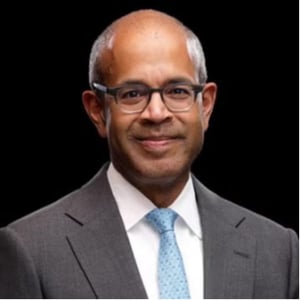
Partner, Davis Polk & Wardwell LLP
Kannon is the head of our Supreme Court & Appellate practice. He has argued 41 cases before the U.S. Supreme Court and has argued more than 150 appeals in courts across the country, including every federal court of appeals and numerous state courts.
Kannon is ranked as a “Star Individual” in appellate law by Chambers USA, where a client notes, “It’s hard to think of enough superlatives to describe his talent, his judgment, his ability, his experience – he is as good as it gets.” Legal 500 U.S. recognizes Kannon in its Hall of Fame for appellate work. A client shares, “His work is the best in the business, and he is a wonderful human being in addition to being a world-class appellate litigator.”
In 2024 and 2022, Kannon was a finalist for the American Lawyer’s “Litigator of the Year” award. He was named “Appellate Litigator of the Year” by Benchmark Litigation in 2021 and was a 2026 finalist for that recognition.
Before entering private practice, Kannon served as an Assistant to the Solicitor General at the U.S. Department of Justice.

CEO, President, and General Counsel, Alliance Defending Freedom
As the CEO, president, and general counsel of Alliance Defending Freedom, Kristen Waggoner leads the faith-based organization in advancing every person’s God-given right to live and speak the truth in the U.S. and around the world. She oversees more than 450 ADF team members in 10 global offices.
Since 2011, ADF has won 15 cases at the U.S. Supreme Court, three of which were argued by Waggoner: Masterpiece Cakeshop v. Colorado Civil Rights Commission, Uzuebgunam v. Presczewski, and 303 Creative v. Elenis. ADF also has a strong record of international success at the European Court of Human Rights, United Nations, and other leading courts and tribunals and has secured the release of more than 1,000 imprisoned Christians.
After clerking with Washington Supreme Court Justice Richard B. Sanders, Waggoner practiced law for over 16 years at a Seattle firm before joining ADF in 2013. She is Peer Review Rated AV® Preeminent™ in Martindale-Hubbell. Waggoner is a sought-after public speaker who often appears in national and international media outlets.

Partner, HWG
Austin helps clients navigate the toughest challenges in technology and telecommunications law. As a regulatory strategist, she guides organizations and businesses through an evolving regulatory landscape by engaging policymakers and building coalitions. She has advised clients on regulatory actions at the FCC and other federal agencies, with a focus on internet regulation, spectrum issues, accessibility, and broadband. As a trusted advisor, Austin partners with product and engineering teams to confidently manage legal risks at the early stages of design — even when their technologies have outpaced the law. As an appellate advocate, shehas a proven track record of translating complex technical issues for judges.
Before returning to private practice, Austin held senior roles at the White House and the FCC. As Special Assistant to the President for Economic Policy and Deputy U.S. Chief Technology Officer for Policy, she spearheaded a wide range of White House initiatives on technology, telecommunications, and artificial intelligence – including the National Spectrum Strategy, communications security and reliability, national security issues, and competition. She also served as the inaugural Vice Chair of the Chief AI Officers Council and the Deputy Director of the National AI Initiative Office, aligning AI efforts across the federal government and facilitating transformative AI applications within federal agencies. At the FCC, Austin advised Commissioner Geoffrey Starks on wireline, public safety, and national security issues and served as his Acting Chief of Staff.
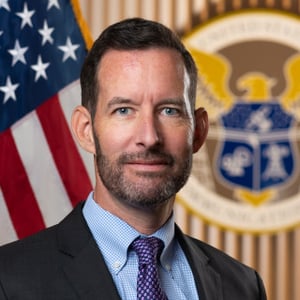
Chief of Staff, Federal Communications Commission (FCC)
Mr. Delacourt is Chief of Staff of the Federal Communications Commission. In this role, he manages the Chairman's policy agenda and strategic initiatives and serves as Chief Operating Officer for the Agency. He has a broad range of experience in telecommunications and technology law and policy spanning both the governmental and private sectors. Scott joined the FCC from Wiley Rein LLP where he served as Partner and Chair of the Wireless Practice Group. He previously served in leadership positions at the FCC, including Deputy Bureau Chief and Chief of Staff of the Wireless Bureau, Senior Counsel in the Office of General Counsel, and Legal Advisor to the Wireless Bureau Chief. Scott received his Law Degree, cum laude, from the University of Michigan Law School, and his Bachelor’s Degree, summa cum laude, from Georgetown University.
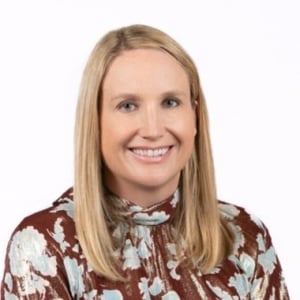
Chief of Staff, National Telecommunications and Information Administration (NTIA)
Brooke Donilon is Chief of Staff for the U.S. Department of Commerce’s National Telecommunications and Information Administration (NTIA).
Prior to NTIA, Donilon was Vice President of Government Relations for NCTA – The Internet & Television Association. She also served as Chief of Staff to Commissioner Michael O’Rielly at the Federal Communications Commission, Deputy Chief of Staff to Senator Ron Johnson, and Chief Counsel for the Senate Committee on Homeland Security & Governmental Affairs.
Donilon holds a J.D. from American University Washington College of Law and a B.A. in Journalism and Mass Communication and American Studies from the University of North Carolina at Chapel Hill.
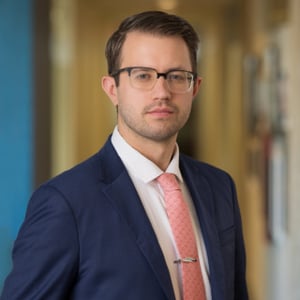
Legislative Counsel, Wilkinson Barker Knauer LLP
Slate joins WBK from his role as Counsel for the House Energy and Commerce Committee, where he represented the interests of Chairwoman Cathy McMorris Rodgers on the Communications and Technology Subcommittee.
During his tenure on the committee, he had primary responsibility over wireline and satellite communication policy and the National Telecommunications and Information Administration (NTIA). Slate played a role in drafting and revising legislation touching on a myriad of communications matters, including NTIA reauthorization, social media facing national security issues, cybersecurity, and satellite licensing. He also managed hearings discussing rural broadband deployment, administrative oversight of the NTIA, and the Broadband Equity, Access, and Deployment (BEAD) Program. Slate has also assisted in bipartisan, bicameral efforts to reform the FCC’s Universal Service Fund Program.
Prior to taking a position on Capitol Hill, Slate worked as an attorney advisor in NTIA’s Office of the Chief Counsel. In this position, he provided guidance on NTIA’s various grant programs, including the Connecting Minority Communities Program, the Broadband Infrastructure Program, the Tribal Broadband Connectivity Program, the Digital Equity Programs, and the BEAD Program. He also assisted in grant-related guidance surrounding the Infrastructure Investment and Jobs Act’s Build America, Buy America requirements.
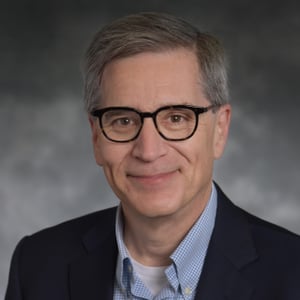
Affiliated Scholar, George Washington University Regulatory Studies Center
Roger Nober is a Professor of Practice at the Trachtenberg School of Public Policy and Public Administration. Nober served as director of the GW Regulatory Studies Center from 2024 to 2025. His career includes service as Executive Vice President and Chief Legal Officer at BNSF Railway, Chairman of the U.S. Surface Transportation Board and Chief Counsel of the Committee on Transportation and Infrastructure of the U.S. House of Representatives.
Nober retired from BNSF Railway Co. in December 2022, after 16 years as an Executive Vice President responsible for overseeing legal and regulatory matters, environmental claims, compliance, communications as well as state government and community affairs. He also served on the Board of BNSF Railway LLC. Prior to joining BNSF, Nober was a partner in the Washington office of Steptoe & Johnson LLP.
From 2002 to 2006, Nober was Chairman of the U.S. Surface Transportation Board. From 2001 to 2002, he served as Counselor to the Deputy Secretary at the U.S. Department of Transportation. From 1993 to 2001, he served in a variety of roles for the Committee on Transportation and Infrastructure of the U.S. House of Representatives, including serving as chief counsel from 1996 to 2001. He has a bachelor’s degree from Haverford College and a Juris Doctor from Harvard University School of Law.
He currently is an advisory board member at the Texas Transportation Institute at Texas A&M University, a member of the Business Advisory Council at Northwestern University Transportation Center, a member of the Texas Holocaust, Genocide, and Antisemitism Advisory Commission, and a past and current board member of a number of nonprofit organizations.

Will Skillman Fellow in Education, Center for Education Policy, The Heritage Foundation
Jonathan Butcher is the Will Skillman Fellow in Education at The Heritage Foundation. He is the author of Splintered: Critical Race Theory and the Progressive War on Truth (Bombardier Books, April 2022). He co-edited and wrote chapters in The Critical Classroom (The Heritage Foundation, 2022), discussing the racial prejudice that comes from the application of critical race theory in K-12 schools. In 2021, South Carolina Gov. Henry McMaster nominated Jonathan to serve on the board of the South Carolina Public Charter School District, a statewide charter school authorizer. He has researched and testified on education policy around the U.S.
Jonathan co-edited and wrote chapters in the book The Not-So-Great Society, which provides conservative solutions to the problems created by the ever-expanding federal footprint in preschool, K-12, and higher education.
In 2018 the Federal Commission on School Safety cited comments from his testimony in the commission’s final report. He has appeared on local and national TV outlets, including C-SPAN, Fox News, and HBO’s Vice News Tonight, and he has been a guest on many radio programs. His commentary has appeared nationally in places such as the Wall Street Journal, Education Week, National Review Online, Newsweek.com, and Forbes.com, along with newspapers around the country.
In 2017 he was a co-recipient of the State Policy Network’s Bob Williams Award for Most Influential Research for a proposal to protect free speech on campus, alongside Stanley Kurtz of the Ethics and Public Policy Center and Jim Manley of the Goldwater Institute.
Jonathan previously served as the education director at the Goldwater Institute, where he remains a senior fellow. He was a member of the Arizona Department of Education’s first Steering Committee for Empowerment Scholarship Accounts, the nation’s first education savings account program. He is also a Senior Fellow with The Beacon Center of Tennessee, a nonpartisan research organization, and a contributing scholar for the Georgia Center for Opportunity.
Prior to joining Goldwater, Jonathan was the director of accountability for the South Carolina Public Charter School District. Jonathan previously studied education policy at the Department of Education Reform at the University of Arkansas and worked with the School Choice Demonstration Project, the research team that evaluated voucher programs in Washington, D.C. and Milwaukee, Wisc.
Jonathan holds a B.A. in English from Furman University and an M.A. in economics from the University of Arkansas.
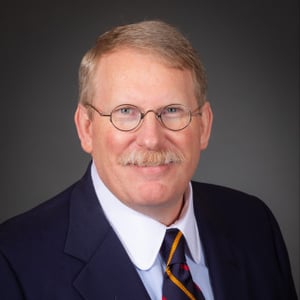
Co-Founder and President, Defense of Freedom Institute
Bob is a co-founder and President of DFI. He previously served as Senior Counselor to the Secretary of Education from 2017 through 2020 and Deputy General Counsel of the U.S. Department of Education from 2005 until 2009.
During his most recent tenure at the Department, Bob served on the Secretary’s Leadership Team as a strategic and legal adviser on higher education, civil rights, and congressional oversight matters. As the Department’s Regulatory Reform Officer, he also supervised the implementation of the Secretary’s regulatory agenda and was an architect of the Secretary’s reforms concerning Title IX and the Higher Education Act. As Deputy General Counsel, Bob advised on a wide variety of regulatory, legislative, and oversight matters.
Prior to joining the Department in 2017, Bob was vice president for regulatory compliance matters for several postsecondary institutions and practiced education and employment law in Washington, D.C. Before coming to the Department in 2005, he practiced law in New Orleans, litigating commercial, employment, and bankruptcy cases in Louisiana, Texas, and Mississippi.
Bob earned his A.B. in History from Georgetown University, studied British government and international politics at the London School of Economics and Political Science, and received his law degree from Tulane University Law School. His articles have been published by National Review, Real Clear Education, Washington Examiner, and other media outlets. Fox News has featured his work.
Bob is a member of the District of Columbia and Louisiana Bars and the Federalist Society for Law and Public Policy Studies.
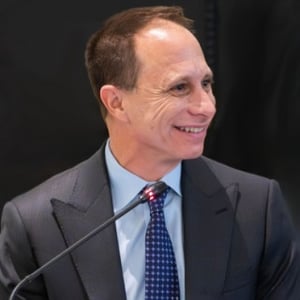
President, Thomas B. Fordham Institute
Michael J. Petrilli is president of the Thomas B. Fordham Institute, research fellow at Stanford University’s Hoover Institution, executive editor of Education Next, editor in chief of the Education Gadfly Weekly, host of the Education Gadfly Show podcast, and a contributor at Forbes.com. An award-winning writer, he is the author of The Diverse Schools Dilemma, editor of Education for Upward Mobility, and co-editor of How to Educate an American and Follow the Science to School. An expert on charter schools, school accountability, evidence-based practices, and trends in test scores and other student outcomes, Petrilli has published opinion pieces in the New York Times, Washington Post, Wall Street Journal, Bloomberg, and Slate, and appears frequently on television and radio. Petrilli helped to create the U.S. Department of Education’s Office of Innovation and Improvement and the Policy Innovators in Education Network, and serves on the board of the Association of American Educators Foundation. He lives with his family in Bethesda, Maryland.
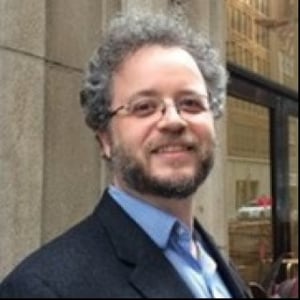
Director of Research, National Association of Scholars
David Randall is director of research at the National Association of Scholars (NAS). He has co-authored The Irreproducibility Crisis of Modern Science: Causes, Consequences, and the Road to Reform (2018), as well as articles on the irreproducibility crisis for The Wall Street Journal and The Hill. He has also written reports for the NAS on civics education, social justice education, college common readings, and the College Board’s Advanced Placement European History examination. His academic works include The Concept of Conversation: From Cicero’s Sermo to the Grand Siècle’s Conversation (2018) and The Conversational Enlightenment: The Reconception of Rhetoric in Eighteenth-Century Thought (2019).
David earned a Ph.D. in history from Rutgers University, an M.F.A. in fiction writing from Columbia University, a master’s degree in library science from the Palmer School at Long Island University, and a B.A. from Swarthmore College. Prior to working at NAS he was the sole librarian at the John McEnroe Library at New York Studio School, where he secured a number of grants for the school’s Lecture Series Archive Digitization Project.
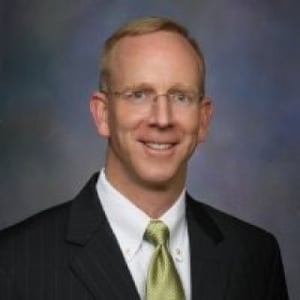
Investigative Counsel, U.S. House Committee on Education and the Workforce
Kent Talbert is a Washington, DC-based attorney with over 25 years’ experience in providing advice on education law and policy in Congress, the U.S. Department of Education, and the private sector. His practice includes legal and policy advice to colleges and universities, for-profit schools, accrediting agencies, the pre-K-12 sector, charter school organizations, trade associations, and education-focused companies, as well as service as an expert witness. He currently serves as Investigative Counsel, U.S. House Committee on Education and the Workforce.
Prior to establishing his firm, Mr. Talbert practiced at Talbert & Eitel, PLLC from 2010-2012. From 2006-2009 he served as General Counsel of the U.S. Department of Education, advising the Secretary of Education on a broad range of legal and policy matters, including the reauthorization of the Higher Education Act of 1965, the drafting and implementation of regulations under the No Child Left Behind Act of 2001, and major education law cases pending before the Supreme Court of the United States and other appellate and trial courts. During his tenure as General Counsel, Mr. Talbert served as the Chief Regulatory Officer for the Department, overseeing all documents for publication in the Federal Register.
He has provided legal and strategic advice on the No Child Left Behind Act of 2001, the Higher Education Opportunity Act of 2008, the Ensuring Continued Access to Student Loans Act of 2008, the Freedom of Information Act (FOIA), the Family Educational Rights and Privacy Act (FERPA), the Rehabilitation Act of 1973, the Americans With Disabilities Act, Title IX of the Education Amendments of 1972, the Jeanne Clery Disclosure of Campus Security Policy and Campus Crime Statistics Act ("Clery Act"), Federal Student Aid program reviews, negotiated rulemaking, and accreditation.
Prior to his service as General Counsel, Mr. Talbert served as the Department's Deputy General Counsel for Departmental and Legislative Service from 2001-2006. Earlier in his career, Mr. Talbert served for over 12 years on House and Senate staff, both as Education Policy Counsel for the Committee on Education and the Workforce in the U.S. House of Representatives, and as a professional staff member of the Committee on Labor and Human Resources (now Committee on Health, Education, Labor, and Pensions) in the U.S. Senate.
Mr. Talbert is a member of the Bars of the District of Columbia and South Carolina, the Alliance of Public Charter School Attorneys, and the National Association of College and University Attorneys where he serves on the Committee on Legal Education. He is admitted to practice before the United States Supreme Court, the United States Court of Federal Claims, the United States Court of Appeals for the District of Columbia Circuit, the United States Court of Appeals for the Fourth Circuit, and all federal courts in South Carolina and Washington, DC.
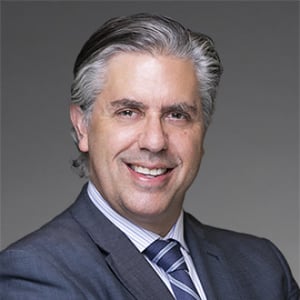
Associate Judge, Superior Court of the District of Columbia and President of the Bar Association of the District of Columbia
Craig E. Leen is an Associate Judge of the Superior Court of the District of Columbia. He also serves as the 139th President of the Bar Association of the District of Columbia and a Professorial Lecturer in Law at George Washington University School of Law.
Prior to being sworn in, Judge Leen was a partner at K&L Gates in the Washington, DC office focused on labor & employment, litigation, government contracts, and administrative & regulatory law. He was also the pro bono coordinator for the DC office.
Judge Leen was formerly a federal agency head, serving as Director of the Office of Federal Contract Compliance Programs (OFCCP) at the U.S. Department of Labor.
Prior to his federal service at OFCCP, Judge Leen was the City Attorney of the City of Coral Gables, and before that was Chief of the Appeals Section and then Chief of the Federal Litigation Section at the Miami-Dade County Attorney's Office. Earlier in his career, Judge Leen served as a law clerk to the Honorable Robert E. Keeton, United States District Judge, District of Massachusetts.
In recognition of his public service, Judge Leen received the Secretary's Exceptional Achievement Award - Professional while at the U.S. Department of Labor, and the Paul S. Buchman Award for Outstanding Contribution in the Area of Legal Public Service while in local government.
Judge Leen received his Juris Doctor from Columbia Law School, graduating as a Harlan Fiske Stone Scholar, and having served as a teaching fellow in both Contracts and Torts. Judge Leen received his Bachelor of Arts, cum laude, from Georgetown University, where he majored in both Government and Economics.

Deputy Legal Director, Governing for Impact
John is Deputy Legal Director at Governing for Impact and contributes to the organization’s legal work, including its development of challenges to harmful regulatory policies, preparation of legal primers, and regulatory comment practice. Previously, John served as an attorney with the Federal Programs Branch of the Department of Justice, where he defended major federal policies against legal challenge and advised federal agencies concerning litigation risk, and also worked at Democracy Forward, where he served as lead counsel in numerous lawsuits challenging unlawful federal action. John clerked for Judge Stanley Marcus on the Eleventh Circuit. A graduate of the University of Texas and Yale Law School, John grew up in Houston, Texas, and is barred in Texas and Washington, D.C.
Chief Legal Officer and Policy Director, Cicero Institute
Jonathan Wolfson is the Chief Legal Officer and Policy Director at the Cicero Institute. Before joining Cicero, he led the Policy Office at the U.S. Department of Labor where he managed DOL's deregulatory efforts and oversaw DOL's internal policy development think tank. He previously was a litigator and regulatory attorney at an international law firm representing clients before state and federal courts across the country. Following law school he served as a law clerk to The Honorable Edith Brown Clement of the U.S. Court of Appeals for the Fifth Circuit. Before law school, Jonathan was a policy analyst at the White House Council of Economic Advisers.
Jonathan received an A.B. in Economics from Washington University in St. Louis and a J.D. from the University of Virginia School of Law, where he was an Olin Law and Economic Fellow and won the John M. Olin Prize for best original law and economics research.
Senior Counsel, America First Legal Foundation
Nicholas Barry has been a senior litigation counsel at America First Legal since 2022. During that time, he has filed numerous lawsuits challenging lawless actions by governments and businesses. Previously, he litigated catastrophic malpractice cases, and before that, he litigated cases as an Assistant Attorney General for the Tennessee Attorney General's Office. He began his career clerking for the United States District Court for the Eastern District of Kentucky for Judge William O. Bertelsman and was an associate at Stites & Harbison before joining the Tennessee Attorney General's Office. He is a graduate of Vanderbilt Law School.
General Counsel, Mountain States Legal Foundation
William E. Trachman is General Counsel for Mountain States Legal Foundation, where he protects the rights of individuals to live freely and securely under the U.S. Constitution. Previously, he was appointed to serve in the Department of Education as Deputy Assistant Secretary in the Office for Civil Rights. Prior to his appointment, he served as General Counsel to the Douglas County School District, where he helped litigate the fight for school choice in the school district. Presently, Mr. Trachman serves as Chair of the Colorado Federalist Society and the Vice Chair of the U.S. Commission on Civil Rights’ Colorado Advisory Board. He previously taught as an Adjunct Professor at the University of Denver, Sturm College of Law. He attended U.C. Berkeley for both undergraduate and law school, and then clerked for the Honorable Harris Hartz on the 10th Circuit Court of Appeals. Mr. Trachman is licensed in Colorado, California, and Washington, D.C.
Partner, Jones Day
Eric Dreiband represents clients in investigations, litigation, and counseling in civil rights, employment discrimination, whistleblower, wage and hour, and other matters. Prior to rejoining Jones Day in 2021, Eric served as the 18th Assistant Attorney General for the Civil Rights Division at the U.S. Department of Justice (DOJ), and he also served as the 12th General Counsel of the U.S. Equal Employment Opportunity Commission (EEOC).
Under Eric's leadership, DOJ's Civil Rights Division set enforcement records for prosecutions of law enforcement officers and sexual harassment, religious liberty, and servicemember cases; charged the highest number of hate crimes cases in decades; significantly expanded resources for human trafficking prosecutions; prosecuted race and other forms of illegal discrimination in education, employment, housing, lending, and voting; reached historic disability rights settlements with several states; opposed unlawful COVID-19-related civil liberty restrictions; and successfully litigated to protect the Constitutional and civil rights of all people in the United States.
As EEOC general counsel, Eric led the Commission's litigation of the federal employment antidiscrimination laws, and he issued the Regional Attorneys' Manual, which established the policies of EEOC's litigation program. Eric also served at the Department of Labor (DOL) as deputy wage and hour administrator and directed DOL's enforcement of the Fair Labor Standards Act (FLSA), the Family and Medical Leave Act (FMLA), and other laws.
From 1997 to 2000, Eric served as a prosecutor in the Office of Independent Counsel Kenneth W. Starr.
Eric has spoken and written extensively about civil rights and other employment laws, and he has testified about these subjects before committees of the U.S. House of Representatives and the U.S. Senate.
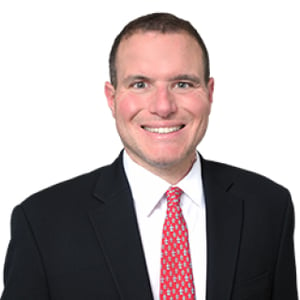
Shareholder, Littler
Bradford J. Kelley has a broad practice representing employers in employment anti-discrimination and wage and hour matters. He focuses on advising clients about emerging technologies, including artificial intelligence (AI), and their impact in the workplace.
Brad is an internationally recognized workplace AI authority. He advises clients on how to maximize the benefits of using AI in the workplace while minimizing potential legal and business risks. His deep background in this area provides employers with the tools and insights they need to develop, deploy, and monetize AI and other emerging technologies to bolster business operations and efficiency.
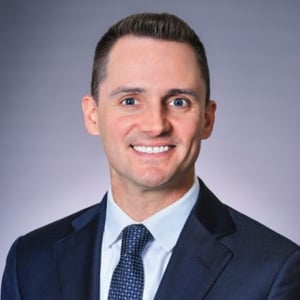
Associate Professor of Law, South Texas College of Law Houston
Ryan H. Nelson joined the faculty at South Texas College of Law Houston in 2021. His research focuses on leveraging the civil litigation and other dispute resolution systems to advance the rights of poor and other marginalized workers, most often with respect to discrimination, harassment, wages, leaves of absence, and accommodations. His scholarship has been published or is forthcoming in the Michigan Law Review, Fordham Law Review, BYU Law Review, Yale Law and Policy Review, and the online companions to the NYU Law Review, California Law Review, and Vanderbilt Law Review. He has advised state attorneys’ general offices and other administrative agencies on employment law reforms and helped to draft associated proposed legislation and regulations. Moreover, he has provided legal commentary for Fox 26 Houston, KPRC 2 News | Houston, and in periodicals like Slate, USA Today, the Texas Tribune, and the Houston Chronicle.
Before joining South Texas, Ryan completed a research fellowship with the Harvard Law School Project on Disability and taught on the adjunct faculty at Boston University School of Law, New England Law | Boston, and New York Law School. He also spent nearly a decade practicing labor and employment law, including as in-house employment law counsel for one of the world’s largest financial services companies and as an attorney with one of the top labor and employment law firms in the country where he specialized in workplace affirmative action law. He obtained his LL.M. from Harvard Law School where he was awarded the Irving Oberman Memorial Prize for Best Paper on Law and Social Change; his J.D., cum laude, from Benjamin N. Cardozo School of Law, Yeshiva University, where he served on the Editorial Board of the Moot Court Honor Society; and his B.S.B.A. with a major in economics from the University of Florida where he was a National Merit Scholar and became an avid fan of Florida Gators football.

Executive Director, Southeastern Legal Foundation
Kimberly Hermann serves as Executive Director for Southeastern Legal Foundation.
Kim has worked with Southeastern Legal Foundation since 2009. Her belief in liberty and desire to serve started at a young age – instilled by her parents’ dedication to hard work, family values, and love for America.
After earning her undergraduate degree in Analytical Finance and graduate degree in Accounting from Wake Forest University, Kim worked as a licensed CPA with an international accounting firm. But her strong belief in individual liberty, the rule of law, and accountability in government led her to pursue a career in law. While in law school at Georgia State University College of Law, Kim served as a law clerk at SLF. After graduating, Kim worked at a private law firm in Atlanta where she specialized in financial and business litigation but continued to serve SLF in a pro bono capacity. In 2013, Kim returned to SLF full-time and is proud to dedicate her career to the freedom-based law movement.
Kim advances liberty through litigation in federal and state trial and appellate courts on issues ranging from government overreach, free speech, property rights, and economic liberty. In addition to representing clients, Kim testifies before state legislatures, drafts model legislation, and regularly publishes legal articles. Through SLF’s legal initiatives, she informs Americans about their constitutional rights, equipping them with the tools they need to stand up to government overreach. Her work and that of Southeastern Legal Foundation is regularly covered by national media and you will frequently hear or see her on radio, podcasts, and television.
Kim is an active member of the Federalist Society where she serves as an expert on the Federalist Society’s Civil Rights Executive Committee. She is also an active member of her community and when she isn’t fighting for liberty, you can find her at her children’s school or on the sports fields cheering them on. She lives in the Atlanta area with her husband and two children.
Co-Founder and President, Defense of Freedom Institute
Bob is a co-founder and President of DFI. He previously served as Senior Counselor to the Secretary of Education from 2017 through 2020 and Deputy General Counsel of the U.S. Department of Education from 2005 until 2009.
During his most recent tenure at the Department, Bob served on the Secretary’s Leadership Team as a strategic and legal adviser on higher education, civil rights, and congressional oversight matters. As the Department’s Regulatory Reform Officer, he also supervised the implementation of the Secretary’s regulatory agenda and was an architect of the Secretary’s reforms concerning Title IX and the Higher Education Act. As Deputy General Counsel, Bob advised on a wide variety of regulatory, legislative, and oversight matters.
Prior to joining the Department in 2017, Bob was vice president for regulatory compliance matters for several postsecondary institutions and practiced education and employment law in Washington, D.C. Before coming to the Department in 2005, he practiced law in New Orleans, litigating commercial, employment, and bankruptcy cases in Louisiana, Texas, and Mississippi.
Bob earned his A.B. in History from Georgetown University, studied British government and international politics at the London School of Economics and Political Science, and received his law degree from Tulane University Law School. His articles have been published by National Review, Real Clear Education, Washington Examiner, and other media outlets. Fox News has featured his work.
Bob is a member of the District of Columbia and Louisiana Bars and the Federalist Society for Law and Public Policy Studies.
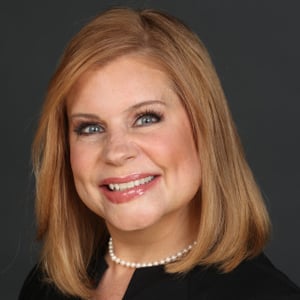
Vice President & Senior Legal Fellow, Defending Education
Sarah Parshall Perry is vice president and senior legal fellow at Defending Education.
Before coming to Defending Education, Sarah served as a Senior Legal Fellow for the Edwin Meese III Center for Legal and Judicial Studies, part of the Institute for Constitutional Government at Heritage, where her work centered on civil rights and the proper role of the courts.
Sarah joined Heritage after serving as Senior Counsel to the Assistant Secretary for Civil Rights at the U.S. Department of Education where she focused on policy reform, technical guidance, and the Office for Civil Rights’ (OCR) annual report to Congress. While at OCR, she was appointed by the Acting Assistant Secretary to co-chair the Employment Engagement, Diversity, & Inclusion Council and, in coordination with the Deputy Assistant Secretary for Enforcement oversee the hiring of dozens of attorneys for OCR’s 12 regional offices nationwide. Prior to her tenure at the Department of Education, she spent six years at the Family Research Council in Washington, D.C. where she was Senior Fellow for Education Reform and later, became the regular substitute host for the “Washington Watch” radio show. Her work at the Family Research Council also included the building and oversight of multiple policy coalitions geared toward the fight against antisemitism in academia, curbing tech censorship, and protecting religious liberty.
Before joining FRC, Sarah was in-house counsel and director of development for a Baltimore advertising agency, providing management of all new business transactions from pitch to contract execution for the multi-million-dollar enterprise. She began her practice at the litigation firm of Simms Showers, LLP where her work included Title VII employment discrimination, maritime/admiralty, and False Claims Act (“Qui Tam”) law. Sarah has a law degree from the University of Virginia School of Law, where she was an editor of the Virginia Journal of International Law, a recipient of the American Jurisprudence award, a Phi Delta Phi honor society member, and a student practitioner in the appellate litigation clinic where she argued before the 4th Circuit Court of Appeals. She holds a B.S. in Journalism with honors from Liberty University.
Her commentary and analysis have appeared in media outlets across the country, including the AP, BBC, Fox News, NPR, The Hill, Washington Post, Washington Times, and the New York Times. She is the mother of three children, and the author of just as many books on the trials and triumphs of parenting children on the autism spectrum. Sarah is a member of the Kirkpatrick Society at the American Enterprise Institute, and makes her home north of Baltimore, Maryland.

Vice President of Domestic and Economic Policy, The Heritage Foundation
Roger Severino is Vice President of Economic and Domestic Policy, and the Joseph C. and Elizabeth A. Anderlik Fellow at The Heritage Foundation.
Severino is a national authority on civil rights, conscience and religious freedom, the administrative state, and information privacy, particularly as applied to health care law and policy. Find his tweets at @RogerSeverino_.
Severino spearheaded the HHS Accountability Project while a Senior Fellow at EPPC from 2021 to 2023. Previously, Severino was Director of HHS’ Office for Civil Rights, where he led a team of over 250 staff enforcing our nation’s civil rights, conscience and religious freedom, and health information privacy laws. He served from 2017 to 2021 and was the longest-serving OCR director of the past three decades.
Prior to joining HHS, Severino served for two years as Director of the DeVos Center for Religion and Civil Society at Heritage, advocating for life, family, and religious-freedom policies. Before that, he was a trial attorney for seven years at the U.S. Department of Justice’s Civil Rights Division where he enforced the Fair Housing Act and the Civil Rights Act of 1964. Severino started his legal career at the Becket Fund for Religious Liberty, where he was Legal Counsel and Chief Operations Officer and defended the rights of people of all faiths under federal and international law.
Severino has been profiled in The New York Times, The Atlantic, The Wall Street Journal, and The Hill and has appeared on Fox News, CNN, MSNBC, NPR, and PBS, among others. In 2020, The New York Times dubbed him and his wife Carrie, “a conservative power couple” to be reckoned with.
Severino holds a JD from Harvard Law School, a master’s degree in public policy, with highest distinction, from Carnegie Mellon University, and a bachelor’s degree in business from the University of Southern California. He was appointed by President Trump to the Administrative Conference of the United States and is a member of the District of Columbia and the Commonwealth of Virginia bars.
As OCR director, Severino founded the federal government’s first division dedicated exclusively to conscience and religious freedom compliance and enforcement. He enforced the Weldon Amendment for the first time against a state (California) after it coerced families and religious organizations into paying for abortion insurance coverage, leading to a $200 million federal funding disallowance. He also enforced laws protecting pro-life pregnancy resource centers from discrimination by states hostile to their message and enforced laws prohibiting forced participation in abortions by medical professionals.
With respect to civil rights, Severino protected older persons and people with disabilities from being denied life-saving care due to discriminatory “quality of life” judgments, especially during the COVID-19 pandemic. He also achieved a landmark sexual harassment resolution with Michigan State University in the wake of the Larry Nassar sexual assault scandal and protected the rights of non-English speakers to have equal access to health and human services.
In the area of health privacy, he secured the largest HIPAA monetary settlement in history and achieved the largest number of enforcement resolutions both in a single year and across four years. He also facilitated the transformational use of Skype, Zoom, and Facetime for delivery of telehealth during the COVID-19 pandemic and beyond.
His regulatory reform activities resulted in a comprehensive conscience protection regulation and proposed a life-affirming disability rights regulation. He achieved regulatory savings of $3.6 billion in health care industry costs over five years and identified and proposed an additional $3.2 billion in cost savings from the repeal of ineffective and unnecessary regulatory burdens.
Severino is a Spanish speaker who teaches salsa and west coast swing in his spare time.

Litigation Update: Kloosterman v. Metropolitan Hospital
Kayla Ann Toney, Kevin Wynosky
Valerie Kloosterman, a devout Christian and third-generation healthcare professional, served her community as a Physician...
Explainer Episode 91 - OFCCP's Proposed Regulatory Changes
Brett Swearingen, Linda L. Chavez
On July 1st, 2025, the Office of Federal Contract Compliance Programs (OFCCP) released three proposed...
2025 Annual Supreme Court Round Up
Kannon K. Shanmugam, Kristen K. Waggoner
On Thursday, July 24, the Washington, D.C. Lawyers Chapter will gather for the annual Supreme...
DOGE Unleashed: Trump Executive Orders and Their Impact on Telecommunications Regulation
Austin Bonner, Scott D. Delacourt, Brooke Donilon, Slate Herman, Roger Nober
Join the Federalist Society for a discussion on the impact of President Trump's Executive Orders...
Can the President Shut Down the Department of Education?
Jonathan Butcher, Robert S. Eitel, Michael J. Petrilli, David Randall, Kent D. Talbert
On March 20, President Trump signed E.O. 14242, Improving Education Outcomes by Empowering Parents, States, and Communities,...
Checks and Balances: Deregulation Based on Supreme Court Rulings
Craig E. Leen, John Lewis, Jonathan Wolfson
Among the points emphasized by the second Trump administration has been a major push for...
Courthouse Steps Decision: Ames v. Ohio Department of Youth Services
Nicholas Barry, William E. Trachman
Marlean Ames, a straight woman, was denied promotion and later demoted in her role at...
EEOC in the Trump Era
Eric Dreiband, Bradford J. Kelley, Ryan H. Nelson
Shortly after taking office, President Trump reportedly removed two Equal Employment Opportunity Commission (EEOC) commissioners...
Litigation Update: Deemar v. Evanston/Skokie School District 65
Kimberly Hermann
It is widely known that schools have instituted equity-focused policies, teacher training, and curriculum. Critics...
A Conversation on the Right: Should the Federal Government Shape School Curriculum?
Robert S. Eitel, Sarah Parshall Perry, Roger Severino
With Republicans holding control in Washington, a significant debate has emerged within conservative circles regarding...